




Abstract
As codified in professional guidelines, professional interpreters should faithfully interpret everything that has been said exactly as the original speakers. In other words, court interpreters are expected to adequately interpret both the content and the manner of original utterances into their pragmatic equivalence to the best of their knowledge. However, little has been known about the court interpreters’ accuracy in rendering the manner of speech in remote settings in non-European languages. The present paper reports initial findings from a larger experiment research study that assesses Australia-based professional interpreters’ accuracy in interpreting discourse markers and speech style in court-related remote settings. This paper focuses on the way in which discourse markers were used by the Mandarin Chinese-speaking defendant in courtroom examination answers and interpreted by practitioners. Mandarin Chinese markers ‘呗(bēi)’, ‘啦(à)’, ‘啊(a)’, ‘吧(bā)’ and ‘嘛(mà)’ were analysed using a collection of models of markers in Mandarin Chinese. A general disregard for discourse markers was found in remote settings, as reflected by omissions, mistranslation and moderations of illocutionary forces, particularly the use of the monotone in practitioners’ renditions of some attitudinal markers in Mandarin Chinese. Such disregard may have further implications for the accuracy of court interpreting in remote settings. The findings of the present study intend to inform future interpreter education and contribute to interprofessional collaboration between interpreting service users and providers.
Keywords
Introduction
Court interpreting in Australia: Access and professionalisation
The right to a fair representation is not only an integral part of procedural equity, but also an essential human right (Yi, 2023a, 2023b, 2024). In Australia’s multilingual and multicultural society,
1
when one party in court shows limited proficiency in English, a certified interpreter is available upon request (see Law Access NSW, 2017
2
; Supreme Court of NSW, 2019
3
; NSW Local Court, 2021
4
; Judicial Commission of NSW, 2022
5
). The right of a witness to give evidence through an interpreter has been given statutory recognition in the s30 Evidence Act 1995: ‘A witness may give evidence about a fact through an interpreter unless the witness can understand and speak the English language sufficiently to enable the witness to understand, and to make an adequate reply to, questions that may be put about the fact’.
Apart from the statutory recognition, there is also a wealth of literature that emphasises the importance of competent interpreting in court settings from the perspectives of the judiciary and interpreting scholars. From the perspective of the judiciary sector, Justice Roberts-Smith (2009: 13) has warned that the lack of adequate interpreting in criminal trials constitutes ‘a denial of a fair trial’ and may lead to ‘wrongful conviction or acquittal’. The Hon. Justice Perry and Zornada (2015: 1) 6 have also endorsed the vital role the interpreter plays in ensuring justice, as ‘the principles of fairness and equality before the law are fundamental to a democratic society, and their observance is essential to the maintenance of public confidence in the judiciary’.
From the perspective of interpreting scholars, the need to raise the bar for court interpreting has been reiterated by a number of influential scholars (see Berk-Seligson, 2002; de Jongh, 1992; González et al., 1991; Hale and Stern, 2011; Laster and Taylor, 1994; Lee, 2011; Stern, 2011; Stern and Liu, 2019). For example, Stern (2011: 341) underscored the importance of the professionalisation of interpreters as the only way to achieve effective multilingual courtroom interpreting. Hale (2020: 498) emphasised the need to recognise court interpreters as specialised experts, not merely ‘translating machines’, who receive adequate university-level education ‘not only on linguistic, cultural and interpreting issues, but also on the discourse practices of the courtroom and the requirements of the setting and its participants’.
From the above discussions, it seems fair to assume that the accuracy of court interpreting is not merely a matter of equity and access to justice, but also a matter of professionalism and professional ethics.
Remote interpreting in court: Pre-covid and the present time
For many years, courts worldwide have been exploring the use of audiovisual link technologies to facilitate virtual hearings. Even before the covid-19 was declared a global pandemic, the provision of remote interpreting services has been discussed by scholars in interpreting studies (see Braun, 2013, 2016, 2017; Braun and Taylor, 2012; Braun et al., 2018; Kelly, 2008; Rosenberg, 2007). The term ‘remote interpreting’, as defined as Braun (2015: 352), refers to ‘the use of communication technologies to gain access to an interpreter in another room, building, town, city or country’.
Remote interpreting is often achieved through the use of audiovisual technologies (e.g. telephone and voice call) and videoconferencing platform (e.g. Microsoft Teams and Zoom). In general, depending on the availability of visual access to the speaker or the proceedings, remote interpreting can be further categorised into two modalities: audio-only (similar to telephone or audio call) and audiovisual (or video remote interpreting).
The remote option has its advantages and disadvantages. Existing studies (e.g. Braun, 2019, 2020; Xu et al., 2020) have revealed several advantages of remote interpreting, including reduced delays, increased access to trained interpreters in less often requested languages, higher levels of security and anonymity for interpreters and lower costs due to the absence of travel. Concerning limitations of remote interpreting, existing studies (see Hale et al., 2022; Lee, 2007a) have also underscored the poor quality equipment, inadequate working conditions and remuneration for interpreters, lack of clear protocols, difficulties with turn management and coordination, lack of visual cues with regards to telephone interpreting, and extra communication challenges for all involved.
Overall, the above studies remain important sources of knowledge for the present study, as we have informed the readers of the current landscape in Australian court interpreting, particularly expectations and acceptable professional behaviours related to accurate interpreting in court remote settings.
Accuracy of ‘manner’ in interpreting: Discourse marker
The notion of accuracy in court interpreting remains extraordinarily complex. There is a convincing number of existing studies (see Berk-Seligson, 2002, 2009, 2012; de Jongh, 1992; González et al., 1991; Hale, 2002, 2004, 2007; Laster and Taylor, 1994; Lee, 2011; Stern, 2011) that ascertains the accuracy of court interpreting involving both the content and the manner in which the original speakers speak. In our study, we use the word ‘manner’ to indicate the way in which the original speakers speak. The manner of speech encompasses the use of linguistic devices, such as discourse markers (‘well’, ‘now’, ‘you know’), and speech style features (e.g. fillers and hedges, repetitions and false starts). In the present study, we concentrate on discourse markers.
There are several approaches to the definition of the term ‘discourse marker’. For example, Traugott and Dasher (2002) denote discourse markers as relational elements between two sentences to signal condition, topic shift, elaboration, contrast and justification. Diewald (2006) defines discourse markers as prosodically, syntactically and semantically independent non-propositional discourse elements with a communicative function. Fraser (2009) indicates discourse markers as items that signal a relationship between the discourse segment which hosts them and the prior discourse segment. Cuenca (2013) regards discourse markers as linking words that signal grammatical relationships and propositional meanings as clausal initials in compound sentences.
From the discussions above, scholarly definitions fall into five categories: coherence, relevance, syntactic-pragmatic, grammatical and prosodic-phonetic approaches. In our study, we adopted Schiffrin’s (1987) definition of discourse marker (p. 326) as ‘the contextual coordinate’. Schiffrin’s definition distinguishes properties of discourse, linguistic properties of expressions, indexical functions of markers, use of markers in discourse and coherence. The primary motivation for adopting her definition in our study is that Schiffrin’s definition opens up analytical possibilities to the contextual meaning in interpreter-mediated courtroom discourse.
In Australia’s adversarial courtroom, each party’s counsel presents their own version of the events to attain favourable sentencing by strategically phrasing their questions in courtroom examination. In examination-in-chief, the counsel questions his or her own witness to put the evidence before the court, whereas, in cross-examination, the opposing counsel interrogates the same witness’s testimony to expose any inconsistencies and weaken the strength of evidence. In courtroom discourse, not only what is said but also how it is said matters (Coulthard, 2017; Gibbons, 2003; Hale, 2004). One example is the use of discourse markers used by counsels in their strategic questions during courtroom examinations.
A number of scholars (see Berk-Seligson, 2002, 2009, 2012; Hale, 2004, 2007; Lee, 2011) have examined discourse markers and speech style features in court interpreting, which impacted the accuracy of content and manner and even the delivery of justice. For example, Hale (2004) examined the English-Spanish interpretations of discourse markers ‘well’, ‘now’ and ‘see’ in courtroom examination questions and speech style features such as repetitions, fillers, hedges and false starts in the courtroom answers. Using authentic data drawn from 13 interpreted Local Court hearings held in New South Wales from 1993 to 1996. She identified a systematic disregard for discourse markers in interpreters’ renditions, as reflected by additions, omissions and alterations of the illocutionary force. Such disregard can be explained by two main reasons: one is the irrelevance to the propositional content of the utterance or their grammatical structure, and the other is the difficulty of finding semantic equivalents carrying the same illocutionary force. She also pointed out that such disregard can impact the impressions of credibility, competence and intelligence formed about the witnesses.
Mason (2008) examined the factors that influence the renditions of linguistic markers of the style, such as hesitations, repetitions and discourse markers in courtroom interpreting. It was found that linguistic markers were omitted at a statistically increasing rate by interpreters when the turn length increased, whereas politeness markers (e.g. please and well) and hedges were added by female interpreters at a more significant rate than by male counterparts.
Tillmann (2009) studied the pragmatic transfer of speech style and discourse markers in an asylum interview setting interpreted by German-English professionals. Interpreters were found to omit discourse markers or substitute with pragmatic equivalence, which may affect the overall evaluation of the asylum seekers’ integrity.
Lee (2007b) examined the absence of linguistic markers and speech features in Australian court proceedings. The study analysed approximately 80 hours of the audio-taped discourse of witness examinations interpreted by Korean interpreters in six criminal trials. Five Korean interpreters and 15 Korean-speaking witnesses were involved in the trials. It was found that some linguistic features, such as filler and hesitation markers, were mistranslated, and other features, such as politeness markers and rhetorical questions, were not adequately interpreted, as evidenced by the confusion of the pragmatic effect in the interpreted utterances.
Blakemore and Gallai (2014) examined the use of discourse markers ‘so’ and ‘well’ by seven certified interpreters in two language pairs (English-Italian and Portuguese-Italian) with examples extracted from a large corpus of video-recorded naturally-occurring data provided by Greater Manchester Police in the United Kingdom. Drawing on the Sperber and Wilson (1986/1995) relevance theory, they found that the interpreter decision to add discourse markers in their renditions were based on their own understanding of the utterance in free indirect speech. They thus argued that the discourse markers initiated by the interpreters in free indirect speech were attributive to the interpreter’s voice, which revealed the visibility of the interpreters’ thought process.
Yi (2022) examined 50 certified Mandarin Chinese practitioners’ prior knowledge, perceptions, views, strategies and professional decisions regarding the renditions of discourse markers and other speech style features in court-related remote settings. Her questionnaires employed free-text question items to check the interpreters’ general knowledge of discourse markers, their strategies and professional decisions concerning the way these markers were interpreted by professional interpreters. Drawing on 100 online questionnaire responses, her findings indicated a general lack of knowledge related to discourse markers, which further led to some ethically questionable strategies voiced by a few interpreters to filter out or use summarising techniques in their renditions.
In sum, discourse markers and other linguistic features are vital to the accuracy of the manner in court interpreting. However, existing studies have reported a systematic disregard for markers in interpreter-mediated face-to-face courtroom interactions. As a result, such disregard can have further implications for the outcome of the trial.
Research gaps
Existing literature on courtroom discourse has focused on the use of discourse markers and their interpretations in face-to-face courtroom interactions, predominantly in European languages. Little has been known about the interpretations of discourse markers in remote settings, particularly in non-European languages. Considering the expanding base of Mandarin Chinese speakers in Australia, the present study examines the use of markers by Mandarin Chinese-speaking witnesses and their interpretations by Australia-based professional interpreters in court remote settings.
The study
The article presents a portion of the results of data collected from larger experiment research that examined the less-investigated aspect of the interpretations of the manner of speech in courtroom examination questions and answers by professional Mandarin Chinese interpreters based in Australia. The present study concentrates on the use of discourse markers by the original Mandarin Chinese-speaking defendant in courtroom examination answers. The study intends to address the following questions:
How accurately do professional interpreters reproduce Mandarin Chinese discourse markers that appeared during courtroom examination answers in remote settings?
Are interpreters able to achieve pragmatic equivalence by preserving the illocutionary point and force of the original discourse markers?
To address these questions, an experiment was conducted remotely on Zoom to collect interpreting performance data. A total of 50 certified Mandarin Chinese interpreters participated in the experiment research study. The script and video of a simulated trial used for the experiment were part of a research project supported by the Australian Research Council project. 7 The script and video recordings were used in this project with permission from the chief investigators. The simulated trial featured a Chinese-speaking suspect who was accused of selling drugs in a common law courtroom. In the video, the defence counsel first asked the original questions in English. Following the completion of the defendant’s questions and responses, the crown prosecutor’s cross-examination took place. The participants first interpreted the counsels’ questions from English into Chinese and then the defendant’s responses from Chinese to English.
The data
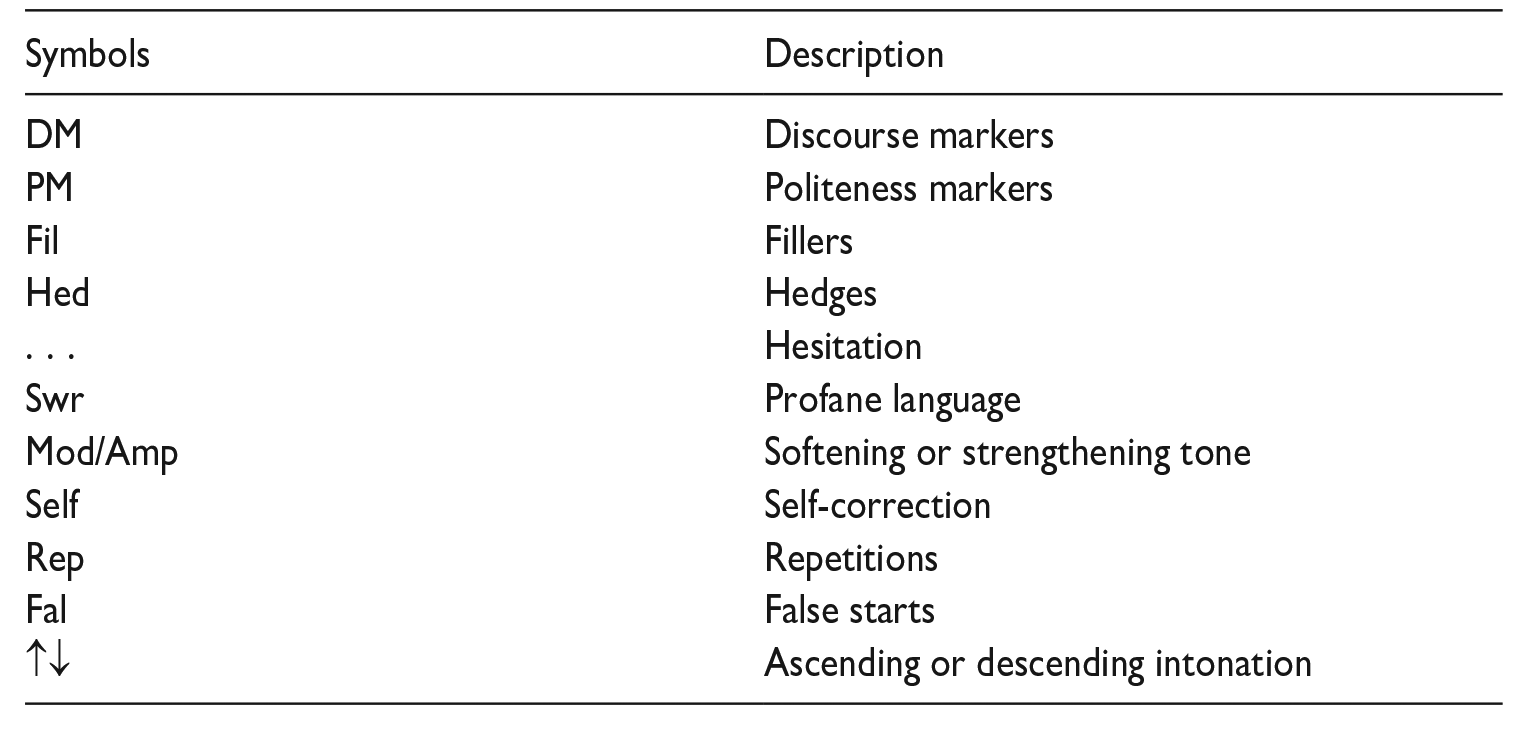
The audio recordings of interpretations were transcribed using voice-to-text software and edited by the researcher to ensure the accuracy of the transcribed texts. The present study does not follow any specific transcription conventions. The transcription symbols used to facilitate the annotation process are shown in the Appendix. The transcribed texts were then qualitatively analysed using the discourse analysis (DA) method. The analysis process was conducted inductively and deductively. Inductively, based on the initial exploration of data, we identified five particle markers in the courtroom examination answers. The particle marker in Mandarin Chinese refers to a specific grammatical formation at the sentence-final or sentence-initial positions. The particle markers in our data include ‘呗(bēi)’, ‘啦(à)’, ‘啊(a)’, ‘吧(bā)’ and ‘嘛(ma)’ at the end of a sentence, as well as ‘嗨(hài)’ at the initial position of a sentence. Then deductively, we resorted to Lu (2005), Zhao and Shi (2015), Tian (2016), Lepadat (2017) and Cui (2019). The particle markers and their corresponding functions are shown in Table 1 below.
Particle markers and their functions.
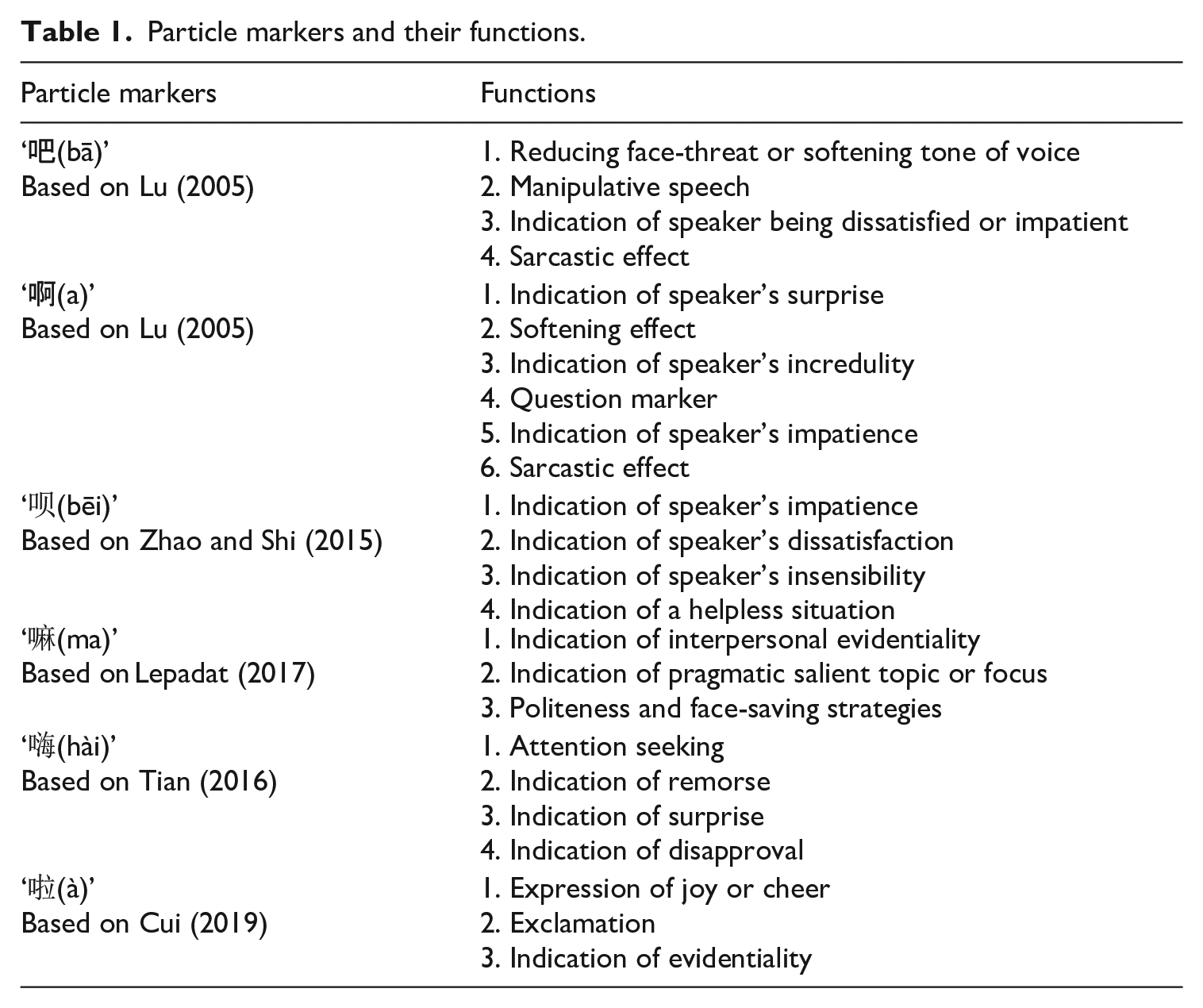
As shown above, we coded the particle markers in Mandarin Chinese answers with additional notes on their functions. Depending on the context, these particles serve as either attitude markers indicating the speaker’s attitude, feelings, or emotions or indicators of the tone of voice in Mandarin Chinese answers. Then we examined how these particle markers were interpreted by participants, either reflected in the intonation, tone of voice or use of markers in their English interpretations.
Once the recordings were completely transcribed and annotated, all questions asked by each counsel and their interpretation by each interpreter were extracted for further qualitative analyses. Based on the analytical models above, the accuracy of interpretations was first assessed by the researcher and then rated by a qualified rater in Mandarin Chinese. Due to the limited scope of the present study, we only examined the use and the interpretations of Mandarin Chinese discourse markers in examination-in-chief answers.
Discussions
Based on the initial exploration of our data, we identified five Mandarin Chinese discourse markers ‘啊(a)’, ‘吧(bā)’, ‘呗(bēi)’, ‘嗨(hài)’, ‘啦(à)’ and ‘嘛(ma)’ in courtroom examination answers provided by the original suspect. The distribution of discourse markers in questions is shown in Table 2 below.
The distribution of discourse markers in questions.
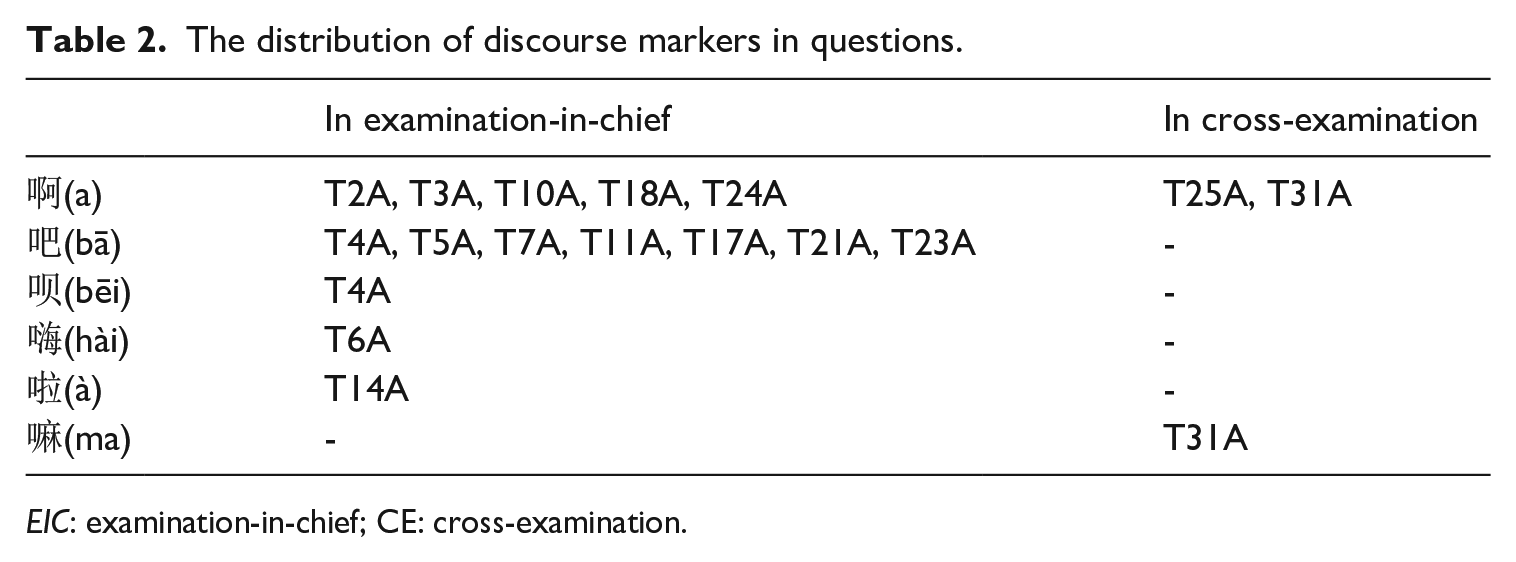
EIC: examination-in-chief; CE: cross-examination.
In our data, these discourse markers were mostly sentence-final or sentence-initial particles with additional prosodic functions to mark the tone and the intention of the original speaker. The markers alone did not seem to carry propositional meaning, but served as a pragmatic marker with varying force and effect.
The use of ‘啊(a)’ in examination-in-chief answers and their interpretations
In the data, 33% of all instances of markers in examination-in-chief answers were related to the use of the Mandarin Chinese particle ‘啊(a)’. It is noteworthy that depending on the intonation in Mandarin Chinese, which is marked by the four-tone system (ā, á, ǎ, à), the particle marker ‘啊(a)’ can serve various functions. As stated by Lu (2005), the Mandarin Chinese particle marker ‘啊(a)’ serves six pragmatic functions: indication of the speaker’s surprise, incredulity, or impatience; softening or sarcastic effect, or question marker. In our data, the use of ‘啊(a)’ in the original cross-examination answers and their interpretations are shown in Example 1 below.
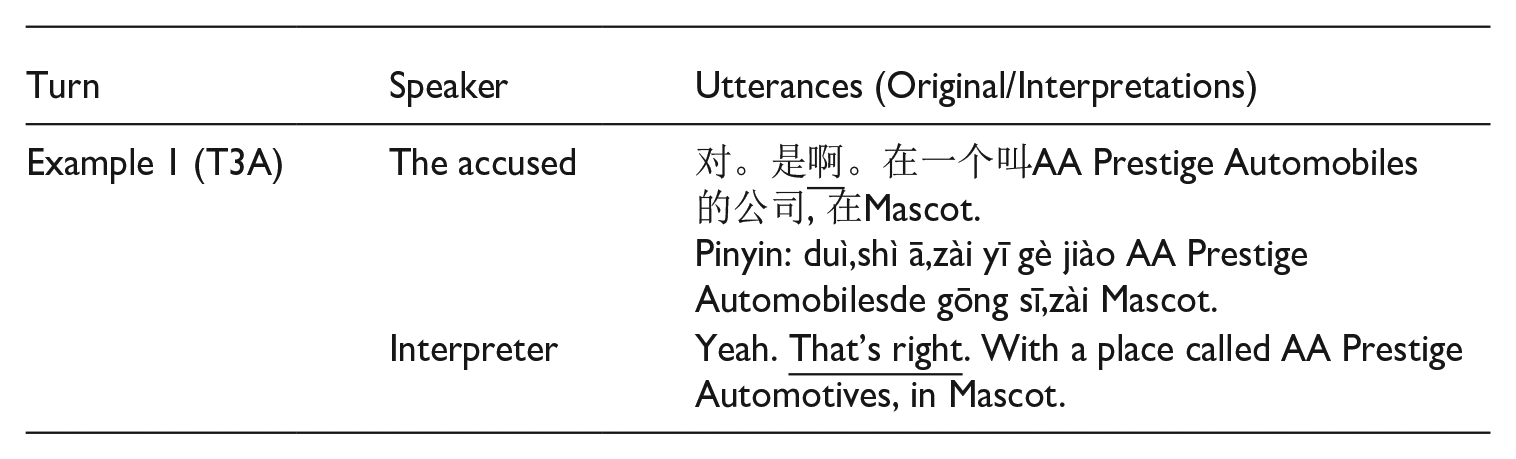
In Example 1, the particle marker ‘啊(ā)’ at the sentence-end is attached to the preceding affirmative content word ‘是(yes)’ in Mandarin Chinese. The illocutionary force of the affirmative statement was strong, as it conveyed a sense of surety in agreement with the facts in response to the prior counsel’s question. However, the use of the marker ‘啊(ā)’ somehow softens the effect by using a more colloquial form while showing a sense of ease, as if the counsel’s question is merely repeating the obvious fact and there is no need to lie about it. The pragmatic effect thus implied a tested version of facts already presented in the testimony. The suggested interpretation of this marker was ‘that’s right’ with a stronger illocutionary force.
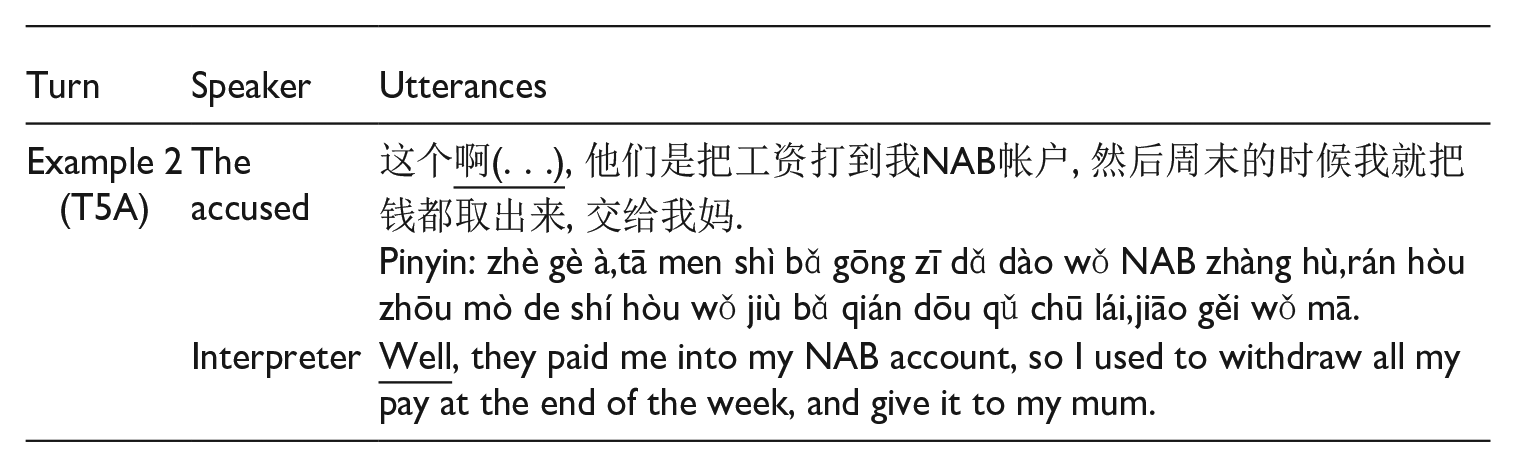
In Example 2, the marker ‘啊(à)’ in the sentence-initial position was used with a falling intonation in Mandarin Chinese. It was marked by a prolonged hesitation pause and appended to the preceding Mandarin Chinese pronoun ‘这个(this)’. The marker tends to indicate the defendant’s incredulity when associated with the hesitation pause, as if the defendant was conjuring up a story on the spot to fit into his own counsel’s presentation of the facts for lesser sentencing. In one interpretation, the marker ‘啊(à)’ was translated into English as ‘well’ with a hesitation pause. However, it was argued here that a more verbatim way to translate this marker could be ‘about that’ or ‘regarding this matter’ with a similar hesitation pause. The indexical function of the discourse marker in English also serves as a progression of legal reasoning in the question-and-answer sequence.
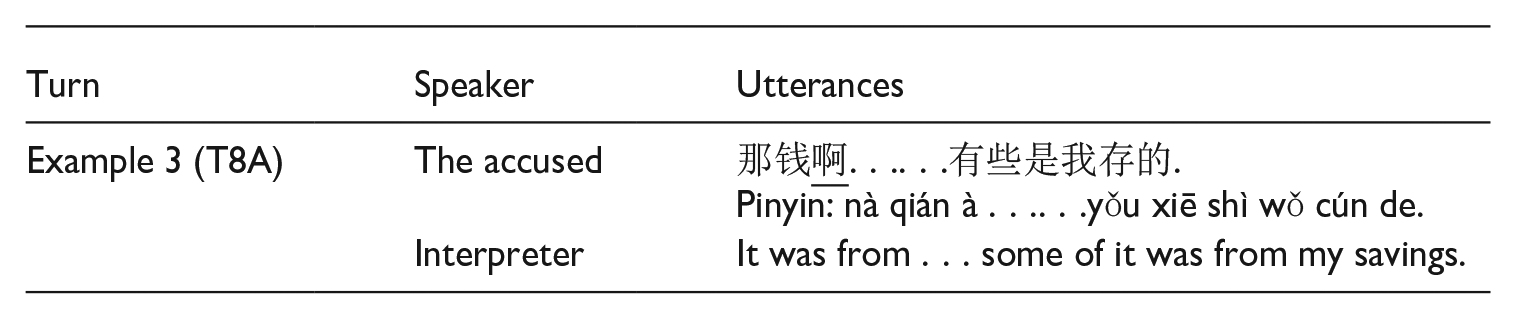
In Example 3, the marker ‘啊(à)’ was used with a falling intonation in Mandarin Chinese. The marker was preceded by the Mandarin Chinese determiner ‘那(that)’ and a content noun ‘钱(money)’ and followed by a hesitation pause with a softening effect. Similar to Example 2, it signified uncertainty or incredulity, as if the defendant was making up a story before the court. However, the interpreted version omitted the preceding propositional content (‘that money’) and retained the hesitation pause, yet rendered in a monotone. A proposed interpretation is ‘about/regarding/on that money’ with a hesitant tone plus a weakened force.
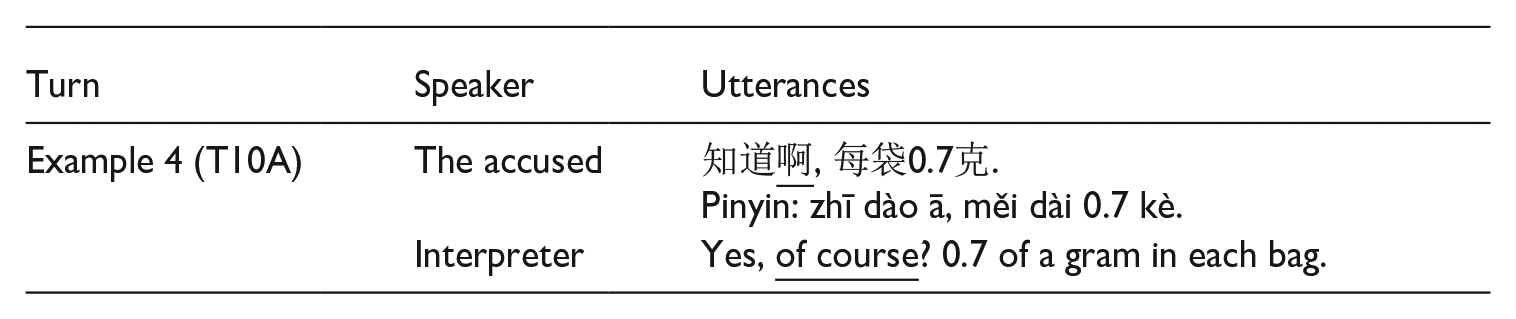
In Example 4, the marker ‘啊(ā)’ was used in a neutral intonation in Mandarin Chinese. The marker was preceded by the Mandarin Chinese verb ‘知道(I know)’ with an affirmative tone. It revealed a level of surety with a softening effect. However, in the interpreted version, the interpreter added a rising intonation, signalling some degree of uncertainty following the use of the ‘of course’ marker in English. By doing so, the interpreter did alter not only the force but also the pragmatic effect.
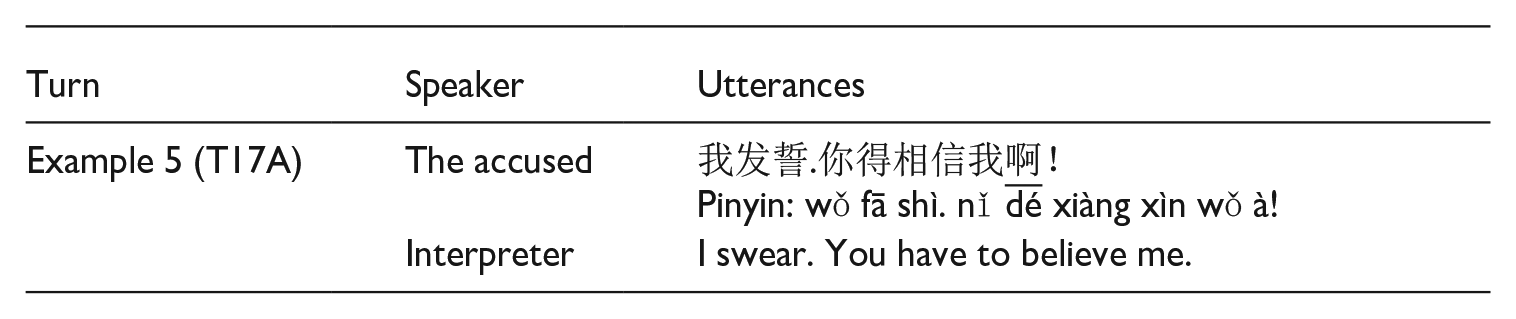
In Example 5, the marker ‘啊(à)’ was used in the sentence-final position with an exclamation mark (!), signalled by an intensifying falling tone. The marker was preceded by a modal verb ‘得(must/have to/got to)’ in a declarative statement ‘你相信我(you believe me)’ and a forceful imperative ‘我发誓(I swear)’ in the previous sentence. The illocutionary force was evidently strengthened. Although the grammatical particle in Chinese did not have any propositional meaning, an intensifying tone was required to convey the matching force and effect in the interpretation. However, in the interpreted version, the exclamation tone was omitted and replaced with a narrative statement in a monotone.
In sum, findings from our data suggested the use of the marker ‘啊(a)’ in the sentence-final position. Depending on the preceding propositional content, the marker ‘啊(a)’ served as a softening effect of the affirmative tone (see Examples 1 and 4). Depending on the following speech style (e.g. hesitation pause), the marker indicated the speaker’s incredulity, as if the speaker is making up stories in court (see Examples 2 and 3). Our data also revealed that the marker ‘啊(a)’ can be used as an intensifying device attached to the exclamation sentence.
The use of ‘吧(bā)’ in examination-in-chief answers and their interpretations
In the data, 47% of all instances of markers in examination-in-chief answers were related to the use of the Chinese particle ‘吧(bā)’. According to Lu (2005), the marker ‘吧(bā)’ serves four pragmatic functions: reducing face-threat or softening the tone of voice, indicating manipulative speech, or the speaker being dissatisfied or impatient, or having a sarcastic effect.
From our data, two main uses of the marker ‘吧(bā)’ were found: (1) reducing face-threat or softening the tone of voice by making instructions less direct and forceful; and (2) indication of manipulative speech by asking for agreement or confirmation. The first use of ‘吧(bā)’ intends to soften commands, requests and suggestions by rendering the sentence slightly less pushy and more neutral. In contrast, the second use of ‘吧(bā)’ aims at manipulating the hearer by asking for agreement or confirmation with what was being said in the form of a tag question, in which these questions were not necessarily true, but they prompted the listener to agree. One example indicating the agreement-seeking function is shown below.
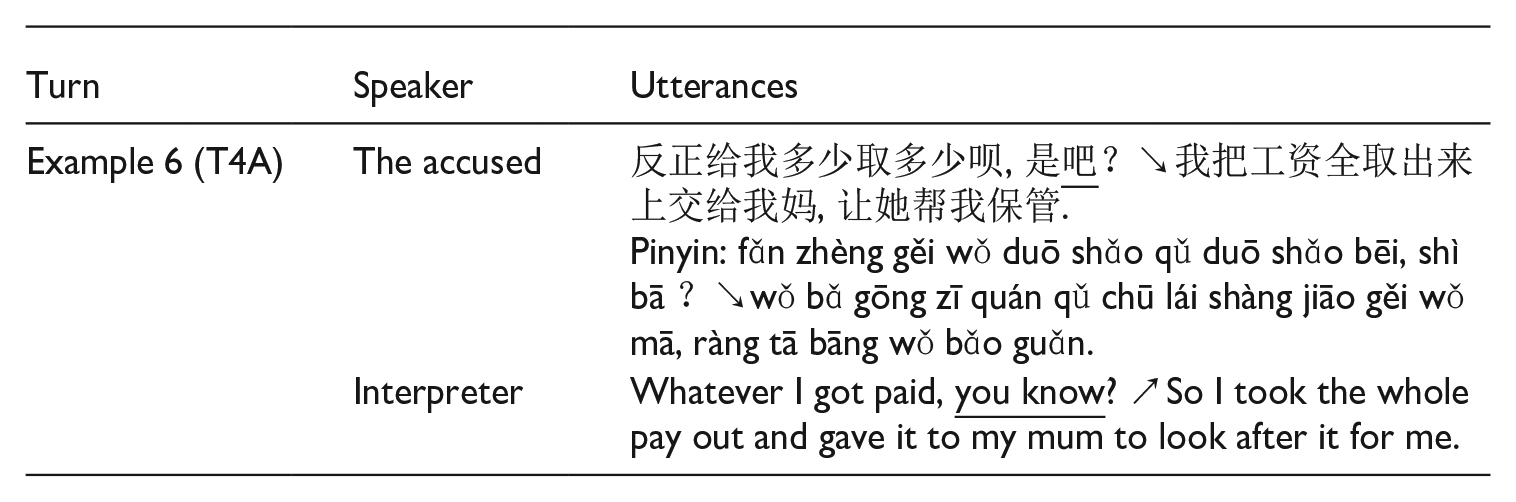
In Example 6, ‘吧(bā)’ was originally used to mark a tag question in Mandarin Chinese. The formulation of tag questions in Chinese usually starts with a statement and ends with a descending intonation plus a question mark punctuation. The particle marker ‘吧(bā)’ was preceded by an affirmative word ‘是(yes/right/alright)’ and marked by a descending intonation, which signifies a confirmation-seeking tone with a further aim to manipulate the hearer to believe the defendant’s previous statement. Using the marker ‘吧(bā)’ in the tag question also made the original affirmative statement less intrusive than the single declarative without any tag. However, in one interpreted version, the marker was translated into the English discourse marker ‘you know’ with a rising intonation. Although the manipulative effect was somehow preserved, the illocutionary force was intensified, as the original ‘yes’ tag question in Mandarin Chinese was rendered into a positive declarative with a tag question in English. A more pragmatic equivalent version could be ‘right’ with a rising intonation to signal a negotiable tone.
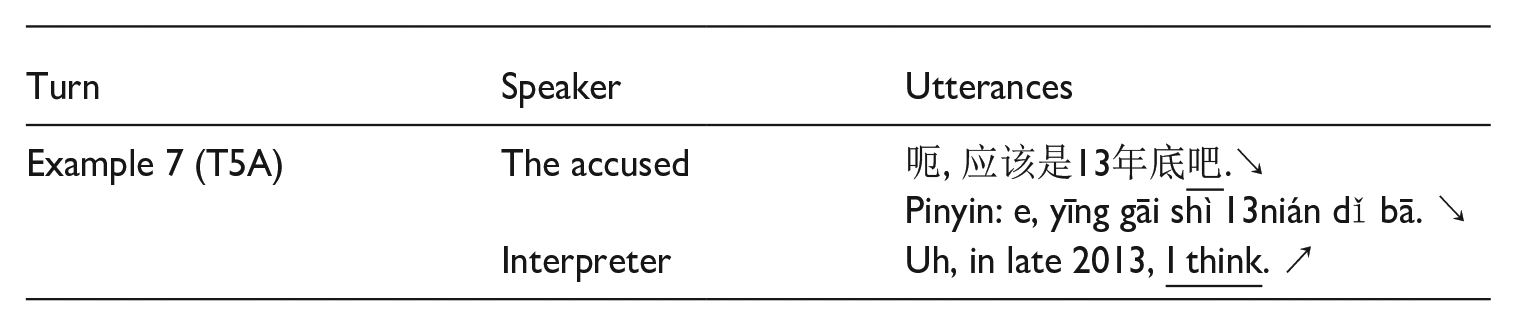
In Example 7, the marker ‘吧(bā)’ was originally used with a falling intonation to signal a softening tone. The use of the marker made the speaker sound less certain about the exact timing. It could potentially avoid any further face-threat when a self-contradictory statement was exposed later by the opposing counsel in the courtroom cross-examination. Combined with the preceding hesitation marker ‘eh’ in Mandarin Chinese, the illocutionary force was weakened even with the presence of a Chinese modal verb ‘应该(should)’. However, in one interpreted version, the marker was reproduced as ‘I think’ with a rising intonation. Although the rising intonation and the expression ‘I think’ preserved a similar level of uncertainty, the original form was not retained with the use of ‘I think’. A more pragmatic equivalent suggestion could be ‘supposedly late 2013’ with a rising intonation.
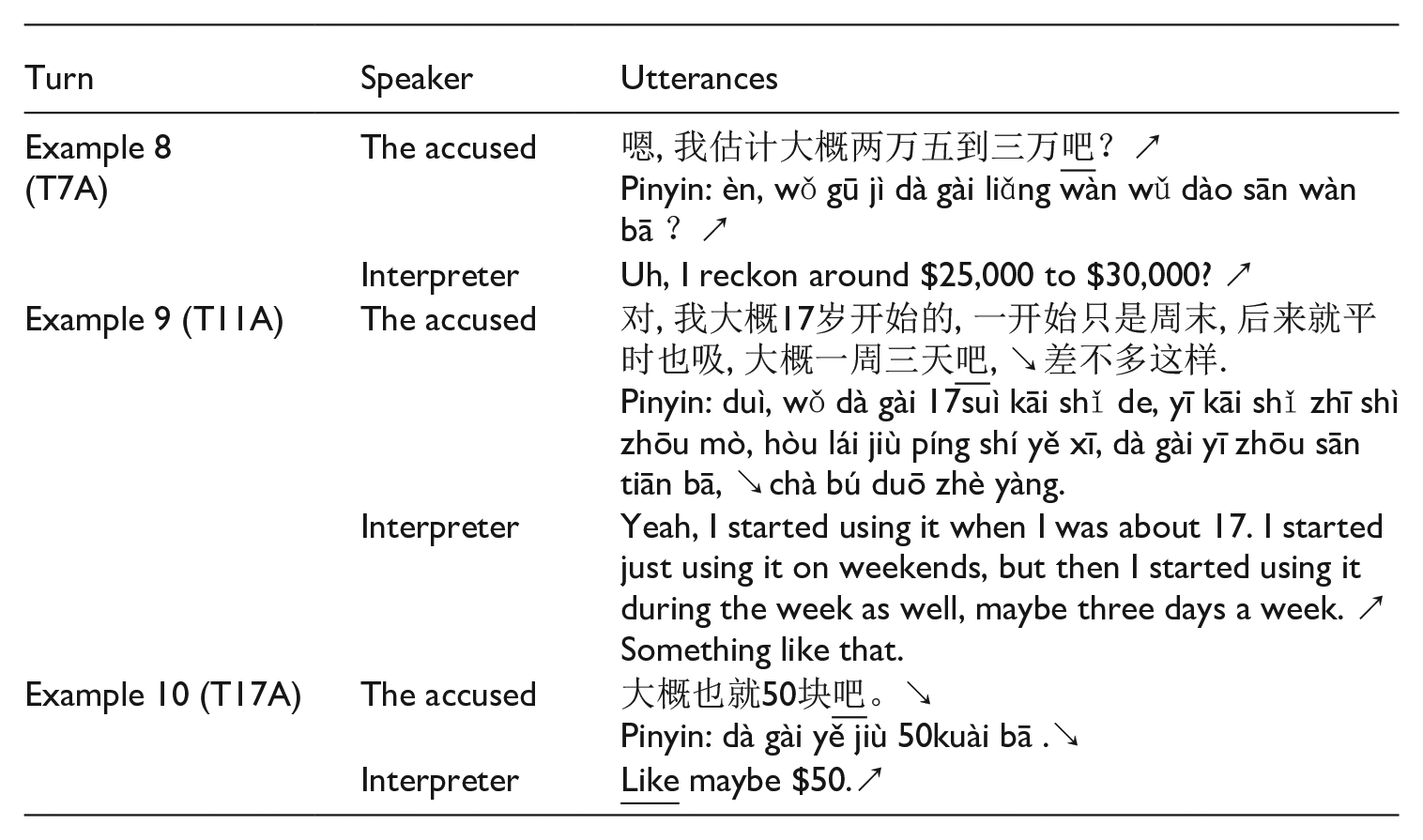
In Examples 8, 9 and 10, the marker ‘吧(bā)’ was used at the sentence-final position with the hedge word ‘大概(probably)’ in Mandarin Chinese at the sentence-initial position. Whether with rising intonation or not, the combination of the marker and the hedge word was often used as a hedging device in Mandarin Chinese. The use of hedging is to soften the effect and avoid further face-threat when contradictory statements were presented before the court. In most of the interpreted versions shown above, the original intonation was preserved, except in Example 10, in which a rising intonation was used to replace the original descending intonation. Together with the hedge word ‘大概(probably)’, the use of the rising intonation strengthened the effect.
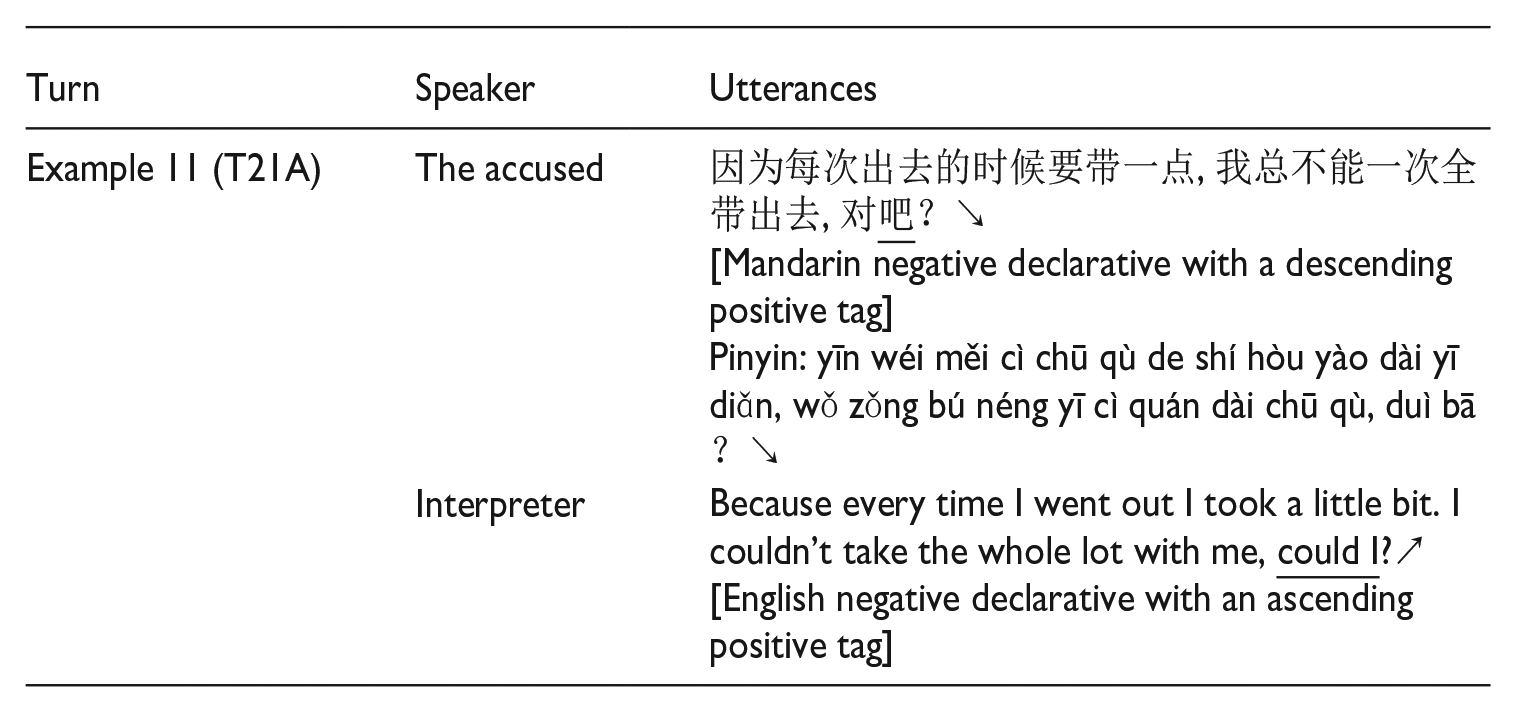
In Example 11, the original marker was used as a particle in a negative declarative with a yes tag ‘对(right)’, marked by a descending intonation. Such a combination signalled a manipulative tone, in which the accused was seeking confirmation from the hearer to buy into his version of the event. However, in the rendered version, the marker was translated into a negative declarative with a positive tag marked by a rising intonation. Although the grammatical formations in Mandarin Chinese and English differ, the pragmatic effect was somehow preserved.
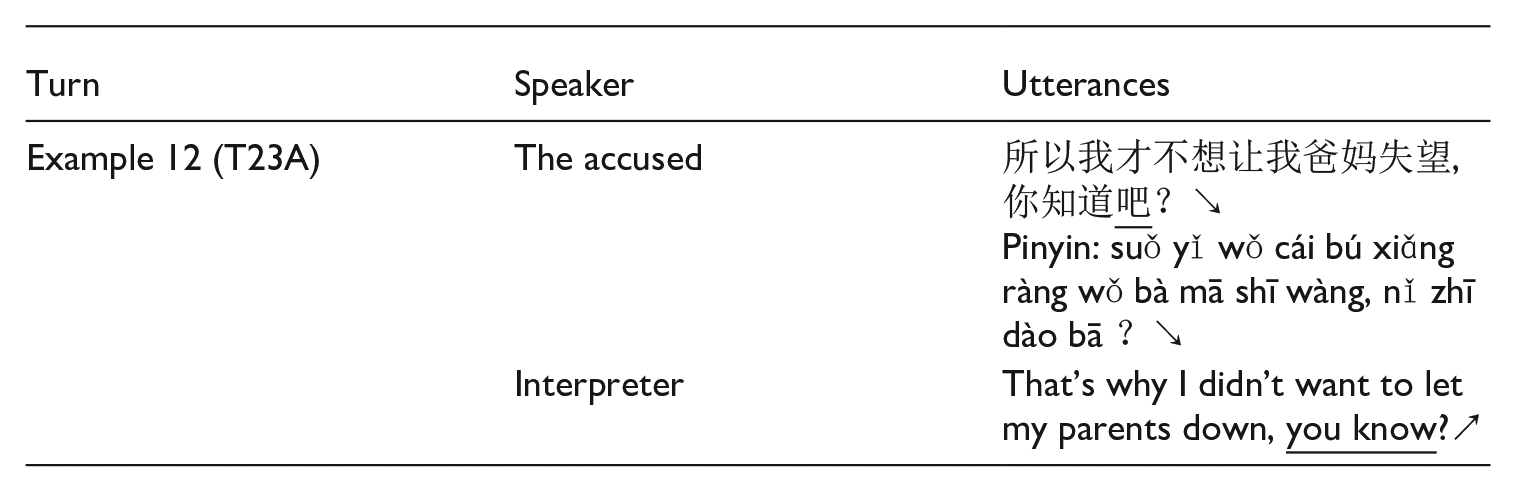
Similarly, in Example 12, the original marker was used as a tag question preceded by the Chinese marker ‘你知道(you know)’ with a falling intonation. Such a combination signified a manipulative tone, as the speaker intended to seek agreement from the hearer. However, in the rendered version, the intonation was altered to a rising intonation. One explanation for the frequently altered intonation in the interpreted utterances was that the use of the marker ‘吧(bā)’ in the Chinese language was mainly associated with uncertainty in response to questioning. Particularly when the use of such marker was prefaced by the hedging device, the interpreter might habitually use the rising intonation to mark the uncertain tone, which resulted in the alteration of intonation from the original utterances.
To sum up, our data revealed two pragmatic functions of the marker ‘吧(bā)’: as a hedging device to soften the effect and avoid face-threat and as a manipulative device to seek agreement or confirmation. Depending on the neighbouring words and the grammatical formation, the marker ‘吧(bā)’ can be used as part of a tag question with varying intonation. In the interpreted versions, alterations were found, either in form or in effect. The results of such alterations could shift the illocutionary force and impact the hearers’ perceptions of the power expressed in the original utterances.
The use of ‘呗(bēi)’ in examination-in-chief answers and their interpretations
In the data, 6% of all instances of markers in examination-in-chief answers were related to the use of the Mandarin Chinese particle marker ‘呗(bēi)’. According to Zhao and Shi (2015), the particle marker serves four functions as an attitudinal marker: indicating the speaker’s impatience, dissatisfaction, insensibility and helpless situation. In our data, the only example of the use of the marker ‘呗(bēi)’ is shown below.
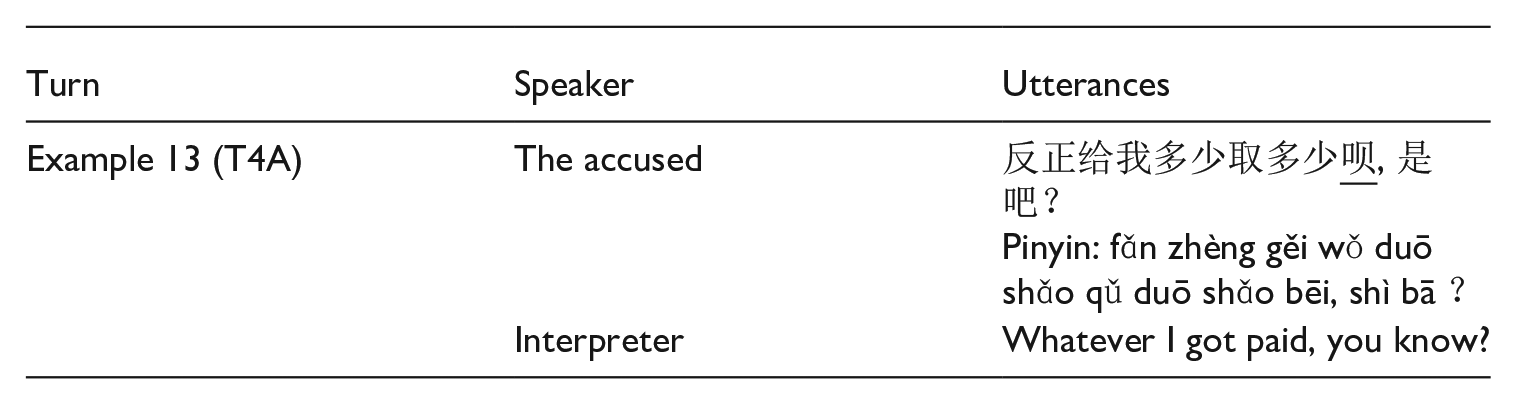
In Example 13, the marker ‘呗(bēi)’ was part of a declarative with a positive auxiliary tag ‘是吧(alright)’ at the final position. Together with the use of ‘反正(anyway)’ in the initial position, the use of the marker ‘呗(bēi)’ here indicated the speaker’s lack of patience. However, in the interpreted version, the expression ‘反正(anyway)’ was omitted, let alone the level of impatience indicated by the particle marker ‘呗(bēi)’. The illocutionary force and effect were altered. A more pragmatic equivalent version could be, ‘Anyways, I took whatever amount that was given to me, alright?’.
To sum up, the only case of the use of the marker ‘呗(bēi)’ in the courtroom examination answer indicated the speaker’s impatience. However, the pragmatic force and effect were altered in the interpreter’s rendition, which may have further implications for the hearer’s perceptions of the speaker’s credibility in court.
The use of ‘嗨(hài)’ in examination-in-chief answers and their interpretations
In the data, 7% of all markers in examination-in-chief answers were related to the use of the Chinese particle ‘嗨(hài)’. According to Tian (2016), the marker ‘嗨(hài)’ has five main functions in Mandarin: (1) to express regret or remorse; (2) to attract attention, (3) to express doubt or surprise; and (4) to express disapproval. In our data, there was only one case involving the use of ‘嗨(hài)’, as shown below.
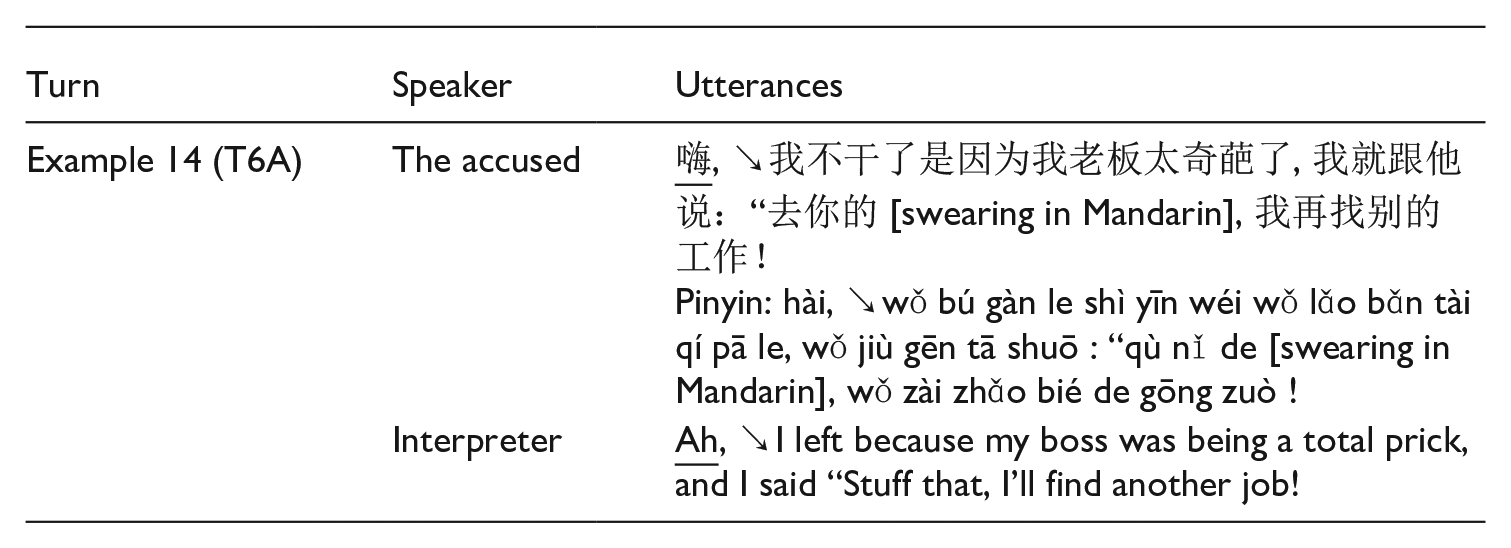
In Example 14, the marker ‘嗨(hài)’ was used at the sentence-initial position with a falling intonation. It functioned as an interjection, expressing frustration towards something that happened that cannot be easily changed or something beyond one’s power or control. In the case above, the speaker’s frustration towards his boss in his last job was explicated by the use of the marker ‘嗨(hài)’ with an intensifying sound volume. However, in the English rendition, the marker was reproduced as a way of sighing in English, which somehow preserved the pragmatic force and effect.
The use of ‘啦(à)’ in examination-in-chief answers and their interpretations
In the data, 7% of all instances of markers in examination-in-chief answers were related to the use of the Madarin Chinese particle ‘啦(à)’. According to Cui (2019), the marker ‘啦(à)’ could be used to express joy or cheer, exclamation and indicate evidentiality. In our data, the example involving the use of the marker ‘啦(à)’ is shown below.
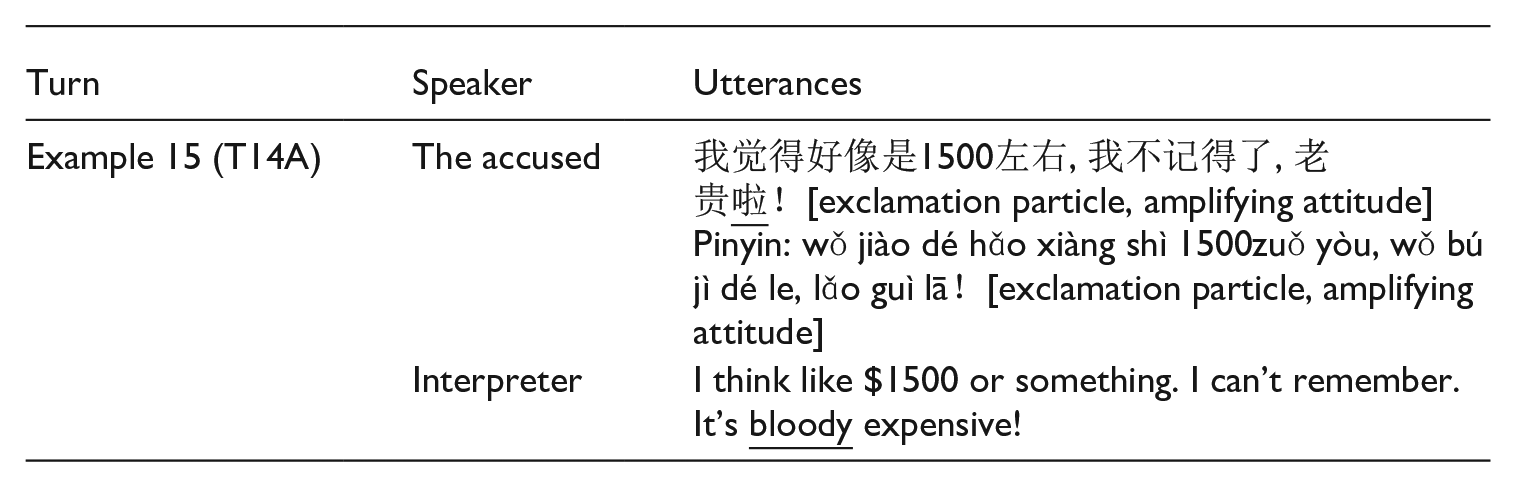
In Example 15, the marker ‘啦(à)’ was used as a modal particle that signified an elevated emotion or force. It appeared at the end of a sentence with an exclamation mark. The marker ‘啦(à)’ here served as an independent parenthesis in a sentence, following the use of a ramifying adverb ‘老(very)’ and its subsequent adjective ‘贵(expensive)’ in Mandarin Chinese. However, in the English rendition, the marker was rendered into a more forceful tone expressed by ‘bloody expensive’.
Conclusion
The present article presented findings from a larger experiment research study that assessed the factors that impacted the accuracy of the less-investigated interpretations of the manner of speech by Australia-based professional interpreters in court remote interpreting settings. The focus of the present paper is discourse markers. To be more specific, this article examined the pragmatic accuracy of the practitioners’ interpretations of five Mandarin Chinese discourse markers ‘啊(a)’, ‘吧(bā)’, ‘呗(bēi)’, ‘嗨(hài)’ and ‘啦(là)’ in the examination-in-chief answers, using a collection of analytical models and the discourse analysis method.
In the original examination-in-chief answers, it was found that (1) phonologically, the markers were used in combination with prosodic features, rising or falling intonation; (2) lexically, discourse markers in our data were predominantly modal particles that appeared at the sentence-final position or interjections at the sentence-initial position; (3) syntactically, they were grammatically optional or syntactically independent. However, without the discourse marker, the grammaticality of the utterance remained intact; (4) semantically, they carried little or no propositional meaning, which means that even if the discourse marker was removed from the utterance, the semantic relationship between the elements they connect remained the same; (5) pragmatically, they assumed several functions. For example, in our data, the marker ‘啦(à)’ was used to express exclamation; the marker ‘嗨(hài)’ indicated exclamation; the marker ‘呗(bēi)’ signalled impatience; ‘吧(bā)’ served to reduce face-threat, soften the effect, or indicate manipulative speech by seeking confirmation or agreement; ‘啊(a)’ was used to soften the effect or indicate the speaker’s incredulity, depending on its associated four-tone intonation in Mandarin Chinese.
However, in the interpreted utterances, it was found that interpreters generally disregarded discourse markers in Mandarin Chinese, as evidenced by omissions, alterations and substitutions, which could shift the illocutionary force and effect. Two possible explanations could be: (1) discourse markers were deemed as irrelevant to the message and hence considered disposable; or (2) an inherent translation difficulty found in the lack of direct pragmatic equivalents that would carry the same illocutionary force. Therefore, it was argued that such disregard for discourse markers in Mandarin Chinese could have further implications for the hearers’ perception of the credibility of the testimony, the evaluation of the speaker’s trustworthiness, and even the judicial outcome of the case.
Due to the limited scope of this article, the present article only examined the use of five Mandarin Chinese markers in the examination-in-chief answers found in our interpreting performance data obtained from the remote interpreting experiment on Zoom. Further research is needed to investigate the motivations or explanations for the disregard of discourse markers and other speech style features in remote settings, perhaps with the help of language-specific focus group interviews or online questionnaires.
Footnotes
Appendix
Transcription symbols used in the present study.
| Symbols | Description |
|---|---|
| DM | Discourse markers |
| PM | Politeness markers |
| Fil | Fillers |
| Hed | Hedges |
| . . . | Hesitation |
| Swr | Profane language |
| Mod/Amp | Softening or strengthening tone |
| Self | Self-correction |
| Rep | Repetitions |
| Fal | False starts |
| ↑↓ | Ascending or descending intonation |
Declaration of conflicting interests
The author declared no potential conflicts of interest with respect to the research, authorship, and/or publication of this article.
Funding
The author disclosed receipt of the following financial support for the research, authorship, and/or publication of this article: The research project is funded by the HDR Essential Costs Funding, UNSW Sydney.