



Abstract
Unlike traditional note-taking with pen and paper, in which the note-taking process is only partially accessible to the co-participants, note-taking in the digitalized workplace may be done publicly, so that both the content of notes and the process of writing them are observable to the co-participants. Using multimodally oriented conversation analysis, this study focused on public note-taking in interaction sequences where the facilitator of a workplace project records the results of a workshop discussion on a digital platform. The analysis revealed that while the facilitator was entitled to decide which portions of talk are recorded, the affordances of digital technology, its publicness in particular, enabled the co-participants to monitor the writing process, possibly leading to the editing of notes. The results show that even when note-taking is publicly performed, it is oriented to as an informal form of writing.
Introduction
Note-taking is a form of informal writing in which information derived from a source is recorded in a document. It is often thought of as a simple practice of recording what one has heard. However, as Reinig and Sprain (2019) convincingly show, note-taking is a complex communicative practice that is conducted for a specific purpose. That purpose varies. A broad distinction can be made between the personal and organizational use of notes. Students’ lecture notes, taken for the purpose of enhancing learning (e.g., Chen, 2021), are an example of the former. Personal notes may also be taken by professionals during various kinds of institutional activities. For example, Svinhufvud (2016) shows how counselors take notes during student counseling sessions (see also Hazel (2020) on theater directors’ and Ro (2021) on student tutors’ notes). These notes are not shown to the students; instead, they are for the counselor’s personal use in preparing for future sessions. In many cases, however, notes are intended for organizational use. This is the case, for example, in producing minutes of a meeting (McEachern, 1998; Wolfe, 2006). Other note-taking practices, such as participants recording their reflections on post-its, can also be used in meetings (Reinig and Sprain, 2019). In organizational contexts, real-time note-taking is often a preliminary form of writing that at a later stage leads to a more formal document. For example, notes taken during a meeting may be edited into minutes (McEachern, 1998) or some other form of report (Reinig and Sprain, 2019).
Note-taking, when carried out as part of different interactional encounters such as in meetings or counseling sessions, is essentially an interactional practice. In such situations, it is important that the note-taking process can be observed by the other participants. Thus, the embodied activity of writing notes can also serve interactional purposes. For example, Svinhufvud (2016) shows how, through writing, a counselor in student counseling indicates that what the student is saying is somehow important, ‘noteworthy’ (see also, Pälli and Lehtinen, 2014). In some instances, writing instruments, such as a pen and notepad, can be used for interactional purposes even without any actual writing being done. For example, an embodied orientation to them can be used to accomplish activity shifts (Hazel and Mortensen, 2014). At the same time, however, it may be important for note-takers to display that they are listening to their co-participant while taking notes through, for example, producing continuers that display recipiency (Nielsen, 2021).
However, note-taking is usually only partially accessible to the other participants. As Svinhufvud (2016) notes on student counseling, the situation is asymmetric in that the student can see that writing is taking place, but not exactly what is being written. This asymmetry can be alleviated through various practices. Mortensen (2013) shows how writing can be made accessible through reading aloud what one is writing. It is also possible to reposition the document so that one’s co-participants are able see it or even to let them handle the document themselves (Jakonen, 2016, see also, Ro, 2021). In some contexts (De Stefani et al., 2016), the interactants may have interactional practices for agreeing on what should be included in notes, such as displaying joint affiliation with what has been said. Such agreement does not, however, eliminate the asymmetry of access. Nor does it mean that the exact wording of the notes is necessarily identical to what has been said. This asymmetry also makes it possible for the note-taker to edit the notes if they need to be published later. This is the case, for example, when recording the minutes of workplace meetings (see, McEachern, 1998).
Note-taking can, however, also be done in a public, accessible way, either on a whiteboard or on a digital platform that is projected onto a screen. Here, we analyze such a case. Other types of collaborative public writing have previously been studied. For example, Mondada (2016) examined how decisions made at a grassroots democracy meeting were recorded on a blackboard; Asmuß and Oshima (2012) investigated how a strategy text projected on a screen was edited by managers; and Nissi (2015) analyzed how a project group constructed a public statement. These studies show how the participants have interactional practices for agreeing on what should be written and how non-writers monitor the public writing process. They also show that the writing platform – for example, a blackboard versus a digital application – and instruments may have significance for the writing. For example, Mondada (2016) found that using a blackboard enables mobility: the writer can choose to move closer to or further away from the blackboard. In this sense, we can say that different platforms have different affordances that enable different interactional practices (for affordances, see Hutchby, 2001). For this study, the technological affordances of the digital platform were found to play an important role in the activity of note-taking. However, as Orlikowski (2000) notes, users do not always use the technology as anticipated by the designers but may adapt the technology to suit their own purposes.
However, all the above-mentioned studies concern the construction of finalized publishable documents (Asmuß and Oshima, 2012; Nissi, 2015), or, in Mondada’s (2016) case, collectively agreed-on proposals. In this sense, they differ from note-taking, which is a more ad hoc and informal form of writing. In this article, we analyze public note-taking conducted on a digital platform that is accessible and observable by the participants in the interactional encounter. The study addressed the following research questions: (1) How is public note-taking interactionally organized? and (2) How are the affordances of the digital platform utilized in note-taking? Aided by the results, we discuss the nature of note-taking as a communicative workplace practice and the effect of digital technologies on this practice.
Data and methods
Our data come from a development project concerning a major organizational change in the information system of a large white-collar company. We are interested in the work of the team responsible for training the members of the organization. An important part of the team’s work consists of regularly organized workshops and an internally used digital platform called Howspace, which is a collaborative workspace with dialogic functions, such as polls, queries, and a chat function, designed especially for participant interaction in facilitator-led workshops. The agenda and materials of each workshop are documented in Howspace. In the present project, the progress of the workshops and use of Howspace are managed by an internal facilitator.
The data comprise video-recordings of both face-to-face and remote workshops. Onsite meetings were recorded with two cameras, one recording from the front of the room and the other recording from the back of the room, including the screen onto which Howspace was projected during the meetings. The remote meetings were held using Microsoft Teams and recorded by the facilitator. Our analysis focuses on sequences where the facilitator selects something from the ongoing discussion and writes it down. We collected all the notes as screenshots from Howspace and looked at the video-recordings of the workshops to identify the sequences from which the note originated. The data comprise 39 notes from five workshops, each lasting about 2 hours.
From our perspective, Howspace offers two important tools: a text widget and a chat function (Figure 1). The text in Figure 1 is in Finnish, but we do not provide a translation at this point, as we do not analyze its content.
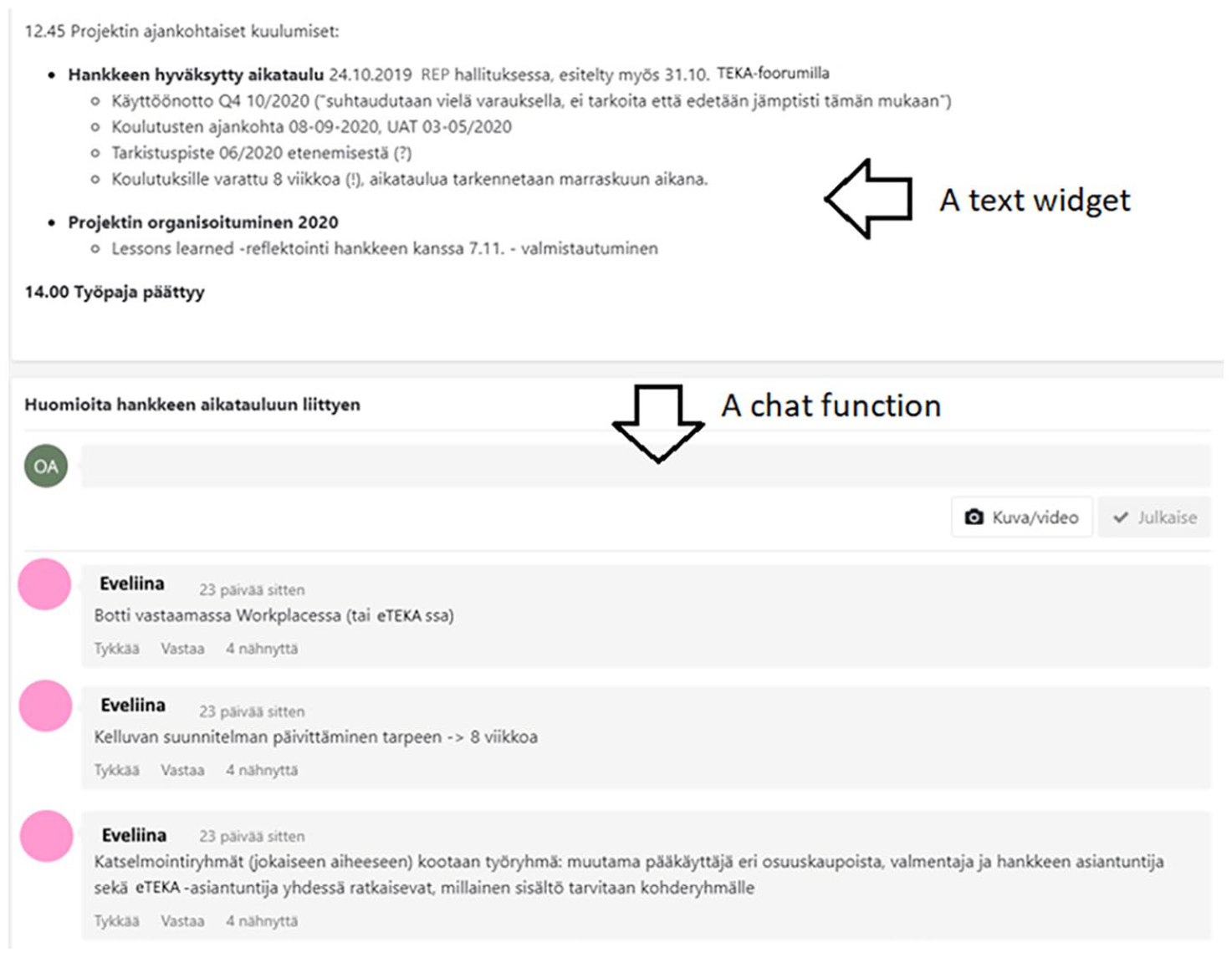
A screenshot from Howspace.
The top of the screenshot displays the meeting’s agenda, which is implemented using a text widget. A chat function, including comments from the meeting’s participants is located below the agenda. Our aim is to show how both of these spaces are used for note-taking. First, in principle, all the participants of the workshop can use the chat for discussion. However, as Figure 1 shows, comments in the chat may in some instances be made by just one person. That person, Eveliina, is the facilitator of the workshops and often takes responsibility for writing down the results of the team’s discussion. Thus, the discussions on the platform may seem like monologs. However, when we look at the video-recordings of the workshop, we discover that these are notes taken during a discussion in the workshop. Second, in cases where a text widget is used for note-taking purposes, the facilitator, by virtue of her role as chair of the meeting and her administrative rights, has both the technical and institutional authority to edit the notes. Viewing the video-recordings reveals that only some parts of the agenda were written beforehand, while the remaining notes are taken during the face-to-face discussion. In both cases, importantly, the notes are written by one person, but in a way that is visibly accessible to the co-participants.
In analyzing the data, we have relied on the conversation analytic principle of looking at interaction as a sequentially unfolding social activity (Schegloff, 2007). We have taken the multimodal nature of interaction into account, meaning that we see the note-taking sequences as verbally, bodily, and materially produced (see Mondada, 2016). We have looked at the written notes on the platform and at the sequences of talk-in-interaction from which these notes originated. In addition, by drawing on the concept of affordance (in the digital context, see Meredith, 2017; in the organizational context, see Vyas et al., 2017), we sought to better understand how the features of the digital platform are used for note-taking in organizational encounters. Thus, the concept of affordance enables us to delve into the ways in which the technology used reshapes workplace practices.
Analysis
In the first analysis section we show how a shared screen was used as a resource for making the note-taking public. In the face-to-face workshops, Howspace was projected onto a screen in a meeting room, and in the virtual workshops, the facilitator shared her screen so that all present had visual access to the note-taking process. The extracts demonstrate how the team members participated in the note-taking by monitoring it and the consequences of this for the note-taking process itself. In the second analysis section we report what consequences the affordances of the two tools had for the practice of note-taking in the present instance. We found that while various tools support note-taking and differences exist between onsite and remote participation, the participants oriented to the note-taking activity as an informal organizational practice, thereby distinguishing it from other collaborative writing practices in workplaces (e.g., Asmuß and Oshima, 2012; Nissi, 2015).
Shared screen as a collaborative note-taking resource
This analysis section illustrates, how the digital platform enabled the participants to monitor the writing process, and how they oriented to note-taking as an informal form of writing. Example 1 shows the whole trajectory of an instance of note-taking where a note is written based on something said that is deemed noteworthy. The example is from a face-to-face meeting where the facilitator uses chat for note-taking. Each extract is presented along with the note made by the facilitator on Howspace, followed by a transcription of the workshop discussion which gave rise to the note. The activity of writing is marked  in the transcription. Since there are differences in word order in Finnish and English, we give a word-by-word gloss of the note in Extracts 1 and 3, as in these extracts it affects the placement of the writing in the transcription.
1
in the transcription. Since there are differences in word order in Finnish and English, we give a word-by-word gloss of the note in Extracts 1 and 3, as in these extracts it affects the placement of the writing in the transcription.
1
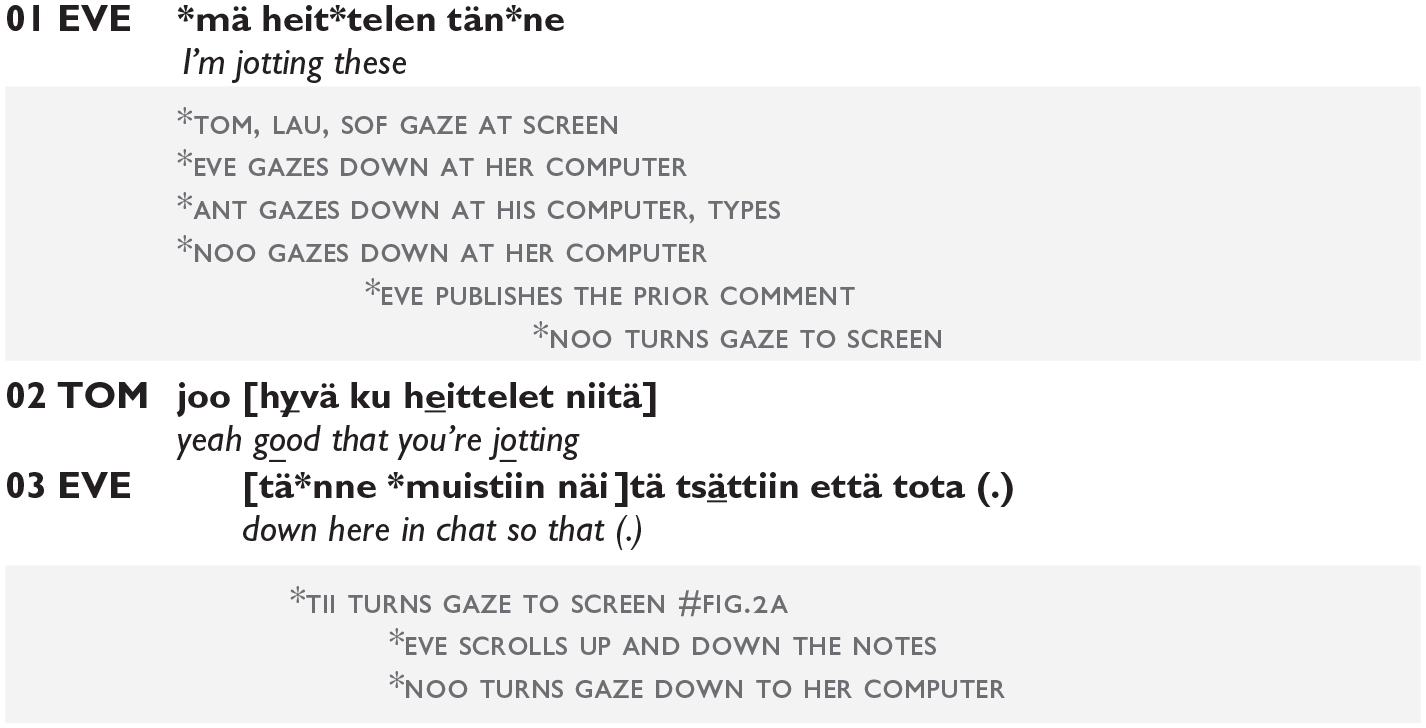
In the example, the team members are looking at the timetable planned for the project and commenting on it in the expectation that the facilitator will relay their comments to the upper management who issued it. The facilitator, Eveliina, has just written a note. At the beginning of the extract, she is posting the note on chat while simultaneously making a metalinguistic comment on note-taking.
has+effect enormously big+GEN group+GEN calendars+to
Has an effect on the calendars of a huge group of people
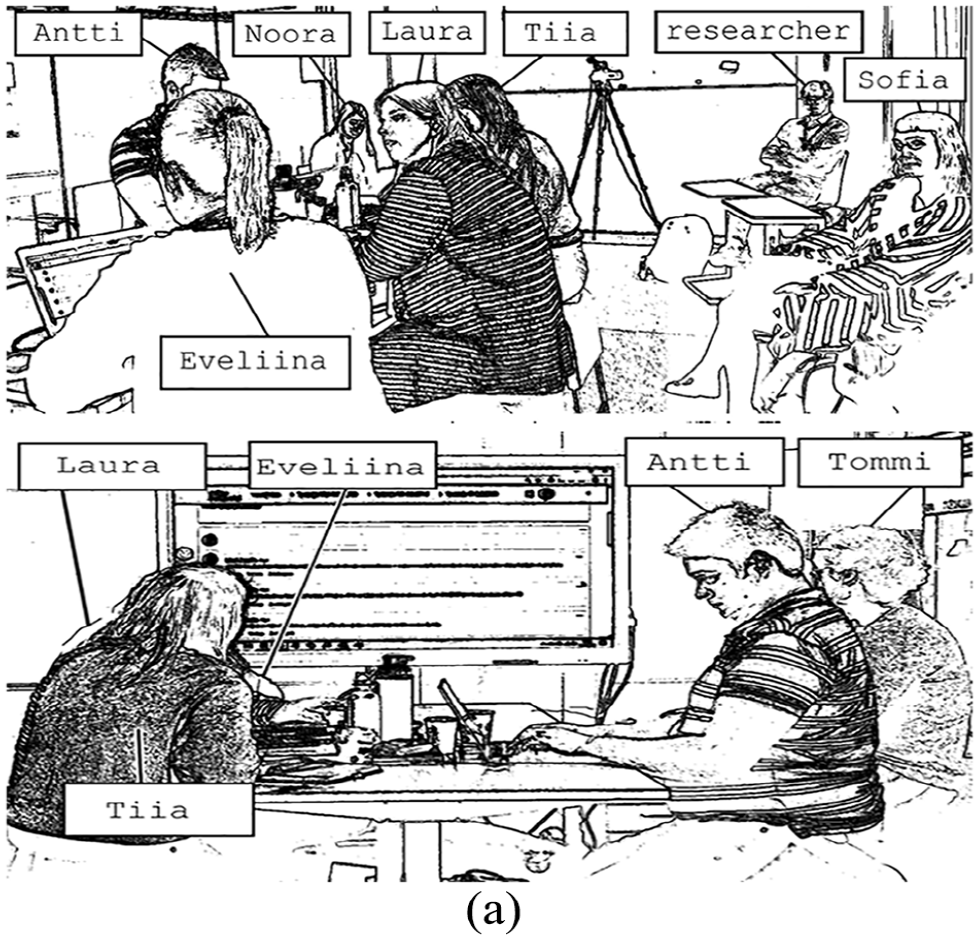
Participants monitoring the writing process.
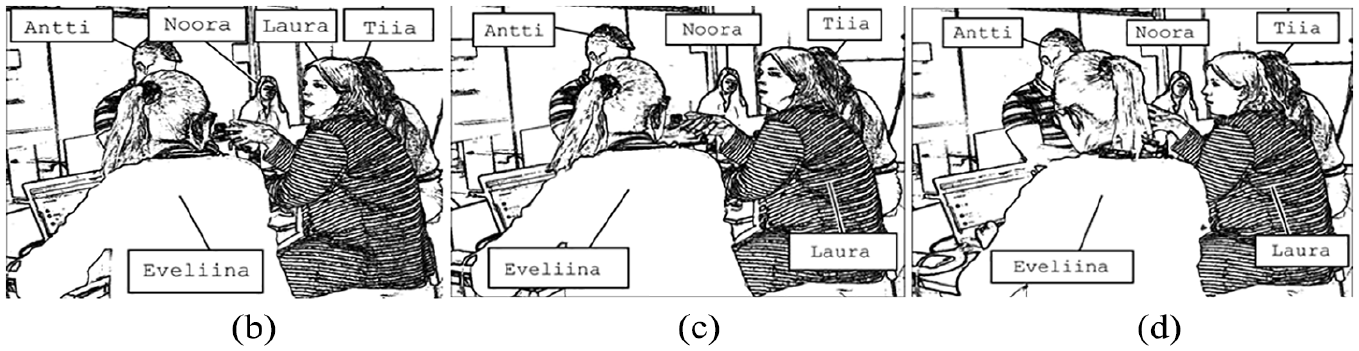
Laura’s gaze toward Eveliina,
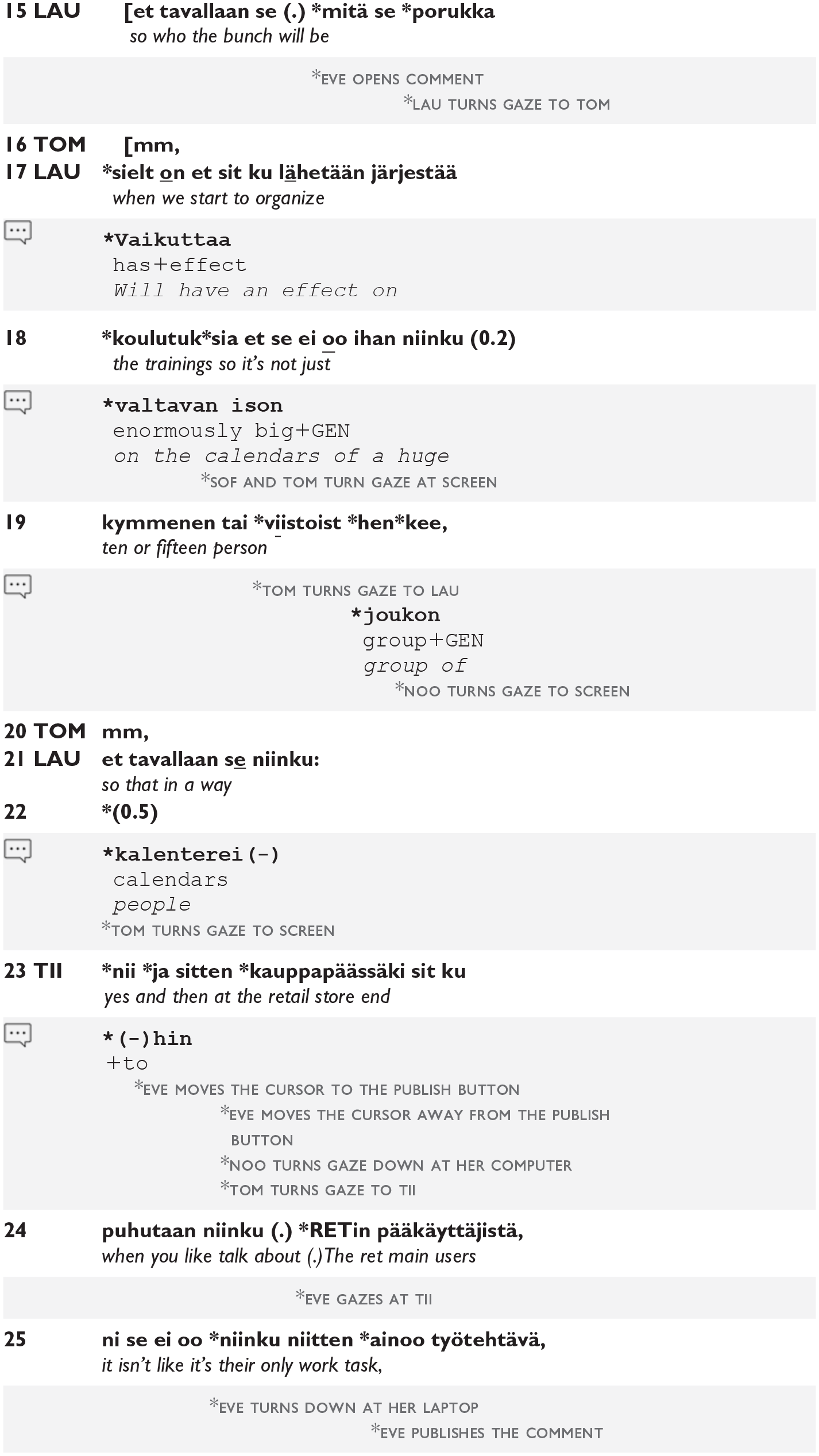
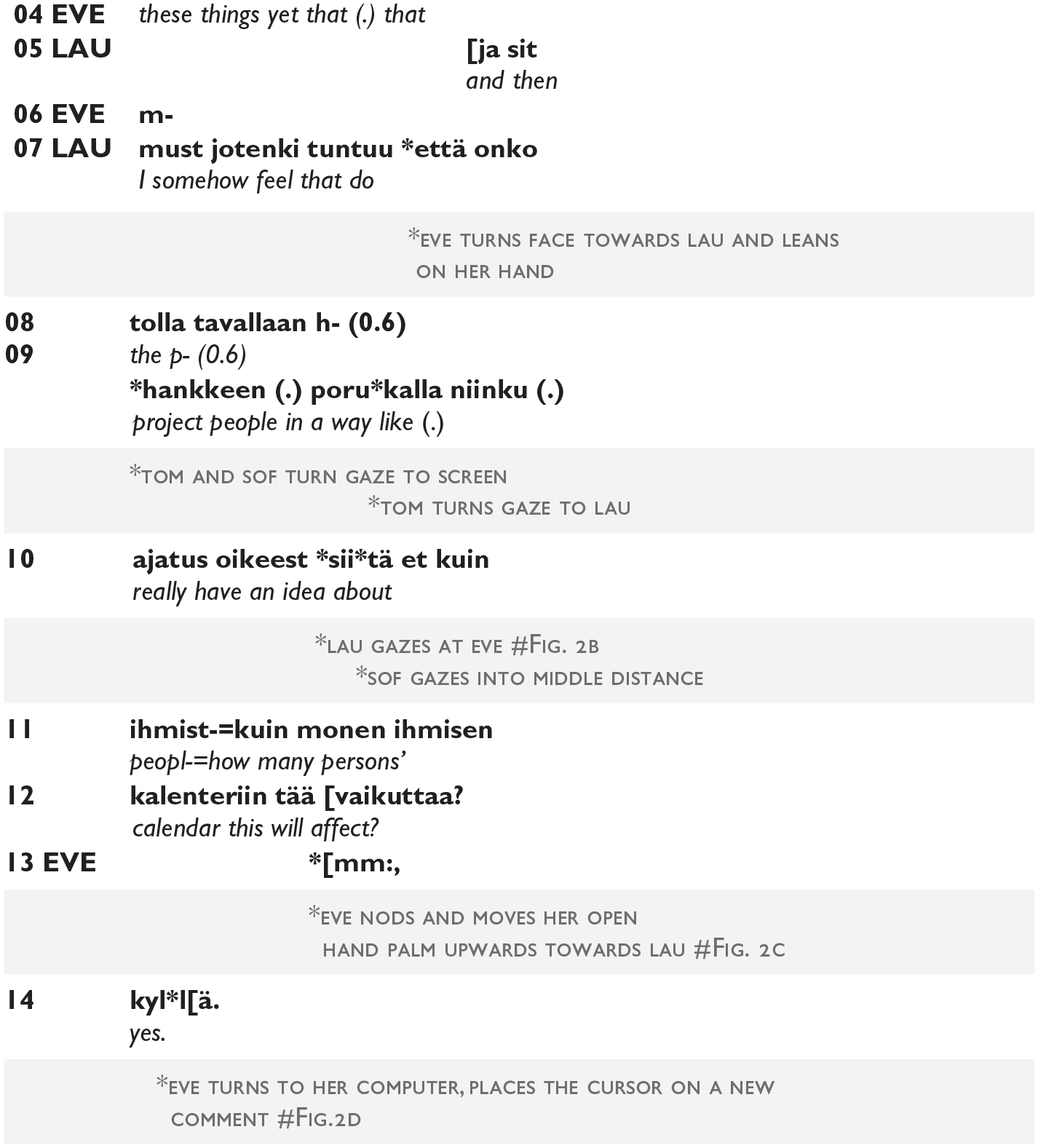
The gist of Laura’s comment (lines 7–12) is the idea that the timetable will influence the everyday work of a lot of people via their ‘calendars’ as she says. She presents this comment as an implicit critique of the upper management, wondering aloud whether they have taken this fact into consideration. On lines 17–23 Eveliina writes down her version of this comment, which includes the gist, but leaves out the more personal, critical aspects of Laura’s comment. Next, we offer a couple of ideas about how the public nature of the note-taking process affects – and does not affect – the note-taking activity itself.
It is clear that the public nature of the writing, the fact that the participants can see what is written on the screen, makes it possible for them to monitor the writing as it happens. We can see from their direction of gaze that some of the participants are doing this (Figure 2(a)). Tiia gazes at the screen throughout Laura’s comment and the writing process, while Tommi and Sofia alternate between gazing at the screen and elsewhere in the environment. However, Antti’s gazes down at his computer the whole time, and Noora raises her gaze from her computer toward the screen for only a brief moment (line 19). This kind of participatory structure is representative of the whole data set. While note-taking publicly makes it possible for those present to monitor the writing, they seem to be under no normative expectation to do this. We would contend that this has to do with note-taking being treated as a fairly informal type of writing, compared to other kinds of public writing. To delve further into this aspect of note-taking, we look at the trajectory of the note-taking process in context of the relevant talk, that is, how an idea is presented as potentially noteworthy, how the decision to produce the note is made procedurally, and how talk and monitoring are intertwined with the act of writing.
Laura’s turn indicates that what she is saying is something to be recorded in writing. She begins her turn with the continuation marker ‘and then’ to signal that what comes next is related to the overall assignment of the workshop, which is to make observations about the project schedule. Her turn is thus designed as a contribution to fulfilling the task presented on Howspace (‘observations about the schedule’), thereby signaling that something relevant may be coming. While making her initiative, Laura gazes at Eveliina (Figure 2(b)), which may also indicate Laura’s wish that her concern be recorded.
Eveliina orients to the relevance of recording what Laura has said by first turning to face Laura (line 7). She leans on one arm and gazes intently at Laura, thereby displaying active listening. The shift in Eveliina’s activity from listening to note-taking is indicated with a writing initial nod (see Svinhufvud, 2016) and an open palm gesture (Figure 2(c)). Eveliina acknowledges the idea (lines 13–14) and assumes a typing position by turning to her laptop and placing the mouse cursor in a new comment space (Figure 2(d)). Immediately after assuming that position, she starts writing down portions of Laura’s talk. In our case, unlike in some other forms of public writing (Mondada, 2016; Nissi, 2015) and forms of note-taking where the notes are written for a third party (De Stefani et al., 2016), it seems that there is no need to legitimize the act of writing through collective affiliation by the other participants. Instead, as is often the case, the facilitator alone gets to decide whether the idea is relevant enough to be documented. By not asking for affiliation from her co-participants, Eveliina treats Laura’s comment as self-evidently recordable. The other participants accept the facilitator’s right to do this. Thus, the participants orient to note-taking in this context as an informal practice that does not require them to agree on the specific form of the notes.
The varied orientation to monitoring observed here is in line with the informality of the practice. This does not mean, however, that monitoring is random. It seems clear, for example, that monitoring is especially important for participants who want their comments to be written down next. This can be seen, first, in the beginning of the extract where Eveliina finishes jotting down the note she has been writing and posts it. Laura gazes intently at the screen while Eveliina writes (Figure 2(a)) and begins her turn, overlapping with Eveliina’s metalinguistic comment (line 5). Thus, monitoring the screen is important for the timing of talk. A similar pattern can be seen during Laura’s turn. Tiia, who takes the next turn and offers her idea to be written down, gazes at the screen throughout Laura’s turn. She begins her turn, overlapping slightly with the act of writing, as the last syllable of the word kalenterei
Lastly, we can see an orientation to monitoring in Eveliina’s metalinguistic comment at the beginning of the extract. In explicating her note-taking activity, she says that she is writing the notes tänne ‘here’. Thus, she orients to the platform, together with the screen, as a joint space, implying that it can be seen by everybody.
Note-taking was also performed in the remote workshops. The situation was similar in that Eveliina shared her screen so that both her mouse movements and the online writing were potentially observable by all the participants. However, especially since the participants’ cameras were not switched on, there was no way for them – or the researchers – to know whether the others were in fact monitoring what was happening on the screen. They could not see each other’s gaze or even whether the others were present in the meeting when they were not talking. However, as we show in the analysis of Extract 2, an orientation to monitoring also occurred in these meetings.
Below, the participants are, once again, discussing the planned timetable of the project, and Eveliina is recording their comments in the platform text widget. The extract starts at the point where Eveliina begins orienting to writing.
For Kari preferably no provider information trainings on weeks 36 and 37.
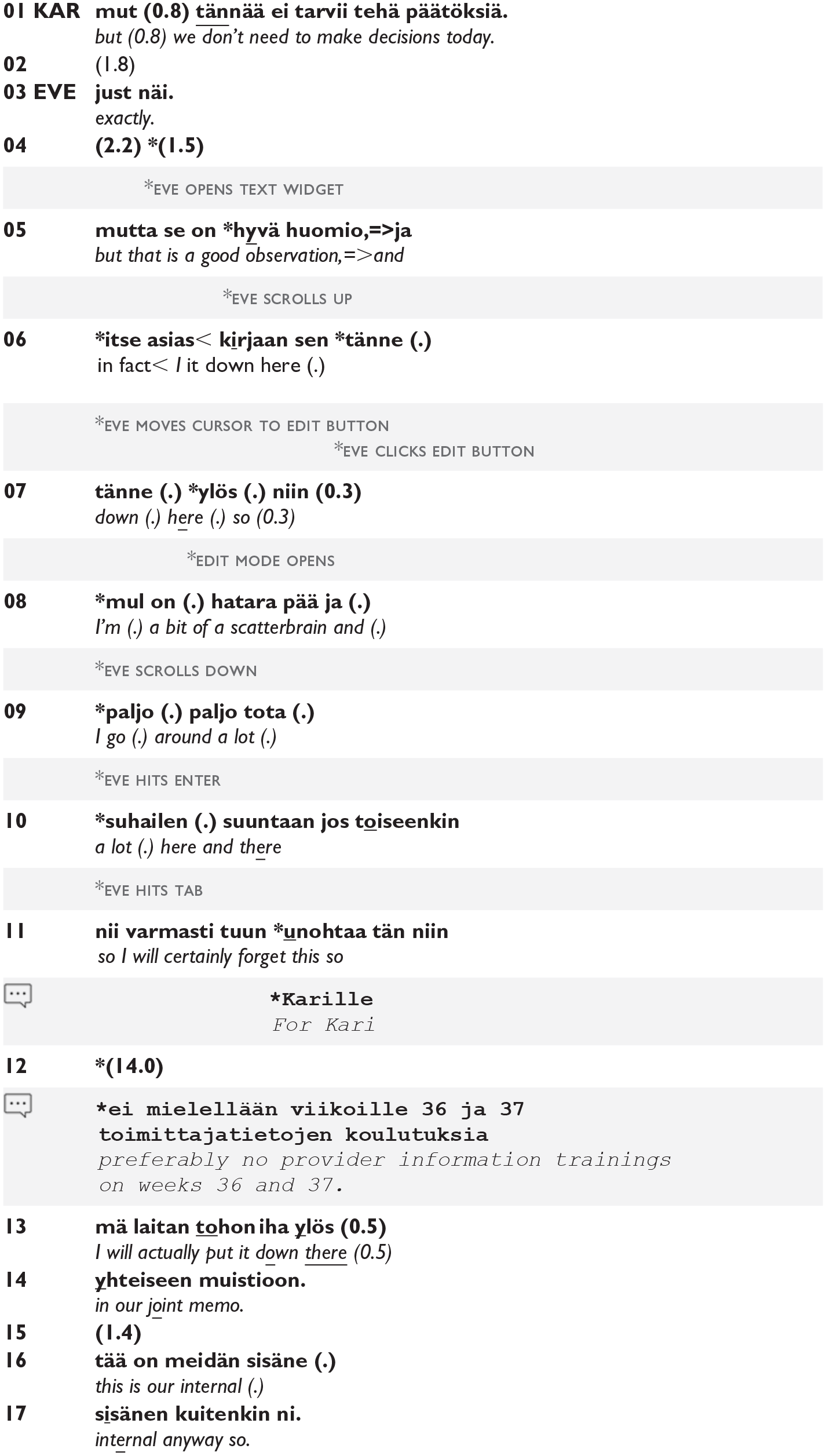
This case resembles Extract 1 in that the decision to record parts of the talk is made by Eveliina alone. After Kari has finished his comment (line 1), Eveliina produces a strong agreement token: just näi ‘exactly’ (line 3). After a quite long pause (line 4) she assesses Kari’s comment positively (line 5), and then says that she will record it on the platform (lines 6–14). She does not seek agreement on making the note, and no-one comments on this. Thus, she orients to writing the note as her own decision. This can also be seen in her mouse movements while she is talking. She begins making preparations for writing already during the pause on line 4, when she opens the text widget. She also moves the mouse cursor to the edit button, clicks on edit in the beginning stages of her commentary on her note-taking (line 6), and starts writing while still speaking (line 11). Thus, she does not wait for any kind of confirmation before starting the writing process.
As in Extract 1, Eveliina displays her orientation to the possibility of monitoring during her metatalk about writing by using the proadverbs tänne ‘here’ (lines 6–7) and tohon ‘there’ (line 13) when referring to the platform. These proadverbs presume that the space where the writing happens is accessible to the participants, and thus they can observe what she is writing. Also, at the end of her metatalk, she explains that the platform is their ‘joint memo’ (line 14), and ‘our internal’ (presumably she means ‘memo’ here as well, although the noun is missing). This last bit is interesting in many ways: First, she explicates the ‘jointness’ of the platform, that is, it is meant for the whole team. Second, she calls it a muistio ‘memo’ and thus implicitly depicts the activity as one of note-taking. Third, she points out that the memo is ‘internal’ (line 16), which is in line with the informal nature of the writing. It is not meant for a third party, at least not in its present form, and thus there is no need to refine the form of the entries.
We also notice the occurrence of a 14-second silence (line 12), during which Eveliina does most of the writing. Although we have no knowledge of what the other participants are doing, we can note that as nothing else happens in the meeting during the writing, monitoring is the only meeting-relevant activity publicly available to the participants.
In this section, we saw how the shared screen enables the monitoring of note-taking and how it enables the participants to follow what is written down and to calibrate their comments in writing. In this regard, note-taking in an organizational encounter can be seen as a collaborative practice, through which the team makes their discussions shared and retrievable in the future. However, this does not mean that everyone in the encounter actively takes part in the note-taking process. Instead, monitoring is necessary only for those who want to make further comments. Thus, the participants in this context seem to orient to note-taking as an informal form of writing in which the facilitator plays a central role in deciding what is recorded.
Affordances of the digital platform as shaping note-taking
As previously stated, Howspace offers two tools that can be used for note-taking. Interestingly, neither of these tools was specifically designed for note-taking: the chat function is intended for interaction between (remote) participants and the text widget for use by the facilitator in sharing instructions or information. This section examines how the technological affordances of these tools shape note-taking practices. In addition to informality, the analysis shows how the present participants oriented to another principle of note-taking, that is, the principle of one idea per note. By focusing on the practice of editing the notes, the analysis shows how these principles are oriented to in both cases, only in different ways.
In the case in which notes are documented by using chat, the note can be edited after publishing by right-clicking the note and choosing ‘edit’. In these cases, the participants may have contributed additions or reformulations of prior comments, which would be relevant to include in the same note. Extract 3, in which Tessa makes a quick addition leading to editing the note after publishing it, is a case in point.
Original note:
production+environment+GEN technical PL preparations what means and who concerns
Technical preparations of the production environment – what does it mean and who does it concern?
Note after edit:
Technical preparations of the production environment – what does it mean and who does it concern? Are there effects on trainings and education data?
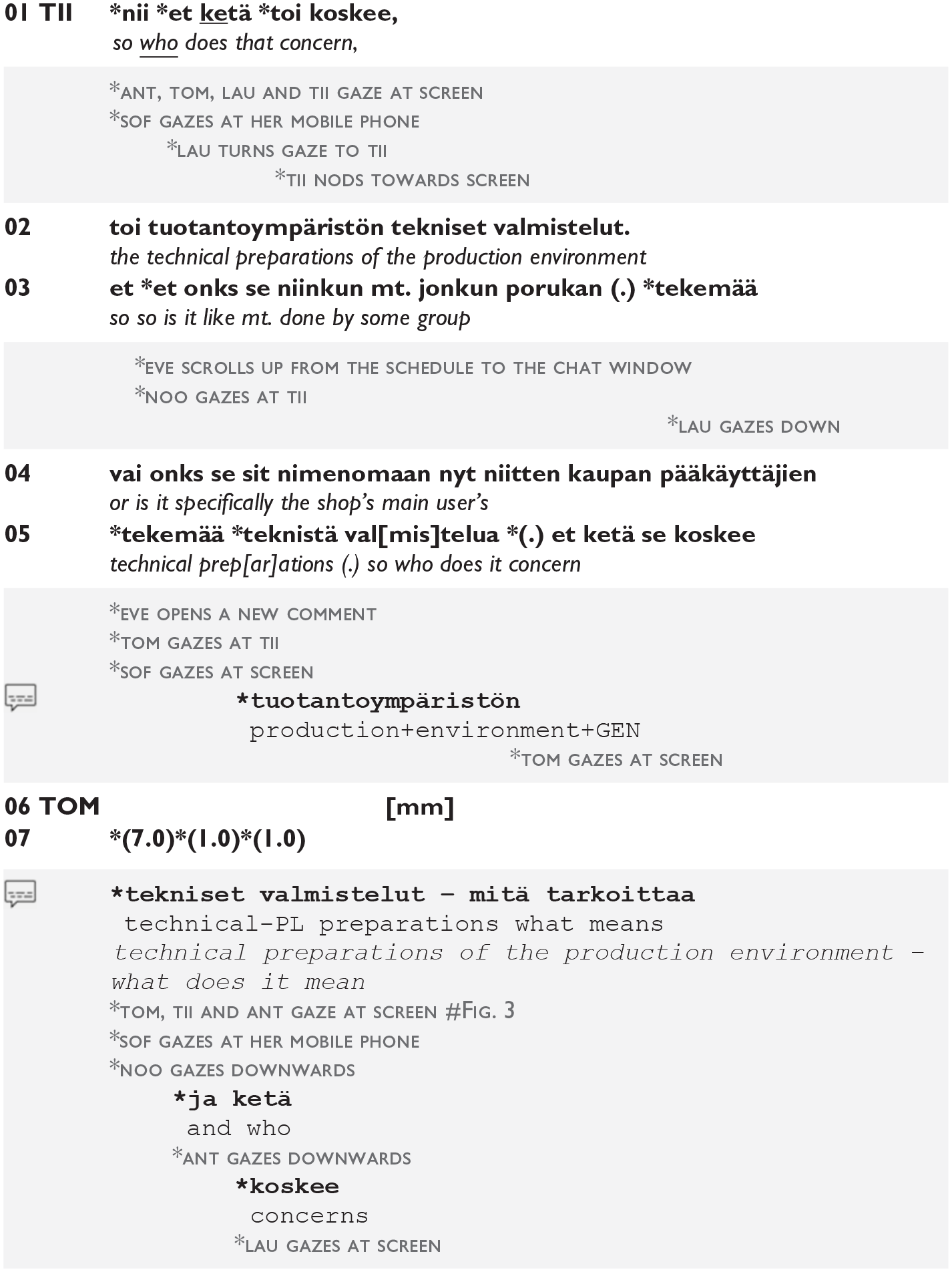
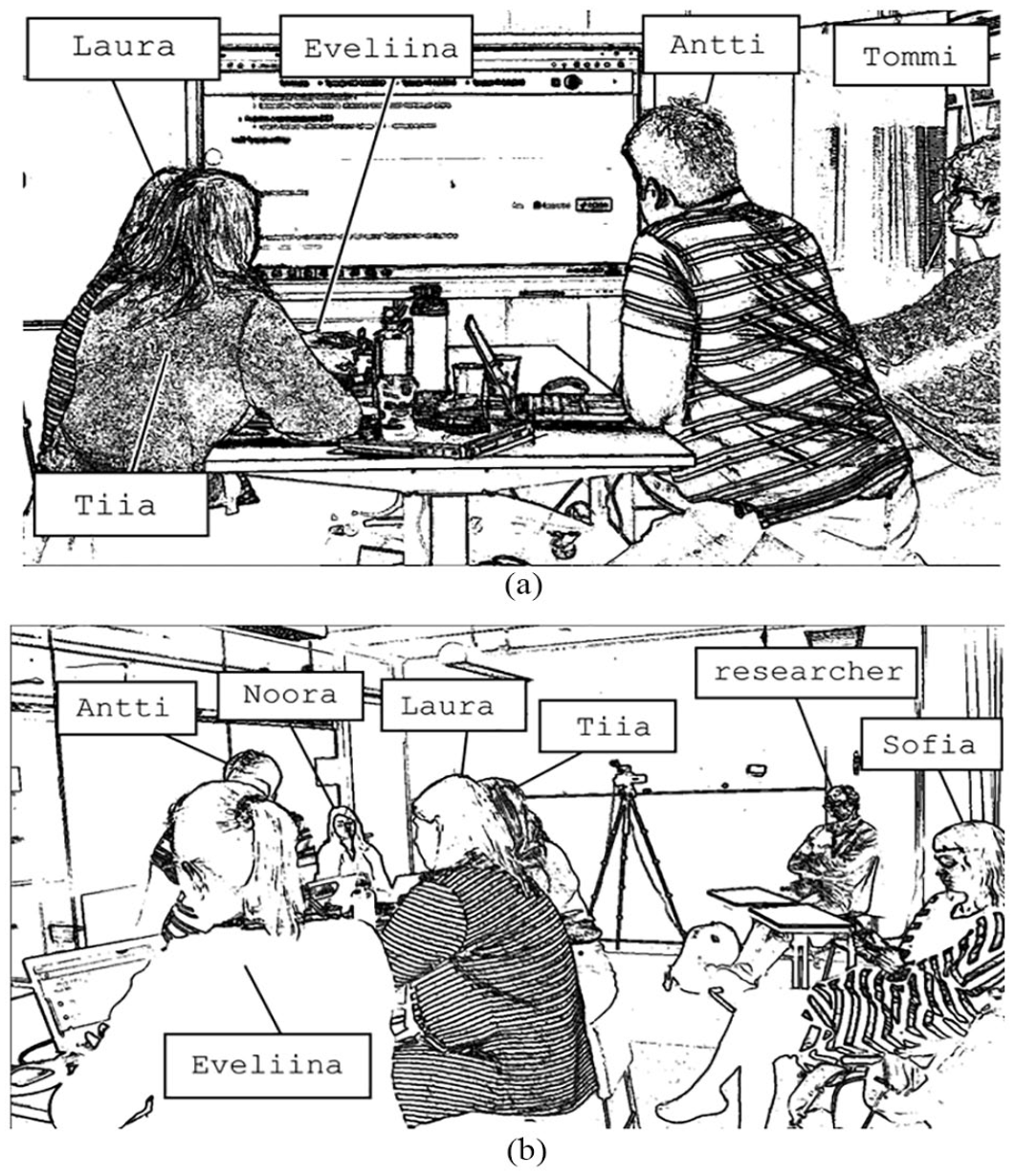
Some participants monitoring the writing (cam. 1),
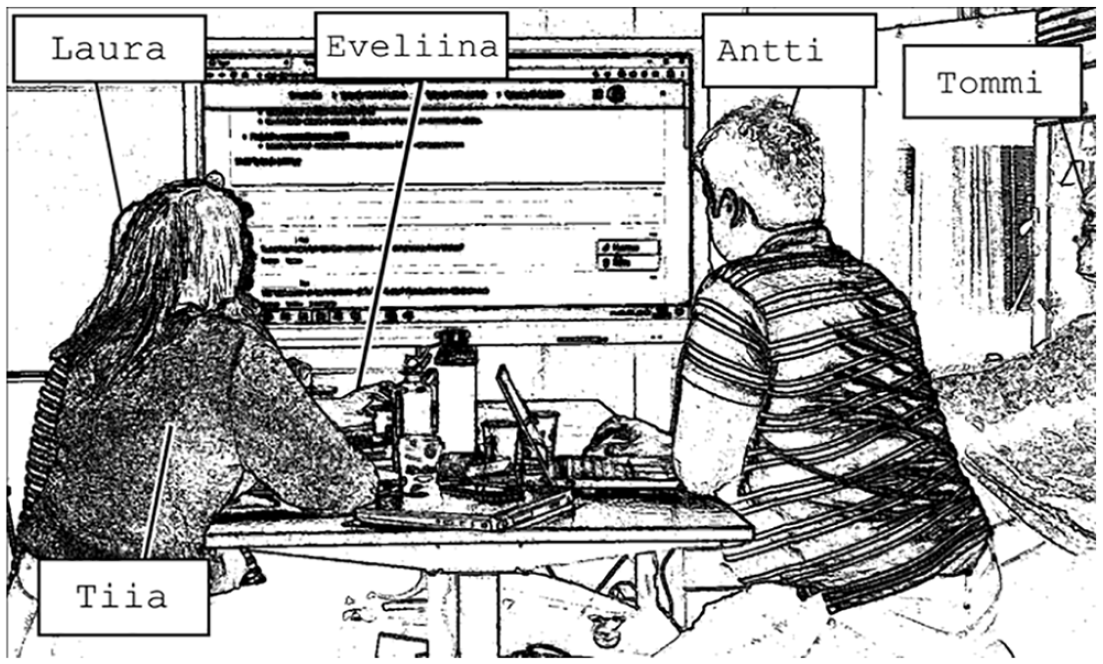
Opening of the editing mode on Howspace.
The extract starts with Tiia’s turn prefaced by nii et ‘so’, which indicates that her upcoming turn is a reformulation of the preceding talk (see Sorjonen, 2018). On line 1, she summarizes the team’s discussion on a specific part of the project schedule by outlining the main issue (‘who does that concern’). The facilitator treats this reformulation as relevant by shifting from the activity of discussion to that of writing. The typing itself takes place in silence and is again monitored by some of the participants (Figure 3). At the end of the typing activity, Eveliina seems at first to consider the recorded question as partially irrelevant (lines 8–10). However, with ‘but good to specify’ (line 10) she treats the recorded question as an item that needs to be addressed by someone else. What follows is interesting from the perspective of the note-editing process.
Simultaneously with her verbal turn, Eveliina treats the note as completed by publishing it on the platform. At the same time, Tessa overlaps Eveliina’s turn with the continuation marker ‘and’ (line 11). Although it is impossible to see Tessa’s gaze or body posture in the video, the way she utters her addition with a quick ‘and’ conjunction after the publication of the comment implies that she has monitored the typing and is using the record-thus-far (see Komter, 2006) as a resource in proposing her addition. It seems that Tessa waits until the note is finished before orienting to the next turn. Thus, the extract demonstrates how monitoring can display participants’ understanding of the completion of the topic, and how they use it to coordinate their talk so that similar topics are included in one note.
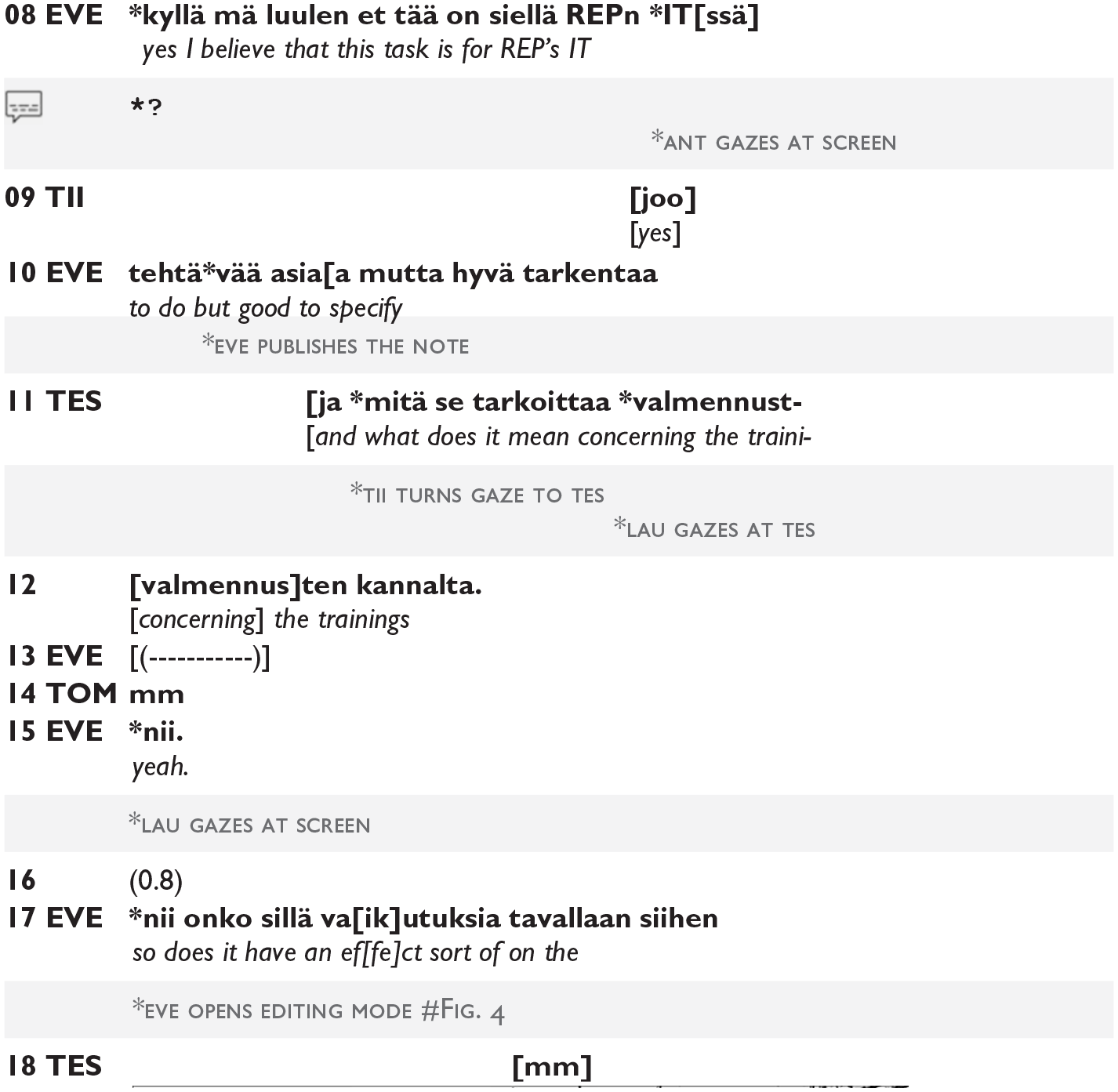
On lines 15–17, Eveliina reorients to typing, which implies that something in Tessa’s turn is noteworthy. She moves the mouse cursor to the ‘edit’ button (Figure 4), which enables her to make changes to the existing comment. Thus, Eveliina treats Tessa’s turn as an addition that is so closely linked to Tiia’s prior turn that they must be incorporated into the same note. While opening the editing mode and starting to write, Eveliina displays agreement, which is followed by a reformulation of Tessa’s turn: ‘does it have an effect’ (line 17). Although the idea was originally presented by Tessa, the facilitator ends up formulating the note using her own words. Thus, it seems that while the participants can affect the content of the note, the facilitator decides what form it takes.
The extract shows how the affordance of editing in the chat tool enables the separation of ideas so that each topic has its own note. That the participants seem to orient to this principle is seen, first, in Tessa’s initiating of her turn with the continuation marker (line 11) and, second, in Eveliina’s activity of editing the published note (line 17). In this respect, the edit button is used as a resource to adhere to the principle of ‘one note per topic’, as it enables the reopening and supplementation of the original comment.
The effects of these affordances become even more visible when comparing the chat notes with those written in the text widget. The latter usually includes a few bullet points inserted before the workshop that are subsequently complemented in discussions with the team. Although both the chat and the text widget enable note-taking, there are some crucial differences in their affordances that affect how notes can be edited. The most important difference is the way of starting a new note. In chat, an existing note must be published before a new one can be initiated. In other words, comments cannot be left open for later complementation, a situation which leads to such cases as in the previous extract, where the note needed to be reopened. However, in the case of the text widget, leaving notes open is possible. To use this tool for note-taking, the whole agenda must be opened to the editing mode, after which it can be left open until all the notes are finalized and written down. This mode enables notes to be reorganized and complemented at any point during the discussion. Editing in the text widget is presented in Figure 5(a) and (b).
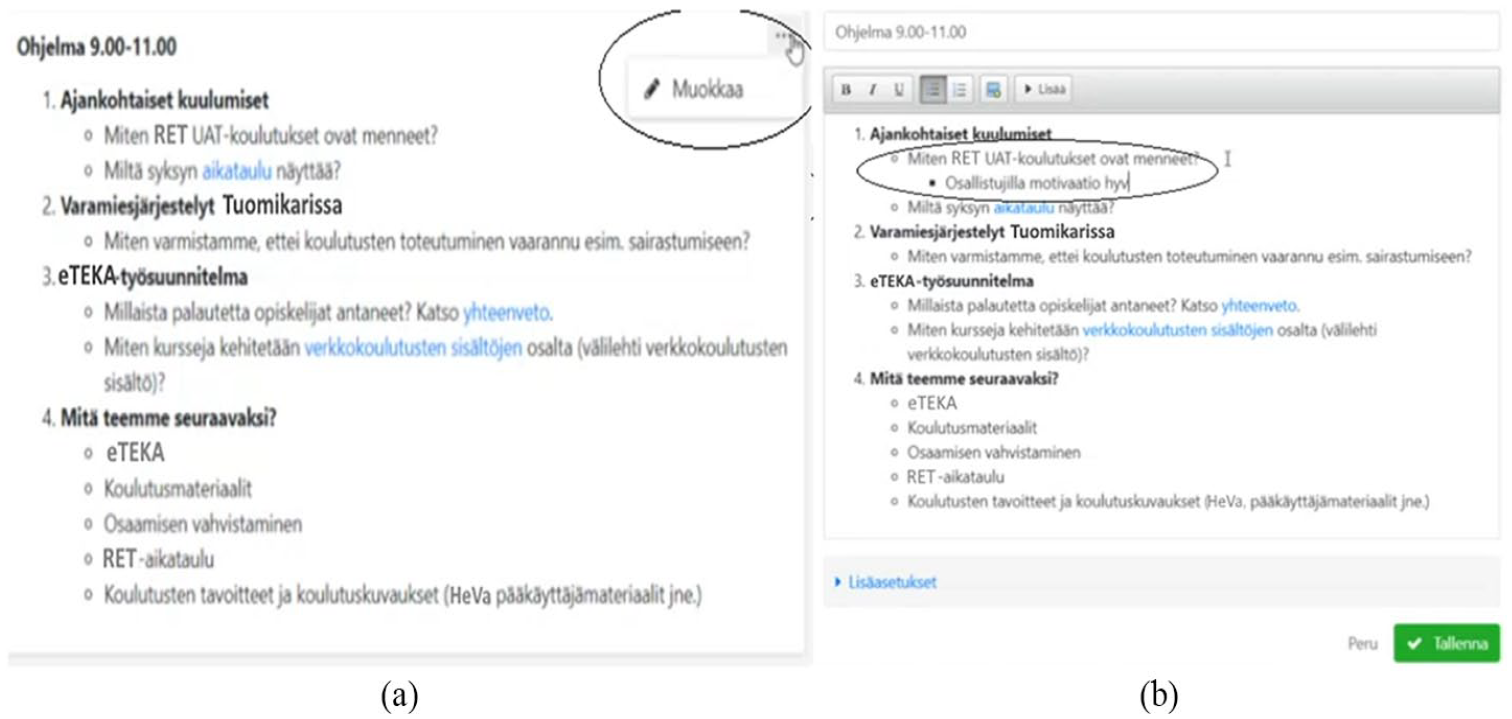
The mouse cursor on an editing button,
Figure 5(a) demonstrates the opening of the editing mode: The mouse cursor is placed on an editing button that opens the window shown in Figure 5(b). As the toolbar above the text indicates, it is possible to edit the whole agenda from this page. As Figure 5(b) also shows, the facilitator has started expanding the existing text with bullet points. In Extract 5, we show in detail how multiple notes can be produced and organized during talk. The extract comes from a remote meeting in which the facilitator has been sharing her screen with her co-participants. The topic, ‘Topical issues’, is already part of the agenda, and is now complemented with a bullet point posing the question ‘How have the RET UAT trainings been going?’ Before the extract, Eveliina has told the meeting some news about the trainings that she has heard from people working in the project and has now asked Kari to share his experiences. The numbers in brackets in the transcription represents the order of the notes in the final memo.
• Miten RET UAT-koulutukset ovat menneet? ○ Osallistujilla (TEKA-pääkäyttäjillä) motivaatio hyvä, asenne kohdillaan, hyvä fiilis ○ Kauppojen valmistautuminen käyttöönottoon puhututtaa (RET kohtaiset erot, viestinnälliset asiat mm. riskikirjasto, työroolit jne.) • How has the RET UAT trainings been going?
○ Participants (TEKA main users) have good motivation, the right attitude, good vibes
○ The preparation by the stores for implementation has been discussed (RET specific differences, e.g., a risk library, work roles etc.)
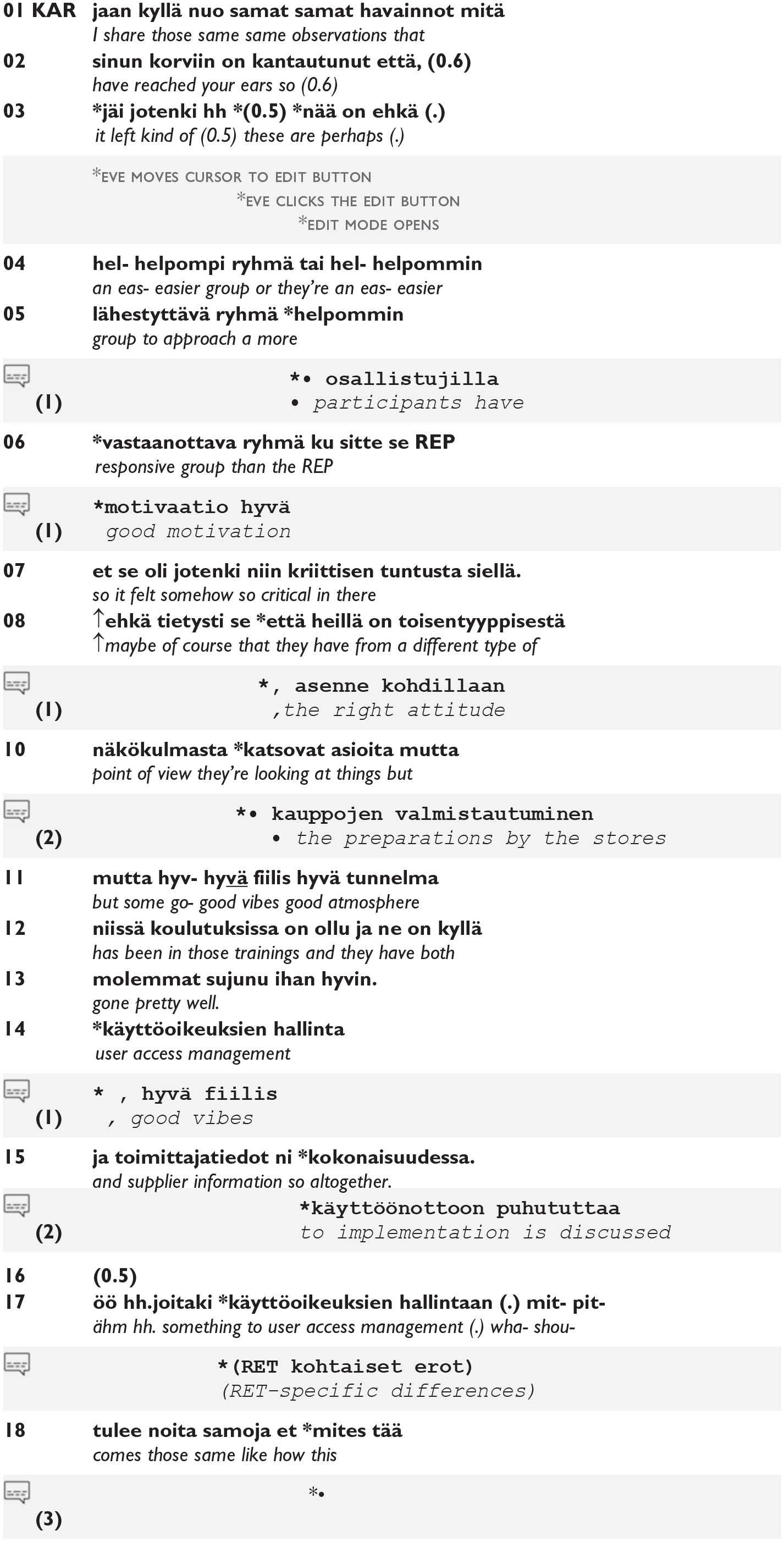
Quickly after Kari has started by saying that he shares the observations that Eveliina has heard (line 1), Eveliina opens the editing mode (line 3). It seems that she can first report what she has heard from other project members but only start writing these observations down after Kari’s confirmation. That is, Kari’s agreement renders Eveliina’s observations recordable. Next, we show in detail how Eveliina’s writing and Kari’s report are intertwined.
From the point of view of note-taking, it is important that the facilitator can shift between different notes on the agenda, as she does during Kari’s report. She may start one topic and then jump to another topic by creating a new bullet point. First, she starts typing that ‘participants have good motivation’ and ‘the right attitude’ (line 5–8), which are taken from her own talk and reflect what she has heard about the trainings. On line 10, she starts a new bullet point on ‘preparations of the stores’, which can be seen as a different topic, but still something she herself raised in her turn. However, when Kari reports something relevant to any of the topics, Eveliina shifts from one note to another to make additions to the topic in question and then continues to document other things. This can be seen on line 14, in which Eveliina shifts from writing a new note to complementing an existing note after Kari has stated that there were ‘good vibes’ in the trainings (line 11). ‘Good vibes’ is taken as a recordable item, and it is noted down. After that, Eveliina returns to the second note (line 15) and on line 18 she starts the third one, which shows that more topics are expected to occur at some point during the discussion. The extract shows how the writing of three topically distinct notes can overlap in only 1 minute by jumping back and forth between them during a participant’s report. Although the writing down of earlier comments is performed at the same time as Kari relates his news, neither Kari nor Eveliina orient to this as disruptive activity.
Compared with editing in chat, where monitoring by other participants played a key role in making additions, here the editing does not stem from active monitoring. Rather, the need for editing is triggered by something the facilitator finds recordable in the participant’s talk. In Extract 4, Kari does not seem to orient to collaborative note-taking in the same way as we observed in the previous extracts. As he does not have his camera on, it is impossible to say what he is looking at. However, while he can – and probably does – monitor what is written, he does not make his monitoring activity relevant, for example, by clearly offering his news to be recorded, calibrating his talk with typing, or making additions. In this sense, the facilitator has even more responsibility for deciding which parts of Kari’s talk are worth recording and which issues belong together. The participants seem to treat note-taking in the text widget as the facilitator’s task, rather than as a shared activity.
When notes are taken with the text widget, the editing mode is usually activated for a long time. This may be related to the fact that the tool is generally used for note-taking when the facilitator wants the team to report their experiences or other issues that are primarily meant for the internal use of the team. In these cases, the participants are given the floor one at a time (cf. multiparty discussions in previous extracts), which leads to situations where participants may address similar topics in turns that are quite distant from each other. To summarize in notes all the experiences reported, it is important that additions can be made to the existing notes. In this regard, even though the note-taking activity here differs from note-taking in chat, we can again see an orientation to the principle of ‘one note per topic’. In both cases, the idea is to collate similar issues into notes that can be easily retrieved later.
This section showed how the affordances of the digital platform impact the practice of organizational note-taking. Although neither tool was expressly designed for writing notes, we saw how creatively they could be used for note-taking purposes. In both cases, the principles of informality and incorporating one note per one topic were oriented to, only in different ways. Whereas the chat tool enabled the production of sequential notes only, the text widget afforded the form of ‘open notes’ in which their reorganization was more flexible.
Conclusion
As noted in the literature review, traditional note-taking with pen and paper is usually only partially accessible to co-participants – they can see when the act of writing happens, but they cannot see what is written (e.g., Svinhufvud, 2016). In the digitalized workplace, however, note-taking may be done publicly, so that both the content of the notes and the process of writing them are observable to all present. In this study, we analyzed public note-taking of this kind in a workplace context.
The analysis shows that note-taking in organizational encounters is a practice in which relevant comments are informally recorded. Even in two very different settings and with differing digital tools, the participants oriented to this informality in their interactions. In addition, we showed how another principle of note-taking, that is, organizing notes as separate topics, was oriented to in each case by drawing on the affordances available to the participants.
The informality of writing observed here differs from of earlier findings on collaborative writing. If, for example, we compare note-taking to Nissi’s (2015) study, where the participants wrote a joint statement, we can see important differences. In Nissi’s study, the participants were careful to secure agreement on the exact wording of the document, whereas in our case the note-taker was allowed considerable freedom to decide what to write down, and no agreement was sought before writing. We can thus see that employees in a workplace context display their understanding of note-taking as writing in which it is not the exact wording that is important but rather the future-oriented purpose of the notes.
Our study also showed how the publicness of note-taking can affect its practice. The fact that all the participants have access to the whole writing process, and hence the possibility to monitor it, has consequences for both note-taking as an interactional activity and the final content of the notes. First, the participants often calibrate their talk to the writing, such as by waiting for the writing to be completed before resuming their talk. Second, adding new aspects to the topic of an emerging note may lead to the note being edited. In this sense, the notes made are truly collaborative accomplishments by the participants. However, as we saw, not all the participants need to monitor the note-taking, but only those who want to be next in line to offer comments for potential inclusion in the notes.
In addition, we showed how the affordances of digital technology have consequences for the practice of note-taking. The first and most important of these is accessibility, that is, the possibility to project the notes onto a screen, thereby making the note-taking activity public and thus collaborative. The second is the possibility to re-open and edit a note, which turned out to be important for the purposes of organizing the ideas into separate notes. This could be seen by comparing the two different tools used in the data for note-taking. Whereas the chat tool only allowed the sequential writing of notes, the text widget afforded a more flexible way of organizing notes. Because of their different affordances, the tools were used for different kinds of tasks – the chat function for taking notes from multi-party discussion on a specific issue, and the text widget for recording the experiences of participants speaking one at a time.
Our findings resonate with earlier findings that digital technologies are often used in ways not anticipated by their designers (e.g., Boudreau and Robey, 2005; Vyas et al., 2017). Neither the chat nor the text widget was expressly intended for note-taking. However, to achieve their objectives, such as note-taking, facilitators will, where possible, adapt the tools at their disposal. The other participants will then also adapt in an unproblematic way to this novel way of using a platform and collaborate seamlessly with the facilitator in a public note-taking process. Our study thus illustrates the creativity of organizational actors in adapting digital technology to the practice of, in the present instance, note-taking and its local organizational purposes. As shown in our analysis, despite the dialogical affordances of the technology, note-taking practices were not radically changed, but instead took a traditional form. To better understand such creative practices, we need to study the digital technology in use, as part of real-life organizational practices.
Our data also showed differences between face-to-face and remote meetings. In remote meetings, screen sharing is a common practice (see e.g,. Olbertz-Siitonen and Piirainen-Marsh, 2021), and thus the public nature of writing is also a major issue. A complication specific to remote meetings is that the participants have no way of knowing what the other participants are doing on their screens. We found, however, that the participants managed public note-taking in that situation as well, and displayed their orientation to the publicness through, for example, metatalk and remaining silent during the writing sequences. Thus, our study showed how employees are able to adapt their writing practices to the realities of increasingly multispatial workplaces.
Footnotes
Appendix
Transcription symbols
. Falling intonation
? Rising intonation
↓ Fall in pitch
↑ Rise in pitch
w
>word< Faster pace than surrounding talk
<word> Slower pace than surrounding talk
WORD Loud talk
word Quiet talk
wo:rd Lengthening of the sound
wo- Word cut off
#word# Creaky voice
@word@ Change in sound quality
$word$ Smile voice
hehe Laughter
.hhh Inbreath
hhh Outbreath
hh(h)h Outbreath produced through laugh
[ Beginning of overlapping talk
* Beginning of overlapping nonverbal action
= No pause between two adjacent utterances
(0.5) Pause in seconds
(.) Micro pause (less than 0.2 seconds)
(word) Item in doubt
(-) Talk not heard by transcriber
((word)) Transcriber’s comments
Declaration of conflicting interests
The author(s) declared no potential conflicts of interest with respect to the research, authorship, and/or publication of this article.
Funding
The author(s) disclosed receipt of the following financial support for the research, authorship, and/or publication of this article: This work was supported by the Academy of Finland (project number 322733).