




Abstract
Sexting is prevalent among adolescents, yet we lack an understanding of adolescents’ responses to its various forms and the factors that may drive those responses. This study adopts an integrative media effects framework and a nationally representative sample of Czech adolescents (11–16 years old, N = 2500, 50% girls) to investigate: (1) the associations between depression, loneliness, self-esteem, happiness, sensation seeking, age and gender, and the different types of sexting behavior (both expected and unexpected receiving and sending of sexts); and (2) the role of individual factors in feeling happy and upset after different types of sexting. While we found a similar pattern for the associations of individual factors with engagement in the three sexting behaviors, we found no pattern for the associations across the outcomes (i.e. feeling happy and upset). Our findings show that the outcomes of sexting must be researched as individual behaviors, not as one “sexting” behavior.
Introduction
Sexting, the practice of sending, receiving, or forwarding sexual content about oneself or others (Klettke et al., 2014), is a developmentally appropriate adolescent behavior related to the exploration of identity and sexuality (Madigan et al., 2018). Globally, approximately 20% of adolescents report sending sexts and 30% report receiving them (Mori et al., 2022). While studies have primarily focused on the potential negative psychological effects of sexting (e.g. Morelli et al., 2016; Murphy and Spencer, 2021), few have investigated the feelings generated by different sexting behaviors, and even less considered the adolescents’ point of view. It is important to understand whether different types of sexting (e.g. expected, and unexpected receiving) may impact the youths’ well-being differently. We also do not understand the factors associated with adolescents’ feelings after sexting. Insight into adolescents’ feelings and the associated factors can help develop targeted interventions, deliver support, and better educate adolescents.
Research suggests that adolescents experience a range of positive and negative feelings after sexting (Murphy and Spencer, 2021). Individual factors, such as gender or sensation seeking, might affect them (Lebedíková et al., 2022). Furthermore, studies on feelings after sexting have not considered whether the sexts were expected or unexpected. This distinction is crucial, because the negative feelings after sexting may be predominantly associated with non-consensual sexting (Burkett, 2015; Dodaj, Sesar et al., 2022).
Considering the lack of research on the individual factors associated with feelings after sexting, the present study explores the association of individual factors (i.e. gender, age, depression, loneliness, self-esteem, happiness, and sensation seeking) and both the experiences with sexting (i.e. receiving expected and unexpected sexts as well as sending texts) and the subsequent feelings (i.e. happy and upset) in a nationally representative sample of 2500 Czech early and middle adolescents. Our study tests the assumption of the Integrative Model of ICT Effects on Adolescents’ Well-being (iMEW; Šmahel et al., 2022), that individual susceptibility variables related to digital media behavior also affect the outcome of the behavior in question. We are one of the first to describe the patterns of the associations of individual factors with feeling happy or upset after different types of sexting. As sexting might have negative and positive outcomes and seems to impact adolescents differently (e.g. some adolescents report better body image after sending sexts, some adolescents report feeling worse about their bodies; Murphy and Spencer, 2021), understanding the underlying patterns and associated factors might allow us to better understand the impact of sexting on adolescent well-being and to identify adolescents who may be susceptible to negative feelings.
Emotional reactions to sexting
Adolescents’ and young adults’ reported feelings after sexting ranged from positive to negative, including feeling daring, guilty, afraid, ashamed, confident, disgusted, and aroused (Currin et al., 2020; Dodaj, Sesar et al., 2022; Graham Holmes et al., 2021; Murphy and Spencer, 2021; Razi et al., 2020). It is important to note that individuals’ feelings regarding sexting may overlap: in study of Currin and colleagues (2020), over one third of participants stated a combination of feelings after receiving a sext, such as excited and naughty, or excited and good. Feelings after sexting may also be contradictory at the same time—in the same study, over one third of participants expressed feeling both anxious and excited when sending a sext (Currin et al., 2020). Feelings after sexting may also change in time—for example, the initial excitement from participating in sexting may fade out (Murphy and Spencer, 2021), or feelings might change based on a contextual factor, such as partners’ response, whose positive response changed one participant’s initial feelings of embarrassment after sending a sext to feeling beautiful and wanted (Currin et al., 2020).
Research suggests two main findings regarding adolescents’ feelings after sending or receiving sexts. First, girls tend to report negative feelings more often than boys (Barbovschi et al., 2021; Reed et al., 2020; Setty, 2018), with the one exception, who found no gender differences (Del Rey et al., 2019). Second, studies suggest that consent may be the key, with non-consensual sexting eliciting more negative reactions (Berndtsson, 2021; Dodaj, Sesar et al., 2022; Estiarte, 2017; Hasinoff & Shepherd, 2014; Yeung et al., 2014). Analyzing sexting behaviors separately is important to determine if harm is solely linked to non-consensual sexting (Krieger, 2016). Such findings could challenge the dominant risk perspective and help incorporate considerations related to healthy sexual development. While quantitative studies on feelings after sexting employ a wide range of correlates (Barbovschi et al., 2021; Del Rey et al., 2019; Reed et al., 2020), they have not systematically examined expected and unexpected sexting.
Toward an explanation of short-term effects of sexting
To systematically examine the role of individual factors in the emotional response to sexting, in line with Hasinoff’s (2012) calls to investigate sexting as media production, this study follows the logic of the Integrative Model of ICT Effects on Adolescents’ Well-being (iMEW; Šmahel et al., 2022). The iMEW’s main idea is that media effects are conditional and dependent on susceptibility variables that affect how media use (i.e. sexting) impacts short-term psychological well-being (i.e. feelings after sexting). Such perspective is valuable for studying sexting behavior, as there are many contextual and individual factors, including the role of development, that may affect its outcomes and iMEW offers guidance for the role of these factors.
First, the iMEW proposes that individual susceptibility variables directly predict ICT activities. Following previous research (e.g. Van Ouytsel et al., 2017), we positioned sexting among the risk and opportunity cluster because some online activities can be both risky and beneficial, depending on adolescents’ individual factors (Currin et al., 2020). The iMEW also proposes that individual susceptibility variables may act as protective or risk factors for engaging in ICT activities and, by extension, impact the effect on well-being. The selection of individual variables related to sexting was based on the iMEW premise related to adolescents’ development (e.g. age), results of prior studies on sexting (e.g. as documented in the review by Barroso et al., 2022) and related online activities of adolescents, such as sexual exposure (Lebedíková et al., 2022). We test the following demographic variables (i.e. age, gender) and psychological traits (i.e. loneliness, depression, happiness, self-esteem, and sensation seeking) as predictors of one specific technology usage: sexting (i.e. expected and unexpected receiving of sexts and their sending; see Figure 1).
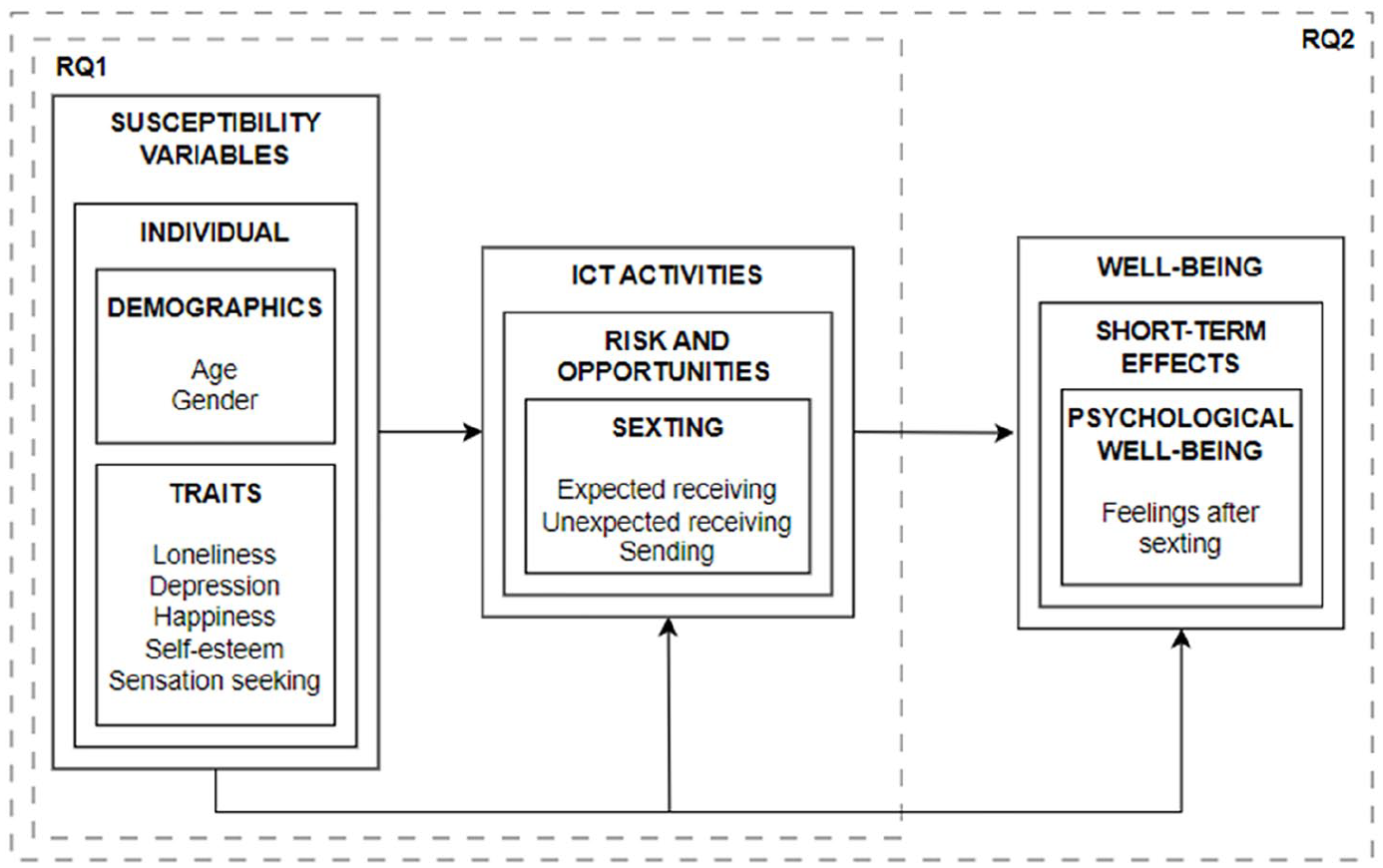
The adapted iMEW framework for our study.
Second, in the iMEW model, online activities “might be differentially associated with adolescents’ well-being” (Šmahel et al., 2022: 8), and susceptibility variables may indirectly predict the effects on well-being. Other than previous studies that examined adolescents’ feelings after sexting, there is no theoretical explanation for why adolescents react as they do when they send and/or receive sexts. According to Dodaj, Prijatelj and Sesar (2022), individual factors drive the experiences after sexting. In line with the iMEW assumption, the second part of our study explores the relation of the same individual susceptibility variables (i.e. age, gender, loneliness, depression, happiness, self-esteem, and sensation seeking) and the three types of sexting (i.e. expected and unexpected receiving and sending of sexts) with feeling happy and upset after each type of sexting (see Figure 1).
Psychological factors associated with sexting and emotional responses
Gender
Studies on gender and sexting are inconclusive (Del Rey et al., 2019): while some have found no gender differences in the likelihood of sending and receiving sexts (e.g. Vanden Abeele et al., 2014), some found boys to be more likely to engage in consensual sexting; in other, girls were more likely to send and receive sexts consensually (Barroso et al., 2022). The pattern is unclear, and it is likely that, as sexting becomes normalized, the gender differences will blur. Regarding non-consensual sexting, boys are more often perpetrators (Barroso et al., 2022), and qualitative studies suggest that girls are pressured into sexting (Ringrose et al., 2013, 2021). The response to sexting is gendered, and girls face more repercussions for sexting than boys (Ringrose et al., 2021). Across European countries, girls were more upset than boys about receiving sexts, whereas boys were significantly happier, irrespective of age (Barbovschi et al., 2021). Similarly, Reed et al. (2020) noted that girls were more likely to report a negative reaction when their dating partner asked for a sext.
Age
Research has found a prominent role of development in sexting. Older adolescents are more engaged in both consensual and non-consensual sexting (Barroso et al., 2021; Burén and Lunde, 2018; Gámez-Guadix and de Santisteban, 2018). Reed et al. (2020) found that younger girls reacted more negatively when their dating partners asked for sexts. Livingstone and Görzig (2014) identified younger age as a predictor of harm from receiving sexts (without distinguishing whether they were expected or unexpected). Thus, older age could protect against negative feelings after sexting.
Depression
Individuals with poorer mental health may seek the approval of others by engaging in consensual sexting (Barroso et al., 2022). However, their poorer mental health can make them more likely to experience non-consensual sexting, because they can be more prone to sexting under pressure. The evidence is mixed: several studies found a relationship between depressive symptoms and sexting experiences (Alonso and Romero, 2019; Dodaj, Prijatelj and Sesar, 2022; Wachs et al., 2021), including a recent meta-analysis (Mori et al., 2019), but some found no results (Gordon-Messer et al., 2013; Van Ouytsel et al., 2016). Perhaps consent could explain the association: in adolescents and young adults, only non-consensual and pressured sexting were related to symptoms of depression (Klettke et al., 2019; Wachs et al., 2021). Adolescents with depressive symptoms and other mental health problems are more susceptible to experiencing harm after receiving sexual messages (Livingstone and Görzig, 2014). Thus, individuals with symptoms of depression may experience more negative feelings after sexting.
Loneliness
Loneliness occurs when individuals are emotionally isolated due to non-gratifying social relationships (Yu and Zheng, 2020). Feelings of loneliness can be alleviated through social interactions. Barroso et al. (2022) explain that sexting, as a communicative behavior, can mitigate loneliness, especially among adolescents with high attachment anxiety (Efrati and Amichai Hamburger, 2018) and college students (Yu and Zheng, 2020). Prior studies have not explored the role of loneliness in feelings after sexting. Loneliness relates to interpretative biases, and while lonelier people may feel more themselves online because they feel more in control of their interactions, they are also more susceptible to experience cyberbullying (Nowland et al., 2017). Assuming that adolescents engage in sexting to lessen loneliness and deepen their social ties, lonelier adolescents might feel happier after sexting.
Self-esteem
Self-esteem reflects how one evaluates one’s self-worth (Rosenberg, 1965). Low self-esteem is related to feeling inadequate and lacking confidence (Wachs et al., 2017). Thus, adolescents with low self-esteem may send sexual messages more often to increase their self-esteem (Dodaj, Sesar et al., 2022; Ybarra and Mitchell, 2014; Yeung et al., 2014). However, it is also likely that adolescents with high self-esteem may feel more confident about their bodies and thus also send sexts more. Therefore, the role of self-esteem in sexting is unclear. Research has not investigated the role of self-esteem in feelings after sexting. Low self-esteem may increase susceptibility to harm (i.e. negative feelings after sexting) and could be a risk factor for negative feelings after sexting.
Happiness
Happiness is “not just the absence of depression, but also the presence of positive emotional and cognitive states” (Joseph et al., 2004: 464). Previous studies on subjective well-being and sexting are scarce and focus mainly on the negative aspects of well-being (i.e. symptoms of depression and anxiety; Klettke et al., 2014). However, given the mixed evidence for the link between depression and sexting, it is important to explore whether happiness plays a role in sexting, too. Given the positive role of happiness in increasing the ability to cope with negative experiences (Lyubomirsky and Della Porta, 2010), we assume that happiness could act as a protective factor against the negative effects of sexting.
Sensation seeking
High sensation seekers engage in sexting more often because sexting can provide new and exciting sensations (Hernández et al., 2021). A positive relationship has consistently been found for both consensual and non-consensual sexting (Barroso et al., 2022; Dodaj, Prijatelj and Sesar, 2022; Gámez-Guadix and de Santisteban, 2018; Wachs et al., 2017). High sensation seekers may be excited about engaging in sexting and thus be happier about it. Conversely, low sensation seekers may be more agitated and experience negative feelings (Livingstone and Görzig, 2014) after sexting. Barbovschi et al. (2021) and Livingstone and Görzig (2014) found that low sensation seekers reported feeling more upset after receiving sexts.
Current study
Research on adolescents’ feelings after sexting has not systematically investigated how these feelings differ according to the type of sexting behavior. Given recent studies that indicated the importance of consent in understanding the detrimental effects of sexting (Dodaj, Prijatelj and Sesar, 2022; Wachs et al., 2021), it is crucial to investigate these differences. Previous studies have not explored the individual characteristics related to feeling happy and upset after different types of sexting. Thus, following the iMEW framework (Šmahel et al., 2022), this study is the first to explore: (RQ1) What are the associations between depression, loneliness, self-esteem, happiness, sensation seeking, age and gender, and different types of sexting behavior (i.e. expected and unexpected receiving and sending of sexts) in a nationally representative sample of Czech adolescents? And (RQ2) What is the role of the individual factors in feeling happy and upset after the expected and unexpected receiving and sending of sexts?
Method
This study originates from a survey of Czech adolescents that focused on technology use and well-being. We used a representative sample of Czech adolescents aged 11–16 (N = 2500, Mage = 13.43, SD = 1.70; 50% girls). An external agency collected the data in June 2021 via an online panel (because of COVID-19): age and gender had to be equally represented, including their combination, and the panel needed to be representative of Czech households with children in terms of their socioeconomic status and place of residence, including the size of the municipality. Eligible participants were invited via e-mail. Before they could participate, their parents or caregivers provided consent for participation. Parents could view the questionnaire for adolescents beforehand, and they were instructed to give adolescents privacy during the survey. Before answering, we obtained consent to participate from the adolescents. Parents could not view the adolescents’ answers. Researchers received questionnaires that passed an initial quality assessment by the agency, which screened for missing data and response inconsistencies.
Our final sample consisted of 2365 participants who responded to the different types of sexting behavior questions; 5.4% of the total sample (n = 135) did not respond. We found significant differences between participants who responded to sexting questions and those who did not in the predictors used in this study (see Table 1). Adolescents who responded to questions regarding feelings after sexting were older, scored higher in depression, loneliness, and sensation seeking, and reported lower self-esteem and happiness than those who responded to the sexting questions.
Descriptive statistics and reliability of predictors.
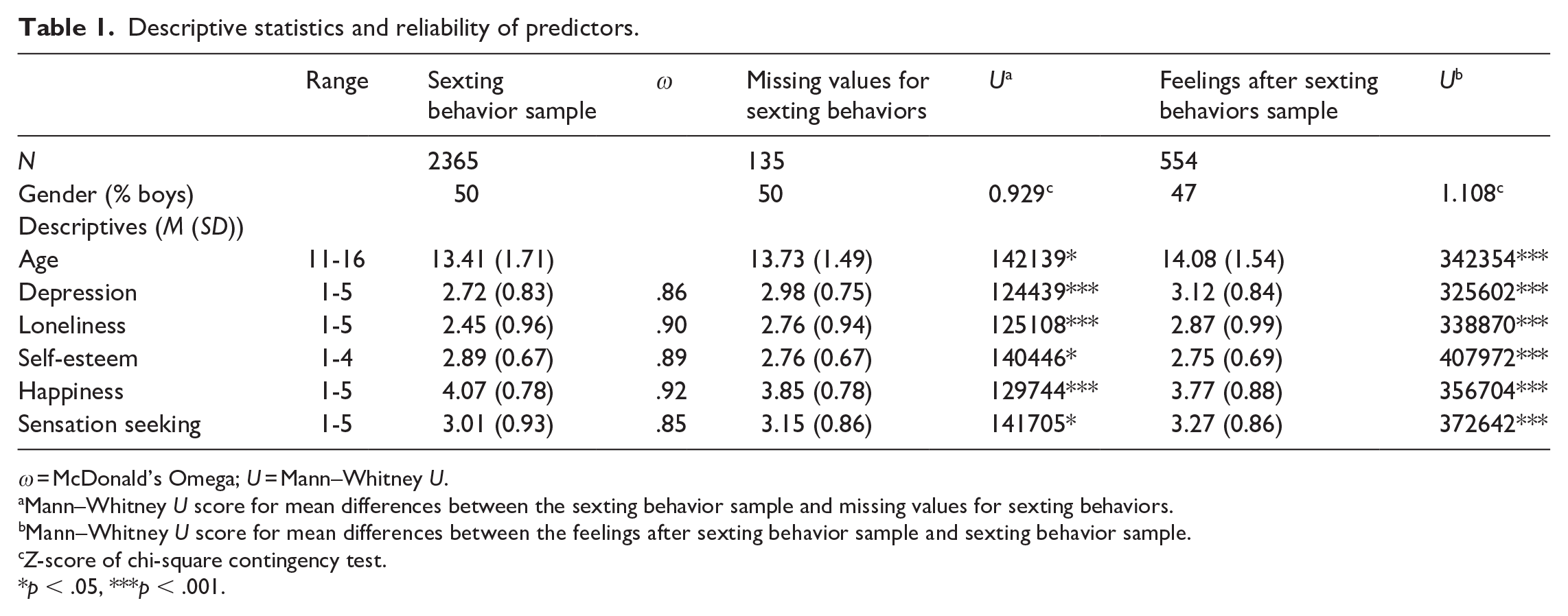
ω = McDonald’s Omega; U = Mann–Whitney U.
Mann–Whitney U score for mean differences between the sexting behavior sample and missing values for sexting behaviors.
Mann–Whitney U score for mean differences between the feelings after sexting behavior sample and sexting behavior sample.
Z-score of chi-square contingency test.
p < .05, ***p < .001.
The university’s ethical committee approved the research and data collection. The external agency is a member of ESOMAR (ICC/ESOMAR, 2016) and adheres to its ethical guidelines. Participants were compensated for their participation. They could leave the study at any time, and every question had the option “I don’t want to respond.” Upon completing the questionnaire, participants were shown a short debriefing text and provided with contact information for a mental health support hotline.
Measures
Sexting and subsequent feelings
Our measures of sexting were derived from the sexting measures previously used in international projects focusing on research of adolescents’ technology use (ySKILLS, 2022; Zlamal et al., 2020) and cognitively tested with 30 adolescents aged from 11 to 16 years, and subsequently pilot tested on 195 adolescents of the same age. All participants were asked, “In the PAST 6 MONTHS, have you EVER RECEIVED any sexual messages? This could be words, pictures, or videos.” Those who answered “Yes” were subsequently asked, “How often have you received something sexual when you EXPECTED (or intended) to receive it?” and “And how often have you received something like this when you DID NOT EXPECT (or intend) to receive it?” All adolescents were asked, “In the PAST 6 MONTHS, how often, if ever, have you SENT or POSTED any sexual MESSAGES, words, pictures, or videos)? This could be words, pictures, or videos related to you or someone else.” The response scales for all three questions ranged from (1) Never to (6) Daily or almost daily. If participants responded that they had this experience at least “Once,” they were asked two questions: “How often did you feel HAPPY after receiving this type of UNEXPECTED message?” and “How often did you feel UPSET after receiving this type of UNEXPECTED message?” Thus, if they had experience with all three types of sexting, they were asked six questions about their feelings. The response scale for the questions regarding feelings was (1) Never to (5) Every time. Considering the distribution of the different types of sexting behavior and the subsequent feeling variables, the scores were categorized into three groups (i.e. Never, Less than once a month, and At least monthly) for descriptive purposes, and dichotomized (i.e. Never and At least once) for predictive purposes.
Depression was assessed by four (out of six) items developed by Kandel (1982). We omitted two items related to sleep, because they were too closely associated with the items that measured physical well-being used in the research project. Participants indicated how often they, for example, “felt unhappy, sad, or depressed” or “worried a lot about things.” We used a 5-point Likert-type scale from (1) Never to (5) Very often.
Loneliness was measured by four negative statements adapted from Roberts et al. (1993), for example, “I lack companionship” or “I am no longer close to anyone.” Participants indicated how often the statements are descriptive of them on a scale that ranged from (0) Never to (5) Often.
Self-esteem was assessed by five positively worded items adapted from Rosenberg (1965). The items included statements like “I am quite pleased with myself” or “I think I have a number of good qualities.” Participants indicated how much the statements were true of them on a 4-point Likert-type scale that ranged from (1) Not at all true to (4) Very much true.
Happiness was adapted from a scale by Joseph et al. (2004). Participants were instructed to indicate how true of them were four positively worded statements, for example, “I feel satisfied with my life” or “I feel happy,” on a 5-point scale that ranged from (1) Very untrue to (5) Very true.
Sensation seeking was measured by a scale of four statements (Stephenson et al., 2003). The items included “I would like to explore strange places” or “I like to do frightening things.” Participants used a 5-point scale that ranged from (1) Very untrue to (5) Very true for how true these statements were of them.
Age and Gender were assessed by “How old are you?” and “Are you . . .” (1) A girl or (2) A boy.
Analysis
We used a binomial logistic regression. Model fit was assessed using Cox and Snell’s R2 and Nagelkerke’s R2. Separate analyses were performed for each type of sexting behavior and subsequent feelings using SPSS v25.0.0.1. Details of the analysis are available via OSF: https://osf.io/rcqsg/?view_only=9064edbd3e13456790a6e910da06a954.
Results
Adolescent sexting
In the preceding 6 months, 15.4% of adolescents received sexual messages when they expected it, and 18.4% received them unexpectedly. Only 10.9% of adolescents sent a sext in the preceding 6 months (Table 2). Regardless of the type of sexting, adolescents mostly experienced it less than once a month. Girls received unexpected sexual messages more often than boys, but we found no gender differences in sending and receiving expected sexts.
Frequencies of different sexting behaviors by gender.
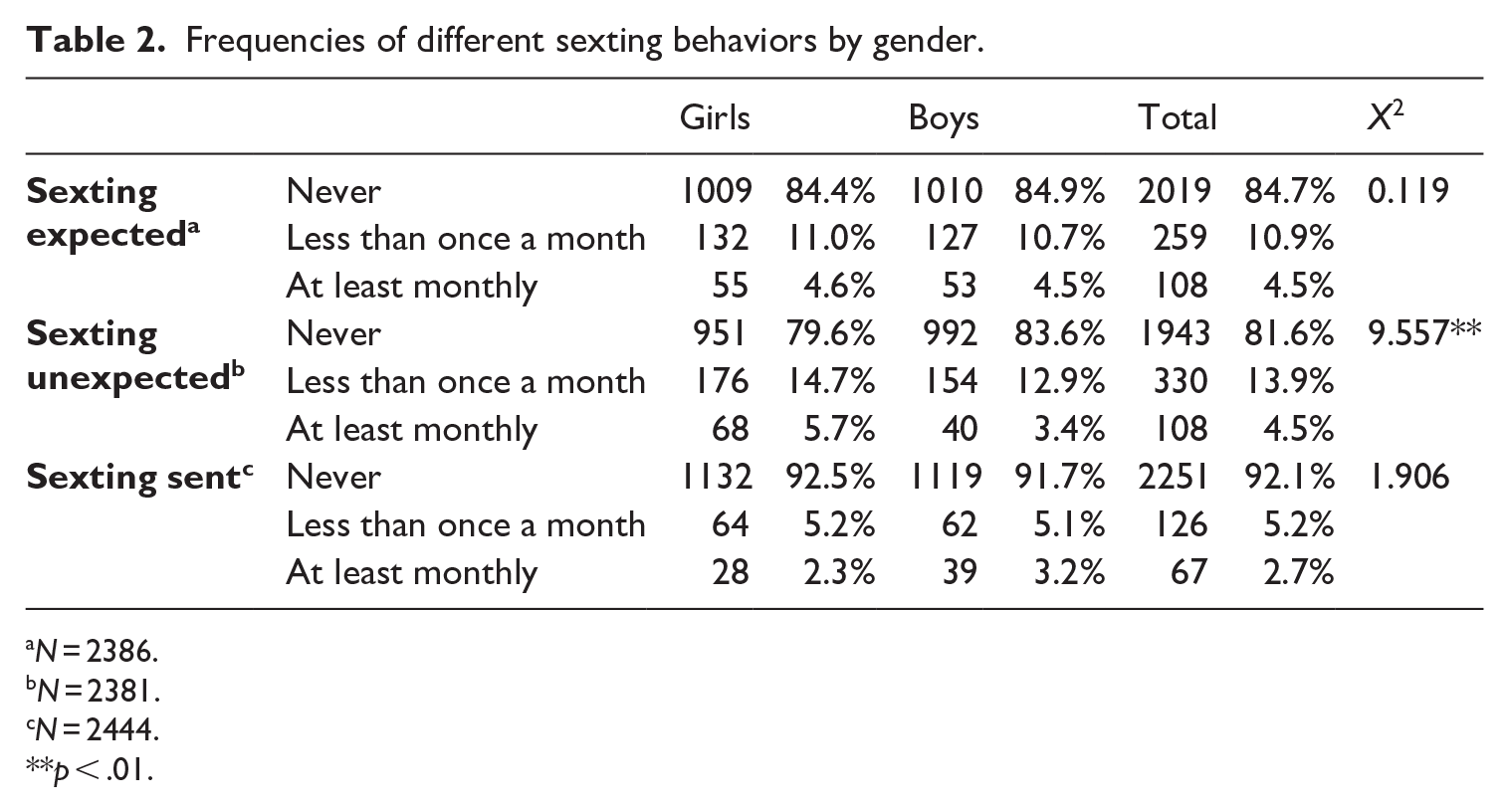
N = 2386.
N = 2381.
N = 2444.
**p < .01.
Logistic regressions revealed a consistent pattern of associations between individual variables and all three sexting behaviors. We found a positive relationship between age, depression (except for sending sexual messages), loneliness, sensation seeking, and receiving expected or unexpected sexual messages and sending sexual messages. Happiness was negatively associated with all three. We found no relationship between gender and receiving expected and unexpected sexual messages, but being male was positively associated with sending sexts. We found no relationship between self-esteem and sexting. The detailed results are reported in Table 3.
Logistic regression for psychological variables related to sexting behaviors.
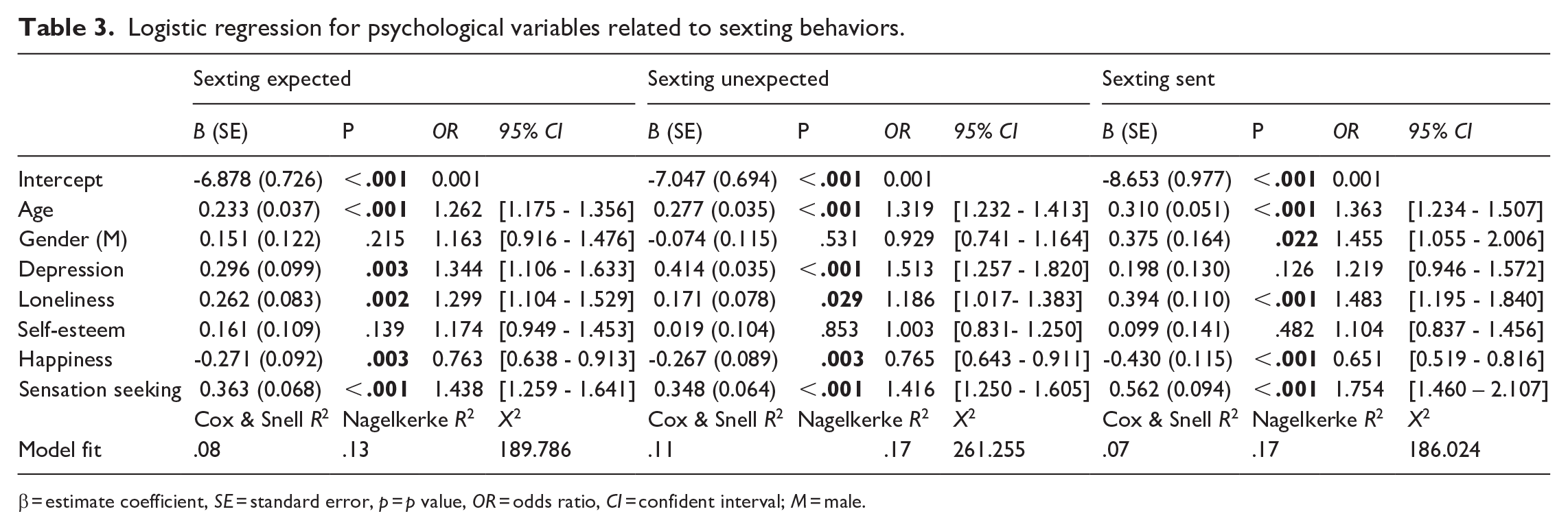
β = estimate coefficient, SE = standard error, p = p value, OR = odds ratio, CI = confident interval; M = male.
Feelings after sexting
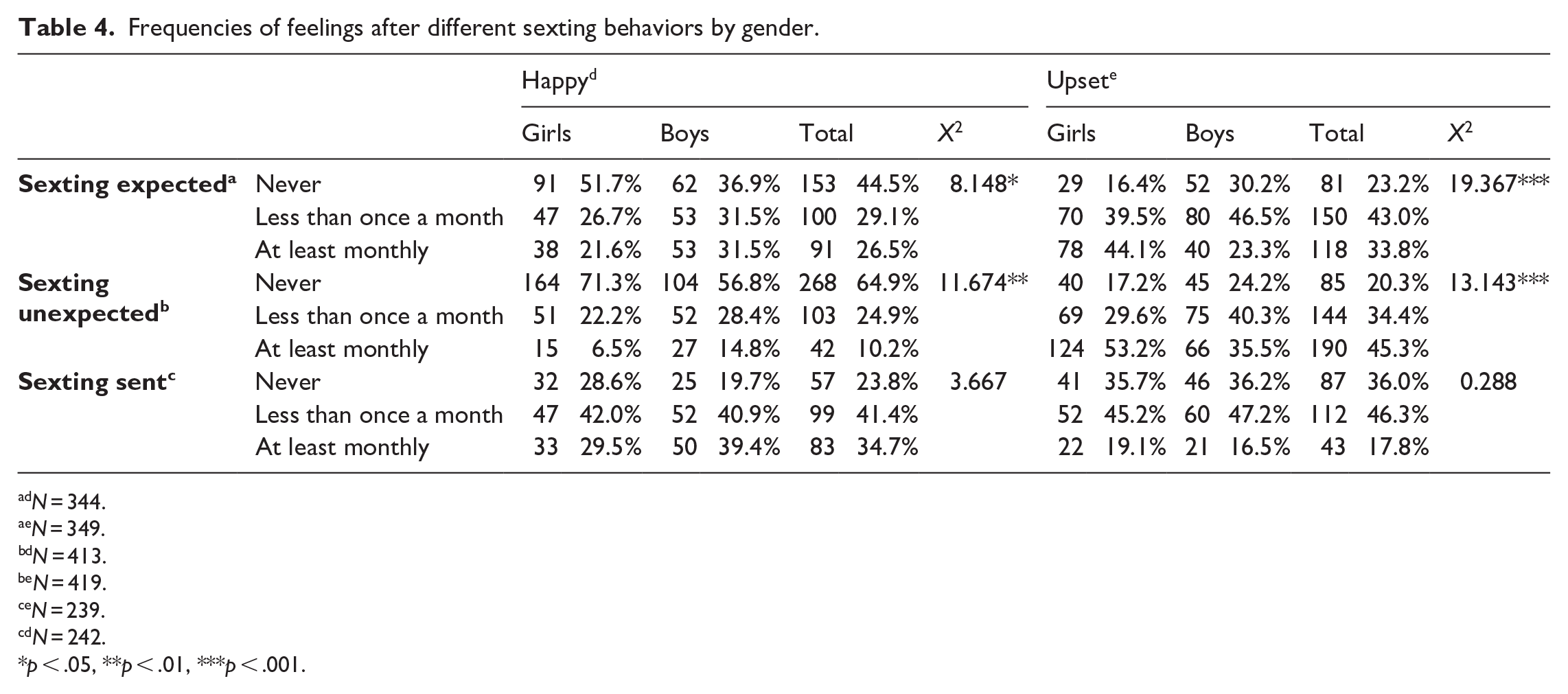
Overall, adolescents reported feeling more upset than happy after receiving both expected and unexpected sexual messages in the preceding six months (Table 4). After receiving expected sexts, 55.6% of participants reported feeling happy and 76.8% felt upset. Regarding gender differences, boys felt significantly happier and less upset than girls after receiving expected sexual messages. After receiving unexpected sexts, 35.1% of participants reported feeling happy, while 79.7% reported feeling upset. Boys felt significantly happier and less upset than girls after receiving expected sexual messages. Adolescents reported feeling happier than upset after sending sexual messages in the preceding 6 months. Specifically, 75.8% of the participants reported feeling happy after sending sexts, while 64.1% reported feeling upset. We found no significant gender differences.
Frequencies of feelings after different sexting behaviors by gender.
N = 344.
N = 349.
N = 413.
N = 419.
N = 239.
N = 242.
p < .05, **p < .01, ***p < .001.
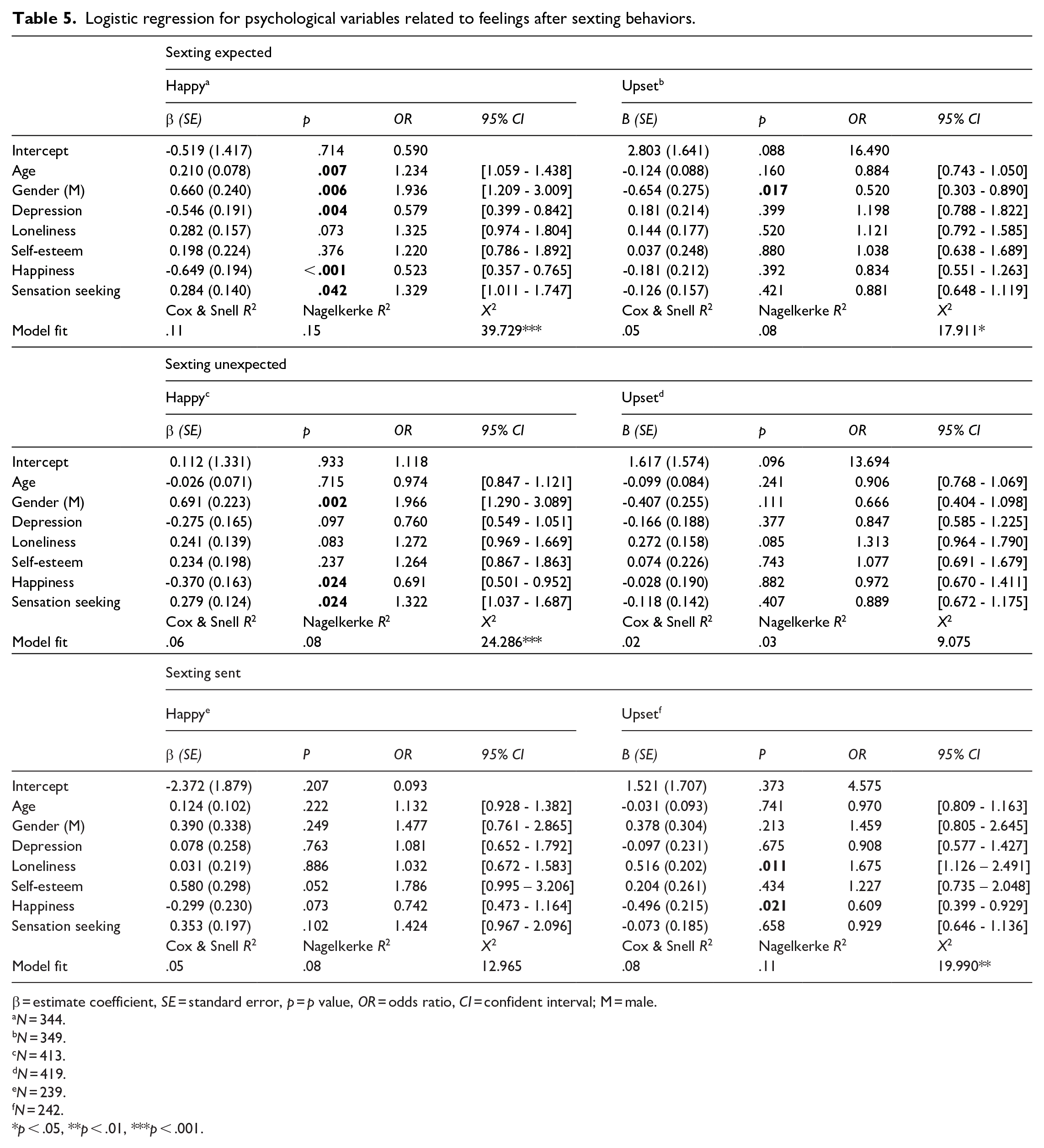
Logistic regressions to examine associations between individual variables and feelings after sexting showed no consistent pattern (Table 5). The analysis revealed that older age, being male, and scoring high on sensation seeking were positively associated with feeling happy after receiving expected sexts. Scoring high in depression and happiness were negatively associated with feeling happy after receiving sexts. We found no association between loneliness and self-esteem. Regarding feeling upset after receiving expected sexts, being male decreased the odds of feeling upset, while we found no significant relationships for the other variables.
Logistic regression for psychological variables related to feelings after sexting behaviors.
β = estimate coefficient, SE = standard error, p = p value, OR = odds ratio, CI = confident interval; M = male.
N = 344.
N = 349.
N = 413.
N = 419.
N = 239.
N = 242.
p < .05, **p < .01, ***p < .001.
Being male and scoring high in sensation seeking were positively associated with feeling happy after receiving unexpected sexts. We found a negative relationship between scoring higher in happiness and feeling happy after receiving unexpected sexual messages. We found no role for the other variables. Regarding feeling upset after receiving unexpected sexts, none of the analyzed variables were significantly associated.
Concerning feeling happy after sending sexual messages, none of the analyzed variables showed a significant association. In the case of feeling upset after sending sexts, we found a positive association for loneliness, and a negative association for happiness. No other variables showed significant associations.
Discussion
The discussion is structured around three main findings related to (1) adolescents’ engagement in sexting, (2) adolescents’ feelings after sexting, and (3) the relationship between individual characteristics and feelings after sexting. We discuss the implications of these findings below.
Adolescents’ engagement in sexting
Among Czech adolescents, 15.4% had an experience with receiving expected sexts, 18.4% with receiving unexpected sexts, and 10.9% with sending sexts in the preceding 6 months. In general, we found a similar pattern of associations across the three sexting behaviors. In line with previous literature and our expectations, older age, loneliness, and sensation seeking were positively associated with receiving expected and unexpected messages and sending sexts (Barroso et al., 2021, 2022; Hernández et al., 2021; Yu and Zheng, 2020).
It is particularly interesting that similar pattern of associations was found also in other offline and online behaviors that are considered risky (e.g. Kvardova et al., 2021; Vazsonyi et al., 2008). This finding has important theoretical implication for sexting research: the iMEW proposes that individual susceptibility variables predict clusters of similar ICT usage (Šmahel et al., 2022), like online risks, where sexting is often included (e.g. Van Ouytsel et al., 2017).
Engaging in risky behavior does not necessitate harm—and importantly, engaging in risky activities during adolescence can be linked to fulfilling certain developmental tasks that are essential for healthy growing up (Havighurst, 1972; Šmahel et al., 2022). Even though risky, sexting may help adolescents in navigating sexuality and relationships and facilitating sexual expression of self (Van Ouytsel et al., 2017). Indeed, as documented by Murphy and Spencer (2021), an important part of engaging in sexting among adolescents is acknowledging and managing the associated risks, which—hand in hand with identifying motivating factors for sexting and forming perceptions and feelings—allows adolescents to “work through the tension” and find their sexual self (p. 391).
Adolescents’ feelings after sexting
For both types of receiving sexts—expected and unexpected—we found adolescents more likely to feel upset than happy. Among girls, 44.1% who received expected sexts felt upset at least monthly, compared to 23.3% of boys. After receiving unexpected messages, 53.2% of girls felt upset at least monthly, while only 35.5% of boys did. In both cases, boys felt significantly happier than girls, and girls felt significantly more upset than boys, which aligns with previous research (Barbovschi et al., 2021). After sending sexts, adolescents felt more happy than upset, and we found no gender differences.
We expected that there will be differences in feelings after receiving sexting expectedly and unexpectedly stemming from the (non)consensual nature of sexting. However, our findings suggest that regardless of consent, receiving sexts is upsetting for adolescents. This could possibly be explained by adolescents’ expectations of sexting, as theorized in line with the sexual scripts theory (Gagnon and Simon, 2005; Symons et al., 2018) and social cognitive theory (Bandura, 2001). While sexual scripts present shared ideas of appropriate sexual conduct, including the expected ways of reacting to concrete sexual behavior, social cognitive theory presumes that outcomes of sexual media depend on individuals’ expectancies related to this behavior (Maes et al., 2022). Engagement in sexting is often referred to as risky and harmful and research shows that sexting scripts are powerful in shaping sexting experiences (Krebbekx, 2023). In line with the iMEW theory, future research might focus on these expectancies and determine whether they may moderate feelings after sexting. However, there might be other factors at play, such as the context of receiving sexts: for example, when parents are in the room, receiving a sext—although expected—might upset adolescents. Another such factor might be the identity and level of anonymity of the sender—whether it is a long-term partner, potential love interest, peer or a stranger. Future studies should therefore consider also contextual factors of receiving sexts.
Still, more girls were upset than boys. When young adult women receive unexpected sexts, they feel threatened and disgusted, while among men, sending nude images for fun to their male peers to see their reactions is quite common (Burkett, 2015). Therefore, it is possible that, among adolescent boys, receiving nude images unexpectedly is more common and viewed as a harmless joke. The sexual scripts theory (Gagnon and Simon, 2005) could be also useful here because shared sexual scripts inform individuals on what to expect and how to behave. According to Graham Holmes and colleagues (2021), women more often expect and experience negative sexting outcomes then men, and thus, these expectations could also shape how adolescent women perceive receiving sexts. As qualitative research suggests, women’s more negative experiences with receiving sexts might be related to the sexism they face in the online sphere—the so-called “manosphere” (Paasonen, 2024). For example, Amundsen (2020) describes how upset and deprived of autonomy women feel when faced with “dick pics”—unsolicited images of male genitalia—and the fact that a significant amount of the interviewed women described that receiving such imagery is a “part and parcel of the experience of being a woman online” and something “they just had to deal with online” (Amundsen, 2020: 1471–1472). Similarly, in all five focus groups with young adult women, Mandau (2020) discovered that dick pics are normalized and commonplace, even though the women felt repulsed, shocked, and disgusted. Therefore, future research should focus on the phenomena among adolescents and their psychological well-being, and what role—if any—might consent play in receiving dick pics.
The relationship between individual characteristics and feelings after sexting
We found that the individual susceptibility variables are not consistently associated with feelings after sexting. According to the iMEW (Šmahel et al., 2022), individual susceptibility variables associated with ICT use may also be associated with its outcomes. Such premise, for example, holds for adolescent exposure to sexually explicit materials (Lebedíková et al., 2022). In our study, individual susceptibility variables associated with sexting engagement were mostly not associated with feelings after sexting. Although sexting is often treated as one cluster of behaviors, our findings show that their impact on short-term psychological well-being cannot be explained by similar individual variables. Therefore, when focusing on outcomes of sexting, researchers need to treat them as separate behaviors and not cluster them together with similar sexting behaviors.
Feelings after sexting may be related to motivations to sext and relationship status, as in young adults (Dir et al., 2013; Greer et al., 2022). Again, drawing on sexual scripts theory (Gagnon and Simon, 2005), social cognitive theory (Bandura, 2001) and findings of Dir and colleagues (2013), motivations to sext seem to be closely related to expectancies of how sexting might unfold (in terms of who initiates what and under which circumstances), but also in terms of feelings after sexting (whether it was pleasant or not). For example, a person who engages in sexting under pressure and is motivated to sext only to not embarrass themselves in front of a potential love interest might in turn feel negatively about the experience, and on the contrary, someone who sexts with a partner in the context of loving relationship motivated by desire might feel pleasant after sexting. Motivations to sext are intertwined with many other factors, such as gender and relationship status (Greer et al., 2022), and due to the breadth of situational factors, there might be many possibilities of how adolescents experience sexting. Future research should thus inquire about adolescents motivations to sext to gain a deeper understanding of the factors related to sexting.
Limitations
This study has several limitations. Due to the age diversity in our sample, our measure focuses on sexting broadly, and includes also circulating professionally produced pornography. Future studies might focus on circulating pornography and self- or peer-produced intimate content separately. Cognitive interviews with participants revealed that adolescents did not understand the differences between receiving unwanted and wanted (i.e. consensual and non-consensual) sexts, and rather distinguished between expected and unexpected. We adapted the wording of our measure to accommodate our participants’ needs; however, we acknowledge that sexts may be unexpected and still consensual, and vice versa. We measured feelings separately (as happy and upset), because one can experience several—even contradictory—feelings simultaneously. Nevertheless, research shows that people experience a broad range of feelings outside the positive-negative binary (Reed et al., 2020), and thus, future research should also focus on these. Considering also that several feelings may be experienced at once, there is still a lack of understanding of what combinations of feelings adolescents experience and why. Furthermore, the iMEW posits (Šmahel et al., 2022) that short-term well-being (i.e. feelings after sexting) may moderate the long-term effects on well-being, future research should explore feelings after sexting as moderators. Given the inconsistent pattern of associations of feelings after sexting with individual variables, we recommend that future researchers focus on the social aspect of sexting, and explore the role of identity and relation sexting partner, and motivations to sext (such as feeling under pressure, or flirting), because those factors may guide feelings after sexting. The data collection took place during the COVID-19 pandemic: the frequency of sexting might have been larger than normal because sexting could have replaced offline sexual interactions (Maes et al., 2022), however, the pattern of sexting engagement remained similar to the one prior COVID-19 (Maes et al., 2022). Still, the results need to be interpreted with caution. Our study is cross-sectional; thus, we have a limited understanding of how feelings after sexting unfold; future research would benefit from intensive longitudinal methods, such as an ecological momentary assessment (Šmahel et al., 2022).
Conclusion and implications
This study aimed to explore adolescents and the positive and negative feelings that are associated with three types of sexting behavior: expected and unexpected receiving of sexts, and the sending of sexts. We followed the iMEW framework (Šmahel et al., 2022), which posits that individual susceptibility variables not only predict ICT activities but also the outcomes of ICT activities. While we found a similar pattern for associations across the three types of sexting behavior, there was no pattern for associations regarding their outcomes. This is an important finding, because different sexting behaviors—and their outcomes—are often researched under one umbrella of “sexting.” Our results clearly show that these are three distinct behaviors. Importantly, we found that adolescents tend to feel negative after receiving sexts, and this is more pronounced in girls. We speculate that their experiences might be related to experiences of online sexism and sexual harassment, however, more research is needed to confirm our reasoning.
Our results are important for educators, parents, and policymakers. Girls are especially susceptible to experiencing negative feelings compared to boys, regardless of the consent when receiving sexts. While the non-consensual dissemination of sexts should be criminalized to protect adolescents from the negative impact of sexting, it is important to not criminalize sexting among adolescents altogether, because consensual sexting is meaningful for their sexual development (Chatzinikolau & Lievens, 2021). Importantly for health care workers, we found that depressed individuals are more likely to receive sexts, regardless of consent, but their mental health problems are not related to feeling upset after any kind of sexting. Sex education should focus on the different situations under which adolescents might receive sexts, and focus on consent navigation and coping strategies to help alleviate negative feelings. Such topics are best addressed in a classroom environment (Ojeda and Del Rey, 2021). Previous research shows that peer networks are integral for sexting dissemination (Ringrose et al., 2013, 2021).
Footnotes
Funding
The author(s) disclosed receipt of the following financial support for the research, authorship, and/or publication of this article: The results of this project LL2304 were obtained with financial support from the Ministry of Education, Youth and Sports within the targeted support of the ERC CZ program.
