




Abstract
Our article delves into the emergence of ‘kidfluencers’ within the content creator economy, highlighting how children’s participation intertwines their identities with monetisation strategies on platforms. Focusing on TikTok, we blend ethnographic and legal analysis of 215 videos from 23 kidfluencers in Israel, New Zealand and the Unites States, illuminating the complexities of monetising childhood across cultures. We highlight four monetisation and visibility practices in which children are exposed, mobilised and commodified in their parents’ content: (1) kids as props; brands as playmates, (2) transactional childhood, (3) aspirational child-ification and (4) regulative parenthood. Our analysis shows how children become concealed commodities, with varying degrees of (in)visibility in monetisation practices, from playful participation in branded content to embodying idealised notions of childhood for brand visibility. We situate our analysis within regulatory frameworks, revealing how TikTok’s policies conceal children’s role in monetised content, and reflect on platform liability under the European Union’s Digital Services Act.
Introduction
The term ‘kidfluencer’ captures the unique niche of children’s involvement in the creator economy. Although ‘kidfluencer’ suggests a seamless integration of children into the influencer world, their involvement in fostering parasocial relationships, crafting personal brands and pursuing monetisation intensifies significant concerns about the complex dynamics between platforms, users and regulators. In particular, the involvement and labour of children in content creation generate value, often accompanied by monetary compensation. This dynamic reshapes our understanding of the growing marketplace of monetised ‘influence,’ especially given their age and dependency on parents, warranting critical investigation. In this article, we seek to contribute to the increased scholarly and public attention on kidfluencers (Abidin, 2023; Ghani and Cambre, 2020) by advancing our understanding of how children and childhood are intertwined with monetisation in the context of regulatory frameworks.
First, our research advances the field by taking a platform-specific approach to studying kidfluencers on TikTok, a topic that remains underexplored in existing scholarship despite the platform’s growing presence. We tease out the continuities of kidfluencer and parent labour practices as discussed by scholars on YouTube and Instagram (Abidin, 2017; Archer and Delmo, 2024; Feller and Burroughs, 2022; Nicoll and Nansen, 2018) and draw attention to specificities of kidfluencers in the context of TikTok’s vernaculars and ambience. Employing ethnographic methods, we focus on 23 kidfluencers from Israel, New Zealand and the United States to highlight cultural nuances and practices across geographical contexts.
Second, we integrate empirical analysis of commodification processes with legal interpretations of emerging regulations, thereby situating our insights into the monetisation traces evident in kidfluencer content within the context of regulatory frameworks. We examine how policies of TikTok address kidfluencer content, attending to the governance by platforms, and the recent regulation from the European Union (EU), the Digital Services Act (DSA), that updates platform liability to consider how kidfluencers are implicated in such governance of platforms. We underscore the insufficiency of regulatory oversight in TikTok’s management of kidfluencers and the obscured presence of this group within the platform’s regulations, advocating for the imperative expansion of discussions to include both parents and platforms, as children rapidly become instruments of monetisation.
The central aim of this article is to understand how children and childhood are exposed, mobilised and commodified in influencer content on TikTok. Our inquiry is guided by three questions: (1) What practices of content monetisation are visible within ‘kidfluencer’ content on TikTok? (2) How are children’s participatory actions manifest and framed within ‘kidfluencer’ profiles? (3) How can the inclusion of children in influencer content be positioned within regulatory frameworks? The analysis of our empirical research addresses practices that capture the (in)visibilities of monetisation and branding practices, emphasising the framing of children’s actions. We present four classifications: kids as props; brands as playmates, transactional childhood, aspirational child-ification and regulative parenthood. These practices are, then, discussed in our legal reflections centred on the DSA. We consider how the concept of ‘illegal content’ might apply to kidfluencer content and how the monetisation of children and childhood in influencer content could be problematic and, therefore, represent a ‘systemic risk’, which platforms may be held accountable for.
Conceptualising kidfluencers
Scholars have explored the growing phenomenon of children’s involvement in monetised content, examining their integration into influencer or blogger branding practices as well as their roles as content creators and influencers. The concept of ‘sharenting’ highlights how parents curate and manage their children’s online presence, often extending to the pursuit of monetisation opportunities (Blum-Ross and Livingstone, 2020). Similarly, the sharing of children’s lives and images by mummy bloggers was initially framed as an avenue for alternative representations of motherhood (Lopez, 2009). However, as Borda (2015) and Hunter (2016) contend, this practice has since evolved into a commercial enterprise, driven by advertising integration and the commodification of audiences
The concept of ‘micromicrocelebrity’, developed by Abidin (2015), provides an alternative lens for understanding the processes of identity curation and commercialisation online. While it aligns with discussions on the blurred boundaries between sharenting, blogging, and promotional practices (see Archer, 2019; Blum-Ross and Livingstone, 2020; Borda, 2015; Hunter, 2016), Abidin (2015) specifically situates the child as a ‘proximate microcelebrity’ whose fame derives from their parents’ influence. We adopt the terms ‘child influencer’ or ‘kidfluencer’ to further centre the child as a content creator, while acknowledging the parents’ active role in shaping the child’s online identity as it becomes entangled with commercial and monetised interests. More specifically, we refer to a child with a substantial social media following, which is leveraged for brand deals and sponsorships (Feller and Burroughs, 2022).
As such, kidfluencers are seen as commercial entities generating income via monetisation and influencer marketing models. This also depends on parental guidance to navigate online spaces, with parents actively managing social media profiles, negotiating commercial partnerships and shaping personal brands (Van den Abeele et al., 2024). However, the child is also active in developing parasocial relationships by consistently showcasing a brand-friendly identity, cultivating fame and followership and positioning oneself as an expert consumer. In particular, kidfluencers construct their identities as consumption experts by accumulating toys or games and performing their product reviews through play demonstrations (Ghani and Cambre, 2020).
This intersection of childhood and commercialisation in our conceptualisation of kidfluencers can be situated within child studies, recognising children as agentic and influential even in the pre-online era. Examining various markets, Cook (2004) illustrated how marketers target children, with the commercialisation of toys permeating childhood-related media spaces and profoundly shaping children’s identities. Accordingly, Prout and James (2005) argued that children are active participants in consumer culture rather than passive subjects influenced solely by adults or societal structures. They contend that children’s interaction with commercialisation is pivotal to their socialisation, enabling them to dynamically (re)construct their child-self via consumer goods. Joining these voices, Buckingham (2014) referred to a contemporary shift in how marketers perceive children, suggesting they should be viewed as sophisticated and discerning consumers rather than vulnerable and easily manipulated. In other words, engaging with commercial content can be seen as a defining feature of childhood, serving as a domain where children express and exercise their agency.
This aligns with Ghani and Cambre’s (2020) work, which builds on Prout’s (2011) sociological structures of childhood, viewing child influencers as both human ‘becomings’ and ‘beings’. The human ‘becomings’ perspective views children as needing adults’ protection and guidance to become the adults of the future. In contrast, the human ‘beings’ perspective sees children as active agents rather than passive subjects who are vulnerable to manipulation and exploitation. Pedersen and Aspevig (2018: 1) propose bringing these perspectives together to see child influencers ‘both as autobiographical agents and as child subjects requiring a sheltered approach to their online lives’. This approach broadens our understanding of child influencers, moving beyond seeing them merely as advertising tools. It emphasises both children’s agency in engaging with consumer culture and their active participation in influencer content, while also highlighting the need for protection, given that their involvement is monetised and constitutes a form of labour, as we further argue.
Kidfluencer labour
In influencer and creator studies, examining influencer labour underscores the prevalence of unpaid labour. These labour practices underpin content production and working conditions in the creator economy. Duffy (2017: 443) introduces the term ‘aspirational labour’ to describe how young women involved in content creation within feminised sectors engage in ‘forward-looking, carefully orchestrated, and entrepreneurial form of creative cultural production’ enacted in the hope and aspiration of future economic and employment benefits. Aspirational labour has been used to make sense of kidfluencers. Feller and Burroughs (2022) refer to this type of engagement by family members within Ryan Toys Review as the channel puts forward the ‘idyllic life’ oriented towards capitalist consumption.
Scholars have examined the unique characteristics of kidfluencers’ labour, particularly the intersection of work and play, uncovering tensions inherent in children’s participation in influencer practices. Analysing the Instagram accounts of Australian influencer siblings, Archer and Delmo (2024) argue that parents benefit from the ‘playbour’ of their children, extending Craig and Cunningham’s (2017) notion that unboxing videos constitute forms of creator labour by children. Situating this discussion within a labour framework addresses gaps in earlier research that merely allude to participation as labour. For instance, Nicoll and Nansen (2018) suggest that children featured in YouTube toy unboxing videos act as active content producers, exploring this through the concept of memetic production, which falls short of establishing a clear link to value-generating labour. We contend, however, that the entangled nature of play and labour performed by children remains underexplored, particularly as it becomes enmeshed with commercialism in the context of sponsored content.
Abidin’s (2017) work on child microcelebrity within family influencer structures also speaks to the intersection of play and labour. Abidin identifies several mechanisms in how labour is (re)framed: (1) Parents portray their ‘young digital labour’ as willing participation motivated by joy rather than commercial purpose. (2) Parents normalise the child’s role by hyper-visibilising their everydayness. (3) Parents link their child’s involvement in content to their disciplinary methods. (4) Parents foster a ‘calibrated amateurism’ aesthetic, empowering their children to take over content production. Critically, this perspective emphasises the child’s participation and visibility of ‘consent’ but may not account for their potential involvement in more explicit forms of labour that generate monetary value.
In this monetised environment, questions also arise around the legality of involving children in content creation. Legal literature primarily addresses the issue of child labour with a focus on working conditions and earnings. Research that examines the applicability of existing child labour regulations, such as the Coogan Law and UK advertising laws (Masterson, 2020) and child labour protection regulations across the Asia Pacific region (Abidin and Hong-Phuc, 2024), reveals challenges and gaps in the current legislation. Geider (2021) argues that kidfluencers currently lack legal protections, leaving them vulnerable to immediate and substantial risks of exploitation. Such a perspective is reflected in recent legislation in France (2020) and the state of Illinois in the United States (Illinois General Assembly, 2024) that restricts parental supervision of revenue and ensures parents set aside the money earned by their children.
This discussion is rooted in a legal framework based on limited autonomy for children’s decision-making. A child’s decision-making capacity varies with age and activity, with legal regulations in many countries defining age limits for work, contract signing and involvement in advertising or other commercial activities. These legal thresholds are often designed to protect children from exploitation, ensure their well-being and safeguard their rights. This means that in many countries, children are only able to enter into contracts once they reach the legal age of maturity due to concerns about their vulnerability (Mol and Goanta, 2023). Recent reforms to platform liability in the EU through the DSA also affect how users, including children, carry out activities on social media. The DSA has introduced new safeguards for system-level risks that may affect, among others, kidfluencers, which requires further attention, as we suggest in our legal reflections further on in this article. The DSA reconfigures how platforms establish rules for users through private governance. This brings us to another critical actor in platform governance – the platform – as a regulator of content monetisation (Caplan and Gillespie, 2020).
Platform governance of kidfluencers
Although prior studies have explored TikTok’s moderation practices (Zeng and Kaye, 2022), differences between TikTok and Douyin (Chinese sister app) and its data privacy policies (Kaye et al., 2021), governance by the platform with regard to monetisation or children’s roles in influencer activities is underdeveloped. Notable exceptions include Turvy’s (2024) work, which reveals how TikTok’s Community Guidelines strategically balance commercial, regulatory and public relations interests in relation to children’s presence on the platform, shaping their online experiences. In addition, Polito et al. (2022) evaluate TikTok’s adherence to legal regulations concerning children’s privacy and protection on platforms. In their analysis, they assess how TikTok offers non-monetised experiences and navigates personalisation of advertising for children but only briefly note that children can be involved with commercial activities, as ‘TikTok’s business model encourages the monetisation of profiles and there is no prevention via features or content moderation to avoid this effect’ (Polito et al. 2022: 96).
The issues Polito et al. (2022) allude to regarding gaps in platform policies surrounding monetising children’s content are also raised by Leaver (2017). He refers to Instagram’s implicit endorsement of parental management of minors’ accounts as exemplified by the 2016 verification of Boomer Phelps’ account, which suggests approval of celebrity children’s profiles. The New York Times recently spotlighted how ‘mom-led’ Instagram accounts navigate Instagram’s under-18 subscription restrictions (Valentino-DeVries and Keller, 2024). In response, a Meta spokesperson emphasised that parents were solely responsible for child-influencer accounts but remained silent on how this stance aligned with their platform policies on monetisation and children. Outside of this scholarly and journalistic work, understanding how platforms, including TikTok, regulate content monetisation involving children is underexplored and yet to be addressed in literature that takes a platform governance approach to monetisation (e.g. Caplan and Gillespie, 2020; Pflücke, 2020).
In legal analysis, Pflücke (2020) found YouTube and Instagram policies comply with legal requirements for marketing disclosure but identified gaps in affiliate marketing disclosures. We build on this work in our analysis, specifically in our fourth category, to understand the regulatory approach of TikTok to kidfluencers and monetisation of children and how kidfluencer content navigates these conditions of private governance.
Methods
In this study, we utilise two methodological approaches. First, we conduct ethnographic content analysis of kidfluencers from Israel, New Zealand and the United States. Second, we reflect on these kidfluencer practices in the light of the recent legislation on platform liability, particularly the DSA. Identifying kidfluencers for our ethnographic study required immersive engagement with TikTok, conceptualised as our ‘ethnographic site’ (Pink, 2020). Drawing from ethnographic traditions, we approached TikTok as a dynamic research site where cultural practices, social interactions, and technological infrastructures converge. This perspective highlights the importance of understanding how creators interact with these infrastructures, which shape the production, circulation, and persistence of cultural phenomena.
Central to our methodology was an exploration of two key pathways for engaging with this site: the algorithmically curated For You Page and the platform’s search function. These structures, akin to ethnographic ‘field entry points’ (Hoey, 2014) provided distinct ways to navigate and interpret the digital environment. The For You Page, shaped by past viewing habits and algorithmic predictions, offered insight into the personalised content bubbles that influence user experiences. In contrast, the search function operated as a tool for transcending individualised filters, allowing us to identify ‘successful’ videos through their broader algorithmic visibility and engagement metrics. Our search process, guided by our local knowledge of kidfluencers content, led us to familiar profiles and educated the algorithms about our interests, resulting in new discoveries.
Our selection principles guided us to choose profiles featuring various monetisation practices and children, defined as individuals under 18 years, in adherence to the standard definition for minors, without restricting our selection to a specific age range within this group. We selected culturally distinct countries like Israel, New Zealand and the United States to explore kidfluencer practices within specific cultural contexts, rather than making cross-cultural comparisons, thereby broadening the typically US-centric focus of studies like these. Our country selection was based on our expertise in their influencer ecosystems, allowing us to focus on cultural nuances such as the presence of brands, heritage and religion in the videos. Resonating with Maddox’s (2024) study, our familiarity with the local influencer economies before beginning the research project meant we had knowledge of practices, vernaculars and influencers that were culturally and geographically specific. This encompassed an understanding of industry standards, prominent brands, holidays, national symbols, regional humour, traditional attire, dialects, local customs, culinary traditions, notable landmarks, historical references and the unique socio-political contexts of each region. This guided us in selecting the profiles sampled, starting with a list of 10 to 15 kidfluencers from each country. To ensure consistency across local contexts, we established a minimum of 50k followers and verified the presence of some disclosed monetised content. From this initial list, we removed those who didn’t meet these criteria, resulting in a final sample of 23 profiles, leading to an inevitable imbalance in distribution: nine Israeli, six US and eight New Zealand accounts.
Employing a purposive sampling technique (Sandelowski, 1995: 81), we selected approximately 10 videos per profile, each of which had a range from dozens to hundreds of videos, compiling a repository of 215 videos, which allowed us to ‘intentionally target information-rich cases that exhibit key variations in the phenomenon under study’. We organised videos from our selected accounts in an Excel sheet, focusing on captions, tags, features, memetic elements (e.g. trends and audio memes) and the children’s appearance. Each researcher added videos to the Excel sheet, and as a validity check, we each reviewed and immersed ourselves in the other’s data to ensure the videos were appropriate for inclusion in our research corpus. Through an iterative process of coding the videos, we remained ‘systematic and analytic, but not rigid’ (Altheide and Schneider, 2012: 24), focusing on the tensions between visible monetisation practices – such as sponsored content, product placement and paid partnerships – and more subtle forms of monetisation reflected in children’s actions, which guided our selection criteria. This approach led to the development of four key categorisations that emerged from the data. In refining our units of analysis, our familiarity with the sites of inquiry led us to select videos as exemplars to analytically demonstrate how the categorisations manifest, aiming to provide ethnographical insights into the cultural specificity of these practices through an interpretive approach (see Pink, 2020; Vizcaíno-Verdú and Abidin, 2023).
We situate our data collection and selection within the framework of ethnographic content analysis, embracing its approach of constant discovery, which encourages the researcher’s active engagement in identifying familiar situations, settings, styles, meanings and cultural nuances (Altheide and Schneider, 2012). This iterative process is particularly suited to understanding the interplay between platforms and creators, as it emphasises engagement with both the content and the cultural context in which it was produced. Our qualitative approach prioritises depth over breadth, allowing a detailed unpacking of selected examples that provides access to rich data and nuanced insights (Marshall and Rossman, 2014). Thus, in our analysis, we focused on TikTok’s environment and affordances, such as auditive features and content creation tools and templates (Lindgren and Eriksson Krutrök, 2024), that shape how kidfluencers and their parents create, share and engage with content, influencing their overall behaviour and practices.
We avoided drawing unsolicited attention to the children and parents by using pseudonyms in our analysis and anonymising identifiable information in the screenshots. We used dark-colour squares to cover the faces of the children and parents, ensuring their identities remain unsearchable after testing the screen grabs with photo search engines. Our approach to ensuring complete anonymity is informed by discussions on the representation of children in Internet research (Livingstone, 2016) and child studies (Allen, 2008), which advocate for recognising children’s agency while maintaining minimal direct access to their identities. Our goal aligns with a research ethos centred on children, emphasising that in studies discussing children rather than directly involving them, we should focus on amplifying issues that improve their online conditions and reduce potential harms while ensuring their identities remain undisclosed without consent.
In addition, we adopt a platform governance approach to reflect on our findings. We draw on a dataset of TikTok documentation (Annabell et al., in press) to consider how practices relate to platform policies, which we address in the fourth classification. We also offer a legal reflection arising from our ethnographic study. This brief doctrinal contribution focuses on interpreting the DSA’s definitions of illegal content and systemic risks. Addressing child labor from a legal perspective, however, would require a detailed examination of specific age groups, jurisdictions, and commercial activities—an analysis that extends beyond the scope of this article. Moreover, we aim to shift focus from traditional child labour protections, such as France, 2020 ‘right to be forgotten’ for child influencers, towards platform liability, to enhance discussions on regulating monetised content involving children.
Findings
Kids as props; brands as playmates
Our first classification captures two types of interactions: in the first, children act as props in branded content where the brand controls the narrative; in the second, brands take on accessory roles within kidfluencer content, becoming playmates and allowing the child to drive the narrative. As detailed in our subcategories, the child’s engagement with the brand ranges in directness, yet consistently features a playful approach in the interactions between children and brands. We observe how children become conveyors of monetised messages, either under the guidance of their parents or through their own spontaneous actions. Kidfluencers are not only featured in branded content aimed at generating revenue, but they also embody fun and playfulness while engaging with the brand, blurring the distinction between their play and labour. This visible presence of brands, both visually and textually through captions and spoken content in videos, along with explicit monetisation disclosures like TikTok’s paid partnership tag or #ad, reflects a ‘successful’ exchange of childhood for income.
Kids as props in branded content
Within this subcategory, we focus on the visibility of children in branded content who co-star with their parents. We see how the children’s presence serves to enhance the commercial narrative, with their interaction becoming a carefully curated element of the larger, brand-driven story. This content is primarily focused on generating value for the influencer brand, especially within the context of transactional relationships existing between parents and brands.
The influencer Naomi engages her daughter, Ariel (5 years old), as a co-host in a collaboration with a local brand (hashtagged). The collaboration centres around inclusive tights with a focus on post-pregnancy needs. Employing the POV (point-of-view) format, in which users offer playful, humorous interpretations of everyday situations, she adds with an overlay text, ‘POV: You’re a new mom venturing out for the first time’ 1 (see Figure 1). In the video, Naomi portrays the tribulations of a young mom’s night out while celebrating the versatility of her Leopard-patterned tights for both indoor and outdoor settings. Ariel, carried by Naomi, serves as a carrier of gendered values associated with the product, imbuing the brand with an understanding of the ‘realities’ facing new mothers and self-care. Building on Prout and James’ (2005) argument that children actively engage with consumer goods and are integral to the consumption process, and Archer and Delmo’s (2024) observation that toys play a central role in monetised content featuring children, Ariel is positioned as a prop within the POV scenario. She transformes into a human toy, simultaneously embodying gender stereotypes and commercial needs. This representation underscores how the product transcends the tights themselves, incorporating Ariel into a playful performance that strategically bolsters the aspirational image of superhero-like, fashion-savvy young mothers. The child, in this context, serves as a pivotal element in commodifying this ideal, representing ‘arguably toys but also teen or adult objects of aspiration’ (Archer and Delmo, 2024: 16).
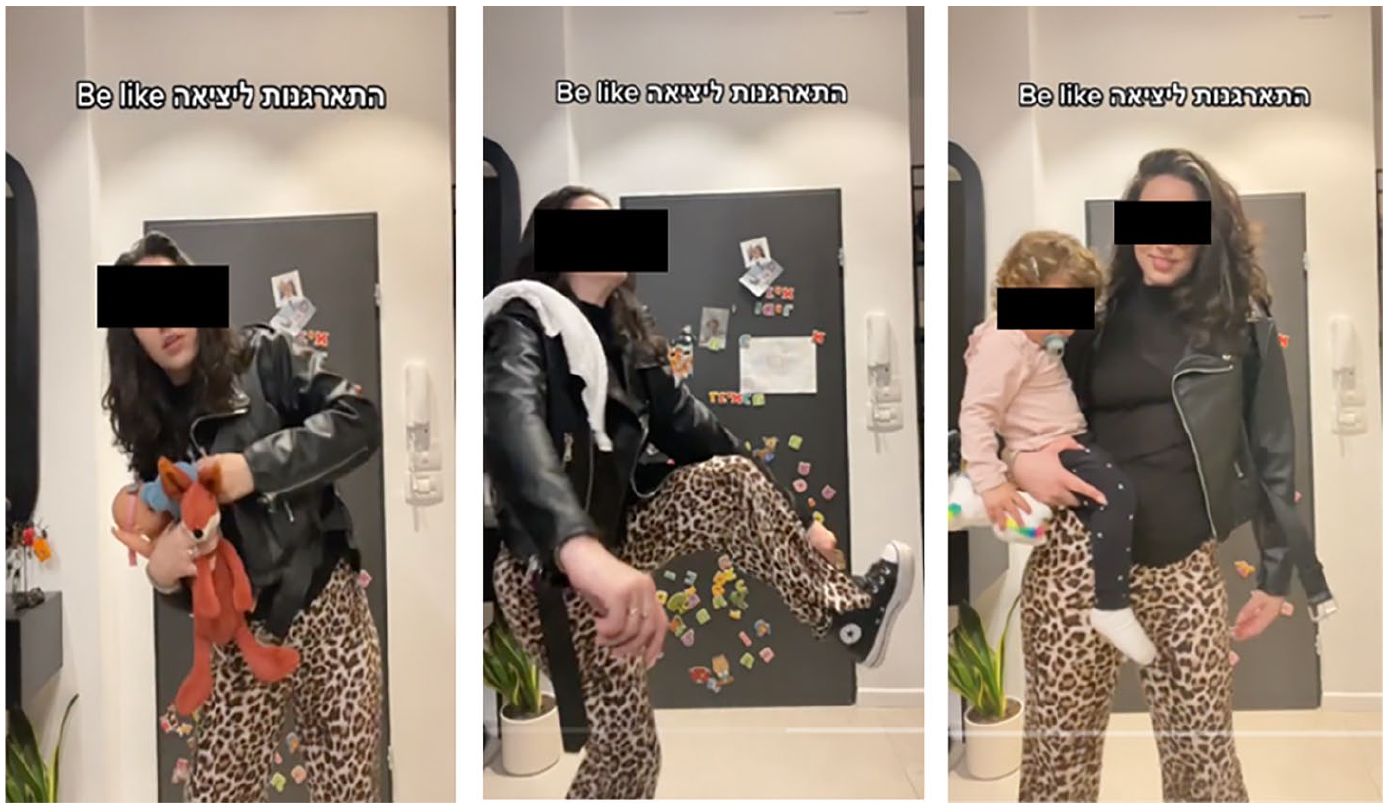
Naomi and 5-year-old Ariel promote the Leopard-patterned tights in a POV collaboration.
Our second example further illuminates how children as props become central figures in narrative arcs that showcase a brand. In this instance, Levis’ paid partnership with an electricity payment app (tagged in the caption alongside ‘AD’) opens with 2-year-old Tira dancing with Levi. Adhering to the platform’s memetic vernacular (Divon and Eriksson Krutrök, 2023, 2024; Zulli and Zulli, 2022), they are seen replicating co-dancing content, employing an audiovisual language that they frequently use and recognised by their followers (see Figure 2). The happy father–daughter dynamic is interrupted by the need to pay the power bill, which occurs quickly and easily due to the sponsored brand. Similar to Ariel and Naomi, the promotion of ‘adult’ products within kidfluencer content is gendered (Archer and Delmo, 2024) as the brand supports Levi fulfilling his duty as husband, father and provider. Critically, in the video after the bill is paid, Tira re-enters the video and dancing resumes again. Thus, the entanglement of child and brand does not involve their direct interaction. Rather, the brand functions as an accessory for facilitating what is perceived as a happy childhood, and the child acts as a co-star in this experience, becoming integrated into the branded content as a prop. As such, the child’s presence is leveraged to present an ‘idyllic’ family image that caters to capitalist consumption (Feller and Burroughs, 2022), while the child remains uninvolved in the actual transaction.
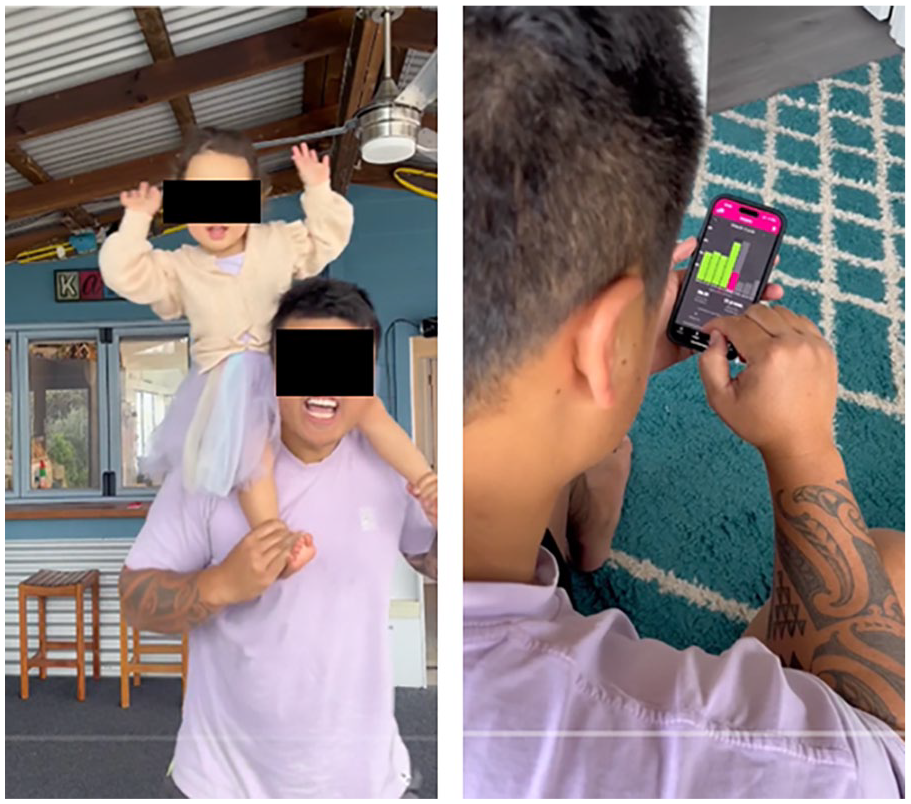
Levi and his 2-year-old daughter Tira dance in a branded partnership with an electricity payment app.
Kids playing with brands
In this subcategory, direct child–brand interactions are highlighted via brand mentions and related activities, reinforced by overlay texts and hashtags, forging a distinct link between the child and the brand. Consequently, children transform from mere props in branded content storytelling to explicit vehicles for monetisation. We draw attention in this subcategory to the closeness between the child and the brand, where the brand acts as a playmate as the child literally handles (or plays) with the branded products. This visual, embodied engagement is reinforced by the central role the child plays as the main actor in the branded content.
This is exemplified by Dana’s (6-year-old) promotion of a pasta brand (indicated by hashtags) through a ‘cook with me’ template. Dana opens with a warm welcome, informing her viewers she will be creating grill-flavoured pasta in a few steps that ‘kids can easily follow’ 2 (see Figure 3). Through this discursive separation from other ‘kids’, Dana exemplifies the agency of kidfluencers (Ghani and Cambre, 2020) and seeks to distinguish herself from the traditional child category. The pasta brand becomes not just a product but a companion that Dana interacts with throughout her video, reinforcing the playful nature of her engagement. She announces this video is one instalment in a forthcoming series, emphasising this was her choice video despite her mother, Sofia, who ‘attempted to persuade me otherwise’. 3 She goes on to express that cooking is her preferred activity over ‘playing with dolls’, 4 suggesting that engaging with brands serves as a substitute for other commercialised childhood experiences (Buckingham, 2014) that have now been monetised. Dana’s professional rhetoric and behaviour project an aesthetic that goes beyond what Abidin (2017) refers to as ‘calibrated amateurism’. As she opens the pasta, Dana prominently displays the brand and mentions it is her ‘favourite type’ 5 and adopts a distinct food tutorial style that includes overhead shots of the cooking process. Throughout the tutorial, she adjusts the camera angles to emphasise shots she prefers for better visibility of her activities, and projects a type of assertiveness that ‘affirms entrepreneurial agency and informs the self-regulating strategies of creator labour’ (Craig and Cunningham, 2017: 83).
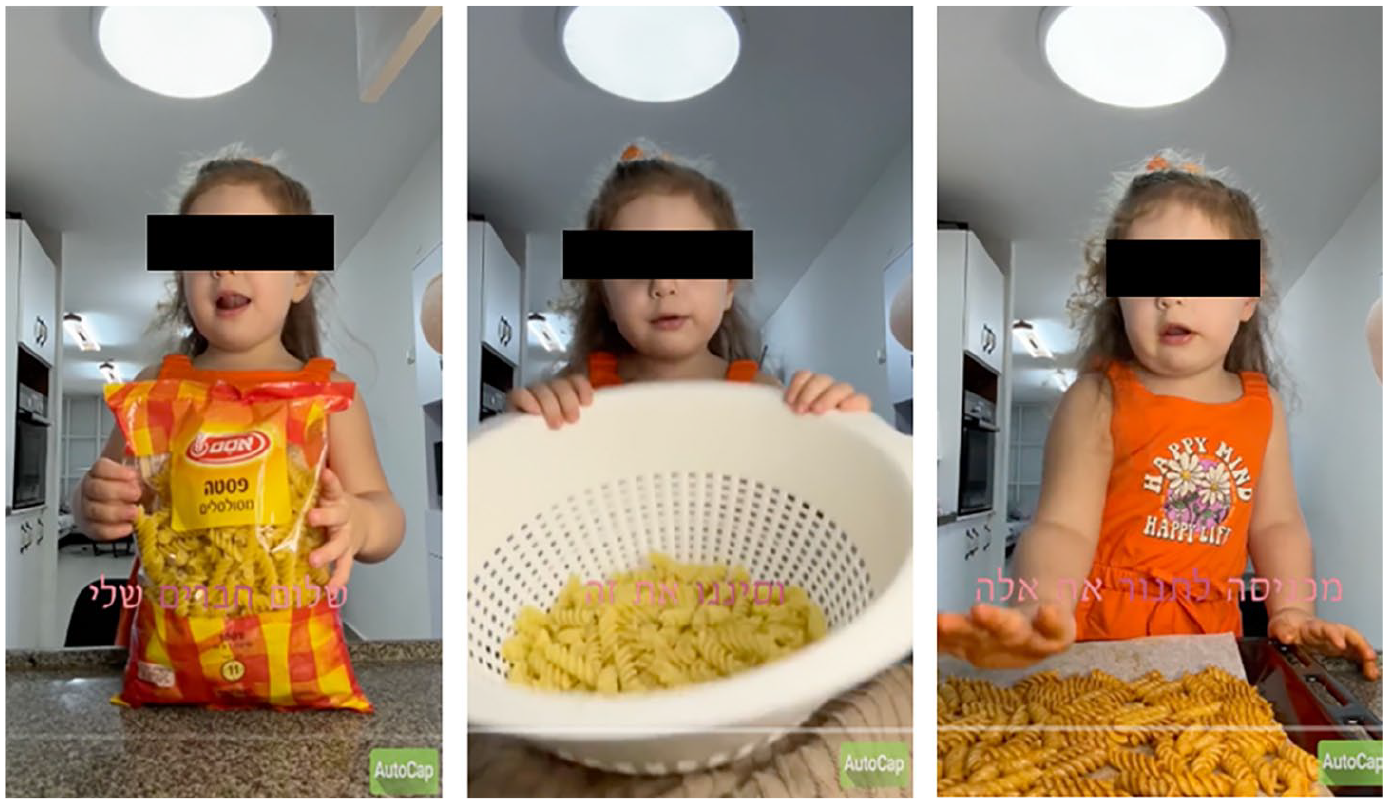
Six-year-old Dana promotes a pasta brand in a ‘cook with me’ video.
Monetised content also depicts children playing with products associated with childhood, allowing the brand to become an extension of ‘good’ parenting. For instance, Ava has an ongoing partnership with a brand offering fruit-flavoured treats with collectable toys (disclosed with the ‘AD’ tag). In one video, the children engage in childhood ‘play’ by building a fort using blankets and sofas in their living room on a rainy day. This transitions into playful interaction with the branded product, which includes close-ups of her children’s hands and Ava’s voiceover with brand-specific details (see Figure 4). The narrative arc nests ‘playing with brands’ within the wider practice of childhood play, illustrating the blurriness of play and labour as evoked by Archer and Delmo’s (2024) use of playbour. While the caption ‘Forts + @GumiYumSuprise = the ultimate boredom buster [AD]’ can be read as a creative integration of sponsorship, it potentially alludes to the intensification between engagement with consumer goods as part of childhood (Buckingham, 2014; Prout and James, 2005). Here, ‘play’ is structured by contractual obligations with brands in which the child as consumer is monetised. It raises questions of whether the fun fort-building activity was staged as the site of promotion and what types of emotional labour may be required from children to perform happiness. This extends Abidin’s (2017) discussion of the display of joy to justify labour as it is here deployed to serve the interests of monetisation.
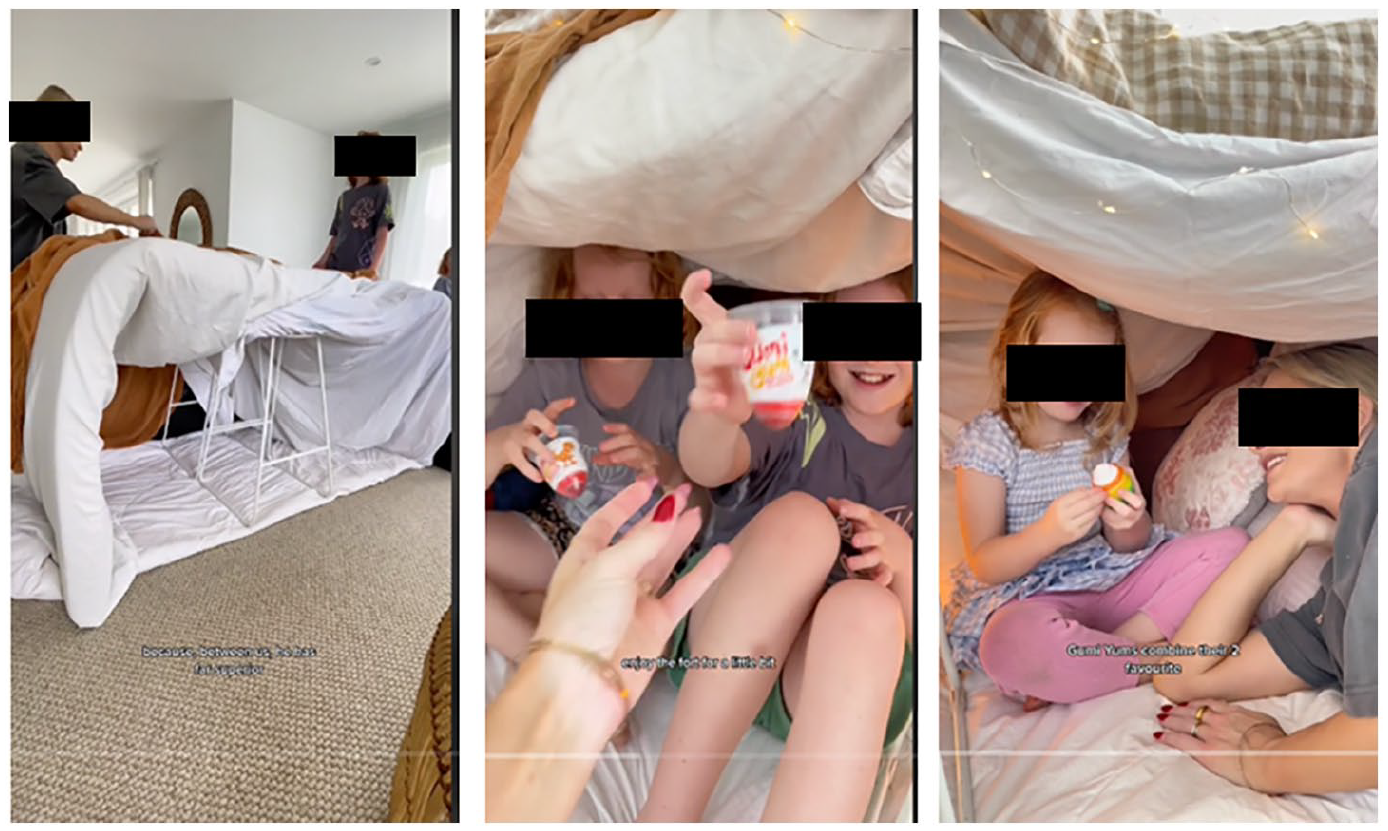
Ava’s children build a homemade fort, enjoying fruit-flavoured Gummy sweet in collaboration with a brand.
Transactional childhood
This classification emerges from the recognition that platforms function as ‘transactional spaces’ (Mol and Goanta, 2023), where contractual interactions between creators and brands unfold. ‘Transactional childhood’ involves observing parents and/or children navigating diverse childhood and growing-up scenarios, which are represented in content and intertwined with undisclosed brand presence and monetisation features. While content in the previous category clearly identifies children as vehicles for monetisation through transparent branding disclosures, here we highlight the uncertainty surrounding the monetised status. We argue this generates transactional tensions and ambiguity concerning the nature of exchange and potential commercialisation of childhood scenarios.
This is exemplified by Arianna’s (6-year-old) creation of a makeup tutorial for the ‘latte look’. She reenacts the conventions of this trending format by carefully showing each product to the camera before applying it and offering a step-by-step narration, such as ‘I’m going in with the Glotion makes you glowy’ and ‘we’re going to set the face’ (see Figure 5). While Arianna makes visible some of the brands she uses, other brand cues we would expect to be present in monetised content, such as tagging brands or disclosing partnerships (Waltenrath, 2024), are not present, generating ambiguity concerning the promotional nature of this video. This transactional tension is also generated through the ‘veneer of professionalism by mimicking the production techniques of the more professional or adult videos’ (Nicoll and Nansen, 2018: 11). Echoing Dana’s pasta-making video, Arianna’s imitation of makeup tutorials is critically framed through the ‘cuteness’ structures of online attention (Maddox, 2021), as she engages in grown-up activities and reproduces a trending makeup look without any visible parental intervention. The video ends with Arianna posing to show the final look and asking, ‘What do you think’, underscoring the complex interplay between childhood and commerce by leveraging a self-optimisation strategy that fosters engagement, prompting viewers to comment, and thus amplifying her personal brand.
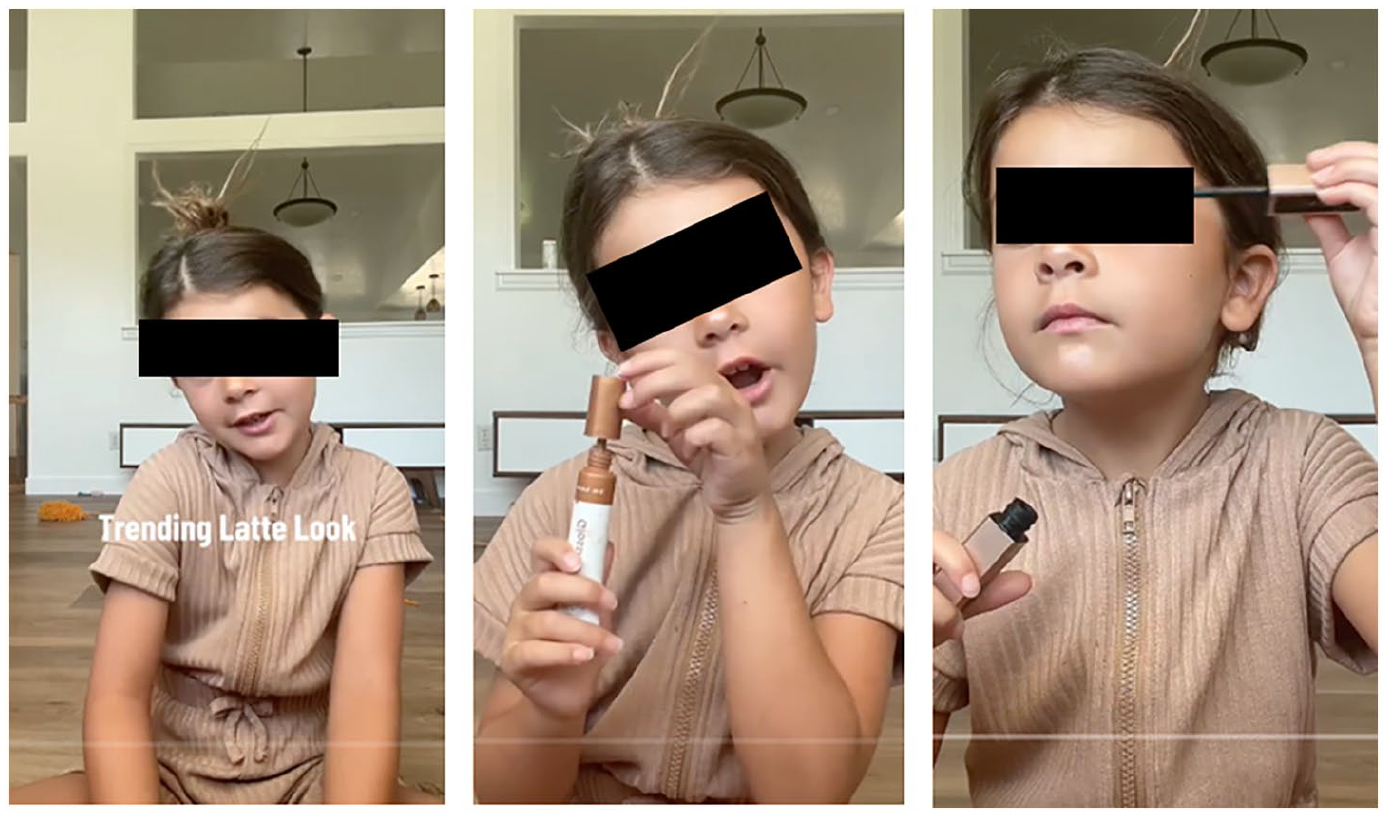
Six-year-old Arianna demonstrates a makeup tutorial for the ‘latte look’.
In another example, we see Naomi and Ariel create a ‘get ready with me’ video as they prepare for an ultra-Orthodox family wedding, adhering to trendy influencer templates. Naomi showcases her and Ariel’s dresses, setting the stage for a heart-warming mother–daughter moment. Ariel joyfully shares that this is her ‘first wedding attending with mommy’, 6 indicating the culmination of a special moment. Throughout the video, Naomi engages Ariel in conversation, encouraging her to share her thoughts on the dresses, and employs rhetorical questions like, ‘Don’t these dresses have a glamorous and modest style?’ 7 (see Figure 6). This prompts Ariel to consent to her mother’s question and express her admiration for the dresses’ modesty, a value deeply rooted in their family’s ultra-Orthodox religious background. Although she does not disclose it in this video, as her other content indicates, Naomi is an ambassador for this brand. This video might exemplify Naomi’s strategic approach to her brand partnership, as she seizes the opportunity to capitalise on a meaningful childhood moment, harnessing her child’s enthusiasm and prompting her to articulate the brand’s merits, ultimately imbuing transactional tensions with this lingering brand presence.
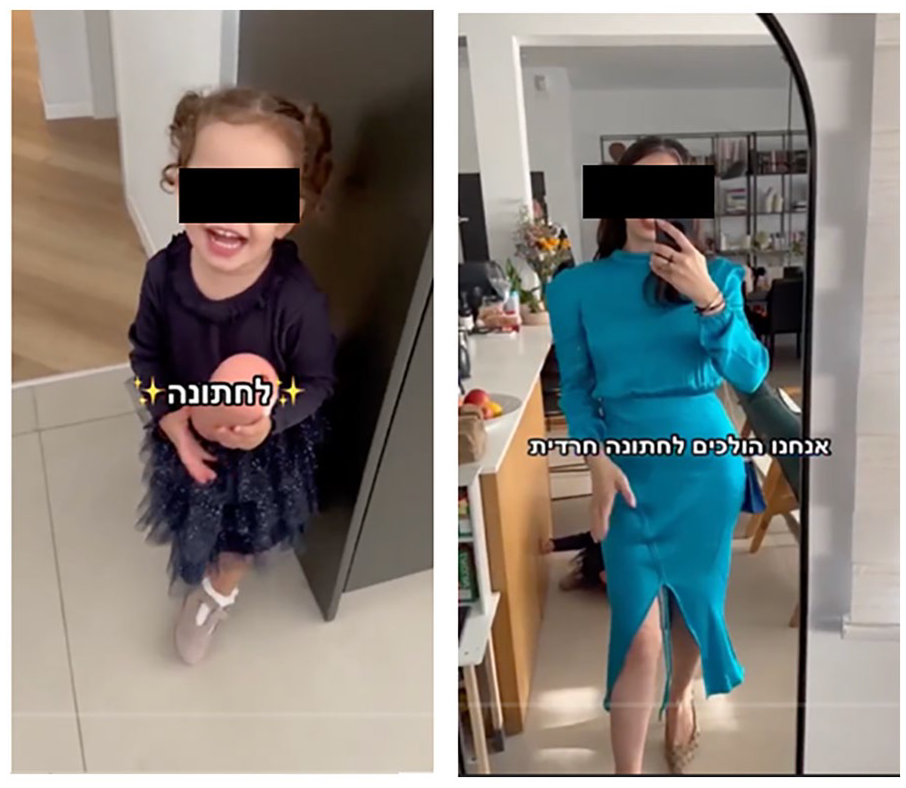
Naomi and 5-year-old Ariel in an ‘get ready with me’ video for an ultra-Orthodox family wedding.
Our concept of ‘transactional childhood’ offers a valuable lens for analysing the monetisation features that grant access to children, highlighting the tensions surrounding the exchange and commercialisation of childhood experiences. For example, Tira is highly visible and mobilised through Levi’s LIVE subscription offering. Although the account centres on Levi—featuring his name and a bio referencing his identity as a ‘husband, father, adventurer of the sea’—the LIVE community is branded as ‘Team Tira’, with subscriber badges carry Tira’s name, and custom emotes primarily feature Tira’s images, both alone and with Levi. Since subscriptions involve monthly payments by followers, we argue that transactional tensions emerge from how Levi utilises this TikTok feature to monetise increased access and visibility to Tira, circumventing policies regarding monetisation age. This example underscores the need to explore children’s roles in other monetisation models beyond influencer marketing, where the child, as an extension of the parent’s self-brand (Archer and Delmo, 2024), takes on varied and complex formations.
Aspirational child-ification
Our third category addresses self-branding practices deployed by children and parents to develop and maintain their ‘relatable’ portrayals of the ‘right’ types of childhood or family experiences and identities. In the realm of kidfluencers, what distinguishes these entrepreneurial efforts (Duffy, 2017) is the way aspirational labour is grounded in the concept of childhood. Consequently, the process of building a brand niche involves the intentional engagement of the child, taking into account the expectations and interactions within the cultivated follower community. In contrast to the previous two categories, our focus here is on content production that does not display monetisation or brands. Instead, it is part of the ongoing efforts to establish a brand presence and gain visibility, which we propose takes two forms.
Religious aspirational labour
First, we demonstrate how the commodification of religious, cultural and traditional values is part of aspirational labour in kidfluencers’ content. We draw from the classic understanding of religious commodification as a set of ‘purposeful acts aimed to convert religious symbols and institutions into marketable and consumable commodity’ (Kitiarsa, 2010: 564). An illustrative example of the symbiotic relationship between self-branding strategies and identifiable religious elements is Naomi, who fosters a connection with her audience by acknowledging her religious lifestyle and important national occasions, such as ‘Independence Day’, in commemoration of Israel’s anniversary. In her dialogue with Ariel, Naomi explores the religious importance of the day, encouraging Ariel to articulate the meaning behind Jewish symbols, thereby weaving the video’s narrative with the values common among her audience. Ariel proudly displays the Israeli flag and Star of David, emphasising that ‘we are Jewish’ 8 (see Figure 7). Naomi’s questions to Ariel, ‘What message do you have for our followers?’ 9 and ‘Do you want to share your excitement with our followers?’, 10 underscore her orientation towards the audience while embodying traits that Taillon et al. (2020) suggest make influencers appealing to their audience: relatability, likability, attractiveness and intimacy.
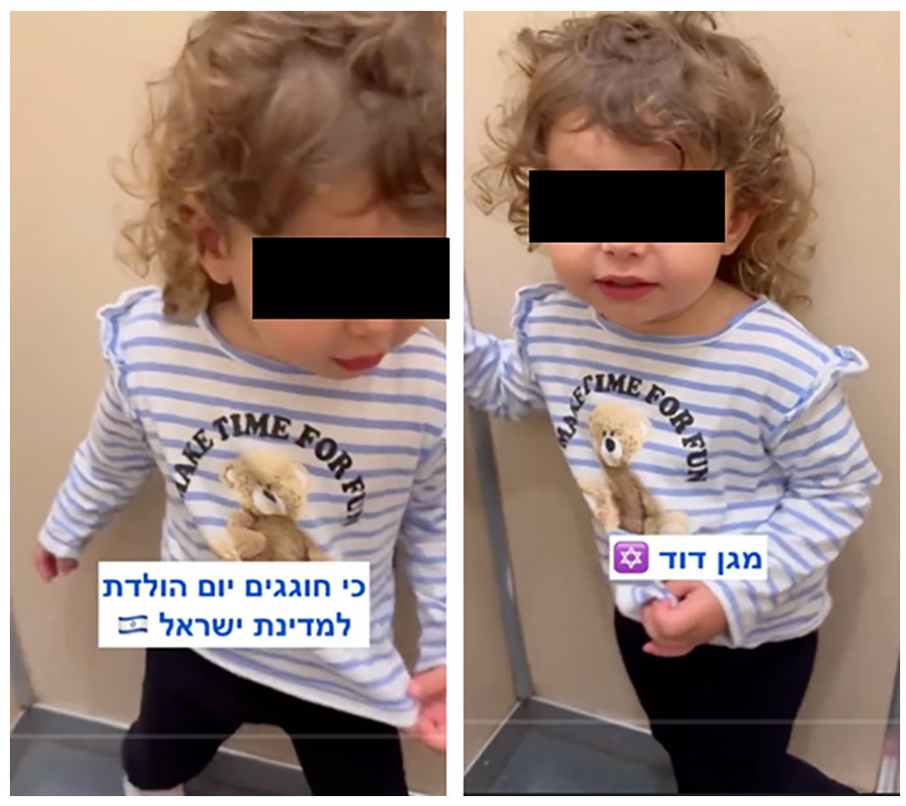
Five-year-old Ariel is interviewed by her mother about the religious meanings of Israel’s Independence Day.
Similarly, Abigail, a gym chain owner, shares videos where her 5-year-old, dubbed ‘the king of Shabbat’ by her followers, participates in traditional ceremonies with her, like lighting candles, reciting weekly prayers and preparing traditional meals (see Figure 8). Throughout her various videos, Abigail engages her child in religious labour, raising questions about consent. In one video, her child asks, ‘Mommy, do we have to say prayers today? And what if I don’t like it?’ 11 She responds, ‘We can’t disappoint God and our followers’, 12 underscoring how discussions of participation become part of the content and in this instance, the justification for such labour is rooted in fulfilling the expectations of multiple external authorities: God and the followers. By sharing her religious practices online, Abigail not only upholds her traditional persona but also aligns her fitness brand with her community’s values, blending religious commitment with her business strategy. Both Naomi and Abigail enhance their influencer personas by weaving religious and national symbols into their content, with their children embodying these values to attract their audience. This strategic integration of aspirational elements enhances their likeability, follower engagement and revenue potential from both existing and prospective clients of their diverse offerings.
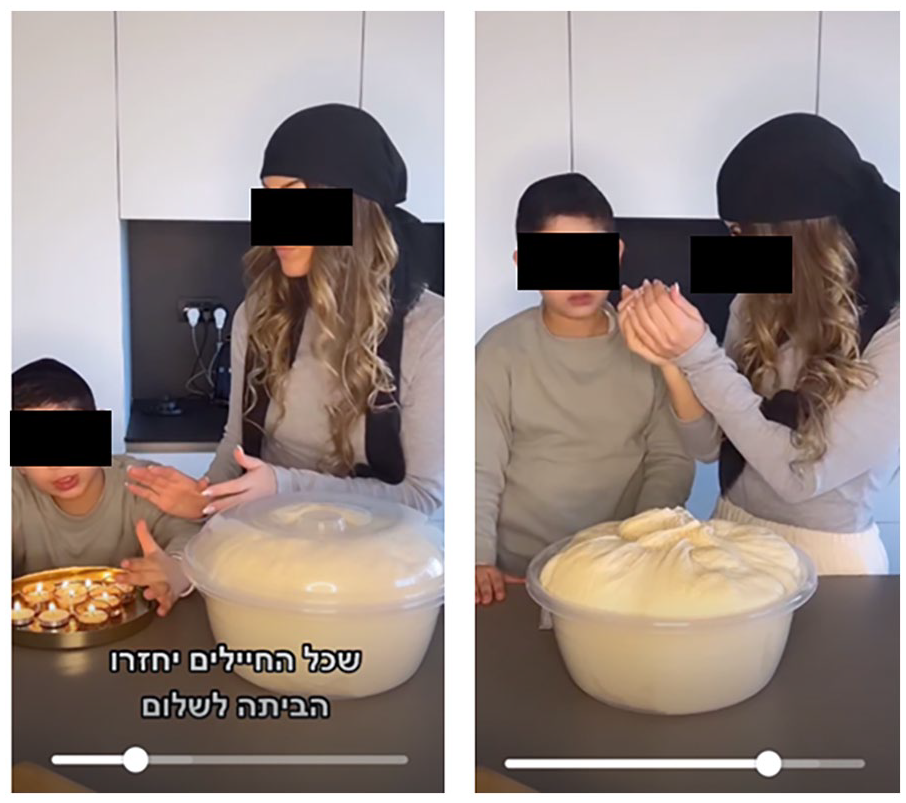
Abigail and her 5-year-old ‘king of Shabbat’ blend religious practices into her traditional-oriented lifestyle.
In a New Zealand context, we observe how Māori culture and values are brought into aspirational labour. An example of this comes from Levi’s reworking of the ‘expectation versus reality’ template to construct his specific brand. He juxtaposes widely recognised images and videos of Māori and Pacific Island culture with personal footage of his daily interactions with Tira (dancing, brushing her hair, eating kina, playing together) to reveal the contrast between the public’s perception and ‘what they don’t know’. By including segments from previously shared videos, Levi produces a meta-commentary of his account, indicating how the promotion of everyday lived Māori culture is one of his brand’s pillars (see Figure 9). Thus, childhood experiences are captured and shared as part of Levi’s aspirational labour on TikTok in which he cultivates his brand of an ordinary Māori family life framed by ‘realness’ and ‘authenticity’ to foster a sense of community with his followers. As such, we see how aspirational labour not only requires the infusion of family life with capitalism through monetisation (Feller and Burroughs, 2022) but the cultural specificity of the ongoing cultivation of brand presence infused with cultural values and religiosity, which can be converted into monetisable content.
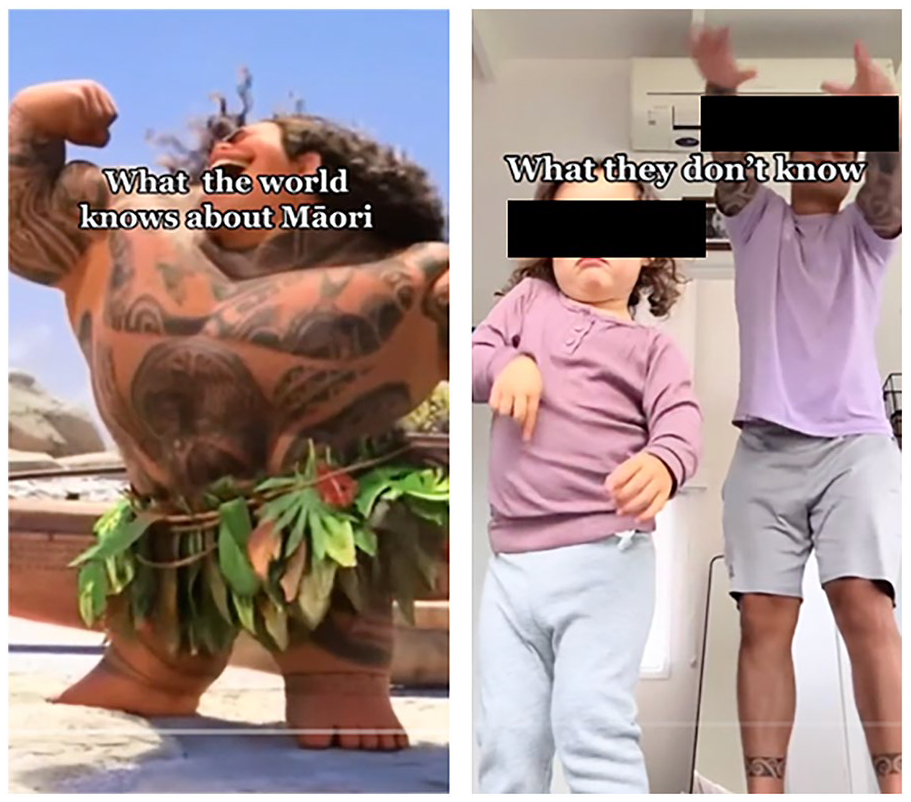
Levi and 2-year-old Tira engage in an ‘expectation versus reality’ challenge on perceptions of Māori culture.
Platform aspirational labour
Second, the deployment of aspirational labour to attain visibility and foster brand presence involves the utilisation of TikTok’s vernaculars and ambience. Depictions of childhood and family dynamics are conveyed through playfulness and affective resonance facilitated by platform performance and affordances (Cervi and Divon, 2023). In particular, we observe how the cuteness (Maddox, 2021) of children engaging in adult influencer practices and prevalent formats and trends is a strategic pathway that taps into a broader economy of attention-grabbing techniques (Marwick, 2015), positioning the child as fodder for content monetisation.
A core part of Zara’s brand is the participation of her two children in Arabic-related challenges and dances, embracing the mimesis baked into the logic of TikTok (Divon and Ebbrecht-Hartmann, 2022; Zulli and Zulli, 2022). As part of her playlist for ‘Say the Arabic Word’, 16-year-old Lucas battles with his older sister, Aya, to name foods in Arabic. Lucas and Aya display a competitive sibling dynamic, arguing over the pronunciation, racing to remember the words and celebrating when Lucas gets one right, having ‘been a bit slow’ and getting ‘roasted’, according to Zara’s refereeing. Zulli and Zulli (2022) propose that digital liveness helps to account for the prevalence of challenges on TikTok. The ‘realness’ and ‘calibrated amateurism’ (Abidin, 2017) in the sibling interactions of Zara’s videos inject an ‘unpredictable flow and potential eventfulness’ (Lupinacci, 2021: 2) into the recognisable ‘Say the Arabic Word’ format.
In another example, Abigail is seen joyfully dancing with her children, all dressed in sportswear, as she remarks, ‘they do it better than me in my studio’ 13 (see Figure 10). Abigail captures TikTok’s vibrant spirit by using popular dance trends as a pathway to algorithmic exposure (Bösch and Divon, 2024). She embeds her brand’s essence into her videos through playful, spontaneous moments with her children. This partnership with her children solidifies her status as a gym authority, turning her kids into natural ambassadors of her fitness empire. We claim that activities like those of Zara and Abigail, although not directly tied to the monetisation of a product or service, aspirationally monetise moments of childhood by seamlessly integrating them into the platform’s cultures and infrastructures of playfulness. Parents, together with their children, possess access to platform literacies and content creation as part of a broader, strategic effort to organically enhance their business visibility.
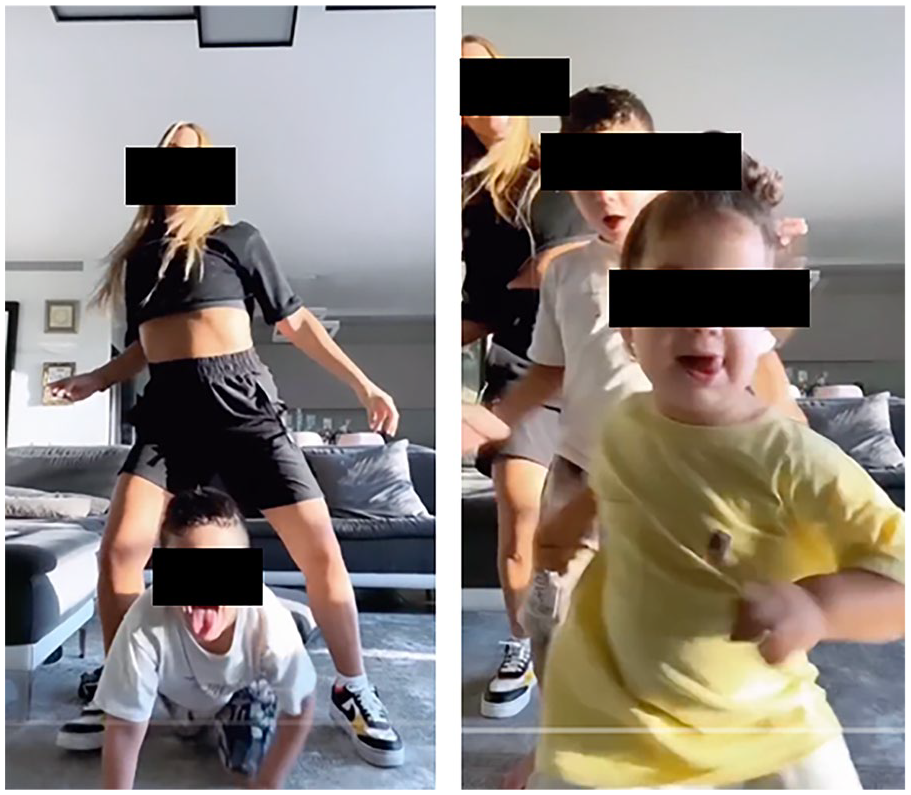
Abigail and her children dance in sportswear, enhancing her fitness brand’s visibility on TikTok.
Regulative parenthood
Our fourth category captures how kidfluencer activities rely on the disciplinary attitudes and approaches of parents and what we perceive as consensual cues, exemplified by the noticeable presence of children’s enthusiastic and voluntary engagement in the videos. Anchored in a broader landscape of parental regulatory awareness of media use (Livingstone, 2016), we focus on how parents regulate the creation of accounts, discoverability of content, visibility of their children and use of monetisation features in relation to TikTok policies. We start by analysing TikTok’s policies, focusing on regulatory gaps that parents navigate while engaging in monetisation practices and regulate their children’s participation in influencer content in ways that extend beyond the platform’s rules.
Our review reveals that kidfluencers constitute a hidden category of users on the platform, with significant gaps in the rules concerning the monetisation of children’s content. Through its Community Guidelines (TikTok, 2023b), the platform emphasises users must be at least 13 years old to use the service, with additional age limitations based on local laws. However, this age requirement does not address practices of children falsifying birth dates or parents co-managing child identities using their names and profiles. ‘Young people’ are subject to additional rules designed to provide a ‘developmentally appropriate and safe experience’. For example, content from users aged 13 to 15 years is ineligible for the For You Page (TikTok, 2023b), which impacts the reach and audience of kidfluencers. ‘Young people’ are also restricted by TikTok from accessing and using monetisation features (TikTok, 2023b). The minimum age requirement of 18 years old is explicitly stated in multiple policies related to these features including TikTok Creator Fund Terms (TikTok, n.d.), TikTok Creator Marketplace Agreement for Services in the United Kingdom, Europe and Israel (TikTok, 2022b) and TikTok Creativity Programme Beta Terms (TikTok, 2022a). While this indicates the platform’s intention to limit monetisation by children, these documents do not address the monetisation of children in content.
In addition, TikTok’s (2023a) Branded Content Policy, governing influencer marketing practices, relies on the user’s engagement in specific practices (such as receiving payment from a third party) to determine the policy’s applicability. This creates a scenario where a user classified as ‘young people’ under the Community Guidelines can still meet the requirements of the Branded Content Policy, revealing an ambiguity in TikTok’s stance on influencer marketing involving kidfluencers compared to other monetisation policies. The Branded Content Policy restricts how branded content can involve ‘minors’, prohibiting content that urges minors to purchase or subscribe to a product or service or encourages them to convince their parents to buy the advertised goods. Similar restrictions are in advertising policies, barring advertisers from promoting certain products to users aged 13 to 17 years (TikTok, 2024).
Parents (and children) navigate TikTok’s regulatory approach in a variety of ways. To begin with, Chloe balances agency in her joint account with daughter Rome, @chloeandrome, by noting in the bio ‘Managed by an adult’, signalling compliance with platform age regulations and highlighting her parental responsibility. This is continued through her disabling comments on all videos, minimising harm but also gestures towards a privileged position in which they do not depend on engagement metrics for monetisation. Comparatively, Lisa manages her children’s exposure through her naming practices. Rather than use their names, she uses third-person pronouns and ‘the kids’, ‘my oldest’ or ‘youngest’. Another approach to the management of exposure is evident in the participation of two of Zara’s three children in her influencer activities. While her middle child is visible in a slideshow of family photos captioned ‘my best friends and biggest blessing’, only Lucas and Aya are included in her regular videos. The absence of one son signifies the children’s autonomy in participation, further contextualising family dynamics as a method parents use to navigate or address concerns associated with child labour (Abidin, 2017).
In her branded content, Zara is restricted to featuring herself or Aya, who is an adult and full-time content creator. As such, there is a separation between content in which the child acts as a co-star, demonstrating an enactment of regulative parenthood in which the child is not leveraged for paid promotion (see Figure 11). This differs from the active involvement of Ariel, Tira, Dana and Ava’s children in branded content as we have illustrated through our earlier examples, which represent an alternative form of regulative parenthood, and each requires different forms of participation from the child. While these examples seem to meet the requirements of the Branded Content Policy, we question how they might be evaluated in light of other policies that explicitly separate children from monetisation features to foster a ‘developmentally appropriate and safe experience’ (TikTok, 2023b). It is parents, then, that navigate such inconsistency in TikTok’s platform governance.
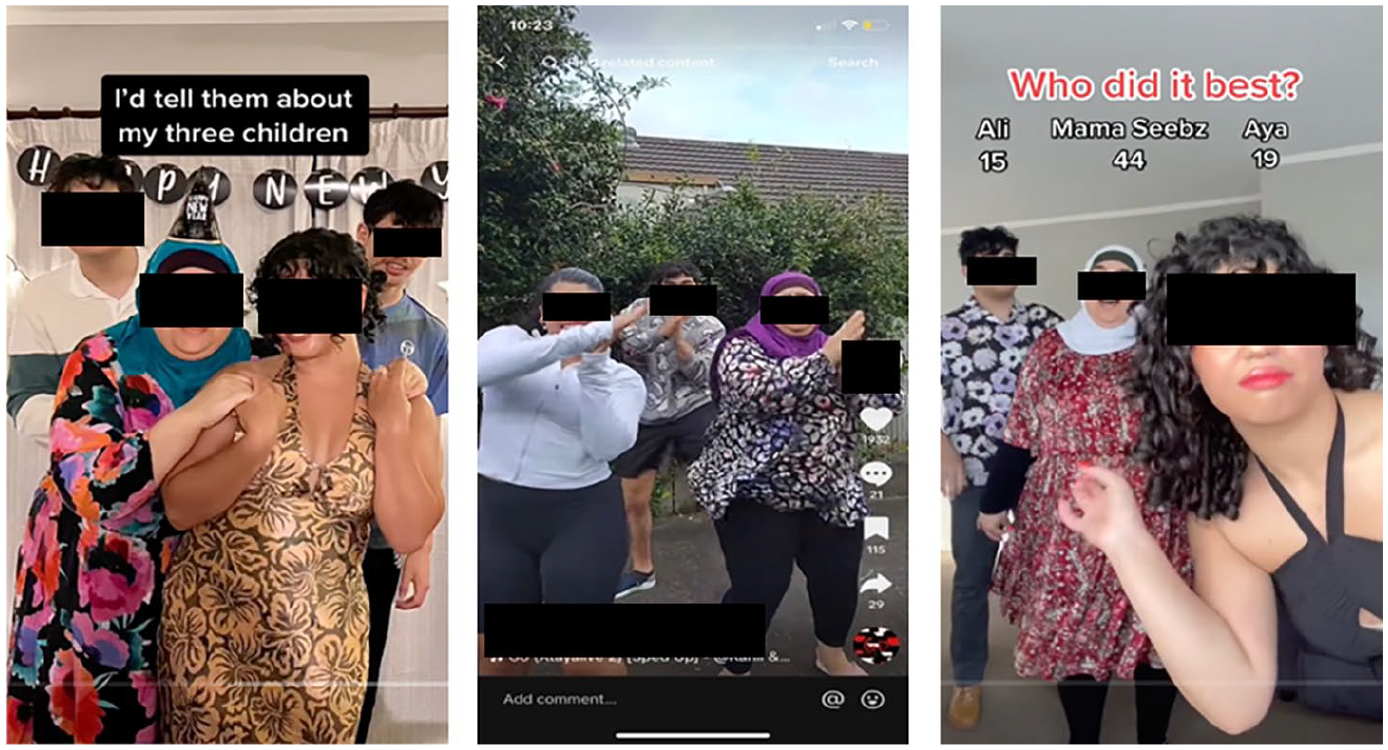
Zara with her three kids in family photos versus promotional content featuring only two kids.
The nuances of adult protection are also manifested through the navigation of age requirements in monetised content. Zara demonstrates a keen understanding of the platform’s policies by creatively incorporating her child, Lucas, into monetisable activities. Despite Lucas’s inability to go LIVE due to age constraints, Zara ingeniously includes him in LIVE sessions where he interacts with virtual gifts, aligning with the trending non-player character (NPC) phenomenon crucial for platform monetisation. This trend involves creators mimicking video game characters and performing repetitive actions or phrases in response to virtual gifts they receive during LIVE broadcasts, exemplifying the gamified approach of creators to monetisation (Harris et al., 2023; Tran, 2022). Lucas and Zara’s preparation of NPC responses to potential virtual gifts can be understood as a pre-emptive practice indicating an orientation towards monetisation, which is made overt via Lucas’ verbal requests to followers. When they receive a ‘Mystery Firework’ gift, Lucas reminds Zara they need to respond and they display firework-exploding gestures as Lucas sings ‘Firework’. This transaction is facilitated by Zara’s parental oversight, which complies with some TikTok requirements but also potentially bypasses the platform’s intent to limit monetisation of children through this feature.
Moving beyond simply justifying child labour in influencer content, we also consider the mediation of the child by parents, which complicates our understanding of participation. For example, Mila participates in the ‘Day in the Life of My Baby/Toddler’ trend by producing a morning routine for her son, Grayson. The video opens with a voiceover: ‘What up bitches, this is my morning routine’, emulating the trend’s playful use of profanity and establishing a humorous tone. Mila narrates clips of Grayson’s activities—eating, cuddling, and playing—using a voice filter to distinguish her roles as both his narrator and his parent. Through her narration, Mila presents an antagonistic relationship and showcases her ‘failure’ of the parent (‘she never wakes up on time, so I have to slap the shit out of her face’). This is juxtaposed with the warm interaction portrayed in the video as a smiling Grayson wobbles towards Mila’s outstretched arm. This interplay illustrates how the human ‘beings’ perspective—positioning children as active agents within their environments (Ghani and Cambre, 2020)—is deployed as a representational strategy that playfully reinterprets notions of adult protection. By presenting Grayson’s ‘voice’ through first-person pronouns, this example underscores the complex agency dynamics between parents and children, entangled with questions of consent and the construction of a child’s persona through editorial decisions, including editing, audio, text, clip selection, and directing.
Legal reflections
A crucial characteristic of the monetisation narrative presented in our ethnographic study is the intermediation and amplification of kidfluencers by platforms. As hosting intermediaries, platforms have managed to retain a high degree of protection from the liability of disseminating problematic content, which could include in some circumstances kidfluencer content. However, in the EU, the recent regulation DSA updates this liability regime, imposing new transparency requirements to enhance the accountability of platforms for hosting what is called ‘illegal content’. Article 3(h) DSA defines illegal content as
any information that, in itself or in relation to an activity, including the sale of products or the provision of services, is not in compliance with Union law or the law of any Member State which is in compliance with Union law, irrespective of the precise subject matter or nature of that law.
In other words, any national or European law regulating children’s activities on social media may render content illegal if it violates these rules. For instance, if a national law limits children’s content creation hours weekly, exceeding this could produce illegal content, obligating platforms to investigate and act. Similarly, if national regulations limit advertising of high-fat, salt and sugar foods, promoting these products in ads could be deemed illegal. This, then, has implications for processes of detecting, flagging and removing illegal content because it requires consideration of how practices of content production involving minors intersect with the visibility of minors in content, and how these online and offline activities are subject to existing legislation. As such, rather than necessitating further legislation specific to kidfluencers in the context of the EU, the DSA may provide a mechanism through which some kidfluencer content and, by extension, children are afforded protections depending on the interpretation of illegal content.
The ‘illegal content’ concept is essential for a number of due diligence obligations in the DSA. A fundamental due diligence obligation is outlined in Article 34, which governs ‘systemic risks’. The DSA acknowledges in Recital 79 of the Preamble that such risks stem from the ‘design, functioning and use of (platform) services, as well as from potential misuses’. Article 34(1) includes four categories of systemic risks, out of which three are relevant to the commodification of children on platforms. Section (a) refers to the dissemination of illegal content – platforms need to identify risks that arise out of child content that may be considered illegal under the definition in Article 3(h). Section (b) governs actual or foreseeable negative effects for the exercise of fundamental rights, including the rights of the child enshrined in Article 24 of the Charter of Fundamental Rights, which outlines – among others – the rights of children to ‘protection and care as is necessary for their well-being’ (Article 24[1]). Finally, section (d) mentions systemic risks that arise out of ‘actual or foreseeable negative effects in relation to [. . .] the protection of [. . .] minors’. In these sections, the DSA both implicitly and explicitly recognises the possibility that the activities of children on platforms can lead to systemic risks. As a result, systemic risks must be identified and assessed by Very Large Online Platforms (VLOPs), like TikTok, with over 45 million EU users, due to their significant impact on children’s well-being.
Echoing concerns by Fishbein (2022) on inadequate platform governance for protecting child influencers from exploitation and by Waldo (2023) on children’s loss of control over their digital footprint, the categories we identified have significant legal implications due to the risks they pose to children’s well-being online. With brands being featured in videos of children (kids as props; brands as playmates) and platforms functioning as spaces of contractual transactions (transactional childhood), there are inherent risks for the commodification of a child’s labour, time and/or attention. Content monetisation can take various forms, but the involvement of brands through advertising contracts particularly highlights the mediated participation of children in economic activities. This dynamic may pose risks to children, potentially causing harm in both the short (e.g. reducing school or leisure time for economic activities) and the long term (e.g. parents using earnings from a child’s activities during their minority years).
In terms of relatable self-branding practices (aspirational child-ification), children face risks such as compromised privacy, emotional distress, and loss of autonomy over their self-representation. Their portrayal, shaped by the family’s social media identity, positions them as tools to attract followership and secure business opportunities, with potential long-term impacts on their digital footprint and future personal or professional lives. Finally, the nature of parental disciplinary attitudes in influencer marketing (regulative parenthood) reveals an agency issue that children may have when managed by parents. In this case, we argue that legal constructs such as national capacity rules may be seen to achieve the opposite of what they were meant for: rather than empowering children to make decisions about their own image, these rules, designed to protect them against third parties who may want to take contractual advantage of their immaturity, may instead act as consent cages, confining them by granting full control to parents or guardians and limiting their ability to exercise autonomy over their image.
The extent to which the conditions under which children’s commodification on social media poses a systemic risk under the DSA requires further academic investigation in specific jurisdictions, that goes beyond the scope of this article. However, we wish to flag that systemic risks along with provisions concerning illegal content under the DSA are significant regulatory interventions that are consequential for kidfluencers in light of the findings we uncovered through our ethnographic analysis. In particular, it highlights how platforms have responsibilities that may go beyond their current private governance, which as we have argued both overlook practices on the platform and do not enforce policies concerning children’s involvement in monetisation.
Conclusions
Our article argues that the concept of ‘kidfluencer’ redefines our understanding of the creator economy by intertwining children’s identities with monetisation strategies on platforms. Kidfluencers occupy unique positions within the influencer ecosystem, yet platforms circumvent the complex legal and ethical questions surrounding their involvement in monetisation through vague or insufficient policies. This lack of clarity overlooks how children and childhood are deeply embedded in overt and implicit monetisation practices.
In drawing attention to these intricacies, we bring together existing strands of research into the management of children’s online identities in practices such as sharenting, mommy vlogging, and microcelebrity (Abidin, 2015, 2023; Blum-Ross and Livingstone, 2020; Borda, 2015; Hunter, 2016; Lopez, 2009), conceptualisations of kidfluencer labour (Abidin, 2017; Archer and Delmo, 2024; Geider, 2021) and advertising content (Feller and Burroughs, 2022; Mol and Goanta, 2023)—to nuance how children function as a medium of monetisation. That is, children often become commodities whose presence and participation are integral to building an influencer’s brand. While this is explicit in branded content, we also highlight subtler forms of commodification, such as the inclusion of brands and content designed to boost visibility, cultivate follower interest, and foster loyalty. We propose that the latter can be considered ‘concealed’ due to the lack of visible disclosures, the strategic use of childhood interactions, and the playful, ‘cute’ TikTok templates that obfuscate how the child’s play is transformed into value creation for the kidfluencer as a brand. We argue that the interplay of consensual cues of children, parental involvement and management of their presence, contractual obligations from brands and advertisers and platform regimes of visibility generate transactional tensions in which play, labour and monetisation become deeply entangled.
Our findings establish four classifications that capture the (in)visibilities of monetisation and branding practices involving kidfluencers. (1) ‘Kids as props; brands as playmates’ reveals how children act as Props for Branded Content, in which they serve as accessories in narrative arcs motivated by branded content, and how children Play with Brands in orchestrated scenarios, directly interacting with branded products. (2) ‘Transactional childhood’ underlines practices of weaving commercial aims into childhood moments, in which the lines between commercial promotion and experiences become blurred due to the ambiguity of disclosures. (3) ‘Aspirational child-ification’ refers to the curation of a brand identity based on idealised childhood and family concepts to boost brand visibility. We distinguish between platform aspirational labour where children serve to attract attention and solidify the brand’s presence by leveraging TikTok’s playful ambience and religious aspirational labour, in which parents embed religious, cultural and traditional values within the content to deepen connections with audiences and enhance brand appeal. (4) ‘Regulative parenthood’ showcases the diversity of strategies employed by parents to regulate their children’s visibility, identities and engagement in monetisation in ways that go beyond platform requirements.
Within this context, our concept of the child as a concealed commodity emerges not only from our analysis of kidfluencer practices but also through their positioning within platform governance (Gorwa, 2019). By examining these practices, we reveal how kidfluencers constitute a hidden category of users and actors within TikTok’s regulatory framework. Their policies overlook the complexity of kidfluencer practices, positioning the platform as neutral intermediary rather than private governor and benefactor of kidfluencer content.
By integrating empirical insights on the commodification of children in influencer content with evolving legal regulations, we aim to enhance the conversation on regulatory oversight (Waldo, 2023). While we do not offer an exhaustive demonstration of how commodification of children takes place via influencer activities nor the harms arising from such practices, this paper raises the question of platform liability through the lens of illegal content and systemic risks. The regulation of platforms in the form of EU’s DSA offers a point of intervention into what we refer to as the concealment of children’s presence and commodification on platforms, which raises questions of what obligations and responsibilities platforms as well as parents hold. Systemic risks add a novel layer to platform governance, highlighting the necessity for policies and practices to continually evolve towards more accurate implementations. While our article’s legal analysis has its limitations, we present it as a foundational step for an expanded debate on the conditions under which children’s commodification on social media poses a systemic risk under the DSA. This discussion should also explore the responsibilities of VLOPs in assessing and mitigating such risks in accordance with their obligations under DSA (Article 35). As we do not address the harms related to the (in)visibilities of monetisation and branding practices involving kidfluencers, future research including longitudinal studies tracking children’s development, identity formation online and mental health is needed to offer insights into the long-term effects of these practices.
In addition, we recommend continuing the scholarly dialogue by expanding upon our examination of kidfluencers as a concealed category in TikTok’s private regulation. Comprehensive cross-platform analysis of how platforms regulate and manage kidfluencer content would address the substantial research gap and inform policy development across different levels of platform governance. Moreover, our ethnographic findings could be complemented through future qualitative research specifically focused on the roles and responsibilities of parents in managing their children’s online presence and monetisation activities, as well as the impact on family dynamics and well-being. By cultivating deeper attention towards cultural context and platform vernaculars, we aim to generate insights into the involvement of children in influencer content, as well as the specificities and cross-cultural resonances of kidfluencer ecosystems.
Footnotes
Funding
ERC Starting Grant HUMANads ERC-2021-StG No 101041824.
