




Abstract
While the connection between social networking sites (SNSs) and body image has been reported more broadly in prior literature, the link between SNSs and muscle dysmorphia (MD) is less understood. The aim of this study was to investigate the strength and nature of the relationship between MD and SNSs among men in the general population. With SNSs allowing users to view and interact with online content, this study focussed on three SNS activities: (a) viewing men’s celebrity and fashion content, (b) viewing fitness-related content and (c) the importance of received likes and comments. Young men (N = 95) completed an online questionnaire recording demographic information, SNS activities and MD symptomatology. A hierarchal regression revealed that the importance of received likes and comments significantly predicted MD symptomatology over and above demographic factors. These findings reflect a need to emphasise the interactive components of SNSs within body image literature.
Keywords
The number of individuals using social networking sites (SNSs) has doubled since 2017 (Dean, 2023), now reaching 4.8 billion users worldwide (Petrosyan, 2023). Young Australian adults (18–34 year olds) are among the most frequent users, with 85% using at least one SNS (Australian Communications and Media Authority (ACMA), 2021). Most young adults view SNSs several times per day, in fact, many view these platforms as frequently as every hour (Scott et al., 2020). Users can actively engage with the platforms by uploading imagery (i.e. photos and videos), enhancing their content with filters and image effects and providing or receiving feedback in the form of likes and comments (Bell et al., 2018; Mills et al., 2018). Likewise, users can also engage passively by observing and subscribing to imagery they want to see from other profiles (McCrory et al., 2022).
The imagery of idealised bodies are commonly disseminated on SNSs as users frequently post, comment and like imagery of other users’ appearance that contributes to the development of idealised appearance standards (Fioravanti et al., 2022). The body imagery presented on SNSs is often unrealistic (Carrotte et al., 2017), which increases the risk of body dissatisfaction given the discrepancy between an individual’s perceived body image and the ideals they are exposed to (Grunewald et al., 2021). Recent meta-analyses and systematic reviews confirm this, with a consistent relationship found between viewing SNSs and greater body dissatisfaction (Fioravanti et al., 2022; Mingoia et al., 2017; Ryding and Kuss, 2019). Furthermore, conforming to body ideals depicted on SNSs is associated with appearance-enhancement behaviours (Cataldo et al., 2021), symptoms of depression, anxiety (Barnes et al., 2020; Mesce et al., 2022) and suicidality (Grunewald et al., 2021).
Body image concerns in men
SNS and body image research has predominately focussed on the relationship between these factors among women (Jerónimo and Carraça, 2022), whereas men’s body image has been underexplored. The paucity of investigation among samples of men is problematic given that in one particular study of young university adults, 68.5% of men reported having some level of body dissatisfaction, which is similar prevalence to the 66.7% of body dissatisfaction found in women (Godina et al., 2020). The mesomorphic figure, characterised by large and/or lean pectorals, arms, broad shoulders and defined abdomen, is the dominant appearance ideal in media for men (Groves et al., 2023; Gültzow et al., 2020). Furthermore, there is evidence to suggest this ideal has been increasing in size and muscularity over time to create an even more unrealistic ideal and widen the discrepancy between the ideal and what is typically achievable for the average man (Leit et al., 1999; Martenstyn et al., 2022). To attain this physique, the individual would need to commit to daily workouts (Martenstyn et al., 2023), meticulous calorie counting and supplement use (Cunningham et al., 2017), making it difficult to attain. The difficulty of achieving the mesomorphic figure through these means alone can lead men to engage in dangerous behaviours, such as anabolic–androgenic steroid use to increase the likelihood of achieving the muscular ideal (Chatzopoulou et al., 2020). Such means pose additional physical health risks, such as cardiovascular and coronary artery disease (Baggish et al., 2017), as well as a mental health risk in developing symptoms of muscle dysmorphia (MD).
Muscle dysmorphia
MD is a specifier of body dysmorphic disorder, defined as a severe preoccupation that one’s body is perceived as insufficiently muscular or lean (American Psychiatric Association (APA), 2013). This pathological belief is often linked to negative and excessive evaluation of the body (Cafri et al., 2008; Martenstyn et al., 2022), and impairment of daily functioning, such as prioritising workout routines over social engagement (Cunningham et al., 2017). In addition, individuals living with MD show an extreme drive to reach their body ideal through compulsive exercising and meticulous dieting (Martenstyn et al., 2023). MD is more prevalent among men than other genders (Ganson et al., 2023a) and symptomatology typically develops in the young adult period (Mitchison et al., 2022). Living with MD is also associated with further risks, such as the use of anabolic steroids (Scarth et al., 2023), eating disorder symptomatology (Nieuwoudt et al., 2015) and higher rates of suicide attempts, substance use disorder, negative mood and anxiety disorder symptoms when compared to non-MD men (Cafri et al., 2008; Pope et al., 2005).
Given the nature of the dysfunction and the setting in which the problematic behaviours typically occur, much research has been devoted to exploring MD among body-building communities as there appear to be higher rates of MD among these communities. For example, Longobardi et al. (2017) found that as many as one in four members of this community meet the diagnostic criteria for MD. However, these communities account for a minimal proportion of the broader population among men as there are only 30,000 international bodybuilders registered professionally (Lindner, 2023). Furthermore, evidence suggests that there are no significant differences in body image concerns between competitive bodybuilders and recreational strength trainers (Steele et al., 2020). Less attention has been paid towards investigating MD among broader, general population samples of men which is concerning given the prevalence of SNS use and body dissatisfaction among men more broadly. Of the few studies that have investigated general population samples, Ganson et al. (2023a) reported that 17.2% of young men are at clinical risk of diagnoses, and Mitchison et al. (2022) additionally found that 2.2% would meet the diagnosis criteria (Mitchison et al., 2022). Thus, it is likely that the presentation of MD may extend beyond samples with a formal diagnosis as well as specific body-building communities, with a much broader range of men likely being at risk for further harm and therefore suitable targets for preventive interventions to reduce such risk. With emerging prevalence rates and the continual rise of SNSs, this study aims to understand the relationship between SNS use and MD symptomatology in young men.
Theoretical background
Sociocultural theories of body image explain how pressures from the environment lead an individual to become dissatisfied with their appearance and engage in strategies to modify their appearance. The tripartite influence model is one such theory that proposes that pressures about an attractive appearance from family, peers and media lead the individual to internalise this ideal appearance as a personal standard, in which the individual compares their appearance and that of others (Thompson et al., 1999). As these processes occur, the individual develops body dissatisfaction. In particular, SNSs are a pressing sociocultural influence on body image among young people given that these media platforms are typically much more salient to the average young adult relative to traditional forms of media, with daily digital media consumption predicted to be double that of traditional media consumption by 2025 (Statista, 2024). Furthermore, in addition to disseminating media norms, SNSs collectively embody many of the characteristics of other sociocultural pressures in an easily accessible format (e.g. broader peer and family influence can also be exerted via social media in addition to media norms).
To further understand the pressure individuals experience from SNSs in promoting an ideal appearance that must be adhered to, we turn to cultivation theory. Cultivation theory (Gerbner and Gross, 1976; Stein et al., 2021) proposes that the repetition of observing body ideals in media persuades viewers to believe that the imagery is the societal standard, cultivating users’ beliefs and behaviours over time. There is longitudinal evidence to support this, with the frequency of SNS use being correlated with increased body dissatisfaction in participants over subsequent periods (De Vries et al., 2016).
In addition, body ideals on SNSs are often accompanied by a substantial number of likes and comments (Bell et al., 2018; Gültzow et al., 2020) which may be perceived as validating and accepting the depicted body ideal (Scissors et al., 2016). Thus, repeated exposure to the ideal on SNSs, which is consistently reinforced through feedback, contributes to the cultivated image. However, cultivation theory was originally conceptualised for viewing traditional forms of media (e.g. television; Gerbner and Gross, 1976), which may limit the understanding of active components of SNSs, such as the motives behind certain activities. Uses and gratification theory (Rodgers et al., 2021; Rubin, 2009) can address this gap and supports our proposition by explaining that individuals will interact with SNSs based on how it provides specific needs to the user. Some studies have demonstrated that the importance and motivation to use SNSs are correlated with lower body shape satisfaction in adolescence (Jarman et al., 2021) and a higher drive for muscularity in young men (Seekis et al., 2021). When collectively integrating the evidence from these theories, men will passively consume content relating to muscularity, which shapes ideas of beauty (Stein et al., 2021) and simultaneously the interactive role provides an incentive for users to interact on platforms relating to appearance-based imagery (Rodgers et al., 2021). This aligns with the experiences of young men who regularly weightlift, articulating how body concerns are reinforced by the pressures of SNSs, due to the exposed body ideals and the desire to get likes and comments (Piatkowski et al., 2020).
The relationship between SNS use and MD
The pressure to attain muscular ideals portrayed in media has been linked to MD symptomatology (Susanto et al., 2020) and outcomes closely related to MD (Ryding and Kuss, 2019; Seekis et al., 2021). Studies that have investigated SNSs and MD directly have suggested greater MD symptomatology is associated with compulsive SNS use (Imperatori et al., 2022) and spending more time on SNSs than any other type of digital screen use (Ganson et al., 2023b). More specifically, Schoenenberg and Martin (2020) found a positive association between men’s Instagram use with both passive and interactive activities (i.e. viewing fitness imagery, checking feedback on uploaded content) and MD symptomatology.
Importantly, the relationship between SNS use and body image outcomes may vary depending on the type of SNS use that is measured. Previous body image literature typically measured the total time spent on SNSs (Ryding and Kuss, 2019; Saiphoo and Vahedi, 2019). However, this is more appropriate for the passive consumption of traditional media and overlooks the interactive engagement of personalised content. Likewise, Saiphoo and Vahedi (2019) reviewed 56 articles and found larger effect sizes of behavioural and cognitive facets in body image disturbances among studies that measured engagement with SNS activities, compared to studies measuring total time spent on SNS (Saiphoo and Vahedi, 2019). Consequently, the measurement of the total time spent captures exposure to all content on SNSs including non-body ideal content, which has led authors advocating for future research to investigate different behavioural and appearance-based activities (Cataldo et al., 2021; Harriger et al., 2022; Vandenbosch et al., 2022). One such approach is that of Seekis et al. (2021) who explored three key features of SNSs: the frequency of viewing men’s celebrity and fashion sites, the importance of received online likes and comments, and the frequency of viewing fitness-related content. They found that these activities correlated with a higher drive for muscularity and body surveillance in young Australian men (Seekis et al., 2021). This implies that how someone uses SNSs may better predict body image outcomes than the total time they spend using the platform.
Viewing men’s celebrity and fashion content
Messages about the importance and attractiveness of a mesomorphic body are often promulgated through online celebrity and fashion content, in addition to attire and grooming advertisements directed at men (Dixon, 2023; Flannery et al., 2020; Hancock and Karaminas, 2014). This process occurs on SNSs as some of the most followed profiles of men (e.g. those with more than 100 million followers) are those of celebrities who post imagery of their muscular and lean features in association with their lifestyle or fashion-related products they endorse. While prior research has not yet explored the association between celebrity and fashion imagery on SNSs and MD, findings from related studies suggest that a higher frequency of viewing this content is linked with a greater desire to attain muscularity, body surveillance behaviours and body dissatisfaction (Lee and Lee, 2019, 2020; Seekis et al., 2021; Strubel and Petrie, 2016). Similarly, experimental studies found increases in body dissatisfaction after young men viewed shirtless mesomorphic advertisements (Baird and Grieve, 2006). With such unrealistic standards, it may prompt vulnerable young men to attempt to achieve the physiques that they are exposed to. However, not all findings to date have been consistent, as Ho et al. (2016) found celebrity imagery became a non-significant predictor of body dissatisfaction when controlling for demographic variables. In addition, Tiggemann and Anderberg (2020) found no significant difference in body dissatisfaction before and after exposure to mesomorphic bodies wearing fashion attire. The mixed findings from prior research suggest further research is needed to determine whether viewing men’s celebrity and fashion content is associated with MD or whether other SNS use variables may better predict MD.
Importance of likes and comments received online
SNSs are interactive platforms that encourage users to add feedback to appearance-based content (i.e. likes and comments) which is then publicly visible under the attached imagery. SNS feedback signifies validation and an acceptance of uploaded content and conversely, low levels of feedback represent a social rejection of users’ imagery (Scissors et al., 2016). This reflects the acceptance of body ideals in which the SNS posts with large numbers of likes and comments are those which commonly adhere to unrealistic body ideals (Chatzopoulou et al., 2020; Gültzow et al., 2020). Past research has suggested that a higher frequency of men receiving verbal appearance-related commentary was associated with body-related issues (Nowell and Ricciardelli, 2008; Rodgers et al., 2009; Schuster et al., 2013). Piatkowski et al. (2020) found that young men who receive likes and comments on their SNS imagery are motivated to continue engaging in muscle-building behaviours. In addition to this, some studies have highlighted that a user’s investment in the SNS feedback they receive is important in explaining body image issues (Butkowski et al., 2019; Tiggemann et al., 2018). This may imply that the significance of appearance-based feedback lies in how SNS users place importance on receiving likes and comments, rather than the frequency of feedback (Seekis et al., 2021).
Viewing men’s fitness-related content
SNS users commonly view and post fitness-related content, which includes sport athletes, exercise routines, body transformations and diet information (Klier et al., 2022). Fitness-related hashtags, a feature that allows users to search and discover content (e.g. fitspiration), are one of the many ways an SNS user can easily filter and find content illustrated with workouts, muscle-promoting and body transformation imagery (Tiggemann and Zaccardo, 2018). However, despite this content being promoted as health-oriented (Raggatt et al., 2018), exposure to the content can be harmful as the physiques are typically unrealistic and hyper-muscular (Carrotte et al., 2017). Young men who are invested in their appearance and are actively viewing fitness-related content, report MD symptomatology, such as social isolation by prioritising their workout schedule over social events, exercising when injured and are more prone to anabolic steroid use (Chatzopoulou et al., 2020). This finding could be linked to how fitness-related content encourages body progress imagery that emulates body surveillance behaviours, endorses obsessive exercising, preoccupation with self-appearance and promotes thorough calorie counting (Cataldo et al., 2021). In addition, previous studies have demonstrated how higher frequencies of viewing fitspiration content were associated with a greater drive for muscularity (Fatt et al., 2019; Seekis et al., 2021) and MD symptomatology (Schoenenberg and Martin, 2020).
The current study
Firstly, prior literature has supported that specific SNS activities are related to greater body image disturbance in men (Seekis et al., 2021). However, whether these activities are connected to MD symptomatology has received less attention. Therefore, the primary aim of the present study was to determine whether three SNS activities: viewing men’s celebrity and fashion sites, the importance of received online likes and comments and viewing men’s fitness-related content, are associated with MD symptomatology in young men. We hypothesised that:
Hypothesis 1a (H1a). The frequency of viewing men’s celebrity and fashion content on SNSs would be significantly positively associated with MD symptomatology.
Hypothesis 1b (H1b). The importance of received likes and comments on SNSs would be significantly positively associated with MD symptomatology.
Hypothesis 1c (H1c). The frequency of viewing men’s fitness-related content on SNSs would be significantly positively associated with MD symptomatology.
Second, if relationships are evident between specific SNS activities and MD symptomatology, then it is important to understand the strength and nature of the relationships to inform future intervention design. For example, if the way in which an individual uses SNSs is in fact more important than the time they spend using the platform, would have implications for addressing the most appropriate risk factors associated with MD. Given the paucity of research to date that has investigated this, we also aimed to determine whether these SNS activities predict MD symptomatology, over and above demographic variables commonly associated with body image outcomes in previous literature (i.e. age, sexual orientation, body mass index [BMI] and the weekly number of workout sessions; Cafri et al., 2008; Martenstyn et al., 2023; Mitchison et al., 2022) and general time spent on SNS. To achieve this, the following hypothesis was proposed:
Hypothesis 2 (H2). SNS activities would predict MD symptomatology, over and above, age, sexual orientation, BMI, weekly number of workout sessions and total time spent using SNSs.
Method
Participants and procedure
The study was approved by the < name removed for blind review > Human Research Ethics Committee (Protocol: 205630). Physical flyers were distributed throughout four university campuses. After contacting 20 local gyms in Adelaide, South Australia to achieve random sampling, two agreed to share the poster at their gym. Paid social media advertisements were active for 21 days in August and displayed on both Facebook and Instagram. The online and physical advertisement targeted Australian men to complete a survey related to social media activities and body image. Physical posters at the gym were slightly altered, asking for ‘gym members’ Participants were required to be aged between 18 and 34 to be included in the present study as MD symptomatology has been shown to manifest in this age demographic (Tod et al., 2016) and additionally are studied as the most frequent users of SNSs (ACMA, 2021). To indicate whether participants were active SNS users, they must have used at least one type of SNS application (i.e. Instagram, TikTok) once in the past week. Participants with a previous or current diagnosis and/or treatment of either; body dysmorphic disorder, with or without MD specifier, obsessive-compulsive disorder and/or any eating disorder diagnoses (i.e. anorexia nervosa, bulimia nervosa, binge eating disorder, eating disorder not otherwise specified) were excluded from the study to investigate the associations of SNS activities and MD symptomatology within a general population sample.
The advertisements and posters led potential participants to an online information sheet hosted on Qualtrics followed by an informed consent item. Participants were then directed to the online survey which took approximately 10 minutes to complete. To eliminate bots answering in the survey, responses were removed if it was completed in under 3 minutes as this was deemed the minimum amount of time required to accurately read, reflect upon and respond to the items in a meaningful manner. After the survey was completed, participants were provided with the contact details of free crisis support hotlines in the event they experienced any distress while completing the survey. Finally, participants were offered the opportunity to enter a draw to win one of four US$50 gift vouchers from an Australian department store chain. All survey responses were stored separately from the contact details for the gift card to maintain confidentiality.
A total of 139 participants commenced the survey, with 44 of those responses being removed due to potential bots or incomplete responses. The final sample consisted of 95 Australian men aged between 18 and 34 (M = 27.2, SD = 4.45). This sample size was greater than the G*Power3 software calculations of 77 participants (Faul et al., 2007), which was considered needed to identify medium effect size (0.5) and appropriate power (0.80). Most men identified as cisgender adults (n = 91, 95.8%). Just over half of the participants reported their sexual orientation as heterosexual (n = 56, 58.9%) and the majority culturally identified as Australian (n = 66, 69.5%; see Table 1).
Sociodemographic characteristics of gender, sexual orientation and ethnicity in the sample.
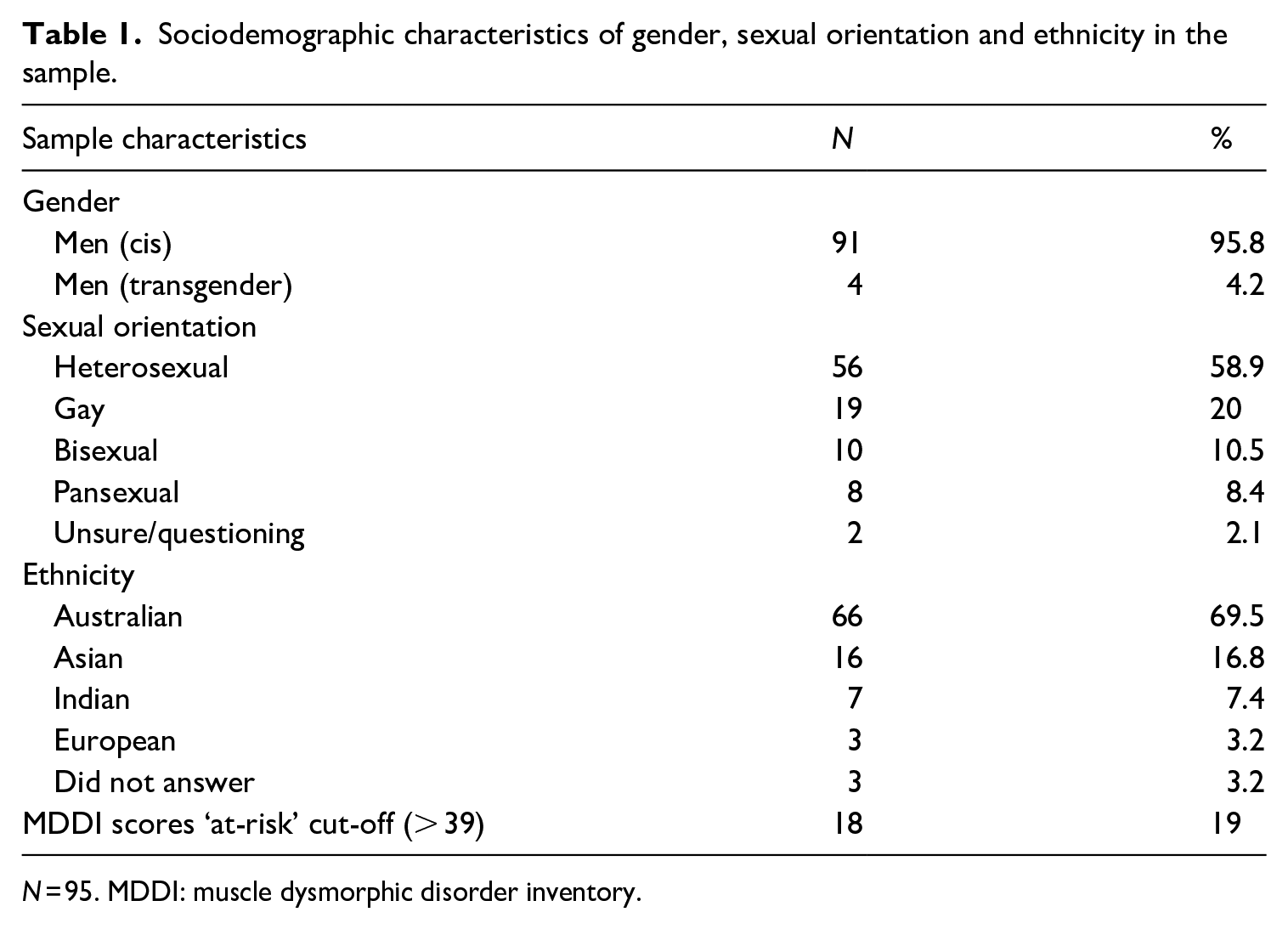
N = 95. MDDI: muscle dysmorphic disorder inventory.
Measures
Demographic information
Participants were asked to indicate their age (in years), gender, ethnicity and sexual orientation. Weekly fitness was measured by the number of sessions of individual sport or fitness (which includes weight training) participants performed per week. Participants also reported their weight (in kg) and height (in cm) to determine BMI.
Total time spent using SNSs
Participants were asked to indicate the average number of minutes spent using SNSs per day. This is consistent with Saiphoo and Vahedi’s (2019) review of prior studies that used a single item to assess the total time spent on SNS.
Frequency of viewing celebrity and fashion content
The current study used the ‘Appearance-related SNS measures’ designed by Seekis et al. (2021) to assess three SNS activities. This measure was implemented as it focusses on specific SNS activities, which researchers have called for (Vandenbosch et al., 2022) and highlights three common behaviours SNS users typically engage in. The first was measured with five items on a 5-point Likert-type scale ranging from 1 (never) to 5 (daily) which assesses the frequency of following and viewing men’s celebrity and fashion imagery on SNSs. Each question began with the phrase ‘I use my SNS to . . .’ followed by different statements, such as ‘follow male celebrities (e.g. actors, singers, models)’. The statements were slightly adapted, such as the word ‘read’ which was changed to ‘watch or view’ to capture the effect of imagery rather than text. Scores on this scale range from 5 to 25, with a higher score indicating more frequent engagement with celebrity and fashion content on SNSs. Seekis et al. (2021) reported excellent internal consistency (α = .91) for scores on this measure. In the present study, internal consistency was considered good (α = .81).
The importance of received likes and comments
This was measured with six items developed by Seekis et al. (2021) on a 5-point Likert-type scale ranging from 1 (not at all important) to 5 (extremely important). This measure assessed the importance placed on likes and comments participants receive from friends, family, peers or strangers. All six statements included ‘When using your SNS, how important are . . .’ followed by examples, such as, ‘the comments you receive from peers on photos of yourself?’ and ‘the number of likes you receive from strangers, or followers you don’t know, on photos of yourself?’ Scores on this scale ranged from 5 to 30, with a higher score reflecting the greater importance of likes and comments on SNSs. Seekis et al. (2021) reported good internal consistency for scores on this measure (α = .85). Internal consistency in the present study was also considered good (α = .86).
Frequency of viewing fitness-related content
Consistent with Seekis et al. (2021) study, this was measured with five items on a 5-point Likert-type scale ranging from 1 (never) to 5 (daily). This scale measured the frequency of fitness and sport-related imagery. All items contained a sentence stem of ‘I use my SNS to . . .’ followed by statements, such as ‘follow male sports stars or athletes’. Statements in items including the word ‘read’ were changed to ‘watch or view’ to capture the effect of imagery rather than text. Scores on this scale ranged from 5 to 25, with a higher score indicating more frequent engagement in fitspiration content. Seekis et al. (2021) reported good internal consistency for scores on this measure (α = .87). The internal consistency of the present study was considered excellent (α = .92).
Muscle dysmorphic disorder inventory
MD symptomatology was measured with the 13-item muscle dysmorphic disorder inventory (MDDI) scale (Hildebrandt et al., 2004). Responses range from 1 (never) to 5 (always), with a total score calculated between 13 and 65, and larger scores indicating greater MD symptomatology. A score of > 39 indicates a risk of MD, which has been proposed in a previous study (Halioua et al., 2022). An example item is ‘I miss opportunities to meet new people because of my workout schedule’. Total MDDI scores also show good internal consistency (α = .81), excellent re-test reliability (r = .87) and good congruent and divergent validity (Hildebrandt et al., 2004). In the present study, internal consistency for scores on this measure was good (α = .80).
Data analysis
Data were entered into SPSS v27 to screen for assumptions and analysis. To obtain statistical power for the sexual orientation predictor, non-heterosexual participants were grouped (i.e. gay, bisexual, pansexual and unsure), which created a group of similar size to the heterosexual group. As per the work of Weir and Jan (2023), BMI was calculated by weight (kg) and height (cm); weight (kg)/(height [m])2. The assumptions of a hierarchical regression model were tested, with a dummy regression used to test various assumptions checking multivariate outliers, homoscedasticity, standardised residuals and independent errors. One multivariate outlier was removed from the analysis, according to the chi-square cut-off table (Brereton, 2015). Residual errors were normally distributed and the assumption of homoscedasticity of residuals showed no linear relationship. There were no violations of multicollinearity and influential cases.
Results
Participants reported using SNSs for more than 2 hours per day (M = 124.36, SD = 78.51). Participants engaged in an average of three workout sessions per week (M = 3.09, SD = 2.11) and the average reported BMI was considered overweight (M = 25.3, SD = 3.85; i.e. overweight BMI = 25–29.9 kg/m2). Scores above 39 on the MDDI indicate an individual is at risk of developing MD, with a total of 19% (n = 18) of the participants in the present study scoring above this value. See Table 2 for all means and standard deviations of predictors.
Zero-order correlations of sociodemographic characteristics, social networking site activities and muscle dysmorphia symptomatology.
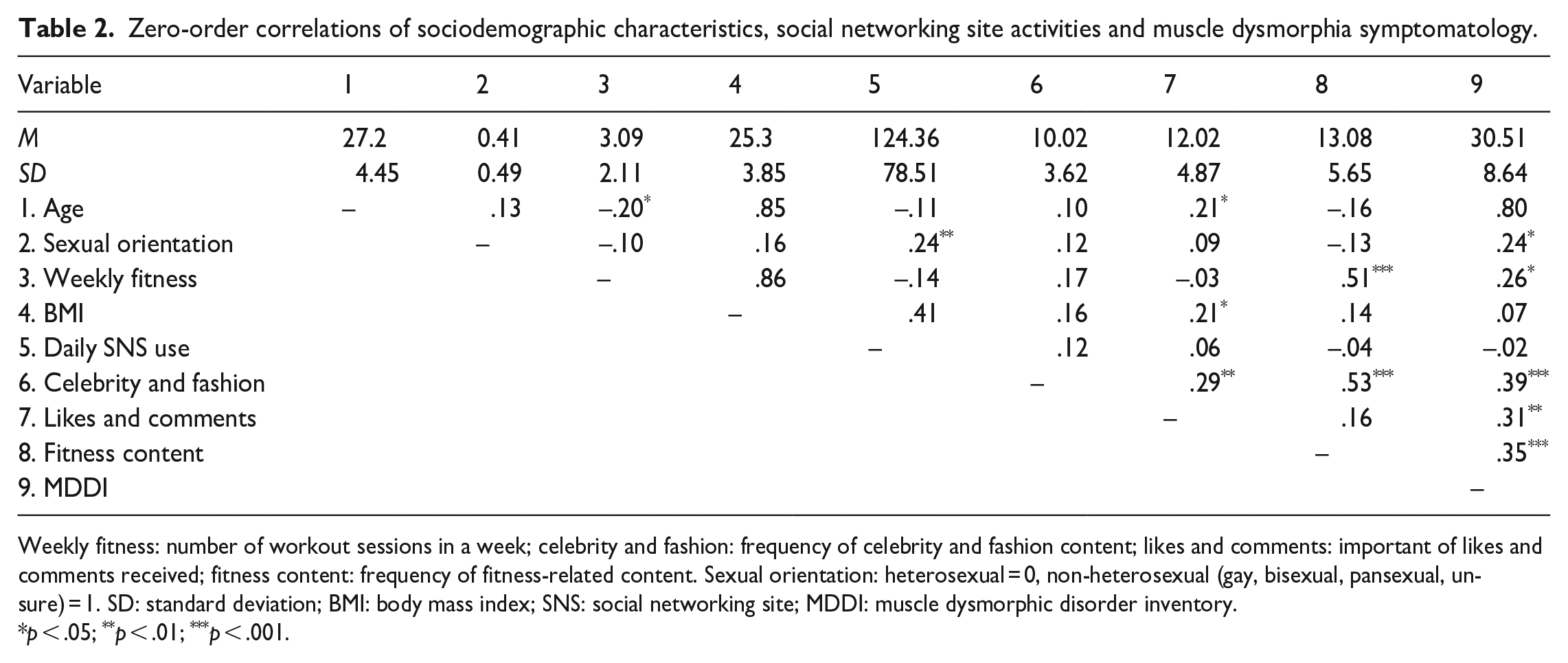
Weekly fitness: number of workout sessions in a week; celebrity and fashion: frequency of celebrity and fashion content; likes and comments: important of likes and comments received; fitness content: frequency of fitness-related content. Sexual orientation: heterosexual = 0, non-heterosexual (gay, bisexual, pansexual, unsure) = 1. SD: standard deviation; BMI: body mass index; SNS: social networking site; MDDI: muscle dysmorphic disorder inventory.
p < .05; **p < .01; ***p < .001.
Correlational analysis
Zero-order correlations were analysed to test H1a, b and c (see Table 2). As predicted, total MDDI scores were significantly and positively correlated with the frequency of celebrity and fashion content, the importance of likes and comments received, and the frequency of fitness content; all effect sizes were moderate in strength. Sexual orientation and the weekly number of fitness sessions were also positively and significantly correlated with the MDDI.
Hierarchical regression
A hierarchical regression consisting of two steps was implemented. Age, sexual orientation, BMI, the weekly number of workout sessions and total daily minutes using SNSs were entered in step 1 of the regression model, which described 14.7% of the variance, R = .147, F(5, 89) = 3.062, p = .13. When SNS activities were added to the model (step 2), these collectively explained an additional 16.1% variance, R2 = .161, F(3, 86) = 6.658, p ⩽ .001, over and above step 1 (see Table 3). The importance of likes and comments was a significant predictor of total MDDI scores (β = .23, p = .023). Celebrity and fashion content (β = .18, p = 0.111) and fitness-related content (β = .18, p = .165) did not significantly predict MDDI scores. Sexual orientation remained significant when the SNS activities were added to the second step of the model (β = .26, p = .01).
Hierarchical regression model for SNS activities and total MDDI scores.
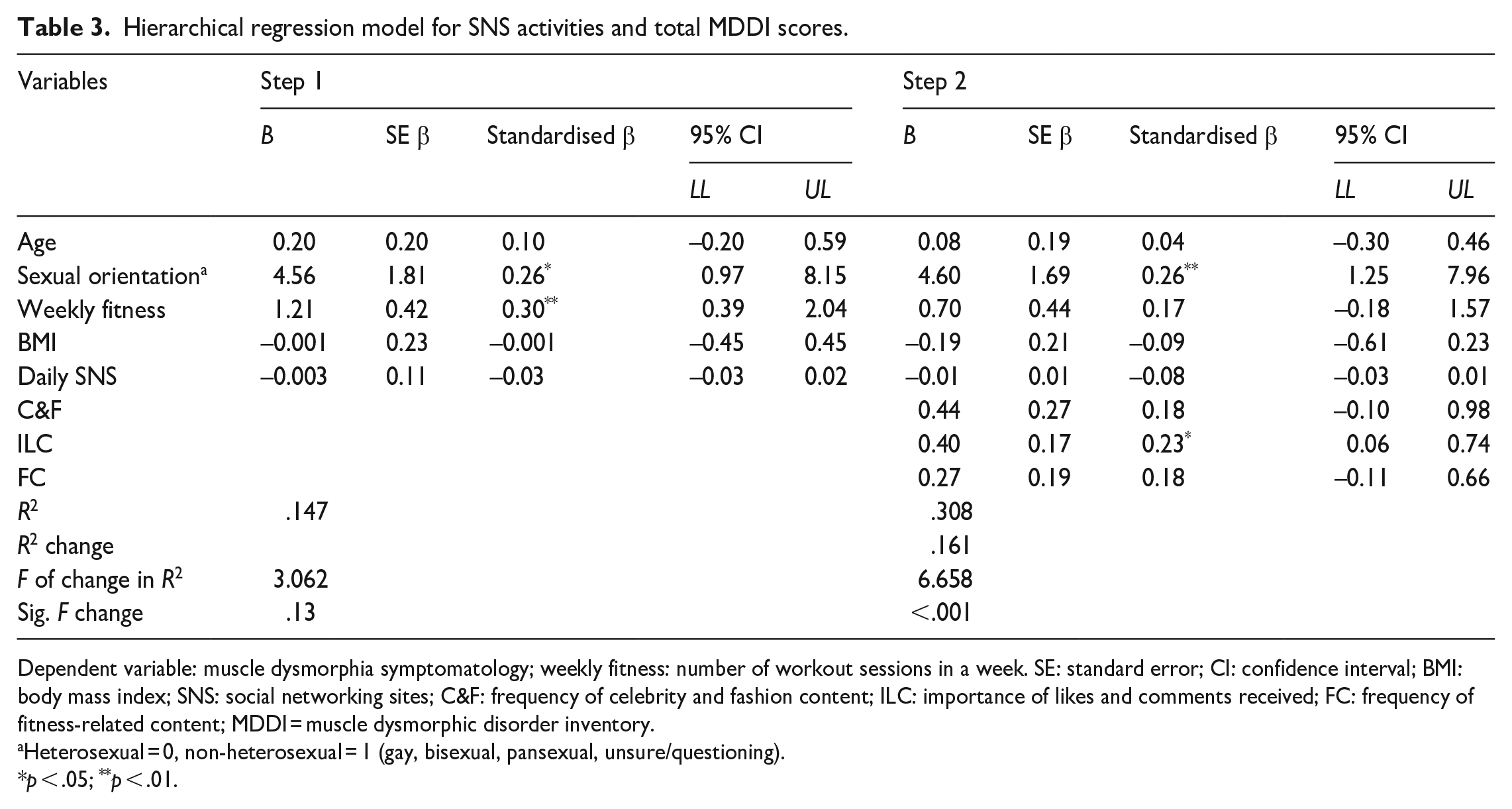
Dependent variable: muscle dysmorphia symptomatology; weekly fitness: number of workout sessions in a week. SE: standard error; CI: confidence interval; BMI: body mass index; SNS: social networking sites; C&F: frequency of celebrity and fashion content; ILC: importance of likes and comments received; FC: frequency of fitness-related content; MDDI = muscle dysmorphic disorder inventory.
Heterosexual = 0, non-heterosexual = 1 (gay, bisexual, pansexual, unsure/questioning).
p < .05; **p < .01.
Discussion
The present study explored the strength and nature of the relationship between SNS activities and MD symptomatology. We predicted the frequency of celebrity and fashion content, the importance of received likes and comments, and the frequency of fitness-related content would positively correlate with MD symptomatology and found these three hypotheses were supported. We then aimed to investigate whether these specific SNS activities predicted MD symptomatology over and above other known associates. It was discovered that the importance of received likes and comments was a significant predictor, while the frequency of celebrity and fashion content, and fitness-related content were not.
The importance of identifying an association between receiving likes and comments on SNSs and MD symptomatology supports the growing evidence that appearance-based feedback is connected to greater body image disturbance in men (Nowell and Ricciardelli, 2008; Schuster et al., 2013; Seekis et al., 2021). In addition, this aligns more broadly among body image research, as greater investment in receiving feedback on user’s SNS profiles has shown to be associated with appearance comparisons (Tiggemann et al., 2018) and body surveillance behaviours (Butkowski et al., 2019). This is consistent with sociocultural theories of body image, such as the tripartite influence model (Thompson et al., 1999) which proposes that appearance pressures from media, which in the case of SNSs, may also encapsulate likes and comments from friends and family. Furthermore, this can lead to body dissatisfaction through internalising an ideal body and appearance comparisons, two processes that are facilitated by quantifiable metrics on SNSs in the number of likes and comments posts receive. Receiving likes and comments on content that a user posts encapsulates societal praise (Scissors et al., 2016) and consequently, online feedback may be reflective of the reassurance-seeking and body surveillance behaviours associated with MD symptomatology (Cunningham et al., 2017), reinforcing their preoccupation.
Furthermore, the importance of receiving likes and comments was a significant predictor in the regression model when controlling for sociodemographic variables (age, sexual orientation, BMI, fitness engagement) and total time spent on SNSs. Even though sociodemographic variables have been used to identify associations to MD (Ganson et al., 2023a; Martenstyn et al., 2023), this novel finding implies SNS feedback may be an additional risk factor worthy of further attention. This proposition is further supported by Nowell and Ricciardelli (2008) who found appearance-based feedback predicted a higher drive for muscularity even when controlling for demographic variables. Within the context of uses and gratification theory, these findings indicate that SNS use may be fuelled by the internal motivations of the individual (Rubin, 2009). This process may also be reinforced via neurobiological mechanisms due to the gamification of SNSs. Sherman et al. (2016) conducted a study in which participants underwent functional magnetic resonance imaging (fMRI) while viewing SNS photos and they found that participants were more likely to like photos that were assigned more likes from peers and viewing photos with more likes was associated with greater brain activity in areas involved in reward processing, social cognition, imitation and attention. This suggests that the social and interactive aspects of SNSs could be an important factor in the development and maintenance of body image issues, which could include MD.
The significant and positive correlation between the frequency of celebrity and fashion content and MD symptomatology supports previous literature, that viewing these well-known figures can be related to men’s body image outcomes (Baird and Grieve, 2006; Lee and Lee, 2019, 2020; Seekis et al., 2021; Strubel and Petrie, 2016). In Western culture, men’s mesomorphic standards are often associated with high-profile celebrities (Flannery et al., 2020) and models (Hancock and Karaminas, 2014). Men who view celebrities and models, whether directly through selectively following their posts or indirectly via exposure to popular posts they feature in, may interpret their mesomorphic physiques as the ideal standard required to achieve such success or attractiveness, which may be connected to a preoccupation with muscularity. However, celebrity and fashion content was not a significant predictor of MD when sociodemographic variables and total time spent on SNSs were controlled for in the present study. Ho et al. (2016) reported a similar finding that viewing celebrity content on SNSs was not a significant predictor for a drive for muscularity and body dissatisfaction when controlling for BMI and age. This suggests the nature of this relationship may be different than initially proposed in the current study. For example, celebrity or fashion imagery receives a high quantity of likes and comments (Dixon, 2023) and therefore frequent viewing of this imagery may inform contingencies of receiving likes and comments, which could lead men to body image disturbances to meet such conditions of worth. Therefore, future research could explore whether the pathways between SNS activities and MD are more complex, such that exposure to specific content may lead to a greater importance of SNS feedback, which then leads to negative body image outcomes, such as MD. This seems plausible considering celebrity and fashion measures correlated with both the importance of likes and comments, and MD symptomatology (see Table 2). Another possibility for the null findings could be that celebrity beauty ideals of men include other standards beyond muscularity, such as a strong hairline and tall height, which men have reported dissatisfaction towards (Foster and Baker, 2022; Tiggemann et al., 2008). Therefore, celebrity and fashion content may trigger a preoccupation with body image, however, men may additionally be focussing on other body and facial beauty standards within this content and, thus, the strength of the relationship between SNS activity and MD symptomatology may be reduced.
The frequency of viewing fitness-related content was significant and positively associated with MD symptomatology. This finding aligns with previous research on MD (Schoenenberg and Martin, 2020) and the drive to gain muscularity (Fatt et al., 2019; Klier et al., 2022; Seekis et al., 2021). However, as was the case with celebrity and fashion content, this predictor was non-significant in the regression model, when assessed over and above sociodemographic variables and total time spent on SNSs. Thus, some men may enjoy viewing fitness-related content for their workout routines; however, may lack obsessiveness or preoccupation about their muscularity. This challenges cultivation theory (Gerbner and Gross, 1976), that consistent exposure to muscular ideals may lead to changes in values and behaviours to achieve the muscular ideal. One explanation could be that while some men frequently view fitspiration content, they may select imagery that aligns with their fitness-related goals (Easton et al., 2018), thus filtering unrealistic mesomorphic imagery. Considering users can personalise what they see on SNSs (McCrory et al., 2022), the ability to critically analyse what is considered realistic may explain this finding, whereas an inability to critically process messages on SNSs may exacerbate body image because there is a distinct lack of control over the quality and accessibility of information provided online (Jeong et al., 2012). In addition, it is important to acknowledge that individual differences in personality traits could be another factor that affected the null finding. Previous research has suggested that perfectionism can mediate the relationship between SNS use and body dysmorphic disorder (Sulistyo et al., 2022), such that, using SNSs can lead to increased perfectionism, and this more rigid manner of viewing one’s appearance and the personal standards set for beauty could, in turn, lead to the symptomatology of body dysmorphic disorder.
Strengths and limitations
The primary strength of the current study was the investigation of SNS activities rather than the total time spent on SNS. As advocated in other research (Vandenbosch et al., 2022), we have provided evidence that it is necessary to analyse the nuances of SNSs, and hence, this should be a standard for future research to apply. Another strength lies in recruiting a general population rather than a clinical sample, as the extent of MD symptomatology is currently under-investigated outside of clinical or professional bodybuilder samples (Ganson et al., 2023a; Mitchison et al., 2022). Understanding the nature of the relationships among men in the general population is important as the majority of young men have unlimited access to SNSs (Scott et al., 2020) and this study identified that the importance of likes received on SNSs predicts MD symptomatology.
In light of our study’s strengths, there are also limitations to consider when interpreting the present study’s findings. First, this study was cross-sectional and analysed correlational data. While it is an appropriate foundation to use when there is a lack of experimental or longitudinal data to inform hypotheses, these data do not enable inferences of causality. Future research should aim to confirm and extend the current findings via experimental manipulation of SNS likes and comments as well as observing symptomatology effects over time in longitudinal studies. Future research could also explore potential interactions that may exist between specific types of SNS usage and workout frequency or BMI as these were not explored in the present study. Participant recruitment was purposively from the general population due to the recently reported prevalence rates in generalised community samples (Ganson et al., 2023a; Mitchison et al., 2022). However, analysing data of men clinically diagnosed with MD would be valuable to understand the associations between MD and SNSs for those who experience clinical levels of symptomatology. It is important to note that the recruitment flyer design had workout imagery and may have attracted participants interested in gym culture, therefore this sample is potentially homogeneous. Related to this, the average BMI for participants in the present study was in the overweight range; however, the BMI calculation does not take muscle mass into account and therefore we cannot confirm whether the participants were in fact overweight. Finally, the measures for the three SNS activities were selected for consistency with prior literature and were found to be reliable in prior studies (i.e. Seekis et al., 2021); however, it is recommended that further studies test the concurrent and divergent validity of these to confirm the accuracy of the measures.
Conclusion
This study contributes to the emerging evidence that a significant relationship exists between SNSs activities and MD symptomatology in young men. The results demonstrated the importance of receiving likes and comments as a meaningful predictor of MD symptomatology when controlling for sociodemographic variables. Active engagement in SNSs is a prominent feature of SNSs that are connected to body image disturbance and are worthy of further investigation in research, policy and practice. The MD research field must continue to uncover the complexities of features and activities on SNS activities to further comprehend what elements of these sites are detrimental to the body image of young men.
Supplemental Material
sj-docx-1-nms-10.1177_14614448241281827 – Supplemental material for An investigation of the relationship between social networking site activities and muscle dysmorphia in young men
Supplemental material, sj-docx-1-nms-10.1177_14614448241281827 for An investigation of the relationship between social networking site activities and muscle dysmorphia in young men by Luigi Donnarumma and John Mingoia in New Media & Society
Supplemental Material
sj-docx-2-nms-10.1177_14614448241281827 – Supplemental material for An investigation of the relationship between social networking site activities and muscle dysmorphia in young men
Supplemental material, sj-docx-2-nms-10.1177_14614448241281827 for An investigation of the relationship between social networking site activities and muscle dysmorphia in young men by Luigi Donnarumma and John Mingoia in New Media & Society
Footnotes
Funding
The author(s) received no financial support for the research, authorship and/or publication of this article.

Supplemental material
Supplemental material for this article is available online.
Author biographies
References
Supplementary Material
Please find the following supplemental material available below.
For Open Access articles published under a Creative Commons License, all supplemental material carries the same license as the article it is associated with.
For non-Open Access articles published, all supplemental material carries a non-exclusive license, and permission requests for re-use of supplemental material or any part of supplemental material shall be sent directly to the copyright owner as specified in the copyright notice associated with the article.
