




Abstract
In a quantitative content analysis of 3,154 debunking articles from 23 fact-checking organizations, this study examines global misinformation trends and regional nuances across eight countries in Europe and Latin America (UK, DE, PT, SP, AR, BR, CL, and VZ). It strives to elucidate commonalities and differences based on political and media system indicators. Notably, countries with a substantial online presence of far-right parties avoid disclosing (fake) ordinary accounts to evade engaging in inauthentic coordinated actions. While entirely fabricated stories are infrequent, they stand out in Brazil and Spain, the two countries with higher political polarization. Despite variations, aggregated forms of fabrication (invented, manipulated, imposter, or decontextualized content) are more prominent in Latin America due to high social media use for news and low reliance on public media. Conversely, in Europe, countries are more impacted by misleading (cherry-picked, exaggerated, and twisted) information.
Keywords
Introduction
In recent years, misinformation research has gained prominence in communication studies due to its substantial impact on democracy and potential to disrupt public discourse (Bennett and Livingston, 2018; Bimber and Gil de Zúñiga, 2020; Culloty and Suiter, 2021; Waisbord, 2018b), challenging trust in democratic institutions and authoritative knowledge sources (Carro, 2022; Neuberger et al., 2023; Strömbäck et al., 2020). However, despite its global significance, research predominantly focuses on the Global North, leaving gaps in understanding how political and media structures (Hallin, 2020; Humprecht et al., 2020; Rodríguez-Pérez and García-Vargas, 2021; Wasserman and Madrid-Morales, 2021) influence false information dissemination. There has been scant discussion of the different types of false information that circulate in the Global South and the Global North (Schiffrin and Cunliffe-Jones, 2021).
Thus, this study outlines a comparative content analysis (N = 3154) of falsehoods debunked by fact-checkers, investigating commonalities and differences in misinformation across eight countries—Brazil, Argentina, Chile, Venezuela, Portugal, Spain, Germany, and the United Kingdom. We expanded the scope of research beyond the United Kingdom and the United States liberal systems by incorporating Latin American democracies and countries classified under the Mediterranean and Corporatist models in Europe (Hallin and Mancini, 2004). Beginning with the premise that contexts play a pivotal role in information disorder (Hameleers, 2023) and that misinformation reflects the emphasis placed on the national political news agenda, we aim to assess similarities and variations in topics, origins of misinformation, strategies of deception and general types of falsehoods. We will commence by delineating essential terms in the literature, elucidating contextual factors that propel misinformation, and presenting deception strategies and techniques employed by bad actors.
Defining key terms: fake news, disinformation, and misinformation
Media digitalization and structural transformations of public arenas, that is, reconfigurations of “communicative spaces through digital media, their uses, and associated effects” (Jungherr and Schroeder, 2021: 3), have placed traditional epistemic authorities like science and professional journalism in competition with alternative reality approaches (Bimber and Gil de Zúñiga, 2020; Neuberger et al., 2023). Since 2016, concerns over information disorder (Wardle and Derakhshan, 2017) have prompted an avalanche of studies discussing causes and effects of false information (Adams et al., 2023; Madrid-Morales and Wasserman, 2021). Wardle and Derakhshan (2017) describe “information disorder” as a phenomenon encompassing problems associated with misinformation (falsehoods spread unintentionally), disinformation (deliberate employment of falsehoods to achieve political or economic goals), and mal-information (misuse of genuine information). The authors also highlighted the importance of separately observing the “elements” (agents, messages, and interpreters) and phases (creation, [re]production, and distribution) of the so-called information disorder.
Tandoc et al. (2018) reviewed studies operationalizing the term “fake news” and presented a typology based on levels of message facticity and deception—satire, parody, fabrication, manipulation, advertising, and propaganda. Other scholars (Egelhofer and Lecheler, 2019) classified the problem as a two-dimensional phenomenon, namely fake news as a genre (intentional pseudo-journalism) and a label (political instrumentalization to delegitimize established media). Due to its political instrumentalization, the use of the term “fake news” has been criticized, and many scholars abstain from employing it (House of Commons, 2019). This distinction based on intentionality is commonly accepted among experts (Armitage and Vaccari, 2021), although some scholars claim that such definitional discussions can be distracting (Weeks and Gil De Zúñiga, 2021). In this article, since we will approach the comparative data without previous knowledge of intentional behaviors of agents—especially in the case of ordinary social media users—we adopt the term “misinformation” as a broader category encompassing false or inaccurate information, while “disinformation” is used to denote an extreme or politically motivated form of misinformation, specifically with the intent to deceive (Hameleers et al., 2022).
Fertile soils for misinformation—populism, polarization, and social media
Studies have attributed the above discussed information disorder to the fragmentation and disruption of public spheres due to the erosion of trust in democratic press and political institutions (Bennett and Livingston, 2018; Mancini, 2013). Although it is a global phenomenon, several authors reinforce the cruciality of taking into account the social and political environments and local circumstances when addressing misinformation (Bennett and Livingston, 2018; Hameleers, 2023; Humprecht, 2019).
Humprecht et al. (2020) identified seven factors influencing a nation’s disinformation resilience: societal polarization, populist political communication, diminished trust in news sources, underdeveloped Public Service Broadcasting (PSB), fragmented media audiences, the scale of the digital advertising market, and widespread social media use. Rodríguez-Pérez and García-Vargas (2021) extended this research to Latin American countries, finding that they exhibit lower resilience compared to their Global North counterparts. In addition, a state’s resilience to misinformation is influenced by citizens’ preferred social media platforms (Armitage and Vaccari, 2021). The 2018 Brazilian presidential election serves as a notable example of false information dissemination through WhatsApp (Santini et al., 2021).
Analyses (Bennett and Livingston, 2018; Hameleers, 2020; Marwick and Lewis, 2018; Recuero et al., 2022; Waisbord, 2018a) link the rise of right-wing populism to disinformation and specific political agendas. From the audience perspective, studies have demonstrated a positive correlation between misinformation and the support of right-wing populist parties (Van Kessel et al., 2021). Populism, viewed as a political communication strategy, exploits societal polarization and binary worldviews, particularly in blame attribution toward the established order and media institutions 1 (Hameleers and Minihold, 2022). Llorca-Abad et al. (2021) highlight parallels between the approaches of Santiago Abascal, the Spanish political party Vox, and Trump in the United States, along with proximity to Steve Bannon’s strategies. Other studies note political similarities in communication methods and strategies among right-wing populists in Austria, Germany, and the Netherlands regarding (un)truthfulness (Hameleers and Minihold, 2022). Scholars assert that misinformation boosted support for Nigel Farage’s Brexit Party in the 2019 European Parliament election (Van Kessel et al., 2021).
In the midst of a global autocratic resurgence, right-wing populism has reached Latin America with notable figures like Jair Bolsonaro (Brazil), Javier Milei (Argentina), Antonio Kast (Chile), and Guido Rios (Uruguay). Despite sharing discursive traits with far-right movements in Europe (e.g., AfD in Germany, Chega in Portugal, or Vox in Spain), regional distinctions include presidentialism systems, two decades of left-oriented regimes, and the legacy of military dictatorship (for political specificities, see Kestler, 2022; Sanahuja et al., 2023; Siles et al., 2021). Bolsonaro, the most radical figure in Latin America, utilizes YouTube and Telegram to disseminate messages against the press, the Supreme Court, and the opposition, manipulating public opinion with disinformation (Di Nubila et al., 2023).
Despite the predominant association of misinformation with far-right ideologies, it extends beyond right-wing populism. Left-wing movements, exemplified by “Chavismo” in Venezuela, also employ falsehoods, positioning themselves as champions of the people against entrenched elites (Waisbord, 2018a). Similarly, in the United States and the Netherlands, left-wing populists utilize narratives of people-centricity and attribute falsehoods to their adversaries, albeit without directly targeting established media and political figures (Hameleers, 2020). Research indicates that adherents of right-wing ideologies display higher susceptibility to false information and demonstrate greater resistance to corrective measures (Van Kessel et al., 2021).
Agents, topics, and types of falsehoods
Various actors contribute to creating and spreading falsehoods, including social media users, political figures, foreign governments, hyper-partisan media, established media, and those driven by economic motives (Tucker et al., 2018). Detecting disinformation is challenging due to its unknown origins (Bimber and Gil de Zúñiga, 2020) and its covert nature, as it aims to deceive (Hameleers, 2023). Inauthentic behaviors (Keller et al., 2020) such as creating fake accounts, using bots to artificially boost engagement metrics (Chan, 2024; Tucker et al., 2018), or manipulating online discussions through coordinated efforts obscure the origins of falsehoods and worsen misinformation by fabricating fake audiences (Delwiche, 2019).
Comparative studies across Austria, Germany, the United Kingdom, and the United States, analyzing online disinformation topics and sources identified by fact-checkers, reveal a significant correlation between misinformation topics and national news agendas (Humprecht, 2019). In the United States, for instance, commonly fact-checked misinformation topics encompass terrorism, national security, healthcare, and the economy (Yousuf, 2023).
Regarding the types of misinformation or deception techniques, spreaders of falsehoods often refrain from fabricating entirely implausible stories. Instead, they manipulate information through alteration or tampering, constructing deceptive narratives that maintain some connection to reality (Hameleers, 2023). Deception is more effective when it establishes tangible connections to factual information. Misinformation encompasses a spectrum, from entirely fabricated content (e.g., alleged 5G brain insertions after vaccination) to the decontextualization of material, where content is extracted from its original context and repurposed to alter its meaning (Allcott and Gentzkow, 2017; House of Commons, 2018; Tandoc et al., 2018; Wardle and Derakhshan, 2017). An example of the latter involves using images from the Kosovo war, misleadingly presented as events in the Ukraine war. Genuine information can be digitally altered through manipulation, adding non-existing elements via techniques like photoshopping, cropping, deepfakes, fake subtitles, and other visual manipulations. Manipulated or decontextualized visual information is often (mis)used to create a false impression of credibility and proof, exerting high persuasive impact (Dan et al., 2021). Another technique involves creating or spreading imposter content that mimics genuine sources, like established media companies or business organizations (Hameleers, 2023; House of Commons, 2018; Tandoc et al., 2018; Wardle and Derakhshan, 2017). The literature also encompasses misleading information, including distortions, omissions, exaggerations, cherry-picking facts, or misrepresentations of scientific, and statistical methods (Hameleers, 2023; House of Commons, 2018; Tandoc et al., 2018; Wardle and Derakhshan, 2017).
Research question
Proceeding from the assumption that contexts are decisive for information disorder and that misinformation mirrors the priorities set by the national political agenda, we ask:
RQ: What commonalities and differences exist regarding (a) topics, (b) sources of falsehoods, and (c) deception strategies across the eight countries analyzed—Portugal, Spain, Germany, the United Kingdom, Brazil, Argentina, Chile, and Venezuela?
Methods
Countries sample
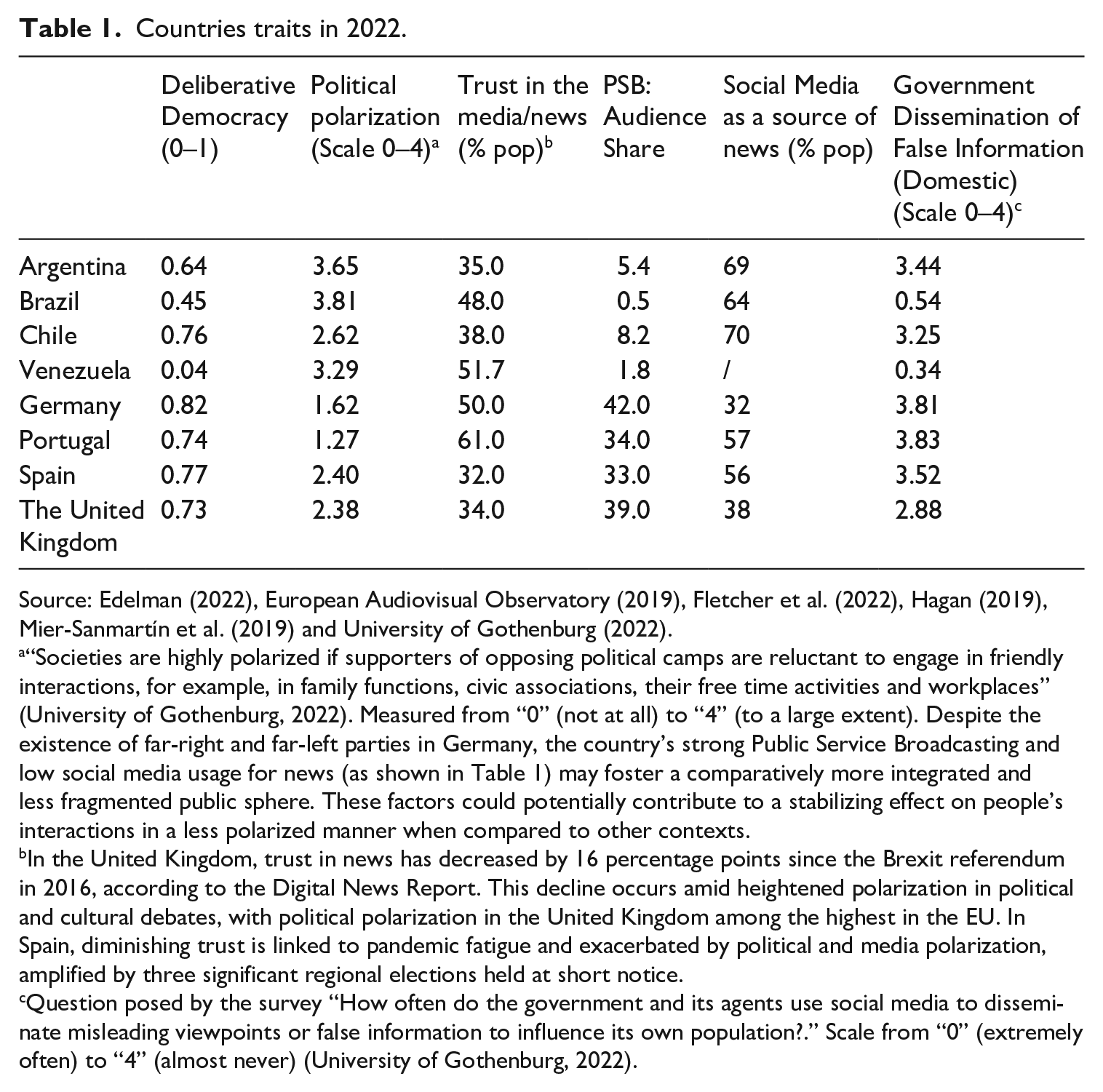
Following media systems theories (Brüggemann et al., 2014; Echeverria et al., 2022; Flew and Waisbord, 2015), we selected four European countries based on Hallin and Mancini’s (2004) typology, considering its four main traits: press development, political parallelism, journalistic professionalism, and the role of the state. Portugal and Spain represent the polarized pluralist model, Germany represents the democratic corporatist, and the United Kingdom represents the liberal model. Portugal and Spain were preferred over France or Italy within the Mediterranean model due to their historical and colonial connections with Latin America. To expand the research scope beyond Western democracies, we chose to include four additional Latin American countries. Scholars have attempted to model Latin American media systems oriented by the Hallin and Mancini framework, classifying them as “liberal captured” (Guerrero, 2014). However, this characterization was seen as overly generalized, as constructing models for Latin American media systems presents challenges due to varying levels of journalistic professionalism within the same country, internal differences resembling liberal and polarized pluralist models, and greater instability marked by frequent shifts between media and political systems compared to Europe or the United States (Echeverria et al., 2022; Hallin, 2020). Thus, for Latin America, our selection was guided by indicators proposed by Humprecht et al. (2020) and variations in democratic levels based on the “most different” system design (Rössler, 2011), leading us to choose Chile (full democracy), Brazil, Argentina (flawed democracies), and Venezuela (autocracy). These additional indicators, as shown in Table 1, facilitate transnational comparisons. For instance, Chile’s indicators closely align with those of EU countries, unlike Brazil or Venezuela. Latin American nations show higher social media usage for news, exacerbating the misinformation phenomenon compared to their European counterparts. Despite both Argentina and Brazil being classified as “flawed democracies,” they display distinct indicators, particularly concerning government involvement in misinformation campaigns.
Countries traits in 2022.
Source: Edelman (2022), European Audiovisual Observatory (2019), Fletcher et al. (2022), Hagan (2019), Mier-Sanmartín et al. (2019) and University of Gothenburg (2022).
“Societies are highly polarized if supporters of opposing political camps are reluctant to engage in friendly interactions, for example, in family functions, civic associations, their free time activities and workplaces” (University of Gothenburg, 2022). Measured from “0” (not at all) to “4” (to a large extent). Despite the existence of far-right and far-left parties in Germany, the country’s strong Public Service Broadcasting and low social media usage for news (as shown in Table 1) may foster a comparatively more integrated and less fragmented public sphere. These factors could potentially contribute to a stabilizing effect on people’s interactions in a less polarized manner when compared to other contexts.
In the United Kingdom, trust in news has decreased by 16 percentage points since the Brexit referendum in 2016, according to the Digital News Report. This decline occurs amid heightened polarization in political and cultural debates, with political polarization in the United Kingdom among the highest in the EU. In Spain, diminishing trust is linked to pandemic fatigue and exacerbated by political and media polarization, amplified by three significant regional elections held at short notice.
Question posed by the survey “How often do the government and its agents use social media to disseminate misleading viewpoints or false information to influence its own population?.” Scale from “0” (extremely often) to “4” (almost never) (University of Gothenburg, 2022).
Unit of analysis
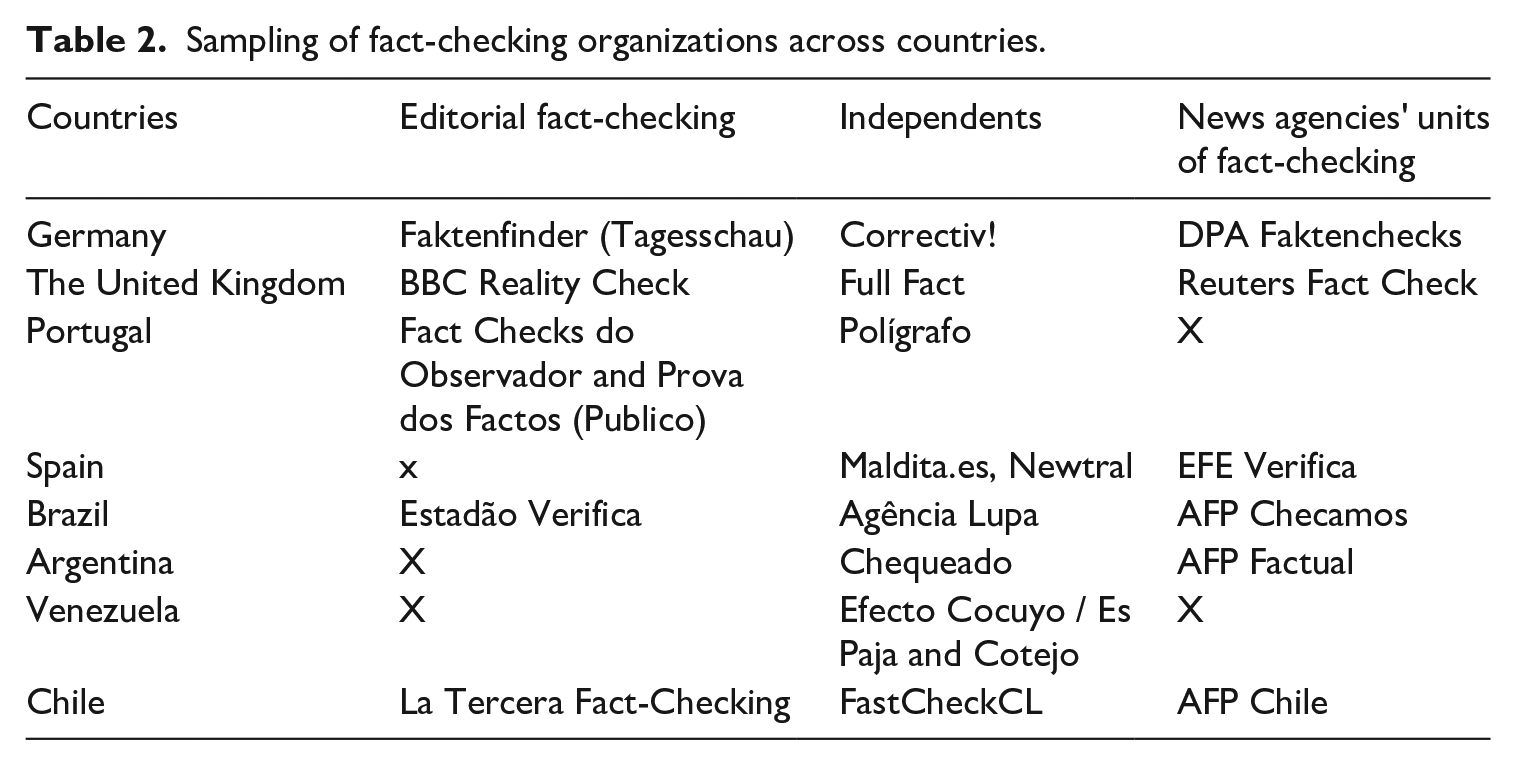
Rather than actively seeking false information across platforms, we rely on established fact-checking organizations. In this context, the results below reflect fact-checking decisions concerning what to verify, rather than covering all falsehoods within the national online ecosystems. We chose organizations operating within (a) established media outlets, (b) global news agencies, and (c) independent initiatives to encompass all types of organizations, considering their differences in selection processes (Table 2). Three organizations were selected per country, except for Argentina, which has only two.
Sampling of fact-checking organizations across countries.
Their work involves identifying, verifying, and distributing (mis)information. Collaborations with tech companies and platforms have provided these organizations with technological infrastructure, databases, advanced search tools, and training for monitoring the online environment (Bélair-Gagnon et al., 2023; Westlund et al., 2022). Due to varying capacities and resources, we adopt a representative approach by selecting 25% of articles from each organization. The sampling size is statistically more than sufficient to represent the main population of articles (Krippendorff, 2018; Rössler, 2011). The links were gathered from the website of each organization using the Feeder extension, a web-based tool that allows users to monitor and subscribe to website updates (Krippendorff, 2018; Rössler, 2011). From the entire pool of links, we selected every fourth one based on publication date. Our dataset consists of 3,154 verification pieces published between 1 January and 31 December 2022, the period when the study commenced. In 2022, the verification landscape no longer focused solely on the global pandemic, providing us with a broader perspective on topics.
Analyzed categories and reliability
Eight native-speaking research assistants coded the data over 5 months. Before assessing reliability, they underwent 40 hours of training. An additional 20 hours post-reliability tests were spent discussing common mistakes to ensure acceptable reliability levels. Tests were conducted within language-specific groups to eliminate codebook flaws rather than language comprehension issues (Krippendorff’s alpha coefficients in Table 3). A detailed codebook with comprehensive category descriptions is available in the Supplementary Material.
Overarching categories for analysis.
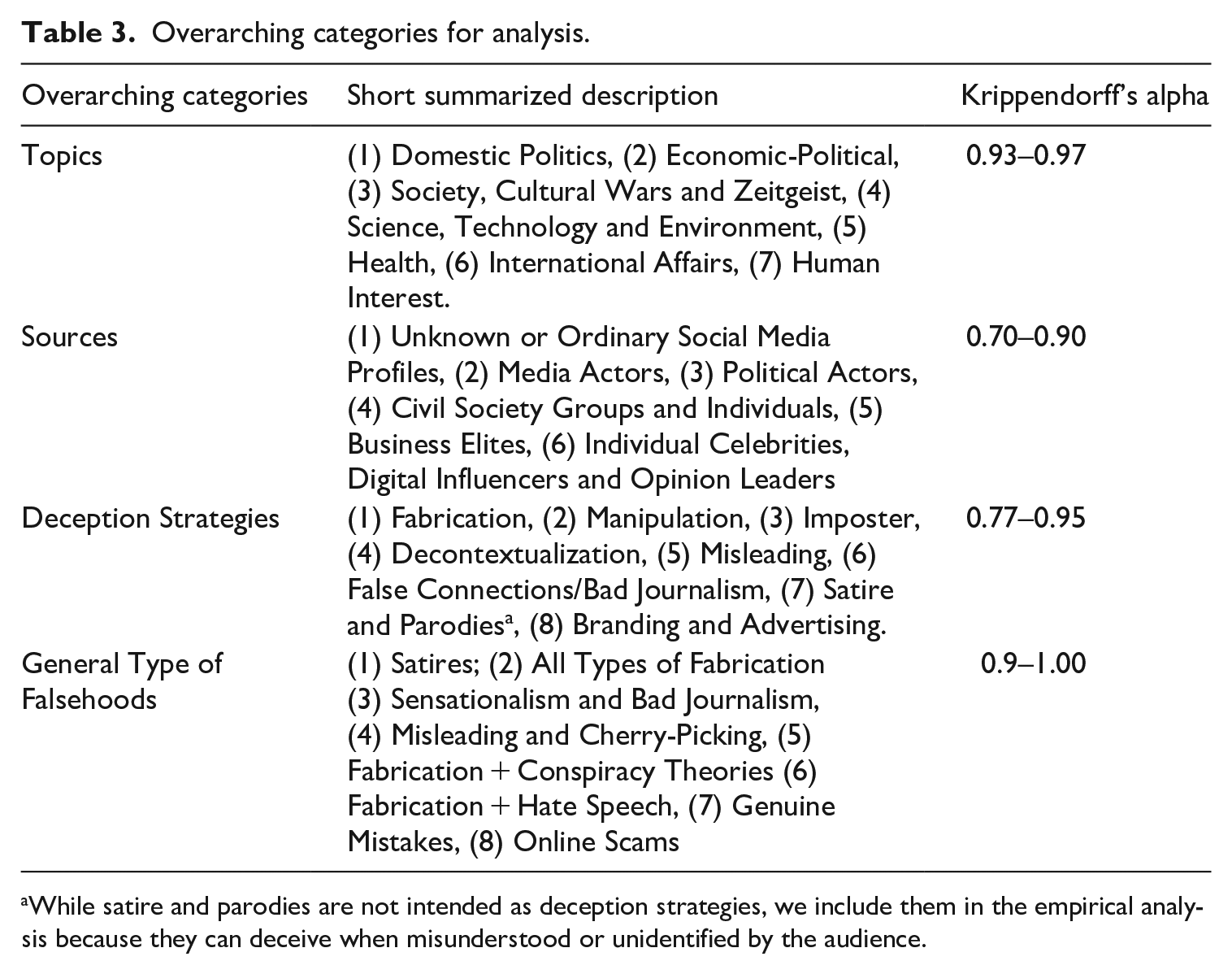
While satire and parodies are not intended as deception strategies, we include them in the empirical analysis because they can deceive when misunderstood or unidentified by the audience.
Although there are overlaps between deception strategies and falsehood types, our final variable aggregates all types of fabrication, including entirely invented, manipulated, imposter, and decontextualized content. We also examine their combination with conspiracy theories or hate speech.
Data analysis
To examine patterns of misinformation across countries, we employed correspondence analysis (CA), a statistical technique for analyzing relationships between categorical variables. Especially beneficial for large contingency tables like those in this study, CA transforms data into a lower-dimensional space, facilitating visualization of patterns and identification of significant associations. The method emphasizes the representation of points in a scatter plot, with proximity indicating association strength. This technique offers insights into relationships between categorical variables, enhancing interpretability of complex datasets (Beh and Lombardo, 2014; Greenacre, 2017).
Findings
Topics of falsehoods across countries verified by fact-checkers
Zooming in on falsehoods, transnational misinformation flows are evident, especially amid global events. Examples include misinformation about the Russia–Ukraine war, COVID, and vaccine skepticism, significantly impacting all countries. Other global event-related falsehoods, like the Qatar World Cup or Queen Elizabeth’s health and funeral, also appeared across all countries, albeit less prominently. To discern country-specific similarities and differences, a correspondence analysis based on a cross-sectional table of countries and misinformation topics was conducted (Figure 1). The Chi-square test indicates a statistically significant connection (p < .001), and Cramer’s V shows a 19% association between the variables (see Table 1 of Supplementary Material).
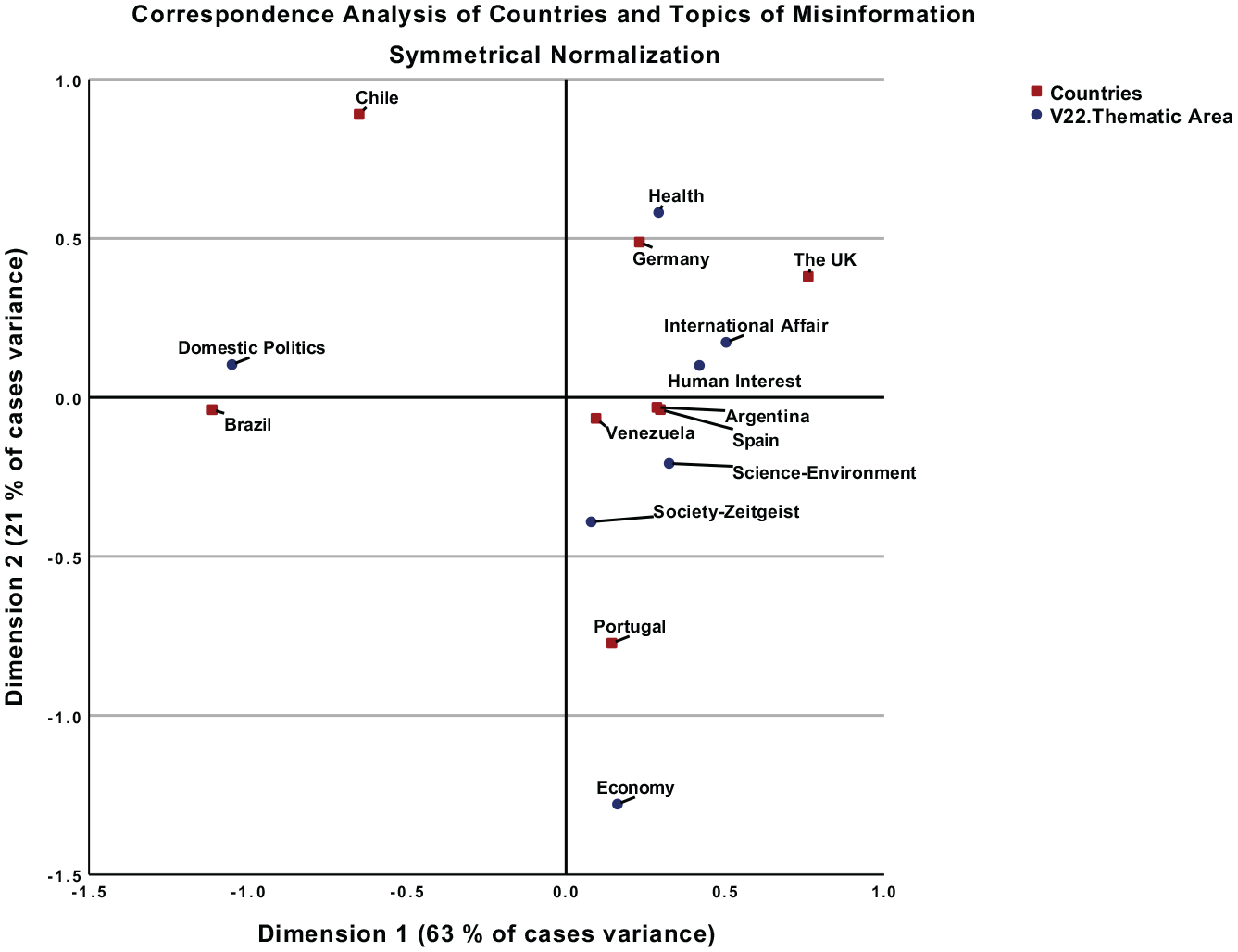
Correspondence analysis of countries and topics of falsehoods.
In the top-left quadrant of Figure 1, Brazil and Chile show distinct patterns, with the majority of their falsehoods (52% and 44%, respectively) related to domestic politics. Examining the standardized residuals in the cross table reveals both countries have more falsehoods related to domestic politics than expected (sr = 13.5 and sr = 6.0 respectively). This can be attributed to the highly polarized presidential election in Brazil and the Chilean constitutional referendum in 2022 (Bell, 2022; Doctor, 2022; Osborn, 2023; Ozawa et al., 2023; Santini et al., 2021). Focusing solely on misinformation related to domestic politics in these countries, falsehoods about elections and plebiscites ranged from 20% to 39%, while those involving slander, defamation, and smear campaigns increased from 13% to 30%, constituting the bulk of domestic politics mis-disinformation. In Brazil, despite intense disinformation campaigns, the right-wing candidate lost the election (Cazzamatta and Santos, 2023). In Chile, voters rejected the progressive new constitution amid a campaign tainted by disinformation (Bell, 2022; Nolte, 2022; Osborn, 2023). Notably, a narrative spread by far-right figure Felipe Kast, defeated by Boric in the 2021 election, claimed the new constitution would allow abortions up to nine months into pregnancy. Kast, later retracting the statement, also asserted that Venezuelan President Nicolás Maduro supported the proposed constitution, suggesting property expropriation, the inability to inherit insurance funds, and the abolition of uniformed police (Bell, 2022; Nolte, 2022; Osborn, 2023).
Excluding Brazil and Chile, the predominant theme affecting all other countries was “international affairs & politics,” ranging from 23% in Venezuela to 38% in the United Kingdom. Falsehoods related to the “Russian-Ukrainian war” and “slander & defamation of international politicians” emerged as prominent subtopics across nations. In addition, Chile, Portugal, and the UK faced significant impacts from falsehoods associated with international elections. In Chile, misinformation primarily revolved around the 2022 Brazilian and Colombian presidential elections. Portugal, owing to colonial ties and a substantial Brazilian immigrant population, experienced prevalent falsehoods related to the Brazilian election. In the United Kingdom, misinformation concerning the 2022 US midterm elections and other global ballots, such as those in Kenya and Angola, circulated more intensively.
Despite misinformation generally dominating international affairs in six countries, Germany (sr = 2.1) and the United Kingdom (sr = 5.6) exhibit higher circulation. In the upper right quadrant (Figure 1), the distinctiveness of both countries is evident, particularly in the prevalence of falsehoods concerning foreign affairs. Germany (sr = 1.9) and the United Kingdom (sr = 5.9) also stand out for health misinformation, with the United Kingdom having more than expected (sr = 5.9). Distrust in government, the pharmaceutical industry, or scientists renders individuals vulnerable to misinformation. A report from the British fact-checking organization Full Fact revealed that the ease of harmful misinformation spread was attributed to the public’s limited understanding of scientific aspects related to viruses and vaccines. Research papers gained unusual media focus, and conveying intricate scientific ideas accessible to the public proved challenging, leading to inaccurate reporting in major UK newspapers (Full Fact, 2023), a landscape marked by tabloid culture (Lefkowitz, 2018). In Germany, the high association with health misinformation is linked to the “querdenken” movement, comprising disgruntled citizens, individuals from the far-right spectrum, conspiracy theorists, and those with esoteric beliefs, all exhibiting a general mistrust toward the government, media, and conventional medical practices (Heinke, 2022).
Portugal stands out for its economic misinformation compared to other countries (sr = 8.7). This pattern is explained by the political-economic context during data gathering when a general election was called in January 2022 following the defeat of the minority socialist government of Antonio Costa in a pivotal budget vote determining the allocation of EU aids for pandemic recovery. Coupled with rising energy prices in the Russia–Ukraine war context, falsehoods related to “taxation, tolls, imposts, and tariffs” (21%), “energy consumption, prices rates & variations” (21%), and “the labor market” (17%) predominated within the landscape of speculations in Portugal.
Spain, Argentina, and Venezuela, situated in the low-right quadrant, show less distinctiveness in proximity to the null point of the graphic, serving as a reference for no association. Despite this, an analysis of standard residuals in Spanish topic distribution reveals that misinformation associated with “society, cultural wars, and zeitgeist” (sr = 2.7) and “human interests” (sr = 5.6) occurred more frequently than expected. Discussions on gender equality, feminism, and identity politics (constituting 40% within the Zeitgeist category) dominated, followed by racism (19%). This pattern aligns with the primary focus of Pedro Sanchez’s leftist government, particularly emphasizing an ambitious agenda for women’s and LGBTQ+ rights alongside the energy revolution. In the realm of human interest, akin to Venezuela, online scams, phishing, and smishing attempts (i.e. a form of phishing where perpetrators use text messages [SMS] to trick individuals into divulging personal information) account for 40% of misinformation topics. This underscores the creation of falsehoods based on discourses circulating within a specific society.
Sources of falsehoods scrutinized by fact-checkers
Tracing disinformation is challenging due to its unknown origins, as its purpose is to deceive “behind the scenes.” Consequently, the vast majority of identified falsehoods across countries, ranging from 61% in Venezuela to 85% in Brazil, originate from unidentified or ordinary social media users, as illustrated in Figure 2. The first case involves instances where organizations do not disclose the names of social media users or accounts, instead using general terms like “a profile on Twitter” or obscuring the name with a black target when presenting a screenshot of the message. In the second case, the information is visible, but the accounts or profiles belong to publicly unknown, ordinary social media users.
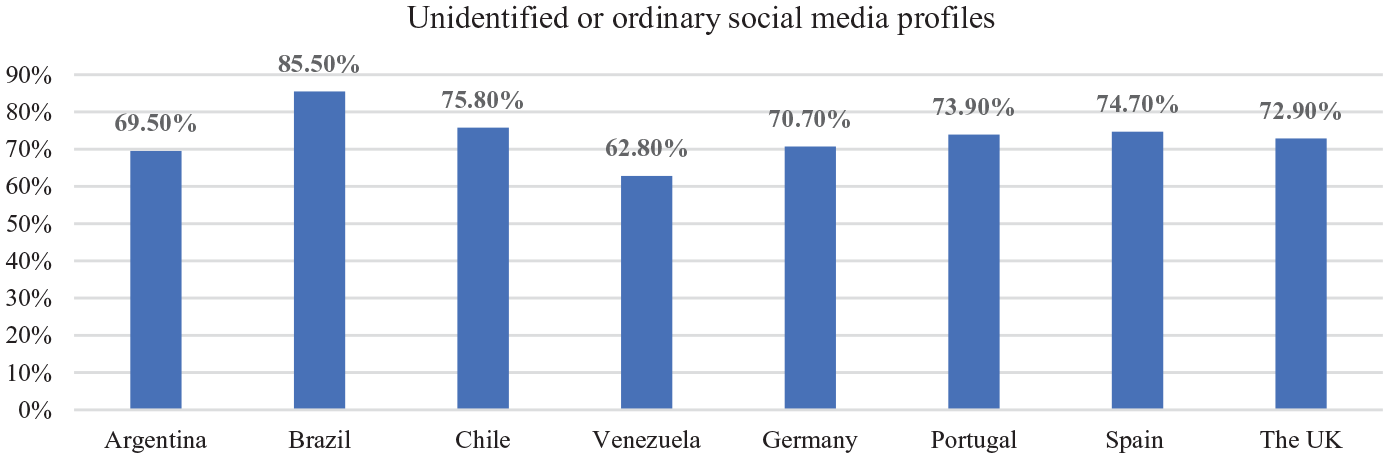
Percentage of unidentified or ordinary social media profiles as a source of falsehoods.
Accessing the quantity of concealed AstroTurf, 2 bots, or human trolls behind seemingly “ordinary” social media accounts is challenging. Flourishing on metrics such as likes and views, click farms are a consequence of social media logic. In Brazil, Germany, Portugal, and Spain, where far-right parties are highly articulated, fact-checking organizations typically refrain from disclosing (fake) account names (Figure 3). Instead, identification is obscured by a black stripe in the false information screenshot.
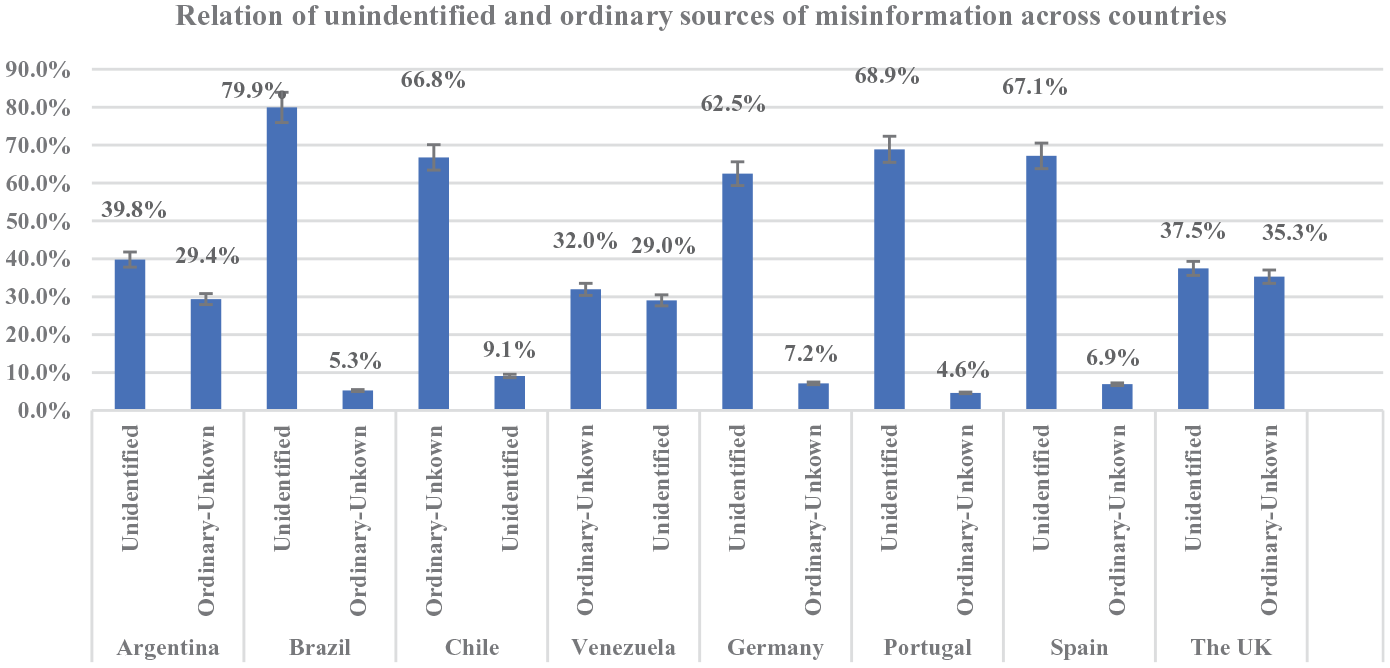
Ratio between identified and unidentified social media profiles.
Given the current political polarization, one might assume that protecting the identity of disinformed social media users is crucial to prevent online harassment. However, even more critical is the imperative to refrain from amplifying the profiles of those spreading falsehoods and to avoid interactions with trolls and bots. Troll farms instruct their employees to minimize the risk of being blocked by implementing specific strategies for creating fictitious accounts, such as using a human profile picture, maintaining an active presence with previous posts, publishing at regular intervals, engaging with others, and ensuring high levels of activity. Understanding this, fact-checking organizations steer clear of promoting these accounts and refrain from identifying their names. In this context, it seems reasonable to assume that these countries may exhibit a more pronounced prevalence of coordinated inauthentic behaviors, leading to a reluctance to publicize these seemingly “ordinary” accounts and inadvertently assist them in evading platform controls. In Argentina, Venezuela, and the United Kingdom, the ratio between identified and unidentified profiles is more balanced, while in Chile, the majority of social media users are identified.
Despite the obscure online identities of false information, political actors in various countries also contribute to its dissemination. Fact-checkers, to a lesser extent, verify statements by local politicians, ranging from 2.2% in Germany to 20% in Portugal. To evaluate the accuracy of politicians’ statements across countries, we filtered all claims by national governments’ and opposition parties’ politicians classified as false or partially false (Table 4).
Partially false and false statements by government and opposition politicians.
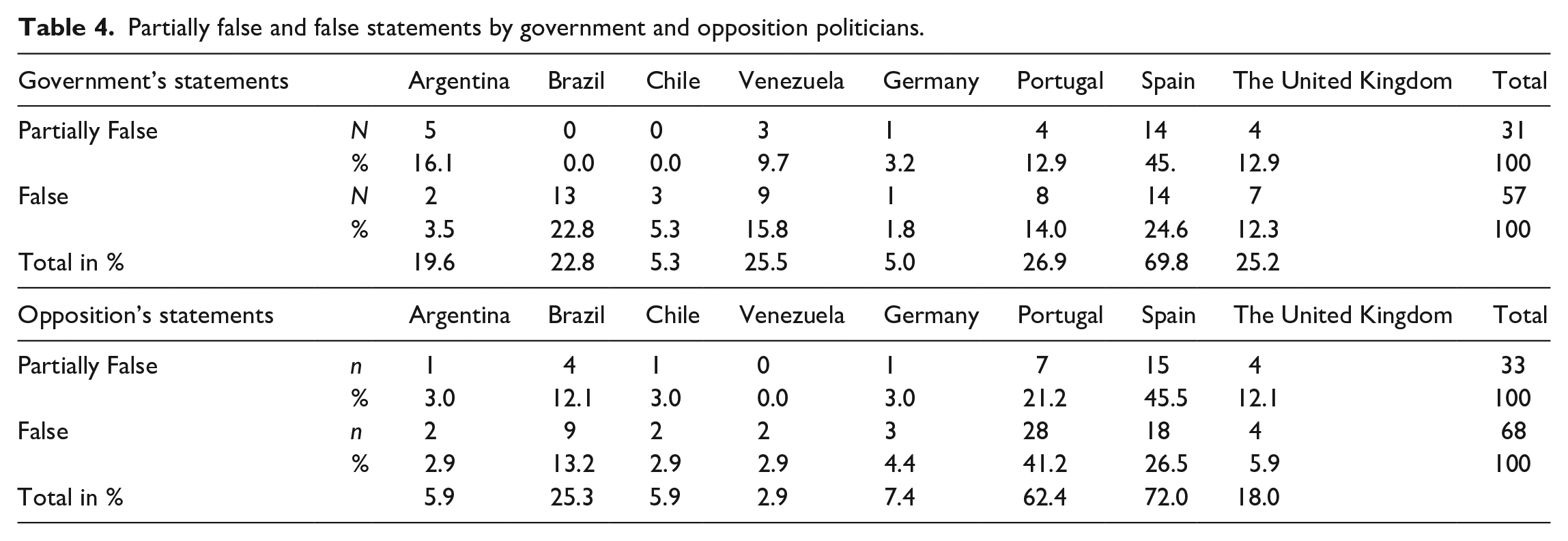
In Argentina in 2022, the “Frente de Todos” (Front of All) coalition, a union of Kirchnerism 3 forces and non-Kirchnerist territorial Peronism, generated around 20% of the (partially) false statements in the sample. In contrast, the opposition, led by the center-right “Juntos por el Cambio” (Together for Change) coalition, accounted for 5.9%. Despite its left-oriented perspective, populist movements in Argentina seemed more actively involved in spreading falsehoods. In Brazil’s highly polarized 2022 election, false claims from the far-right government of Jair Bolsonaro and his liberal party (22.8%) were comparable to those from the opposition (25.3%), primarily led by the Workers’ Party. Similar trends are observed in Chile, where politicians from the left-oriented government of Gabriel Boric (5.3%) and the opposition (5.9%) show comparable levels of inaccuracies in their statements. The relatively low percentage of politicians directly involved in spreading falsehoods can be attributed to Chile’s distinctive traits—the lowest political polarization, the highest PSB audience share, and a lower probability of government involvement in disinformation campaigns (Table 1). In Venezuela, under Maduro’s left-oriented populist administration, the government exhibits the highest percentage of (partially) false claims (25.5%), contrasting with the opposition (2.9%). This aligns with expectations based on the VDEM-Project’s assessment of governmental dissemination of false information.
In Germany, the coalition comprising the Social Democrats (SPD), Greens, and Free Democratic Party had slightly less involvement in disseminating false information (5.0%) compared to the opposition (7.4%), which includes the far-right Alternative for Germany (AfD). In Portugal, the disparities between government and opposition involvement in spreading imprecise information are more pronounced. The socialist government, led by Antonio Costa (by the time a majority since the January 2022 general election), was responsible for 26.9% of (partially) false information, while the opposition stated 62.4% of false claims. Notably, since the 2022 general election, the far-right opposition party Chega significantly increased its results compared to 2019, winning 12 seats.
In Spain, the socialist coalition government (The Spanish Socialist Workers’ Party (PSOE) and Podemos) and the conservative opposition (Partido Popular (PP)) share a similar proportion of false information spread, with rates of 70% and 72%, respectively. Spain’s highly decentralized structure saw the far-right party Vox entering the regional government in 2022, forming an alliance with the conservative PP in Castilla y León. Unlike the traditional right in Germany and Portugal, which seeks to isolate the far-right, in Spain, Vox has played a crucial role in supporting the Popular Party (PP) administration or facilitating the passage of conservative legislation. The conservatives also triumphed in the June 2022 regional elections in Andalusia, where the relationship between the government and opposition had to consider administrative dynamics. In the United Kingdom, the Conservative Party government, somewhat influenced by the former far-right UK Independence Party agenda, has 25% of its claims in the sample labeled as partially false or false by fact-checkers, compared to 18% for the opposition. A notable disparity in government-opposition involvement in spreading falsehoods was found primarily in Argentina (by the Peronist government), Venezuela (under the Maduro administration), and Portugal (involving the non-socialist opposition). However, in other countries, falsehoods seem to be disseminated by various political factions across the spectrum.
Deception strategies identified in the dataset of fact-checking articles
As expected, disinformation strategies generally avoid fabricating entirely implausible narratives. Instead, they tend to modify or manipulate information, creating deceptive narratives that maintain connections to elements of truth. This approach aims to prevent triggering suspicion among recipients who lack the resources to thoroughly scrutinize every argument (Hameleers, 2023). Completely fabricated stories are less common (Table 5), varying from 6.1% in Argentinian verified stories to 15% in Spain. Such content is most prevalent in Brazil (sr = 2.1) and Spain (sr = 2.9), the two countries with the highest political polarization in their respective continents (Table 1).
Cross table countries and deception strategies.
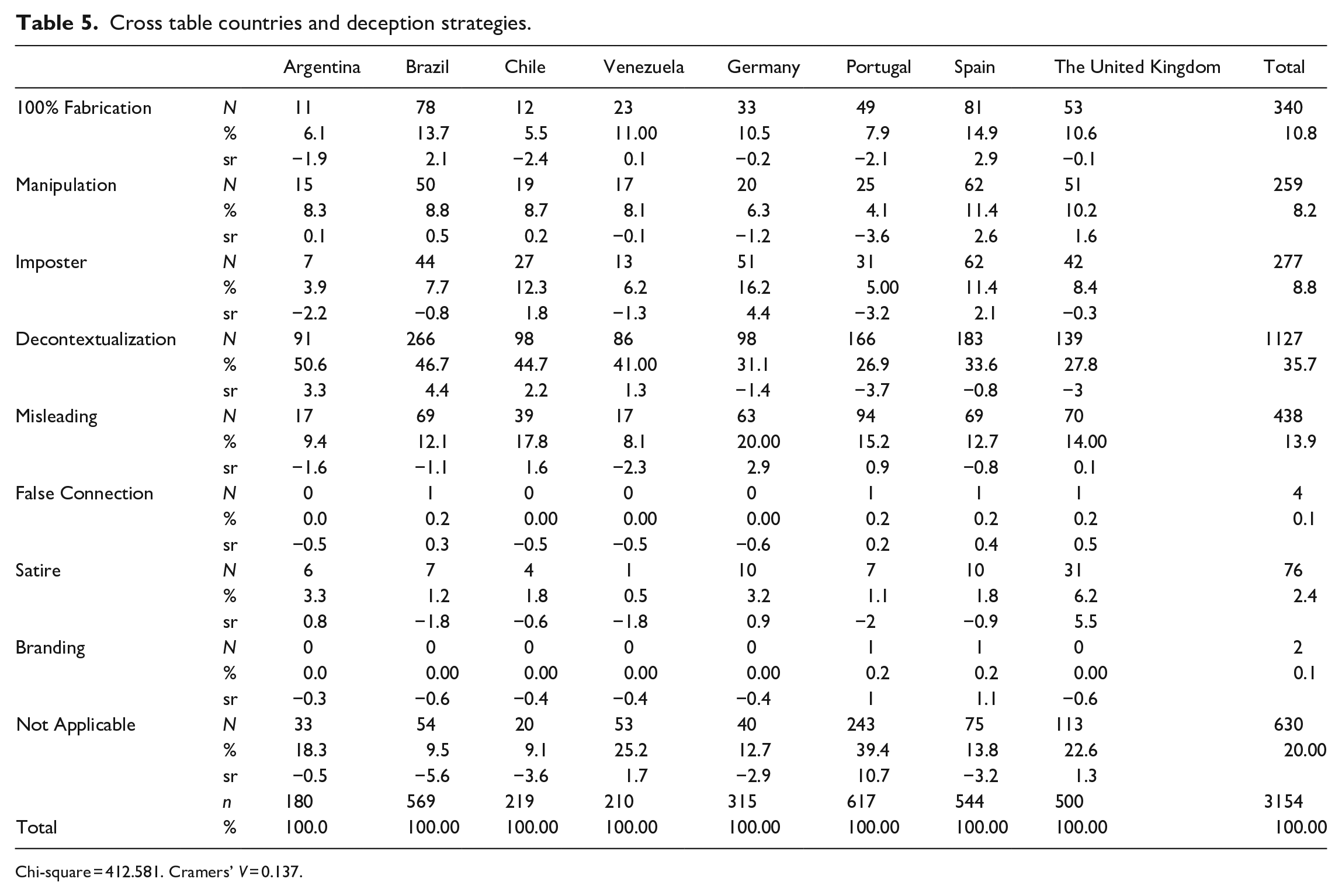
Chi-square = 412.581. Cramers’ V = 0.137.
However, overall, decontextualization stands out as the primary deception strategy identified by fact-checkers, claiming the highest proportion in all states, though in varying degrees, ranging from 50% in Argentina to 27% in the United Kingdom and Portugal. Despite being the prevailing trend, this strategy is more frequently employed than anticipated within the four Latin American countries (see standardized residuals in Table 3, within supplementary material).
Germany (sr = 4.4) and Spain (sr = 2.1) exhibit a notable prevalence of verified imposter content (Table 5), where genuine sources are impersonated, often using the branding of established media organizations, companies, or entities. Private companies are the primary targets, constituting 37.3% in Germany and 27% in Spain. This is closely associated with the prevalence of online scams in both countries. Impersonation of media outlets is the second most common, with nationally established media brands accounting for 15% in Germany and international media for 4.5%, reflecting higher levels of trust in domestic media (Table 1). In Spain, the imitation of international media brands (13%) slightly surpasses that of national brands (10%). Despite accusations of media bias and “fake news,” imitating media sources persists as a strategy to create the illusion of information credibility.
Finally, falsehoods due to false connections (discrepancies between texts and headlines) and instances of bad journalism are less frequent but more prevalent in Portugal (sr = 0.2), Spain (sr = 0.4), and the United Kingdom (sr = 0.5). The strong association with the United Kingdom can be attributed to the prevalent tabloid culture in the country (Lefkowitz, 2018). In addition, the United Kingdom tops the ranking in misunderstood satires and parodies (sr = 5.5). It is important to note that fact-checkers classify information as satire when individuals misunderstand jokes and mistake them for reality. Unlike other categories, satire is not a deceptive strategy, as its creators do not intend harm.
General types of falsehoods targeted by fact-checkers
The correspondence analysis between countries and general falsehood types identified by fact-checkers indicates a more significant impact of aggregated fabrication types (entire inventions, manipulation and adulterations, imposter, and decontextualization) on Latin American countries, situated in the upper left quadrant (Figure 4). This corresponds to their extensive use of social media for news and a limited audience reliance on PSB. Brazil, particularly affected (sr = 5.6), is followed by Chile (sr = 2.0), Argentina, and Venezuela (sr = 1.3). It is plausible to assume that events like elections and referendums prompt more attempts at deception.
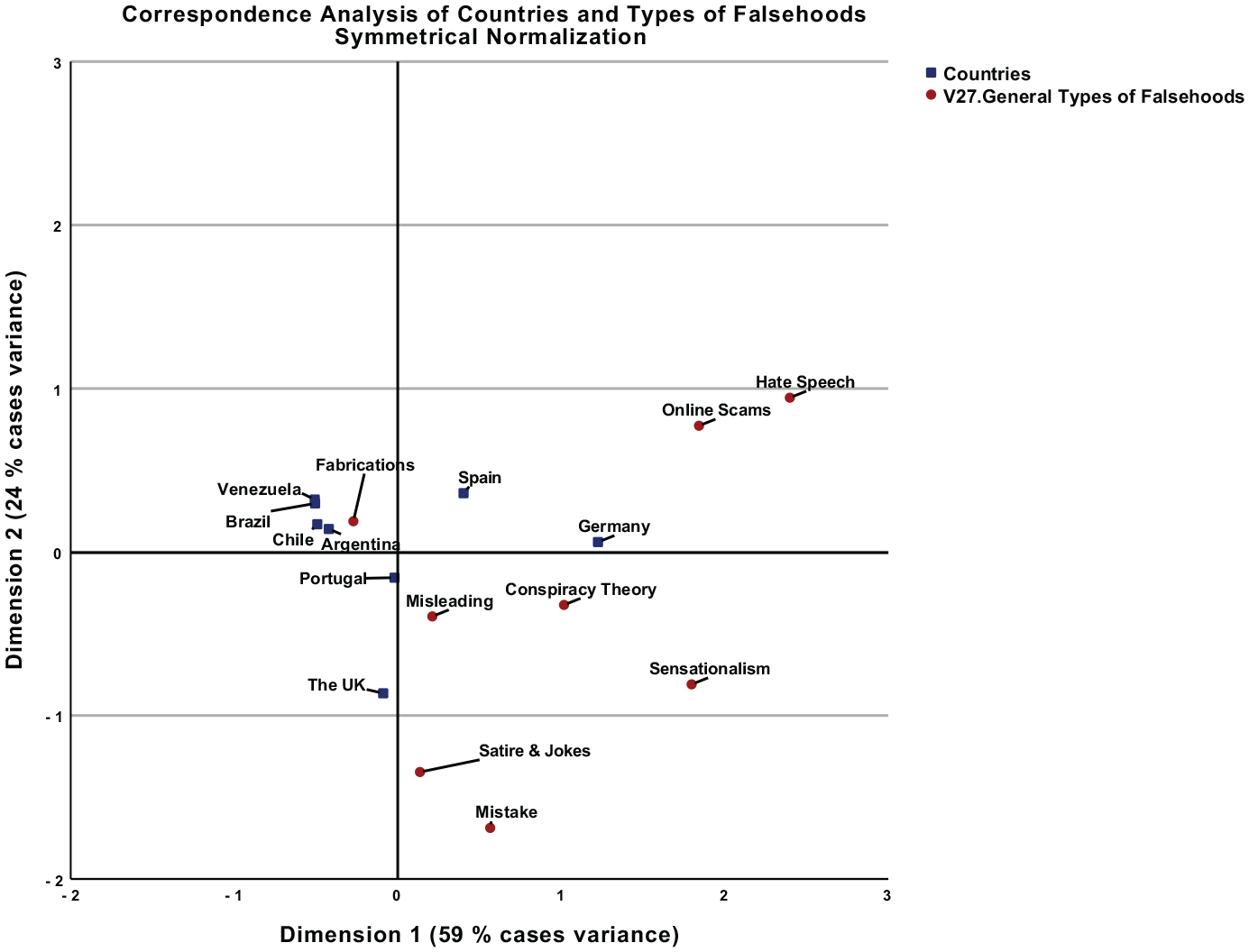
Correspondence analysis—countries and falsehood types.
European countries, notably the United Kingdom (sr = 3.5) and Germany (sr = 1.8), experience higher instances of misleading information, with Portugal and Spain following (sr = 0.5 each). Misleading information is not entirely false; instead, it often includes accurate data that is exaggerated or distorted to support a specific argument and align with a particular narrative. Actors may present information with crucial facts omitted or offer interpretations based on selectively chosen data (cherry-picking).
Portugal appears less distinctive, close to the null point, while the United Kingdom, in the lower-left quadrant, stands out for misunderstood satires (sr = 6.1) and genuine mistakes by media or government agencies (sr = 4.2). In the upper right quadrant, Germany and Spain share noticeable amounts of online scams (sr = 6.4 and 5.6, respectively), as discussed earlier, and hate speech (sr = 7.4 and 4.7). Hate speech fabrications include offensive language, violent threats, expressions of hatred, and discriminatory content targeting individuals based on ethnic or national origin, religious affiliation, gender, sexual orientation, and political beliefs. The primary target of hate speech fabrications is immigrants and foreigners (32.3% in Germany and 43.5% in Spain). In Spain, 73% of identified hate speech cases relate to “social issues, cultural wars, and zeitgeist,” while in Germany, hate speech is distributed as 36% within domestic politics (specifically immigration policies), 27% related to foreign affairs (especially the Russian-Ukrainian war), and 18% within “social issues, cultural wars, and zeitgeist.”
Germany, a destination for numerous immigrants, is poised to receive the highest number of asylum seekers since the 2015 surge in migration, prompted by the Syrian civil war. Currently, amid the Ukrainian war, the country has witnessed prolonged digital media usage by the far and extreme right. The refugee rise of 2015–2016 led to a widespread alternative digital information environment within the political right, extending beyond the limited circle of supporters (Jungherr and Schroeder, 2022).
Spain, experiencing increased immigration from North Africa and Latin America, associates perceived “threats” with media and political discourse, irrespective of unemployment rates or immigrant proportions (Igartua et al., 2005). Falsehoods and hate speech align with Vox’s nationalist rhetoric, entering Spanish politics in 2018. Vox, known for assertive language, particularly toward Muslim immigrants, secured seats in the 2019 national parliament and formed regional alliances in 2022, entering Castilla y León. This highlights how falsehoods mirror national issues and the news agenda.
Concluding remarks
This study offers a comparative analysis of similarities and differences in topics, deception strategies, and types of misinformation across eight countries in Europe and Latin America, as examined by various fact-checking organizations (n = 23). It addresses a gap in systematic comparative analysis in the field (Matassi and Boczkowski, 2023) and broadens the geographical scope of disinformation literature, responding to calls from scholars (Broda and Strömbäck, 2024). The contributions of this analysis to the disinformation literature are multifaceted. First, it provides empirical evidence that misinformation is strongly context-dependent (Hameleers, 2023), shaped by regional political contexts despite global trends like the Russia-Ukraine war, COVID-19, or vaccine skepticism. Second, it empirically supports the concept of “elective affinity” (Gerbaudo, 2018; Hameleers, 2020; Waisbord, 2018a) between information disorder (Bennett and Livingston, 2018; Wardle and Derakhshan, 2017) and (right-wing) populism. The study finds that a significant portion of false information originates from unidentified or seemingly ordinary social media users, suggesting potential coordinated behavior behind these accounts. In countries with a notable far-right online presence, such as Brazil, Germany, Portugal, and Spain, fact-checking organizations often avoid disclosing the names linked to fake accounts to prevent aiding these profiles in evading platform controls through continuous engagement and views.
The involvement of government and opposition in spreading falsehoods reveals significant disparities, particularly in Argentina (Peronist-Kirchnerist government), Venezuela (Maduro’s administration), and Portugal (non-socialist opposition). This also corroborates the disruptive nature of populist communication. Beyond these nations, falsehoods seem to emanate from diverse political factions. In Chile, a smaller proportion of politicians directly engaging in disseminating falsehoods (despite no variations between opposition and government) can be attributed to Chile’s unique characteristics within the Latin American sample. It exhibits the lowest political polarization, the highest viewership of PSB, and a diminished likelihood of government involvement in disinformation campaigns. Here resides the third contribution of this study, i.e. the attempt to connect disinformation studies with media systems analysis and digital indicators, a linkage still relatively rare in the literature (Hardy, 2021) with some exceptions (Humprecht, 2019; Humprecht et al., 2020). In the same vein, as Matassi and Boczkowski (2023) argue regarding social media studies, analyses of disinformation primarily focus on a single country without connecting the phenomena to other forces impacting media systems and technologies.
Completely fabricated narratives, though present to a small extent, vary in prevalence across countries, with a higher incidence in Brazil and Spain, notable for their high political polarization. Various forms of fabrication, including complete inventions, manipulation, imposter content, and decontextualization, have a more significant impact on Latin American countries. This trend corresponds to the high use of social media for news and lower awareness of PSB among their audiences. In contrast, European countries, to varying degrees, are more influenced by misleading information characterized by cherry-picked, exaggerated, and twisted content. Specifically, Germany and Spain stand out due to the distinctiveness of their fabrications, which are intertwined with hate speech. Despite global similarities in topics, deception strategies, and types of misinformation, falsehoods are profoundly adapted to local contexts. They can be explained mainly by the characteristics of their general media systems and informational environments.
A notable limitation of our study is that it relies on the selection criteria of fact-checking organizations from 2022, which may not accurately depict the current state of misinformation in the analyzed states. To prevent unnecessary dissemination of false information, fact-checkers primarily verify stories that have already gained significant traction on social media in terms of engagement and comments. In addition, they prioritize verifying information requested by their audience through WhatsApp channels, taking into account the types of misinformation that matter to their users (Graves, 2016; Humprecht, 2019; Moreno-Gil et al., 2021). Some organizations collaborate with tech companies, particularly through programs like the Meta Third-Party Fact-Checking Program, to verify content circulating on their platforms. These partnerships not only provide financial support but also automated tools for monitoring the online environment (Bélair-Gagnon et al., 2023; Graves et al., 2023; Cazzamatta, 2024). Nonetheless, we believe that despite using the perspective of fact-checkers to assess misinformation trends in the studied countries, our research still offers valuable regional insights. Fact-checkers continuously monitor various platforms simultaneously, unlike studies that have often focused on trends associated with one platform at a time, typically Facebook or Twitter (Matassi and Boczkowski, 2023). Recent studies have even noted a shift in fact-checking practices toward more extensive monitoring of social media rather than direct verification of statements made by public figures and politicians (Matassi and Boczkowski, 2023). Future studies may explore disparities by comparing misinformation circulating across various social networks with that selected by fact-checkers to advance methodological discussions. In addition, future research could further explore the motivations of misinformation spreaders and the actors behind coordinated unauthentic behaviors among seemingly ordinary social media users.
Our findings carry implications for both fact-checkers and policymakers, particularly regarding pre-emptive intervention strategies (pre-bunking) and media literacy efforts (Amazeen and Krishna, 2024). In nations with a prevalent online presence of far-right entities, organizations could educate on the potential involvement of these actors behind seemingly ordinary social media accounts or how to identify automated bots. In addition, recognizing variations in deception strategies or types of misinformation across countries allows fact-checkers and policymakers to tailor their responses and get ahead of misinformation spreaders. For instance, they can elucidate to their audiences how tactics like decontextualization or cherry-picking information typically operate to serve specific narratives. As misinformation often aligns with political agendas and current events, local stakeholders can be better equipped to address misinformation waves on social networks. Hence, there remains a necessity for additional comparative and longitudinal transnational analyses of misinformation trends within the community.
Supplemental Material
sj-docx-1-nms-10.1177_14614448241268896 – Supplemental material for Global misinformation trends: Commonalities and differences in topics, sources of falsehoods, and deception strategies across eight countries
Supplemental material, sj-docx-1-nms-10.1177_14614448241268896 for Global misinformation trends: Commonalities and differences in topics, sources of falsehoods, and deception strategies across eight countries by Regina Cazzamatta in New Media & Society
Footnotes
Funding
The author(s) disclosed receipt of the following financial support for the research, authorship, and/or publication of this article: The author is grateful for the financial support of the German Research Council (DFG CA 2840/1-1).

Supplemental material
Supplemental material for this article is available online.
Notes
Author biography
References
Supplementary Material
Please find the following supplemental material available below.
For Open Access articles published under a Creative Commons License, all supplemental material carries the same license as the article it is associated with.
For non-Open Access articles published, all supplemental material carries a non-exclusive license, and permission requests for re-use of supplemental material or any part of supplemental material shall be sent directly to the copyright owner as specified in the copyright notice associated with the article.
