




Abstract
Children have the right to play (UN Convention on the Rights of the Child, 1989), yet their opportunities to play on their own terms (free play) are under pressure, including online. Drawing on an analysis of the qualities of children’s free play across time and cultures, a nationally representative survey of UK 6- to 17-year olds compared their experiences of play across digital and non-digital contexts to identify design features that enhance or undermine children’s digital play and propose evidence-based recommendations for digital products and services likely to be used by children. Children viewed digital play more critically than non-digital play although both were judged poorly on key qualities of ‘intrinsically motivated’, ‘voluntary’, ‘risk-taking’ and ‘safety’. Logistical regression analysis shows that rights-respecting design features contribute to children’s enjoyment of digital play more than premium or freemium designs do, thus supporting Playful by Design recommendations that can benefit children.
Keywords
The importance of play for children’s agency, expression, identity and sociality has long been recognised in literature, psychology, anthropology and cultural studies (Caillois, 2001; Sutton-Smith, 1997). Yet in much of the world, including in wealthy countries, play is under pressure: green spaces and brownfield sites are being built on, children’s local freedom of movement is restricted, academic pressures result in longer school days and extra-curricular demands, and play itself is being gamified to advance adult-led agendas for learning, health and commerce (Cowan, 2020; Dodd et al., 2021; Gill, 2021; Gray, 2017; Marsh and Bishop, 2014; Plowman, 2016). For children growing up in a digital world, digital play can offer needed opportunities that potentially compensate for, complement or extend traditional (offline) play (Grimes, 2021; Ito et al., 2020).
However, children’s play in digital contexts has become engulfed in public contestation about screen time, health risks, gaming ‘addiction’, dark patterns and gambling-like elements, hate and other risks (Macey and Hamari, 2018; Radesky et al., 2020; Zendle and Bowden-Jones, 2019). Exacerbated by widespread reliance on digital technologies during the COVID-19 pandemic, policymakers are increasingly concerned with the design of digital platforms and their data-driven algorithms, systems and business models (Barassi, 2020; Mascheroni and Siibak, 2021). By rethinking the values and norms embedded in technology (Buchanan, 2001; Friedman and Hendry, 2019; Van Rompay and Ludden, 2015), design approaches such as ‘privacy by design’ and ‘safety by design’ (5Rights Foundation, 2021; eSafety Commissioner, 2019) promise the two-fold advantage of protecting children from experiencing harm online while enabling businesses to avoid having expensively to retrofit safety or privacy into already-developed digital products and services.
While hygiene factors such as safety, security and privacy undoubtedly deserve urgent attention, also needed are broader approaches to the design of digital products and services, going beyond protection so as to optimise children’s experiences. In the field of media and communications, children’s digital play is examined from various perspectives, including games studies, cultural studies and media effects, but research tends to generate insights about either the risks or the opportunities of play in ways that are insufficiently integrated. A child rights approach is holistic, setting out how duty bearers (including states and businesses) could and, indeed, should balance the opportunities and risks of play through a process of ‘due diligence’ that takes into account children’s age and maturity (in rights’ language, their ‘evolving capacities’) and their ‘best interests’ in real-world circumstances (Lievens et al., 2019). In this article, we combine a holistic child rights approach to play with a ‘by design’ approach to the digital environment (Livingstone and Pothong, 2023). Our aim is to develop an integrative yet practical and evidence-based approach to the design of digital products and services that can not only address the problems but also benefit children’s experiences and realise their rights.
The UN Convention on the Rights of the Child (1989) recognises play as a right, defining it as ‘any behaviour, activity or process initiated, controlled and structured by children themselves’ (Article 31). This is to emphasise free or agentic and child-initiated rather than adult-directed play (Zosh et al., 2018), perhaps explaining why play been dubbed ‘the forgotten right’ (Hughes, 1990). But only recently have child rights advocates begun to address the challenges of the digital environment, recognising the digitally mediated yet still embodied and unequal nature of children’s lives (UN Committee on the Rights of the Child, 2021). Beginning from a child rights perspective means grounding research in children’s experiences, including recognising the qualities of free play long seen as crucial for childhood and child development, and asking whether and how these may apply in digital contexts.
We took our lead from two literature reviews. The first reviewed the rich multidisciplinary literature on the diversity of playful practices and cultures across time and contexts to identify the qualities of free play (Cowan, 2020). The second reviewed research on play in digital contexts to identify the design features that variously enable or constrain it (Colvert, 2021). A child rights approach also prioritises the voices of children, so we complemented the literature reviews with a public consultation with children as well as parents and carers, and professionals who work with children (Livingstone and Pothong, 2022). This prioritised design-led methods that combined cultural probes (Wyeth and Diercke, 2006) with deliberative focus groups (Coleman et al., 2018), drawing also on insights from the fields of child–computer interaction and child-centred design (Hourcade, 2020; Markopoulos and Bekker, 2003).
The purpose was to compare children’s experiences of the qualities of play in digital and non-digital contexts in order to determine whether children’s digital play can be improved through ‘by design’ approaches. In this article, we report on the conduct of a national survey that sought to understand the qualities of play across contexts, and how they relate to children’s enjoyment, before focusing on the potential role of design. We addressed three research questions.
- RQ1: Are the qualities of play different in non-digital (in-person) and digital contexts?
- RQ2: Do the qualities of play explain the enjoyment of play in non-digital and digital contexts?
- RQ3: Which design features enhance or undermine the qualities and enjoyment of play in digital contexts?
Our choice of quantitative research methods promised three benefits (Scharrer and Ramasubramanian, 2021). First, a survey permits population-based generalisations about the nature of and priorities for children’s digital play. Second, the use of statistical analysis can identify patterns of association and test the reliability of subtle differences (or lack thereof) within the sample. Third, and more pragmatically, policymakers and business CEOs are often persuaded by statistics that reveal the nature of the problem to justify making changes. In effect, we sought to identify the levers that digital innovators can pull to improve children’s free play in the digital environment.
Methods
Survey sampling
A nationally representative sample of children aged 6–17 years old was recruited online through a market research organisation which maintains a panel of 340,000 UK citizens. Invitations were sent to a randomised sample of 5850 parents/guardians of ‘children living at home’, with quotas set for child age and gender to ensure the sample matched the national population. Only one child per household was eligible to participate; if there were more children, participants were selected according to the least-filled sample quota of age and gender. The survey was started by 1933 respondents; 250 (13%) were screened out because they did not have a child between 6 and 17; 150 respondents (8%) did not complete the survey; a further 397 respondents (21%) would have qualified, but as age/gender quotas had already been met they were not asked to complete the survey. After data cleaning (N = 103 respondents omitted), the final sample included 1033 children.
Survey administration
Fieldwork was carried out from 25 June to 2 July 2021. Recognising children’s familiarity with digital technologies, the survey was administered online. Each child respondent received a small reward which they could withdraw as money or vouchers or donate to charity. When completing the survey, parents/guardians were present: 61% of children aged 6–9 said their parents provided a little help (and 12% provided a lot), dropping sharply with age. Among 13–17 year olds, 58% completed the survey with parents in the room but not helping and 20% were alone. Since the questions did not concern areas of likely disagreement between parent and child, we deemed this more helpful to younger children’s participation than otherwise. The average completion time for the 10–17 year olds was 15 minutes. Younger children (6- to 9-year olds) received a version of the questionnaire with slightly simpler wording and fewer questions (specifically, we did not ask them about design features). As a result, on average, this took less time (10 minutes) to complete. All children and one of their parents provided written consent to participate. The research was approved by the first author’s university research ethics committee.
Survey design and measures
The questionnaire asked children about the qualities of their non-digital (in-person) play, then their digital play, and finally, demographic questions and subjective well-being. Before answering these closed-ended questions, children were asked one open-ended question for non-digital play Think of a time in the last few weeks when you had a really good time playing around or being “playful” IN REAL LIFE. Please tell us what you were doing, where you were, and how it made you feel
and digital play When you want to have fun or play using a digital device, what is your favourite app, game, or website? Please tell us the full name of this app, game, or website. How would you describe this to someone who has never used it? What do you like about it? Why is it your favourite?
These questions were intended to generate spontaneous descriptions of their play from children, without the answers being directly comparable.
Next, children were asked about the main dependent measures: their enjoyment of play in non-digital contexts (‘Thinking again about the time you recently had a good time playing or being playful in real life, without a digital device, how much do you agree or disagree with the following? I had a great time’) and their enjoyment of play with two digital products or services (referred to as ‘apps’ for participants) (‘Thinking about when you have fun or play using [name of product], how much do you agree or disagree with the following? I had a great time’). Children reported greater enjoyment of non-digital play (mean 3.69, SD 0.55) than digital play (mean 3.35, SD 0.54), t(962) = 16.5; p < .001; r = .29.
For the two products each child was asked about, we selected four gaming products (Fortnite, Minecraft, Nintendo Wii, Roblox) and four that our prior research showed they might also engage with playfully (TikTok, WhatsApp, YouTube (not YouTube Kids), Zoom (for fun only, not school) (Livingstone and Pothong, 2021). According to industry statistics, all were among the most popular products used by this age range (Dubit, 2021). The survey asked children if they had used these ‘a few times in the last few weeks’, and then two of those they had used were selected for further questioning (where possible, one from each group); if a child used more products, the survey software asked about the least-filled option.
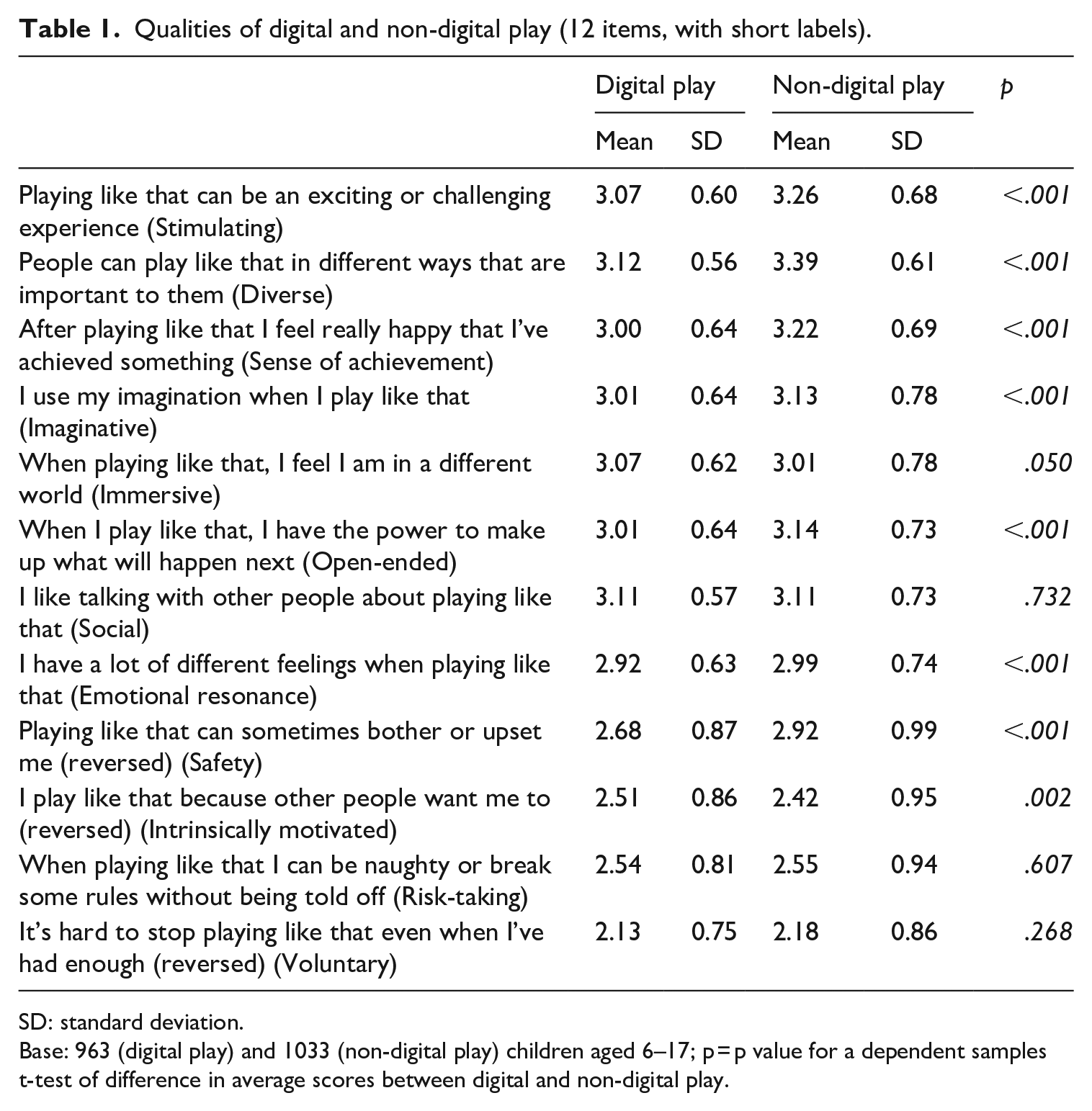
Closed questions about 12 qualities of play were presented in random order and answered using a 4-point Likert-type scale (1 = disagree a lot, 2 = disagree a bit, 3 = agree a bit, 4 = agree a lot). The qualities were derived from the prior literature review (Cowan, 2020) with the exact wording shown in Table 1 (informed by the language that children used in the consultation; Livingstone and Pothong, 2022). For ease of comprehension, some questions were asked using reverse phrasing. The same questions were asked about non-digital play (as above) and then about digital play (for the two products). Answers were averaged across the two products, resulting in a 7-point scale (in 0.5 increments from 1 to 4) with slightly better measurement properties than the 4-point scale for non-digital play. Since the digital play questions refer to specific products, they may have less random measurement error than the non-digital play questions (where increased random measurement error would be expected to reduce the observed correlations between variables; Saris and Gallhofer, 2007).
Qualities of digital and non-digital play (12 items, with short labels).
SD: standard deviation.
Base: 963 (digital play) and 1033 (non-digital play) children aged 6–17; p = p value for a dependent samples t-test of difference in average scores between digital and non-digital play.
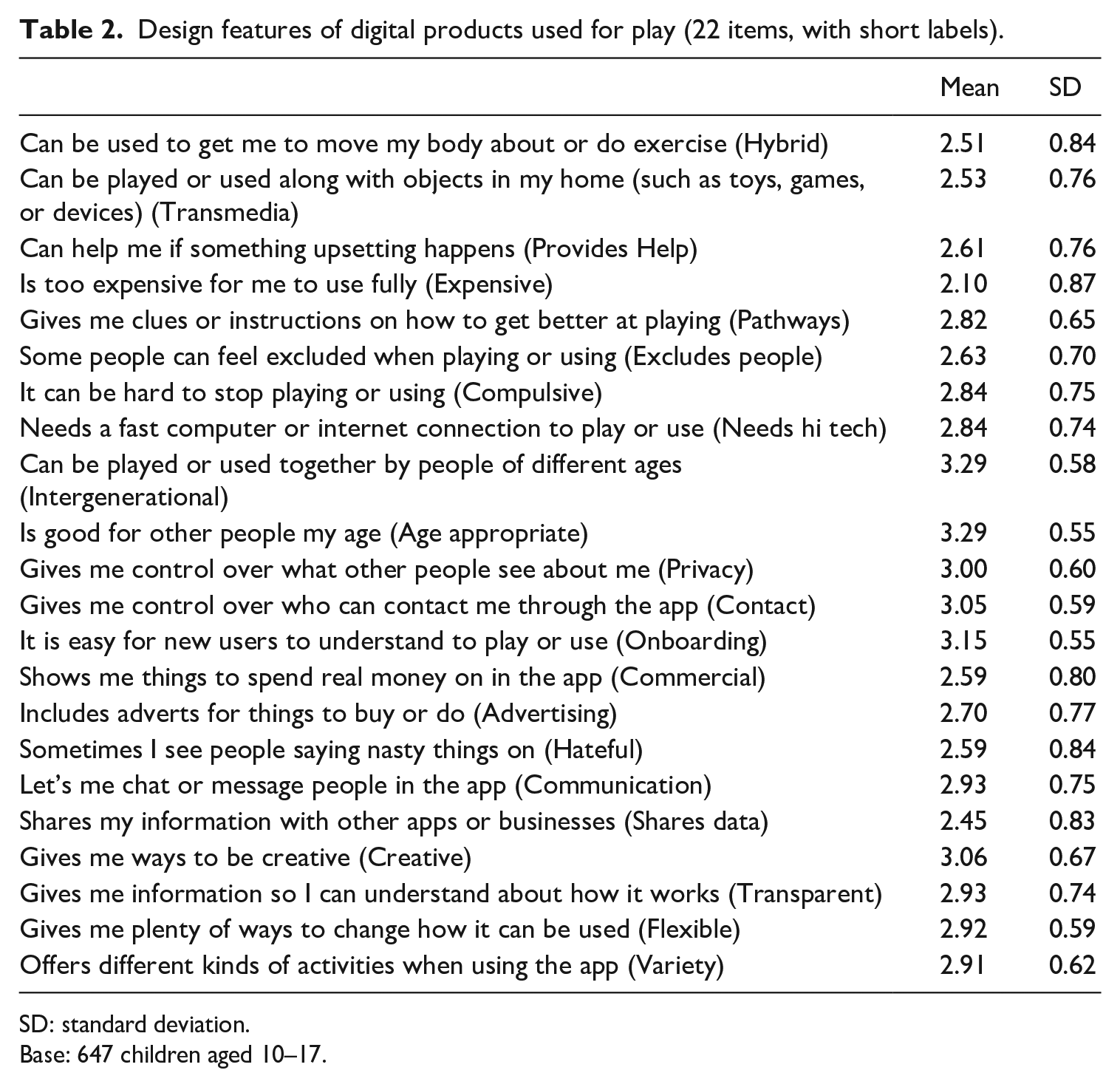
Respondents aged 10–17 years were further asked to rate their agreement with 22 statements (presented in random order) about the design features of the same two digital products (see Table 2 for the full item wording) and answers were averaged across the products for each child. The design features were derived from the prior literature review (Colvert, 2021), and again the wording was informed by the language used by children in the consultation (Livingstone and Pothong, 2022).
Design features of digital products used for play (22 items, with short labels).
SD: standard deviation.
Base: 647 children aged 10–17.
Demographic variables included age (mean 11.51 years, SD 3.46, range 6–17) and gender (51% girls). In addition, parents recorded their socio-economic group (national statistics are in brackets) as AB 26% (27%), C1 21% (27%), C2 16% (20%), DE 15% (25%), no information 22%; and the ethnicity of the child – 83% were White 83% (national statistics 86%) and 17% Black and Minority Ethnicity (14%), using the government census classification.
For subjective well-being, we adapted a measure from Ryff (1989): Other people your age have been telling us about themselves. Everyone is different, and we would like to know about you! How much do you agree with the following? (a) I like being the way I am; (b) I am good at doing all my tasks or chores each day; (c) People are friendly towards me; (d) I can choose what I want to do with my time; (e) I feel I’m learning a lot at the moment; (f) I feel positive about my future.
These were combined to create a composite measurement of subjective well-being (mean 3.22, SD 0.47, range 1–4).
Results
RQ1: are the qualities of play different in non-digital (in-person) and digital contexts?
Non-digital play was rated higher for the qualities of diverse, stimulating, open-ended, imaginative, sense of achievement, emotional resonance, and safety (see Table 1). Digital play was rated higher for intrinsic motivation and, of borderline significance, immersive play. The two contexts of play do not differ significantly for social, risk-taking or voluntary qualities of play. However, the pattern of means was similar across contexts, being notably lower for intrinsic motivation, voluntary, risk-taking and safety than for the other qualities. This suggested that latent factors underly the 12 qualities.
To discover these latent factors, a principal axis factor analysis (PFA) was conducted separately for digital and non-digital play qualities. The Kaiser–Meyer–Olkin test confirmed the sampling adequacy for the digital (KMO = .92) and non-digital qualities of play (KMO = .85). For individual items, the KMO values ranged from .76 to .95 (digital play) and .62 to .91 (non-digital play), above the acceptable limit of .5 (Field, 2009). Bartlett’s test of sphericity showed that between-item correlations were sufficiently large for a PFA for digital, χ²(66) = 5221; p < .001, and non-digital play, χ²(66) = 2751; p < .001.
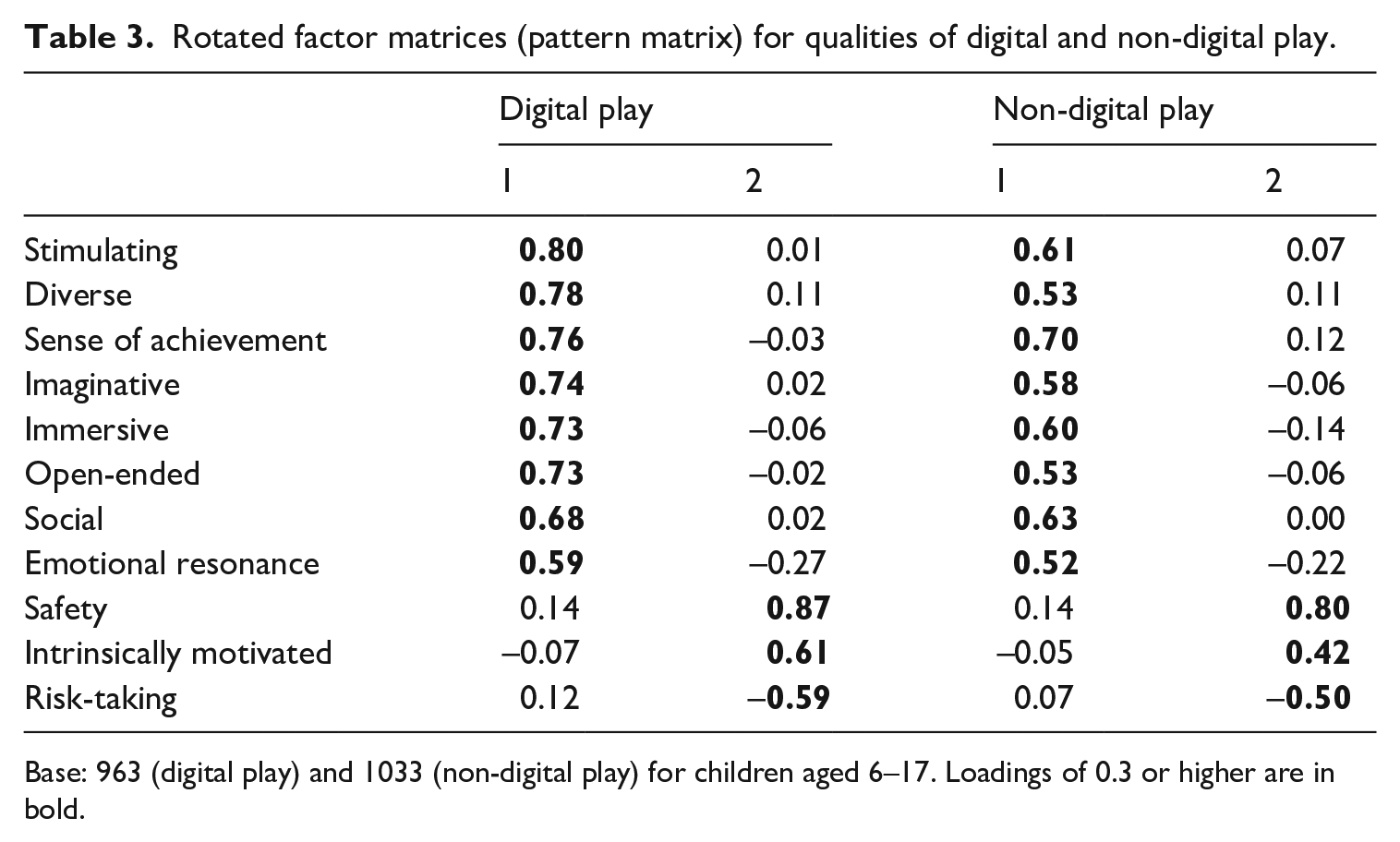
The revised version of Velicer et al.’s (2000) minimum average partial (MAP) test was used to select the number of factors to be retained. For both digital play and non-digital play, the test suggested that two factors should be retained. A two-factor solution for digital play accounts for 62% of the total variance. A two-factor solution for non-digital play accounts for 47% of the variance with a potential third factor having an eigenvalue of 0.96. This indicates that the qualities of non-digital play might be more complexly structured than those of digital play. However, to aid comparison across contexts, two factors were retained for both cases (Table 3). Initially, an orthogonal factor rotation (Varimax) was tried but the rotated factor matrix had several items loading on more than one factor, indicating that oblique rotation might be more appropriate (Schmitt and Sass, 2011). Oblique factor rotation (direct oblimin) produced the clearer factor structure shown in Table 3, with loadings above 0.3 in bold. One item (voluntary) did not load conclusively on either factor for both digital and non-digital play and was therefore removed from the analysis.
Rotated factor matrices (pattern matrix) for qualities of digital and non-digital play.
Base: 963 (digital play) and 1033 (non-digital play) for children aged 6–17. Loadings of 0.3 or higher are in bold.
The factor analyses suggest children perceive the qualities of play in broadly similar ways across digital and non-digital contexts, but with some differences of emphasis. To interpret the factors, we refer to what children said in answer to the open-ended questions. Although the qualities of play load on the first factor with differing weightings for digital and non-digital contexts, the qualities themselves are the same. To encompass the breadth of qualities included and bearing in mind that the qualities were originally informed by a literature review on free or child-led play, we call this factor agentic play.
For digital play, ‘stimulating’ is the highest loading quality, followed by ‘diverse’, ‘sense of achievement’, ‘imaginative’, ‘immersive’, ‘open-ended’, ‘social’, and ‘emotional resonance’. It seems that what matters to children here is the satisfaction of interacting in ways that each child can pursue what they find stimulating and imaginative in their own way (diversity), enabling play that is immersive and offers a sense of achievement. Illustrative quotations include: My favourite is the Pokémon game that I play on my Nintendo. It’s really exciting. I have to explore the different lands to find Pikachu. (Girl, 8) Call of Duty. Playing games often make me feel like being in a different world, I like thinking, like powerful games. (Boy, 15) I like playing Roblox with my friends we can talk and build stuff. I can build houses, and I can adopt pets, and I can get different stuff and swap it with my friends. (Girl, 11) Fortnite. You need to gather resources and survive to be the last one standing while battling the other players. (Boy, 17)
For non-digital play, the highest loading quality of play is ‘sense of achievement’, followed by ‘social’, ‘stimulating’, ‘immersive’, ‘imaginative’, ‘diverse’, and ‘open-ended’, then ‘emotional resonance’. By comparison with digital play, the quality of social play is more to the fore and diverse is somewhat less important. Illustrative quotations include: I used my wand and was Harry Potter. (Girl, 10) Playing in the pool with my sisters and brother. We had fun and laughed a lot, and mum and dad made us a picnic. (Girl, 11) We were in the woods behind my house and decided to play forts. We took our tents and had lots of fun. (Boy, 11)
‘Safety’ is the highest loading quality of play on the second factor for both digital and non-digital play; it is positively linked to intrinsic motivation and negatively linked to risk-taking in both contexts. The importance of safe play, linked to intrinsic motivation, may be discerned in the quotations below. Note that because the open-ended question asked children to describe a good play experience, we did not learn how risk undermines intrinsic motivation, though this is apparent from other research (Colvert, 2021; Cowan, 2020).
It is a video game where you can build a home, interact with cute animal villagers. . .You can hang out with your friends in the game and visit their houses. It is very entertaining game. (Girl, 8) It is a online game that is suitable for children my age and there is loads of different games to play on there that people make. (Boy, 9) Messing around with my friends in our gym club making pyramids and then falling over. (Girl, 15) In my garden on my swing. I put on the songs and pretended I was on stage singing. (Boy, 9)
Finally, we note that there is a moderate negative correlation between the two factors of –0.41 for digital play and –0.21 for non-digital play. Intriguingly, this suggests that agentic play is perceived as enabling risk-taking by children; or, to put it the other way around, even though feeling safe supports intrinsic motivation, it also constrains the qualities of play linked to agency, such as stimulating or sense of achievement.
RQ2: do the qualities of play explain the enjoyment of play in non-digital and digital contexts?
We conducted logistic regressions to understand why some children ‘agree a lot’ that they ‘had a great time’ (73% said this for non-digital play, 56% for digital play). Recognising that enjoying play might depend on demographics (gender, age, socio-economic group) or subjective well-being, we entered these variables into the model before adding the qualities of play factors identified above.
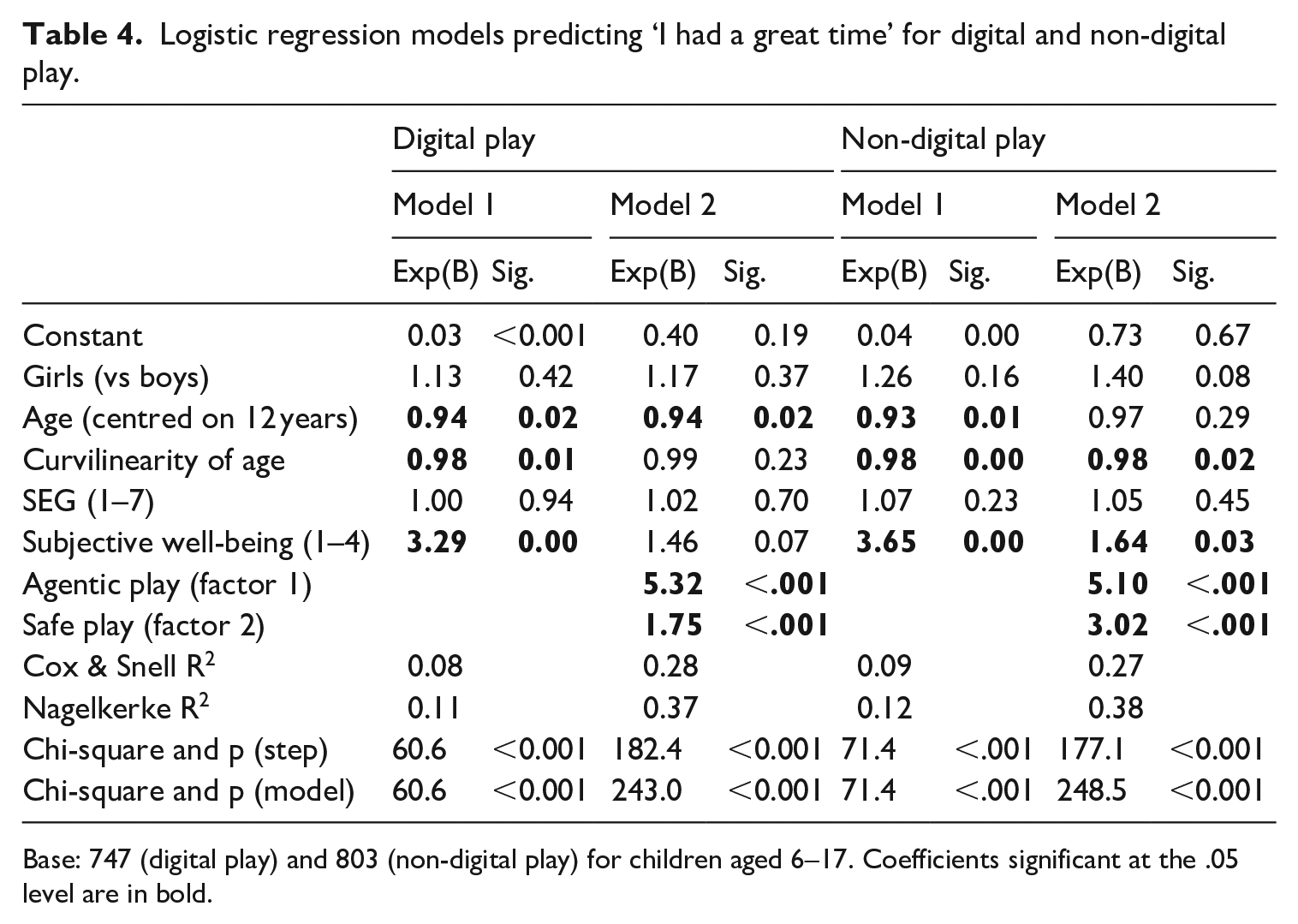
Table 4 shows the logistic regression models for digital and non-digital play. The first model shows the effect of child gender and age, household socio-economic group and the child’s subjective well-being in explaining their enjoyment of play. The second model uses factor scores from the exploratory factor analysis in Table 3 (using the regression method) to test whether these add to the explanation. Curvilinearity of age is a variable that tests whether the effect of age deviates from being linear, and it was included to control for age effects in the model.
Logistic regression models predicting ‘I had a great time’ for digital and non-digital play.
Base: 747 (digital play) and 803 (non-digital play) for children aged 6–17. Coefficients significant at the .05 level are in bold.
Model 1 shows that, in digital and non-digital contexts, both younger and older children are more likely to enjoy play than those in the middle years. Neither gender nor socio-economic group makes a statistically significant difference. However, children with higher subjective well-being are more likely to enjoy playing in both contexts. Figure 1 illustrates the overall greater enjoyment of play in non-digital contexts and the curvilinearity of age, that those in the middle of the age group are more likely to enjoy play.
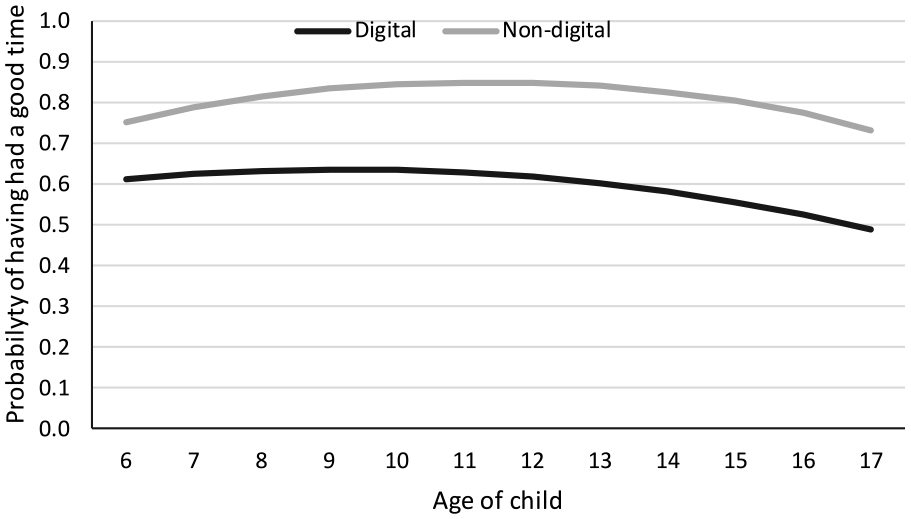
Predicted probabilities of having a good time playing by age of the child, controlling for gender, SEG, subjective well-being, and qualities of play.
However, Model 1 explains only a small amount of the variance. Model 2 includes the qualities of play: both factors are statistically significant, and they considerably increase the amount of variance explained in both digital and non-digital contexts (to 37% and 38%, respectively). Agentic play contributes the most to children’s enjoyment of play. In digital contexts especially, safe play is less predictive of children’s enjoyment, but it still makes a positive contribution in both contexts (when controlling for all other factors included in this model; and notwithstanding the bivariate correlation between agentic play and risk-taking, noted above). In digital contexts, well-being is not significant once the qualities of play are included in the model. This suggests that while, across all forms of play, children with greater well-being enjoy digital play more, those who benefit from quality (agentic, safe) play opportunities can enjoy their digital play whatever their prior state of well-being.
To understand whether design can improve children’s enjoyment of play in digital contexts, we examine the role of design features in shaping children’s free play in digital contexts.
RQ3: which design features enhance or undermine the qualities and enjoyment of play in digital contexts?
To identify possible latent factors underpinning the 22 features shown in Table 2, we conducted a PFA. The Kaiser–Meyer–Olkin confirmed the sampling adequacy for the analysis (KMO = .87). For individual items, the KMO values ranged from .79 to .92, above the acceptable limit of .5 (Field, 2009). Bartlett’s test of sphericity indicated that between-item correlations were sufficiently large for a PCA, χ²(231) = 4456; p < .001.
The revised version of Velicer et al.’s (2000) MAP test was used to select the number of factors to be retained and indicated that three factors should be retained. As for the qualities of play, several items loaded significantly on more than one factor when orthogonal factor rotation was used, indicating that oblique factor rotation would be more appropriate. Using oblique factor rotation, two items (Flexible and Variety) had inconclusive factor loadings; removing those two items and using oblique rotation (direct oblimin) provided the solution in Table 5. Removing the two items had no meaningful effect on the estimates for sampling adequacy. The resulting three factor solution explains 46% of the variance.
Rotated factor matrix (pattern matrix) for design features of products used.
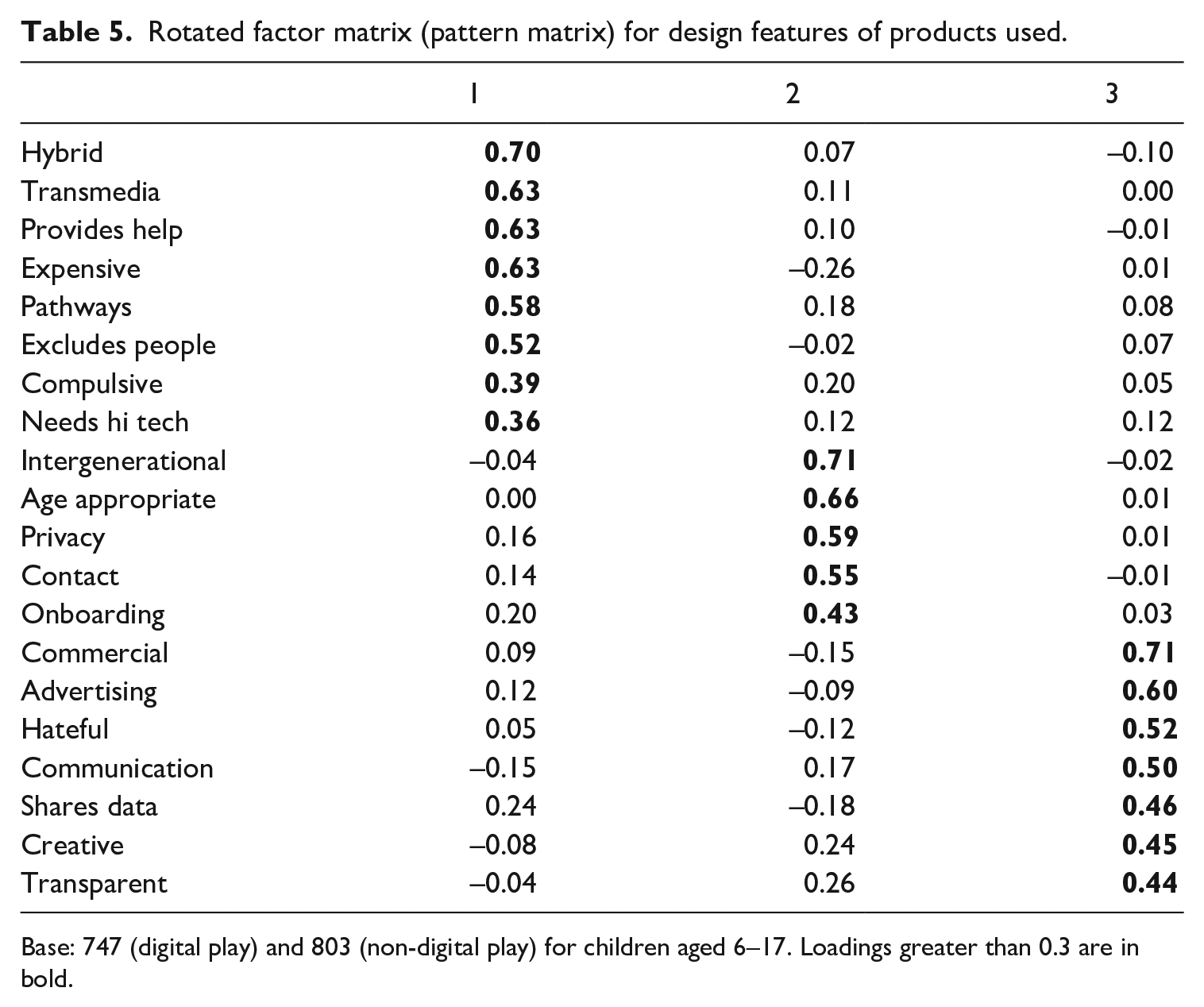
Base: 747 (digital play) and 803 (non-digital play) for children aged 6–17. Loadings greater than 0.3 are in bold.
Design features that load heavily on the first factor are ‘hybrid’, ‘transmedia’, ‘provides help’, ‘expensive’, ‘pathways’, ‘excludes people’, ‘compulsive’, and ‘needs hi-tech’. These are characteristic of premium products that provide technologically sophisticated features ranging from hybridity and advanced pathways to provision of help services; because they therefore tend to be expensive for users they can also be exclusive.
The second factor is characterised by features that enable ‘intergenerational’ and ‘age-appropriate’ play, including ‘privacy’, control over one’s ‘contacts’, and ease of ‘onboarding’. These features are broadly rights-respecting, for they facilitate children’s participation with others in the digital world and support their developing maturity and capacity to manage their social circle during play.
The third factor brings together ‘commercial’, ‘advertising’, ‘hateful’, ‘communication’, and ‘data sharing’. We label this freemium, noting that the business model of free-to-play games relies on advertising and data sharing, among other commercial practices, and also enables creativity and communication, albeit including hateful communication. Although experts consider some of these practices deceptive (Colvert, 2021), in other respects, some users regard the ‘deal’ (free games in exchange for your data) to be transparent.
The three factors are correlated with each other and children’s enjoyment of their play (see Table 6). Specifically, premium design is positively correlated with agentic play and negatively correlated with safe play (or, positively correlated with risk-taking); possibly these features mitigate against each other, for the contribution to overall enjoyment of play is small. Rights-respecting design is positively correlated with agentic play, only marginally related to safe play, and is the most strongly correlated with enjoyment. Freemium design is correlated with both agentic play and risk-taking play (being negatively correlated with safe play) and makes a small contribution to overall enjoyment.
Correlations (Pearson’s r) between design features and qualities of digital play, and with ‘I had a great time’ playing in digital contexts.
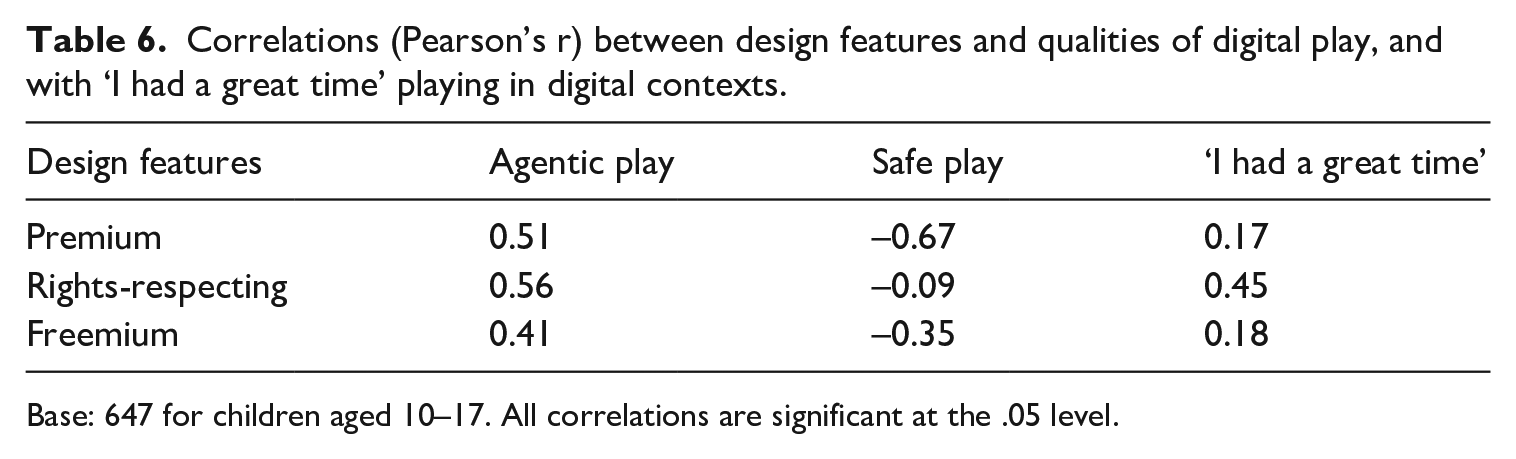
Base: 647 for children aged 10–17. All correlations are significant at the .05 level.
We included the design features (factor scores obtained from the exploratory factor analysis presented in Table 5 using the regression method) in Model 3 (see Table 7), adding these to the previous logistic regression model (Table 4) where child characteristics (Model 1) and qualities of play (Model 2) were already included as predictors of digital play. Note that as questions on design features were only asked of children aged 10 to 17 years, the results for Models 1 and 2 differ slightly from those in Table 4 (where children aged 6–9 years old were included), and age differences no longer account for the enjoyment of play.
Logistic regression models predicting ‘I had a great time’ for digital play.
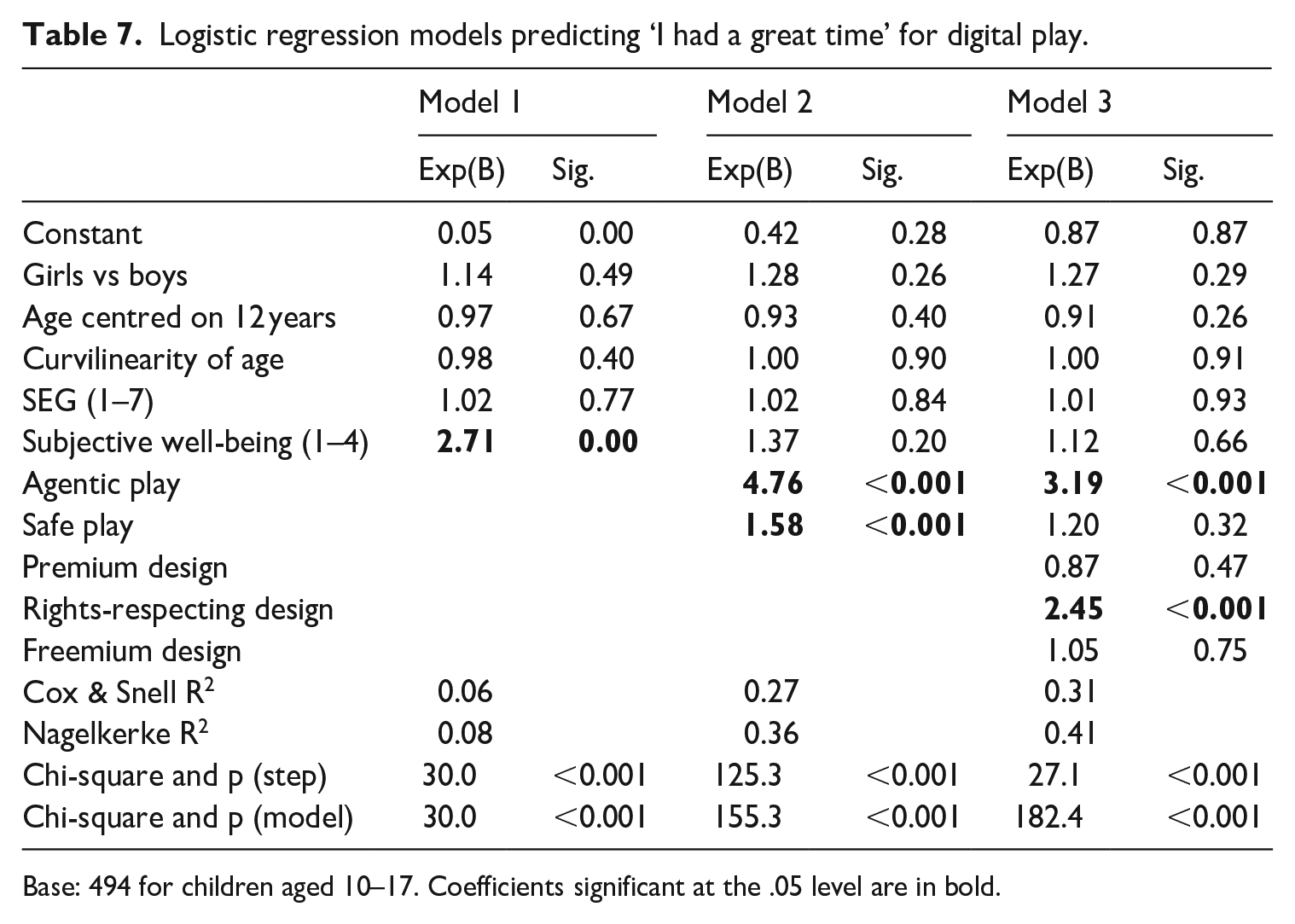
Base: 494 for children aged 10–17. Coefficients significant at the .05 level are in bold.
Only rights-respecting design among the three design factors made a statistically significant contribution to the enjoyment of digital play, adding a little to the overall variance explained. Note that when the design factors are added, the quality of safe play is no longer significant, most likely because premium and freemium factors are correlated with safety, suggesting the effects of these variables cancel each other out.
To examine the extent to which rights-respecting design, along with the other factors, characterises each of the eight popular products included in the survey, we scored each product on the 22 design features. Then, following the guidance of DiStefano et al. (2009) on the use of factor scores in a follow-up analysis, we first calculated summary scores for the design features (used as variables in the factor analysis in Table 5, where answers had been averaged across the roducts for each child). We then used the variable means and standard deviations to standardise each product’s scores for each variable (design feature). Table 8 shows the difference (in standard deviations) in the weighted scores between the overall mean and the score for each product and can be interpreted as follows.
Weighted standardised scores for the eight popular products by design factor.
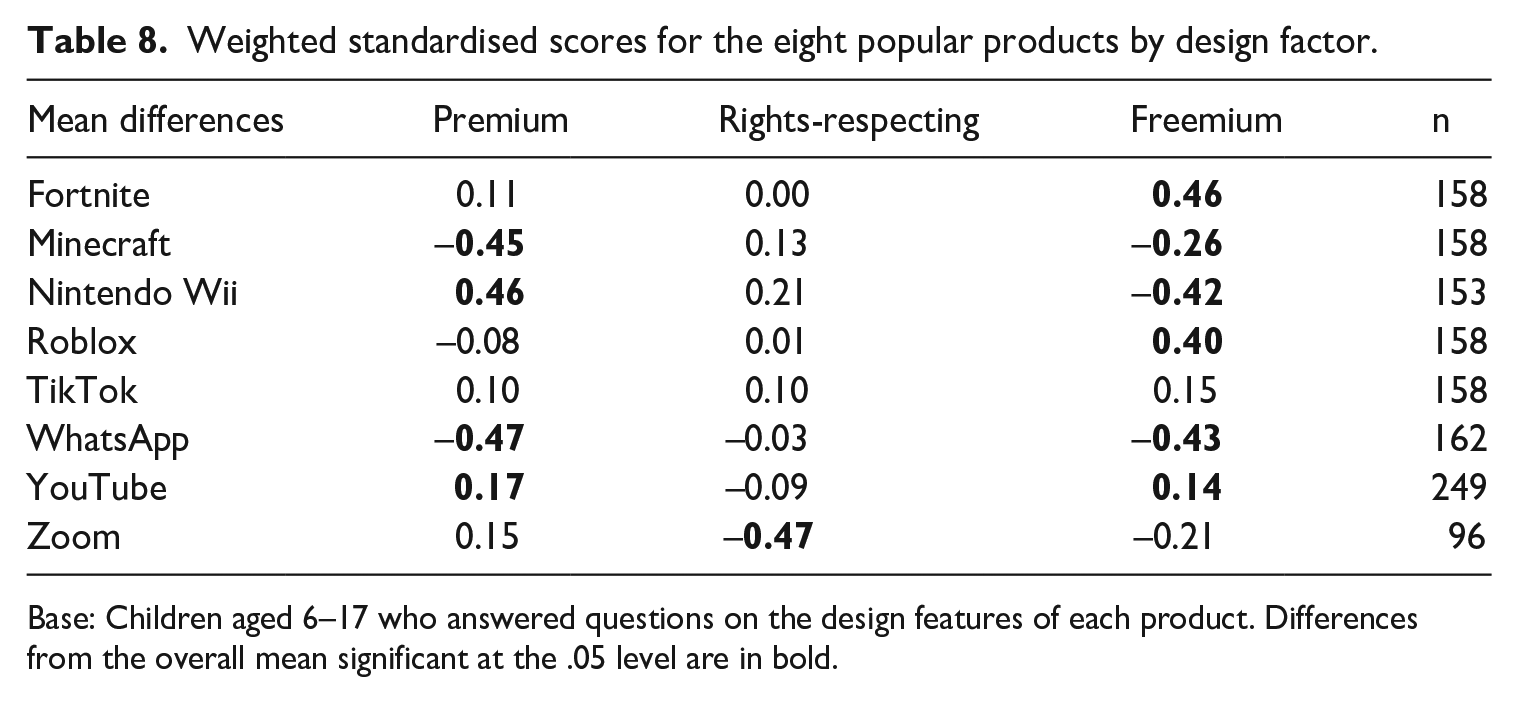
Base: Children aged 6–17 who answered questions on the design features of each product. Differences from the overall mean significant at the .05 level are in bold.
Fortnite and Roblox stand out for freemium design which, as shown in Tables 6 and 7, moderately supports agentic play but undermines safe play and contributes little to children’s enjoyment of play. Minecraft’s design features are experienced as the opposite of both premium and freemium, although not strongly rights-respecting; this suggests a game that enables safe play though not as agentic as prior research on Minecraft suggests (Colvert, 2021). Nintendo Wii appears to have premium but not freemium design features, potentially enabling some agentic and even risk-taking experiences; here, risk-taking may be linked more to physical than social interactions. TikTok appears ill-described by the three design factors identified in this research; possibly because children do not have strong feelings about TikTok’s features or, more likely, because their experiences are polarised as regards agentic and safe play (Livingstone and Pothong, 2022). WhatsApp’s design features are experienced as the opposite of those defined as premium and freemium and so may contribute to safe but not notably agentic play. YouTube affords a measure of both premium and freemium features, making it good for agentic play but not for safety, as children experience it. Finally, Zoom is seen as the opposite of rights-respecting, so seems unlikely to contribute to children’s enjoyment of play.
In painting this overall picture of the products, we focus on those differences that are statistically significant (p < 0.05), though note that the effect sizes are between small and medium (Cohen’s (1988) d; Sawilowsky, 2009). It is notable that, although rights-respecting features predict children’s enjoyment of their digital play, none of the products included in this research exemplifies ‘what good looks like’ by being highly rated on rights-respecting features. Recalling that rights-respecting features include intergenerational, age-appropriate, privacy, contact, and onboarding, it is worth noting from Table 2 that the means are around 3, meaning that children ‘agree a bit’ that these features are present in the products they use.
Discussion
Responding to the mounting critiques of children’s digital play opportunities, this article has taken a child rights approach, using criteria drawn from the diverse history of free play. The idea was not to argue that free play cannot survive in the more structured digital environment, nor to deny that digital play may offer new forms of play that have little precedent in a pre-digital world. Instead, recognising children’s ability to find ways to play on their own terms in diverse circumstances, we ask whether the qualities of play long valued in childhood are also enjoyed online and to identify constructive design recommendations.
It may surprise those who fear children cannot tear themselves away from their screens that our national survey found that they are more likely to enjoy play in non-digital (in-person) contexts than digital contexts. These contexts are not equivalent, however. Factor analyses suggested that the qualities of play are similar across non-digital and digital contexts, but there are also differences in emphasis (RQ1). Specifically, although the same qualities of play describe agentic play in both contexts, in digital contexts ‘stimulating’ and ‘diverse’ are the main drivers of agentic play while in the non-digital contexts a sense of achievement followed by ‘social’ are the main drivers. In both contexts too, safe play links safety to intrinsic motivation and opposes safety to risk-taking, thereby capturing a key tension in children’s play. On one hand, children need to feel safe to act on their intrinsic motivation when playing freely, but on the other hand, the conditions that support this appear to impede the risk-taking that play theorists also argue is vital for developing resilience (Gill, 2021; Hammond et al., 2022; Lindon, 2011).
Other variables also shape play outcomes. Logistic regression models found that children in the middle of the age range were more likely to have a great time playing in both contexts. This may be because play contexts are most geared towards providing for ‘tweens’ and young teens. We might speculate that these children feel at home in both child-specific but also more generic spaces, unlike the younger group who may feel vulnerable in generic spaces, however popular, while for older teenagers it may be that play itself becomes problematic, being frowned on as childish.
Furthermore, those with higher subjective well-being were more likely to have a great time playing in either context. This has interesting implications for debates over screen time (Livingstone, 2021): if we reversed our treatment of well-being as a predictor of enjoying play, the findings would show higher well-being among those who enjoy digital play and, furthermore, that this correlation disappears when one takes into account the qualities of play. In other words, the quality of the experience, which in turn depends on the design of service, matters to well-being. This was confirmed in the regression analysis by the sizable contribution of these qualities—grouped as agentic play and safe play—to the enjoyment of children’s play.
In short, agentic and safety-related qualities of play, especially the former, help to explain children’s enjoyment of digital and non-digital play (RQ2), making it valuable to find ways to support these qualities. This could be achieved discursively, through ways of talking about children’s play in domestic and public contexts—including by referring to the qualities of play to counter the reductive but still dominant language of screen time and its emphasis on the quantity rather than quality of digital engagement, and thereby encouraging enabling over restrictive forms of parental mediation (Livingstone et al., 2017). It could also be achieved structurally, through policymaking that prioritises children’s agency and safety, ideally without constraining the risk-taking that the present findings suggest can facilitate agency, and crucially through ‘by design’ approaches to product development. Pursuing the implications of the present research for the design of digital products and services used by children, RQ3 asked which design features enhance or undermine the qualities and enjoyment of play.
It is encouraging that analysis of the survey data found that what we have termed rights-respecting design contributes significantly to their enjoyment of digital play—more than the design factors we labelled premium and freemium. Rights-respecting design included features that enable intergenerational and age-appropriate play, privacy, safe contact and easy onboarding; in one way or another, all can be seen not only to enhance children’s play but also to serve their participation, evolving capacity, and best interests, to use the language of children’s rights (Lievens et al., 2019). The findings also showed that rights-respecting design features support agentic play while being only marginally correlated with safety. This suggests they may offer sufficient safety for children still to take risks (by contrast with the other design factors which tilt towards either safety or risk-taking).
Although the other design factors did not contribute to play enjoyment in the logistical regression models, they are significantly correlated with play enjoyment in ways worthy of note (see Table 6). Interestingly, the factor analysis distinguished premium features, which bring exciting possibilities for hybrid or transmedia play, albeit combined with compulsive and exclusionary features, from the freemium features that, on one hand, pose risks through the (at times hateful) communications and marketing they bring to children’s play contexts yet, on the other hand, support creative play. The complex mix of features that characterise premium and freemium designs, both in different ways supporting agentic play and risk-taking, but undermining safety, reflects perpetual design tensions that require careful balancing acts to ensure children’s best interests.
It is striking that none of the products afford rights-respecting features or features supporting safe play without some compromise as regards enjoyment. It is also noteworthy that neither premium nor freemium designs, which characterise a range of popular products on the market, are strongly associated with children’s overall enjoyment of play, with neither predicting enjoyment in the regression model where other factors are controlled for. This suggests that, in addition to the ethical or child rights case for change, there may also be a business incentive for designing digital play alternatives. The present findings suggest that although digital products with premium and freemium features like Fortnite and Roblox are popular, businesses that prioritise these features are missing the opportunity to build sustainable relationships with their customers by providing rights-respecting features that ensure satisfying experiences without undermining qualities of digital play that children value. For example, in the future, can digital play be designed that allow children to benefit from premium products without the expense of these products excluding some children? Might providers mitigate hateful communication in freemium products (for example, by providing pre-made messages to facilitate considerate exchanges)? How will they respond to the mounting calls to ban loot boxes and dark patterns from gaming environments and the growing recognition of (and compliance costs associated with) digital providers’ safety responsibilities (5Rights Foundation, 2021; Macey and Hamari, 2018; Zendle and Bowden-Jones, 2019).
The research has some limitations which we acknowledge here. It was particularly challenging to ask children in a questionnaire about the features of the digital environment, as this is not an everyday discourse for children. There being little prior research that asks children about the range of product features that could either support or undermine their needs and rights, our questionnaire items were newly developed. Moreover, in the consultation, we learned that children find it easier to discuss the features of particular products than to discuss features in general. This, in part, informed our decision to focus the questionnaire on particular products, albeit grounded in the research literature. However, this meant limited sample sizes answering about each product, and the mean results should be interpreted in relation to the products included. Notwithstanding these limitations, it is important to include even young children in research where possible, rather than relying on parents to act as proxy respondents for their children.
Conclusion
All play occurs in contexts partly structured by adults to serve their own interests and/or those that adults perceive to be children’s interests. However, in digital contexts, children’s participation is not always anticipated or welcomed by those adults, whether other players or the organisations that own, design, or govern digital products and services. Furthermore, when children’s participation is valued, it may be because it can be harnessed to serve adult-led purposes rather than those determined by children for themselves. This article has set out an evidence-based approach to specifying the design requirements to expand children’s opportunities to play freely in digital contexts in ways that respect, protect, and fulfil their rights holistically. The analysis and findings provide a sound basis for a ‘playful by design’ approach to contribute to a multistakeholder effort to reimagine digital contexts where children can thrive. Playful by design extends the range of ‘by design’ approaches that are proving promising in relation to children’s rights in the digital environment (see, for example, Livingstone and Pothong, 2023; Chelvachandran and Michael, 2022; D4CR Association, 2021; Designed with Kids in Mind, 2023; Lenhart and Owens, 2021).
We believe that the language of the qualities of play and the design features that enable or constrain them can, in addition, prove useful to parents and carers, for whom constructive conversations with children about digital play are often advocated by researchers and policymakers. We suggest, further, that both the language of qualities and features, and the empirical findings of how the former are enabled or constrained by the latter, offer a clear steer for policymakers: it is insufficient to judge digital play as if it always fails to match up to non-digital play, and it is equally insufficient to address the risks of digital play without recognising and promoting the benefits, including through design solutions. Both problems can be surmounted by a child rights approach to digital play that inspires designers and developers of digital products and services used by children. To that end, it is particularly encouraging that, while products that may compromise children’s rights are popular—Fortnite, Roblox, and TikTok currently being prominent instances—rights-respecting design features were found to support the enjoyment and quality of children’s play in digital contexts. Future research and product development could valuably explore ways to enhance these features in practice by involving children as design partners (Druin, 1999) through consultation and co-design processes.
Footnotes
Authors’ note
All authors have agreed to the submission and that the article is not currently being considered for publication by any other print or electronic journal.
Funding
The author(s) disclosed receipt of the following financial support for the research, authorship, and/or publication of this article: This work is part of the Digital Futures Commission, funded by the 5Rights Foundation and London School of Economics and Political Science, with initial funding from the LEGO Group.
