



Abstract
This article examines the experience of microworkers living in the United Kingdom. Based on a survey of 1189 microworkers and 17 in-depth interviews, the article explores the experiences of UK-based microworkers on three digital platforms: Prolific, Clickworker and Amazon Mechanical Turk. The article draws on the theoretical framework of self-determination theory to analyse workers’ motivations for performing microwork. It reveals that workers’ relatively high satisfaction with otherwise low-paying and low-status work was possible because workers conceptualised their activity as occupying an ambiguous space and time in their lives, blurring traditional distinctions between work and leisure. These findings contribute to our understanding of how microworkers experience their relationship to work in the United Kingdom.
Keywords
Introduction
Microwork or ‘crowdwork’ has received increasing attention in academic scholarship as a growing aspect of the employment landscape in the digital era (Howcroft and Bergvall-Kåreborn, 2018; Irani, 2015; Panteli et al., 2020). Microwork consists of small, fragmented tasks assigned by requesters that range from data categorisation to identifying objects in pictures and filling out surveys (Berg et al., 2018; Lehdonvirta, 2016). Platforms charge requesters to host these tasks and allow microworkers to perform them remotely through the platform’s digital interface.
Microwork’s crowdsourcing of human labour has become central, within less than two decades, to the operations of many large corporations and start-ups alike (Irani, 2015), but given the low compensation rates and extremely contingent character of such work, the question of why people take up microwork poses an interesting puzzle. This is especially curious in the Global North, where, in general, wages and incomes tend to be higher than in the Global South and more stable employment is more available, albeit decreasingly so. This article thus explores the motivations of microworkers in the United Kingdom for performing this growing form of work. Our analysis is grounded in interview and survey research with UK microworkers, and we emphasise the pivotal role that workers’ striking conception of microwork as something other than ‘real work’ plays in prompting them to do such labour. We also locate counter-intuitive motivational drivers of microwork in some unanticipated experiential benefits that this activity provides by helping individuals gain a sense of autonomy, competence and relational connections through work.
In conceptualising these experiential benefits from microwork, we rely on the theoretical framework of self-determination theory (SDT), which offers an instructive interpretive framework and has informed previous studies of worker motivation (Deci and Ryan, 2000; 2004). Transformations of work through the rise of the gig economy and platform-mediated work raise new challenges for how to understand people’s motivations for undertaking jobs with more open and flexible employment relationships, given that this indeterminacy could be experienced as beneficial or as unwelcome insecurity (Jabagi et al., 2019). Previous research that has applied SDT to the gig economy has emphasised the central role that platform design and algorithms play in shaping workers’ motivations to work (Jabagi et al., 2019; Rockmann and Ballinger, 2017). The focus has been on how the platform and its algorithms could be designed differently to increase worker motivation in a manner which improves platform efficiency and worker well-being, such that work provides sufficient ‘extrinsic’ (related to wages and working conditions) and ‘intrinsic’ (need fulfilment) rewards. We comment on apparent distinctions among microworkers regarding their platform-related experiences and preferences, given the significance of platform designs for workers’ experiences. Yet the power of digital technologies to shape work and workers’ responses can be over-emphasised (Woodcock, 2021). Workers’ motivations, and the experiences that drive them, also hinge on how they perceive the kind of work and whether they find satisfying ways to integrate it into their everyday lives. These latter considerations provide our main conceptual framework for answering our central research question: what intrinsic motivations explain UK-based microworkers’ avid performance of these jobs despite their scant extrinsic rewards?
This article further enhances existing research by examining microworkers based in the United Kingdom, partly because this further illuminates such workers’ motivations in a Global North context. Most studies of microwork have focussed on workers in the United States and India (Ipeirotis, 2010; Irani, 2015; Newlands and Lutz, 2021) or have been international in scope. A major International Labour Organization (ILO) analysis of microwork, for example, adopted a global perspective, encompassing 51 countries including the United Kingdom (Berg et al., 2018). This study is valuable for its vast geographical reach but does not explore microworkers’ motivations thoroughly enough to enable generalisations about people’s reasons for doing microwork in different geographic regions. A notable survey comparing US and Indian microworkers’ demographics, work habits and motivations offers preliminary indication of a stronger propensity in the United States to seek ‘fun’ or ‘kill time’ through microwork rather than doing microwork as one’s ‘primary source of income’ (Ipeirotis, 2010). This suggests the fruitfulness of probing such motivations more deeply, in a more theoretically developed fashion, and in another Global North country that can provide at least one initial comparative reference point to the United States.
Focussing on the United Kingdom also enriches knowledge and can orient further enquiries about microworkers’ motivations because UK microworkers tend to work on platforms other than Amazon Mechanical Turk (MTurk), which is the largest and most well-known microwork platform (Ipeirotis, 2010). In addition to the US-based MTurk, we also studied workers from two other platforms: Clickworker and Prolific. Clickworker was founded in Germany and is used extensively by European, American, and British workers (Berg et al., 2018). Prolific is based in the United Kingdom and has a unique model of explicitly seeking to offer fair remuneration to its workers, requiring a minimum fee from requesters, and specialising in hosting survey instruments rather than more general online tasks (Berg et al., 2018). Given that UK-based microworkers work on these various platforms, a UK-focussed analysis offers an initial heuristic basis for exploring whether a platform company’s special efforts to foster worker satisfaction through extrinsic and intrinsic pathways alike, such as Prolific’s endeavours, might make a difference in workers’ motivations.
In our research, a majority of survey respondents reported being satisfied or highly satisfied with their work on these platforms despite earning well below the UK minimum wage, but more in-depth probing of individuals’ experiences through interviews revealed substantial ambivalence about the satisfactions that SDT theory highlights as catalysing workers’ motivations. Interview participants spoke plausibly of gaining fulfilment from microwork across all three SDT dimensions: autonomy, competence and relatedness to others. Yet they also pointed to frequent experiences of microwork that undermined each of these satisfactions. We attribute this pronounced equivocation to another motivational factor not included in previous SDT analysis but potentially enriching this theory: we show that workers’ relatively high satisfaction with microwork despite its low pay, low status and ambivalent SDT satisfactions was possible, in part, because workers conceptualised their activity as occupying an ambiguous space and time in their lives that was neither ‘work’ nor ‘non-work’. Microwork blurred traditional distinctions between work and leisure and offered stress relief or a way to pass time pleasurably. Not only did interviewees speak of microwork as merely providing extra income for entertainment rather than contributing to necessary household expenses – they also experienced the work as either enjoyable in itself or a welcome distraction from more burdensome responsibilities, but in any case not as ‘real work’. Advocates for policies that have been proposed to improve microworkers’ pay and working conditions should take note of these findings. To the degree that microwork’s experienced status as not-quite ‘real work’ drives workers’ motivations, the political challenge is not only to institute new workers’ rights but also to educate microworkers that they should expect protection of their rights and interests as workers.
Literature review
Microwork and cross-platform analysis
Microwork changes the nature of the standard employment relationship and creates new types of economic arrangements between platforms, workers and requesters (Meijerink and Keegan, 2019). Proponents of microwork have often promoted it as a vehicle for economic development for communities in the Global South, particularly for workers unable to access traditional employment opportunities (Gino and Staats, 2012; Onkokame et al., 2018). However, such new job prospects may come with disadvantages and certainly may not be as ‘empowering’ as their supporters claim. Both the platform and requesters have significant power-advantages relative to microworkers. For example, on MTurk, requesters can use databases of their own or provided by Amazon to select workers according to certain parameters whereas workers have no comparable selection mechanisms (Bucher et al., 2021; Irani, 2015). The managerial system of digital platforms such as MTurk has been described as a new form of ‘digital Taylorism’, suggesting an intensification of the work process and new forms of labour control organised via the platform (Howcroft and Bergvall-Kåreborn, 2018).
Microwork tends to be characterised by low wages and relatively poor working conditions, especially in terms of safeguards for workers’ rights and interests. Wood et al. (2018) have argued that because the microwork-force is so flexible, platforms are economically incentivised to serve the interests of requesters rather than workers. As with job-related platforms more broadly, such as Uber or Deliveroo, the companies that manage microwork platforms generally conceptualise them as intermediaries that connect workers and requesters without employing any of the workers or providing them with legal protections (Howcroft and Bergvall-Kåreborn, 2018; Woodcock, 2021). Nor do platforms offer much in the way of social or career support to workers who frequently experience isolation on the platform and tend to have limited abilities to further their skills and careers (Rivera and Lee, 2021; Wood et al., 2018).
Nevertheless, microwork platforms can vary in their organisation, the types of jobs they offer, and the processes through which workers engage the system. Research on how microworkers differ by platform in their demographics and work habits exists but is fairly limited, and this has motivated our interest in studying microwork on multiple platforms. One of the most prominent studies to have disaggregated data between workers on different platforms was an ILO study which surveyed workers on five different platforms, including the three under examination in this study, in two rounds of surveys in 2015 and 2017 (Berg et al., 2018). This study revealed large regional differences in the characteristics of workers on different platforms, with most MTurk workers based in North America and Asia while most Clickworkers were based in Europe and Central Asia. Prolific workers were based predominantly in the United Kingdom and North America. The study also found that men made up the majority of microworkers on all platforms, but this gender imbalance was larger on MTurk than it was on Prolific or Clickworker. Workers on MTurk were far more likely to understand microwork as their primary source of income (30–40%) than on the other two platforms (less than 10%) (Berg et al., 2018: 41). Lehdonvirta (2018) has also analysed the constraints workers face on three different online labour platforms (MTurk, MobileWorks and CloudFactory) when attempting to exercise greater flexibility in their work. This study found that although workers overall had a high degree of temporal flexibility in how to schedule their work, their autonomy was limited in practice based on how much competition they were exposed to and how structurally constrained their scheduling decisions were. Both competition and structural scheduling constraints varied significantly between platforms. Thus, there are basic grounds for reasoning that new research on microwork such as the present study will benefit from including microworkers on multiple platforms.
SDT and gig workers’ motivations
SDT emphasises that worker motivation can be understood within two primary categories: intrinsic and extrinsic (Deci and Ryan, 2000; 2004). Intrinsic motivations involve workers finding internal reasons to perform their job. The theory divides these into three core psychological needs that require fulfilment at least to some meaningful degree through work: the needs for autonomy, competence, and relatedness to others (Deci and Ryan, 2000). Autonomy concerns an individual’s need to feel a sense of freedom and control over their work activities. Competence refers to a need to feel skilled and acknowledged in fulfilling a socially useful role. The need for relatedness is satisfied when one feels a sense of social connection and belonging through performing one’s job. Extrinsic motivations, in turn, pertain to incentives and job-quality factors such as pay, working conditions and benefits. Intrinsic and extrinsic motivations need not be seen as mutually exclusive: individuals can be motivated to work simultaneously from both sources (Gagné and Deci, 2005).
Research examining job quality within the gig economy has focussed on extrinsic motivations to distinguish between good work and bad work. A number of authors have found that although workers have high levels of flexibility and task variety, they suffer low pay, social isolation and overwork (Kalleberg and Dunn, 2016; Veen et al., 2020; Wood et al., 2018). Yet when a worker is intrinsically motivated, they will do a job for its own sake and because it brings them satisfaction rather than (only) for an extrinsic reward or to avoid punishment (Gagné and Deci, 2005). To be sure, working conditions can greatly affect such intrinsic motivations. For instance, Jabagi et al. (2019) have examined how the design of digital architecture can contribute to lower or higher levels of intrinsic motivation for gig workers. They show that digital labour platforms mediating virtual professional services are characterised by high levels of surveillance which, from a worker’s perspective, can threaten their need for autonomy and control. In addition, Rockmann and Ballinger (2017) found that highly skilled online freelancers were motivated by the social interaction with their clients and the recognition that this type of work provided an acknowledgement of their expertise and experience. Thus, workers’ intrinsic motivations are complex and require investigation, both in their own right and in relation to extrinsic factors. This is especially so with microworkers, who lack connections with clients yet are still subject to a system of monitoring, and who tend to perform repetitive, low-skill tasks while sometimes doing more intellectually demanding work. As a result, our study seeks to understand these workers’ internal motivations in the context of their work experiences.
Methods
The research design for this article consists of a comparative case study of three platforms based on two kinds of data: first, a survey of 1189 UK-based microworkers undertaken on three major microwork platforms used by UK microworkers: Prolific (N = 510), Clickworker (N = 505) and MTurk (N = 174); and second, 17 in-depth interviews with UK-based microworkers from two of these three platforms (Prolific (N = 5) and Clickworker (N = 12). Workers from MTurk could not be interviewed because workers are not allowed to provide their email address when completing a task.
These platforms were selected because they are three of the most prominent microwork platforms for workers in the United Kingdom. The MTurk platform is a crowdsourcing marketplace for short tasks which was founded in the United States in 2005. We selected MTurk because it is one of the largest and most well-known platforms globally, even though there are fewer workers on this platform based in the United Kingdom. Also, many earlier studies of microwork platforms are based on MTurk, so including this platform helps us speak to previous findings. The range of tasks offered on MTurk is quite large and unlike some of the smaller platforms, it does not specialise in a particular subdomain of microwork. The ILO note that tasks on the platform could be divided into six categories: ‘cleaning the data, including algorithm training, categorization, tagging, sentiment analysis, creating and moderating content, and business feedback, which includes product or app testing’ (Berg et al., 2018: 15).
Clickworker (2023) is another large platform that advertises it offers a ‘diverse and broad selection of crowdsourcing solutions’ that is comparable to MTurk. Clickworker is one of the most popular platforms for UK-based workers. It offers a variety of microtasks including training AI systems, categorising and tagging data, completing surveys and performing web research. Clickworker respondents are mainly located in Europe, with research indicating that 10% are from the United Kingdom (Berg et al., 2018: 32).
Of the three platforms we studied, it was Prolific that was relatively unique insofar as it specialises in helping researchers secure participants for surveys and enforces a minimum payment for participants. The types of tasks offered on the platform tended to concentrate much more narrowly on academic and consumer surveys rather than more general data annotation and categorisation tasks. It also promoted its services as an ethical alternative in the industry and referred to survey respondents not as ‘workers’ but as ‘participants’ who receive ‘rewards’ (not ‘wages’) for taking surveys. Prolific is based in the United Kingdom and previous research suggests that 47% of its workers live in the United Kingdom (Berg et al., 2018: 32).
Our survey was designed on Qualtrics and was posted as a task on each of the three platforms in January 2022. Workers spent a median time of 3 minutes and 33 seconds and were paid an average of £8.53/hour to complete the survey. On each of the platforms, criteria were selected so that only respondents based in the United Kingdom could complete the survey. The survey elicited information on the individual’s basic demographic characteristics, remuneration from microwork and other income sources, overall satisfaction with microwork, and general motivations for undertaking microwork. A complete list of the survey questions is provided in a Supplemental Appendix. There were fewer returned surveys (175) on MTurk than the other two platforms because there are relatively fewer UK-based workers in MTurk’s global pool.
Interview respondents were contacted by including a question in the survey asking if participants would like to take part in a follow-up interview. The sample of participants for the interviews reflected the heterogeneity of the general population of microworkers by including participants of different genders, varying ages, and diverse regions of the United Kingdom. The interviews were all conducted online via Zoom and were between 60 and 90 minutes in length. Interviewees received a £25 supermarket gift voucher as compensation for taking part in the research.
Our interviews employed a semi-structured format geared towards encouraging participants to share their experiences at length and exert some agency in guiding the direction of the conversation. We asked participants why they had begun doing microwork, how they felt about the compensation they received as microworkers, and their experiences with unpaid time spent searching for or performing microwork. Issues of time, work and personal life also featured in the interviews: we asked which hours of the day the participant usually did microwork, how the individual’s caring responsibilities interacted with microwork, and what the participant thought about microwork and gender roles. Our interview protocol can also be found in a Supplemental Appendix to this article.
Analysis of data
The interviews were all recorded on Zoom after obtaining consent, then transcribed and analysed. Participants were anonymised, with all identifying information removed from the transcription. Interview transcripts were then coded to identify the most prominent themes with regard to our research questions, following a standard method of inductive thematic analysis (Given, 2008; Silverman, 2010). Researchers first reviewed transcripts individually and produced reports on them. We then sought to identify consistent topics that re-emerged in multiple interviews and highlight key words and phrases that participants used repeatedly. When initially coding the interviews, researchers paid attention to reiterated words or phrases, concrete objects or situations that participants would return to and practical dilemmas that participants faced. We connected concrete situations mentioned by participants to general themes that arose across multiple interviews. Because all interviews are anonymised, when quoting particular interviewees in this article we refer to them as ‘Participant 1’, ‘Participant 2’ and so on.
Our survey data supply useful descriptive information about the demographic characteristics, platform preferences and general attitudes towards performing microwork of the participants in our sample. These data also allow us to generalise about the characteristics of the UK microworker population as a whole. The survey data thus define the context for our focal analysis of workers’ motivations through the interviews even though analysing our quantitative data systematically lies beyond the scope of this enquiry.
Results
Characteristics of microworkers in our sample
In terms of basic demographics, our survey respondent population included a majority (55%) of women and involved workers across all age ranges although with a tilt towards more youthful cohorts. Women especially predominated (63%) among those who preferred Prolific over the other platforms, although respondents using Clickworker also were majority female (53%) (Figure 1). Prolific displayed the broadest and most even distribution of ages, with comparable concentrations of workers 18–24 years and older than 45 years (Figure 2). By contrast, MTurk workers tended to be younger as well as more heavily male.
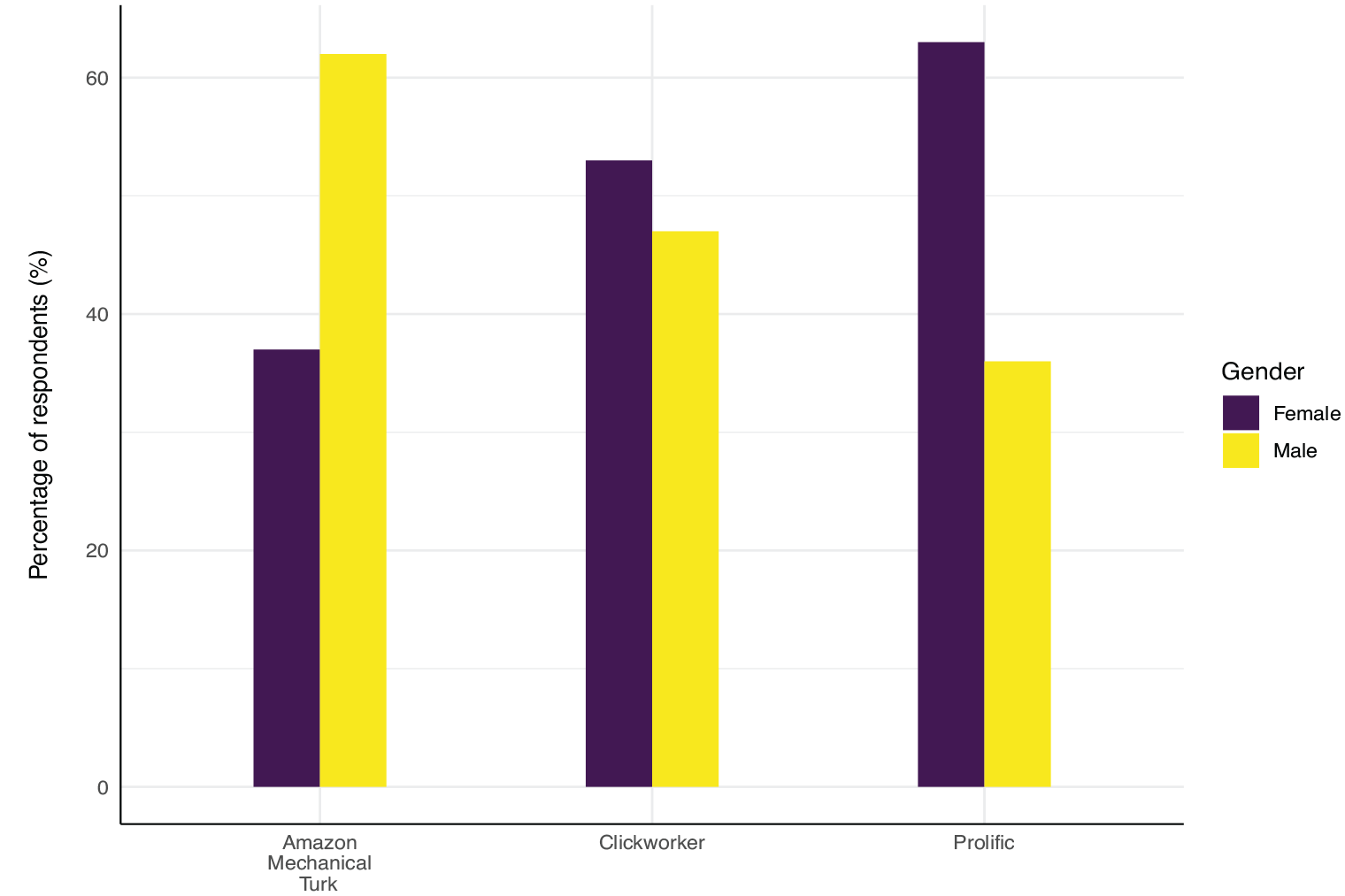
What is your gender?
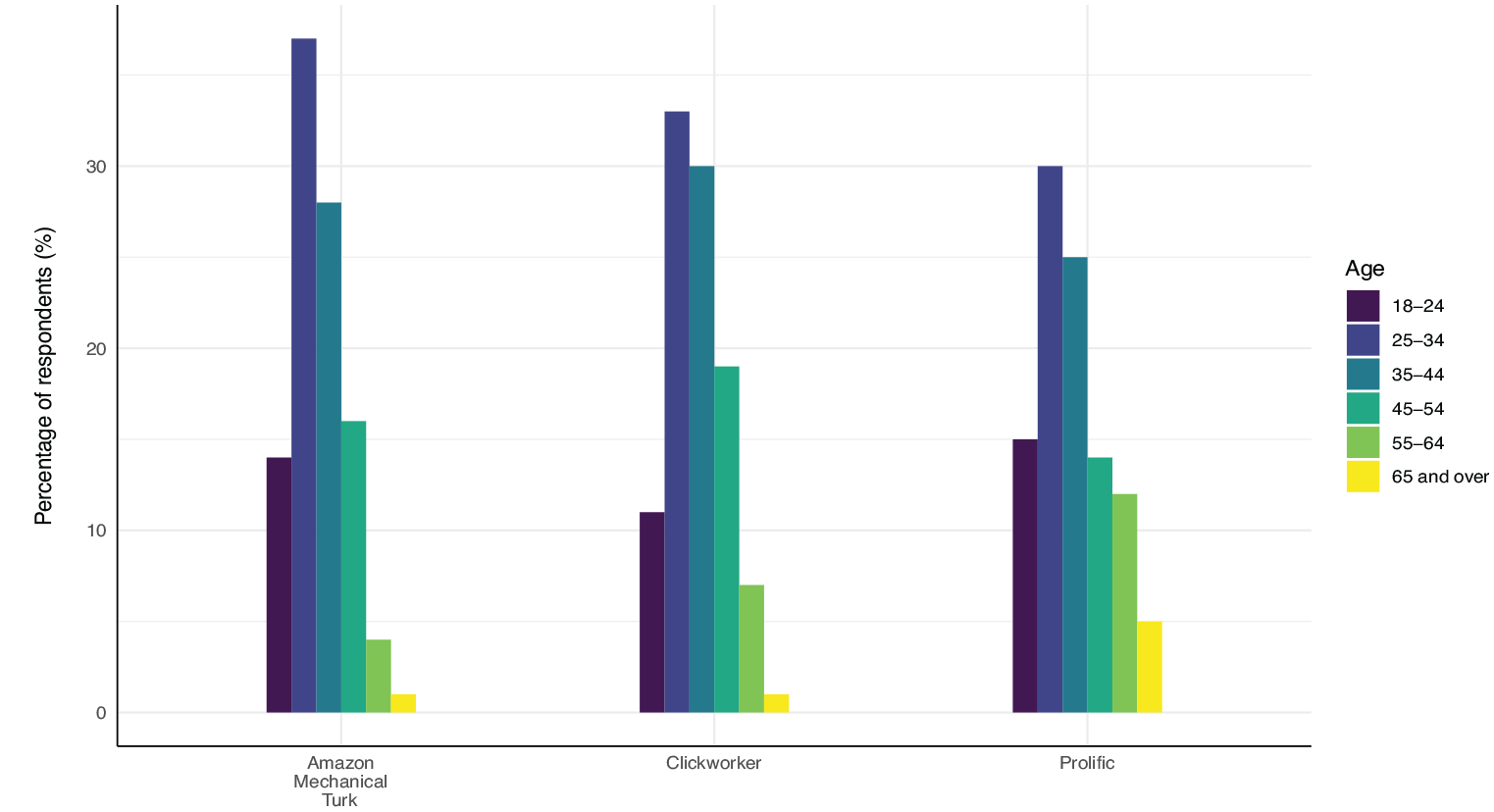
What is your age?
Our survey also showed that UK microwork wages are exceedingly low and that individuals tend not to be extensively engaged in these work activities despite the economic impact of the collective micro-workforce. A striking finding was that of those surveyed, 95% earned below the UK minimum wage and almost two-thirds reported earning less than £4 per hour. Extremely low wage-earning (under £2 per hour) was most prevalent among MTurk workers (50%) but even with Prolific’s policy that requesters should offer the minimum wage, 37% of Prolific workers earned less than £2 per hour, as did 39% of persons using Clickworker (Figure 3). In addition, the great majority (90%) of respondents spent fewer than 10 hours per week engaged in microwork. 1 Workers thus earned very little money overall from these tasks: 60% of Prolific workers earned less than £10 per week from microwork, while the comparable figure was 40% for each of the other platforms (Figure 4). Correspondingly, three-fourths of our respondents earned less than 10% of their total income from microwork and only 13% relied on microwork as their primary source of income.
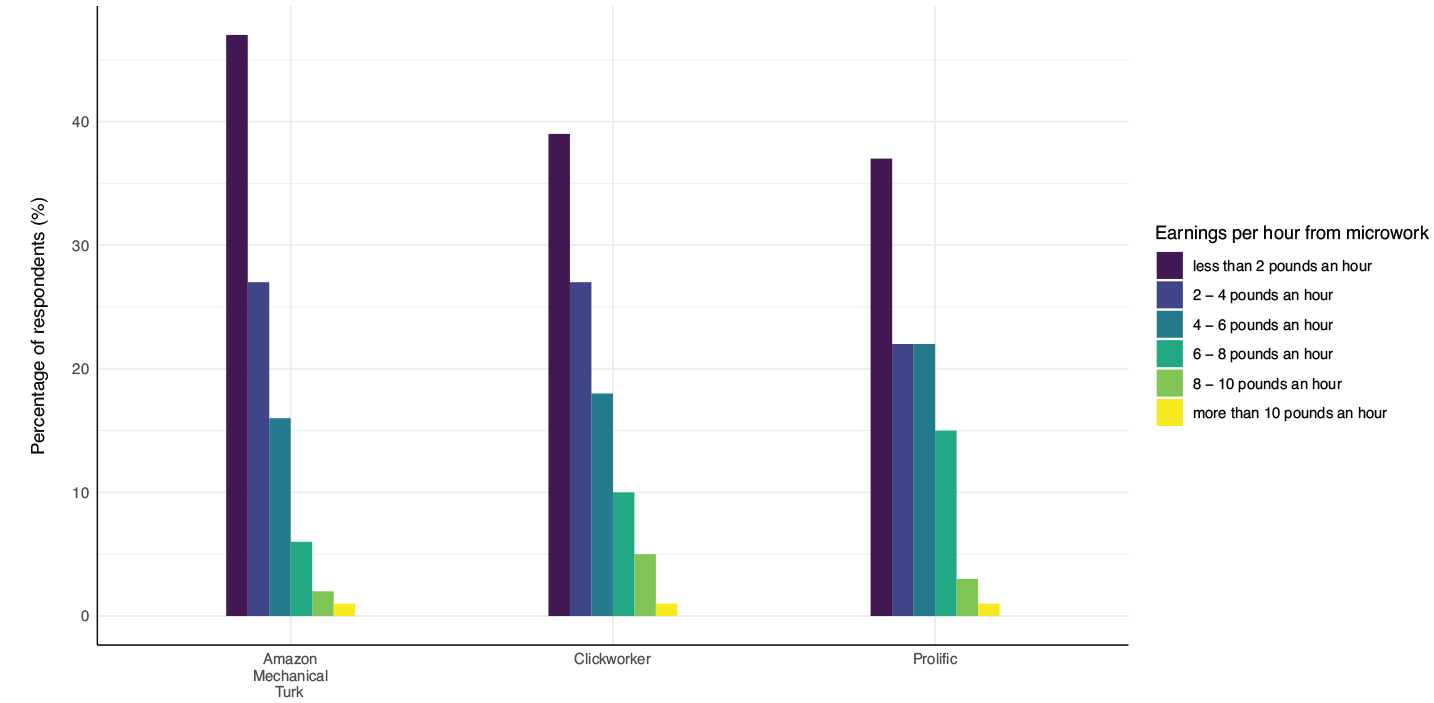
How much do you earn per hour from microwork?
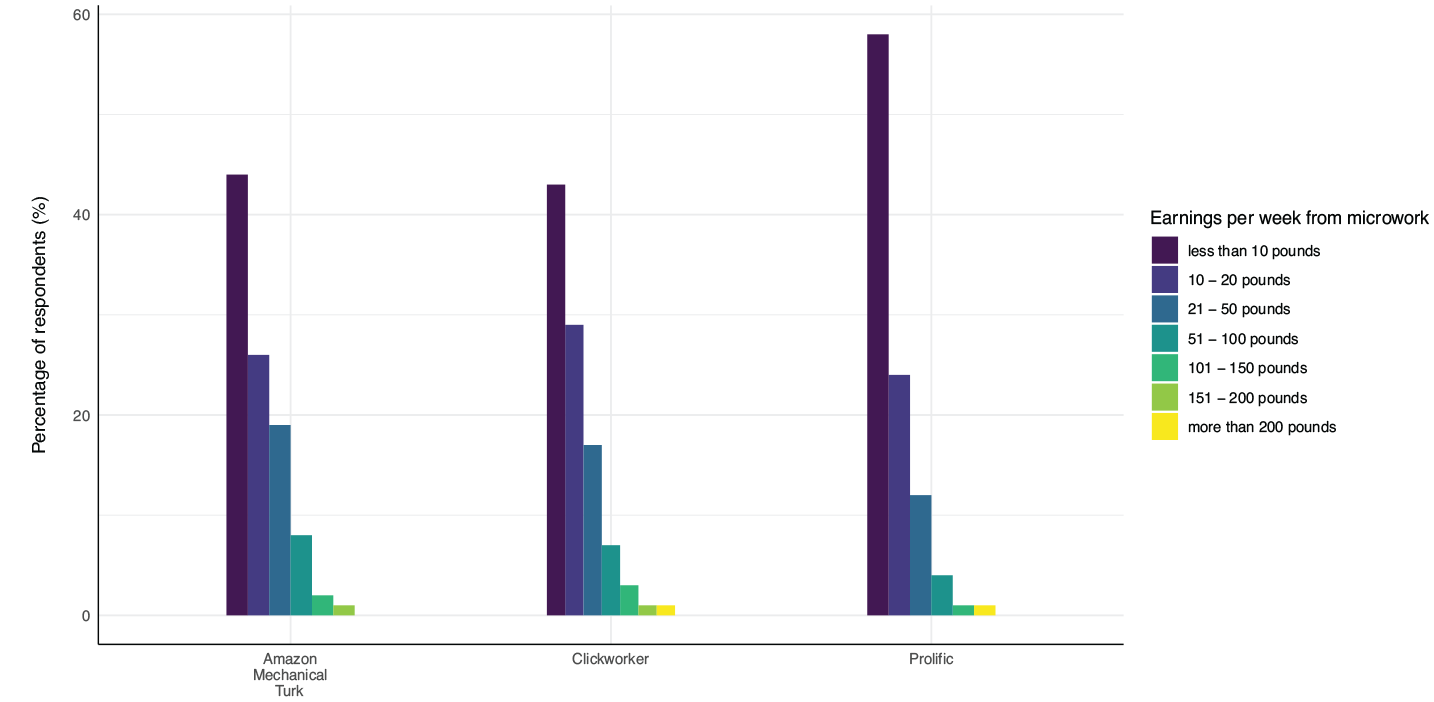
How much do you earn per week from microwork?
When discussing microwork, however, it is important not to equate time dedicated to work activities with wage-earning hours, as our survey further demonstrated. Respondents reported spending considerable unpaid time searching for microwork tasks, with nearly half of those surveyed devoting at least 20 minutes to such searches for every hour of paid microwork (Figure 5). Survey participants reported that the lack of sufficiently remunerative jobs led them to keep scrolling through the opportunities advertised, and roughly two-thirds said there were not enough well-paying jobs on their platform of choice. Again, however, Prolific and Clickworker were more comparable and offered somewhat better conditions than MTurk, whose workers spent significantly more unpaid time looking for microwork jobs.
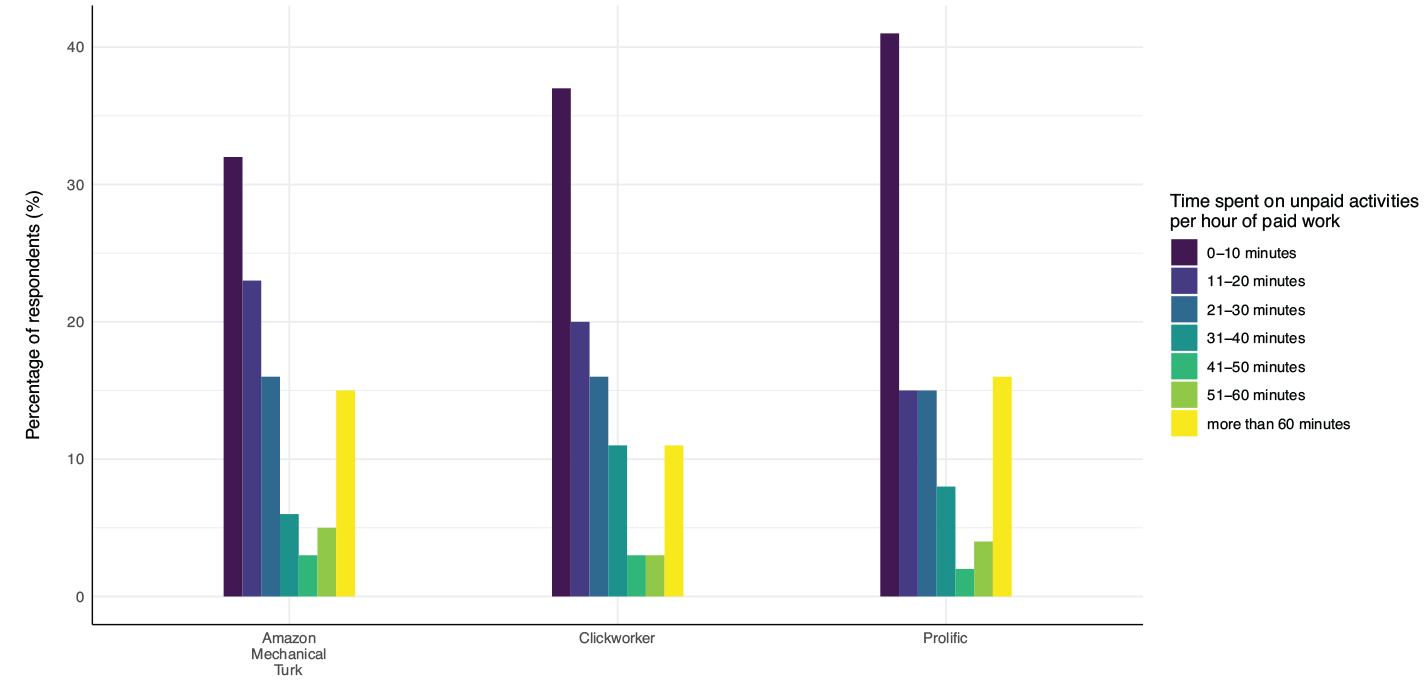
How long do you spend on unpaid activities for every hour of paid work on the platform?
Despite very low pay, few well-paying job opportunities, and long stretches of unpaid effort, most survey respondents were nonetheless quite content with work on the platforms. Fifty-nine per cent reported being satisfied or very satisfied with their microwork experiences, although these figures were lower among MTurk workers in comparison to those who preferred Prolific or Clickworker (Figure 6). By far, most respondents praised the flexible timing and locations for doing microwork as the aspects they liked best about it. When people were less able to take advantage of these features, as indicated by relying on microwork as the main source of income or by spending more weekly hours on it, satisfaction levels dipped.
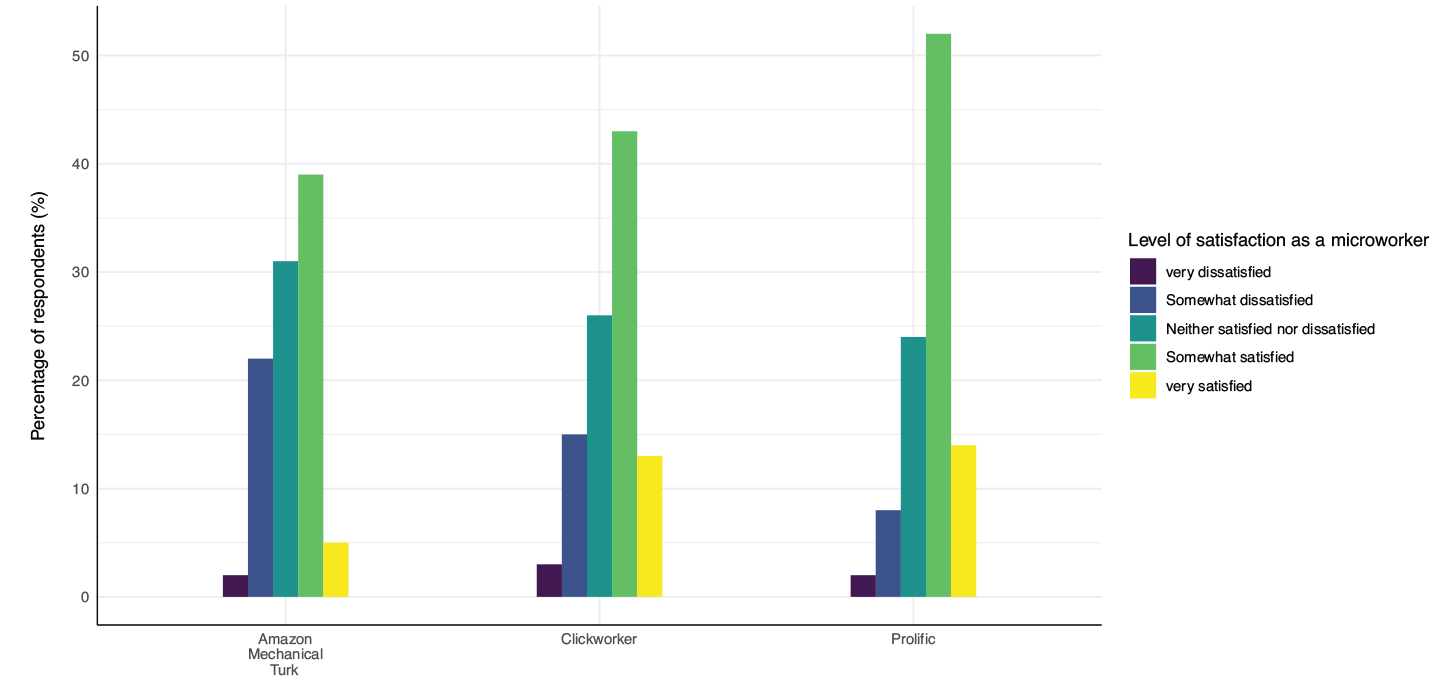
How satisfied are you with working as a microworker?
In sum, our survey results indicate that on the whole, UK microworkers are more likely to be relatively young, white, female, and well educated compared with the general population (Office for National Statistics, 2021); that they rarely rely on microwork as their main source of income and mostly do fewer than 10 hours of microwork per week; that their hourly wages and total weekly pay from microwork are quite low; and that they appreciate the temporal and spatial flexibility of microwork. Within these broad data, there are notable differences between the platforms. Clickworker and Prolific workers in the United Kingdom sacrifice less unpaid time than those on MTurk and are less likely than MTurk workers to earn extremely low wages through microwork. Prolific and Clickworker draw more UK women than men to microwork, the opposite of MTurk’s tendency. Workers on Prolific are the most satisfied with their microwork experiences although satisfaction is also high with Clickworker, while individuals who use MTurk express the least satisfaction albeit not distinct dissatisfaction.
With a fairly disengaged workforce that does not depend significantly on microwork for income, what motivates people to do microwork at all? What satisfactions does microwork offer that might explain the positive or at least unobjectionable experiences that predominate on the platforms analysed in this study? These questions stimulated our exploration of microworkers’ motivations through interviews. As noted, it was not possible to interview MTurk workers, but focussing on Clickworker and Prolific still lets us study workers who perform a wide range of tasks. The survey results also suggest two analytical advantages to focussing on Clickworker and Prolific. First, MTurk workers comprise a small minority of the UK micro-workforce, so, in terms of yielding an understanding of the UK micro-workforce, our interviews appropriately concentrate on the platforms that draw the most UK taskers. Second, given that experiences on Clickworker and Prolific tended to be more positive than on MTurk, where the interviews reveal negative factors that mitigate positive motivations even for workers on these platforms, such tensions would appear especially significant to analyse.
Intrinsic motivations of microworkers
In light of the limited extrinsic motivations for performing microwork, this study closely examines microwork’s ability to meet workers’ needs for autonomy, competence and relatedness to determine whether the satisfaction of these needs provides an intrinsic motivation for work (Deci and Ryan, 2000), based on our interview data.
Before proceeding with the portion of our analysis that SDT theory informs, however, we note two important findings. First, there were no noticeable differences between workers across the three platforms for their reasons for performing microwork, despite the patterns of platform-related differences in overall satisfaction, unpaid time and wage-earning that we found in the survey data. Second, a striking finding regarding workers’ motivations and experiences doing microwork mitigates the importance of all three factors emphasised by the SDT model: our interview data suggest that one key source of worker motivation was that many individuals did not conceive of microwork as a traditional form of work, or even as work at all. Instead, it occupied an ambivalent category between work and leisure, an activity that offered fun, relaxation, or diversion. Interviewees described microwork in a variety of ways, but the majority reported that they did not consider it ‘real’ work.
Some described microwork as a hobby or analogised it to online social networking, indicating that microwork was something pleasurable they could do in their free time as a leisure activity. Recall that many of these workers spent only a few hours on the platform per week. One interviewee suggested, ‘it’s not work. It’s like, picking up the phone and going on Facebook for me? Yeah. I just don’t consider it as work. It’s just a hobby’ (Participant 6).
Another interviewee claimed that she would sometimes interview her child on behalf of microwork surveys, which constituted ‘a game’ to them, highlighting the social and enjoyable nature of the activity to this person. Other workers discussed the hedonic component of the work itself, indicating that one of the reasons many of them performed the work was because they enjoyed it. One interviewee explained, ‘my viewpoint at the minute is just, it’s a bit of fun. You earn some cash on the side, it’s up to me when I do it, I can just dip in and out of it’ (Participant 1). The interesting and enjoyable nature of the work was a theme mentioned by many interviewees who sought to disassociate it from the monotony of repetitive and mundane tasks. Another interviewee wanted to emphasise how ‘the jobs can present themselves [as] an intellectual challenge at whatever level, you know, so they’re not all dumb jobs’ (Participant 2). Workers for whom payment was relatively unimportant, in particular, reported doing the work as a way to learn about new things. One interviewee who had a high paying job as an engineer undertook microwork not so much for the compensation but because it presented an opportunity to learn about unfamiliar aspects of the world:
I find it especially fascinating to hear other people’s points of views on products or services . . . I did one recently on the wearing of glasses and lenses and I learned quite a lot about how they branded [them] and the marketing side of things. And it just it was just an interesting process. So yeah, obviously, I do it for interest reasons, it’s really cool. (Participant 16)
Other workers were similarly interested in learning how corporations made decisions about products and the processes by which marketing departments incorporated consumer feedback into their strategy, and they indicated that microwork provided chances to learn such new things. Even participants more interested in monetary rewards referenced the hedonistic aspect of performing varied and interesting tasks as part of microwork’s appeal.
Not all interviewees described their work on platforms as enjoyable, but even those who found it tiresome still doubted whether microwork was ‘real’ work. One semi-retired participant did not see it as fun or as a leisure activity, but was uncertain how to describe it:
I’m not sure how much pleasure I gain from it. I certainly wouldn’t be doing it if I wasn’t getting paid for it, put it that way. But it is weird, like I said before, I don’t really think of it as a job either. (Participant 5)
The relatively stress-free nature of microwork compared with other jobs contributed to the common opinion that microwork was not genuinely ‘work’. Due to the low demands that many tasks placed on workers’ cognitive faculties, some saw it as a way to wind down from their stressful full-time jobs during non-working hours: ‘It’s actually quite a good stress reliever. . . . I can sort of log on, you know, there’s nothing on Netflix, nothing on YouTube . . . I’ll log on to the system, I’ll see what’s on there’ (Participant 7). Another interviewee suggested that microwork was perfect for her because ‘sometimes I’ll just be so frazzled at the end of the day. I just need about 10 minutes or so to turn off and just focus on something completely different without using my brain so much’ (Participant 2). Such statements were in tension with attitudes of workers who viewed microwork as a ‘hobby’ through which they gained mental stimulation. Yet whether respondents sought to distract or exercise their mind, scepticism about microwork’s status as actual ‘work’ was widely shared.
One factor that might have increased our interviewees’ likelihood of reporting this attitude towards microwork was the fact that all of our interviewees worked on Prolific and Clickworker. Our survey results indicated that while very few of our study participants earned their primary income from microwork (13%), this figure was even lower for workers on Prolific (9%) and Clickworker (11%). Prolific workers in particular had relatively low levels of reliance on the platform with 78% of workers reporting earning less than 10% of their total income from microwork and 94% of respondents stating they received less than £50 per week from their activities on the platform. In addition, only 5% of Prolific workers spent more than 10 hours per week on the platform. These factors highlight one reason why such workers might be more inclined to view microwork as a hobby or not real work. Another relevant consideration is that Prolific mainly provides work completing surveys, thus offering a kind of activity important to individuals who were motivated by intellectual interest in the tasks, while Clickworker likely appeals to those who experience microwork as a pleasurable or calming distraction.
The fact that microwork was not considered as ‘real work’ helps explain the lower expectations workers had when it came to wages and working conditions on the platforms. The apparent low quality of the job and the general lack of extrinsically motivating factors could be tolerated because workers either were not using the evaluative criteria they applied to other forms of work or attached less significance to such criteria. At the same time, workers also suggested that microwork did in fact fulfil many of the intrinsic motivating factors related to the SDT framework. While microworkers’ distinctive conceptualisation of microwork as a leisure activity or only ambiguously ‘work’ lowered the threshold for achieving sufficient motivation, participants also highlighted key factors leading to their satisfaction with microwork which the SDT model helps us understand.
Autonomy
The flexibility of the work in terms of location and working hours was one of the primary factors that motivated people to engage in microwork. Of our survey respondents, over half suggested they wanted to work outside a traditional office environment, nearly one-quarter expressed the need or desire to work at home, and one in three desired working at a time that was convenient for them. These reasons were similar across all three platforms and no noticeable differences emerged based on participants’ stated reasons for wanting to perform microwork. One interviewee suggested, ‘I enjoy doing it because it was quite easy to do and just pick up whenever, it suited me. There was no obligation for any regular work, it was like a habit for me to log on’ (Participant 13).
Interviewees enjoyed being able to engage in the work at any time of the day or night and to use it to fill up otherwise unproductive times in their lives. They often reported that microwork did not take away from other activities they engaged in but rather occupied ‘down time’ or ‘dead time’ that would have otherwise been wasted or filled with no significant activity:
in the evening I’ll quite often be at my computer, like planning lessons or sorting stuff out. And if I fancy a break, I’ll just click on the [microwork] website, see if there’s anything to do and then just do it. It’s like a little way of like doing something else and gives me a chance to reset a little bit. (Participant 1)
Another interviewee adopted a similar perspective:
I don’t think it’s me going out of my way to look for survey opportunities, I think it’s just dead time, which I would just be sitting scrolling on my phone or watching YouTube videos or something like that. So it’s about being more productive with the dead time. (Participant 12)
The ease with which microworkers could log on when they wanted and the fact that much microwork did not require their full attention meant that workers could often undertake such work at the same time as other activities. One interviewee stated they performed microwork on their commute to their main job, while another reported doing it in the midst of household tasks. Another interviewee said, ‘when you’re watching football, you can do two things at once’ (Participant 11).
Microworkers’ drive to fill empty time with ‘productive’ activity or make time doubly functional, however, also leads us to qualify the idea that microwork meets workers autonomy needs. One might have expected microworkers to associate autonomous control over work time with the freedom to undertake other meaningful activities apart from wage-earning. Instead, participants valued self-driven work-scheduling mainly in terms of enhancing personal productivity. This suggests an orientation towards work that conforms to currently dominant cultural ideas and a limited desire for autonomy in a broader sense. The desire to feel productive stems from powerful external sources including the media and political parties, especially in the present era when appeals to personal responsibility help legitimise reduced state social supports. When workers define autonomy in terms of productivity, this indicates that even as they fulfil autonomy needs via microwork, they also thereby relinquish significant autonomy over how they spend their time in everyday life.
Competence
According to the SDT framework, individuals who feel their activity is worthwhile and that they are performing it competently will have more intrinsic motivation to perform it (Deci and Ryan, 2000). This is sometimes difficult to achieve in online work because the structure of work provides fewer immediate sources of the positive feedback workers need to feel competent at their jobs (Rockmann and Ballinger, 2017). Despite these limited mechanisms for encouragement, many workers reported feeling intrinsically motivated because their tasks were interesting and they felt useful performing them. One participant stated that completing microwork tasks made her feel ‘productive’ and that her ‘opinion is useful to other people’ (Participant 3). Another respondent felt like she was contributing to a larger research project, which required her knowledge and experience:
I like the fact that I’m contributing to a piece of research because . . . I know how hard it is to try and get responses from people, particularly for the more complicated in-depth surveys. So knowing that I’m helping a research or I’m helping a team of people to create a piece of work, that’s a sense of satisfaction. (Participant 15)
As both this quotation and the preceding one illustrate, participants often cited more than one SDT factor, with Participant 15 referencing needs for both competence and relatedness. Similarly, Participant 3 experienced microwork as both affirming her competence and helping her feel ‘productive’, which we have identified as a prominent (albeit double-edged) aspect of meeting autonomy needs.
As with the factor of autonomy, microwork satisfied workers’ competence needs in genuine but equivocal ways. On the one hand, workers conveyed that microwork affirmed their competence when they underscored using critical reasoning to solve intellectual challenges that certain tasks posed. On the other hand, many respondents characterised their tasks as extremely repetitive and requiring little competence of any sort. Also, when workers became frustrated with the platform’s lack of transparency and accountability (such as when their work went unpaid), or when they felt that their efforts were not being properly rewarded monetarily, their comments depicted a work environment in which competence was either disregarded or disrespected.
In our interviews, many microworkers expressed annoyance at the amount of unpaid time they spent on the platform. In addition to time spent browsing the tasks, they also reported being ‘screened out’ of surveys and tasks after they had accepted these jobs, and sometimes even after beginning a job, because they did not fit one of the criteria of the survey despite having been offered the task by the platform. Partially completed tasks on the platform would remain unpaid by the requester. One interviewee expressed their concern with such issues in the following way:
My view is they should recompense you within the rate for the time that you’re spending, because, you know, that activity is contributing towards their final product. I think that that side of it can be quite destructive because people have a right to be paid for the time they’re spending preparing for these tasks. (Participant 7)
Workers also expressed irritation that when they encountered unfair treatment on the platform, it was difficult and time-consuming to contact a representative from the platform to discuss these issues: ‘And it’s just frustrating, you know, because you want to get in touch with someone to complain, and that’s going to take a lot of time’ (Participant 6). In short, a marked ambivalence characterised workers’ reflections on the degree and ways in which microwork satisfied their competence needs, just as participants’ comments about gaining autonomy through microwork exhibited self-conflicting features.
Relatedness
Many interview participants in our study expressed feeling a sense of connection with other workers through their work, although few of them were members of microworker social media groups. Instead, participants felt a more intangible sense of community, knowing that others were working on the platform and often performing similar tasks to them but in different or even faraway locations. One interviewee reported,
I think it makes me feel good, it makes me feel like I’m contributing towards something. . . . I also feel like I’m part of a big team . . . when you look at the tasks that you’re doing, it’s not lost on me that I think, oh, you know, someone across the country could be doing this as well. (Participant 2)
This was a common sentiment expressed by other interviewees, suggesting that there is something about the collective aspect of microwork that provides some workers with a sense of relatedness even in the absence of actual communication and feedback. Another interviewee suggested, ‘it feels very much like we’re symbiotic in the clickworker world . . . They need staff to fill [a contract]; we’re doing it. We’re grateful for the work; they’re grateful for us. . . . It feels like we’re all working together’ (Participant 16).
It was rare for interviewees to say they felt lonely doing the work or felt isolated from others, although as we have noted, most microworkers we interviewed had other forms of employment and only spent limited time on the platform. Thus, it is unlikely that microworkers who were seeking to fulfil desires for relatedness via work would have done so primarily through microwork. In addition, not all individuals desire to engage in such a search. One participant, for instance, stated: ‘being part of the community with other workers . . . does not have value to me . . . that’s not why I’m here’ (Participant 9). Still, it was more common to hear workers speak about identifying with others and feeling part of a broader community via their microwork activities.
Although we take seriously workers’ experiences of feeling connections to others through online tasking, these experiences must be considered somewhat precarious because microwork very rarely offers any concrete experience of collaborative work or even work alongside known colleagues. In addition, ‘working together’ occurs entirely on platform owners’ terms: the worker-manager relation is not one of egalitarian cooperation, as respondents’ references to ‘team’-based and ‘symbiotic’ work suggest. Insofar as microwork meets workers’ relatedness needs, it likely does so in thin and fragile ways.
Discussion
Exploring the interview material in view of the sample characteristics revealed by our survey, this study has highlighted the intrinsic and extrinsic motivations of microworkers in the United Kingdom. It has shown, first, that UK microworkers tended to approach this kind of work as an ambiguous activity that blurred traditional boundaries between work and leisure and that therefore offered satisfaction as a form of enjoyable, relaxing and/or stimulating non-work activity. Second, our research found that UK microworkers also see microwork as a way to fulfil the SDT-defined needs of feeling autonomous, competent and related to others positively in their work activities, although often in ways that were mitigated by unsatisfying experiences with respect to these needs. Interestingly, given the probable modest tendency for our participants to over-report microwork hours, for reasons discussed below, along with the limited weekly hours that most participants dedicated to microwork, our findings suggest that even low levels of engagement in microwork can still generate potent SDT-based motivations.
These findings speak to an important question regarding microworkers’ cultural understanding of the work they do as well as the origins of this conception and its broader social implications. Irani (2015) argues that microwork performs an important cultural function by enabling microworker employers to ‘imagine themselves as technologists and innovators engaged in non-hierarchical peer production’ (p. 721). The organisational infrastructure of microwork does this by making it possible to treat the human labour on which digital frontier-exploration depends merely as a technical apparatus that is readily available for visionary businesspeople to exploit. Our analysis complements Irani’s research by suggesting that UK workers reinforce this discursive tendency and its binary split between those who ‘innovate’ and those who do ‘menial’ work. By affirming the pleasures they take in microwork and even claiming membership in the ‘teams’ of innovators who are re-making the world’s techno-scape, microworkers further legitimise this work-domain and its skewed power-relations. In more concrete terms, however, microworkers’ perception of microwork as not ‘real’ work, along with their evident satisfaction with the way microwork erodes the distinction between work and leisure, also has important implications for the protection of workers’ rights and the struggle for a decent wage. If workers increasingly believe that certain types of work should not be valued in the same way as others or even treated as ‘work’ at all, then workers may have lower expectations for financial remuneration and rights at work. They may also expect less in terms of the quality of work experiences.
As we have shown, microworkers exemplify these attitudinal tendencies as well as the contradictions involved in seeking need-satisfaction in work experiences while maintaining this resigned outlook. They extract a sense of competence even as they see the platforms function in ways that express disregard for their individual aptitudes. They glean support for their needs for relatedness from activities that have a highly abstract aspect of collaboration. They rationalise unpaid time, low pay, inadequate grievance processes and companies’ harvesting of data as necessary and unavoidable features of the work. They take pleasure in the absence of an employer–employee relationship and feel that their autonomy makes traditional pathways of collective organising and bargaining inappropriate, yet they are frustrated with the scarce avenues to contest platform operations. They rarely consider that these features of the work environment result from conscious decisions by those who own and govern microwork platforms to design these websites’ digital architectures in ways that distribute unequal affordances to workers and requesters.
Microworkers demonstrate these tensions at the low-status end of the labour market, but they also may herald the advance of similar tendencies among more affluent workers. It is often argued that freelancers and creative workers ‘do what they love’ and so should be happy to put up with stressful working conditions, precariousness and overwork to the point of burnout (Hope and Richards, 2015; Sandoval, 2018). The same could be said, whether admiringly or disparagingly, of other groups who earn income through online activities that blur the lines between ‘real work’ and diversionary enjoyment, such as social media influencers (Abidin, 2016). We thus recommend that further research extend enquiries on the motivational issues we have analysed here and the theme of proper rewards for ‘real work’ to other groups of digital workers and workers in highly informalised fields.
Furthermore, blurring the boundaries between work and leisure could be seen as leading to a general encroachment of work into workers’ free time that is neither socially nor individually beneficial. Many research participants felt they needed to maximise the use of their time to generate extra income and expressed other desires that reflect what social theorists have criticised as a culture of ‘productivism’ (HoSang and Lowndes, 2019; Weeks, 2011). Rather than seeking more free time away from work to engage in cultural and leisure activities, participants tended to assimilate income-earning through microwork to the domain of simple enjoyment. Microwork thus points to the constricted horizons of the ‘work-centred society’ in which work is prioritised above conviviality and spontaneous enjoyment, autonomy is identified with productivity, and people no longer even want to reduce work time and re-devote their energy towards pleasure and self-development (Frayne, 2015: 2).
In this respect, our study advances a line of analysis within cultural studies that has argued that work tends to subordinate leisure to the imperatives of acquisitiveness, efficiency and industriousness under conditions of capitalist production. Adorno (1994) noted, for example, that astrology columns typically recommended that people use parties and social gatherings as means to build professional networks and advance their careers (p. 105). More recently, celebrities and influencers have promoted a ‘hustle culture’ of overwork and taking on extra jobs to get ahead (Khamis et al., 2017). This culture makes people feel guilty for enjoying their free time and not using it in an economically productive way. Our research reflects this trend insofar as microworkers feel the need to distinguish the microwork activities they enjoy from ‘real’ work. This arguably both degrades the value of people’s labour and facilitates the payment of very low wages by companies whose profitability depends on this work. Insofar as microwork in the United Kingdom disproportionately attracts women, furthermore, the motivational impetuses for such labour reinforce the devaluing of care-work and other social-reproductive activities, relative to wage labour that produces for the market, that has been a hallmark characteristic of productivist culture (Ferguson et al., 2021; Weeks, 2011).
Apparent patterns within our survey results, the statistical analysis of which lies beyond the scope of this article, suggest that future research should explore further how gender and platform features interact with the motivational tendencies and ambivalences we analyse here. In our sample, women made up a majority of the general population of microworkers but were more active on Prolific and Clickworker than MTurk. Women were also a larger majority of those who did relatively fewer hours of microwork each week, even though overall our sample conforms to the previously identified trend towards fewer work hours for Global North microworkers. As we have argued, there are good reasons to expect that traditionally gendered conceptions of what kinds of activities, time commitments and spatial locations ‘real work’ involves may prompt women, more than men, to find microwork’s ambivalent satisfactions acceptable. More research on these issues may thus yield further implications for policy efforts to protect microworkers’ rights in two respects: first, by potentially supporting framing such advocacy as a matter of women’s equality; second, by possibly spurring initiatives to increase opportunities for more intellectually engaging microwork of the sort offered by Prolific.
Limitations
In conclusion, it is important to note several limitations of this study and their implications for further research on microwork. The point of this analysis has been to explore microworkers’ motivations through the nuanced and substantively rich material that emerged through our interviews. The strength of qualitative, interpretive methods lies in generating data with these qualities, but this also makes it difficult to generalise to large populations from the interview-based findings here concerning microworkers’ motivations. Our survey enables confident generalisation about the predominant characteristics, work habits, and work experiences of microworkers in the United Kingdom. Still, more knowledge about how these factors interact would be valuable and could be gained through systematic quantitative analysis of the survey data, although doing this lay beyond the scope of this study.
Such quantitative analysis, in turn, would ideally find ways to handle an issue that affects even our limited use of the survey data to represent our sample characteristics: there are well-known inaccuracies with self-reported measures of Internet use. By comparing survey responses with logs of individuals’ actual Internet use, studies have shown that individuals generally tend to over-estimate their online activities, especially people with characteristics like those in our sample: low-frequency users and younger persons (Araujo et al., 2017; Scharkow, 2016). Men, however, tend to over-report more than women (Scharkow, 2016), so over-reporting bias may be mitigated by the majority-female character of our sample. A further factor that may dampen such bias is that responses regarding use of a specific platform tend to be more accurate than responses regarding Internet use in general (Scharkow, 2016). Thus, there is likely a mild but not excessive bias towards over-reporting of the amounts of time typically spent doing microwork by our respondents.
Taking this issue of data reliability into account, however, not only indicates a limitation of the study but also suggests an intriguing addendum: not only did efficacious motivations for microworking emerge despite the few hours most participants spent on this activity each week, but perhaps even less time microworking was needed to generate these effects. In addition, given that qualitative research has been proposed as a strategy for researchers to use in grappling with the problems of self-reported Internet use data (Araujo et al., 2017; Scharkow, 2016) and Internet skills data (Litt, 2013), these issues also can be seen as augmenting the value of our primarily interview-based approach in this study.
Future research should continue analysing the experiences of workers using qualitative interview-based methods and extend such enquiries to other countries, thereby addressing another limitation of this study insofar as it examines work within a global industry in just one country. It also would be valuable to include MTurk workers in further qualitative studies of UK microwork, given this platform’s global weight and considering the puzzle of these workers’ motivations despite their relatively more negative experiences on MTurk, although researchers will encounter the same barrier to recruitment that we faced. Finally, although our study offers the advantage of addressing microwork across three platforms, other platforms exist and their number and variety may increase as new technologies develop in this fast-changing field. Thus, continued study of the ways work experiences, conditions and motivations vary between platforms would be an asset to future research in this dynamic domain of digital labour.
Supplemental Material
sj-docx-1-nms-10.1177_14614448231183942 – Supplemental material for ‘Neither work nor leisure’: Motivations of microworkers in the United Kingdom on three digital platforms
Supplemental material, sj-docx-1-nms-10.1177_14614448231183942 for ‘Neither work nor leisure’: Motivations of microworkers in the United Kingdom on three digital platforms by James Muldoon and Paul Apostolidis in New Media & Society
Supplemental Material
sj-pdf-2-nms-10.1177_14614448231183942 – Supplemental material for ‘Neither work nor leisure’: Motivations of microworkers in the United Kingdom on three digital platforms
Supplemental material, sj-pdf-2-nms-10.1177_14614448231183942 for ‘Neither work nor leisure’: Motivations of microworkers in the United Kingdom on three digital platforms by James Muldoon and Paul Apostolidis in New Media & Society
Footnotes
Funding
The author(s) received no financial support for the research, authorship and/or publication of this article.

Supplemental material
Supplemental material for this article is available online.
Notes
Author biographies
References
Supplementary Material
Please find the following supplemental material available below.
For Open Access articles published under a Creative Commons License, all supplemental material carries the same license as the article it is associated with.
For non-Open Access articles published, all supplemental material carries a non-exclusive license, and permission requests for re-use of supplemental material or any part of supplemental material shall be sent directly to the copyright owner as specified in the copyright notice associated with the article.
