




Abstract
Social network sites (SNS) have recently become an active ground for interactions on contested and dissonant heritage, on the heritage of excluded and subaltern groups, and on the heritage of collective traumatic past events. Situated at the intersection between heritage studies, memory studies, Holocaust studies, social media studies and digital heritage studies, a growing body of scholarly literature has been emerging in the past 10 years, addressing online communication practices on SNS. This study, an integrative review of a comprehensive corpus of 80 scholarly works about difficult heritage on SNS, identifies the profile of authors contributing to this emerging area of research, the increasing frequency of publication after 2017, the prevalence of qualitative research methods, the global geographic dispersion of heritage addressed, and the emergence of common themes and concepts derived mostly from the authors ‘home’ fields of memory studies, heritage studies and (digital) media studies.
Keywords
Introduction
Platforms such as Facebook, Twitter, Instagram and YouTube have become arenas for construction and negotiation of the historical past in consequential social, political and cultural contexts. Social media practice is central in phenomena such as the memory wars in Eastern and Central Europe, political protest in the Arab spring, Holocaust memory, fake news in nationalist narratives, hate speech and community persecution in East Asia, and indigenous contestations of the colonial past. In the grim winter of 2022, the Ukraine war is also fought on digital and social media, involving the deployment of narratives and discursive appropriations of the historical past which harken back to the 1931–1933 Holodomor famine and the Second World War (Dobysh, 2019; Makhortykh, 2020; Paulsen, 2013).
While there exist literature reviews on broader or related topics, such as memory and narratives of traumatic events from a psychological viewpoint (Crespo and Fernández-Lansac, 2016), user participation in online communities (Malinen, 2015), social media and activism (Allsop, 2016) and contested heritage from a tourism studies viewpoint (Liu et al., 2021), we were unable to identify a systematic overview of scholarly literature on social media encounters with difficult heritage: heritage that is undesirable, shameful, traumatic, silenced, marginalised, related to memories of war and conflict, contested or open to conflicting interpretations and uses by different communities. The scope of a recent systematic literature review of social media memory and education practices related to the Holocaust (Manca, 2021) excluded numerous studies of difficult heritage on social media that are not related to the Holocaust. The objective of our study is to address this gap.
This study
Objective and scope
In this study, we seek to provide a systematic overview of published scholarly research dealing with practices:
related to difficult heritage, that is, heritage that is contested or dissonant, excluded, subaltern or related to collective trauma, and, at the same time,
taking place on most popular social network sites (SNS), such as Facebook, Instagram, Twitter and YouTube.
To account for cross-disciplinarity, we analysed studies from any discipline, if their focus is difficult heritage on SNS. But, as our intent is to establish the state of play on an area of scholarly knowledge, we only included published scholarly works, considering journal articles, papers in conference proceedings, books, and chapters in edited volumes, and excluding unpublished works such as dissertations, self-published papers, reports, presentations and other kinds of informal communications. Finally, we excluded works related to the area of Holocaust practices on SNS, which, while relevant to our scope, have recently been the focus of a comprehensive systematic literature review (Manca, 2021).
Looking at research about difficult heritage on SNS, we aimed to address the following research questions:
RQ1. What are the main aspects of scholarly activity (i.e., authors, genres, year of publishing) represented in the corpus of works on difficult heritage on SNS?
RQ2. What are the kinds of SNS evidence considered by these studies, and which research methods and methodological approaches do they employ?
RQ3. What are the historical and geographical dimensions of SNS heritage practices investigated by these studies?
RQ4. Which broader research fields, scholars, theories and concepts do these studies engage with?
Methods and procedures
Methodological approach
To address the research questions, we adopted a standardised, structured, evidence-based approach to identify, select and analyse scholarly works typical of systematic literature reviews (Booth et al., 2016; Fink, 2014). But studies of difficult heritage on SNS do not address a single research question or hypothesis within a well-established methodological and theoretical framework, the typical situation addressed by standard systematic literature reviews. On the contrary, they are trans-disciplinary, diverse, multi-faceted and still ‘in the making’. To account for this fact, our methodological approach adhered to the integrative literature review genre which, drawing from reflexive and critical research methodologies, is more suited to account for and provide insights about emerging research themes (Callahan, 2010; Elsbach and van Knippenberg, 2020; Torraco, 2016).
Research procedures
Our research design broadly followed the PRISMA-P methodology (Moher et al., 2015). To select data sources, we originally conducted trial queries in different databases: Scopus, Web of Science and Google Scholar. The first two yielded a very few results, something unsurprising as they did not cover books or niche journals; therefore, to ensure maximum coverage, we chose to use Google Scholar as the primary source for the study.
We applied 20 keyword queries constructed through the conjunction of Boolean expressions drawn from two facets: (a) difficult heritage and (b) SNS. To cover different aspects of difficult heritage, we used separate expressions for contested heritage (and its variant, contested past), excluded heritage and traumatic heritage; to cover different aspects of social network platforms, we created separate expressions for Facebook, Twitter, Instagram, YouTube, as well as a more general one for SNS. Boolean expressions were designed to cover as completely as possible a range of standard phrases we expected to encounter in works relevant to our focus (Table 1).
Boolean query expressions for combined facets of difficult heritage and social network sites.
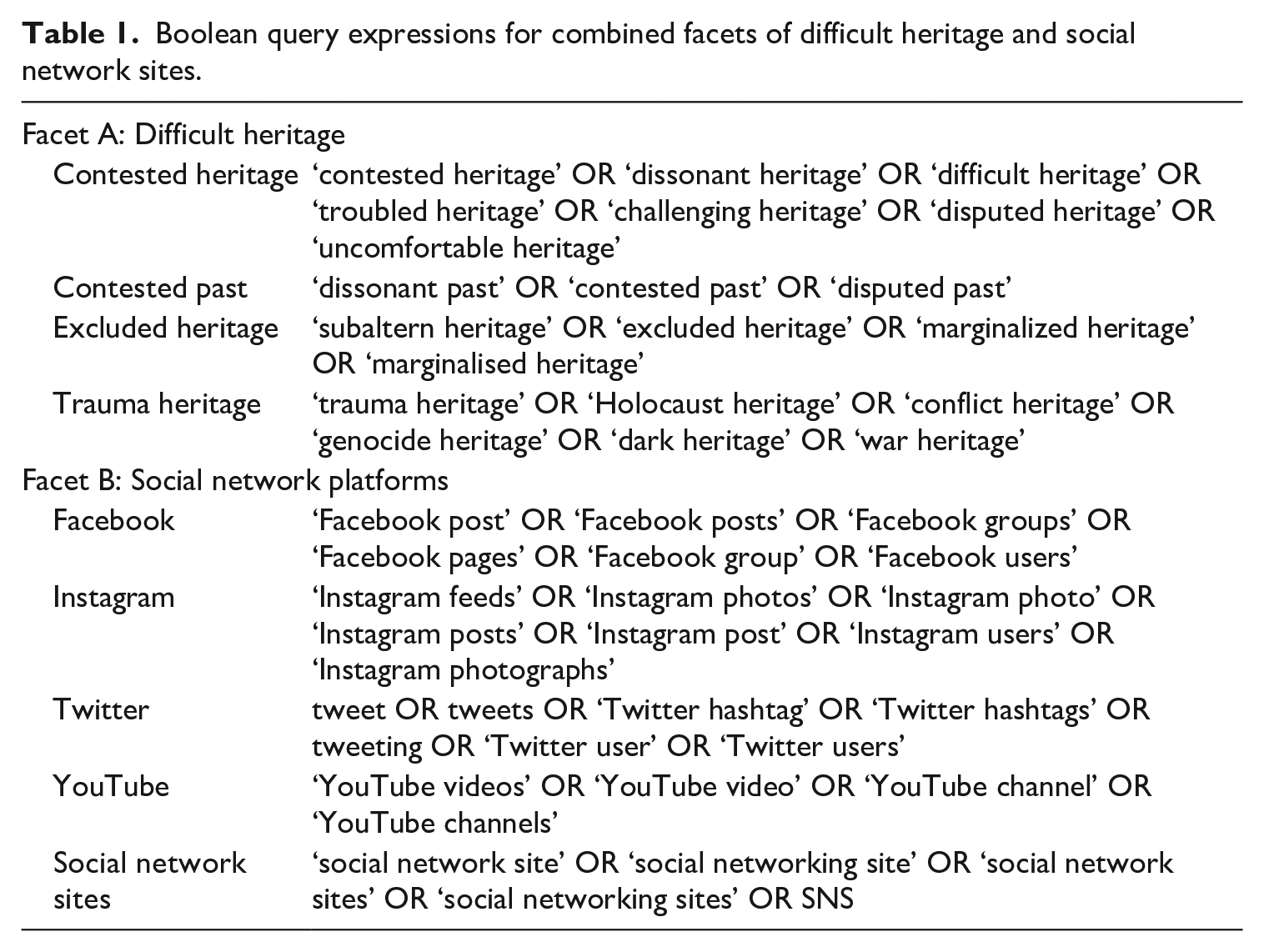
We used the Google Scholar search function of the Publish or Perish bibliographic reference collection software to conduct these 20 keyword queries between February and June 2021. The queries yielded 1201 documents, distributed across the combination of query expressions related to difficult heritage and social media platform (Table 2).
Raw results of faceted Google Scholar queries on complementary aspects of difficult heritage and social media platforms.
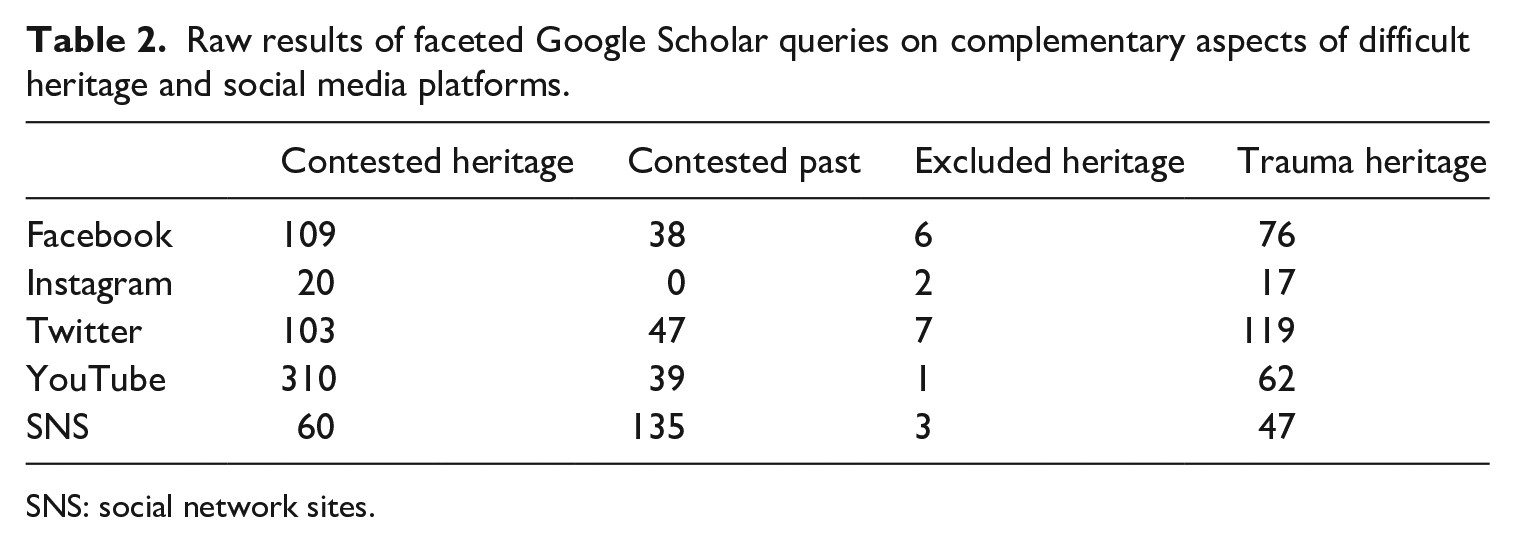
SNS: social network sites.
Applying a PRISMA-P (Moher et al., 2015) multi-step procedure of literature corpus selection, the process resulted in a corpus of 62 documents (Figure 1). To ensure, however, the broadest coverage, we used a snowball approach to enrich the corpus with additional works through citation hopping. We identified 27 additional items from sources cited and, using Google Scholar’s reverse citation functionality, 41 additional works citing documents already in the corpus. We assessed the full text of these 62 documents and determined that 18 were within the scope of our review.
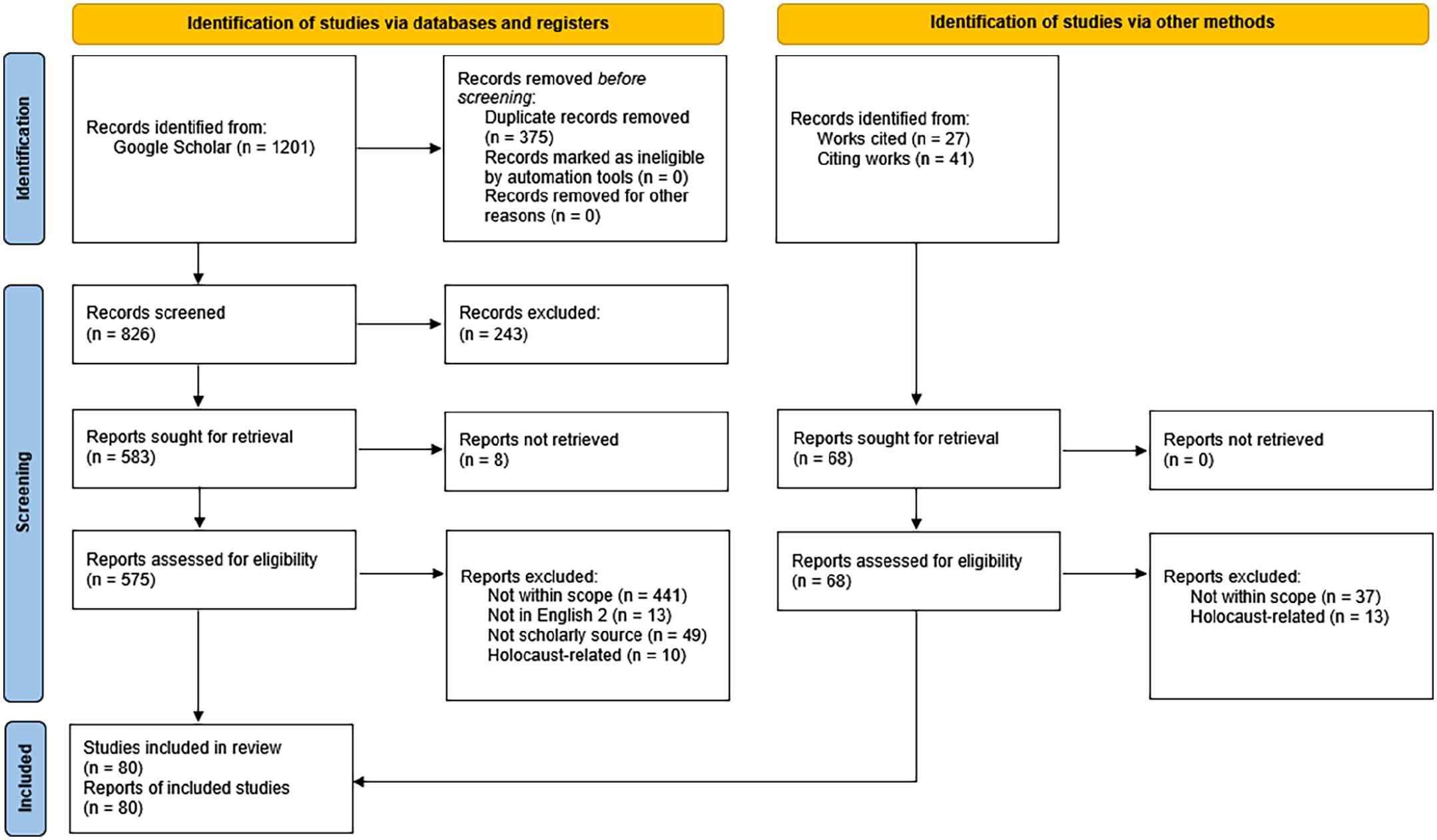
PRISMA-P literature selection flow diagram.
This process led to a final corpus of 80 documents (62 + 18), which were imported into the MaxQDA qualitative data analysis software. To annotate (code) relevant segments of documents, we developed a provisional code system, organised into four different hierarchies:
(3) Publication (year, type, discipline);
(4) Authors (country and institutional affiliation);
(5) Subject-matter (locations, periods, events, themes);
(6) Research and scholarship (evidence, methods, concepts and theories).
We used MaxQDA to produce quantitative summaries, to identify relevant segments of documents speaking to a particular dimension, to theorise on the structure of the field from an analysis of descriptive codes and to check for omissions in our coding process.
Findings
Main aspects of scholarly activity
We sought to identify the main aspects of works about difficult heritage on SNS included in the corpus, viewed as outputs of scholarly activity. We were interested to know: what were the publication types (journal articles, books, book chapters, conference papers) of these publications? When were they published? Also, who were the authors, and what were their institutional and geographical affiliations?
Works dated to between January 2011 and October 2021, but more than half (N = 47) were published from 2018 onwards, a noteworthy and steady increase in publishing activity (Figure 2). The majority were journal articles (N = 57), while, except for a single conference paper, most remaining works were book chapters (N = 22).
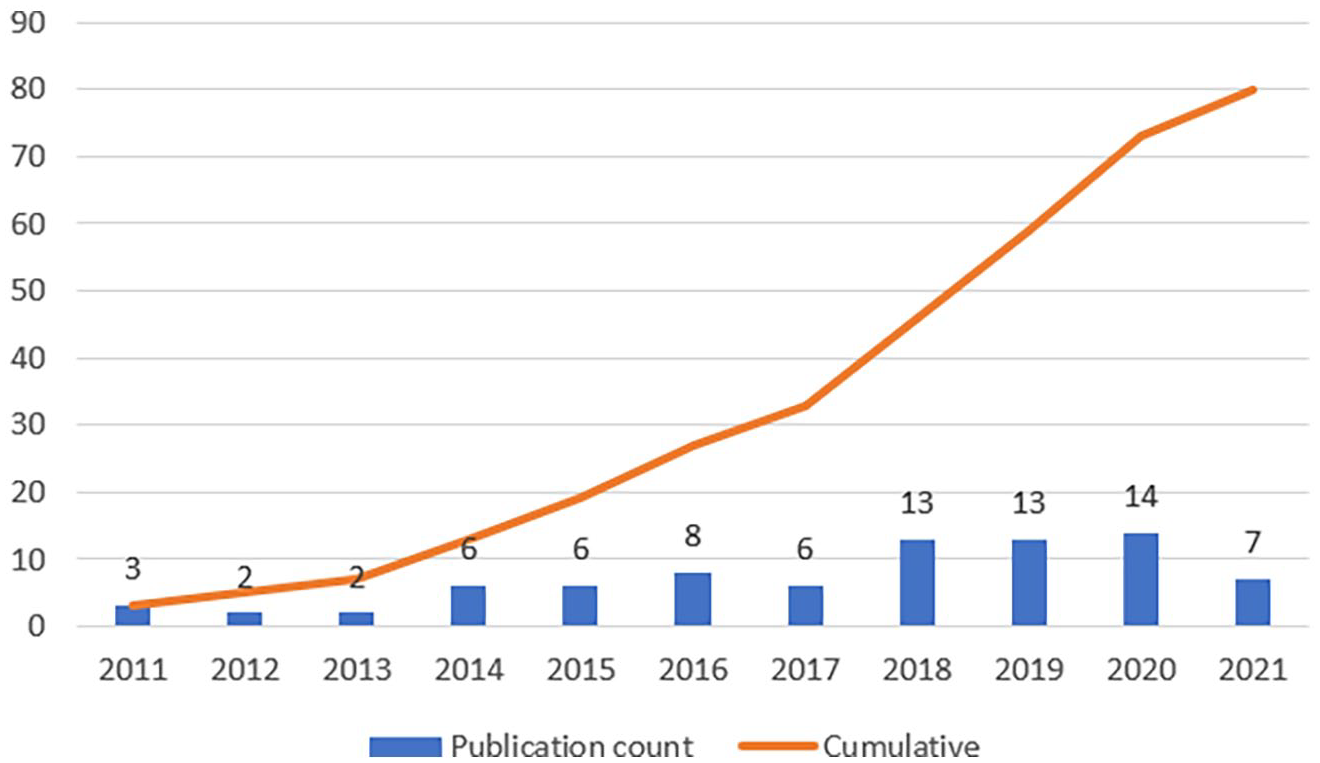
Cumulative count of works in the corpus by year of publication.
The corpus of works (N = 80) was authored by 104 authors. Almost all authors were affiliated to universities (N = 93), most of them in Europe (N = 68), North America (N = 18) or Australia (N = 8)—a notable if unsurprising bias of Western and developed countries. Few authors were based in academic institutions in Asia (N = 7), Africa (N = 2) or South America (N = 1). The United Kingdom stood out as the country with the most affiliated authors (N = 20), followed by the United States (N = 13) (Figure 3).
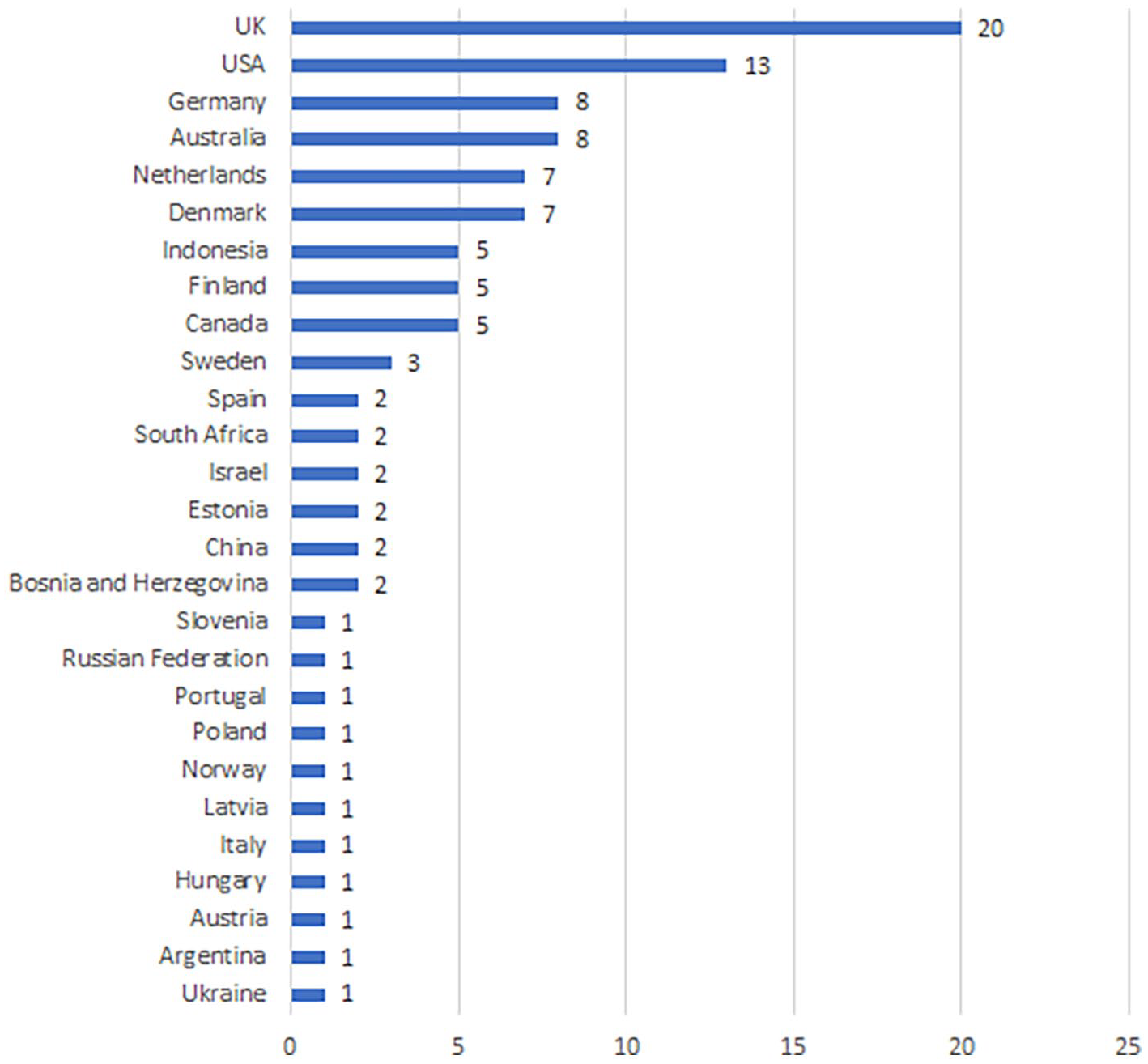
Count of authors by affiliated institution country.
Digital heritage researchers Gabi Arrigoni and Areti Galani and cultural tourism scholar Britta Timm Knudsen were the most prolific, with three works each. Social and urban geography researcher Perry Carter, digital memory and heritage scholar Anne Heimo, researcher of digital economy and culture Yasmin Ibrahim, digital communication scholar Jun Liu, communication studies researcher Mykola Makhortykh and tourism scholar Rodanti Tzanelli authored two works each. More than three out of five works (N = 51) were sole-authored. Among co-authored works (N = 29) the majority were written by researchers from the same university or research centre (N = 19). Only 10 works were written by authors coming from different institutions, whereas only two of them involved international cooperation: one between Hungarian and Italian researchers (Irimiás and Volo, 2018) and another between researchers from the United Kingdom and Argentina (Tzanelli and Korstanje, 2016).
A citation network analysis indicated a very low degree of direct citations between the works in our corpus (Figure 4), with only two documents (Drinot, 2011; Knudsen and Stage, 2013) cited by more than five works, and with one-third of the documents not citing any other source in the corpus.
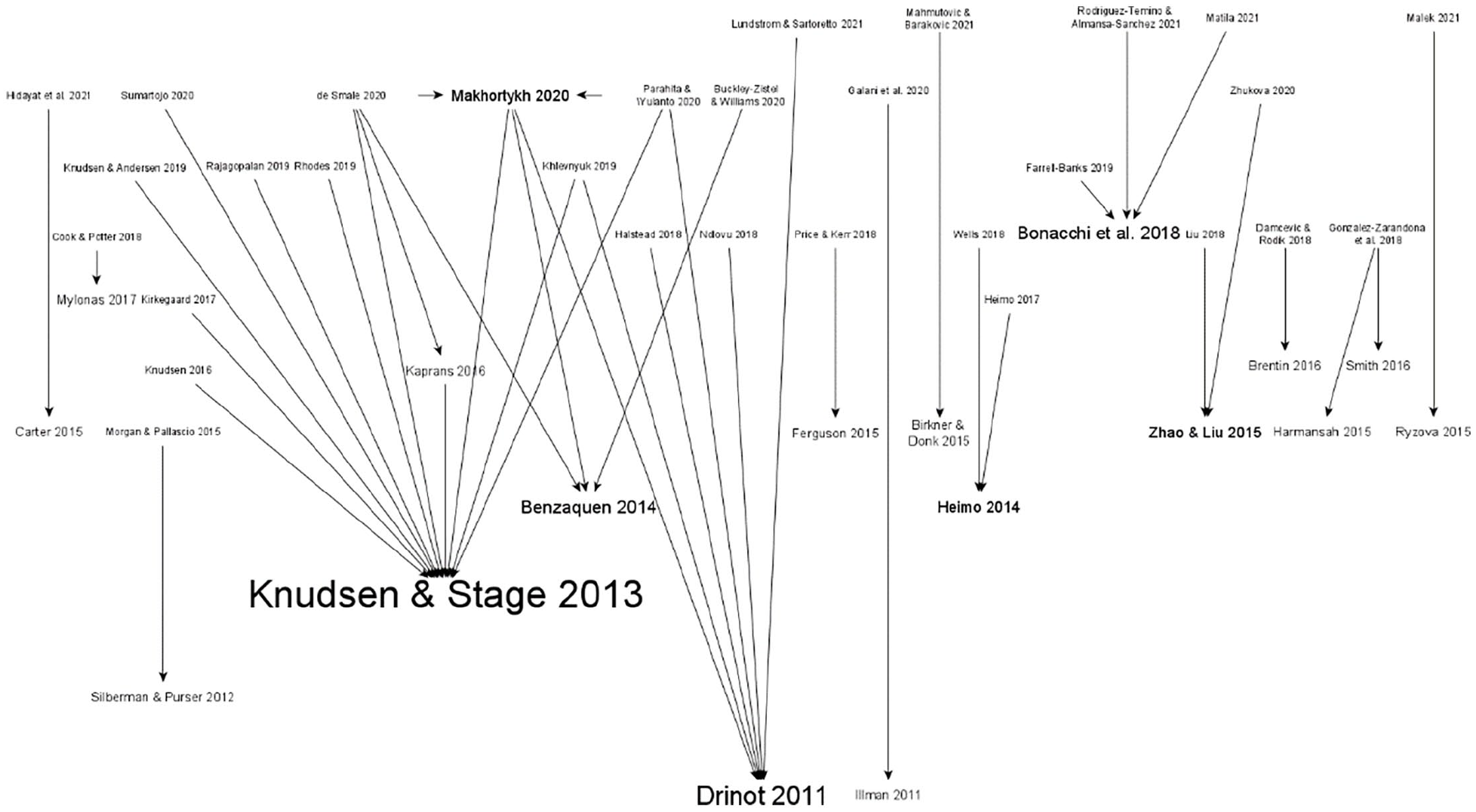
Direct citation network within the corpus.
Kinds of evidence, methods and approaches used
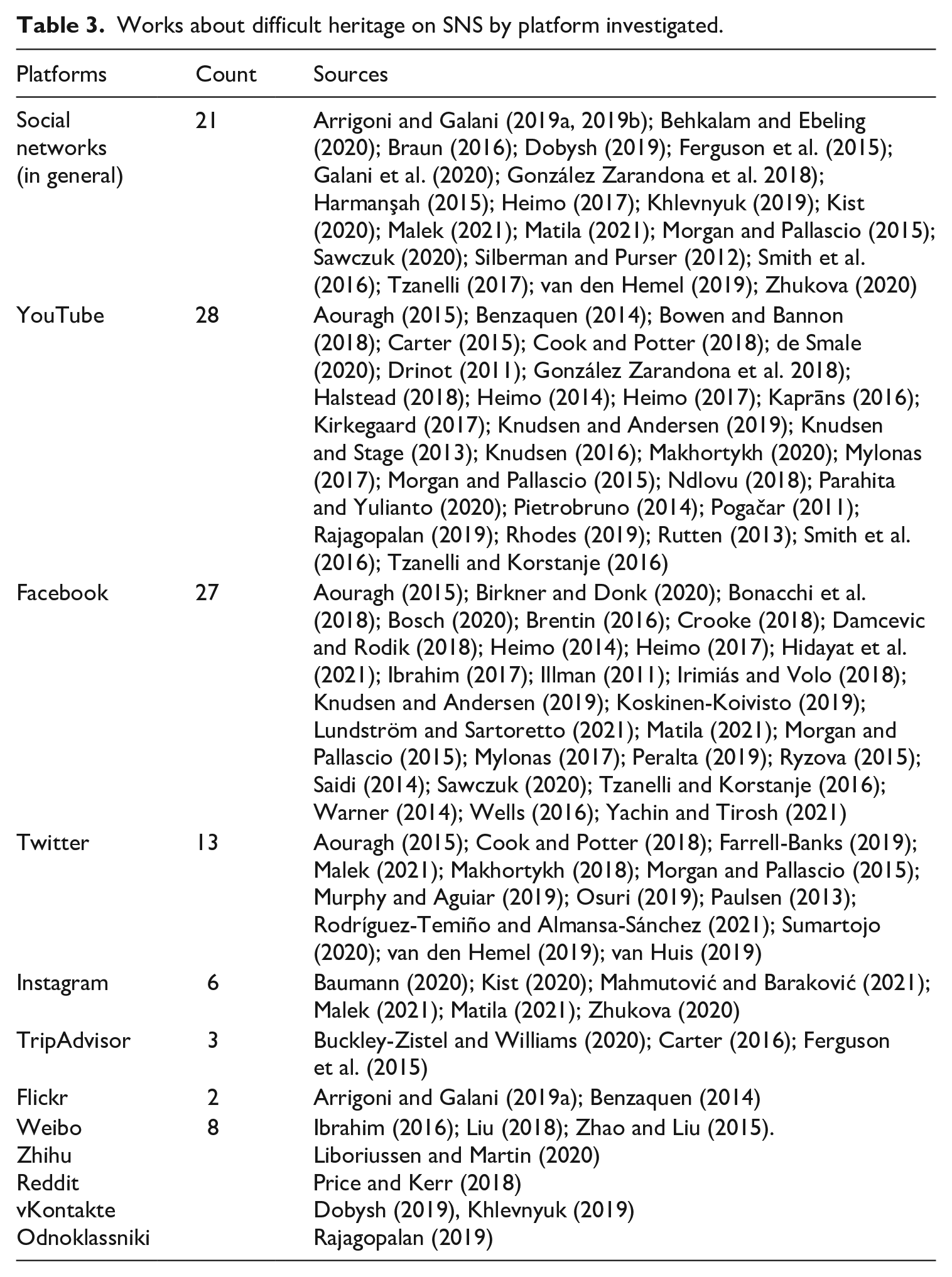
Many works analysed evidence across SNS platforms (N = 23). The most frequently analysed single platforms were YouTube (N = 28 works) and Facebook (N = 27), while Twitter was analysed by only 13 studies, and Instagram by 6. Other specific platforms, including those operating in specific countries, such as Weibo and Zhihu in China or vKontakte and Odnoklassniki popular among Russian speakers, were analysed by few works (Table 3).
Works about difficult heritage on SNS by platform investigated.
In terms of methods, works examined do not fit neatly in mutually exclusive categories. A network analysis revealed a great diversity of approaches, spanning across quantitative and qualitative methods as well as additional kinds of evidence besides SNS data, often combined with each other and with meta-methods such as the case study approach (Figure 5).
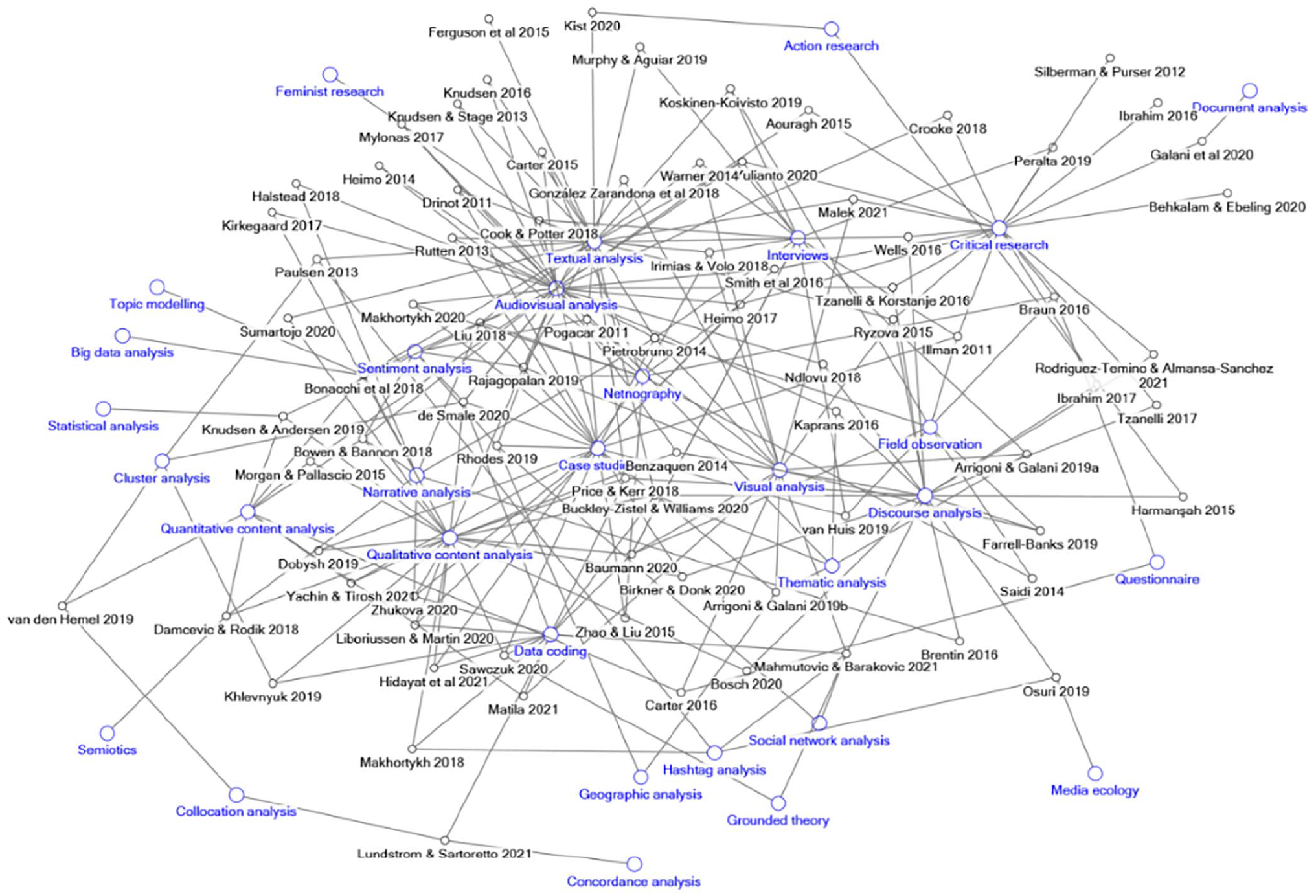
Collocation of research design, data collection and analysis methods used across specific works.
Most studies analysed were qualitative, with audiovisual analysis (N = 28), textual analysis (N = 26), qualitative content analysis (N = 22), discourse analysis (N = 18) and visual analysis (N = 16) being the most common methods applied (Figure 6). The case studies meta-method was also frequent (N = 22), as well as mixed-methods approaches such as netnography (N = 11) or those involving analysis of SNS data in conjunction with interviews (N = 13) or field observation (N = 8). Critical research studies, whereby authors engaged with earlier scholarship, sometimes without a recognisable body of evidence or analytical method, were also frequent (N = 19). Quantitative approaches, including quantitative content analysis (N = 11), cluster analysis (N = 4) and hashtag analysis (N = 4) were considerably less common (Figure 6).
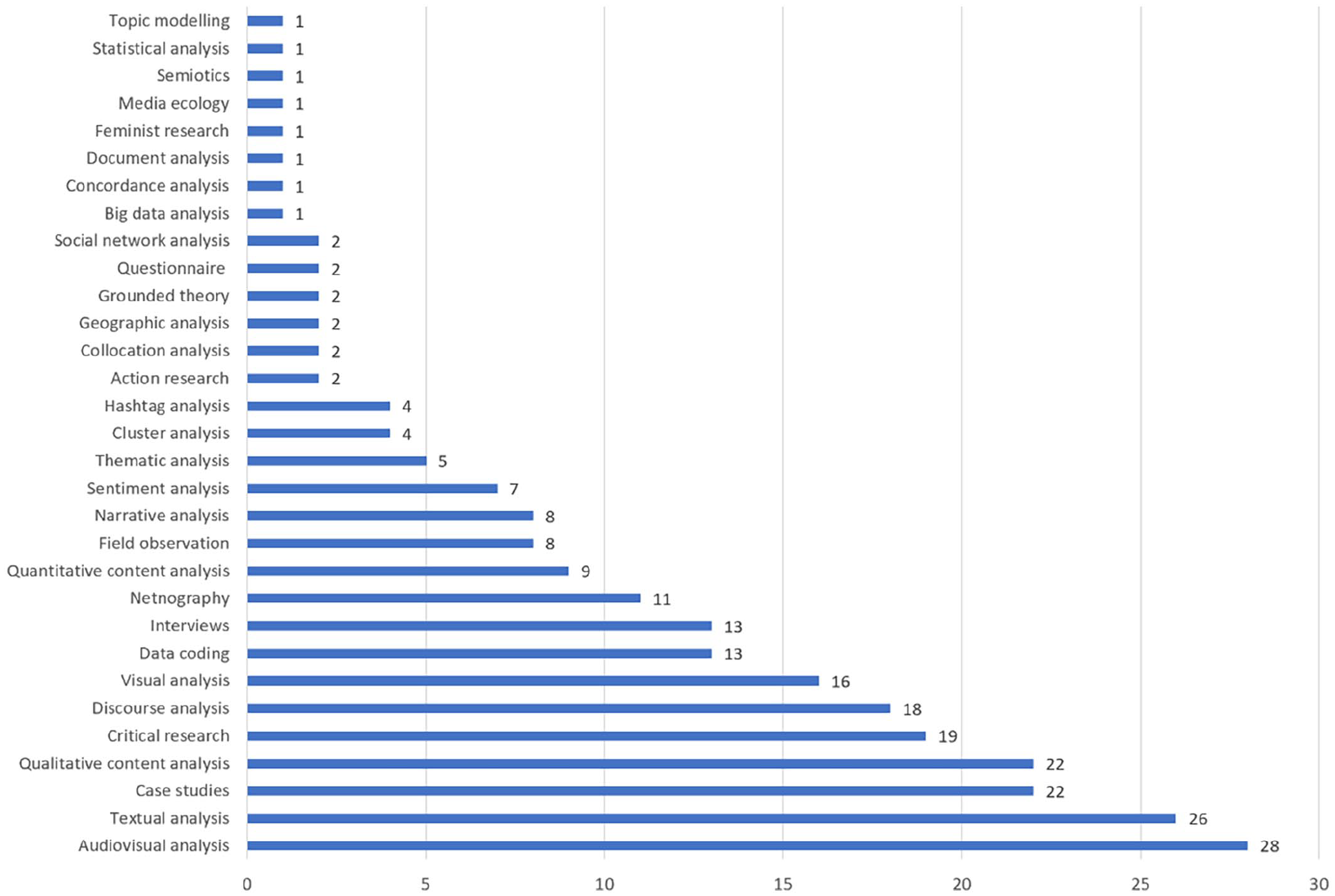
Classification and frequency of works by method of analysis employed.
Historical and geographical dimensions of SNS heritage practices
Works examined in this study addressed SNS heritage-related practices referring to a broad range of geographic contexts, representing historical periods or events in 50 individual countries and all continents (Figure 7), of which the most common were the United States and the United Kingdom (N = 9 each), Russia (N = 8), Ukraine (N = 7), Bosnia and Herzegovina, China, Croatia and Finland (N = 5 each). But countries on the European continent taken together were discussed in as many as 38 works, indicating the centrality of Europe as a domain of research on contested and trauma-related heritage on SNS.
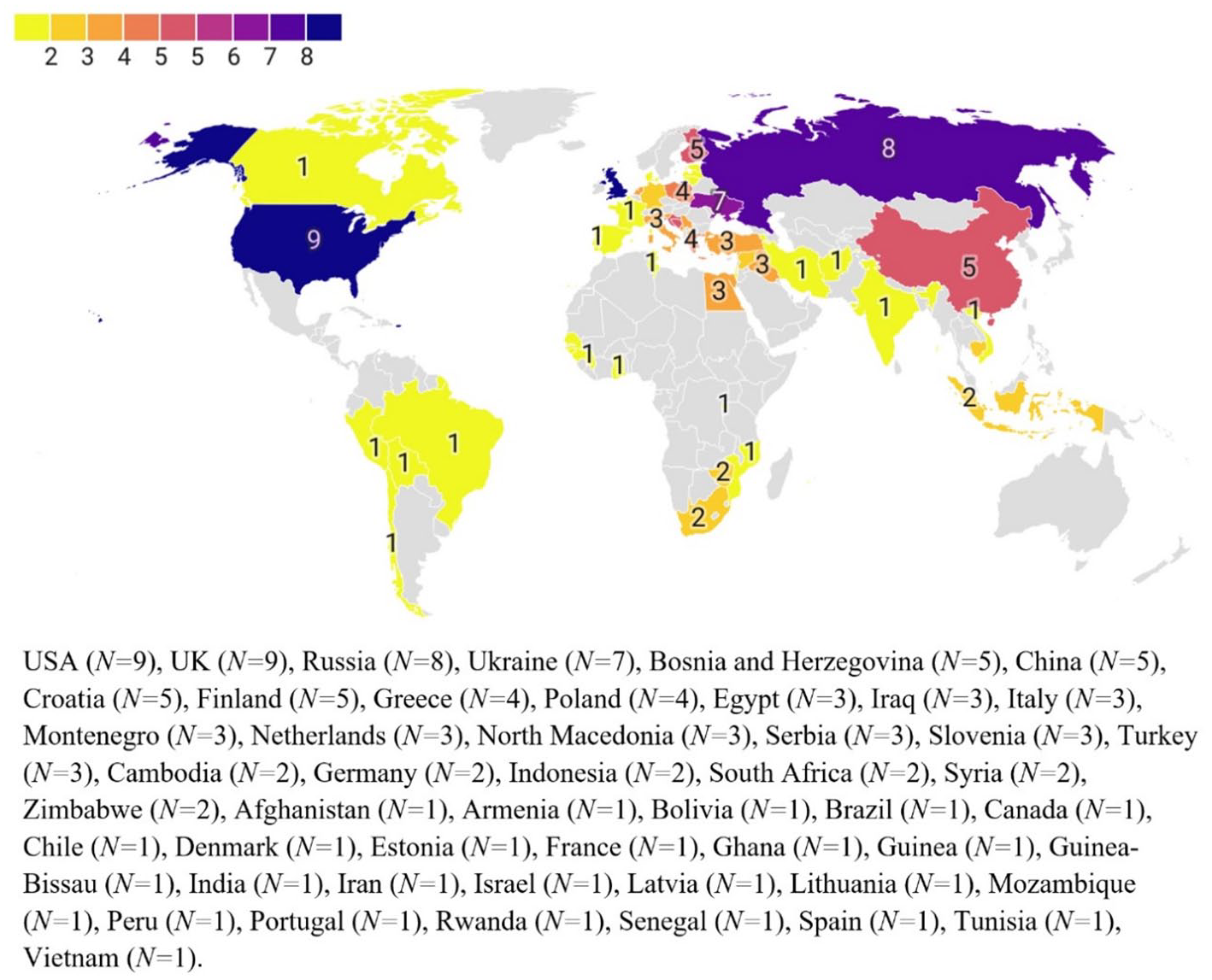
Geographic focus of difficult heritage discussed by works in the corpus.
In terms of chronology, heritage topics addressed in the corpus extend from prehistory to the 21st century. Archaeological heritage was approached from the political viewpoint of its contemporary reception: for example, the erasure of memory by Jihadist destruction of Assyrian archaeological sites from 2500 to 600 BC in Syria and Iraq in 2014–2016 (González Zarandona et al., 2018; Harmanşah, 2015; Smith et al., 2016) and the different representations of the Three Kingdoms (220 BC–80 AD) legacy in China across governmental, commercial and public media (Liboriussen and Martin, 2020). Other studies addressed the nationalist uses of Spanish archaeological and historical symbols on social media (Rodríguez-Temiño and Almansa-Sánchez, 2021); the exploitation of the Battle of Szigetvár (1566) in political extremism in Croatia (Brentin, 2016); the discursive appropriation of the Iron Age, Roman and medieval history of Britain (Bonacchi et al., 2018), as well as of the Magna Carta (1215) (Farrell-Banks, 2019) in Brexit debates on Twitter and Facebook. Another study discussed the 13th-century Mevlevi Sema ceremony as part of Turkish intangible heritage practice on SNS (Pietrobruno, 2014).
From 17th to 19th centuries, slavery was the most contested North American topic (Carter, 2015; Cook and Potter, 2018 ; Morgan and Pallascio, 2015; Rhodes, 2019), while in the European context, works focused on colonial history and post-colonial discourses (Knudsen and Andersen, 2019; Peralta, 2019; Ryzova, 2015; van Huis, 2019). Other studies addressed the different perceptions and contemporary tensions on social media resulting from the Latin America war (1879–1984) between Chile, Peru and Bolivia (Drinot, 2011), as well as vernacular perceptions of the 19th and 20th centuries penal history in Canada through museum visitor reviews on social media (Ferguson et al., 2015).
The 20th-century history on SNS was mostly dominated by WW1 and WW2 (N = 38). Studies related to WW1 address events such as the Greek–Turkish war (Halstead, 2018; Mylonas, 2017), the Finnish civil war (Heimo, 2014), the Anzac assault in Gallipoli (Sumartojo, 2020) and the fate of Austro-Hungarian Empire descendants in Italy (Irimiás and Volo, 2018). Additional studies, not related to WW1, addressed the traumatic social media memory of the Holodomor famine in Ukraine in 1932–1933 (Paulsen, 2013; Zhukova, 2020) and of the Italian Hall tragedy in 1913 during the Copper Strike in Michigan (Heimo, 2017).
Frequent attention (N = 22 works) was dedicated to the legacy of WW2 in Europe (Arrigoni and Galani, 2019a, 2019b; Baumann, 2020; Birkner and Donk, 2020; Braun, 2016; Brentin, 2016; Damcevic and Rodik, 2018; Dobysh, 2019; Kaprāns, 2016; Khlevnyuk, 2019; Kist, 2020; Koskinen-Koivisto, 2019; Makhortykh, 2018; Makhortykh, 2020; Matila, 2021; Pogačar, 2011; Rutten, 2013; Sawczuk, 2020; Wells, 2016). Some studies focused on specific WW2-related topics, such as the Ustaše regime in Croatia between 1929 and 1945 (Brentin, 2016), the Finnish war (Matila, 2021), D-Day (Braun, 2016) and the Battle of Kyiv (Makhortykh, 2020).
Several studies engaging with the post-war period in Europe focused on the dissonant heritage of the collapse of Yugoslavia and its aftermath on SNS (Baumann, 2020; Brentin, 2016; Damcevic and Rodik, 2018; Mahmutović and Baraković, 2021; Pogačar, 2011; de Smale, 2020; Knudsen, 2016). Other topics in the second part of the 20th century included the difficult heritage of the Troubles in Northern Ireland in 1968–1998 (Crooke, 2018; Murphy and Aguiar, 2019) and the collapse of Portugal’s colonial power and subsequent fall of Salazar’s dictatorship in the 1980s (Peralta, 2019). Elsewhere, studies addressed the uptake on social media of cultural history themes such as Soviet childhood memories (Rajagopalan, 2019) and Greek contemporary culture in relation to dark tourism (Tzanelli, 2017; Tzanelli and Korstanje, 2016).
Yet in studies focusing on the uptake of difficult heritage of the second half of the 20th century on SNS, a shift of focus away from Europe was noticeable. Studies on Asia addressed the social media memory of events such as the Vietnam war 1955–1975 (Ibrahim, 2017; Price and Kerr, 2018); the Great famine of China in the 1960s and the Tiananmen square protests in the 1990s (Ibrahim, 2016; Liu, 2018; Zhao and Liu, 2015), the Khmer Rouge genocide in Cambodia in 1975–1979 (Benzaquen, 2014; Buckley-Zistel and Williams, 2020), the Iranian revolution in 1978–1979 (Malek, 2021), the conflict in Tibet causing Buddhist immolations in the late 1990s (Warner, 2014), the Communist purge of 1965–1966 in Indonesia (Parahita and Yulianto, 2020) and the emergence of Islamic cults in the 1980s (Hidayat et al., 2021). Studies on Africa focused on major conflicts in Zimbabwe, such as the 1964–1979 Rhodesian Bush War (Kirkegaard, 2017) and the 1983–1987 Gukurahundi genocide (Ndlovu, 2018), on the 1994 Tutsi genocide in Rwanda (Buckley-Zistel and Williams, 2020), on South African national identity after the abolition of apartheid (Bosch, 2020). On South America, a single study analysed the SNS heritage of the military dictatorship and social movements in Brazil from the 1970s to the 1990s (Lundström and Sartoretto, 2021).
As regards the 21st century, several works were dedicated to the Arab spring (Aouragh, 2015; Behkalam and Ebeling, 2020; Saidi, 2014)—unsurprisingly so, given the well-established role of SNS communication in related events. Other studies turned their attention to the Iraq and Afghanistan wars in 2003–2007 (Knudsen and Stage, 2013), hurricane Katrina in New Orleans in 2005 (Bowen and Bannon, 2018), the Euromaidan in Ukraine in 2013–2014 (Dobysh, 2019) and the Kashmir uprising in 2016 (Osuri, 2019).
Theories, concepts and scholarly fields
A citation analysis shows that notable subsets of the 80 works in the corpus shared citations to the work of specific researchers from different disciplines in the humanities and social sciences (Figure 8). The epistemic focus of the corpus as a whole is demonstrated by the identity of the most frequently authors cited, digital media and memory studies scholar Andrew Hoskins (N = 16), cultural memory scholar Astrid Erll (N = 15), Pierre Nora (N = 15), and heritage studies scholar Laurajane Smith (N = 14), memory studies scholar Anna Reading (N = 12), and digital media theorist Henry Jenkins (N = 12), and its diversity by the wide range of authors cited by smaller clusters of works, ranging from Maurice Halbwachs, Michel Foucault and Pierre Bourdieu to Manuel Castells, Benedict Anderson and Jose van Dijck.
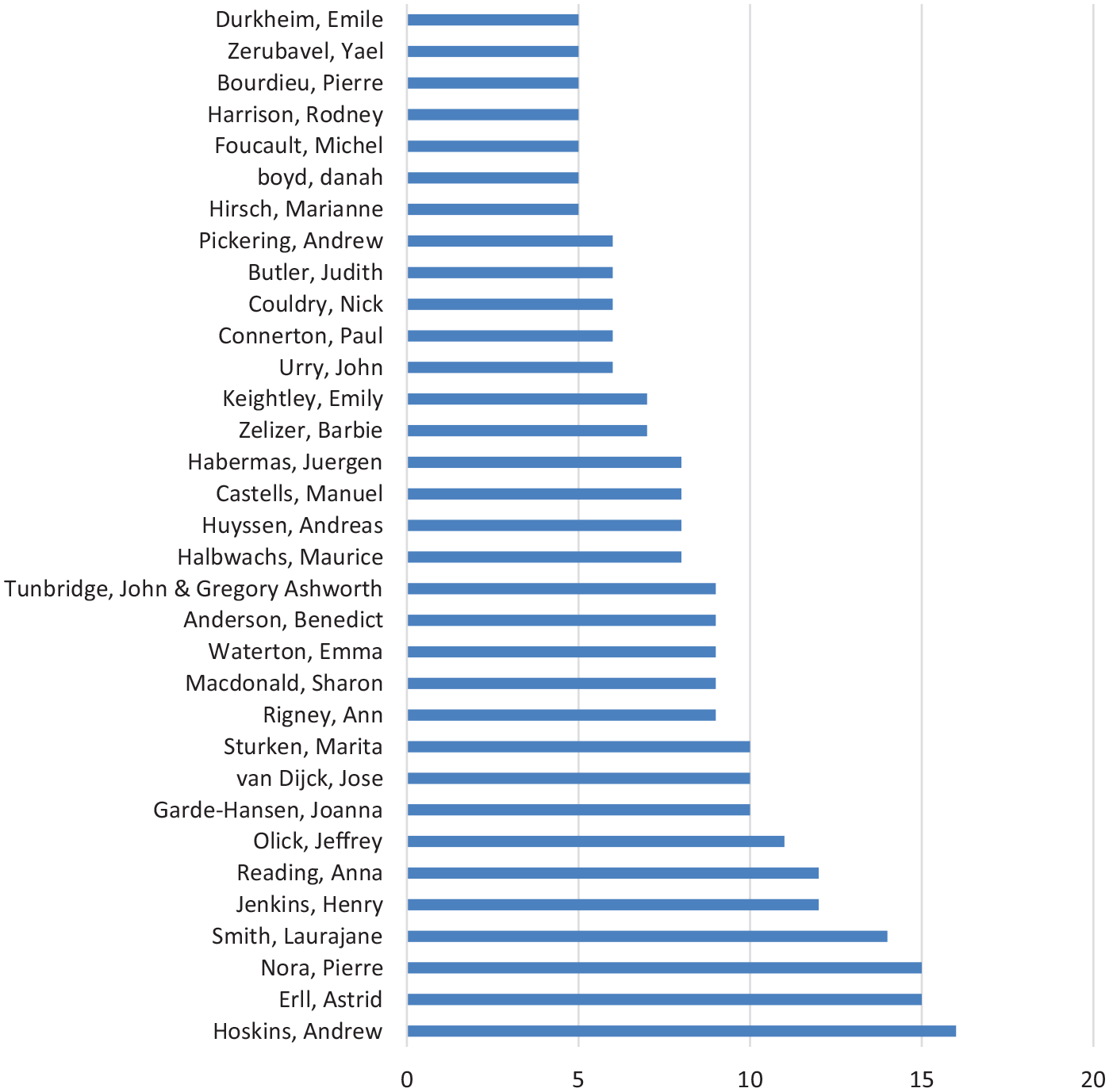
Horizontal bar chart of authors cited by at least 5% of works in the corpus.
As the field of difficult heritage research on SNS is still emerging, references to theories and authors in the corpus formed thus a fragmented landscape, drawing, occasionally, from disciplines as diverse as anthropology, archaeology, folklore, oral history, social theory and visual studies, but mostly representing four predominant fields: memory studies, heritage studies, media studies and tourism.
Many works drew from memory studies by using two classic notions: Maurice Halbwachs’s ‘collective memory’ (Arrigoni and Galani, 2019a; Birkner and Donk, 2020; Brentin, 2016; Heimo, 2017; Khlevnyuk, 2019; Liu, 2018; Zhao and Liu, 2015) and Pierre Nora’s ‘lieux de mémoire’ (Arrigoni and Galani, 2019b; Baumann, 2020; Carter, 2015; Drinot, 2011; Farrell-Banks, 2019; Heimo, 2017; Ibrahim, 2016; Knudsen, 2016; Knudsen and Stage, 2013; Liboriussen and Martin, 2020; Zhao and Liu, 2015). Building on Pierre Nora, one study attached ‘memory to sites which are material as well as immaterial’, perceiving the Internet ‘as an immaterial space’ (Ibrahim, 2016); another critiqued Nora’s concept as single-layered and proposed instead to focus ‘on geolocative content’ of place ‘as the site of lived experience’ (Arrigoni and Galani, 2019b). Collective memory was also related to the notion of the construction of national identity (Farrell-Banks, 2019). In addition, multiple studies engaged with theorisations emerging in the context of the recent ‘media turn’ in memory studies, such as the concept of ‘digital memories: memories stored, shared, and promoted online’ (Khlevnyuk, 2019; Mahmutović and Baraković, 2021; Pogačar, 2011; Rutten, 2013), Andrew Hoskins’ notions of the ‘multitude’ (Aouragh, 2015; Yachin and Tirosh, 2021) and ‘connective memory’ which ‘highlights the moment of connection as the moment of memory’ (Birkner and Donk, 2020; de Smale, 2020), as well as Astrid Erll’s work on transnational cultural memory (Buckley-Zistel and Williams, 2020) and its remediating effects in shaping the present (Kaprāns, 2016; Mylonas, 2017).
Drawing from communication theories related to memory studies, several works used notions such as ‘narrative’ and ‘dialogue’. Narratives were viewed as communication frameworks, ‘related to the selection of motives and rhetorical techniques’. One study claimed that ‘trauma narratives become conflicting’ (Zhukova, 2020). Another countered that ‘digital technologies can [. . .] break down monologic narratives’ towards ‘supporting dialogic practices’, noting that dialogue ‘epitomises the shift from a dissemination model of communication (one-to-many) to a networked one (many-to-many)’, which was further analysed in three dimensions: ‘(a) polyvocality, (b) civic listening and (c) the tension between institutional and online spaces for dialogue’ (Arrigoni and Galani, 2019a). The crucial role of sharing personal stories was accepted as ‘revealing a marginalized voice’ and as ‘hav[ing] uncovered and given voice to plural accounts of conflict’ (Murphy and Aguiar, 2019). Pursuing this idea of multivocality, the narrative-based methods reflected not only on different kinds of dialogue (Arrigoni and Galani, 2019a), but also revealed additional dimensions such as inherent superiority, racialisation and machismo (Drinot, 2011), extremism, xenophobia and racism (Brentin, 2016), conflict and weaponisation of diasporic self-representation (Malek, 2021). Another publication referred to the concept of ‘philosophy of dialogue’ or ‘dialogue philosophy,’ elaborating on the works of philosophers such as Buber, Levinas and Løgstrup (Illman, 2011).
The dominant notions drawn from heritage studies concerned heritage objects and sites, heritage in action and specific types of heritage (i.e. dissonant, difficult and penal heritage). Dissonant heritage was analysed in the context of (mis)dialogue and multivocality, including conflicting perspectives, revealing ‘disharmonies and power relations within heritage’ (van Huis, 2019) or ‘disjunction and disarticulation between individual narratives and memories and the authorized narratives and frameworks’ (Liu, 2018). These theorisations were activated in discussions of topics such as communication of immigration in Italy (Arrigoni and Galani, 2019a), German WW2 cemeteries in Normandy (Braun, 2016) and the troubling heritage of Cecil John Rhodes (Knudsen and Andersen, 2019). Dissonant heritage also was closely connected to people-centred heritage of excluded groups such as Black people (Cook and Potter, 2018), ethnic minorities, indigenous groups (Arrigoni and Galani, 2019a) and immigrants or descendant communities (Heimo, 2017) as well as to heritage work in transnational contexts (Koskinen-Koivisto, 2019). Governmental communication policy was discussed in relation to authorised heritage and state soft power (Liboriussen and Martin, 2020), the politics of memory (Benzaquen, 2014), the contested past in contemporary Ukrainian-Russian political conflicts (Paulsen, 2013) and uses of history and heritage in the construction of contemporary far-right political narratives (Rodríguez-Temiño and Almansa-Sánchez, 2021). Laurajane Smith’s notion of ‘“authorised heritage discourse” [. . .] displayed and communicated by professionals working in the officialdom of research, education, museums, sites, archaeological units and libraries’ was claimed to play an important role in this process of identity construction (Bonacchi et al., 2018).
Discussions of ‘heritage in action’ on SNS pointed to the contemporisation of history and heritage in Ukrainian and Russian discourses about Holodomor, ‘set by news sites, not bloggers or other individuals’ and participants who ‘are not profoundly interested in history itself’ (Paulsen, 2013). Similarly, ‘the transformation of the Ukraine crisis into a matter of pan-European (in)security’ was taken to represent the increasing politicisation of the past, as observed in political language and competing discourses spread through SNS (Makhortykh, 2020). The presentist view of history and heritage was echoed in scholarly debates on the difference between Russian and Ukrainian discourses, in the context of military conflict between the two countries.
The theoretical import of digital media studies foregrounded the fact that SNS became possible because of digitalisation. Yet few works in the corpus addressed specifically digital aspects of media: Behkalam and Ebeling (2020) offered an approach to (digital) media archaeology; Ibrahim (2016) analysed Tiananmen square protests as a media event; Benzaquen (2014) and Heimo (2017) pointed to the remediation of witnessing. The notion of media ecology came in different guises, not necessarily compliant with the Toronto school of communication theorisation: from influences of media on human environments (Osuri, 2019) to conceptions of media as milieux for social practice (Bosch, 2020).
Two media concepts were summoned repeatedly as tools for understanding memory practices and dealing with difficult heritage on SNS. First, several works referred to ‘participatory culture’, a notion coined by Henry Jenkins et al. (2015) to describe human participation in mediated events (Heimo, 2014; Heimo, 2017; Knudsen, 2016; Knudsen and Stage, 2013; Morgan and Pallascio, 2015). Two related terms, participation and crowdsourcing, considered as mechanisms for creating multiple interpretive perspectives and communicative realities, were illustrated in studies of conflicting stories of South Africa (Bosch, 2020), the Kashmir uprising (Osuri, 2019), intangible heritage in Turkey (Pietrobruno, 2014), Cambodia (Benzaquen, 2014), Rhodesia (Kirkegaard, 2017) and Poland (Arrigoni and Galani, 2019a). Second, there were several references to the notion of the ‘public sphere’, not only in its initial theorisation by Jürgen Habermas (Arrigoni and Galani, 2019b; Bonacchi et al., 2018; Knudsen and Andersen, 2019; Mylonas, 2017), but also considering the views of critics such as Nancy Fraser, Douglas Kellner or Todd Gitlin (Bosch, 2020; Mylonas, 2017).
There were other media studies concepts mentioned, associated with broader social theory. For example, one publication (Bosch, 2020) referred to ‘collective publics’ as fostered by SNS and understood, in line with Sonia Livingstone’s definition re-iterated by danah boyd (2010), as ‘a collection of people who share a common understanding of the world, a shared identity, a claim to inclusiveness, a consensus regarding the collective interest’. The same work referred to Benedict Anderson’s ‘imagined communities’, Zizi Papacharissi’s (2011) ‘affective publics’, as well as other familiar concepts such as ‘hybrid space’, ‘networked publics’ and ‘virtual communities’ (Bosch, 2020).
Finally, tourism studies introduced a focus on dark tourism to works on difficult heritage on SNS. Sharpley and Stone’s (2009) The darker side of travel was repeatedly cited. Dark tourism was often mentioned with reference to visiting sites of significant casualties related to war or genocide (Buckley-Zistel and Williams, 2020; Carter, 2015; Ferguson et al., 2015; Heimo, 2014, 2017; Price and Kerr, 2018; Sawczuk, 2020; Tzanelli, 2017; Zhukova, 2020), but also as it applied to a site of natural disaster such as hurricane Katrina (Bowen and Bannon, 2018) or in the context of a ‘cultural practice that has the potential to limit the social distance of penal spectators’ (Ferguson et al., 2015). The term itself was interchangeably used with ‘thanatourism’ (Bowen and Bannon, 2018; Buckley-Zistel and Williams, 2020; Knudsen, 2016).
Other studies emphasised the mediating role of tourism, viewing heritage interpretation made for visitors as a dynamic, mobile and borderless phenomenon not just closely related to dark tourism (Bowen and Bannon, 2018; Zhukova, 2020), but also to the memory industry in general. The mediating contexts of tourism shared on SNS relate to visual travel experiences, thus making photography and other forms of audiovisual content part of the purview of works (Malek, 2021; Rajagopalan, 2019; Ryzova, 2015). This included the impact of films such as Gone with the wind in the context of slavery-related plantation stories (Carter, 2016) and The Soviet story in the context of post-Soviet discourses (Kaprāns, 2016), as well as of music, perceived as ‘an important vehicle of cultural memory’ enhancing its mnemonic and negotiated functions, such as in the case of Israel (Yachin and Tirosh, 2021).
The cross-disciplinary nature of difficult heritage on SNS research is corroborated by an analysis of disciplinary affiliation of journals in which the majority of works in the corpus (N = 57) were published (Figure 9). We classified journals by discipline using the Australian Research Council’s classification (Australian Bureau of Statistics, 2020). The largest number of articles appeared in multidisciplinary studies journals (N = 18), followed by journals of history and archaeology (N = 5), communication and media studies (N = 5) and studies in human society (N = 4) (Figure 2). We also identified two leading publishing venues: the Memory Studies journal (N = 7) and the International Journal of Heritage Studies (N = 5). Only eight articles, or 10% of the corpus, appeared in journals related directly to communication and media studies (including some multidisciplinary journals): Media, Culture & Society (N = 2: Benzaquen, 2014; Khlevnyuk, 2019), the International Journal of Communication (N = 2: Behkalam and Ebeling, 2020; Liu, 2018), Crime, Media, Culture (N = 1: Ferguson et al., 2015), Digital Journalism (N = 1: Ibrahim, 2016), Media, War & Conflict (N = 1: de Smale, 2020), and Social Media + Society (N = 1: Ibrahim, 2017).
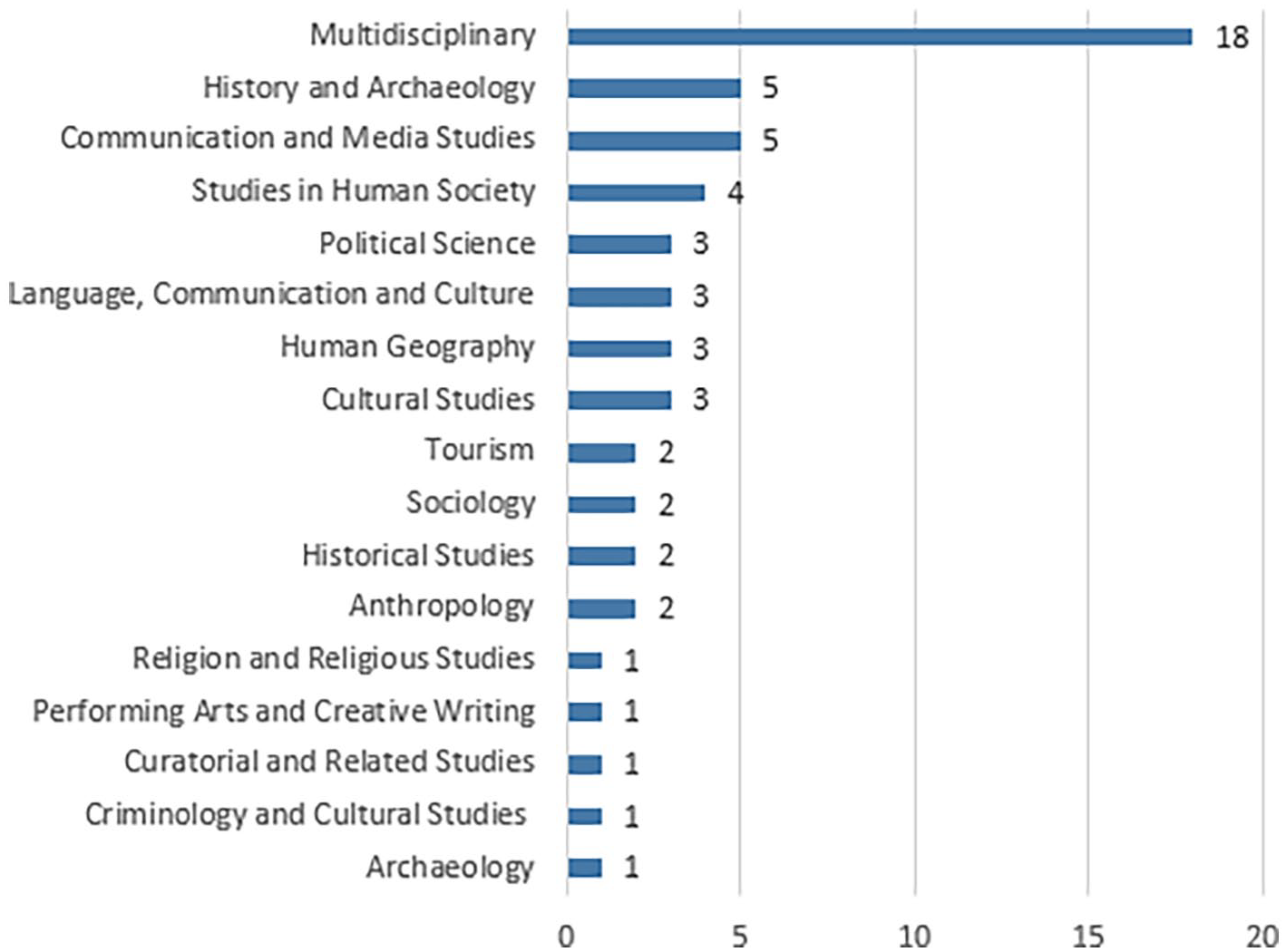
Frequency of articles in different disciplinary categories of journals (N = 57).
Conclusion
In this study, we sought to provide an overview of emerging research on communicative practices on SNS such as Facebook, Instagram, Twitter and YouTube, related to difficult heritage: in other words, heritage that is contested or dissonant, excluded, subaltern or related to collective trauma. For this purpose, we conducted an evidence-based integrative review of a corpus of 80 research works, selected from Google Scholar using a combination of 20 relevant keyword queries and citation hopping (both backward and forward), following the widely accepted PRISMA-P methodology for systematic literature reviews.
In identifying the main aspects of scholarly activity (i.e. authors, genres, year of publishing) represented in the corpus of works on difficult heritage on SNS (RQ1), our findings reveal that a great majority of authors were based in Europe (especially in the United Kingdom), North America or Australia, suggesting that current scholarship on difficult heritage on SNS is characterised by a rather predictable Western world bias, even at the presence of a dozen authors from the global South. Most authors were affiliated with academic institutions, and their works appeared predominantly as journal articles or, less often, as book chapters. Inter-institutional co-authorship was rare, whereas a citation network analysis indicated a low degree of direct citations between works in our corpus, in line with the picture of a still fledgling research field. Yet our analysis revealed growing publishing activity in the field from 2011 to the summer of 2021, with the yearly number of works roughly doubling every 3–4 years; we expect this trend to continue going forward.
We also sought to find out which kinds of SNS evidence are considered by these studies, and which research methods and methodological approaches they employ (RQ2). According to our analysis, one out of four works in the corpus examined evidence across SNS platforms, while the most frequently studied single platforms were YouTube and Facebook, with Twitter trailing in third place. On the other hand, many studies combined analyses of SNS data with interviews or field observation. The majority of works employed a qualitative research design to analyse text or visual media in SNS interactions using a variety of methods, most commonly audiovisual analysis, textual analysis, or qualitative content analysis, as well as discourse analysis. There is, nevertheless, a wide range of less common methods used by small clusters of works, including not only qualitative but also quantitative or computational methods, such as hashtag analysis, social network analysis, statistical analysis, and topic modelling. Case studies were also a common meta-method employed in these works. In tandem, we identified numerous studies as critical research, often lacking a recognisable body of evidence or method of analysis: some explicitly adopting feminist, post-colonial, or other critical studies paradigms, but others merely focusing on a critical or synthetic account of prior literature.
We were also interested to identify the historical and geographical dimensions of SNS heritage practices investigated by these studies (RQ3). Given the large number of authors from Europe, we were not surprised that the majority of works focused on investigating difficult, often contested and traumatic, aspects of European heritage and history. Studies focusing on SNS practices related to events before the 20th century are rare. The main focus of studies on SNS heritage of the first half of the 20th century is dominated by the digital memory of WW1, and especially WW2. However, there seems to be a shift of interest from a European to a global perspective as we move to the second half of the 20th century, coinciding with the process of decolonialisation, but also political unrests and war conflicts, especially in Asia and Africa. The digital memory of difficult heritage and traumatic events of the early 21st century on SNS remains relevant, reflecting recent political shifts (such as the Arab Spring) and revealing the interest in SNS interactions regarding recent and current conflict zones (e.g. Afghanistan, Iraq, Kashmir, and Ukraine). All in all, works we examined constitute a representative panorama of exactly those geographic zones and events that appear very relevant to contemporary societies in the context of current political, social and ethical dilemmas, challenges and debates.
Finally, we asked which broader research fields, scholars, theories and concepts studies on difficult heritage on SNS engage with (RQ4). The 80 scholarly works we analysed neither adhere to a single disciplinary affiliation, theoretical framework, or school of thought, nor do they employ consistently an interdisciplinary theoretical vocabulary. Yet multiple works draw from a finite range of theories and concepts derived mostly from the fields of memory studies, heritage studies, media studies or tourism studies. Multiple works in the corpus cite the work of contemporary scholars in these fields, especially memory studies scholars such as Andrew Hoskins, Astrid Erll, Pierre Nora and Anna Reading, heritage studies researcher Laurajane Smith, and digital media scholar Henry Jenkins. Digital media studies scholars such as Jose van Dijck, Manuel Castells and Barbie Zelizer are also repeatedly cited, but do not constitute major reference points for works in the corpus. Several studies also cite earlier thinkers, mostly from sociology, history, and critical cultural studies. Theoretical notions often mentioned include a messy assemblage of notions such as collective memory, lieux de mémoire, authorised heritage discourse, narrative, dialogue, multivocality, dissonant heritage, media event, remediation, participation, crowdsourcing, public sphere and dark tourism. Yet, as shown from our analysis of the disciplinary focus of journals in which journal articles in the corpus are published, the vast majority of studies of heritage-related practices on SNS did not appear in journals related to communication and media studies. This suggests that much of this literature might have been invisible so far to digital media studies researchers.
By engaging in this integrative review, we hope to contribute to higher visibility of the diversity of work in an emerging cross-disciplinary area of research relevant to new media studies, drawing from major themes and concepts in the originating disciplines of authors (e. g. archaeology, history, media studies) as well as the trans-disciplinary fields in which they were active: memory studies, heritage studies, (digital) media studies, and tourism studies. Research in the fledgling field of difficult heritage on SNS appears to be coming of age, but still in flux. As scholarly activity in this field has been markedly and consistently heating up after 2017, we expect the following decade to be an active ground for theoretical elaboration and debate on the part it might play as a bridge between media studies, memory studies, heritage studies and tourism studies, as a trigger for increased global focus and research community engagement, and, last but not least, as a productive arena for a consequential shift repositioning social media practices from matters of social fact to matters of cultural concern.
Footnotes
Authors’ note
All authors have agreed to the submission and the article is not currently being considered for publication by any other print or electronic journal.
Funding
The author(s) disclosed receipt of the following financial support for the research, authorship and/or publication of this article: This publication is part of the research project ‘Connective digital memory in borderlands: a mixed-methods study of cultural identity, heritage communication and digital curation on social networks’ supported by the European Social Fund (project No. 09.3.3-LMT-K-712-17-0027) under grant agreement with the Research Council of Lithuania (LMTLT).
