



Abstract
The last decade has seen the growth of social media and Internet-based communication. Recent research highlighted the need for exploration of the use of social media by military families due to the significant period of separation that they experience. On this basis, an international scoping review was undertaken to explore how military families use Internet-based communication and social media to communicate with their serving members and what the impact of this is. The review showed a paucity of research focused specifically on the use of social media by Service families. Overall, papers returned showed that social media and Internet-based communication has distinct benefits for military families, fostering connectedness, increasing potential communication, enabling Serving parents to be more involved and better accommodate their family’s routine, and potentially improving the deployment experience. However, unique practical barriers were also identified, alongside the potential exacerbation challenges associated with traditional forms of communication.
Introduction
Deployment is an integral part of military life internationally. As such, military families may experience significant periods of time apart from their Serving person. This is reflected in the UK Armed Forces Harmony Guidelines that outline the maximum number of days in a 36-month period an individual can serve away from their normal place of duty, currently set at 660 for the Royal Navy/Royal Marines and 496 for the Royal Air Force and Army (Ministry of Defence [MOD], 2022), with the US Armed Forces deployments typically lasting 6 to 12 months, with some lasting beyond a year (United Service Organizations, 2022). In addition, survey data in the UK context can provide some insight into family separation: In 2021, 44% of Service Personnel reported spending over 1 month separated from their family as a result of their service, 1 with 15% separated for up to 6 months, 5% for up to 9 months, and 1% for up to 12 months (Ministry of Defence [MOD], 2021). Previous research highlights deployment-related separation as a distinctive stressor that is unique to military families. The additional stress caused by this extended physical separation may result in the serving parent becoming further emotionally detached from the rest of the family unit, which can cause distress and strain for the whole family (Burrell et al., 2006).
The impact of deployment-related separation on the children of service members is multifaceted and complex, exacerbated by the uncertainty and ambiguity of their parents’ absence (Boss, 2002). Service children may experience negative emotional and behavioral changes, including but not limited to feelings of isolation, anxiety, missing their separated parent, and breakdown of the at-home parent–child relationship (Godier-McBard et al., 2021). An international review of the literature focused on Service children’s well-being found that communication with their serving parent helps to ease some of these adverse effects of separation (Blamey et al., 2019).
Communication technology has rapidly evolved over the past decade (see Figure 1), with social media use by children becoming more prevalent. For example, UK statistics indicates that 56% of children aged 5 to 15 own a smartphone allowing children direct access to a diverse range of social media, with this figure rising to 93% in 12- to 15-year-olds (Ofcom, 2021). For the purpose of this article, social media can be defined as Internet-based applications that allow users to generate and exchange content (Kaplan and Haenlein, 2010). This contrasts with more traditional forms of communication, such as telephone, letters, and email, which are more limited in scope.
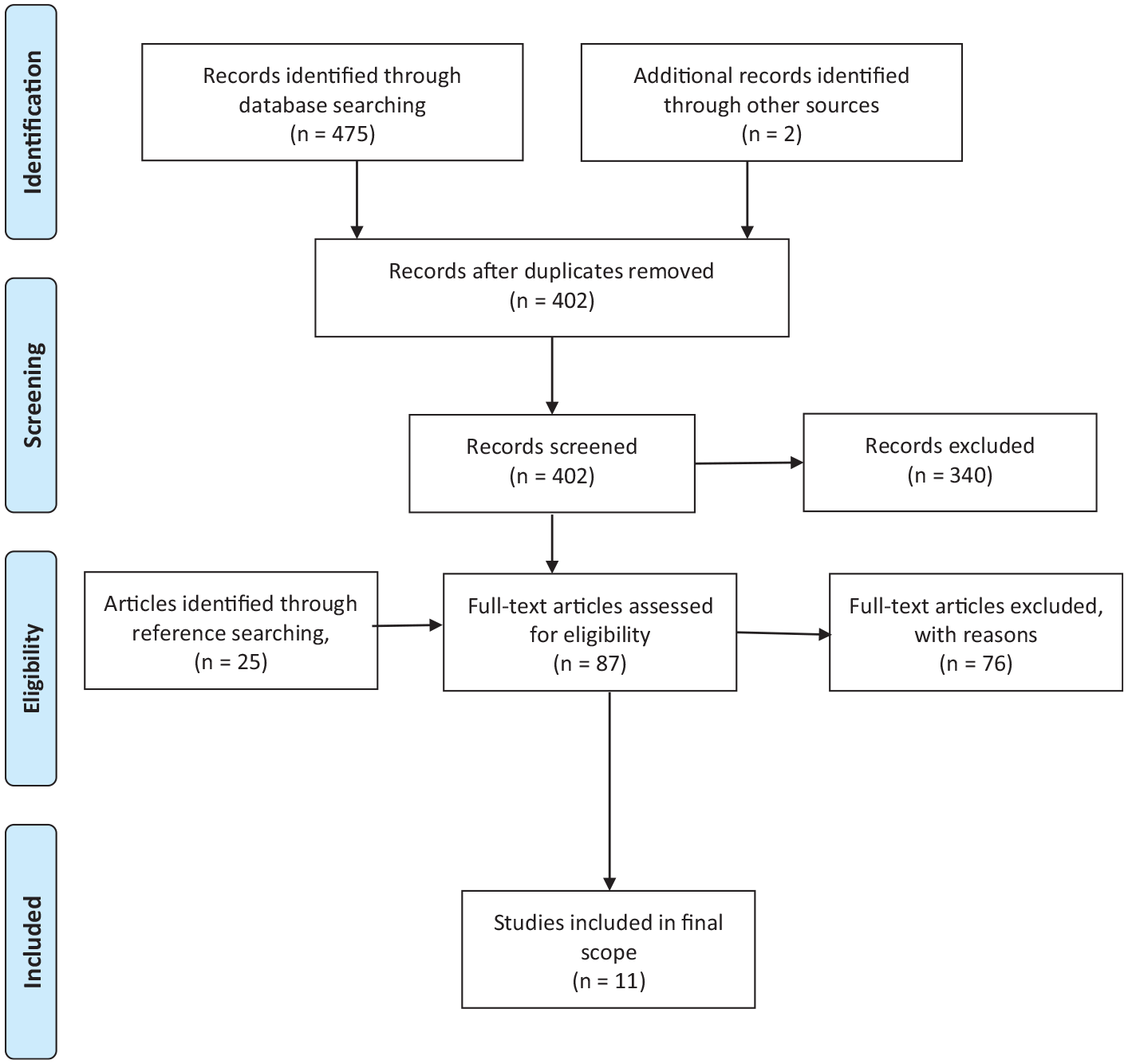
PRISMA diagram.
Despite the importance of regular communication for military families during separation, there is little research focused on the rise of instant social media and Internet-based communication (SM/IBC) use by service children. However, recent UK research highlights the need to investigate the consequences of increased access to SM/IBC for military families (Godier-McBard et al., 2021). This research reports increased contact via SM/IBC has the potential to ease family reintegration by maintaining parent–child relationships during separation. However, several challenges were highlighted, with indication that the use of video-call technology could be upsetting for children, due to the nature of “seeing” their parent. Furthermore, concerns were raised regarding the potential for increased access to SM/IBC to create expectations for increased communication that cannot be met by the serving family member. Increased anxiety felt by children for their parent’s safety was also suggested, due to the tendency for Internet access to be unreliable, for example, due to a lack of Internet signal or communication blackouts that occur to protect operational security. Furthermore, where regular communication was facilitated, families may have to make choices about whether to share day-to-day challenges with their serving family member, for whom this may cause anxiety and stress (Godier-McBard et al., 2021).
To gain a better understanding of these issues, this article will first outline international findings in relation to SM/IBC for communication in civilian families and will then report the results of an international scoping review focused on how military families use SM/IBC to communicate during military-related separation.
Communication using social media in civilian families
Research suggests significant use of social media for communication among civilian families. However, it is important to consider how this relatively new method of communication impacts family relationships. Hofer and Hargittai (2021) discuss how social online communication can translate to a sense of “social connectedness” (Garofalo, 2013), which refers to one’s experience of belonging to a social relationship of network (Lee and Robbins, 1995). Social connectedness links to social presence theory (Wut and Xu, 2021). Mykota (2017: 137) appraised social presence as “the critical affective component and [. . .] one of the more important constructs in determining the level of interaction and effectiveness of learning in an online environment.” Holding social presence is important in establishing communication quality, and the advantage for families is that there is usually a pre-established, face-to-face relationship.
Increased use of SM/IBC in families appears to be linked to an increased perception of “connectedness” in civilian families (Williams and Merten, 2011). Indeed, research has found that high levels of mobile phone use for communication between parents and adolescents are associated with higher levels of family connection (Padilla-Walker et al., 2012). Furthermore, synchronous forms of communication (such as instant messaging and video calls, which enable communication in real-time) are reported to enhance feelings of closeness among family members (Padilla-Walker et al., 2012), and video-based technology is found to engage young children better than more traditional methods of communication, such as phone calls (Share et al., 2017).
Also promoting family connectedness, international research suggests several other benefits for families who communicate using SM/IBC. Where families have limited opportunities for face-to-face interactions, that is, due to busy lives or geographical separation, SM/IBC can provide a medium of communication to support the maintenance of family bonds (Abel et al., 2020; Bacigalupe and Bräuninger, 2017; Storch and Ortiz Juarez-Paz, 2018). This enables absent parents to remain involved in day-to-day parenting tasks (i.e. cooking together, helping children with homework) (Cabalquinto, 2017; Nedelcu and Wyss, 2016). Research in the United States has also found that the use of mobile devices for communication gave both parents and children reassurance of the other’s safety, when away from home (Storch and Ortiz Juarez-Paz, 2018).
Conversely, research suggests several challenges associated with SM/IBC use in civilian families. Increased Internet use, while associated with connectedness in some contexts, can also lead to a decrease in family time, intimacy, and closeness (Williams and Merten, 2011). Synchronous methods of communication, particularly video calls, have the potential to become onerous, requiring additional effort, as participants can feel that they need to perform or put on a show for their family member (Share et al., 2017). However, nonsynchronous methods of SM/IBC (i.e. Facebook 2 ) are also found to be related to increased misunderstandings between family members, where there is a lack of tone and non-verbal cues to aid in interpretation of meaning (Lopez and Cuarteros, 2020; Storch and Ortiz Juarez-Paz, 2018).
Practical challenges are also evident, particularly where families are geographically distant. Where families are located in different countries there may be a “digital divide” between these countries, which can affect the technological quality of communication (i.e. with poor Internet in one location) (Shaker, 2017). There are additional challenges for families living in different time zones, which can involve a misalignment of daily schedules, making synchronous communication more difficult, and leading to more reliance on asynchronous methods of communication (Cao et al., 2010).
The current study
As discussed earlier, Service personnel (SP) often face frequent and long separations from their families (i.e. due to deployments or living away from the family home during the week). Based on the literature exploring SM/IBC use by civilian families, we expect that they are likely to experience several of the benefits that civilian families enjoy, with SM/IBC enabling increased social connectedness in line with the work of Hofer and Hargittai (2021).
However, emerging UK research suggests that the challenges experienced by civilian families may be exacerbated in the unique military context. For example, deployed parents can find themselves in locations that lack Internet access, leaving them unable to experience the benefits of family connectedness experienced when using SM/IBC. To investigate the use and impact of SM/IBC in separated military families, this article outlines the findings of an international scoping review, following the framework provided by Arksey and O’Malley (2005).
Method
Scoping reviews can serve many purposes: to “examine the extent, range or nature of research activity,” to provide a digestible summary of current research, and to highlight gaps in our understanding (Arksey and O’Malley, 2005). This article employed a scoping review methodology in order to establish and summarize what evidence currently exists, appropriate to broad nature of the research question: How do military families use Internet-based communication and social media to communicate with their serving member, and what is the impact of this?
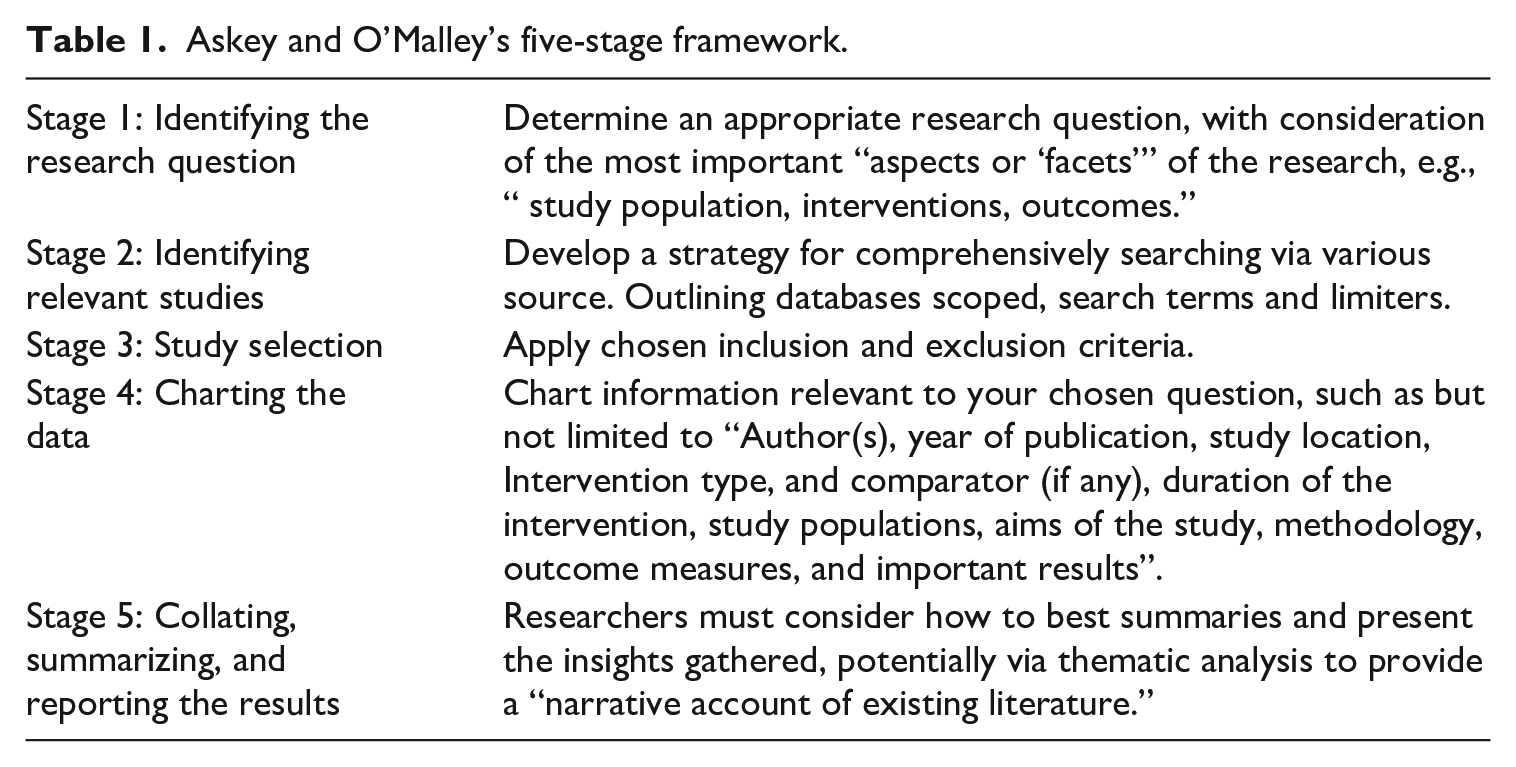
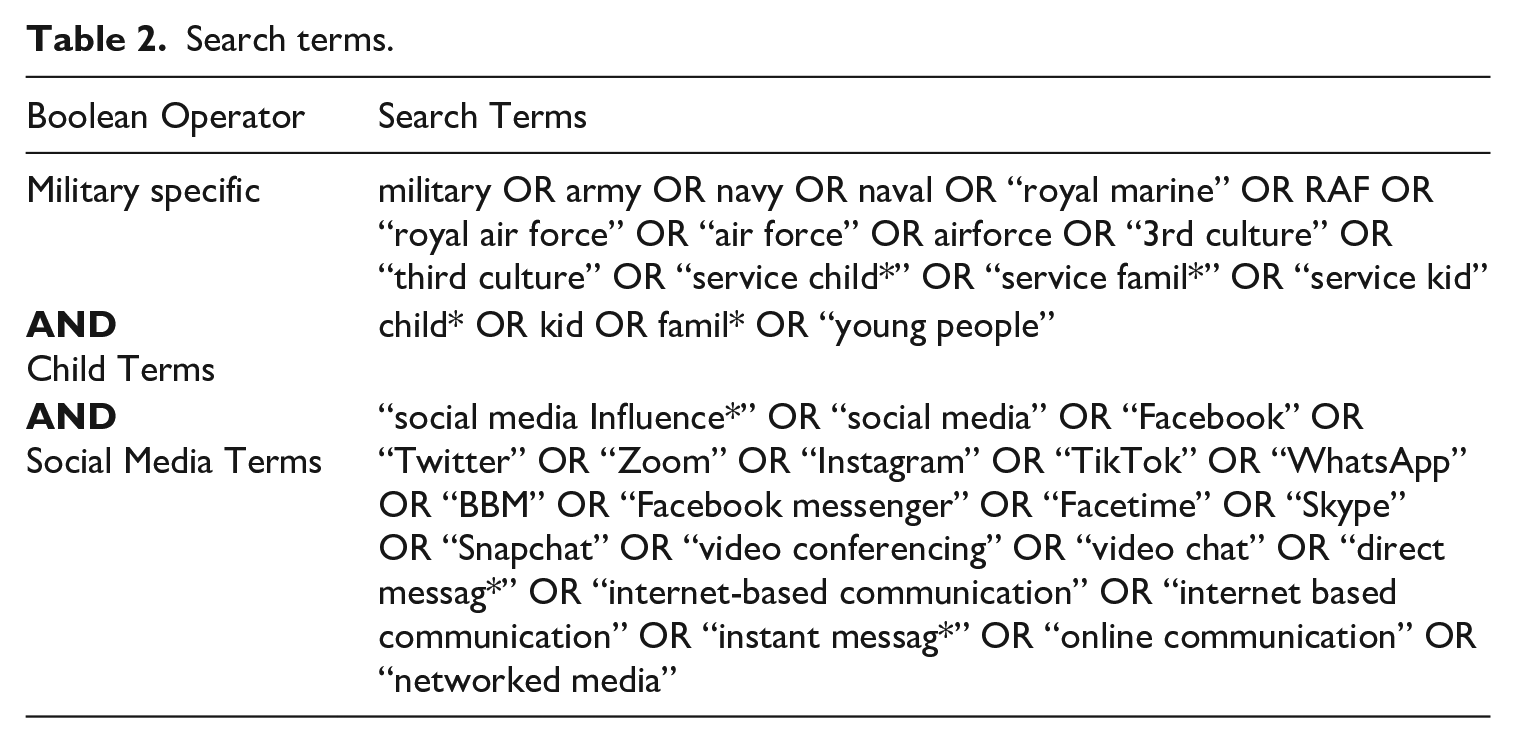
Arksey and O’Malley’s (2005) scoping review framework was followed; this five-stage framework outlines a rigorous approach to undertaking a scoping review with the aim of ensuring quality and replicable searches (see Table 1). As the purpose of this research is to understand the impact of SM/IBC on children’s family life, articles that focused on the impact of communication on spousal relationships only were excluded from this review. No country limiters were applied to capture all articles available internationally. The search terms, outlined in Table 2, combined military-specific terms, with child and family terms, and SM/IBC terms using Boolean logic. As new social media sites are developed frequently and their popularity with different age groups changes, we have not limited our search to specific social media platforms. Searches were conducted in February 2021 with no date limiters applied.
Askey and O’Malley’s five-stage framework.
Search terms.
The following databases and Google Scholar were searched: PubMed, PsycINFO, Web of Science, Scopus and Child Development and Adolescent Studies, Gale, ERIC, and the Education database. A desktop search was carried out to identify gray literature. A separate search of communication-specific journals on JSTOR was also undertaken due to differing search formats.
Initial database searches returned 475 articles and 2 from other sources, once duplicates were removed 402 articles remained. After a review for the relevancy of titles and abstracts, 87 articles remained, including additional texts identified from forward and backward citation searching. The full process is outlined in Figure 1.
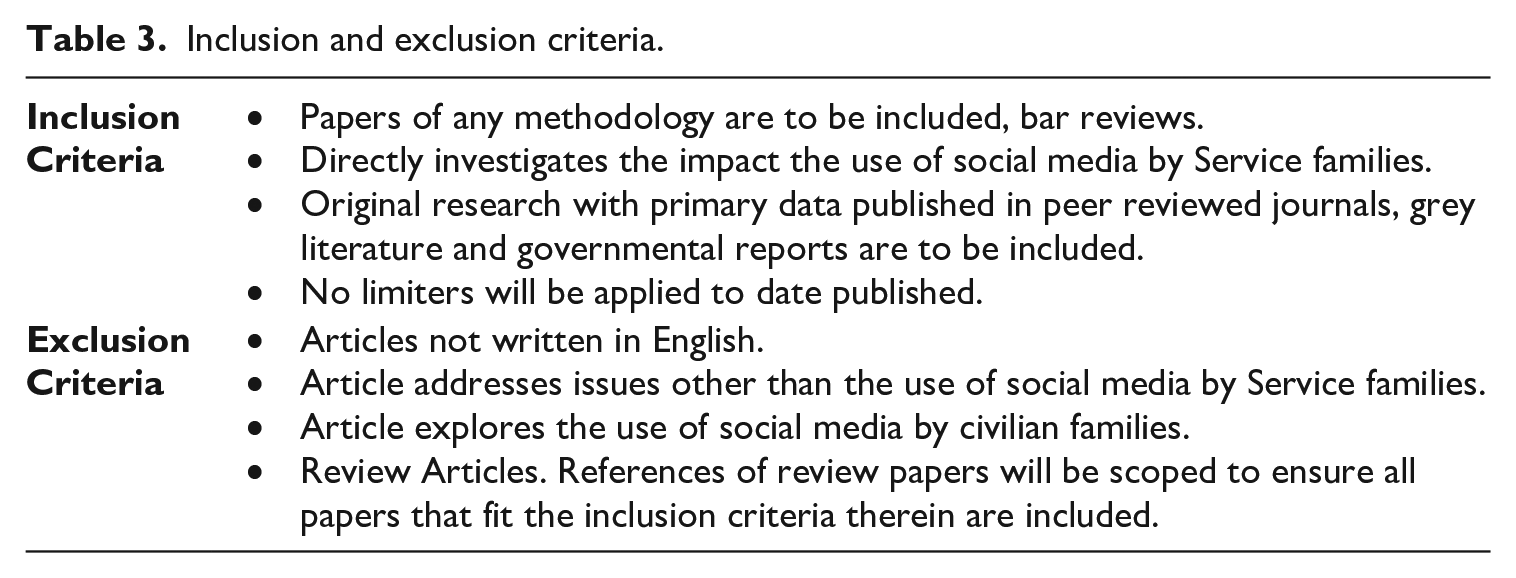
A full-text review of the remaining articles was undertaken to assess their eligibility for inclusion based on the criteria in Table 3. Eleven papers met the criteria for final inclusion. No further quality assessment stage was undertaken, in line with Arksey & O’Malley’s framework, which aims to gather the greatest “range of study designs and methodologies” possible (Arksey and O’Malley, 2005: 30). However, an outline of the limitations of the evidence base is provided in the discussion section.
Inclusion and exclusion criteria.
Four additional articles (primarily postgraduate dissertations) of potential relevance were identified in the database searches but are not included in this scoping review due to difficulty accessing their full text (Blasko and Murphy, 2016; Fletcher, 2015; Matthews-Juarez et al., 2013; Spector, 2014). Unsuccessful efforts were made to contact authors and to obtain the papers directly from the British Library.
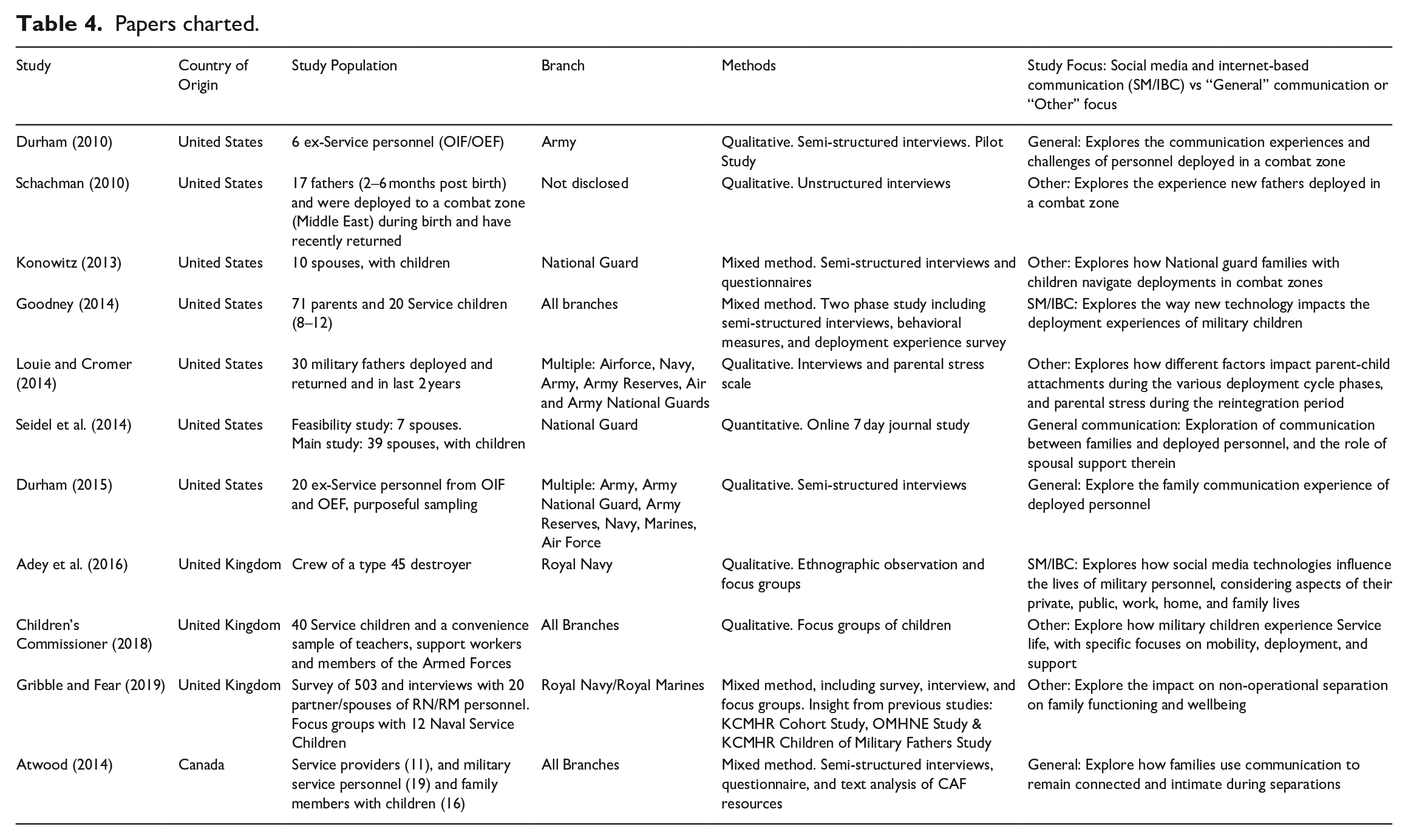
The following information was extracted and charted from each article: reference, study population and branch, aim, methodology, and main findings (see Table 4). The articles were analyzed thematically to identify the key issues and experiences emerging from the literature.
Papers charted.
Results
The literature identified was US-dominated (7 out of 11 papers), with three papers identified from the United Kingdom and one from Canada. Most articles were published in 2014 and beyond and therefore benefit from the major SM/IBC being well established. Four papers published between 2015 and 2019 provide some insight into the introduction of video calling capabilities to Facebook (2015) and WhatsApp (2016) (see Figures 2 & 3). No papers were identified in 2020 or in 2021 (when the search was conducted in February 2021). As such the international literature does not currently reflect on some of the most recent development of SM/IBC technology and the impact of Covid-19 on their use.
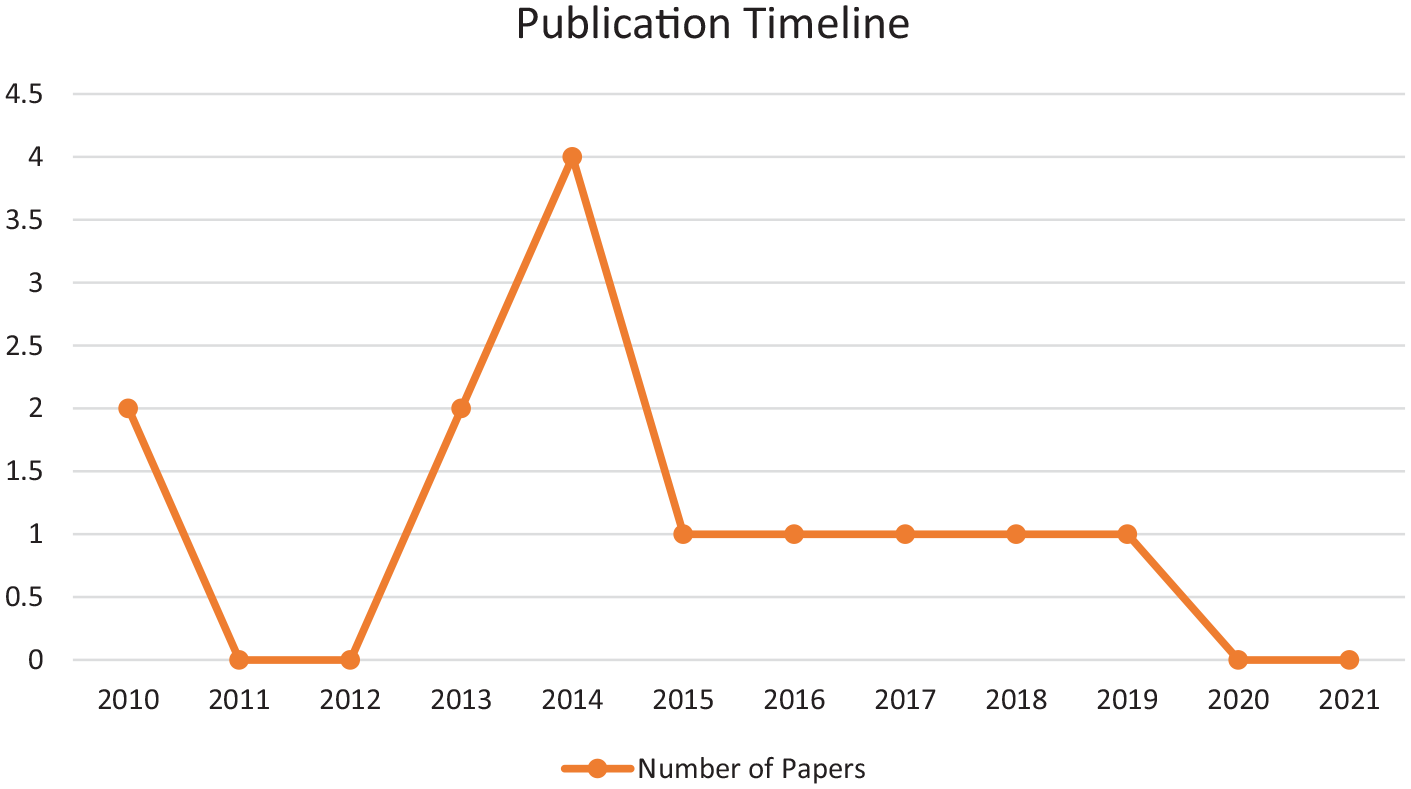
Number of papers returned per year in scope.
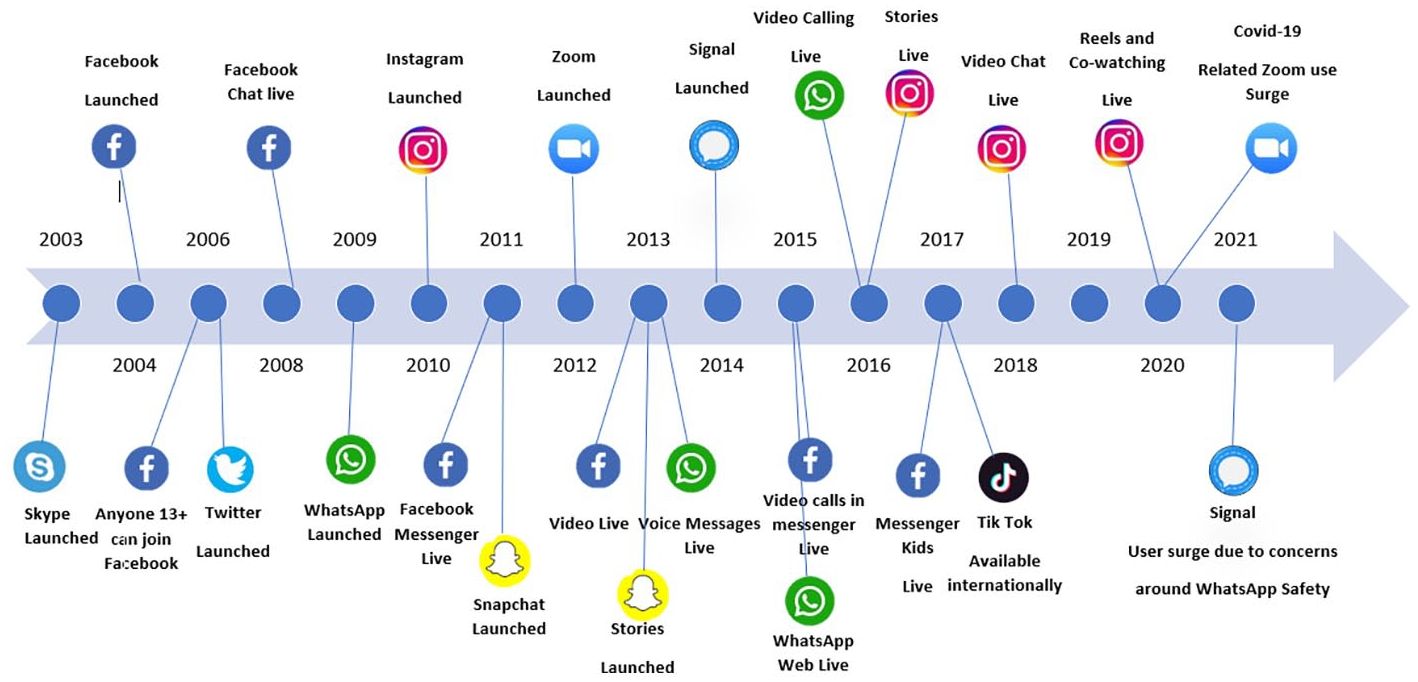
Social media timeline.
Most articles focused on the communication of military families as a unit, with three articles focused on parent–child communication, becoming a father during deployment, and the experience of SP, respectively. Only four studies included military children in their sample (Atwood, 2014; Children’s Commissioner, 2018; Goodney, 2014; Gribble and Fear, 2019), with most including adult spouses/partners and/or Serving personnel.
Articles included samples from across the Service branches, with 5 out of 11 papers including all or multiple branches of militaries (with one not disclosed) (see Table 3).
All articles bar two (Adey et al., 2016; Goodney, 2014) discussed SM/IBC within a wider focus on general communication or among other topics. As such, the majority of articles identified did not specially focus on the use of SM/IBC in military families (Table 4).
Types and frequency of SM/IBC among military families
International research suggests considerable use of SM/IBC by military families, demonstrating the use of video calls (Atwood, 2014; Children’s Commissioner, 2018; Durham, 2015; Goodney, 2014; Gribble and Fear, 2019; Konowitz, 2013; Louie and Cromer, 2014), Facebook (Atwood, 2014; Children’s Commissioner, 2018; Gribble and Fear, 2019; Konowitz, 2013; Seidel et al., 2014), and instant messaging (Children’s Commissioner, 2018; Goodney, 2014; Konowitz, 2013; Schachman, 2010; Seidel et al., 2014). However, preferences for specific methods of communication and frequency of communication varied across studies. Some US families report a preference for methods that enable them to hear their serving person’s voice, such as phone calls, Skype, and FaceTime (Durham, 2015). For other US families, this was dependent on context. For example, in one study, Skype communication was reserved for communicating with family and close friends, with official routes of communication preferred in emergency situations (e.g. during premature labor) to ensure that the information was shared with the serving family member in an appropriate manner (Atwood, 2014).
Children’s participation in SM/IBC with their Serving parent also varied across studies and locations. In the United Kingdom, Gribble and Fear (2019) found that 40% of the military children (aged 13–19) surveyed reported using SM/IBC methods with their Serving parent, compared with 50% using phone, and 10% using email communication. However, an earlier US-based study (Seidel et al., 2014) found that children were more likely to report participating in Skype calls (84%), compared to instant messaging (13%), Facebook (7%), or traditional phone calls (37%) (Seidel et al., 2014).
The frequency of communication between at-home and serving family members also varied significantly, ranging from daily (Goodney, 2014; Konowitz, 2013), to weekly (Goodney, 2014; Konowitz, 2013), to monthly (Goodney, 2014). However, within many studies, the use of SM/IBC was difficult to distinguish due to the inclusion of traditional methods of communication within frequency measures. Furthermore, the frequency of SM/IBC is likely to be related family’s personal preferences and habits (Atwood, 2014), as well as military-related factors, such as the cycle of deployment, with one study reporting that frequency of communication decreased over time as the family settled into new routines during separation (Konowitz, 2013).
Challenges in accessing Internet-based communication
Studies outline challenges related to accessing SM/IBC, including a lack of access to communication infrastructure and communication blackouts, with specific challenges that vary by occupation and branch.
Communication infrastructure
Communication infrastructure is found to vary between deployment locations (Atwood, 2014; Children’s Commissioner, 2018; Durham, 2015). Indeed, evidence suggests that Internet access differs by country of military service and that access may differ between short term and long term military campaigns (i.e. with access improving once it is evident a deployment will be long term) (Atwood, 2014). Being deployed in different time zones to their family also presented a challenge for communication (Atwood, 2014; Goodney, 2014). Where communication infrastructure was lacking entirely, two articles report that military personnel may face financial barriers to communicating with their family at home due to the expense of having to purchase data plans or prepaid cell phones (Atwood, 2014; Durham, 2015).
Inconsistent connectivity was noted as a challenge across studies (Atwood, 2014; Children’s Commissioner, 2018; Gribble and Fear, 2019; Schachman, 2010). In some cases, these technical difficulties meant that military families chose not to make use of newer social media technology. In some locations, a lack of equipment can lead to long waits for shared communication technology, thus potentially restricting access (Atwood, 2014; Durham, 2015). In addition, privacy can be an issue for SP, as often communication infrastructure was set up within public areas (Durham, 2015). However, these challenges were also felt with traditional phone-based communication, as such the relative privacy of some SM/IBC platform options, when used on personal devices, may therefore benefit to SP (Atwood, 2014).
Access was found to vary by occupation and service branch. Atwood (2014) reports that those in the Canadian Airforce had greater access to regular communication due to having periods of rest at base, which often had good communication infrastructure. Conversely, those in the Navy, in both the United Kingdom and Canada, are found to have inconsistent access to communication methods, due to their ship-based deployments limiting access to communication infrastructure that is often more available on land-based deployment and on base (Adey et al., 2016; Gribble and Fear, 2019). A lack of parity is reported across roles, with those in communication-based roles reporting greater access to communication equipment, whereas roles involving remote and unplanned deployments (i.e. handing emergency situations) were linked to poor access to communication infrastructure (Atwood, 2014).
The impact of rank on access to communication infrastructure was unclear. One study focused on electronic forms of communication. Konowitz (2013) found that frequency of communication broadly was not associated with rank. However, another reports an indirect link, with higher ranking personnel having increased access to personal email or social media (Atwood, 2014). Furthermore, some in this study reported that Commanding Officers would on occasion donate their opportunities to communicate home to younger personnel of lower rank, who often had young families.
Communication blackouts
Communication blackouts due to serious injury, death, or a security breach periodically remove all avenues for communication for SP (Atwood, 2014; Durham, 2015; Konowitz, 2013). When instated due to a communication security breach, participants reported frustration as they felt punished for the actions of an individual (Durham, 2015). Blackouts can cause anxiety for families, as they wait for confirmation that their serving member is safe once communications avenues are restored (Durham, 2015).
Positive family experiences of SM/IBC
The literature highlights how SM/IBC can enhance family communication, providing increased opportunities to engage in communication, and benefits associated with synchronous communication.
Increased opportunities for communication
Families report that increased SM/IBC technology provides more opportunities to communicate due to the mobility of personal devices (Atwood, 2014). While taking account of day-to-day routines is identified as an issue for both SP and their families, military members were more able to consider their family schedules when Internet connections were stable and consistent (Atwood, 2014).
However, research also highlights the need to balance increased opportunity to communicate with the quality of that communication. Indeed, Konowitz (2013) reported that while quantity of communication can be high, quality can simultaneously be low, with 90% of participants reporting their communications as “mediocre, tense, [or] limited.” Atwood (2014) maintains that frequency impacts intimacy, however, notes that this can be subjective and based on the individual family (i.e. in terms of what is considered too much communication or damaging intimacy for some families, can be right for other families). Furthermore, Atwood (2014) reports that frequent communication was associated with running out of topics, arguing, and a reduction in SP’s focus on their role. The author of this study highlights the subjective and personal nature of what is considered optimal in regard to quantity and quality in communication (Atwood, 2014: 144).
Synchronous communication
The role of synchronous communication (i.e. communication that takes place in real-time) in facilitating parental involvement is highlighted within the literature identified, enabling Serving parents to remain updated and engaged with their children (Durham, 2015). However, evidence on the experience of using video conferencing software during separation is mixed. A number of studies highlight the positives of this form of face-to-face communication, leading to an increased feeling of connectedness, and enabling families to see their serving member is safe (Goodney, 2014: 42; Konowitz, 2013). However, other studies report no perceived additional benefits of this to non-video-based communication for families (Atwood, 2014; Konowitz, 2013), for example in instances in which they experienced poor connectivity and feeling self-conscious about their appearance (Konowitz, 2013).
While some studies report that video-based communication can better engage children, others report instances in which seeing their Serving parent, and online communication in general, caused upset for children (Goodney, 2014; Gribble and Fear, 2019). However, these studies highlight the individual variability in experience for children, based on their specific circumstances.
While it is unclear whether video-based technologies can enhance communication in comparison to traditional methods, synchronous SM/IBC appears to help parents remain involved in day-to-day activities and key moments/events (Goodney, 2014). Relatedly, two studies highlight the role of indirect contact (i.e. communication about children between the serving and at-home parent) for Serving parents, which allows them to remain updated regarding their children’s development, day-to-day routines, and to take part in some child care choices. The creative use of SM/IBC technologies was highlighted in these studies (i.e. watching a video of their child eating dinner or bath time) (Louie and Cromer, 2014; Schachman, 2010).
Challenges associated with SM/IBC for military families
The literature reviewed highlights several challenges that are created or exacerbated by SM/IBC, including the difficulties associated with engaging children in communication, and choosing what information to share with family members.
Challenges in engaging children in communication
Regardless of the use of traditional or SM/IBC, engaging children in communication can be challenging. Evidence suggests young children may be easily distracted (Atwood, 2014), and older children may be preoccupied by their social lives or hobbies (Atwood, 2014), or resent their serving parents missing key events and thus be unwilling to communicate (Konowitz, 2013). Furthermore, children may be unavailable to communicate due to school routines (Atwood, 2014). For parents, while SM/IBC allows them to be more regularly involved and updated on their children’s lives, it can be difficult to maintain meaningful involvement in parenting. For example, a former Serving parent described the difficulty of hearing misbehavior on a callwhilst unable to react to the behavior as they would in person; “if my kids were acting up, as a father I wanted to be the disciplinarian, but it is difficult from Afghanistan” (Durham, 2015: 288).
Sharing difficult or challenging news
Deciding if and when to share bad news appears to be a common challenge for both traditional and SM/IBC in military families, based on both the emotional impact on family members and the constraints of operational security (Atwood, 2014; Durham, 2010, 2015). SP report choosing not to share troubling information (i.e. when this choice was not constrained by operational security), to avoid worrying their family and discussed the negative impact this can have on their wellbeing (i.e. feeling “sucked up or bottled up”) (Durham, 2010, 2015: 289). At-home family members also report often choosing not to share bad news to avoid worrying the Serving family member or waiting until the situation had been managed (Atwood, 2014).
Where communication was constrained by operational security, both SP and spouses report this as a challenge (Atwood, 2014), requiring the Serving member to clarify constraints with their at-home family (Durham, 2015). Durham (2010: 558) recommends that the military explores how to alleviate this burden and increases family education on operational security. These constraints are also found to impact on SP’s feeling of connectedness with their at-home family (Durham, 2010).
To navigate these challenges and constraints on communication, families in some studies report developing forms of coded language or unspoken rules (Atwood, 2014; Durham, 2015). For example, not asking whether a day was good or bad, or calling before a communication blackout (if possible) to confirm their safety (Atwood, 2014; Durham, 2015). One study highlights the importance of learning to “interpret sudden silence” due to a communication blackout (Atwood, 2014: 115). Communication blackouts can cause families anxiety surrounding their serving family member’s safety as they await communications to be restored (Durham, 2015). As a result, this anxiety can extend to other situations when communication is lost, for example, due to poor Internet connectivity (Konowitz, 2013: 117).
Impact of SM/IBC on military families’ well-being
The evidence reviewed was unclear in relation to the impact of SM/IBC on military family’s well-being, due to a lack of distinction between SM/IBC and traditional methods of communication in studies. One US study suggested that communication, including SM/IBC, with their SP can have a positive impact on military children’s well-being, with evidence of associations with increased happiness, excitement, and security, and children feeling as though their deployed parent was still involved (Goodney, 2014). Furthermore, children in this study who reported more frequent communication with their serving parent reported less symptoms related to “ambiguous loss” (i.e. guilt, anxiety, and emotional exhaustion) (Goodney, 2014). This concept is used to describe the unclear loss experienced when a family member deploys as they are physically absent but remain psychological present to a certain extent (Boss, 1999). While it could be hypothesized that the increased opportunities for communication provided by SM/IBC could enhance the benefits found in this study, UK research suggests that inconsistent access to SM/IBC, particularly synchronous communication, and connectivity problems have the potential to exacerbate anxiety in children (Children’s Commissioner, 2018). However, this study also found that instant forms of SM/IBC reduced anxiety around safety, as children have a better understanding of their parent’s role.
Some evidence suggests that increased communication during deployment can ease reintegration post-deployment (Durham, 2015; Goodney, 2014). Indeed, one study found a negative correlation between video calls and postal communication during deployment and children reporting difficulties with their serving parent’s reintegration (Goodney, 2014).
The literature also highlights the impact of access to SM/IBC on serving parents during deployment. Two papers discuss the competing demands for military and family life, and the impact of increased opportunities for communication provided by SM/IBC in this tension (Adey et al., 2016; Durham, 2010). These studies highlight how increased Wi-Fi connectivity and expectations of increased communication from their at-home family members can result in SP socializing with colleagues less during their free time and struggling to focus and manage the demands of their military role.
One article (Schachman, 2010) investigated the experience of becoming a parent during deployment, including the impact of access to SM/IBC during this time. Concerns around the pregnancy were often worsened by inconsistent access to SM/IBC, and some participants relayed experiences of being unaware of their child’s birth. Conversely, SP appreciated the opportunities that SM/IBC provided for keeping updated and remaining involved throughout the pregnancy and after birth (i.e. being sent pictures and staying involved in day-to-day decision-making) (Schachman, 2010).
Discussion
The aim of this scoping review was to explore the literature pertaining to the impact of using SM/IBC for military families during separation. Eleven articles were identified, with most of the literature originating from the United States (7 out of 11 papers), three papers originating from the United Kingdom, and one from Canada. Evidence suggests considerable usage of SM/IBC by military families, reflecting the widespread use of these communication technologies in civilian families (Atwood, 2014; Children’s Commissioner, 2018; Durham, 2015; Goodney, 2014; Gribble and Fear, 2019; Konowitz, 2013; Louie and Cromer, 2014; Schachman, 2010). Military families’ preference and frequency of SM/IBC use varied considerably across studies, often due to individual circumstances and contexts. The creative use of social media by Service families with children was a notable feature of the literature, for example, using private videos on YouTube to share important moments (Louie and Cromer, 2014; Schachman, 2010), enabling serving parents to remain present in their children’s lives.
Several benefits that military families derive from the use of SM/IBC were evident in the literature, including (I) increased closeness/connectedness and parental involvement, (II) increased frequency of communication opportunities, (III) improved ability to schedule communication around family routines, and (IV) the potential for SM/IBC to improve family well-being during deployment and ease reintegration. However, many of these benefits also present opportunities for SM/IBC to exacerbate challenges associated with traditional communication methods (e.g. anxiety when not in contact) as well as unique practical barriers to accessing SM/IBC.
Our findings should be considered in light of the theory of “social connectedness” (Garofalo, 2013) and scholarship that highlights how social connectedness can be achieved through online communications, that is using SM/IBC (Hofer and Hargittai, 2021), as well as the role of social presence in online communication (Mykota, 2017). This review of the literature demonstrates that like that seen in civilian families, SM/IBC appears to foster an increased sense of connectedness for seperated military families (Atwood, 2014; Durham, 2015; Goodney, 2014; King-O’Riain, 2015; Konowitz, 2013).
Not all scholars agree that social connectedness is increased through SM/IBC, with Nguyen et al (2021) suggesting that some forms of digital communication may relate to lower social connectedness. However, the creative use of SM, used by military families evidenced in this review, such as sharing YouTube videos, aided a higher sense of social presence and thus promoted stronger connectedness during periods of separation (Louie and Cromer, 2014; Schachman, 2010). However, an increased sense of connectedness may also exacerbate some of the challenges associated with military life. For example, the increased sense of social connectedness provided by SM/IBC means that military families may face difficult decisions related to whether and how to share challenging news and day-to-day problems remotely (Atwood, 2014; Durham, 2010, 2015). In addition, military families may struggle with balancing increased connectedness with the limits placed on Service personnel’s ability to share details of their day-to-day life by operational security (Durham, 2010, 2015).
Connectedness theory also validates these online spaces created through military families’ use of SM/IBC. Consistent with the social network perspective (Katz et al., 2004), individuals are each beings in the social network, with a tie that is maintained by remote communication, yet this link may be weak or strong (Kreijns et al., 2021). For the members of the military family, these interpersonal relationships span these online social spaces. Due to the connectedness founded in the physical family environment before deployment, these interpersonal/social relationships are embedded within the group’s norms and values, rules and roles, and beliefs and ideals (Blanchard and Markus, 2004). These social spaces, therefore, also play a role in maintaining the family’s cultural and interpersonal structure, because norms and values, rules and roles, and beliefs and ideals are cultural artifacts developed and maintained by the group members (Kreijns et al., 2021). Considering all of the above, further research is needed to examine in the detail the role of SM/IBC in military families’ sense of connectedness during periods of separation and the impact that this has on family relationships when reunited.
The benefits of SM/IBC for military families
The reviewed literature highlights the benefits of synchronous communication (i.e. communication in real time) for separated military families, allowing Serving parents to be more involved in family life and fostering a sense of connection (Atwood, 2014; Durham, 2015). This mirrors research conducted in civilian populations (Padilla-Walker et al., 2012), which also highlights the opportunity provided for separated families to undertake activities synchronously, for example, creating music or cooking together (Cabalquinto, 2017; Nedelcu and Wyss, 2016). As noted by Atwood (2014), SM/IBC technologies increase the numbers of available synchronous communication routes. However, the partial involvement in family life afforded by SM/IBC can prove challenging for the serving parent, who may be unable to react and parent as they would wish to from afar (Durham, 2015).
Both military and civilian studies highlight the benefits associated with face-to-face video communication in helping separated families feel more connected (Goodney, 2014; King-O’Riain, 2015; Konowitz, 2013). Video calls appear to be particularly engaging for young children (Goodney, 2014), and this is mirrored in research with civilian families (Share et al., 2017). Furthermore, there was some international evidence that SM/IBC was associated with improved well-being in military children, with studies reporting increased happiness, perception of parental involvement, excitement, and security, as well as in increased understanding of their parent’s military service, which can help to alleviate concerns around parental safety (Children’s Commissioner, 2018). However, UK-based research (Gribble and Fear, 2019) highlights the potential for online communication to cause distress in some military children, reminding them of their parent’s absence. As such, evidence in this area is unclear, and further research is needed to gain a more complete understanding of the impact of SM/IBC with their Serving parent impact on military children’s well-being.
Challenges associated with SM/IBC use in military families
Most of the literature highlights the challenges associated with both SM/IBC and traditional methods of communication. However, several practical barriers to accessing SM/IBC appear to be unique (i.e. poor communication infrastructure, lack of equipment, poor connectivity, cost, time difference). These barriers hinder military families access to SM/IBC and prevent them from exploiting its potential benefits. Furthermore, inconsistent access to synchronous SM/IBC is reported to cause anxiety for children when unable to reach their parents (Children’s Commissioner, 2018; Godier-McBard et al., 2021). Research with separated civilian families highlights similar challenges, with those experiencing considerable time differences missing out on the benefits of synchronous communication (Cao et al., 2010). The anxiety caused by these challenges can be exacerbated further for military families by communication blackouts, in which all avenues for contact are cut off to maintain security. Studies highlight the anxiety felt by family while awaiting confirmation that their loved ones are safe and well during these blackouts (Durham, 2015). This can also impact on situations in which communication is lost due to poor connectivity, as families are unsure of their family members safety (Konowitz, 2013). SM/IBC, therefore, may foster more instances of anxiety for military families, due to issues with unstable and sporadic Internet access. However, the extent that this occurs is currently unknown.
Service branch and role appear to influence access to SM/IBC, with those in Naval forces, and those working in an emergency-response role, reporting connectivity issues while deployed on ship and in disaster zones. Furthermore, working in a communication-based role appears to improve access to SM/IBC, due to increased access to communication infrastructure (Atwood, 2014).
Other challenges reported in the literature represent those experienced with traditional methods of communication, which are exacerbated by the use of SM/IBC. Indeed, increased potential for frequency and immediacy of communication was associated with additional difficulties (Atwood, 2014). Military families must navigate how and when to share difficult news remotely, and Atwood highlights the additional stress this can cause (Atwood, 2014; Durham, 2010, 2015). Furthermore, to maintain operational security while on deployment, there are limits on what military personnel can share with their family, placing additional burden on SP to explain these boundaries to their families (Durham, 2010, 2015). In addition, increased expectations of frequent communication can lead to difficulties for SP, who must balance the competing demands of military and family life. Some studies report the impact of this on SP’s ability to focus on their roles and the negative impact on social dynamics with colleagues (Adey et al., 2016; Durham, 2010). As such, these difficulties have the potential to disrupt operational readiness and effectiveness for military organizations.
Limitations
Several limitations are of note. A significant challenge when considering SM/IBC use in military families is the lack of differentiation within the reviewed research between traditional methods of communication (e.g. letters, ship-to-shore telephony) and SM/IBC. Indeed, just two studies focused specifically on military families’ use of newer Internet-based communication technologies.
Some studies had small sample sizes (Durham, 2010; Konowitz, 2013; Seidel et al., 2014) and would therefore benefit from additional research to establish these findings among a larger population.
A significant limitation is that the majority of literature returned explored the use of SM/IBC in military families within the US context. Compounding this all papers returned focused on the experiences of Westernized militaries from high-income countries (United States, United Kingdom, and Canada), with similar cultural and policy contexts surrounding communication and families. As such, these findings may have limited cross-cultural generalizability due to significant differences in communication infrastructures, deployment lengths, deployment locations, support provisions, healthcare systems, and social and military cultures between some nations. Further studies are necessary to determine if the benefits and challenges noted are relevant cross-culturally. Future reviews may consider including papers not published in English where possible, in order to examine if relevant research is available in other languages which could potential capture differing experiences.
In addition, several studies looked at specific branches of the military. As such, while these findings give a good indication of the experiences of military personnel, they may not be generalizable to other service branches due to differences in deployment circumstances and roles.
All identified literature was published between 2010 and 2019, with the majority published after 2014, reflecting the significant increase in societal use of SM/IBC in the 2010s. No articles were identified between 2020 and the time of the scoping review process in February 2021; thus, no reflections can be made the impact of the expansion of SM/IBC due to the Covid-19 pandemic or any developments in SM/IBC technology in this period. Due to the significant shift to online communication during this time, further research is needed to determine the impact of this on military family’s experiences of communication during separation.
Finally, only 4 of the 11 studies included children as participants, with most studies capturing the experiences of children via parental report. The use of parental report potentially limits our understanding of the child’s experience of SM/IBC as it relies on parent’s perceived knowledge or observation and therefore might not be fully reflective of the child’s experience.
Recommendations and implications for practice
Our review identified several areas in which further research is required. This includes further investigation of the unique challenges and benefits of SM/IBC during separation, and the impact of using this technology on military family relationships, as most studies identified in this review also included more traditional methods of communication. In particular, we recommend research looking at the impact of SM/IBC on deployment outcomes (i.e. child and family well-being) and post-deployment family reintegration in different contexts as well as how the impact on SP might affect operational readiness for military organizations. Furthermore, due to the lack of inclusion of children in the reviewed studies, we recommend investigation of the utility SM/IBC in engaging military children in communication with their serving parent during separation. Considering the significant increase in the use of remote communication during the Covid-19 pandemic, we also recommend research into if and how use of SM/IBC during the pandemic has changed the experience of Service families communicating during separation, and the impact on their family relationships. Finally, current literature only explores the experiences of military families from a small handful of Westernized, high-income countries (United States, United Kingdom, and Canada), future research should examine the use of SM/IBC by families from a range of military contexts. Considerations of how diverse geographical and cultural realities can alter families’ experiences should not be overlooked in the other future topic areas suggested above.
In addition, we encourage militaries to consider how they could work to improve infrastructure to make SM/IBC more reliable and accessible. Improving communication infrastructure would help to avoid the potential for inconsistent communication, shown to heighten families’ anxiety around their serving members safety (Children’s Commissioner, 2018; Godier-McBard et al., 2021). Furthermore, echoing the recommendations made by Durham (2015), militaries must ensure that families have a clear understanding of what can and cannot be shared due operational security. Practitioners and policy makers should keep in mind that each family’s specific situation (e.g. Service branch, rank, role, time difference, age of children) will impact the challenges they might face in maintaining an effective virtual relationship and look to recommend appropriate advice and support based on these differences.
Conclusion
Overall, there appear to be significant benefits to military family’s use of SM/IBC during separation, offering more opportunities to communicate and more, helping families feel more connected, enabling serving parents to be more involved, and positively impacting on families’ experience of the deployment. However, this expansion of communication options has exacerbated some of the challenges of military life; anxiety around parental safety, the difficulty associated with choosing what information to share, and difficulties for SP in balancing military and family life.
Limited research exists on the impact of SM/IBC on Service families’ well-being and relationship dynamics, and what exists is US-dominated. Therefore, further research is needed to solidify the evidence base and ensure that militaries and those supporting military families can provide informed guidance on managing virtual relationships during deployment. Due to the benefits of SM/IBC discussed in this article, modern militaries should take seriously these practical barriers and look for avenues to help alleviate them, where possible.
Footnotes
Declaration of conflicting interests
The author(s) declared no potential conflicts of interest with respect to the research, authorship, and/or publication of this article.
Funding
The author(s) disclosed receipt of the following financial support for the research, authorship, and/or publication of this article: This project was funded by the Naval Children’s Charity, UK.
