



Abstract
Through an analysis of 4chan’s /adv/ or ‘advice’ board – in which predominately male users seek advice on life matters – here we examine masculine ontological insecurity and its implications for understanding how ‘toxic’ masculine identities emerge, and how young men more generally struggle to make sense of their lives. Advancing extant scholarship, our findings uncover an ‘on the cusp’ masculine identity – subject to the anxieties and self-perceived failures which act as preconditions of toxic ideologies and outcomes, but also seemingly yet to practice such (il)logics. Responses from the community suggest three ways of addressing, or making sense of, the problems users faced. Finally, and of relevance to both the theorising of contemporary masculinities and related socio-positive interventions, we highlight the (seemingly) odd paradox of vulnerable male users being drawn to express their vulnerabilities on a platform notorious for its insensitivities.
Introduction
The recent mass shooting in Plymouth, UK, by 22-year-old White male, Jake Davison, has again brought into stark relief the harmful role of what an increasing number of scholars critically refer to as ‘toxic’ masculinity (e.g. Ging, 2019a; Salter and Blodgett, 2017; Trott, 2020; Whitehead, 2021 cf. critique by, e.g. Waling, 2019a). Before committing his murderous act of terror, Davison had been frequenting various online spaces notorious for harbouring groups of discontented and/or aggrieved (and most often White, and cis-hetero) young men. In his online engagements on such spaces, Davison expressed various frustrations relating to his perceived sexual, social and economic failures, surmising on one message board, for example, that ‘obviously I don’t have much hope of attracting a woman’ and then, in a later video uploaded to YouTube, that he felt ‘defeated by life’. Echoing earlier, similarly motivated acts of mass murder by aggrieved young men – most famously, the case of Elliot Rodger in 2014 – Davison’s story is just one of the more extreme examples of a broader pattern of young men acting out in response to a gendered sense of ontological insecurity. As products of shifting gender relations in which the traditional meanings associated with, and statuses afforded by, masculinity are being increasingly contested, anger and violence are only two of a range of potential responses chronicled by scholars. Indeed, ‘threats to manhood cause a host of behavioural, cognitive, and attitudinal outcomes’ (DiMuccio and Knowles, 2021: 1170), including the more internalised expressions of shame, anxiety and depression.
This ontological insecurity often plays out online, most notably on Reddit and 4chan. To date, related research into these online spaces (e.g. Ging, 2019a; Ging et al., 2020; Tuters and Hagen, 2020; Wright et al., 2020) has predominately focused on the toxic/hateful expressions of this gendered condition – rightfully so, given the impacts on women, and also minority groups, who are often the victimised focus of blame. Particular attention has been paid to the acutely misogynistic ‘incel’ (involuntarily celibate) online subculture of ‘men who resent their abstinence due to their purported ineptitude with women’ (Chang, 2020: 2) – with which Davison was associated, and to which Elliot had earlier become a ‘hero’. Space remains to complement the research on the externalised and more overtly antisocial manifestations of this gendered ontological insecurity through more attention to the sociocultural condition itself as underpinning a broader range of conditions relating to contemporary masculine identities.
Analysing 4chan’s /adv/ or ‘advice’ board – in which (generally young) men congregate to seek advice on a range of life matters – here we examine masculine ontological insecurity and its implications for understanding how toxic masculine identities emerge and proliferate, and how young men more generally struggle to make sense of their selves and social worlds. Advancing extant scholarship, our findings uncover an ‘on the cusp’ masculine identity – subject to the anxieties and self-perceived failures which act as preconditions of toxic ideologies and outcomes, but also seemingly yet to practice such (il)logics. Three interrelated questions guide the analysis of data here. What life challenges/anxieties do these men come to 4chan to seek advice about, support for? How are their various dilemmas expressed, particularly in respect to ideological content? Finally, what responses do they receive from this subset of an online community widely associated with toxicity and radicalisation? We begin with an overview of the relevant literature and outline the study’s theoretical framework, before discussing our multi-layered computational/qualitative methodology. A discussion of our findings follows, bringing into unique conversation an interdisciplinary set of feminist theoretical, sociological and social-psychological perspectives to make fuller sense of 4chan, men’s engagements with 4chan (and similar online spaces) and the broader tensions inherent in contemporary masculine identities.
Literature review
The following review comprises three sections. First, we survey the literature making sense of 4chan itself: its unique characteristics as an online communication/community-building platform; its widely noted evolution into a breeding ground for toxic and reactionary views; and, importantly, scholarship which disrupts the prevailing view that 4chan should be defined by its antisocial elements. This is followed by a discussion of the literature more specifically focused on the dynamics of toxic masculinity in spaces such as 4chan – notably, the work of Ging (2019a, 2019b; Ging et al., 2020) – and how this gender theorising fits within the hegemonic masculinity framework (Connell, 1995). Finally, we outline a set of supra-digital theoretical perspectives, social-psychological and sociological, which shed light on the potential impacts on men’s identities when they struggle/fail to achieve orthodox-gendered markers of success.
4chan
Launched in 2003, 4chan is an ‘imageboard’ social media platform organised into a series of ‘boards’ relating to various topics/interests, each containing a series of constantly updating ‘threads’. Users are anonymous (by default) and the content they share is ephemeral, remaining on the site for no more than a few days at most. Indeed, per Nissenbaum and Shifman (2017), ‘what makes the site different from most other forum websites is the absence of marked identity and history. There is no way to create a stable identity on 4chan . . .’ (p. 487). Partly due to the anonymity and ephemerality the site affords, 4chan holds a uniquely significant, and arguably contradictory, position in new media cultures, as both ‘a source of subcultural innovation on broader mainstream Web culture’ (Tuters and Hagen, 2020) and breeding ground for the resurgence of reactionary, and predominately White, male and cis-hetero ‘right-wing digital populism’ (pp. 2219, 2222). Lamenting 4chan’s evolution from potential catalyst for web-based progressive social change to reactionary hotbed, Dematagoda (2017) notes, The forum was once lionised by progressive columnists and cyber utopians in the wake of such events as the Arab Spring and the Occupy Wall Street movement as the perfect example of a leaderless digital network – a potential harbinger of radical social and political change. (p. 140)
While increasingly associated with right-wing politics, 4chan remains a key space of web-cultural innovation in respect to evolving meme cultures, and online subcultural vernaculars more broadly: ‘4chan’s ephemeral design – in which posts are deleted after a certain amount of user engagement – functions as a ‘powerful selection machine . . .’ (Tuters and Hagen, 2020: 2219). In her study of 4chan’s feminine-presenting users, Fathallah (2021) warns against totalising claims about the site’s ideological tenor and its community, arguing that ‘despite 4chan’s reputation as a female-hostile space, posters assuming a female identity use a variety of strategies to claim space for themselves and their concerns across the boards.’ Examining 4chan’s/b/or ‘random’ board, Bernstein et al. (2011) similarly surface 4chan’s underacknowledged complexities: ‘While the content on /b/can be offensive, it can also be funny, open, and creative’. Furthermore, Ludemann (2018) found that, even 4chan’s most notoriously racist/misogynistic/p/or ‘politics’ board, users employed ‘multiple voices, multiple arguments, and ultimately multiple ideologies from which to frame an argument’.
The manosphere, and its fringes
Any inquiry into how masculinities operate on 4chan requires an understanding of the manosphere: ‘a loosely connected group of anti-feminist Internet communities comprised of phenomena as diverse as #gamergate, the alt-right, men’s rights activism, and pickup artist forums’ (Van Valkenburgh, 2021: 84). 4chan has long served as a central manosphere haven (Nagle, 2017) and, in turn, become ‘something of a popular media bogeyman’ (Fathallah, 2021) in respect to broader concerns around toxicity online. Ging’s (2019a: 650) ground-breaking study provides the fullest account of the manosphere’s varied expressions, ranging from the ‘turbocharged genetic determinism’ of the misogynistic and conquestial ‘alpha’ pickup artists, to the ‘beta factions’ of geek culture which ‘embrace self-deprecating identifiers such as “incel” (involuntarily celibate) and “betafag”’. As above, of especial relevance to our study is the latter group which most acutely exemplifies the victimhood underpinning the broader manosphere, and, as Ging (2019a: 650) notes, ‘has been linked almost exclusively with 4/chan/’.
Ging (2019a: 653) acknowledges the difficulties in assessing the extent to which this victimhood is ‘genuinely felt and/or strategically motivated’, while also conceding that ‘white male privilege has been disturbed by a number of well-documented factors’. However, her most essential point is that the sentiment functions ‘by mobilising and reifying narratives of personal suffering to build affective consensus about an allegedly collective, gendered experience’. Using as case study the controversy surrounding a recent Gillette advertisement campaign that rebuked ‘traditional’ masculinity, Trott (2020) advances that the ‘digital backlash’ against the company exemplifies a new context in which the manosphere also now ‘has to respond to other men; men who represent egalitarian or positive masculinities as opposed to women who have been the target of many masculine backlash campaigns previously studied’ (p. 7).
The extent to which this antifeminist masculine victimhood represents a departure or elaboration on Connell’s (1995) foundational concept of hegemonic masculinity – ‘the masculinity that occupies the hegemonic position in a given pattern of gender relations’ (p. 76) – is debated. As evidenced by the following series of rhetorical questions, Nagle (2016) remains the most vociferous advocate of the former position: But how, exactly, does ‘hegemonic masculinity’ accurately sum up a scene explicitly identifying as beta male? . . . What’s more, can a retreat from the traditional authority of the nuclear family into an extended adolescence of videogames, porn, and pranks really be described as patriarchal?
Ging (2019a: 651; emphasis added) counters that antifeminist men’s ‘self-positioning as victims . . . enables them to strategically distance themselves from hegemonic masculinity, while simultaneously compounding existing hierarchies of power and inequality online’. In their conceptualising of online ‘geek masculinity’ cultures, Salter and Blodgett (2017) similarly position the sentiment as a ‘constructed fantasy [in which] young white men outside the traditional definitions of masculinity are victims turned heroes’ (p. 194).
Precarious and collapsed masculinities
Social-psychologists of gender offer a perspective which, while also indebted to Connell, takes at face value what Ging ultimately sees as a strategic mobilisation of power on the part of men expressing gendered discontent. Drawing also on Vandello et al.’s (2008) concept of ‘precarious manhood’, this loosely connected body of work argues that, when faced with threats to their attainment of whatever is considered hegemonic masculinity in a given set of gendered relations, men can potentially respond in a range of related and compensatory ways. In their study of ‘fragile masculinity’ and its links to right-wing political beliefs, for example, DiMuccio and Knowles (2020: 26) provide a survey of how men have been observed to respond, including with ‘anxiety-related thoughts’, ‘aggressive ideation’, ‘discomfort and anger’; and, politically, with ‘increased justification of social inequality, less support for gender equality, more benevolent sexism, more homophobic attitudes, and increased enjoyment of sexist and anti-gay humour’.
Via his concept of ‘collapsed masculinity’, Whitehead (2021) explores a different but related masculine identity, which he argues emerges in response to a contemporary context where ‘the core of the masculine myth can no longer hold in the face of its many tensions, contradictions and inconsistencies’. Increasing numbers of men, Whitehead (2021) observes, are exhibiting an ‘unwillingness or inability to engage with and reproduce traditional masculine behaviours’, only without the accompanying antifeminist rationales which typify manosphere victimhood/aggrievement. Most relevant to the present study is what Whitehead (2021) refers to as ‘the retreater’: men who reject the goals of orthodox masculinity and have simply withdrawn from any attempt to achieve them. Whitehead (2021) sees the proliferation of the retreater as inevitable: It is [a] reasonable reaction to the impossibility that more and more males . . . now face in respect of them ever achieving any existential and ontological validation through the pursuit of, and immersion in, traditional gender binary activities; i.e. employment, education, marriage, parenting, careers and homebuilding.
Importantly, what Whitehead (2021) sketches out here is distinct from long-standing, and implicitly conservative (Hoover and Coats, 2011), concerns over a ‘crisis of masculinity’. To see things in terms of a crisis (or indeed as an issue of mental health), he argues, unhelpfully rests on having ‘a dominant masculine yardstick to measure against, and the one they are using is hegemonic [toxic] masculinity’ (Whitehead, 2021).
Method
To gain an understanding of the structure of the /adv/ board, as well as insights into the nature of discourse occurring within it, we employed a mixed-methods approach: beginning with frequency, and then word frequency, computational analyses of the overall data set, followed by a qualitative discourse analysis of a sample comments data set. Preceding this, we first engaged in a more unstructured period of ‘entry-phase information-gathering and acquaintance’ (Nissenbaum and Shifman, 2017: 490) to glean a preliminary sense of the board’s discursive content and cultural dynamics.
Data collection
Following the abovementioned ‘entry-phase’, data were scraped from the /adv/ board daily between 22 August and 22 September 2020 (32 days) – a time period that Sowles et al. (2018) note to be common in similar social media research. This data scraping relied on the archive of /adv/ which indexes expired threads for a 3-day period. The archive was consistently scraped throughout the time period and all threads that appeared there during the data collection period were included in the data set. All the threads (n = 8364) and all of the replies to those threads (n = 152,221) were compiled into an overall data set (n = 160,585).
Computational analysis
Inspired by the work of Papasavva et al. (2020), a frequency analysis was first conducted on the overall data set to track the frequency of thread posting and replying. This permitted an understanding of the structure and patterns of participation within the /adv/ board. In addition, a word frequency analysis was conducted on the entire data set and visualised as a word cloud. This was used to develop preliminary insights into some of the primary points of discussion taking place within /adv/ in preparation for the qualitative analysis.
Qualitative analysis
To glean a more in-depth understanding of discourse on /adv/, we qualitatively analysed a random sample of 3191 comments – comprised of the most popular daily original posts seeking advice (n = 195), and all their responses (n = 2996) – taken from the overall data set. While coding and analysis were driven by the three research questions posed in this article’s ‘Introduction’, we maintained a core adherence throughout to an inductive approach which commits researchers to having even their most fundamental positions potentially challenged. The coding process involved two stages: first, data were organised into a series of categories and subcategories relating to the aspects of life broached by original posters (OPs) in their respective requests for advice from the /adv/ community; second, we organised responses to these original posts into subsets according to the dominant sentimental/ideological patterns. Descriptions of the resulting categories, subcategories and response patters are outlined in further detail in the ‘Findings’ section below.
Computational analysis/findings
Posting activity and thread engagement
Within the 1-month period a total of 8364 threads were created, with the daily average volume of threads created being 261.38. There were a total of 152,221 replies to the threads posted within the time period, with the daily average volume of replies being 4756.91. This average is significantly less than that found within the /pol/ board between 2016 and 2019, which could reflect the smaller size of the /adv/ board relative to the /pol/ board. However, this number could also reflect the limitation of a smaller data set – comparatively, the study conducted on the /pol/ board by Papasavva et al. (2020) drew on 3.3 million threads and 134.5 million posts, whereas the text corpus used in this study, comprised of the thread posted and replies to it, contained 160,585 posts (Figure 1). There were no significant peaks in discussion on the /adv/ board during the data collection period. This could reflect the nature of the discussion on the board – /adv/ primarily being a space for people to ask for, and provide each other with, general advice. This contrasts with boards such as /pol/, which discusses politics and is known to spike in activity around topical events, such as Donald Trump’s election in 2016 and the 2019 Christchurch massacre (Papasavva et al., 2020).
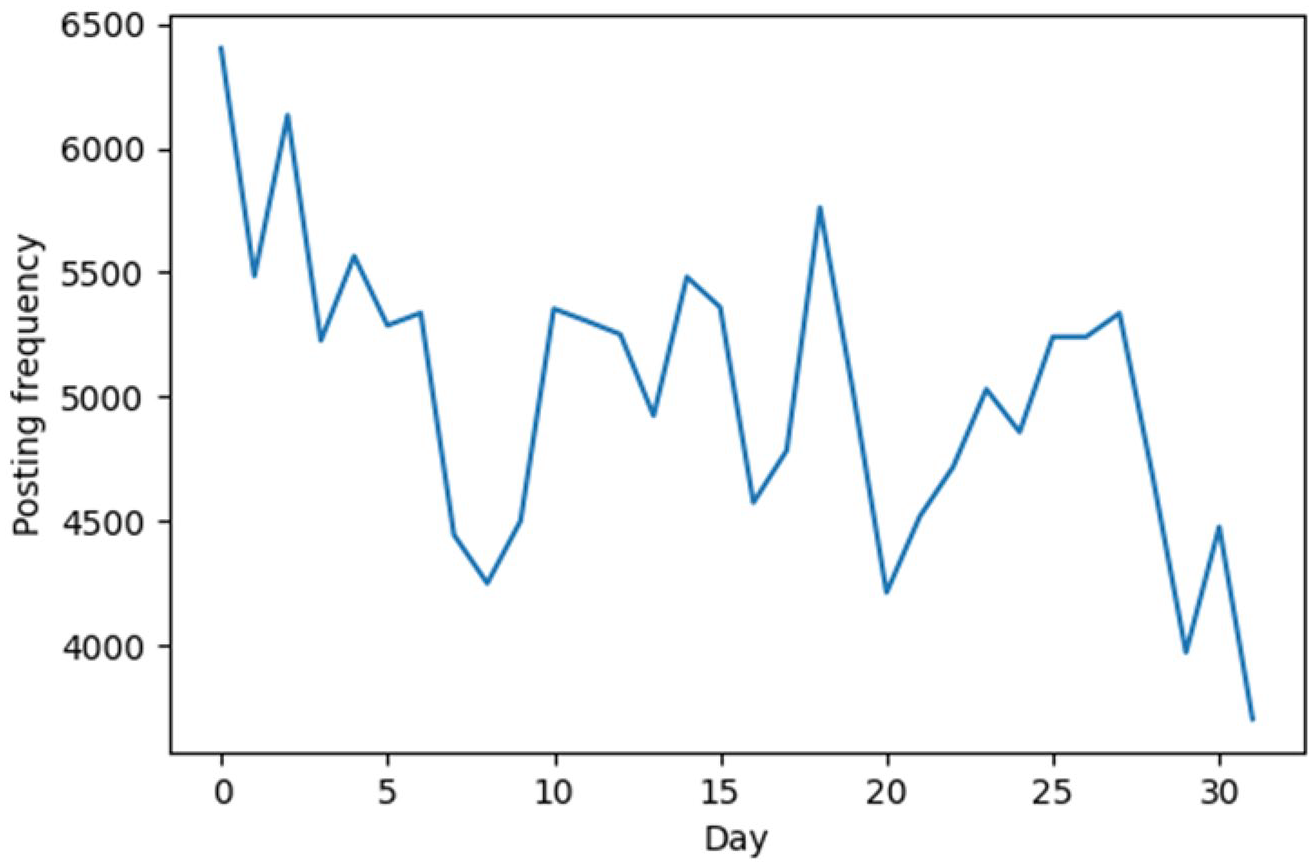
Daily posting activity including threads and their replies.
Keyword frequency
A word frequency analysis was conducted on the entire text corpus and visualised as a word cloud (Figure 2) to develop an initial insight into the most frequently occurring terms. The prominence of ‘people’, ‘girl’, ‘guy’, ‘women’, ‘friend’ within the word cloud reflects their high levels of frequency within the text corpus and suggests that interpersonal relations are discussed extensively on the board. In addition, due to ‘want’ being the most frequently occurring word, we hypothesised that the nature of the advice being sought and provided on /adv/ often relates to the desire for something in the sphere of interpersonal relations. Data at this level of thematic analysis thus allude to /adv/ being a space principally used as a participatory cultural (Jenkins, 2006) form of ‘agony aunt’-style advice column; an example of how ‘corners of the internet offer rare, ordered space to collectively process who we are today, and what [a] . . . satisfying life might look like’ (Tovey, 2019). While this computational analysis provides interesting initial insights into the general nature of the discussion occurring within /adv/, a qualitative analysis was needed to develop a more in-depth understanding of the discourse.
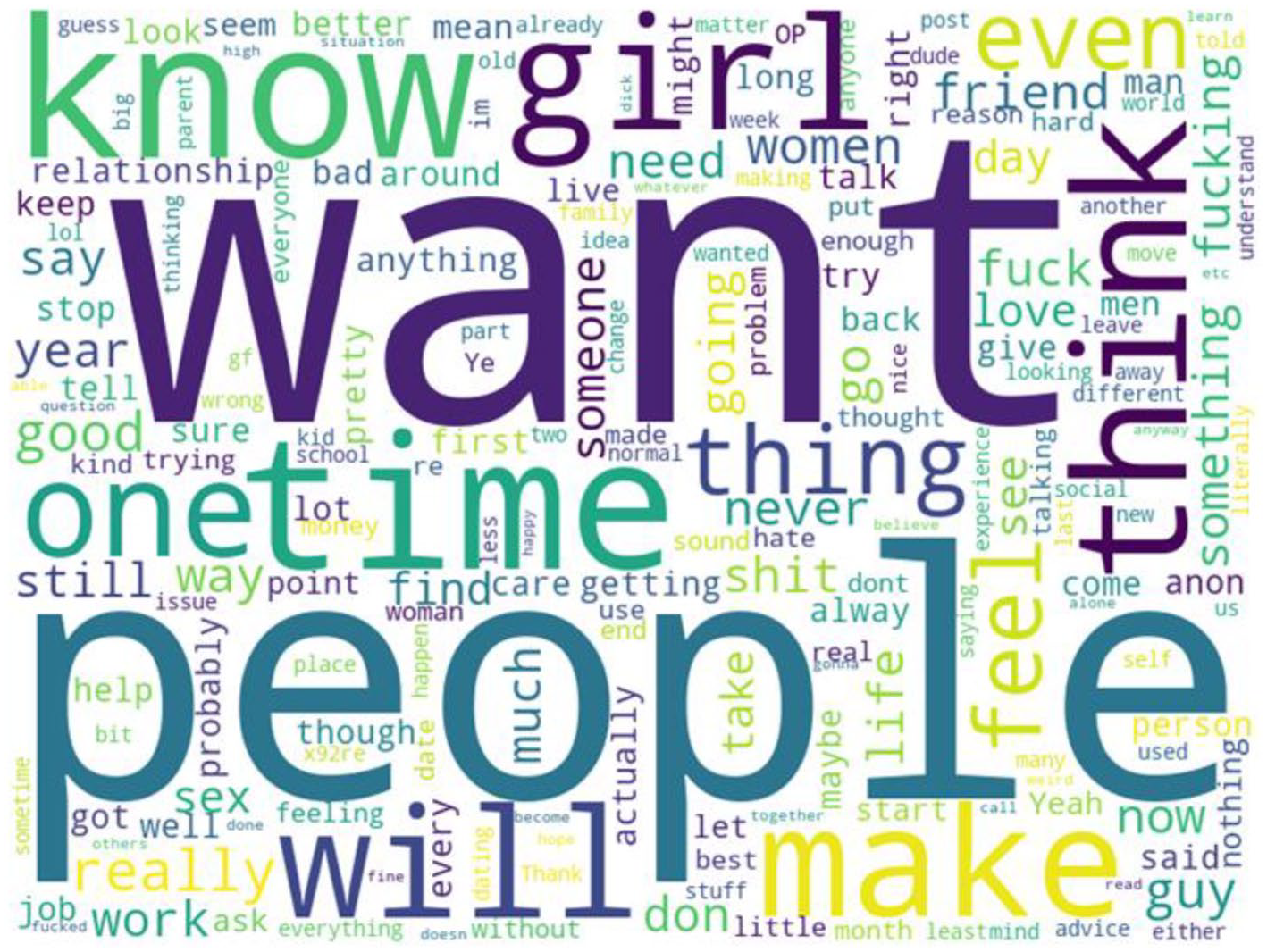
Word cloud visualising topical content, highlighting the most frequent keywords occurring in the 160,585 posts within the text corpus. Word size is based on word frequencies in the source material as a weighted list.
Qualitative analysis/findings
This section reports on our qualitative analysis of the random sample drawn from the overall data set. As stated, the random sample contained 3191 comments, comprising 195 original posts seeking advice, and 2996 responses; 113 of these original posts and their accompanying threads (or approximately 58% of the data set) mirrored the overarching theme we identified in the word frequency analysis – namely, desire vis-à-vis interpersonal relations. The rest represented a range of disparate concerns which we characterised as ‘miscellaneous’ and do not further engage with here. However, to give a few examples, the miscellaneous category included topics such as uncertainty over whether to share a college dorm room for free or pay rent for a single room; advice on which social media influencers to follow; and, to cite one of the more unusual posts, a user’s seemingly paranoid belief that they were being followed by a ‘white car with tinted windows’.
Before proceeding, it is important to delimit what this qualitative analysis can claim to achieve in illuminating users ‘real-world’ dilemmas and identities. As per Grabill and Pigg’s (2012) understanding of online interactions: ‘participants often do not build fully formed or coherent portraits of who they are as people, but rather draw on parts of their identity to accomplish other goals within the conversation’ (p. 102). Nonetheless, while identities and socialities are certainly ‘reconfigured and mediated’ in and by online spaces such as /adv/, these contexts elicit uniquely ‘generative form[s] of encounter’ (Meloncon and Arduser, 2022: 16, 23) enmeshed with the non-digital.
At this qualitative level, the computationally derived theme of desire vis-à-vis interpersonal relations manifested across the original posts in the negative forms of discontent, inadequacy and failure – an overarching sense of users being unable to achieve/acquire something important in their social worlds. Within this broader theme, three categories were identified (outlined in more detail in the relevant sections below): ‘intimacy’ (n = 54), ‘status’ (n = 24) and ‘despair’ (n = 29). This, then, clearly aligns the OPs with the type of masculinity variously described in the social-psychological literature as ‘precarious’. Unsurprisingly, given the social media platform under investigation, there were also strains of the sociocultural anxieties seen to underpin both the incel movement and the broader manosphere.
However, what distinguishes these original posts from the well-documented masculine cultures was the near total absence of any ‘claims to . . . aggrieved entitlement’ (Ging, 2019a: 640), and instead the presence of more self-flagellating logics. Furthermore, rather than being driven to either ‘achieve alpha masculinity’ or ‘rail against . . . the alpha males’ (Ging, 2019a: 650), the OPs largely appeared to desire what they perceived as being mainstream normalcy – or, as one OP, drawing on manosphere terminology, put it, ‘How do I become blue pilled?’1 Importantly, responses to the 113 original posts were significantly more varied in their respective outlooks and accompanying advice, ranging from genuine sentiments of support – what Koch and Miles (2020: 11) would describe as ‘stranger intimacy . . . encounters marked by openness and trust among the unacquainted’ – to the more ‘toxic’ commentary for which 4chan is notorious. Indeed, apparently well-aware of this notoriety, one recurring response from users across the three categories was the suggestion, to cite two examples, that ‘4chan isn’t really the place to get wisdom’ and that one should avoid being ‘parked in front of 4chan day in day out’.
Intimacy
The largest of the three categories is related to OPs seeking advice on intimate relationships. In sum, these findings highlight a masculine identity – underexamined in existing scholarship on manosphere spaces, and with important practical implications for socio-positive interventions – characterised by a pre-toxic and self-deprecating vulnerability, as well as an unexpected preponderance of responses conveying non-orthodox sentiments of emotional support. Given that a ‘lack of sexual success with women is a core theme of the manosphere’ (Ging, 2019b: 57), it is unsurprising that most of these posts specifically focused on how to meet, communicate with, and/or be more sexually and romantically appealing to women. We also included in this category a smaller number of posts focused on a broader desire for greater social connection. There was a case to be made for excluding this latter platonic subset from a category otherwise comprised of posts focused on heterosexual relations. However, all original posts discussed in this section shared in an implicit sense of being driven by a deeper yearning for stronger romantic, sexual and/or interpersonal ties. Importantly, the posts were often accompanied by a brutal self-assessment of past and present failures. Furthermore, while evidencing the hegemonic role of ‘compulsory heterosexuality’ (Richardson, 2010) in binding up masculine self-esteem with sexual attractiveness, none of the posts conveyed the sort of ‘conquestial’ (McCormack, 2013), or aggressively sexual, motivations associated with manosphere cultures. The following two posts are typical of the naked self-deprecation displayed, with the second more explicitly capturing both the heterosexual dynamics and the broader sense of a ‘collapsed’ disconnection yet to ‘retreat to toxic masculinity’ (Whitehead, 2021): I’m 23 and having trouble of posting my face on date apps. I’m a lonely virgin with 0 female friends nor interactions, never had any in my life. How do I overcome the fear of being judged? No one ever told me that I’m attractive, besides my mom. 24 yo kissless virgin;overweight;okayish face with beard but shaved I look horrible;zero confidence;useless humanities degree;grating voice;abrasive personality . . . barely any friends;extremely boring; Is there any way to salvage me?
This collapse, echoing Daly and Reed’s (2021) insights derived from interviews with incels, nonetheless remains indicative of the influence of the dynamics of hegemonic masculinity as theorised by Connell (1995). That is, these OPs sit in relation to, and their experience is informed by, broader dominant ideas associated with the culturally esteemed masculinity in Western societies. They reflect a marginalised masculinity, without recourse to protest masculinity and the efforts at reassertion of power entailed therein (Connell, 1995).
More intriguing, in terms of providing an impression of the cultural dynamics on /adv/, were the range of responses elicited by the OPs’ various requests for advice. Here, three distinct (but overlapping, in the case of the first and second) sentiments emerged. The first was positioned as a frank ‘reality check’, an appeal to lower one’s expectations and simply accept the callousness of the world. For example, responding to an OP seeking advice on why ‘women look at me regularly but I never get approached’ one user offered the following sarcastic rebuke: ‘Awww, the little woman isn’t coming on a white horse to pick you up and make you her loving husband? Man, you have it rough, but hang in there, any day now . . .’. Even more severe was the following response to an OP struggling to understand the principal cause of his failure in sexual and romantic relations: ‘Life is unfair, now shut the fuck up’. Importantly, this sentiment also included a small but notable number of overtly misogynistic and incel-aligned ‘black pill’ takes on ‘reality’ in which OPs were encouraged to resign themselves to their unfair exclusion from the sexually active mainstream world of ‘chads’ and ‘whores’. However rare, responses such as these represent an explicit effort to indoctrinate precarious OPs into a ‘language of victimhood and aggrieved entitlement’ (Ging, 2019a: 650) which ‘dehumanise[s] women and discursively create[s] the existence of a subhuman monstrous-feminine’ (Chang, 2020: 2).
Extending from the above, the second sentiment saw users respond in one of two similarly terse and inflammatory ways. There were the straightforward ‘trolling’ insults aimed at reinforcing an OP’s self-perceived inadequacies – and often drawing on 4chan cultural terminology – such as ‘go fuck yourself, manlet’ in response to one OP’s insecurity about their height. Then, there were the similarly problematic and misogynistic comments aimed at minimising an OP’s concerns, such as the suggestion to ‘go to thailand [sic] and fuck hookers’ in response to the second example post highlighted in the previous paragraph. Aimed at shutting down discussion of sensitive issues, and deriding users for broaching them on the board, such responses are a regulatory mechanism which polices expressions of ‘vulnerability and emotionality that contradict dominant norms of masculinity’ (Hanlon, 2012: 18). Importantly, however, while these responses certainly stood out in their respective threads (and served to confirm existing understandings of 4chan culture), they were nonetheless rare.
Contrasting with previous sentiments, the third, and most prominent theme, saw examples of Koch and Miles’ (2020: 11) stranger intimacy in which ‘unknown others engage in interpersonal relations of sharing space, knowing, caring, providing and befriending one another’ – either in the form of practical self-improvement advice; a more therapeutic encouragement to reappraise one’s circumstances and/or sense of self; or, in some cases, an intriguing mixture of both. This also aligns with both Hammarén and Johansson’s (2014: 7) theorising of ‘horizontal’ masculine practices whereby hierarchical power plays are eschewed in favour of relations ‘based on emotional closeness, intimacy, and a nonprofitable form of friendship’; and Elliott (2016: 240, 2020) work on ‘caring masculinities’ which critically advances men’s capacity to embrace ‘values of care such as positive emotion, interdependence, and relationality’. As a key example, one response read: In that case then, I’d really work on ‘who you are as a person’. Have diversified interests, hobbies, read . . . Figure out how to get people to genuinely like you as a person [outside of the prospect of any romantic interests, just with everyday people]. The trick here is to not only figure out how, but to genuinely make yourself likeable.
Here, the advice is ostensibly aimed at providing strategies for increasing the OP’s sexual appeal to women. However, underlying this extrinsic focus is a sense that it is ultimately corollary to a more ‘genuine’ reappraisal of ‘who you are as a person’ – what another user in a separate thread referred to as ‘building from an honest foundation’.
Status
The second category related to OPs expressing various anxieties in respect to their prospects in careers and education. Much like the previous category, findings here – in respect to both OPs and the responses their posts elicited – complicate present assumptions around the orthodox/toxic masculine tenor of 4chan. While there were some overlaps, posts here can essentially be separated into those soliciting advice on specific strategies for succeeding in job interviews, university study and the like; and those focused on a set of longer-term anxieties over career trajectories and related social status. Referencing a varied range of specific OP contexts, and more relevant to our study, posts in the second subset all shared in an overarching sense of being adrift with respect to longer-term prospects and aspirations. For example, one OP struggling with both Mathematics and English at the senior high-school level expressed ‘no desire to go to college’ and, as a result, saw his current studies in hopeless terms: ‘most of it as a whole is fucking pointless’. Older OPs navigating their respective lack of meaningful employment expressed anxiety and frustration over their self-perceived failure ‘to enact culturally prescribed masculinity [defined in part by] seeking status and achievement’ (DiMuccio and Knowles, 2021: 1169). To give two examples, one OP described feeling ‘stuck and on hold’ in their present circumstances; while another expressed a yearning to liberate themselves from having ‘to wageslave for the rest of my life in this shitty economy’ – what Whitehead (2021) sees as inevitable responses to the increasing ‘impossibility [of] achieving any existential and ontological validation’ from the economic pursuits traditionally associated with masculine status.
Notably absent from responses in this category were the inflammatory trolling and stoic ‘life is unfair’ responses found in both other categories. Given the more emotionally vulnerable, and feminised, territory broached by OPs in these other categories, we contend that the absence of such responses here is a product of issues around careers and education representing more orthodox masculine concerns. Moreover, failure in this life aspect ‘is especially threatening because it can lead, not only to ostracism or a loss of esteem in the eyes of peers, but to the revocation of . . . membership in the high-status ‘man’ category’ (DiMuccio and Knowles, 2020: 25). Beyond this key distinction, responses here broadly followed those in the ‘intimacy’ category, with a (sometimes overlapping) focus on practical self-improvement, alongside a more empathetic approach. An illustrative example of both patterns was elicited by one original post titled, ‘Extreme anxiety over job interviews’. Five of the post’s seven responses went into detail, offering various interview strategies, including: ‘think of it like an actor playing a role’; ‘apply to job you genuinely wont accept and are overqualified for . . . and use those interviews as practice’; and ‘easy way to prepare for this is to practice a 2-3 minute pitch about yourself’. The remaining two responses saw users adopt a more reassuring position by suggesting that the OP was underestimating themselves – ‘it’s all about mindset man’ – and overestimating those involved in these interview processes. The second of these responses was particularly noteworthy, exhibiting a tendency found elsewhere of users couching their gestures of emotional support in ostensibly distant, and masculinist 4chan-approved rhetoric: stop caring what thry [sic] think of you. when you do you will be confident and your performance will totally improve. just remind yourself hr is nothing but boomer karens. they are untalented losers and are usually incel moms.
Importantly, this comment was the closest responses in this category came to exhibiting sexism/misogyny in making sense of the issue. Here, in the user’s reference to the demographically female nature of human resources departments, there is a subtle re-positioning of the OP’s employment concerns as part of a broader struggle against the ‘gynocentric world order’ (Wright et al., 2020: 921) that is often cited by manosphere actors as the cause of men’s failures in achieving/maintaining work-related social status. However, while this comment is noteworthy in terms of our inquiry into how men might frame their anxieties, it was a conspicuous exception to this category’s clear emphasis on the personal and, to a lesser extent, structural (as conveyed in the ‘wageslave’ example).
Despair
The third category, and the second largest in size, conveyed a more all-encompassing sense of despair, often accompanied by expressions of shame and/or self-hatred. OPs here appeared generally less interested in seeking advice than simply lamenting the bleakness of their circumstances, sometimes tied to vaguely defined mental health issues. As the following examples demonstrate, this bleak sense of self and life was not predicated on failure/inadequacy in some or other specific aspect of life – and, in so being, represents a condition that struggles to fit neatly within present scholarly understandings of gendered precarity/fragility (e.g. DiMuccio and Knowles, 2020): masters degree;going to the gym;eating healthy;good job;girlfriend;Still bein [sic] as unhappy as i was when i was 16. Great, what to do now? 50 years of wagecucking till i can die of cancer, Alzheimers [sic] disease or a random war? how do i not feel this feeling it sucks. I guess that’s what sums up me right now: Unease. Focus is lacking. Things just don’t seem right.; The worst part is, with all this screwiness, trying to explain it only serves to make me feel like a drama queen or some shit.
Five posts in this category explicitly discussed suicide – widely linked to perceived failures in respect to ‘the rules prescribed by society about how men should live their lives’ (Schlichthorst et al., 2018: 2) – with two others referencing self-harm and thoughts of violence, respectively. However, the potential for such extreme outcomes (particularly suicide) was implicit in the posts generally, with queries such as ‘how can I learn to live with the fact that life is unfair?’ gesturing towards the defeatist assumption that constructive advice was unlikely. This intense, all-encompassing anomie echoes Brown’s (2010) study of meth addiction among Appalachian male youth, whereby such feelings are opaque and ‘embedded in a complex web of . . . institutional conditions, social relationships, and individual life trajectories’ (p. 265). Moreover, divested of the antifeminist and misogynistic logics which mark similarly bleak incel-style understandings of failure and discontent, posts in this category are better seen as expressions of a ‘collapsed’ (Whitehead, 2021), rather than toxic, masculine anomie.
Responses to these broader crises of meaning clearly echoed the sentiments uncovered in the ‘intimacy’ category, with the key distinction being the absence here of the trolling that occasionally punctuated those threads. As suggested, the close synergy between responses in the ‘intimacy’ and ‘despair’ categories, we contend, stems from the similarly vulnerable and non-orthodox masculine territory discussed in both. The absence of straightforward trolling in this category, on the contrary, suggests that even the cruellest 4chan users might draw a moral line when it comes to engaging (or not) with the more severe subject matter conveyed in the latter. Responses focusing on practical solutions ranged from the brief and straightforward – ‘ya gotta find job’ and ‘find what makes you angry and get rid of it’ – to those advocating more holistic agendas of self-improvement: How’s your diet? If you put junk in, you’ll get junk out. Even a little tweak of your diet can increase your mood.; Are you sleeping enough? Exercise?; Are you willing to seek therapy?; At least make an effort before you decide to jack it all in.
As in the above response, appeals to seek conventional mental health support were not uncommon. However, this was subordinate to a wider focus on what one user referred to as ‘self-therapy’. This included book suggestions, diet and exercise tips, positive self-talk, other changes or additions to daily routines, and other similar strategies best described as amateur forms of cognitive behavioural therapy.
Other responses adopted much more empathetic, reassuring positions, particularly when suicide was potentially in play. The following response most clearly evidences these ‘ideals of care such as interdependence and relationality’ (Elliott, 2020): You sound like you need a strong hug and a good friend. I really wish you the best . . . I only have one friend I can fully tell about my struggles and it was still so difficult . . . You need someone you can trust, although it might take a while. (p. 1735)
Interestingly, some of these ‘horizontal’ responses contained elements of the anti-mainstream positioning associated with 4chan. To give two key examples, one user suggested that blame be laid on ‘media and pretty much everything [that] tells us that romance or material stuff is the key to happiness’; while another cautioned against a contemporary culture that promotes ‘unnecessary pleasures with nothing to gain from them’. However, while this pattern broadly aligns to the ‘articulations of aggrieved manhood’ which Ging (2019a: 638) highlights as central to sections of the manosphere, the responses were divested of this outlook’s characteristically antifeminist content in favour of a broader late-modern discontent.
This anti-modernist sentiment extended into the third subset of responses – again, echoing the ‘intimacy’ category – in which users advocated an orthodox masculine stoicism in the face of life’s travails. Akin to the sort of advice popularised by conservative public intellectual, Jordan Peterson, in which ‘the permissiveness and anomie encouraged by the adolescent ethos [should give way] to an earlier, more mature ethos, and to disciplinary measures’ (Burston, 2018), the following post captures this most clearly: You come off as a child who just needs his parents to tell that it’s going to be alright. It’s almost upsetting seeing you yearning death, probably being some stupid suburban white kid who’s never faced the adversity of trial and tribulation. Just a numbed out dude absorbing vapid anime shows and porn . . . Life isn’t suppose [sic] to be easy, just be strong and carry your weight. (p. 4)
While explicit trolling was notably absent from the ‘despair’ category, responses seeking to convey this ‘life isn’t suppose to be easy’ sentiment sometimes crossed into crueller ad hominem. To give two examples: Work on your skills and go to school. Become a person of higher value before trying to make friends. This is the burden of a loser. You have to suffer if you want another chance at life. lol this thread is terrible. I’m 25 year old still live with my mom I am an alcoholic with only a part time job, haven’t graduated yet. And I don’t give a shit. I feel good. You are just weak minded.
As these examples demonstrate, unsympathetic gestures were generally counterbalanced by an implicit sense that, rather than responding from some or other dismissive position of ‘alpha’ superiority, users here were drawing on similar personal experience. This discursive complexity – a seemingly contradictory straddling of care and rebuke, alpha and beta positionings – speaks of Elliott’s (2020: 1739) appeal for a more nuanced and fluid understanding of ‘how men move between, around and within closedness and openness’ in their homosocial relations.
Discussion
This article responds to Colley and Moore’s (2020: 21) call for more in-depth inquiries into 4chan discourses which combine ‘quantitative and qualitative approaches, encompassing ethnographic, informatic and discourse analytic methods’. Our data present a complex picture of the coexistence of good, bad and indifferent masculine practices, similar to other research into other ‘toxic’ online spaces (e.g. on Reddit see Glace et al., 2021; Maloney et al., 2019), including even among incels (Daly and Reed, 2021; Thorburn et al., 2022). On one hand, these complex dynamics remain commensurate with a hegemonic masculine framework, typified by the presence of a plurality of masculinities and hierarchal relations which correspond with, replicate and legitimate inequalities inherent in the wider societal gender order (Connell, 1995). The marginalised status of many of the OPs speaks of this clearly, as does the exhibited practices of dominance and/or sexism in some responses. On the other hand, we advance existing scholarship on toxic masculinities online by exploring a broader ontological insecurity which expresses itself, and is responded to, in ways including but also beyond the well-documented toxicity.
Cognisant of recent concerns about the rush to ‘producing categories of masculinities’ (Waling, 2019b), we nonetheless suggest Whitehead’s (2021) concept of collapsed masculinities has value for what we have documented here. This concept retains the relational dimensions of Connell’s theorising, but better captures a set of practices – informed by masculine anxieties but absent the toxicity associated with these kinds of masculinist online spaces – that require being designated as more than marginalised or otherwise subjugated in a masculine hierarchy. This is not to say that the OPs in our study have made peace with their inability to achieve markers of esteemed masculinity; but, rather, that they conveyed an intractability in ‘achieving any existential and ontological validation through the pursuit of, and immersion in, traditional gender binary activities’ (Whitehead, 2021).
The OPs drawn to 4chan’s /adv/ board represent (generally young) self-identifying men at a sort of biographical crossroads, one that evokes the motivating question (Doidge, 2018: 41) of Buddenbrooks, Thomas Mann’s (1901) authoritarianism-presaging novel about the decline of liberal Germany. Having reached various impasses in their lives – whether relating to sex and intimacy; careers and status; or a broader, more opaque anomic condition – the question, as Tony Buddenbrook asks in Mann’s novel, is ‘what comes next?’ More extreme and dangerous outcomes might include danger to the self and/or others, especially women and girls, as well as recourse to the sorts of antisocial worldviews which underpin the latter. Importantly, however – and encapsulated in the question of ‘how do I become blue pilled?’– there is an overarching sense that these men ‘on the cusp’ retain a desire for a more ontologically secure and socially integrated mainstream life. While an important direction for future research, it is beyond the scope of this article to speculate on the degree to which the OPs’ respective dilemmas might have intensified or been resolved. However, the range of responses to these dilemmas provides a telling picture of what this online community sees as being emotionally and/or practically generative.
Putting aside the occasional (but conspicuous) moments of overtly toxic rhetoric found in response to posts in the ‘intimacy’ category – such as the racist and misogynistic ‘go to thailand and fuck hookers’ – responses largely suggested three (at times overlapping) ways of addressing, or at least making sense of, the problems OPs faced. First, there were the manosphere-adjacent ‘bootstraps’ calls to simply toughen up in response to life’s inevitable challenges, most brutally expressed in the assessment of one OP as being ‘some stupid suburban white kid who’s never faced the adversity of trial and tribulation.’ Importantly, instances in which this masculinist sentiment came accompanied with any causal sense of sociocultural context tended towards notions of a vacuous media-driven consumer culture, rather than the socially progressive forces that serve as villain in the manosphere’s performative psychodrama. The second ideological strain of responses – adjacent to the first and sometimes overlapping with the third – saw a focus on forms of practical self-help strategies commonly associated with a traditional/orthodox masculinity which shies away from more emotional engagements with life issues. Surprisingly, the third and most prominent strain saw /adv/ become an emotionally supportive space of horizontal homosociality in which traditionally feminised sentiments of empathy and understanding are ends in and of themselves.
While somewhat ambivalent, our findings position 4chan’s /adv/ board as an exemplar space of ‘stranger intimacies’ which, importantly, can just as easily serve as digital fora – depending on how they are employed by users – for either ‘eroding or enhancing public life’ (Koch and Miles, 2020: 14). This article therefore also adds to scholarship calling for more attention to non-hegemonic socio-positive expressions of masculinity (Maloney et al., 2019; Roberts, 2018) in general; and, in particular, for a more nuanced understanding of 4chan in which, alongside the toxic, antifeminist and more broadly masculinist discourses seen to characterise the platform, ‘the discourse of masculinism is challenged, as values of nurturance and support are elevated’ (Fathallah, 2021). During the process of our research, we encountered more than once from colleagues in good faith an argument that the atypical sentiments we were seeing on /adv/ might simply position the board as siloed from broader 4chan culture. We find this untenable, given both the recurrence in our data set of the rhetoric widely associated with this culture, and the notable pattern of users, clearly aware of the platform’s notoriety, advising OPs to be circumspect in their engagements on this board. In light of this, an important avenue for future research would be to explore other boards on 4chan, and/or similarly infamous online masculinist spaces, with a view to assessing the extent to which what has been uncovered here is more broadly echoed elsewhere.
A final issue of significance, and relevant to both theorising contemporary masculinities, and for the interventions that push for ‘positive’ (Stewart et al., 2021: 6) masculinity practices, is the (seemingly) odd paradox of vulnerable male users being drawn to express their vulnerabilities on a platform notorious for its aggression and insensitivities. Clearly, the platform’s anonymity plays a significant role in its related appeal, providing a space of stranger intimacy for users who might find it difficult to express their vulnerabilities ‘irl’. However, alongside this anonymity, there is also the pervasive sense of OPs being drawn to /adv/ precisely because, rather than in spite, of 4chan’s ‘politically incorrect’ reputation, and how (rightly or wrongly) this subcultural characteristic is seen to elicit a more unvarnished truth than what is offered via conventional channels. This has important implications for how interested scholars, as well as educators and mental health professionals, choose to engage with the issues cis-hetero men face in trying to construct coherent and socio-positive identities. Indeed, that these users apparently feel safer expressing their vulnerabilities on 4chan – in which the supportive sentiments they receive on /adv/ might well act as a ‘gateway’ to the platform’s darker ideological reaches – than they do through conventional channels of understanding and support speaks to the latter’s failure of legitimacy in the eyes of the social group most in need of our toxicity-countering interventions.
Footnotes
Funding
The author(s) received no financial support for the research, authorship and/or publication of this article.
