



Abstract
Better understanding of social media uses in crisis situations can help improve disaster management by policy-makers, organizations, businesses, and members of the public. It can also build theoretical understanding of how social life and citizenship incorporate social media usage. This study tracks the evolution of public sentiment in Wuhan, China, during the first 12 weeks after the identification of COVID-19 on the Chinese microblogging platform Sina Weibo. Data consist of 133,079 original Sina Weibo posts dealing with the novel coronavirus. The relative prevalence of eight different emotion groups is traced longitudinally using the ROST Content Mining System and the Emotion Vocabulary of Dalian University of Technology. The study finds a progression from confusion/fear, to disappointment/frustration, to depression/anxiety, then finally to happiness/gratitude. It argues that this progression indexes the changing affective energies of digital medical citizenship, which in turn indicates the context for intervention in future crises.
In the less than two decade period since their introduction, social media have come to be used for a wide range of purposes, including entertainment, information-seeking, self-expression, socializing, emotional expression, identity management, political engagement, and horizontal/social surveillance. Social media are also becoming increasingly involved in the handling of extraordinary, disruptive events (Castillo, 2016; Jennex, 2012; Li et al., 2019; Liu et al., 2015; Öztürk and Ayvaz, 2018; Rohlinger et al., 2020; Tandoc and Takahashi, 2017; Xu and Zhang, 2018). The effectiveness of social media crisis response is a primary measure of societal resilience (Leong et al., 2015; Zhao et al., 2020), so the topic deserves serious research attention. The word “disaster” is often paired with “natural” (in news and ordinary speech), making the connotations of “disaster” somewhat unconducive to highlighting the crucial social dimension of such events (Cutter and Finch, 2008; Stanturf et al., 2015). Therefore, we adopt crisis as the focus for our study of social media insofar as human perceptions, social responses, and administrative adaptations determine the initial risks and the ultimate outcomes in such situations. Crisis-related uses of social media arise in connection with severe storms, floods, droughts, and epidemic diseases no less than political uprisings, economic collapses, and domestic conflicts.
Understanding of social media use can facilitate resilience to diverse crisis situations. Social media as a vehicle for collective response is a separate issue from top-down, governmental/administrative responses (which may also appropriate social media), serving purposes that are sometimes identical (coordinating supply distribution) and sometimes complementary (building an emotional support network). Better understanding of crisis-related social media use can not only therefore help improve management by policy-makers, organizations, businesses, and members of the public but can also build theoretical understanding of social life and citizenship, and specifically how people autonomously and spontaneously incorporate social media usage to improve social resilience.
In this connection, our article analyzes early COVID-19-related crisis response in social media. We focus on Wuhan, China, because it was on the cutting edge of the collective response to COVID-19, when authorities were still uncertain how to proceed and the public response reflected that uncertainty. The engagement of social media in crisis response during Wuhan’s early outbreak is best analyzed through Sina Weibo (henceforth SW).
SW began in 2009 as an online venue similar to Twitter where users could post short-format comments; its growth was spurred by the fact that Twitter is unavailable to Chinese users (Sullivan, 2012). Eventually, word limits were eliminated and new functionality allowed the embedding of images, music, videos, and emoticons. Close to half of the Chinese population now has an account, and the user base of around 500 million active monthly users is about 50% larger than that of Twitter while nearly half of those are active on a daily basis (Nip and Fu, 2016: 1130; Weibo Data Center, 2021). The growth of SW has contributed to the horizontal flow of news, ideas, and information in China (BBC News, 2016). For this reason and others, SW has been a primary focus for research on Chinese public discourse and digital citizenship (Hu et al., 2020; Zhang and Pentina, 2012). Not surprisingly, SW was crucial to Chinese public discourse during the COVID-19 outbreak, with billions of daily views, hundreds of thousands of help-seeking posts, and tens of thousands of government posts (Wen, 2021). We acknowledge that SW is subject to gatekeeping. Posts on sensitive topics are removed and users who criticize government officials may have their accounts blocked. Some dissenting and critical opinions are tolerated (Nip and Fu, 2016: 1131), but not calls mobilizing collective action (King et al., 2014). Most important to this project, however, SW is a vibrant venue for civic engagement in China’s public culture even if it remains somewhat constrained compared to social media in the United States or Europe (Lagerkvist and Sundqvist, 2013; Sullivan, 2012: 774).
Social media uses in crisis situations are diverse and address the crisis from many angles. People exchange information, express themselves, offer opinions about the situation, inform friends and family they are OK, and reestablish emotional balance and sense of competence (Tandoc and Takahashi, 2017). Our purpose is therefore to shed light on the circulation of affect related to crisis, and how such circulation contributed to digital citizenship. By affect, we mean shared emotional energy (Pile, 2010; Stage, 2017). By digital citizenship, we mean active participation in a collective response to a crisis and indeed beyond crisis (d’Haenens et al., 2007; Jones and Mitchell, 2016; Mossberger et al., 2007).
This latter term will be explained in depth below, but here it suffices to explain that crisis response is not a simple matter of coordinating people, rescue supplies, transportation, and so forth. It is also a more general engagement by people as people. Will they collapse into anger, frustration, and fear? Will they rise above the situation with courage and optimism? Will they reassure others and extend empathy? Do online communications positively or negatively motivate others who are facing similar challenges?
To understand shifting public sentiment, and specifically the evolution of crisis-related affect, we compare the frequency of COVID-19-related postings classified into eight emotion-word families. Computational linguistics are employed to look at the relative prevalence of these word families over the course of 12 weeks, as the social media crisis response evolved. Complex affective dynamics are indicated by the rise and fall of each type of affect relative to the others. This allows examination of how SW facilitated the collective crisis response process and, more generally, how social media help communities respond to crises.
Computational linguistics have previously been applied to social media content to study public responses to crises (Chong and Choy, 2018; Hu et al., 2020; Neubaum et al., 2014). In light of this research, we employ a general-purpose word set to analyze 3 months of SW data from the beginning of 2020 in Wuhan adopting a longitudinal approach to examine how citizens of Wuhan participated in the social construction of their crisis experience in China’s largest social microblogging site, how they worked through phases of the outbreak ranging from acute emergency to adaptation. The movement from confusion/fear, to disappointment/frustration, then to depression/anxiety, and finally to happiness/gratitude demonstrates that social media helped people “come to terms with what they went through” (Tandoc and Takahashi, 2017: 1789). SW functioned as a space for a type of digital citizenship.
Prior research addressing online behavior in social media
Digital and medical citizenship
Mossberger et al. (2007) define digital citizenship as “the ability to participate in society online” (p. 1). A wide range of online activities have been taken as indicative of digital citizenship, including shopping, browsing, working, socializing, and taking part in political processes (d’Haenens et al., 2007: 290). The concept has also been tied more specifically to a person’s demonstration of respect for other members of one’s society through civic engagement (Jones and Mitchell, 2016; Mossberger et al., 2007: 47–66). Questions of broader political impact are beyond the scope of our data, but civic engagement, at least, is demonstrated through the sharing of emotions on SW, allowing participants to be “part of a participatory community” (Stage, 2017: 106) motivated by the COVID-19 crisis.
The gathering and sharing of online medical information (including information about COVID-19) encourages what Stacey (1997) calls the “participatory patient.” The pursuit of mediated information associated with health, illness, and medicine is indeed one of the long-recognized “uses and gratifications” of mass media (Gandy, 1980). However, new media allow a more personalized, entrepreneurial approach to each “digitally engaged patient” (Lupton, 2013). The ability to look up medical conditions online and learn about diseases, cures, and care regimes facilitates “participatory healthcare” (Keselman, 2020). At times, digital communications sound the alarm that health agencies are failing in their responsibilities (Stacey, 1997: 3–4), so participatory healthcare also becomes a form of digital citizenship. The affordances of social media mean health-related trauma can be dealt with by sharing positive feelings online but also “negativity, anger, irritation, sorrow, and loneliness” (Stage, 2017, 131, 145). Such activities extend medical citizenship (Mol, 2008) to form a hybrid we could call digital medical citizenship, which in turn involves the circulation of affect through members of the public. This raises questions about the role of social media in such citizenship.
Sentiment, emotion, and affect in social media
A substantial body of research undertakes sentiment analysis of social media examining words in social media posts by comparing them to lexicons indicating particular attitudes or emotions (Antonakaki et al., 2017; Chong and Choy, 2018; Li et al., 2019; Öztürk and Ayvaz, 2018). Social media sentiment analysis (SMSA) usually adopts a dichotomous approach to verbal data, treating words as indicators of positive versus negative valences (Antonakaki et al., 2017; Cao et al., 2014; Ceron and Splendore, 2018; Zhang et al., 2014). SMSA research can also chart a spectrum from strongly positive to strongly negative emotions (Öztürk and Ayvaz, 2018). SMSA is a crucial tool for understanding public sentiments and their evolution because it captures verbal expressions that would otherwise go unrecorded and sorts them into categories that reveal the emotional tenor of public discourse. Most SMSA measures sentiment on one axis of variation but linguistic tokens may also be treated in a multidimensional way. An example would be comparing levels of anger, fear, happiness, and gratitude in a data sample (see Li et al., 2019; Schulz et al., 2013). This approach permits more complex analysis than dichotomous approaches but is less common, particularly in conjunction with longitudinal research (Li et al., 2020b). Our study follows the trend toward more nuanced SMSA by examining transitions in multiple emotions expressed on SW in response to COVID-19 in Wuhan during the first 3 months of 2020 and recognizing these as transpersonal flows, in other words, as indications of affect (Pile, 2010).
Empirical studies of emotions during the COVID-19 outbreak
Previous research points to the evolution of sentiment through the early weeks of the COVID-19 outbreak in China. Zhao et al. (2020) and Zhao and Xu (2020) divided SW “hot topics” (trending topics) responding to COVID-19 into three stages: Stage A in early January characterized by low and unstable public attention; Stage B in late January characterized by rapidly increasing public attention; and Stage C in early February marked by a decline then a plateau in public attention. The authors used the ROST content mining software (designed for Chinese datasets) to distinguish between positive, neutral, and negative sentiments in SW “hot topics” and found that negative sentiment was dominant at first with a subsequent shift toward neutral sentiments over time. These studies covered only a short study period (7 weeks) and employed a unidimensional approach (positive vs negative valence) rather than a multidimensional approach that could distinguish between a multitude of sentiments. They indicate the need for more nuanced research of multiple dimensions of affect.
Likewise, Li et al. (2020a) also considered responses to COVID-19 on SW. Analyzing the period 31 December 2019 to 1 February 2020, these authors identified the microblog as a source of “situational information”: people critiqued how the epidemic was handled, expressed sympathy for those affected, and shared emotional support. Similar to Zhao et al., this study identified 25 January as a turning point, with a surge in public interest up to this day then a subsequent decline. Linguistic sentiment analysis was attempted, using Linguistic Inquiry and Word Count (LIWC), a tool designed for English datasets. Finally, Zhao and Xu (2020) studied a slightly longer period, from 31 December 2019 to 20 February 2020, using the ROST Content Mining System to reveal patterns in “hot topics” and sentiments around COVID-19. Overall, this work reveals that social media were functioning as a forum for the collective processing of the COVID-19 outbreak in China, supporting the exchange of practical information and facilitating government and administrative responses (Zhao et al., 2020; Zhao and Xu, 2020): “so that the government and the health department can better communicate with the public on health issues and take appropriate measures to prevent and control the epidemic” (Zhao et al., 2020: 2). While the interest in government response may save lives by strengthening the power of government to intervene, it overlooks much that is of scholarly interest, for example, how the public collaboratively defines the meaning of the crisis and autonomously does the emotional work of processing the crisis. We therefore offer a complementary approach that is longer and more nuanced, while focusing more on social media uses to expand the focus on the emotional life of SW users during the initial COVID-19 outbreak in Wuhan. In addition, we theorize the multiple dimensions of affect as an indication of a medically oriented form of digital citizenship, complementing the pragmatic interest in managing crisis with a focus on living through crisis.
Our research questions, then, are as follows:
RQ1. How was SW drawn into the collective process whereby the public dealt emotionally with COVID-19 in Wuhan in early 2020? (This links health-related trauma to the emotional processing and spontaneous communal response implied by medical citizenship)
RQ2. What were the phases of that affective process of crisis response? (This indicates our commitment to longitudinal study, tracking public sentiments [affect] as indicators of the changing meaning of the crisis)
RQ3. What does this evolution tell us about digital media as a context for medical citizenship? (This reflects the need to better understand spontaneous, evolving, collective responses to a health crisis in a time when social media have become central to virtually any kind of crisis response in China and elsewhere)
Data and methodology
Our data consist of all SW posts from the city of Wuhan collected from 31 December 2019 to 22 March 2020. These were accessed through the Sina Public Sentiment System which can exclude reposts. Geographical origins of SW posts are recorded, so all that was required to geographically restrict the sample was to select the city of Wuhan as the location of the person posting. The sample was restricted to posts including Chinese equivalents of any of the following three terms: COVID-19, epidemic, and pneumonia. This produced a total sample of 133,079 posts over the 12-week period (certainly not comprehensive, but nonetheless representative of Wuhan social media responses to COVID-19). The SW posts were analyzed using the ROST Content Mining System, developed by Yang Shen and his colleagues at Wuhan University (Shen et al., 2009, 2010) and the Emotion Vocabulary of Dalian University of Technology. These tools were selected as the best available techniques for analyzing Chinese SMS data, and our work could build on previous applications of this computational linguistic software (Zhao et al., 2020; Zhao and Xu, 2020). The broader scope of computational linguistics and a better understanding of its methodologies can be found elsewhere (Clark et al., 2013; Jurafsky and Martin, 2008). Our sample size necessitated software that could cope with the data volume, and ROST’s “bag-of-words” approach using Chinese word strings as naïve Bayesian classifiers was able to go beyond simple (positive/negative) sentiment analysis to trace the rise and fall of categories of emotions clustered around confusion, fear, disappointment, frustration, sadness, anxiety, happiness, and gratitude. Because of these features, ROST lent itself ideally to this type of computational linguistics. In our study, telling the story about the evolution of public sentiment required software with a strong word segmentation function and we chose ROST Content Mining System because it has strong word segmentation functions custom-tailored to Chinese.
Word combinations are commonly used to describe emotions in Chinese. For example, both 乐 and 高兴 mean happy, while either 兴冲冲 or 兴高采烈 can mean ecstatic or elated. The ROST software enabled identification of emotions in strings of 1-, 2-, 3-, and 4-grams. The choice to include character strings is supported by previous research (Li et al., 2020b: 3; Yuan and Purver, 2012). Emotion words in different languages do not map precisely the same emotions (Russell and Sato, 1995). While a single term may elude precise translation, a group of emotion words in one language can be matched to a group of emotion words in another language. ROST identified Chinese word families that correspond to cross-culturally recognizable clusters of emotions.
The emotionally tagged SW posts were aggregated on a weekly basis to minimize random daily fluctuations and distinguish general trends. These word families were not created in English then imposed onto Chinese data, rather they were created with a focus on associations that Chinese researchers have identified through familiarity with the Chinese language and cultural specificity, giving ROST an advantage over other tools, such as LIWC.
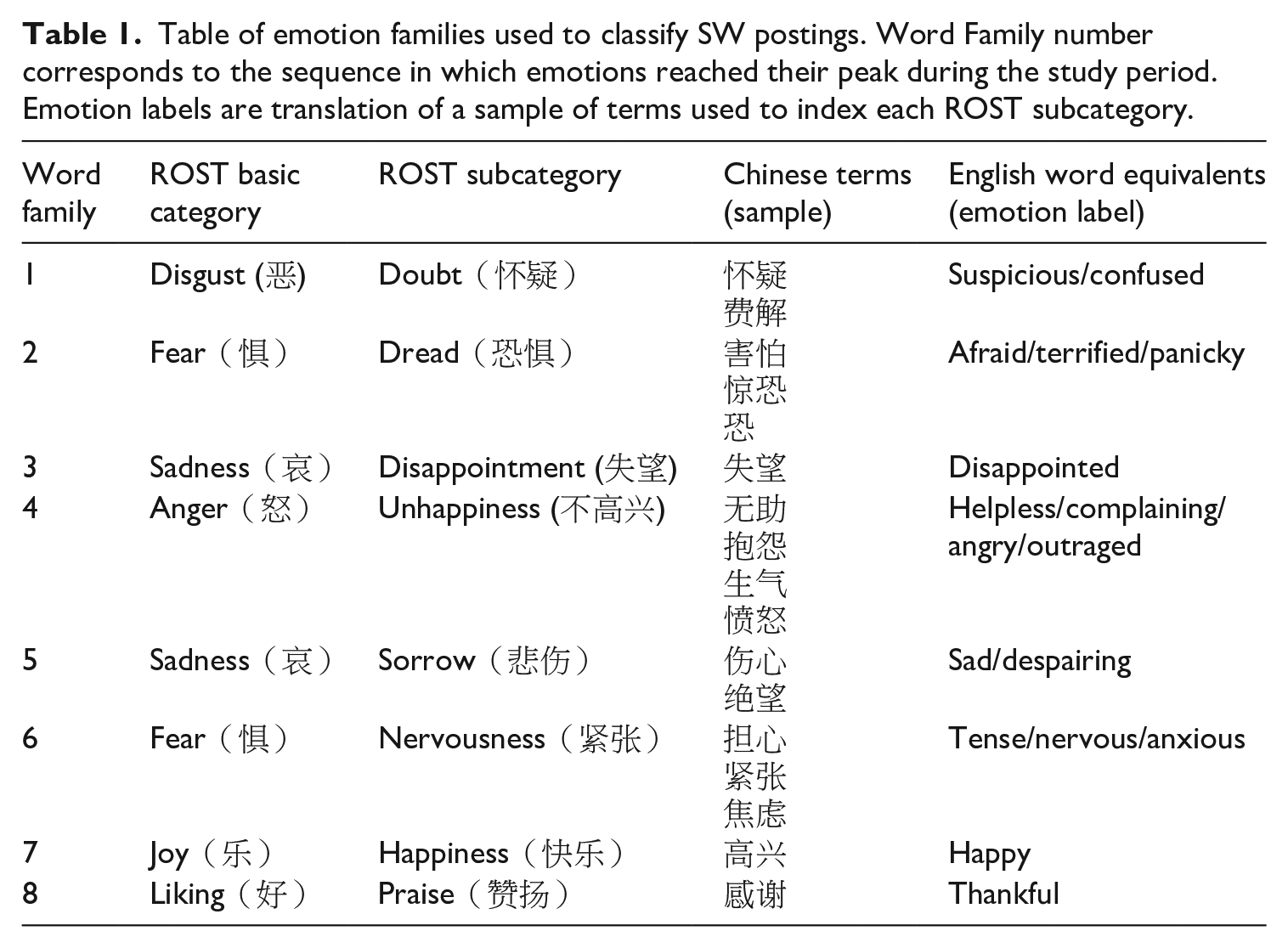
Emotions were then identified with the Emotion Vocabulary of Dalian University of Technology (EV), a fine-grained lexicon for Chinese emotional expression which includes 27,476 words and is often used in microblog emotion analysis. The EV divides emotions into 7 basic categories and 21 subcategories. The seven basic categories are similar to those of Ekman (2003): joy, liking, anger, sadness, fear, disgust, and surprise. The 21 subcategories are happiness (PA), love (PB), surprise (PC), respect (PD), relief (PE), missing someone/thing (PF), trust (PG), praise (PH), wishfulness (PK), rage (NA), sorrow (NB), dread (NC), disgust (ND), boredom (NE), shame (NG), guilt (NH), panic (NI), disappointment (NJ), jealousy (NK), doubt (NL), and derogatory expressions (NN) (Ouyang et al., 2014). After a preliminary review of the COVID-19 data, it was decided to use the six basic categories (disgust, fear, sadness, anger, joy, and liking), and subdivide two of these to foreground distinctions important to the COVID-19 crisis: nervousness versus dread (subcategories of fear) and disappointment versus sorrow (subcategories of sadness). A higher level of detail could have been employed using more of the subcategories, but our eight categories sought to maintain the simplest system that would capture the range of emotions specific to this crisis situation. Because emotion terms are not strictly equivalent from one language to another, we offer translations for several terms from each word family (Table 1).
Table of emotion families used to classify SW postings. Word Family number corresponds to the sequence in which emotions reached their peak during the study period. Emotion labels are translation of a sample of terms used to index each ROST subcategory.
While the overall trend in number of SW postings indicates overall focus on the epidemic, more can be learned by looking at relative changes in sentiments. These are easiest to understand when expressed as a sentiment group’s proportion of the total number of expressed sentiments. The equation for this is

where yi is the index of proportion of each word family in the total number of sentiments, xi is the index of word frequency of each word family, and i = 1–8, to cycle through the eight word families. The ratio of postings in each word family allowed us to track the ups and downs of related sentiments throughout the study period.
Findings
General trends
The volume of SW engagement relative to COVID-19 rose precipitously during the week of 21 January, as shown in Figure 1. Traffic initially increased fivefold from a handful of posts to over 9000 per day, and then fell gradually over the following weeks. However, 31 December 2019 brought the first COVID-relevant news story, broadcast on China Central Television (CCTV), picked up within a few hours by the Wuhan Municipal Health Commission website and the authoritative websites People.cn and CHINANEWS.com: “Pneumonia of unknown cause found in Wuhan.” This announcement led to a momentary spike in social media activity, with 4493 posts, followed by a rapid decline following the announcement “Wuhan CDC experts put forward the disease is preventable and controllable” (traceable to a 10 January declaration by Wang Guangfa, a member of the CDC expert group, and a 19 January press briefing from Wuhan CDC experts). The high point in social media engagement came after the Wuhan lockdown order on 23 January, which spurred over 9000 posts on two of the three following days. The activity then declined slowly over the course of the following weeks.
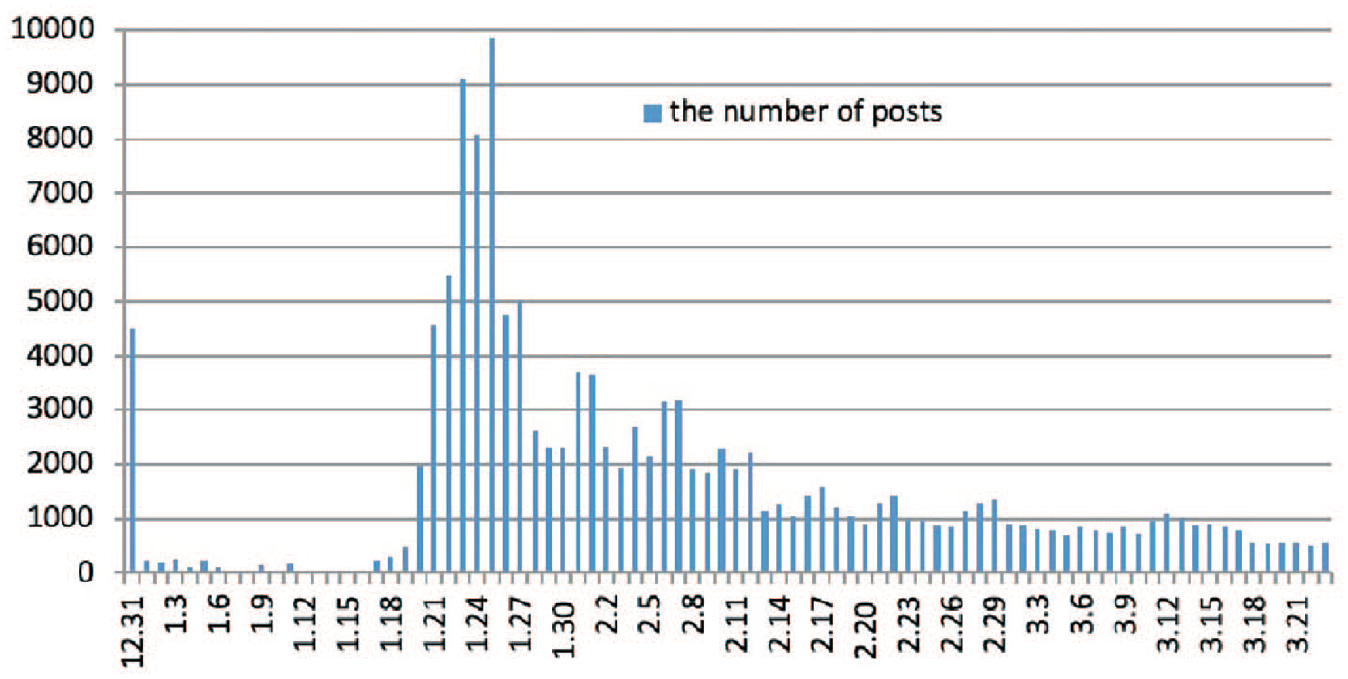
The daily count of posts in Sina Weibo over a 12-week period (31 December 2019 to 23 March 2020).
As shown in Figure 2, the sentiment afraid/terrified/panicky reached its peak of 19,594 in the fourth week when Wuhan was locked down. Other negative sentiments were less salient but also reached high points at this time. The positive sentiments thankful and happy demonstrated word frequencies near zero in the first 7 weeks, then rose quickly toward the end of the study period. Their emergence in the eighth week corresponded to the arrival of more than 22,000 medical staff from other provinces to provide assistance in Wuhan starting in the seventh week. Though their arrival in Wuhan started on 24 January (the 4th week) and lasted to 8 March (the end of 10th week), emotion words indicating thankfulness and happiness peaked once this intervention was publicly recognized.
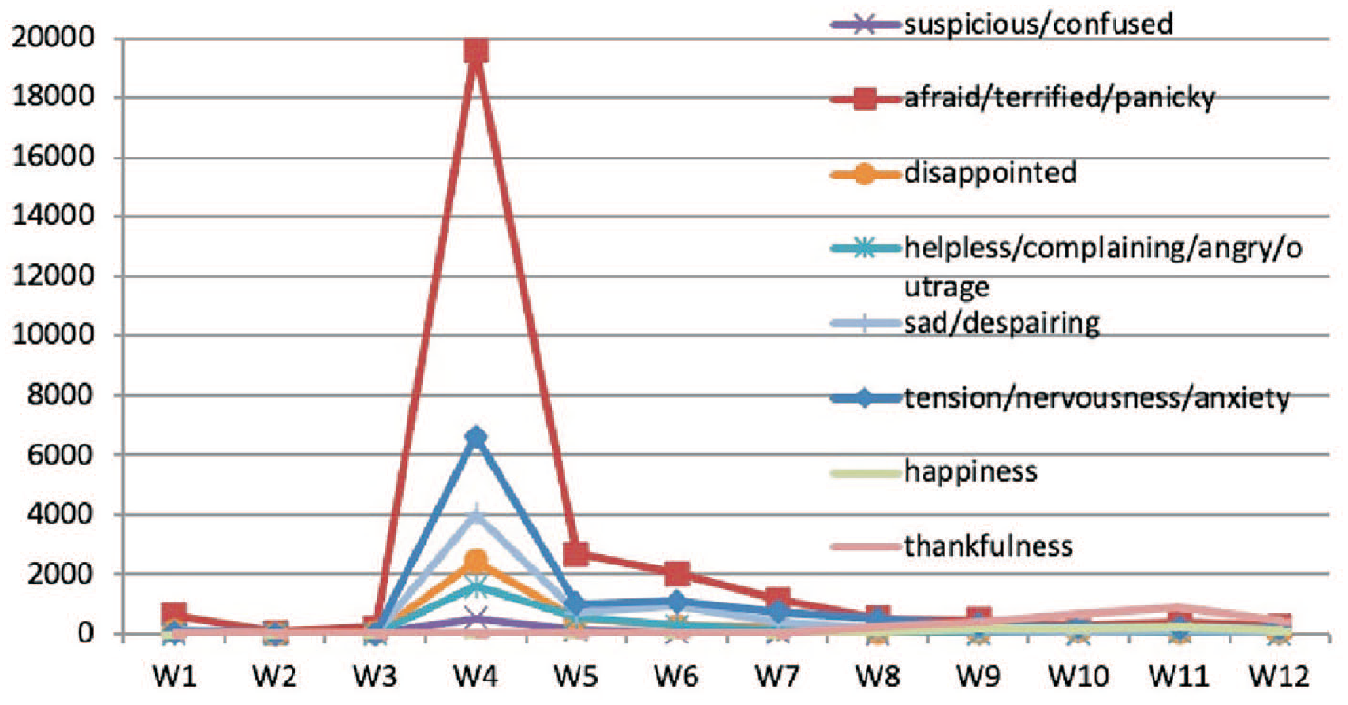
Total sentiment word family frequency over the 12-week period in Sina Weibo.
Sentiment family trends
Events are included below as hypothetical causes of the change in sentiment, based on objective events mentioned in SW “hot topics” over this period. We introduce these emotion clusters starting with sentiments that peaked first and ending with those that surged in the final weeks of the study period. Each emotion cluster will be introduced with representative quotes, then considered as a trajectory (rise and fall of a particular kind of affect) linked to objective events.
Suspicious/confused
Posts identified by the algorithm in connection with suspicion and confusion include the following excerpts (emphasis added): I’ve been so confused. When I cough and sneeze I suspect I have pneumonia. When I eat a bowl of noodles I suspect I have a fever because of the heat on my face. The most important thing this [COVID-19] has taught me is to be cautious and skeptical about an uncertain matter and think rationally . . . In this uncertain situation, spreading rumors can only cause group infection and bring the whole society to a state of panic.
The suspicious/confused responses indicate uncertainty regarding: one’s own health, medical information, and one’s responses. From the first to the fourth week, public suspicion regarding the epidemic in Wuhan showed overall volatility (Figure 3). The proportion of postings demonstrating suspicion oscillated between 3% and 9%. It never rivaled fear (see next section), but the early phase was distinguished by the relative prevalence of confusion and suspicion. News stories were inconsistent during this period, with headlines ranging from “pneumonia of unknown cause found in Wuhan” to “no indication of human-to-human transmission.” The inconsistent picture painted by the news spilled over into SW as confusion and suspicion.
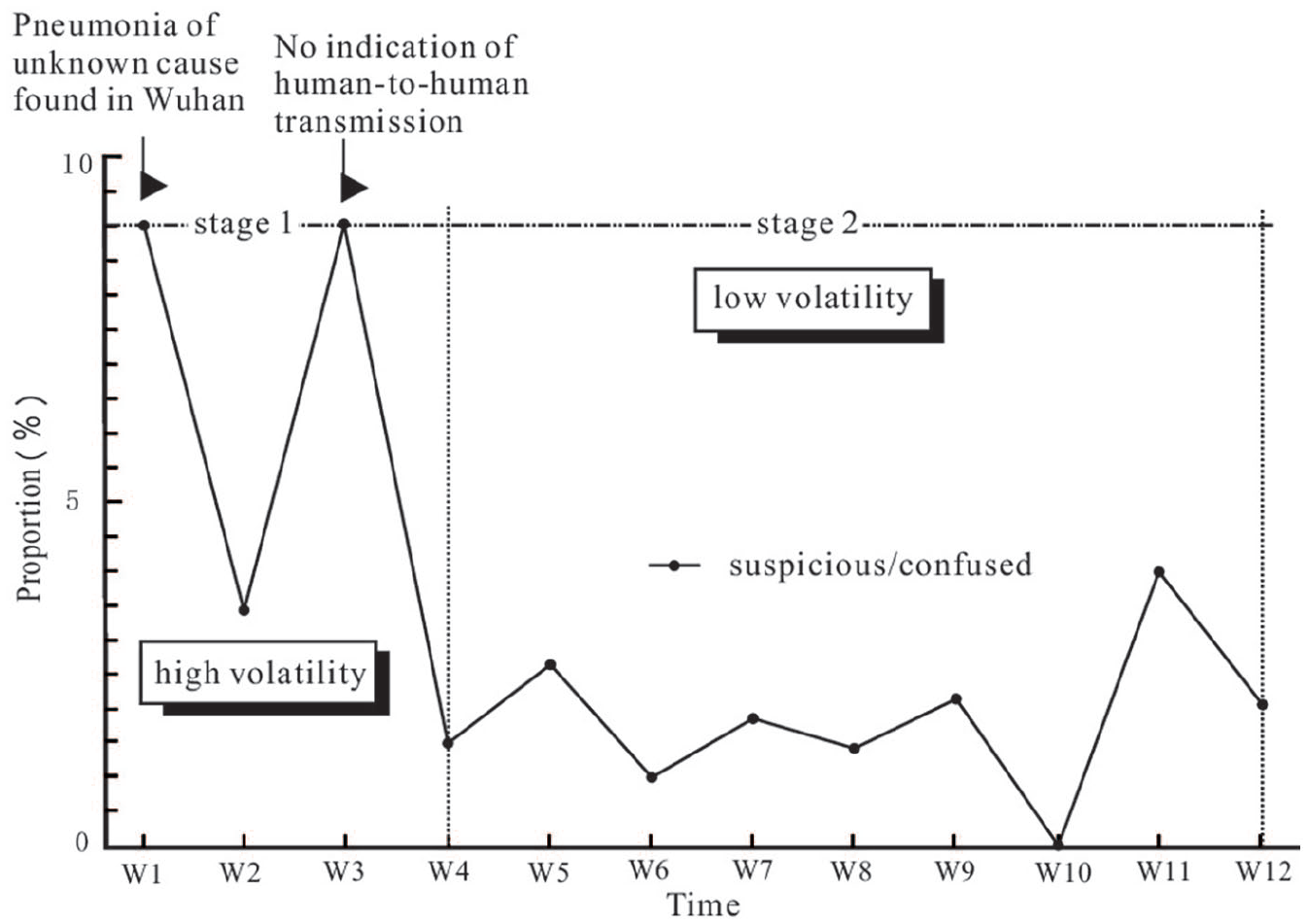
The 12-week trajectory of suspicion/confusion on Wuhan’s Sina Weibo posts.
This sentiment fell abruptly and averaged around 2% from the 4th to the 12th week. In the fourth week, pulmonary expert Zhong Nanshan pointed out that the coronavirus “must be transmitted from person to person,” as reported on CCTV. This information was relayed on SW by so many people that it became a “hot topic.” This was of course bad news, but suspicion and confusion may have been reduced by this openness and transparency.
Afraid/terrified/panicky
Posts in the fearful sentiment group include the following (emphasis added): I am afraid when seeing the situation in my hospital, and don’t even need to read the news . . . What I can do is to work seriously, actively inform the people around me that Covid-19 is really terrible, and remind them to protect themselves at this time. Although the people in other provinces are afraid of the people of Wuhan now, the problem is that we are also afraid of ourselves.
This kind of affect flow on SW not only involved fear of the virus but also fear of people and fear of social responses. This category constituted the majority of all postings for the first 4 weeks, peaking in the second week (Figure 4), but remaining the most prevalent cluster up to the eighth week until overtaken by anxiety.
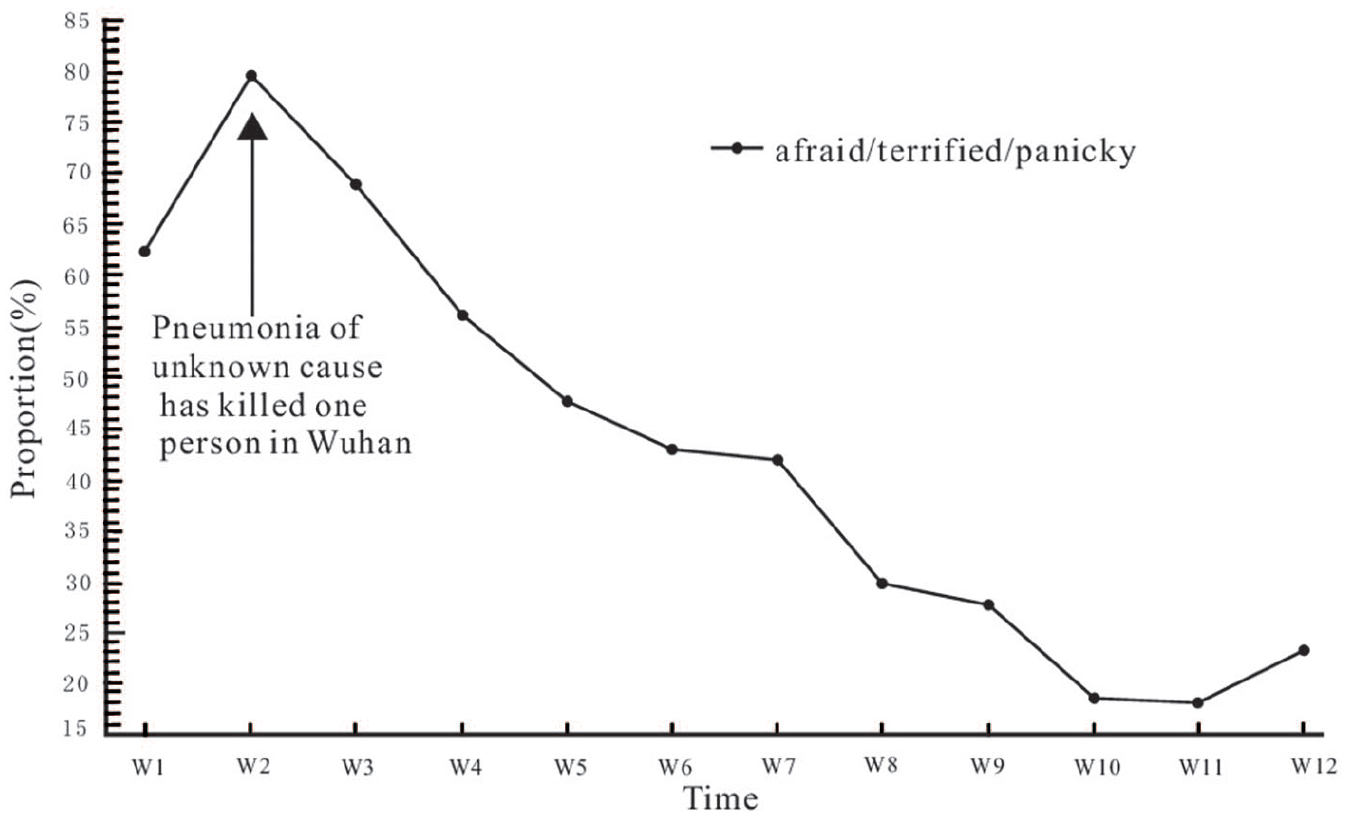
The 12-week trajectory of afraid/terrified/panicky on Wuhan’s Sina Weibo posts.
In the second week, the SW hot topic “Pneumonia of unknown cause found in Wuhan” pushed fear-related sentiments to overwhelming dominance, comprising 80% of postings. This echoed a story from People’s Daily suggesting that the outbreak was a severe new pneumonia. This story linked the virus outbreak to South China Seafood City and claimed that “no obvious phenomenon of human-to-human transmission has been found” which may have led to the (unjustified) decline in fear over the following 8 weeks. In these weeks, the death count increased, but fear decreases with familiarity, and when numbers go up rapidly every day people can experience what Douglas Hofstadter (1982) called “number numbness.” The implementation of prevention and control measures by government bodies may also have reduced people’s fear, making it feel like things were under control. In any case, although the numbers of afflicted and dying increased, the percentage of fearful SW postings declined steadily from the second week onward.
Disappointed
Posts identified in connection with the disappointment sentiment family include the following (emphasis added): This Spring Festival is really hard . . . Most hardworking and kind-hearted ordinary people continue to look for hope after disappointment. After returning all of the tickets I had purchased for going out [in the city], I still feel a little uncomfortable and disappointed, because some people on the Internet have scolded the people of Wuhan, [warning them] not to go out and harm others.
Disappointment has an interesting trajectory in SW, cycling up and down on a biweekly basis over the 12-week study period with a slow declining trend from about 10% to below 5% (Figure 5). Disappointment reflects unmet expectations, which in this case involved (A) expectations about daily life, (B) expectations about the behavior of other citizens, and (C) expectations about the official handling of the outbreak. Motivations of Type A are most likely behind the disappointment spikes in Weeks 1, 7, and 10, when news about the severity and spread of the disease collided with people’s plans for the Spring Festival (Chinese New Year) because of strict shelter-in-place measures. Motivations of Type B are most likely behind the spikes of disappointment in Week 5, when donations disappeared prior to reaching the intended hospital, and Week 12, when returning overseas Chinese became reinfection vectors. Finally, in Week 3, a community gathering served as a major spreading event, and this “Baibuting Incident” was perceived as a failure on the part of officials and the public, fitting both Type B and Type C. In short, government response can reduce disappointment but emotional healing emerges collectively.
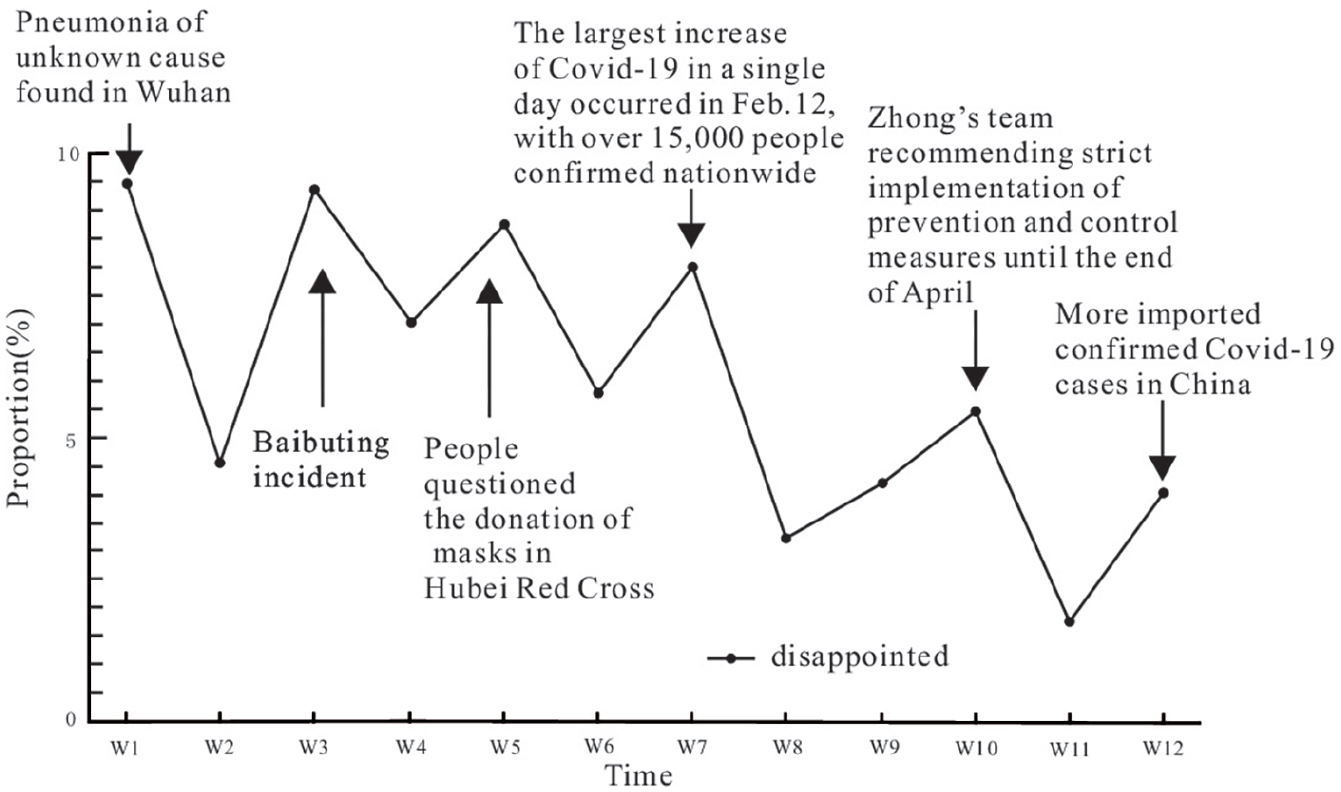
The 12-week trajectory of disappointment on Wuhan’s Sina Weibo posts.
Helpless/complaining/angry/outraged
This sentiment family includes various terms related to anger, frustration, and a sense of impotence. Such posts are typified by the following excerpts (emphasis added): I am so angry I have to post that many donations and materials have been sent to Wuhan Red Cross every day. Days have passed, let’s see what doctors are wearing in the West District of Wuhan Xiehe hospital. They wear garbage bags as protective clothing. We need an explanation from the Wuhan Red Cross about what happened. It’s like a dream in the abyss. It’s chaotic, helpless, powerless, incredible.
This word family is complex but the terms vary through time in similar fashion, with expressions of helplessness linked to anger and complaining. People expressing anger often did so in conjunction with expressions of helplessness, and both sentiments were linked discursively to complaints about management and administration. It can be seen from Figure 6 that the third to fifth weeks brought an explosion of these emotions, rising to about 10% of postings in Week 5 then declining again.
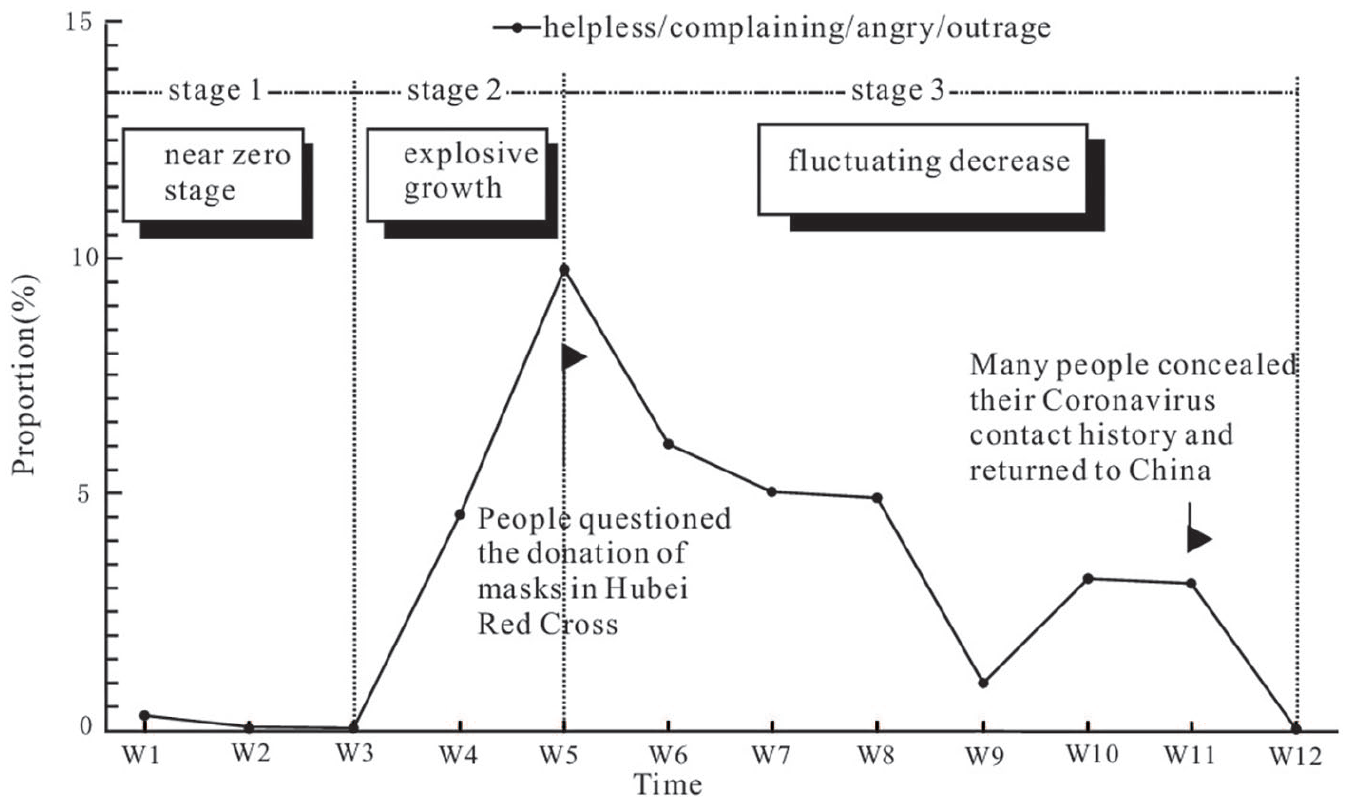
The 12-week trajectory of helpless/complaining/angry/outraged on Wuhan’s Sina Weibo posts.
The rise of anger in Week 5 corresponded to stories surfacing in social media about sick people walking from hospital to hospital trying to gain admission. Medical supplies donated from across China had been distributed in haphazard fashion by the Hubei Red Cross, and only a small percentage got to people most in need. Such events elevated this sentiment group to 10% in the fifth week but subsequently it declined with only momentary flare-ups. The slight increase in the 10th and 11th week was linked to complaints of infected Chinese citizens returning home from abroad. Again, government response and individual actions both played a part in shaping the trajectory of affect.
Sad/despairing
Posts identified in connection with the sad/despairing sentiment group included the following (emphasis added): Every time I see the news I’m sad. Over the past half month or so, I can’t help but shed tears . . . when I read the news and posts in SW. There are vivid lives behind all the seemingly simple numbers [of the sick and dead] . . .
Expressions of grief from Wuhan through SW can be roughly divided into three stages (Figure 7). Stage 1 consists of a 1-week decline following the announcement “pneumonia of unknown cause found in Wuhan,” largely because fear became the predominant mood and other sentiments declined in proportion. Sad/despairing postings rose again to 20% in the sixth week after it was announced that Dr Li Wenliang had died. This ophthalmologist had warned fellow medics on 30 December about the seriousness of the disease but was accused of “making false comments” by the Wuhan police (BBC News, 2020). His death offered a focus for collective mourning with a critical undercurrent. After this, sad emotions declined to around 5%. Interestingly, here it is clear that while government response was a key trigger for negative affect, a collective process shaped what kind of negative affect that was.
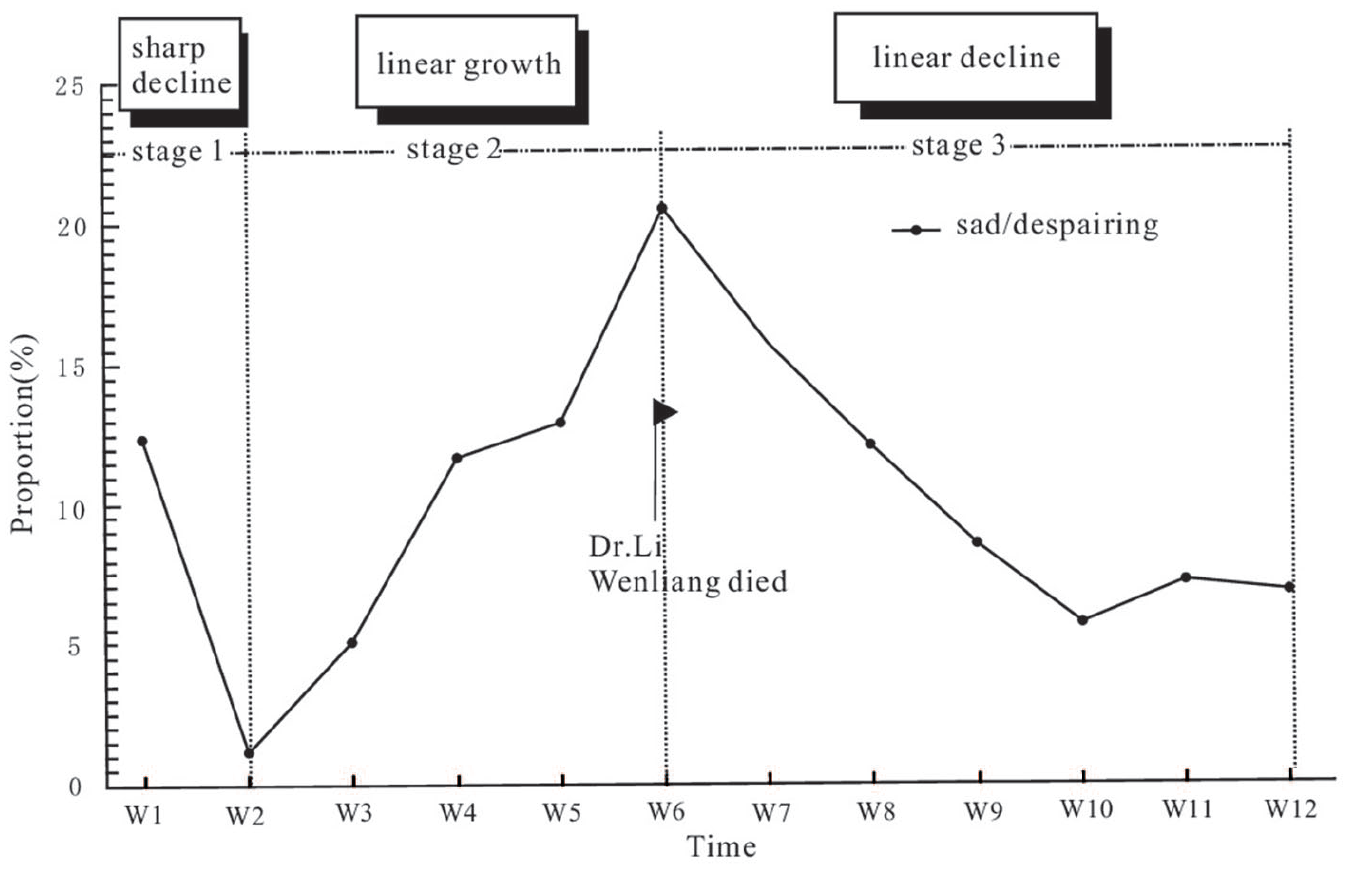
The 12-week trajectory of sad/despairing on Wuhan’s Sina Weibo posts.
Tense/nervous/anxious
SW posts identified in connection with the tense/nervous/anxious sentiment group included the following (emphasis added): “I saw the speech of Mr. Zhong Nanshan . . . and realized that Wuhan is now in a tense situation. The phrase ‘Don’t go to Wuhan except in special circumstances’ is indescribably harsh, but it is also realistic!” “I didn’t realize it was serious, I just thought I would wear a mask and go out less. Then my New Year’s holiday was extended to next Monday. This kind of nervous pleasure is weird.”
Tense and nervous posts reflected disruptions to ordinary life, apprehension regarding the seriousness of the outbreak, and worries that one might have COVID-19. Throughout the study period, posts in this sentiment group rose to a peak of about 30% in Week 8 then fell again (Figure 8). The 12-week period can be divided into three stages with the first from the beginning of the study period to the fifth week, during which time nervousness rose in fits and starts, but in the fifth week, the first lockdown appeared to reassure people.
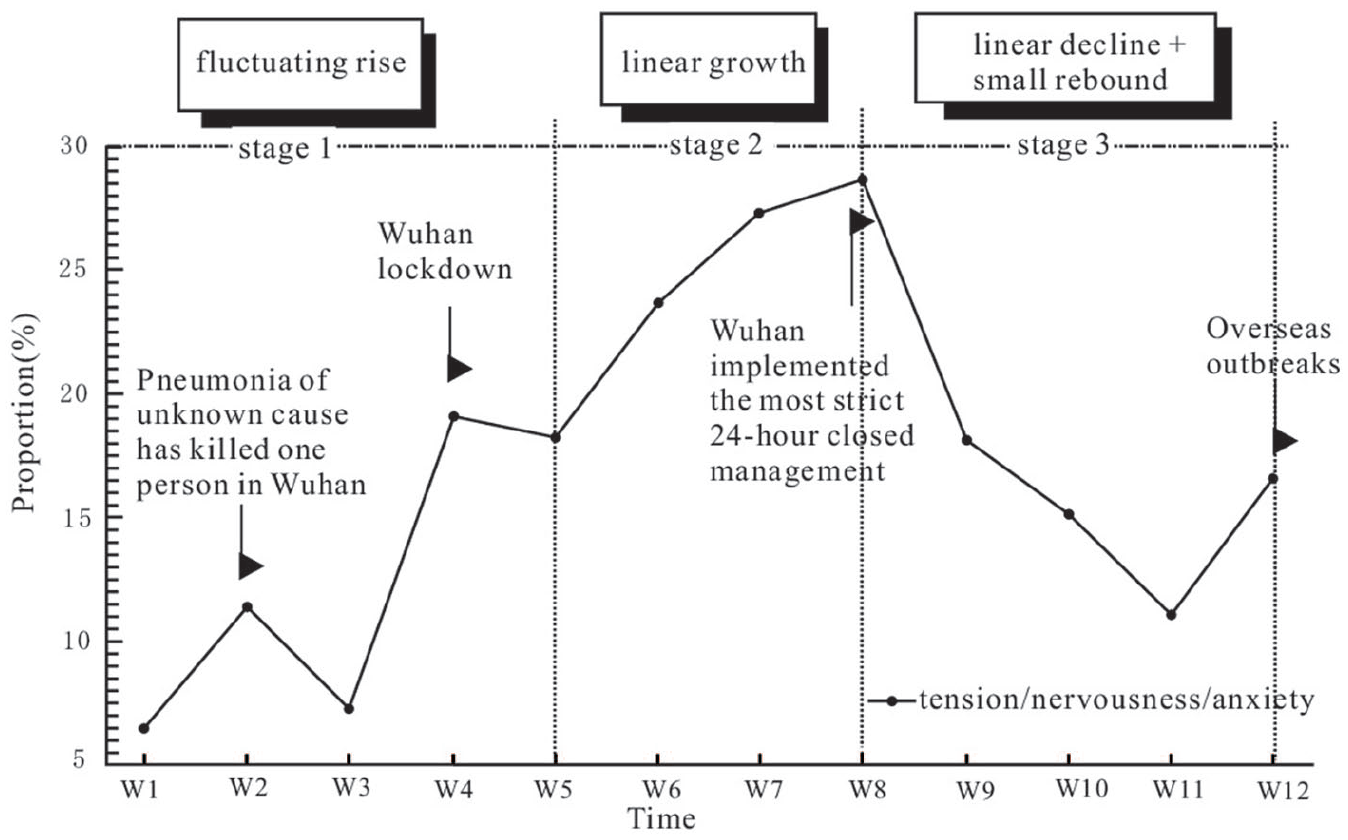
The 12-week trajectory of tense/nervous/anxious on Wuhan’s Sina Weibo posts.
In the second stage, from the sixth week to the eighth week, tension showed consistent growth. During this time, confirmed cases, suspected cases, and deaths all increased on a daily basis, pushing nervousness up to 29%. The high point occurred after the government of Hubei Province imposed a new, stricter lockdown.
From the 9th to the 12th week, tension declined in linear fashion. The arrival in Wuhan of more than 42,600 medical staff from 31 provinces between 24 January and 8 March (under the “counterpart assistance” program) sent a signal that the outbreak was being managed, a signal which was read by the ninth week. The subsequent rebound to 17% in Week 12 may reflect unsettling news indicating that the disease was becoming a pandemic overseas.
Happy
Excerpts from posts in the Happy sentiment group included the following (emphasis added): There is only one new confirmed case in Wuhan today. I’m so happy! Wuhan has been closed for nearly two months . . . only those of us who are in the center of the epidemic area can have such a deep experience [tears emoticon] . . . Thanks you to all, we are about to see the hope, let’s stick together! I was a little afraid at first, but I am happy to see the situation in Wuhan getting better and better every day.
It can be seen from Figure 9 that the trajectory of this emotion group is divided into two stages. From the first to the seventh week, people were far from happy about the situation. The second stage is linear growth from the eighth to the ninth week with a high of 13% when the National Health Commission lowered the level of emergency public health response in several provinces and the presence of medical personnel registered with the public. Another high point was in the 11th week; postings in the “happy” group spiked at 13% as all cities and counties in Hubei province except for Wuhan declined to medium or low risk.
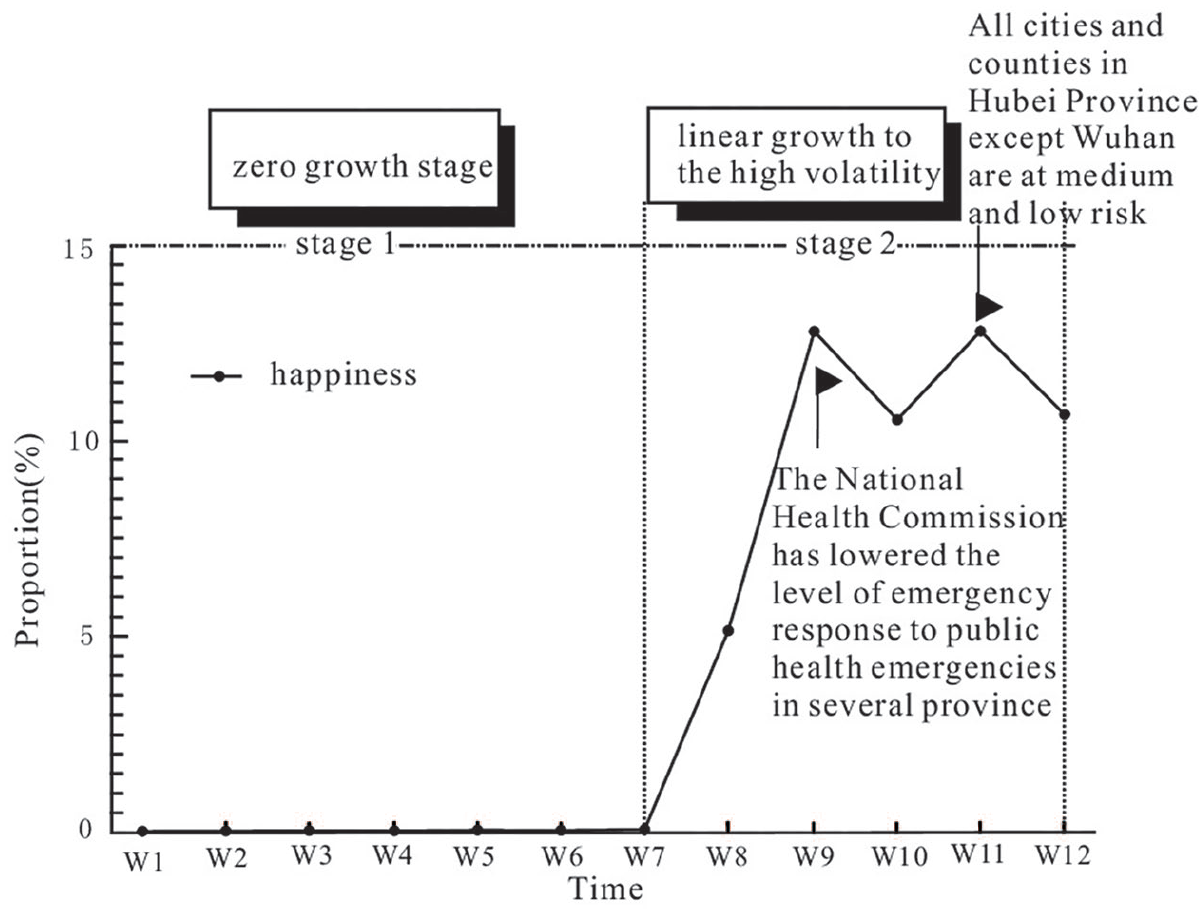
The 12-week trajectory of happiness on Wuhan’s Sina Weibo posts.
Thankful
Posts identified by the algorithm in connection with the Thankful sentiment group included the following (emphasis added): The medical teams supporting Wuhan will withdraw one after another today. Thank you for your efforts and protection . . . I have posted the beautiful cherry blossom scenery of Wuhan University to see you off. I wish you health, happiness and a safe journey! My husband went back to his hometown alone before the Chinese Spring Festival while I stayed in Wuhan. Then Wuhan closed for more than 50 days and it was almost time [for me] to give birth . . . Thanks to the . . . community for their understanding and support, whether arranging the car to go for my routine pregnancy check-up, or approving my husband’s application to return to Wuhan, they were very supportive and understanding of our special situation.
Gratitude remained close to zero for the first 7 weeks of the study period then rose to 40% between Weeks 7 and 10 (Figure 10). Expressions of gratitude for large medical teams arriving in Wuhan started to appear in the seventh week (2 days after their arrival) and grew rapidly from that point. The Chinese government had started to dispatch medical teams in the fourth week with counterpart assistance, but few people paid attention until 9 February (the sixth week) when more than 6000 medical teams from various provinces arrived in Wuhan by chartered flights and special buses, prompting online expressions of gratitude. This trajectory of thankfulness confirms previous findings (Li et al., 2020b: 14) in which “love” was identified as a prevalent emotion in SW after 14 February. Giving thanks to the community in general helped reestablish solidarity and move beyond a crisis mentality.
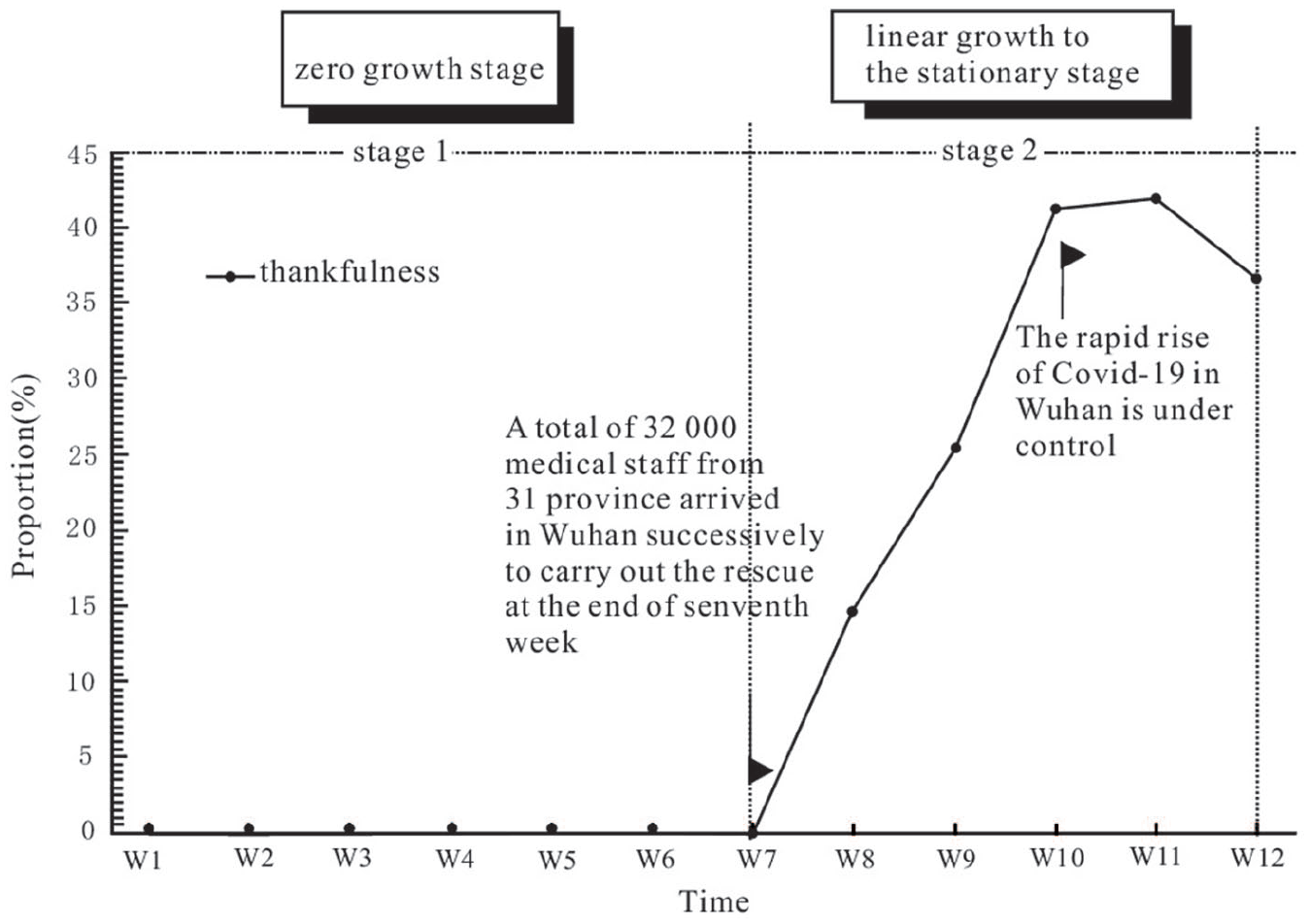
The 12-week trajectory of thankfulness on Wuhan’s Sina Weibo posts.
Discussion
With regard to RQ1, we find that the incorporation of SW into the flow of positive and negative affect points to the existence of medical citizenship (Mol, 2008) existing online as a facet of contemporary citizenship (d’Haenens et al., 2007; Jones and Mitchell, 2016). This process involves digitally mediated flows of affect occurring over many weeks. Thus, in answer to RQ2, the transition of emotion throughout the course of the 12-week study period—from confusion/fear, to disappointment/frustration, to depression/anxiety, then finally to happiness/gratitude—tracks not just a shift in affect but also a collective process of response and healing by the people of Wuhan through the online circulation of affect.
Pairwise grouping of sentiments suggests something important about the flow of affect. In the first 4 weeks of the epidemic, confusion led to fear and vice versa; these two sentiments resonated with each other. Subsequently, the feelings “helpless/complaining/angry/outraged” peaked while disappointment remained high, again indicating close ties between these negative emotions. Next, sadness and despair exacerbated a peak in tension/nervousness/anxiety and vice versa, constituting an affective shift but remaining negative overall. In the final weeks of the study period, however, happiness was tied to thankfulness, with the positivity of one boosting the other.
In short, SW postings reveal broad affective shifts that are part of a social process. Various users’ emotional tendencies interact with each other, and sympathy with others’ emotions diffuses, forming an interactive citizenship process (Xia, 2019). While changes in emotions corresponded to releases of information, objective events, and practical actions taken by individuals, groups, and agencies, the evolution of affect indicates something more: social media functioning as a civic forum. Digital medical citizenship involved not only the spread of rumors (Sun, 2019) but also the spread of mutual support and civic engagement. This last point directly addresses RQ3: people came together on SW to share the negative and positive aspects of trauma and work from negative to positive sentiments.
Conclusion
This study points to three major conclusions: the first of these clarifies the functions of social media in relation to crisis management, the second reveals the evolution of affect throughout the course of a slowly evolving crisis, and the third offers guidelines for social media research methodologies.
First, it is clear that social media played an active role in responding to COVID-19 in the early days of the outbreak in Wuhan. Millions of people used SW to gather information about the virus outbreak. The nature of the available information on that social media platform—positive and negative, reassuring and cautionary, valid and erroneous—became caught up in individual efforts to cope with the crisis. Sharing information was an empowering way of engaging in online citizenship. Mass media announcements recirculated on SW, effectively extending government messaging about the epidemic. People worked collaboratively to determine the meaning of information and achieve “collaborative control” (Leong et al., 2015: 199) of the crisis. As a study site, China is unique but also shows potentially generalizable pattern and structure to the collective assimilation of crisis information.
Second, it is clear that crisis response involves significant involvement in individual emotional expressions and interpersonal flow of affect. Our data show progressions of publicly expressed emotions—what we have called trajectories—in response to objective events and collective processes, each sentiment going up and down at particular times, interacting with other emotions and contributing to an evolving public “mood.” Wuhan SW users’ progression from confusion/fear, to disappointment/frustration, to depression/anxiety, then finally to happiness/gratitude indexed, in other words, the changing affective energies of digital medical citizenship.
Third, we would suggest that trajectories of emotions are geographically contingent: that is, they depend on the place in which they occur. National culture obviously played a role in this case (peculiarities to China), and various communities and sub-communities within the nation (peculiarities of Wuhan and segments of Wuhan society); the geographical specificity of this crisis response includes political, social, and cultural conditions. Numerous longitudinal studies of social media expressions of public emotions throughout other crisis situations are needed to better understand how digital citizenship works and to better understand its particular characteristics in this geographical context.
Possible limitations of this kind of study include the fact SW is moderated and posts that were removed could not be included in our sample. This may have reduced the overall percentage of a particular emotion in the SW postings. However, we believe that by charting the ups and downs of each emotion independently of the others, we have come close to an accurate picture of how public sentiment evolved throughout the onset of COVID-19 in Wuhan.
Footnotes
Funding
The author(s) disclosed receipt of the following financial support for the research, authorship, and/or publication of this article: The work described in this paper was supported by a grant from the National Natural Science Foundation of China (NO. 41901178), and the Ministry of Education in China Foundation of Humanities and Social Sciences (NO.19YJCZH158).
