



Abstract
Internet, social media, and app shutdowns have become frequent, not only in authoritarian states but also in emerging and fragile democracies. As Russian authorities enforced a legal blockage to Instant Messenger Telegram during the past 2 years, many users kept using the app seamlessly thanks to what we call a subversive affordance: a built-in proxy functionality that allows users to seamlessly circumvent the blockage. We claim it is subversive because it allows users to overcome the blockage as the consequence of the app’s development, with a significant fraction of users who did not have to take action to bypass the blockage. By conducting an online survey and performing a meta-cluster analysis, we found a group we labeled the undeprived: people that, despite presenting traits frequently associated with digital divides—such as gender, age, and low levels of digital skills—were able to keep using the app.
Introduction
The digital era brings along new forms of political participation, many of which are enabled, fostered, and/or inhibited by digital technologies’ functionalities and its appropriation by the users. Nevertheless, something less studied in the literature is how the purposive design of features by the very platforms may also serve an ideological or political cause. We differentiate between users that appropriate the software with a significant purpose (Proulx, 2005) and platforms that, acknowledging their political role, put the development of functionalities in service of an ideological cause, enabling affordances regardless of user’s agency. This article tells such a story.
On 13 April 2018, Russian Federal Security Service (FSB, from its Russian acronym) ordered the blockage of Instant Messenger (IM) Telegram, engaging in what Akbari and Gabdulhakov (2019) call “Strategic Surveillance.” That was the harshest of many attempts of the Russian government to find its way to some sort of universal key to the messaging system, all vehemently and publicly denied by the app. By analyzing how Telegram users dealt with the blockage, we make the case that a developer, motivated by ideological reasons, implements features that enable users both to actively subvert government regulations by activating the feature and, most notoriously, to be passively subverted by the feature, once it is properly implemented. We use such example to build the idea of subversive affordance, defined as the result of the implementation of a feature designed by the developers of a technological device, platform, or software that enables the defense of an opposing ideological value in face of the dominant set of values enforced by either state or private organizations.
The politics of Telegram
Durov and Telegram
The Russian programmer and entrepreneur Pavel Durov gained notoriety and the nickname “Russian Zuckerberg” (Hakim, 2014) after creating his first social network enterprise: VKontakte (or simply VK), the Russian version of Facebook. After refusing to comply with government solicitations for access to information, Durov fled the country in 2014 and created Telegram as a safe communication channel (Akbari and Gabdulhakov, 2019). Over time, his declarations over a series of channels but particularly his own (https://t.me/durov) have made him an activist of freedom of expression (Hakim, 2014). According to Akbari and Gabdulhakov (2019), Telegram “brands itself non-mainstream and non-Western guarantor of privacy in messaging” (p. 223). We argue that Durov and his team have implemented what we call a subversive affordance through a built-in proxy that enables regular users with no technical knowledge—and eventually without even noticing it—to circumvent eventual Internet Protocol (IP) blockage or throttling 1 against Telegram by governments of the world.
Blockages and entire Internet shutdowns have become frequent, not only under authoritarian or controlled regimes but also under emerging or fragile democracies (Howard et al., 2011) such as Brazil, Turkey, India, and the United Kingdom (Taye, 2020). In Turkey, a more “traditional” form of legacy media censorship that pushed both citizens and journalists to alternative outlets on social media (Akser and McCollum, 2018; Saka, 2018) was followed by systemic trolling by an army of political bots (Saka, 2018). In India, frequent shutdowns are justified on a series of grounds, such as the blockage of social media to prevent cheating during exams (TNN, 2016) or the whole Internet shutdown due to mob lynchings (Agence France Press, 2018).
We test the subversive affordance concept with survey data collected after Russian authorities blocked Telegram in 2018 and apply a meta-cluster approach to reach our conclusions. Such blockage was suspended on 18 June 2020, after more than 2 years (Roskomnadzor, 2020). Although interpreted in different ways (Salikov, 2020), certainly the technical impossibility to block the app has contributed to some extent to the decision to unblock. One way or another, the official statement is that Telegram’s efforts to banish terrorists from the platform have been considered enough to comply with the motivations that originated the blockage in the first place (Roskomnadzor, 2020).
Political participation with instant messengers
In the past few years, there has been growing interest in the use of IM apps to foster political participation. Milan and Barbosa (2020) propose a new kind of political activist called a “WhatsApper,” who is “an individual who uses the chat app intensely to serve her political agenda, leveraging its affordances for political participation” (para. 1). The authors argue the app facilitates the interlacing of daily private conversations and public groups with the mobile lifestyle that exposes users to political activity, “‘integrating’ the vernacular and the political” (Milan and Barbosa, 2020: para. 9). In the same vein, Valeriani and Vaccari (2018) found that IM has a double-sided effect on political talk: while subjects that do not like to broadcast their opinion on more public platforms (such as social media) might express and discuss their positions on IM, they might also cluster within like-minded individuals in addition to or as substitute for other more open, diverse, and inclusive platforms. Such configuration could result in higher political knowledge if the IM is used for public affairs. Otherwise, it could result in less political knowledge if used for personal affairs (Valenzuela et al., 2021).
Although IM may be unequivocally identified as a tool to serve political mobilization and different forms of civic engagement (Pang and Woo, 2020), not many studies have focused on Telegram, despite its relevance, especially in non-Western markets (Ikbar, 2020). Salikov (2020), for instance, highlights the twofold relevance of Telegram in Russian digital media landscape. Along with other forms of social media, Telegram has helped increase awareness on politically disputed issues in a country where real opposition—as opposed to formal opposition—“was practically pushed by the authorities themselves to the periphery of public space” (Salikov, 2020: 77). On the other side, many Russian authorities and government departments adopted Telegram to connect to audiences that are difficult to reach via other means (Salikov, 2020).
According to the non-governmental organization Access Now (Taye, 2019, 2020), reported Internet shutdowns worldwide have almost doubled from 2017 (106) to 2018 (196) and grew a bit more in 2019 (213). Such shutdowns vary in their motives, their target, and even the political regimes under which they are enforced, but many of them aim to cut communication that bypasses the government’s eyes and ears, such as encrypted messaging applications.
IM apps pose a particular challenge to intelligence services, since most of them, such as WhatsApp and Signal, are encrypted by default or at least have options of encryption, as is the case with Telegram. In such cases, content censorship becomes impossible, since content is not stored, and travels encrypted. Thus, apps may be appropriated as tools for civic organization or social mobilization, as well as for the spread of hate speech, terrorism, pedophilia, and other less socially accepted and/or criminal uses.
There are documented cases where the spread of fake rumors allegedly led to the death of innocent people in Mexico (McDonnell and Sanchez, 2018) and India (Goel et al., 2018). Also, IM has been appropriated by governments to spread disinformation, such as the infamous “IT Cells” of BJP, one of two major parties in India (Gursky et al., 2020) and the “hate office,” linked to Brazilian president Bolsonaro’s administration (De Andrade, 2021). In addition, politically motivated groups may intervene on these networks spreading disinformation, like the case of Brazilian national elections in 2018 (Tardáguila et al., 2018). Such practices have contributed, according to Evangelista and Bruno (2019), to a political radicalization through political micro-targeting via WhatsApp.
Russian government representatives argued the request to access Telegram was for fighting terrorism because the media repeatedly reported that Telegram was in fact widely adopted by groups such as the Islamic State to “organize terrorism plots, disseminate propaganda and claim responsibility for attacks” (Karasz, 2018), while Telegram allegedly refused to publicly address such concerns (Counter Extremism Project [CEP], 2017). Mitts (2021) concluded that counter-radicalization efforts on social media led users to act strategically by encouraging followers to move to Telegram. Durov reacted by stating there are alternative routes to do so, without compromising the privacy or the security of the regular users, as Figure 1 demonstrates.
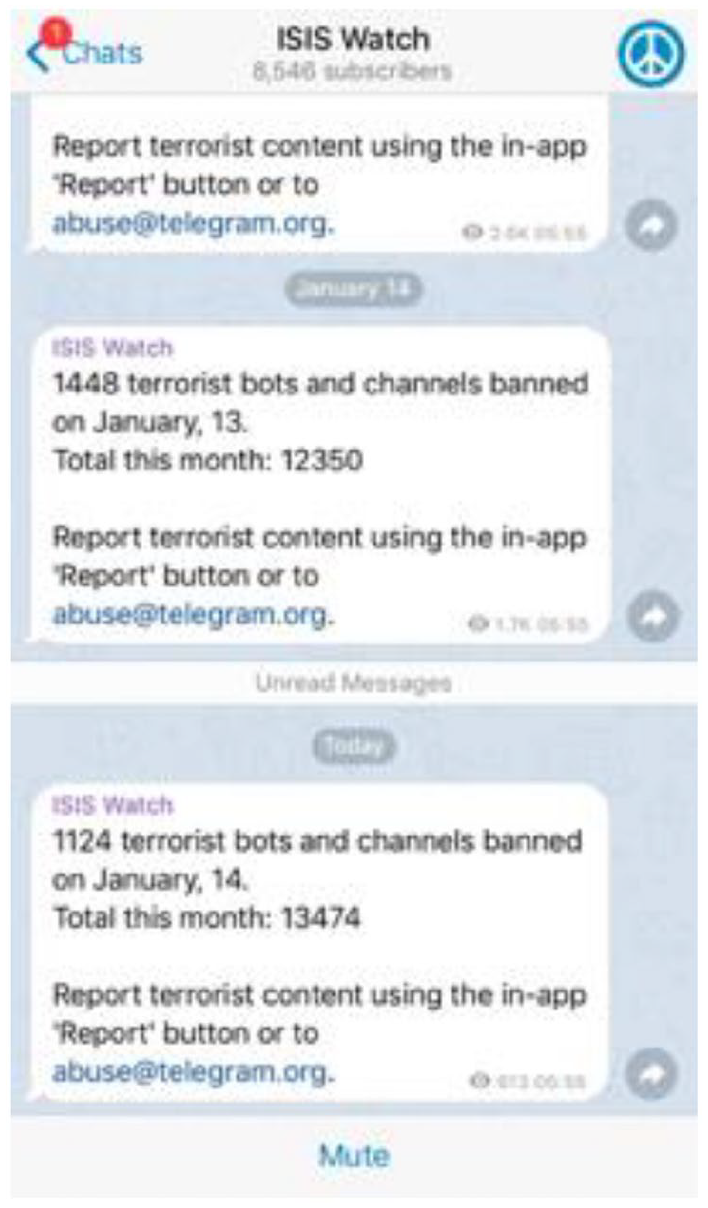
Telegram’s daily reports of terrorist bots and channels banned due to reports of terrorist-related content or activity.
Affordances and power
There are different perspectives in affordances theory to approach the relationship between affordances and power, from Gibson’s ecological psychology to social, technological, interface, and communicative approaches (Bucher and Helmond, 2016). Hutchby (2001) argued that affordances constrain, but do not determine, the agency over an object. Building on Gibson, Gaver stressed the importance of the perception as affordances are “potentials for action,” which implies a relational nature; it involves both the subject who employs it and the (technological) object that offers the potential outcome (see also Evans et al., 2017; Norman, 1999).
In the technological realm, Gaver (1991) focuses on affordances’ strengths and weaknesses regarding how people might use them. Zellinger (2018) highlights that digital specificity of affordances entails a potential to subversive uses of digital artifacts and processes. Similarly, Cirucci (2017) argues that since media technologies are made by humans, they are not neutral, as opposed to biological affordances. She puts the relational approach to affordances in perspective, building on her study of Facebook, concluding that designers have more power than users in an unbalanced negotiation to define the platform’s affordances.
Bucher and Helmond (2016) state that “technologies are socially constructed and situated on the one hand, and materially constraining and enabling on the other hand” (p. 10) and so are the structures behind them. Under the “platform” label, these cultural intermediaries usually position themselves as politically neutral services that do not gatekeep or curate—they would be a “mere facilitator, supporter, host” (Gillespie, 2010). However, “power is also located in the ability to set technical standards, which (. . .) reflect certain ideologies, and embody particular ethics and values” (Stratton, 2020: para. 7).
Affordances of digital objects may be instrumentalized by both users and developers as weapons within legal or symbolic power disputes. Santos and Faure (2018) analyzed the political instrumentalization of privacy, arguing that WhatsApp’s option to make the end-to-end encryption visible aimed to address a strategic political agenda not directly related to the feature itself. Still regarding the issue of privacy, Iran has developed and pushed forward its “homebrewed” messenger app—Soroush—as a strategy to afford state surveillance on IM (Kargar and McManamen, 2018), following the block of Telegram in April 2018. Treré (2020) highlights how affordances associated with WhatsApp, such as the smartphone’s omnipresence and the app’s communicative affordances (namely, speed, reliability, mobility, and multimediality), are valued by social movement organizers in the backstage of their activities, though such affordances were not designed for such kind of activity.
The literature on affordances and politics is mostly centered either on the user’s agency over platforms that are not designed for politics (as Treré’s example above) or on the role of platforms in face of political issues related to its adoption (hate speech, polarization, etc.). Our argument, however, focuses on an activism by the very designers of the platform, with empirical evidence to sustain it. We agree with Bucher and Helmond (2016) that the choice of perspective when studying affordances is platform sensitive. Indeed, we argue that the subversiveness embedded in Telegram’s built-in proxy is, after all, a quality linked to the agency of the developer and its technology rather than a product of the users’ agency.
Native proxy as a subversive affordance
Gramsci claims that culture and ideology are intertwined within a society, as a group of institutions cooperate in the maintenance of the “ideological structure of a dominant class (. . .) Everything which influences or is able to influence public opinion, directly or indirectly, belongs to it: libraries, schools, (. . .) even the layout and names of streets” (Gramsci, 2006: 16). The individual subjects from within such institutions, though, may be alienated from the whole, losing perspective of their contribution to the maintenance of the state of things, moreover because they are themselves inebriated with the system of beliefs they reinforce. This vicious cultural–political cycle is what Gramsci called hegemony.
Hegemony has been a useful framework to study, for example, punk culture (Hebdige, 2006) and media political and social appropriation (Downing, 2001). Such framework usually refers to the enhancement of individual agency as she overcomes alienation, identifying and engaging in political transformation be it via counter-cultural manifestations (Hebdige) or the production and circulation of counter-information (Downing). The case studied here is, however, more similar to Wikileaks’ struggle to bypass server blockage (O’Connor, 2010) than to Downing’s radical media. We argue that Telegram’s subversion takes place on an organizational level against Russian authorities, rather than following a growingly individualized perspective on subversion or activism on digital environments (Bennett and Segerberg, 2012; Milan, 2013). Specifically, we propose that Telegram’s subversiveness is a value built into the technical design and affordances of the app—a value that goes beyond user agency, as users may participate in a subversive action even if passive in their interaction with the platform.
Most of the definitions of subversive in traditional dictionaries contain two elements: (1) the conscious intent to sub vertere, that is, to turn from below, and (2) the object of the subversion is some established institution, system, or set of beliefs. The subversive individual or organization is counter-hegemonic in the Gramscian sense: a person works to change a prevalent system, from below, which implies this person is not within the core of the establishment but comes from its margins.
While most of the critical literature on digital objects points to malpractices regarding freedom of speech, privacy, disinformation, and so on, and literature on digital affordances and political activity focuses on the user agency through platforms (Evangelista and Bruno, 2019; Milan and Barbosa, 2020; Pang and Woo, 2020; Treré, 2020) or even infrastructure (Dahlberg-Grundberg, 2016; Gillespie et al., 2018) to somehow benefit their cause or belief, there is a lack of literature on how organizations could actively contribute to defy societal systems of order. Instead of individuals challenging platforms by subverting their affordances, this is a story of a platform that affords users to be subversive by working both on the software and the infrastructural level.
After facing blockages in other places such as Iran as early as 2015, non-profit IM Telegram reacted by implementing a proxy feature that allows users to bypass censorship with the click of a button. Telegram called it an “anti-censorship tool” on its blog when it was launched on 30 June 2017 (The Telegram Team, 2017), pointing out the subversive nature of that functionality. It reads as a politico-ideological statement that defends users’ right to private communication (the subtitle of the post that addresses the proxy is “Free Speech”). But it is also subversive from a technological standpoint, reflecting a transnational power struggle between governments and the app, mediated by Internet service providers (ISPs) and other telecommunications infrastructures (Ermoshina and Musiani, 2021). As a result, Russian users never ceased to use the app in the 2 years of blockage (East-West Digital News, 2019). In fact, Telegram’s user base doubled in Russia during the blockage, reaching more than 30 million active users in May 2020 (Durov, 2020). We argue that this kind of affordance development is a form of transnational digital activism.
A subversive affordance is, therefore, the result of a feature implemented by the developers behind a technological device, platform, or software that enables the defense of an opposing ideological value in face of the dominant set of values enforced either by the state or private organizations. In other words, subversive affordances are the result of instrumental counter-hegemonic functionalities embedded into technology, which enable, regardless of user’s actions, an active resistance to hegemonic power.
As we will see in the present study, many users in Russia benefited from Telegram’s subversive affordance without moving a fingertip. Hutchby (2001) points that affordances are both functional, enabling and constraining, and relational, as they are different from one species to the other. In this case, the “different species” are different social groups. While the most privileged actively subverted the blockage themselves, digitally underprivileged groups became passively subversive by the built-in affordance.
Although it is impossible to describe how exactly each Telegram user evaded the blockage, the information available and the data we collected suggest the subversiveness, in this particular case, operated as the effect of an embedded feature on the software and even beyond the software, on an infrastructural level. As such, the agent of subversiveness is not the user, but the system behind it. In other cases, such as Brazil’s 13-hour blockage of WhatsApp in 2015, the users had to be subversive themselves, which they did by installing an external virtual private network (VPN) software unrelated to the app to bypass the blockage, but 3 out of 10 users were unable to successfully bypass the official app blockage due to their lack of skills (Santos et al., 2020).
By conducting a two-step cluster analysis, Santos et al. (2020) inspected the features of those who did and did not overcome the blockage, and developed four user profiles: the deprived, the addicted, the challengers, and the elite. Three of these clusters were able to download a VPN app that simulated access from a different country. Users’ digital skills were crucial to bypass the blockage, as those with scores below the mean (the deprived) unsuccessfully tried to bypass the blockage. In contrast, those who easily installed the VPN (the elite) had skills that scored significantly above the mean. Besides digital skills, gender and education also played a role; users in the elite cluster were mostly males and had the highest level of education of all clusters.
Following Santos et al.’s (2020) piece, this study aims to identify what clusters or groups of users benefited from subversive affordances to overcome the Telegram blockage by Russian authorities. In Santos et al.’s study, around 30% of the WhatsApp users could not use the app during the blockage, even though they tried. But in the case of Telegram, we argue the subversive nature of the proxy feature allowed most users to bypass the blockage, bringing the deprived closer to the elite. As such, our study poses two research questions to empirically approach our subversive affordance concept:
RQ1. What groups of users were more likely to benefit from Telegram’s subversive affordances to overcome the Russian government blockage?
RQ2. Within those groups of users, are there commonly underprivileged groups that were able to bypass the blockage as a consequence of the subversive affordance?
Method
Data collection
We conducted a survey on 28 April 2018—15 days after the court ordered to initiate the blockage—and distributed the survey link in a Telegram News group on VK, Russia’s most important social media platform. The data collection lasted for 5 days, when we reached 1000 responses.
Given that our sampling procedure did not allow for a random selection of participants, respondents to the survey might not necessarily be representative of Russia’s online population. Yet, information available for Telegram users in Russia indicates our sample is very close to this population demographics. In terms of age, 40% of Telegram users are in the 25- to 34-year-old group (Statista, 2021) and our sample shows a 39% for the same age group (see Appendix 1). Also, 54% of Telegram users have higher education diplomas and academic degrees (Romir, 2018), very close to the 55% we found in our sample. We only identified disparities in terms of gender—54% of Telegram users in Russia are men (Romir, 2018), while 69% of our respondents are men.
Data analysis
Following Santos et al.’s (2020) work, we analyzed the survey data and conducted a two-step cluster analysis with users’ digital skills, frequency of Telegram use, and blockage bypass as the variable criteria to classify cases. Clusters were compared to each other in terms of respondents’ gender, age, education, and Telegram uses, and labeled accordingly. We then conducted a new cluster analysis to zoom into the initial results in what we call a meta-cluster approach to understand digital transnational activism.
Variables
Blockage bypass
Respondents were asked how they bypassed the blockage, providing them with four mutually exclusive options: “I configured it myself” (42%), “I found information on the Internet regarding how to do it” (33%), “Someone helped me set up my phone” (4%), and “No action was needed” (21%).
Frequency of Telegram use
Respondents were asked how often they used Telegram on a 5-point Likert-type scale, where 1 = seldom to 5 = many times a day (M = 3.9, standard deviation [SD] = 1.2, range = 1–5).
Digital skills
Respondents were asked how familiar they were with a series of concepts related to digital technologies, such as “jpg” or “Blog,” on a 5-point Likert-type scale, where 1 = not familiar at all to 5 = very familiar. We performed an exploratory factor analysis with the concepts, which loaded in two factors. The first factor comprised the following concepts: “Malware,” “Spyware,” “End-to-end Encryption,” “Firewall,” and “Podcast.” We labeled this factor as high digital skills. The second factor comprised “Wikipedia,” “Favorites,” “Blog,” “jpg,” “Tagging,” and “Bookmark.” We labeled this factor as low digital skills. Items in each factor were combined to build the variables high digital skills (five items; Cronbach’s α = .83, M = 3.5, SD = 1.2, range = 1–5) and low digital skills (six items; Cronbach’s α = .78, M = 4.6, SD = 0.62, range = 2–5).
Telegram uses
This variable recorded different activities users can do with Telegram. Respondents answered how often they used Telegram for “communicating with friends,” “communicating with relatives,” “communicating with colleagues,” “discussing politics,” “reading the news,” “organizing events,” “solving problems,” and “entertainment,” also on a 5-point Likert-type scale. These items were combined into an index of Telegram uses (eight items; Cronbach’s α = .73, M = 2.9, SD = 0.80, range = 1–5).
Demographics
Respondents were asked their gender (male = 69%), their age (M = 30, SD = 9.6), and their highest level of education, from a list that ranged from “elementary school” to “graduate degree” (median = 5, college degree; M = 4.1, SD = 1.2, range = 1–6).
Results
According to the two-step cluster analysis, Telegram users cluster into five groups based on the criteria variables. We labeled the groups as Leaders, Solvers, Seekers, Defiers, and Subverted. The summary of each cluster is presented in Table 1. We compared these five groups regarding their levels of Telegram uses (such as political discussion or entertainment) and demographics (gender, age, and education).
Two-step cluster analysis summary.
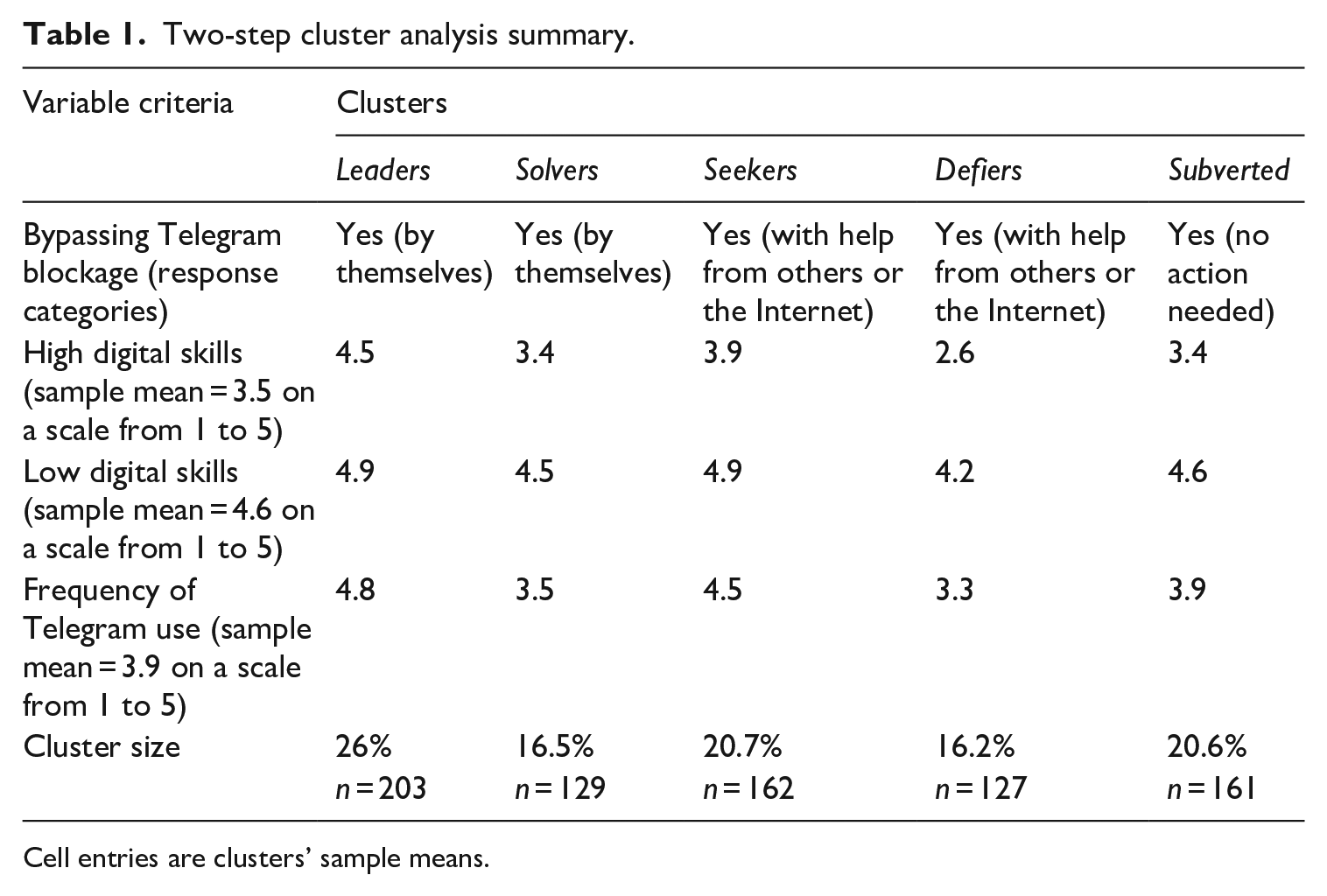
Cell entries are clusters’ sample means.
The first cluster accounts for 26% of respondents and it is the largest group. These users present the highest digital-skill scores, both on high skills (knowing concepts such as malware, firewall, and spyware) and low skills (knowing concepts such as jpg or Wikipedia). They also use Telegram more frequently than the average user (see Figure 2). They bypassed the blockage by themselves—no help from third parties was needed. We labeled this group as Leaders.
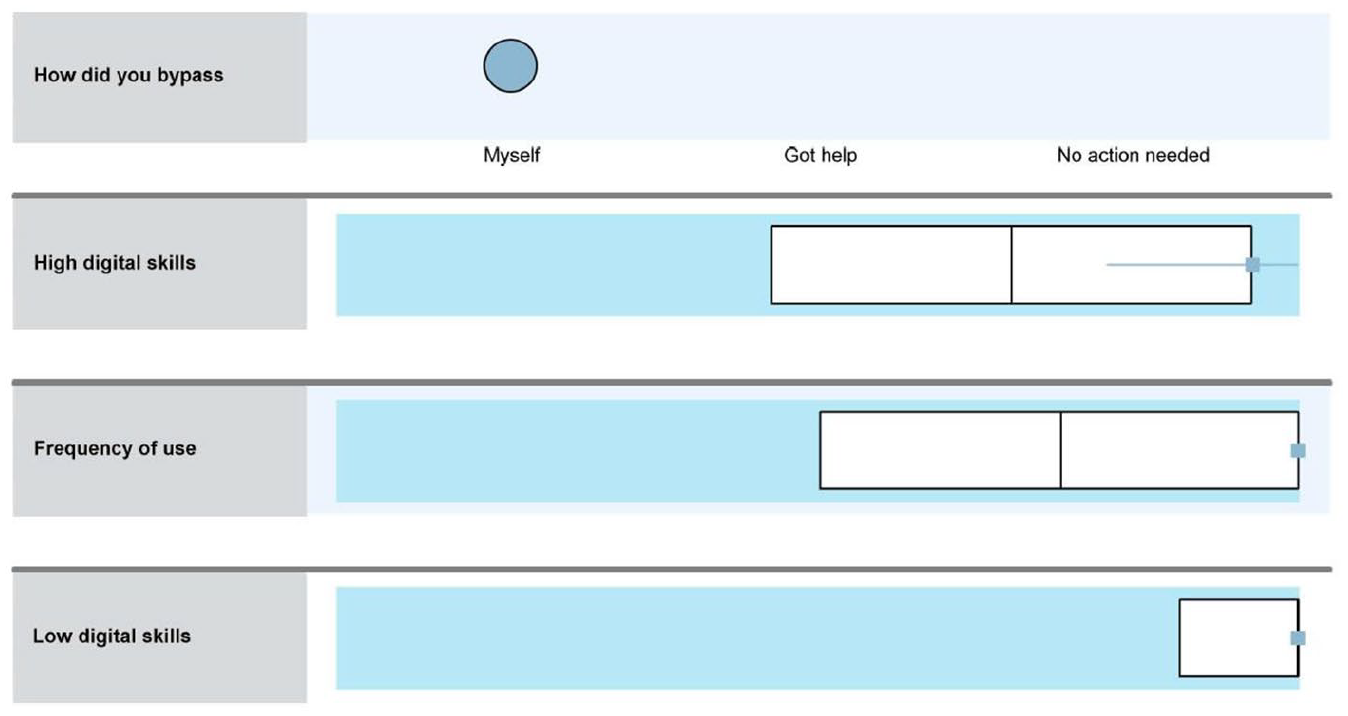
Leaders cluster.
This cluster concentrates mostly males (88%), users slightly younger than the sample mean (29 years old on average), with the highest level of education (4.25 on a scale from 1 to 6) and with a higher score of Telegram uses than respondents in the other four clusters (3.5 on a scale from 1 to 5).
The second cluster accounts for 16.5% of respondents. Just like the first cluster, this group comprises respondents who were able to bypass the blockage by themselves. However, their digital skills (both high and low) and their frequency of Telegram use are below the mean (see Figure 3). Therefore, we labeled this cluster as Solvers.
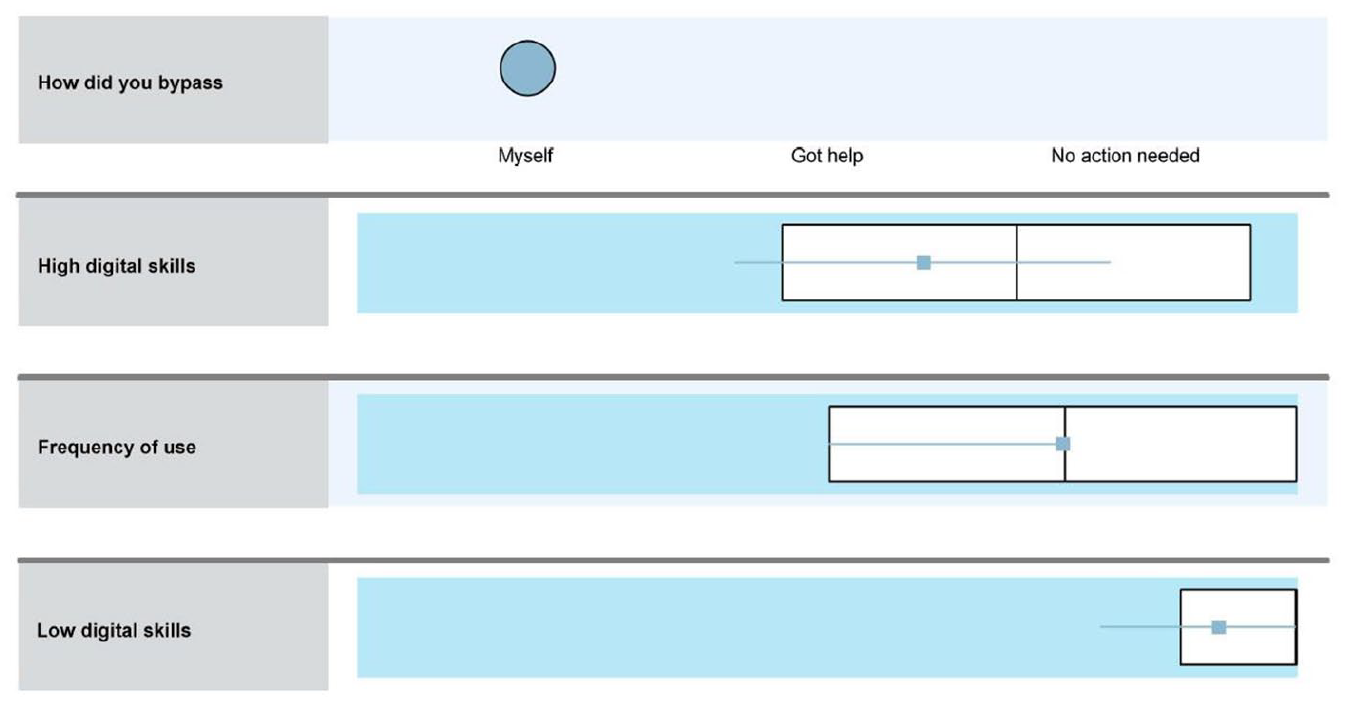
Solvers cluster.
This is the group with the lowest level of education (3.8 on a scale from 1 to 6) and Telegram uses slightly below the mean (2.9 on a scale from 1 to 5). No significant differences with the other clusters were found in terms of gender and age.
The third cluster accounts for 20.7% of respondents. Users in this cluster bypassed the blockage with help either from another user or from information found on the Internet. Their digital skills and their frequency of Telegram use were above the mean (see Figure 4) similar to users in the Leaders. Thus, we labeled this group Seekers.
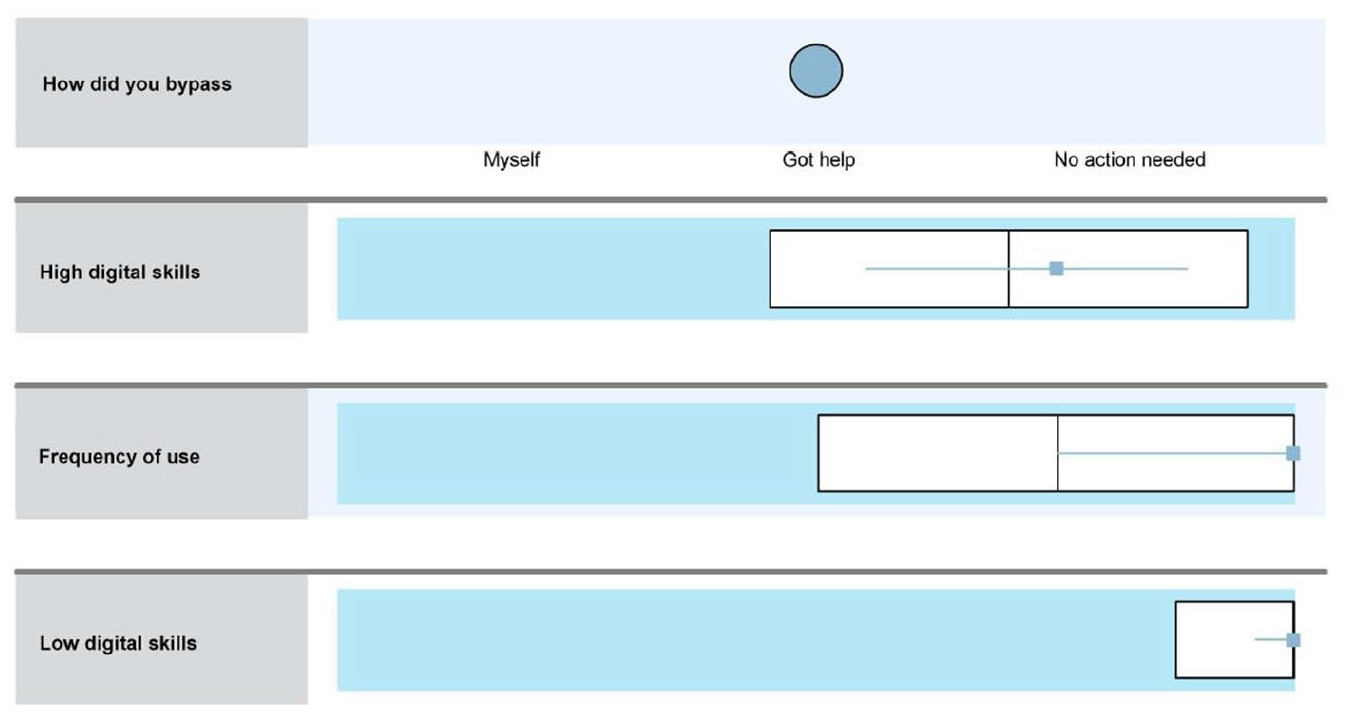
Seekers cluster.
This group also has a high score on Telegram uses (3.2 on a scale from 1 to 5). No significant differences were found in terms of gender, education, and age.
The fourth cluster accounts for 16.2% of respondents and it is the smallest group. Users in this cluster also bypassed the blockage with help—however, they are the least savvy cluster. Their levels of digital skills and frequency of Telegram use are the lowest (see Figure 5), as well as their Telegram uses (2.7 on a scale from 1 to 5). We labeled this group Defiers.
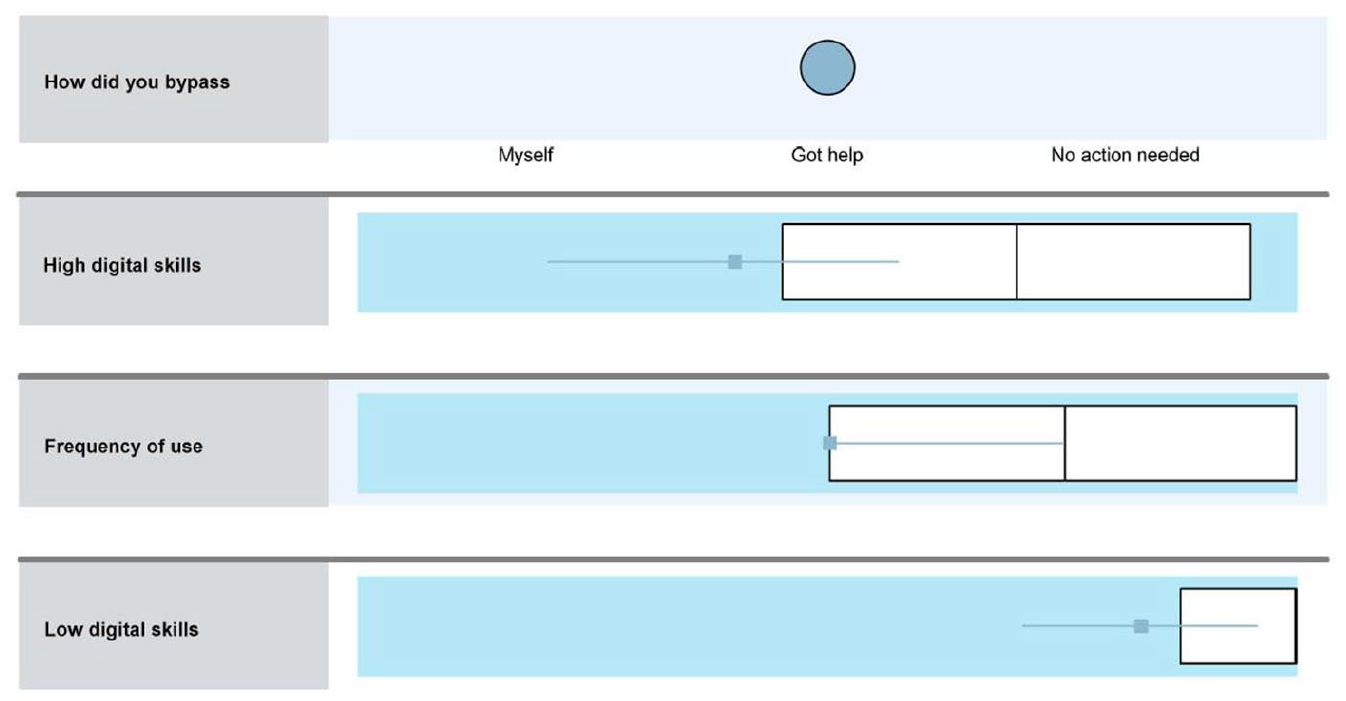
Defiers cluster.
This cluster has the highest proportion of women (46%) and the oldest users (32 years old on average). We found no significant differences in terms of education.
Finally, the fifth cluster accounts for 20.6% of respondents and it is the only group that did not do anything to bypass the blockage. We labeled this group Subverted, as they had no agency on bypassing the blockage. Instead, they were passive objects of subversion thanks to the built-in proxy which enabled them to be passively subversive—that is to keep using Telegram, thus defying the legal prohibition—as an effect of the proxy’s implementation (the technology affordance subverted them). This cluster answers RQ1 regarding groups that benefited from Telegram’s subversive affordance. They present average scores for digital skills and Telegram use (see Figure 6), as well as the activities they use Telegram for (3 on a scale from 1 to 5). The second largest proportion of women (35%) and the youngest users (28 years old on average) are in this group. No significant differences were found in terms of education.
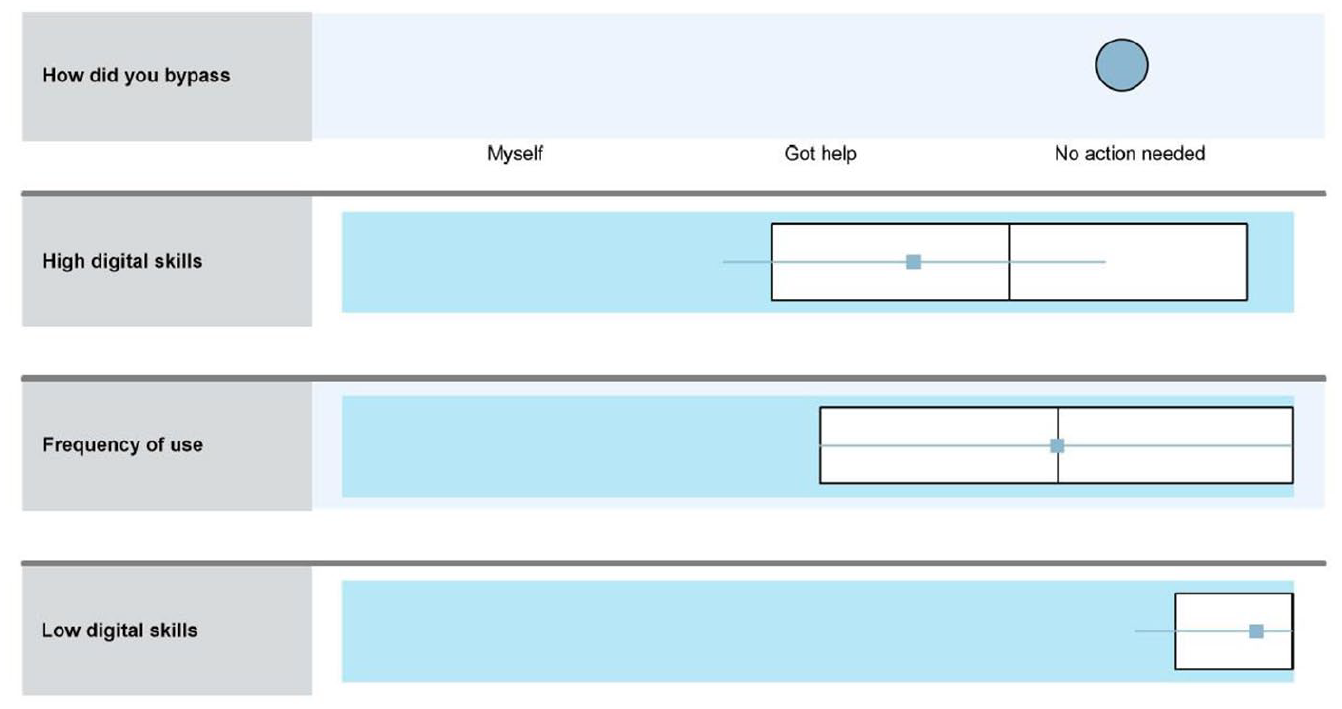
Subverted cluster.
A meta-cluster approach
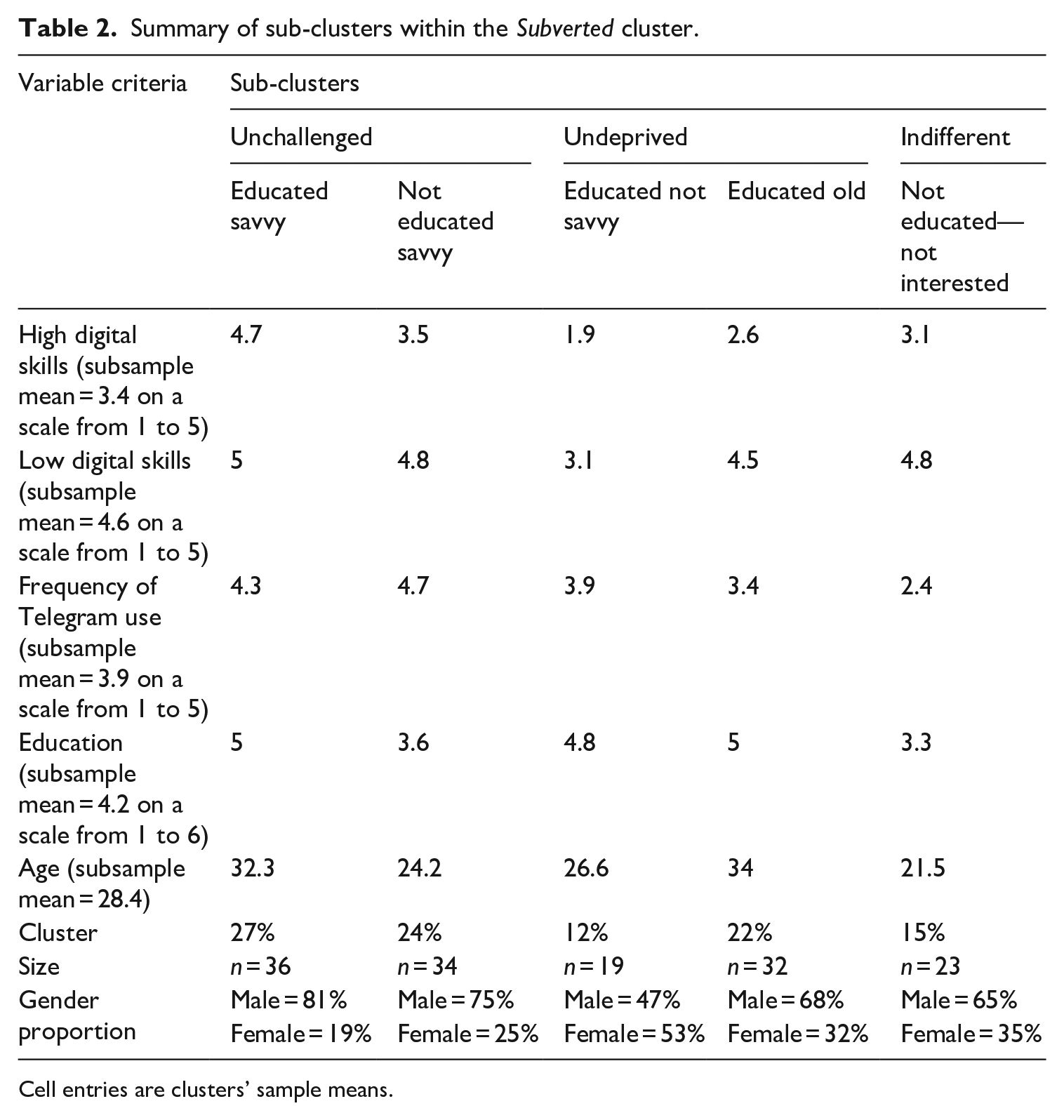
The users on the Subverted cluster presented average scores for most of the variables. This was the only cluster that did not take actions to bypass the blockage and yet they did overcome it. While users in the other clusters configured their phones to activate proxy to access Telegram, or seek help to get Telegram access, users in the Subverted group remained passive. To zoom in on these results, we conducted a second cluster analysis within this cluster—a meta-cluster approach—to closely observe these users, with digital skills, frequency of Telegram use, education, and age as the variable criteria to classify cases. We also computed the proportion of males and females in each cluster for comparative purposes. Table 2 illustrates the five-cluster solution we present for this subsample of users.
Summary of sub-clusters within the Subverted cluster.
Cell entries are clusters’ sample means.
We labeled the sub-clusters following the results of education and digital skills, variables that play a relevant role to understand the composition of the Subverted cluster. A quick glance at Table 2 reveals that both the educated and less educated savvy sub-clusters concentrate mostly males. We called them the Unchallenged, assuming their levels of savviness would allow them to bypass without the built-in proxy. The third and fourth sub-clusters are composed by educated, but less savvy, users. In addition, while the former is the only sub-cluster with the majority of females, the fourth cluster has the higher age average. Therefore, we called both sub-clusters the Undeprived, arguing that both groups would be likely to be deprived of Telegram access if not for the subversiveness of the built-in proxy that enabled them to keep using the app.
These results suggest that the Undeprived sub-clusters of the Subverted cluster are comparable to Santos et al.’s Deprived cluster: more female users and lower digital skills. Still, the Undeprived overcame the blockage, therefore its name. To answer RQ2, our results show that Telegram subversive affordances allow users who have historically faced a digital divide—such as female, older, and less educated users—to overcome a blockage without taking any action. The lack of subversive affordances in platforms such as WhatsApp produces groups of Deprived users, unable to overcome technological obstacles imposed by authoritarian measures. To produce the same outcome, there is a need for a more skilled action on their part, beyond the borders of the app, so they must be subversive themselves.
Discussion
Blocking the unblockable
People in Russia had different experiences with Telegram, when Roskomnadzor started to block its IP addresses, and later, the authority started to block VPN services. Some variables interfered on users’ experiences: the Telegram version they had installed, the operating system (iOS or Android), the settings of the mobile device (whether they use VPN service or not, for example), and the mobile/Internet provider, as some providers could be executing Roskomnadzor requirements more eagerly than the others. According to a brief survey on a VK Telegram News channel (vk.com/tnews) conducted 1 day after the blockage (N = 1611 respondents), for most people the solution to overcome those difficulties was to activate the built-in Telegram proxy setting (38.4%) and/or to turn off or switch to a different VPN provider, if their VPN provider was blocked (8.6%) (Telegram News, n.d.).
Results of the same survey indicated that 36.4% of the users “didn’t even notice” the block and were able to continue using Telegram “without any means of circumvention.” Our own data also indicate that, even 2 weeks after the blockage, when Roskomnadzor was blocking millions of IPs possibly related to Telegram, one-fifth of the users had taken no action to keep using Telegram, as indicated by the Subverted cluster. Although some ISPs refused to carry out the blockage (Ermoshina and Musiani, 2021), many Telegram users had to rely, at least initially, on a network of independent proxy servers and VPN providers, as others had to manually update their configuration or click on a link to activate a proxy. Both processes hide or simulate a different IP, as if the user was not in Russia, for instance. Telegram also randomly and seamlessly changed its IP addresses (“IP hopping”) to make it impossible to track it and impede access, using a service named DC_Update (Jin, 2018) to push emergency updates to the app settings.
2
According to the administrator of the Telegram News VK Group, The Telegram team itself updated server addresses
A few days later, an update created an automatic proxy updating system. On 20 April, Telegram News reported that users were able to keep using Telegram even without a VPN or proxy. 3 On 28 April 2020, Telegram announced a new version where, with new MTProto 4 Proxy protocol, traffic is encrypted and looks almost like standard Hypertext Transfer Protocol Secure (HTTPS) or Transport Layer Security (TLS), allowing it to evade DPI-based (Deep Packet Inspection) blocking attempts, making things much more difficult to Russian (or other) authorities. As a result, though during the first weeks Roskomnadzor had blocked more than 18 million IP addresses (Ermoshina and Musiani, 2021), Telegram never ceased to work in the country’s territory. Telegram’s built-in proxy functionality and the other additional measures taken by the Telegram team are, in this sense, a manifest for both freedom of speech, as it allows people to keep using the app for all kinds of communication, and right to privacy, as it is a reaction to government requests for decryption keys to access conversations on the app.
Digital divides and the “Undeprived”
The literature on digital divides repeatedly points to some technologically underprivileged sociodemographic groups that may come as the result of stratified divides, reinforcing original structural inequalities more than mirroring them (Ragnedda, 2017). Robinson et al. (2020) referred to the persistence of digital inequalities for the past 25 years as “digital inequality stack” that piles up as interrelated layers related to access, skills, and use as they altogether work toward tangible outcomes. In that sense, legacy digital inequalities persist regarding many variables such as education, age, and gender (Robinson et al., 2020).
In our survey, we considered four of the most important factors present in the literature on digital divides: education (Robinson et al., 2020), age (Anderson and Perrin, 2017), gender (Bimber, 2000; Organisation for Economic Co-operation and Development, 2018), and skills (Santos et al., 2020; Van Dijk and Van Deursen, 2014). From plain access (van Dijk, 2006) to more specific activities such as capital enhancing (Van Deursen et al., 2015), education, age, gender, and skill divides have been systematically detected in a myriad of studies.
Although the gender gap has been gradually reduced in developed countries, it is not only still relevant, but it has been widening in emerging economies (OECD, 2018; Robinson et al., 2020) such as Russia. Similarly, as generations grow older with more proximity to technology, more older adults are digitally active, though there persists a notable age-related digital divide (Anderson and Perrin, 2017).
Our results show that those gaps are irrelevant in face of a subversive affordance, which does all the work enabling users grouped in clusters of different educational backgrounds, digital-skill levels, age, and gender to equally circumvent the blockage by doing nothing. This is why we called the cluster of those who passively bypassed the blockage the Subverted: they were not subversive, it is the subversiveness afforded by their app that seamlessly bypassed the blockage for them.
As described in the previous section, the Subverted cluster comprised a variety of profiles analyzed as sub-clusters that not only included savvy, male, educated, or less educated people whom we called the unchallenged but also included disadvantaged groups, such as older and female-dominant sub-clusters. While WhatsApp blockage in Brazil led to clusters of Deprived people (Santos et al., 2020), Telegram’s similar blockage in Russia led to clusters of people who were, on the contrary, Undeprived by the subversive affordance embedded in their app.
Conclusion
In a society where technology development and regulation of digital intermediaries are widely delegated to private companies (Hintz, 2012) despite its central role in economic and social development, national security, and so on, power disputes have been occurring often. Nevertheless, there are different types of conflicts, most of them propelled by economic interest. This case is different, though, for it is a political one.
Built-in proxy is a subversive affordance in two senses. The first is a more explicit sense: the proxy allows for even the most disadvantaged user to keep operating the app, even under highly committed efforts from the authorities to block it, as the last couple of years in Russia have proven. It allows the users to circumvent the block, which could be read as an act of civil disobedience, but not so much as a product of the user’s agency. Instead, it is the product of an anticipated subversiveness embedded into an affordance as a private enterprise claims its leader’s political ideals, in this case, the sum of freedom of speech and the right to privacy. The second is that part of the users have experienced quite a seamless circumvention to the blockage, which could be considered an ultimate subversion, as the goal of the user—to communicate with others—is maintained, while the circumvention task is incorporated by the app. This is a radical example of how an affordance’s agency may become complex as power roles shift from users to designers (Cirucci, 2017) and to the very infrastructural level: the successful implementation of the “anti-censorship tool” was at first a collaborative effort with a more engaged community—perhaps mirroring the philosophy behind Telegram’s open-source code—but later it became somewhat techno-deterministic, for the app’s team did all the work necessary to circumvent the blockage, as illustrated by the undeprived sub-clusters.
Telegram comes about as quite the black sheep, then, amid platforms that struggle to shield themselves behind a supposed neutrality and therefore claim as illegitimate any sort of accountability as they define themselves as “mere facilitators.” Paradoxically, the entertainment industry celebrated the conviction of the four founders of the torrent host, The Pirate Bay, in 2009 (BBC, 2009), stating that they were accomplices to the crime of copyright infringement, similar to the notion that he who holds a jacket while the jacket’s owner beats someone else. Quite frankly, it does not seem so different from social media platforms and disinformation, hate speech, and so on. The dark side of the picture, though, is that both privacy and freedom of expression also serve other less inspirational activities such as terrorist activity, political micro-targeting—many times off the limits of the electoral regulations—and the same problem of spread of hate speech and disinformation, so criticized on social media lately. As Telegram pushed different IP directions to allow users to keep functioning, it is not difficult to imagine that other kinds of functionalities or data could be pushed by apps’ providers without users’ consent, which might bring about harmful effects.
Of course, there are some limitations to the present research. Survey data were obtained in a Telegram news group, so the sample might be biased with a relatively high interest in the app. However, as a secondary option in Russia (the most used IM app is WhatsApp), Telegram is usually the option for more advanced users, such as journalists or tech professionals. That means Telegram users are more educated and more digitally savvy than users of other IM apps to begin with. Also, in terms of demographics, our sample is very close to the actual population of Telegram users in Russia, especially regarding age (Statista, 2021) and education (Romir, 2018). As such, we believe the data are conclusive about two things: (1) affordances are political and (2) chat apps are a battle zone in contemporary mediascape. While the former could help bury forever the discussion as to whether platforms are to some extent “neutral,” the latter unveils the tensions within the traditional state surveillance systems and particularly the inefficiency of the censorship methods used by Russian authorities (Ermoshina and Musiani, 2021).
Gramsci stated that “what was previously secondary and subordinate, or even incidental, is now taken to be primary” (Gramsci, as cited in Laclau and Mouffe, 2001: 68). With the lift of the app’s ban, it seems like Telegram’s subversiveness and Russia’s Digital Resistance have made a decisive contribution to redefining the digital, post-electronic standards in private communication security as to the extent to which governments will have to review their intelligence service strategies to surveil digital platforms, particularly encrypted chat apps.
Footnotes
Appendix
Survey sample demographics.
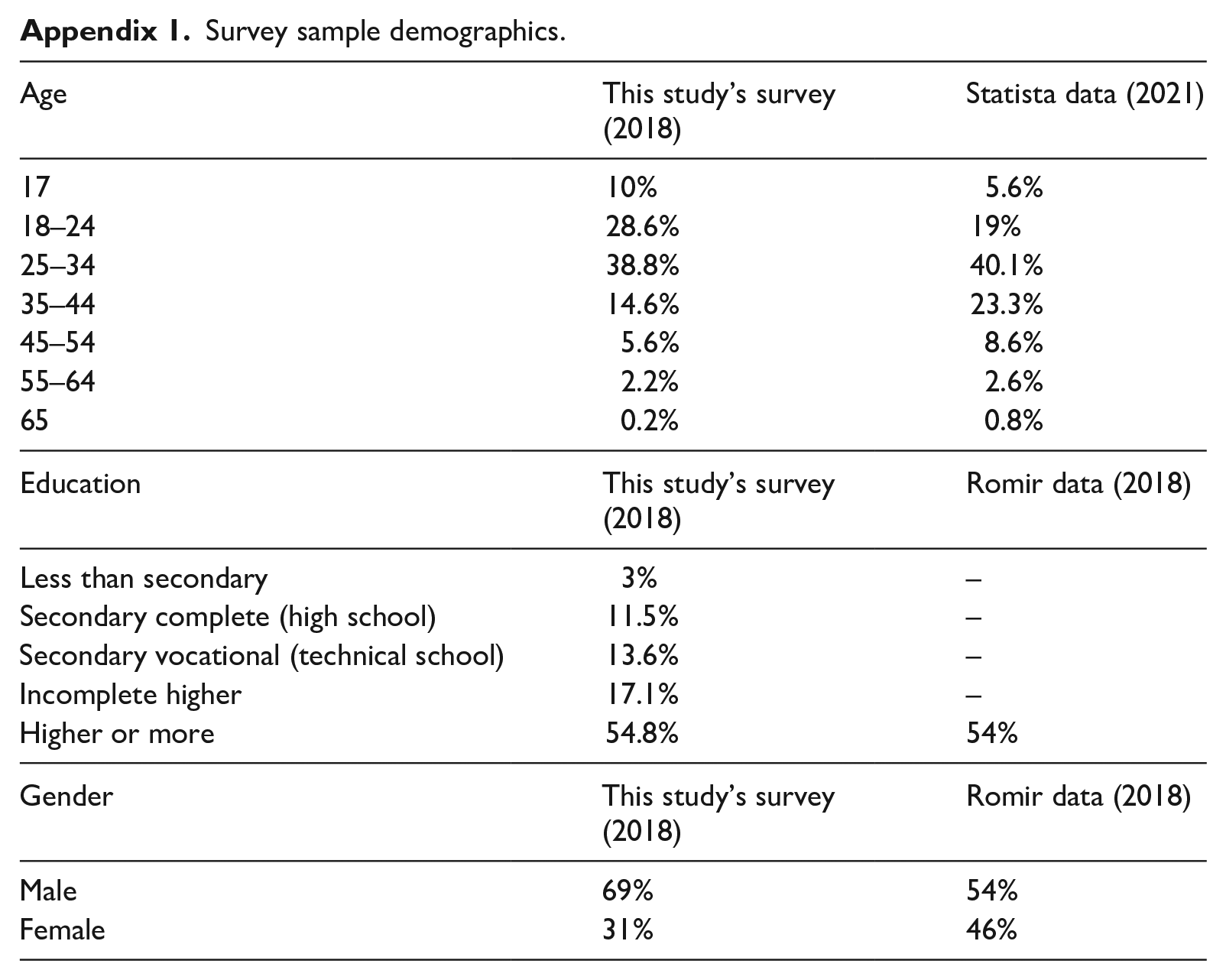
| Age | This study’s survey (2018) | Statista data (2021) |
|---|---|---|
| 17 | 10% | 5.6% |
| 18–24 | 28.6% | 19% |
| 25–34 | 38.8% | 40.1% |
| 35–44 | 14.6% | 23.3% |
| 45–54 | 5.6% | 8.6% |
| 55–64 | 2.2% | 2.6% |
| 65 | 0.2% | 0.8% |
| Education | This study’s survey (2018) | Romir data (2018) |
| Less than secondary | 3% | – |
| Secondary complete (high school) | 11.5% | – |
| Secondary vocational (technical school) | 13.6% | – |
| Incomplete higher | 17.1% | – |
| Higher or more | 54.8% | 54% |
| Gender | This study’s survey (2018) | Romir data (2018) |
| Male | 69% | 54% |
| Female | 31% | 46% |
Declaration of conflicting interests
The author(s) declared no potential conflicts of interest with respect to the research, authorship, and/or publication of this article.
Funding
The author(s) disclosed receipt of the following financial support for the research, authorship, and/or publication of this article: The authors received funding from Universidad Finis Terrae through the grant CAI 2017, and from Chile’s National Agency for Research and Development (ANID) through the Millennium Science Initiative Program—Code ICN17_002.
