




Abstract
Social media enables information sharing and social interaction within organization. This research aims to analyze how both work- and nonwork-related communication with colleagues and the work community on social media is associated with work engagement among Finnish professionals. A total of five Finnish professional organizations (N = 563) and a representative sample of the Finnish working population (N = 1817) contributed to the survey data, which was analyzed with structural equation modeling. We found a direct positive association between work-related communication and work engagement among Finnish working population, and a positive indirect associations between both work- and nonwork-related communication and work engagement via organizational identification and social support. Findings suggest that communication in social media supports work engagement via organizational identification and social support. Organizations should pay more attention to social media communication practices and provide opportunities to build organizational identification and receive social support in social media.
New technologies set novel opportunities and challenges for working life and organizations. Social media use is changing communication, networking, and knowledge sharing at workplaces, and employees often use general social media and social networking sites (e.g. Facebook) on top of enterprise social media (ESM) platforms (e.g. Microsoft Teams [MS Teams]) to communicate both work- and nonwork-related matters. This has different implications to work and individuals. Past literature indicates that social media communication can provide opportunities for work engagement (Sharma and Bhatnagar, 2016; Van Zoonen et al., 2017; Van Zoonen and Banghart, 2018), that is, a positive motivational state of mind at work (Schaufeli et al., 2002) that can increase employees’ performance and work productivity (Hakanen and Koivumäki, 2014). Communication in social media can also challenge employees to be and remain engaged due to conflicting demands, constant connectivity, interruptions (Bucher et al., 2013), and blurring boundaries between work and private life (Ayyagari et al., 2011).
Enterprise social media platforms, which combine numerous features, such as microblogging and document sharing in one integrated place, can contribute to improving information access and dissemination (Leonardi and Mayer, 2015). Social media usage provides opportunities for employees to collaborate and coordinate work (Gibbs et al., 2013). Social media can be supportive, particularly in inducting new employees (Leidner et al., 2018; Sharma and Bhatnagar, 2016). This can, in turn, positively influence employees to connect with colleagues, feel welcomed, and gain a sense of belongingness. Social media is not only used for work purposes, but also utilized more and more often for informal and relaxed communication with others in the work community (Mäntymäki and Riemer, 2016). However, nonwork-related social media usage is often considered as counterproductive working behavior (e.g. Andreassen et al., 2014; Berkelaar et al., 2015; Kowalski et al., 2018), which can lower employees’ work engagement (Syrek et al., 2018).
This study examines the communicative purpose of social media usage in organizations and the association of this type of communication with work engagement. This communication can take place either on ESM platforms or on public social media platforms. Instead of concentrating on specific social media platforms, we consider all of these types of social media usage in our study; the only requirement is that they are used for communication with colleagues or the work community. More specifically, we analyze whether both work- and nonwork-related communication on social media are positively associated with work engagement and whether this association is mediated by increased social support and organizational identification.
Earlier research has suggested that professional social media use can support formal and informal communication within the work community (Gibbs et al., 2013; Mäntymäki and Riemer, 2016) and also offer various other job resources including increased sense of community and social support (Gibbs et al., 2013; Leidner et al., 2018; Olmstead et al., 2015) and work engagement (Sharma and Bhatnagar, 2016; Van Zoonen and Banghart, 2018). Both organizational identification, that refers to a feeling of oneness to the organization (Mael and Ashforth, 1992), and social support, that refers to an emotional, informational, and instrumental support from work community (Cohen and Wills, 1985), have been associated with enhanced work engagement in prior studies (see, for example, Demirtas et al., 2017; Hakanen et al., 2006; Othman and Nasurdin, 2013; Van Dick et al., 2020).
The results of our investigation contribute to prior research on social media usage in organizations and work engagement by providing further knowledge: First, on how social media usage for work- and nonwork-related communication is related to work engagement. Second, on the role of organizational identification and social support in that relationship, which have not been studied before. Third, this is the first study to elaborate the role of professional social media usage on work engagement, organizational identification, and social support. By analyzing separately work- and nonwork-related communication and the use of different social media tools for working purposes, we are able to infer whether social media communication with colleagues is associated with the expected outcomes, beyond the other affordances of professional social media use.
We utilized a nationwide sample of Finnish employees together with an organizational sample to examine both nonwork- and work-related social media communication. The study focuses on the communicative and social aspects of social media usage. The theory section starts with a literature review on past research on social media communication in organizations. Our hypothesis development is based on theories of work engagement, organizational identification, and social support.
Social media communication in organizations
Recent dramatic increase in professional social media usage have led organizations to utilize it more for both internal and external purposes (Koch et al., 2012; Leonardi et al., 2013; Treem and Leonardi, 2012; Yu et al., 2018). Social media, defined as a set of internet-based applications enabling user-generated content creation and exchange (Kaplan and Haenlein, 2010; Krämer et al., 2017), facilitates communication and interaction within a work community. Organization-specific applications include social media platforms, such as MS Teams, on which employees can communicate and share documents and information about work issues (Leonardi et al., 2013; Treem and Leonardi, 2012). Other applications include external public social media channels, such as Facebook, which can be utilized for personal development and self-promotion (Leidner et al., 2018; Van Dijck, 2013), branding and marketing purposes, and for collaboration with stakeholders (Kaplan and Haenlein, 2010; Sivertzen et al., 2018), in addition to collaboration with the work community.
In organizations, social media is often referred to as ESM, enterprise social networking sites (ESNS), or internal social media (ISM; Ellison et al., 2015; Leonardi et al., 2013). ESNS refer to social networking sites that mimic public social networking sites, such as Facebook, but which can restrict membership and interaction by their implementation and management within an organization (Ellison et al., 2015). In addition to this function, ESM and ISM allow workers to reveal communication partners, view different forms of messages and material, and communicate with all or specific coworkers using functions similar to public social media (Leonardi et al., 2013).
Social media can help employees create robust forms of communication, sustain and grow knowledge over time (Treem and Leonardi, 2012). Thus, communication in social media can advance knowledge sharing across teams regardless of geographical location (Ellison et al., 2015; Leonardi et al., 2013; Pee and Lee, 2015) and can enhance organizational transparency and job performance (Olmstead et al., 2015). Social media allows employees to target their messages to certain audiences and modify, revise, and alter content afterwards, thus enhancing the content quality (Treem and Leonardi, 2012). Employees can satisfy their information needs by allowing information and sharing ideas in a conversational and autonomous manner, rather than just fulfilling certain task-oriented purposes (Leonardi and Mayer, 2015; Mäntymäki and Riemer, 2016).
Social media provides possibilities to reveal social ties, in other words, associations between people and between people and content. This can support forming social connections, identification with other experts and accessing relevant information, which in turn can enhance the social capital in organizations (Treem and Leonardi, 2012). Therefore, ESM usage can improve social support (Olmstead et al., 2015; Treem and Leonardi, 2012) and the sense of closeness and connectedness to colleagues and the company (Ehrlich and Shami, 2010). A few scholars (Sharma and Bhatnagar, 2016; Van Zoonen et al., 2017; Van Zoonen and Banghart, 2018) have shed light on the relationship between work-related social media communication and work engagement, indicating that there is a positive link between the two. Although social media usage in organizational context provides various benefits, employees can be skeptical about using social media for work purposes (Treem et al., 2015). Professional social media usage can also stimulate unwanted behaviors, such as cyberloafing (Andreassen et al., 2014), cybervetting (Berkelaar et al., 2015), and cyberbullying (Kowalski et al., 2018). Hence, professional social media challenges communication dynamics in organizations (Gibbs et al., 2013).
So far, it is also known that informal, nonwork-related discussions between colleagues in ESM can foster social capital and interpersonal relationships (Leonardi and Mayer, 2015; Mäntymäki and Riemer, 2016). Therefore, nonwork-related communication can enable to fulfill both work-related and private communication motives of the employees (Leonardi and Mayer, 2015; Mäntymäki and Riemer, 2016). Furthermore, collaboration with coworkers on Facebook is positively associated with higher job satisfaction (Robertson and Kee, 2016). Nonwork-related communication on social media knowledge management systems, such as organizational discussion groups, can enhance employees’ interaction with diverse groups across organization. This communication can allow employees to improve their skills, such as problem-solving and knowledge sharing, which in turn, can foster organizational innovativeness and value (Mäntymäki and Riemer, 2016) and can subsequently lead to better organization performance (Nisar et al., 2019). As nonwork-related social media communication is associated with various positive organizational outcomes, it can be argued that it has a connection to work engagement as well, in addition to the suspected association of work-related communication and work engagement.
Work engagement in the context of social media communication
Work engagement is one of the central well-being themes in today’s working life. Recent comparative 30-country study indicates a need to pay more attention to fostering work engagement, especially in organizations that have less educated employees, blue-collar jobs and nonpermanent contracts (Hakanen et al., 2019). Professional social media usage can work as a strategic tool for enhancing (Sharma and Bhatnagar, 2016) and even contributing to constructing work engagement in organizations (Van Zoonen and Banghart, 2018). However, the intensity of work together with social media usage challenge employees to balance their professional and private life, especially in situations where constant work presence is needed, because work tasks can be accessed anywhere at any time (Van Zoonen et al., 2017). Due to this, it is important to note that social media communication overload is also found to be one of the major stressors at work (Yu et al., 2018).
Schaufeli et al. (2002) introduced the concept of work engagement, which is one of the concepts used to describe positive aspects of well-being at work. Work engagement refers to a long-term and broad work-related state of mind that allows employees to express themselves physically, cognitively, and emotionally in their work roles (Schaufeli and Bakker, 2004a; Schaufeli et al., 2002). Vigor (e.g. high energy level), dedication (e.g. sense of significance), and absorption (e.g. positive immersion to work) are dimensions of work engagement (Schaufeli and Bakker, 2004a; Schaufeli et al., 2002). Thus, engaged employees generally enjoy, experience meaningfulness in, and are willing to put effort into their work.
Work engagement is a positive force that pushes employees forward with their work to perform their best. Work engagement has been associated with numerous positive aspects of work, such as enhanced initiative-taking (Hakanen et al., 2008), work performance and productivity on the task level (Hakanen and Koivumäki, 2014), and financial returns on the corporate level (Xanthopoulou et al., 2009). Work-engaged employees are also more eager to help colleagues achieve common goals (Xanthopoulou et al., 2009). Furthermore, work engagement can prevent burnout and absenteeism from work (Schaufeli et al., 2009).
Job resources, which are often described as significant drivers of work engagement (Bakker, 2011; Schaufeli and Bakker, 2004a), refer to salutary psychological, physical, social, and organizational characteristics of work, such as control over one’s work and social support (Demerouti et al., 2001; Schaufeli and Bakker, 2004a). In turn, job demands, such as workload and time pressure, are work-related elements that require constant psychological or physical effort from employees and can decrease work engagement (Demerouti et al., 2001; Schaufeli and Bakker, 2004a). Bakker et al.’s (2007) findings revealed that job resources, such as organizational climate and supervisor support, can boost work engagement, even if job demands are high.
Communication through social media can either act as a resource or a burdening factor. Past researchers have discovered two important relationships to work engagement: one between social media usage and job resources, such as effective communication practices and wider information accessibility, and the other between social media and job demands, such as communication, information, and social overload (Van Zoonen and Banghart, 2018; Van Zoonen et al., 2017; Yu et al., 2018). Requests for professional social media usage can involve interruptions and conflicts in combining professional and private lives. The usage can cultivate the need for employees to separate these two stronger and not utilize social media for work purposes as much, which can decrease their work engagement (Van Zoonen and Banghart, 2018). A body of research also highlights the fact that constant information availability and online connectivity can have negative well-being consequences for employees, such as decreased job performance (Yu et al., 2018), exhaustion (Van Zoonen et al., 2017), and technostress (Bucher et al., 2013), which can reduce work engagement. Therefore, employees are challenged to balance both the needs of their own and their employer and the positive associations that people easily make about social media usage can become counterproductive.
Nevertheless, prior studies indicate that there is a positive link between work engagement and those employees who are willing to integrate their professional and private lives using social media for work purposes (Van Zoonen and Banghart, 2018; Van Zoonen et al., 2017). In addition, the study by Syrek et al. (2018) demonstrated that nonwork-related social media usage is associated with lower work engagement between persons and within person straight after the usage. However, their study also revealed that nonwork-related social media usage can serve a microbreak, thus enhancing work engagement an hour after the usage.
Work engagement can be expressed physically, cognitively, and emotionally (Schaufeli and Bakker, 2004a; Schaufeli et al., 2002), but in our study, we were interested if the behavioral activities of using social media can have an impact on work engagement as an affective–cognitive state of mind. Thus, we hypothesize the following:
Organizational identification and social support
The concept of organizational identification is based on social identity theory. This theory explains how group categorization helps people to build their positive self-concept, which subsequently increases social identification and belongingness to a certain group (Tajfel and Turner, 1985). Thus, organizational identification is a type of social identification within a specific organizational group, which is cognitively constructed, relational, and comparative. In short, organizational identification refers to oneness with an organization, which can result in an employee taking any successes or failures of the organization personally (Mael and Ashforth, 1992). Social identities become active depending on their accessibility and situational saliency meaning that even individuals with strong organizational identification can have other personal and group-based identities as well (Mael and Ashforth, 1992; Tajfel and Turner, 1985).
The association between organizational identification and work engagement has been established in past research. For example, the relationship between organizational identification and job satisfaction is mediated by work engagement (Karanika-Murray et al., 2015). The association between perceived organizational corporate social responsibility initiatives and organizational citizenship behaviors and work engagement is also mediated by organizational identification (Van Dick et al., 2019). Furthermore, ethical leadership has also been related to higher organizational identification and work engagement (Demirtas et al., 2017).
Fieseler et al. (2015) suggest that the higher organizational identification in social media settings, the more it fosters employees to exemplify a unified identity with both work- and nonwork-related elements (Fieseler et al., 2015). Research evidence also suggests that employees are using multiple identities successfully to present themselves in social media depending on the fundamental purpose of the disclosure (Berkelaar et al., 2015; Ollier-Malaterre et al., 2013; Van Dijck, 2013). Possibility to combine private and professional boundaries can enhance feeling of togetherness (Leonardi et al., 2013).
Identity negotiation can also involve context collapse, as employees’ communication audiences can be both private and professional (boyd, 2008). This context collapse and especially invisible audiences may lead in tensions between people and people to be anxious about privacy issues, resulting in them censoring themselves. The ability to segment audiences using advanced privacy features makes it easier for users to consider which audiences they wish to disclose themselves (Vitak, 2012). Nevertheless, people may not share the same motives for online disclosure (Ollier-Malaterre et al., 2013). Thus, employees may need policies and support from employers to develop their boundary management skills (Ollier-Malaterre et al., 2013).
Madsen (2016) underpinned the idea that organizational identity is socially and communicatively constructed, claiming that employees more strongly identify with an organization when they can discuss ideas with, negotiate with, and challenge each other on ISM platforms. This is also supported by Van Zoonen and Treem (2019) implying that work-related information sharing in social media is associated with organizational identification. Especially, vertical communication in organizations has been found to be associated with higher organizational identification, meaning that communication from and with top management is essential in forming organizational identification (Bartels et al., 2010; Larosiliere and Leidner, 2012). Collegial friendships, specifically the perceived authority of those friendships on Facebook, are associated with higher employee identification on the departmental and organizational level. Thus, managers are in key roles to enable a positive communication climate and to foster organizational identification (Bartels et al., 2019). In addition, horizontal (i.e. informal) communication with colleagues in Facebook is associated with organizational identification (Larosiliere and Leidner, 2012).
Based on the above-mentioned arguments, both types of communication, work- and nonwork-related, on social media are key to creating a sense of community and collaboration and eventually can help to build work engagement. On the grounds of previously presented research literature, we hypothesize the following:
Social support derives from the fundamental and comprehensive human motivation concerning the need to belong, which embraces forming and maintaining social relationships (Baumeister and Leary, 1995; Kelly et al., 2017) and consists of emotional, informational, instrumental support, and social belonging (Cohen and Wills, 1985). Prior research indicates the job resource role of social support. A supervisor’s support has been related to work engagement (Hakanen et al., 2006) and moderating the effects of job demands on work engagement (Othman and Nasurdin, 2013; Sawang, 2012). Therefore, the support received from supervisors is important for balancing job demands and fostering work engagement. In addition, Orgambídez-Ramos and De Almeida (2017) stated that collegial social support moderates the relationship between work engagement and job satisfaction. Thus, engaged employees are more satisfied with their work when they are surrounded by supportive peers.
By linking social support to social media usage, evidence suggests that both collegial and supervisor support are related to the usage of social networking sites. Study by Charoensukmongkol (2014) indicate that social media enables the formation and maintenance of social relationships and the ability to act supportive toward colleagues, which can intensify the use of social media, as advice and support is effortlessly available. Conversely, perceived supervisor support decreases employees’ need to attach to social media. Both of these notions can have an impact on employee performance by mitigating work-related stress (Charoensukmongkol, 2014). ESM is also utilized in an e-learning context in organizations, and it allows employees to share experiences and give and receive peer support (Leino et al., 2013).
Lu and Hampton (2017) suggest that Facebook usage increases awareness of resources such as social support embedded in one’s social network, which is perceived higher the more social ties, the larger and diverse the person’s network is. Buehler et al. (2019) discovered that people use several verbal support-seeking strategies in their Facebook status updates. For example, asking help, indicating a stressor or alternatively, celebrating successes (Buehler et al., 2019). Moreover, private and informal Facebook discussion groups can enhance peer support, emotional support, and professional connectedness, which can have a positive influence on decreasing work-related stress (Gandy-Guedes et al., 2016). Besides, informal communication on ESM platforms can foster collaboration, social connectedness, and social capital, regardless of organizational boundaries (Ali-Hassan et al., 2015; Jarrahi and Sawyer, 2013). Based on the previous hypotheses and the literature, we hypothesize the following:
Method
Participants
Investigation of the relationship between professional social media usage and work engagement involved conducting a social media at work survey at five Finnish professional organizations, which represented different occupational fields: finance, telecommunications, personnel services, publishing, and retail. The occupational fields were selected based on their recognized public social media visibility in Finland. We wanted a representation of different occupational fields that were not too similar to each other. In addition, the size of the organizations varied from bigger corporations with more than 10,000 employees to smaller companies employing under 2000 employees. The targeted audiences in these organizations varied from 152 to 2737 participants (see Table 1).
Responses provided by companies in sample 1 (N = 563).
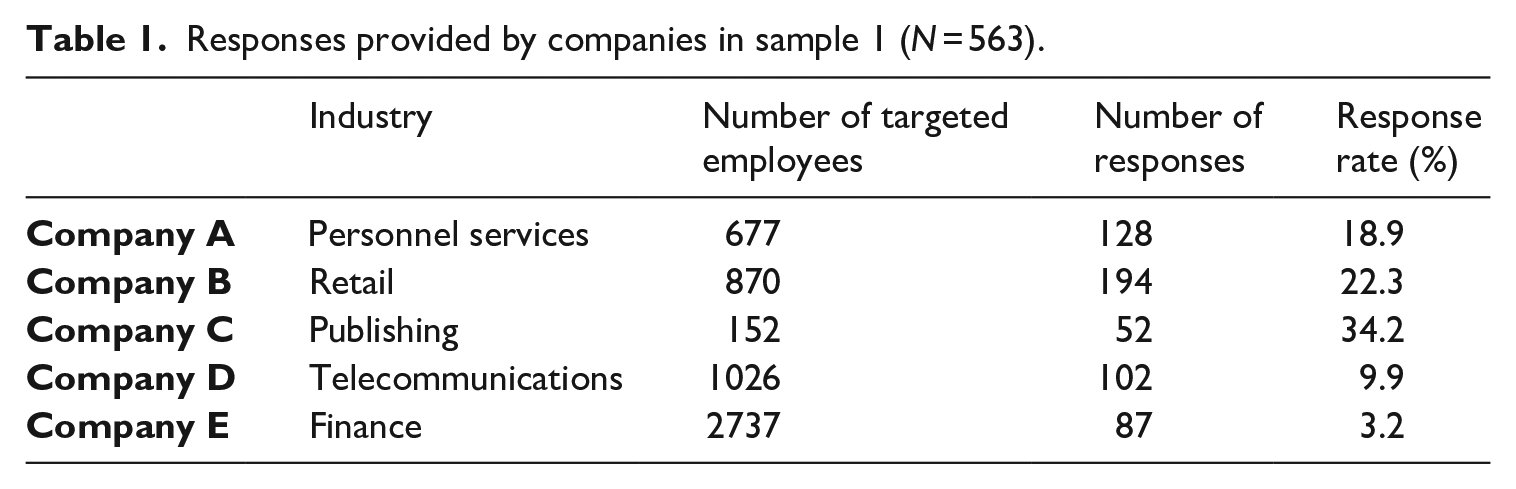
The social media at work in expert organizations survey was collected from employees of five professional organizations during November and December 2018. The sample 1 participants (N = 563) were aged between 21 and 67 years (M = 40.7, SD = 10.9); 67.7% were female, 31.6% were male, and 0.7% other. The survey response rate ranged between 3.2% and 34.2% (M = 17.7, SD = 11.9). Participants were recruited by their company’s human resources or communications departments, via email, or via ISM platforms (see details in Table 1).
After collecting data from expert organization employees, we conducted a national survey including the same measures to get a more diverse picture of the phenomenon. During March and April 2019, the social media at work in Finland survey was collected from Finnish employees of different occupational fields. The survey participants (N = 1817) were aged between 18 and 65 years (M = 41.75, SD = 12.19); 46.84% were female and 53.16% were male. The survey response rate was 28.3%. Norstat organized data collection; it established a pool of volunteers from which participants were recruited. Our stratified sampling strategy, with corresponding sampling weights, allowed us to create a representative sample of the Finnish workforce population in terms of age and gender (Mage = 41.4, SDage = 12.4; 47.9% female).
Conducting an identical national comparison survey allowed us to establish a more extensive view on the topic. This way we are able to compare the data sets to find out if the same results from expert organization employees will replicate in the general workforce population. Our study design offers a novel perspective on the linkages between social media use and work engagement and enables us to discover insights from professionals that can be generalized to the Finnish working population.
Procedure
Completion of both surveys involved using either computers or mobile devices. Sample 1 was designed with the LimeSurvey program and was administrated by the research group in the university server. Sample 2 was collected by Norstat. The surveys aimed to discover the relevant professional social media platforms and the purposes of their use, as well as factors related to work engagement. The median response time for the survey was 18:08 minutes in sample 1 and 17:08 minutes in sample 2. Participants in both data samples were informed of the study’s aims and advised of their right to withdraw from the study during data collection. Participation in the study was voluntary. The Academic Ethics Committee of Tampere region in Finland stated that the research does not pose any ethical issues.
Measures
Work engagement
We measured work engagement with the Utrecht work engagement scale (UWES), which covers the three dimensions of work engagement: vigor, dedication, and absorption. Initially, the UWES comprised 24 questions (Schaufeli et al., 2002), but currently a 9-item scale is recommended due to its construct validity (Seppälä et al., 2009). Here a Finnish 9-item version of the UWES is used (Hakanen, 2009; see Online Appendix A for the English translation). The answer options were Never, A few times a year, Once a month or less, A few times a month, Once a week, A few times a week, and Every day. The answers were given numerical values of 0 to 6, respectively. All three dimensions were summed up to composite variables. The composite reliability (CR) coefficient for vigor was .92 in sample 1 and .94 in sample 2, CR for dedication was .92 in sample 1 and .93 in sample 2, and CR for absorption .88 in sample 1 and .89 in sample 2. The average variance extracted for vigor was .85 in sample 1 and .88 in sample 2, for dedication .85 in sample 1 and .86 in sample 2, and for absorption .79 in sample 1 and .80 in sample 2. The discriminant validity was supported as, in both samples, the average variance extracted coefficient for each construct was higher than its squared correlations with other constructs (Farrell, 2010; see Online Appendices B and C).
Organizational identification
Organizational identification was measured with a 6-item scale (Mael and Ashforth, 1992). The items measuring perceived oneness with an organization included, for example, “I experience my employer’s successes as my successes” and “I am very interested in what others think about the company I work at” (see full list from Online Appendix D). The answer options used a Likert-type scale ranging from 1 (Strongly disagree) to 7 (Strongly agree). These items were summed up to a composite variable with a scale of 6 to 42 and a Cronbach’s alpha reliability coefficient of .80 in sample 1 and .87 in sample 2.
Social support
Social support defined as emotional, informational, and instrumental support, and social belonging (Cohen and Wills, 1985) was measured using four questions from interpersonal relations and a leadership dimension from the second version of the Copenhagen psychosocial questionnaire: “How often do you get help and support from your colleagues?,” “How often do you get help and support from your nearest superior?,” “Is there a good atmosphere between you and your colleagues?,” and “Do you feel part of a community at your place of work?” (Pejtersen et al., 2010). The answer options were Never/hardly ever, Seldom, Sometimes, Often, and Always, with each answer given a numerical value of 1 to 5, respectively. These items were summed up to a composite variable with a scale of 4 to 20 and a Cronbach’s alpha coefficient of .74 in sample 1 and .77 in sample 2.
Work- and nonwork-related social media communication
The frequency of social media usage for work-related communication was measured with the question “How often do you use social media to keep in touch with your colleagues or work community regarding work-related matters (e.g. information sharing or agreeing timetables)?” The frequency of usage for nonwork-related communication was measured with the question “How often do you use social media to keep in touch with your colleagues or work community regarding nonwork-related matters?” The answer options were I don’t use it, Less than weekly, Weekly, Daily, and Many times a day, with answers given numerical values of 0 to 4, respectively.
Social media platforms
To analyze usage frequency of different social media platforms for work purposes, we utilized a comprehensive list of 21 social media platforms (such as Facebook, Twitter, LinkedIn, and MS Teams) paired with the following question: “How often do you use the following social media platforms for work purposes?” The answer options were: I don’t use it, Less than weekly, Weekly, Daily, and Many times a day, with answers given numerical values of 0 to 4, respectively. Answers to these questions were summed up to a composite variable with a Cronbach’s alpha coefficient of .66 in sample 1 and .85 in sample 2.
Background variables
The sociodemographic variables used were age and gender.
Data analysis
For descriptive measures in samples 1 and 2, we counted means of our observed continuous variables, frequencies for our categorical variables, and correlations between our study variables (see Tables 2–4). Using sampling weights, we estimated univariate measures of the Finnish working-force population as a representative sample. Testing our hypothesized model (Figure 1) involved structural equation modeling, which was conducted with the lavaan package implemented in the statistical computing system R (Rosseel, 2012). The model included direct paths from both work- and nonwork-related social media communication to work engagement. In addition, indirect paths existed between both work- and nonwork-related social media communication and work engagement via organizational identification and social support. The model also included residual correlations between organizational identification and social support.
Descriptive numbers of samples 1 and 2 results.
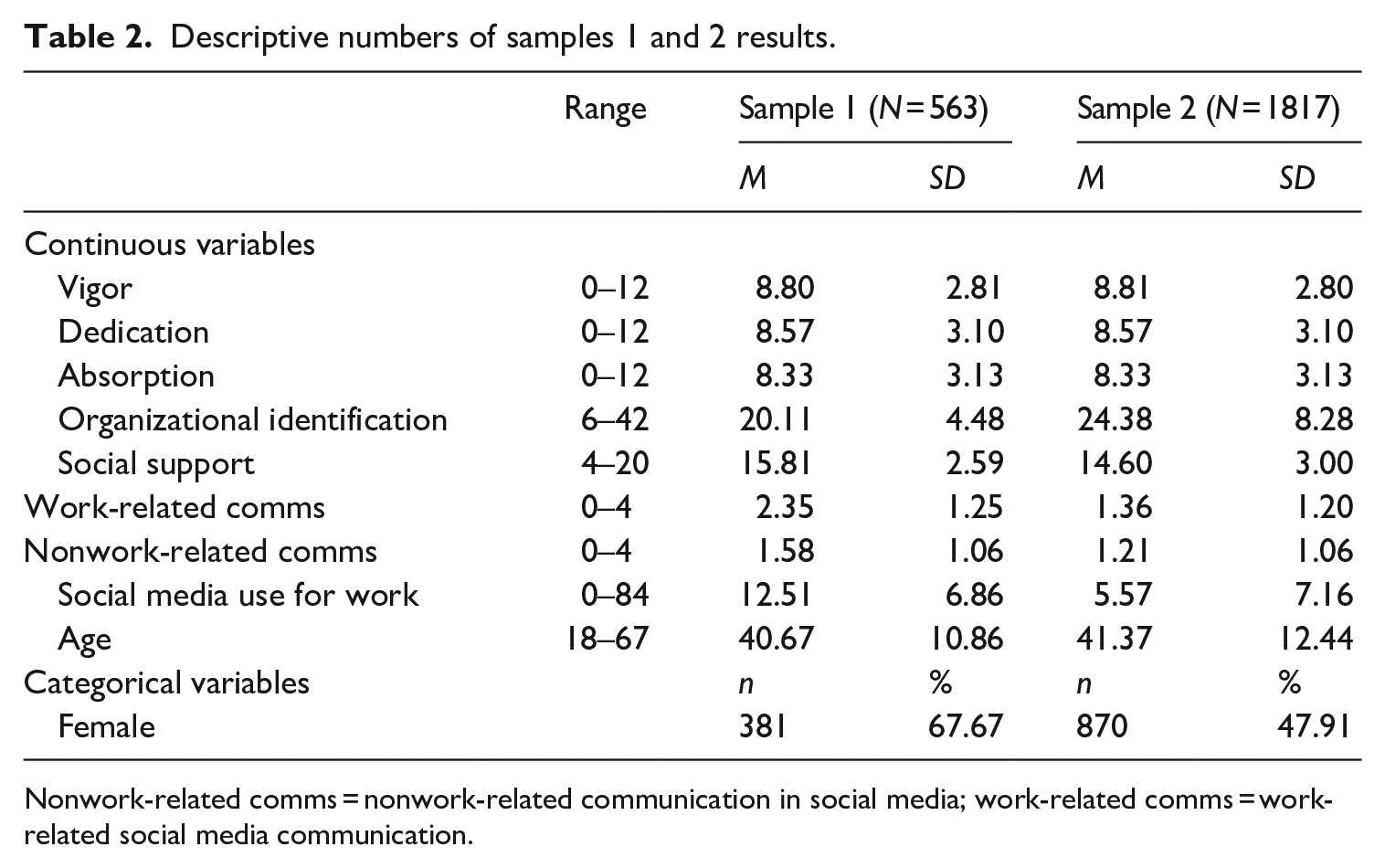
Nonwork-related comms = nonwork-related communication in social media; work-related comms = work-related social media communication.
Pearson correlation coefficients of sample 1 variables (N = 563).
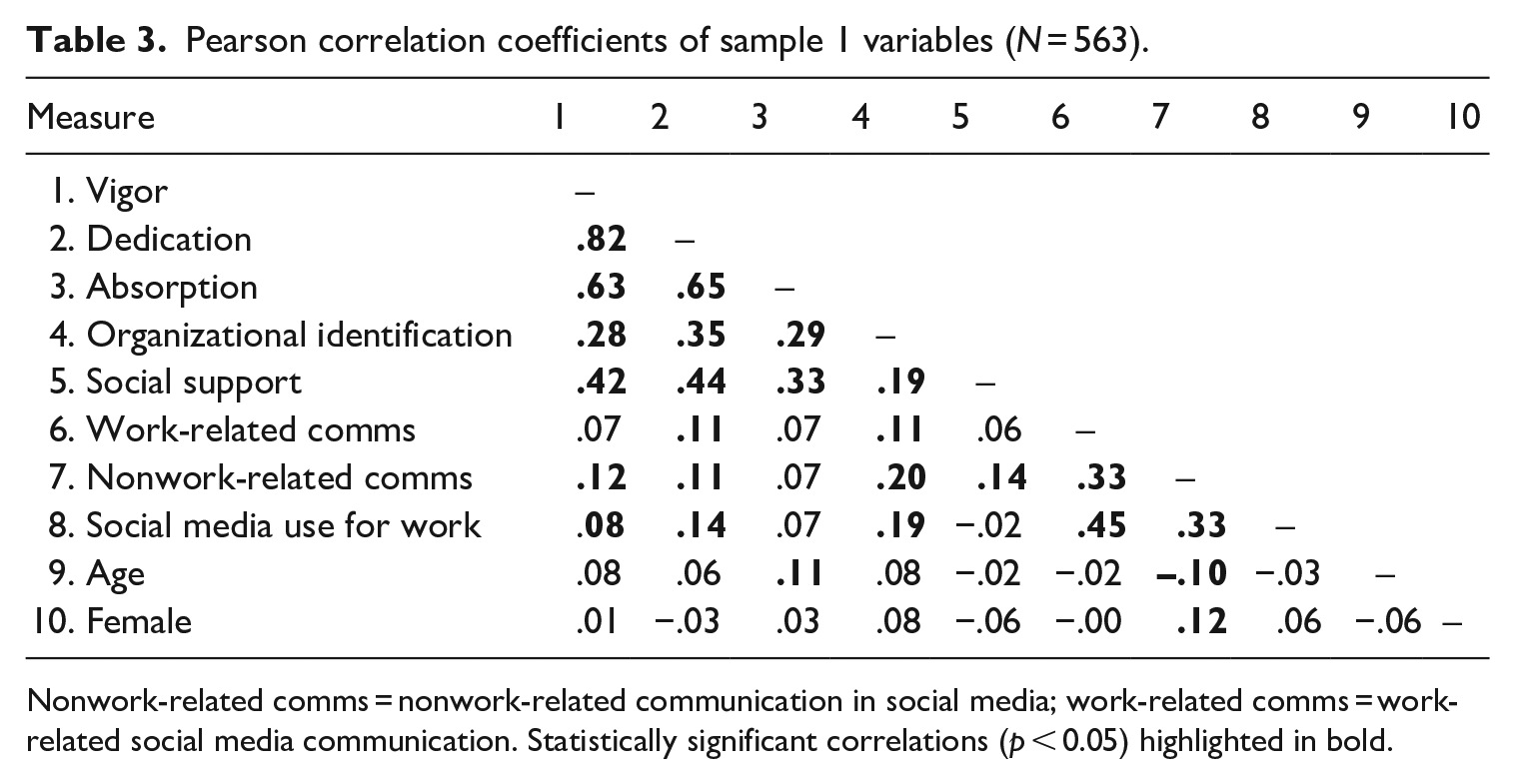
Nonwork-related comms = nonwork-related communication in social media; work-related comms = work-related social media communication. Statistically significant correlations (p < 0.05) highlighted in bold.
Pearson correlation coefficients of sample 2 variables (N = 1817).
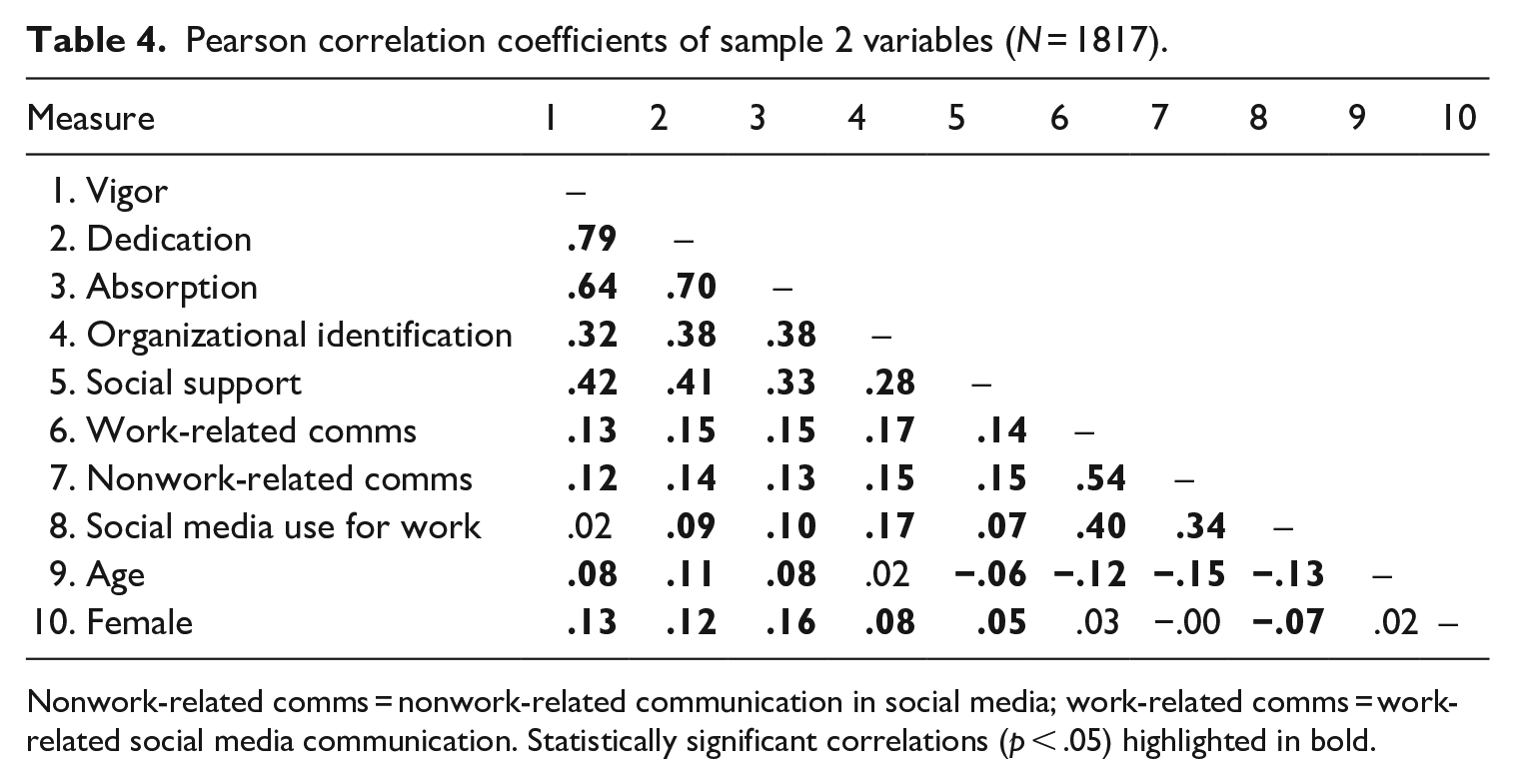
Nonwork-related comms = nonwork-related communication in social media; work-related comms = work-related social media communication. Statistically significant correlations (p < .05) highlighted in bold.
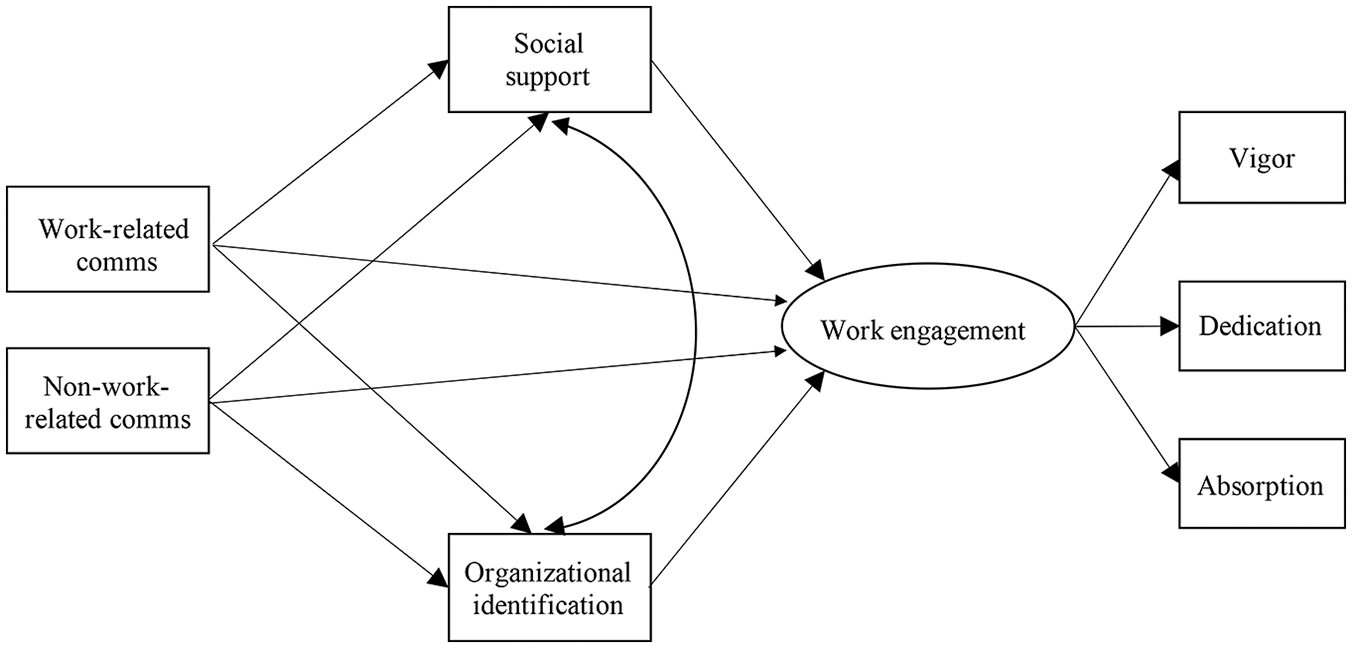
Proposed model based on hypotheses.
For all regression paths, we also included the social media use for work purposes, age, and gender (not reported in the figures). We used a scaled Yuan–Bentler test statistic and robust standard errors to adjust for multivariate nonnormality in our samples (Rosseel, 2012). Due to the nested structure of sample 1, the errors for this sample were estimated as being clustered within companies. The structural equation models did not use sampling weights calculated for sample 2, as age and gender were control variables in our models (see Winship and Radbill, 1994).
To estimate the model fit, we report the χ2 statistic with degrees of freedom and a significance test, along with other widely used fit statistics that are not affected by the sample size to the same degree as the χ2 statistic (Hu and Bentler, 1999). These statistics include the root mean square error of approximation (RMSEA), the comparative fit index (CFI), and the standardized root mean squared residual (SRMR). In calculating these statistics, we use the following cutoff criteria suggested by Hu and Bentler (1999): .06 for RMSEA, .95 for CFI, and .08 for SRMR.
Results
Based on the descriptive statistics, Skype, MS Teams, Workplace by Facebook, Yammer, and WhatsApp were the five most used social media platforms in the expert organizations (sample 1). The frequency of use of MS Teams (r = .38, p < .001), Skype (r = .32, p < .001), Facebook (r = .26, p < .001), WhatsApp (r = .24, p < .001), and LinkedIn (r = .22, p < .001) were associated with communicating with colleagues via social media for work purposes the most. The same was true for Facebook (r = .30, p < .001), WhatsApp (r = .29, p < .001), MS Teams (r = .24, p < .001), and Facebook Messenger (r = .22, p < .001) and communicating with colleagues via social media for nonwork purposes.
In the estimated path model (Figure 2), work-related communication was not associated with either organizational identification (β = −.01, p = .902) or social support (β = .04, p = .095). On the contrary, nonwork-related social media communication with colleagues was positively associated with both social support (β = .17, p < .001) and organizational identification (β = .15, p < .001). Both organizational identification (β = .25, p < .001) and social support (β = .44, p < .001) were positively associated with work engagement. The frequency of social media use for work purposes was negatively associated with social support (β = −.10, p = .012) and positively associated with organizational identification (β = .14, p = .048).
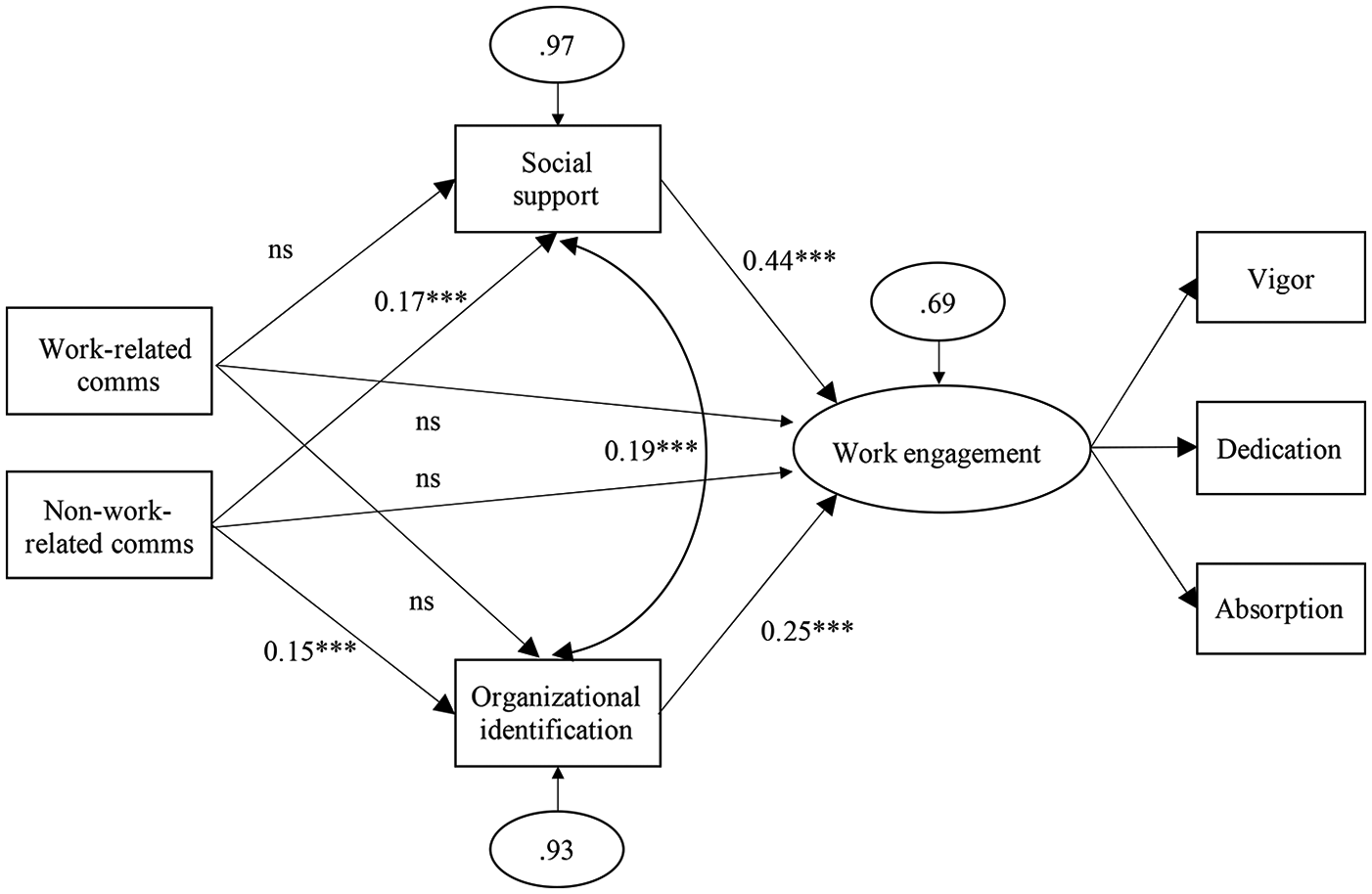
The estimated path model in sample 1 (N = 563).
Analysis showed a good fit between the hypothesized model and our data (χ2 (df = 14) = 26.01, p = .026, CFI = .99, RMSEA = .038, SRMR = .013). No significant direct associations between work-related communication (β = .02, p < .403) or nonwork-related communication (β = −.03, p < .438) and work engagement were observed. However, significant indirect associations existed between nonwork-related social media communication with colleagues and work engagement, both via organizational identification (β = .04, p < .001) and social support (β = .07, p < .001; see Table 5). The total effect of nonwork-related social media communication on work engagement was found (β = .08, p = .013), and 88% of it was mediated via social support and 43% via organizational identification.
Indirect effects of work- and nonwork-related communication in samples 1 (N = 563) and 2 (N = 1817).
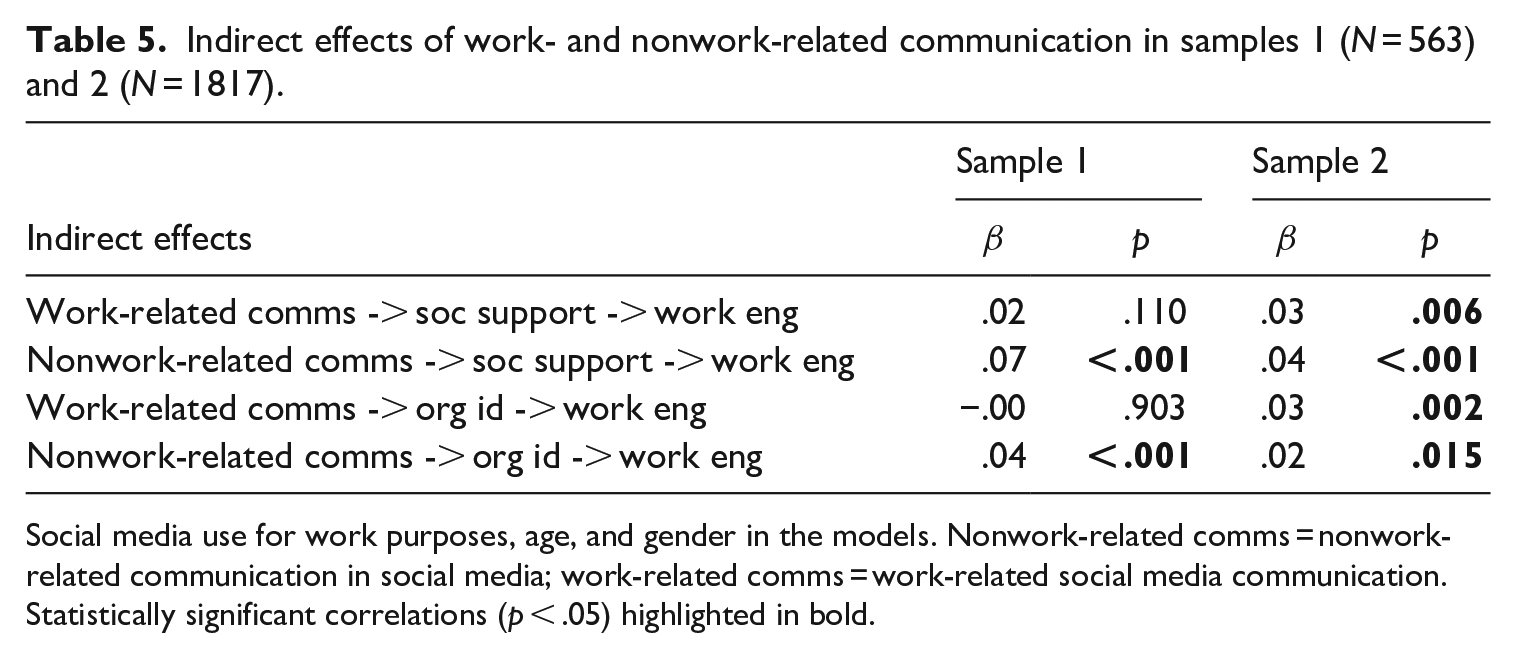
Social media use for work purposes, age, and gender in the models. Nonwork-related comms = nonwork-related communication in social media; work-related comms = work-related social media communication. Statistically significant correlations (p < .05) highlighted in bold.
According to the descriptive statistics of sample 2, the most used social media platforms among the Finnish workforce were WhatsApp, Skype, Facebook, Wiki-sites, and YouTube. The frequency of use of WhatsApp (r = .55, p < .001), Facebook (r = .32, p < .001), Facebook Messenger (r = .30, p < .001), and Instagram (r = .26, p < .001) were associated with communicating with colleagues via social media for work purposes the most. The same was true for WhatsApp (r = .36, p < .001), Facebook Messenger (r = .32, p < .001), and Facebook (r = .26, p < .001) and communicating with colleagues via social media for nonwork purposes.
In the estimated path model (see Figure 3), work-related communication was positively associated with organizational identification (β = .09, p = .002) and social support (β = .08, p = .005). Nonwork-related social media communication with colleagues was also positively associated with organizational identification (β = .07, p = .013) and social support (β = .11, p < .001). Organizational identification (β = .28, p < .001) and social support (β = .37, p < .001) were both positively associated with work engagement. The social media use for work purposes was positively associated with organizational identification (β = .12, p < .001). Of our background variables, female gender was positively associated with social support (β = .05, p = .048), organizational identification (β = .08, p < .001), and work engagement (β = .10, p < .001), and age was positively associated with organizational identification (β = .05, p = .025) and work engagement (β = .14, p < .001).
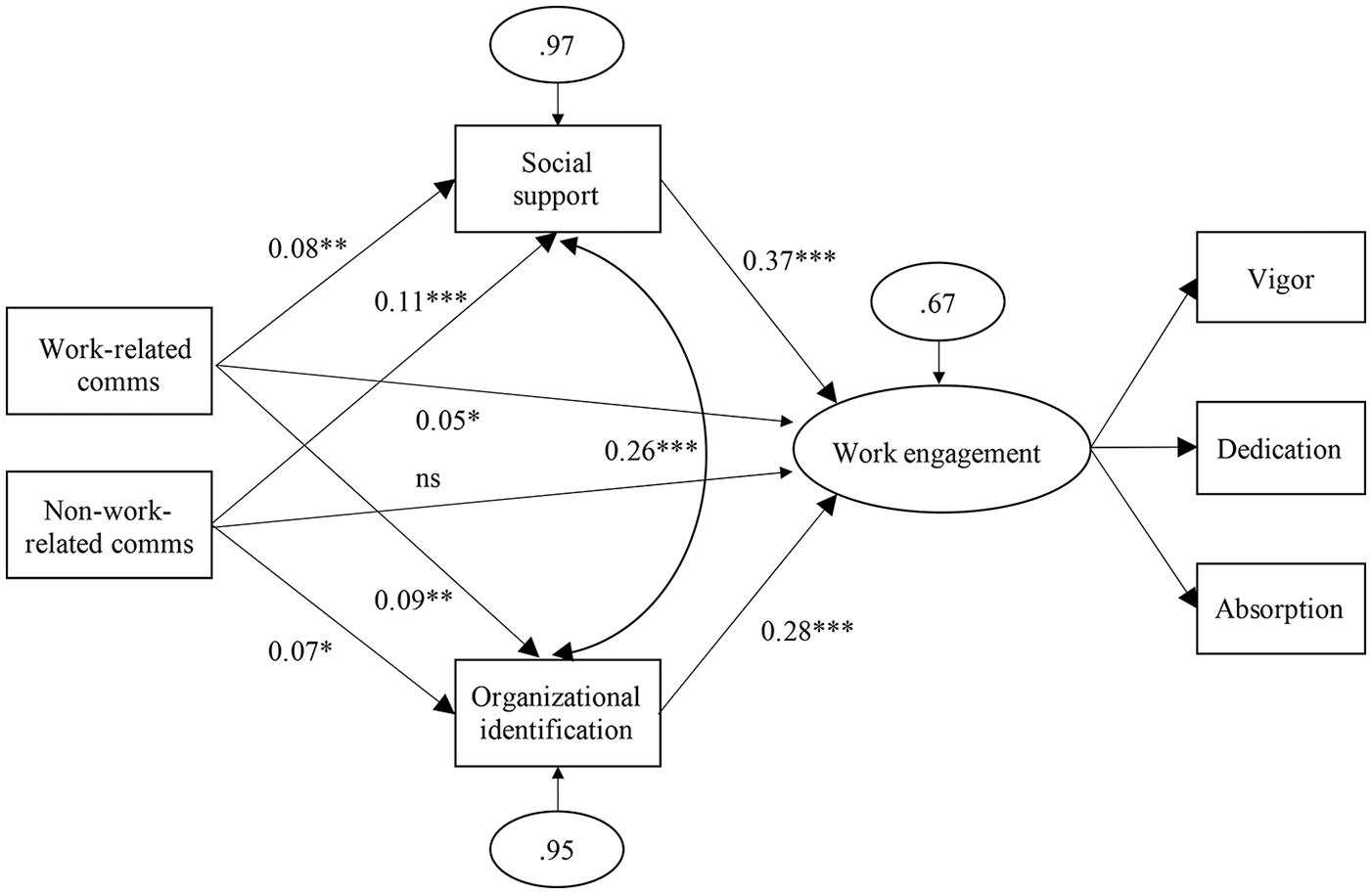
The estimated path model in sample 2 (N = 1817).
The analysis showed an acceptable fit between our hypothesized model and our data (χ2(df = 14) = 85.91, p < .001, CFI = .98, RMSEA = .053, SRMR = .015). There was a direct relationship between work-related communication and work engagement (β = .05, p = .043), but not between nonwork-related communication and work engagement (β = .04, p = .097). An indirect association was revealed between work-related communication and work engagement via social support (β = .03, p = .006) and organizational identification (β = .03, p = .002; see Table 5). Of the total effect of work-related communication (β = .11, p < .001), 28% was mediated via social support and 24% via organizational identification. In addition, an indirect effect existed between nonwork-related social media communication and work engagement via social support (β = .04, p < .001) and organizational identification (β = .02, p = .014; see Table 5). Of the total effect of work-related communication (β = .10, p = .001), 39% was mediated via social support and 20% via organizational identification.
Discussion
This study examined the associations between social media usage for work- and nonwork-related communication in organizations and work engagement among Finnish professionals. Moreover, we explored how work- and nonwork-related communication in social media is further associated with specific job resources of organizational identification and social support that can enhance work engagement. Our study used two complementary samples to test our hypothesized model (Figure 1). The organizational survey gives specific knowledge on social media usage and its relation to work engagement in five professional organizations from different occupational fields (finance, telecommunications, personnel services, publishing, and retail), while the national data offer a more comprehensive view on these factors overall in Finland.
Our findings partly supported the first hypothesis (H1a), as there was a positive direct association between work-related social media communication and work engagement among members of Finnish workforce (sample 2). We did not find similar direct association between nonwork-related social media communication and work engagement (H1b). Other hypotheses concerned indirect effects via organizational identification (H2a and H2b) and social support (H3a and H3b). We found support for these among Finnish workforce (sample 2). In other words, we found and a positive indirect associations between both work- and nonwork-related communication and work engagement via organizational identification and social support. Among professional organization workers (sample 1), these indirect effects were found only in nonwork-related communication.
Theoretical implications
Work engagement has recently been widely researched (e.g. Bakker, 2011; Bakker et al., 2007; Hakanen, 2009; Hallberg and Shaufeli, 2006; Schaufeli and Bakker, 2004a; Schaufeli and Bakker, 2010; Schaufeli et al., 2002). However, only a few studies have investigated the association between work-related social media communication and work engagement (Van Zoonen et al., 2017; Van Zoonen and Banghart, 2018) and the relationship between nonwork-related social media communication and work engagement (Syrek et al., 2018). We contributed to the lack of research by investigating the relationship between work engagement and both work- and nonwork-related communication in an integrated research model taking into consideration the mediation relations of organizational identification and social support. Therefore, our study builds on the existing literature and demonstrates that work-related social media communication is directly associated with work engagement among Finnish workers.
Our results are in agreement with the past literature denoting the importance of work-related communication with colleagues on social media, which can enhance communication practices and information accessibility (Van Zoonen et al., 2017) and play a key role in the construction of employees’ work engagement (Van Zoonen and Banghart, 2018). These positive consequences apply especially for those employees who successfully integrate their professional and private life boundaries (Van Zoonen and Banghart, 2018), which is in line with our findings regarding positive association of nonwork-related communication and work engagement and provides further knowledge to the current literature. Syrek et al. (2018) discovered that nonwork-related communication can act as a microbreak and after the usage enhance work engagement. Based on our analysis, nonwork-related communication indicates even higher work engagement than work-related communication. Therefore, informal communication during work time increases employees’ resources at work.
In addition to discovering direct relationship between work-related communication and work engagement, our study contributes to the theory by investigating the mediating role of organizational identification and social support in that relationship. As our results indicate, the relationship between work-related communication on social media and work engagement is mediated via organizational identification among Finnish working population. Thus, our results support the previous research findings, which claim that work-related social media communication can enhance organizational identification (Bartels et al., 2010; Madsen, 2016; Van Zoonen and Treem, 2019). The association between work-related communication on social media and work engagement was also mediated via social support on the national level. The findings are in agreement with previous studies by Charoensukmongkol (2014) and Leino et al. (2013) verifying that work-related social media communication is associated with social support.
Furthermore, we discovered that social media usage for nonwork-related communication with the work community is indirectly associated with employees’ engagement with work via organizational identification. This result was found in both our samples. Study by Larosiliere and Leidner (2012) also found the positive link between nonwork-related social media communication and organizational identification. In addition, our results support the research by Fieseler et al. (2015), who suggest that employees may successfully combine both private and professional identities in social media, which can enhance their organizational identification.
Both data samples also established the mediation relation of social support between nonwork-related communication in social media and work engagement. These results indicate that social media usage at work for nonwork-related matters is vital for socialization purposes and can enhance employees’ engagement with their work. The results complement and extend prior research by Mäntymäki and Riemer (2016) and Nisar et al. (2019), which imply that nonwork-related communication enhances communication practices, such as knowledge sharing and collaboration and foster social capital and organizational performance. Overall, our results suggest that social media communication can foster work engagement via positive social ties, such as organizational identification and social support.
Practical implications
This study contributes to working life and has many practical implications. First, the study’s findings revealed that social media usage between employees for work-related communication is directly associated with work engagement in one of the data samples, among Finnish workforce. Social media usage as such does not necessarily enhance employees’ vigor, dedication, and absorption in their work and workplace. However, organizational identification and social support establish this type of association with work engagement. Our results indeed indicate that establishing organizational identification and social support in the organizations form a solid basis for social media communication to be successful and as a precondition, the potential to contribute to the employees’ work engagement.
Second, social media should not only be a channel for sharing documents or a one-way information source. Instead, social media should be a two-way communicative channel that enables employees to express their feelings, relate to others and the workplace, exchange knowledge and expertise with colleagues, and give and receive support. This two-way communication idea concerns both work- and nonwork-related communication on social media. Consequently, one of our key findings for practice is to acknowledge that nonwork-related communication on social media can enhance work engagement more than work-related communication through organizational identification and social support. Thus, it is critical to allow and also promote nonwork-related discussions in ESM alongside work-related discussions. In addition, our results indicate that nonwork-related communication predicts higher work engagement, and this may be due to successful integration of professional and private lives as suggested by Van Zoonen and Banghart (2018), which organizations could consider in their working practices.
Third, we established some differences between the data samples. Nonwork-related social media communication is fully mediated via organizational identification and social support in both of our samples. However, we only discover this mediation relationship of organizational identification and social support to work-related communication in sample 2 among members of the Finnish working population. Thus, it might be good for the organizations we explored to regard this finding and consider how they can overcome this unused potential.
Fourth, our findings reveal that employees’ social media usage for both work- and nonwork-related communication helps employees receive social support and identify with the organization online. This support and identification subsequently positively impact employees’ engagement in their work. Support concerned not only collegial support but also supervisors’ support; this is a key element revealed by our findings, confirming the findings seen in prior literature (Orgambídez-Ramos and De Almeida, 2017; Othman and Nasurdin, 2013; Sawang, 2012).
In times like these, in the middle of coronavirus disease (COVID-19) pandemic, the usage of social media for work purposes is essential among knowledge workers. New ways of working are explored rapidly. Feeling emotional connection to the work community and knowing that help is available are in central role when social distancing is required. Thus, supporting social media communication plays very crucial role in keeping work engagement high throughout the crisis.
Strengths, limitations, and future research directions
The use of national, representative data (N = 1817) is a key strength of this study, along with the organizational data from five different industries; having two data samples is an asset, and they complement each other. The national sample gives a wide and more general view on social media usage in overall working life in Finland. In turn, the organizational sample (N = 563) provides information on social media usage in the specific occupational fields of finance, telecommunications, personnel services, publishing, and retail; these fields are publicly active on social media. Thus, the comparison of these two data samples explains some of the differences in the samples. Moreover, the results contribute to previous literature and include practical implications for organizational use. The current research is interdisciplinary and contributes to various scientific research fields: social science, health, information and communication technology, and management.
Future crucial considerations regarding organizational surveys include ensuring management commitment to distribute, remind, and motivate people to respond to the survey. The channel of survey-request distribution is essential, as some organizations distributed the request only through social media channels. E-mails sent by supervisors were considered an effective way to receive responses. The timing of data collection is also important. Simultaneous survey distribution and layoffs in the organizations may influence the responsiveness, as discovered in some of the organizations.
As our results indicate, nonwork-related social media communication at work predicted higher organizational identification and social support and, in turn, work engagement. Therefore, for future research, more thorough investigation and concentration on nonwork-related social media communication in a work context is needed. In addition, examination of social support and organizational identification in that relationship has potential for future studies. These are important aspects also from COVID-19 pandemic perspective, as people are working from home using social media for work purposes more than ever before.
In conclusion, our findings provide evidence that among Finnish employees, both work- and nonwork-related communication on social media are indirectly associated with work engagement via organizational identification and social support. Organizations should pay more attention to social media communication practices and provide opportunities for organizational identification and receiving social support in social media.
Supplemental Material
suppl_mat_appendices – Supplemental material for Professional social media usage: Work engagement perspective
Supplemental material, suppl_mat_appendices for Professional social media usage: Work engagement perspective by Reetta Oksa, Markus Kaakinen, Nina Savela, Noora Ellonen and Atte Oksanen in New Media & Society
Footnotes
Funding
The author(s) disclosed receipt of the following financial support for the research, authorship, and/or publication of this article: This research has received funding from the Finnish Work Environment Fund (Professional Social Media Use and Work Engagement among Young Adults Project, project number 118055 PI: Atte Oksanen).

Supplemental material
Supplemental material for this article is available online.
Author biographies
References
Supplementary Material
Please find the following supplemental material available below.
For Open Access articles published under a Creative Commons License, all supplemental material carries the same license as the article it is associated with.
For non-Open Access articles published, all supplemental material carries a non-exclusive license, and permission requests for re-use of supplemental material or any part of supplemental material shall be sent directly to the copyright owner as specified in the copyright notice associated with the article.
