




Abstract
Since the start of large-scale waves of mobilisation in 2011, the importance of identity in the study of collective action via computer-mediated communication (CMC) has been a source of contention. Hence, our research sets out to systematically review and synthesise empirical findings on identity and collective action via CMC from 2012 to 2016. We found that the literature on the topic is broad and diverse, with contributions from multiple disciplines and theoretical and methodological approaches. Based on our findings, we provide directions for future research and propose the adoption of an integrative approach that combines the study of identity and networks to advance our understanding of collective action via CMC. This review contributes to the crossroad of social movement, collective action, communication and media studies. Our results also have practical implications for the organisation of collective action in a society characterised by the pervasive influence of CMC.
Keywords
Introduction
Since 2011, movements like the Arab Spring, Occupy Wall Street and Movember have gained a global presence, thanks to the massive use of computer-mediated communication (CMC). In this context, the role of identity in the study of collective action has been a source of contention (for a review, see, for example, Bakardjieva, 2015; Earl et al. 2014; Earl and Kimport, 2011; Gerbaudo and Treré, 2015). Scholars from different domains consider identity important to collective action because it explains the coherence and organisation of collective actors using CMC to construct their identity and to mobilise (Bakardjieva, 2015; Gerbaudo and Treré, 2015). For example, advocacy campaigns such as Movember or Pink Ribbon, which aim to raise awareness about cancer prevention, use symbols (e.g. a moustache or a ribbon) and pose challenges (e.g. do some sport) to make people identify with the cause and construct a collective identity in order to foster participation in the campaign activities (e.g. fundraising, social events).
Various scholars acknowledge that CMC has changed the construction, maintenance and negotiation of identities in collective action (see, for example, Earl et al., 2014; Earl and Kimport, 2011; Milan, 2015; Russell, 2005; Stein, 2009; Wall, 2007). For instance, social networking sites like Twitter offer the space and means to quickly, easily and often creatively express, construct, share and negotiate the identities that become symbols of protest movements or advocacy campaigns.
However, some scholars argue that the role of identity in collective action via CMC is less relevant since the emergence of 2011 networked movements (e.g. Bennett and Segerberg, 2012; Loader and Mercea, 2012). New mobilisation forms via CMC are considered ‘connective’ rather than ‘collective’: To take action, individuals only need to be connected with each other through networks without explicitly constructing a common identity (Bennett and Segerberg, 2012). These claims have moved scholars interested in identity to call for research on the ‘conceptual and methodological underpinnings’ of how such identities are transformed in the digital era (Gerbaudo and Treré, 2015: 870, Milan, 2015) and affect collective action via CMC, in particular by looking at the interaction between identities, networks and media structures (Bakardjieva, 2015; Earl and Kimport, 2011; Earl et al., 2014).
Following up on these calls, our research sets out to systematically review and synthesise empirical studies on identity, collective action and CMC since 2011, considered a landmark year in the emergence of the biggest networked movements. In reviewing the articles, we focus on the role of identity in collective action and CMC’s impact on identity processes during collective action. We answer two main research questions by conducting a descriptive analysis and a thematic analysis:
RQ1. Which concepts, methodological approaches and perspectives are used in the literature on identity and collective action via CMC?
RQ2. What are the main findings from the literature on the role of identity in collective action and CMC’s impact on identity processes?
We offer three main contributions. First, we respond to existing calls for the development of a research agenda regarding the interplay between identity, collective action and CMC (Bakardjieva, 2015; Gerbaudo and Treré, 2015) by developing conceptual and methodological research directions. In this way, we advance multiple research fields (e.g. social movements, collective action, media and communication) by systematically synthesising key concepts, perspectives, methods and findings to better understand the role of identity in collective action and the circumstances under which CMC influences identification processes during collective action.
Second, we propose an integrative approach combining the study of identity and networks to address the research directions that the agenda proposes. Thereby, we not only improve our understanding of collective action via CMC but also provide more theoretical nuance and synthesis to the concept of identity in a largely multidisciplinary domain.
Third, we show the practical implications of studies on identity, collective action and CMC. Activists not only construct and develop new identities via CMC but also exploit CMC to organise, coordinate and communicate about collective action to achieve social change.
Defining the key concepts
In this section, we provide definitions of the key concepts guiding the review: identity, collective action and CMC.
Identity
Identity is a multifaceted concept that has been defined in many ways due to its application in various disciplines (Flesher Fominaya, 2010). Some scholars (e.g. Snow, 2001) argue for the necessity of distinguishing between different types of identity that, while they might overlap, have distinct characteristics. For example, individual or personal identity is a self-definition based on individual internalised attributes and meanings (Snow, 2001; Stets and Burke, 1994). While there is consensus that this type of identity is different from social or collective identities because it is personally distinctive, an individual identity can be interconnected with social and collective identities (Gamson, 1991; Polletta and Jasper, 2001; Snow, 2001).
Social identity expands the definition of the self from the personal ‘I’ to ‘others and I’. Social identification with others can be derived from membership(s) to social categories (e.g. teams, organisations, ethnicity, political affiliation), as expressed in social identity theory (Tajfel and Turner, 1979; Turner et al., 1987). More recent research in social psychology indicates that social identity refers to the identification with social groups, such as opinion-based groups (e.g. Bliuc et al., 2007; McGarty et al., 2014). Other definitions derived from identity theory feature self-definitions based on social roles, such as being a mother or a doctor (e.g. Snow, 2001; Stryker et al., 2000).
Collective identity, by contrast, highlights ‘we-ness’ and ‘collective agency’. The former makes people aware of being part of a group, and the latter fosters action towards common goals (Snow, 2001). Collective identity is a process that involves cognitive definitions of such goals and means of action, networks of relations between individuals who interact with each other, and a certain emotional investment that contributes to a sense of common unity (Melucci, 1995). According to some scholars, collective identity differs from social identity as it denotes a higher level of identification with a certain social group (see Snow [2001] for details).
Despite the differences between individual, social and collective identities, it is acknowledged that scholars have lost sight of such a distinction (Flesher Fominaya, 2010). It seems difficult to distinguish clearly between social and collective identities in social psychology (e.g. McGarty et al., 2014) and social movement literature (e.g. Bobel, 2007; Opp, 2009) because the two concepts are considered to be overlapping definitions of group identification and essentially the same concept but seen from different perspectives.
In this review, we differentiate between individual, social and collective as ‘identity types’ to characterise and delineate the various analytical labels and to distinguish how authors use them in the literature. This differentiation can be seen as a continuum from a micro- to a macro-definition of the self: ‘I’ (individual), ‘others and I’ (social) and ‘we’ (collective). Furthermore, we distinguish between one-type and multiple-type studies. In the one-type studies, research focuses only on one identity; multiple-type studies investigate more than one identity.
In addition, as we consider identity to be a dynamic process rather than a static trait of an individual (Melucci, 1995), we define ‘identity phase’ as the various stages of such a process. In this review, we distinguish between initial (e.g. expression, formation, building and adoption) and later (e.g. negotiation, maintenance, diffusion) phases.
Collective action
Collective action refers to a collective of individuals who coordinate and act together in order to achieve a common goal or interest (Olson, 1968). Owing to the pervasive influence of CMC in our lives, collective action is increasingly described as a mix of online and offline elements (Bennett and Segerberg, 2012; Earl et al., 2014; Earl and Kimport, 2011; Van Laer and Van Aelst, 2010).
We differentiate between two forms of collective action on the basis of the CMC role. We define ‘CMC-based’ as collective action that takes place online and exists only because of CMC (e.g. online petitions, cyberactivism and hacktivism). By contrast, we define ‘CMC-supported’ as traditional collective action (e.g. street rallies, occupations, fundraising) that takes place offline and uses CMC as a channel to organise and communicate. In this review, we consider both forms of collective action.
CMC
We define CMC as human communication via electronic devices that encompasses all digital technologies (e.g. email, websites, social networking sites and text messaging) that channel and shape communication and social behaviours (Herring, 2004). In this review, we consider CMC in its broader definition to address the variety of means used during collective action (see, for example, Lomicky and Hogg, 2010; Mercea, 2012).
Methods
Following the method of Tranfield et al. (2003), we conducted a systematic literature review of identity and collective action via CMC to identify, synthesise and integrate the articles’ findings and address directions for future research.
We defined a search query using keywords related to our three key concepts: (identity OR identification) AND (‘collective action’ OR activism OR campaign* OR ‘collective-action’ OR mobilisation OR ‘social movement*’ OR ‘social-movement*’) AND (internet OR blog* OR CMC* OR ‘computer-mediated communication’ OR ‘computer mediated communication’ OR digital OR Facebook OR microblogging OR online OR ‘social media’ OR ‘social networking sites’ OR ‘Twitter’ OR web OR ‘Web 2.0’ OR ‘world-wide-web’ OR ‘world wide web’). We searched in Web of Science and Scopus. The selection criterion was empirical articles published in English peer-reviewed journals, books or conference proceedings in the social sciences.
We selected articles published from 2012 to 2016 for two main reasons. First, 2011 is the landmark year of the phenomenon under investigation because this is when various new networked movements (e.g. Arab Spring, Occupy Wall Street) arose and spread worldwide via social media. Studies published before the 2011 movements wave, in fact, primarily focused on the relation between identity and so-called 1.0 technologies (e.g. emails, blogs and websites) and how they impact on online and offline collective action (for a review, see, for example, Earl et al., 2014; Treré, 2015). From 2011 onwards, the emergence of networked movements has triggered research on the dynamics of new forms of collective and connective action (e.g. Bennett and Segerberg, 2012; Earl and Kimport, 2011; Mattoni and Trerè, 2014). Because we wanted to focus on empirical research that followed such phenomena, we chose 2012 as the starting point of our articles’ selection. Second, similar reviews had been published before 2012 (e.g. digital activism: Earl and Kimport, 2011; social movements and the information and communications technology (ICT) revolution: Earl et al., 2014; collective identity in traditional social movements: Flesher Fominaya, 2010), and our review would have overlapped.
Figure 1 shows the flowchart of the selection process. The first search completed in September 2015 resulted in 437 articles. All authors performed manual annotation to assess relevance by title, abstract and full text. The criterion for relevance was that while at least two out of three key concepts (identity, collective action and CMC) had to be present in the title and abstract, all three concepts had to be included in the full text. To ensure reliability, we calculated the proportional reduction in loss (PRL) reliability for qualitative data (Rust and Cooil, 1994). It compares reliability with loss from poor decisions while measuring the proportion of expected loss associated with the judges’ lack of agreement. Its range varies from 0 (lack of reliability) to 1 (perfect reliability), and its benchmarks are to be interpreted as for Cronbach’s alpha. We obtained good or high scores in all sessions (PRLtitle = 0.93, PRLabstract = 0.78, PRLfull-text = 0.82).
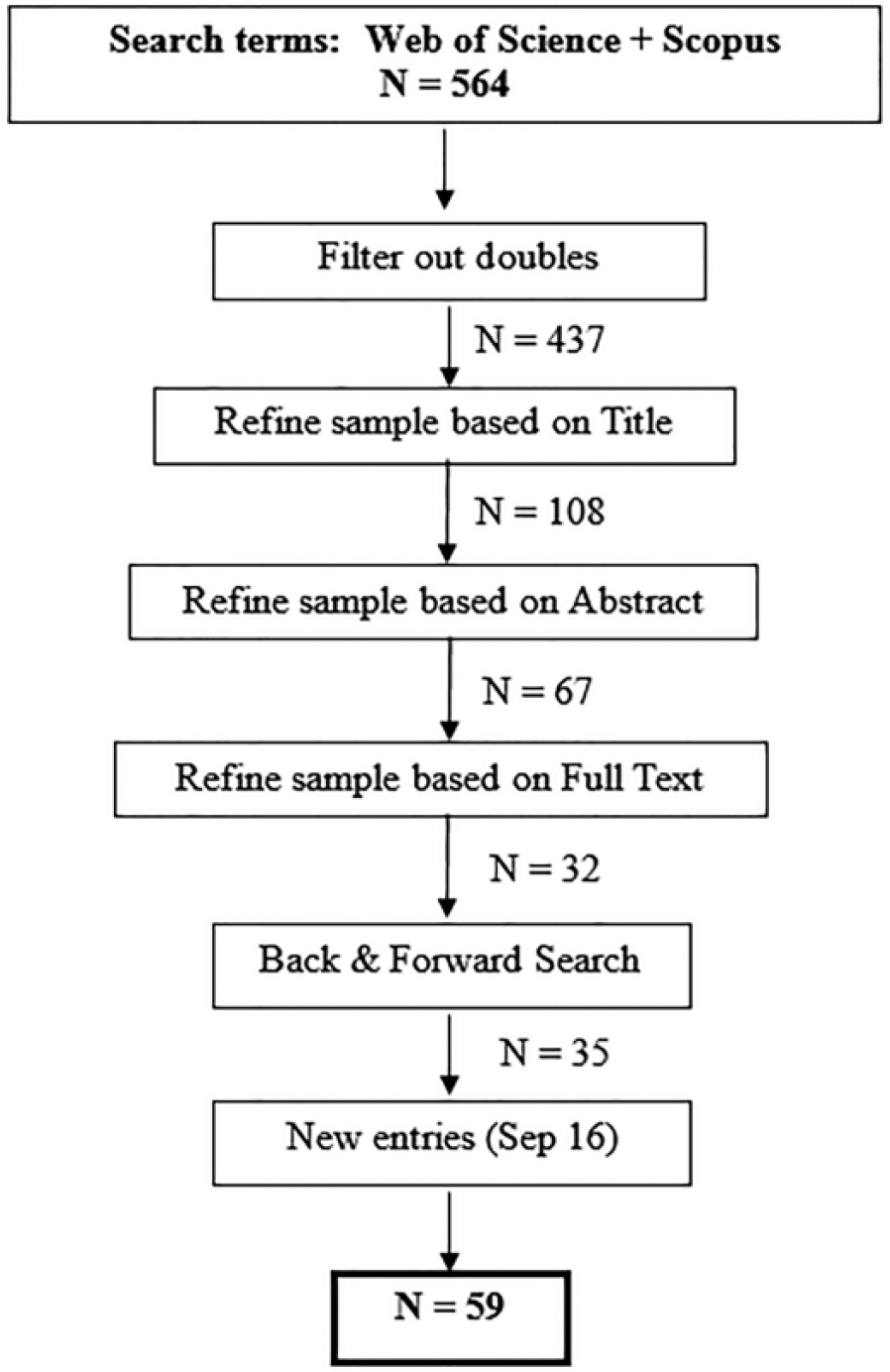
Flowchart of the selection process.
This selection process resulted in 32 articles. Next, we operated a manual search for other relevant articles by checking the references and citations (N = 35). The list was updated in September 2016 and resulted in a final set of 59 articles published between 2012 and 2016.
To conduct the review and reduce human error, we used a data-extraction form as a repository for general (title, authors, journal) and specific (concepts, theories, methods, key findings) information related to the review’s research questions (Tranfield et al., 2003). 1 We followed a two-stage approach to provide a clear review of the articles (Tranfield et al., 2003). First, we used descriptive analysis to provide an overview of key concepts, methodological approaches and perspectives used in the literature (RQ1). Second, we conducted a thematic analysis using an inductive, interpretative approach to report, bring together and synthesise the findings from the existing studies (RQ2). We divided the articles according to our two foci of analysis: (1) identity as a driver of collective action and (2) CMC’s impact on identity processes during collective action. We analysed the articles by identifying key themes of discussion and related findings, and focusing on the extent to which articles were similar or different in their results (Tranfield et al., 2003).
Review of the literature
In this section, we present the results of descriptive analysis and thematic analysis to answer our review’s research questions.
Descriptive analysis
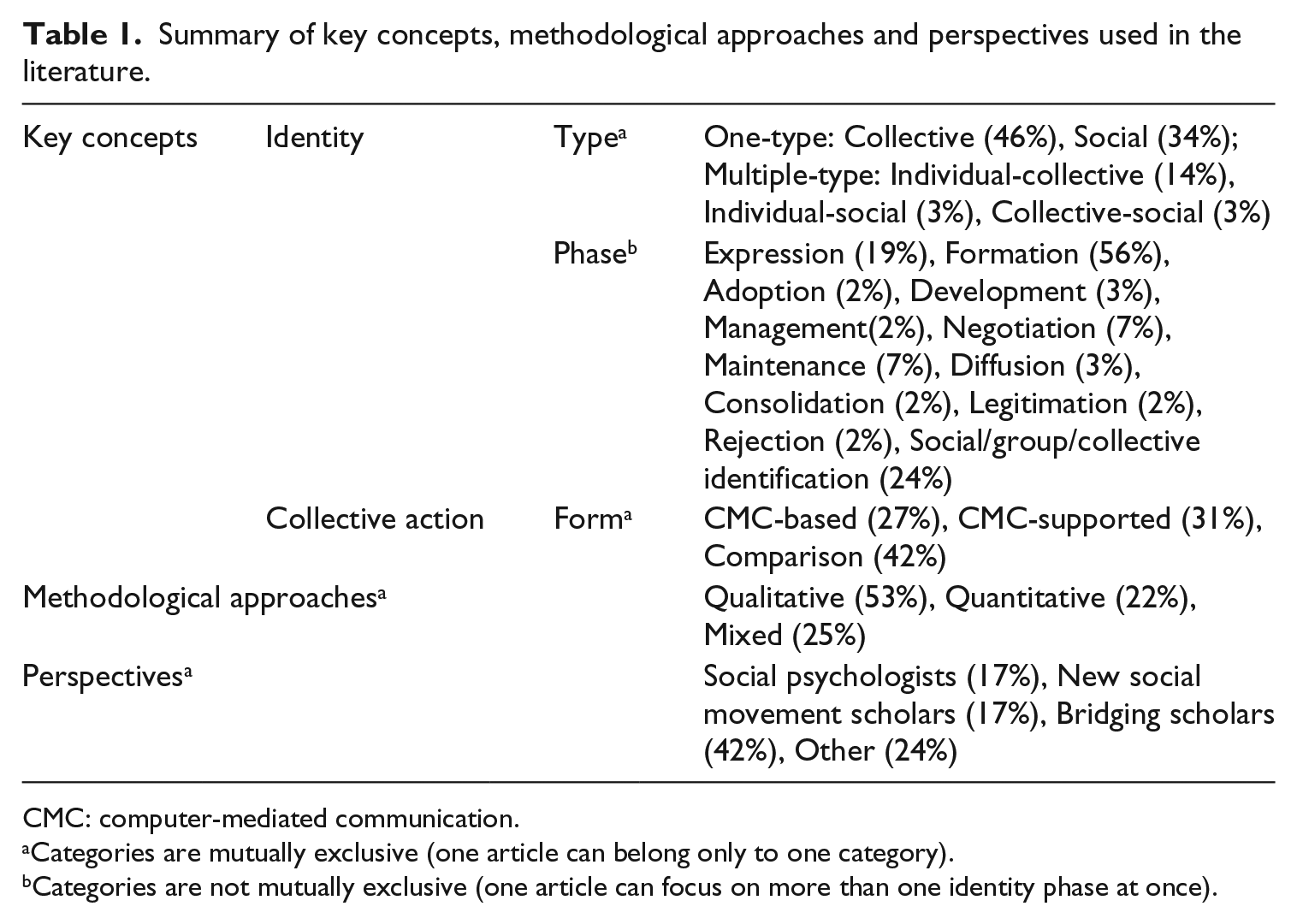
We used descriptive analysis to summarise the literature in terms of key concepts, methodological approaches and perspectives (Table 1).
Summary of key concepts, methodological approaches and perspectives used in the literature.
CMC: computer-mediated communication.
Categories are mutually exclusive (one article can belong only to one category).
Categories are not mutually exclusive (one article can focus on more than one identity phase at once).
Identity types and phases
The vast majority of articles were one-type studies on either social (34%) or collective (46%) identity. Multiple-type studies combined only two types, mostly individual and collective (14%). Regarding the identity process, research mainly focused on such a process’ initial phases (expression and framing, 19%; formation, building and construction, 56%). Studies on various forms of identification (social, group, collective) were also quite common (24%). By contrast, analyses on later phases (e.g. negotiation, maintenance, diffusion) were less frequent (<7%).
Forms of collective action
In the literature, we found studies that focused only on one form of collective action (either CMC-based or CMC-supported) or compared the two with each other. Scholars mostly conducted comparative studies (42%) or studied only CMC-supported collective action (31%).
Methodological approaches
Overall, qualitative methods were mostly used (53%), followed by mixed (25%) and quantitative (22%) approaches. Qualitative research was largely applied to one-type studies that focused on collective identity formation. Thematic analysis, interviews and digital ethnography were found to be more common in in-depth analytical approaches to study this phase. Quantitative methods were mostly used in social identity studies because statistical analysis and field experiments proved valuable to investigate the relation between identification processes and collective action. Finally, mixed methods were predominantly used in studies of collective identity expression and formation. This shows an emerging practice of combining different methodologies to assess both the qualitative nature of identity and the quantitative, network structure of CMC.
Perspectives
In the literature, we identified three main perspectives in which scholars used distinct approaches in theory, methods and analysis: social psychologists (17%), new social movement (NSM) scholars (17%) and bridging scholars (42%). A fourth category, ‘Other’ (24%), included all articles that could not fit into any of the other perspectives.
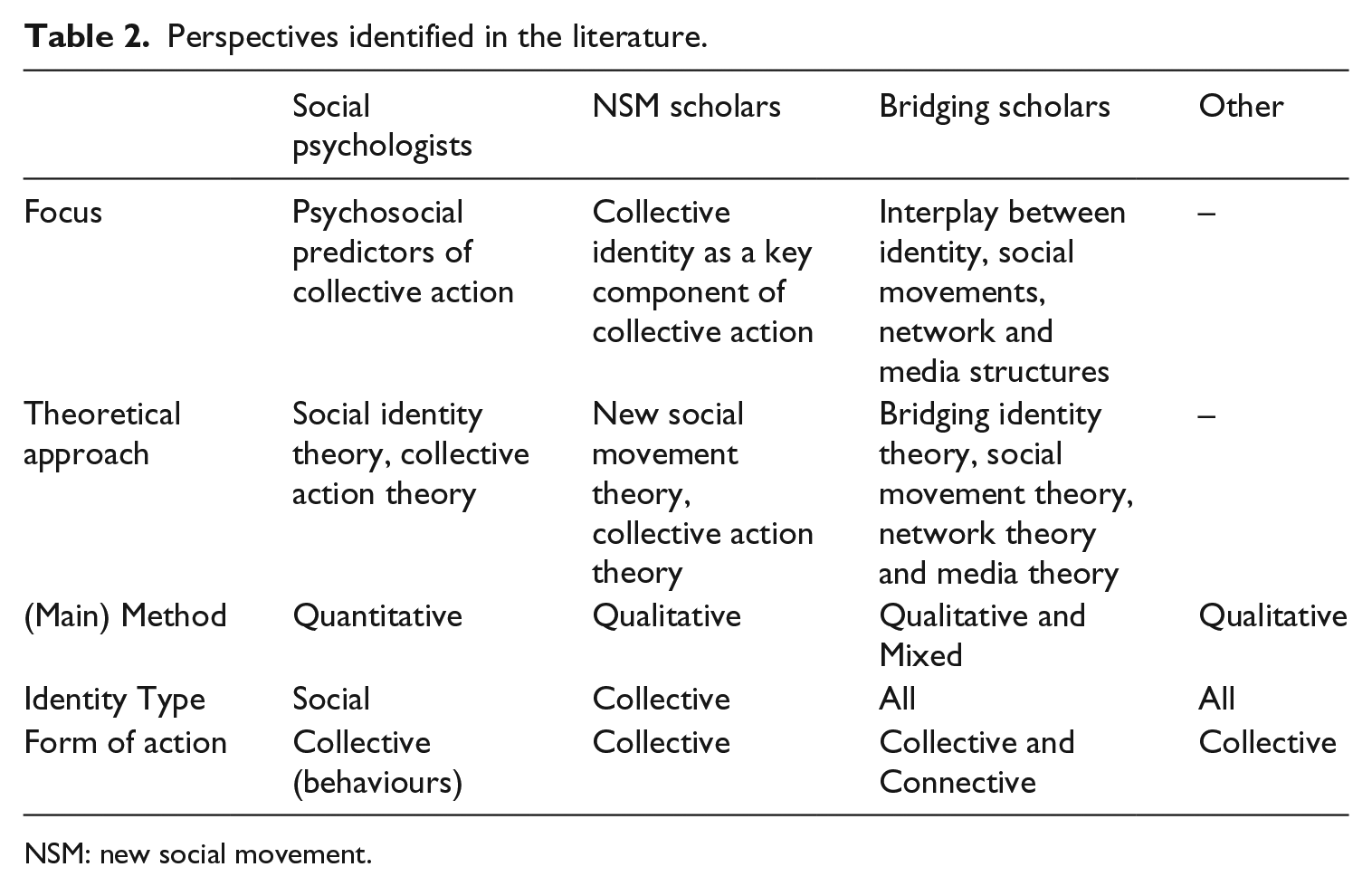
Table 2 provides a summary of each perspective’s main characteristics. Figure 2 illustrates the distribution of articles per perspective, identity type and methodological approach.
Perspectives identified in the literature.
NSM: new social movement.
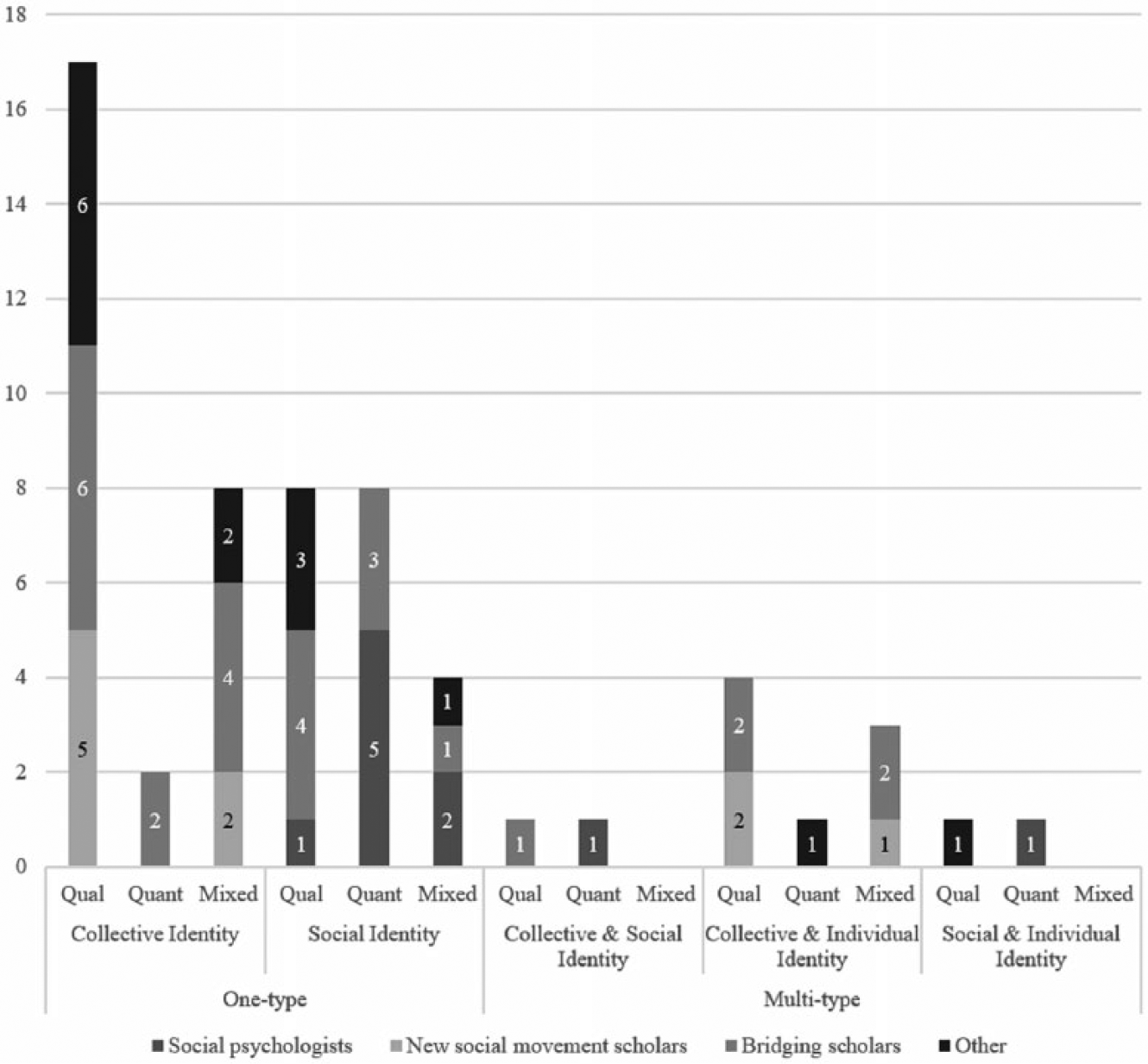
Distribution of the articles per perspective, identity type and methodological approach (N = 59).
In the literature, we noticed that the labels used to address identity types differed between the perspectives of the scholars. For example, social psychologists focused on social identity theory (Tajfel and Turner, 1979; Turner et al., 1987) and considered social identity one of the main psychosocial predictors of collective action. Social psychology studies were mostly one-type and used quantitative methods. NSM scholars, by contrast, followed in the footsteps of the social movement theory tradition (Gamson, 1992; Melucci et al., 1989; Polletta and Jasper, 2001; Snow, 2001; Taylor et al., 1992): Using (mostly qualitative) research, they considered collective identity to be very relevant to the study of collective action. Finally, we found that most of the studies could be positioned as a ‘bridge’ linking theories on identity, social movements, networks and media. Although their research was mostly qualitative, bridging scholars explored mixed-methods approaches to study the changing nature of identity in collective action via CMC.
We defined the remaining articles that could not be classified in any of the groups above as ‘Other’ because they focused on particular types of identity (e.g. gender, ethnic, national), theoretical approaches (e.g. ethos, self-presentation, gender theories) and disciplines (e.g. linguistics, semiotic, anthropology). These (mostly qualitative) studies show how research on identity and collective action is very diverse and multidisciplinary.
Thematic analysis
In the second stage of our review process, we used thematic analysis to report and synthesise the findings from the existing studies (RQ2) according to our two foci of analysis: the role of identity in collective action and CMC’s impact on identity processes. Table 3 shows the distribution of articles grouped by focus of analysis, identity type and perspective. Figure 3 illustrates the synthesis of themes (T) and related findings from the literature.
Thematic analysis: distribution of articles per focus of analysis, identity type and perspective.
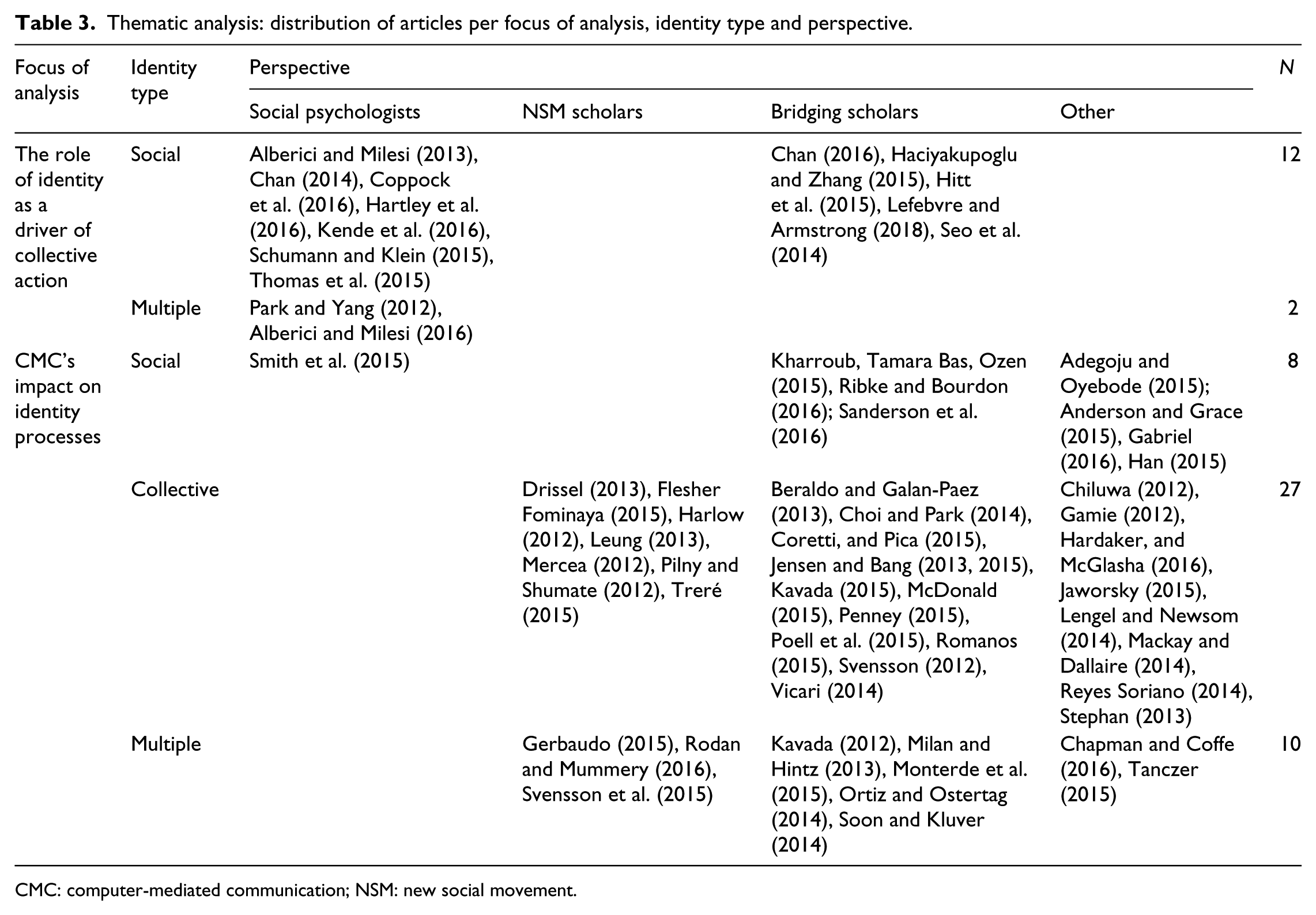
CMC: computer-mediated communication; NSM: new social movement.
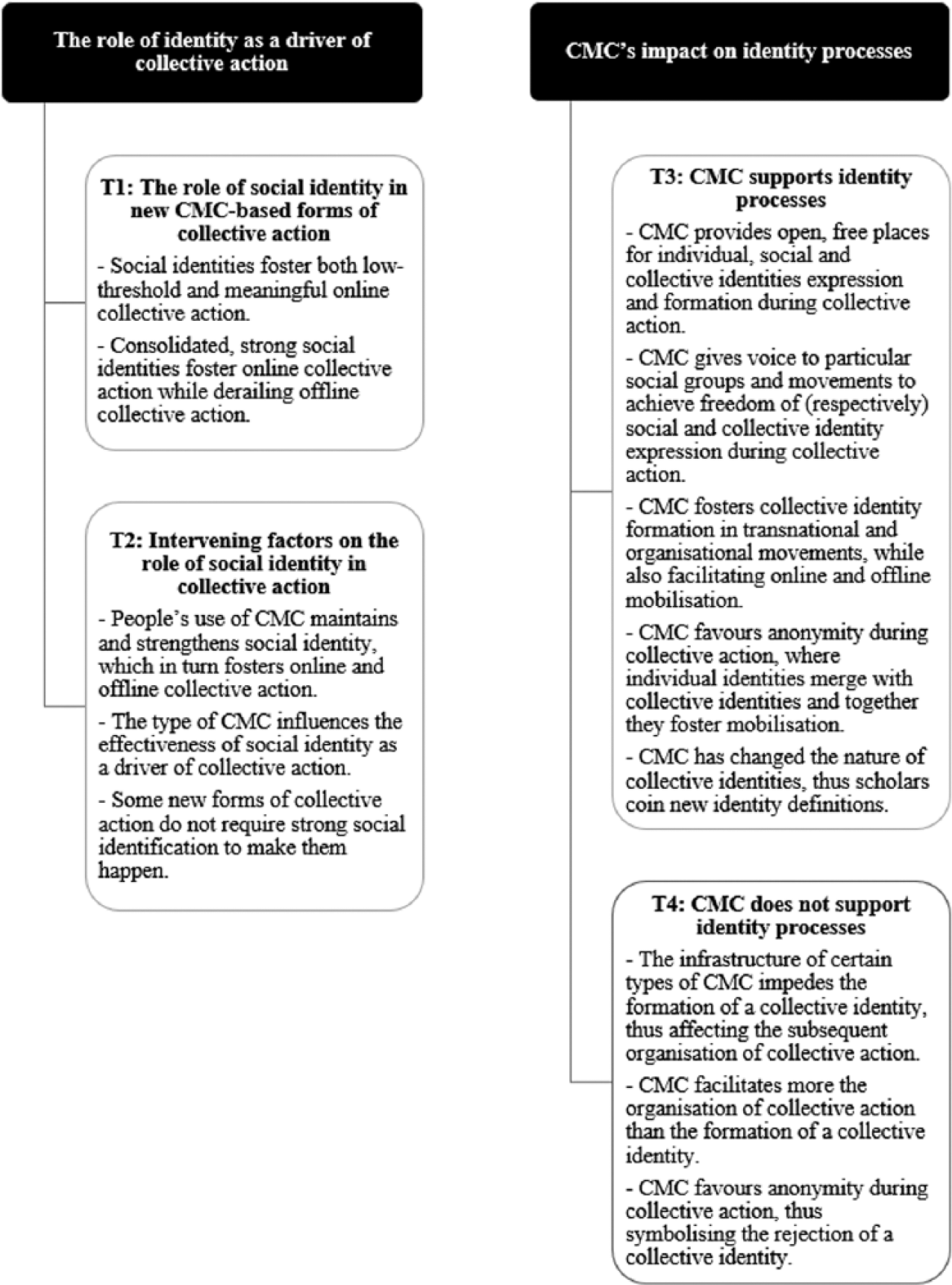
Thematic analysis: synthesis, key themes (T) and findings.
The role of identity as a driver of collective action
Research in this area is exclusively one-type (social identity), with the exception of Park and Yang (2012), who conceptualise identity as a combination of individual identity and identification with social groups. Social psychologists study this topic by using traditional social identity theory, while bridging scholars combine identity and media theories. In both cases, the objects of analysis are the psychosocial predictors of collective action: social identity, injustice (i.e. feeling of deprivation) and collective efficacy (i.e. the belief that action is effective for achieving goals). We identify two themes (Figure 3, T1 and T2) discussed in the literature and synthesise the main findings for each theme.
First, some authors investigate the role of social identity in new CMC-based forms of collective action – such as online petitions (Earl and Kimport, 2011) – that are often low-cost, low-risk and based on mass participation (T1). The main question is whether identity fosters or constrains these forms of mobilisation and if there is a transition offline. Despite such forms of collective action currently being widespread, research on the topic is scant. Furthermore, authors obtain divergent results. On the one hand, some scholars find that online social identities can transform low-threshold online collective action (e.g. tweeting about an online petition) into meaningful online action (e.g. getting the online petition signed) (Coppock et al., 2016). On the other hand, authors argue that if identity consolidation and group enhancement become too strong, they will fail to drive offline collective action (Schumann and Klein, 2015). This happens because strong online group identification fulfils people’s need to perform online low-threshold action and then derail offline collective action that would satisfy the same need.
Second, scholars find that identity alone might not be sufficient to predict collective action via CMC (T2). Some authors argue that people’s use of CMC maintains an individual’s social identification with online groups or communities due to in-group norms for emotion, efficacy and action that are reinforced online (Chan, 2014; Haciyakupoglu and Zhang, 2015; Hitt et al., 2015; Lefebvre and Armstrong, 2018; Park and Yang, 2012; Thomas et al., 2015), in particular when people use CMC in an interactive way (Alberici and Milesi, 2013; Kende et al., 2016). Consequently, online social identity strengthens people’s willingness to participate in collective action on behalf of the group both online and offline.
In addition, we find that the type of CMC matters in the effectiveness of identity as a driver of collective action. For example, when comparing social media with traditional media use in protests, Chan (2016) finds that social identification can predict the intention to participate in protest only when people use traditional media, whereas other psychosocial antecedents predict collective action in the case of social media use. Similarly, the role of identity in collective action might depend on the type or structure of collective action (Hartley et al., 2016; Seo et al., 2014). Owing to the massive use of CMC for mobilisation, some new forms of collective action, like flash mobs, have characteristics or conditions that do not require strong identification between the participants to make them happen, which confirms what previous literature reviews have emphasised (e.g. Earl and Kimport, 2011).
CMC’s impact on identity processes
Defining identity as a process (Melucci, 1995), we look at the impact of CMC in identity processes during collective action. We found that it is a frequent topic of analysis in both one- and multiple-type studies across all perspectives (Table 3). However, scholars obtain divergent results regarding whether or not CMC supports such identity processes (Figure 3, T3 and T4).
Studies finding that CMC supports identity processes
Scholars have identified various ways in which CMC can successfully support identity processes (T3). First, CMC provides open, free places for identity expression, formation, consolidation, maintenance and negotiation during collective action. On websites, blogs, forums and social media, identity processes are fostered through icons, symbols, images, narratives and discursive strategies that people use to construct social (Adegoju and Oyebode, 2015; Anderson and Grace, 2015; Han, 2015; Kharroub and Bas, 2015; Smith et al., 2015) and collective identities (Chiluwa, 2012; Choi and Park, 2014; Drissel, 2013; Jaworsky, 2015; Kavada, 2015; Lengel and Newsom, 2014; Mackay and Dallaire, 2014; Penney, 2015; Svensson, 2012; Treré, 2015). Multiple-type studies show CMC’s effectiveness at fostering the transition from individual to collective identities on blogs and social media (Chapman and Coffe, 2016; Gerbaudo, 2015; Ortiz and Ostertag, 2014; Soon and Kluver, 2014). However, research mostly focuses on the identity process’ initial stages; studies on later phases remain scant (Drissel, 2013; Soon and Kluver, 2014; Svensson, 2012; Svensson et al., 2015; Treré, 2015).
Second, research on social and collective identities finds that the openness of CMC gives voice to political (Choi and Park, 2014; Han, 2015) or ethnic groups (Gabriel, 2016; Ribke and Bourdon, 2015; Sanderson et al., 2016) and to online communities (e.g. women: Hardaker and Mcglashan, 2016; Tanczer, 2015; lesbian, gay, bisexual and transgender (LGBT): Reyes Soriano, 2014) that are struggling to achieve freedom of identity expression in a context of social change.
Third, studies on collective identity demonstrate the effectiveness of CMC in transnational and organisational movements (Kavada, 2012; Romanos, 2015; Stephan, 2013; Vicari, 2014). CMC offers ways to display transnational identities and fosters the creation of symbols, cross-national solidarity and network interaction used to facilitate the construction of collective identities. In addition, CMC fosters the formation of solid hyperlinks (e.g. via websites) that facilitate online identification between similar movements and organisations, digital collaboration and mobilisation (Harlow, 2012; Pilny and Shumate, 2012).
Fourth, CMC offers opportunities to hide identity, which favours anonymity. Being anonymous in cyberspace is a powerful, effective strategy to ensure the success of activists’ goals during protests and revolutions (Gamie, 2012) without running the risk of being publicly identified with the movement (Hardaker and Mcglashan, 2016). A frequently cited case study on this topic is the radical tech-group Anonymous (Gamie, 2012; Leung, 2013). Anonymous demonstrates how collective identities emerge from intertwined private and subjective experiences between distinct individuals who act individually before embracing the collective identity of ‘We are Anonymous’ by recognising their similarity with other hacktivists (Gerbaudo, 2015; Milan and Hintz, 2013).
Finally, bridging scholars’ studies on the role of CMC in identity processes show the changing nature of collective identity and the use of particular identity definitions to take such changes into account. For example, ‘network identity’ is used to define the identity of emergent networked social movements (e.g. World Social Forum) that have a strong network organisational structure (Vicari, 2014); ‘project identity’ (Castells, 2011) is associated with activists who seek to build strong solidarity in their networked communities and connectively act together to achieve a shared project or goal (Jensen and Bang, 2015; Jensen and Bang, 2013); ‘connective identity’ is used to define the identity of the Occupy Wall Street movement, which was reconceptualised by horizontal structures, networking practices, social media communication and consensual decision making (Beraldo and Galan-Paez, 2013); and ‘multitudinous identity’, associated with the 15M movement in Spain, combines the personal dimension, which is typical of CMC networked individualism and connective action, with collective, dynamic interactions between multiple actors engaged in the movement (Monterde et al., 2015).
Studies finding that CMC does not support identity processes
In the literature, we find studies that demonstrate how CMC does not support identity processes (T4). First, communication protocols, organisational centralisation and fragmentation of certain online groups and communities in social media impede the formation of solidarity and strong ties between members, which precludes the development of a collective identity (Coretti and Pica, 2015). Such a failure is due to the lack of fit between social media infrastructures and people’s need to act together.
Second, CMC facilitates more organisational activities during collective action (e.g. garnering information, coordinating and promoting mobilisation) than symbolic ones, such as building a collective identity (Mercea, 2012; Poell et al., 2015). Furthermore, CMC routinisation (e.g. sending email is a common practice in our daily lives) can explain why people do not use these tools to build a collective identity (Flesher Fominaya, 2015).
Third, although some research on anonymity has shown the positive role of CMC in fostering identity processes (e.g. Gamie, 2012), other scholars find opposite results. In a case study about Anonymous, McDonald (2015) argues that activists adopt less stable practices of digital collaboration (use of a mask, the grotesque, the ephemeral), which explains action in online cultures more efficiently than identity does. Hiding behind a mask is claimed to be a clear rejection of identity.
Discussion
Based on the review of 59 relevant articles, we found that empirical research on identity, collective action and CMC is broad and diverse because of contributions from multiple disciplines, theoretical perspectives and methodological approaches. In this section, we summarise the main results by answering our research questions on the concepts, methodological approaches, perspectives used (RQ1) and the findings from the literature (RQ2). From shortcomings in the findings, we derive directions for future research that address conceptual and methodological aspects. We conclude by proposing an integrative approach combining the study of identity and networks to advance our understanding of collective action via CMC.
Conduct more multiple-type identity research
To answer RQ1, we looked at how the concept of identity is used in the literature. We noticed that various definitions of identity types (individual, social and collective) tend to be used, depending on the particular scholar’s perspective (Table 2). This shows how identity conceptualisation stands at the crossroads of various disciplines.
Furthermore, we found mostly one-type studies focusing on collective identity. Although multiple-type studies were not very common, we found examples from all perspectives: social psychologists (e.g. Alberici and Milesi, 2016; Park and Yang, 2012), social movement (e.g. Gerbaudo, 2015; Rodan and Mummery, 2016) and bridging scholars (e.g. Milan and Hintz, 2013; Monterde et al., 2015). These studies show that identity is a multifaceted concept and has to be investigated as such. The importance of studying the nexus between individual, social and collective identities has already been mentioned in previous reviews on identity and traditional social movements (Flesher Fominaya, 2010). As it becomes harder to disentangle these different types of identities in the context of collective action via CMC, we argue that the need to investigate such nexus is even more pressing. Indeed, networked movements like 15M or forms of hacktivism such as Anonymous are characterised by strong network individualism and identification processes that involve individual, social and collective dimensions of the self. By addressing the urge to synthesise all identity concepts in a reasonable manner and acknowledging how such concepts mirror various perspectives in the literature, we propose to look at identity as the interaction between individual (I), social (the others and I) and collective (we) identities representing a continuum of different but interrelated dimensions of the self. In this way, we call for future research that account simultaneously for the personal dimension of network individualism that is typical of CMC structures and social and collective identification processes that can foster symbolically collective action (e.g. Gerbaudo, 2015; Monterde et al., 2015).
Investigate later identity phases
While answering RQ1, we also looked at identity as a dynamic process and found that most research on both social and collective identity focused on initial phases, such as expression and construction. Findings from the thematic analysis (RQ2) showed that it is important to study empirically not only how individual, social and collective identities are constructed online but also how they are negotiated over time. Therefore, more research should investigate later phases of the identity process, such as its development, negotiation and maintenance in social groups (social identity) and movements (collective identity) (e.g. Kavada, 2015; Leung, 2013; Svensson et al., 2015).
Examine the conditions under which identity drives collective action via CMC
In this review, we looked at the role of identity as a driver of online and offline collective action (RQ2) and found extensive research on the topic. In particular, scholars focused on social identity as a psychosocial motivator of collective action in social psychology and bridging studies. They found that social identity alone might not be enough to predict collective action. They stressed the importance of investigating other conditions (e.g. media use, CMC dynamics, networks, social structure, external institutional factors) under which social identity can drive collective action, including the transition from online to offline mobilisation. Although some studies have moved in this direction, further research should investigate the mediating or intervening mechanisms that are activated in this process (e.g. Chan, 2016; Kende et al., 2016).
By contrast, little research looked at the role of collective identity as a driver of collective action: Studies on collective identity mainly focused on how CMC affects the identification process during mobilisation. Other perspectives (e.g. NSM scholars) focusing primarily on collective identity could thus unpack the mechanisms under which such an identity type can drive collective action via CMC (e.g. Harlow, 2012; Pilny and Shumate, 2012).
Shed light on the controversial role of CMC in identity processes
In response to RQ2, we also looked at how CMC influences identity processes and found extensive research on the topic. These studies showed that, starting with the 2011 wave of large-scale mobilisations, CMC has changed the construction, maintenance and negotiation of both social and collective identities. However, we found divergent results on whether CMC supports or constrains identity processes. While some scholars highlighted CMC’s limited success in collective identity formation due to inappropriate communication protocols, organisational fragmentation and routinisation, others found that CMC enables symbolic practices and network ties that express and build both social and collective identities.
Future research in all perspectives should address these contradictions by acknowledging the changing nature of social and collective identities during collective action via CMC. CMC’s intended role should be not only instrumental (e.g. organising mobilisation) but also symbolic (e.g. expressing and communicating identity processes). The work of bridging scholars can offer several examples in this regard: They have often adopted definitions of identity that simultaneously combine theories on identity, social movements, networks and media structures to tackle the changing nature of online collective identities (e.g. Beraldo and Galan-Paez, 2013; Monterde et al., 2015). However, although some definitions of identity might appear more novel than others (e.g. multitudinous identity, connective identity), future research should resist the urge to coin new definitions that cannot really produce additional value.
Adopt multidisciplinary, mixed-methods approaches
In answering RQ1, we looked at the perspectives and methodological approaches used in the literature. First, we found three main perspectives and a broader fourth group showing the variety of approaches and results identified in empirical research. Bridging scholars predominantly conducted multidisciplinary research by combining theories from various domains, such as sociology, social psychology, anthropology, media and communication studies. Thus, more multidisciplinary research might prove valuable to grasp the dynamics between identity and collective action via CMC. For example, combining social psychology theories on identity and media theories might provide a better understanding of the mobilising potential of social identity through media use (e.g. Chan, 2016). Linguistic, socio-semiotic and discourse studies might offer insight to explore the dynamic phases of the collective identity process and their interplay with collective action (e.g. Beraldo and Galan-Paez, 2013; Hardaker and Mcglashan, 2016). The combination of social movement and organisational communication theories might allow simultaneously taking dynamic collective identity processes, collective action organisational structures and CMC into account (e.g. Kavada, 2015).
Second, we found that methodological approaches varied according to the analysed identity type. Qualitative methods were preferred in the study of collective identity as they provided tools to focus more in depth on expression and formation phases. By contrast, studies on social identity were mainly quantitative because scholars were interested in explaining the causal relation between social identity and collective action. Mixed-methods research was largely multidisciplinary and not very frequent. We recommend that future studies adopt mixed-methodological approaches to deal with both the necessity of quantitative tools for the analysis of big data coming from CMC platforms and the qualitative need to understand individual, social and collective identities as shared meanings, frames and narratives. For example, combining machine-learning techniques and traditional social science methods might help to deal with the complexity of large datasets from social media (e.g. Jensen and Bang, 2013). As individual, social and collective identities are often expressed in texts and language, quantitative methods might be used to detect emerging discourses and subsequently qualitative methods for more in-depth analysis (e.g. Hardaker and Mcglashan, 2016). Data triangulation combining network analysis, quantitative (e.g. statistical analysis, webometrics, randomised field experiments) and qualitative (e.g. digital ethnography, interviews) methods could prove valuable to address the interplay between (individual, social and collective) identity, networks and CMC structures (e.g. Beraldo and Galan-Paez, 2013; Choi and Park, 2014; Monterde et al., 2015).
Towards an integrative approach of identity and networks
We conclude this review by proposing an approach that can help addressing the conceptual and methodological directions suggested above. We propose combining and integrating the study of (individual, social and collective) identity and networks to advance our understanding of collective action via CMC. The work of bridging scholars offers several examples in this regard (e.g. Beraldo and Galan-Paez, 2013; Milan and Hintz, 2013; Monterde et al., 2015; Vicari, 2014). These authors show how empirical research on identity and networks can grasp identification processes of online groups and communities (social identity) as well as social movements (collective identity) that are characterised by strong network structures, which also foster individualism (individual identity). Such network structures are not alternative but complementary to social and collective identification processes. Opposing networks to identity and collective action to connective action is counterproductive because they are important dimensions of the same interplay.
The adoption of this integrative approach can also advance our understanding of identity as a multifaceted, dynamic concept by providing more theoretical nuance to and synthesis of the multiple definitions and conceptualisations of identity in a multidisciplinary domain, as the one of collective action via CMC. Starting from our vision of identity as a continuum of interrelated dimensions of the self, future research could put forward theoretical models that grapple with the complexity of the identity concept in the study of collective action via CMC. Furthermore, such an approach can guide empirical research that is insightful and helps practitioners understand how activists construct and develop new (individual, social and collective) identities via CMC and use CMC to organise, coordinate and communicate about collective action to achieve social change.
Conclusion
Our research set out to systematically review and synthesise empirical studies on identity and collective action via CMC since 2011. From 2011 onwards, the emergence and spread of big network movements via social media increased the discussion of the relevance of identity for collective action. This triggered a new wave of research to investigate the nexus between identity, CMC and new forms of collective action. On the basis of the articles in this review, we found that such empirical research is very broad, comes from various disciplines and adopts different theoretical and methodological approaches. Scholars advanced new theories and conceptualisations to account for the changing nature of (individual, social and collective) identities in the study of collective action via CMC. Methodologically, they explored new venues to combine quantitative and qualitative techniques for the analysis of larger dataset coming from social media.
In this light, we provided directions for future research and addressed conceptual and methodological aspects. Furthermore, we proposed adopting an integrative approach combining the study of identity and networks to advance our understanding of collective action via CMC. Compared to previous reviews on identity and traditional (offline) social movements (e.g. Flesher Fominaya, 2010), our work extended to the online component of collective action. In addition, the focus on identity and CMC addressed more specific literature than previous, broader reviews (e.g. Earl et al., 2014; Earl and Kimport, 2011). In this way, we contributed to multiple research fields by providing a research agenda on the interplay between identity, collection action and CMC to better understand the role of identity in collective action and the circumstances under which CMC influences identification processes. In addition, we showed our results’ practical implications for the organisation of collective action to achieve social change in a society characterised by the pervasive influence of CMC.
Footnotes
Acknowledgements
The authors are grateful to Djoerd Hiemstra for constructive feedback and to the anonymous reviewers for their comments on earlier versions of this article.
Funding
The author(s) disclosed receipt of the following financial support for the research, authorship, and/or publication of this article: This research was financially supported by the Tech4People program of the University of Twente.
