



Abstract
Over the past decade, police services in the British Isles have consistently reported high numbers of sworn female officers. To explore factors behind this success, this study provides a critical review of publicly accessible official data and reports related to the progress of female police in the British Isles. The review encompasses a 10-year period, spanning 2014 to 2023. For 2023, the representation of women in policing in Northern Ireland was 31.9%, 28.4% in the Republic of Ireland, 34.3% in Scotland and 34.7% in England and Wales. Across the study period there was a consistent upward trend in female police numbers, women moved in large numbers into specialist areas, and they were increasingly represented at middle and senior management levels. The secondary literature indicated that a variety of factors might have been influential in achieving the relatively high proportion of females within the ranks of police services in the British Isles. These included numerical targets, mentoring, flexible employment and other support strategies. Our analysis revealed that quantitative data on male/female applications and outcomes were largely unavailable for recruitment, promotions and wellbeing. Further, data on deployment, discrimination and sexual harassment were also scarce. Based on this study, it was concluded that official sources on gender equity strategies remain vague, leaving considerable uncertainty about how the British Isles has achieved its success. Greater transparency about ‘what works’ in gender equity approaches, strategies and programmes is needed. This is essential to build an evidence informed body of knowledge and best practice, with lessons for police agencies across the world who strive to achieve similar gender equity outcomes.
Introduction
In the past decade, the British Isles – inclusive of Northern Ireland, the Republic of Ireland, Scotland, and England and Wales – have consistently reported high numbers of sworn female officers in comparison with other countries (Allen and Carthew, 2024; Police Foundation, 2022). However, it is not evident in the existing literature how this has been achieved. Consequently, collation and analysis of data available from these police services has the potential to provide insights and direction to further advance gender equity in the British Isles and improve the representation of women in other police services across the world. The current study sought to identify and explore the achievements of the British Isles, identify influential strategies and test the quality of democratic accountability in this domain. The article presents the findings of a review of public source material. The analytic approach used draws on established indicators of gender equity with specific reference to a model programme for gender-inclusive policing proposed by Prenzler and Drew (2023a).
Summary of literature
The role of women in policing
Policing has been typically considered a man's occupation, traditionally thought to be unsuitable and inappropriate for women because of the physicality and potential risks of the job (Martin and Jurik, 2007). Initial appointments of women in the late 19th and early 20th century were primarily in support roles, assisting women and children in contact with the criminal justice system and as clerical assistants to male officers (Heidensohn, 1992; Martin, 1990). The roles afforded to women and the numbers of female officers began to gradually expand in the 1940s and 1950s (Martin, 1990; Martin and Jurik, 2007). This was in response to the labour shortage during World War II and advancements in policing practices. Despite progress, it was evident that participation of women in the full range of duties in policing continued to be restricted (Martin and Jurik, 2007). Further, they were subjected to significant exclusion and discrimination in the workforce (Martin and Jurik, 2007). Major reforms impacting on female police were only forthcoming with the introduction of equal opportunity and anti-discrimination legislation from the 1970s (British Association for Women in Policing [BAWP], 2022). This forced police services to adopt more equitable workplace practices (Martin and Jurik, 2007; Ward et al., 2020).
Reflecting on the history of women in policing in the British Isles, from the late 19th century a handful of women were first employed in social support roles and as police matrons, with a volunteer patrol service introduced in London in 1914 (BAWP, 2022; Brown, 2000). In 1915, Edith Smith became the first woman granted arrest powers in England. This was before women were officially able to be appointed (albeit not sworn in) as constables under the Police Act 1916. By 1920, there were reportedly 238 women employed by police services in England and Wales. Leading the way, in 1924 in Scotland women were able to become sworn officers and were represented by the Police Federation (BAWP, 2022). In England and Wales, the Federation refused to represent women until the 1940s. The first female chief inspector in England, Lilian Wyles, was appointed in 1932. In 1941 the Trades Union Congress reportedly pledged to the principle of equal pay for women. As with policing in other countries, the number of women in the police services grew during and after World War II (BAWP, 2022; Brown, 2000). Numbers reached more than 400 across the British Isles by 1945, with a further 3700 in the Women's Auxiliary Police Corp serving in clerical and other support roles (BAWP, 2022; Brown, 2000).
In the wake of the Women's Liberation Movement in the 1970s, and aligning with developments abroad, equal pay and anti-sex discrimination legislation was enacted across the British Isles (BAWP, 2022; Brown, 2000). The number of female police grew, with greater opportunities for career advancement. However, female police continued to experience resistance and discrimination, reportedly most pronounced in the Northern Ireland Police Service and An Garda Síochána (Brown, 2000).
The advancement of women in policing
In 2001 the BAWP adopted a Gender Agenda strategy for England and Wales. It mainly focused on aspirational statements around gender representation in police organisations and work–life balance for female officers (BAWP, 2014). The strategy involved lobbying of government and police managers to facilitate gender integration by highlighting the value of women in policing. An annual BAWP awards programme was reportedly designed to recognise and encourage career achievements by female police. Although subsequent iterations of the strategy were published in 2006 and 2014 (BAWP, 2022), it was not clear on the public record whether previous versions had been evaluated to inform the revised strategies. Nonetheless, in commentary on the second Gender Agenda Strategy, the Home Office (2010) indicated that the creation of staff networks were associated with encouragement for women to apply for specialist positions, and that the BAWP had reportedly worked with the media to depict a more balanced image of police. The aims of the 2014 Gender Agenda 3 are somewhat abstract, but include encouragement of flexible work practices, support for female leaders, women's representation on police decision making bodies, working with police unions and conducting equity audits (BAWP, 2014).
An in-depth assessment by the Home Office (2010), aligning with the government's vision for a representative police service, found that the Police Service of England and Wales had made considerable progress on gender equity measures of recruitment, promotion and retention from 2003 to 2009. In 2009 women made up 37% of recruits, 25% of sworn officers and 26% of detectives, and women were moving up the ranks with proportions around 15% for inspector and chief inspector (Home Office, 2010). In a subsequent report, using international data for 2016–2018, The Police Foundation (2022: 98) stated that, By comparison with other European countries and the United States, England and Wales have one of the highest proportions of women police officers, coming seventh out of 37 countries… While in England and Wales 29 per cent of police officers were women in 2016 to 2018, the figure was just 4 per cent in Turkey, 8 per cent in Portugal, 8 per cent in Italy and 11 per cent in the USA. The Baltic states have by contrast the highest proportions of women police officers: 39 per cent in Lithuania, 37 per cent Latvia and 35 per cent in Estonia.
The Home Office (2010) and Police Foundation (2022) reports both emphasised the need for greater efforts to reduce gender disparities. The Home Office made six recommendations, including that each force publish an annual gender strategy; that research be carried out to identify causes for disparities, and barriers for promotion and deployment, and to propose solutions; that forces increase workplace flexibility; and that forces explore gender pay gaps (2010). While recognising the considerable achievements to-date on several of these recommendations, The Police Foundation (2022: 98) noted that, ‘at the current rate of progress, it will take another 20 years for England and Wales to achieve a representative workforce in terms of gender [50%]’. It recommended adoption of recruitment targets and the introduction of legislation that would allow forces to adopt quotas on a temporary basis until targets were reached (The Police Foundation, 2022: 101). It is not clear how many of these recommendations have been adopted or to what extent, although public data provide some indication that, at the very least, research has continued to identify disparities and barriers to recruitment and promotion, and workplace flexibility has increased (Allen and Carthew, 2024).
Benefits of women in policing
Research has demonstrated that there are numerous benefits to having women in policing, at individual, institutional and societal levels. Female police officers are typically more empathetic and compassionate, which appears to strengthen their conflict and de-escalation skills, contributing to less use of force, including less lethal force, and fewer complaints (Davenport-Klunder and Hine, 2023; Silvestri et al., 2023). Female officers have been found to be better able to police their own gender and provide a sensitive approach to women who have experienced gender-based violence, as well as other vulnerable persons (Davenport-Klunder and Hine, 2023; Onyango and Natarajan, 2023). The inclusion of women in policing has contributed to reductions in gender-bias and increased police integrity, as evidenced by such metrics as reductions in the use of excessive force and fewer civilian complaints (Davenport-Klunder and Hine, 2023; Onyango and Natarajan, 2023; Ward and Prenzler, 2016). In addition, the employment of women in policing has increased economic independence and freedom for female officers by providing stable employment and career options (Ward and Prenzler, 2016).
To increase the number and career trajectories of women in policing, many police services have enacted affirmative action strategies, alongside gender equity action plans. They have commonly included women-focused marketing campaigns and numerical targets for recruitment and promotion in an attempt to achieve a more representative workforce (Prenzler and Drew, 2023a). According to research commissioned by the BAWP, a minimum ‘critical mass’ of 35% of women in policing is needed to achieve cultural integration and realise the benefits of gender diversity (Brown et al., 2006). As such, many police services have committed to targets close to this recommendation (Drew and Archbold, 2023; Onyango and Natarajan, 2023; van der Spuy and Retief, 2023). Targets, including for promotion and deployment, are aspirational and non-binding but can encourage management action as a performance measure, especially in terms of increasing the viable female applicant pool through targeted advertising, training and mentoring programmes (Prenzler and Drew, 2023a). In some cases, police have adopted minimum quotas for women. However, these have attracted allegations of reverse sexism, undermining of merit-based selection, and many women report that quotas make them feel like token appointments (Drew and Archbold, 2023). In some cases, this backlash has resulted in police services revoking quotas (Fekjær and Alecu, 2023; Prenzler and Drew, 2023b).
After reviewing examples of gender equity programmes in policing, Prenzler and Drew (2023a) posited nine elements of a model programme for best practice in gender-inclusive policing. In summary, these included whole of government gender equity strategies; top-down support for women in policing; external organisational pressure; data-driven diagnostics of gender issues with increased transparency and accountability through publicly reported strategies and data; inclusive cultural change; and affirmative action measures where needed, such as targeted advertising in recruitment, mentoring programmes, and women-only information and preparations sessions for deployment and promotion rounds.
Using the British Isles as a case study, this study sought to further explore gender equity strategies and outcomes in policing, recognising gender equity as a necessary foundation to achieving gender equality (Minow, 2021). Informed by the elements of best practice described above (Prenzler and Drew, 2023a), the current study examined transparency, gender strategies and the impacts of these on the representation of women in policing – acknowledging the numerical representation of women is just one measure of progress, which must be considered alongside other measures, such as the experiences of women in the workplace (Silvestri et al., 2023). The study aimed to elicit transferrable lessons for police organisations outside of the British Isles.
Method
The study was limited to the assessment of gender equity in policing in the British Isles (Northern Ireland, the Republic of Ireland, Scotland, and England and Wales). Document analysis was undertaken of public source materials. Given that one of the research aims was to determine the transparency of information available on gender equity data, policies and strategies, the search was limited to publicly accessible official materials provided by police agencies themselves or government agencies who produced reports. Academic journal publications were not included in the current study given that access is often restricted (behind paywalls) and as such, would not be typically or readily available to police agencies in their search for ‘best practice’ guidance in respect to gender equity in policing. By using existing data, this study examines a more accurate depiction of past policy and practice than retrospective self-report data obtained through interviews with agencies, for example (Morgan, 2022). This method also enables a triangulated approach to the research questions; hence, both qualitative and quantitative data from open access government material were eligible for inclusion in the study (Bowen, 2009).
The first step of the search strategy involved a keyword word search via Google Search. Searches were undertaken between14 November 2023 and 16 February 2024. The key terms used for the search included combinations of: gender, equity, women, female, equality, diversity, and policies/strategies; recruitment, sworn officer numbers, deployment, promotion and retention, as well as sexual harassment, discrimination and wellbeing. The eligible sampling frame for the current study was limited to a 10-year period, from 1 January 2014 to 30 December 2023. After five pages of Google returning no new, relevant information, the search was terminated. Subsequent direct searches of police organisation sources were conducted where sources provided access to organisational materials (e.g. His Majesty's Inspectorate of Constabulary and Fire and Rescue Services, n.d.). The final stage of the search strategy involved a snowball approach, identifying any further relevant material from citations and references in identified materials. As such, the data collated for analysis included reports and data published by the Police Service of Northern Ireland, An Garda Síochána, Police Scotland and the Police Service of England and Wales. In addition, key reports published by other government and criminal justice agencies within the British Isles were identified for analysis. Limiting the data sources to these agencies ensured authenticity, credibility and representativeness of the data (Flick, 2018; Kridel, 2015).
Based on the initial search strategy conducted via Google Search, 16 reports or data sets met the inclusion criteria. Using the subsequent snowball sampling approach described above, a further 39 reports or data sets were found, although some of these were excluded for lack of detail (documents made only vague or general statements about gender equity, already encompassed in greater detail in other materials) or relevance to the study.
Coding of the data was undertaken using a thematic analysis approach. Key themes relevant to gender equity were identified from previous literature (Martin, 1990; Prenzler and Hayes, 2000) and these themes were used to identify data from the source materials. The themes, or indicators of gender equity, included equity policies and strategies; and men/women numbers and percentages for recruitment, sworn officer numbers, deployment, promotion and retention; as well as sexual harassment, discrimination and organisational support, which included wellbeing or career satisfaction indicators. The identified source materials were reviewed and coded by one of the authors, who read through each of the source materials, identifying any instances in which one or more of the themes were included or referred to within the source materials. The amount of data evident in these materials allowed for a core record, with themes noted or copied into a word document for analysis. The authors used a fluid analytic approach, whereby the analytic strategy aligned most with a reflexive coding style. Rather than adhering to a codebook, the authors used the indicators of gender equity stated above, combined with existing knowledge of the field, to uncover and explore meaning in the data (Braun et al., 2019; Morgan, 2022).
Results
As noted above, the data collected were analysed in line with the elements of best practice and adopted indicators of gender equity (Prenzler and Drew, 2023a). These codes were then condensed and are reported according to the categories of transparency (accountability), equity strategies and impacts (achievements).
Transparency
Considering the British Isles as a collective, transparency around gender in policing is extremely limited. The only data reported by all jurisdictions were the numbers or rates of sworn officers (Table 1). Women represented 31.9% of the police service in Northern Ireland (as at December 2023; Police Service of Northern Ireland, 2023); 28.4% in the Republic of Ireland (as at December 2023; An Garda Síochána, 2024); 34.3% in Scotland (as at March 2023; Scottish Police Authority, 2023); and 34.7% in England and Wales (as at March 2023; Gov.UK, 2023b). Publicly accessible long-term data were lacking, with the exception of changes in sworn officer numbers in the Police Service of Northern Ireland; rank and number of sworn officers in An Garda Síochána; sworn officer numbers in Scotland; and recruit, sworn officer numbers, rank and retention in the police services of England and Wales (Allen and Carthew, 2024; Gov.UK, n.d.; Police Service of Northern Ireland, 2014–2021; Scottish Police Authority, 2014–2023). Each jurisdiction reported more contemporary data within the past 2 years (Table 2). However, these were also limited, particularly in Northern Ireland and the Republic of Ireland.
Number and percentage of sworn female officers across the British Isles, 2014 to 2023
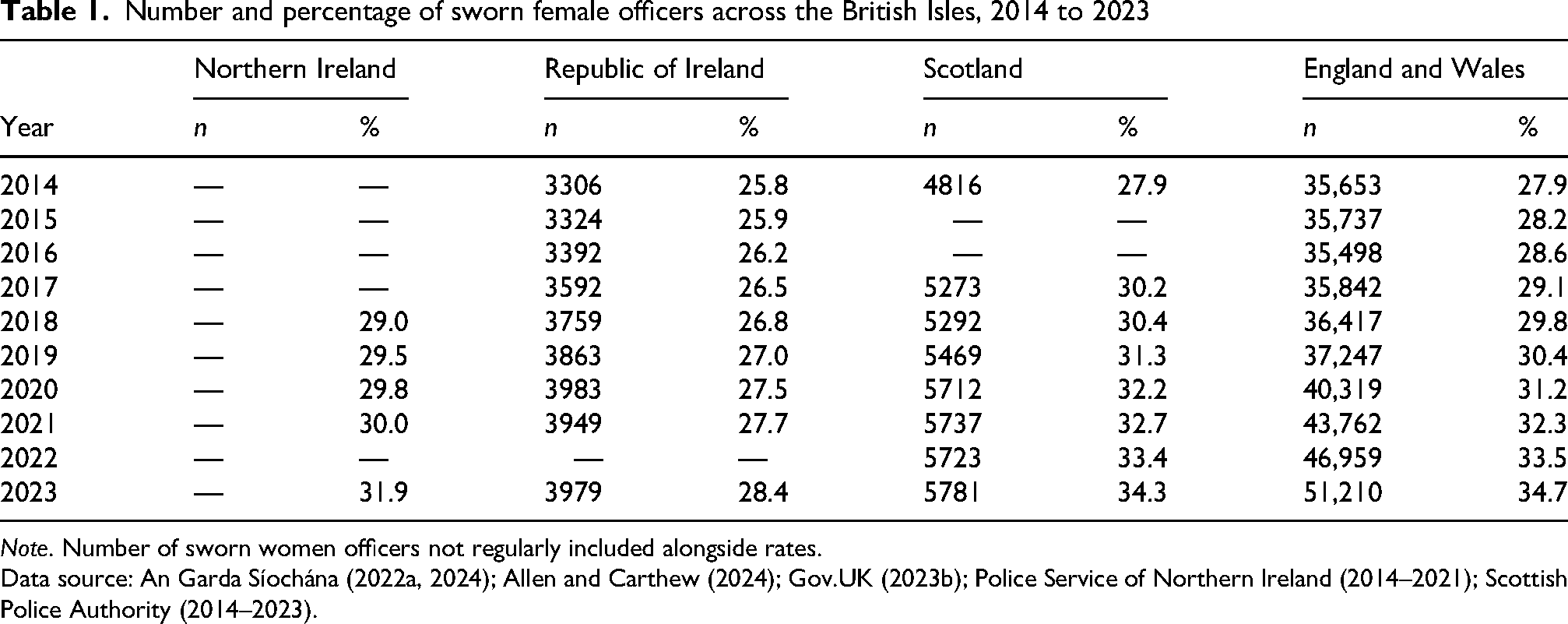
Note. Number of sworn women officers not regularly included alongside rates.
Transparency and accountability
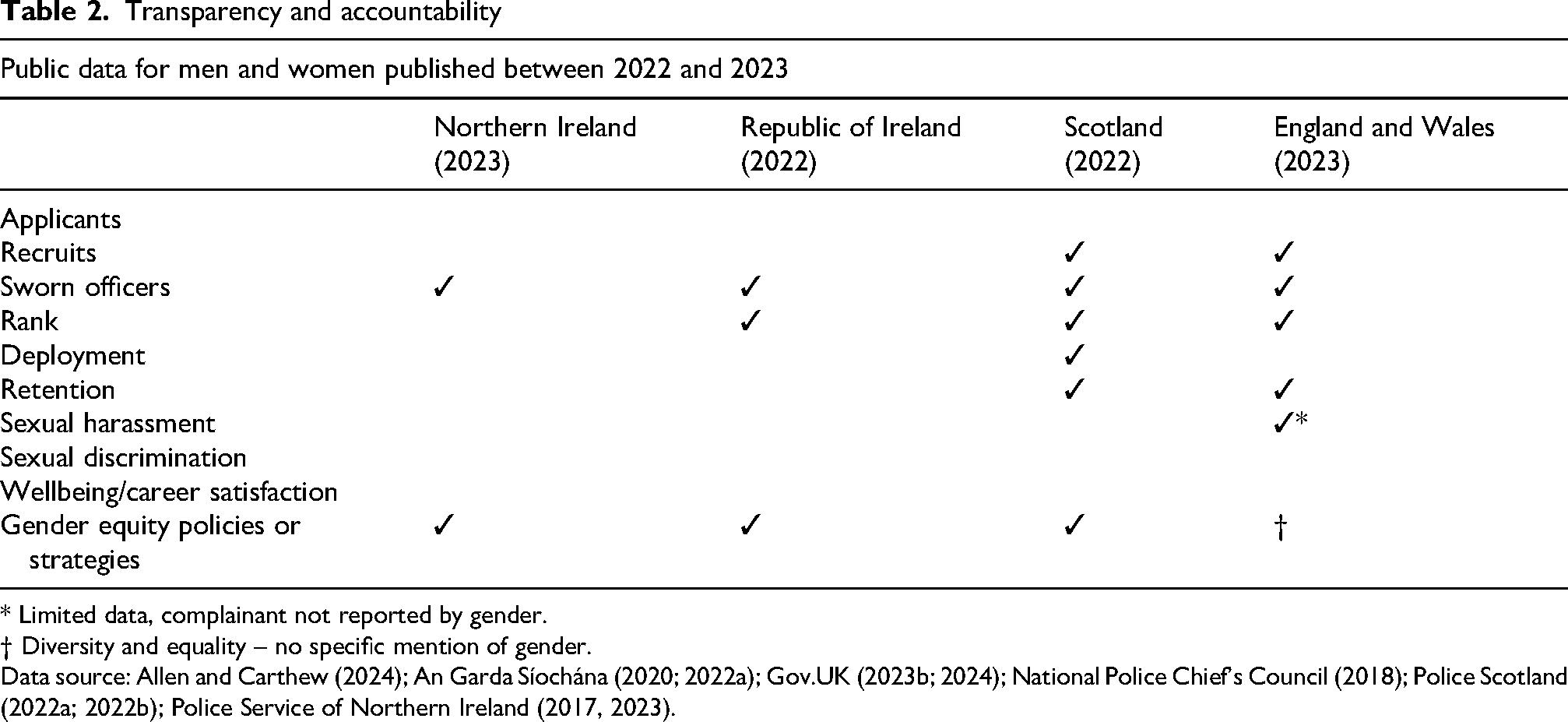
* Limited data, complainant not reported by gender.
† Diversity and equality – no specific mention of gender.
No jurisdiction had publicly reported the men/women numbers for applications received for recruitment, deployment or promotion; nor for sexual harassment, discrimination or wellbeing. While Her Majesty's Inspectorate of Constabulary and Fire & Rescue Services had commissioned an inspection of the treatment of the police workforce (2020), the report did not provide a breakdown of findings by gender (Her Majesty's Inspectorate of Constabulary and Fire & Rescue Services, 2020); nor did the Police Federation of Northern Ireland's 2021 workforce survey report (Police Federation of Northern Ireland, 2021). In addition, data published by the UK Government about the number of complaints and conduct matters finalised in 2023 (Gov.UK, 2024) do not provide a complete picture. For instance, the data indicate the gender of the officer whom the complaint was made against, but with no indication of the gender of the complainant.
Strategies
During the study period (2014–2023), several gender equity and diversity strategies were published by each police service across the British Isles. The strategies of three jurisdictions – Northern Ireland, the Republic of Ireland and Scotland – specified commitments to gender equity. The strategy of England and Wales focused on diversity more broadly. In the Police Service of Northern Ireland Equality Scheme: Equality, Diversity and Good Relations Strategy 2017–2022, the Police Service of Northern Ireland (2017: 2) affirmed they ‘will have due regard to the need to promote equality of opportunity … between men and women generally’. They also stated that they will monitor ‘the number of women, and if they are under-represented, for increasing that number if so requested by the Northern Ireland Policing Board (NIPB)’ (Police Service of Northern Ireland, 2017: 2). These commitments were reinforced in the Action Plan 2017–2022 included within the strategy; however, many of the performance indicators for the action points lack clarity. For example, action point 1.2 ‘we will have a workforce representative of the society we serve’ will be evidenced by statistical analysis and benchmarking to identify and address under-representation, a revised and updated People Strategy and an updated and targeted recruitment programme (Police Service of Northern Ireland, 2017: 25). The benchmarks, revisions and updates, and features of the recruitment programme were not proposed.
In the Equality, Diversity and Inclusion: Strategy Statement and Action Plan 2020–2021, the An Garda Síochána (2020: 2) committed to ‘promote full equality for all Garda members’ and to ‘eliminate discrimination on the grounds of … gender’. They established four strategic goals for leadership, ‘we will engage leaders at all levels by developing a clear understanding of EDI [equality, diversity and inclusion] responsibilities and strengthening our EDI support structures’; for the workforce, ‘we will attract, develop and retain a diverse workforce to support delivery of an effective policing service to the communities we serve’; for the workplace culture, ‘we will honour our core values and Code of Ethics through proactively building a culture of awareness and respect for EDI matters which permeates the workplace’; and for support systems, ‘we will support and empower our people by creating a more inclusive work environment for all Garda members’ (An Garda Síochána, 2020: 5).
This strategy also featured an action plan to achieve these goals. Most of these actions did not distinguish gender as a target, rather they focused on diversity and inclusivity more broadly. However, several actions in the plan specified gender, including ‘support[ing] the development of HR&PD [Human Resources and Personal Development] policies which accommodate diversity’ by, in part, examining ongoing procurement of equipment to limit inadvertent discrimination on the basis of gender, and ‘develop[ing] access to high quality diversity data’, partly by using available data to establish baselines and targets for gender equity across ranks and grades, in trainee assessment, and progress through the recruitment process (An Garda Síochána, 2020: 6–7).
In the Equality, Diversity and Inclusion Strategy 2022–26, Police Scotland stated, ‘our Policing Together strategy outlines the action we are taking to champion equality and inclusion so that we tackle sexism and misogyny’ (Police Scotland, 2022b: 3). They indicated there is also a Sex Equality and Misogyny work programme, although further research suggested this may be a working group responsible for developing initiatives to address these issues rather than an active programme in which issues are actually addressed (Police Scotland, 2022b: 12; see also Scottish Police Authority, 2023, May 31).
Police Scotland established an action plan, with four overarching intended outcomes, including ‘we are an anti-racist organisation and have zero tolerance for any discrimination, bullying or harassment. We act at all times in accordance with our values’, ‘equality, diversity, inclusion and human rights are embraced and central to everything we do’, ‘we are committed to creating an inclusive culture which is supportive and welcoming, where colleagues feel they belong and can be at their best’, and ‘our colleagues represent and reflect the communities we serve and keep safe’ (Police Scotland, 2022b: 9).
Notably, gender equity issues were only specified under one of these four intended outcomes: ‘we are an anti-racist organisation and have zero tolerance for any discrimination, bullying or harassment’ (Police Scotland, 2022b: 10). Under the actions points for this outcome, Police Scotland claimed to ‘always adhere to the principles of fairness and due process’ and have ‘a zero tolerance position towards all forms of discrimination, bullying, or harassment in relation to an individual's … sex’ (Police Scotland, 2022b: 10). Again, under this outcome, Police Scotland established their commitment to tackling misogyny through the ‘Sex Equality and Misogyny’ work programme; strengthening recruitment and vetting procedures with increased transparency during misconduct investigations; by developing a strategy for violence against women and girls; and through an external campaign called That Guy, which encourages men to accept a greater responsibility for their behaviours, language and broader cultural change (Police Scotland, 2022b: 12).
As noted above, the strategy for England and Wales made no specific reference to gender (National Police Chief's Council [NPCC], 2018). The NPCC Diversity, Equality and Inclusion Strategy stated that the NPCC is ‘committed to understanding disparity within policing and to explaining that disparity. If we cannot, we will reform’ (NPCC, 2018: 7), which indicates a commitment to improving gender equity. The strategy also established a commitment to maximising transparency of the police services, and describes a workforce tool kit, ‘focus[ing] on specific actions’ within ‘leadership and culture, attraction/recruitment, retention, progression, wellbeing and fulfilment, and exit from service with dignity’ (NPCC, 2018: 10).
Impacts
Northern Ireland
It is not possible to determine the impacts of past or current gender equality strategies on workforce composition or workplace experiences for women in the Police Service of Northern Ireland. Aside from the proportion of sworn women officers (e.g. 31.9% in 2023), the Northern Ireland Police Service publish very few data distinguished by sex. A graph published by Allen and Carthew (2024: 24), in a Commons Library Research Briefing of Police Service strength, illustrates a slight growth in the number of female officers between 2014 and 2022. However, the accompanying data were not available, and the graph does not provide enough detail to interpret accurately here. The Police Service of Northern Ireland annual reports (2014–2021) provide better indications of the proportion of female officers for each respective year, although in earlier years these data conflated sworn female officers and other employees. The latest report also provided a breakdown of officer rank and deployment by gender, summarised in Table 3. No other data were available; hence, it was not possible to make any meaningful inferences about the impact of the gender strategy from these data.
Proportion of female officers in Police Service of Northern Ireland, 2020–2021
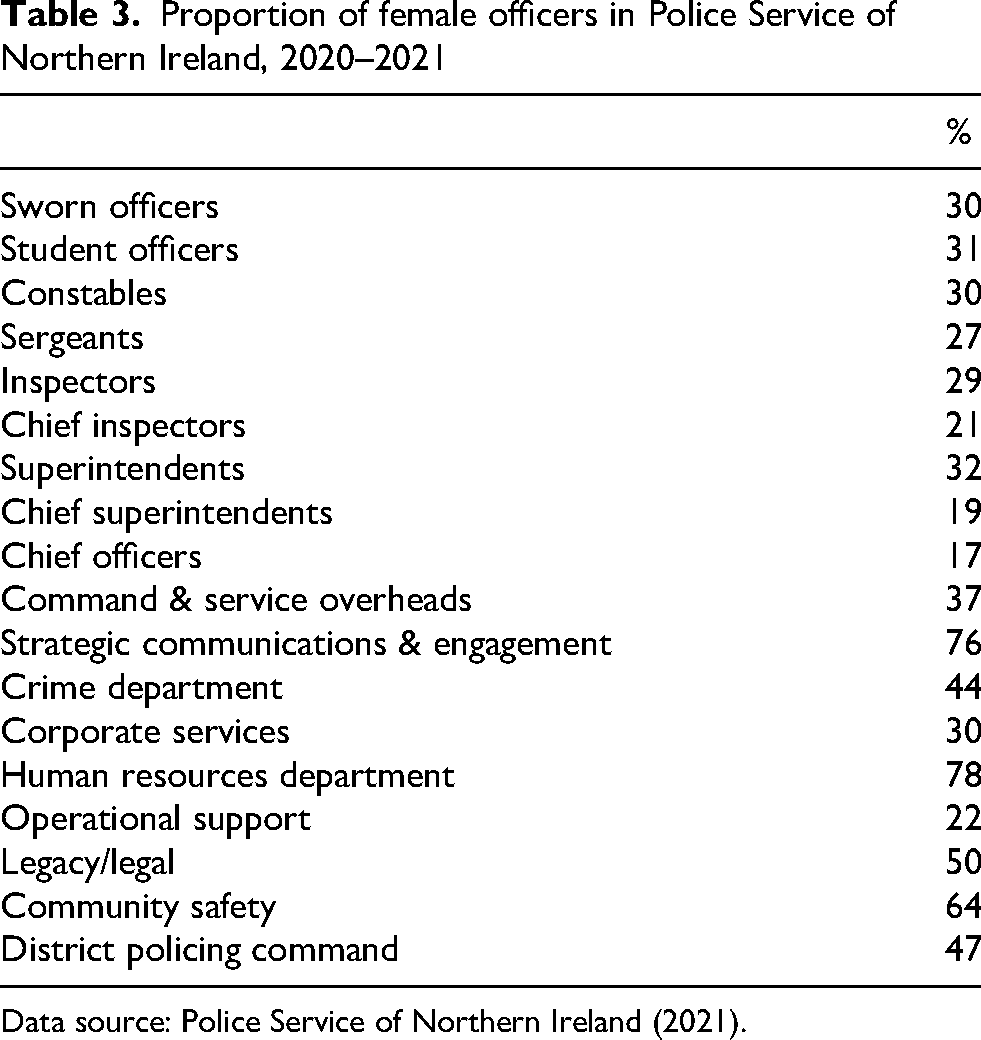
Data source: Police Service of Northern Ireland (2021).
Republic of Ireland
There were limited data made public by An Garda Síochána; however, they have published numbers of officers by rank and gender from 2005 to 2021. For the study period, 2014 onward, these data show an increase in the proportion of sworn female officers from 25.8% to 27.7% in 2021 (An Garda Síochána, 2022a). As illustrated in Figure 1, they also show an increase in the proportion of female detectives, from 16.5% to 25.5%, with similar increases in the proportion of sergeants (from 16.3% to 23.7%), inspectors (10.1% to 18.5%), superintendents (10% to 13.7%) and chief superintendents (10.3% to 20.8%). As of October 2023, the proportion of female sergeants rose to 24.7%, inspectors to 20% and superintendents to 15.7%, with a slight decrease in chief superintendents to 19.1%. The highest ranks included two female deputy commissioners (100%) and four assistant commissioners (50%) (An Garda Síochána, 2024). In addition, An Garda Síochána (2022b) released a snapshot of the gender pay gap in 2022, which showed that female Garda members earned an average 4.8% less than men in the permanent workforce. These data are indicative that the gender strategy has had some positive impacts, creating a more inclusive workplace – although, considering the current gender pay gap, An Garda Síochána have not yet eliminated discrimination. No other data were available.
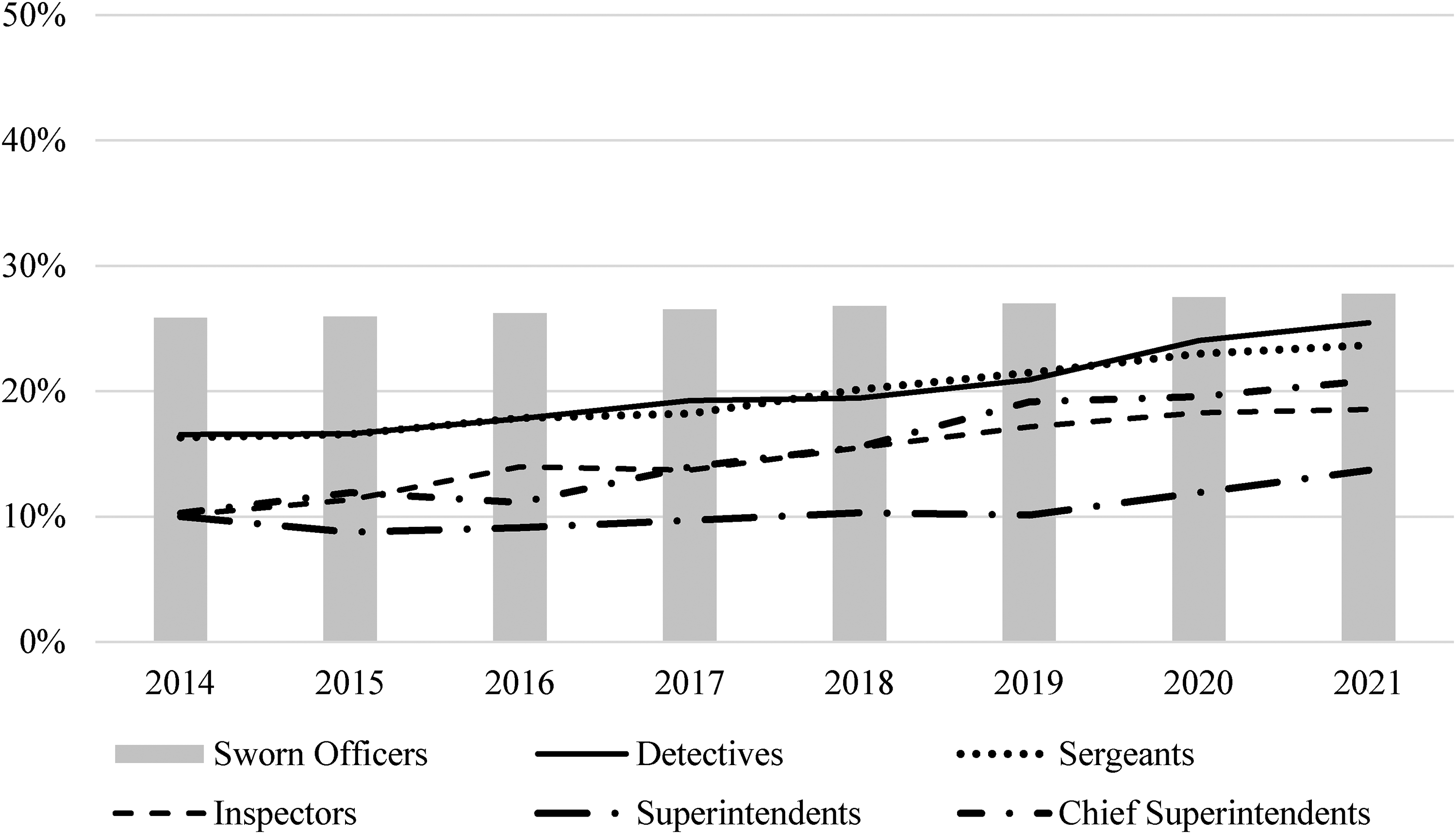
Proportion of women in An Garda Síochána, 2014–2021. Data source: An Garda Síochána (2022a).
Scotland
Most of the publicly reported data from Police Scotland are contained in the Equality and Diversity Employment Monitoring Report for 2021–2022. In this period, women represented 29.5% of new recruits and 33% of sworn officers. The latter was reportedly an increase from 32% in the previous year (Police Scotland, 2022a). Women also represented similar proportions within the various ranks of the workforce (Table 2), as well as two female assistant chief constables (20%) and one deputy chief constable (33%). This report included information about deployment, stating that female officers accounted for between 17% (‘operational support’) and 44% ( ‘partnerships, prevention and community wellbeing’) of deployed officers (Table 4). Women also represented 29% of promotions in 2022. Female officers earned an average of £19.80 per hour, compared with £20.41 for men; however, this was reportedly a decrease in the gender pay gap from previous years. The men/women proportions for officers leaving the force were 26% and 74% respectively. Female officer resignations were 27%, well below the 33% female officer representation in the force (Police Scotland, 2022a: 45).
Proportion of women officers in Police Scotland, 2021–2022
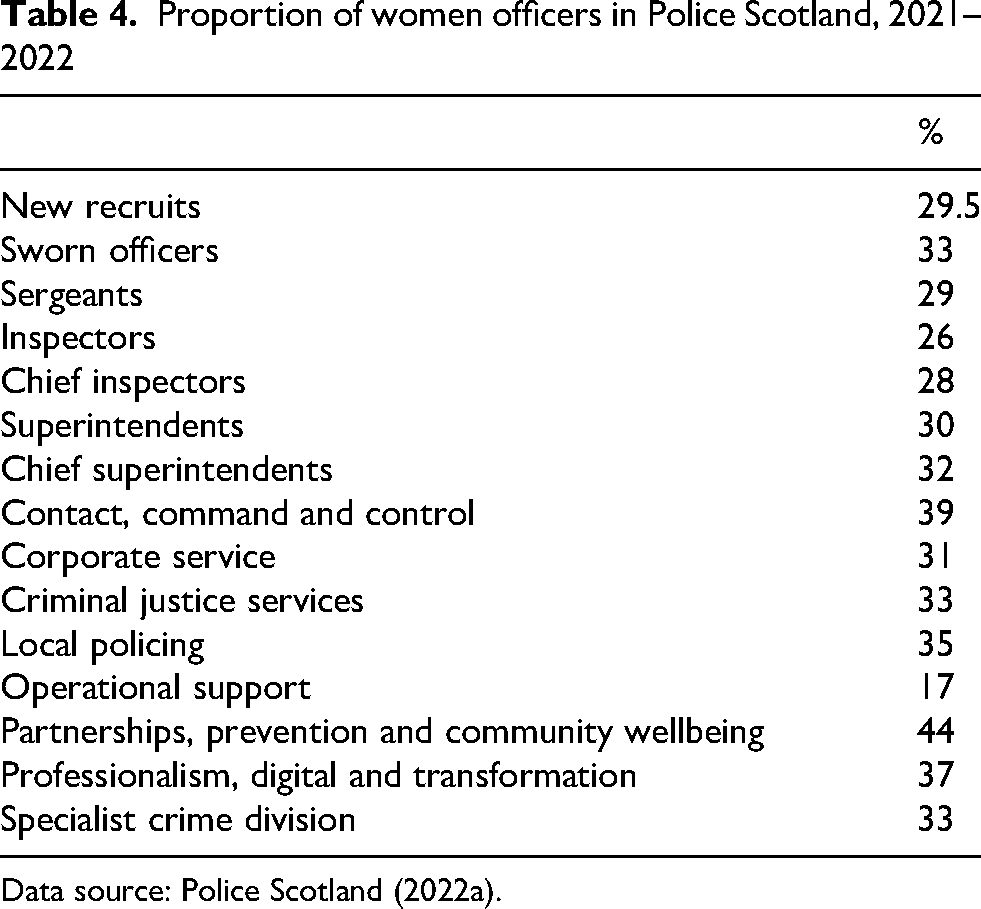
Data source: Police Scotland (2022a).
Previous editions of the report are not available. In addition, the Scottish Police Authority (2014–2023) annual reports provide the number and proportion of sworn female officers for each respective year, showing a steady increase from 27.93% in 2013/2014 to 34.25% in 2022/2023. The data indicate that Police Scotland have made substantial advances in gender equity, suggesting the ‘action we are taking to champion equality’ may be proving effective, without specifying what these actions were (see the ‘Strategies’ section) (Police Scotland, 2022b: 3).
England and Wales
The UK Government released several police workforce datasets for England and Wales, with data from 2007 to 2023 (Gov.UK, 2023a, 2023b, 2023c). These data sets provide comprehensive data on the number of recruits, sworn officers, rank and retention, with a breakdown by gender. As illustrated in Figure2, these data depict an increasing trend in the proportion of females in policing, with increasing numbers of recruits and sworn officers, and a reduction in the proportion of females leaving the service. However, these numbers vary between the separate police forces, from 22.3% in the British Transport Police to 42.9 in Cumbria in 2023, for example. Aligning with these data, Allen and Carthew (2024) reported that the proportion of female police officer recruits had risen from 32% in 2014 to 42% in 2023. This was similar to the proportion of recruits reported by the UK Government (n.d.), which – under the ‘Police Uplift Programme’ – had achieved 42.6% female officer recruits in 2021, 42.7% in 2022 and 44.0% in 2023 at the completion of the programme. The Uplift Programme was a major a recruitment drive from 2020 to 2023 designed to address a shortfall in police.
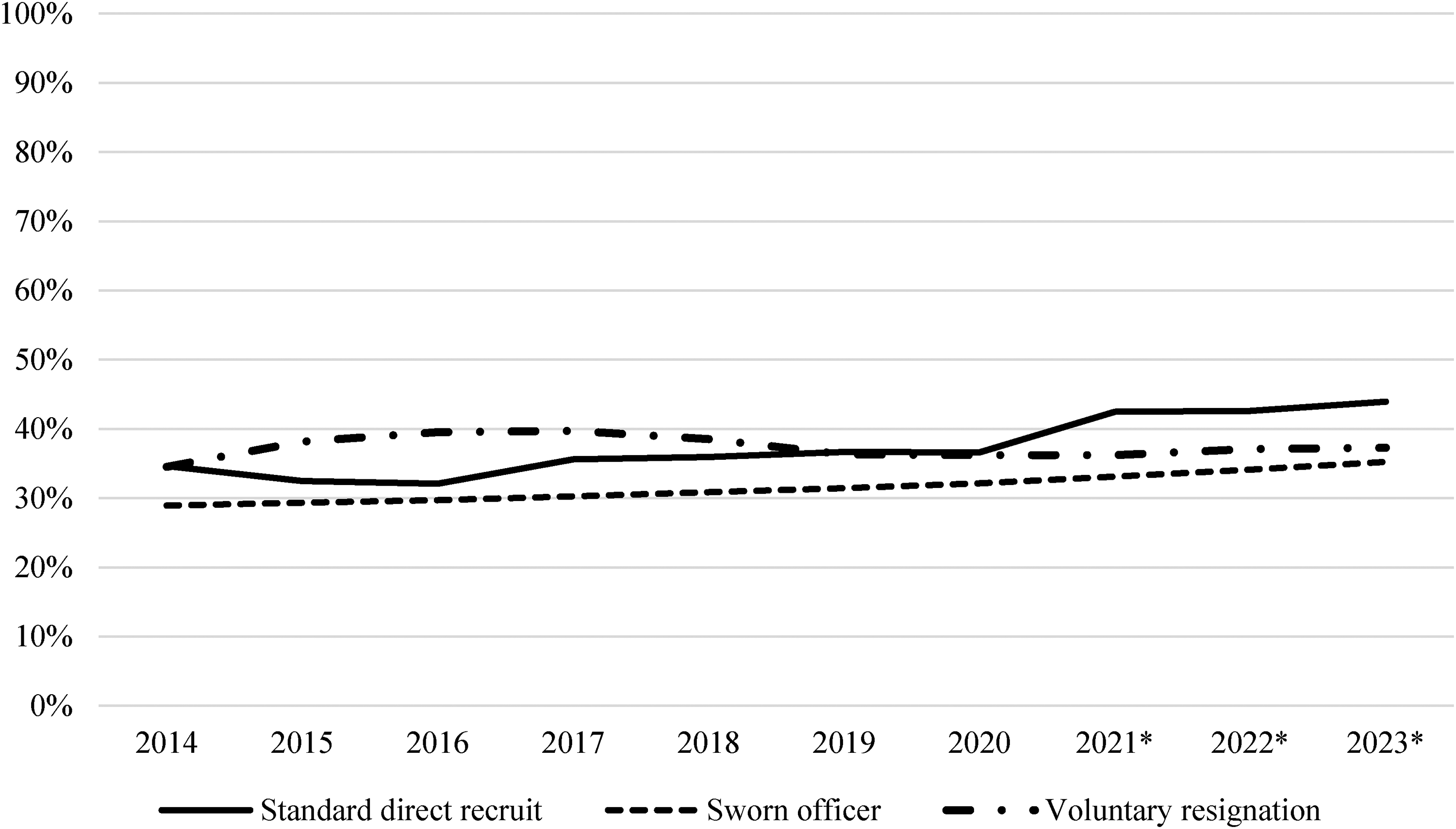
Proportion of females in the police services of England and Wales by recruits, sworn officers and voluntary leavers, 2014–2023. Data source: Gov.UK (2023a, 2023b, 2023c). *Gender breakdown also included non-binary and non-disclosures from 2021–2023.
Figure 3 shows a clear flow-through of women from recruitment to constable ranks to middle and officer ranks, and strong representation of around 30% for the ranks of superintendents, chief superintendents and chief officers – possibly indicating an accelerated promotion process. The proportion of female officers voluntarily leaving the service had also increased from 34.5% in 2014 to 37.3% in 2023 – this was above the figure of 35.2% for overall sworn officer representation but below the proportion of new recruits, at 43.9% (Gov.UK, 2023a, 2023b). Voluntary resignations of female officers represented almost two-thirds (59.5%) of all leavers compared with 45.4% of male leavers (Gov.UK, 2023b).
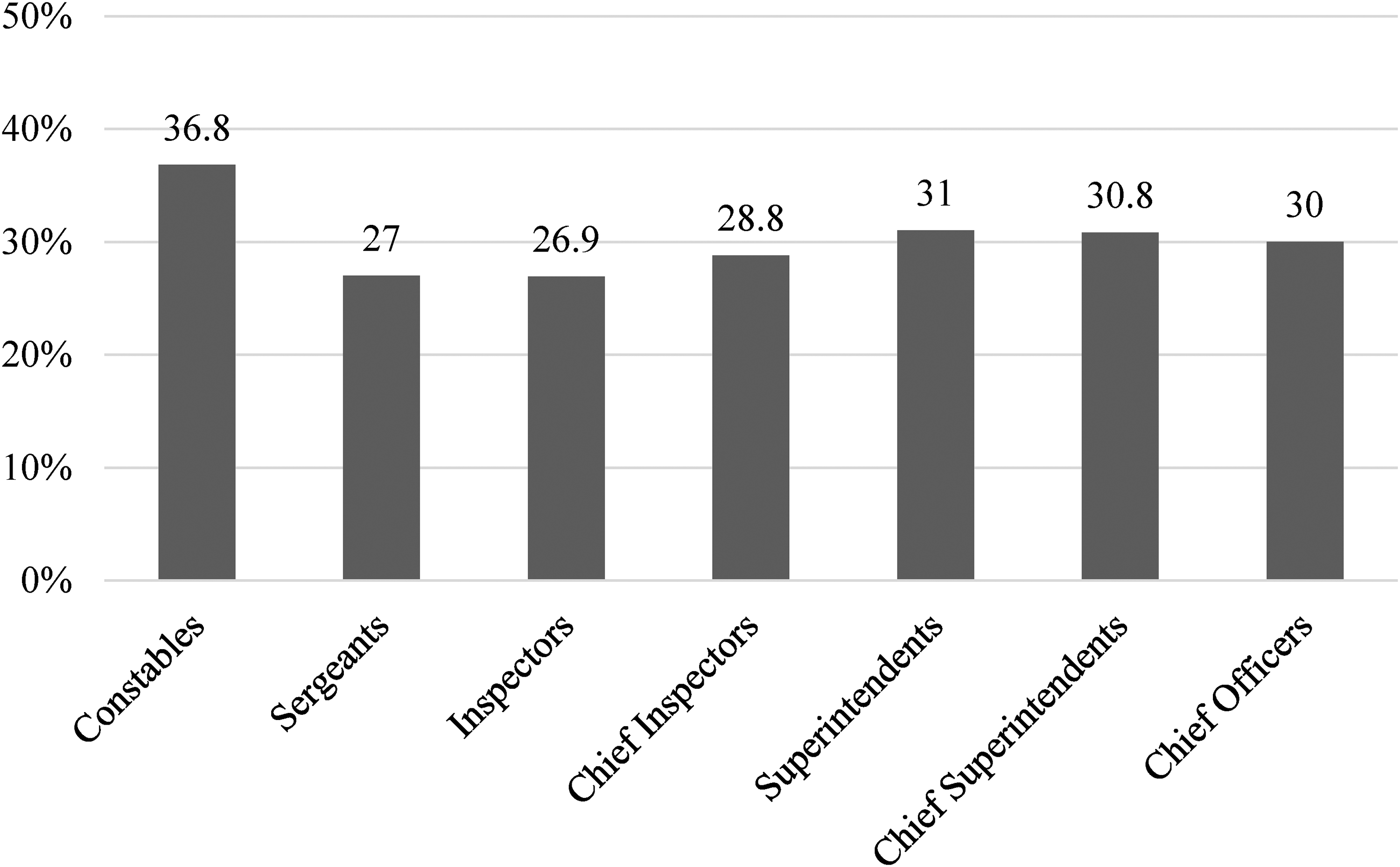
Proportion of female officers in the police services of England and Wales by rank, 2022–2023. Data source: Gov.UK (2023b).
In addition, the UK Government provided some data regarding complaints and conduct matters, including that there were 770 allegations of sexual conduct against police officers (complaints, conduct and recordable conduct matters), and 4251 allegations of discriminatory behaviour, in 2023 (Gov.UK, 2024). However, these data did not indicate the gender of complainants, or the relationship of complainants to the accused (community member, co-worker or subordinate). The England and Wales Policing annual reports provided no further data, except to note that there was a 2.4 percentage point change in the proportion of female officers from 2010 to 2015 (Her Majesty's Inspector of Constabulary, 2015; 2021).
Individually, some police services across England and Wales published workforce data. However, most of these are encompassed in the broader jurisdictional data described above. Data released by the Metropolitan Police (2023) indicated that the proportion of female officer turnover had increased from 4.4% in 2014 to 6.7% in 2023, compared with an increase from 5.9% to 7% for the broader workforce (inclusive of men and women; separate men's data were not provided). In addition, these data showed that, in 2023, women represented approximately 33.6% of ‘frontline policing’, 18.2% of ‘specialist operations’, 21.3% of ‘Met operations’, 33.3% of ‘corporate services’, 24.8% of ‘digital, data and technology’, 29.8% of ‘people and resources’, 45.3% of ‘professionalism’, and 30.9% of ‘strategy and transformation’ (Metropolitan Police, 2023). No further data were available and, because their diversity strategy lacked any specific reference to gender, it was not possible to explore the impact of this strategy.
Discussion
The purpose of this article was to assess the status of women in policing in the British Isles and identify how the four police services achieved relatively high rates of female representation over the 10-year study period. Using data from 2014 to 2023, the article confirms a strong upward progression in sworn female officer numbers. England and Wales have almost reached the 35% target recommend by the British Association of Women Police for a minimal ‘critical mass’, with Scotland close behind at 33%. Northern Ireland and the Republic of Ireland are some years away but show a similar upward trend. The available data also indicate large numbers of women across the ranks and in specialist areas, including many women at sergeant level and above around the 30% mark. The separation data for Scotland, and England and Wales, indicate that women are leaving at slightly lower rates than men. However, when considering voluntary resignations alone, women are choosing to leave the service at higher rates than men. The issue of retention of women remains important.
The study found that accountability for gender equity performance was lacking across all jurisdictions. Although the proportions of sworn female officers were available for three of the four services across the study period, long-term gendered data were unavailable for most key measures (e.g. applications for recruitment and outcomes; applications for promotion and specialist positions and outcomes; separations). Almost no data about workplace experiences (wellbeing, career satisfaction, sexual harassment or discrimination) were available, which is a significant omission from these police forces, given these experiences will likely provide a greater level of context and understanding from which to interpret the achievements of female representation. For example, a recent review of the Metropolitan Police – the Baroness Casey Review (Baroness Casey of Backstock, 2023) – identified persistent discrimination and harassment within the workplace, including bullying, sexism and misogyny. This type of negative or hostile workplace environment is a significant consideration when assessing the advancement of women in policing and gender equity. In fact, the findings of this review demonstrate an important point of difference between gender equity and gender equality, whereby female representation in policing does not equate to the fair and equal treatment of women in policing. Nonetheless, striving for gender equity is an important first step towards achieving gender equality (e.g. Australian Human Rights Commission, n.d.).
In terms of explaining the achievements that can be documented, it is possible that various government equity policies and gender action plans had an influence. However, the study showed that these lacked specificity regarding police. The gender equity strategies indicated a level of top-down support, with statements such as we ‘promote full equality for all Garda members’ (An Garda Síochána, 2020: 2) and ‘we are committed to creating an inclusive culture’ (Police Scotland, 2022b: 9). However, it was not clear how high up the hierarchy this support went or the type of support involved in practical terms. Using the standard indicators of gender equity, and considering Prenzler and Drew's (2023a) model programme for gender-inclusive policing, the results reported in this article raise more questions than they answer.
Previous studies on England and Wales have indicated possible improvements from ‘senior management commitment, explicit targets, monitoring, flexible employment and a range of support mechanisms such as mentoring and leadership programmes’ (Ward and Prenzler, 2016: 242). These findings were based on the Home Office (2010) report and case study analyses of outstanding achievements in 2015 in recruitment (51.4% female recruits in North Wales), overall sworn officer numbers (35.4% in Cumbria and 33.2% in Surrey) and senior ranks (32.1% in Hertfordshire). Police senior management commitment to equity might have been influenced by the Gender Agenda in England and Wales, driven in part by BAWP (2014; see Literature review section). For example, the Home Office (2010: 17) report found that, ‘almost all of the 43 Police Authorities have now set local gender and ethnicity recruitment targets’. Ward and Prenzler (2016) found that the North Wales Women's Police Association might have had an influence on positive outcomes for women police in North Wales.
More recently, two non-governmental organisations have provided reports that shed some light on strategies and possible effects from outside the official sources used as the primary source material in the present study. There are data in The Police Foundation report indicating that a direct entry programme for graduates in England and Wales – part of the government's ‘Uplift’ recruitment drive (above) – might have contributed to increases in female numbers amongst detectives, inspectors and superintendents. The ‘HeForShe Policing UK’ volunteer group – part of a broader United Nations gender equity programme – has produced annual Gender Equality in UK Policing reports since 2019. These include ‘good practice examples’, such as: seeking eligible female officers for vacant specialist positions, women-focused recruit advertising, incorporating workforce diversity support into supervisor training, surveying staff on sexual harassment issues, an anti-harassment campaign, a confidential harassment and misconduct reporting line, creation of a parenting support website, establishing HeForShe ambassadors, mentoring programmes, promotion workshops for women and free sanitary products (HeForShe, 2023).
Nonetheless, the current study was unable to identify any detail in official sources on equity strategies in operation in British Isles policing and, therefore, was unable to identify any causal factors behind the long-term upwards movement in available equity indicators. This is of major concern from the perspective of the democratic accountability of the police.
The Home Office (2010) recommendations regarding transparency, specifically including the publication of equity strategies alongside workforce numbers, have been ignored. One of the reasons that better data are important – including strategies as data – is because the Home Office (2010) study showed substantial variation in terms of the proportions of male and female recruits and officers between the 43 police authorities in England and Wales. ‘Female recruitment varies hugely between forces, from 25% to 58% of new recruits last year’ (Home Office, 2010: 3). In terms of sworn officers, the highest female proportion was 32% and lowest was 21%. An understanding of differences in equity strategies and outcomes should help identify the extent to which forces are committed to equity and, perhaps even more importantly, which strategies are most effective. Lessons could be utilised by other police services and organisations, furthering the advancement of women in the workforce both in the British Isles and abroad. It is suggested that the special 2010 report by the Home Office should in fact be an annual report and serve in some way as a best practice example of reporting and transparency that could be adopted by agencies across the globe.
Limitations
The findings of this study were limited by a lack of transparency, with very limited data publicly accessible from government sources, particularly in regard to effective equity strategies. Although secondary sources provided some possible explanations, governments need to lead the way with adequate disclosures. Because the focus was also restricted to the British Isles, transferability with other jurisdictions is limited. Hence, future research should also examine transparency and gender equity strategies, and their impacts or achievements in other contexts to further the advancement of women in policing.
Conclusion
This study explored gender equity in policing in the British Isles. The findings indicate that, although the police services of the British Isles may have achieved some success in providing gender-inclusive workforces – by sworn officer numbers as one measure of gender equity – these services have some way to go to achieve gender equity, and gender equality. Data were inconsistently reported and gender equity strategies were largely lacking direction to inform the understanding of how the British Isles police services have improved gender equality in policing. These police services should increase data transparency to support the continued advancement of women in policing, both within these services and abroad. Future research should utilise organisational data to explore the research aims further, noting the impacts of this on transparency.
Footnotes

Funding
Financial support for this paper was provided via an Australian Research Council Grant (Discovery): ‘Innovation in police gender equity management: Looking back, moving forward’. Australian Research Council (grant number DP220102172).
Declaration of Conflicting Interests
The authors declared no potential conflicts of interest with respect to the research, authorship, and/or publication of this article.