




Abstract
Throughout Canada's enduring history of systemic oppression and discriminatory policies, colonial violence against Indigenous peoples has remained a persistent reality. This violence is not limited to periods of protest—where it has been researched and documented—but is also embedded in the everyday or “routine” practices of law enforcement. One particularly egregious example is the so-called “starlight tours”, wherein police officers have been reported to forcibly remove Indigenous individuals, frequently men, and abandon them on the outskirts of cities in subzero temperatures at night. When perpetrated by a state agent, such as a police officer, such violence often does not result in proportional legal or disciplinary consequences. Despite the Truth and Reconciliation Commission findings (Truth and Reconciliation Commission of Canada (2015) Canada's Residential Schools: Reconciliation (Vol. 6). Montreal-Kingston: McGill-Queen's University Press) and its subsequent Calls to Action (Truth and Reconciliation Commission of Canada (2015) Truth and Reconciliation Commission of Canada: Calls to Action. Montreal-Kingston: McGill-Queen's University Press), which advocate for the dismantling of colonial institutions as a pathway to reconciliation, evidence from mainstream media continues to document patterns of systemic and organizational violence against Indigenous peoples by law enforcement. These ongoing accounts highlight a failure to address the structural roots of such violence. Through a thematic content analysis of Canadian news coverage between January 2015 and December 2024, this study identifies key themes in the lived experiences of police-perpetrated violence and identifies who gets to speak about, and frame, this violence. We offer recommendations aimed at ensuring that policy reforms meaningfully incorporate Indigenous voices—not merely as procedural formality, but as a substantive step toward transparency, accountability, and transformative justice in policing practices.
Keywords
Introduction
Police-perpetrated violence against Indigenous peoples is a systemic issue rooted in historical injustices, colonial legacies, and entrenched racial discrimination. In Canada, Indigenous peoples are victimized through marginalization, dispossession, and systemic inequality, leaving them disproportionately vulnerable to violence perpetrated by the police, and indeed, over-policing (Joseph, 2018; Rudin, 2005). The criminal justice system, touted as a mechanism for maintaining public safety, has repeatedly failed to protect Indigenous peoples, instead serving as a source of harm and perpetuating cycles of trauma and injustice (Kiiwetinepinesiik Stark, 2020; Monaghan, 2013). This violence takes many forms, including physical brutality, harassment, wrongful arrests, and disproportionate incarceration rates, which furthers mistrust of the police and hinders efforts to achieve reconciliation. In Canada, the term “police-involved death” refers to any death that occurs during or immediately following an interaction with law enforcement during police operations, in which police use-of-force from the use of police weapons or physical interventions is a contributing factor (McPhail, 2023; Tracking(In)Justice 2023). Some 704 people died as a result of police-involved death between 2000 and 2022, with police use-of-force incidents on the rise and the highest number to date occurring in 2022 (Crosby et al., 2023; McPhail, 2023; Tracking(In)Justice 2023). Between 2011 and 2022, there were an average of 37.8 police-involved deaths per year, which is a 66.5% increase from the average of 22.7 police-involved deaths reported between 2000 and 2010 (Crosby et al., 2023; McPhail, 2023; Tracking(In)Justice 2023). Because of racial disparities, Black and Indigenous peoples are over-represented in police-involved deaths; however, these statistics could be an underestimation because there is a significant proportion of incidents for which race data was not recorded (Crosby et al., 2023). Black individuals make up 3.8% of Canada's population and represent 8.1% of police-involved deaths (McPhail, 2023; Tracking(In)Justice 2023). Similarly, Indigenous peoples make up 5.1% of Canada's population and 112 Indigenous people have died as a result of police-involved death since 2000, or 16.2% of the total number of police-involved deaths (Crosby et al., 2023; McPhail, 2023; Tracking(In)Justice 2023).
Examining the causes and consequences of police violence against Indigenous peoples is crucial for understanding its broader social implications and addressing the systemic changes needed to foster equity, accountability, and promote Indigenous voices to advocate for reconciliation. To do this, we analyzed news media accounts of police-perpetrated violence against Indigenous peoples. Muraskin and Domash (2007) remind us that media is critical in shaping public perceptions, views, and understandings of crime events. Our analysis was guided by two questions:
Who gets quoted in media coverage concerning Canadian police violence perpetrated against Indigenous peoples? How do these different voices serve to frame Canadian police violence against Indigenous peoples?
Relying on Zagzebski's (2012) concept of epistemic authority, we argue that, in the current Canadian context, informed and structured by a colonial past and present, police hold the privilege to speak authoritatively on crime. It is, therefore, police voices and interpretations that most often line news reports. We were interested in finding the contributions of Indigenous experts, elders, community leaders and academics, and assessing how their commentary may provide alternative ways to understand police violence.
Literature review
Colonialism is the system of domination based on the belief that the subjugated peoples were/are inferior to the colonizers, put in place to serve the interests of empire, and “whose aim is to take advantage of resources that will benefit the metropole” (Glenn, 2015: 57). As a distinct form of colonialism, the aim of settler colonialism “is to acquire land so that the colonists can settle permanently and form new communities” (Glenn, 2015: 57). The history of colonialism in Canada attempted to eradicate Indigenous cultures through forced assimilation, dispossession, oppression, and criminalization of spiritual practices (Joseph, 2018; Rudin, 2005). The Indian Act of 1876 furthered colonialism by regulating Indigenous lands, restricting rights, criminalizing traditions, and forcing cultural assimilation (Indian Act, 1985). The North-West Mounted Police, established in 1873, which later became the Royal Canadian Mounted Police (RCMP), enforced colonial control through surveillance, patrols, and coercion (Campbell et al., 2017; Monaghan, 2013). Indigenous peoples were unjustly stereotyped and portrayed as threats to justify the violence perpetrated by RCMP officers (Monaghan, 2013). In addition, the RCMP had a role in forcibly removing Indigenous children from their families to attend residential schools, which further inflicted severe trauma, including abuse, cultural erasure, and death, creating intergenerational harm (Joseph, 2018; Truth and Reconciliation Commission of Canada [TRC], 2015a).
Policing, both historically and in its contemporary forms, has roots deeply intertwined with colonialism, and continues to reflect and perpetuate colonial structures (Monchalin and Marques, 2020). The institution of policing, as developed in settler-colonial states such as Canada, emerged as a tool to enforce colonial order, subjugate Indigenous populations, and protects settler interests (Alberton et al., 2020; Johnson, 2014; Monaghan, 2013). This legacy persists today in practices and policies that disproportionately survey and criminalize marginalized communities. Despite recent attempts to implement police reforms to improve accountability and community relations, the police continue to enable the perpetration of violence because of a lack of consequences and transparency with the public (Kiiwetinepinesiik Stark, 2020; Samuels-Wortley, 2021).
Similarly, colonialism has long been embedded in Canada's press, with print media being strongly tied to the politics of imperialism and colonialism. Taking treaties or residential schools as an example, Cuthand (2018: para 15) states: “We need to look at the underlying issues behind the headlines… nothing occurs in a vacuum”. Mainstream media has significantly reinforced the cultural heritage and moral authority that underpins the prevailing social order (Anderson and Robertson, 2011). This complicity has often involved the reinforcement of harmful stereotypes that degrade, denigrate, and marginalize Indigenous peoples and often portray Indigenous people as uncivilized and racially inferior (Anderson and Robertson, 2011; Kiiwetinepinesiik Stark, 2020; Tuck and Yang, 2012).
Police as perpetrators of violence
Police occupy a paradoxical position in Canadian society as a result of their dual role as protectors and enforcers. They are envisioned as maintaining public safety, upholding the rule of law, and protecting citizens from harm. They are the proverbial “good guys” in the fight against “the bad”. However, as a “crucial expression of state authority” (Marquis, 2016), police are also enforcers of existing power structures. Enacting the will of the state, police are often complicit in perpetuating systemic oppression, inequality, and violence, particularly against marginalized populations. As Marquis (2016: 2) explains: Police services in Canada have enjoyed relative legitimacy since their inception in the nineteenth century, but historical and criminological research reveals that police attitudes and practices have been contested. That policing abuses rarely reach the status of a national problem is largely explained by the decentralized nature of law enforcement in Canada, and according to some critics the complicity of political elites and the media.
The legacy of colonial violence continues to inform policing practices in Canada, and reports of police abuses against Indigenous peoples, such as subjecting them to harassment, physical violence, and systemic discrimination, are widespread (Cunneen and Tauri, 2016; Flores and Román Alfaro, 2023; Good, 2018). Violence against Indigenous persons perpetrated by police been researched and documented not only during acts of protest (Smith, 2020a), but also during “routine” policing of Indigenous peoples and communities. Through a practice known as “starlight tours” (Monchalin, 2016; Reber and Renaud, 2010), police abandon (mostly) Indigenous men in remote locations far from where they live in frigid conditions. This has resulted in several deaths. Sexual violence perpetrated against Indigenous women and girls in Canada also persists. Indigenous women and girls face a particular vulnerability to police violence (Palmater, 2016). Not only have police neglected to effectively deal with reports of the sexual abuse of Indigenous women and girls, often dismissing and disbelieving victim's reports of sexual violence outright (Murphy-Oikonen et al., 2021), but they too have been found to be complicit in these abuses (Palmater, 2016). The National Inquiry into Missing and Murdered Indigenous Women and Girls (2019) identified policing practices as a contributing factor to the systemic violence experienced by these communities and also concluded that policing systems continue to play a role in perpetuating cycles of violence that Indigenous women and girls experience.
Although some identify the role of a “bad apple” in policing to explain police misconduct as an individual failure and not applicable to policing in general, this perspective has largely been criticized for not acknowledging the role of the “bad barrel” or systemic issues of policing that continue to deny institutionalized misconduct (Ellison and Smyth, 2018; Gottschalk, 2012). The bad apple theory creates an illusion that police misconduct can easily be solved by offering cultural sensitivity training and increased recruitment of marginalized and radicalized peoples; however, “this leaves the structure of police unchanged as well as the core ideology of police officers their beliefs, values and norms” as the structure of policing continues to facilitate racist and discriminatory practices (Bonanno, 2015; Tator et al., 2006: 17).
One element of colonialism is the role of erasure and silencing, which highlights how Indigenous knowledge systems, voices, and histories have been systemically suppressed. Coined as the term “epistemic authority”, these authorities or institutions are deemed as a trusted source of knowledge and expertise and have been intertwined with colonialism through the unjust imposition of western knowledge systems on colonized peoples (Zagzebski, 2012). These colonial epistemic structures further perpetuate unfair practices, invisibilizing race and racism by silencing marginalized voices. News agencies play a pivotal role in shaping the news landscape because journalists decide whose voices to include and how the narrative takes shape (Boumans et al., 2018). To keep up with the constant news cycle and increased workload, an ongoing challenge for journalists is to provide accurate and factual information on news stories, while attempting to secure content exclusivity (Boumans et al., 2018). However, critics indicate that an increasingly hegemonic news system reduces the diversity of viewpoints and perspectives captured in news reporting (Boumans et al., 2018).
Methods
To identify key themes in the lived experiences of police-perpetrated violence against Indigenous peoples, and who gets to speak about, and frame, this violence, this research centers a thematic content analysis of Canadian news coverage between January 2015 and December 2024.
Sampling
Purposive sampling methods were used, and specific news articles were chosen because they related to police violence perpetrated against Indigenous peoples and met the inclusion criteria (Etikan et al., 2016; Palinkas et al., 2015). A broad search strategy was developed by combining search terms related to Indigenous identity (“Indigenous”, “Aboriginal”, “First Nations”, “Metis”, “Inuit”, and “Native American”) and key phrases related to police violence (“starlight tours”, “sexual violence”, “physical violence”, “violence against Indigenous”, and “violence”). These search terms were combined during the search using Boolean operators (AND, OR) and the database search terms. The Canadian Newsstream Collection database was used because it offers access to the major news outlets and newspapers in Canada and provides full access to articles, columns, editorials, and features dating back to the late 1970s. This provided a concise database to draw on and did not rely on securing subscriptions from news agencies. Individual Indigenous news agencies were not included in the search because the focus was on mainstream news agencies. Because of paywall restrictions imposed by the Online News Act (2023), it would be unlikely for the majority of Canadians to access news from smaller, independent news sources.
The inclusion criteria used were that the source must be a newspaper article; it must have been published between 1 January 2015 and 1 December 2024; it must be available in English; it must be accessible; and it must center around Canadian news reporting related to police perpetration of violence against Indigenous peoples. The publication timeline was purposefully chosen to align with the publication and recommendations of the TRC Report (TRC, 2015a). The initial sample consisted of 259 results. After reviewing the results, 141 newspaper articles were excluded because they did not meet all the inclusion criteria, and another 43 were excluded because they were duplicates or were found to be the same newspaper article published under multiple news agencies, thereby leaving a total sample of 75 articles for analysis. The duplication of news articles can be attributed to a phenomenon known as “churnalism”, wherein journalists act as brokers to subsidize content from different agencies, media outlets and professionals, and integrate it into their own news outputs (Boumans et al., 2018). To keep up with the constant news cycle and increased workload, journalists’ ongoing challenge is providing accurate and factual information on news stories while attempting to secure content exclusivity (Boumans et al., 2018). However, critics indicate that an increasingly hegemonic news system reduces the diversity of viewpoints and perspectives captured in news reporting (Boumans et al., 2018).
Data description
The sample included 75 newspaper articles published between 23 June 2017 and 28 September 2024. Based on the distribution of the published articles (Figure 1), it can be seen that most newspaper articles that were related to police violence against Indigenous peoples were published between April and December 2020 (n = 42), with the majority published in June 2020 (n = 26). Following the death of George Floyd on 25 May 2020 in Minneapolis and subsequent coverage of the Black Lives Matter movement, news media created a spotlight on police violence against Black and Indigenous peoples. With media coverage of global violence perpetrated by the police, Canadian news coverage aligned to critiqued police practices and reflect on Canadian colonial history (TRC, 2015a). Evidently, news agencies sought to capitalize on the existing coverage of racial and systemic inequality, thus accounting for the increase in reporting on police violence against Indigenous peoples during this period.
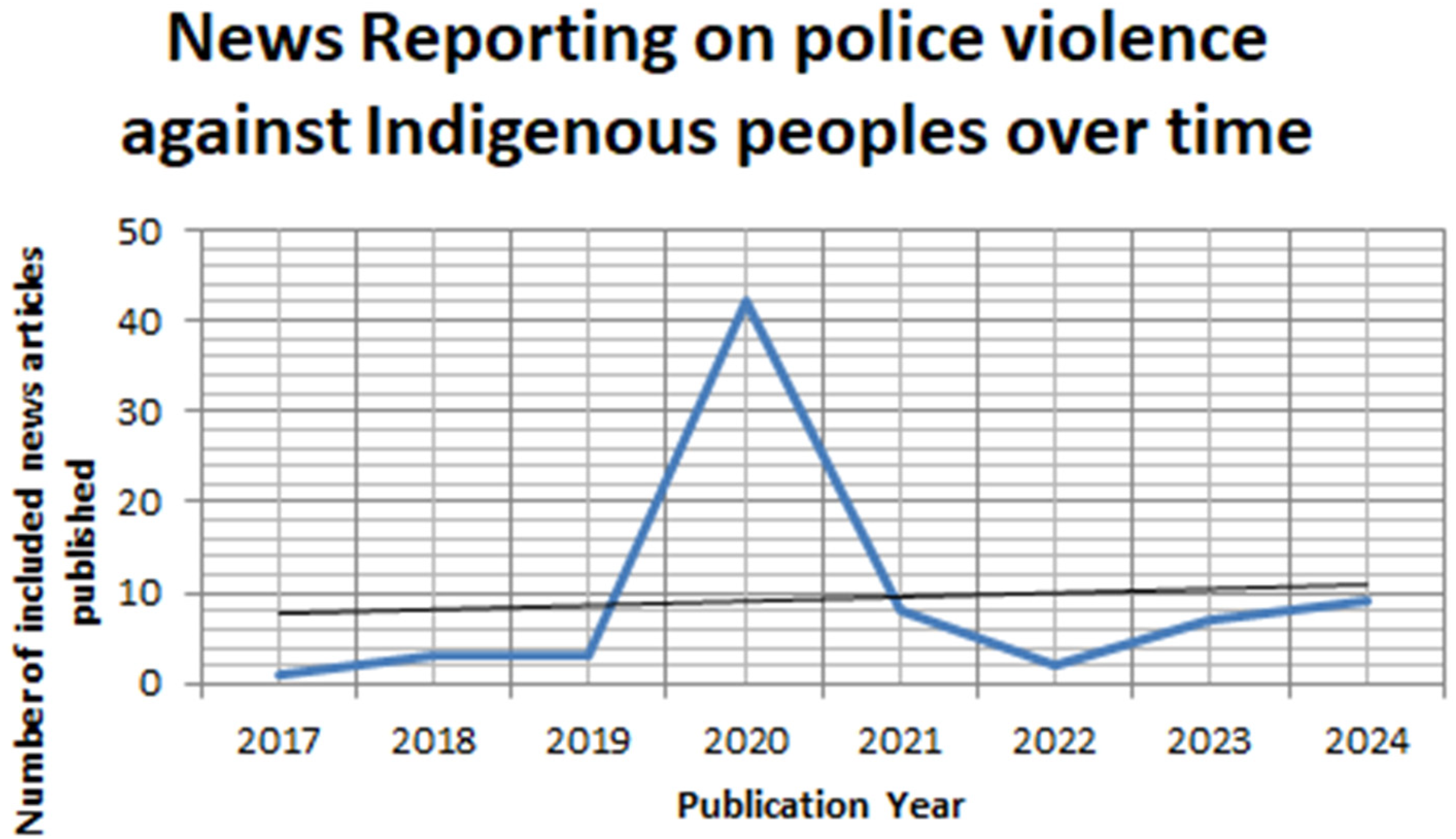
Number of newspapers published on police violence against Indigenous peoples over time.
When combining the total sample and the duplicates of the newspaper articles published (n = 118), the distribution (Figure 2) shows that the majority of articles on police violence against Indigenous peoples were published in Ontario (n = 30), followed by Manitoba (n = 19). The cities with the greatest number of newspaper articles published on police violence against Indigenous peoples were Toronto, Ontario (n = 15) and Winnipeg, Manitoba (n = 14). Whereas the least amount of reporting came from the Yukon Territories (n = 1) and international publishers (n = 2). Similarly, when combining the total sample and the duplicate newspaper articles published (n = 118), the distribution (Figure 3) shows that the majority of articles on police violence against Indigenous peoples were published in the Winnipeg Free Press (n = 13) and the Toronto Star (I = 9). The search terms that yielded the most results relevant to this analysis were “Canada” (n = 75), “psychology” (n = 22), “racism” (n = 20), “violence” (n = 19), “United States–US” (n = 18), “criminal investigations” (n = 17), “murder and attempted murder” (n = 12), “accountability” (n = 11), “Native North Americans” (n = 11), and “Native peoples” (n = 10). The discrepancy between news agency reporting can be attributed to the resources of each news agency, because larger news agencies would have more staffing, funding, and contacts to report on the story. The largest news agency in Canada is the Canadian Broadcast Corporation, located in Toronto, Ontario. In addition, geographical location can account for differences in reporting; for example, increased contact with the police because of proximity to Indigenous communities and reservations, and conflict regarding treaty claims. Notably, Winnipeg has the largest Indigenous population in Canada, is located on the traditional lands of the Anishinaabe (Ojibwe), Ininew (Cree), Dakota, and Dene peoples (Lyons, 2024) and has been called the “front lines of reconciliation” by Murray Sinclair because of its crucial role in relationship building (Henderson, 2024: para. 13).
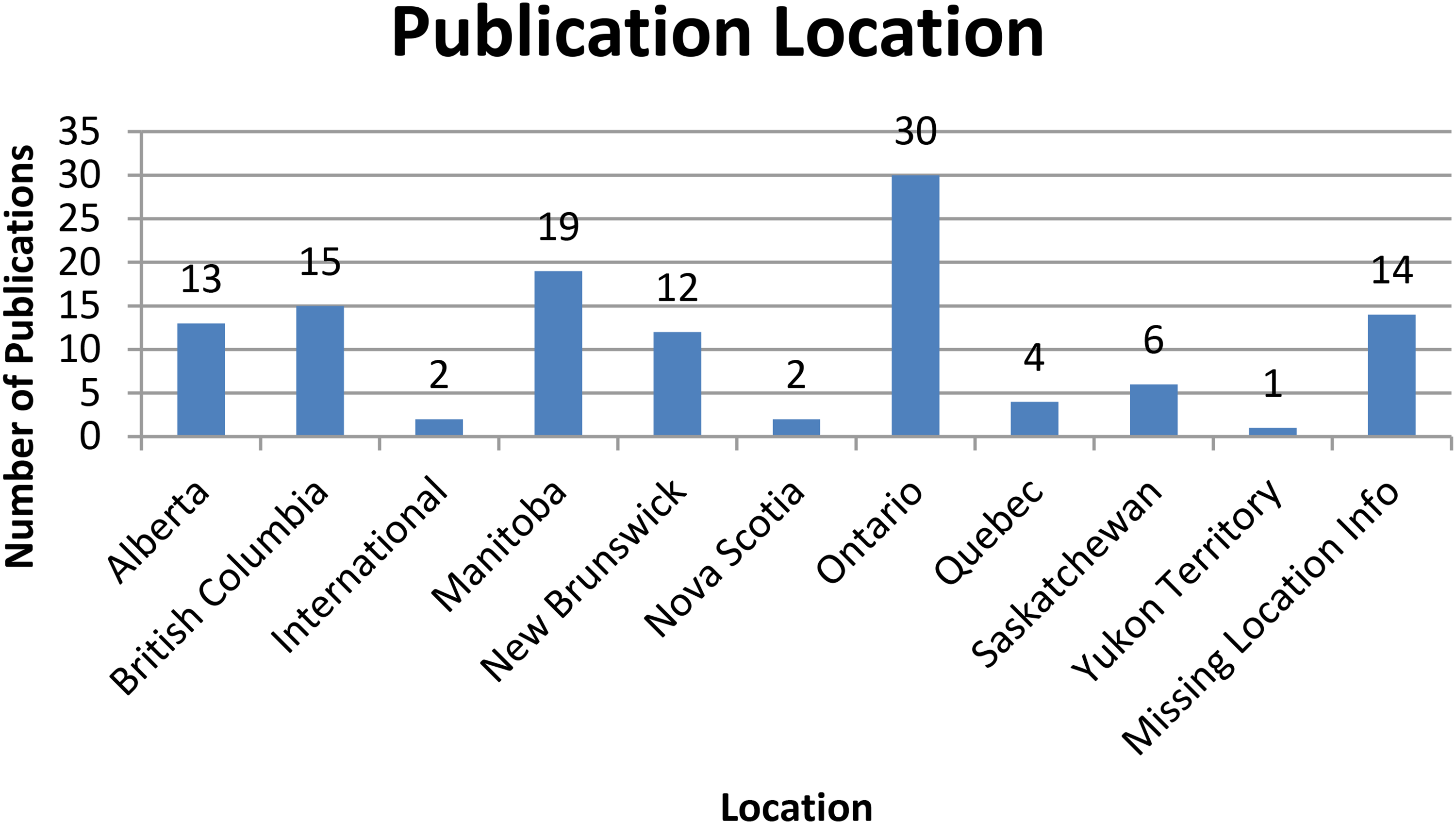
Publication location of newspapers published on police violence against Indigenous peoples across locations.
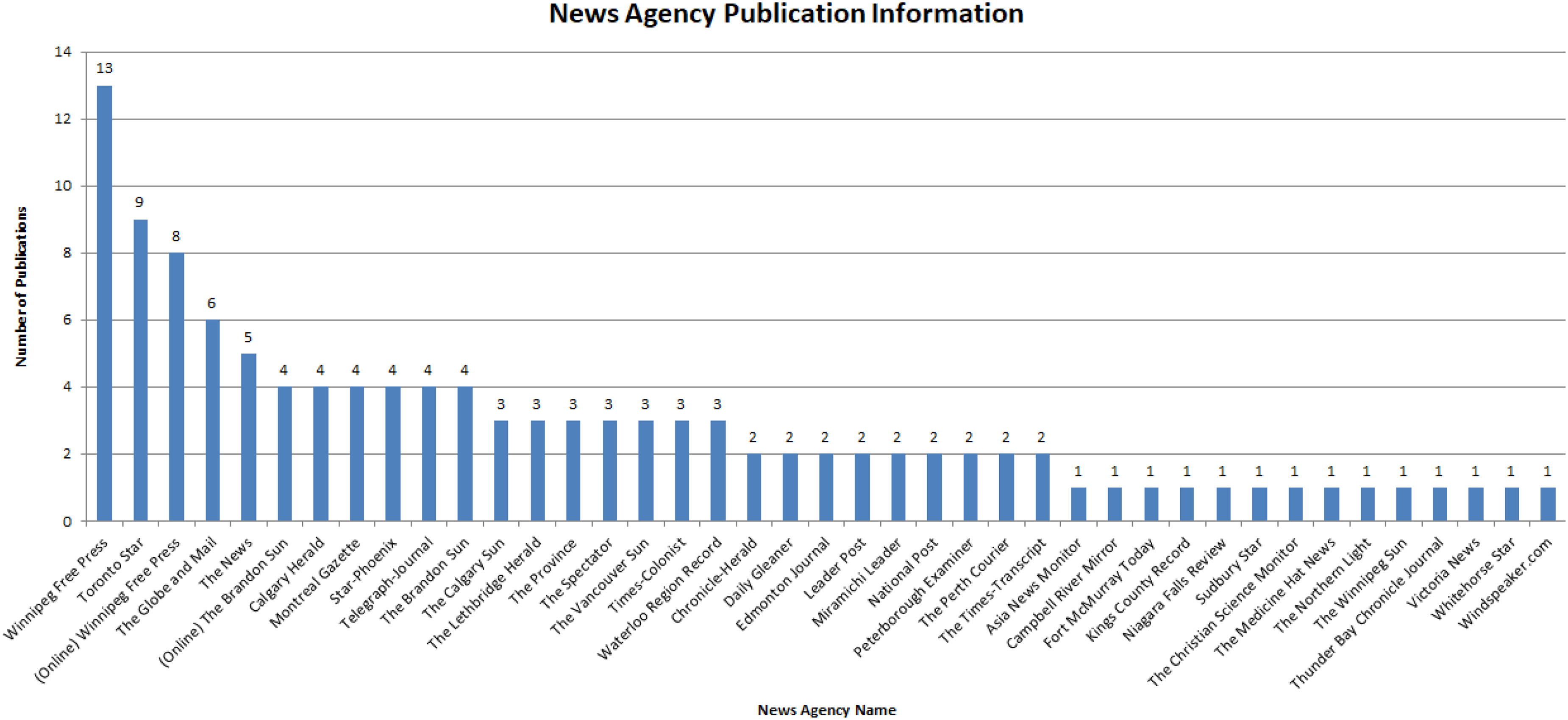
Number of publications on police violence against Indigenous peoples across news agencies.
In 75 news articles, 21 Indigenous peoples were named and identified as victims of police-perpetrated violence. These articles spanned the accounts depicted in Table 1.
Twenty-one Indigenous peoples named and identified as victims of police-perpetrated violence of the 75 news articles.
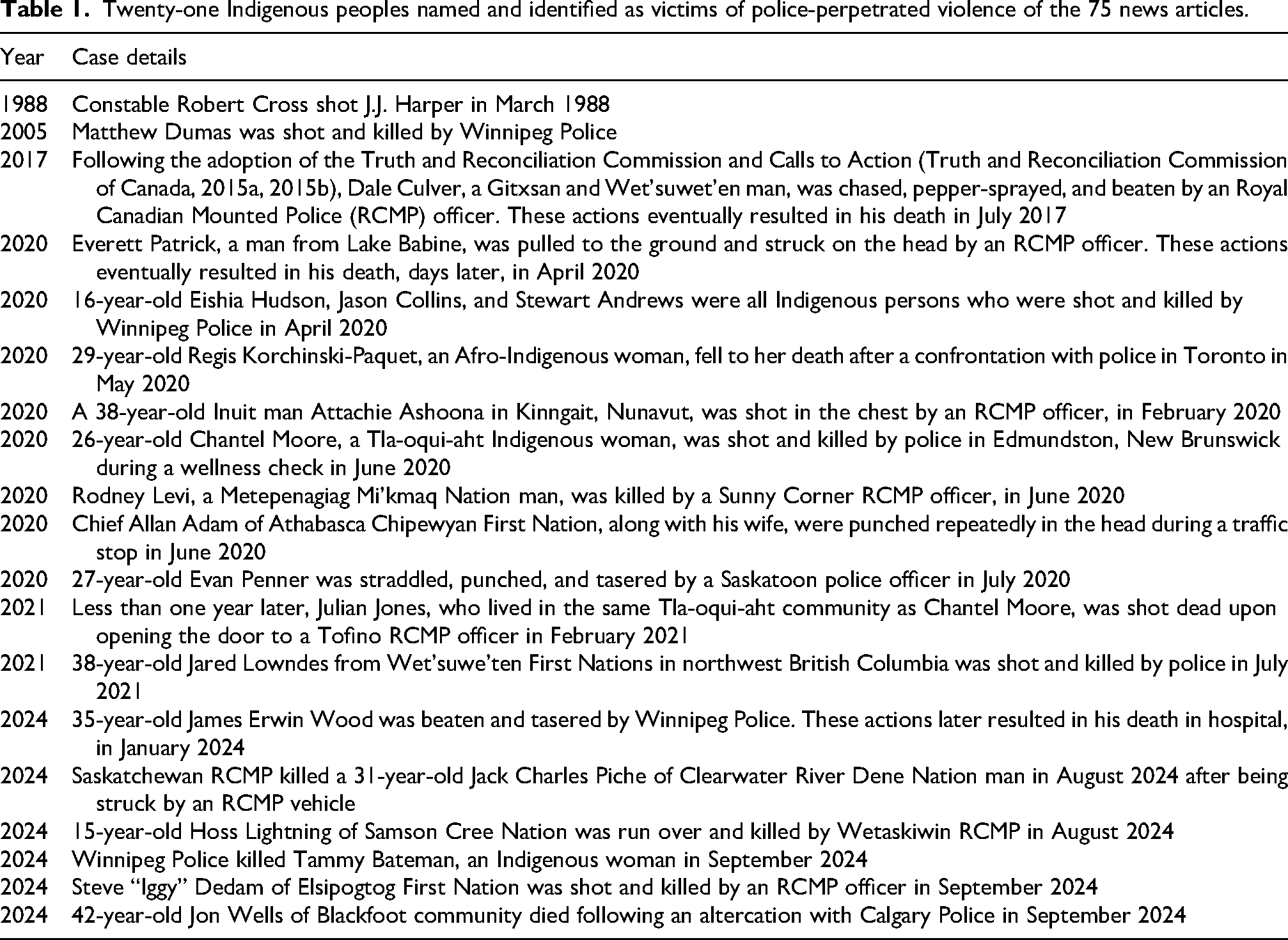
News coverage was not distributed evenly, with most Indigenous peoples named in only one news article. In addition to coverage of individual Indigenous peoples who were killed at the hands of the police, some news articles broadly referenced police violence against Indigenous peoples, missing and murdered Indigenous women and girls, and starlight tours. In a few of the published news articles, the police perpetrator and victim were not specifically named, because the charges of violence were dropped or there was incomplete information included in the news coverage because it was an active investigation (Odette, 2024).
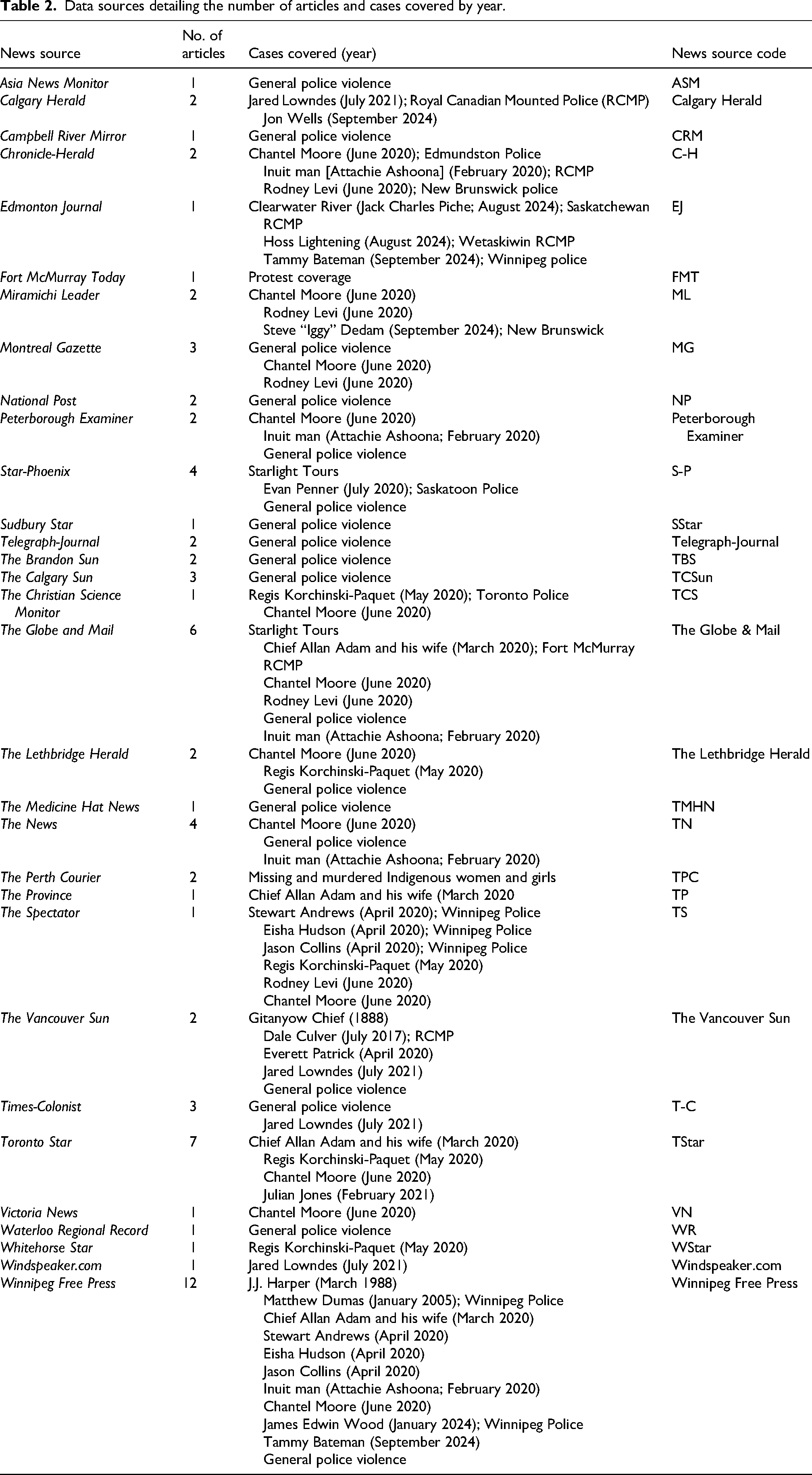
The data sources in Table 2 detail the number of articles and the cases covered by year.
Data sources detailing the number of articles and cases covered by year.
Approach to analysis
Thematic content analysis, a reliable method for identifying thematic patterns in qualitative research, was used to assess how police perpetration of violence against Indigenous peoples is portrayed in the mainstream media (Braun and Clarke, 2012). This approach involved identifying, analyzing, organizing, describing, and interpreting key themes within the dataset (Green and Thorogood, 2018; Nowell et al., 2017). Thematic content analysis is beneficial when exploring diverse perspectives, comparing insights, and summarizing key findings in the data, and was used here to examine the content of the quotes included across the sample of newspaper articles (Green and Thorogood, 2018; Nowell et al., 2017). These were quotes from individuals invited to comment on, or be interviewed in relation to, police-perpetrated violence against Indigenous peoples. Open coding was initially used to review each newspaper article and identify any major themes “in situ” to capture qualitative richness and understand underlying narratives (Braun and Clarke, 2012; Given, 2018; Green and Thorogood, 2018; Nowell et al., 2017). Thematic analysis supports both inductive (data-driven) and deductive (theory-driven) approaches, enabling the identification of patterns and themes at multiple levels, and enhances rigor when extracting evidence and determining the relationship between themes (Alhojailan and Ibrahim, 2012; Whitehead, 2023). Analysis can occur at the semantic level, where meaning is derived directly from the direct quotes captured in the newspaper reporting, and at the latent level, where deeper conceptual patterns and themes are interpreted through the context of colonialism and epistemic authority to consider their meaning and application when addressing the research questions (Green and Thorogood, 2018; Nowell et al., 2017; Whitehead, 2023).
The quotations used in the analysis were extracted from newspaper articles that have been published online and are accessible via a general web inquiry. Ethical practice here aligns with the ethical citation practices in journalism, which require ongoing responsibility and consideration of obtaining informed consent by the interviewee, maintaining privacy, upholding accuracy in reporting, and managing potential harm while balancing public interest (Allmark et al., 2009). Ethical quoting requires journalists to stay true to the original meaning of the quotations provided and to not incorporate any bias when fitting the perspective of the interviewee into a pre-determined narrative (Killenberg and Anderson, 1993; Palmer, 2017). In Canada, research involving humans in any capacity is governed under the Tri-Council Policy Statement: Ethical Conduct for Research Involving Humans (TCPS 2, 2022). This policy lays out guidance for researchers and research ethics granting bodies as to ethical parameters of human research. The TCPS also notes that research ethics approval is “not required where research uses exclusively information in the public domain that may contain identifiable information, and for which there is no reasonable expectation of privacy” (TCPS 2, 2022: 17). Publicly disseminated information such as press/news accounts, and the data used for this research, falls into this category.
As researchers, we gave thoughtful consideration into how to display our research findings. Given that names are identified in the media sources we used as data, we elected to use people's names. This is not only an ethical choice; we maintain that it is the ethical and political choice. Not only are racialized and minoritized persons often excluded from public imagery and news reporting on missing persons, a reality referred to as “missing white woman syndrome” (Slakoff and Fradella, 2019), but also the #SayHerName campaign has drawn attention to the tacit invisibility stories of Black women and girls who have been killed by police, and other state-sanctioned violence (Crenshaw, 2023). This is to say that the state and the media have previously enjoyed feigned legitimacy through the erasure, invisibility, and silencing of the harms perpetrated by the state. The practice of naming individuals who have died in police interactions is often viewed as an essential step in countering their dehumanization, ensuring that they are remembered as more than statistics or reductive narratives shaped by potentially biased official accounts (Whitehead, 2023). Naming the deceased draws attention to the human impact of police-perpetrated violence and compels society to confront the circumstances surrounding these deaths, reinforcing the urgency of addressing systemic issues (Whitehead, 2023). Although naming can promote accountability and recognition, it must be balanced with sensitivity to the wishes of surviving loved ones, the potential perpetuation of stigmatizing or inaccurate narratives, and privacy concerns (Whitehead, 2023). This research aims to center Indigenous voices and document the lived experiences of police violence perpetrated against Indigenous peoples. Therefore, it is important to give identity and humanity to the voices included in the analysis because the experiences collected are not reflective of a homogenous Indigenous population but provide a notable critique of policing by those deemed to be a “knowledge keeper” (Coburn, 2015).
Results
Five major themes emerged from the data: Indigenous voices; police response; accountability; policing as a colonial structure; and time for action.
Indigenous voices
The solidarity of Indigenous voices highlights distrust of the police and brings up emotions ranging from being unsafe to being angry (Odette, 2024; Simpson, 2020). For example, Sara F., an Indigenous woman from Saskatoon who was interviewed for a Human Rights Watch report, claims that “they [the police] could make me disappear if they wanted to” (Asia News Monitor, 2017: para. 5). This is a reality facing Indigenous peoples in Canada, who do not feel protected by the police and instead are fearful, because of the potential for violence and dangerous interactions (Braid, 2024; Gunn, 2020). This is echoed by Husoni Raymond of Black Lives Matter, in Fredericton: Police are meant to serve and protect citizens and that's the narrative that has been pushed forward, but we have to realize that police have never meant safety for some people … in poverty, homeless people, people with substance abuse issues, people with mental health issues. (Sturgeon, 2020: para. 3–4 [Telegraph-Journal])
Grace, whose granddaughter Chantel was killed by police during a wellness check interaction, stated that “people are traumatized by this. I am numb and in shock” as she struggles to understand why this keeps happening (Morin, 2021: para. 5). Some journalists observe that, despite ongoing deaths of Indigenous peoples, calls to actions, and numerous inquiries, there is yet to be any meaningful change (Jefferys, 2020; May, 2021; Pindera, 2024).
Police response
Police responses and statements from police services in response to violence perpetrated by police against Black and Indigenous peoples have varied. For example, the Toronto Police Service released a statement saying, “As a service, we have been listening, learning and changing over the past year and it is our desire to be more responsive to the communities we serve” (Gillis and Ngato, 2021: para. 14). This highlights the need to embody the principles of community policing, which includes building relationships between the police and the community, encouraging community participation, and emphasizing a collaborative approach to implementing services and resources to positively impact the community (Giwa, 2018; Perkel, 2020). Similar sentiments were expressed by Kim Beaudin, national vice-chair of the Congress of Aboriginal Peoples, and RCMP Commissioner Brenda Lucki who advocated for accountability and transparency across police services to improve community trust (Peterborough Examiner, 2023; Sender2, 2018).
By contrast, a report from the Fredericton Police Service defended their position to acquire armored vehicles (AV), stating that: … some would certainly see this acquisition like (the further militarization of the police force), but for us, it's another tool in the toolbox that helps us do our jobs to the best of our ability, and to protect public and police. (Simpson, 2020: para. 17 [Telegraph-Journal]).
Accountability
Indigenous spokespeople and academics have been critical of police responses, given the ongoing lack of accountability across policing and resistance to change police policy. To address police transparency and accountability, it was recommended that a collection of race-based data be implemented as a way to identify systemic issues and patterns of discrimination (Tait, 2020). However, there has been resistance to collecting this information because of not wanting to make assumptions, privacy concerns, and general accuracy with reporting (Tait, 2020). Despite this, Naomi Sayers, an Indigenous lawyer, has emphasized that by not collecting race-based data, “they [adjunct police service agencies] are actively involved in the erasure of those interactions” with Indigenous peoples, which detracts from accountable and transparent interactions (Tait, 2020: para. 14 [The Globe & Mail]).
Mi’kmaq lawyer, Pam Palmater stated that the “evidence of the widespread nature of police violence against women in general is staggering … We have rampant and systemic problems within Canada's law enforcement that operates with drastically insufficient oversight and accountability” (Sinclair, 2018: para. 20 [Winnipeg Free Press]). This is echoed by University of Manitoba history professor Jarvis Brownlie and University of Alberta criminology professor Temitope Oriola, who noted that there are few mechanisms that hold police accountable for their actions, and both professors noted that these existing mechanisms may be largely performative or tokenistic (Chilibeck, 2024; Freeze, 2023; Pindera, 2024; Rutgers, 2020).
Recommendations on how to address systemic racism have circulated for decades, in addition to legislation around inquests and police oversight bodies. Calling for a public inquiry into the RCMP's role in the death of Indigenous peoples, Joel Starlund, Sk’a’nism Tsa ‘Win’Giit executive director of the Gitanyow Hereditary Chiefs said, “small incremental changes are not enough. When officers are recommended for charges, they must go to court and face the consequences of their actions” (Romer, 2024: para. 4 [The Vancouver Sun]). Even the use of police body cameras has been criticized as not going far enough to address the causes of police violence. Sandy Hudson, the co-founder of Black Lives Matter Toronto and the Black Liberation Collective-Canada stated “I don’t want to see more of us dying … I want the police to stop killing us” (Narwal, 2020: para. 5 [Winnipeg Free Press]).
For too long, it is claimed, police services have able to hide behind unjust policies, procedures, and laws aimed to protect the police from the consequences of the crimes they commit (Odette, 2024). Public trust in police is closely tied to perceptions of police legitimacy, with greater trust leading to increased confidence in police capabilities. We would argue that historically, and through ongoing symbols of colonialism (Flores and Román Alfaro, 2023), the complex relations between police and Indigenous peoples have not been adequately addressed. This contributes to poor public trust, leading to lower crime reporting, less cooperation, and a general mistrust of law enforcement (Alberton et al., 2020; Cao, 2014; Giwa, 2018; Goldfinger, 2021; Landau, 2006; Smith, 2020a; TRC, 2015a; Tulloch, 2019).
Policing as a colonial structure
University of Manitoba history professor Jarvis Brownlie argued that, “Until institutions are changed, we’re going to continue to see racialized lives missing and murdered. And it's more than just training or converting few bad apples” (Rutgers, 2020: para. 96 [Winnipeg Free Press]). This suggests that, fundamentally, policing is a part of a colonial system and police officers are actively used to colonize (Alberton et al., 2020; Monaghan, 2013). The role of colonialism in Canada was to eradicate Indigenous culture and force assimilation through dispossession, dependency, oppression, relocation, criminalization, restricting, surveillance, and othering (Joseph, 2018; Rudin, 2005; Rutgers, 2020). Because of a legacy of mistrust of the police, there is a continuation of abuse of authority, police violence, and racism indicating broader systemic failures (Palmater, 2016; Rutgers, 2020; Wright, 2020).
Calgary Police Chief Mark Neufeld and the Gitanyow Hereditary Chiefs concurred that the violence perpetrated by police against Indigenous peoples is not the result of individual “bad apples”, but instead a “bad barrel” tainting the apples, because this violence is deeply ingrained into the fabric of these institutions (Romer, 2024; Woolrich, 2020). Toronto Mayor John Tory asserted that policing can no longer be done in the shadows: “…now, finally the world spotlight is on policing…and people do not like what they see. They expect more from those sworn to serve and protect” (Gray, 2020: para. 11–12 [The Globe & Mail]).
Through increasing news coverage of violence perpetrated against Indigenous peoples, the public is able to see the systemic problems that supersede individual police officers (Shaw, 2020). Canadian author and activist Desmond Cole offered this analogy, It has to come by getting to the root of the issues. If someone is beating you up with a stick, you don’t say “let me give you training on how to use that stick differently”. You don’t say “let me put a camera on you so I can watch how you beat people with that stick”. You take the stick away. (Kalinowski, 2020: para. 10 [The Lethbridge Herald])
Time for action
Given the ongoing violence perpetrated by police against Indigenous peoples, the countless calls for action for police reform and public inquests, numerous inquiries, research studies, and subcommittee recommendations, Indigenous leaders are ready for tangible changes (Shaw, 2020). As argued by Stewart Phillip, Grand Chief of the Union of B.C Indian Chiefs, “there has been countless inquiries, studies, committees, and yet our people continue to die at the hands of law enforcement across this country” (Shaw, 2020: para. 17 [The Province]). Ghislain Picard, Chief of the Assembly of First Nations of Quebec-Labrador asserted “let's have some action and we can talk forgiveness later”, a sentiment echoed by Chief Bellegarde (Mercer et al., 2020; Perreaux, 2019: para. 14 [The Globe & Mail]; Smith, 2020b).
However, calls for action are not solely voiced by Indigenous leaders. Micheal Boudreau, a professor of criminology at St Thomas University observed, “it's always been a time for action, but since it's become such an issue, now is the time…I hope something will be done, but I’m not really hopeful either. It's going to take a serious, serious commitment” (Awde, 2020: para. 46–47 [Miramichi Leader]). Teresa Woo-Paw, a Canadian politician and former Member of the Legislative Assembly of Alberta agreed that “the community is telling me, ‘no more consultation’. This is time for action and for sustained action” (Smith, 2020b: para. 20 [The Calgary Sun]). Overall, these commentators voiced frustration related to a lack of action; lack of accountability for police agencies; a lack of consequences; and a lack of meaningful change through reconciliation.
Discussion
Epistemic authority
We started this research interested in finding out how mainstream media portrayed police violence perpetrated against Indigenous peoples. More keenly, however, we wondered whether mainstream media was even reporting on police-perpetrated violence against Indigenous peoples. We found there tended to be minimal coverage of police-perpetrated violence against Indigenous peoples, as evidenced by brief coverage of individual cases and some missing information on victim names and case information. Among the 75 news articles selected for the analysis, 21 Indigenous peoples are explicitly named as victims of police-perpetrated violence. In most instances, each person was mentioned only once in this news coverage. Indeed, it was only in high-profile cases when the Indigenous person was covered in multiple news articles or when highlighting larger patterns of police-perpetrated violence against Indigenous peoples, that people were named. Most concerning, some information—such as victim names and case details—had to be confirmed by us as authors, using additional newspaper articles from smaller or independent news sources such as Indigenous news organizations that were not captured in the sample. It is unclear whether this was an intentional choice by the news agency, to preserve the privacy of the Indigenous person, or further evidence of invisibilizing Indigenous peoples killed by the police.
It is important to identify whose voices were centered in these news articles because speakers were selected, presumably, as credible narrators. The concept of epistemic power or epistemic authority is instructive in understanding where media narratives align with police narratives, even in cases where it is the police who are the ones who have committed the violence. At its base, epistemic authority speaks to who has been recognized as “expert”, “knower” or “authority” on any given matter. The process of knowledge production is influenced by prevailing systems of thought that define what constitutes valid knowledge; who is considered a credible source; and which methods are viewed as reliable for generating what comes to be known as knowledge (Camic et al., 2011).
As presumed experts on public safety, law, order, and criminal behavior, police are posted as authoritative “knowers” about crime—what it is, when it has occurred, and who are the victims and the perpetrators. Their accounts of incidents tend to be the credible version. This authority is rooted in historical and systemic hierarchies that legitimize police accounts and delegitimize counter-narratives, particularly those from marginalized communities. Police also have privileged access to the media. News media, which rely on official statements, press releases, and police sources for timely and “authoritative” information, may inadvertently amplify police credibility by presenting their perspectives as neutral or factual. To ensure their legitimacy and credibility, police rely not only upon coercive power (the ability to use force, or threat of force) and symbolic power (the symbolism of protection, order, safety, and “good”), but also their epistemic power (Boutros, 2024). As Boutros (2024: 497) outlines; “the epistemic power of the police operates both through constructing knowledge that portrays the police in a positive light (as necessary to, and effective at, securing public safety) and through manufacturing ignorance around their oppressive practices….”.
Epistemic authority, then, enables us to understand why credibility lies with the police and not with certain, often marginalized, individuals whose voices are then left out of media reports. If police are the authoritative holders of knowledge about crime, then any other account to the contrary is simply not credible. In addition, if police do not acknowledge something as crime, news media agencies will not have anything tangible to report. This dynamic not only perpetuates the epistemic exclusion of victims and communities affected by police violence, but also solidifies societal trust in law enforcement, even in the face of evidence to the contrary.
For individuals with intersecting vulnerabilities and who come into contact with the police, encounters can be violent and often do not result in proportional consequences for the police perpetrator. Following an incident in Nunavut, in which an RCMP officer was caught on video battering a 22-year-old Inuk man with the door of a moving vehicle, Public Safety Canada (2020) issued a proposed response, noting that the “RCMP continues to look for opportunities to build trust in communities by increasing training and cultural awareness”. However, what can this mean, and most importantly, what does this look like, when we consider that policing is a colonial institution in Canada with a long history of oppression and the upholding of discriminatory policies? Not only has violence against Indigenous persons perpetrated by police been researched and documented during acts of protest (Smith, 2020a), but also during “routine” policing of Indigenous peoples and communities, through a practice known as “starlight tours” (Reber and Renaud, 2010). Although sexual violence is endemic to colonial violence (McKinley and Knipp, 2022), sexual violence perpetrated against Indigenous women and girls in Canada persists. In 2022, it was announced that an Ontario Provinical Police officer in Kenora, Ontario faced charges of “obtaining sexual services for consideration and breach of trust” (Miner and News, 2022), related to the expose on sex trafficking in Kenora. In her story, Ruth Machimity, an already exploited and vulnerable Indigenous woman, noted that many of the people who paid for her sexual services—and who continued to draw her back into survival sex, when she desperately wanted to escape—were police officers. Despite the Truth and Reconciliation Commission (TRC, 2015a) and the subsequent Calls to Action (TRC, 2015b) advocating for a framework that strives toward reconciliation through the dismantling of colonial systems, it is evident through “ongoing symbols of colonialism” that police training has not adequately addressed the complex relations between police and Indigenous peoples in Canada. Instead, many documented accounts reported by mainstream media capture organizational violence against Indigenous peoples perpetrated by the police.
Mainstream media reporting in Canada and other settler-colonial contexts frequently erases or distorts the experiences of Indigenous and racialized people, especially in instances of state and police violence. This erasure operates through selective reporting, racialized framing, and an overreliance on official police narratives, which collectively contribute to the invisibilization and dehumanization of victims. As Maynard (2017) argues, Black and Indigenous communities are often framed in the media through criminalizing discourses that justify over-policing and render state violence against them as acceptable or necessary. Similarly, Gilchrist (2010) demonstrates that media coverage of missing and murdered Indigenous women is characterized by silence, stereotyping, and victim-blaming, which obscures the structural nature of gendered colonial violence. Moreover, Jiwani and Young (2006) highlight how media narratives systematically privilege white femininity while marginalizing racialized women, portraying them as either disposable or complicit in their own victimization. This differential treatment in the media not only reinforces dominant power structures, but also shapes public perceptions and policy responses, often minimizing accountability for police violence and undermining demands for justice. These dynamics underscore the need for critical media literacy and Indigenous- and community-led journalism to counteract the erasures embedded in mainstream reporting.
Limitations
Despite Canadian Newsstream Collection being an invaluable tool for this analysis, there are limitations with this database. It does not include smaller, independent news agencies—including Indigenous news agencies—which may have provided more consistent and more in-depth coverage. In addition, the keywords that were used may not have fully captured the reports on missing Indigenous women and girls who may have come into contact with police before their disappearance. Because their stories are not yet known, the search was not able to capture missing Indigenous persons who could also be victims of police violence. Owing to ongoing systemic racism, Indigenous people may not come forward to report the violence they experience as they know that, in most cases, the charges are dropped, and the police perpetrator does not face any consequences. Finally, because of a lack of race-based data collected by the police, there may be more instances of violence against Indigenous people, but race may be misattributed or omitted, also preventing the full extent of violence being captured.
There could also be limitations with the journalism, because media outlets exhibit political and editorial bias, reflected in the selection, coverage, and framing of quotes (Lazaridou et al., 2017). In addition, because of broader restrictions imposed by news agencies, which could dictate the length or word limits of news articles and the parameters of reporting, it is notable that quotations tend to be minimal, brief, and recycled on different news platforms.
Conclusion
This research examines how the voices cited in mainstream Canadian media explain the violence perpetrated against Indigenous peoples and its effects. Despite implementation of the TRC and the Calls to Action, violence perpetrated by the police often goes unpunished, especially since police practices are rooted in colonialism. By examining Canadian news articles spanning from 2015 to the present, we found that documented police violence against Indigenous peoples surged between April and December 2020, particularly in June 2020, coinciding with the death of George Floyd. Articles were primarily published in Ontario and Manitoba, with news agencies primarily located in Toronto and Winnipeg. Using thematic content analysis to center Indigenous voices, the major themes identified in the analysis include a distrust of police; an inability of police agencies to take accountability or enact tangible change; an acknowledgment that policing is entrenched in colonial systems that perpetuates systemic inequality; and a call from Indigenous leaders, academics, and political leaders for meaningful reforms with immediate action over symbolic gestures.
As gatekeepers to the criminal justice system, police officers require ongoing training to stay current on laws, procedures, equipment, and the needs of diverse communities. Their interactions with the public demand a range of skills and discretion. Our analysis suggests that training should be structured to build public trust and improve relationships by addressing community needs. It should involve racialized individuals in training design, and in continuously evaluating training outcomes. To address systemic racism, such interventions must acknowledge its existence within policing and emphasize the urgent need to repair relationships with marginalized groups, particularly Indigenous communities.
Finally, to challenge colonial epistemes embedded in both policing practice and public understanding, we need to actively decenter and dislodge police epistemic authority within mainstream media reporting. This can be achieved by routinely soliciting commentary from diverse Indigenous experts, elders, and community leaders. We would also encourage journalists to put a name to Indigenous victims of police violence, and to convey a sense of their life, as well as—in some circumstances—their death.
Footnotes
Acknowledgements
Neither researcher identifies as Indigenous. Both identify as resettler-allies and resettler-researchers who work and study within the colonial system of academia. We thank Natasha Mulvihill for comments on earlier versions of this article.

Ethical considerations
There are no human participants in this article and informed consent is not required.
Funding
The authors received no financial support for the research, authorship, and/or publication of this article.
Declaration of conflicting interests
The authors declared no potential conflicts of interest with respect to the research, authorship, and/or publication of this article.