




Abstract
Police-perpetrated domestic violence (PPDV) has increasingly come to light over the past 30 years as a form of police misconduct. Given the importance of public attitudes for domestic violence prevention and for police–citizen relations, this study examined public perceptions of PPDV. Specifically, this research investigated whether a perpetrator's occupation as a police officer affects public views of domestic violence, to test whether police officers are held to a higher standard of conduct than people who are not police officers. The effect of perpetrator occupation on public perceptions of domestic violence was explored using survey data from a sample of 172 Australian respondents using a vignette design. Participants were randomly allocated to receive one of two vignettes depicting the same domestic violence scenario perpetrated by either a police officer (n = 91) or a person who is not a police officer (n = 81). Multivariate regressions revealed that, after controlling for relevant attitudinal factors and demographics, participants believed the police perpetrator should receive a longer custodial sentence, and was more deserving of dismissal from his occupation, compared with the non-police perpetrator. Though exploratory, the results of this study may inform criminal justice sentencing guidelines and institutional responses (such as occupational dismissal) to PPDV.
Keywords
Introduction
Police-perpetrated domestic violence (PPDV) is a form of police misconduct that has increasingly come to light over the past 30 years (Johnson et al., 2005; Mennicke and Ropes, 2016). Research in the US suggests domestic violence (DV) may be two to four times more prevalent in police families than in the general public (Mennicke and Ropes, 2016; Russell and Pappas, 2018). In Australia, the Independent Commission of Inquiry into Queensland Police Service Responses to Domestic and Family Violence (2022) criticised not only the action and inaction of police in dealing with DV, but also highlighted cases of PPDV called out by the public and police employees themselves. A coalition of news reporters in the US reported problems with the handling of PPDV cases and suggested a culture of tolerance to PPDV in Los Angeles (Lewis and Debolt, 2019). Similarly, in the UK, a super-complaint filed against the UK Metropolitan Police by the Centre for Women's Justice (CWJ) alleged that police agencies across the nation were failing to respond appropriately to cases of PPDV, with improper decisions on criminal charges, and an incorrect approach to misconduct investigations and disciplinary decisions (CWJ, 2020). Following the super-complaint, the CWJ identified that police continue to dismiss reports of PPDV, often characterising them as merely ‘unpleasant’ personal conduct and irrelevant to an officer's professional responsibilities (CWJ, 2024). Perhaps most concerningly, the CWJ (2024) reported that, despite allegations of PPDV, some officers were promoted to senior roles with responsibility for guiding the organisational response to violence against women. The juxtaposition that police officers who perpetrate DV are still tasked with responding to DV incidents and, in some cases, overseeing the organisational approach to such cases is problematic and unsettling, especially considering the vulnerability of DV victims.
Given the role of police in responding to DV, the occurrence of DV perpetrated by police is a significantly concerning and complex issue that requires the attention of researchers. However, currently, there is very little research on PPDV outside the US (Gerelt-Od, 2023) and no research on public attitudes to DV perpetrated by police officers. This is despite, first, the importance of public attitudes for DV prevention (Loney-Howes et al., 2021) and police–citizen relationships (Socia et al., 2021), and second, the notion of public opinion as the arbiter of sentencing and correctional policies (Cullen et al., 2000). Further, it is apparent that police organisations are not responding adequately to reports of PPDV (CWJ, 2024). Yet, there is a lack of research informing what appropriate sanctions for PPDV should be. The current study starts to point to what appropriate criminal and disciplinary decisions might look like by providing insight into public expectations. This study sheds light on public attitudes to PPDV compared with DV perpetrated by non-police using a vignette survey approach, and whether members of the Australian public hold police to a higher standard. Specifically, the study explores whether the occupation of a DV perpetrator as a police officer impacts public judgements of the penalties and consequences for perpetrating DV. Although it might be assumed that the public would hold police who perpetrate DV to higher standards than non-police, research on other forms of misconduct reveals this is not always the case (Goldrosen, 2025). Understanding public attitudes to PPDV adds to the scarce literature on PPDV, particularly in Australia, and serves as a step towards prevention.
Police-perpetrated domestic violence
DV can be described as a ‘constellation of abuse’ including violent and controlling or intimidating behaviour from one person to another in their domestic circle, most frequently someone with whom they previously or currently cohabitate (Dobash et al., 2007). The abuse is typically an ongoing pattern that subjects the victim to living in fear and can take the form of physical, sexual, psychological, financial, spiritual and/or emotional harm and manipulation (Hodgkinson and Harris, 2021). A DV perpetrator's behaviour intends to ‘terrorize, dominate and entrap, their victim, and emphasises a power imbalance in the relationship (Hodgkinson and Harris, 2021).
Although the behaviour that constitutes PPDV has parallels to DV in the general community, the harm for victims is exacerbated when a police officer is the perpetrator. The power imbalance between a DV abuser and victim is even more potent with a police perpetrator. Police perpetrators are weaponised with knowledge of the law, access to confidential information and technology, and can use their police status as a shield against the victim's word (MacQuarrie et al., 2020). Some have referred to PPDV as a ‘fox in the henhouse’ problem, because the abuser's occupation is to enforce DV statutes and protect the victims of the crime they themselves commit (Ammons, 2005).
PPDV is an issue that taints the Australian and international community (Brennan et al., 2023; Cheema, 2016). In the US, various estimates of the extent of PPDV demonstrate the crime may be more common than non-police-perpetrated DV. Looking at all relevant research prior to 2015, Mennicke and Ropes (2016) estimated the rates of self-reported perpetration of PPDV range between 4.8% (Klein and Klein, 2000) and 40% (Johnson, 1991; Neidig et al., 1992). Combining the findings, Mennicke and Ropes (2016) approximated an average rate of 21.2%, asserting it is nearly double the rate of DV in the general community. Notably, this self-reported perpetration data is regarded as a likely underestimation of the true rate of PPDV (Mennicke and Ropes, 2016).
PPDV is likely underreported by victims due to the complex and unique troubles that victims encounter. Victims not only face the same difficulties of reporting that all DV victims endure (for example, fear of repercussion from their abuser), but also the power, status and knowledge that the occupation of a police officer provides (Stinson and Liederbach, 2013). Although some may be reluctant to report because of this, others who do report are faced with not being believed, improperly conducted investigations and the blue code of silence (Cheema, 2016; Mulvihill and Sweeting, 2024). These same factors are also what deter victims from disclosing the abuse in the first place, along with concerns that their abuser would lose their career and, consequently, the family's livelihood (Garvey, 2015). It seems, therefore, that the police occupation may create a unique set of circumstances for victims of PPDV. What is unclear is whether this affects public judgements of perpetrators and the consequences they should face.
Public attitudes towards DV and police misconduct
Public attitudes that condone or misunderstand DV contribute to the shame victims may feel, prevent victims from reporting and essentially ‘give licence to perpetrators to continue their abuse’ (Royal Commission into Family Violence, 2016: 16). Such attitudes produce a culture that excuses, trivialises and condones DV, and may even contribute to increased rates of DV perpetration (Special Taskforce on Domestic and Family Violence in Queensland, 2015). Although, in general, the Australian public tend to view DV as a serious crime (VicHealth, 2014), many still excuse or justify such violence (Australia's National Research Organisation for Women's Safety [ANROWS], 2018). For example, one in five Australians believe DV is a normal reaction to stress (ANROWS, 2018). Research shows that perceptions of DV seriousness can be affected by respondent demographics, such as age and gender (Loney-Howes et al., 2021; Webster et al., 2014), as well as prior victimisation (Debowska et al., 2021; Mugoya et al., 2015). However, to the authors’ knowledge, no studies internationally have examined public attitudes towards DV perpetrated by police officers.
Studies have explored public perceptions of other forms of police misconduct, through surveys using vignettes. Seron et al. (2004) found judgements of seriousness to be influenced by the gender of the respondent, as well as the gender of the ‘victim’ of the misconduct depicted in the vignette. Further, Kuo (2018) showed seriousness judgements of misconduct differed by the occupation of the survey respondent. However, it is unknown whether the occupation of the person depicted in the scenario (the person committing the misconduct) would impact seriousness judgements.
Certainly, the general public do view instances of police misconduct seriously and this has been shown to affect their global views of police. Weitzer (2002) studied the magnitude and longevity of the effects of highly publicised police misconduct incidents on public attitudes in Los Angeles and New York City. He found significant increases in unfavourable attitudes towards the police following the misconduct incidents. Similarly, Jesilow and Meyer (2001) found an increase in complaints and criticism towards police following the Rodney King brutality incident. Studies report social consequences of police misconduct to include poor police–community relations and distrust in police (Davids and McMahon, 2014; Donner et al., 2016). Negative opinions can affect co-operation, willingness to call for help, and consequently, public safety (Socia et al., 2021). However, while these studies recognise the diversity of police misconduct, the effects of police-perpetrated gender-based violence on public opinion have largely been ignored, likely reflecting that this type of misconduct has not been high on the public radar until recently.
It can be argued that the reason police misconduct is so influential on public attitudes towards police is because the public hold police to high standards because of their power, position and role in society. The responsibility to enforce laws and protect citizens from harm is trusted in the police. Consequently, police officers’ credibility lies in their adherence to the laws they enforce (Carter and Stephens, 1994; Mullins, 2015). Police officer behaviour is expected to promote public order and citizen safety, extending to both on and off duty, as per The Law Enforcement Code of Ethics adopted by the International Association of Chiefs of Police (Carter and Stephens, 1994). It is therefore in accordance with the rationale of policing that sworn police officers should be held to a higher standard of conduct and integrity than non-police citizens (Carter and Stephens, 1994). However, there is limited empirical research that tests the assumption that the public hold police officers to a higher standard. Importantly, a recent paper found that various types of misconduct were not perceived as more harmful when perpetrated by police officers compared to paramedics or office workers (Goldrosen, 2025), suggesting that police are not necessarily always held to a higher standard. However, this assumption has yet to be examined for DV. Investigating whether police are held to a higher standard is important for guiding appropriate punishment in cases of PPDV, particularly considering the current discourse around inadequate responses to PPDV (CWJ, 2024).
Current study: public attitudes to PPDV
Understanding public attitudes to PPDV is important given the potentially high prevalence of PPDV, the exacerbated harms that PPDV victims are subject to, and the adverse implications such misconduct has for police–community relations. The aim of this study is to examine whether members of the Australian public perceive DV as more serious when perpetrated by a police officer compared with a non-police perpetrator. This study utilises a survey with vignette design to explore the following research questions:
Methods
Participants
Data were collected using an online vignette survey. The final sample consisted of 172 participants aged between 19 and 80 years (M = 37.2, SD = 15.6), of whom 81.4% were female and 92.4% resided in Australia (Table 1). Participants were recruited using convenience and snowball sampling, in which an initial advertisement was posted on various social media platforms including Facebook, Instagram, Twitter and LinkedIn, as well as to staff and students at the authors’ institution via a newsletter. The advertisement asked for participants to share the survey within their social circles. Participants were required to be over 18 years old.
Descriptive statistics for demographic and victimisation experience variables for the sample (N = 172) and by vignette group.
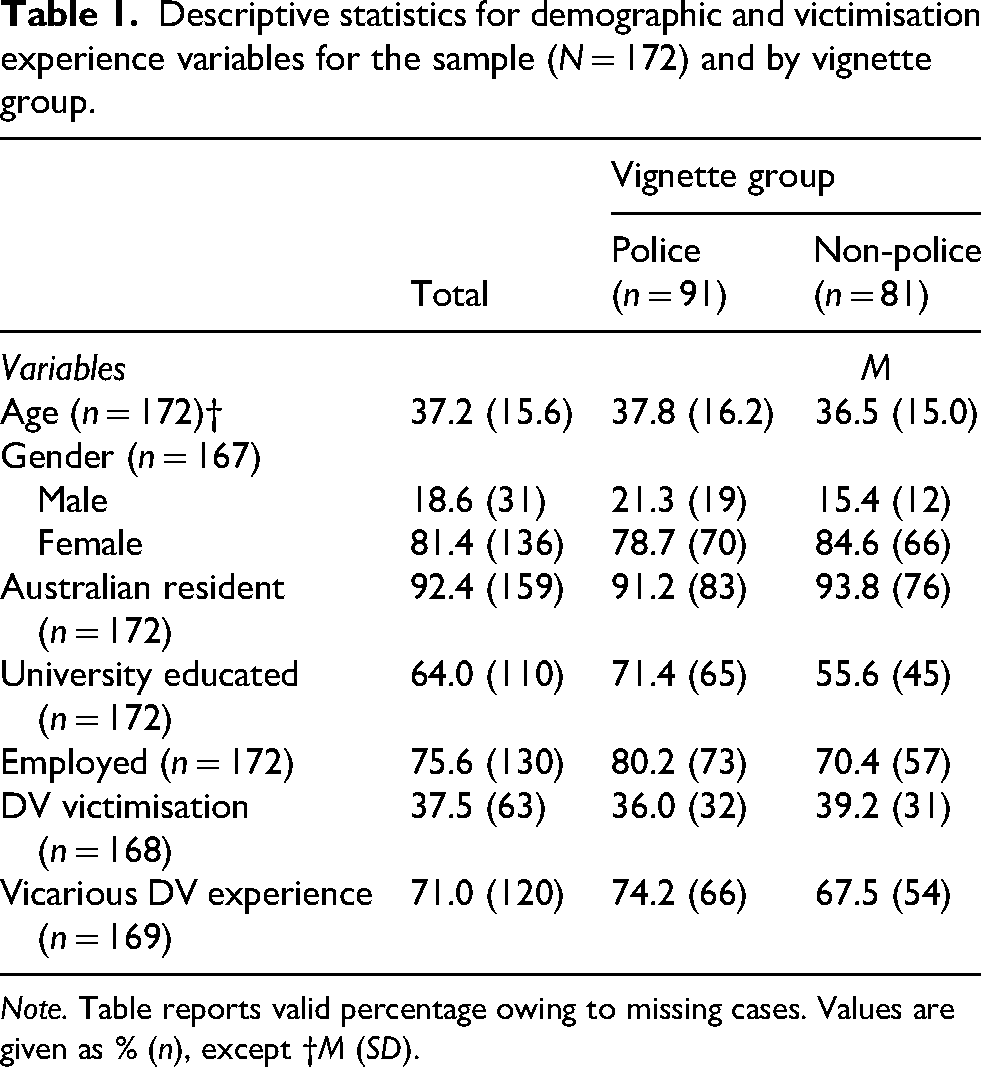
Note. Table reports valid percentage owing to missing cases. Values are given as % (n), except †M (SD).
Research design
The research used an independent groups survey design with a vignette that featured a DV scenario. The independent variable was the occupation of the perpetrator (two groups: police officer and non-police). Participants were randomly assigned to either the police or non-police vignette group by the survey software (Limesurvey). Seriousness of the DV scenario was measured through four dependent variables: perceived severity of the perpetrator's behaviour, type of punishment, sentence length and occupational dismissal. Control variables included: attitudes towards police, women-blaming attitudes, punitive opinion, age, gender, country of residence, highest education level, employment status, DV victimisation and vicarious DV experiences.
Independent variable: police occupation
The independent variable, police occupation, was depicted in the vignette. Two vignettes were designed using insight from court cases (summary judgments available through AustLII) to create a fictitious, but realistic, DV scenario. The vignettes differed only with respect to the perpetrator's occupation: Vignette A stated the perpetrator worked as a police officer, whereas Vignette B referred to the perpetrator as full-time employed (see Appendix). For analysis, police occupation was coded as a dichotomous variable, where 1 = yes and 0 = no.
Dependent variables
Severity
Severity of the perpetrator's behaviour was measured with three items asking the participants’ opinion of the hypothetical vignette scenario. An example item is ‘Greg's behaviour towards Lucy is of a serious nature’ (Item 1). Responses were measured on a 5-point Likert scale ranging from 1 (strongly disagree) to 5 (strongly agree). Responses were summed and averaged to form a scale where a higher score indicates higher perceived severity (α = .76). Scores ranged from 1 to 5 with a positive skew.
Type of punishment (prison)
Type of punishment was measured as a categorical variable with four levels: none, fine, community service and prison. Participants were asked which level of punishment they believe to be most suitable for the perpetrator. Because of low frequencies for responses (<5% in total) of ‘none’ and ‘fine’, type of punishment was dichotomised into a new variable ‘prison’, where 1 = yes and 0 = no.
Sentence length
Participants were asked to imagine that the perpetrator in the vignette scenario was given a prison sentence and to indicate their opinion regarding an appropriate sentence length in years and/or months (converted to months for analysis). The check for normal distribution revealed an extreme outlier. After removing the outlier, sentence length remained positively skewed with a range of 0 to 240 months.
Occupational dismissal
Occupational dismissal was measured by one item: ‘Greg should be fired from his job’ with responses on a 5-point Likert scale from 1 (strongly disagree) to 5 (strongly agree). Because of the skew of the responses, the item responses were dichotomised, where 1 = strongly agree and agree answers (Likert scale responses 4 and 5) and 0 = else (Likert scale responses 1 to 3).
Control variables
Given the convenience sampling, the sample is somewhat skewed on some demographics, such as gender and education. Respondent demographics can influence public attitudes towards DV and police misconduct (Debowska et al., 2021; Kuo, 2018; Loney-Howes et al., 2021; Seron et al., 2004). Therefore, the study included a number of demographic variables to control for any between-group differences in demographics that could affect participants’ perceptions of the vignette. As the independent variable involved police, the vignette depicted DV, and the dependent variables measured severity and punishment, we controlled for attitudes to police, attitudes to DV, and punitive opinion to allow more certainty in concluding that any differences in the dependent variables between groups are due to the independent variable: police occupation (police or non-police) and not due to pre-existing beliefs about police, DV, or punitiveness in general.
Attitudes towards police
General attitudes towards police were measured using the 12-item Perceptions of Police Scale (Nadal and Davidoff, 2015). The scale included statements such as, ‘The police treat everyone fairly’. Responses were measured on a 5-point Likert scale ranging from 1 (strongly disagree) to 5 (strongly agree). Responses were summed and averaged to form a scale where higher scores indicate more positive attitudes to police (α = .95).
Women-blaming attitudes (attitudes to DV)
Participants’ ‘women-blaming attitudes’ were measured using four items from the Attitudes and Beliefs about Domestic Violence scale (Worden and Carlson, 2005). The scale included statements such as, ‘Some women who are abused secretly want to be treated that way’. Participants were asked to what extent they agree with the statements, ranging from 1 (strongly disagree) to 5 (strongly agree). Responses were summed and averaged to form a scale where a higher score indicates higher blame of women for violence against women (α = .68).
Punitive opinion
Participants’ punitive attitudes were measured using Gelb's (2011) seven-item punitiveness scale. An example statement is: ‘The death penalty should be used for murder’. The participants were asked to what extent they agree with the statements from 1 (strongly disagree) to 5 (strongly agree). Responses were summed and averaged to form a scale where a higher score indicates higher punitiveness (α = .92).
Victimisation experiences
Participants were asked whether they are a victim/survivor of DV themselves, and whether they know a victim/survivor of DV. The questions had response options of ‘yes’, ‘no’ or ‘prefer not to say’. For analysis, these were recoded into dichotomous variables ‘DV victimisation’ and ‘vicarious DV experience’, where 1 = yes and 0 = no (‘prefer not to say’ recoded as ‘missing’).
Demographics
Participants were asked their age (in years); gender (response options: ‘male’, ‘female’, ‘non-binary’ or ‘prefer not to say’); country of residence (free-text response); highest education level (response options: ‘secondary school education or lower’, ‘trade, certificate or diploma’, ‘university degree or higher’); and employment status (response options: ‘working’, ‘studying’, ‘retired’, ‘unemployed’ and ‘volunteering’). For analysis, apart from age, all demographic variables were recoded into dichotomous variables (gender 1 = female, 0 = male; Australian resident 1 = yes, 0 = no; university educated 1 = yes, 0 = no; and employed 1 = yes, 0 = no). ‘Prefer not to say’ responses were coded as ‘missing’ as were responses of ‘non-binary’ owing to the low number of responses.
Procedure
The study received ethics approval from the Griffith University Human Research Ethics Committee (Ref#: 2021/782). The survey was active from November 2021 to March 2022. Participants accessed the survey via a link that led to an information sheet telling participants the survey was voluntary, anonymous and they could withdraw at any time. It further outlined the potential risks to participants and support services. The participants were advised that consent to participate was inferred by selecting ‘next’ to proceed with the survey. The participants were informed of the general aim of the research, but not the specific intention to study police DV compared with non-police DV. This partial deception was required so as not to influence participants’ responses. The survey was designed to allow the participants to read and view the vignette for the duration of answering related questions.
Analytical strategy
Responses were exported into IBM SPSS (Version 29). Descriptive and frequency tests were performed on all variables to explore distributions across responses, testing normality and skewness of the data. A series of bivariate analyses were first performed to examine relationships between variables. To test for differences in seriousness perceptions by the independent variable police occupation, a Mann–Whitney U test was conducted on the dependent variables of severity scale (RQ1) and sentence length (RQ2) because these variables violated the assumption of normality. A chi-squared test of independence was conducted on the categorical dependent variables of prison (RQ2) and occupational dismissal (RQ3) by the independent variable police occupation.
Multivariate analyses were conducted to answer the research questions with consideration of the control variables. To test RQ1, a multiple linear regression was conducted for the dependent variable of severity, with the independent variable of police occupation and the control variables. However, test assumptions were violated, even after various transformations (e.g. reflect and logarithm). Subsequently, severity scale was dichotomised into a new variable ‘severity dichotomy’ based on a 25th percentile split, where 1 = mean score of 4.67 to 5 and 0 = mean score of 0 to <4.67. Accordingly, a binary logistic regression was conducted for the dependent variable of severity (1 = yes, 0 = no) on to the independent variable of police occupation and the control variables. For RQ2, a binary logistic regression of the dependent variable of prison (1 = yes, 0 = no) on to police occupation, and a multiple linear regression of the dependent variable of sentence length (in months) on to police occupation were performed, both including control variables. For RQ3, a binary logistic regression of the dependent variable of occupational dismissal (1 = yes, 0 = no) on to police occupation was performed including control variables. For the regressions of prison, sentence length and occupational dismissal, severity scale was included as an additional control variable, to understand the relationship between police occupation and the outcome variable independent of how severe participants viewed the behaviour.
Regression assumptions were checked for each analysis. For the dependent variable of severity, all assumptions for the binary logistic regression were met. For the dependent variable of prison, all assumptions were met after age and severity scale were removed for violating the assumption of linearity of log odds. For the dependent variable of sentence length, the normality of residuals assumption was violated. Accordingly, a logarithm transformation was applied to sentence length. Following this, all the assumptions were met. For the logistic regression with the dependent variable of occupational dismissal all assumptions were met after age was removed for violating the assumption of linearity of log odds.
Results
RQ1: Perceived seriousness of PPDV
Severity scale (bivariate results)
Table 2 presents the results from the bivariate analyses. To explore RQ1, analyses were conducted on the independent variable (police occupation) with the dependent variable of severity. As per Table 2, an independent samples Mann–Whitney U test showed no significant difference in severity scores for the police vignette compared with the non-police vignette (p = .961). Participants perceived the behaviour as very serious regardless of the perpetrator's occupation.
Descriptive and bivariate statistics for dependent and control variables (N = 172).
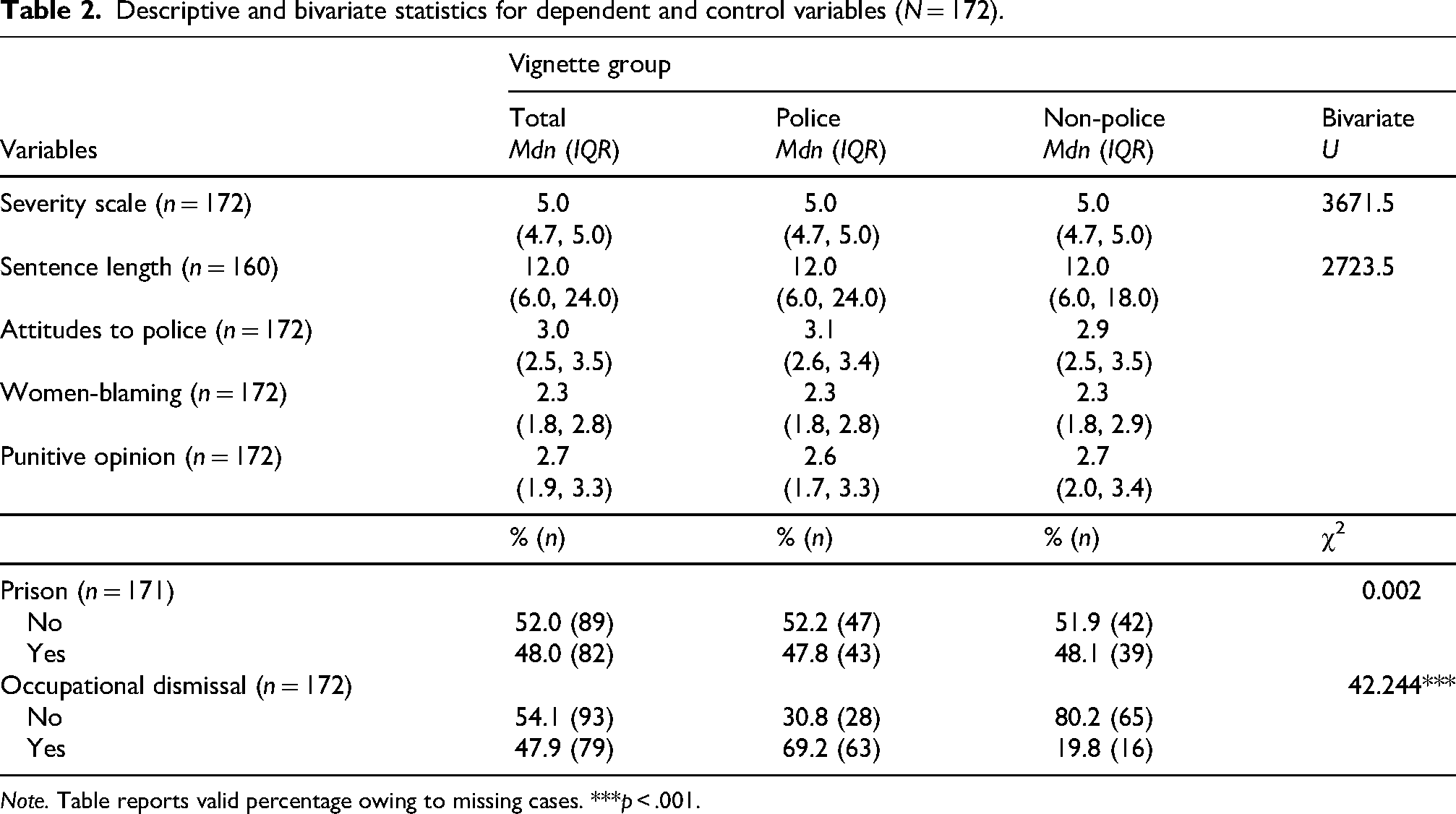
Note. Table reports valid percentage owing to missing cases. ***p < .001.
Dichotomised severity (multivariate results)
To examine the effect of police occupation on severity while controlling for attitudinal and demographic factors, a binary logistic regression was conducted on the dichotomised severity variable (Table 3). The model was statistically significant, χ2 (11, N = 161) = 23.853, p < .05, with an overall percentage correct prediction rate of 83.9%. However, police occupation did not significantly predict perceptions of severity, confirming the bivariate results. Women-blaming attitudes was a significant negative predictor of severity (B = −1.39, p < .001). For each one unit increase on the women-blaming attitudes scale, the odds that respondents would rate the DV scenario as severe are 75% less likely (odds ratio [OR] = 0.25).
Logistic regression of severity dichotomy (N = 161).
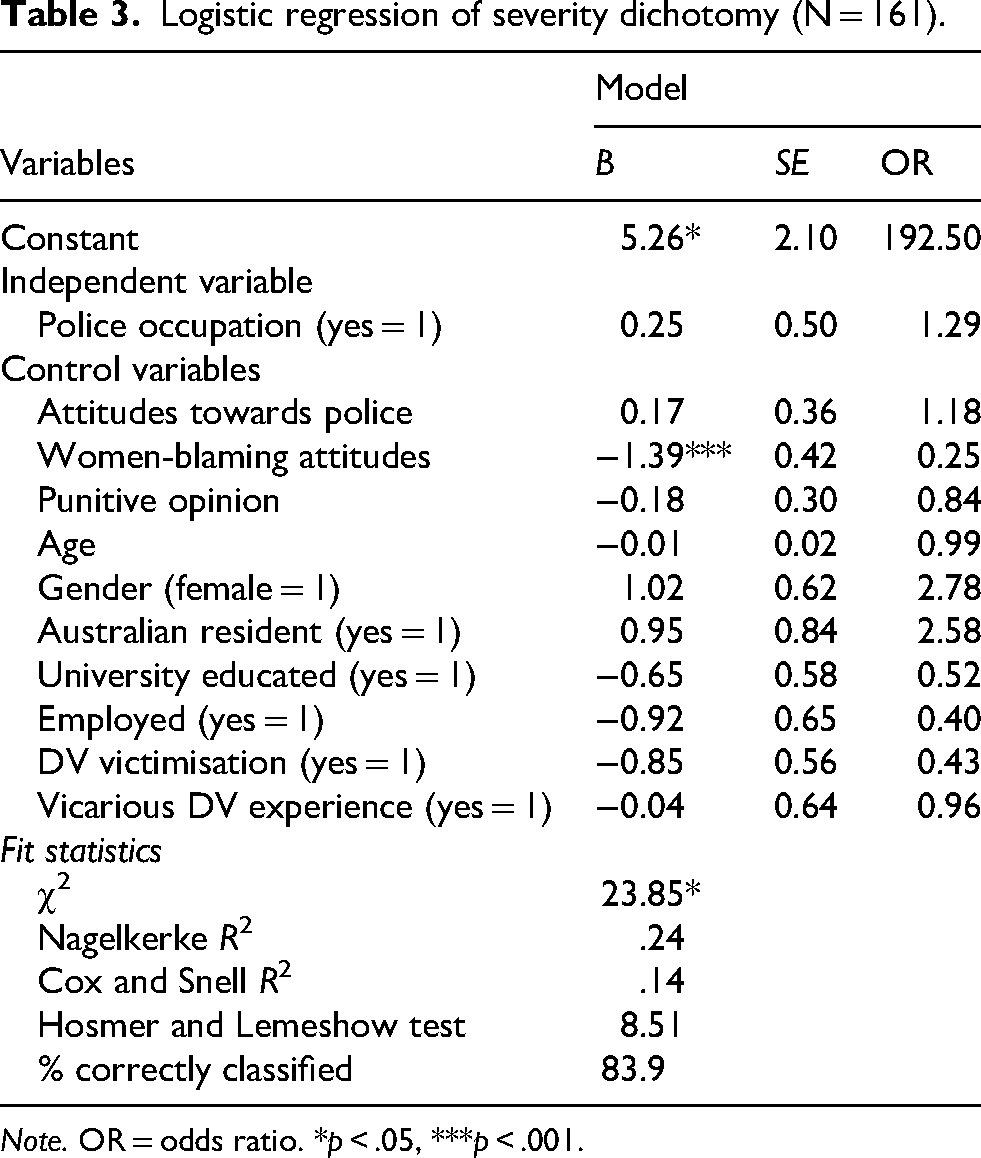
Note. OR = odds ratio. *p < .05, ***p < .001.
RQ2: Perceived sentence of PPDV
Analysis for RQ2 explored perceptions of sentencing in terms of whether the participant selected a prison sentence or not, and the custodial sentence length participants chose for the perpetrator in the vignette.
Prison
Referring to Table 2, a 2 × 2 chi-squared test on prison and police occupation was non-significant (p = .961). A binary logistic regression further examined whether occupation effects the likelihood of assigning a prison sentence to the DV perpetrator while controlling for attitudinal and demographic factors (Table 4). The model containing all predictors was not statistically significant, X2 (10, N = 160) = 14.576, p > .05, with an overall percentage correct prediction rate of 58.8%. There was no support for the effect of police occupation on perceptions of prison as the appropriate punishment for the given scenario.
Logistic regression of prison (N = 160).
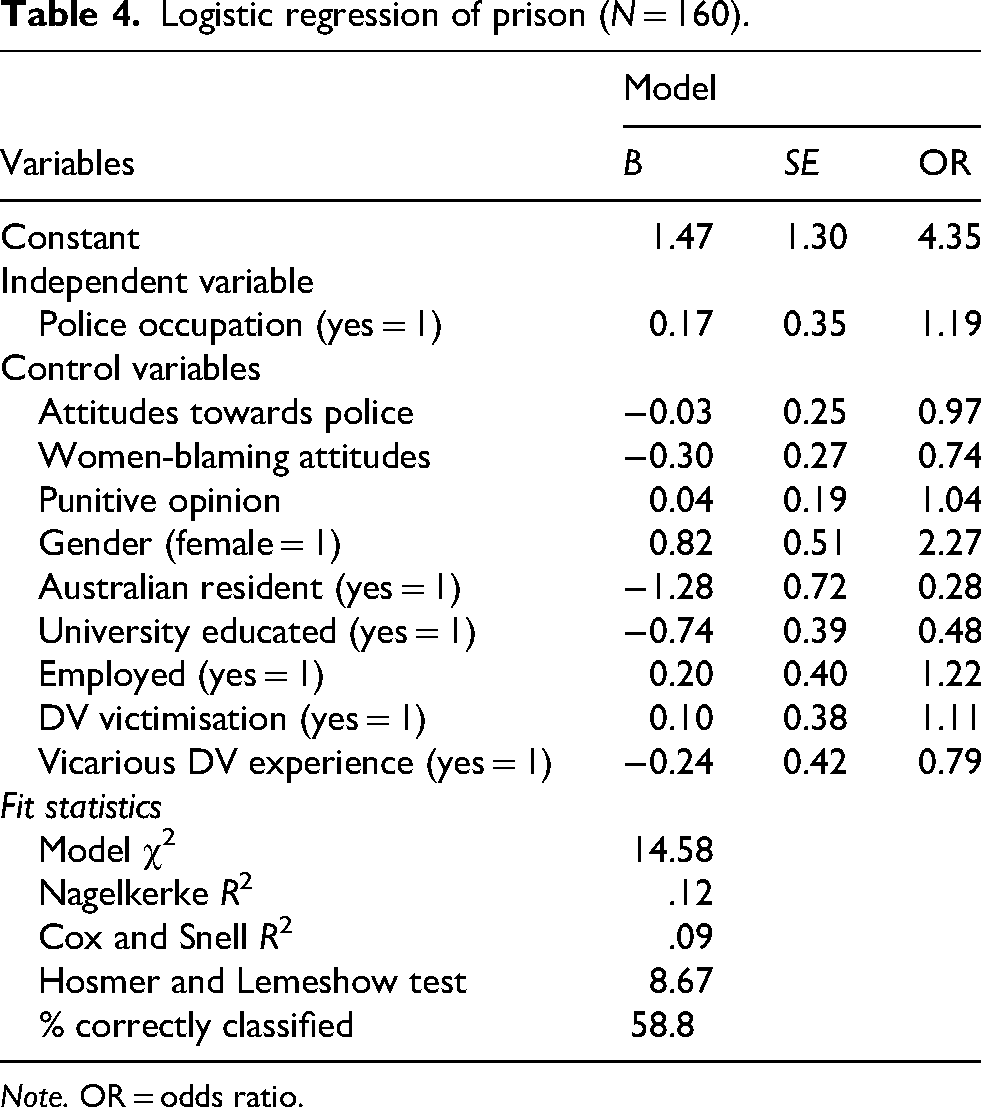
Note. OR = odds ratio.
Sentence length
An independent samples Mann–Whitney U test was conducted to compare custodial sentence lengths suggested for police and non-police perpetrators (Table 2). Results demonstrated no significant difference in sentence lengths for the police vignette and the non-police vignette (p = .103).
Table 5 shows the multiple linear regression conducted on the logarithm transformed sentence length. The model explained 15% of the variance in sentence length and was statistically significant (F(12, 136) = 1.97, p < .05, R2 = .15), with police occupation (B = 0.17, p < .05) and severity scale (B = 0.17, p < .05) statistically significant predictors of sentence length. Participants gave a lengthier prison sentence to the police perpetrator and when they viewed DV as serious when controlling for other attitudes and demographics. This suggests participants did view DV perpetrated by a police officer as deserving of a lengthier sentence than non-police-perpetrated DV, independent of severity.
Multiple linear regression of log(sentence length) (N = 154).
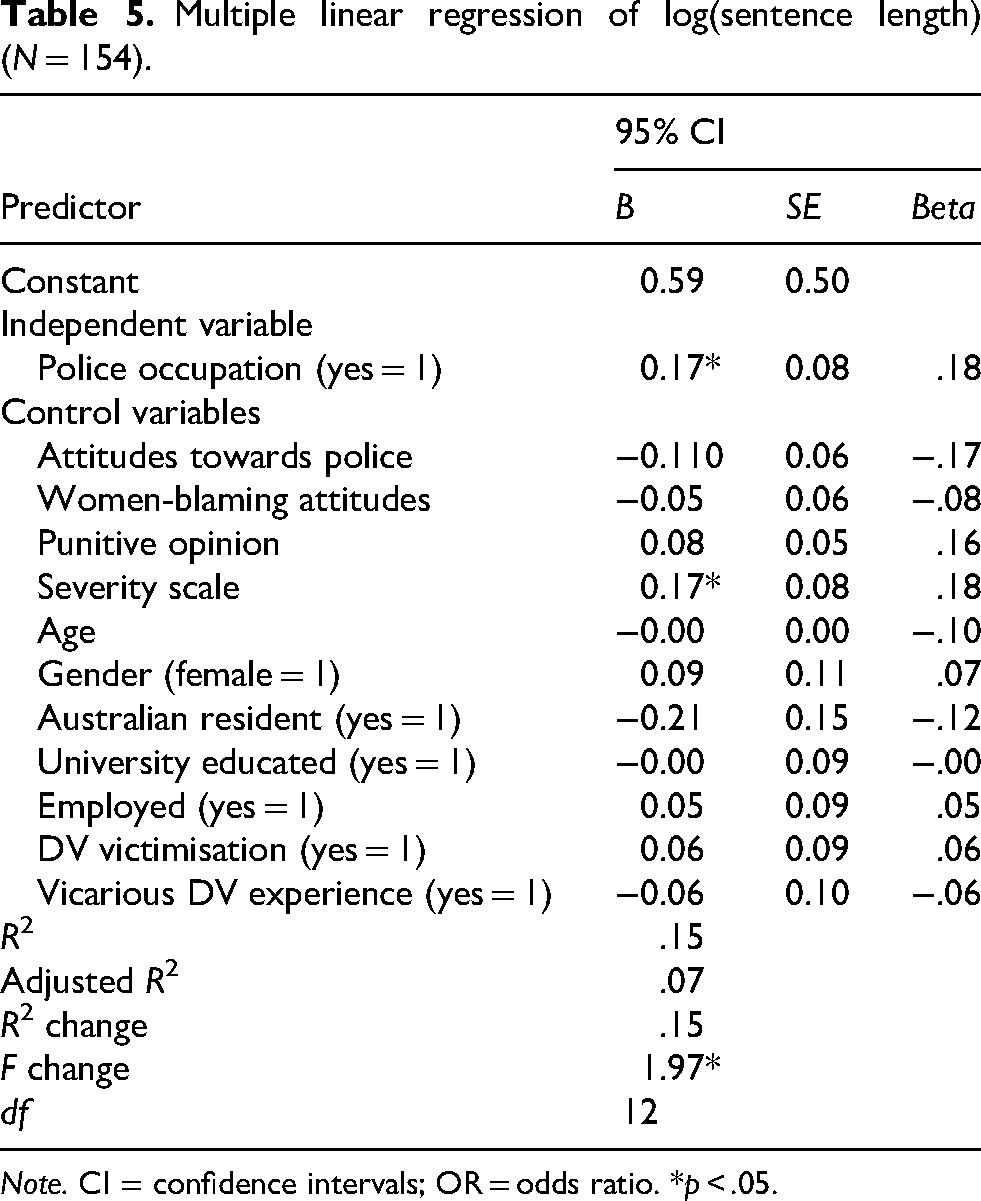
Note. CI = confidence intervals; OR = odds ratio. *p < .05.
RQ3: Perceived occupational consequences of PPDV
Occupational dismissal
Table 2 shows a 2 × 2 chi-squared test indicated a significant association between occupational dismissal and police occupation (p < .001). Participants perceived that when the perpetrator is a police officer, they should be dismissed from their job. To further compare judgements of dismissal between the police and non-police occupation groups with the consideration of control variables, a binary logistic regression with occupational dismissal as the dependent variable was performed (Table 6). The model containing all predictors was statistically significant, χ2 (11, N = 161) = 91.76, p < .001, with an overall percentage correct prediction rate of 79.5%. The independent variable police occupation (B = 3.64, p < .001) and control variables of gender (B = 1.72, p < .05) and severity scale (B = 2.50, p < .01) were significant positive predictors of occupational dismissal, whereas attitudes to police was a significant negative predictor (B = −1.54, p < .001).
Logistic regression of occupational dismissal (N = 161).
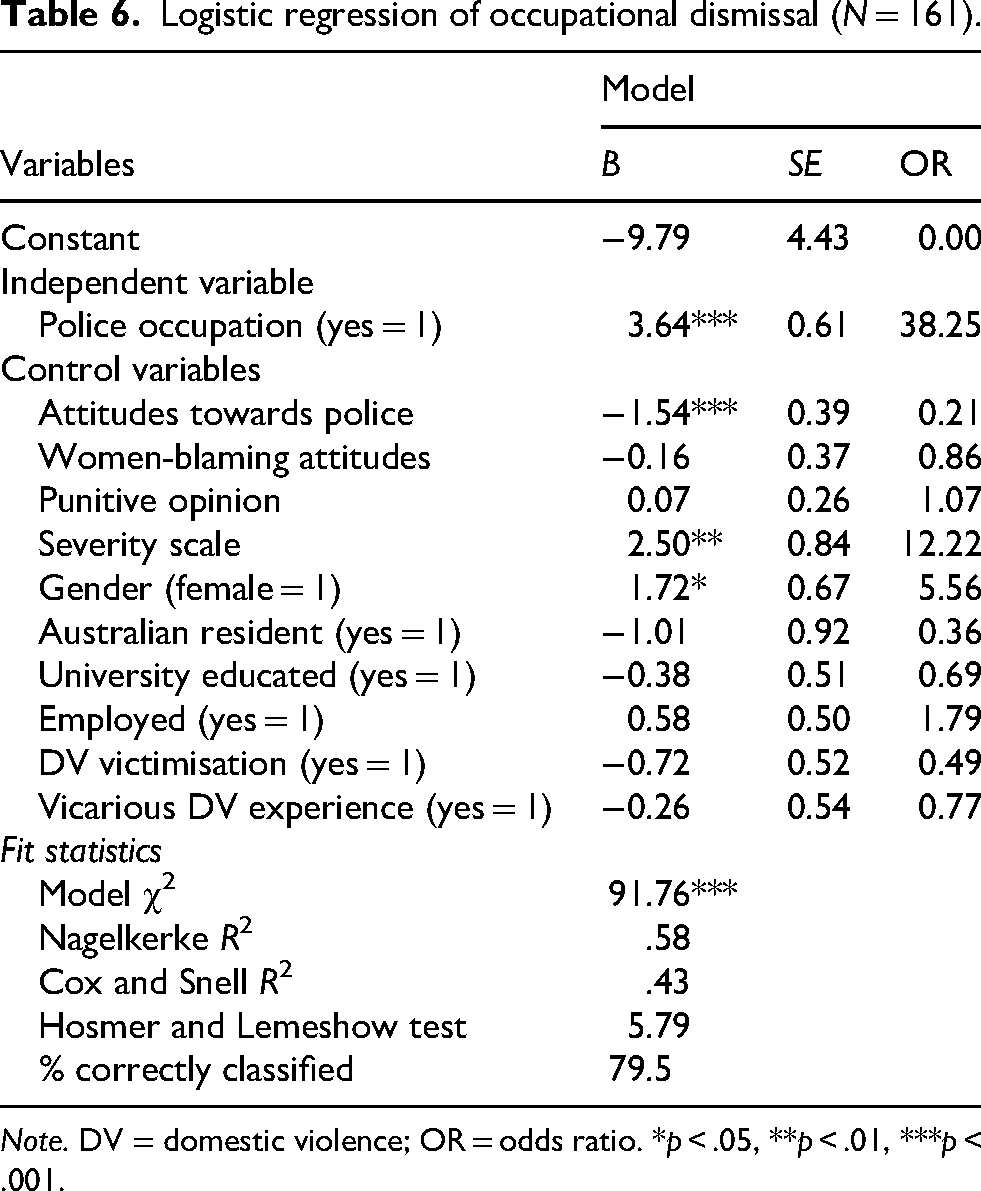
Note. DV = domestic violence; OR = odds ratio. *p < .05, **p < .01, ***p < .001.
Police occupation was the strongest predictor, with participants 38.25 times more likely to agree that the police perpetrator should be fired, compared with the non-police perpetrator, controlling for all other factors in the model. Compared with males, females were 5.56 times more likely to agree that the perpetrator should be fired. For every one point increase in perceptions of severity of the DV scenario, participants were 12.22 times more likely to agree the perpetrator should lose their job. The attitudes towards police OR of 0.21 suggests that for every one point increase in positive attitudes towards police, participants are 79% less likely to agree the perpetrator should be fired.
Discussion
This study sought to understand the effect of perpetrator occupation as a police officer on public perceptions of DV seriousness. Measuring public attitudes is regarded as a crucial step in understanding and preventing DV (Loney-Howes et al., 2021). Similarly, investigating public attitudes to police is considered key in maintaining police–citizen relations and ensuring public safety (Socia et al., 2021). The current study is exploratory because there are no empirical studies on public attitudes to PPDV. Perceptions of DV seriousness were measured via four variables in response to a vignette: severity, along with three types of consequence – prison, sentence length and occupational dismissal. People viewed the DV depicted in the vignette as severe regardless of perpetrator occupation, but the police perpetrator was held to higher standards of behaviour than the non-police perpetrator, reflected in opinions about sentence length and occupational dismissal independent of severity. These findings are discussed below.
Multivariate analysis revealed that the public perceived the DV presented in the scenario as severe regardless of perpetrator occupation. The collective perception of the scenario DV as severe and inexcusable behaviour represents positive community attitudes that are considered integral to DV prevention. When DV is taken seriously by the community, this can positively affect victim reporting rates, reduce the shame victims may feel and increase intolerance for DV in the community (Royal Commission into Family Violence, 2016). Consequently, such attitudes are key in tackling, reducing and preventing DV (Loney-Howes et al., 2021). This finding that the public perceive DV in the given scenario as severe stands in contrast to past literature on DV attitudes in Australia. For example, ANROWS (2018: 12) raised the concern that ‘too many Australians are willing to excuse violence as part of a “normal” gender dynamic in a relationship’, and that one in five Australians agree that ‘a lot of what is called domestic violence is really just a normal reaction to day-to-day stress and frustration’ (ANROWS, 2018: 11). One explanation for these discrepant findings might be the increased focus and attention by state and federal governments to bring DV to the forefront of public consciousness. The Australian community has been exposed to DV campaigns, multiple Royal Commissions into DV, many media reports on the lives lost at the hands of DV perpetrators, and various organisations, such as Our Watch, who aim to educate the public on DV (Hawley et al., 2018; Our Watch, 2022; Royal Commission into Family Violence, 2016; Special Taskforce on Domestic and Family Violence in Queensland, 2015). Further, a recent analysis of Australian DV media reporting found increasingly constructive coverage of DV in major news outlets (Uibu, 2023). It is apparent in the results of the current study that public awareness and understanding of DV as a serious offence are present, at least in those sampled here.
This raises the question of whether results from this study, in which more than 90% of participants were residing in Australia, would be replicated in countries where policymakers and politicians may have not emphasised DV in the public discourse as much as in Australia. For example, research in the US suggests nonconstructive messages in DV reporting, where DV is too often framed as ‘isolated incidents’, perpetrator behaviour is normalised, and patriarchal understandings of men's violence are promoted (Coy, 2024). Furthermore, a multi-country study that measured attitudes towards DV in 49 low- and middle-income countries found varying acceptance rates depending on countries and regions (Sardinha and Catalán, 2018). Such research alludes to the possibility that replication of the current study in another country may not mirror the findings that the DV was almost overwhelmingly considered severe.
The severity judgements, and particularly the lack of difference in severity judgements between the experimental groups, may, however, have been impacted by design limitations. Specifically, the vignette may have portrayed a scenario of DV that was too severe to provide meaningful variation in responses, thus creating a ‘ceiling effect’. The resulting lack of response variation made it difficult to detect any differences between groups by perpetrator occupation. This limitation may have influenced the findings, particularly for results of the severity outcome. Participants’ perceptions of DV seriousness were, therefore, further explored through opinions regarding type of punishment, sentence length and occupational dismissal, controlling for severity judgements where possible.
Perpetrator occupation did not affect the type of criminal justice response (prison). However, this analysis was not able to control for severity to explore whether occupation might predict this outcome independent of severity judgements. When controlling for severity, PPDV was perceived as requiring a longer sentence and more deserving of occupational dismissal than DV perpetrated by a non-police citizen. This provides evidence that DV is perceived as more serious when it is perpetrated by a police officer, demonstrated through both criminal justice outcomes and occupational consequences.
In terms of criminal justice outcomes, police occupation seems to be regarded as an aggravating factor for DV sentence judgements. The perception of the police occupation as an aggravating factor in DV may be due to the power and authority that a police officer holds, which is expected to be used to enforce the law, not break it. Moreover, DV is often considered an aggravating factor itself for assault sentencing (e.g. Crimes (Sentencing Procedure) Amendment Bill 2007 (NSW)) because committing an offence in a person's home is deemed as a violation of their ‘reasonable expectation of safety and security’ (Hatzistergos, 2007). In this context, perpetration by a police officer might be considered an even greater violation of the reasonable expectation of safety and security, given this is inherent in their occupation.
In addition, more than two-thirds of the participants in the current study perceived that police should not retain their police officer position if they have perpetrated DV, with police occupation significantly predicting occupational dismissal even when controlling for severity and other factors. This may be because police officers who commit DV are perceived as having breached their oath of service, thereby demonstrating they are not suitable to be police officers. The credibility of police officers is dependent upon their own adherence to the law and behaviour that promotes public safety (Carter and Stephens, 1994). Committing DV is likely perceived by the public as an erosion of credibility. This suggests that if PPDV perpetrators remain in their position, public perceptions of the police are at stake. A recent Australian media report indicated that, of the known police DV perpetrators, many have retained their position as police officers, which can undermine public trust in the police and their ability to deal with DV (Gleeson, 2022). When the public do not trust, or lack confidence, in police, they are less likely to positively engage with police, call the police for help or cooperate with police; a detriment to public safety (Socia et al., 2021). This may compound the barriers to reporting experienced by DV victims, and more specifically PPDV victims, who may already be hesitant to reach out to police (Couto et al., 2023), increasing the likelihood of underreporting.
Theoretical and practical implications
The significant results for sentence length and occupational dismissal have important theoretical and practical implications. In terms of theoretical implications, the finding that DV is perceived as more serious when it is perpetrated by a police officer suggests that police are held to a higher standard than non-police citizens. The notion that police officers may be held to a higher standard because of their police status has received limited explicit empirical testing. These results serve as recognition of a shared belief that a particular standard of conduct is expected of police officers, including off duty, and that this standard is higher than that expected of those not in the police role (Carter and Stephens, 1994). Although the current study supports this notion in the context of PPDV, future research could further explore whether this extends to police misconduct more broadly, owing to the underlying fundamental breach of public trust, or whether it is confined to specific forms of behaviour.
The high standard expected of police behaviour regardless of duty status or direct abuse of police powers has practical implications for systems of police accountability. For example, police organisations need to endorse codes of conduct that apply to all officer behaviour regardless of whether actions are directly related to the use of police powers or carrying out police duties. This will communicate the importance of the standards expected of officers and increase accountability. The criminal justice system also needs to recognise public expectation of police status as a potential aggravating factor in sentencing. Even when the officer is off duty and not directly abusing their powers, police status matters to the public. The systems of accountability may need to better reflect this to align with public expectations and confidence.
There are also implications for police organisational policy. Not holding officers to account in the ways expected by the public could result in ‘double jeopardy’ for a police organisation; not only do the public lose confidence in police because of the officer's perpetration of DV, but organisational failure to fulfil public expectations in its response could lead to further public loss of confidence. In the interest of maintaining the reputation of police, public safety and associated public confidence, the results suggest that Australian police organisations should be more frequently pursuing dismissal of employees who perpetrate DV. Some Australian states have a ‘Commissioner's loss of confidence’ provision, where officers can be dismissed on the basis that the Commissioner has lost confidence in their suitability as a police officer (for example, Police Act 1990 (NSW), s.181D). The provision is underpinned by the belief that the Commissioner must have trust and confidence in their employees’ ability to perform as a police officer, as well as the expectation that ‘the community must have trust and confidence in the integrity, competence, performance, and conduct of its police officers’ (Crime and Misconduct Commission, 2010: xxii). Perpetrating DV would, in the eyes of the public surveyed in this study, be a basis for losing confidence in the suitability of a police officer and warrant grounds for dismissal under this provision. This suggests public support for use of the provision in response to PPDV cases.
However, while the results of this study illuminate that the public believe police perpetrators of DV may not be fit to serve as a police officer, the impact on victim reporting also needs to be considered (Ávila, 2015). Research on PPDV in the US has raised that, for some PPDV victims, a barrier to reporting is fear of their partner losing their job as a police officer, and consequently their family livelihood (Ávila, 2015; Garvey, 2015). This may have financial consequences for the victim and their family. Hence, this brings to light the potential unintended consequences of firing police who perpetrate DV and further demonstrates the complexities of PPDV. It is therefore important for police organisations to understand the complex issues and perspectives of those affected when considering policy positions.
Limitations and concluding remarks
Although the study has produced important findings, some limitations need to be acknowledged. We have already acknowledged the ceiling effect of the vignette and its possible influence on the lack of difference found between the two vignette groups for the severity and prison variables. The study was able to explore multiple measures of perceived seriousness including both continuous and recoded dichotomous measures, as well as incorporating severity as a control variable in some analyses. However, future research should explore perceptions of more varied forms of DV to see if the type of DV behaviour effects public perceptions.
There are some important limitations relating to the sample. First, the convenience sampling by social media may have skewed the sample towards particular demographics, which might affect the results. Although we controlled for some demographic and attitudinal factors to mitigate the impact of this, the results are exploratory and not necessarily generalisable to other populations. Second, because of the sample size, the study was underpowered for detecting small effects. Thus, the non-significant findings for severity and prison could potentially be subject to Type II error. The small sample size also impacts the generalisability of the study's findings. Future research may benefit from collecting data from a larger and more diverse sample to provide further, more inclusive insights to community perceptions of PPDV. In addition, comparison of this study with other countries is recommended, because political and media agendas may differ from the current DV-concentrated agenda in Australia. The study thus serves as exploratory research in the Australian context for the topic of public attitudes towards PPDV.
Despite the limitations, this study has provided an important contribution to the scarce PPDV literature in Australia by studying public attitudes. The investigation into public perceptions of PPDV revealed that police are held to a higher standard in the context of perpetrating DV. The results have important theoretical and practical implications and provide much needed insight to the climate of opinion on PPDV.
Footnotes

Ethical considerations
The study received ethics approval from the Human Research Ethics Committee at Griffith University (GU Ethics ref. 2021/782) on October 29, 2021.
Consent to participate
Participants accessed the survey via a link that led to an information sheet informing participants the survey was voluntary, anonymous, and they could withdraw at any time. It further outlined the potential risks to participants and support services. The participants were advised that consent to participate was inferred by selecting ‘next’ to proceed with the survey. Participants were given the option to refuse to participate by opting out.
Consent for publication
Participants provided consent for publication of their non-identifiable data.
Author contributions
Henrietta Taylor conceptualised the study and its design, collected and analysed the data and drafted the paper. Louise Porter contributed to the study conceptualisation and design, oversaw the collection of data, advised on data analysis, and contributed to the writing of the paper. Li Eriksson contributed to the study conceptualisation and design, oversaw the collection of data, advised on data analysis, and contributed to the writing of the paper.
Funding
The authors disclosed receipt of the following financial support for the research, authorship, and/or publication of this article: Preparation of this journal article was partially funded by the School of Criminology and Criminal Justice, Griffith University; Griffith Criminology Institute.
Declaration of conflicting interests
The authors declared no potential conflicts of interest with respect to the research, authorship, and/or publication of this article.
Data availability
The data are available upon reasonable request to the corresponding author.