




Abstract
Policing roles require specific work-related characteristics (WRCs) critical for effective performance. This study identifies key WRCs for various roles within the Swedish Police—patrol officers, criminal investigators, Special Weapons and Tactics (SWAT) Teams, police chiefs, and negotiators—by analyzing data from 425 active-duty officers (30% response rate). We use the Occupational Information Network (O*NET) framework to assess WRCs in five domains and subsequently compare the identified profiles with the average U.S. workforce and U.S. law enforcement roles. Our findings indicate distinct differences in the WRC profiles required across various roles within the Swedish Police. Frontline roles, such as patrol officers and SWAT unit members, particularly emphasize physical strength, situational awareness, and social skills. At the same time, roles like negotiators and investigators show a higher demand for cognitive abilities and advanced interpersonal competencies. By comparing Swedish police roles with the general U.S. labor market and specific U.S. police functions, our results illustrate how sociocultural factors and organizational structures distinctly shape job demands. This highlights the importance of customizing and regularly updating work analyses to reflect rapid societal and technological changes, ensuring that recruitment, selection, and training processes align with current and future policing demands across national contexts.
Keywords
Introduction
An effective police force is fundamental to maintaining public safety and requires officers capable of adapting proactively to changing circumstances. The Swedish Police are central to crime prevention and community security, underscoring the importance of recruiting and training highly competent personnel (Swedish Police Authority, 2024). However, selecting and training officers to meet the evolving demands of modern law enforcement remains a significant challenge, especially in recruiting diverse candidates and addressing gaps in existing practices. This challenge is heightened by rapid societal and criminal developments, such as technological advancements (Ghosh et al., 2025; National Bureau of Economic Research, 2023) and complex crime patterns, requiring an adaptable police force.
Comprehensive work analyses are scarce in the policing sector despite their critical role in shaping effective law enforcement strategies. Reports such as the Final Report on the Job Task Analysis Study of Entry-Level Law Enforcement Officers in Virginia (SD Group, 2018) and Policing in England and Wales: Future Operating Environment 2040 (College of Policing, n.d.) emphasize the importance of structured work analyses for recruitment and training. Earlier research, such as job analyses published by the U.S. Department of Justice (Kohls et al., 1979), has long emphasized carefully evaluating the specific competencies required for different policing positions.
It is critical to base recruitment and training strategies on thorough, evidence-based work analyses to ensure effective selection processes. Such analyses help identify the most relevant skills, knowledge, abilities, and personal traits (work-related characteristics [WRCs]) needed for effective policing (Binning and Barrett, 1989; Tippins et al., 2018).
This study defines WRCs as the capabilities, competencies, and personal attributes that enable law enforcement officers to meet job demands effectively. Rooted in theories of person–job fit (Kristof-Brown et al., 2005) and the job demands–resources (JD-R) framework (Bakker and Demerouti, 2007; Theorell, 1992), WRCs serve as a crucial mediator between the complexity of policing tasks and the officer's ability to perform safely and proficiently.
This study utilizes work analyses based on the Occupational Information Network (O*NET) inventories to examine WRCs across critical roles within the Swedish Police, significantly as the demands on law enforcement evolve with the changing societal and technological landscape.
Developed by the U.S. Department of Labor, the O*NET framework provides detailed information on more than 1100 occupations based on data from subject matter experts (Hilton and Tippins, 2010; Peterson et al., 1999, 2001; Tippins et al., 2018). Its adaptability and comprehensive scope make the O*NET framework a valuable tool for work analysis. Given its adaptability, O*NET is particularly valuable for analyzing the diverse and evolving demands of police roles in Sweden.
Previous factor analyses of O*NET data have revealed critical dimensions such as substantive complexity, people versus things, and physical demands (Hadden et al., 2004). Further research, specifically classifying U.S. Army Military Occupational Specialties using O*NET, identified additional factors relevant to military contexts, including physical demands, interpersonal complexity, and organizational structures (Gadermann et al., 2014). O*NET's adaptability makes it particularly useful for examining the varied demands on Swedish police roles.
Given the ever-evolving societal landscape, including challenges like cybercrime, and shifting demographics, adaptive and proactive approaches to police training and selection are essential (European Defence Agency, 2023). Structured work analyses, such as those outlined in the Final Report on the Job Task Analysis Study of Entry-Level Law Enforcement Officers in Virginia (SD Group, 2018), are critical to ensuring alignment between the skills, knowledge, abilities, and work contexts required by officers and the demands of their roles.
Hesketh and Stubbs (2024) emphasize the importance of inclusive recruitment strategies considering diverse social groups within the police force. Their research suggests that effective recruitment must focus on WRCs and foster a culture of inclusivity to ensure long-term success in policing careers. Similarly, Abraham (2022) highlights competencies such as openness, integrity, and analytical capacity central to policing. As society and crime evolve and technology reshapes law enforcement, we must continually reassess these competencies to address future challenges.
The report Policing in England and Wales: Future Operating Environment 2040 (College of Policing, n.d.) underlines how crucial digital skills and effective cybercrime management will become, highlighting the need to adapt recruitment and training practices promptly. Furthermore, global reports such as Global Trends 2040 (National Intelligence Council, 2021) and the INTERPOL Working Paper on the Future of Policing (INTERPOL, 2022) emphasize the growing importance of digital literacy and cybercrime management in response to technological changes. These reports highlight the urgency of adapting recruitment and training processes to manage these complexities.
Theoretical rationale
In industrial and organizational psychology, WRCs are core elements that elucidate how individual abilities, skills, and knowledge align with distinct job demands (Binning and Barrett, 1989; Tippins et al., 2018). The greater the alignment between an individual's WRCs and job requirements, the higher the likelihood of effective performance and job satisfaction (Kristof-Brown et al., 2005). Policing roles, ranging from patrol officer to SWAT unit, differ considerably in their physical, cognitive, and interpersonal demands. Models such as the JD-R framework explain these differences by emphasizing that organizations must balance high job demands with adequate resources to prevent strain, and highlighting how matching personal capabilities with specific role requirements (person–job fit) is crucial for sustained success (Bakker and Demerouti, 2007). Against this theoretical backdrop, this study examines how different roles within the Swedish Police necessitate unique WRC profiles. It compares these profiles both with the average U.S. workforce and with U.S. police roles, thereby highlighting how occupational specialization and broader societal contexts shape the attributes deemed most critical.
Rationale for comparative groups and their definitions
A key goal of this study is to examine how WRCs within the Swedish Police compare with those of U.S. law enforcement officers and the average U.S. workforce. The aim is to identify which WRCs are common across policing contexts—like situational awareness and communication skills—and which may be specific to the legal, cultural, and organizational conditions in Sweden's centralized police compared to the decentralized police structure in the United States. This three-way comparison serves two purposes. First, it enables us to delineate which WRCs may be universal across policing contexts, such as the need for situational awareness or social interaction skills, and which may be shaped by specific cultural or organizational environments (College of Policing, n.d.; National Intelligence Council, 2021). Second, it allows us to assess whether the Swedish Police prioritize specific abilities, skills, or knowledge domains at levels different from the U.S. general labor market and a closer occupational analog, namely U.S. policing roles.
In this study, the Swedish Police sample refers to the 425 active-duty officers who completed the O*NET-based inventories as part of a 2021 quality assessment project. The average U.S. workforce, meanwhile, encompasses more than 1000 occupations in the O*NET database, incorporating ratings from incumbents across a broad spectrum of job families (R Core Team, 2024). By aggregating these data, O*NET provides a robust normative baseline for how various WRCs are valued in the general employment sector—effectively describing how skills and abilities are distributed in various non-policing jobs. By contrast, U.S. police officers are defined here as three occupational categories in the O*NET system— “first-line supervisors of police and detectives”, “police and sheriff's patrol officers”, and “detectives and criminal investigators”—each rated by multiple subject matter experts who currently hold such positions. These categories collectively represent core policing functions within the U.S. context, allowing for a more fine-grained comparison with their Swedish counterparts. Although using O*NET data from the United States introduces potential biases related to cross-cultural applicability, this comparative approach remains valuable for illuminating contextual differences and similarities in international policing practices.
By comparing the Swedish Police ratings with both the overall U.S. workforce and role-equivalent U.S. policing positions, we can ascertain whether specific attributes (e.g., physical fitness, social skills, and cognitive abilities) are regarded similarly across nations or whether unique sociopolitical, legal, or training requirements give rise to distinct WRC profiles. In doing so, this comparative approach also informs how differing organizational priorities and societal expectations may shape the professional competencies deemed critical within policing roles. Understanding these distinctions can guide recruitment strategies and highlight the potential for shared best practices between countries with different policing structures.
Although historical job analyses have long been used to guide selection and development in law enforcement, contemporary analyses are crucial to address the current demands of modern policing. A lack of recent, context-specific analyses limits the applicability of these insights. Given the rapidly evolving demands on law enforcement, it is essential to analyze the WRCs required in modern policing systematically. Using the O*NET framework, this study provides an updated work analysis of Swedish police officers and situates their profiles within a broader international context. Based on this, the study seeks to address the following research questions:
What WRCs characterize the Swedish Police compared with the U.S. workforce? What WRCs distinguish different roles within the Swedish Police, particularly the patrol officer role? What unique WRC emerged within the Swedish Police Authority compared to U.S. policing standards?
Method
Participants
This study utilized data from a 2021 quality assessment project by the Swedish Police Authority. The Swedish Police Authority used a random sampling procedure to invite participants from various districts and roles. However, detailed information about the exact sampling procedures (e.g., stratification criteria or how randomization was executed) was not available to the authors. The final Swedish Police sample comprised 425 active-duty police officers (Table 1), 67% male and 33% female, representing approximately a 30% response rate. Participants’ years of service ranged as follows: 55% with 1–5 years, 20% with 6–10 years, and 25% with 11 or more years. This distribution indicates that multiple career stages were included. Despite potential limitations because of the 30% response rate, the sample's diversity regarding roles and regions suggests a reasonable representation of the Swedish Police Authority, although caution is warranted when generalizing to highly specialized units.
Study participants
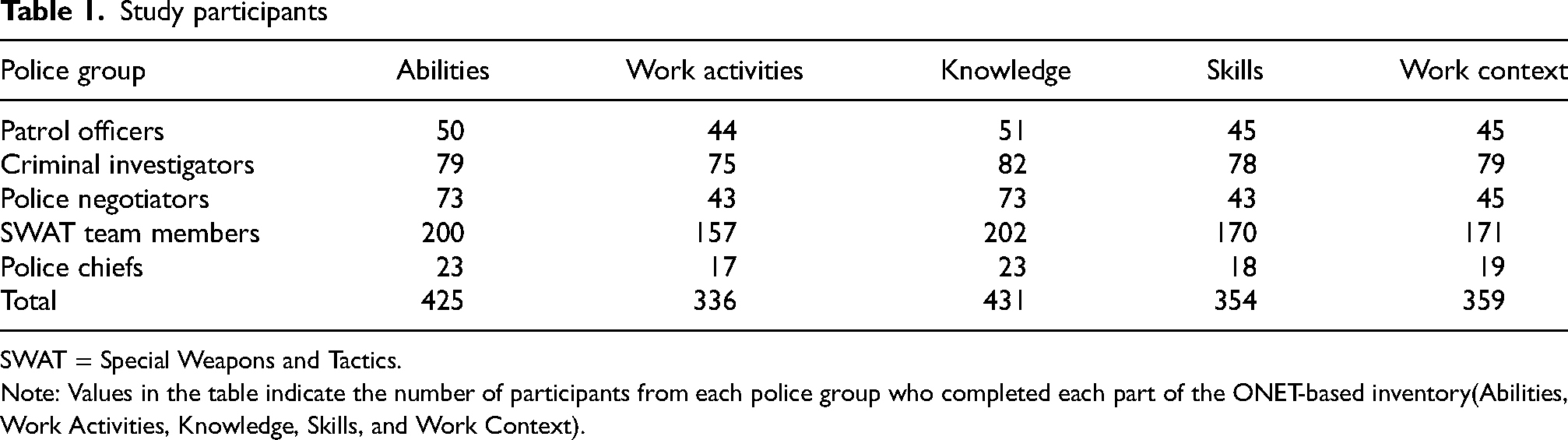
SWAT = Special Weapons and Tactics.
Note: Values in the table indicate the number of participants from each police group who completed each part of the ONET-based inventory(Abilities, Work Activities, Knowledge, Skills, and Work Context).
To ensure clarity, we explicitly defined the five distinct roles within the Swedish Police analyzed in this study:
Patrol officers are frontline personnel primarily tasked with maintaining public safety, responding, rapidly to incidents, and engaging in preventive policing. Criminal investigators are specialized in crime investigation, evidence collection, interrogation, and case management. SWAT members include specially trained officers responsible for handling high-risk operations such as counter-terrorism, hostage rescue, and high-threat apprehensions. Police chiefs encompass senior officers with strategic leadership roles, administrative responsibilities, and oversight functions. Negotiators comprise officers specifically trained in crisis communication, focusing on resolving conflicts or hostage situations through strategic dialogue.
Measurement
The study utilized O*NET-based inventories covering five domains: abilities (52 items), work context (54 items), knowledge (31 items), work activities (41 items), and skills (35 items). Sections on background, education/training, and work styles were excluded from the analysis because they were deemed less relevant to the study's focus on current work-related characteristics.
The O*NET inventories use two response scales: the importance scale and the competency level scale. For example, to assess the ability of oral comprehension, participants are asked, “How important is oral comprehension to the performance of your current job?” (p. 5) Oral comprehension is “the ability to listen to and understand information and ideas presented through spoken words and sentences”. Each item is rated on a scale from 1 (not important) to 5 (extremely important).
The competency level scale is a 7-point behaviorally anchored rating scale used to assess the level of competency required to perform a job. Notably, the importance and competency level responses have been shown to correlate strongly (r = 0.95) (Peterson et al., 1999, 2001). Because the importance scale is more directly related to our research questions and correlates highly with the competency level scale, we focused on the importance scales in this study.
Procedure
We utilized anonymous O*NET data provided by the Swedish Police Authority. We extracted data from the O*NET database (downloaded 16 August 2022), which contains work analysis information for more than 1000 jobs based on responses from subject matter experts (SMEs). In this study, we used information from job incumbents to create factor models for each inventory, allowing us to compare police WRCs with the mean of all occupations in the United States.
Of all the occupations in the U.S. O*NET database, five can be classified under policing; however, only three were used in this study: “first-line supervisors of police and detectives” (police chiefs), “police and sheriff's patrol officers” (patrol officers), and “detectives and criminal investigators” (criminal investigators). Each job had several SME ratings; for example, “first-line supervisors of police and detectives” had approximately 66 reports (U.S. Department of Labor, n.d.).
Statistical analyses
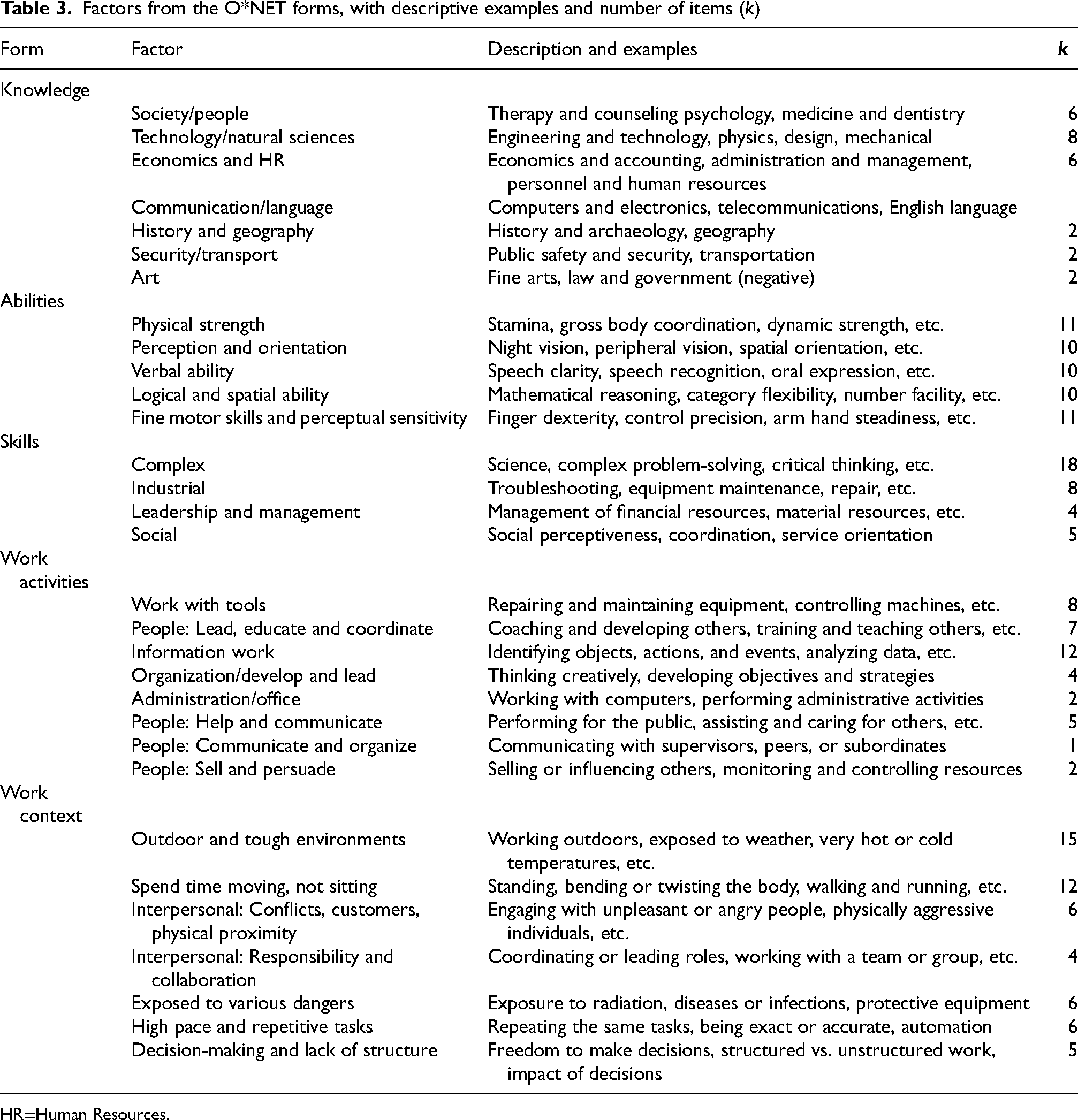
We conducted statistical analyses in R version 4.3.2 (Team, 2024) with the psych package (Revelle, 2018) for psychometric estimates. To assess interrater reliability (Table 2), intraclass correlations (ICCs) were calculated to determine participant agreement. Each O*NET inventory was subjected to factor analysis to identify clusters of variables. A parallel analysis determined the optimal number of factors for a parsimonious summary of the inventory items. Oblique rotation was applied to explore loading patterns and decide which dimensions to retain. Because of the exploratory nature of this study, we refrained from formal hypothesis testing to prioritize the identification of broad patterns rather than confirming statistically significant differences (Gadermann et al., 2014; Hadden et al., 2004). The resulting factors (Table 3) were labeled for easier information tracking.
Interrater reliability for various police groups across six inventories
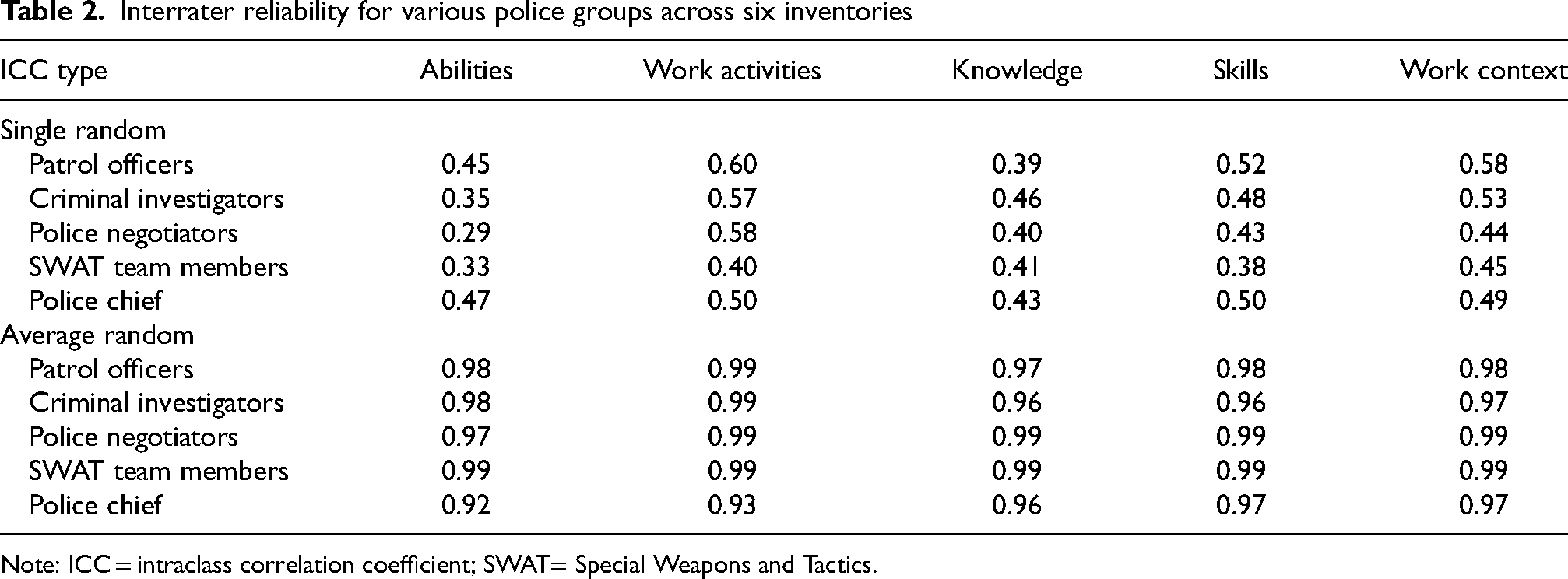
Note: ICC = intraclass correlation coefficient; SWAT= Special Weapons and Tactics.
Factors from the O*NET forms, with descriptive examples and number of items (k)
HR=Human Resources.
The Swedish and U.S. police work analyses were compared by estimating their relative standing on the work factors using the predict function from the psych package. The aggregated means of each work analysis item were used to generate ratings estimating each group's relative position compared to all occupations in the United States, as represented in the O*NET database. Tables 4–8 display the police groups’ relative standing on the factors using standardized z-scores. Ratings above zero indicate that the work factor is rated more critical among police officers than in the general U.S. workforce, and ratings below zero reflect low importance. We did not conduct significance tests, because the study's exploratory nature emphasizes observable differences rather than statistical significance.
Abilities of Swedish and U.S. police officers
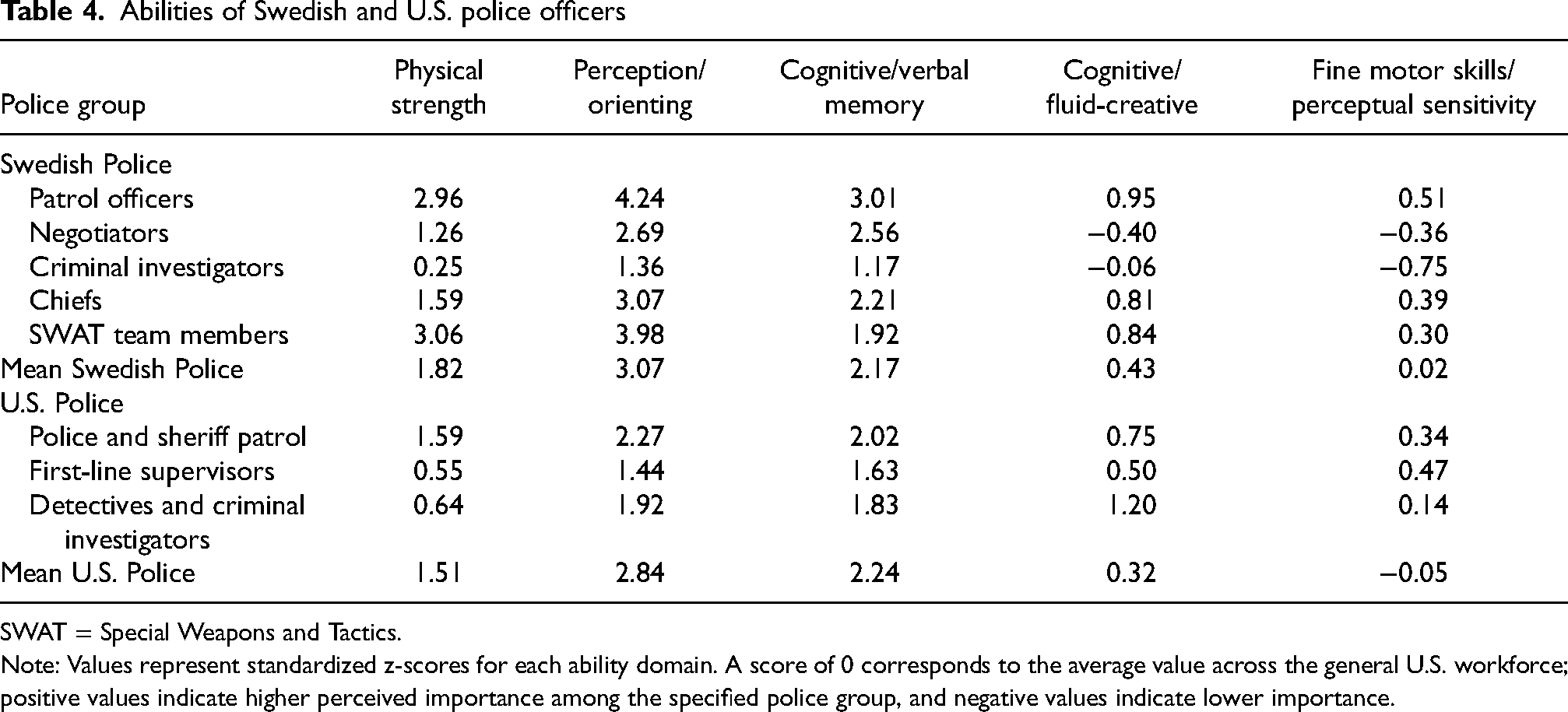
SWAT = Special Weapons and Tactics.
Note: Values represent standardized z-scores for each ability domain. A score of 0 corresponds to the average value across the general U.S. workforce; positive values indicate higher perceived importance among the specified police group, and negative values indicate lower importance.
Work activities for Swedish and U.S. police officers
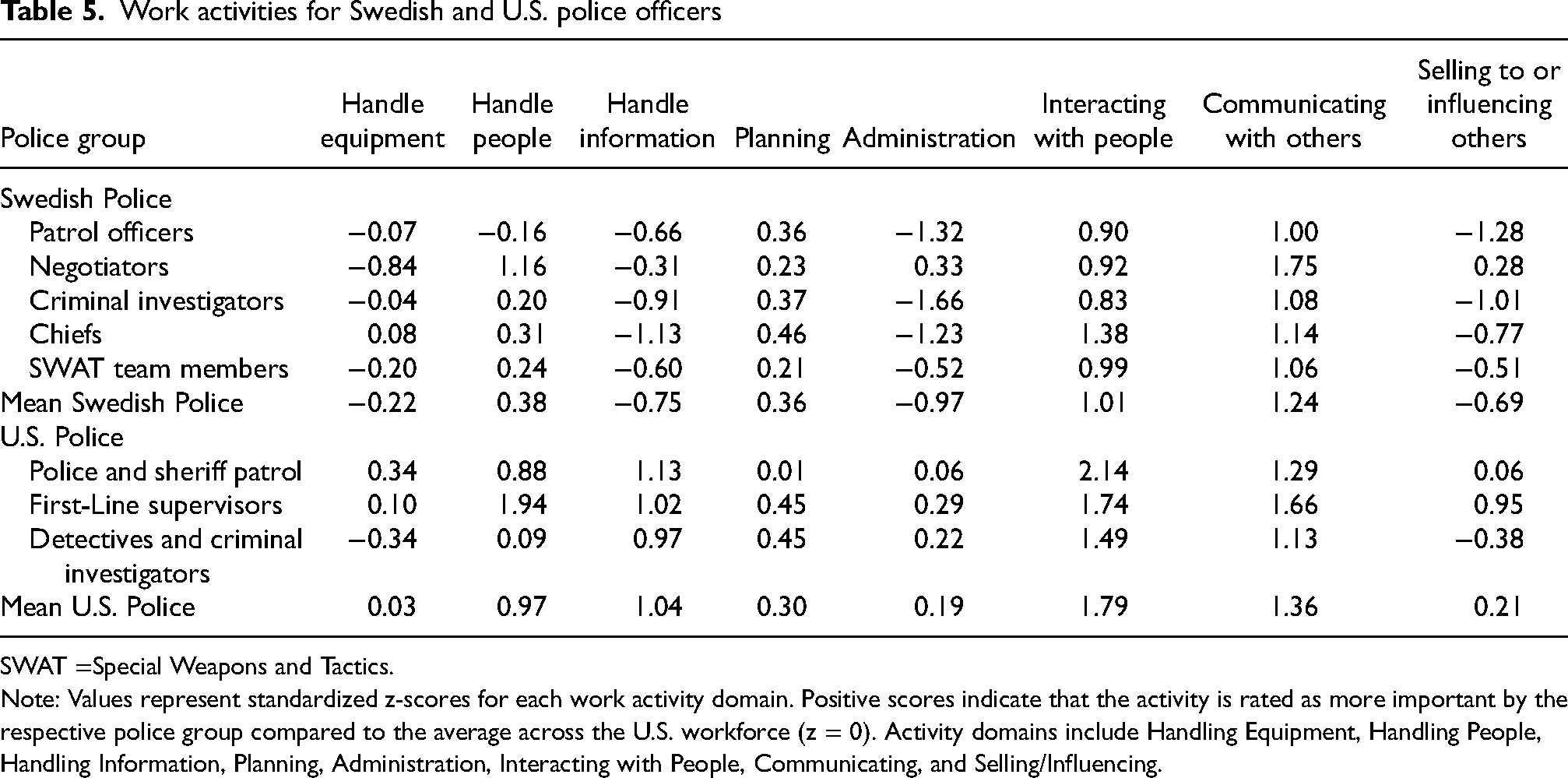
SWAT =Special Weapons and Tactics.
Note: Values represent standardized z-scores for each work activity domain. Positive scores indicate that the activity is rated as more important by the respective police group compared to the average across the U.S. workforce (z = 0). Activity domains include Handling Equipment, Handling People, Handling Information, Planning, Administration, Interacting with People, Communicating, and Selling/Influencing.
Knowledge areas for Swedish and U.S. police officers
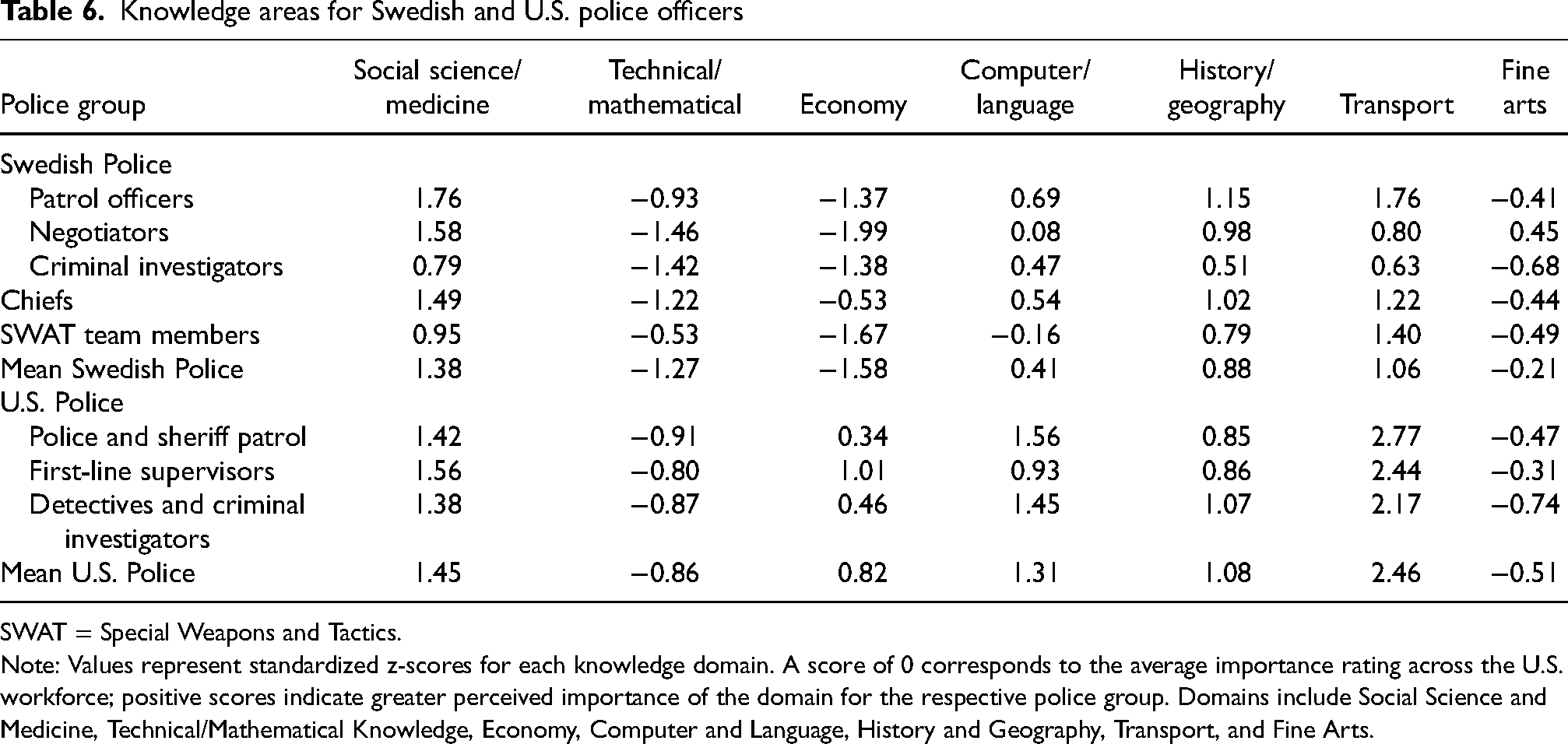
SWAT = Special Weapons and Tactics.
Note: Values represent standardized z-scores for each knowledge domain. A score of 0 corresponds to the average importance rating across the U.S. workforce; positive scores indicate greater perceived importance of the domain for the respective police group. Domains include Social Science and Medicine, Technical/Mathematical Knowledge, Economy, Computer and Language, History and Geography, Transport, and Fine Arts.
Skills for Swedish and U.S. police officers
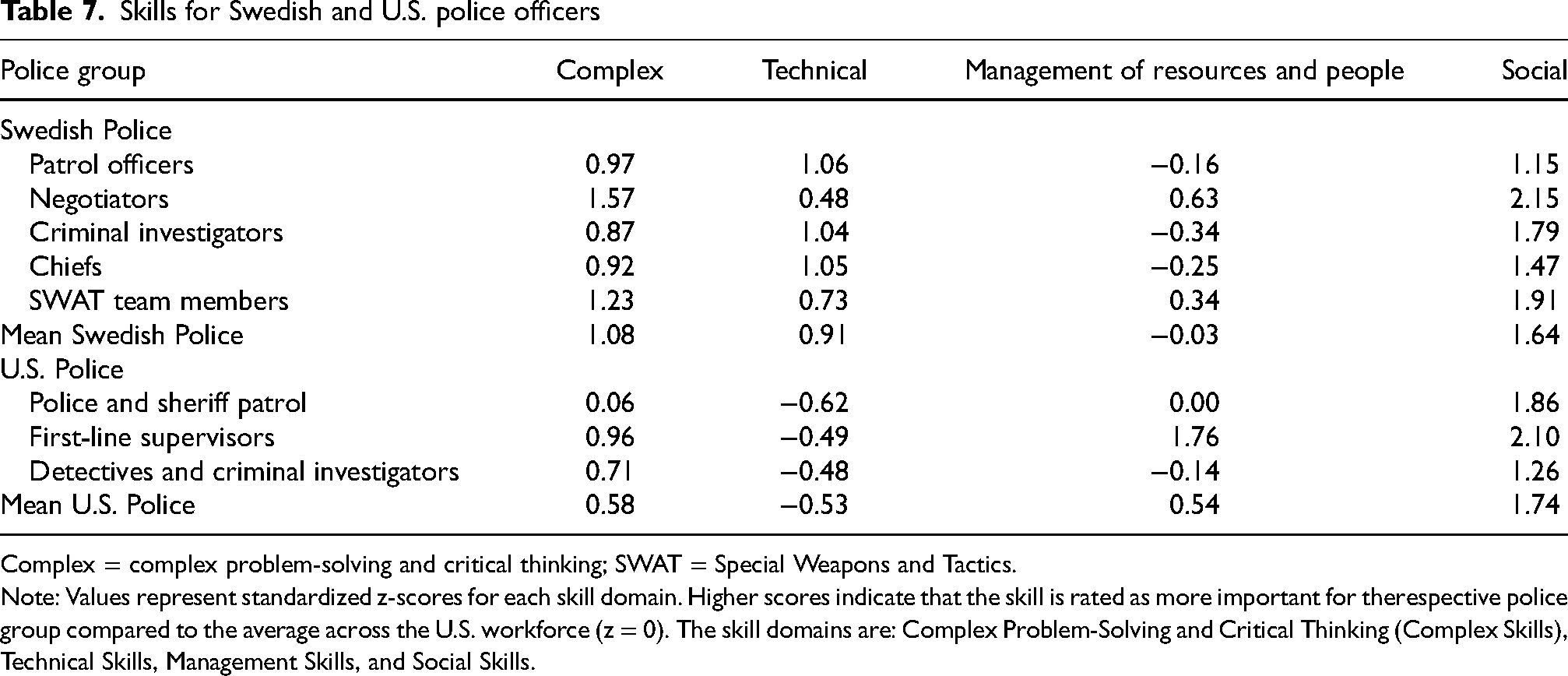
Complex = complex problem-solving and critical thinking; SWAT = Special Weapons and Tactics. Note: Values represent standardized z-scores for each skill domain. Higher scores indicate that the skill is rated as more important for therespective police group compared to the average across the U.S. workforce (z = 0). The skill domains are: Complex Problem-Solving and Critical Thinking (Complex Skills), Technical Skills, Management Skills, and Social Skills.
Work context for Swedish and U.S. police officers
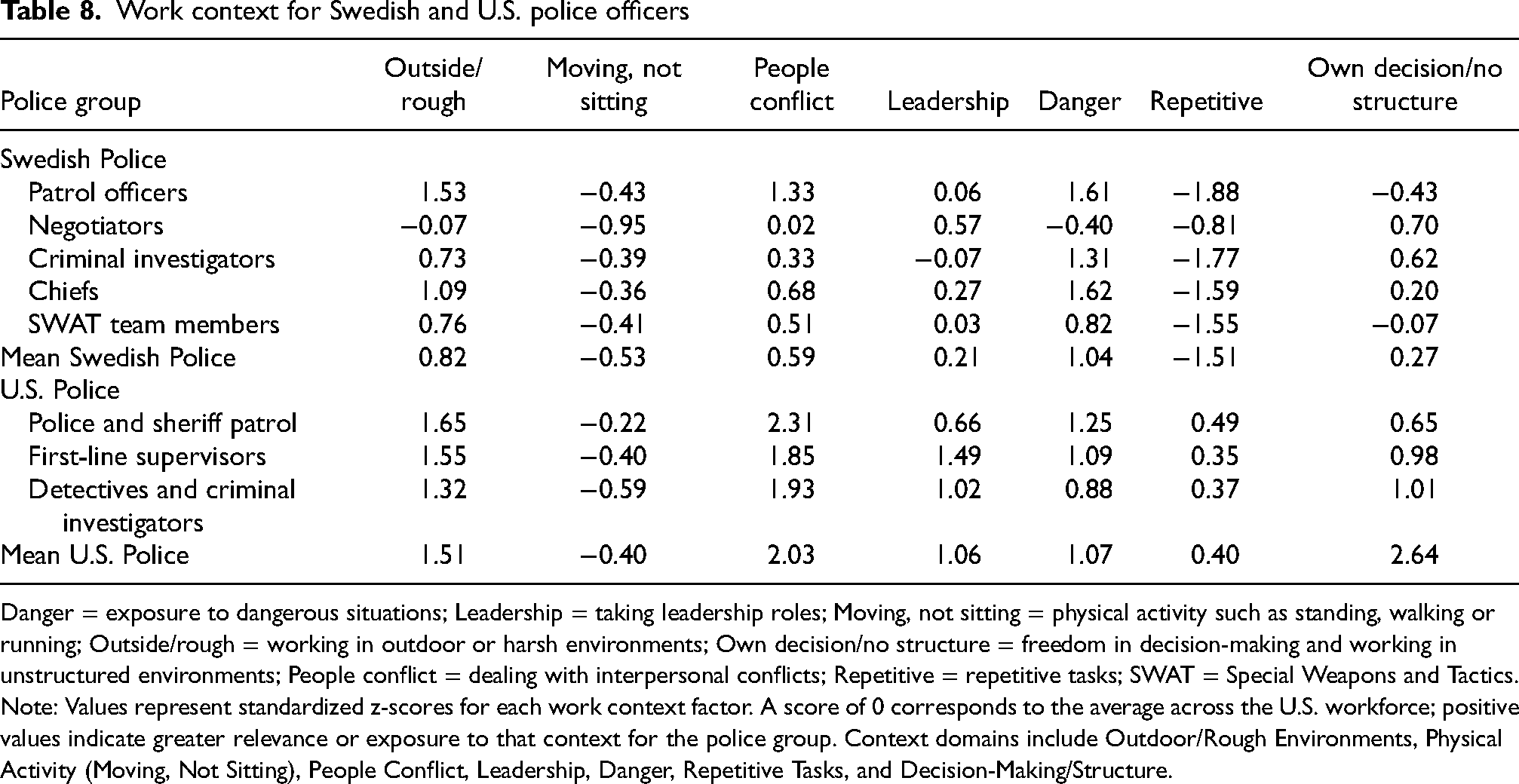
Danger = exposure to dangerous situations; Leadership = taking leadership roles; Moving, not sitting = physical activity such as standing, walking or running; Outside/rough = working in outdoor or harsh environments; Own decision/no structure = freedom in decision-making and working in unstructured environments; People conflict = dealing with interpersonal conflicts; Repetitive = repetitive tasks; SWAT = Special Weapons and Tactics.
Note: Values represent standardized z-scores for each work context factor. A score of 0 corresponds to the average across the U.S. workforce; positive values indicate greater relevance or exposure to that context for the police group. Context domains include Outdoor/Rough Environments, Physical Activity (Moving, Not Sitting), People Conflict, Leadership, Danger, Repetitive Tasks, and Decision-Making/Structure.
Reliability
ICCs were calculated to assess participant rating consistency, with single ICCs reflecting individual rater agreement and average ICCs indicating the reliability of combined ratings across all raters. Table 2 presents both single and average ICCs for all inventory items. The single ICC shows how much an individual rater's evaluation aligned with the group, whereas the average ICC demonstrates the overall reliability of ratings for police jobs. The somewhat lower single ICC values observed for negotiators and SWAT members may reflect variability or complexity in the task perceptions among raters, yet the average ICC scores remain sufficiently high to support overall reliability. Generally, the average ICCs support the reliability of the ratings, with most exceeding.95. Although the lowest ICCs were observed for abilities, they remained acceptably high.
Ethical approval and informed consent
The study was conducted in accordance with the ethical standards of the institutional research committee and the 1964 Helsinki Declaration and its later amendments. Ethical approval was obtained from the Swedish Ethical Review Authority (Dnr 2021-06263-01).
Results
In summary, the results clearly demonstrate role-specific differences, highlighting significant demands for physical and perceptual abilities among patrol officers and SWAT units, contrasted with elevated cognitive and interpersonal requirements for negotiators and police chiefs.
All analyses are organized according to the factor structure outlined in Table 3, which details the core domains (abilities, work activities, knowledge, skills, and work context) and their respective items. Below, we present findings in relation to each of the three research questions. All scores are in standard z units, where z = 1.00 indicates one standard deviation above the mean of the average U.S. workforce (z = 0). Tables 4–8 provide the domain-specific scores for Swedish Police roles and U.S. reference groups.
Research question 1: What WRCs characterize the Swedish Police compared with the U.S. workforce?
Abilities (Table 4):
Physical strength: Swedish patrol officers scored +2.96, exceeding the Swedish Police mean (+1.82). Both values surpass the U.S. workforce reference (0). Perception/orienting: all Swedish officers rated this ability above average (+3.07); patrol officers reported the highest score (+4.24). Cognitive/verbal memory: Swedish Police had a mean of +2.17, most pronounced among patrol officers (+3.01). Cognitive/fluid-creative: mean of +0.43, indicating a slight elevation over the workforce baseline. Fine motor/details: overall +0.02, suggesting no notable deviation from the U.S. workforce average.
Work activities (Table 5):
Handling equipment: Swedish officers averaged −0.22, indicating slightly less emphasis than the U.S. workforce. Handling information: mean −0.75, below zero, suggesting lower than average importance. Planning and administration: moderate emphasis (+0.36 for planning; −0.97 for administration), although chiefs reported higher administration (+0.46). Interacting with people/communicating. All Swedish roles scored above zero (means +1.01 and +1.24). Selling/influencing: mean −0.69, indicating lower importance than the U.S. workforce.
Knowledge (Table 6):
Social sciences/medicine: mean +1.38 overall; patrol officers were highest (+1.76). Technical/mathematical: −1.27, denoting less emphasis than the U.S. workforce norm. Economy: −1.58, again illustrating lower priority relative to the baseline. Computer/language: slightly above zero (+0.41), reflecting a moderate focus. History/geography and transport: +0.88 and +1.06, indicating mild to moderate importance. Fine art: −0.21, showing no difference from the U.S. average.
Skills (Table 7):
Complex problem-solving/critical thinking: mean +1.08, notably elevated for negotiators (+1.57). Technical skills: +0.91 overall, suggesting a mild emphasis above the workforce baseline. Management skills: −0.03, indicating no notable deviation from zero. Social skills: +1.64, underscoring a stronger emphasis on interpersonal abilities than the general workforce.
Work context (Table 8):
Outdoor/rough environments: mean +0.82; patrol officers scored +1.53. Danger: +1.04, reflecting greater hazardous conditions than the U.S. workforce (0). Repetitive tasks: −1.51, suggesting fewer routine or repetitive duties. Own decision/no structure: +0.27, indicating slightly higher autonomy but not markedly so.
Research question 2: What WRCs distinguish different roles within the Swedish Police, particularly patrol officers?
Abilities (Table 4):
Patrol officers: higher physical strength (+2.96) and perception/orienting (+4.24); cognitive/verbal memory also elevated (+3.01). Negotiators: moderate physical strength (+1.26) but notably high cognitive/verbal memory (+2.56); fluid-creative abilities slightly below zero (−0.40). Criminal investigators: modest perception/orienting (+1.36) and cognitive/verbal memory (+1.17), lower than patrol but above the Swedish mean. Chiefs: balanced profile with moderate physical strength (+1.59) and strong perception/orienting (+3.07); cognitive/verbal memory +2.21. SWAT units: high physical strength (+3.06) and perception/orienting (+3.98); cognitive/verbal memory +1.92.
Work activities (Table 5):
Patrol officers: negative for handling information (−0.66) and administration (−1.32), but higher for communicating (+1.00). Negotiators: emphasized handling people (+1.16) and communicating (+1.75); lower handling equipment (−0.84). Criminal investigators: similar to patrol in handling information (−0.91), higher on communicating (+1.08). Chiefs: greater focus on administration (+0.46) and interacting with people (+1.38) relative to patrol. SWAT units: moderate handling equipment (−0.20), relatively high interacting with people (+0.99).
Knowledge (Table 6):
Patrol officers: strongest in social science/medicine (+1.76) and transport (+1.76). Negotiators: emphasized social science/medicine (+1.58), lower in technical/mathematical (−1.46) and economy (−1.99). Criminal investigators: moderate social science/medicine (+0.79), moderate computer/language (+0.47). Chiefs: similar pattern, e.g. social science/medicine +1.49, moderate computer/language (+0.54). SWAT units: lower technical/mathematical (−0.53), moderate transport (+1.40).
Skills (Table 7):
Patrol officers: complex skills (+0.97), technical skills (+1.06), social skills (+1.15); management slightly negative (−0.16). Negotiators: highest social skills (+2.15) among roles, also strong complex skills (+1.57). Criminal investigators: balanced across complex (+0.87), technical (+1.04), and social (+1.79). Chiefs: slightly negative on management (−0.25) but elevated social skills (+1.47). SWAT units: moderately high in all skill domains, especially social (+1.91) and complex (+1.23).
Work context (Table 8):
Patrol officers: greater exposure to outside/rough (+1.53) and danger (+1.61); people conflict +1.33. Negotiators: lower outside/rough (−0.07) and danger (−0.40), but higher own decision (+0.70). Criminal investigators: moderate people conflict (+0.33), danger (+1.31), slight autonomy (+0.62). Chiefs: high danger (+1.62), fewer repetitive tasks (−1.59). SWAT units: also elevated danger (+0.82), minimal repetitive tasks (−1.55).
Research question 3: What unique WRC emerged within the Swedish Police Authority compared to U.S. policing standards?
Abilities (Table 4):
Physical strength: Swedish officers averaged +1.82, near the U.S. police mean (+1.51). Patrol (+2.96) and tactical units (+3.06) in Sweden exceed U.S. patrol (+1.59). Perception/orienting: Swedish mean +3.07 versus U.S. +2.84, signifying slightly higher emphasis in Sweden. Cognitive/verbal memory: Swedish +2.17 versus U.S. +2.24, nearly identical. Cognitive/fluid-creative: Swedish +0.43 overall versus U.S. +0.32. However, U.S. detectives (+1.20) surpass Swedish criminal investigators (−0.06). Fine motor/details: both near zero (Sweden +0.02, U.S. −0.05).
Work activities (Table 5):
Handling equipment: Swedish −0.22 versus U.S. +0.03, indicating less equipment use in Sweden. Handling people: Swedish +0.38 versus U.S. +0.97, suggesting a stronger focus among U.S. police. Handling information: Swedish −0.75 versus U.S. +1.04, highlighting more data-intensive duties for U.S. roles. Planning/administration: Swedish +0.36 (planning) and −0.97 (administration) versus U.S. +0.30 and +0.19. Interacting with people/communicating: Swedish +1.01 and 1.24 versus U.S. +1.79 and 1.36. Selling/influencing: Swedish −0.69 versus U.S. +0.21, indicating higher emphasis in U.S. policing.
Knowledge (Table 6):
Social science/medicine: Swedish +1.38 versus U.S. +1.45. Swedish patrol scored +1.76, close to the U.S. patrol (+1.42). Technical/mathematical knowledge: Swedish −1.27 versus U.S. −0.86, both comparatively low but Sweden slightly lower. Economy: Swedish −1.58 versus U.S. +0.82, demonstrating more economic focus among U.S. police. Computer/language: Swedish +0.41 versus U.S. +1.31, reflecting a stronger emphasis in the U.S. group. History/geography and transport: Swedish +0.88 and +1.06 versus U.S. +1.08 and +2.46, indicating a greater U.S. focus on these domains.
Skills (Table 7):
Complex problem-solving/critical thinking: Swedish +1.08 versus U.S. +0.58. Negotiators in Sweden (+1.57) and intervention units (+1.23) surpass U.S. detectives (+0.71). Technical skills: Swedish +0.91 versus U.S. −0.53, implying slightly higher self-reported importance in Sweden. Management skills: Swedish −0.03 versus U.S. +0.54, suggesting more managerial emphasis among U.S. police. Social skills: Swedish +1.64 versus U.S. +1.74, both strongly valued. U.S. supervisors reported +2.10.
Work context (Table 8):
Outside/rough environments: Swedish +0.82 versus U.S. +1.51, reflecting higher outdoor activity in the United States. Danger: Swedish +1.04 versus U.S. +1.07, both indicating substantial job hazards. People conflict: Sweden +0.59 versus U.S. +2.03, suggesting higher conflict exposure in U.S. policing. Leadership: Swedish +0.21 versus U.S. +1.06, implying greater leadership demands in the United States. Repetitive tasks: Swedish −1.51 versus U.S. +0.40, indicating fewer routine duties among Swedish officers. Own decision/no structure: Swedish +0.27 versus U.S. +2.64, revealing markedly higher autonomy in the U.S. system.
Discussion
The findings provide a multifaceted perspective on the WRCs that characterize Swedish police officers, compared with their U.S. counterparts and across internal roles. Swedish officers consistently emphasized physical strength, situational awareness, and social skills—particularly in frontline roles such as patrol and tactical units. These capabilities align with the operational demands of public order maintenance, rapid decision-making, and high-stakes interpersonal interactions.
Cognitive abilities, especially verbal memory and problem-solving, were highly valued among negotiators and police chiefs. This highlights the increasing importance of advanced communication, information retention, and strategic thinking in Swedish policing. The emphasis on verbal memory and situational awareness indicates a need for officers who can manage complex scenarios and communicate effectively under pressure.
These distinct profiles suggest that police organizations should adopt tailored recruitment and professional development approaches. While patrol officers require strength and perceptual skills, negotiators depend more heavily on cognitive capabilities and interpersonal effectiveness. Similarly, police chiefs must integrate strategic thinking with leadership competencies. Such diverse demands indicate the importance of selecting versatile officers capable of adapting effectively to varied operational scenarios.
International comparisons reveal both convergence and divergence. Although core WRCs—physical strength, situational awareness, and communication—are universal, Swedish officers place greater emphasis on social science knowledge, interpersonal skills, and complex cognition. By contrast, U.S. officers tend to focus more on leadership, technology use, and public interaction, reflecting a decentralized police structure and an enforcement-oriented style.
These cross-national distinctions are rooted in different organizational structures, cultures, and societal contexts. Sweden operates a centralized national police force with unified standards, training, and procedures, fostering cohesiveness and shared competencies. The United States, conversely, maintains a highly decentralized policing system, leading to varied departmental subcultures and fragmented oversight. This “radically decentralized” structure reduces uniformity in training and accountability, resulting in more heterogeneous police cultures (Indeed, n.d.). According to occupational culture theory, such institutional frameworks shape norms and values: Sweden's unified, service-oriented model is linked to welfare-state ideals. U.S. policing frequently exhibits a “crime-fighter” ethos influenced by adversarial legal traditions and public demands.
These cultural orientations also manifest in recruitment and training. In Sweden, police officers typically undergo two to three years of university education, focusing specifically on communication skills, psychological understanding, and conflict management, equipping them to deliver community-based policing effectively (Indeed, n.d.). By contrast, many U.S. police training programs are shorter and emphasize tactical procedures, legal protocols, and officer safety. Our results indicate that U.S. officers emphasize “handling people” (Table 5) more than Swedish officers do. This suggests that U.S. policing roles may involve more frequent interpersonal interactions or public-facing responsibilities, possibly reflecting structural or operational differences between the two countries. By comparison, Swedish recruitment strategies emphasize reflective, community-based values and interpersonal awareness, evidenced by the greater importance placed on social science knowledge (Table 6). Consequently, Swedish officers typically maintain a broader service orientation, whereas their U.S. counterparts navigate a system that demands conflict management, leadership, and public order enforcement.
From a JD-R perspective, these structural and cultural variations suggest distinct occupational experiences for Swedish and U.S. officers. Our results show that U.S. police report higher “people conflict” (Table 8), indicating more frequent or intense confrontations. By contrast, Swedish officers score lower in that domain but experience comparable “danger” exposures (Table 8). Although we did not directly measure stress or burnout, prior research links higher confrontation and decentralized policing structures to elevated job demands, including heightened risks of firearm violence and community discord. By contrast, Swedish officers may have stronger job resources—partly reflected by a centralized training framework (longer academic preparation, greater emphasis on social science knowledge in Table 6) and broader societal supports such as higher public trust. Although these patterns are consistent with JD-R theory, our data do not explicitly measure officers’ well-being. Instead, we rely on external literature to infer that robust training, welfare infrastructure, and trust can buffer stress in Sweden. By contrast, U.S. policing contexts may lack parallel institutional supports, thus potentially elevating burnout risk.
Currently, the Swedish Police's selection system—based on a multiple-hurdle model—captures many of the most emphasized WRCs, such as physical strength and social skills. Physical fitness assessments and psychological evaluations align with these dimensions. However, cognitive competencies (e.g., situational awareness and verbal memory), which emerged as crucial in numerous roles, may be underrepresented in the selection process. Relying on unvalidated cognitive cutoff scores risks excluding candidates with strengths in these domains (Ock and Oswald, 2018; Sackett and Lievens, 2008; Tippins et al., 2018). A more flexible selection framework—such as multiple-profile or compensatory approaches—could permit more nuanced evaluations of candidates’ diverse skill sets (Tedeholm, 2023).
In summary, although certain core WRCs—physical capability, communication, and situational awareness—appear essential across national contexts and roles, their relative importance can vary substantially because of structural, cultural, and societal factors. Aligning selection and training processes with the specific demands identified in this study can foster a more agile and effective police force. By employing evidence-based, flexible recruitment strategies, agencies are better positioned to capture the breadth of competencies needed for modern policing, including emerging requirements in digital literacy, conflict resolution, and collaborative community engagement.
Our results further emphasize the importance of continually updating recruitment and training practices in line with previous observations about rapid societal changes. Earlier studies and policy reports have consistently stressed that emerging challenges—such as cybercrime, gaps in digital skills, and demographic shifts (College of Policing, n.d.; European Defence Agency, 2023; INTERPOL, 2022; National Intelligence Council, 2021)—necessitate ongoing, comprehensive revisions to work analyses. This entails maintaining an inclusive approach—whereby diverse backgrounds and skill sets are recognized—and continuously re-evaluating which WRCs (e.g., technological competence, advanced communication strategies) are most critical for modern policing. By integrating these forward-looking competencies into existing recruitment and development frameworks, police organizations can better align their workforce with emerging operational demands and societal expectations.
Filling the gaps in policing work analysis
Recent scholarship stresses integrating diversity and inclusion with core policing WRCs when developing recruitment strategies. Hesketh and Stubbs (2024) underscore that effectively managing operational and social challenges is crucial to building a diverse, capable police force. Although our study did not explicitly measure diversity metrics—such as demographic variation or inclusive hiring practices—Swedish officers’ emphasis on social skills and knowledge of social sciences suggests some alignment with broader, community-oriented approaches. Future research that directly examines diversity dimensions (e.g., cultural competence, equitable selection procedures) alongside WRCs would clarify how inclusive strategies might shape policing outcomes.
Further contextualizing these findings, Abraham (2022) proposed a six-competency framework—interaction, openness and inclusion, integrity, analytical capacity, resolve, and maturity—for the Norwegian Police University College. Although these qualitative findings offer depth, the current study's quantitative O*NET-based approach captures a broader set of WRCs (abilities, work context, knowledge, work activities, and skills) across approximately 400 active-duty Swedish police officers. The contrast between these methods underscores the value of combining qualitative and quantitative analyses to understand police competencies comprehensively.
Limitations
Despite offering important insights, this study has several limitations. Although our sample is one of the larger, more diverse assessments of active-duty Swedish Police—spanning multiple districts, roles, and experience levels—it may still not fully represent the broad spectrum of practices across the Swedish Police Authority. In addition, although our comparison with U.S. policing provides a broad international perspective, it relies on existing O*NET data that may not align perfectly with Swedish conditions. By including multiple key roles from U.S. policing (e.g., patrol officers, detectives, first-line supervisors) and systematically analyzing role-specific demands within the Swedish Police, this study provides a comprehensive yet focused picture of contemporary policing requirements.
Relying on O*NET for work analysis can also limit the scope of captured policing tasks (Handel, 2016; U.S. Department of Labor, n.d.). Moreover, excluding personality factors—long recognized as meaningful predictors of performance—represents a significant constraint. Skoglund et al. (2020) emphasize the significance of resilience and emotional stability in policing, suggesting that future research should integrate personality data. Similarly, Tedeholm et al. (2021) and Sjöberg et al. (2025) illustrate personality's importance in selecting SWAT units.
The reliance on O*NET may overlook nuanced dimensions of police work, such as emotional management in critical incidents, thereby potentially limiting the comprehensiveness of the WRC assessment.
Despite efforts to achieve a representative sample through random selection, the relatively modest response rate of approximately 30% introduces a risk of non-response bias, potentially limiting the generalizability of our findings. Specific ranks, regions, or specializations could be over- or underrepresented. Nonetheless, this remains one of the most extensive cross-role surveys of Swedish police officers, offering valuable baseline data. Future studies would benefit from higher response rates and more comprehensive background data to confirm sample representativeness.
Lastly, the absence of parallel data from other European police agencies limits generalizability. Given the heterogeneity of European policing practices, further cross-national research would enhance our understanding of WRCs in diverse cultural and institutional settings.
Future research directions
Future studies could explore how WRCs evolve in response to rapid technological and societal changes. Although our data emphasize physical strength and situational awareness in many Swedish policing roles, we also observe substantial cognitive demands (e.g., complex problem-solving, cognitive/verbal memory)—particularly among negotiators and chiefs. As digital literacy, cybercrime management, and artificial intelligence (AI)-driven “superteams” gain prominence in law enforcement (European Defence Agency, 2023; INTERPOL, 2022; National Intelligence Council, 2021), these cognitive and knowledge-based requirements may become even more critical. Although our cross-sectional findings cannot demonstrate whether these demands have increased over time, they do suggest that high-level reasoning, data analysis, and problem-solving are already integral to effective policing roles.
In addition, reports like Global Trends 2040 (National Intelligence Council, 2021) and the INTERPOL Working Paper on the Future of Policing (2022) highlight the necessity for advanced technical competencies, and the European Defence Agency's (2023) exploration of AI integration underscores how skill requirements may shift further toward complex cognitive tasks. Future studies can examine these developments longitudinally to clarify how much—and how quickly—cognitive and knowledge demands surpass traditional physical or tactical focuses. Agencies that proactively adapt selection, training, and continuous development programs to incorporate these emerging competencies will likely be better prepared for modern policing challenges.
Conclusion
Policing requires some basic WRC across jobs—most prominently physical strength, situational awareness, and effective communication—although these requirements are not fixed or universal. As technology evolves, crime patterns shift, and organizational contexts are altered, the relative salience of various WRCs (e.g., higher-order cognitive abilities and domain-specific knowledge) must inevitably shift. The data presented here, gathered four years ago, already reflect a significant emphasis on physical and higher-order cognitive domains in Swedish policing. Our findings underscore the importance of regularly updating work analyses to remain relevant amid ongoing societal and technological changes, consistent with the concept of a volatile, uncertain, complex, and ambiguous world. Continuous monitoring of job demands, proactive integration of new technologies, and flexible, evidence-based recruitment methods will ensure police organizations maintain a capable and responsive workforce ready to handle contemporary law enforcement challenges.
Footnotes
Acknowledgements
We would like to thank the Swedish Police Authority for providing the data used in this study. We also appreciate the support of our colleagues who provided valuable insights during the research process.
Author contributions
Peter G Tedeholm: Conceptualization, methodology, formal analysis, visualization, project administration, writing—original draft, writing—review & editing. Martin Bäckström: Conceptualization, methodology, formal analysis, visualization, writing—original draft, writing—review & editing. All persons eligible for authorship have been included. The listed affiliations are the institutions where the research was conducted.
Data availability statement
Third-party limitations apply to the data, according to a memorandum of cooperation between the Swedish Police Authority and the researchers. The data were utilized under specific agreements and are subject to restrictions on their distribution.
Declaration of conflicting interests
The authors declared no potential conflicts of interest with respect to the research, authorship, and/or publication of this article.
Funding
This project was supported by Stiftelsen Kungafonden Med folket för fosterlandet. www.kungafonden.se. The funder had no involvement in the study design.
