Abstract
The past 25 years has seen the greatest attempted political shifts in the reform, governance and character of UK policing in nearly 200 years. This article takes a broad, but incomplete, look at that increased trajectory of party politics involvement in changes in British policing, the possible effect on governance, operational independence and leadership, and the probable impact of those activities on tactical effectiveness (for example, in performance, community engagement, discipline, morale, retention and recruitment). It is the increased trajectory and significance of party politics that has created a paradigm shift in the British policing model and impacted on contemporary interpretations of the wrongly called Peelian Policing Principles. This article seeks to show that Savage’s model of police reform, as a conjunction of driving forces, is useful in exploring the primary use made, over the past 25 years, of the politicisation of police reform by the other five elements of the model. It also seeks to identify what we can learn from this exploration for the future of police reform. Nothing of what follows here signifies anything but disgust at the ghastly behaviour of some criminals in police uniforms. It comprises some evidence for use at a possible Labour ‘root and branch reform of the MPS’. This proposal might take up the misguided suggestion to disband the Metropolitan Police Service (MPS), as a result of possible extinction-level events for the 200-year-old MPS experiment in policing and will inevitably and irrevocably lead to the destruction of the British policing model – one of the global pillars of democracy. Brown also offered some more effective possible reforms using Savage’s model.
Introduction and aims
The past 25 years have seen the greatest attempted political shifts in the reform, governance and character of UK policing in nearly 200 years. This article takes a broad, but incomplete, look at that increased trajectory of party politics’ involvement in changes in British policing, the possible effect on governance, operational independence and leadership, and the probable impact of those activities on tactical effectiveness (e.g. in performance, community engagement, discipline, morale, retention and recruitment; see, for example Brown, 2014; Reiner and O’Connor, 2015). It is the increased trajectory and significance of party politics that has created a paradigm shift in the British policing model and impacted on contemporary interpretations of the wrongly called Peelian Policing Principles.
This article seeks to show that Savage's (2007) model of police reform, as a conjunction of driving forces, is useful in exploring the primary use made, over the past 25 years, of the politicisation of police reform by the other five elements of the model. It also seeks to identify what we can learn from this exploration for the future of police reform. Nothing of what follows here signifies anything but disgust at the ghastly behaviour of some criminals in police uniforms (Casey, 2023; Rowley, 2023). It comprises some evidence for use at a possible Labour ‘root and branch reform of the MPS’ (Starmer, 2023). This proposal might take up the misguided suggestion (e.g. based on Casey, 2023 by Fox, 2023, or Mayor Khan, Vickers, 2023) to disband the Metropolitan Police Service (MPS), as a result of possible extinction-level events for the 200-year-old MPS experiment in policing and will inevitably and irrevocably lead to destruction of the British policing model – one of the global pillars of democracy (Lieberman, 2009). Brown (2014) also offered some more effective possible reforms using Savage's model.
Context
There has always been a political dimension to policing reform, since long before 1829 (Brown, 2014; Emsley, 2009, 2014; Reiner, 2000; Reiner and O’Connor, 2015; Savage, 2007). This was ‘political’, but not often party politicised; that is, the subject of ‘overt partisan conflict’ (Reiner and O’Connor, 2015). This current era of challenging policing reform is caused by a confluence of factors, including politicisation – as suggested by Savage (2007) and Brown (2014) – who were concerned about who controls and hence reforms the police. Grieve (2020) considered whether, in recent years, these reform moves by politicians could be considered as objective attempts to improve police effectiveness, or as an ideological revolution, or as subjective revenge and retribution. That paper came to no fixed conclusions about major driving factors.
Savage (2007) wrote that reform is driven by a number of factors, including a process of politicisation of the police, policy disasters, police failures, scandals and corruption, a combination of legislative changes, and imported ideas and home-grown initiatives leading to changes (sometimes for the better) in police practices. He argued it needs leaders as visionaries both inside and outside the service (Savage, 2007). He also argued for trade winds of cross-Atlantic, if not global, reform. Significantly, Savage’s reform model was synthesised by Professor Jennifer Brown for the Stevens Report (Brown, 2014), which with its accompanying volume of papers epitomises this analysis of politicised reforms (or, perhaps, politicised events) over the past 25 years.
As a strategic background there are six amazing, unprecedented, ongoing strategic-level experiments in policing in the UK and these North European Offshore Islands:
In London, a 200-year-old experiment in community and political engagement involving a mayor, Home Office, and local communities. In Scotland, eight very different police services merged into one. In Northern Ireland, the post-Patten Inquiry creation of Police Service of Northern Ireland (PSNI). The introduction of Police and Crime Commissioners (PCCs) for England and Wales. The Home Office-controlled increased powers for His Majesty's Chief Inspector of Constabulary, National Crime Agency and Independent Office of Police Conduct. The July 2018 decision to appoint (then) PSNI Deputy Chief Constable Drew Harris to the Commissioner's role for the Dublin national police An Garda Siochana – in Ireland – a foreign state.
What endures is the philosophy of the British policing model – a democratic ideal more than a myth, perhaps. ‘British’, and perhaps North European Offshore Islands, because it owes much to Scotland and the whole of Ireland. Often wrongly called Peel's Policing Principles, the British policing model is an amalgam of more than 300 years of thinking and action, experiment, policy and practice, direction and interpretation by a number of people. The principles were significantly articulated by police historian Charles Reith in 1943 in preparation for the political replacement of Nazi Germany's fascist policing system – each generation, including this one, has to reinterpret the principles in the light of the contemporary context. Reith included an introduction to the later concepts of an ‘eternity of accountability’ (not his words) and a reiteration for today that the ‘police are the public and public are the police’ (Reith, 1943: 9). Today, this would include the active role of all kinds of media in aspects of policing, including social media and their sometimes problematic efforts to help achieve justice in some cases (Police Foundation paper 7 September 2023).
Notwithstanding the importance of Savage (2007; partly following Reiner, 2000, on politics, both of and in the police), the politics of police reform debates, and despite Freedman (2015, 2022) and Hastings (2022: 360) on global policing explaining that ‘the fundamental issue was always political not strategic’ (the latter two on the widest sense of policing), the basic principles of practical street-level policing decisions are always strategic, tactical and operational, and not party political, and are very different from military political supreme command. That does not imply that there is nothing to be learnt from other models, but there are similarities despite differences, and differences despite similarities. In particular, Stanko's work with the MPS, Cabinet Office and Mayors Office for Policing and Crime (MOPAC) illustrates the political and business importance of the ready availability of basic data, and includes her outstanding thinking about available data methodology and work on violence against women and girls, especially sexual violence. Savage's models of (a) police reform and (b) trade winds are a good match to Stanko's activity. Also, it is important to record that she was invited into the MPS to use this methodology (or she perhaps invited herself jointly) long before Rowley invited Sherman for similar data tasks (Sample, 2023).
Savage's (2007) model can be applied to events over the past 25 years. The direction of the trajectory of politicisation of police reform in the past 25 years was epitomised by two presentations made to the Conservative think tank Policy Exchange by Eliot Cohen in the early 2000s. Cohen (2002) had written about models of politician/military supreme command, which it will be argued here do not fully transfer to police and policing in the United Kingdom (UK). The Lord Stevens Inquiry was an Independent Commission into the Future of Policing and will illustrate and introduce this. Stevens was supported by the eminent Professor Jennifer Brown from the London School of Economics and Political Science (LSE), and many other distinguished academics including Manning, Loader, Emsley, Innes, Fleming, Westmarland, Tilley, Laycock and others (Brown, 2014). On the very day the Stevens Report was launched with an approving keynote from a Labour shadow minister, the then Conservative Home Secretary announced a criminal investigation by the Independent Office of Police Conduct (IOPC) into Lord Stevens and other officers, which then took 9 years to announce (in 2023) that there was no evidence of criminal behaviour against him, two other ex-officers and other retired officers (IOPC, 2023 and others). The final report of that investigation is still not published in 2024.
Policy disasters are illustrated at one extreme by austerity and its impact on the loss of experienced officers and recruiting the wrong people, failed vetting, and at another extreme by police failures, scandals and corruption (the latter in an enhanced legislative form). These are illustrated, for example, in many aspects of the Stephen Lawrence Public Inquiry (SLI) and related cases, the murderous vile police officer and rapist Wayne Couzens (Harper, 2022), the rapist police officer, Carrick, and other sexual predators in policing, as identified by both police investigators and activists such as Louise Casey and others (2023) in the MPS, and by Stanko in the depth and breadth of her proposed rape investigations tactical improvements (2023). Earlier examples are given in Grieve (2007).
Legislative change is illustrated by changes to double jeopardy, corruption definition and mis- and mal-feasance in public office, together with demands for speedier and more effective career termination decisions in police discipline cases (Casey, 2023; Hymas, 2023a; Rowley, 2023). Imported ideas are illustrated by the specialist role of family liaison officers.
The introduction of vastly improved investigative interviewing techniques is a conjunction of all the elements, but particularly the academic and practical professional interaction in a paradigm of what is argued here (Grieve, 2009b; Milne and Bull, 1999; Williamson et al., 2009). This is linked directly to what Savage identified as home-grown (if engaged with others, including academics) reform driven by the police themselves as initiatives. Best practices shared are illustrated by the community engagement aspects of investigative interviewing (in which Milne and Savage played a major part), and the investigation of hate crimes, not least the roles of independent advisers and groups, which also included academics (Hall et al., 2009).
The context for Savage's model can be found in Lord Scarman, who wrote that there is more to policing than servicing the needs of the legal profession. He wrote ‘Fiat justitia ruat caelum’ (Let justice be done though the heavens collapse), which is much more elegant than ‘may be apt for a judge’ ‘but it can lead a policeman (sic) into tactics disruptive of the very fabric of society’ (Scarman, 1981: 63). As former Home Secretary, Suella Braverman would not agree this definition of justice (Daily Telegraph Editorial and articles; Hymas, 2023a, 2023b).
Scarman knew what he was talking about because he conducted three inquiries – all of which touch on policing principles, reform, culture, governance and leadership – first in Northern Ireland, then at Red Lion Square in London, and finally at Brixton in 1982. In a personal letter to the author following a 10th anniversary lecture about Brixton he wrote ‘The more complicated police work becomes the more necessary it is to ensure that the principles of policing a democratic society are not lost in the complexity of the action’. (my italics).
Savage (2007) noted the importance of serving police leaders as visionaries, citing Alderson and Imbert – he had a vision of policing. Scarman expects others to have a vision too, as his letter to me indicates. His Brixton Report described two principles of policing, involving four concepts: consent and balance on the one hand and independence and accountability on the other (his italics). He dealt with leadership in these fields by considering the further concepts of supervision and monitoring (Scarman, 1981: 84–87). He emphasised the roles of sergeants and inspectors and their management training as supervision and its importance. He made particular mention of stop and search and the requirement to be polite and to avoid ‘discourteous and abrasive police behaviour’ (which also appears in Reith's Principles) and which causes ‘deep anger and resentment’ (Scarman, 1981: 85).
Eliot Cohen and the Conservative Policy Exchange think tank’s role in politicised police reform
At the apex of this twenty-first century's increased trajectory of politicisation of policing reform is an imported U.S. discussion – partly Eliot Cohen's (2002) work, which was said to be very attractive to the leaders of a then UK (2011) coalition government as a military model of political impact that could be applied to policing. A second thread was a related political and academic interest in the U.S. multivariate concepts of elected PCCs. Cohen himself considered a ‘constabulary concept’ of minimum force for his military leaders in twenty-first century (E Cohen, 2002: 231) but he did not specifically apply it to policing as such. He had, however, been invited to discuss his ideas at the Policy Exchange as part of the debate about elected PCCs.
Cohen used four exemplars – Lincoln, Clemenceau, Churchill and Ben-Gurion – each of whom were statesmen at war. His extrapolation identified their methods of influence and control, from their level of genius to mediocre politicians, and in turn their influence on the specialist military, and then by analogy to police leadership. He used the word ‘professional’, rather than as Neyroud's (2011) leadership paper does, as an ingredient and sometimes as a synonym for ‘expertise’ (E Cohen, 2002).
The Cohen exemplars have four styles which may be grouped as communication, based in turn on extensive knowledge, then on theory and reading, dialogues and deep analysis of the detailed issues, and clarity about the larger political goal (for example, the second paragraph in E Cohen, 2002: 214). He goes on to look at the role of ‘military interpreters’ (for the politicians) whose skills lie in their willingness to have one constituent – the political leader. These ‘skilled assistants’ translated the politicians ‘wishes’ (his word) into ‘… directives, orders, requests and suggestions’. These people have no line command, no operational ties or roles and they need not necessarily be military (or by extrapolation, public police). They just have to have the ‘broadest views and the most expert knowledge, comprehensively gathered and effectively transmitted … (and) … exceptional judgement of other men’ (E Cohen, 2022: 215).
Meanwhile, Policy Exchange had imported a very narrow view of U.S. PCCs. In the US there is a very rich menu of options varying in makeup, from single figures with a variety of powers, to multiple players sitting as a committee. Policy Exchange opted for lone elected individuals, opening the door for party political ideological dominance, instead of the locally focused democratic ideal, independence, interest or expertise, extending democracy that had been previously suggested as a driving force (Loader, 2023: 40–41). The subsequent elections were the lowest voter turnout for decades, reflecting a marked lack of public engagement or, indeed, interest. This is not, however, an overwhelming disaster because different independent thinking has emerged in different regions, and some very innovative and supportive PCCs have evolved.
This has led to political demands for improved leadership – ‘forward looking’ – in respect of all of the other dimensions that are concerns here. We now need to take into account in any timeline the dominant narrative of leadership failure (e.g. Casey, 2023; Mitting Inquiry Interim Report, 2023 and ongoing 2024; Leveson Inquiry, 2012; Winsor Reports, 2012; Home Secretary and Home Affairs Select Committee, 2014 and current 2024 criticisms; Operation Midland, 2019 and the Hillsborough allegations, Conn, 2019), current political agendas, and the leadership recommendations that flow from them (see, e.g. Conn, 2019; Evans and Lewis, 2013; Harper, 2022).
There are a number of other defining documents that might help our understanding: the Human Rights Act, the European Commission on Human Rights, the United Nations Code of Conduct for Law Enforcement, and the Council of Europe Declaration on Policing. All these have implications for policing leaders, politics, and reform.
Against this background there is an increasing trajectory of strategic, tactical and operational challenges to policing, the criminal justice system and the State. Many are important responses to genuine crises and concerns, sometimes described rightly as necessary police reform, but some hiding other political motivations such as personal political progress and agendas. In the UK over the past 25 years, for example:
the inquiry into the Hillsborough football stadium catastrophe, the arrest and charging of five senior police leaders after nearly 30 years in 2019, and the subsequent dismissal and acquittal of them all (Conn, 2019); the SLI and BBC exposés in 2023 and 2024, 30 years after his murder (Evans, 2014; Evans and Lewis, 2013; Harper, 2022; Stone, 2013); Lord Laming's Inquiry into Victoria Climbie; Lord Hutton's Inquiry into Dr David Kelly; Bichard Inquiries into Intelligence; Damilola Taylor; Zaid Mubarak; earlier Lord Scarman's three public inquiries (see above); Morris Parts 1 and 2; Lord Leveson Inquiry (2012); policing intelligence issues derived from Snowden disclosures (Harding, 2014); the so called ‘Plebgate’ incident (Peachey, 2015).
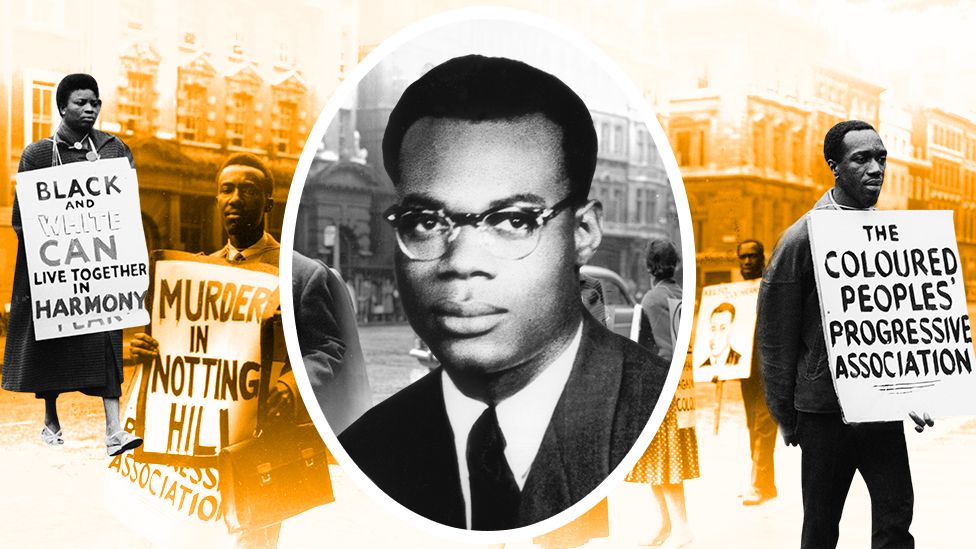
(For many of these examples of challenges to policing see Brain, 2010; Grieve, 2007, 2008; Harper, 2022; Savage, 2007. For the USA, see O’Hara, 2005; the Black Lives Matter and related campaigns, e.g. Shah, 2020.) There are, of course, many earlier problems of racism; for example, the murder of Kelso Cochrane in Notting Hill in 1959 (Berg, 2023), the death of David Oluwale and resulting scandal for the police in Leeds in 1974 (Aspden, 2008), and in Manchester with the Baird Inquiry, 2023. Every one of these has or had a political dimension.
25 Years of learning? Contrasting the Stephen Lawrence Inquiry as an example of ‘positive politics of policing’ to the reaction to the Williams’ Windrush Lessons Learnt Review as the ‘politicisation of wider police reform’
This article next considers similarities despite differences, and differences despite similarities, of learning about racism in policing, and its role in reform and change in wider society. The two inquiries considered span nearly the whole 25 years in question here. Stephen Lawrence was a warning not just of the later Williams Review on Windrush, but of much else that was to come.
Stephen Lawrence was murdered by a group of repeat criminal violent racists in 1993, and his friend Duwayne Brooks was attacked and traumatised in the same incident. Two men were eventually convicted of his murder in 2012. The failures of parts of the earliest investigation led to the SLI (1999). 1 The conclusions of the Inquiry were stark and devastating for the MPS, but also salutary for the wider policing service, its culture, and whole of society, but in the long term never applied to the politicians and civil service governance and leadership driving police reform.
‘There is no doubt there were fundamental errors. The investigation was marred by a combination of professional incompetence, institutional racism (IR) and a failure of leadership by senior officers’ (SLI, 1999: 46.1 author's italics). The first leadership failure was at inspector level (para 46.5) but the inquiry also goes on to identify incompetence in relation to strategic leadership and training. This was reinforced later by Ellison (2014). Questions about police prejudging and stereotypical racist bias had been previously suggested, if not pursued, by Fisher (1977), Phillips (1981), Lord Scarman (1981) and others. On this occasion they led to a finding of ‘institutional racism’ (para 6.34; see more below).
On a more positive note, Hall, Grieve and Savage (2009: 6–21) proposed that, for at least a decade of the 25 years considered here, the ongoing impact of the SLI amounted to a paradigm shift in policing with all that that could entail for party politics. They suggested there are six powerful legacies for reform which can be categorised as:
cultural governance political legal intelligence and international.
To these six can be added a seventh legacy, that of education and learning, involving particularly the police and others, notably young people in higher education and involved in research through their university.
Sir William Macpherson reported to Parliament through the Home Secretary Jack Straw 2 in February 1999. Straw set up a Steering Group under his direct personal chairmanship to deliver an action plan for the 70 recommendations. There was also a full-scale Parliamentary debate on 29 March 1999 where there was widespread multiparty demand for police reform.
The most overarching, significant and most questioned finding of the public inquiry was that of institutional racism in the police. The Inquiry panel (1999, para 6.34) described institutional racism as: … the collective failure of an organisation to provide an appropriate and professional service to people because of their colour, culture or ethnic origin. It can be seen or detected in processes, attitudes and behaviour which amount to discrimination through unwitting prejudice, ignorance, thoughtlessness and racist stereotyping which disadvantages minority ethnic people.
The MPS response was a pragmatic vision of anti-racist policing (Hall et al., 2009), which was proactive. It was to be a restatement and a recommitment to start planning, to be thoughtful, knowledgeable, and to deal with people sensitively according to their needs. It was the opposite of unwitting, ignorant, thoughtless and stereotypical behaviour. Thoughtful could include being compassionate and empathetic, but not patronising. In many ways this was a revisiting of the Peel/Rowan/Mayne/Reith/Emsley/Brown principles of policing by consent (Grieve, 2015a, 2015b; Reiner and O’Connor, 2015).
The SLI made 70 recommendations, 51 of which applied to policing and had considerable impact on policing philosophy and practice. The government accepted 55 of the 70 recommendations outright and the remainder were accepted in part, or in principle, or were subject to consideration or piloting. At a review a decade later (Home Office, 2009) the government claimed that 67 of the 70 recommendations had been implemented fully or in part all under their supervision. Significantly for what follows, they wrote ‘ … there is much more that needs to be done … . ensuring the momentum is kept up … . more widely on race equality’. (Home Office, 2009: 1 para 6).
There were leadership and cultural tasks not just for the MPS and its communities, but also nationally for policing. But as noted above, for the Home Office, and indeed the leading politicians, the Home Secretary's active role as chair of the group overseeing his action plan was crucial. Jack Straw stated, ‘I will take personal responsibility for oversight of this programme’ (Home Office, 1999: 1 para 6). There was also a role for high-ranking officials, requiring them to act as supervising moral agents with a vision for change that was organisationally owned and committed to by all leaders. It is worth also repeating that this commitment to the cultural change programme and the criticisms of policing that gave rise to it were at the time supported by all political parties and unanimously by the media. The Police response, and especially the MPS response, was therefore under the direct supervision of the Home Office and had to move from the aspiration not to be racist to a practical programme of activities, policies and operations, what were called by them ‘practical cop things to do’ (Hall et al., 2009: 99–123).
For their pragmatic anti-racist programme the MPS (in 1999) needed to ensure that the actions of individual officers at all levels were consciously, accountably and transparently free from any form of racism, bias or prejudice. A Metropolitan Police Race and Violent Crime Task Force was set up to drive cultural and procedural change. Leaders at immediate, tactical and operational investigative level were identified. Two of the most important leadership roles, regardless of rank, were as street-level change agents - family liaison officers for victims and intelligence officers. One quarter of the 70 recommendations in the SLI referred to families and their relationships with policing and communities. This would prove to be a particularly complex adaptive set of systems which were interacting and required a particular skill set from some exceptional officers who, fortunately, were forthcoming (see also Grieve, 2009a, 2014; Hall et al., 2009).
The family liaison officer response was to train a considerable cadre using a variation on a programme designed originally in Avon and Somerset Police and derived from some thinking by the An Garda Siochana in Dublin. This was modified using police experiences but also based on hospice learning programmes, specifically that of St Christopher's founder Dame Cecily Saunders. There had always been an investigative task in any major incident room for family liaison. What had been absent was a trained specialist discipline. Within 6 years more than 1200 family liaison specialist police investigators had been trained in London alone (Hall et al., 2009). Many others were trained nationally and internationally – a considerable cultural and international impact – that is a tribute to the Lawrences.
The findings of the inquiry were initially endorsed by all political parties and every newspaper and media in the land. The immediate context of the government and public response was conditioned by a number of other high-profile cases involving police investigations into the deaths of Black and minority ethnic victims around this time, and not least by the pragmatism 3 of the police themselves to reform. These cases included the murders of Zaid Mubarak, Damilola Taylor, Michael Menson, Victoria Climbie, the deaths of Errol and Jason McGowan, some police firearms incidents, the unresolved death of Ricky Reel, other missing person cases, and other informed challenges to policing leaders by families and activists (see Hall et al., 2009; Savage, 2007).
Achieving public confidence in policing was core to the SLI recommendations (e.g. recommendations 1 and 2) and the Home Office Action Plan (1999). The Home Office took the lead on these two recommendations, that were to be achieved by police leaders making themselves accountable through public explanations of police activity via the emerging PCCs and mayors and their democratic representative bodies. In London that was to be administered by MOPAC but in parallel with the Home Office.
Some of the most innovative thinking about policing and partnerships came from independent advice groups, or reference groups as they are now sometimes called, themselves a product of the Trident Prevention Programmes, Counter Terrorist (CT) Dream Teams, and given widespread impetus by SLI. Community impact assessments are tools for both accountability and transparency in considering what partners may consider to be important.
Evidence to Part 2 of the SLI, a travelling version of the Inquiry around the country, led to this aspect being explored in community and race relations training, family liaison training, and critical incident training. The latter specifically provided for the leadership of wider policing in response to recommendation 20.
Wendy Williams’ Windrush Lessons Learnt Report
The possible learning from the SLI makes the significance of the Home Office failures, both by politicians and officials, to the Windrush generation two decades later, all the more staggering. Wendy Williams, an His Majesty’s Inspectorate of Constabulary and Fire & Rescue Services independent police inspector and a Home Office employee herself, was tasked with identifying ‘lessons learned’ in a review of what had gone wrong. In what was described by senior politicians as a part of a right-wing agenda against immigration and as a ‘hostile environment’ (a phrase misappropriated from CT thinking -see Gentleman, 2018, 2023a, 2023b, together with Anonymous, 2020: The Guardian: 2 – a supportive and indeed laudatory editorial about the findings and recommendations). It is significant that the origin, and driving force behind the ‘hostile environment’ was the then Home Secretary, and later Prime Minster, Theresa May. She was also instrumental in agreeing to the Williams Review and set up a National Stephen Lawrence Memorial Day to make sure the lessons (including that of IR) were not forgotten.
B Cohen (2019) in her review of the SLI at 20 years for the Runnymede Trust makes the link between the SLI and Windrush and describes the ‘hostile environment’ thus: The ‘hostile environment’ is a Home Office policy adopted in 2012 intended to deter people from coming to the UK, and to stop those who do come from overstaying. Theresa May, as Home Secretary, announced: The aim is to create a really ‘hostile environment’ for illegal migrants … What we don’t want is a situation where people think that they can come here and overstay because they’re able to access everything they need.
A main feature of the ‘hostile environment’ was the role in immigration control assigned to people other than immigration officers. Employers, landlords, bank staff, National Health Service (NHS) staff, and other public sector workers, without appropriate training, carry out immigration checks on the basis of which they could deny jobs, housing, healthcare and other services to undocumented migrants. This included the de-legalising of Commonwealth UK citizens, some of 60 years standing, as alleged illegal migrants. Some were deported, or not allowed to return from visits to the Caribbean (B Cohen, 2019: 3 citing Kirkup and Winnett, 2012).
This had terrible personal outcomes. Besides becoming illegal immigrants, some were sacked from long-term jobs, became homeless, jobless, suffered economic hardship, lacked NHS provision and had psychiatric problems, in some cases feeling suicidal. Theresa May was forced into a disastrous ‘apology’ by an explosion of anger at a summit of Commonwealth Heads of Government in April 2018. This was an object lesson in what not to say: apologising only for ‘anxiety’ or ‘concerns’ or ‘worries’ and not apologising for the substantive racist impact of her policies, she also seemed to suggest that the issue was one of ‘unexpected outcomes’ or unintended consequences of the application of the policies (Gentleman, 2019). An understanding of the failure of police apologies in the SLI (1999: para 30.2; Williams, 2020: 15) would have taught her and other Home Office apologists that this would be unacceptable and lead to more anger, which it did. May subsequently admitted that even using the phrase ‘hostile environment’ was an error (Gentlemen, 2019: 15). These errors were from the Home Office, the very organisation tasked with supervising the police and policing response to the SLI.
Comparisons and contrasts of the SLI (1999) with Williams (2020) are revealing. First, the nature and objectives of the two differing kinds of searches for the truth and understanding: the SLI is a judge-led public Inquiry that led to ‘Maxwellisation Letters’, which identified areas of criticism for about 20 police officers who were subsequently named in the final report. Conversely, Williams, as a Home Office internally selected reviewer, a lay Inspector of Constabulary, was not a Judicial inquiry and was tasked with identifying lessons either learnt or to be learnt from recommendations. This is not, as in the SLI, apportioning blame (see for example Ellison, 2014, for criticisms and the ongoing Independent Office of Police Complaints Commission (IPCC) - now Independent Office of Police Conduct (IOPC) - and National Crime Agency (NCA) alleged corruption investigation, the final report of which is still to be published, Harper, 2022, and many others).
Another contrast is in the inability to identify sufficient evidence of institutional racism. Williams wrote: ‘While I am unable to make a definitive finding of institutional racism within the department, I have serious concerns that these failings demonstrate an institutional ignorance and thoughtlessness towards the issue of race and the history of the Windrush generation within the department, which are consistent with some elements of the definition of institutional racism’ (Williams, 2020: 7, author’s italics). So the only elements apparently missing are ‘unwitting’ and ‘stereotypical’ yet on the same page Williams also writes: ‘But over time those in power forgot about them and their circumstances, which meant that when successive governments wanted to demonstrate that they were being tough on immigration by tightening immigration control and passing laws creating and then expanding the hostile environment this was done with complete disregard for the Windrush generation’. (Williams, 2020: 7, author’s italics). If that is not evidence of stereotyping all the wider groups involved, and hence the Windrush and any Black and minority ethnic communities, then what would? Even if Williams’ claim that not all the SLI institutional racism ingredients are present simultaneously (of being unwitting, ignorant, thoughtless and stereotypical, SLI, 1999) it appears that they are on the evidence used in SLI only individually necessary and sufficient, if not in their totality or aggregate. That proviso aside this paper covers some aspects of Williams’ Review in detail because it is a brave paradigm of objective, logical wider policing reform, and a repair map of politicisation. 4
In an inspirational summary, Williams (2020: 15) outlines the initial 13 recommendations and explained her philosophy and a wider vision. ‘…With these measures, I urge the government and Home Office to:
go further to right the wrongs, look beyond the Caribbean, tell the stories of Empire, Windrush and their legacy, assess and limit the impact of the hostile environment on the Windrush generation, engage meaningfully with stakeholders and communities to develop, implement and evaluate policy, and better understand and provide internal training on the public sector equality duty (PSED) and its intersection with immigration and nationality law’.
Williams's vision shows true leadership. Her first recommendation tends to support a view that the criteria for the definition of institutional racism are instantiated: ‘Ministers on behalf of the department should admit that serious harm was inflicted on people who are British and provide an unqualified apology to those affected and to the wider black African-Caribbean community as soon as possible. The sincerity of this apology will be determined by how far the Home Office demonstrates a commitment to learn from its mistakes by making fundamental changes to its culture and way of working, that are both systemic sustainable’. (Williams, 2020: 15). This early introduction of an apology linked to a supervised action plan to change culture and practices is a practical paradigm of how to reform an institution (Williams, 2020). Recommendation 6 is highly creative and aims at telling: (a) the missing stories and history of Empire and colonialism to remedy the Home Office ‘institutional ignorance’ of colonial history and experiences of Black Britons for both new and existing Home Office staff; and (b) auditing that training and learning and publishing the statistics.
Recommendations 8, 9 and 10 consider engagement ‘meaningfully’ with stake holders, civil society and communities ‘seeking out a diverse range of voices’ (Williams, 2020). Recommendation 15 continues a theme of leadership at the highest official level (and by implication suggests it has been missing up to now). This leadership should drive cultural change in Home Office. It goes on to describe the need for a leadership development programme to involve all leaders and managers in the cultural changes necessary.
Significantly recommendations 27, 28, 29 and 30 deal with race but not institutional racism. They deal with a high-level advisory board, the aspirations of Black and minority ethnic staff, and an action plan to facilitate them, improved training and refresher training, particularly in respect of diversity and unconscious bias, external involvement in design, monitoring, review and learning from the findings and evidence in employment tribunals.
So, the similarities of the SLI to Windrush are in the concepts instantiated: race, unconscious bias, inequalities, vulnerabilities, cultural change, leadership, ethics, decision-making, knowledge management, training, community involvement, engagement and advice, institutional ignorance and thoughtlessness, a lack of transparency and accountability, lack of records and detail of decision-making criteria, audit trails, document retention and archiving. One conclusion from Williams (2020) is that it is a massive learning opportunity, like the SLI, about systemic racism for any leader – political, police or otherwise, and for society.
The Williams Report (2020) is argued here to be a paradigm of moral leadership; it is hard hitting, comprehensive, thoughtful, and highly creative. It is suggested that Williams, her team and her advisory group learnt a lot from the SLI. It is also suggested on this account that by contrast the Home Office learnt nothing for their own internal workings, from their unique access to the SLI evidence, analysis, learning, and the ministerial monitoring, supervision and oversight of the Home Secretary's SLI Action Plan (Home Office, 1999). The Home Office officials applied none of the SLI lessons, or any of the recommendations, to themselves while making massive demands on policing (Braverman, 2023; Hymas, 2023a, 2023b). That suggested a degree of hypocrisy.
Conclusions
There has always been a political dimension to policing reforms. Pre-Peel there were eight Parliamentary reviews of policing from the 1750s that considered reforms (Emsley, 2009).
This article sought to show that Savage's (2007) model of police reform, as a conjunction of driving forces, is useful in exploring the primary use made, over the past 25 years, of the politicisation of police reform by the other five elements of the model. It has sought to expand a debate by examining the environment and to offer alternative narratives, and a longer timeline. Nothing here signifies anything but horror at the ghastly behaviour of some criminals in uniform and the need for reform (Casey, 2023, Rowley, 2023).
But ‘operational independence’ is both important and complex, as Lord Scarman (1981 and private letter to John Grieve on 10th anniversary of his report into the Brixton disorders) and Reiner and O’Connor (2015), pointed out. It means a need to be able to stand apart; for example, to investigate crisis, corruption and fraud at will, including that committed by politicians and their associates. Following these commentators and Brown (2014), Savage (2007) and Stanko (2023) are options.
Footnotes
Acknowledgement
A special thank you to Dr Nathan Hall for his assistance in submitting this article. Dedicated to Tom W, RIP.
Declaration of conflicting interests
The author declared no potential conflicts of interest with respect to the research, authorship, and/or publication of this article.
Funding
The author received no financial support for the research, authorship, and/or publication of this article.