



Abstract
From a corpus of 678 articles appearing in the International Journal of Police Science & Management representing 25 years of publication, This article reviews the achievements of the Journal's founding principles. Aiming to be multidisciplinary, international and collaborative, with particular emphasis on diversity and operational issues, the Journal also sought to present research informing both policy and practice. A bibliographic analysis revealed 45 police jurisdictions, 41 cognate disciplines and 150 topics covered. The majority of articles (79%) were empirical papers of which 69% derived from primary, 26% secondary and 5% mixed research designs. Around one-fifth of papers related to police management issues, one-third to police deployments and policing practices, and one in ten papers were devoted to accountability and misconduct. Diversity featured in about one-third of papers with gender being the most referred to, whereas disability, religion and sexuality were barely referenced. The majority of articles (77%) were by those from academic institutions with relatively few police/academic collaborating authors. The article concludes with a brief assessment and discussion of the future direction of policing research.
Introduction
It has been 25 years since the inception of the International Journal of Police Science & Management (IJSPM), so this celebratory Special Issue seems a good opportunity to reflect on the degree to which the articles appearing in the Journal have fulfilled the founding (and current) aspirations of the Editors. In 1998 when IJPSM was founded, the world had its share of tragedies, such as the downing of Pan Am flight 103 at Lockerbie and triumphs such as the fall of the Berlin Wall marking the end of the Cold War. Policing in England and Wales was under scrutiny because of its catastrophic handling of the football fans at Hillsborough and also in Australia with the publication of the Wood Commission report (Wood, 1997) into misconduct in the New South Wales Police, while in America police shooting of Black citizens was a cause of concern (Geller and Scott, 1992).
In the intervening years, some policing issues remain ongoing, like the poor investigation and prosecution of violent and sexual crimes against women (Brown, 2022) and continued examples of police misconduct (Porter, 2021). New ones have emerged such as the proliferation of crime in the cyberspace (Hoar, 2005), the invasive impact of social media (Walsh and O’Connor, 2019) and defunding debates in the United States (US) (Fegley and Murtazashvili, 2023) and their reverberations internationally (Corley and Reber, 2023). As then, inflation at the time of writing in the UK stands at 7.9%, which affects the resourcing of public services with the police service in the UK playing catch up after the loss of 20,000 officers during the austerity years (Facchetti, 2021). Yet other concerns ebb and flow, as Bartkowiak-Théron (2019) notes with respect to police education and training with its current focus on professionalisation (Tong, 2017) and its association with evidence-based policing (Fielding et al., 2019). Nor has policing worldwide escaped the ravages of the COVID-19 pandemic (Sheptycki, 2020) and the continued presence of terrorism (Wilson, 2022).
As Founding Editors, the authors were committed to the reciprocal value of academic research informing police practices and practitioner experience informing the research agenda (McKenzie and Brown, 1998). We hoped that the Journal would publish both theoretical and empirical papers, reflecting international scholarship and collaborative working. We aspired to an eclectic range of contributing disciples including, but not limited to, sociology, criminology, psychology, law, social and public administration as well as cross-cultural collaborations, taking as read that the contributions would be rigorously peer reviewed. We recognised the advancement of cybercrime and the adoption of new technologies. After the first volume had been published, we further reflected that the Journal's contents would mirror our interests: police culture and diversity (Brown) and operational matters (McKenzie) (Brown, 1999). We, together with three subsequent Editors (Nikki McKenzie, Michael Rowe and Becky Milne) represent distinct areas of interest: the role of psychology in policing and investigation; the application of forensic science to investigations; technological advances and implementation; cybercrime and the digital space; and criminology and global policing including human rights and conflict. 1 The Journal's disciplinary base has expanded to encompass, politics, geography, history, economics, political science, jurisprudence, legal theory, biology and even human genetics (incorporating work on DNA), and increasing concerns about the environment.
Thus the aim of this article is to present an analysis of the papers appearing in the Journal from March 1998 to June 2023. We adopt a bibliometric approach and report on topics covered, methods used, and countries and disciplines represented. We also offer some evaluation of the Journal's influence by examining citations and look at trends in coverage as these reflect policing issues.
Background
Police research has a rich history and journals dedicated to publishing commentaries on police investigative techniques, management and administration date back almost 100 years with the publication of The Police Journal (1928) and The American Journal of Police Science (renamed the Journal of Criminal Law and Criminology in 1932). These publications had much the same remit as contemporary police journals noting the widening scope of policing and the need to alert both the senior and junior ranks to new developments, the difference being that many of the contributors then, certainly for the Police Journal, were serving or former police officers. The American counterpart (American Journal of Police Science) was intended to communicate the ways in which modern science can be applied to detection, emphasising practical application and encouraged submissions representing ‘authentic’ personal experience. Much of the earliest output was the work of ‘enthusiastic amateurs’, ‘journalistic pop sociologies’ and the ‘memoirs of retired police officers’, with American police research being in its infancy (Reiner, 1992). Reiner (2015) notes the modern period of more academically oriented policing research can be dated from the 1950s (the work of the American scholar William Westley) and in the next decade the pioneering research of Michael Banton, Jerome Skolnick and Egon Bittner. The spur to these developments was political conflicts on both sides of the Atlantic and the intellectual development of criminology and largely used ethnographic methodologies (Reiner, 1989). At the time of the founding of the IJPSM in 1998, policing scholarship was dominated by Lawrence Sherman, David Bayley and Herman Goldstein (Wright and Miller, 1998) with only four women appearing in their top 50 policing scholars.
Reiner (1989) attempted a ‘periodisation and typology’ of police research in Britain, trying to phase contemporary prevailing concerns with scholarly output. He notes the difficulties in doing this because of time lags in publication, with the theme of the study being either ahead or behind the predominant focus of the period, or authors pursuing their particular interests independent of contemporary policing concerns. By the 1990s, Reiner suggests that police research had moved out of its more conflictual stage, which had focused on police deviance, and into a more contradictory phase in which police were losing their legitimacy through a degree of politicisation and the embracing by police of harder tactics when maintaining public order. This was succeeded by a crime control phase in the early twenty-first century, when police research became more concerned with intelligence-led policing and detailed crime analysis (Reiner, 2010). Subsequently, Davies (2016) argues that we are now in a collaborative phase entailing a more positive relationship between police and academia.
Two corollaries arise from the phasing of police research. First, how to measure whether the research has been influential in contributing to policing policies and practices (Betts, 2022) and second, the rigour of the research (Boulton et al., 2021). The evidence-based policing (EBP) movement has been gaining traction in recent years, but as Lum and colleagues discovered, very few police officers read academic policing journals (Lum et al., 2012). However, a later study of British police officers found senior ranks saw the importance of EBP, were more likely to engage in academic practice (Boulton et al., 2021) and had greater enthusiasm for police–academic collaborations (Paoline and Schnobrich-Davis, 2022). The reading of articles does not of course necessarily mean the ideas are taken up so perhaps the growth in academic–police collaborative research might provide a better indicator, but at Betts (2022: 18) argues, It seems to me that the growth of institutional arrangements that bind researchers to the researched are likely to negotiate a ‘meeting in the middle’ in determining research priorities. What may be lost in this coming together is the pursuit of more challenging research agendas and the critical questions these might generate. Police–academic partnerships seem to me to further endanger the production of critical research ‘from the edge’, while ‘preferred partners’ are granted ‘insider’ funding, access and data in return for validatory ‘evidence’ of a more conservative view of policing.
George Mason University has been tracking and noting oscillations in the coverage of police research since 2000 (Beckman et al., 2003, Mazeika et al., 2010; Wu et al., 2018). Wu and colleagues observed that research on police investigative strategies and community policing had declined since the 2000–2007 review and concluded that topics such as sexual assault and computer crime remained marginal in the police literature. Latterly, studies conducted to address officer attitude and opinions, occupational health, and officer stress and diversity issues have seen sizeable increases.
Journal metrics include indices of the number of citations, downloads and online reads. These represent rather rough-and-ready indicators of impact and are more likely to indicate academic influencers rather than influence on practitioners. Snook et al. (2009) created a level of interest score in policing research by dividing the number of pages dedicated to policing articles by the total number of pages in five forensic psychology journals. They report an upward trend in output, mostly coming from North America and covering operational topics. They suggest that at that time, there was a discrepancy between police practitioner needs, which included psychological assessment of recruits, evaluation of candidates for promotion, and training police personnel in human relations techniques, and the aspects of police research that was then being published.
Method
The counting and analysis of journal articles to measure subject disciplinary trends has been a consistently used tool (e.g. gender studies in psychology, Eagly et al., 2012; criminology, penology, psychology and law, González-Sala et al., 2017; forensic psychology, Brown et al., 2022) as well as in policing (Beckman et al., 2003; Mazeika et al., 2010; Snook et al., 2009; Wright and Miller, 1998; Wu et al., 2018). These authors identified key journals, using either indexing terms or creating bespoke coding schemes of topic coverage. Collectively known as bibliometrics, Narin (1976) defines this as techniques using citation and/or publication counts to measure productivity, the eminence of researchers or creating a mosaic of scientific activity. Our usage reflects the latter. Beckman et al. (2003) developed a cross-sectional approach to analyse police literature accessing a range of criminal justice multidisciplinary publications. They searched the two databases (from the National Criminal Justice Reference Service and the University of Maryland multi-database) and subsequently coded articles for substantive focus, research typology and publication medium. They described articles as theoretically driven discussions of issues or theories, descriptive narrative accounts not supported by primary research, correlational studies of survey or secondary data, and outcome studies of empirical analyses evaluating a policy, programme or tactic. This coding seems to confuse methods with analytics. Boulton et al. (2021) separated these to categorise the studies they looked at by data type (secondary or primary) and analytic approach (qualitative, quantitative and mixed). We have drawn on these papers to assist in our analysis.
To reiterate the aims of this article are to:
assess the international coverage of articles; determine the breadth of disciplines represented by the articles’ authors; examine the extent to which diversity was represented; discover the range of topic coverage; identify the research design and analytic strategy; and assess the relative influence of the Journal.
Analytic strategy
All the articles appearing in the Journal between March 1998 and June 2023 were located and inspected. Each was coded by means of the following coding scheme:
Date, volume and part number. The research design employed:
primary data collection by quantitative methods, which included questionnaires, surveys, experimental studies and randomised control trials; primary data collection by qualitative methods, which included interviews, diary studies, observations; secondary analyses in which researchers accessed court or police records or undertook further analyses on already collected quantitative data; mixed methods incorporating quantitative and qualitative elements; desk studies, e.g. literature reviews, systematic reviews or meta analyses; explicitly theoretical driven. The analytic approach used:
qualitative methods (including thematic analyses, frequency counts); quantitative methods (e.g. bivariate and multidimensional analyses, regressions and modelling techniques); mixed methods of analyses (included in a and b above); comparative analyses; systematic reviews; whether a test of statistical significance was applied. The forensic population who were the subject of the article, which included police personnel, criminal justice professionals, witnesses, suspects, offenders and victims. This category also included students as research participants, the general public and other professionals. Reference to diversity (age, sexuality, religion, gender, ethnicity or disability) and which of these groups was mentioned. Identification of the broad topic covered. The jurisdiction where the article originated. Details of the authorship:
number of authors for each article; sex of the first author; discipline of the first author; affiliation of author (whether police, academic or other).
An exhaustive listing of 150 topics was coded and to make the analysis more manageable, these topics were grouped into ten higher order categories by the first author and reviewed and agreed by the second. The second author also coded a randomly chosen volume to check the inter rater reliability of codingy by the fisrt author.
Findings
A total of 678 articles appeared in the Journal from its inception in 1998 to June 2023. Of these about one-third (36%) were single authored, 33% were dual authored and 32% had three or more authors. The majority of authors had academic affiliations (78%). Police officers who had acquired academic qualifications and were currently based in academic institutions represented 6% of the authorship, whereas 7% were still serving as police officers.
International coverage
In all, when looking at their jurisdiction, first authors came from a total of 41 countries, the largest representation being from the US (31.1%) and the United Kingdom (UK; 26.8%), followed by Australia (10.5%) and Canada (5.6%). Table 1, showing the broader categorisations of countries, reveals worldwide coverage with North America and Europe dominating, and Latin America having the fewest contributors.
Country of first author.
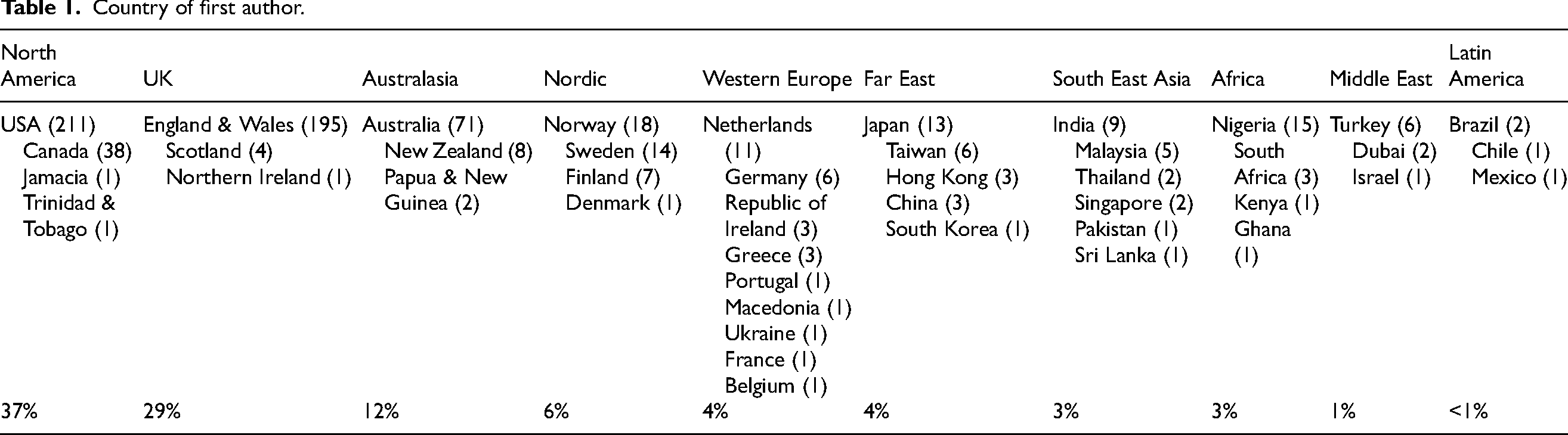
For the most part, research was undertaken in the first author's jurisdiction, but this was not always the case. For example, a number of scholars based in the US conducted research in other countries such as the UK (13; 6%), India (6; 3%), China (4; 2%) and Nigeria (2; 1%).
Nine per cent of papers were international in coverage, and these tended to be literature reviews. There were 13 two-way comparisons: US and UK (10), US and Taiwan (1), Scotland and the Netherlands (1), France and the Netherlands (1); and one three-way comparison between the UK, US and Australia. The focus of these articles was mostly to do with quality of service, diversity, gender and equality issues or investigative interviewing.
UK- and African-based scholars were most evenly split between sole and collaborating authorship with those from the Far East, Latin America and South East Asia the most likely to work collaboratively (73%, 75% and 80% respectively) [chi-squared (9, N = 678) = 19.89, p < .001].
Disciplinary coverage
The disciplines of first authors mostly hailed from the social sciences (51%) and police and criminal justice studies (24%). Psychology (which included forensic, clinical occupational/organisational, counselling and criminological psychology) accounted for 21.8% of subject specialism. Authors whose subject discipline was criminology accounted for 19.3%, and 19% designated themselves as coming from criminal justice studies (Table 2).
Discipline of first author.
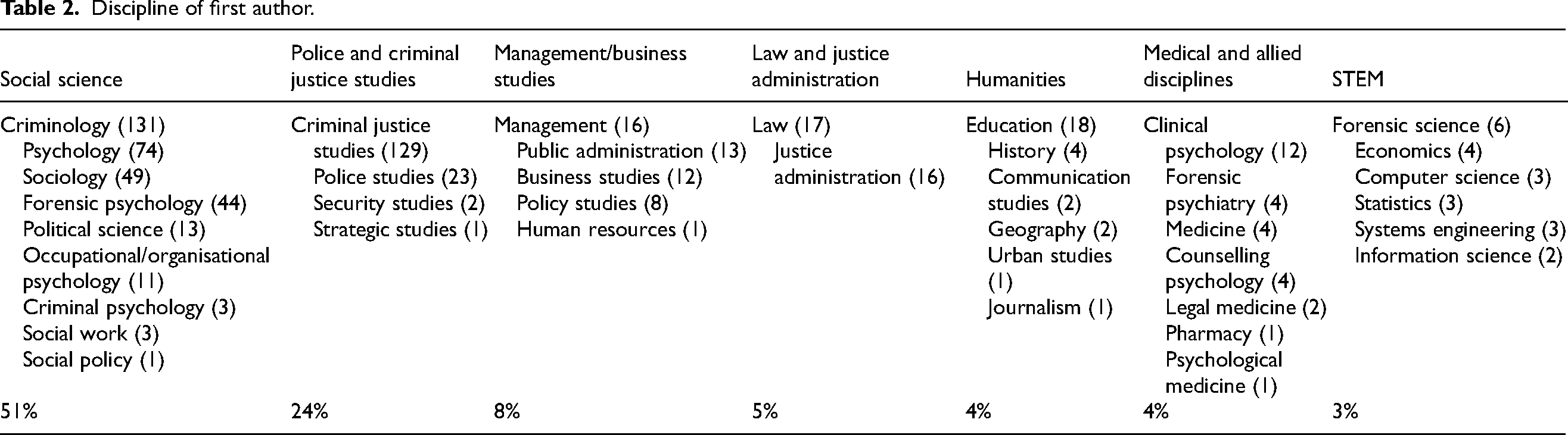
There may be a jurisdictional slant to these designations. The majority of criminal justice designations associated with a first author were from the US (70%), whereas only 9% of those from England and Wales, 5% from Australia and 2% from Canada so designated themselves. In England and Wales, first authors more often called themselves criminologists (55%) compared with 14% from USA, 10% from Australia and 9% from Canada. These difference were statistically significantly difference [chi-squared (3, N = 260) = 98.77, p > .0001].
Authors from all disciplines were equally likely to write singly or collaboratively.
Topics
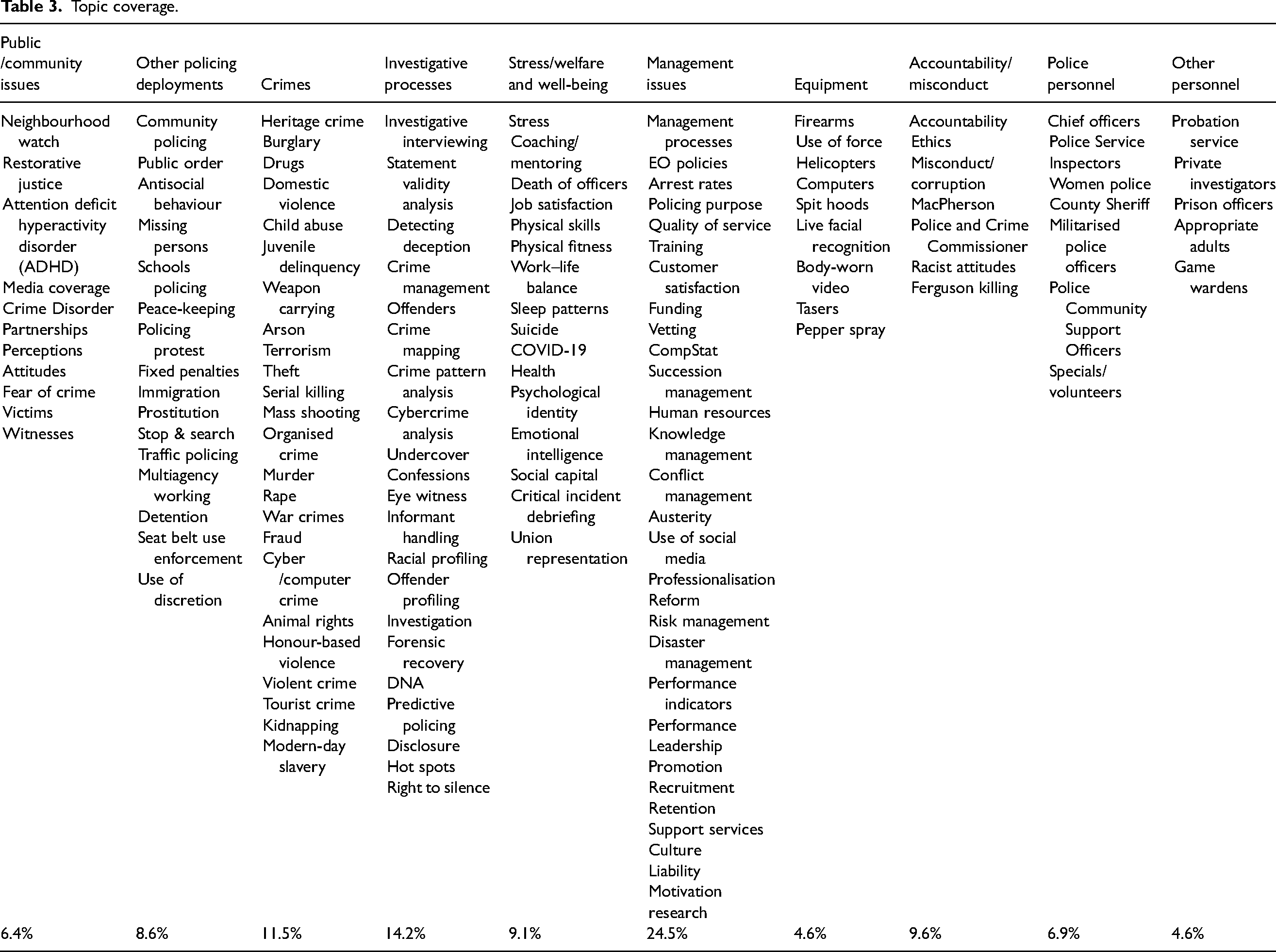
More than 150 topics were represented in the Journal over the period 1998 to 2023, of which about one-third only appeared once. Occupational and traumatic stress was the single most written about topic (7%), followed by misconduct and corruption (5%), policewomen (4%) and police reform (4%).
Higher order coding revealed management issues as the most dominant topic (24.5%), followed by investigative processes (14.2%) and specific crimes (11.5%). Accountability and misconduct, stress, welfare and well-being, and other policing deployments accounted for 9.6%, 9.1% and 8.6% of topics respectively. Public/community issues and police personnel represented 7% of topics each, whereas the least covered were other personnel (4%) and equipment (4%). Within the broad crime and investigative processes categories, burglary and investigative interviewing were the most frequent, with violence against women and girls being marginal (Table 3)
Topic coverage.
The trends in coverage of these broad themes over time are presented in Figure 1. Coverage of operational issues declined over time, although there was an upward trend for all other categories.
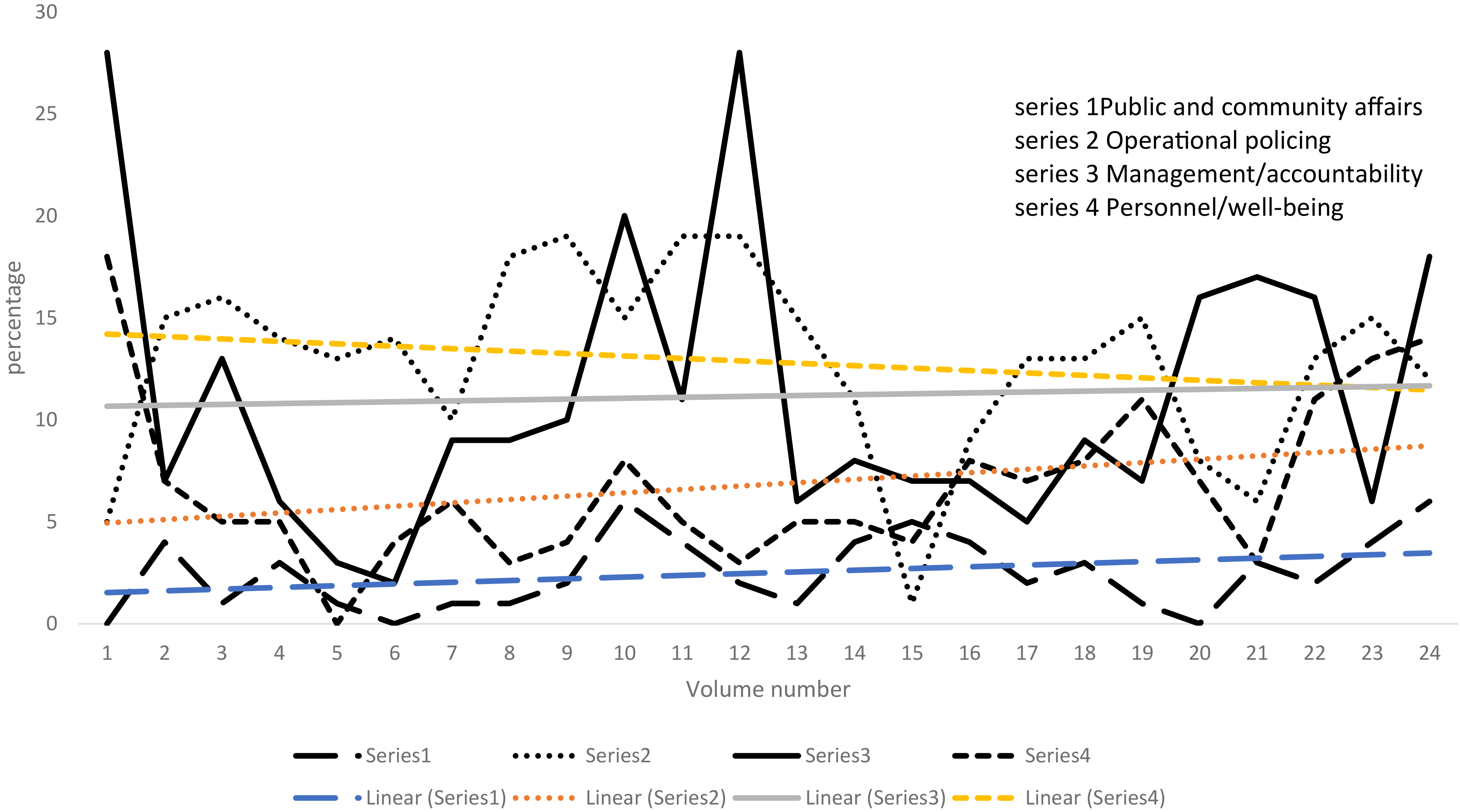
Trends in topic over time from volume 1 (1998) to volume 24 (2022).
Looking at the periodicity phasing of topics covered, using Reiner's contradictory and crime control phases together with Davies’ collaborative phase, Figure 2 shows a degree of synchronicity that was statistically significant [Kruskal–Wallis H(2) = 13.6, p < .001]. In the contradictory phase, the Journal published more articles relating to police personnel and accountability than in the other two phases. Investigation and crime-related articles were more likely during the crime control phase, whereas stress and welfare issues were more likely to appear during the collaborative stage, reflecting the experiences of police forces internationally, including India, Pakistan and Sweden.
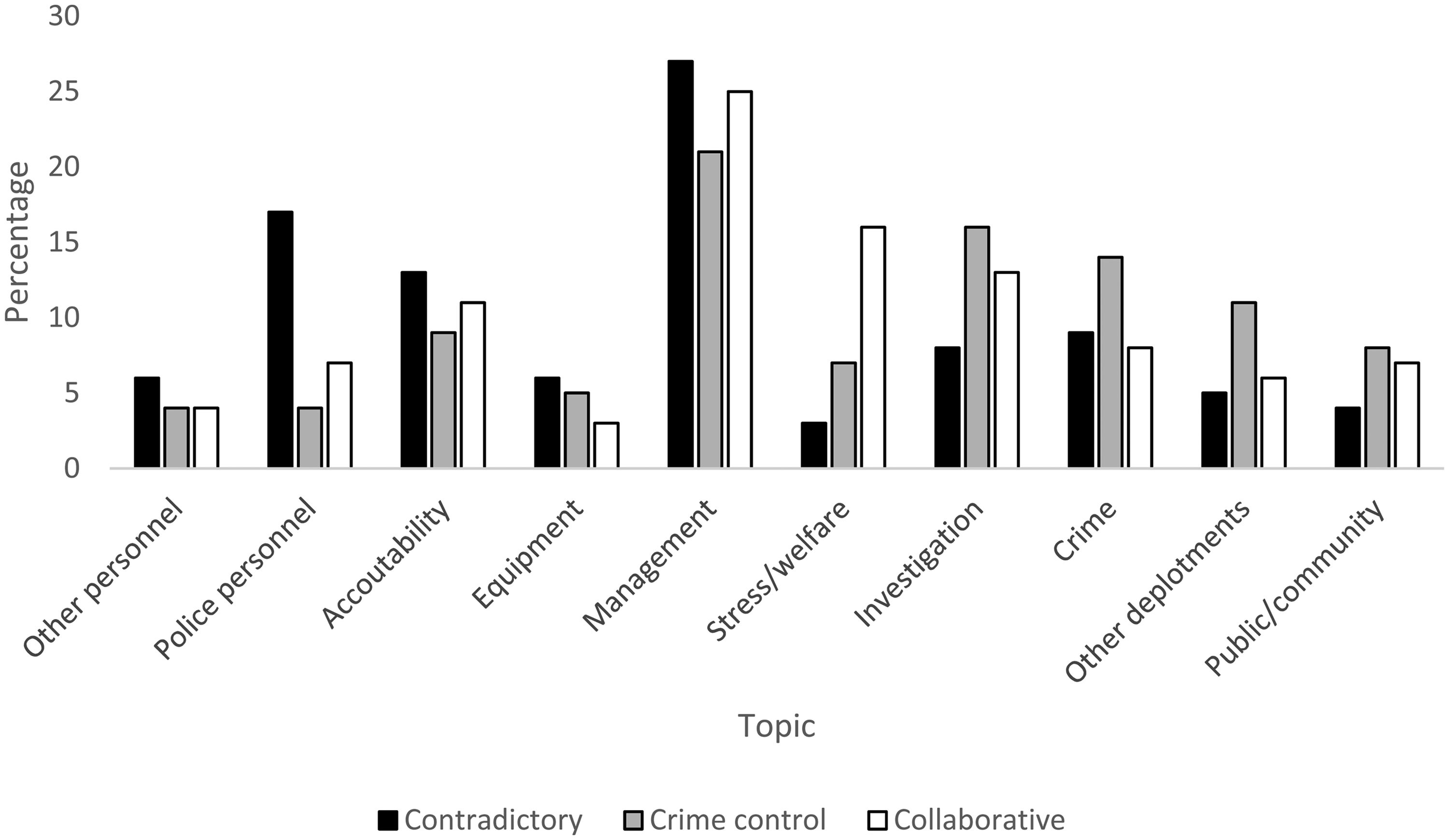
Periodicity of police research.
About one-half the response samples were police personnel, with 39% being rank and file officers, 4% recruits, 3.5% chief officers and 1% other senior ranks; 0.5% were specials or police volunteers. Only 2% of articles mentioned police support staff.
Diversity
Women were the first named author in 31% (210) of articles and men in 69% (466). When women were named as first author, they were more likely to have collaborated (75%) than when men were named as the first author (58%). These differences were statistically significantly different [chi-square (1, N = 676) = 17.99, p < .001]. Australasia was most likely to have a woman as the first named author (53%), and the Middle East, Far East and Latin America were most likely to have a male first named author (100%, 80% and 100% respectively) [chi-squared (9, N = 676) = 36.38, p < .001].
In terms of number of submissions, 6 women were among the first 50 authors who had contributed 3 or more articles.
Figure 3 shows that women first authors were more likely to present research on investigative strategies, policing personnel and stress and welfare compared with male first authors, whereas men were more likely to have equipment issues and management concerns as their topic (Mann–Whitney U = 16, p < .01).
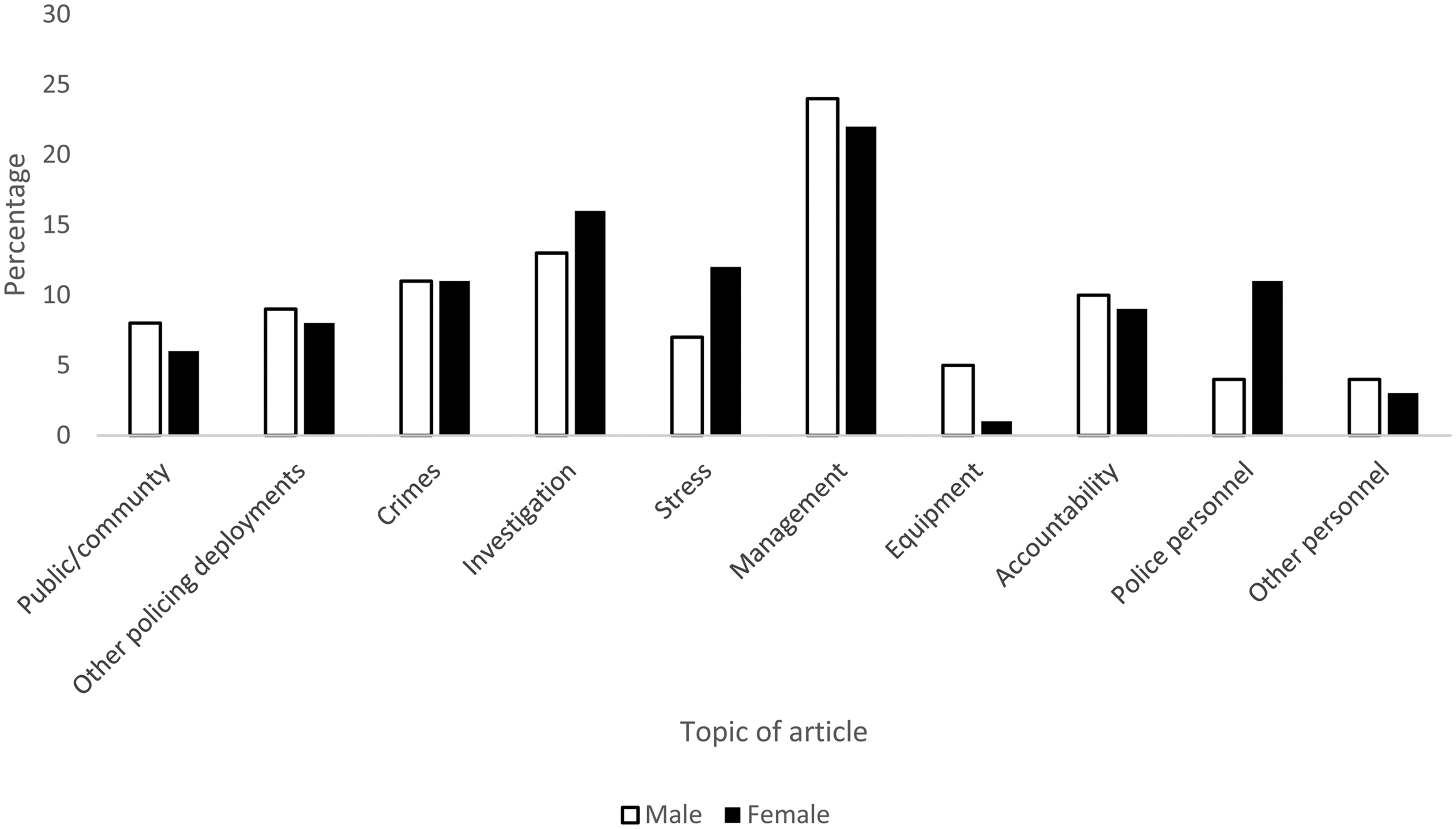
Gender differences (of first named author) in topic coverage.
Of the 25 papers specifically focusing on policewomen's experience, 20 were written by a woman as first author.
Women first authors were most likely to be social scientists, with very few from STEM subjects (only 3 compared with 18 men). Proportionally more men (26%) declared police and criminal justice studies as their designated discipline compared with women (20%). The gender distribution by discipline was statistically significantly different [chi-squared (6, N = 639) = 19.70, p < .003].
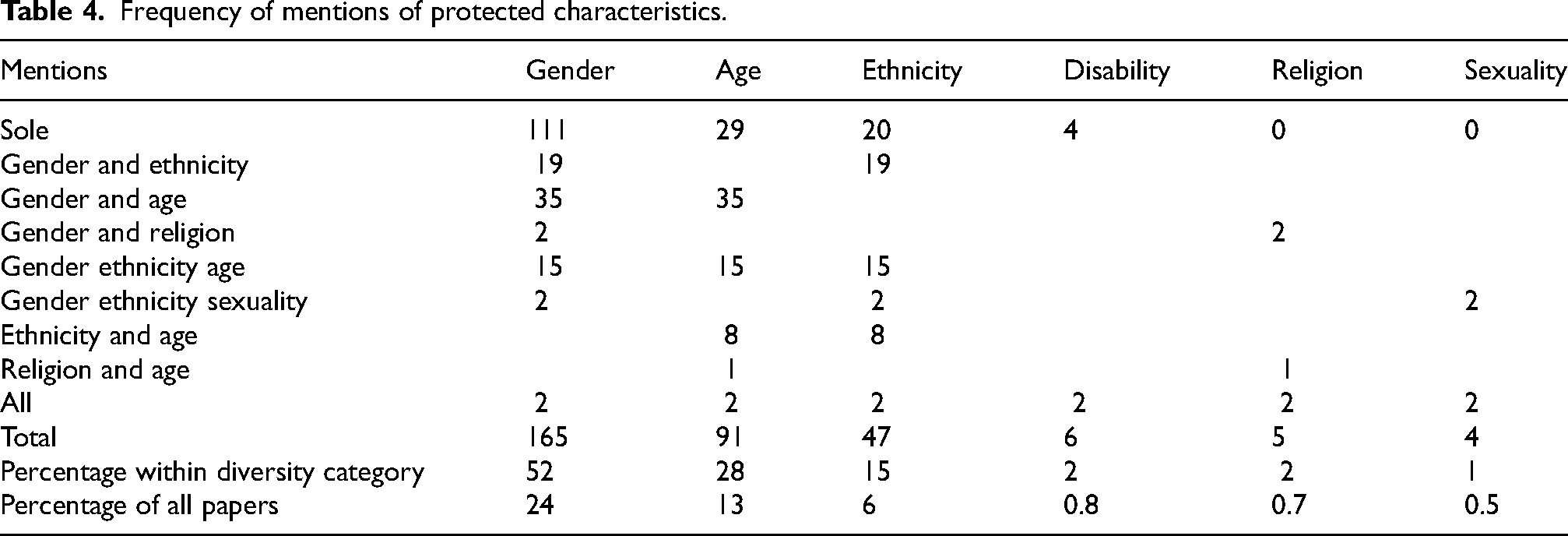
Specific mention of a protected characteristic (gender, ethnicity, age, disability, religion and sexuality) occurred in 252 (37%) articles. When this occurred, gender was the most likely characteristic mentioned (111 times) followed by age (29) and ethnicity (20). Disability, religion and sexuality were addressed infrequently. Co-occurrences are shown in Table 4. Mentions were mostly in relation to participants in empirical studies and reference to findings broken down by those characteristics. Only one article was found that presented findings in terms of intersectionality (Holder et al., 2000).
Frequency of mentions of protected characteristics.
Diversity issues were more often reflected in articles in which women were the first authors (50%) than in those with a male first author (31%) [chi-squared (1, N = 676) = 21.08, p < .001].
Research design and analytics
Overall, 127 (18.8%) articles were designated as narrative desk studies. Embedded within the research design were 53 (7.8) explicitly theoretically driven articles. Specific theories mentioned include rational activity theory, expectancy theory, diffusion innovation theory and cultivation theory. There were 21 (3.1%) articles using psychometrics and 67 (9.9%) designated as an evaluation of a tactic, policy or procedure, of which 22 (33%) applied statistical tests of significance. Around 79% (542) were empirical articles. Of these, 374 (55%) used primary data, 138 (20%) used secondary sources and 30 (4%) were mixed designs. Table 5 shows the split between qualitative, quantitative and mixed analytical strategies. Overall, statistical tests were employed in 38% of articles (Table 5).
Research design and analytic strategies of papers.
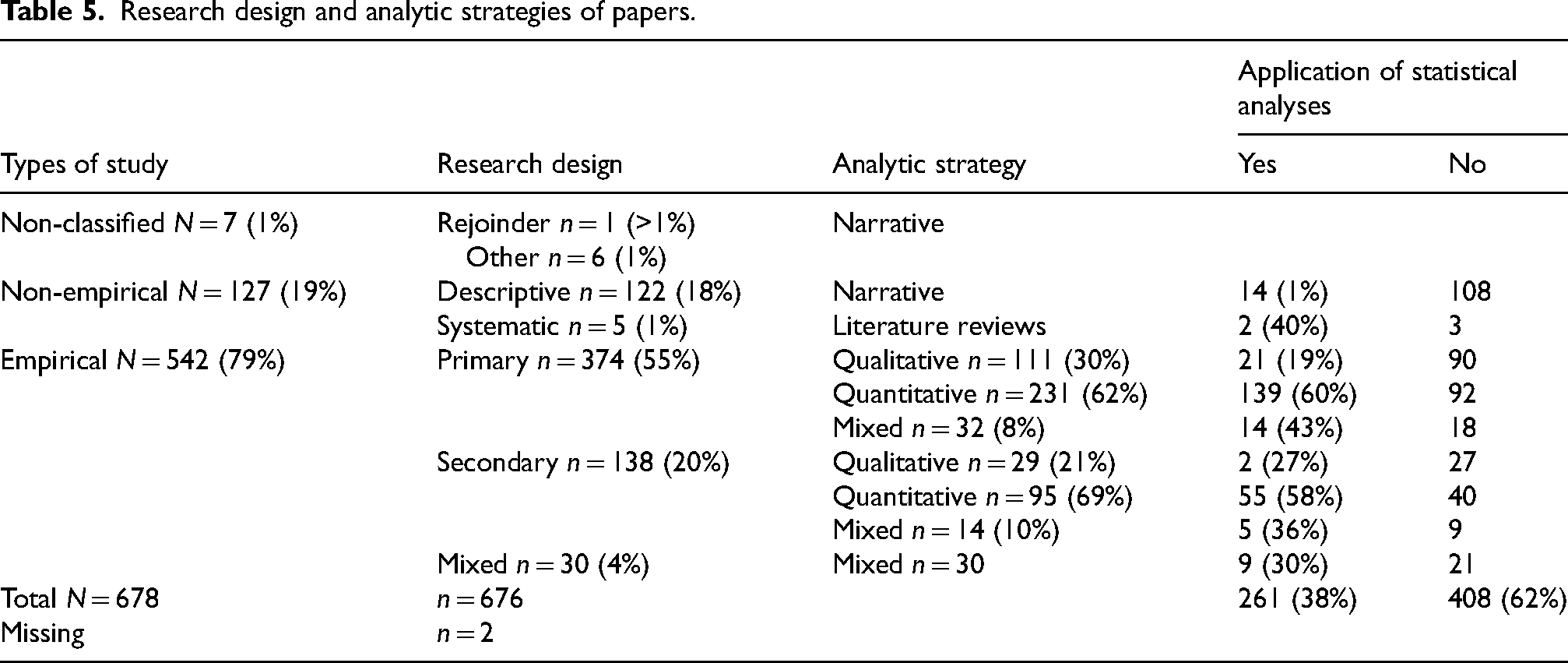
As expected, quantitative analytic strategies were more likely to use statistical analyses (60%) than qualitative designs (9%) [chi-squared (1, N = 469) = 22.6. p < .0001]. Qualitative studies often used chi-square analyses, as did quantitative studies, with relatively few of the latter using more sophisticated structural equation modelling or regression analyses. Only one-third of articles presented as an evaluation used statistical tests of significance.
Influence
The current impact factor of the Journal is 1.6, which is on the lower end of comparable journals (e.g. Police Practice and Research, 0.6; Journal of Criminal Law and Criminology, 1.1; Policing a Journal of Policy and Practice, 1.8; Policing an International Journal of Police Strategies and Management, 1.9; Police Journal, 2.5; Police Quarterly, 3.1). Tracking changes in impact factor over time (taken from researchbite web page) shows an upward trajectory for IJPSM and comparable journals (which were not statistically significantly different; Figure 4).
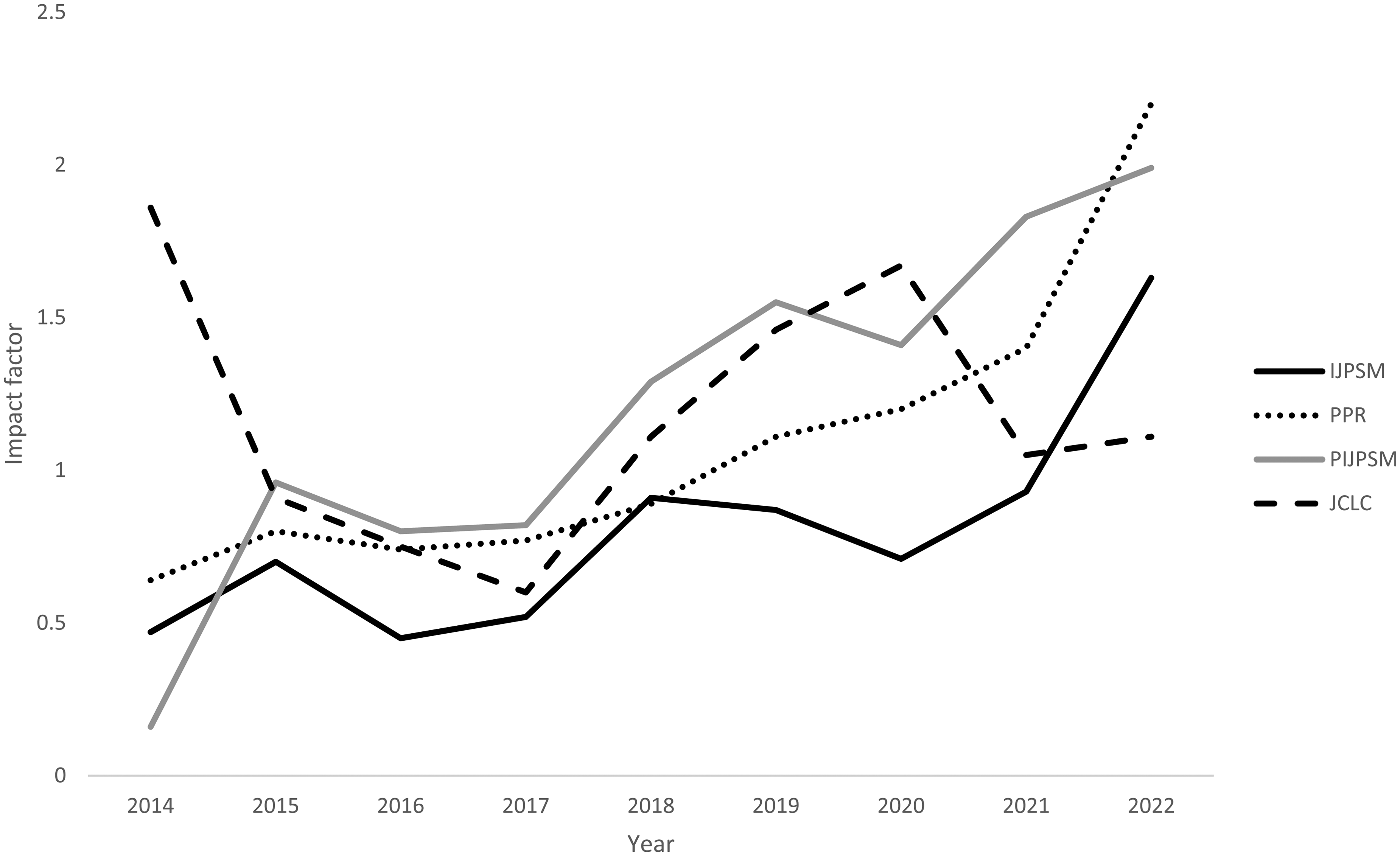
Trend in journal impact factors (2014–2022).
Google Scholar citations for individual articles ranged from 265 (Pratt et al., 2000) to 0. Analysis of citations by volume was statistically significantly different (analysis of variance, F = 4.3, p < .001) with citation peaking at volumes 6 and 7 (Figure 5). As is to be expected, citations decline with newer volumes.
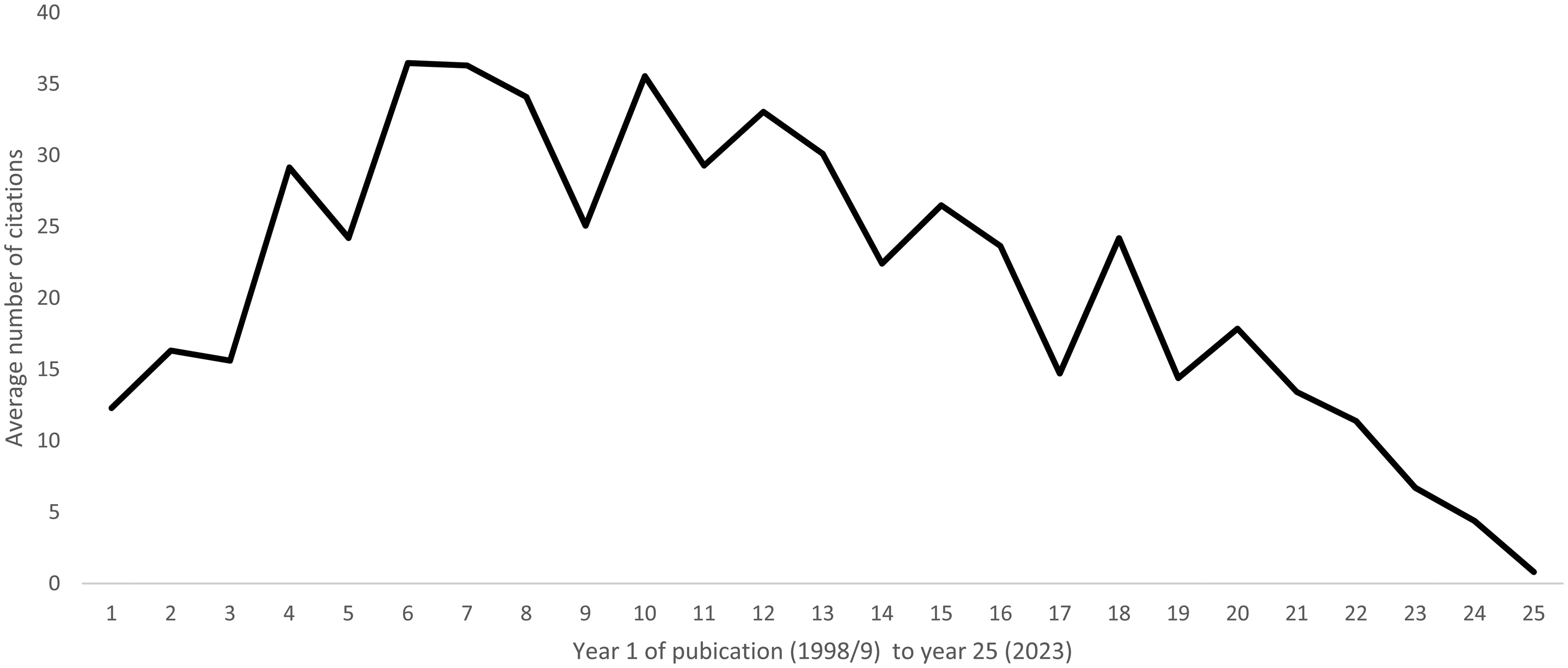
Average citations by year of publication.
Where the paper had a woman as a first author, the average citation was 25.2 compared with papers with male first authors, which was 19.9 (t = −2.36, p < .018). There were no statistically significant differences by discipline or author's location.
Discussion
Overall, the Journal has met its aspiration to be international in coverage and multidisciplinary. Around 44% of papers were on broadly management topics and around one-third on operational issues. About one-third of papers had an explicit reference to diversity, with gender followed by age being the most likely protected characteristic mentioned. Only about one in ten papers made an explicit reference to a named theory. Thus, in terms of the original Editors’ goals for the Journal, these were partially met.
For the later Editors, there was fair coverage of the role of psychology in policing in so far as about one-fifth of contributing authors came from psychological disciplines. There were relatively few papers on the application of forensic science to investigations and on technological advances and implementation within policing. Cybercrime and the digital space only began appearing in later volumes, with, as found by Wu et al. (2018), these issues remaining marginally covered. Although criminology was well represented, human rights and conflict were less so.
Three broad observations can be made for the Journal to consider when thinking about its future output: replicability, the concentration of articles in the global north and androcentrism.
Determining influence is difficult. Boulton et al. (2021) concluded that no simple formula exists to guarantee research makes a significant impact on practice and/or policy. To some extent, this reflects Betts’ (2022) concerns in the suggestion that where practitioners and academics work together to design research with specific aims around a particular intervention, the work is less rigorous but more likely to be implemented. This is possibly because the force in question is more receptive to these findings as they have specifically asked for answers in relation to that topic. We cannot directly address the question of implementation here, but we can show that the impact factor of the Journal has increased steadily over 25 years in line with other policing journals. A citation count reveals that articles about public attitudes towards, satisfaction with and trust and confidence in policing and community issues (such as fear of crime, media coverage) appeared to be most influential in terms of academic take-up. There was a degree of periodicity in that article coverage did synchronise with the phases identified by Reiner and Davies and it was striking that there were a number of papers utilising psychometrics, as suggested by Snook et al. (2009).
Yet there were a significant number of papers in which the topic only occurred once and unlike, for example, Policing a Journal of Policy and Practice, IJPSM does not make use of the special issue format in which a number of papers on a theme can synthesis current thinking on a topic. In strictly scientific terms, Monk and Koziarski (2023) suggest that replication and reproduction are critical for understanding the reliability of findings from previous scholarship; that is, the cumulative nature of research is critical not only for knowledge creation, but also for verifying what we know. They lament that this is insufficiently done in policing research. The Journal may wish to use the special issue format to address this potential shortcoming.
Although the Journal had good international coverage, articles were reflective of Anglo-American models of policing with relatively modest representation from Africa, Asia and Latin America. There is an emergent critique that suggests more attention should be paid to criminal justice practices in the ‘global south’ (Carrington et al., 2019). They argue (Carrington et al., 2019: 163) that countries from Asia, Africa and Latin America offer the opportunity to expand ‘the criminological imagination beyond the North Atlantic world’ and are making important contributions to critical thinking about crime, justice and human rights, but which are rarely registered in this field of knowledge. Carrington and colleagues are critical of the practice of scholars from Asia training in criminology (and the social sciences, more generally) at universities in North America and Europe before returning home to teach at universities in Hong Kong, Japan, South Korea and Taiwan, and of using key texts translated from English that marginalised the contribution of distinct Asian theories of crime and justice. As demonstrated above, there are a number of papers from scholars based in the US or UK who study populations from their countries of origin by and large adapting westernised concepts and methods. The question for the Journal then is should it be asking for papers from this emergent field of scholarship to enrich thinking about crime and policing in the global north?
The Journal has, like the police service itself, a skewed ratio of women to men as contributing authors. Kringen (2014) argues that feminist critiques illustrate that androcentric research fails to consider the impact of gender on crime and criminal justice, and that by failing to include gender not only ignores the possibility of gender differences, but also denies that the difference is worthy of further investigation. More particularly in the area of policing, work has been dominated by male researchers who have focused mainly on male officers. As a result, the existing understanding of policing is androcentric, and, in most of this research, women are treated as ‘other’. Perhaps the Journal should consider moving away from only publishing research about women's experiences in navigating the police occupational culture, and increase publicising innovative policies and practices that contribute to new thinking about management techniques and operational practices reflecting scholarship from the global south. It was also noteworthy that other protected characteristics were unlikely to feature in analyses of empirical data.
Conclusion
Overall, IJPSM has achieved a diverse authorship in terms of discipline and jurisdiction, covered a wide range of topics and thus largely achieved the ambition of the original and subsequent Editor, Michael Rowe. Rowe (2018) hoped that the Journal would share ‘research findings across a broad range of topics of interest to contemporary policing around the world’. Rowe also suggested that the challenges of climate change, biosecurity, environmental hazards and forced migration represented topics that the Journal might cover and as yet there have been relatively few articles dealing with these issues. The Journal has been less successful in publishing articles with a diversity dimension, particularly when addressing ethnicity, disability and sexuality. The number of women contributors remains relatively low with only 6 appearing in the top 50 of first named authors. Although this is an incomplete picture because women do appear as second and third authors, the indications are that women, as in policing itself, are underrepresented. Papers addressing violence against women, cybercrime and new technologies have also been marginal. Instructions to authors and use of the special issue format may assist in addressing these limitations. Finally, there were relatively few police/academic collaborative submissions and the Journal could be more encouraging to police practitioner contributions.
Footnotes
Declaration of conflicting interests
The authors declared no potential conflicts of interest with respect to the research, authorship, and/or publication of this article.
Funding
The authors received no financial support for the research, authorship, and/or publication of this article.
