



Abstract
Law enforcement agencies across the country are struggling to recruit qualified candidates and this problem is pronounced when recruiting demographically diverse officers. Women demonstrate competencies important for effective policing: restoring trust in police, obtaining high case clearance rates, and using less force. The goal of this study was to understand how agencies use online recruiting materials to recruit women officers. We assessed the frequency of text, images, and videos depicting women and racially and ethnically diverse individuals, and content related to hiring and the job itself. We conducted thematic analysis to understand how policing, the agency, and diversity were portrayed. Characteristics known to discourage women applicants were highlighted prominently in materials. Agencies did not provide consistent messaging about diversity, resources for women, or support for work–life balance. We found differences between agencies with higher and lower percentages of women, but they were inconsistent and often in unexpected directions.
Introduction
Women demonstrate competencies that are important for effective policing. Female officers can restore trust in the police (Barnes et al., 2018), use less physical force (Bolger, 2015), and have been associated with higher reporting and clearance rates for rape cases (Schuck, 2018). Greater representation of women in sworn positions ensures that law enforcement agencies (LEAs) more closely reflect the demographics of the communities they serve. The President's Task Force on 21st Century Policing recommended that LEAs strive to create a workforce that contains a broad range of diversity along race, gender, language, life experience, and cultural backgrounds to improve understanding and effectiveness in dealing with all communities (COPS Office, 2015).
Despite these identified benefits, representation of women in law enforcement has lagged behind that of other historically underrepresented demographic groups. For example, although racial and ethnic minority representation reached 27% (of sworn officers) by 2013, women's representation had still only reached 12%. Title VII of the Civil Rights Act prohibits selection based on sex; LEAs cannot hire women simply because they are women. Yet, researchers and practitioners have argued that agencies should conduct women-specific recruiting efforts and create work practices and experiences that are attractive to, and supportive of, women (Bergman et al., 2016).
Policing services in other countries have found more success in improving representativeness among sworn officers. The Australian Federal Police achieved sworn staffing of 22% women in 2021 (a 2% increase since 2016) and has set a goal of 30% by 2028 (Australian Federal Police, 2021). Among Australian state and territorial police agencies, 27.3% of sworn police staff were female (2021–2022) ranging from 22% to 34% (Australian Government Productivity Commission, 2023). In Canada in 2021, 22% of officers were women (Canadian Centre for Justice and Community Safety Statistics, 2022). This proportion had increased since data collection began in 1986 but has been relatively stable over the past few years (Conor et al., 2020; Perrott, 2023). In 2022, the 43 police forces in England and Wales achieved nearly 35% representation of women in sworn positions (Home Office, 2022).
Beyond failures to attract diverse candidates, law enforcement has experienced significant challenges with all recruiting in recent years. Larger LEAs across the US and in other countries report staffing shortages that have prevented them from achieving authorized strength [e.g., San Francisco Police Department (Shanks, 2023), Pittsburgh Police Department (Vellucci, 2023), Phoenix Police Department (Golightly, 2023), territorial police forces throughout the UK (The Crime Report, 2021), and the Royal Canadian Mounted Police (RCMP; Cottrill, 2017)]. The reasons for these staffing shortfalls vary; it has been associated with heightened levels of police–community tensions in light of high-profile examples of police abuse of authority (Morrow et al., 2019), competitive job markets (Copeland et al., 2022), and person characteristics correlated with demographic cohorts (especially millennials and later) (Langham, 2017). Given the general, and gender-specific, struggle to recruit qualified candidates, LEAs need a better evidence base to identify effective recruiting strategies.
Recruitment theories: Signaling and uncertainty reduction
This research was guided by two theories that help to explain why public-facing recruiting material is so critical to recruiting women into policing. First, signaling theory (Rynes, 1991; Spence, 1973) explains how information affects applicant attraction to recruiting organizations. People make job choices based on imperfect information; job seekers have limited knowledge of an organization and job until they are hired and fill the position. Once employed, it can still take time to fully understand an organization's culture, policy and practices, norms, and expectations and even long-tenured employees may not be privy to all aspects of an organization or organizational decision-making. Instead, potential applicants must use observable information as signals of unobservable organizational characteristics. Within the context of the current study, job seekers must infer what a job and organization are like based on the limited information available to them through channels such as websites, social media, and personal contacts. Recruitment materials may have stronger signaling value for people with less pre-existing information about the organization.
Second, uncertainty reduction theory (URT; Berger and Calabrese, 1975), provides an additional framework for how organizational messaging may impact a person's journey to application. Like signaling theory, URT also assumes that a person first assesses potential person–organization fit based on visible characteristics of an agency (McCarthy et al., 2018; Ployhart et al., 2017). URT elaborates on this by describing three different stages of an applicant: a prospective applicant's journey to a career begins with general interests based on externally observable characteristics of an organization (the entry phase); transitions to directly learning more about an organization's values, beliefs, and attitudes (personal contact); and resolves in an applicant's decision to apply (or not) (exiting from the application process).
Signaling and uncertainty reduction theories were established decades ago, but have continued to be supported in research (Karasek and Bryant, 2012; Pagliaro et al., 2018; Swider et al., 2022). Their tenets and application to recruiting are straightforward. People seek to make informed decisions about career options but prospective applicants can only use the information they have access to, and that information signals what the job and organization would be like. Individuals seek to engage with entities where people like themselves are accepted and valued. If initial signals suggest potential inclusion and belonging, prospective applicants will seek additional information and consider applying. If organizations do not affirm prospective applicants’ identities and align with their values, their recruitment effort will suffer. URT suggests that public-facing recruiting contact should provide enough information to move people past the entry phase and streamline the accessibility of people that can facilitate the personal contact phase (e.g., talking to a recruiter).
Police recruitment strategies
Despite the known benefits of increasing the prevalence of women in policing (Barnes et al., 2018; Bolger, 2015), there is little research that agencies can use to develop evidence-based practices to improve recruitment efforts. This is unfortunate because research has shown that online recruitment materials matter to potential applicants. One study found that online recruiting materials were the second most influential factor in the decision to undertake a career in policing (second only to friends or family with a policing background; Castaneda and Ridgeway, 2010).
Limited empirical evidence is available to support the strategies that agencies use to reflect the various dimensions of a law enforcement career or how messaging strategies are optimized for different stakeholders. Among the few studies, Aiello (2020) examined recruitment materials from 131 US police agencies and found that agencies with higher representation of sworn women officers in the past were significantly more likely to rely on service or community-oriented policing language in their recruitment materials.
Only one study has sought to test empirically the impact of different recruitment messaging commonly used by agencies. Linos (2018) conducted a field study to examine the effect of different messaging strategies, including appealing to the challenge, service to the community, and long-term career security, on application decisions. Linos found that emphasizing the challenge of becoming a police officer and the long-term career benefits were each three times more effective at enticing applicants compared with receiving no message at all. The least effective was messaging around service to the community; it was no different from receiving no message. Although women were overall less likely to apply for a position, results suggested that the likelihood of applying was greater when presented with a challenge and career security message in comparison with a call to service message.
Short-form recruiting videos (such as those that make up the core content of TikTok and Instagram Reels) have become popular, but only one study has explored the content of these videos used for law enforcement recruitment (Koslicki, 2021). Community-oriented themes (e.g., statements on the value of community-oriented policing, non-motor vehicle patrols) were found to be more prevalent than militarized themes (e.g., military-style vehicles and weaponry) but examples that almost entirely focused on one theme or the other were found. Among all videos, 85% featured women officers but videos were less likely to be narrated by a woman (7% versus 27% narrated by a male voice) or show a female officer being interviewed (37% versus 49% featuring a male officer).
Besides strategies used in advertising, job descriptions can also have a significant impact on applicant decision-making. For women, a job description that confirms pre-existing beliefs in a male-dominated career may deter attempts to enter that career (Gaucher et al., 2011). According to Milgram (2002), police agencies must counteract the strong negative messages women receive about law enforcement careers with strong, positive messages. This suggests that LEAs must be proactive and deliberate about efforts to recruit diverse candidates and that these efforts must address a variety of different channels and concerns.
Looking outside the US, few studies have empirically tested novel recruitment strategies. For the UK police forces, researchers tested the impact of changing messages used to invite people to participate in parts of the screening process. They found that altering messaging could reduce racial disparities among those that dropped out of the application process (Linos et al., 2017). In Australia, several state, federal, and territorial agencies adopted explicit goals of achieving 50:50 representation among recruits. Agencies that had adopted these policies appeared to have closed the gender gap in recruits, but a lack of data prevented more causal inferences (Ward et al., 2020).
Agencies have also adopted novel strategies that have yet to be evaluated. The Western Australia Police created a TikTok video that went viral (Hampton, 2022). The South Australia Police created a campaign named “Calling All” that focused on encouraging diverse candidate applicants and focused on the rewarding and engaging nature of policing careers (South Australia Police Force, n.d.). The Saskatchewan RCMP established an Indigenous Recruiting Unit to enhance recruiting efforts in historically underrepresented Indigenous communities (Royal Canadian Mounted Police, 2023). The UK established the National Policing Board 1 to support its Police Uplift programme (Williams and Sondhi, 2022) designed to hire 20,000 new officers in three years (Craig, 2019).
Purpose of the study and research questions
Despite knowledge about barriers to entry into a policing career, little is known about the content and messaging that agencies are currently using across their websites and social media accounts. This study contributes to the existing literature by quantifying and describing current practices used by a sample of LEAs, identifying limitations in current recruitment materials, and providing recommendations to align current practices with evidence-based practices. To do so, we set out to answer the following questions:
How is diversity portrayed and described in agency recruiting materials? How do agencies address barriers and facilitate entry into law enforcement careers? What themes do agencies use to describe a career in law enforcement? How do the above characteristics differ between agencies employing relatively more and less women?
To answer these questions, we conducted a content analysis of online hiring materials from a set of purposively selected agencies that varied along location, agency type and size, and proportion of female officers.
Research methods and data
LEAs that participated in the 2016 Law Enforcement Management and Administrative Statistics survey served as the sampling frame. Agencies were stratified into higher and lower proportion of female sworn officers. Agencies from these two groups were then purposively selected based on the overall number of sworn staff, region of the country, and agency type (sheriff 2 versus municipal). The final sample consisted of 22 general-purpose LEAs (Table 1). These agencies represented all regions of the US and varied in the proportion of women in sworn positions. The proportion of full-time sworn female officers ranged from 3.5% (Fall River Police Department) to 41% (Boulder County Sheriff's Office). The national average for female officer representation was about 12%. As such, we used 12% as the level for designating agencies that were higher-percentage female (>12%) or lower-percentage female (≤12%).
Agencies and characteristics.
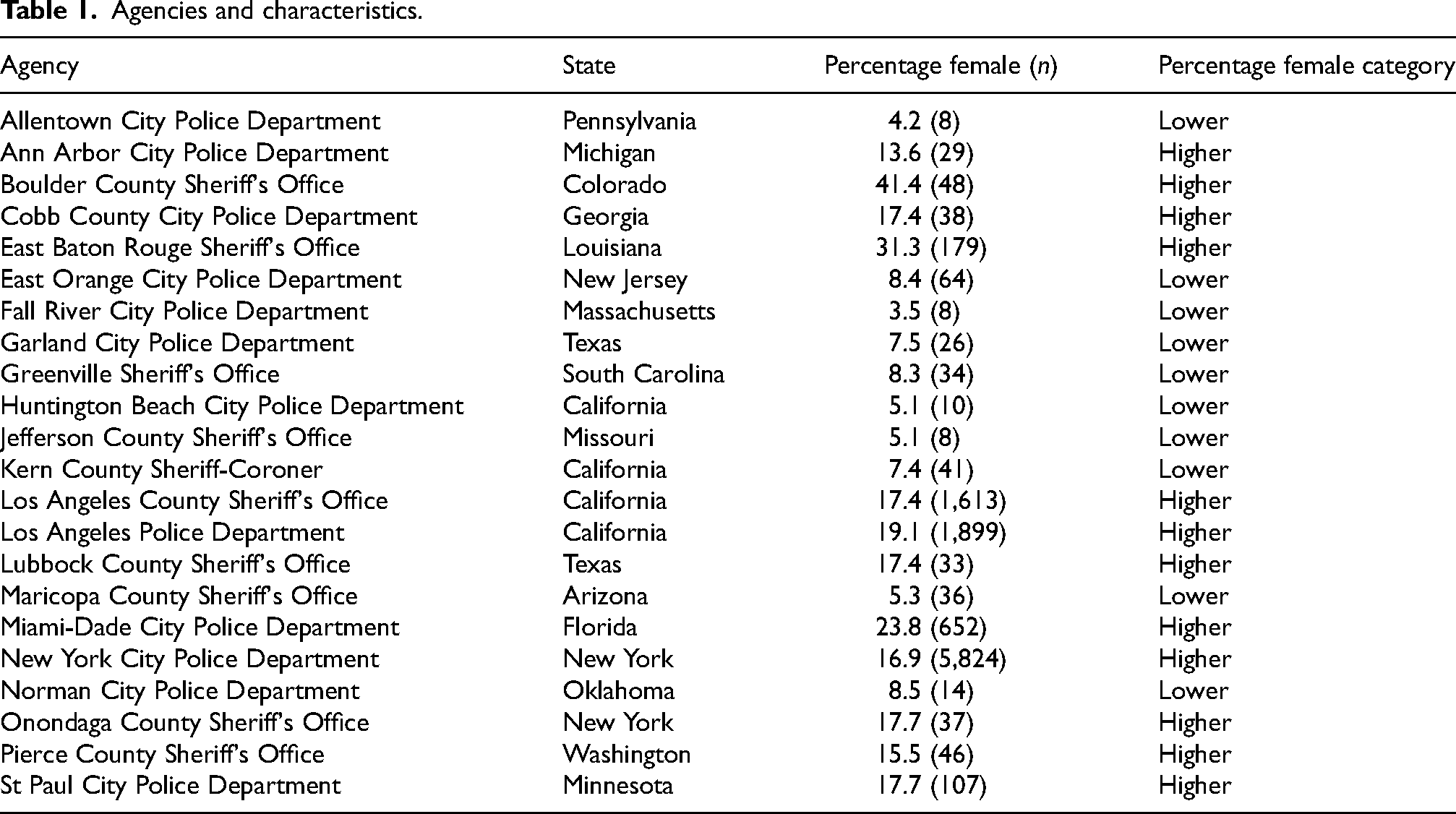
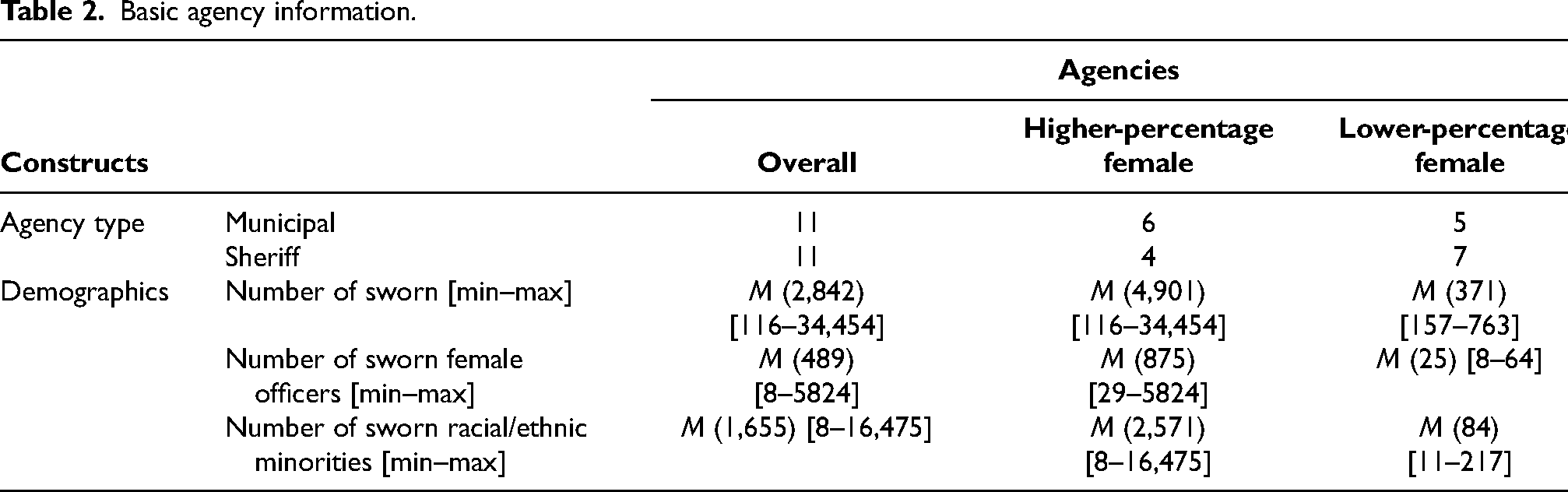
Coded agencies were evenly divided between municipal police departments (11), and sheriffs’ offices (11). Higher- and lower-percentage female LEAs were represented in both agency types. The mean agency sworn staffing size was 2,800 officers, although this was largely driven by the inclusion of the New York City Police Department (34,454). The median number of full-time sworn officers was 321. Agencies with higher percentages of female officers tended to be larger and were more diverse in terms of racial and ethnic minority representation (Table 2).
Basic agency information.
Content coding
Website content coding has been used in many different domains including cataloging resources and content around sexual assault resources provided on college websites (Hayes-Smith and Hayes-Smith, 2009), messaging used in hospitality and tourism (Govers and Go, 2005), and disclosures related to corporate environmental reporting and sustainability (Hasim et al., 2018; Jose and Lee, 2007).
Building on these existing studies, data were collected by reviewing and coding data from official agency webpages (specifically, the officer recruitment pages if available), as well as the three most commonly used social media sites: Facebook, Instagram, and Twitter (as available for each agency). The review of social media accounts was time- and post-limited; all content from the ten most recent statements and images on each feed were coded. Additional material covering six months of social media content (beyond the first ten posts, depending on an agency's posting frequency) was reviewed to locate and code posts and content specifically related to recruitment.
Analysts began by reviewing agency websites and social media pages in the spring and summer of 2020. The first step was to document the total number of pictures and videos that included images of people. This general image count served as the denominator for the calculations presented below. To explore issues related to signaling theory, analysts reviewed agency sites for images and content related to female and racial/ethnic minority officers. Similarly, analysts reviewed online materials for written statements or general depictions related to female- and/or racial/ethnic minority-specific recruiting practices. These descriptions included content such as career advancement opportunities for women or racial/ethnic minorities, diversity recruitment goals, female-officer specific pages, additional resources for women or others to assist with passing the physical fitness test, and strategies, practices, or benefits to support work–life and work–family balance.
To explore concepts related to signaling theory, an additional two-stage iterative approach was used to code website and social media content for application and career messaging. In particular, we were interested in exploring thematic characteristics related to (a) challenge, (b) service to the community, and (c) long-term career security and growth. First, analysts coded content into four categories: (a) information about the academy, (b) job and career, (c) the organization, and (d) support for women or other historically underrepresented employees. Analysts identified content from the websites and social media and coded it into the relevant categories and sub-categories for each agency. For example, as analysts identified content for the top-level category Academy, they searched within Academy content for discussion related to the sub-category Physical Challenge. This task was done during the fall and winter of 2020. For this task, coders revisited agency websites to ensure all content was thoroughly coded; for social media pages, coders relied on content saved during the initial review conducted in the spring and summer of 2020.
To explore agency strategy related to URT, analysts also recorded information related to recruitment outreach and activity. This included descriptions of outreach strategies made by the agency to facilitate applicant pipeline development and the channels available to potential applicants to learn more about the agency (e.g., email, chat). We were interested in understanding the proactive and reactive steps that agencies took to move interested people from the entry phase to the personal contact phase of the recruitment process.
Quality control
Given the potentially subjective nature of the coding, work was carried out by three independent coders who were overseen by a coding task lead. A multi-step process was used to ensure data reliability. First, the analysts met as a group to review and discuss the coding schema for each task. Next, two analysts independently coded material for each agency; codes were then compared. If discrepancies were identified, the analysts met to discuss and deconflict misaligned codes. When needed, the analysts would revisit the actual materials and discuss the logic behind their coding. Discussions eventually lead to consensus and resolution of discrepancies.
Findings
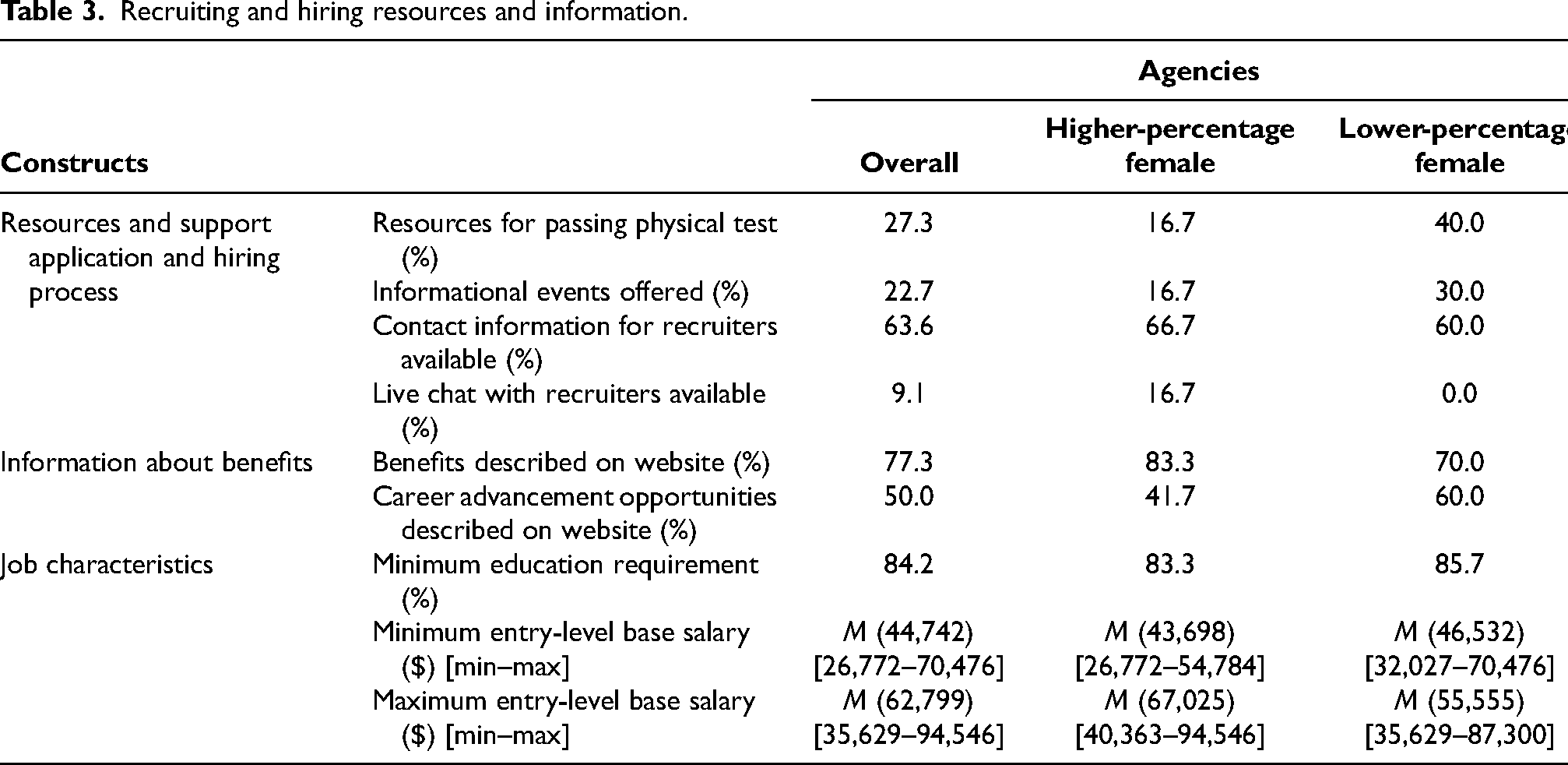
Most agencies had a minimum education requirement and offered a similar base salary range; observed differences in these characteristics appeared to be driven by agency location and size. Most agencies facilitated recruitment by providing contact information for recruiters, but few offered web-based live chat (Table 3). Information about job salary and benefits were commonly communicated. Agencies with a lower percentage of female officers provided more expansive resources, including help to pass the physical test (40%), and informational events (30%).
Recruiting and hiring resources and information.
The portrayal of women and underrepresented groups in agency website and social media materials was infrequent and occurred in only about a one-quarter to one-third of photos (Table 4). Higher-percentage female agencies had slightly better representation of women and underrepresented groups in website and social media content. It was very rare for any agency to have recruitment events or materials targeted directly to women, as measured by dedicated pages, explicit mention on the site, or specific recruitment events (although capturing data in mid-2020 means this should be interpreted with caution).
Focus on diversity in agency materials and efforts.
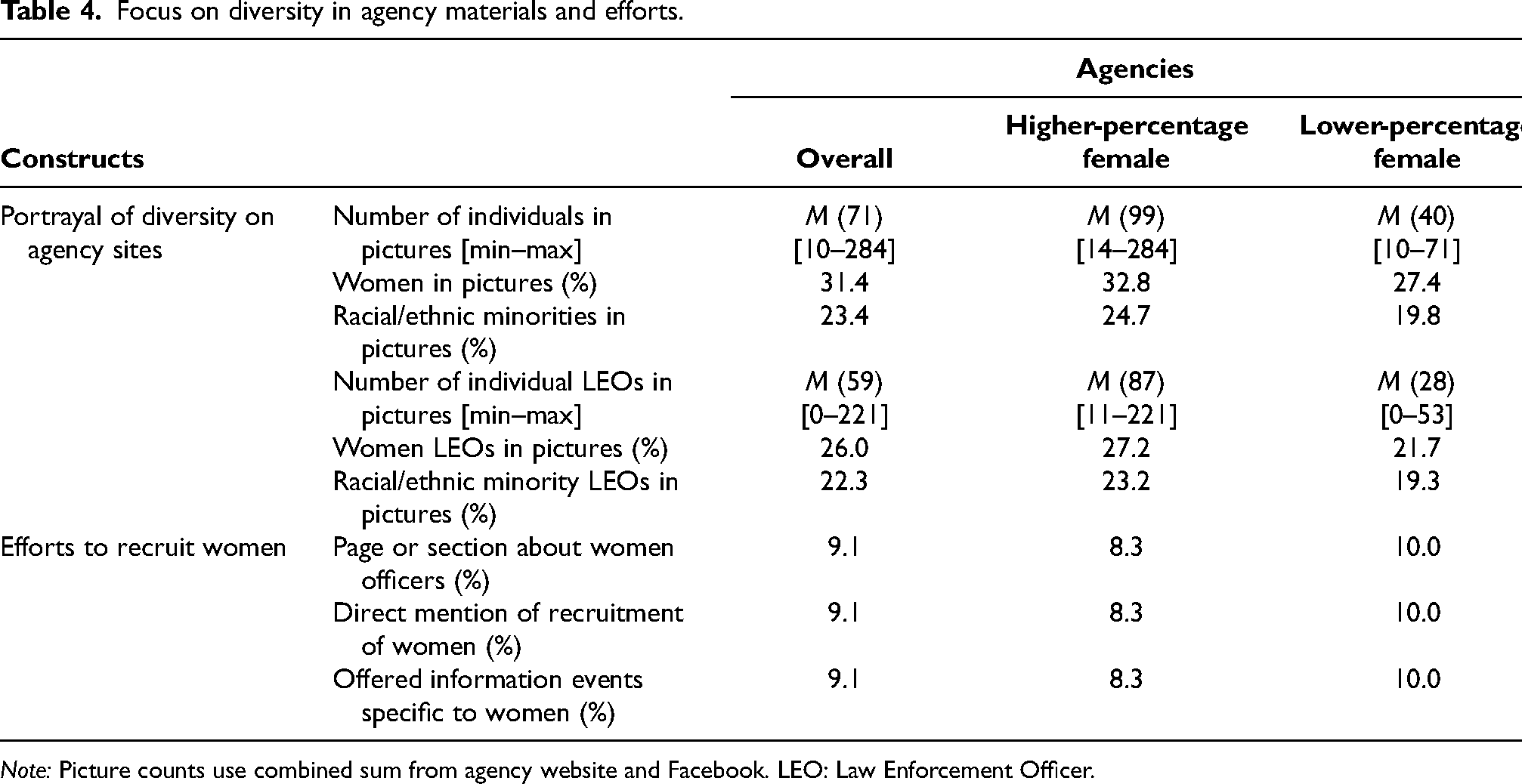
Note: Picture counts use combined sum from agency website and Facebook. LEO: Law Enforcement Officer.
Characterizations of the academy
The most prevalent types of academy activities highlighted were related to indicators of physical fitness training (59% overall) or firearm training (50% overall). Among agencies with a higher percentage of women, descriptions of firearm training were most prevalent; among agencies with a lower percentage of women, descriptions of physical fitness training were most prevalent. The least reported theme for all agencies was descriptions of team-building activities. No agencies with a lower percentage of women included this information.
It was common for agencies to describe the physical challenge associated with the academy. Descriptions varied but were found in textual depictions, photos and videos, and statements of the importance or difficulty of physical training. The most prevalent types of messages related to the physical aspect of the academy were those focused on the need for rigorous training before entering the academy, and the physical challenge highlighted as the most difficult aspect of the academy (each present among hiring materials for 23% of the agencies). These messages were more prevalent among agencies that had a lower percentage of women.
Characterizations of the academic challenge of the academy varied between agencies with some emphasizing the importance of officers having good problem-solving, emotional intelligence, interpersonal, and communication skills. Agencies also described partnering with local colleges or universities to provide more educational training. Overall (and among the subset of agencies with a higher percentage of women), the most prevalent theme related to the academic challenge of the academy was descriptions of officers needing good interpersonal skills or emotional intelligence (32% of agencies overall, 50% of agencies with higher percentage of women). Among agencies with a lower percentage of women, descriptions of officers in a classroom/academic setting were most prevalent (42%).
Messaging about the job and career
Given existing research on motivation to enter law enforcement, we coded thematic data into the different messaging strategies found in other research: challenge, career benefits, and public service.
Challenge messaging
The most prevalent message pertaining to the job being challenging were those that depicted policing as physically demanding and requiring special skills and qualities (Table 5). Overall, and among agencies with a higher percentage of women officers, descriptions or depictions of police work as physically demanding were most prevalent (50% overall, 58% with a higher percentage of women officers). Among agencies with a lower percentage of women officers, descriptions of the career as requiring specialized skills and qualities were the most prevalent (50%).
Messaging themes about the job/career.
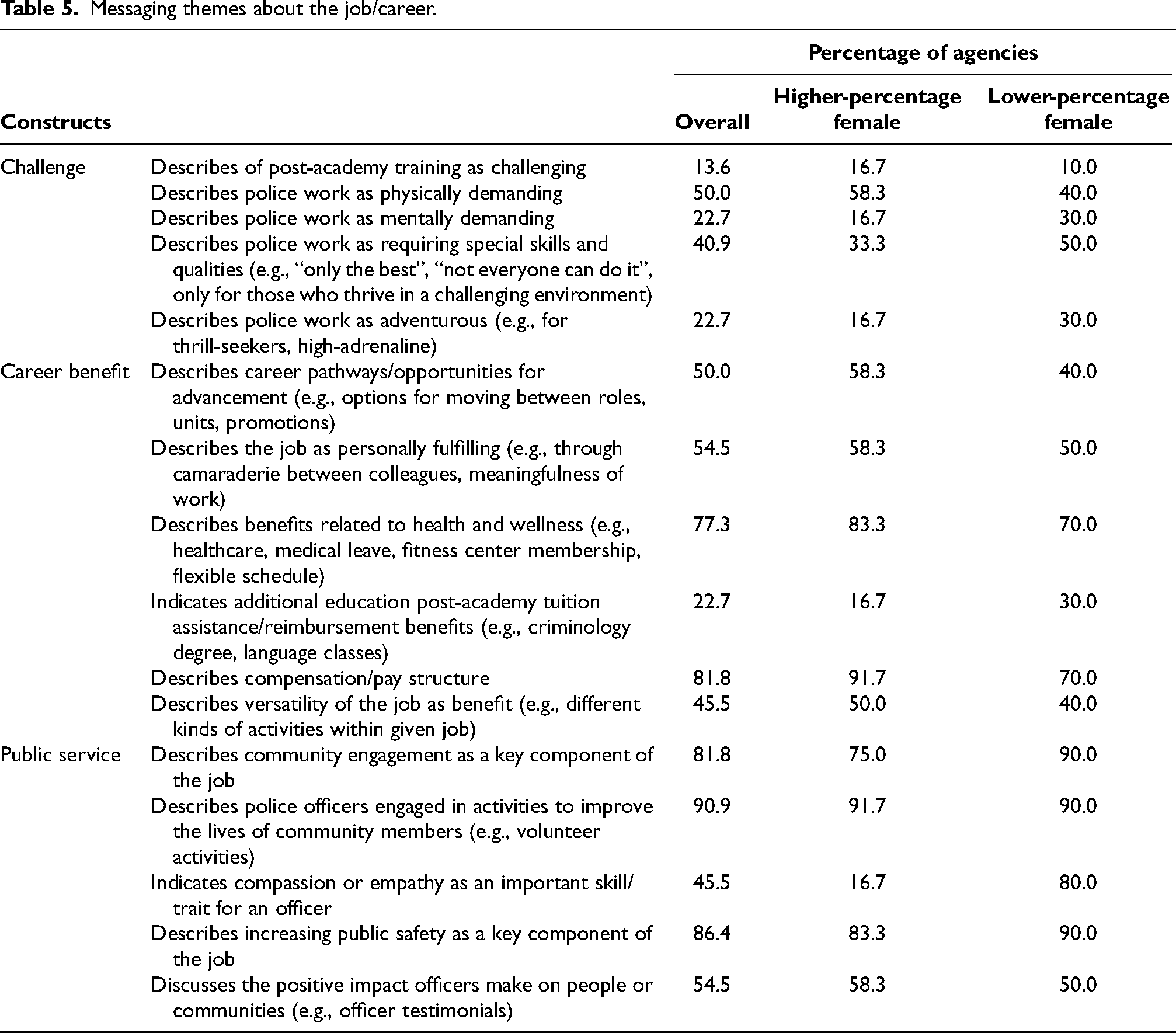
Some agencies simply referred to the job/career as challenging without elaboration. Agencies that provided more descriptive information highlighted aspects of police work such as saving lives and keeping people safe; that police officers often work in stressful conditions, including situations that require fast decision-making; and that police officers must behave with the highest ethical standards.
Career benefit messaging
Most agencies included descriptions of compensation (82% overall) and health and wellness benefits, such as healthcare, medical leave, or fitness club membership (77% overall). Fewer agencies included messaging around the versatility of the job as a benefit (46% overall) or tuition assistance or reimbursement for education post-academy (23% overall). Messaging about career benefits generally took two forms across agencies: messaging around tangible benefits of the job (e.g., compensation, healthcare) or messaging around personal benefits of being a police officer (e.g., personal fulfilment).
Public service messaging
Messaging around public service emphasized the ability to make a positive impact through policing; almost all agencies included messaging of this type. The most prevalent types of messaging were depictions of officers engaging in activities that would improve the lives of community members, depictions of public safety as a key component of the job, and describing community engagement as a key component of the job. The largest discrepancy between agencies with a higher and lower percentage of women officers was in messaging indicating compassion or empathy as an important trait for an officer: only 17% of agencies with a higher percentage of women officers depicted this, compared with 80% of agencies with a lower percentage of women officers. Some agencies emphasized public safety, such as stressing the importance of keeping people and communities safe, when describing policing. Others emphasized community service and partnerships, often describing the impacts police officers have on people and communities. In addition, agencies highlighted the public service aspects of policing by providing pictures, videos, or descriptions of police officers engaging in community service events.
Messaging about the organization
Organizational orientation was coded for two characteristics: militaristic style and community policing (Table 6). Militaristic themes included photos, videos, or descriptions of officers in military gear or engaged in other kinds of force operations. Community-oriented policing themes focused on photos, videos, and descriptions of service and engagement with the community.
Messaging themes about the organization.
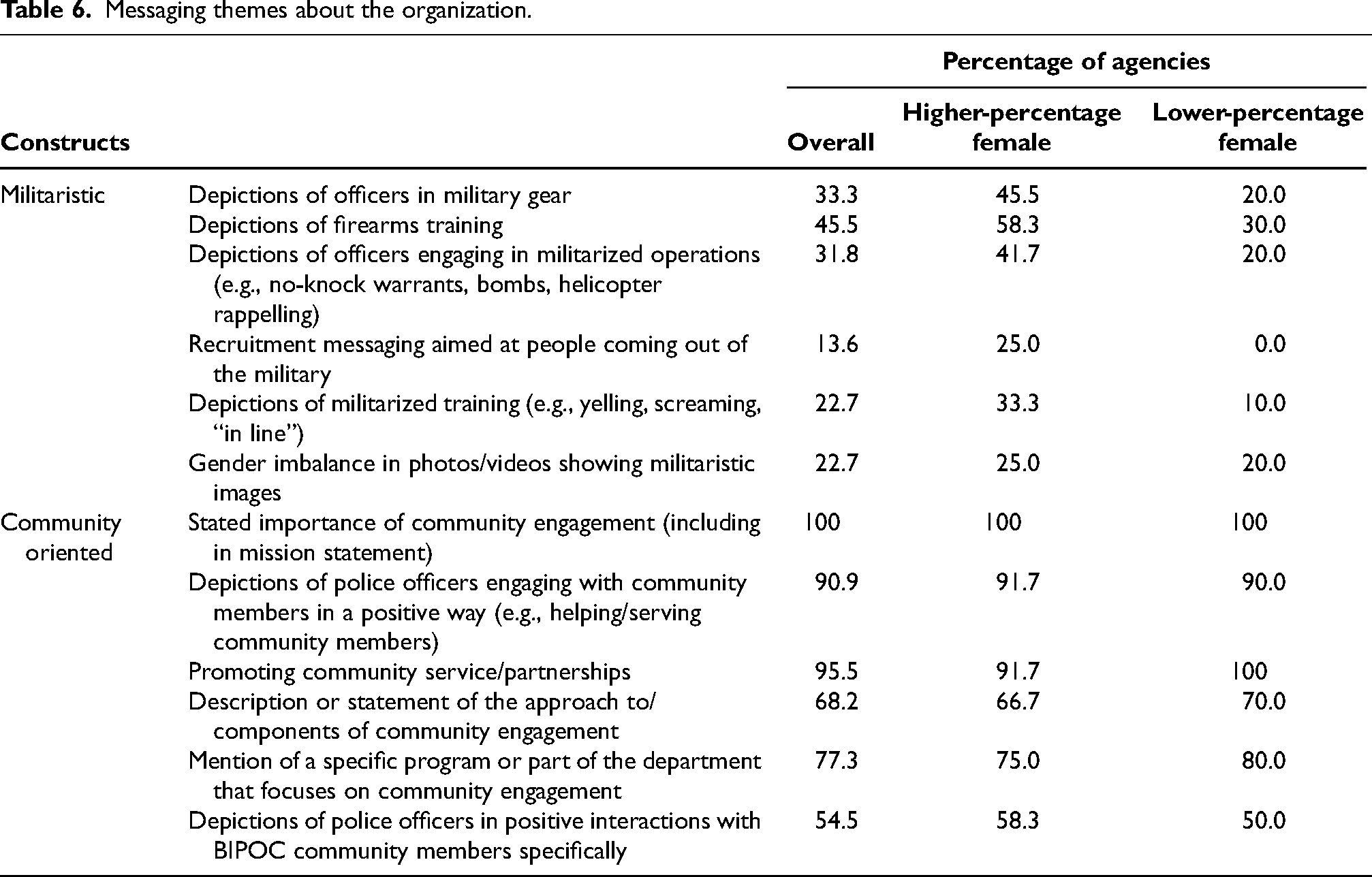
The most prevalent militaristic depictions were officers with firearms (45.5%), followed by depictions of officers in military-style gear (33.3%) and performing militarized operations such as helicopter rappelling and bombings (31.8%). Interestingly, these messages were more prevalent among agencies that had a higher percentage of women, compared with agencies that had a lower percentage of women. Of agencies that showcased this aspect of the job, visual depictions of militaristic activities were consistent and tended to display multiple high-intensity activities such as rappelling from helicopters or tall buildings while wearing SWAT gear, shooting long guns, and using smoke grenades.
All agencies had some type of content associated with community-oriented policing. The most prevalent themes were those that described the importance of community engagement (100%), promoted community service/partnerships (95.5%), or had depictions of officers engaging with community members in a positive way (90.9%). Agencies with higher or lower percentages of female offices did not seem to differ in terms of embracing community-oriented policing.
Depictions of community-oriented policing showed considerable variation. Although all agencies noted community engagement as an important facet of their mission, agencies differed in terms of what sort of community engagement activities they pursued with community members. For example, some agencies had a dedicated community engagement coordinator as part of their team or had specific partnerships or programs established with existing community organizations. Other agencies focused on informal interactions with the community in terms of offering a ride-along, police meet-and-greet opportunities for children and adults, and volunteering.
Agencies varied in the content reported through their various dissemination channels. In general, agencies expressed their interest in community policing as part of their values or mission statement on their website and posted pictures of their community engagement activities and efforts on their social media pages.
Women-specific or diversity-targeted messaging
Over half (59.1%) of the agencies made statements to illustrate a commitment to serving a diverse community; this included messages that featured supporting Black, Indigenous, (and) People of Color (BIPOC) and LGBTQ+ communities as well as non-native English speakers (Table 7). However, fewer than half (40.9%) described the role or importance of having a diverse workforce. The difference between the two stated commitments lay with agencies with a lower percentage of female officers where 70% of these agencies made statements about serving a diverse community, whereas 30% described a commitment to developing a diverse workforce. In addition to valuing the diversity of their communities, agencies also mentioned the importance of having individuals with diverse backgrounds in their workforce.
Women-Specific or diversity-focused messaging themes.
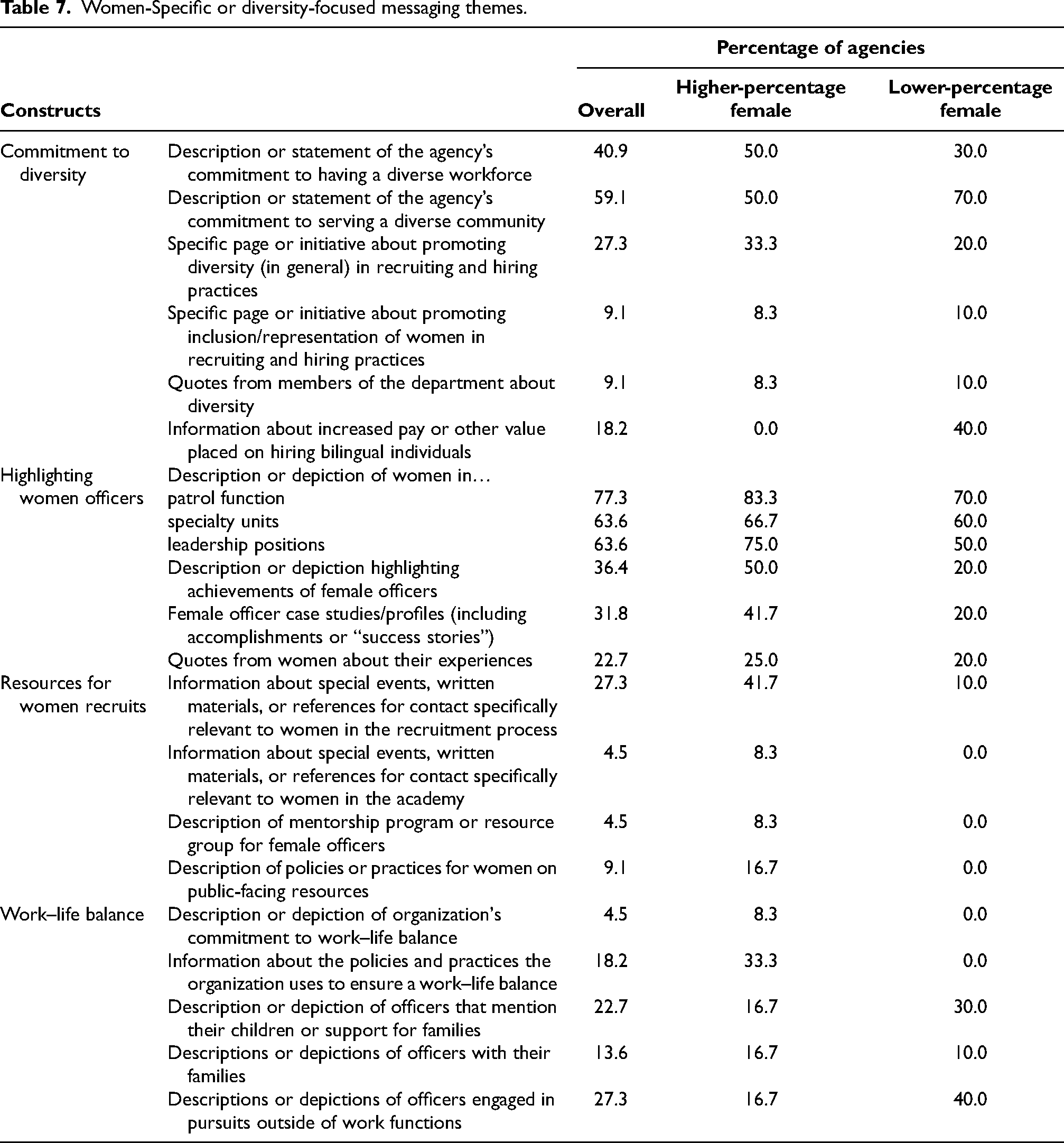
Agencies with lower percentages of women were more likely (40%) to highlight the increased pay for bilingual officers, compared with agencies with a higher percentage of women (0%). Despite not always offering increased pay, some agencies highlighted the importance of having bilingual officers. Less variance between agencies with higher and lower percentages of females (33.3% and 20%, respectively), was found in having a specific webpage or initiative illustrating recruiting and hiring practices focused on diversity between agencies with a higher percentage of females.
Most of the agencies highlighted women in a variety of roles including patrol (77.3%), specialty units (63.6%), and leadership (63.6%). There were differences between the higher and lower percentages of female agencies with depictions in patrol functions and leadership positions. Most often, these depictions were done with images showcasing female officers either individually or in diverse groups of officers. In addition, agencies with a higher percentage of female officers more often highlighted achievements of female officers (50%), including case studies or profiles (41.7%) featured on their websites or social media. Showcasing quotes from female officers on these public-facing resources was less common for all agencies (present in less than a quarter of agency content).
Few agencies had extensive resources specifically targeted towards recruiting woman officers (<10%). Where additional information was provided, it included targeted information for women during the recruitment process (41.7%) and descriptions of practices specifically for women (16.7%). Among agencies with a lower percentage of female officers, 10% featured information specific to women during the recruitment process, but none offered women-specific resources for later points in the career trajectory, such as in the academy or as established officers.
Overall, information related to how agencies promote work–life balance was low (4.5%). Agencies with a higher percentage of female officers provided information about policies and practices that would promote a healthy work–life balance (33.3%), whereas no agencies with a lower percentage of female officers featured this information. The predominate ways that agencies spoke to work–life balance included descriptions and depictions of officers mentioning their children and support for families (22.7% overall; 30% lower-percentage female agencies) and of officers engaged in pursuits outside of work functions (27.3% overall; 40% lower-percentage female agencies).
Differences in agencies with higher and lower levels of woman officers
Table 8 summarizes the characteristics that had the greatest differences between high- and low-percentage female officer agencies. The largest difference was whether agency materials highlighted compassion and empathy as an important skill, with about 17% of higher-percentage female and 80% of lower-percentage female agencies indicating its value. Agencies with a lower percentage of female officers more often described the need for rigorous training, bilingual preference, and the need for interpersonal skills. Agencies with a higher percentage of female officers more often highlighted firearms training, work–life balance, special events for recruiting women, highlighting the achievements of female officers, and depicting the academic aspect of training.
Greatest differences (%) between agencies with relatively high and low percentage of female officers.
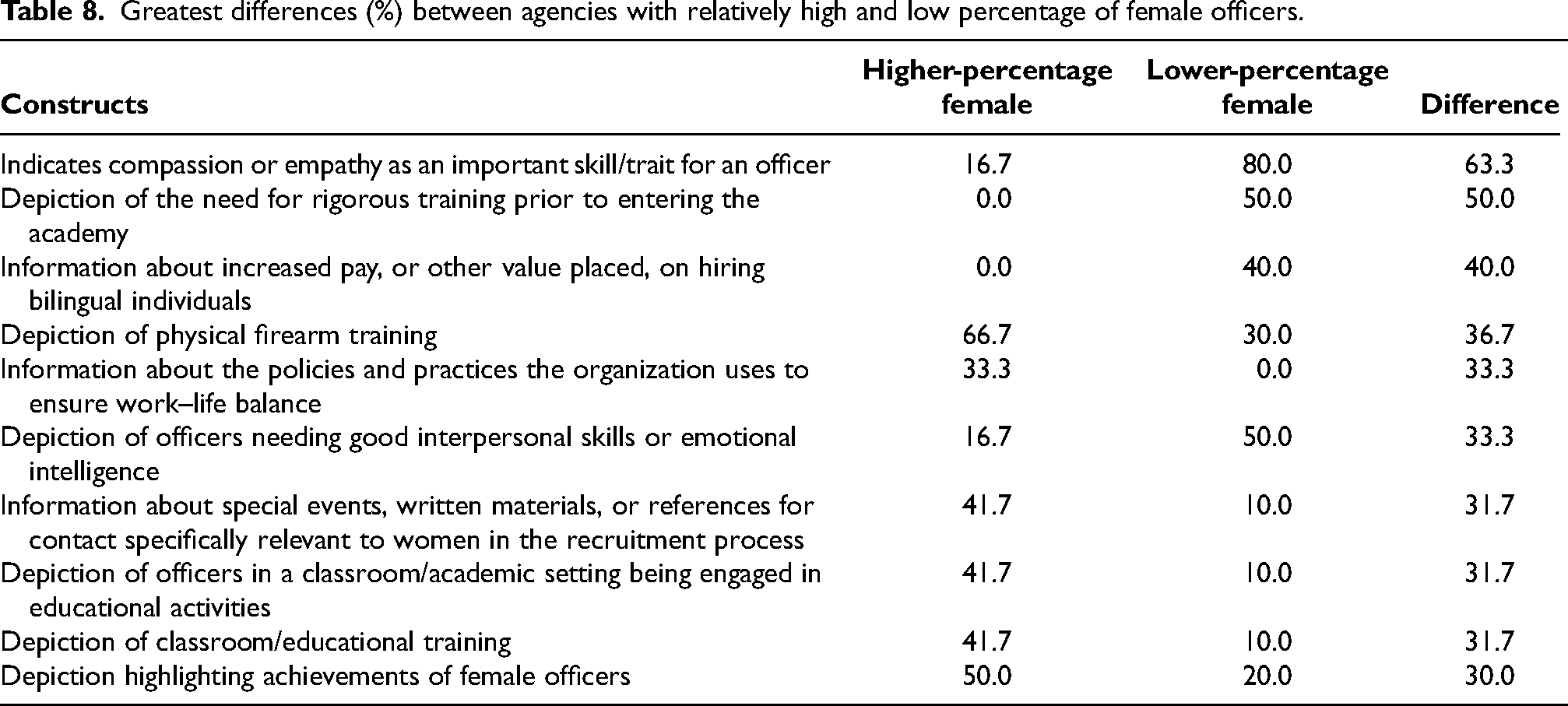
In general, we did not find support for the idea that agencies differ consistently based on their current proportion of women officers. Although there were differences between these two groups, the difference was not always in the expected direction. Given that recruitment efforts should be about what the agency wants to be in the future, rather than what the agency is currently, this finding should perhaps not be surprising. Agencies that currently have higher levels of women officers do appear to provide more targeted outreach to women recruits, but the overall adoption of these activities was low. These agencies were also more likely to highlight the role and achievement of women officers. Although we can provide no definitive explanations for this finding, several possible explanations can be hypothesized:
We captured a cross-sectional snapshot of what is likely a longitudinal relationship. Assessing recruitment efforts, and the resulting impact on agency demographic composition, over time would facilitate a better understanding of how recruiting eventually influences agency demographics. Online recruiting materials represent only one facet of an agency’s recruiting strategy. In-person agency events and connections through personal networks, for example, may be stronger determinants for the demographic composition of the agency. Sworn officer recruitment may be relatively insensitive to agency recruitment strategies. Agency recruitment strategies may not be effective in general or may not be effective at changing the composition of candidates that apply.
Discussion
This study contributes to our understanding of police recruitment research in several ways. First, it establishes a reliable method of conducting website content analysis that can be replicated with additional agencies. Additional research with a larger sample of agencies over different periods (especially tracking content longitudinally) would be valuable for understanding causal relationships. Second, results found that women-specific recruiting content was limited. Content directly addressing known barriers to women entering the policing profession was also limited. Third, results identified practical gaps between agency recruiting efforts and theoretically optimal practices. Fourth, we found fewer differences between agencies with more or fewer female officers than hypothesized. The findings from the current study, placed within signaling and uncertainty reduction theories, identified several deficiencies in current recruitment practices.
Diversity
Many agency websites did not clearly articulate the value or goals of diversity and missed a key opportunity to demonstrate organizational values. Related to uncertainty reduction, there were missed opportunities for agencies to clarify and expand upon the process of going from an interested candidate to a successful officer. Well-established barriers, especially those that are known to have differential impacts on women such as physical fitness requirements, were often left unaddressed.
Communication
The majority of agencies (64%) provided contact information for recruiters, but few (9%) offered live chat with recruiters. Depending on prospective applicants’ communication preferences, it is possible that offering more real-time, interactive options for receiving guidance and answers about the application process could engage a broader applicant pool. Text-based interactions can also provide greater flexibility and responsiveness for prospective candidates. URT suggests that agencies should take steps to remove barriers to making contact with recruiters to ensure that candidates move from the entry phase to the personal contact phase in the information-seeking process.
Physical fitness
Physical fitness was frequently described by agencies but fewer than one-third of agencies provided resources for passing physical fitness testing. Previous research has found that concerns about physical fitness standards were a frequently cited barrier to recruiting more women into policing. Contrary to hypotheses, fewer of the agencies with higher proportions of women (17%) provided resources and support for passing the physical test than agencies with a lower proportion of women (40%). Agencies should provide more resources for addressing physical fitness concerns while not overemphasizing the physical fitness aspect of policing.
Women-specific recruiting efforts
Few agencies (9%) presented content specifically targeted toward recruiting women officers. Research in other industries shows that targeted recruitment is essential to increasing the representation of underrepresented groups. Signaling theory suggests that women-specific recruiting efforts can enhance perceived organizational climate towards candidates that may not fit with the traditionally male law enforcement officer. Concerning women-specific and diversity-focused messaging, a few findings stand out. First, agencies with higher percentages of female officers were more likely to provide information about policies and practices the organization uses to promote work–life balance (33%, compared with 0% of agencies with fewer women). This aligns with the Special Report by the National Institute of Justice (2019: 19) on women in policing, which states, “The biggest obstacle for women in police work is the ability to balance work and family life. A lot of women simply opt out of policing for this reason”. Second, agencies with higher percentages of female officers were more likely to present information about special events, written materials, or references for contact specifically relevant to women in the recruitment process (42%, compared with 10% of agencies with fewer women). Finally, agencies with a higher percentage of women officers were more likely to highlight the achievements of women officers (50% compared with 20%). The research on women in policing, and on women in the male-dominated fields more broadly, consistently shows the need for female role models and mentoring to attract and retain women candidates.
Implications for practice
Results from this study suggested an inconsistent pattern in the way academies, police work, careers in policing, and policing organizations were portrayed by agencies. Regardless of the reasons, the proportion of women in policing in the US has remained stagnant for decades and recruitment of qualified officers (regardless of gender) has become more challenging. To broaden the potential applicant pool and bring new talent into policing, better on- and offline strategies are needed to reach a different and larger pool of potential officers. Results from the current study, placed within the signaling and uncertainty reduction theories, provide initial actions that can improve web-based recruitment efforts.
Articulate diversity messaging. Few agencies have reached their diversity goals. As such, agencies should clearly articulate their goals, the reasons for those goals, and what they are doing to reach those goals. Strong efforts towards meeting diversity goals can help reassure potential applicants that they will be supported in the organization. Signaling theory suggests that agencies should clearly communicate agency goals to facilitate applications from diverse applicants. Promote multiple channels for communication. The stages of candidate conversion in URT suggest that agencies should provide direct connections to recruiters through voice and text. The ability to quickly connect to a person that can address concerns can help facilitate conversion from a candidate to an applicant. Present a balanced representation of policing. Career benefits, public service, or the adventure of policing are all likely to appeal to some subset of potential candidates. Web content should present a balanced thematic approach to presenting policing careers. Ensure consistent messaging between text and graphical elements. How policing careers are represented, as well as the diversity of candidates sought, can be highlighted in both text and graphical elements. Agencies should consider how information is presented across all components of a website or other media channels. Highlight the achievements of women officers in recruiting materials. Agencies should demonstrate to prospective female applicants that individuals like them can be successful. This should include both early- and later-career officers. Implement woman-specific recruiting activities. Women-specific recruiting events, physical fitness training, and website content can help to counterbalance the prevailing image of a male-dominated profession. Agencies should provide support through the recruitment and application process that is targeted toward women. This should include the opportunity to speak with women officers and holding women-focused recruiting events. Address the barriers caused by physical testing. Provide resources and strategies for addressing the physical testing requirements. This may include a range of strategies from clearly defining physical fitness requirements so that people can adequately prepare beforehand to providing in-person fitness training sessions. Longer-term, agencies have started to reconsider the type of physical fitness needed for policing and the methods used to assess those demands. More research to connect physical conditioning to relevant policing outcomes is necessary.
3
Promote work–life balance and strategies to reduce work–family conflict. Implement and communicate policies and practices that have been demonstrated to promote work–life balance (e.g., International Association of Chiefs of Police, 2021). Studies across different types of LEAs in different countries have consistently found work–family conflict to be a significant predictor of burnout (Burke, 2017) and satisfaction with pay, supervision, promotion, work, and coworkers (Howard et al., 2004). Taking steps to better support women in policing careers is likely to help agencies better recruit and retain talent among all employees.
Other agency strategies that can improve recruiting of women will need to go beyond online content, presence, and recruitment activity. Larger, more coordinated efforts will be needed to attract new candidates to careers in policing.
The recently launched 30 × 30 initiative, which aims for 30% of all police recruits to be women by the year 2030, seeks to bring together researchers and practitioners to develop effective solutions to recruiting challenges.
4
In the meantime, it is incumbent on agency leaders to act on the research and practical knowledge, such as those outlined in the special report published by the National Institute of Justice (2019), to improve the representativeness of the modern police force. Policing needs diverse top talent today more than ever, and women officers can improve policing and provide better support and safety to communities.
Limitations and avenues for future research
The study conducted here was a one-time cross-sectional analysis of recruiting materials. However, if the presentation of recruiting materials matters, it would seem likely that the impact would occur over time. Future research that conducts a longitudinal assessment of recruiting materials, and their subsequent impact on agency composition, would significantly contribute to our understanding of their causal relationship.
Second, we coded materials from a relatively small number of agencies. Although we attempted to pick agencies that varied on key characteristics (such as the number of sworn officers), we were limited in the number of agencies that could be coded. Generalizing these findings to how all agencies recruit candidates should be approached with caution. Replication work, with a greater number of agencies, could better inform on the generalizability of these findings.
Third, recruitment efforts by LEAs are not limited to online activities. Other outreach efforts such as career advertisements, job fairs, and direct personnel outreach contribute to a holistic recruiting strategy. It is largely unknown how these efforts work together to influence agency demographic composition. Future research should explore how online and offline recruitment strategies work together to explain agency personnel composition.
Finally, the bulk of the coding for the analysis was conducted in 2020, at the height of the COVID-19 pandemic when agencies were changing policies and practices to adjust to the evolving public health crisis created by COVID-19. Agencies transitioned some traditionally in-person activities to virtual ones, which may have affected websites and social media content. Additional research now that agency recruiting activities have become more normalized should be explored further.
Footnotes
Declaration of conflicting interests
The author(s) declared no potential conflicts of interest with respect to the research, authorship, and/or publication of this article.
Funding
The author(s) disclosed receipt of the following financial support for the research, authorship, and/or publication of this article: This work was supported by the National Institute of Justice (grant number 2019-R2-CX-0027).
