



Abstract
Stranger rape cases are one of the most difficult sexual assault crimes to solve for law enforcement. This study aimed to compare crime-scene characteristics between serial rapists and single-victim rapists in stranger rape cases and build a predictive model to predict rapist type. An archival database of released sex offenders included 385 who committed stranger rapes. Of those, 244 were single-victim rapists and 141 were serial rapists. The single-victim rapists were significantly more likely to have violently themed crime-scene characteristics than serial rapists, whereas serial rapists were significantly more likely than single-victim rapists to engage in criminally sophisticated behavior and induce participation from their victims. A logistic regression using 10 crime-scene characteristics correctly identified 75.8% of cases as perpetrated by either single-victim or serial rapists. The most significant predictors of rapist type were whether the offender digitally penetrated their victim, whether the offender choked their victim, whether they were at a new/unknown location or whether they threatened their victim. The implications of these results are that they benefit law enforcement in the investigation of stranger rape cases by potentially narrowing down their suspect pool and add to the classification of stranger rapists in offender profiling literature.
Introduction
Sexual violence is a serious public health concern in the United States. One in every six American women has been the victim of attempted or completed rape in her lifetime (Department of Justice, 2018). There appears to be a substantial need to better understand those who commit sexual assault. This will allow us to increase apprehension rates.
In an ideal world, the process of investigating crimes and finding offenders would be based on hard physical evidence, such as DNA evidence or fingerprints found at the crime scene (Ribaux et al., 2003). Unfortunately, this kind of evidence is most often either entirely absent or inconclusive (Grubin et al., 1997; Strom and Hickman, 2010). Moreover, analyzing physical evidence such as rape kits can be very time-consuming because rape kits are impeded by backlogs and take about 3–6 months to be processed depending on the state's jurisdiction; some crime labs may take up to a year or longer to test a kit (National Center for Victims of Crime, 2019). Thus, if a link can be established between a crime and its offender through other means, such as by looking at the offender's crime-scene behavior, it can be valuable to an investigation by narrowing down the pool of potential suspects. This method is also known as “offender profiling”.
Offender profiling
Offender profiling is one of many techniques that aids in the investigative process of identifying, locating and arresting offenders in stranger rape cases. Crime-scene characteristics are used to derive information about aspects of the potential offender to help narrow the selection of suspects and assist in the apprehension of the offender (Cook and Hinman, 1999; Davies, 1992; Douglas et al., 1986; Egger, 1999). By looking solely at observable crime-scene behaviors, law enforcement may identify clues as to what type of offender they are dealing with, such as the likelihood that the unknown offender is a single-victim or serial rapist. If certain crime-scene characteristics are associated with the probability that the unknown offender is a serial rapist, this could indicate that he has committed similar sexual offenses before, allowing for police to look at criminal records of potential suspects to narrow down the list (Ainsworth, 2013). Law enforcement agencies often rely on information about suspects who were previously charged for similar crimes to start their investigation (Scott et al., 2006). Studying the criminal career of a suspect has proven very promising in the ranking of suspects (Scott et al., 2006).
Offender profiling as a concept is somewhat limited in scientific rigor. However, there are two assumptions underpinning offender profiling methods that need to be fulfilled: (a) the consistency assumption; and (b) the homology assumption. The consistency assumption relies on the actions of any given offender and that they are consistent across offenses (Allison et al., 2002). Statistically speaking, intraindividual behavioral variation across offenses is smaller than interindividual behavioral variation. In this particular situation, consistency in behavioral terms is defined as the repetition of particular aspects of behavior if the same offender engages in the same type of offense again (Canter and Larkin, 1993). Examples include serial homicide (Santtila et al., 2008), serial rape (Woodhams and Labuschagne, 2012) and stranger sex offenses (Slater et al., 2015).
Trojan and Salfati (2011) explain that the homology assumption involves a likeness between the characteristics of an offender and the behaviors they engage in at the crime scene. This relationship is often referred to as the “A to C equation” where “A” are the actions related to the crime and “C” are the characteristics of typical offenders for such crimes (Canter and Youngs, 2003). This implies that rather than differentiating offenders by listing single individual behaviors that are either absent or present, the research seeks to find groups of behaviors that occur simultaneously across a group of offenders. The benefit of this type of grouping approach is that it accounts for the possibility that a serial offender may not engage in the exact same behavior across a series of crimes, or likewise, that two different offenders may not engage in the same exact behavior but have rather thematically similar behavior (Salfati, 2003). Research pursuing this link by means of testable empirical models has covered a wide variety of offenses including homicide and serial homicide (Bateman and Salfati, 2007; Kocsis et al., 2002; Salfati and Bateman, 2005), arson (Hakkanen et al., 2004), burglary and robbery (Santtila et al., 2003), as well as rape and serial rape (Canter and Heritage, 1990; Kocsis et al., 2002). These studies found an empirical basis for the homology assumption or A to C relationships through analyses of actions and characteristics that occur simultaneously across cases.
Profile of rapists
To understand better those who commit rape, offenders can be classified based on behavioral themes (Canter and Heritage, 1990; Ainsworth, 2013) or on their modus operandi (MO) (Beauregard, 2014) by analyzing their crime-scene behavior. Looking at the different behavioral themes, rape is viewed as an interpersonal transaction in which the offender is assumed to deal with their victim in a similar manner to how they would interact in noncriminal situations with other people (Canter et al., 2003). This suggests that it is possible to link a crime and an offender based on behavioral themes. This linking is based on two assumptions: (a) consistency; and (b) variability (Canter et al., 2003). Criminal behavior is considered to be consistent within sexual offenders from one offense to another, meaning that an offender is likely to behave in a similar manner in serial crimes (Canter et al., 2003). Additionally, there is a certain variability between the behavior of different offenders. Two offenders will not behave in exactly the same way, also known as offender distinctiveness (Woodhams and Toye, 2007), making it possible to distinguish between them.
Previous studies have found different themes explaining the differences between rapists (Canter et al., 2003): hostility, involvement and control. Hostility is explained as an overtly aggressive interaction between offender and victim, e.g. verbal violence, forced anal penetration and fellatio. In the involvement theme there is some kind of physical or verbal attempted contact with the victim such as kissing, complimenting or reassuring the victim. Control as a theme includes offense behaviors that demonstrate the offender's control of the offense, for instance using a surprise attack or weapons during the crime. Alison and Stein (2001) found evidence for similar themes namely: hostility, dominance and compliance-gaining. The authors explain that the hostility theme includes a description of events that are violent, degrading and verbally hostile. The dominance theme includes behaviors that are associated with an interactional process in which the victim feels the offender has complete control and forces them into a position of supplication and non-resistance. Compliance-gaining would include the offender complimenting the victim, apologizing for the attack, implying that he knows the victim, revealing details about himself and extending time with the victim. It is notable that these different themes of rapist behaviors have great similarities across the literature.
Beauregard (2016), however, explains that the behavior, or MO, of a sex offender is far more dynamic. The MO decided on by an offender may alter and vary during the criminal event. It is very dependent on the context or more specifically, on the victim's behavior. So, one should look at the offender, the victim and the context of the crime when analyzing the behavior of a sex offender. For example, if the victim demonstrates resistance, it can affect the MO of the offender in terms of how violent and coercive they become (Beauregard, 2016). An offender who begins his crime in a violent manner is more likely to react violently to resistance from his victim. Other important factors are the characteristics of the victim. found that characteristics even beyond the victim's control may increase the likelihood of being attacked and the amount of violence that may occur during the sexual assault. For example, adult victims are more likely to experience violence during a sexual assault compared with child victims. Regarding the characteristics of a sex offender, if they are easily mobile allowing them to move around freely, they are more likely to isolate their victims, use violence and induce participation of the victim during the sexual episode (Beauregard, 2016). Thus, aside from the behavioral themes of rapists mentioned earlier, offenders decide how to act during the crime by weighing the effort, rewards and the costs involved in their course of action leading to a dynamic offender profile.
Rapist types: single-victim and serial rapists
It is rarely the case that one can assume a one-to-one correspondence between the number of crimes and the number of offenders (LeBeau, 1987). A multitude of crimes are committed by the same offender (LeBeau, 1987). These offenders are referred to as serial offenders and are defined as common offenders who have committed crimes at two separate instances 24 h apart (Kraemer et al., 2004). The two groups, serial rapists and single-victim rapists might display different offending patterns, etiologies, backgrounds and personality traits, thus requiring different treatment approaches. Therefore, it is important to further distinguish the general rapist profile into serial and single-victim rapists. A single-victim rapist is an individual who has committed sexual assault on one occasion with one adult victim and is not suspected of other assaults. The serial rapist, on the other hand, is an individual who has engaged in sexual assault of adults in at least two separate incidents with a minimum of two or more separate victims (Graney and Arrigo, 2002, National Crime Agency, 2016).
There has been a dearth of empirical research examining the differing characteristics between single-victim and serial rapists. Studies examining rapist types have mainly used samples of only serial rapists (Kocsis et al., 2002), only single-victim rapists (Alison and Stein, 2001), or both serial and single-victim rapists without distinguishing between single-victim and serial offenders (Canter et al., 2003; Canter and Heritage, 1990). To date, only two studies have focused on the differences in style of attack and crime-scene characteristics between serial and single-victim rapists.
The first such study was conducted by LeBeau (1987) using a sample of 39 serial rapists and 240 single-victim rapists. In his study, LeBeau found that single-victim rapists were significantly more likely to be known to their victims than serial rapists and preferred to use a confident approach rather than to use a quick attack style. Serial rapists, by contrast, were overwhelmingly strangers to their victims and used surprise-style methods. Subsequently, Park et al. (2008) studied the differences between crime-scene characteristics of single-victim and serial rapists. Their sample consisted of 22 serial rapists, defined as having committed two or more sexual assaults, and 22 single-victim rapists. They analyzed 28 different behaviors and similar to Allison and Stein (2001), Canter et al. (2003), and Hewitt et al. (2020) divided them into three behavioral themes: violence, interpersonal involvement and criminal sophistication. The violence theme included excessive hostility towards the victim, interpersonal meant that the offender seeks contact with the victim and the criminal sophistication theme included behavior where the offender attempts to avoid detection. For violence, they concluded that single-victim rapists were more likely to display violent behavior than serial rapists. For example, single-victim rapists were more likely to threaten the victim verbally, manually hit and kick the victim and engage in more vaginal and/or oral penetration. Regarding interpersonal involvement, the study found that single-victim rapists were more likely to engage in interpersonal involvement with the victim, such as inducing the victim to participate in the sexual activity. As for criminal sophistication, the serial rapists were more likely to display criminally sophisticated behaviors than the single-victim rapists. This means they showed more forensic awareness during the crime, such as deterring the victims' resistance by gagging them, using a surprise approach, and choosing a suitable location for the crime. The authors concluded that there were sufficient behavioral indicators that differentiate the two groups of rapists and could aid law enforcement in their investigations.
Stranger rape
Although the aforementioned studies (LeBeau, 1987; Park et al., 2008) found differences between single-victim and serial rapists, neither focused solely on the relationship between the offender and the victim, whether they were family, acquaintances or strangers. The National Crime Agency (NCA) definition of a stranger is “Where the victim and offender have had no or limited previous legitimate contact (physical, verbal or electronic) prior to the offence” (NCA, 2016).
Serial rapists tend to largely be strangers to their victims (Hazelwood and Burgress, 2016; LeBeau, 1987), possibly because they tend to maximize anonymity to avoid apprehension by law enforcement. Unfortunately, cases where the victim has had no prior relationship with the offender, termed “stranger rape” cases, are the most difficult type of rape for police to investigate (Beauregard and Martineau, 2017; Corovic et al., 2012). Ter Beek et al. (2010) studied a sample of 271 stranger rape offenses and found that crime-scene characteristics can be used to profile offender characteristics, thus providing empirical evidence behind stranger rape offender profiling and adding further weight to the A to C equations. Unfortunately, the study made no attempt to differentiate between serial and single-victim rapists.
There is no natural tie between the victim and the offender that the police can utilize to investigate, eventually leading to apprehension of the offender. Serial sexual assaults committed by a stranger induce great fear within communities and thus put a great deal of pressure on the police to solve the case. Further, the presumption that anyone can become a victim of a sexual crime committed by a stranger has a negative impact on the quality of life of victims (Ainsworth, 2013).
There has been a shift, however, in stranger rapist behavior from the 1990s to the present. Almond et al. (2021) highlights this difference after doing a replication study from 1997 and found that that stranger rapists significantly differed in their preconviction histories and their offense behaviors compared with the findings from 1997 (Davies et al.,1997). Other studies also highlight that grooming strategies have changed over time (Krasnova et al., 2010; Sheehan & Sullivan, 2010). Another consideration in regard to this change in offender behavior is the evolution in legislation and investigation techniques over time: allowing for more crimes to be reported and more evidence from crime scenes to be acquired (Almond et al., 2021). All the above factors should be considered when exploring current stranger rapists, and the potential interaction between their behavior at the crime scene.
Thus, while previous literature has focused on serial rapists separately, single-victim rapists separately, stranger rapists separately, some even comparing serial rapists with single-victim rapists, none has compared the differences between seral rapists and single-victim rapists in stranger rape cases in the United States. Therefore, the current study adds to the research by examining how single-victim rapists and serial rapists differ in their crime-scene actions in cases of stranger rape. Specifically, the researchers sought to determine which crime-scene characteristics could be used to predict whether the crime was committed by a single-victim or serial rapist. Based upon the previous research, it was hypothesized that single-victim rapists would be more likely to display violent themed behavior and interpersonal behavior, whereas serial rapists would be more likely to have criminal sophistication themed behavior in regard to the crime scene.
Methods
Database
This study used an archival data set derived from an analysis of the files of 3,168 male sex offenders who were convicted and serving a prison sentence for a sexually based crime in the state of New Jersey. They were either residing in a prison-based sex offender treatment facility or any other New Jersey State prison and released from custody between the years 1996 and 2007 (see Mercado et al., 2011). This data was collected as part of a larger study examining placement criteria for sex offenders within the penal system (Mercado et al., 2011). The archival data set includes the following: demographic information (e.g. offender's current age, age at time of offense, ethnicity, marital status, education and employment history); criminal history; index offense characteristics; victim information (e.g. gender, relationship to offender, age); and treatment data (e.g. documented levels of treatment engagement and treatment completion).
Data were coded from the archival files by trained MA-level research assistants. A study conducted by Quesda et al. (2014) assessed the inter-rater reliability of ratings of the Static-99 coded as part of the larger study and found that practitioners and researchers demonstrated an “excellent” level of agreement (Intraclass correlation = 0.924) more than 55% of the time.
Sample
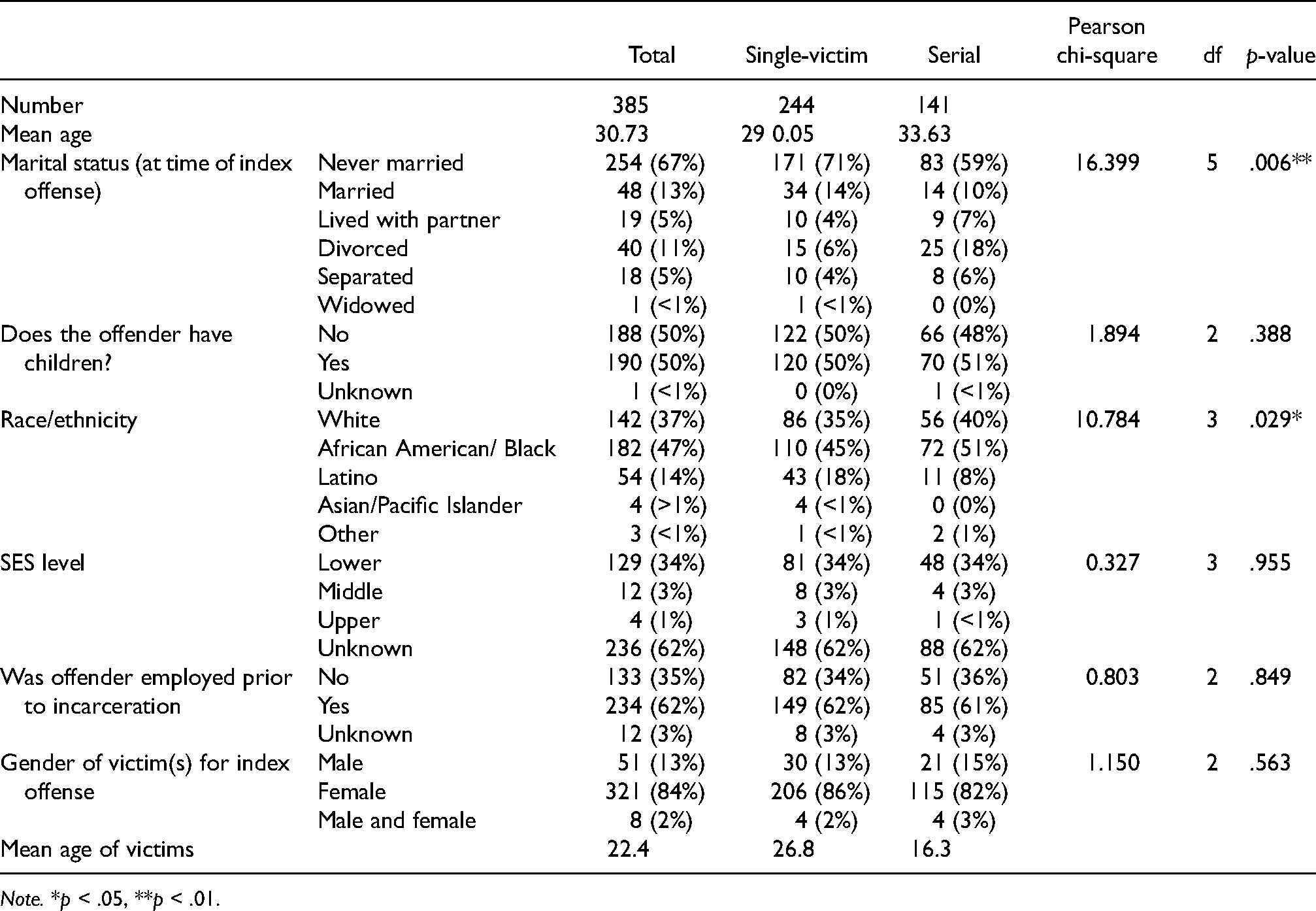
The subsample for this study was comprised of individuals who were convicted of the rape of a stranger (someone known for less than 24 h). Where rape was defined according to the state of New Jersey as the crime of aggravated sexual assault in the first degree. Of the 3,186 offenders in the data set, 385 were stranger rapists, of whom 244 were single-victim rapists and 141 were serial rapists, and were all coded based on their index crime. The mean number of crimes of serial rapist group was 3.43 (SD = 2.58) and the median was 2 with a range of 2 to 15 crimes. The mean age of the stranger rapists was 30.7 years (SD = 10.8). The majority of the sample never married (N = 254, 67%), About half of the sample (N = 188, 50%) did not have children. The racial/ethnic composition was as follows: 37% (N = 142) White, 47% (N = 182) Black/African American and 14% (N = 54) Latino. Offenders who identified as Asian/Pacific islander, American Indian and unknown comprised less than 1% of the subsample. The victims of the index crimes were 84% (N = 321) female and had a mean age of 22 years (SD = 14.5). See Table 1, for more demographic information of the rapists and victims.
Demographics of single-victim rapists and serial rapists.
Note. *p < .05, **p < .01.
Measurement
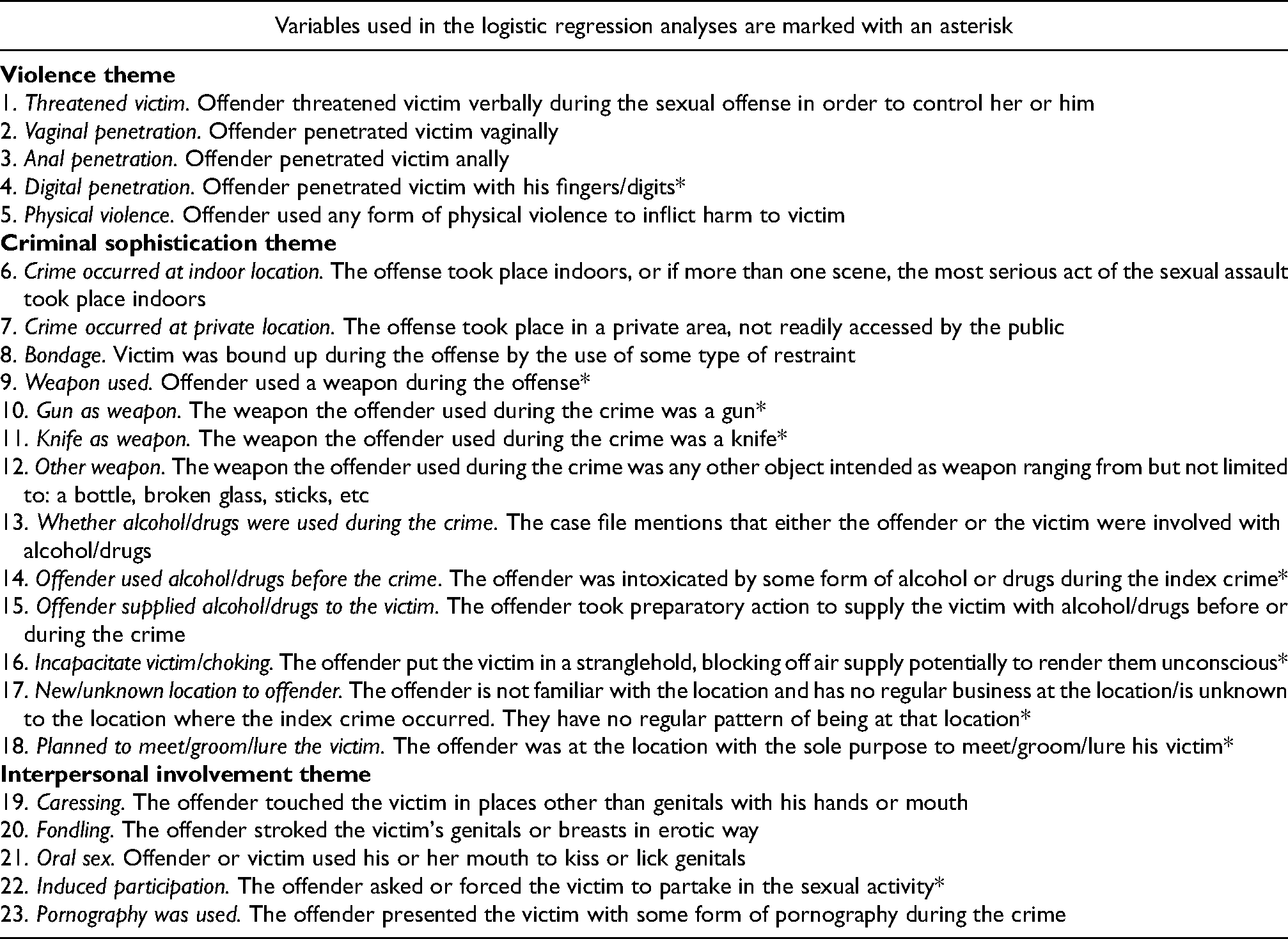
The 23 variables used in this study were selected based on theoretical grounds before the analysis was performed (Park et al., 2008). The 23 crime-scene characteristics were divided into three themes—violence, criminal sophistication and interpersonal involvement—based upon the thematic groupings used by Canter et al. (2003) and Park et al. (2008) (see Table 2). The following variables were included and all coded dichotomously.
Definitions of the 23 crime scene variables.
Violence theme
Amount of physical violence in the index crime. The amount of physical violence included whether the offender threatened the victim, used vaginal penetration, used anal penetration and/or digital penetration.
Criminal sophistication theme
Whether a weapon was used, a gun as weapon, knife as weapon, other type of weapon, whether alcohol/drugs were involved in the crime, whether alcohol/drugs were supplied to the victim, whether the offender took alcohol/drugs, bondage was used by the offender, whether the offender incapacitated the victim, whether the crime was at a private location or indoors, whether it was a new/unknown location for the offender, whether the offender planned to groom/meet/lure the victim at the location.
Interpersonal involvement theme
Whether the offender caressed the victim, fondled the victim, performed oral sex, induced participation or included pornography in the crime.
Results
Demographics
Table 1 presents the results of chi-square testing of the demographics of the single-victim rapists and the serial rapists of the study sample can be found. A significant difference between the marital status of serial rapists and single-victim rapists was found with single-victim rapists tending to have never married, whereas serial rapists tended to be divorced more than single-victim rapists. There were also significant racial differences between serial rapists and single-victim rapists. The single-victim rapists sample was more evenly divided among White (35%), African American/Black (45%) and Latino (18%), whereas fewer Latino men (8%) were serial rapists and this group was comprised primarily of White (40%) and African American/Black (51%) men.
Crime scene characteristics
The results are presented as the differences in crime-scene characteristics between stranger single-victim rapists and stranger serial rapists in three different themes: violence, criminal sophistication and interpersonal violence. A cross-tabulation was made with the crime-scene characteristics per theme against whether the offender was a single-victim rapist or a serial rapist. Fisher’s exact test of a four-field table was used to test the associations for the cells with fewer than five findings.
Violence
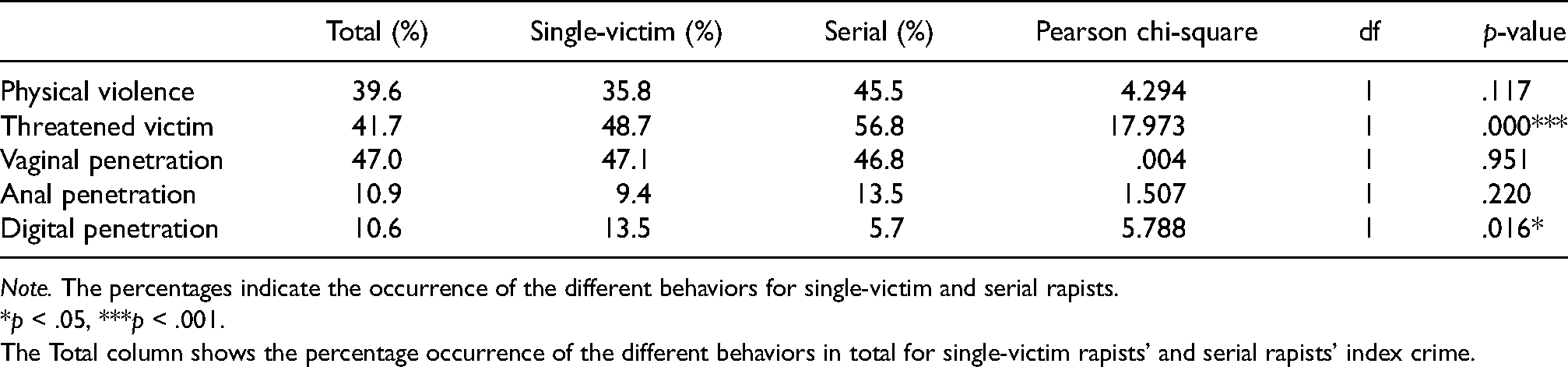
When comparing the amount of violence used between single-victim and serial rapists we found that the two differed significantly on threat to victim (χ2 = 17.973, p = .000) and digital penetration (χ2 = 5.788, p = .016). Specifically, single-victim rapists (N = 138, 56.8%) were more likely to threaten their victim than serial rapists (N = 69, 48.7%) and single-victim rapists (N = 33, 13.5%) digitally penetrated their victim more than serial rapists (N = 8, 5.7%). No significant differences were found between single-victim and serial rapists on vaginal penetration, anal penetration and physical violence (see Table 3).
Crime scene characteristics in the violence theme.
Note. The percentages indicate the occurrence of the different behaviors for single-victim and serial rapists.
*p < .05, ***p < .001.
The Total column shows the percentage occurrence of the different behaviors in total for single-victim rapists’ and serial rapists’ index crime.
Criminal sophistication
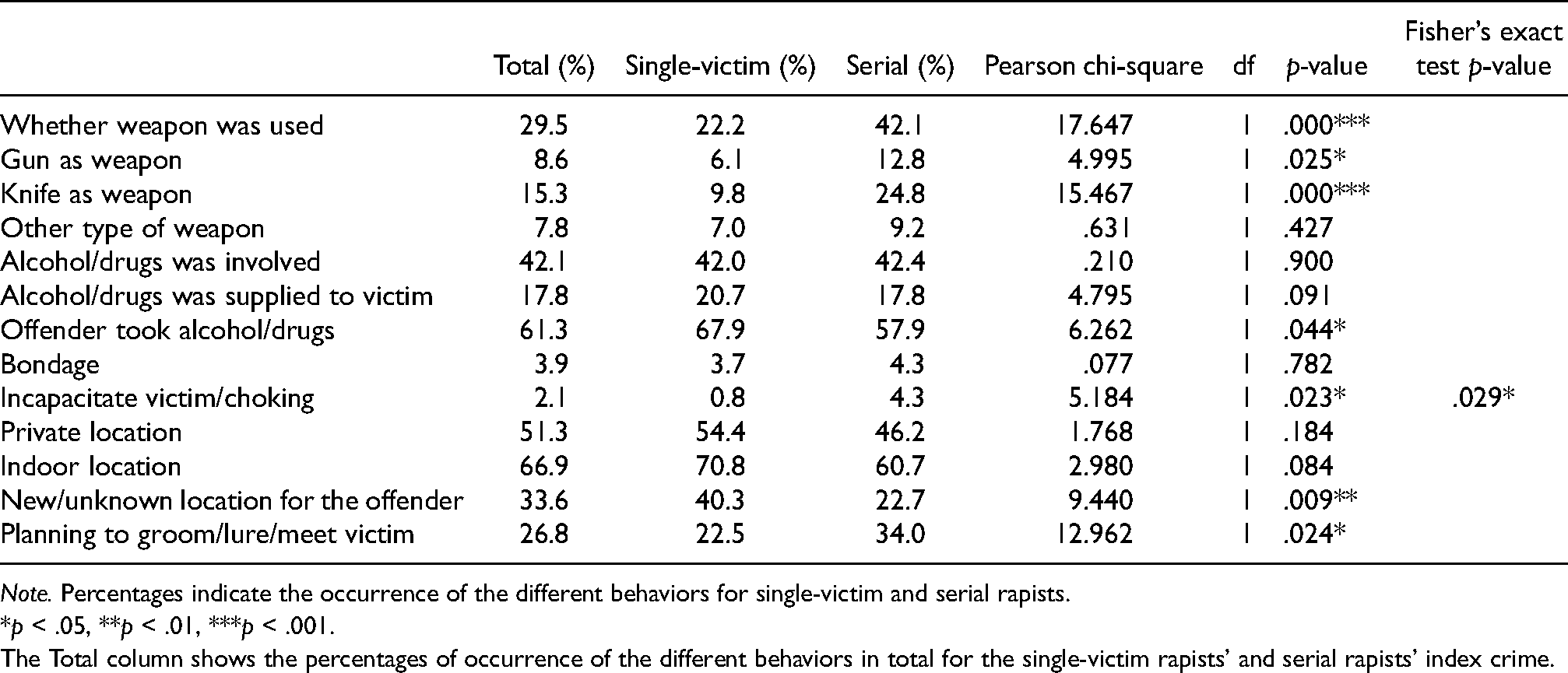
The amount of criminal sophistication was compared between single-victim and serial rapists. Serial rapists and single-victim rapists significantly differed on the use of a weapon during the index offense (χ2 = 17.647 p = .000), use of a gun (χ2 = 4.995, p = .025) or a knife (χ2 = 15.467, p = .000), incapacitating their victim (χ2 = 5.184, p = .023) where Fisher’s exact test also still yielded a significant difference (p = .029), planning to lure/meet/groom a victim (χ2 = 12.962, p = .024), taking alcohol/drugs during the index crime (χ2 = 6.262, p = .044) and committing the crime at an unknown/new location (χ2 = 9.440, p = .009). In particular, serial rapists were more likely to use a weapon during the index offense (N = 59, 42.1%) compared with single-victim rapists (N = 54, 22.2%). Serial rapists were especially more likely to use a gun (N = 18, 12.8%) or a knife (N = 35, 24.8%) compared with single-victim rapists (gun: N = 15, 6.1%; knife: N = 24, 9.8%). Additionally, serial rapists were significantly more likely to incapacitate their victim (N = 6, 4.3%) than single-victim rapists (N = 2, 0.8%) and plan to lure/meet/groom a victim at a location (N = 48, 34.0%) than single-victim rapists (N = 55, 22.5%). Single-victim rapists, however, were more likely to have taken alcohol/drugs during the index crime (N = 166, 67.9%) compared with serial rapists (N = 25, 17.8%) and were more likely to commit the crime in an unknown/new location (N = 98, 40.3%) than serial rapists (N = 32, 22.7%).
There were no significant differences found between single-victim and serial rapists on variables: other type of weapon, whether alcohol/drugs were involved, whether alcohol/drugs were supplied to the victim, bondage, indoor location and private location (see Table 4).
Crime scene characteristics in the criminal sophistication theme.
Note. Percentages indicate the occurrence of the different behaviors for single-victim and serial rapists.
*p < .05, **p < .01, ***p < .001.
The Total column shows the percentages of occurrence of the different behaviors in total for the single-victim rapists’ and serial rapists’ index crime.
Interpersonal
When comparing serial and single-victim rapists on the interpersonal theme, there was only one significant difference between single-victim and serial rapists (see Table 5), namely induced participation (χ2 = 5.332, p = .021). Serial rapists (N = 56, 39.7%) were more likely to induce participation from their victims than single-victim rapists (N = 69, 28.3%). The other crime-scene characteristics for the interpersonal theme were non-significant: oral sex, fondling, caressing and whether pornography was used during the index crime.
Crime scene characteristics for the interpersonal theme.
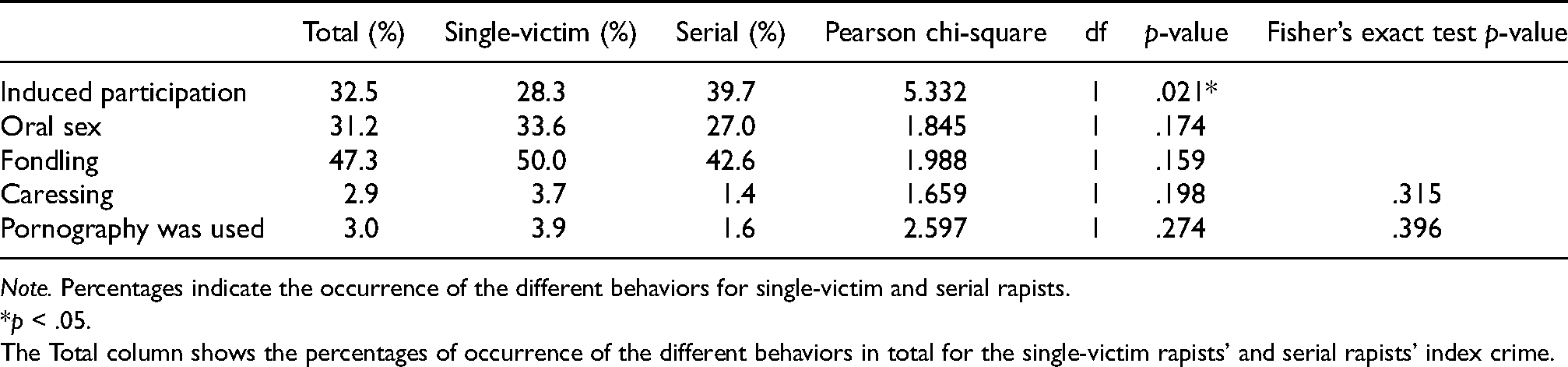
Note. Percentages indicate the occurrence of the different behaviors for single-victim and serial rapists.
*p < .05.
The Total column shows the percentages of occurrence of the different behaviors in total for the single-victim rapists’ and serial rapists’ index crime.
Predicting rapist type
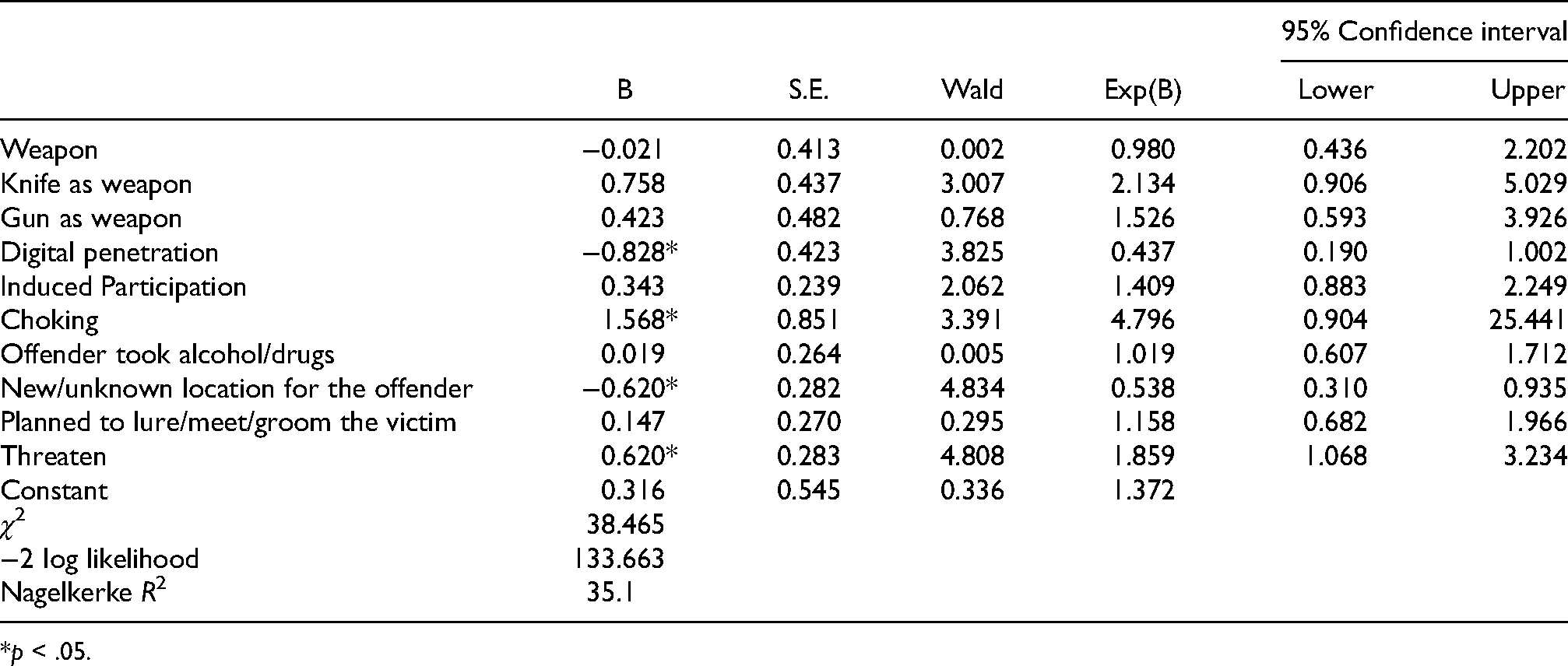
Based on the 10 significant crime-scene characteristics (whether a weapon was used, a gun as weapon, a knife as weapon, digital penetration, induced participation, choking, offender took alcohol/drugs, new/unknown location for the offender, planned to lure/meet/groom the victim, threatened the victim) differences derived above a predictive model were built (Table 6). The logistic regression model was statistically significant (χ2 = 38.465, p < .0005).
Final model predicting rapist type.
*p < .05.
The predictor variable, digital penetration from the violent theme, in the logistic regression analysis was found to contribute to the model (Table 6). The unstandardized beta weight for the predictor variable was B = −0.828, SE = 0.423, Wald = 3.825, p < .05. The estimated odds ratio favored a decrease of 0.44 [Exp(B) = 0.437, 95% CI (0.190, 1.002)] for digital penetration every 1 unit increase of being a serial rapist.
The predictor variable, choking from the criminal sophistication theme, in the logistic regression analysis was found to contribute to the model (Table 6). The unstandardized beta weight for the predictor variable was B = 1.568, SE = 0.851, Wald = 3.391, p < .05. The estimated odds ratio favored an increase of 4.80 [Exp(B) = 4.796, 95% CI (0.904, 25.441)] for choking every 1 unit increase of being a serial rapist.
The predictor variable, new/unknown location for the offender from the criminal sophistication theme, in the logistic regression analysis was found to contribute to the model (Table 6). The unstandardized beta weight for the predictor variable was B = −0.620, SE = 0.282, Wald = 4.834, p < .05. The estimated odds ratio favored a decrease of 0.54 [Exp(B) = 0.538, 95% CI (0.310, 0.935)] for new/unknown location for the offender every 1 unit increase of being a serial rapist.
The predictor variable, threaten from the criminal sophistication theme, in the logistic regression analysis was found to contribute to the model (Table 6). The unstandardized beta weight for the predictor variable was B = 0.620, SE = 0.283, Wald = 4.808, p < .05. The estimated odds ratio favored an increase of 1.86 [Exp(B) = 1.859, 95% CI (1.068, 3.234)] for threaten every 1 unit increase of being a serial rapist.
Nagelkerke’s R2 statistic (Nagelkerke, 1991) was used to estimate the percentage of the explained variance. This statistic is a variation of the R2 concept in ordinary least squares regression; however, it is not equivalent in the accuracy of association to the R2 statistic in the linear regression model (Peng et al., 2002). Nevertheless, the Nagelkerke R2 statistic can be used in addition to other evaluative indices, such as overall evaluation of the model (likelihood ratio test) and the statistical significance of each factor. The model explained 35.1% (Nagelkerke R2) of the variance in rapist type and correctly classified 75.8% of cases. There was a specificity of 84.4% and a sensitivity of 62.7%.
Discussion
This study examined crime-scene characteristics of stranger rapes and was one of the first to examine differences between serial rapists and single-victim rapists within this offender group. Overall, we found that stranger rapes by single-victim rapists and serial rapists can be differentiated from each other based upon the behavior offenders display during the commission of rape crime in three general categories: violence, criminal sophistication and interpersonal behavior.
As hypothesized, single-victim rapists were significantly more likely to have violent themed crime scene characteristics than serial rapists. This was evident by the fact that they were more likely than serial rapists to penetrate digitally and threaten their victims. These findings are in accordance with those of Park et al. (2008) who also concluded that single-victim rapists were more violent than serial rapists. However, Park and colleagues found that serial rapists were more likely to threaten their victim during the rape, whereas in the current study we found that threats of violence were more common among single-victim rapists. One possible explanation for this discrepancy could be that the Park et al. (2008) study included rapists who were not strangers. Ullman and Siegel (1993) explain that the outcomes of rape depend on the relationship between the victim and the offender (strangers, acquaintances or intimate). Further, Park et al. (2008) examined multiple rape offenses of the serial rapists, whereas this study analyzed only the crime-scene characteristics of their index offense. According to Douglas and Munn (1992), serial rapists tend to change and adapt their style of rape as they learn from each previous offense. This could have influenced the results between the current study and that of Park et al. (2008).
As expected, serial rapists had more criminally sophisticated themed crime scene characteristics than single-victim rapists, for example by incapacitating their victim or using a weapon during the crime. Overall, these findings are in line with previous research showing that serial rapists were more criminally sophisticated than single-victim rapists (Park et al., 2008). Similarly, serial rapists were also more likely to use a weapon during the offense, especially a gun or a knife, they were more likely to incapacitate their victim and they planned ahead of time to lure/meet/groom their victim at a chosen location. Serial rapists were also more criminally sophisticated in the sense that they were less likely to have taken alcohol/drugs during the index crime than single-victim rapists and were more likely to be familiar with the location of the index offense. These results are also in line with those of Park et al. (2008) who similarly found that serial rapists were less likely to take alcohol/drugs during the crime than single-victim rapists. This could mean that to remain criminally sophisticated and avoid detection, serial rapists do not want to risk their chances by taking alcohol/drugs. However, similar to the findings of LeBeau (1987) but in contrast to those of Park et al. (2008), this study found that serial rapists were more likely to plan their attack, suggesting they are more criminally sophisticated than single-victim rapists.
Somewhat in line with our hypotheses regarding the interpersonal theme, serial rapists were more likely to induce participation from their victims than single-victim rapists were. However, no other differences were found between single-victim and serial rapists in terms of interpersonal factors. These findings are in contrast to those of Park et al. (2008) who found that single-victim rapists engaged in more interpersonal involvement during the rape, which means that future research should look into the interpersonal theme to clear up discrepancies.
The second aim of this study was to build a predictive model for stranger rapist type, either being serial rapist or single-victim rapist. Four variables including choking, digital penetration, threatening the victim and whether the offender was new to the location of the index offense predicted whether the offender was a single-victim or serial rapist. For instance, if the variables choking and threatening the victim were present and the variables digital penetration and whether the offender was new to the location of the index offense were not present, the model indicated the offender was a serial rapist. Interestingly, the strongest crime-scene characteristic predictor of the perpetrator being a serial rapist was choking. Choking is viewed as a means to incapacitate and control the victim in criminological literature (Canter et al., 2003). According to Canter et al. (2003) the idea behind choking a victim is that the offender regards the victim as an inanimate object that must be trussed and coerced. When the offender sees the victim as an object, he will control the victim through restraint. Further, according to Canter and Young’s model of offender profiling (2003), the offender can also view the victim as a vehicle or person. When the offender sees the victim as a vehicle for his own emotional state, such as anger and frustration, the victim is subjected to extreme violence. This was supported in our study because both digital penetration and threatening the victim were predictors of single-victim rape. This type of violence represent the extreme sexual violation and personal violation of the victim (Canter and Young, 2003), suggesting that single-victim rapists are more violent and emotional and may use their victims to appease their emotional state.
Finally, the fact that the offender was new to the location of the index offense falls in line with the geographical profiling literature. For example, Canter and Larking (1993) geographically profiled 45 repeat sex offenders and found that most of their sample moved out from their home base into a region around that base to carry out their attacks, where they were familiar with the surroundings. Serial rapists tend to pick a location they are familiar with to avoid detection and plan the crime ahead of time.
Implications
Overall, this study found that there are several characteristics that can be used to determine whether an unknown offender has the probability of being a single-victim or serial rapist These results are still general exploratory findings in terms of exploring crime-scene characteristics of rapists. The results have implications for offender profiling and should be considered when applying offender profiling to stranger rape cases. First, these findings could be used to identify potential suspects in stranger rape cases because the crime-scene information could help law enforcement determine whether they are looking for individuals who have committed these types of crimes previously and may already be in the system. Second, the crime-scene behaviors associated with serial rapists could also be used to identify unknown offenders as possible serial offenders. This includes individuals who may have committed sexual offenses before, but who have never been caught and cases where offenders have just started their rape career. This allows for law enforcement to narrow down their suspect pool and thus assist the investigation.
The results also add to the growing understanding of the differences between single-victim rapists and serial rapists, more specifically the understanding of their behavior during a sexual assault. By distinguishing between the two types of rapists, serial and single-victim rapists, the academic community avoids a simple rapist profile and thus also overgeneralization mistakes can be avoided in future research and investigations. The significant model presented in this study also adds to growing literature on the empirical evidence of psychological profiling. It advances the quest to find grounded knowledge in the area of psychological profiling for the purpose of better understanding serial rape.
Limitations
This study is not without limitations. First, this study used an existing database as a means to collect data about the crime scene actions. The main purpose of the original study was not for gathering information on crime-scene variables; thus, they did not always include information about all the variables that were of interest. More variables on interpersonal involvement would be of interest such as kissing or what parts of the body were caressed, and more specific variables for the criminal sophistication theme such as whether semen was present at the crime scene or whether the offender stole property. Adding to this, the three behavioral themes in this article do not have an equal number of characteristics. For example, the interpersonal theme has very few characteristics compared with the elaborate criminal sophistication theme. This impacted the findings in the sense that the model could be more accurate with more equally divided themes. Second, only cases of convicted sex offenders were included because there was an importance of reliably knowing whether the offender was an actual serial rapist or single-victim rapist. However, many rape cases remain unreported or unsolved (End the Backlog, nd) and thus the offenders are never found and convicted, which means that the findings of this study cannot be generalized for all rape cases, especially those that go unreported. Additionally, it should be taken into consideration that these data were from 1996–2007 and do not take into account recent changes in the field resulting from online/internet-initiated offending and journey to crime as behavioral characteristics as the more recent research suggests. Including these characteristics would lead to a more accurate model. For example, the characteristic of meeting their victim online. A recent study suggests that crime-scene behaviors of stranger rapists may have changed from the 1990s and thus these findings must be taken within their temporal context (Almond et al., 2021). Lastly, it may be the case that some single-victim rapists have committed rape before and avoided detection and so were considered single-victim rapists in the study when they were in fact serial rapists.
Future research
The findings of this study could also help guide future research. For example, future studies could examine the utility and predictive power of our model in the field using data from actual crime scenes. This would increase its generalizability and potentially other factors could be identified that would increase its predictive power, thereby increasing its accuracy and utility for law enforcement. Additionally, another study could be done focusing on different regions and cultural groups because the present study examined only a population of rapists in one U.S. state to expand its generalizability and validity. Finally, future research could focus on more crime-scene characteristics that were not included in the present study due to database limitations, to create a more elaborative and inclusive model. In-depth structural interviews could be conducted with offenders who committed sex offenses, thereby developing more qualitative material to augment the model presented in this study. Characteristics such as developmental factors, triggering behaviors before an attack, or cognitive processes involved in the offender's planning of the attack could be included in the investigation and model.
In conclusion, this study found that serial rapists were more likely to be criminally sophisticated in the sense of controlling their victims than the single-victim rapists, whereas the single-victim rapists were more likely to be violent towards their victims than serial rapists.
Footnotes
Declaration of conflicting interests
The author(s) declared no potential conflicts of interest with respect to the research, authorship, and/or publication of this article.
Funding
The author(s) received no financial support for the research, authorship and/or publication of this article.
