




Abstract
Combined exposure to whole-body vibration (WBV) and posture can result in harmful adverse health effects compared to WBV or posture alone. The effect of WBV on health is outlined in ISO standard ISO 2631-1, and the effect of static posture is defined in ISO 11226. The goal of this study was to develop an accumulative posture index based on both static and dynamic (vibration) contributions. The health metrics from both sources were used to introduce daily combined WBV-posture exposure, which was then used to assess health risks. Three examples from different industrial vehicles were introduced to demonstrate the effect of daily combined WBV-posture exposure on the daily exposure duration thresholds defined by the ISO 2631-1 Health Guidance Caution Zone. The combined effect of posture on health can be influenced by the vibration magnitude, frequency content, muscle activation, and static and dynamic postures, which will be considered in future studies.
Introduction
Simultaneous exposure to vibration and non-neutral postures, such as neck and trunk rotation, has been associated with an increased risk of musculoskeletal injury in industries such as mining.1–4 Numerous studies have established a clear link between whole-body vibration (WBV) and musculoskeletal disorders, especially when combined with improper posture. Adopting bent, twisted, or flexed trunk postures during WBV exposure substantially enhances the likelihood of neck and lower back pain (LBP).5–11 Variations in pelvic angles, spinal curvatures, and muscle tension can alter how vibration is transmitted through the body, exacerbating detrimental effects on the lumbar spine.12–14 Specifically, a seated posture with flexed hips and decreased lumbar lordosis can increase compressive loading on intervertebral discs and elevate paraspinal muscle activity. 13 This facilitates a more effective transmission of vibrational energy through the spine, increasing the risk of injury. The impact of posture on vibration transmissibility is crucial, and numerous studies have shown that non-neutral seating positions, such as slouched or twisted postures, significantly increase the risk of LBP among vehicle operators exposed to WBV. 15 Research evaluating the seated postures of industrial vehicle operators, such as those in buses, trucks, and forklifts, consistently supports a direct association between awkward postural angles, WBV exposure, and development of lower back disorders.14,16 Additionally, when awkward postures occur concurrently with WBV exposure in the 1-20 Hz range, a decline in task performance and overall work efficiency among these operators has been repeatedly documented. 17 Empirical studies have demonstrated that posture significantly modulates the transmissibility characteristics of WBV, revealing that variations in posture (neutral, flexed, rotated, and twisted) critically influence seat-to-head transmissibility (STHT),18–22 potentially signaling heightened injury risk. Epidemiological investigations have consistently reported a pronounced prevalence of LBP among drivers subjected to seated WBV in non-neutral postures. 23 In an analysis encompassing nine diverse pelvis and spine postures, distinct transmissibility peaks at both 5 and 10 Hz were observed, with the seat-to-pelvis pitch transmissibility peaking at 12 Hz.24,25 It was observed that the STHT varied with frequency: below 6 Hz, it was elevated in a posterior pelvic tilt, and above 6 Hz, in an anterior tilt. Additionally, employing a backrest significantly shifts the STHT peak from 2.5 Hz in an unsupported posture to 4.5 Hz when supported. 25 In summary, an extensive body of literature consistently demonstrates that combined exposure to WBV and awkward or constrained postures significantly amplifies the detrimental effects on various aspects of health, most notably the musculoskeletal system, particularly in the lower back region. The interaction between vibration and posture alters the transmission of vibrational energy through the body, leading to increased spinal loading, muscle fatigue, and a heightened risk of developing musculoskeletal disorders and other health issues.
Despite extensive research on the individual effects of WBV and posture on health, there is a noticeable gap in our understanding of the combined impact of these factors. Although numerous studies have independently highlighted the adverse health effects of WBV and poor posture, very little has been done to analyze their synergistic effects.5,15,16,26 This gap emphasizes the importance of comprehensively investigating the synergistic effect of WBV and posture on worker health. Both WBV and prolonged posture independently contribute to various musculoskeletal disorders, including LBP and neck discomfort. However, these interactions may exacerbate the risk of developing such health issues. For instance, adopting awkward postures during WBV exposure can alter the transmission of vibrational energy through the spine, heightening muscle fatigue, spinal loading, and injury risk. In addition, several studies have demonstrated that exposure to WBV combined with noise, lighting, or concurrent physical and cognitive demands amplifies discomfort and psychological strain beyond the effect of a single factor alone.27–30 These findings show that occupational risks rarely act in isolation, reinforcing the need for integrated indices like the proposed WBV-posture metric. Understanding this combined effect is important for developing targeted intervention strategies to effectively mitigate health risks. While the current ISO 2631-1 is well established for quantifying the effect of WBV on health,
31
there is no establishment for additional factors that also have an effect on human response, such as poor posture. In order to close the gap between the WBV and poor posture, this study introduced a posture index that considers both static and vibration posture influences for each degree of freedom during vibration exposure, where the static posture captures the severity of the range of movement and the vibration posture captures the duration of the adopted postures. An accumulative posture index (
Three examples in this work include a comparison between the daily exposure duration thresholds associated with daily WBV and WBV-posture-adjusted accelerations.
Methods
Posture definitions
The definition of postures outlined below was applied to sitting postures. According to ISO 11226, sitting posture can be categorized as follows.
Sitting neutral posture
Posture categories and neck body segment angles.
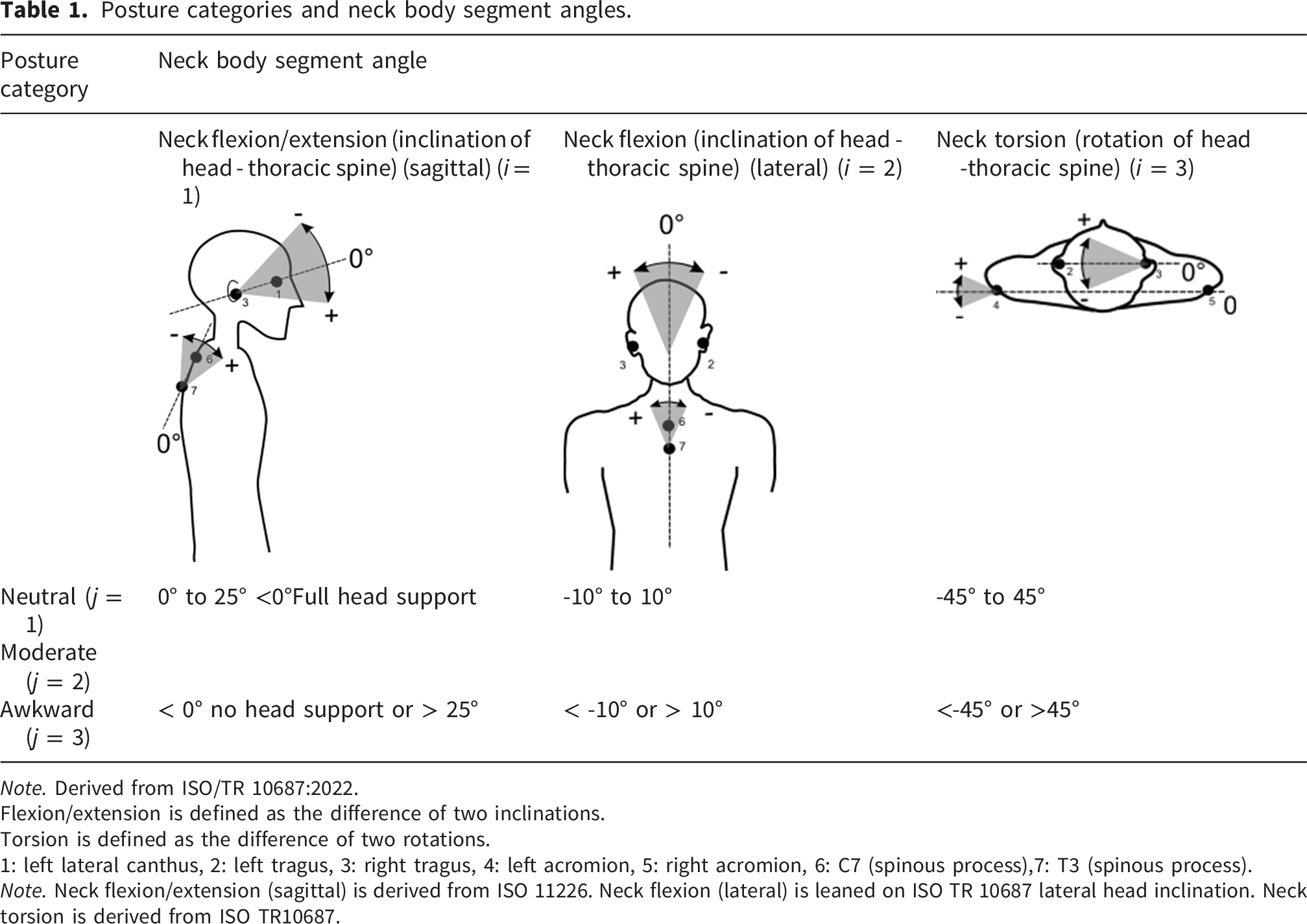
Note. Derived from ISO/TR 10687:2022.
Flexion/extension is defined as the difference of two inclinations.
Torsion is defined as the difference of two rotations.
1: left lateral canthus, 2: left tragus, 3: right tragus, 4: left acromion, 5: right acromion, 6: C7 (spinous process),7: T3 (spinous process).
Note. Neck flexion/extension (sagittal) is derived from ISO 11226. Neck flexion (lateral) is leaned on ISO TR 10687 lateral head inclination. Neck torsion is derived from ISO TR10687.
Posture categories and back body segment angles.
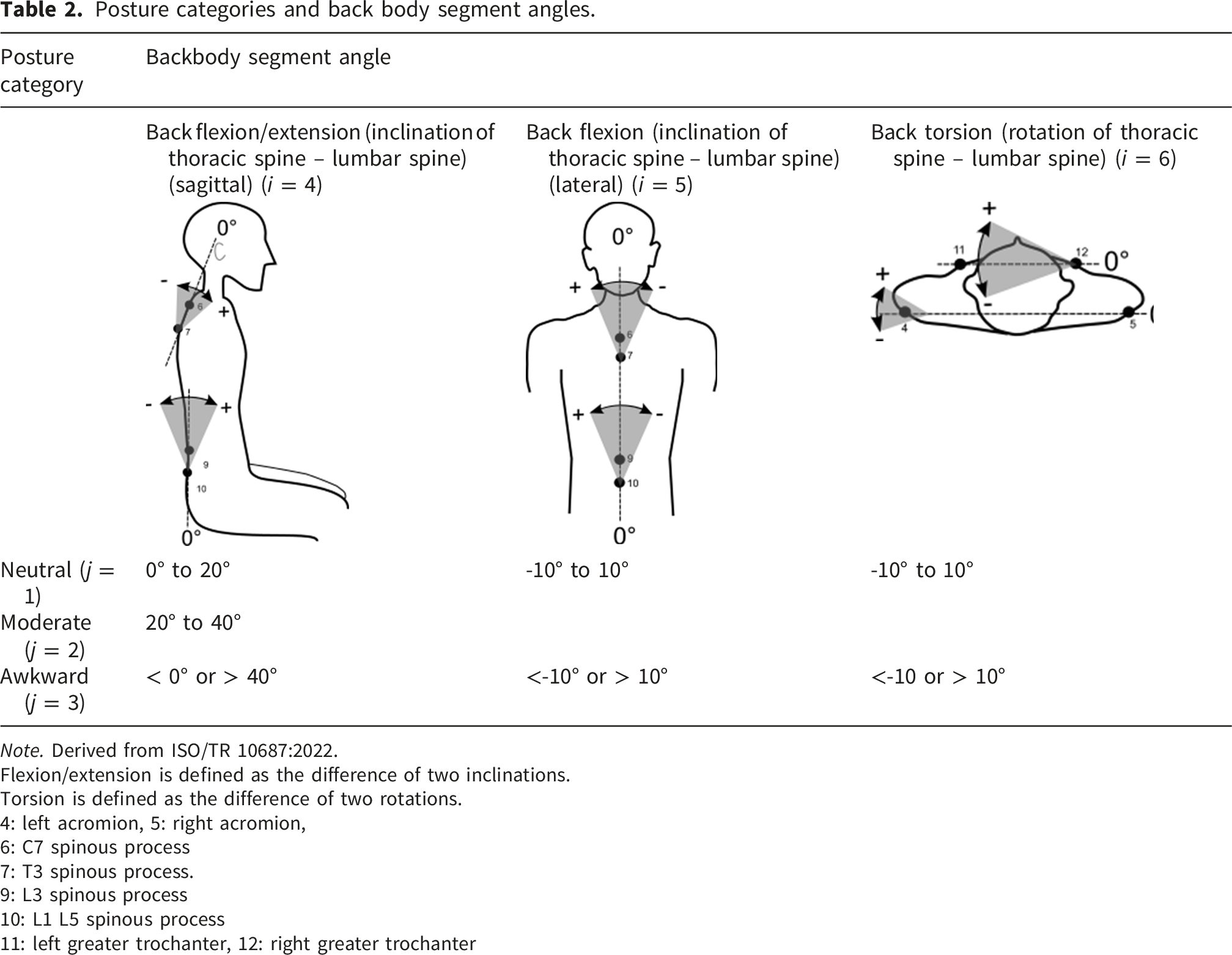
Note. Derived from ISO/TR 10687:2022.
Flexion/extension is defined as the difference of two inclinations.
Torsion is defined as the difference of two rotations.
4: left acromion, 5: right acromion,
6: C7 spinous process
7: T3 spinous process.
9: L3 spinous process
10: L1 L5 spinous process
11: left greater trochanter, 12: right greater trochanter
Sitting moderate posture
The posture deviates from the neutral posture to a certain degree and is defined as moderate in Tables 1 and 2.
Sitting awkward posture
Non-neutral posture that is considered more than moderate in Tables 1 and 2. For more details, please refer to ISO/TR10687:2022. 32
Posture measurement
Optical technologies, inertial sensor technologies, or any other type of technology, including camera pictures, can be used to measure posture quantitatively. Some of these technologies are summarized in ISO/TR 10687:2022. 32 The locations of the body segments to attach the sensor to or to use for angle positions are defined in ISO/TR 10687:2022 and include the neck and back. Three types of angles were described for each body segment.
In general, the field measurements of individual human joint angles can be challenging. Therefore, the methodology specified in this work is restricted to six joint angles that have been categorized as neutral, moderate, or awkward. 33 These joint angles include the major joint angles in the neck and lower back areas, which can be reasonably measured in the field. In this work, drivers’ posture was detected using the CUELA system. 34 Utilizing inertial and kinematic sensor technology, the CUELA system continuously records posture as angular measurements. The system can be attached to the subject’s clothing without restricting their movements during work. At the start of each measurement, all body angles are calibrated. The posture at calibration (zero joint position) corresponds to an upright standing posture with the subject looking straight ahead. This procedure eliminates subject-specific angle offsets and errors caused by sensor placement. Overall, movement artifacts are minimal, measuring less than ±1° in low-vibration environments and up to ±4° under conditions of strong vibrations with high amplitudes and low frequencies. 35
Data collection and processing
The collection of static posture data from the seated occupant needs to be made during the period in which the vibration data are collected. The vibration data were collected in accordance with ISO 2631-1 to include the acceleration time histories in each of the three orthogonal axes (x, y, z) at the seat pan/occupant interface. The accelerations are representative of the typical daily vibration exposure encountered by the occupants.
All drivers were in good health at the time of the study and did not experience any significant physical complaints. Both the drivers and employers provided informed consent before participating in the study on a voluntary basis. The Ethics Committee of the Medical Faculty at RWTH Aachen University approved the study and its design. A positive vote from the Ethics Committee has been obtained. A written informed consent for participation in the study has been obtained. Also, a written consent to publish these data (individual and occupational details) has been obtained from all individuals. All efforts to anonymize individuals have been taken.
Calculation of the posture index and combined posture index
The posture index
The 

The posture index, 
Note that all six body angles (neck flexion/extension [sagittal], neck flexion [lateral], neck torsion, back flexion/extension [sagittal], back flexion [lateral], and back torsion), as defined in Tables 1 and 2, must be measured.
The combined posture index, 
Calculation of the accumulative posture index
The accumulative posture index, 
Calculation of the daily combined WBV-posture exposure
Using the guidelines of ISO 2631-1, the acceleration time histories are processed in either the time or frequency domain to generate the daily overall frequency-weighted RMS acceleration in each axis l (
The daily overall frequency-weighted RMS acceleration can also be expressed as an 8-hour equivalent:
The daily combined WBV-posture exposure was calculated by multiplying the daily WBV exposure by 


The daily exposure duration thresholds define the amount of time a worker can be exposed to the daily WBV exposure expressed by 

The value 0.43 is the 8-hour overall frequency-weighted RMS acceleration or vector sum associated with the lower boundary of the HGCZ. The value of 0.87 is the 8-hour overall frequency-weighted RMS acceleration or vector sum associated with the upper boundary of the HGCZ. Equations (11) and (12) can also be used to define the daily exposure duration thresholds associated with daily combined WBV-posture exposure.
Example measurements and calculations
Three occupational vehicle drivers: a dump truck driver (male, 38 years old, 178 cm, and 90 kg), a wheel loader driver (male, 56 years old, 179 cm, and 104 kg) and a roller driver (male, 46 years old, 186 cm, and 116 kg) were selected for this study. The durations of the measurements were 86.34 min for dump truck, 83.02 min for wheel loader, and 49.58 min for the roller. The vector sum (
Whole-body vibration measurement
In accordance with existing standard ISO 2631-1: 1997, 31 accelerations were simultaneously collected in the three orthogonal axes l= x (fore-and-aft), y (lateral) and z (vertical) at the seat surface and, additionally, at the seat mounting point (measurement device: KMT; Type D-2/16 consisting of DAT-Recorder TCD-D7 with 16-channel PCM-measures, calibrated by Bach-Messtechnik Type BSK 2 ST). The accelerations measured at the seat-mounting point allow for the detection of artefacts and are not discussed in the present study. The duration of measurements, T, was long enough to capture a representative exposure of the daily working conditions (for WBV and posture).
Vibration signals were detected at 480 Hz and weighted according to ISO 2631-1: 1997 to yield frequency-weighted vibration signals (
Body posture measurement
The body postures of the driver were continuously monitored using a CUELA advanced inertial sensor technology (example shown in Figure 1 for a dump truck, wheel loader, and roller). This system provides real-time angular measurements of body posture without obstructing the driver’s movements. The recorded data were processed using computer-assisted recording and long-term analysis of musculoskeletal loads developed by the Institute for Occupational Safety and Health of the German Social Accident Insurance.
36
The posture analysis was conducted according to ISO TR 10687. Body angles were categorized as positive (flexion and lateral movement to the right) or negative (extension and lateral movement to the left). The results are expressed as the percentage of time spent in each posture category (neutral, moderate, or awkward) for each angle of interest. The range of motion within each posture category was determined according to ISO 11226.
33
Drivers and vehicles during WBV and posture measurements: (a) Dump truck, (b) wheel loader, (c) roller.
Example calculation of
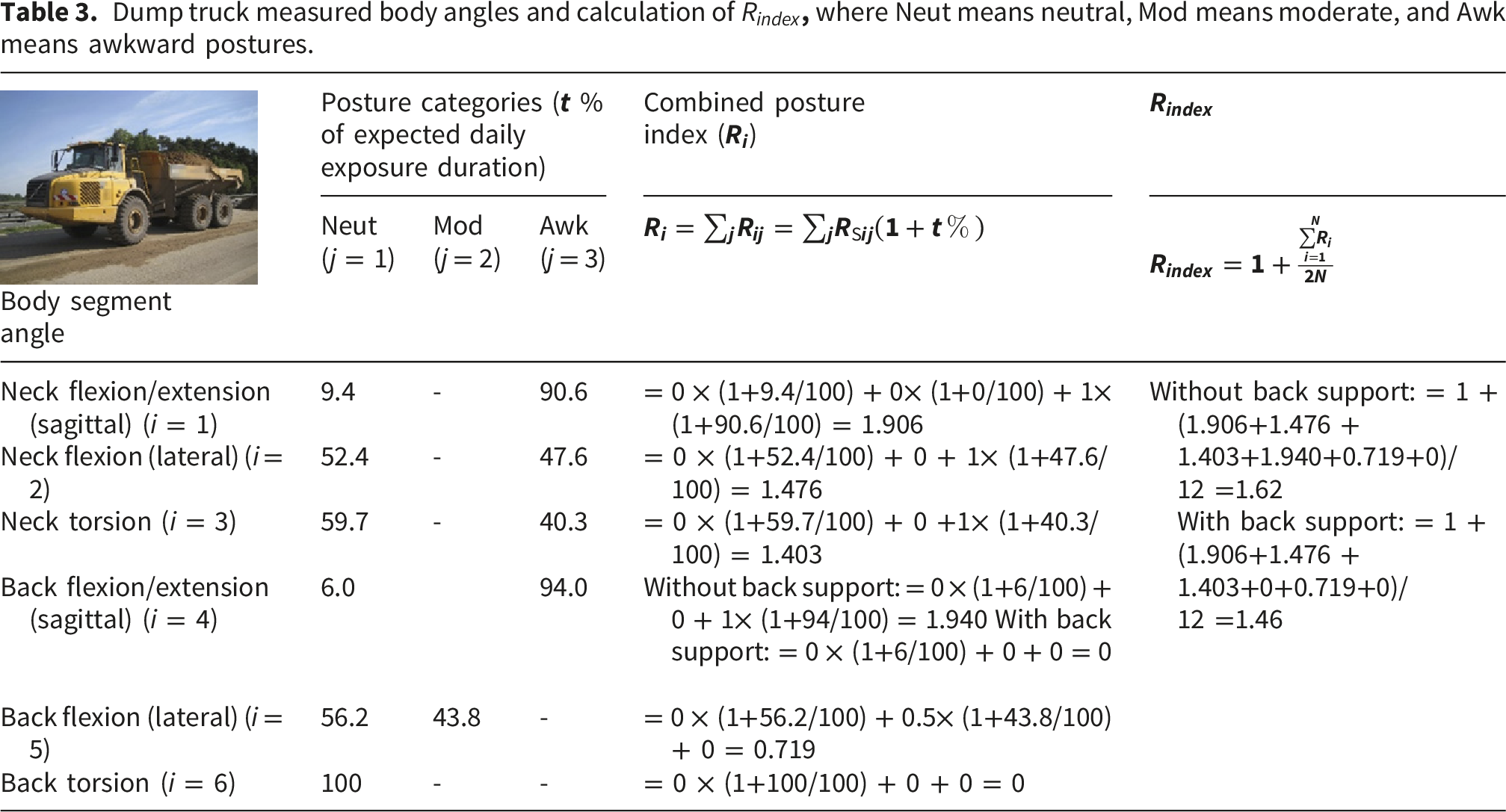
Dump truck measured body angles and calculation of

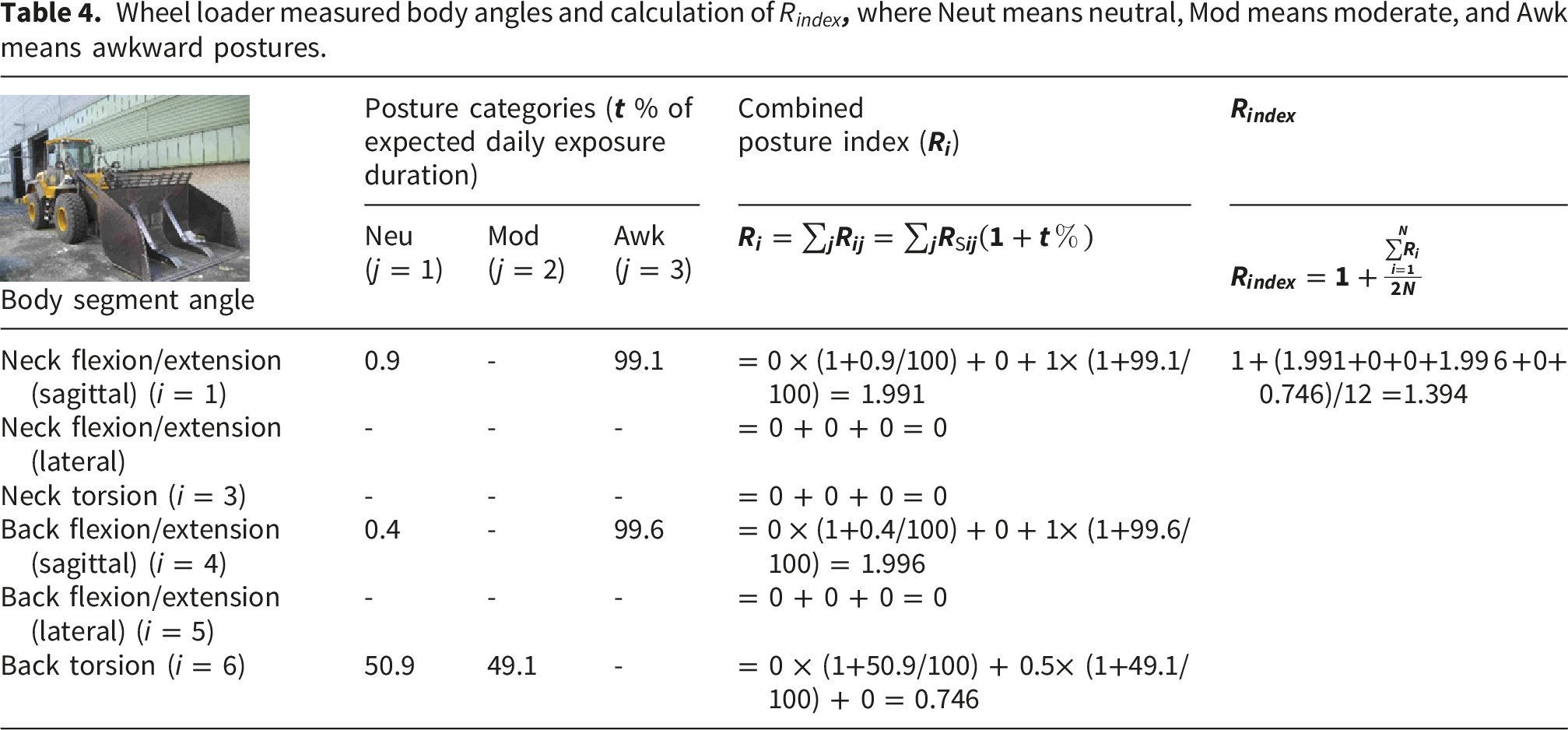
Wheel loader measured body angles and calculation of

Roller measured body angles and calculation of
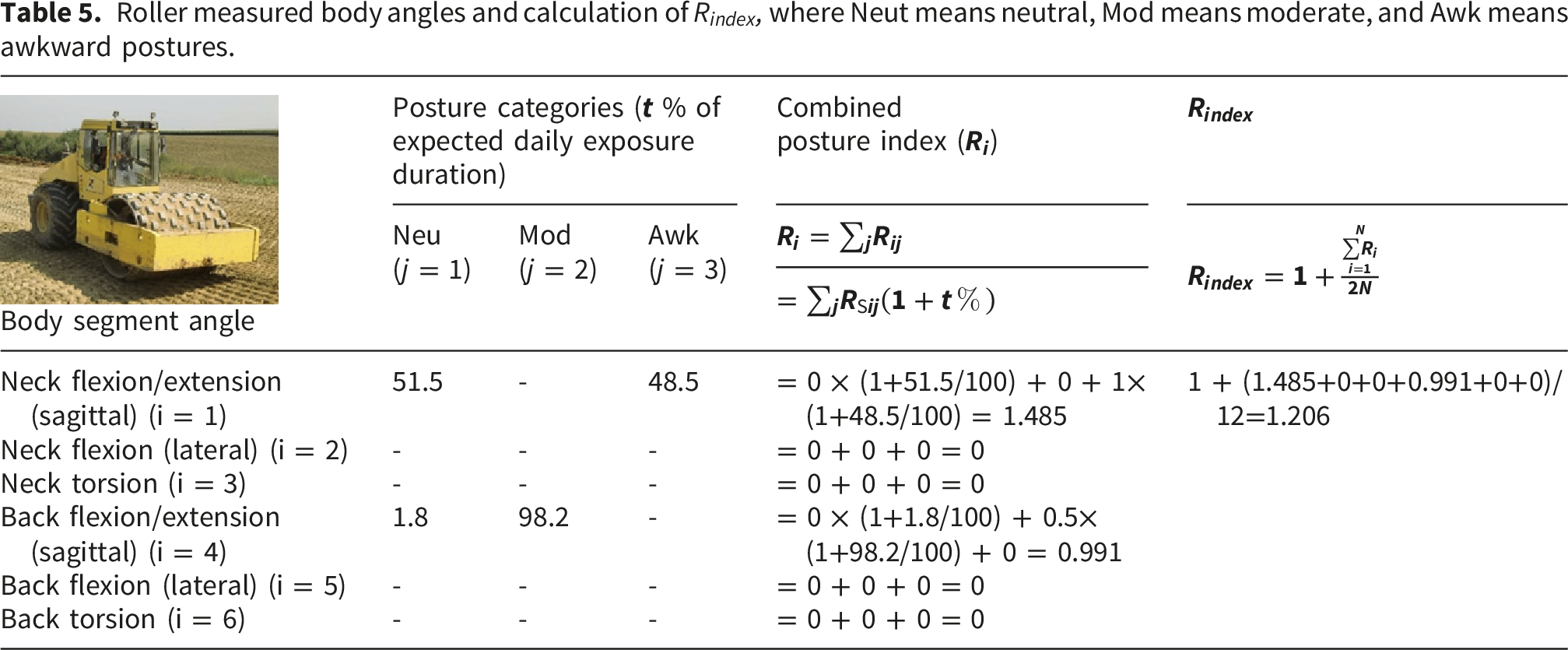

The first row in Table 3, Neck flexion/extension (sagittal) (i=1), will be used as an example of the calculation for all rows in Tables 3–5. In this case, the operator spent 9.4% of the time in neutral posture, 0% in moderate posture, and 90.6% in awkward posture, therefore:
Another example is the calculation in the fifth row in Table 3, Back flexion (lateral) (i = 5). In this case, the operator spent 56.2% of the time in neutral posture, 43.8% in moderate posture, and 0% in awkward posture, therefore:
Calculation of the daily combined WBV-posture exposure and daily exposure thresholds
Parameters
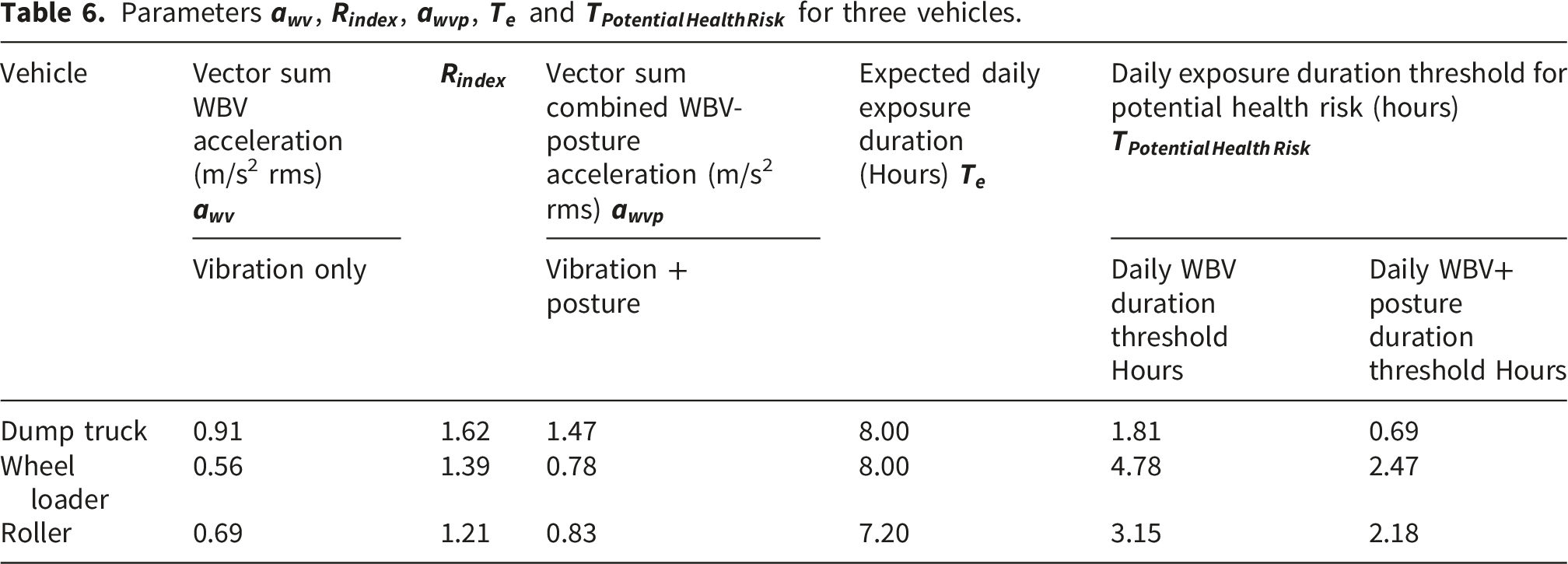
Table 6 shows that, regardless of whether posture is considered, the expected daily exposure duration,
Discussions and conclusions
Studies have shown that the combined effects of WBV and posture can adversely affect workers’ health and well-being. The current ISO 2631 standard is based on the input vibration to humans and does not include the effect of posture on its health effects calculations. Therefore, developing a methodology that quantifies the effect of posture in WBV is a major step toward better worker health and healthy working environments. The introduction of the posture index in this work is considered a first step toward developing more effective tools to quantify the combined effect of WBV and posture that can be standardized in the future. This would also provide feedback to industry to improve their machines to accommodate the effects of combined WBV and posture.
One obvious characteristic of the posture index is its capability to capture the effect of the interaction between operators and their seats. This can be seen in the dump truck example shown in Table 3, where the
The combined effects of WBV and posture of a seated dynamic human body are complicated processes that involve muscle activation,41,42 dynamic posture, and fatigue among other things, which can be included in the posture index in the future. This study has a number of limitations, one of which is the lowest magnitude of the exposure time included in the
Footnotes

Author contributions
Salam Rahmatalla contributed to the conception and design, analysis and interpretation of the data; drafting of the paper; revising it critically for intellectual content; and the final approval of the version to be published; Yash Dhabi contributed to the analysis and interpretation of the data; drafting of the paper; revising it critically for intellectual content; and the final approval of the version to be published; Suzanne Smith contributed to the analysis and interpretation of the data; drafting of the paper; revising it critically for intellectual content; and the final approval of the version to be published; Nastaran Raffler contributed to the conception and design, analysis and interpretation of the data; drafting of the paper; revising it critically for intellectual content; and the final approval of the version to be published. All authors agreed to be accountable for all aspects of the work.
Funding
The authors received no financial support for the research, authorship, and/or publication of this article.
Declaration of conflicting interests
The authors declared no potential conflicts of interest with respect to the research, authorship, and/or publication of this article.
Disclaimer
The views expressed are those of the co-author and do not necessarily reflect the official policy or position of the Department of the Air Force, the Department of Defense, or the U.S. government. Pictures in this document were taken by co-author Nastaran Raffler. No manufacturers are mentioned.