




Abstract
In this paper, a semi-analytic method based on Jacobi-Ritz modified boundary element is proposed to solve the acoustic radiation response of functionally graded cylindrical shell. Utilizing the first-order shear deformation theory and the differential element method, functionally graded cylindrical shell acoustic radiation calculation model is established. The Jacobi polynomial is adopted to represent the displacement tolerance function, and the Ritz method is used to calculate the vibration response. The spectral principle is applied to discretize the boundary integral equations with Jacobi polynomial. The acoustic and vibration coupling equations of functionally graded cylindrical shells are obtained simultaneously, and the acoustic radiation response of functionally graded cylindrical shells is solved. The results obtained using this method are compared with those from the finite element method/boundary element method, validating the effectiveness of our computational approach. The influence of structural parameters, functionally graded materials, and boundary conditions on structural acoustic radiation is explored, providing support for the design of the functionally graded cylindrical shell.
Keywords
Introduction
Functionally graded (FG) material is a new type of composite material designed to achieve a continuous gradient variation in composition and structure in space by combining two or more materials according to specific usage requirements. Compared to homogeneous materials like traditional steel, functional gradient material offers several advantages, including lightweight, high strength, corrosion resistance, and ease of shaping. Additionally, FG material allows for the adjustment of internal material composition to alter structural impedance, which can help reduce the transfer of excitation energy within the structure. FG cylindrical shell structure is widely used as a basic component in engineering applications, particularly in fields such as naval architecture, aerospace, and petrochemical industries. In practical application, it is inevitably excited by all kinds of loads, resulting in vibration and acoustic radiation, which affects its safety and stability. Therefore, conducting research on the acoustic radiation characteristics of FG cylindrical shells is of significant academic and engineering value.
The methods for solving the vibration of cylindrical shells mainly include analytical method,1,2 semi-analytical method,3–5 numerical method,6–8 and experimental method.9,10 The semi-analytical method is favored by researchers because it offers high accuracy characteristic of analytical approaches while avoiding the inefficiencies of numerical methods, with the Ritz11–13 method being a prominent example. The construction of the displacement tolerance function plays a crucial role in determining the convergence rate and solution accuracy. Current studies primarily utilize various orthogonal polynomials, including general polynomials, power series, Fourier series, Chebyshev polynomials, and Legendre polynomials, to construct the displacement tolerance functions. Vescovini et al. 14 derived a vibration analysis formula of cylindrical shell based on the Ritz method, employing trigonometric series to construct trial functions to solve the vibration behavior. Xu et al. 15 developed a semi-analytical approach utilizing Gegenbauer polynomials in conjunction with the Ritz method to investigate the free vibration characteristics of composite cylindrical shells. Miao et al. 16 utilized Chebyshev polynomials to create the displacement tolerance function and investigated the vibration equations for FG cylindrical shell based on Sanders’ shell theory and the Ritz method. Jin et al.17,18 proposed a method for free vibration analysis of FG cylindrical shell based on the first-order shear deformation theory (FSDT) and Haar wavelet method. By employing classical Fourier series, they determined the natural frequencies of the functionally graded cylindrical shells. Based on FSDT and the domain decomposition method, Gao et al.19,20 proposed a semi-analytical method to solve the free vibrations of cylindrical shell, which constructed the displacement tolerance function using Jacobi polynomials. Zheng et al. 21 established a vibrational analysis model for cylindrical shell based on FSDT and the Navier double series to solve the free vibration equations. Su et al. 22 analyzed the free vibration response of FG shell under elastic constraints based on improved Fourier series and first-order shear deformation theory. Qu et al. 23 derived a general formula based on the domain decomposition method and modified variational principle to solve the vibration response of FG conical shells, and compared it with FEM numerical results to verify the effectiveness of the method. Montes et al. 24 proposed a semi-analytical method based on Sanders-Koiter linear theory and Chebyshev polynomials to analyze the free vibrational characteristics of cylindrical shell subjected to internal and external flow fields.
In the analysis of acoustic radiation from cylindrical shell, Zhang et al.25,26 proposed a Ritz-Legendre spectral method based on Love shell theory and the Kirchhoff-Helmholtz boundary integral equation to analyze the acoustic radiation response of cylindrical shell. Yang et al. 27 formulated an analytical method for investigating acoustic radiation in periodically stiffened cylindrical shell structures through the application of the Helmholtz equation and the Flügge shell equation. Gao et al.28,29 solved the transient acoustic radiation of stiffened cylindrical shell utilizing Jacobi polynomial and the Kirchhoff boundary equation in time domain. Qu et al. 30 proposed a semi-analytical method to solve the acoustic radiation response of FG cylindrical shell based on the Kirchhoff-Helmholtz equation and an improved variational approach. Yang et al. 31 figured out the sound radiation response of orthogonal stiffened laminated cylindrical shell using Fourier series and Legendre polynomials. Li et al. 32 solved the acoustic behavior of composite laminated cylindrical shell by meshfree method. Jia et al. 33 developed a hybrid analytical-numerical method for solving the acoustic radiation response of cylindrical shell, utilizing the WBM and FEM. Tang et al.34,35 solved the acoustic radiation behavior of underwater cylindrical shell by employing the FEM/BEM numerical method and experimental testing. Reaei et al. 36 derived the motion equations for FG cylindrical shells based on FSDT and gave solutions for the acoustic radiation response. Hasheminejad et al.37,38 solved the transient acoustic response of FG rotating cylindrical shells in submerged conditions using modal expansion method and transfer matrix method. Daneshjou et al. 39 analyzed the transmission of sound waves in moderately thick FG cylindrical shells based on third-order shear deformation theory.
Based on the literature reviewed, the existing research on the acoustic radiation of cylindrical shells primarily focus on isotropic materials, while research on functionally graded cylindrical shells has mainly concentrated on their vibrational characteristics. In contrast, there is relatively limited investigation into the acoustic radiation of functionally graded cylindrical shells. To address this, the FG cylindrical shell structure model is established based on the FSDT and artificial spring technology. The displacement tolerance function for the FG cylindrical shell is constructed using Jacobi polynomials. The forced vibration response of the FG cylindrical shell is solved utilizing the Ritz method. On this basis, using the idea of spectral method, Jacobi polynomial is introduced into the boundary integral equation to expand the acoustic variables, and the vibration acoustic coupling equation of FG cylindrical shell structure is solved. The influence of structural parameters, material parameters, and boundary conditions on the acoustic radiation characteristics of FG cylindrical shell structure is explored.
Theoretical formulations
Structural theoretical analysis model
Figure 1 illustrates the theoretical calculation model for the FG cylindrical shell structure, with R, h, and L representing the radius, thickness, and length of the structure, respectively. To simulate the boundary conditions, five sets of virtual springs Geometric model description.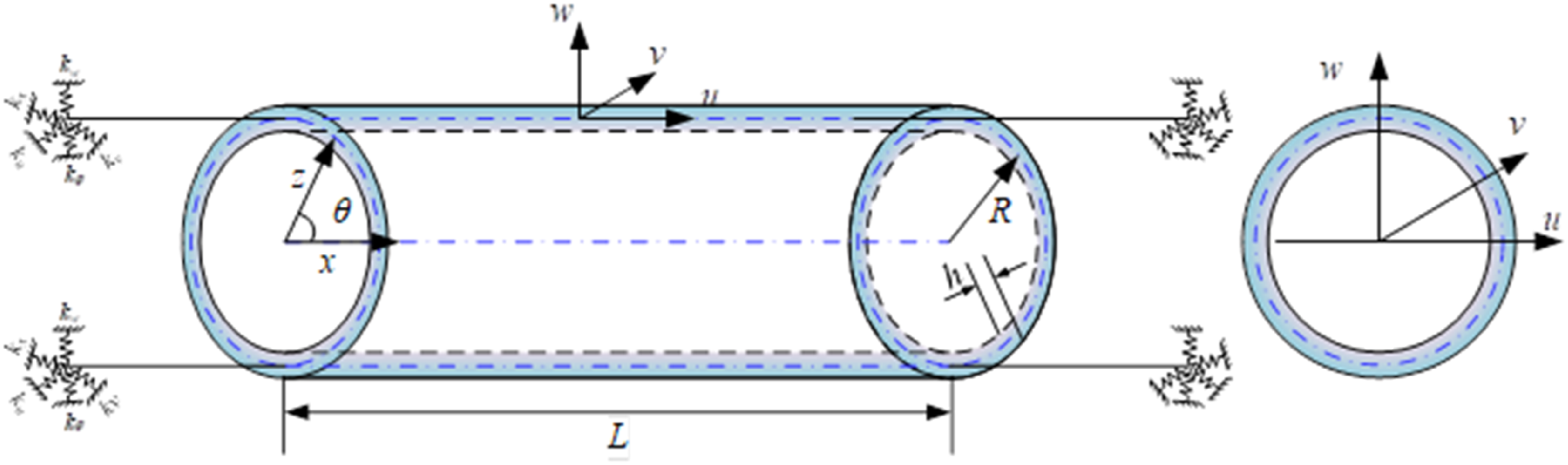
Vibration analysis of the Jacobi-Ritz method
Based on the principles of the differential element method and the FSDT, the displacement of the shell segment i can be expressed as40–42:



The FG cylindrical shell’s strains are expressed by:


The strain-displacement relation of section i of the FG cylindrical shell can be expressed as:



According to generalized Hooke law, the constitutive equation of the structure can be expressed as follows:


Based on the four-parameter power law distribution in Voigt mixing law to represent the equivalent physical parameters of FG cylindrical shells, the equivalent modulus of elasticity, Poisson’s ratio, and density can be expressed as:




The constitutive equation for the FG cylindrical shell is as follows:




The potential energy of the FG cylindrical shell is:

By introducing virtual spring to model the complex boundary, the potential energy U
b
at the boundary can be represented as:

The energy of the connecting spring between various substructures can be expressed as:

Then the overall potential energy of the FG cylindrical shell is expressed as:

FG cylindrical shell structure kinetic energy is:
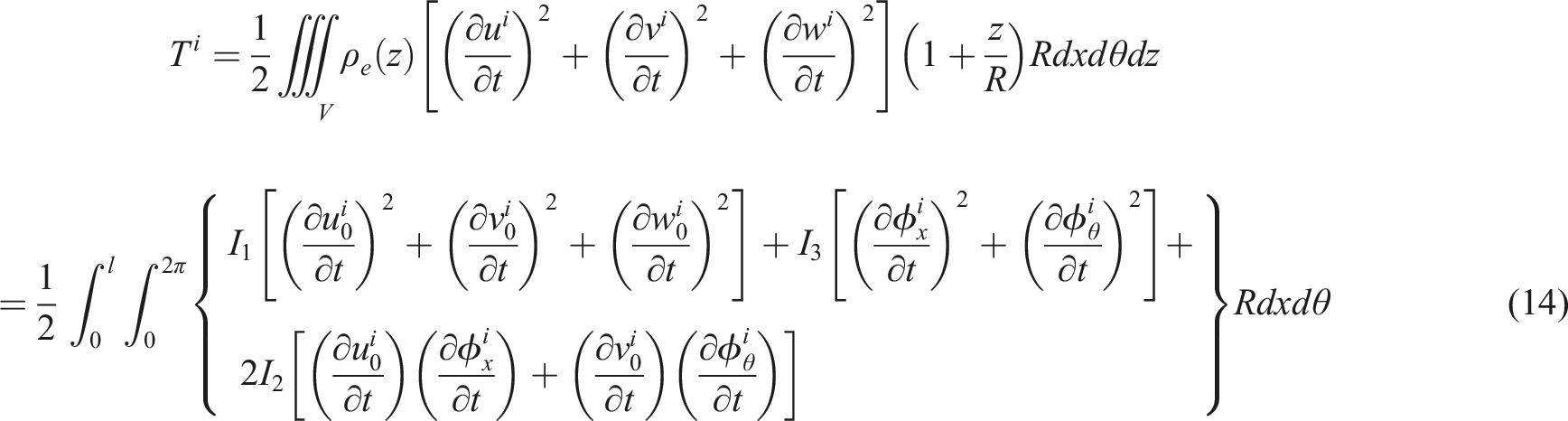
Among them:

The work done by the external excitation load

Jacobi orthogonal polynomial can be expressed in terms of Legendre polynomials or Chebyshev polynomials, exhibiting both a high level of integrability and broad applicability.
Jacobi polynomials can transform into Legendre polynomials or Chebyshev polynomials, offering advantages such as a high level of integrability and broad applicability. The displacement tolerance function is constructed based on the Jacobi orthogonal polynomial, which is expressed as follows:
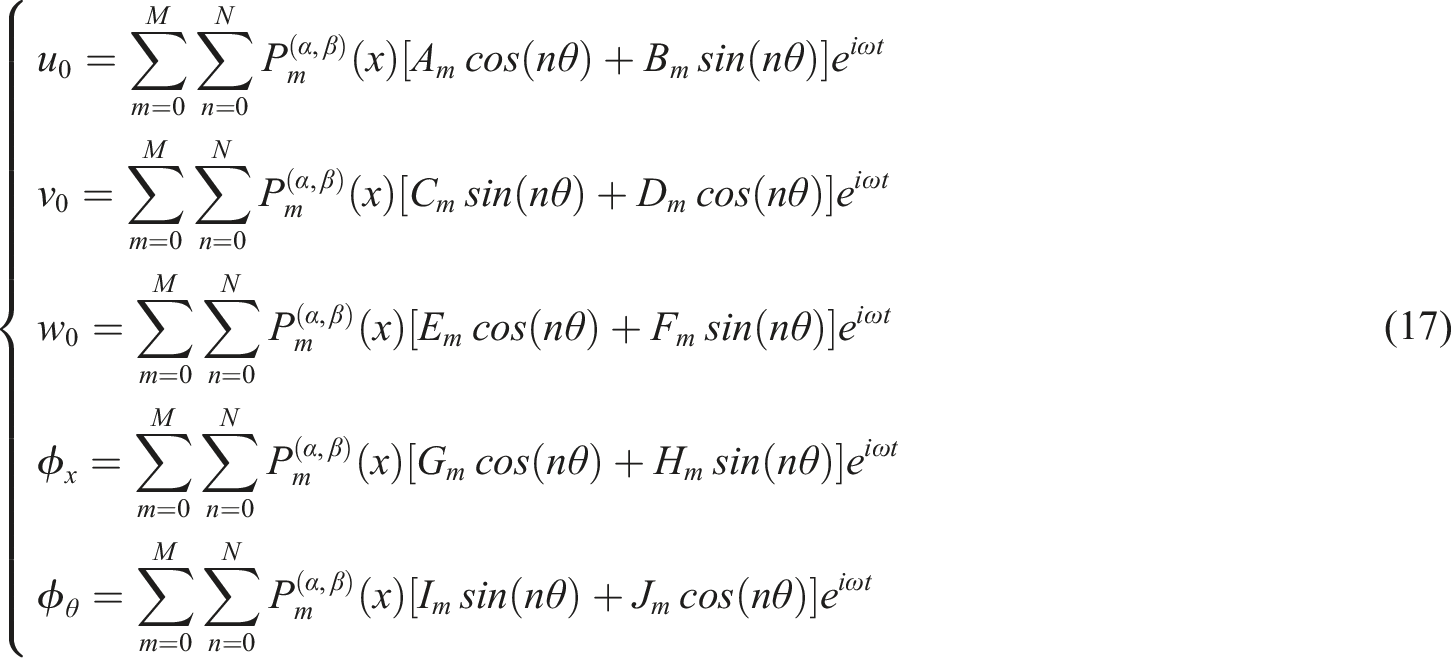
The FG cylindrical shell energy functional is described as:

According to the Ritz method, the partial derivative of the Jacobian undetermined coefficient is obtained:


Acoustic analysis of the modified boundary element method
Figure 2 shows the sound field of the FG cylindrical shell’s coordinate system. The boundary integral equation for spatial position based on the Green function is as follows
43
: The sound field description of the FG cylindrical shell.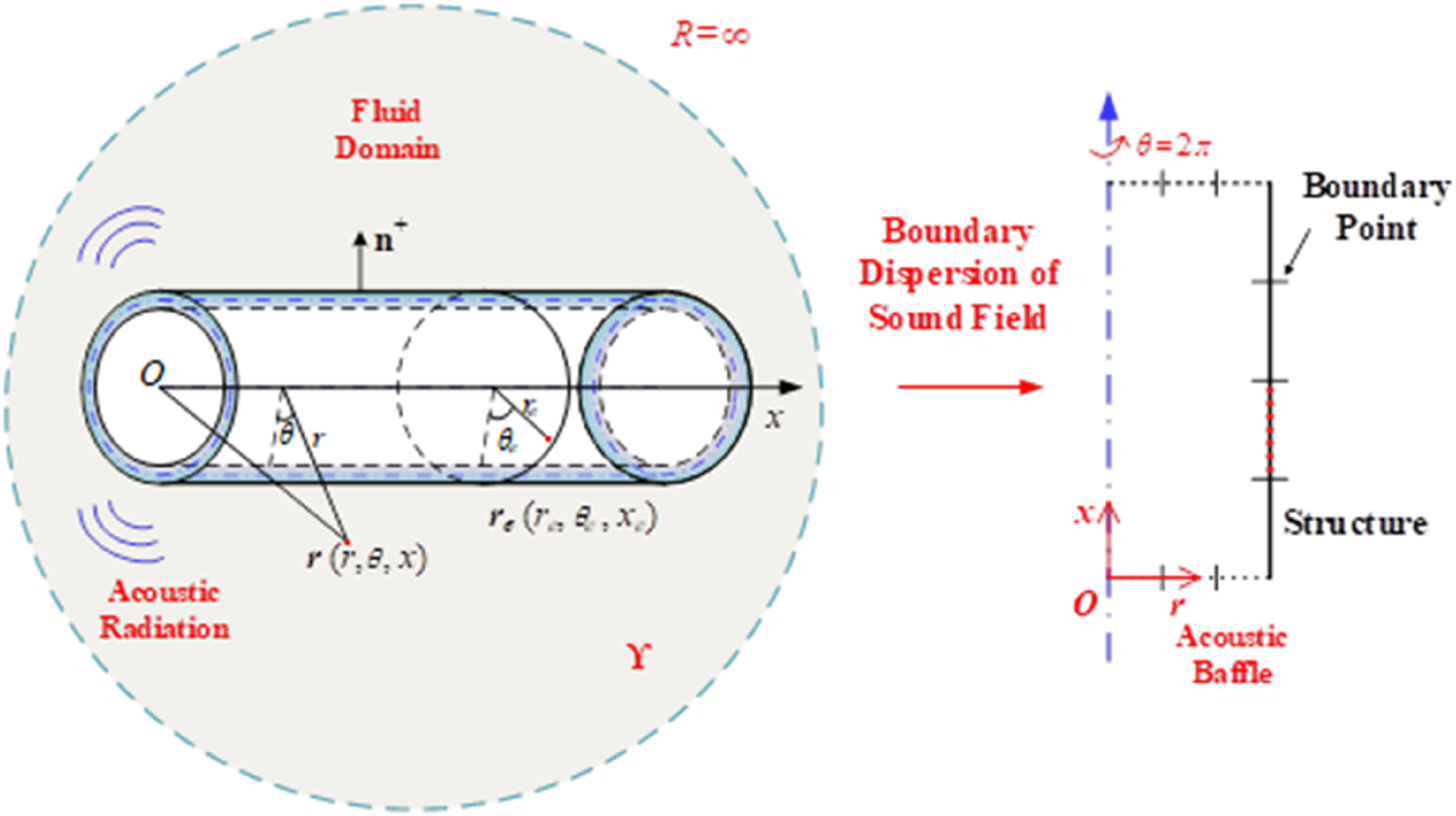

The coefficients
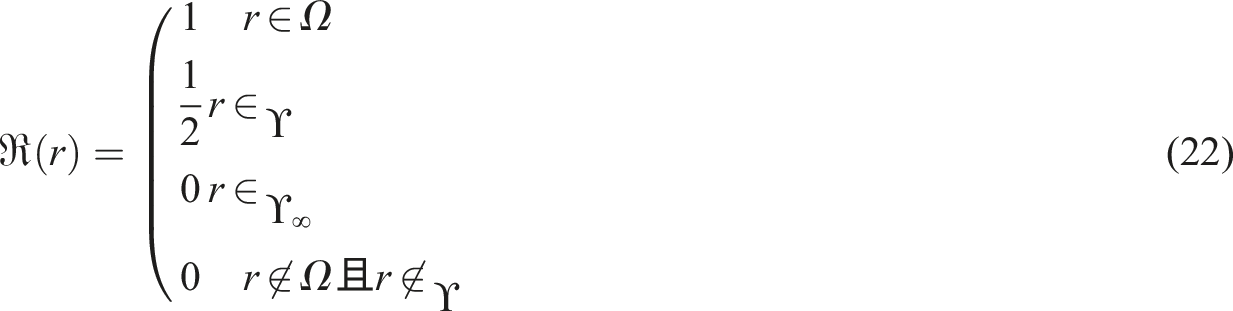
The normal derivative of the Green function, the Green function, the normal derivative of the sound pressure, and the sound pressure are expanded circumferentially with the following Fourier series:





Among them:
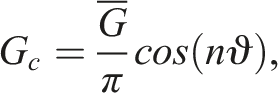

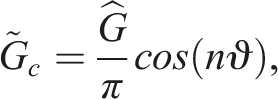

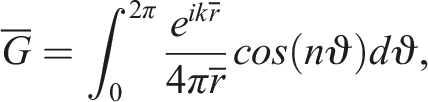

Therefore, equation (21) can be simplified as:
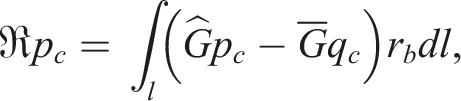

By expanding the boundary element sound pressure and the sound pressure method guide number in equation (23) with Jacobi polynomial, it can be expressed as:
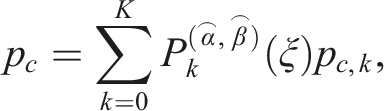

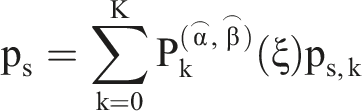

The FG cylindrical shell is partitioned into numerous segments using the Jacobi polynomial, and the sound pressure and its normal derivative can be expressed as:
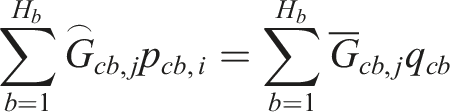


The CHIEF method is applied to resolve any non-uniqueness in the result, after integrating all boundary element integration points. The resulting matrix equation can be summarized as:

The acoustic vibration coupling equation can be developed in accordance with the virtual work principle.


The subsequent equation can be derived when

Results of numerical analysis and discussion
Calculation model
The FG cylindrical shell structure and material parameters are as follows: L = 4 m, R = 1 m, h = 0.005 m, E
m
= 70 GPa, E
c
= 168 GPa, ρ
m
= 2707 kg/m3, ρ
c
= 5700 kg/m3, μ
m
= μ
c
= 0.3, a = 1, b = 0.5, c = 2, and p = 2. The value of the fluid medium parameter is ρ
a
= 1.225 kg/m3 and v
a
= 340 m/s. The excitation point is positioned at (0.5 L, 0, R), the sound field test point is (0.5 L, 0, 3.5 m), and the ring sound field test points are located at the center of the cylinder r = 5 m, as shown in Figure 3. The boundary conditions at both ends are simulated using the virtual spring technique. Calculation model and test point diagram. (a) C-C boundary condition, (b) S-S boundary condition.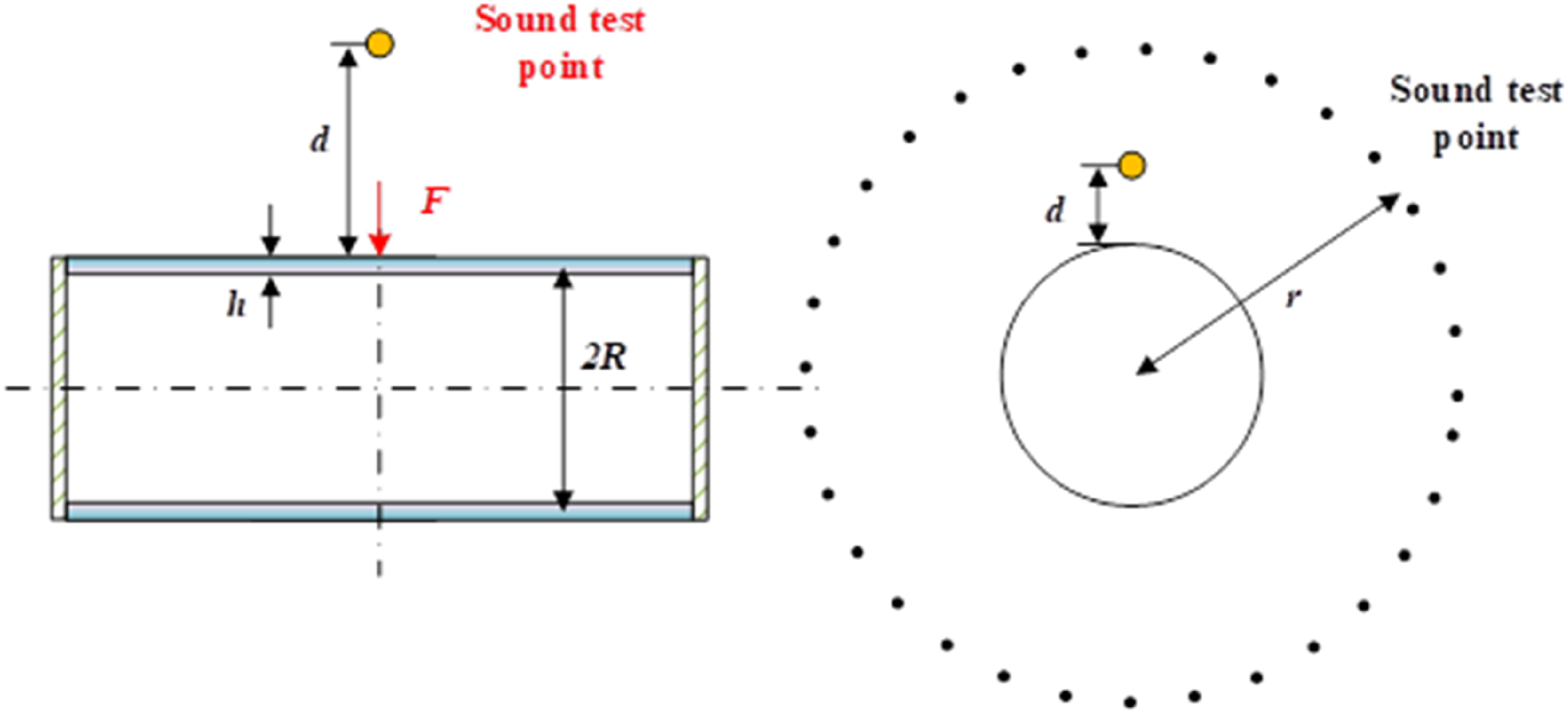
Convergence discussion
In this paper, the convergence of the Jacobi-Ritz modified boundary element method is predominantly determined by several factors, including the structural segment number H, H
b
, the truncation number of displacement tolerance function M, N, Jacobi polynomials α, β, and the truncation number of sound pressure J. The clamped boundary conditions are set at both ends of the FG cylindrical shell, with Jacobi parameters α = −0.5, β = −0.5. The effects of varying the structural segment number H, H
b
, and the truncation number of displacement tolerance function M, N on the sound radiation response of the FG cylindrical shell are shown in Figures 4 and 5. Influence of the number of structural segment. Influence of the displacement tolerance function.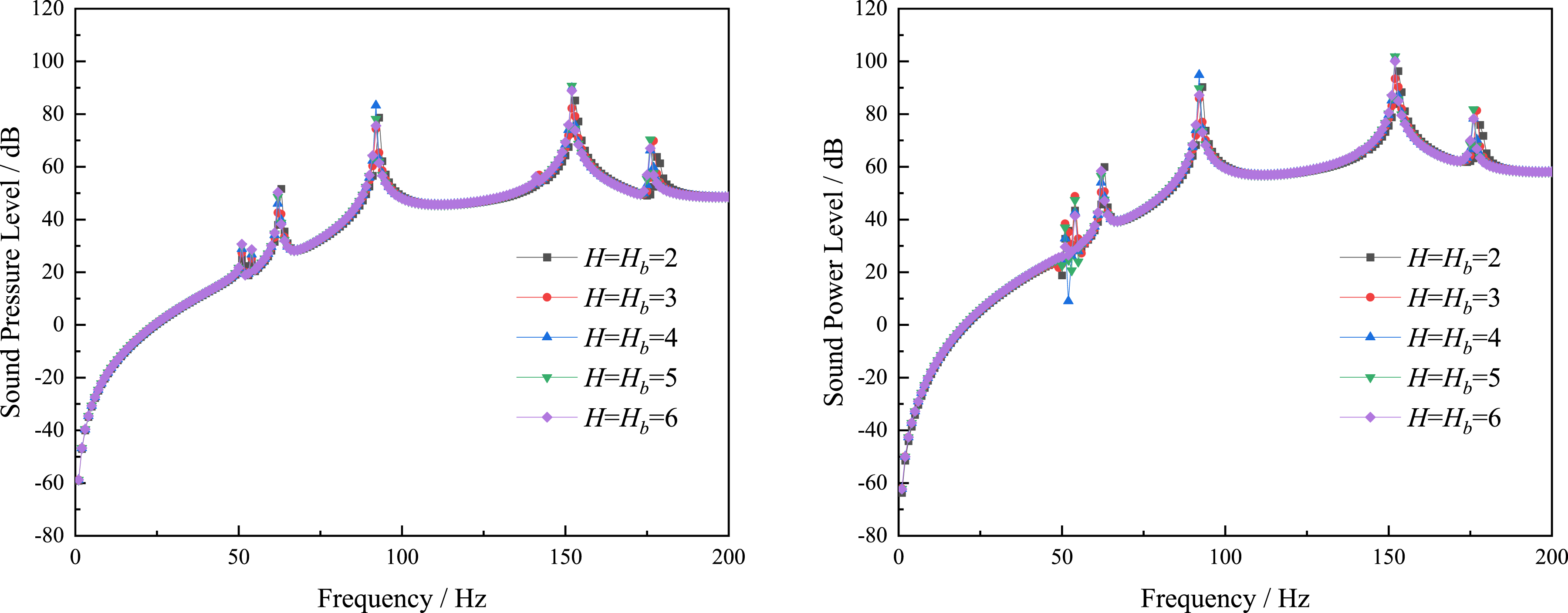
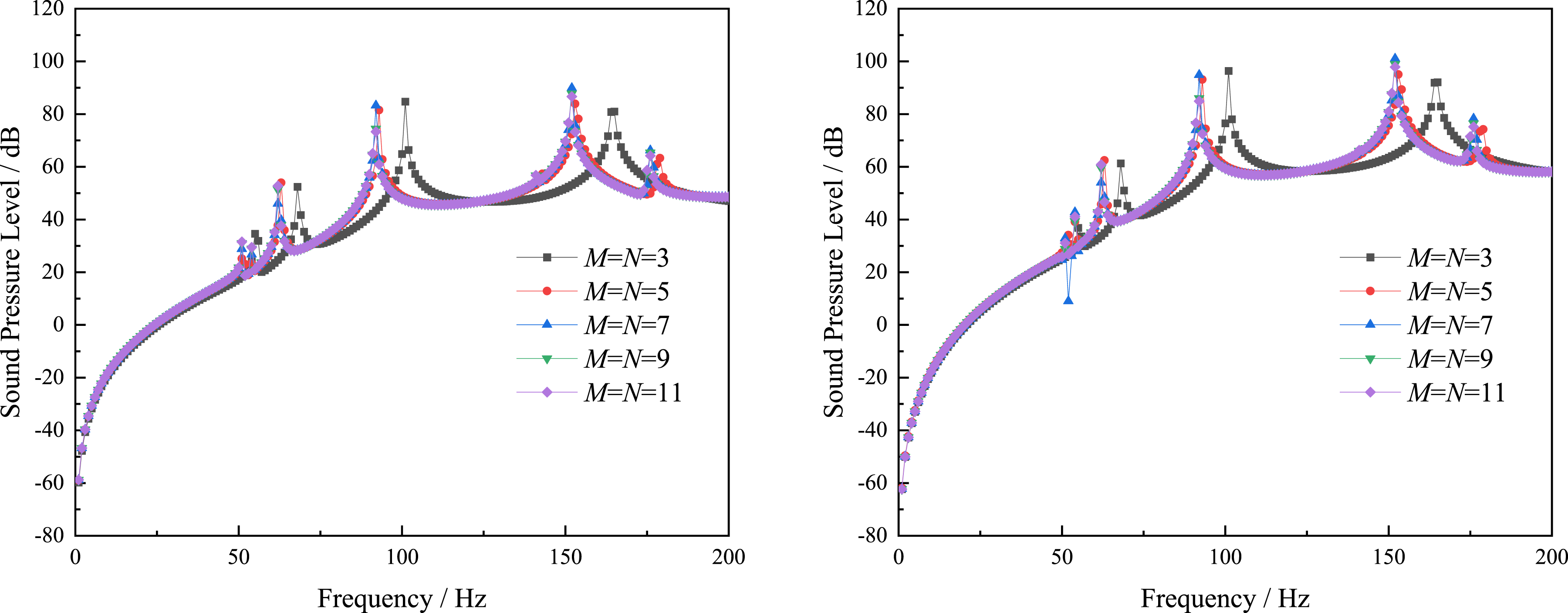
As shown in Figures 4 and 5, with an increase in the structural segment numbers and the truncation of displacement tolerance functions, the sound radiation result of the FG cylindrical shell exhibits gradual convergence. Specifically, the response converges with the number of segments H = H b = 4 and the truncation numbers for displacement tolerance function M = N = 7. However, as the displacement tolerance function and the structural segment number increase, the matrix order for calculating the structural acoustic radiation response will rise significantly. To address this issue, while ensuring accuracy, this paper balances computational efficiency by selecting the number of segments H = H b = 4 and the truncation numbers M = N = 7 for the FG cylindrical shell.
To investigate the effect of different Jacobi parameters α, β and sound pressure truncation function J on the sound radiation of the FG cylindrical shell, the clamped boundary conditions are set at both ends of the FG cylindrical shell, the segment number H = H
b
= 4, and the displacement tolerance function truncation number M = N = 7. Figure 6 illustrates the influence of different Jacobi parameters, and Figure 7 presents the influence of sound pressure truncation number. Influence of Jacobi polynomial on sound radiation response. Influence of sound pressure truncation number on sound radiation response.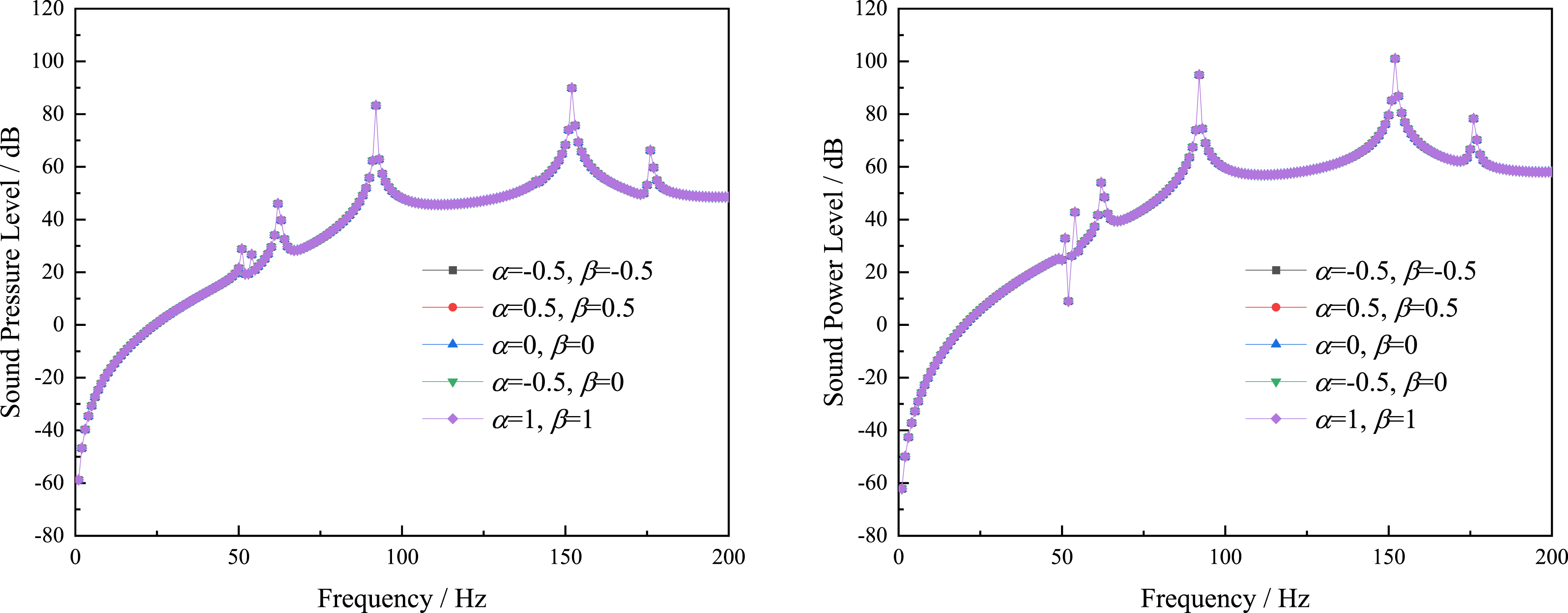
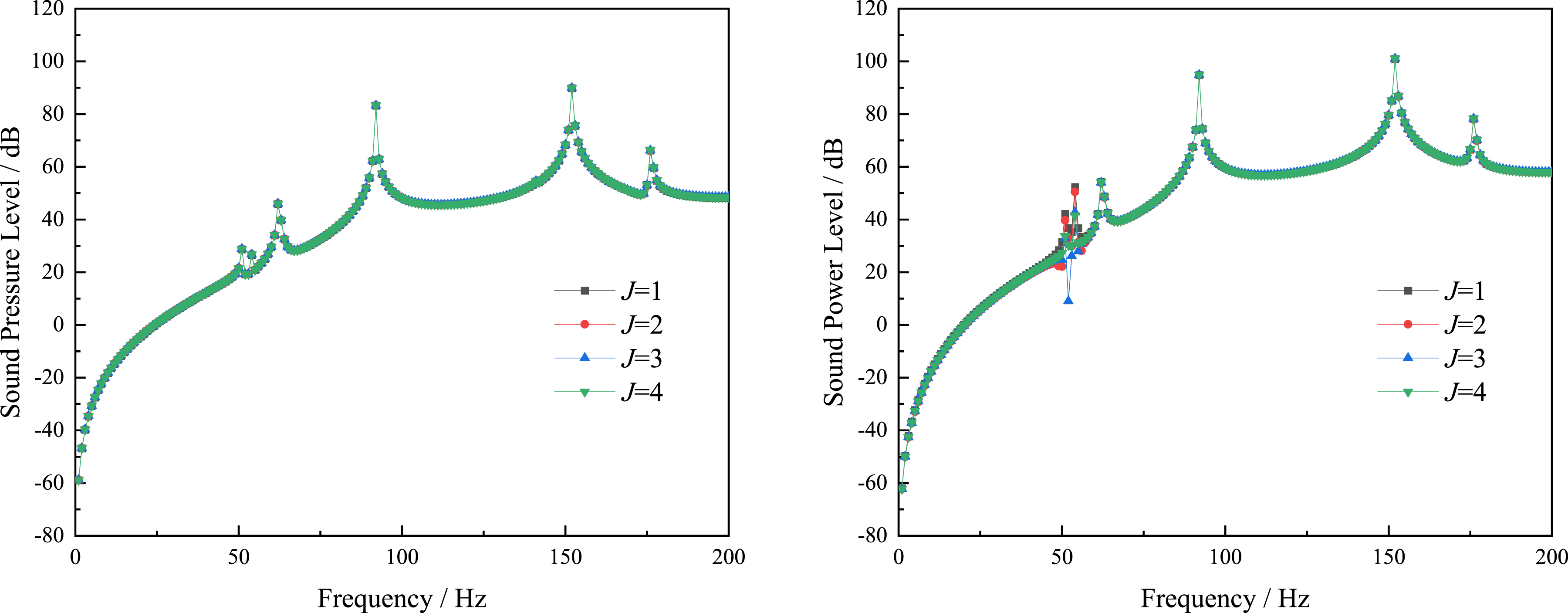
It can be seen from Figures 6 and 7 that different Jacobi parameters have little influence on the results, indicating the diversity of Jacobi polynomials used in the construction of displacement admissible functions. As shown in Figure 7, with the increase of sound pressure truncation number, the radiation noise response gradually tends to converge. Convergence is achieved when the sound pressure truncation number J = 3 for the FG cylindrical shell. Likewise, as the number of sound pressure truncation increases, the order of the calculation matrix escalates significantly. Therefore, the sound pressure truncation number is set to J = 3 in the subsequent calculations.
Validity verification
In order to analyze the accuracy of the Jacobi-Ritz modified boundary element semi-analytic method, the natural frequency of FG cylindrical shells is compared with the data in references 22 and 23. The structural parameters are consistent with the literature: R = 1 m, L = 2 m, h = 0.1 m, E
m
= 70 GPa, E
c
= 168 GPa, ρ
m
= 2707 kg/m3, ρ
c
= 5700 kg/m3, ν
m
= ν
c
= 0.3, a = 1, b = 0.5, c = 2, and p = .6. The modes under the boundary conditions of clamped (C-C) and simply supported (S-S) at both ends are compared, and the comparison results are shown in Figure 8. On this basis, the acoustic radiation characteristics of FG cylindrical shells are compared with FEM/BEM numerical methods. Unit force is applied at the excitation point and clamped boundary conditions (C-C) are applied at both ends. The volume distribution function for the FG cylindrical shell material is set to Vc = 1, while the other structural and material parameters remain consistent with those of the computational model in Section “Calculation model”. Taking sound pressure level and sound power level as analysis variables, the calculation results of Jacobi-Ritz-modified boundary element and FEM/BEM are compared, and the results are presented in Figure 9. Comparison of natural frequency. (a) C-C boundary condition, (b) S-S boundary condition. Verification of sound radiation response.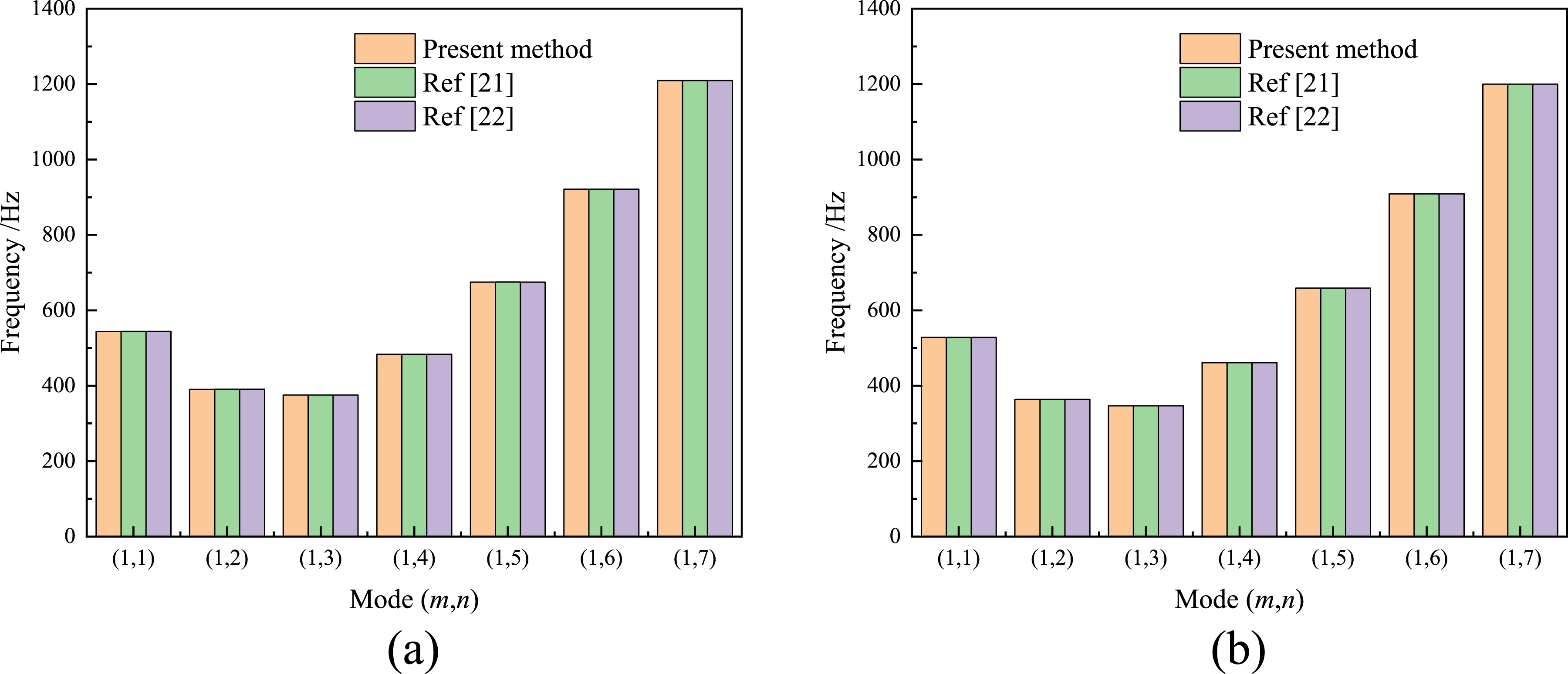
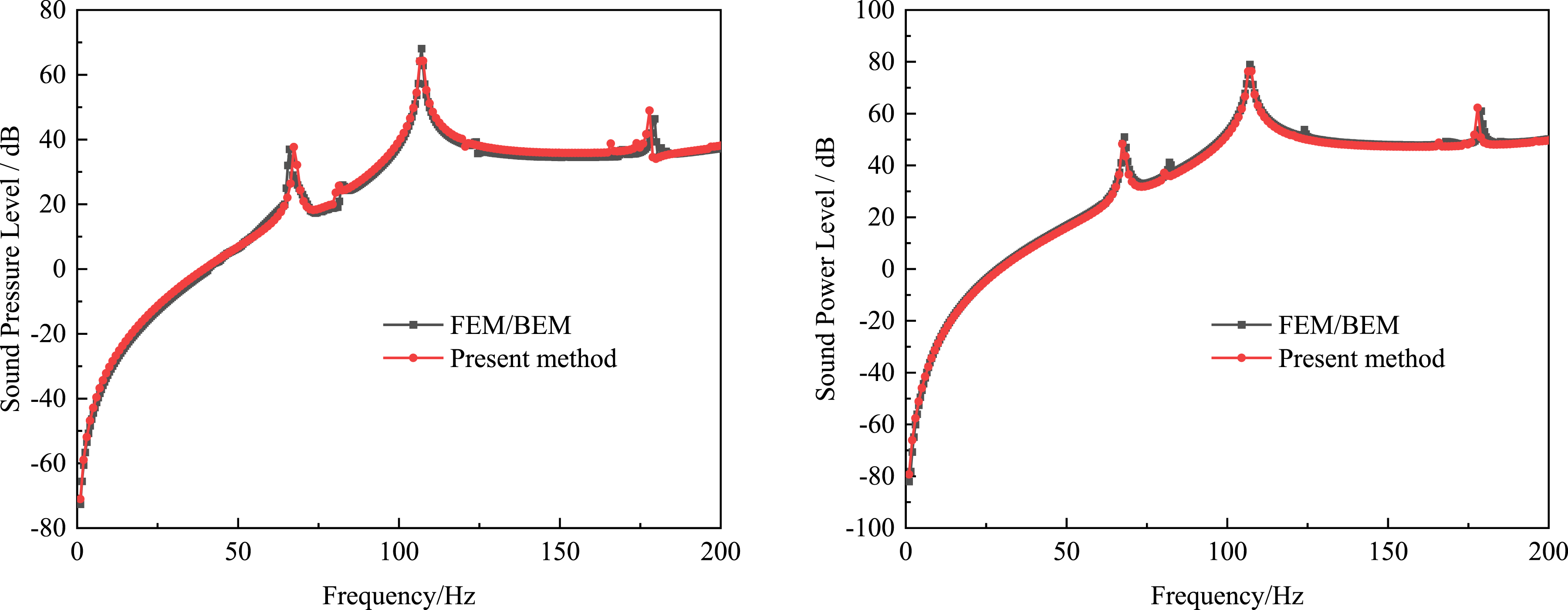
It can be seen from the modal comparison diagram that the results of the Jacobi-Ritz modified boundary element method proposed in this paper are consistent with those in the literature. The present method can effectively capture the characteristic frequency of the acoustic radiation response of the FG cylindrical shell. Compared with the calculated curves of Jacobi-Ritz-modified boundary element method and FEM-BEM method, it can be seen that the sound pressure level curve and sound power level curve of the FG cylindrical shell structure are in good agreement.
The time compared with present method and FEM-BEM.

Acoustic characteristic of functionally graded cylindrical shell
In order to explore the effects of structural parameters of FG cylindrical shells on the acoustic radiation response, different lengths and thicknesses are selected, while other material parameters are consistent with the model calculated in Section “Calculation model”. The structure is rigidly fixed at both ends, and unit force is exerted at the excitation point. The influence of various structural parameters on the acoustic radiation response of the FG cylindrical shell is illustrated in Figure 10. The influence of various structural parameters.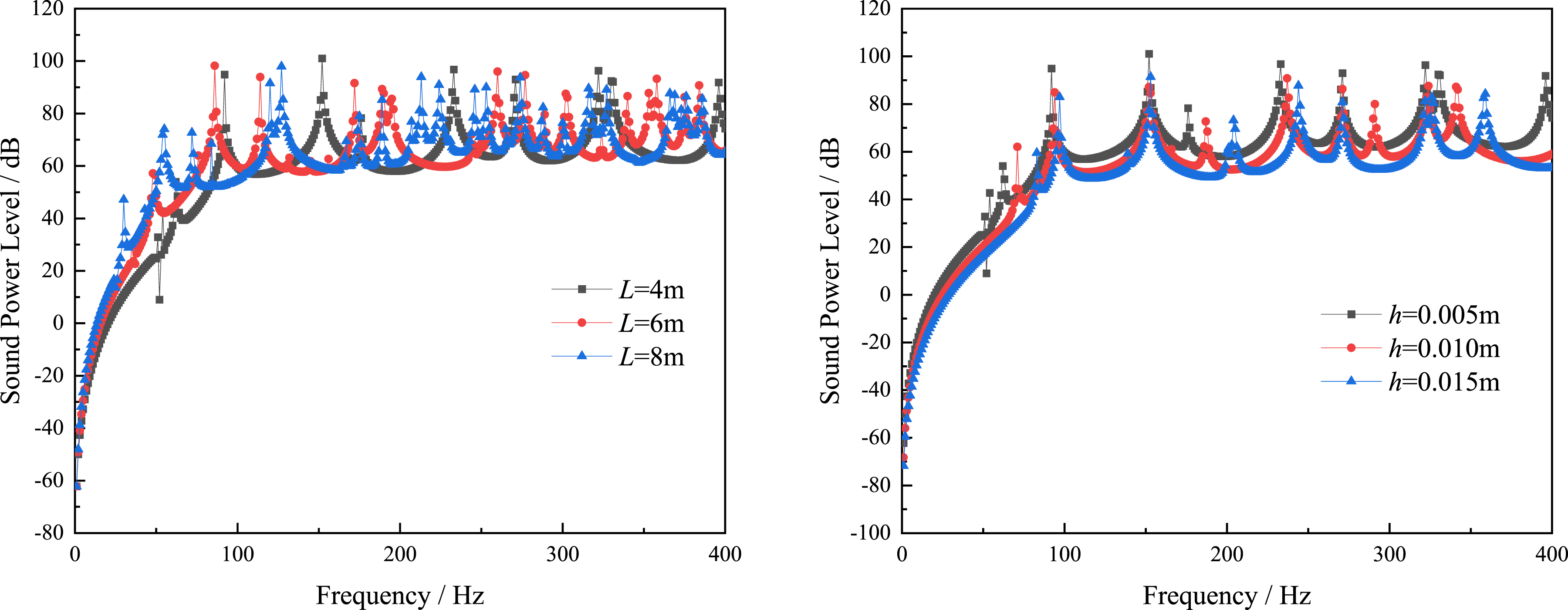
As can be seen from Figure 10, length and thickness have significant effects on the acoustic radiation of FG cylindrical shells. As the structural length increases, the nature frequency of the structure shifts toward lower frequencies, while the peak frequency of acoustic radiation shifts to the left. Conversely, thickness has the opposite effect on the sound radiation result of FG cylindrical shells. As the thickness increases, the peak value of sound radiation response shifts to the right. This phenomenon primarily results from the influence of length and thickness on the natural frequency of the FG cylindrical shell, leading to changes in the resonance peak frequency.
In order to compare the effects of functionally graded material parameters on the acoustic radiation characteristics of the cylindrical shell, material properties of different a, b, c, and p FG cylindrical shells are selected, and other structural and material parameters are consistent with the calculation model in Section “Calculation model”. Both ends of the structure are fixed, and unit force is exerted at the excitation point. The influences of different functionally graded materials on the acoustic radiation response are illustrated in Figure 11. The influences of different functionally graded materials.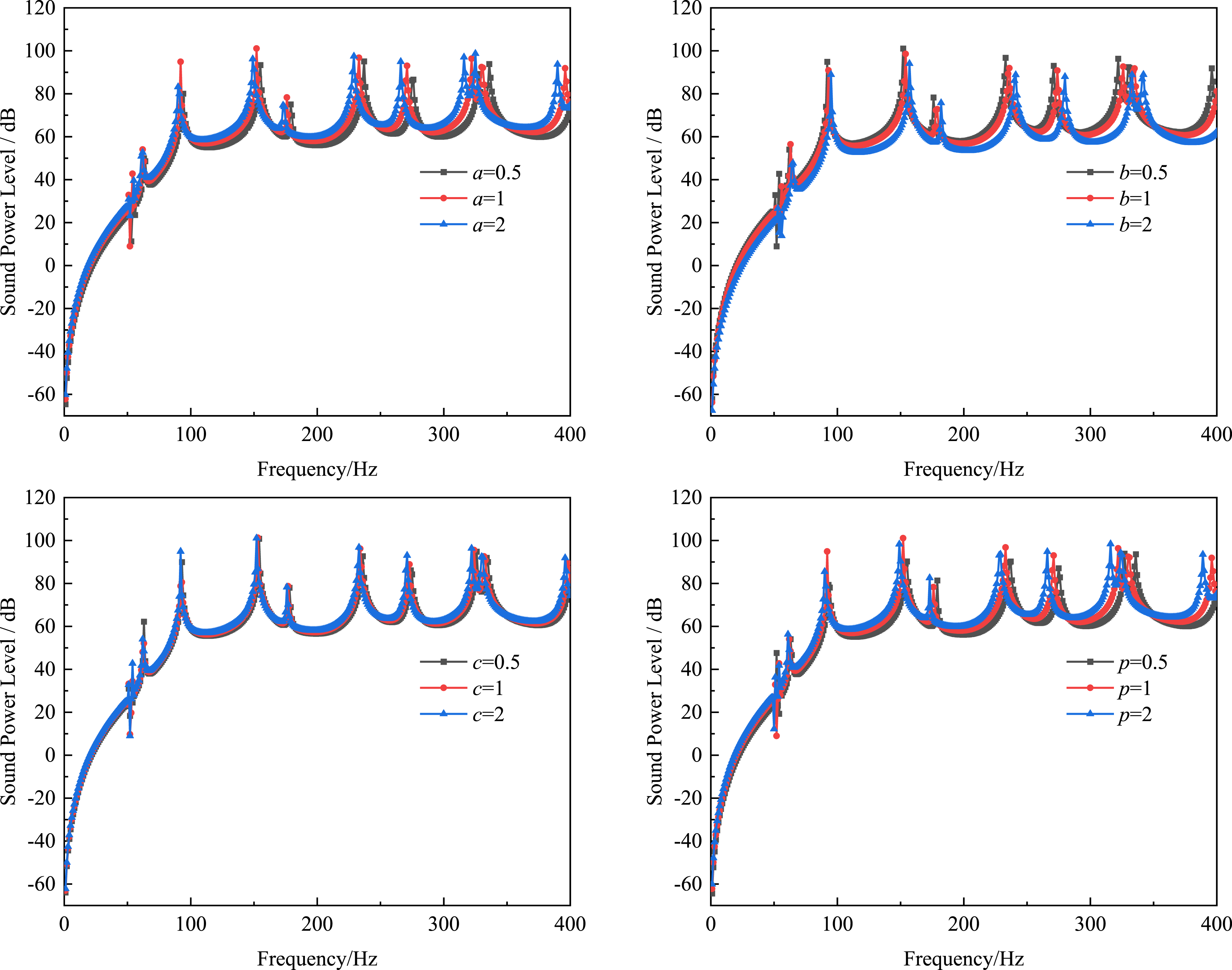
The influence of material parameters on the acoustic radiation characteristics of FG cylindrical shells is evident from the response curves. Under varying values of parameters a, b, c, and p, the acoustic radiation characteristics of the FG cylindrical shell maintain a high degree of consistency in overall trends. However, different values of these parameters significantly affect both the magnitude of the peak response and the frequency shift of the acoustic radiation responses. Specifically, as the parameter b increases, the peak frequency shifts gradually to higher frequencies, while increases in parameters a, c, and p lead to a gradual shift toward lower frequencies.
In addition, this study investigates the effects of the ratio of two constituent material parameters in functionally graded materials on the acoustic radiation characteristics. Taking E
m
= 70 GPa and ρ
m
= 2707 kg/m3 as reference values, the other structural and material parameters remain consistent with calculation mode in Section “Calculation model”. The ends of the structure are subjected to fixed boundary conditions, and unit force is exerted at the excitation point. The effects of varying the ratios E
c
/E
m
and ρ
c
/ρ
m
on the acoustic radiation characteristics of the FG cylindrical shell are compared, as illustrated in Figure 12. Effect of FG composition material parameter ratio.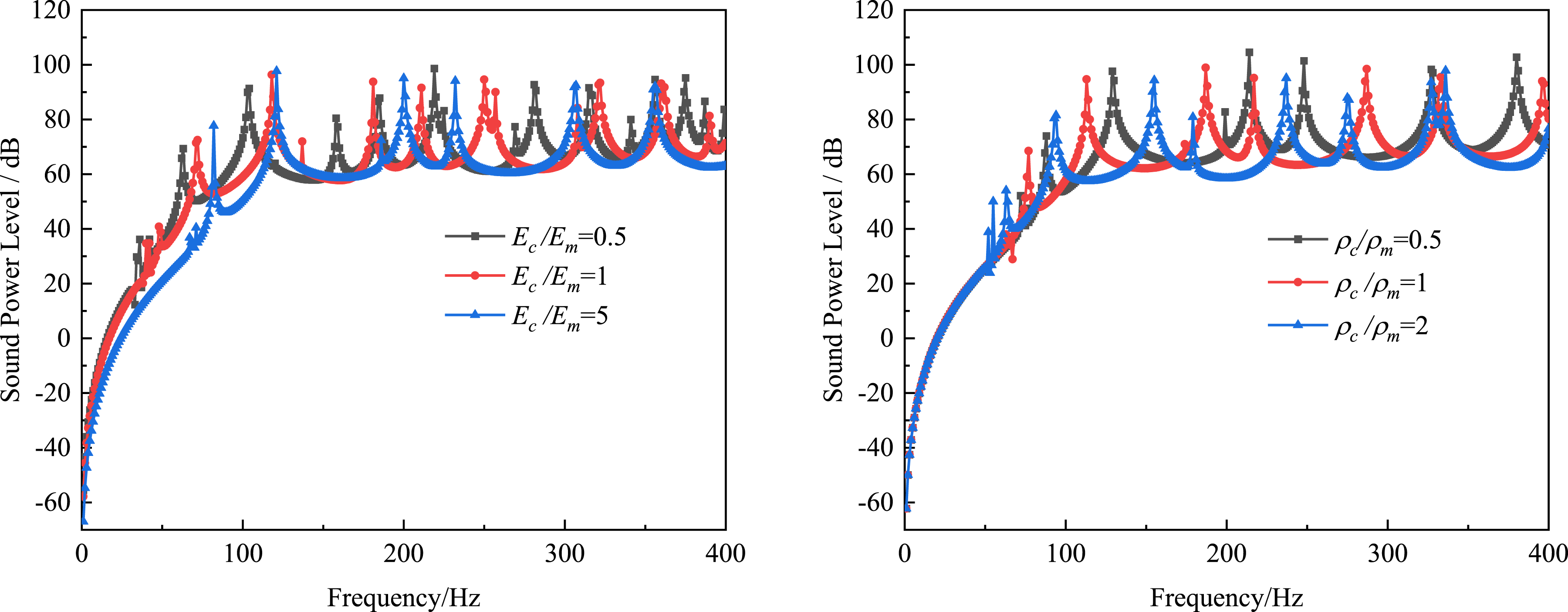
The impact of constituent material parameters ratio on the acoustic radiation characteristics can be observed from the response curves. It is evident that the ratios of functionally graded material parameters significantly influence the acoustic radiation behavior. Specifically, the peak value of the sound radiation result shifts progressively toward higher frequencies as the modulus of elasticity ratio increases. This phenomenon primarily occurs because an increasing modulus of elasticity ratio enhances the overall modulus of elasticity of FG cylindrical shell, leading to a decrease in the peak value of the acoustic radiation behavior. Conversely, variations in the density ratio generally have an opposite effect on the acoustic radiation response of the FG cylindrical shell. This is mainly because changes in the density ratio primarily affect the weight of the structure. When the increase in structural weight exceeds the increase in stiffness, the natural frequency of the structure shifts toward lower frequencies.
To investigate the effects of different boundary conditions on the acoustic radiation of FG cylindrical shell, “C-C” and “E-E” boundary conditions are selected for both ends. Other parameters remain consistent with the calculation model in Section “Calculation model”. The unit force is applied at the excitation point, with the test point located at a radius of 5 m in the middle of the cylindrical shell. The acoustic radiation characteristics for the boundary conditions “C-C” and “E-E” at various characteristic frequency points were compared, as illustrated in Figure 13. Distribution of sound pressure in circumferential direction. (a) f = 94 Hz, (b) f = 155 Hz, (c) f = 237 Hz,(d) f = 276 Hz.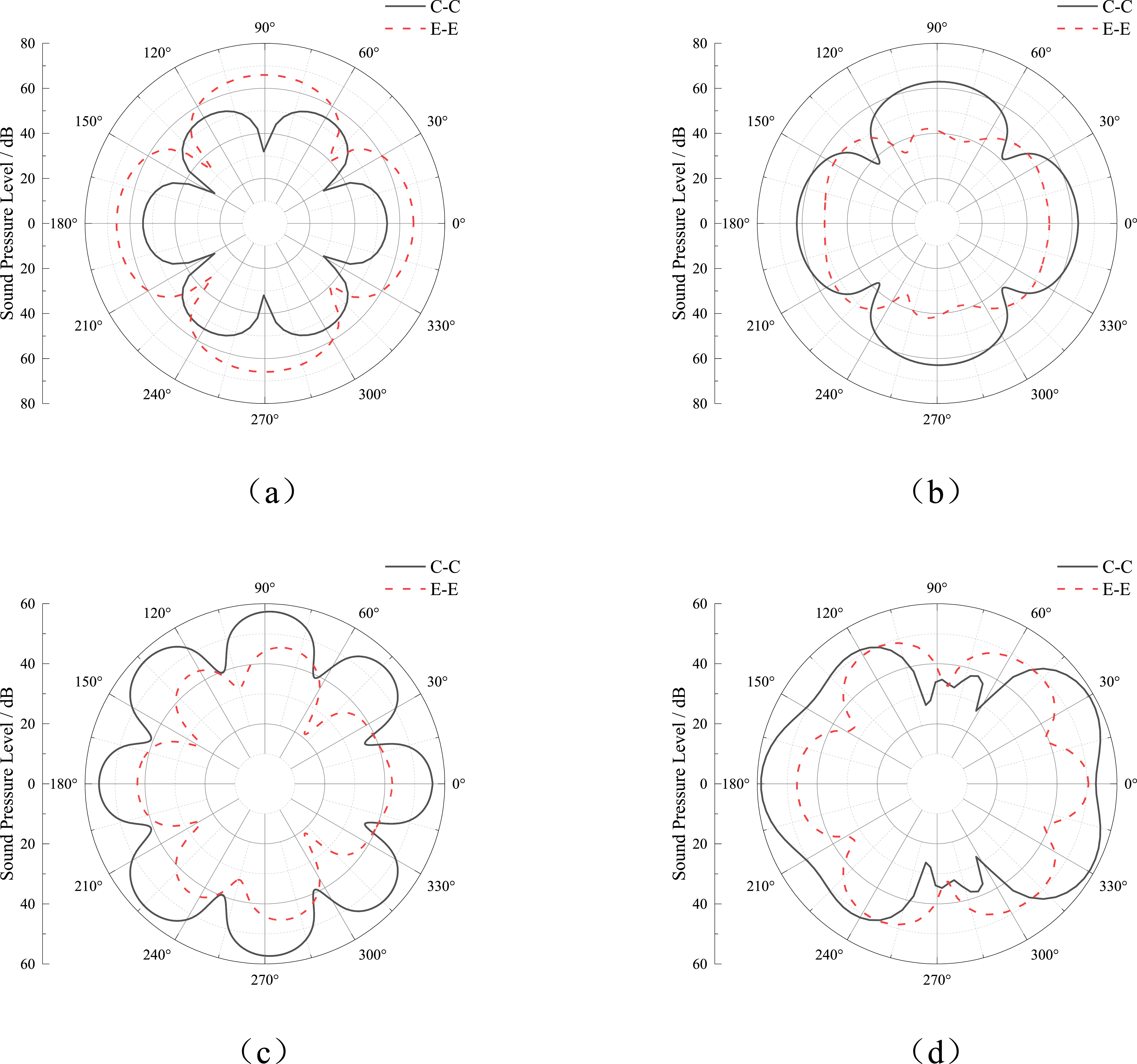
According to the contrast curve of circumferential sound pressure distribution of FG cylindrical shells under different boundary conditions, it can be seen that the boundary conditions have a significant influence on the sound radiation response of FG cylindrical shell. The directivity distribution of circumferential sound pressure of FG cylindrical shells under different boundary conditions is significantly different, but the distribution is symmetrical with respect to the 0°∼180° line.
Conclusions
This study proposed a semi-analytical method based on the Jacobi-Ritz modified boundary element method to solve the sound radiation response of FG cylindrical shells. Utilizing the FSDT and the differential element method, the FG cylindrical shell calculation model is established. To account for complex boundary conditions, five sets of springs are introduced through artificial spring technology. The displacement tolerance function is constructed by Jacobi polynomials, and the vibration behavior of FG cylindrical shell is determined by the Ritz method. Additionally, a spectral approach is introduced, and the expansion of boundary integral equations based on Jacobi polynomials effectively matches the structural displacement nodes with the flow field boundary unit nodes. This leads to the formulation of the structure-acoustic coupling equations for the FG cylindrical shell, allowing for the computation of its acoustic radiation response, which is validated against the results obtained from FEM/BEM. The study further explored the effects of structural parameters, functionally graded materials, and boundary conditions on the acoustic radiation characteristics. It is worth noting that this method needs to be further extended to coupling acoustic radiation analysis between other internal structures, such as bulkheads, with FG cylindrical shells. The primary conclusions are summarized as follows: (1) The Jacobi-Ritz modified boundary element method is in good agreement with the FEM/BEM results for the fixed boundary conditions at both ends. Additionally, compared with the numerical method, the proposed method has the advantage of high computational efficiency and can be applied to the acoustic radiation behavior of FG cylindrical shell. (2) The resonance peak frequency of FG cylindrical shells is significantly influenced by length and thickness. As the structural length increases, the inherent frequency of the structure shifts toward lower frequencies, while the peak value of the sound radiation result shifts to the left. Conversely, with an increase in thickness, the peak value of the sound radiation result shifts to the right. (3) The peak value of the sound radiation response of FG cylindrical shells gradually shifts to higher frequencies with the increase of parameter b, while it moves to lower frequencies with increases in parameters a, c, and p. The peak values of the acoustic radiation response shift to higher frequencies as the modulus of elasticity ratio increases, while the effect of density ratio on sound radiation response is generally opposite. Due to the change of material parameters, the stiffness characteristics of the FG cylindrical shell are changed, and the natural frequency of the rotating structure is affected. (4) Different boundary conditions have a significant impact on the acoustic radiation response of FG cylindrical shell. Notably, the circumferential sound pressure directivity pattern of the FG cylindrical shell varies considerably under different boundary conditions. However, it displays a symmetrical distribution around the 0°∼180° line.
Footnotes
Declaration of conflicting interests
The author(s) declared no potential conflicts of interest with respect to the research, authorship, and/or publication of this article.
Funding
The author(s) disclosed receipt of the following financial support for the research, authorship, and/or publication of this article: This study was funded by National Natural Science Foundation of China (52371314) and Natural Science Foundation of Heilongjiang Province (YQ2023E035).
