




Abstract
Ground vibration induced by high dam flood discharge is a relatively easily ignored but quite considerable environmental problem for the nearby territories. In this paper, Xiangjiaba hydro project was utilized as an instance to study the vibration impact of water releases on the ground of the near-dam zone. Based on in situ observation and hydroelastic model designed specially, the mathematical prediction models of ground vibration by means of the regression analysis and neural network had been established and verified. It was concluded that the prediction accuracy of the neural network was better than that of the regression analysis, and among the neural network models, the Elman neural network was an optimal method to complete the simulation of the nonlinear prediction system of ground vibration with the high prediction accuracy. Finally, the flood discharge operation regime for vibration reduction which could be applied in practical engineering was put forward through the prediction model of Elman neural network. The main achievements of this paper are of great use to predict ground vibration magnitude and manage practical operation regime during the flood discharge period for avoiding excessive vibration intensity of ground.
Highlights
• Hydroelastic model simulates the ground vibration response induced by flood discharge accurately. • Elman neural network completes the simulation of the nonlinear prediction system of ground vibration better. • The research provides an effective approach for studying the optimal scheduling scheme of vibration reduction.
Introduction
The issue of hydraulic structure vibration existing during high dam flood discharge has received sufficient attention in recent decades,1–5 since a majority of high dams were projected and built in China with the features of high water head, large discharge rate, and narrow valley, such as Ertan arch dam, Jinping arch dam with maximum height 305 m. Due to the large drop in water level during high dam discharge, the water carries a huge amount of energy. The pulsating load caused by the discharge can induce vibrations in the discharge structure and other hydraulic structures, and the vibrations are transmitted from the dam foundations to surrounding areas, causing impacts on the nearby environment. Historically, research on vibration issues caused by high dam discharge has mainly focused on the discharge structures themselves, while with few reports on their impact on nearby territories. As low-frequency random loads are generated by water flow during high dam discharge, both dam foundations and surrounding areas exhibit typical low-frequency random forced vibrations, which have slower attenuation rates compared to high-frequency vibrations. As a result, the vibration problem of buildings and ground induced by discharge flow in nearby territories is quite considerable, 6 which has an adverse impact on stabilization of foundation soils and slopes, residential living and working environment, and precision instrument for normal use with different vibration intensity, especially in densely populated countries.7–10
In previous studies, the correlation of vibrations of residential buildings recorded in the near-dam zone with the presence of the hydrosystem is evident. The major factors that enhance ground vibration depend on the hydrosystem operation regime in the period of flood water discharge through the spillway dam.7,8 Ground vibrations were early recorded in 1979 in the area of Tolyatti City in Russia adjacent to Zhigulevskaya hydropower station during the passage of extreme spring flood through the spillway dam, and the inhabitants of the nearby buildings faced vibration and building cracking by contrast with the period of flood-free passage. 6 The most distinct being variations was the vertical component of vibration. Later, several measurements and spectral analysis results eliminated traffic as the source of vibrations recorded by the seismic station. Some related experiments had been carried out to confirm that the vibration of the near-dam territories was completely due to the operation of the Zhigulevskaya station in terms of positive correlation relationship between ground vibration intensity and the volume of releases.6,11 In light of the research of vibration destructions of hydraulic structures, such as sluice gate, guide wall, stilling basin bottom, etc., flow-induced vibration of ground can be investigated by means of in situ observation,4,12 numerical simulation, 13 and, most significant and available, hydroelastic physical model experiments,4,5 aiming at verifying the previous conclusions and developing further studies.
On the basis of research achievements over the past few decades, it is determined that deeper studies need to be taken into ground vibration problem adjacent to hydroelectric project, especially ground vibration prediction. Establishing the prediction model of ground vibration induced by flood discharge can avoid the complex geological conditions and propagator, and nonlinearly map the vibration characteristics of different positions in the site. Therefore, the need to study the flow-induced ground vibration prediction in more detail and to seek effective measures to realize vibration reduction has come up recently.
In this paper, a series of researches have been conducted with regard to ground vibration phenomena existing in the downstream nearby territories of Xiangjiaba hydropower station. Firstly, the case study and vibration characteristics of in situ observation are given. Then, details of hydroelastic model and mathematical prediction model specially designed and selected for ground vibration research are given. Finally, the prediction accuracy of different mathematical prediction models is analyzed and compared, and the flood discharge operation regime is studied to control and reduce the ground vibration in nearby territories of Xiangjiaba based upon the Elman neural network prediction model.
Study area
Case study
Xiangjiaba Hydropower Station is the last step on Jinsha River in China, which is adjacent to Shuifu County of Yunnan Province downstream in 1.5 km. It is constituted of water-retaining structure, flood-releasing and sediment-flushing structures, water diversion and power generation system, and navigation structure, etc., with normal water level of 380 m and flood limiting water level of 370 m. The discharge structure is a gravity spillway dam with maximum height of 162 m composed with 12 surface outlets and 10 middle outlets alternatively arranged, and two symmetrical energy dissipation areas separated by medium guide wall. Figure 1 shows the location relation between the county and station. Xiangjiaba hydropower station and Shuifu County.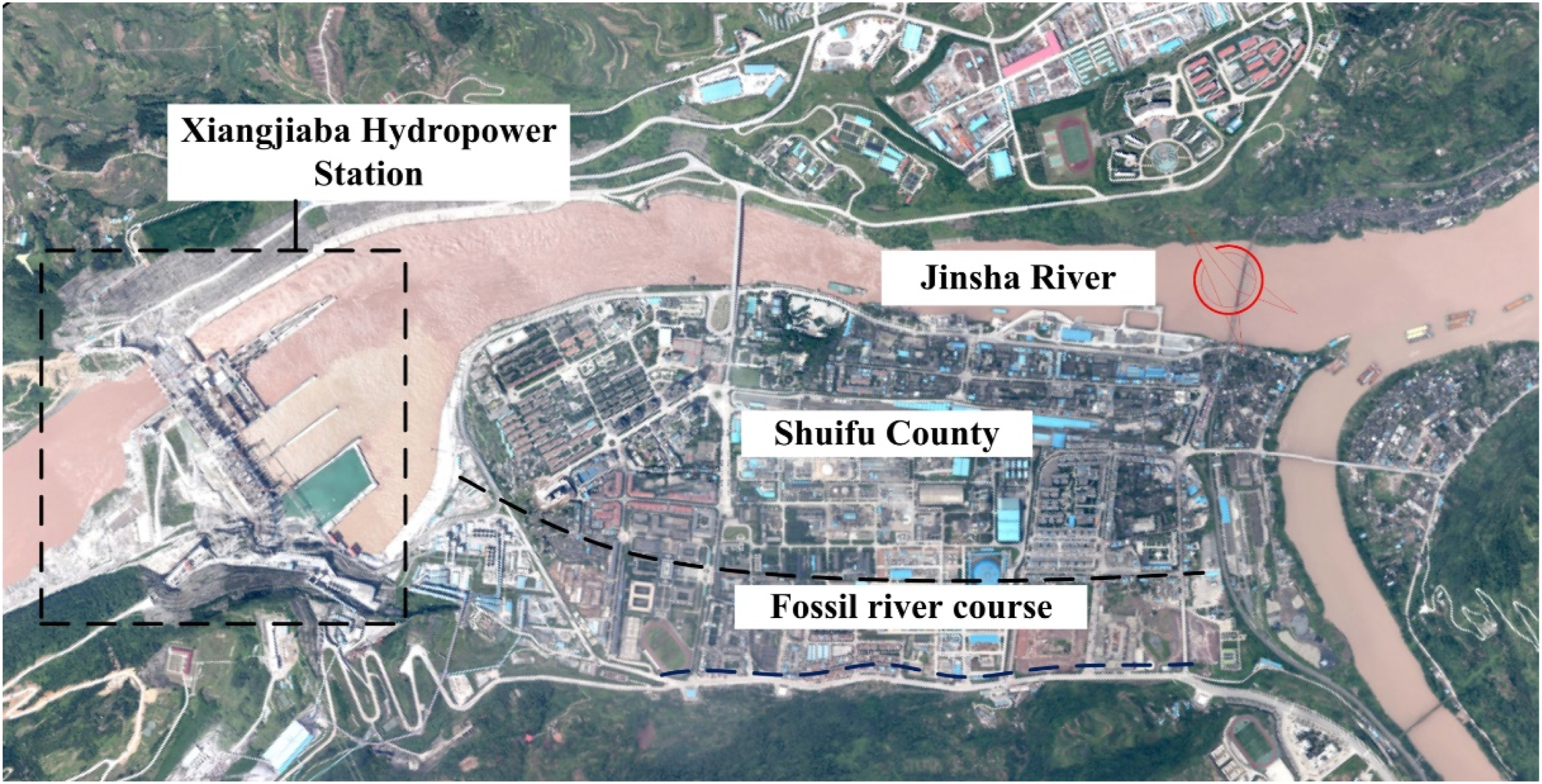
Ground vibration in dam areas and downstream local sites of the county first occurred obviously from October 10, 2012,14–16 when Xiangjiaba Hydropower Station turned to spillway overflow under high water level, while the volume of releases through hydroelectric units in this period was very small. Some constructors and residents reflected the phenomena about the noise of doors and windows and the shake of furniture, which brought uneasiness to them. It can be seen that the low-frequency vibration of the surrounding environment caused by high dam discharge has a negative impact on the structural safety of buildings and people’s physical and psychological health, 17 which is a rather noteworthy problem.
In situ vibration observation
Figure 2 shows the variation process of earth pulsation in surrounding region during the period of water storage and discharge by means of earthquake monitoring system. As shown in Figure 2, the earth pulsation amplitude of six monitoring stations (GD1∼GD6) had a substantial increase from October 10, especially GD5 and GD6, the measuring points closer to dam site. It is thought that traffic was not the main source of vibrations as previous study, while these vibrations were induced by the dam discharge. Variation trends of earth pulsation in reservoir area during discharging.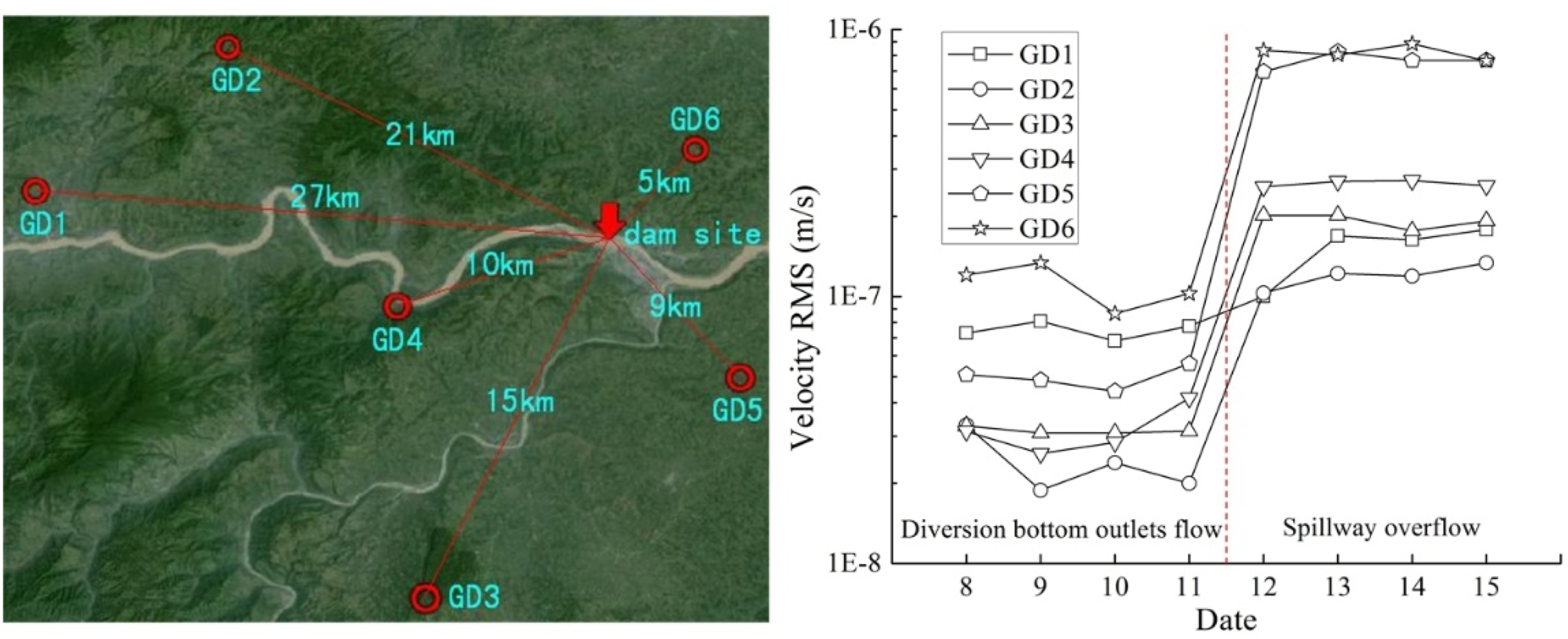
A series of prototype vibration observations had been carried out systematically. Twenty-three foundation measuring points (T1∼T23) were set in both dam areas and downstream sites as sketched in Figure 3. Here choose a typical condition to research the distribution law and characteristics of ground vibration (see Figure 3). Upon the vertical displacement root mean square (RMS) and dominant frequency data, it was obvious that the dam areas had bigger vibration amplitudes, and the displacement RMS value of the measuring points decreased along with the distance from the dam. These indicated that the main vibration source of the nearby ground came from overflow of spillway dam, and the transmission process of ground vibration induced by flood discharge was divided into two steps in theory.
16
Firstly, vibration response of the flood-releasing structures was caused by flow-induced low-frequency fluctuating loads,18–20 and the response spread to the dam foundation directly and brought the dam foundation a low-frequency stochastic forced vibration. Secondly, vibration of dam foundation propagated to downstream site foundation in the form of vibration wave,
21
and eventually induced ground vibration in adjacent territories. Ground vibration distribution of dam areas and downstream city.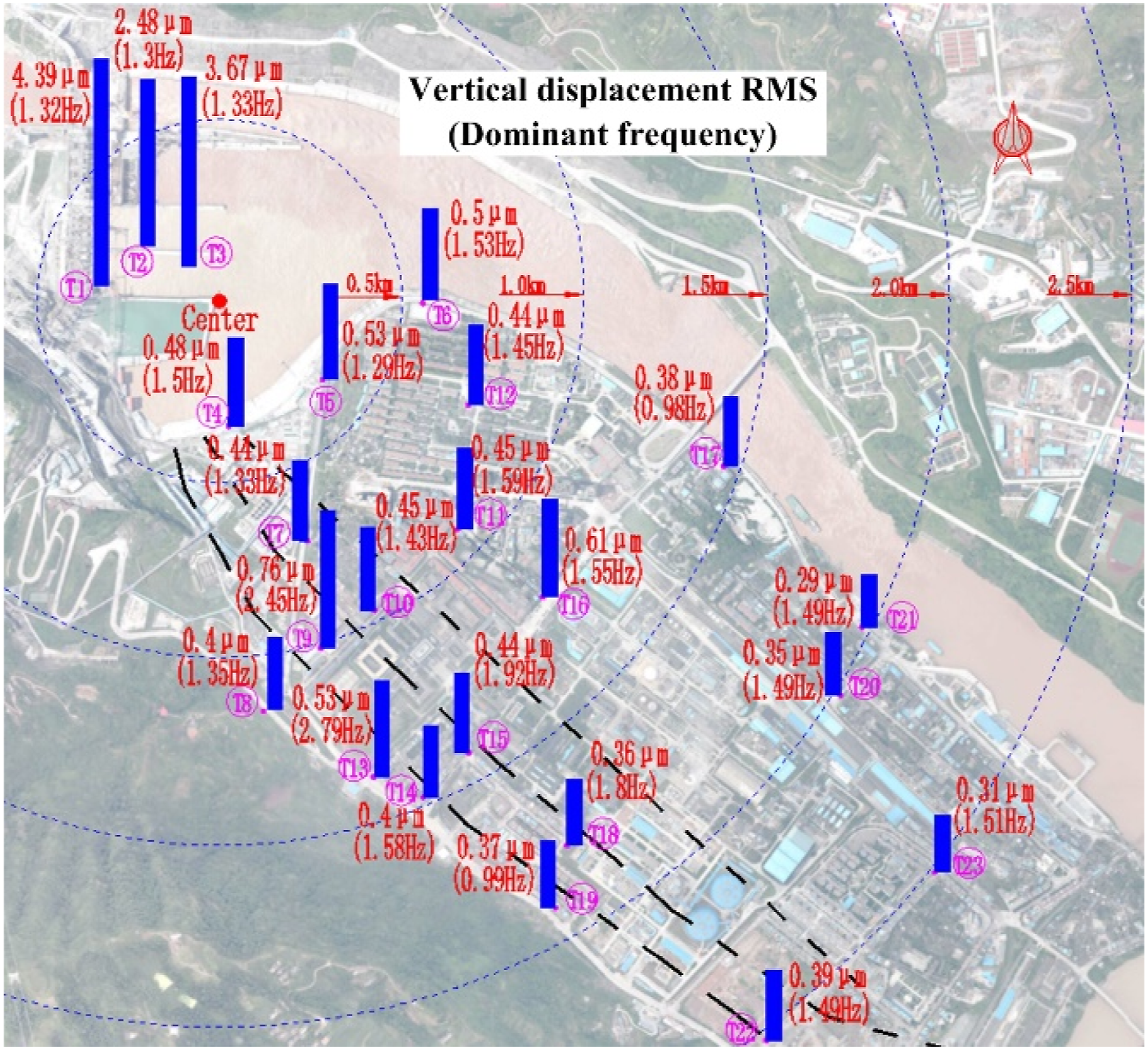
Materials and methods
Hydroelastic model
In order to study ground vibration problem containing fluid-structure interaction and complicated mechanism induced by high dam flood discharge, a hydroelastic model was utilized to simulate fluid-structure coupling system consisting of dam, foundation, water and fluctuation pressure overall,4,16 as seen in Figure 4. Overall view of hydroelastic model.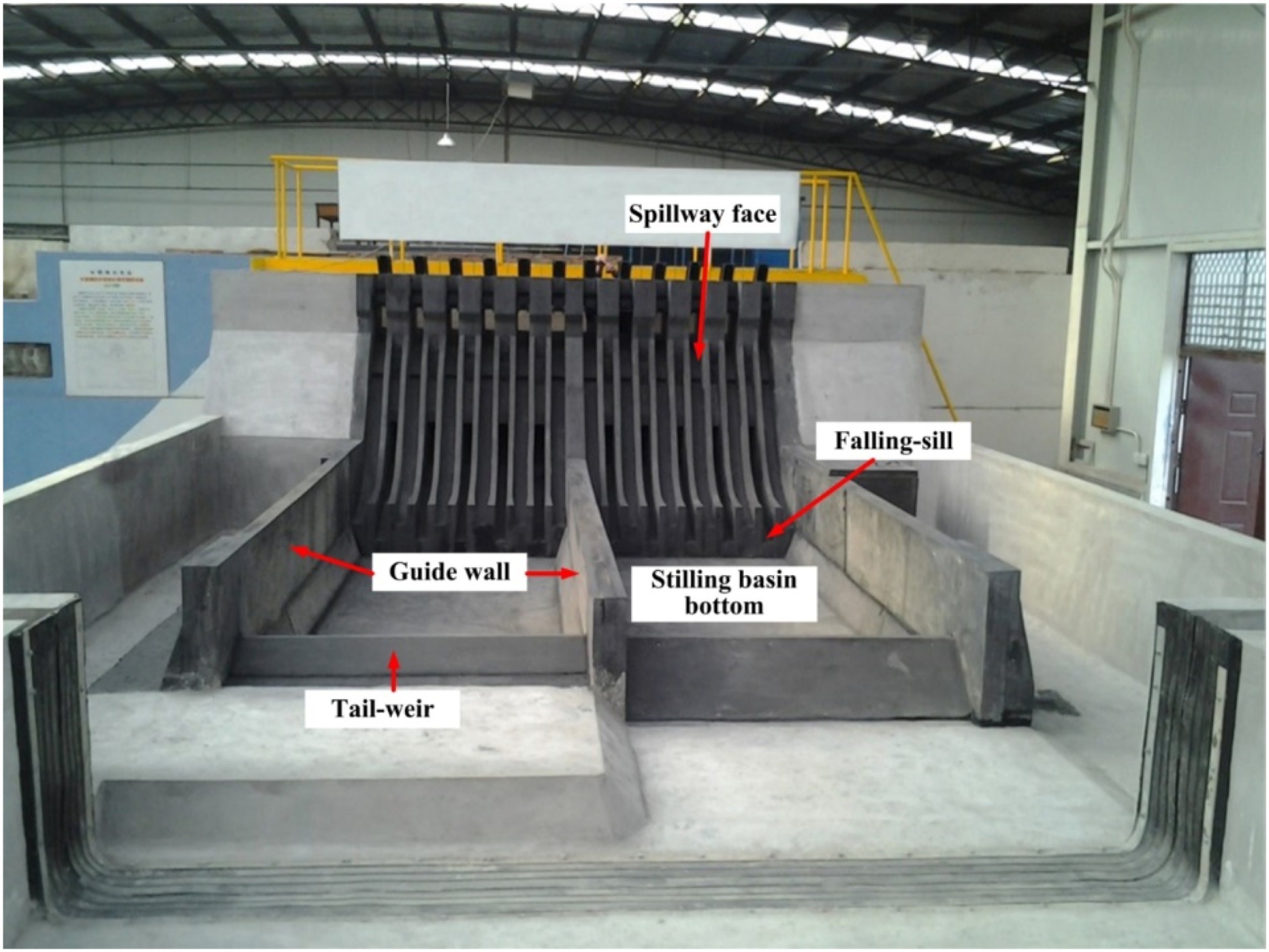
When designing the hydroelastic model, the model must meet hydraulics and structural dynamics similarities at the same time.
16
However, hydraulics similarity is equal to flow fluctuation pressure similarity in the model designed by gravity similarity. In light of flood discharge energy dissipation system of Xiangjiaba hydropower station, the flow fluctuation pressure primarily comes from spillway face under flow, guide walls in vortex area, falling-sill at the front of stilling basin, stilling basin bottom with hydraulic jump’s function, tail-weir at the end of stilling basin. Structural dynamics similarity is concerned with structural frequency, vibration mode, damping and so on, which include similar conditions of geometry, physics, movement, and boundary. In general, the motion equation of the structure under dynamic load is as follows

From the governing equation of structural motion, the corresponding similarity scale relationship can be obtained as follows



Therefore, the hydroelastic model can simulate the dynamic load according to the law of gravity similarity. The parameters of the model material unit weight, damping coefficient and elastic modulus meet the above requirements, and the simulation range is selected reasonably at the same time. It can ensure the similarity of the structural dynamic response system.
Simulation range
The hydroelastic model simulation range of prototype structures has a direct influence on research results’ accuracy and reliability. In principle, the region of prototype structures influenced by water load ought to be considered. Xiangjiaba hydroelastic model aiming at ground vibration research set the scale of 1:80 and adopted weighted rubber as overall simulation material according to similarity requirement.
16
The model was finally designed with foundation (length 500m × width 400m × depth 90m in prototype), reservoir, spillway dam, stilling basin, and downstream dam areas (see Figure 5). Simulation range diagram of hydroelastic model (cm).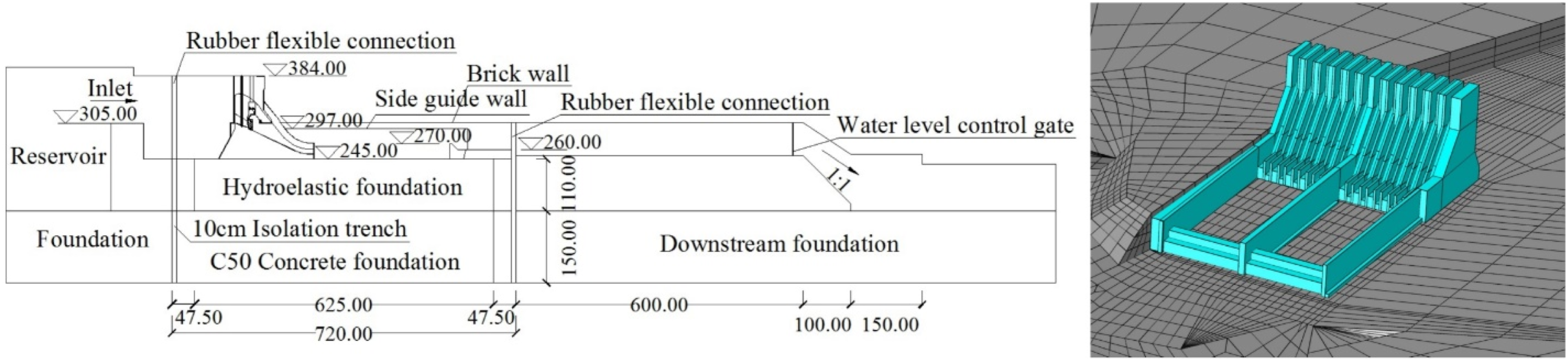
Test system
Since ground displacement magnitude (about 1 μm–10 μm in prototype) with displacement scale 1:80 was too small to be measured in the model, ground acceleration magnitude (about 0.1 gal–0.2 gal in prototype) with acceleration scale 1:1 was feasible to be measured. As shown in Figure 6, vertical acceleration measuring points were set all over the dam, stilling basin, dam heel, and guide wall foundation, in total 19 points (V1–V19). The accelerometers installed with waterproof treatment in the foundation had frequency response range of 0.5–1000 Hz and sensitivity about 40 mv/gal. Measuring point layout plan of hydroelastic model.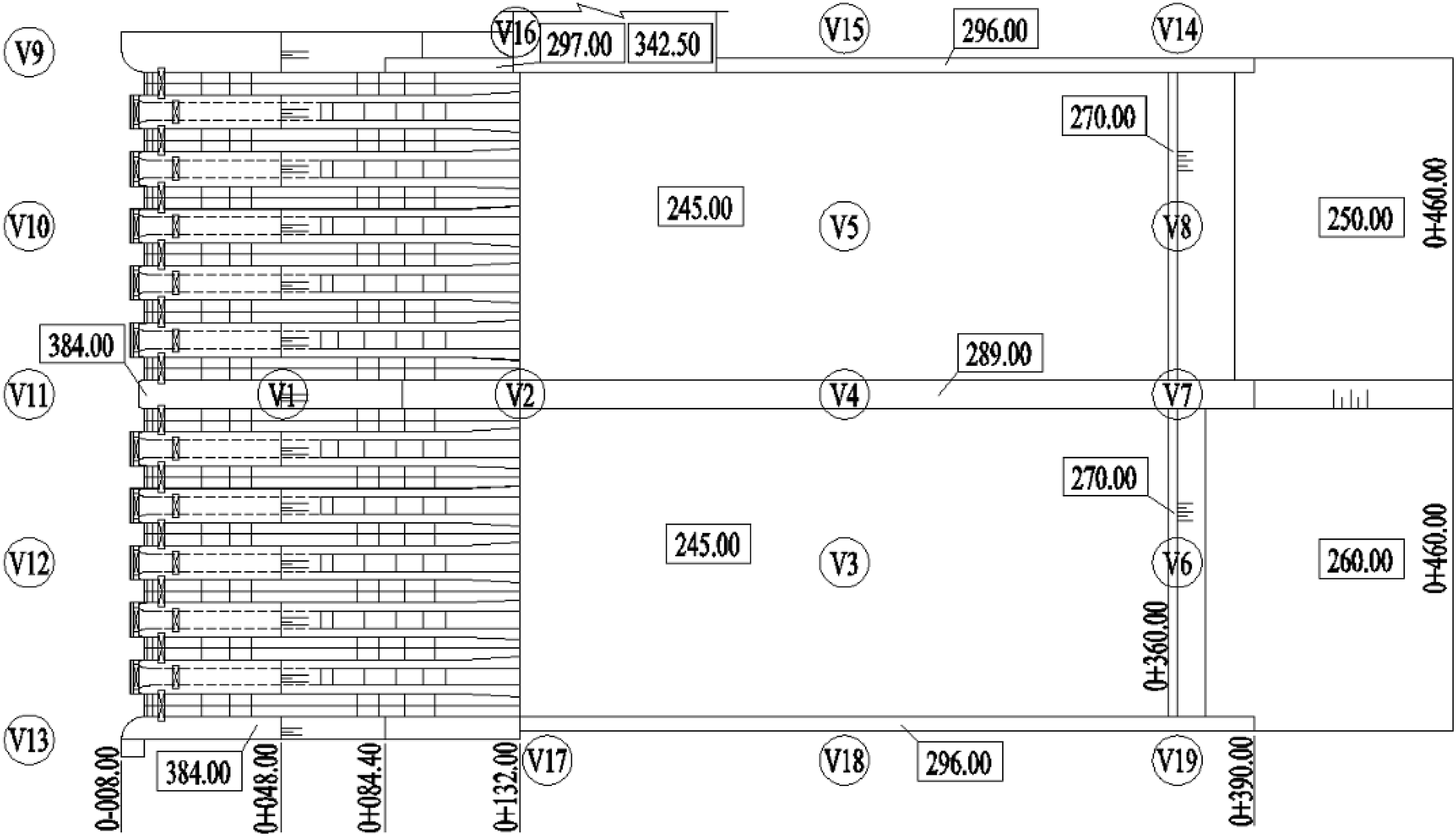
Mathematical prediction model
During the process of high dam discharge, the induced structure and ground vibrations of nearby territories is a complex phenomenon involving the interaction between fluid and solid. From the perspective of the relationship among input (discharge excitation), structure (discharge structure, foundation, and ground), and output (vibration response) in structural vibration systems, it belongs to a multi-factor coupled dynamic problem. The vibration mechanism not only needs to consider the coupling effect between water flow, structure, and vibration but also involves the issue of multiple point inputs from different dynamic water loads on different positions of discharge structures. The energy sources that induce vibrations in surrounding sites during flood discharge of Xiangjia include spillway face under flow, guide walls in vortex area, falling-sill at the front of stilling basin, stilling basin bottom with hydraulic jump’s function, tail-weir at the end of stilling basin. According to the in situ vibration observation results, there must exist strong-coupling correlation between flow-induced dam foundation vibration and ground vibration. Some mathematical prediction methods22,23 like regression analysis model, artificial neural network model. can be applied between foundation vibration of hydroelastic model and prototype ground vibration to set up the ground vibration prediction model.
The vertical acceleration RMS of 19 foundation measuring points (V1–V19) in hydroelastic model were taken as input parameters (I = {I1, I2, …, I19}), whereas prototype ground vibration vertical acceleration RMS was considered as output parameter (O) for the prediction model. A total of 122 vibration records of in situ observation point T9 were used in the prediction model, and same operation conditions were measured in hydroelastic model. The prediction model was built using 110 cases, and tested and evaluated using 12 different cases randomly.
Regression analysis model
Multivariate regression analysis (MVRA) belongs to an essential mathematical statistics method analyzing the correlativity between the output parameter and multiple input parameters. The basic principle is to establish a linear model to describe the dependence relationship between dependent variables and independent variables, and use the sample data for analysis. The parameter estimation of MVRA usually uses the least square method. The regression coefficient is estimated by minimizing the sum of squares of residuals, so that the difference between the predicted value of the model and the actual observed value is minimized. The equation for prediction of T9 vertical acceleration RMS by MVRA was obtained as

Compared with MVRA, partial least-squares regression (PLSR) increases the canonical correlation analysis, principal component analysis and other functions.
24
In the process of regression modeling, new comprehensive variables which can explain the system best are extracted to overcome the bad influence from the multicollinearity among variables on regression model’s accuracy. Based upon the cross effectiveness analysis in PLSR, two new comprehensive variables (t1 and t2) were extracted as follows

By means of data standardization’s inverse process, the prediction equation of T9 vertical acceleration RMS by PLSR was built as

Artificial neural network model
Among the artificial neural network model, the back-propagation (BP) neural network, generalized regression neural network (GRNN) and Elman feedback neural network are used to do function approximation and establish prediction model as relatively mature and effective methods. In this paper, we utilized three kinds of neural network to establish ground vibration prediction model, respectively. The network structure and parameter design are as shown in Figures 7–9. Back-propagation neural network. Generalized regression neural network. Elman neural network.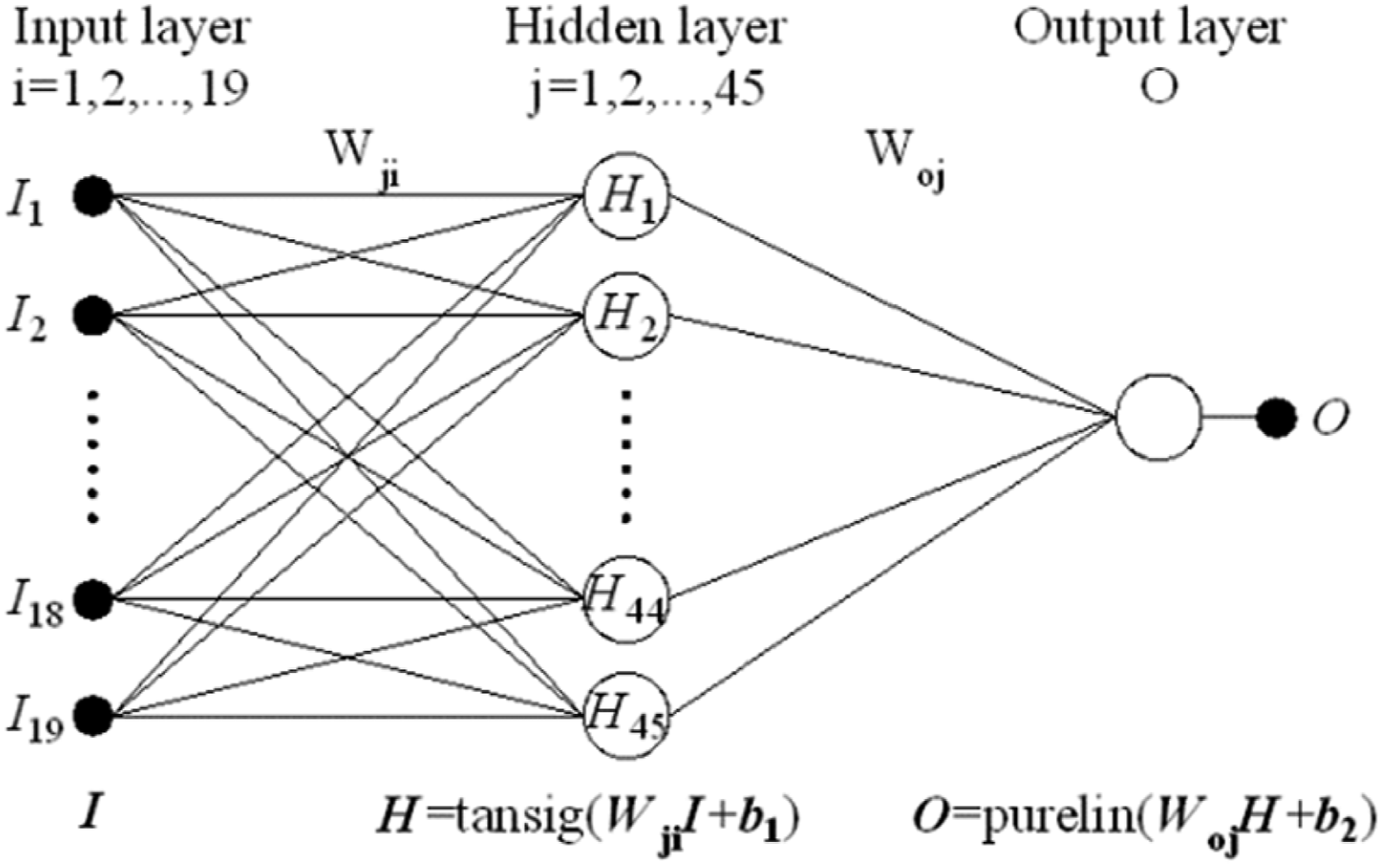
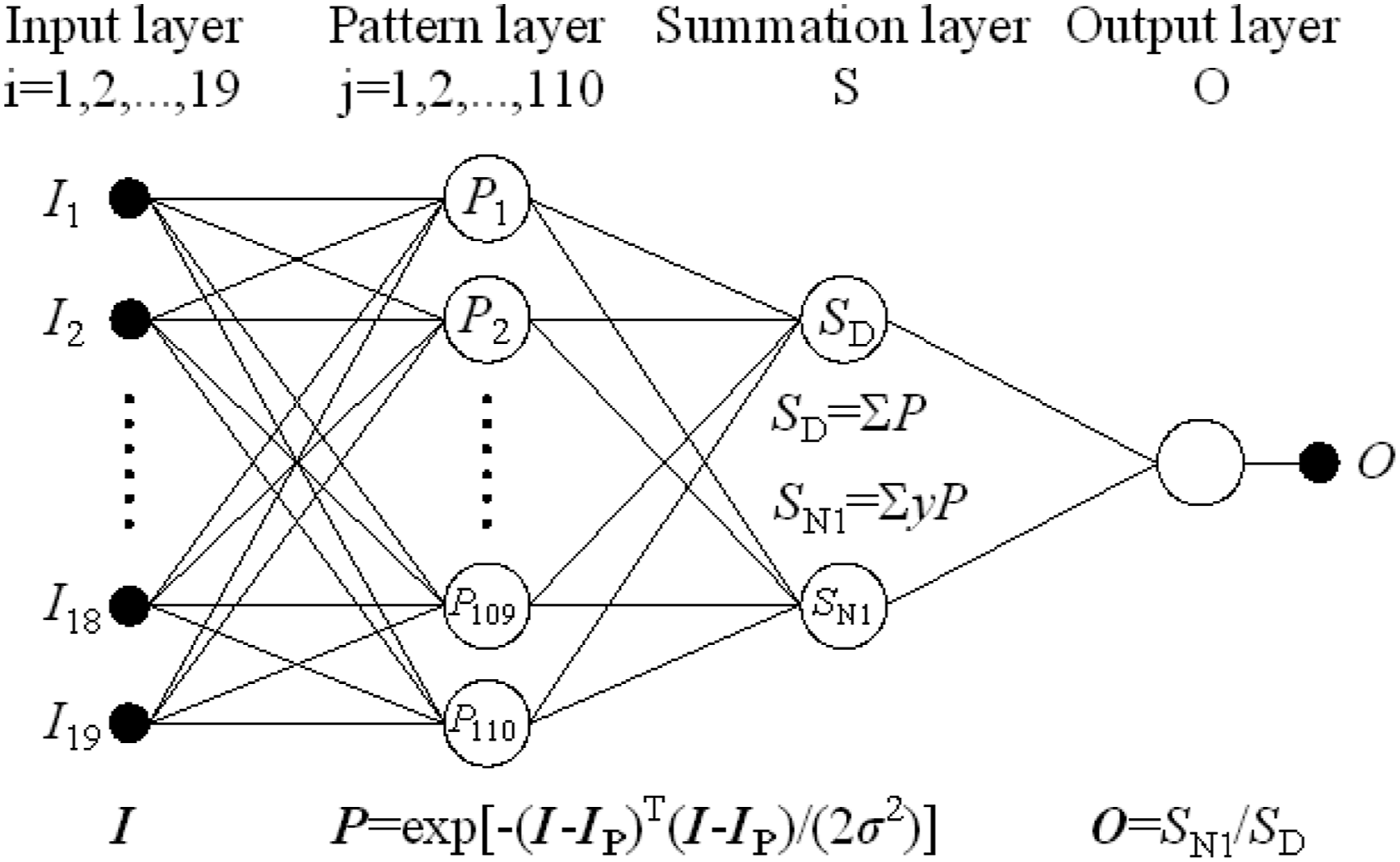
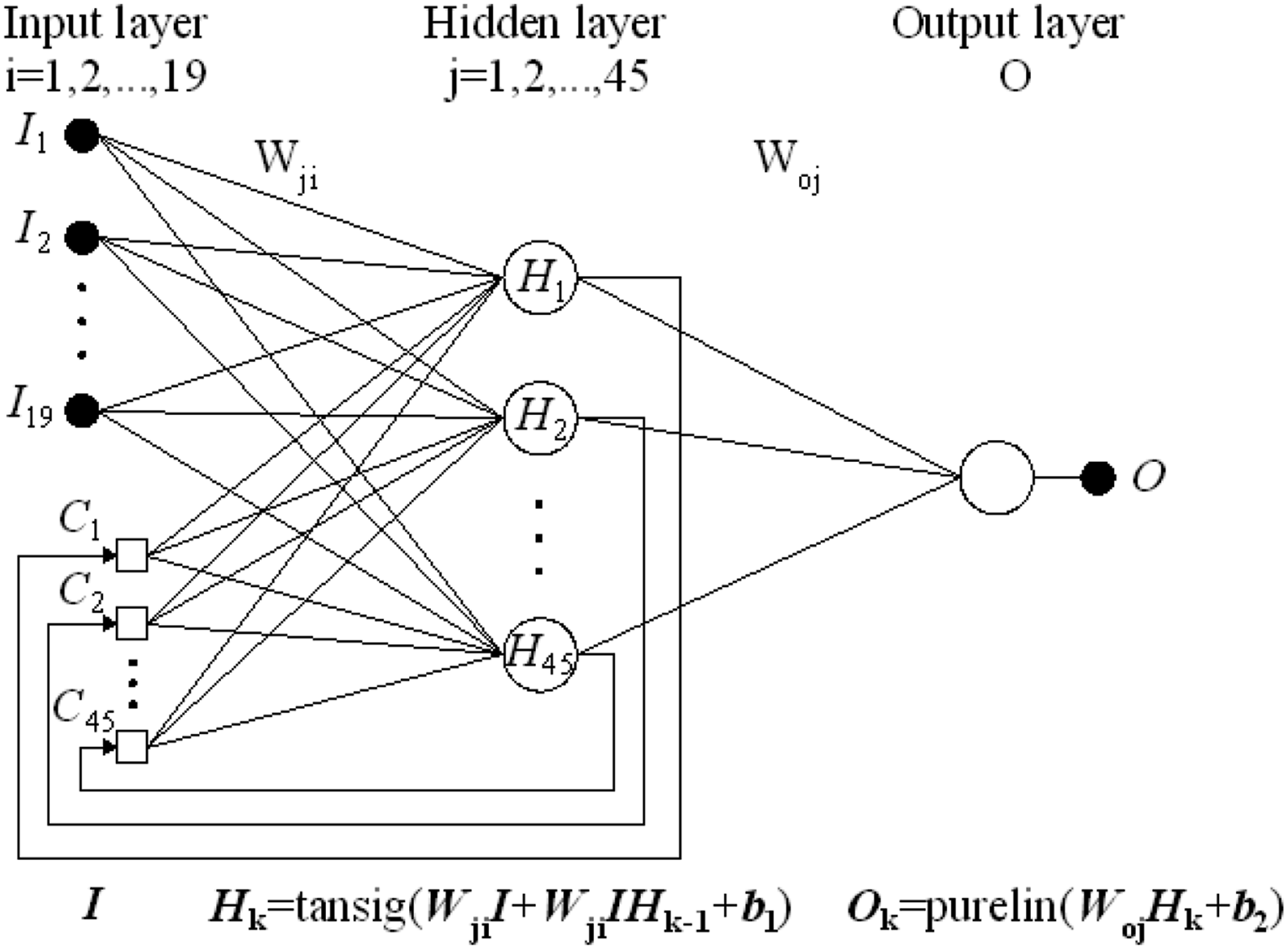
BP neural network model is a classic feedforward network. 25 Employing an error backpropagation learning algorithm, BP network is a two-layer network that includes a hidden layer, as shown in Figure 7. Since only one parameter needs to be predicted, there is only one output unit. The activation function of the hidden layer neurons of the network is the hyperbolic tangent function, and the activation function of the output unit is the linear function. Here I i is the value of the i th input, W ji is the connection weight between the i th input and the j th hidden neuron, and b1 is the bias value of the hidden neuron. W oj is the connection weight between the j th hidden neuron and the output neuron and b2 is the bias value of the output neuron. Based on the Kolmogorov theory, 26 the number of neurons at hidden layer was determined as 45. The learning algorithm was the gradient descent method with variable learning rate. As a result, the standard BP neural network prediction model was established with the network structure of 19-45-1. Compared with BP network, the Elman network, also known as simple recurrent network, can be seen as feedback from the hidden layer units to the input based on the two-layer BP network, as shown in Figure 9. The actual input parameters of Elman network are composed of the input I and context units C. Due to the role of feedback, the history state information of Elman neural network is considered in the training process. GRNN is controlled by a radial basement layer and a special linear layer. It belongs to a deformed form of radial basis neural network. After the data is input into the network, it passes through the input layer, the mode layer, the summation layer, and the output layer to obtain the output result, as shown in Figure 8. I is the training sample, I P is the learning sample, σ is the smoothing factor, S D is the arithmetic sum of the output of the mode layer, and SN1 is the weighted sum of the output of the mode layer. The model training adopts the cross validation method, determining the best spreading constant value as 0.8 through the loop calculation meanwhile. All of these three artificial neural network models made use of the mapminmax function in the neural network toolbox in MATLAB to standardize the input and output data.
Performance evaluation criteria
To validate and compare those prediction models, the correlation coefficient (ρ) and root mean square error (RMSE) between the predicted and observed values of ground vibration are taken as the evaluation parameters. Correlation coefficient is defined as

RMSE is defined as

Results and discussion
Verification of hydroelastic model
Based upon the data from initial discharge conditions, the correlation analysis of hydroelastic model and prototype foundation vibration had been taken to verify the precision of vibration source response in hydroelastic model and to further ensure the reliability of ground vibration prediction model, as shown in Figure 10. The high correlation coefficients (R = 0.892–0.938) illustrated that the hydroelastic model could reflect the vibration characteristic of actual dam region. Meanwhile, the measuring points located at stilling basin, tail-weir, left guide wall and right guide wall foundation in hydroelastic model had vibration dominant frequency about 1.0 Hz to 2.0 Hz, which was close to the vibration frequency of prototype foundation. Correlation analysis of hydroelastic model and prototype foundation vibration. The verified measuring points are, respectively, located at (a) stilling basin, (b) tail-weir, (c) left guide wall, and (d) right guide wall foundation.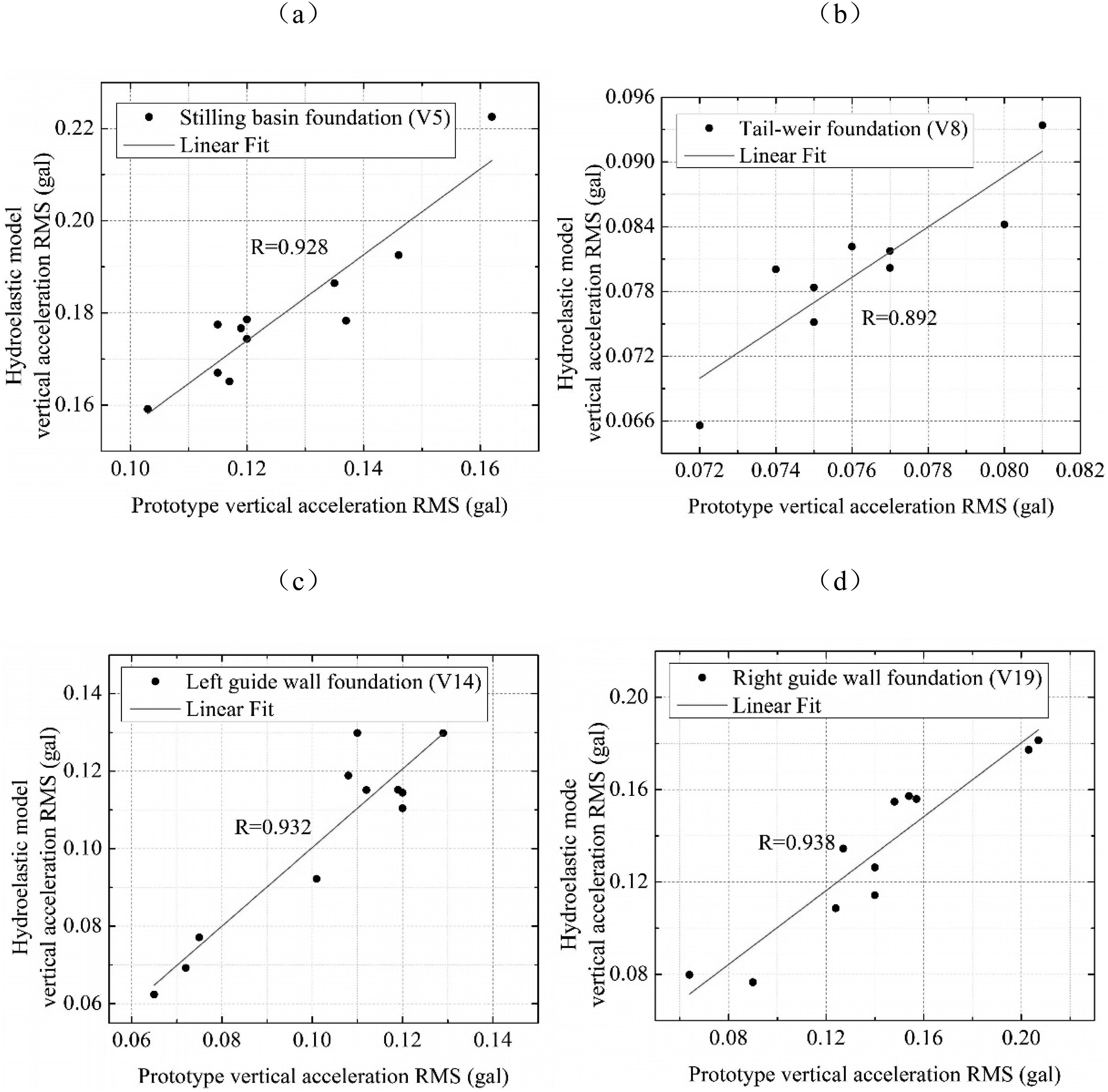
Comparison of ground vibration prediction model
Figure 11 showed the ground vibration prediction results gotten in different models. The prediction results were obtained from 12 different power station operating condition. As shown in Figure 11, the prediction results had approximate variation trend compared with the prototype measured data, but the accuracy of different prediction models is various. The detailed comparison analysis is as follows. Prediction results of different model.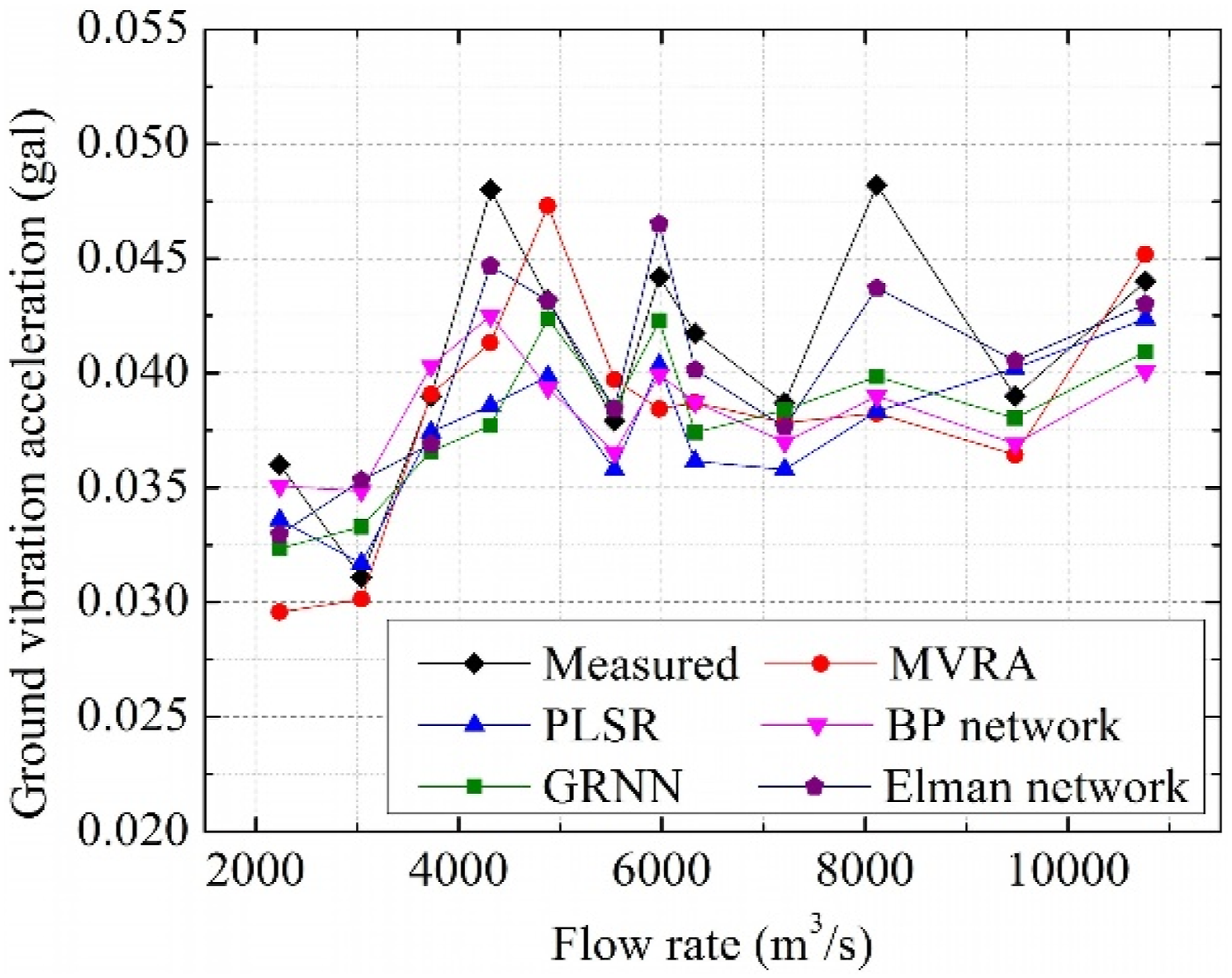
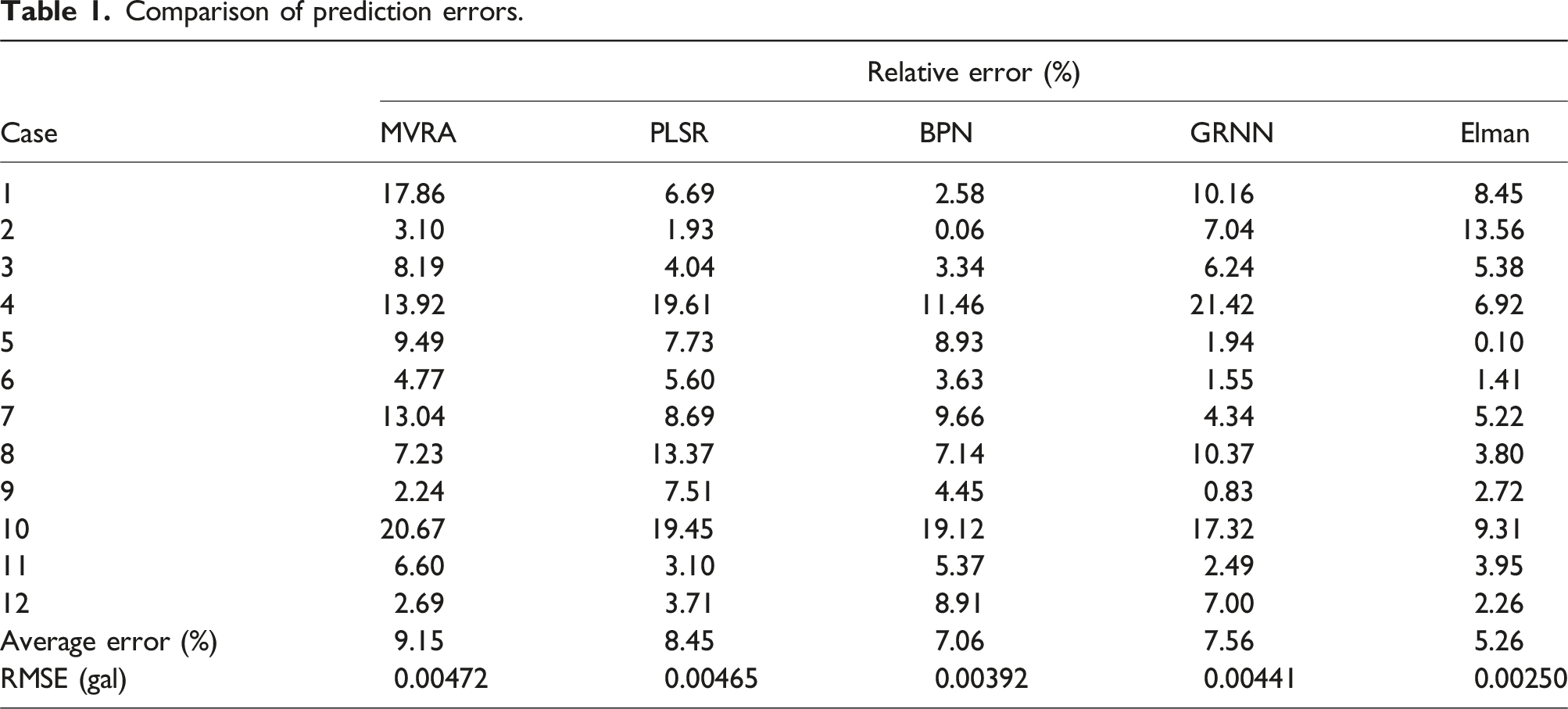
Figure 12 illustrated the relationship between measured and predicted values by regression analysis and neural network on 1:1 slope line with their respective correlation coefficient. Take the significance level a as 0.01 with the confidence level 99 %, and the degree of freedom was set as Comparison between measured and predicted ground vibration response with different mathematical prediction models: (a) MVRA, (b) PLSR, (c) BP network, (d) GRNN network, and (e) Elman network.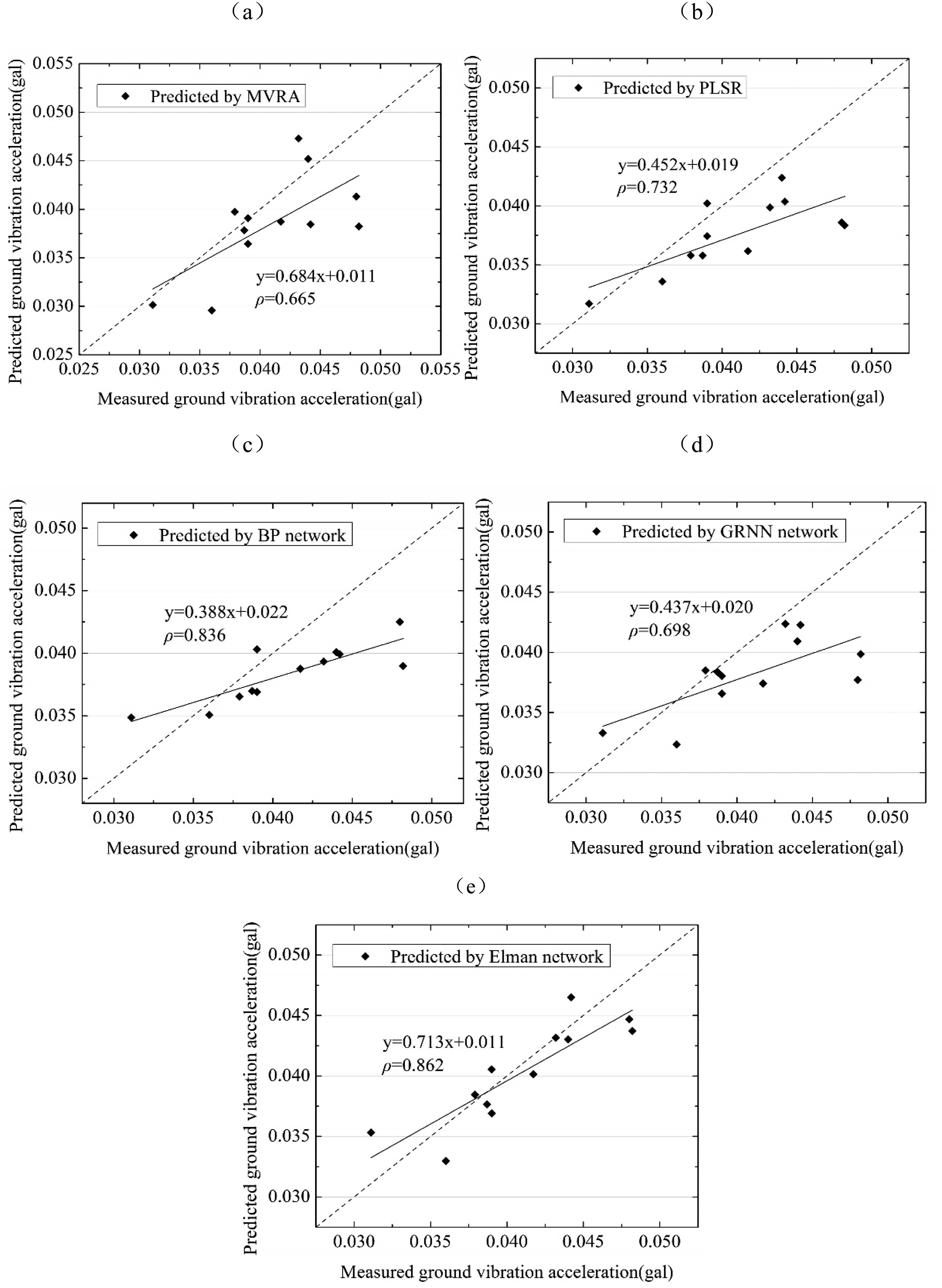
Comparison of prediction errors.
Prediction of engineering operation regime
Flood discharge operation regime.
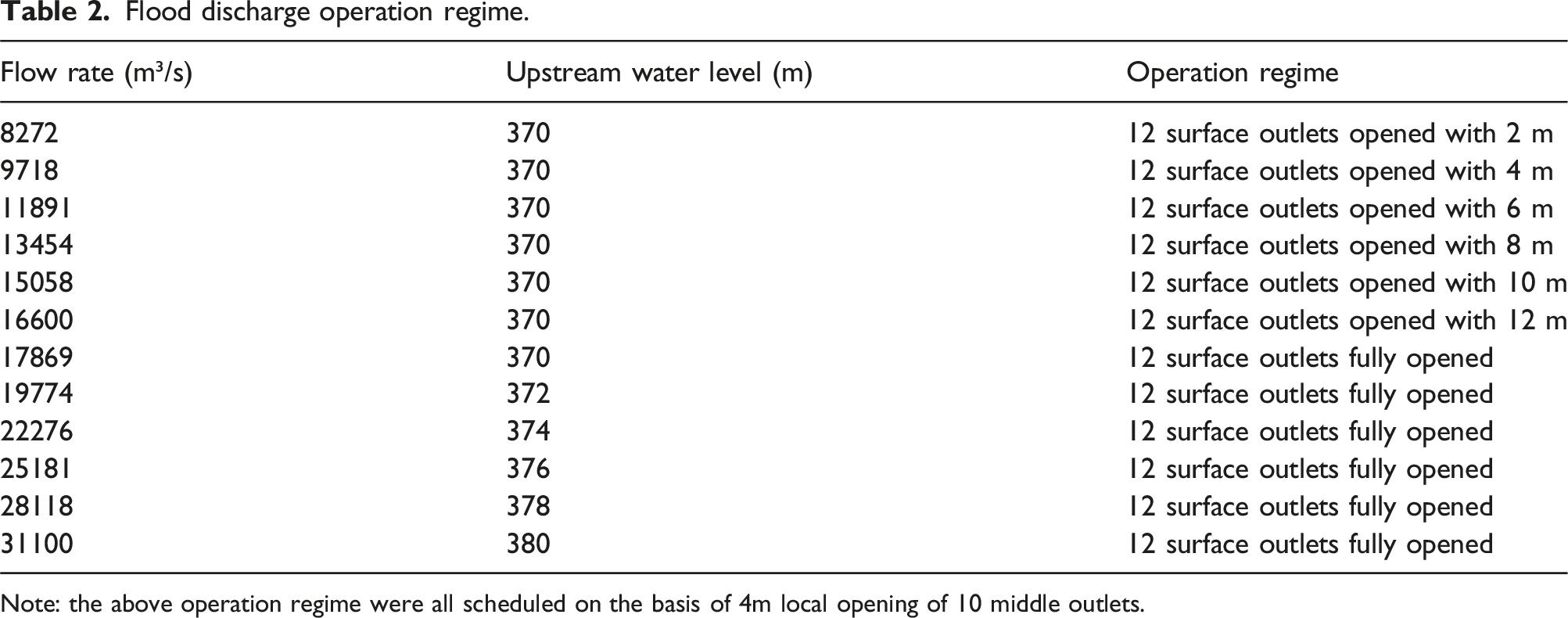
Note: the above operation regime were all scheduled on the basis of 4m local opening of 10 middle outlets.
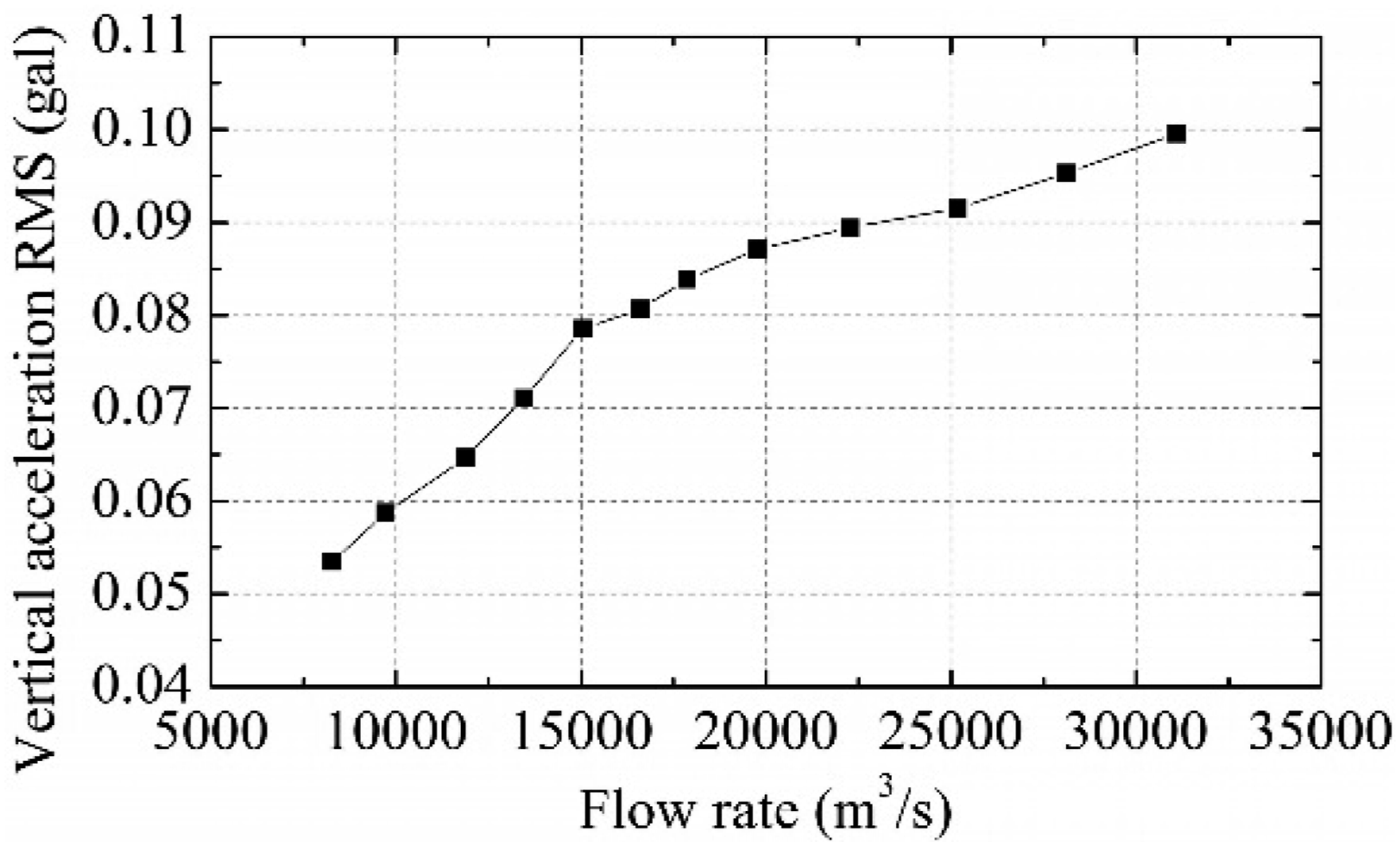
Vertical acceleration prediction of engineering operation regime.
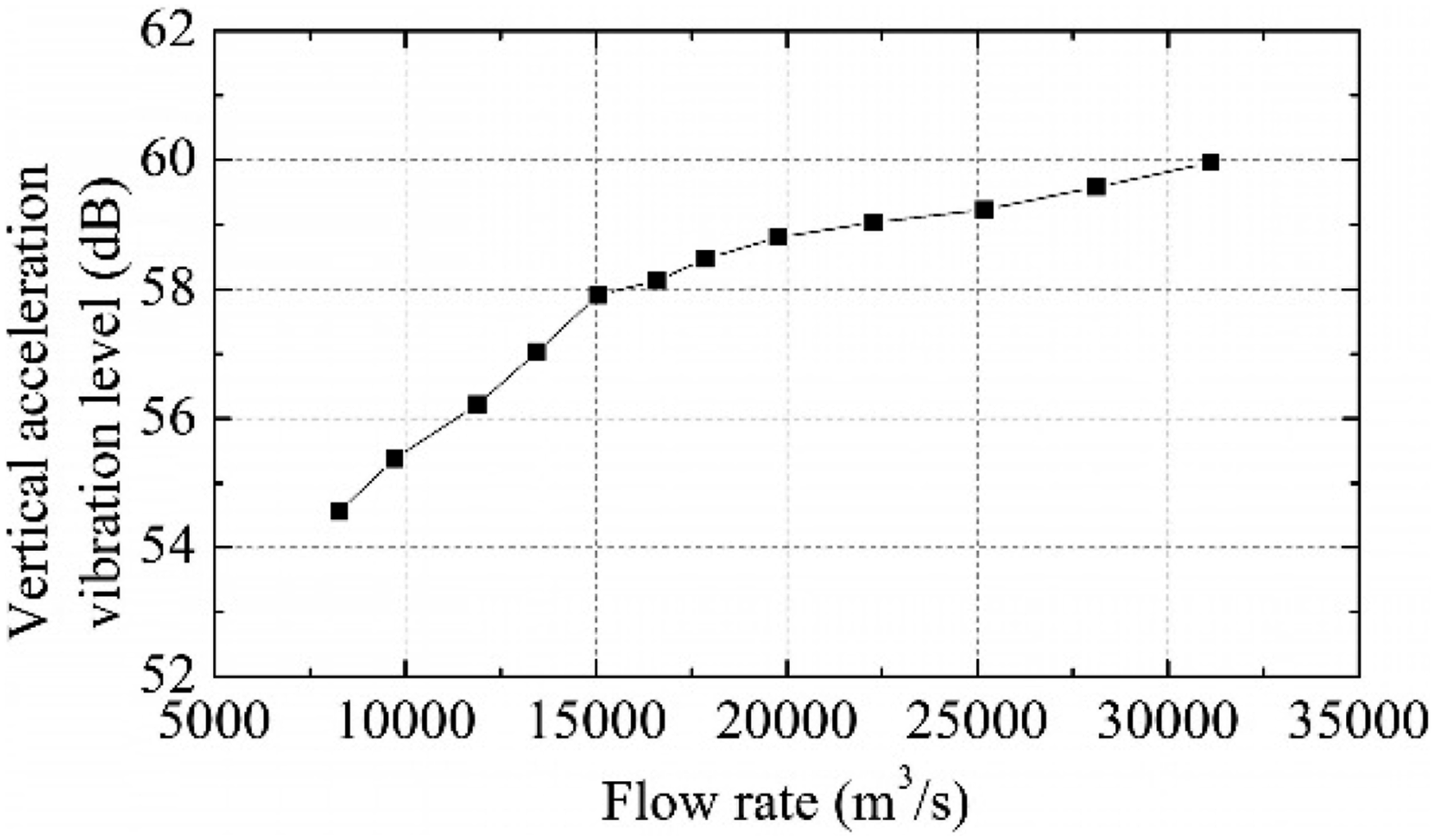
Vertical acceleration vibration level prediction of engineering operation regime.
According to the prediction analysis results, the vertical vibration level of the ground vibration was 59.96 dB at the maximum flow rate, which was in accord with the vibration limit of Urban regional environmental vibration standard. It can be seen that the flood discharge operation regime with the combined surface and middle outlets is a reasonable and applicable vibration reduction method.
Conclusion
Ground vibration in nearby territories is an undesirable and important side product of flood discharge, and it is of significant importance to control and eliminate associated environmental problems. With regard to the adverse impact of the ground vibration problem of Xiangjiaba on the near-surface soils and nearby residential areas, some scientific and technical prediction measurements were taken successively. In this paper, the following results have been obtained. (a) Ground vibration in the near-dam zone came into being owing to flood discharge through the spillway dam, and the vibration spread from flood-releasing structures to the site through dam foundation and soil foundation in the form of low-frequency vibration wave. (b) The acceleration response measured from the hydroelastic model was basically consistent with the prototype data in magnitude, frequency, and regularity, which verified the accuracy and rationality of the hydroelastic model on simulating the vibration response. (c) The prediction accuracy of the neural network is better than that of the regression analysis, and the Elman neural network has advantages on the simulation of the nonlinear prediction system of ground vibration with the highest correlation coefficient and smallest RMSE. (d) Based upon the prediction model, it is seen that the flood discharge operation regime with the combined surface and middle outlets for Xiangjiaba is a reasonable and applicable vibration reduction method. The research in this paper provides an effective approach for monitoring and controlling the vibration of nearby territories induced by flood discharge and studying the optimal scheduling scheme of vibration reduction.
Footnotes
Acknowledgments
We gratefully acknowledge the State Key Laboratory of Hydraulic Engineering Simulation and Safety of China and Key Laboratory of Lower Yellow River Channel and Estuary Regulation, MWR.
Author contributions
All authors discussed the results and contributed to the final manuscript. Wenjiao Zhang, Jijian Lian and Fang Liu contributed to hydroelastic model design and test. Wenjiao Zhang, Xing Zhao and Chao Liang built the mathematical prediction models. Wenjiao Zhang, Xing Zhao and Chao Liang analyzed the data. Wenjiao Zhang wrote the paper. Jijian Lian and Fang Liu modified the manuscript.
Declaration of conflicting interests
The author(s) declared no potential conflicts of interest with respect to the research, authorship, and/or publication of this article.
Funding
The author(s) disclosed receipt of the following financial support for the research, authorship, and/or publication of this article: This work was supported by the Science and Technology Development Special Fund of Yellow River Institute of Hydraulic Research (Grant No. HKF202412), the Research and Development Project of Yellow River Institute of Hydraulic Research (Grant No. HKY-YF-2024-01) and the National Natural Science Foundation of China (Grant No. 51909185, 52209090).
