




Abstract
The increasing use of timber in multi-story construction has highlighted challenges related to the vibration behavior of timber floor slabs, affecting both structural and acoustic performance. Floor vibrations between 0 and 20 Hz and structure-borne sound especially between 50 and 100 Hz are impairing the user comfort and serviceability. This paper investigates a mono-material approach using wooden tuned mass dampers (TMDs) to reduce these vibrations in timber slabs, particularly in buildings with long spans. Eigenmodes in relevant frequency ranges are first identified, followed by the separate design and interdisciplinary integration of TMDs for structural and acoustic performance. The study integrates acoustic and structural design requirements through an interdisciplinary process, employing both experimental and numerical models. Results demonstrate that wooden TMDs can address both disciplines and reduce deflection in timber slabs and improve structure-borne and low-frequency sound transmission.
Keywords
Introduction
The growing use of timber in multi-story construction has introduced new challenges, particularly in managing structural and acoustic vibrations. Wood is a naturally growing resource and assumed to be an ideal elastic-plastic material with anisotropic properties. The tensile strength along the grain is generally higher than that of concrete.1,2 Therefore, it is provided with excellent properties as a building and construction material and its use offers high potential for the realization of sustainable building solutions. Timber construction thus represents a key factor in sustainable, climate-friendly construction in order to reduce emissions from the construction industry and contribute to achieving the climate targets that have been set.2,3
Compared to buildings constructed from heavier materials like concrete or masonry, lightweight timber constructions require careful consideration by architects and planners due to their inherent limitations in mass and stiffness. These properties can lead to challenges in managing structural vibrations and acoustics impacting both structural integrity and acoustic performance and hence affecting the building’s overall serviceability.4,5 Vibration issues, such as floor vibrations between 0 and 20 Hz and structure-borne sound transmission between 50 and 100 Hz, can significantly impair user comfort.6,7 Conventional solutions and improvement measures are derived from experience with solid construction and aim, for example, at applying additional mass to reduce the sound-generating vibrations, like cement screed, gravel fillings or concrete weights.8,9
Similar solutions can also be used to increase serviceability in a structural design context. Especially for long-span timber slabs, the serviceability limit state is governing the design. High deformations and low eigenfrequencies affect the performance of the slab. The requirements from the Eurocode 5 that the first natural frequency should be above 8 Hz (or 6 Hz) 10 is a limiting factor for the design of the system.
In the design and planning process of buildings, however, it becomes apparent that there is a lack of integration of acoustic and structural design for timber construction.
Building physics, and therefore sound insulation, is considered at a very late stage in the planning process, which means that acoustic solutions are usually added to the structural system by adding weights and materials, which are usually associated with high costs. This also leads to resource-inefficient constructions, particularly in timber construction, which result in complex systems and build-ups with a mix of materials being difficult to recycle. In addition, the acoustic quality is rated as unsatisfactory by users, even though the limit values for sound insulation according to the standard are taken into account in the planning process. 7
The natural frequencies in the range of 0 Hz to 100 Hz have an influence on the behavior of the (slab) system for both types of vibrations, those relevant to deformation and those relevant to acoustics. They have a negative impact on user perception and should therefore be damped. Considering the overall vibration characteristics of a structure during the early design phase for both disciplines can not only reduce planning efforts but also increase the resource efficiency and quality of the structure. It is therefore necessary that the planning and design of buildings to be conducted on an interdisciplinary basis, utilizing digital calculation methods and design tools.
Therefore, this paper investigates the application of wooden tuned mass dampers (TMDs) as a mono-material solution to mitigate these vibrations. The innovative aspect of this research lies in the integration of structural and acoustic design through an interdisciplinary process (co-design). In contrast to conventional approaches, where acoustic measures are only added after the structural design, this method considers both requirements simultaneously from the outset using integrative computational design techniques. By combining expertise from both disciplines, the study demonstrates how TMDs can be used to enhance the performance of timber slabs, particularly in multistory buildings with long spans. This strategy not only improves structural and acoustic outcomes but also promotes the development of wood-based solutions that retain the sustainability and aesthetics of timber while adapting to evolving building requirements.
Such innovative and interdisciplinary planning and design approaches are being investigated within the Cluster of Excellence IntCDC (Integrative Computational Design and Construction for Architecture) at the University of Stuttgart, Germany. 11 One of the broader goals of this research project is the extension of the design space for multistory timber construction to irregular building shapes and column layouts. Therefore, a new timber building system is being developed in a co-design process considering architectural, engineering (especially detail and global structural design as well as acoustics) and fabrication requirements. Using digital technologies, new methods are available to modernize the design concepts of architecture and civil engineering and thus to consider the dynamic load-bearing behavior from an acoustic and structural point of view simultaneously and at an early stage in the design process, instead of in a sequential process. 12
State of the art
For the description of vibrations, three main parameters are decisive: Frequency, amplitude, and duration. These also influence the perception of vibrations by humans which is experienced differently depending on the eigenfrequency of a ceiling system. Below 8 Hz, the acceleration has a more significant impact on the sensation, whereas the velocity has an impact at frequencies above. 13
For this reason, there are certain load cases that are considered for the vibration behavior of timber slabs: a static load, a periodic load that represents walking persons and an impact load that represents a heeldrop. 13
Beyond this, the personal relationship to the building and the cause of the vibration plays an important role. 4 A study at the Fraunhofer Institute for Building Physics IBP has shown that neighbors walking in multi-story buildings with multiple residential units is one of the main causes of noise disturbance, even if the normative requirements are met. In comparison with concrete ceilings, wooden ceilings were rated significantly worse in terms of their annoyance due to walking by neighbors. 7
The acoustic comfort of timber slabs is affected by an increased transmission of structure-borne and impact sound, primarily in the low-frequency range between 50 and 100 Hz. This is caused by the light weight of wood. Raw timber constructions used in practice have so far been improved acoustically by using additional mass, such as fillings or weights.7,8,12,14 These improvement measures usually consist of mineral materials placed above, inside and below the raw ceiling constructions (e.g. floating screed, absorber systems, suspended ceiling) and many of these additional layers are supported elastically or decoupled.7,8,12,14
Figure 1 provides an overview of typical frequency-dependent influences on user perception in residential buildings in a structural and acoustic context. Overview of the frequency ranges of typical impacts in residential construction.
15
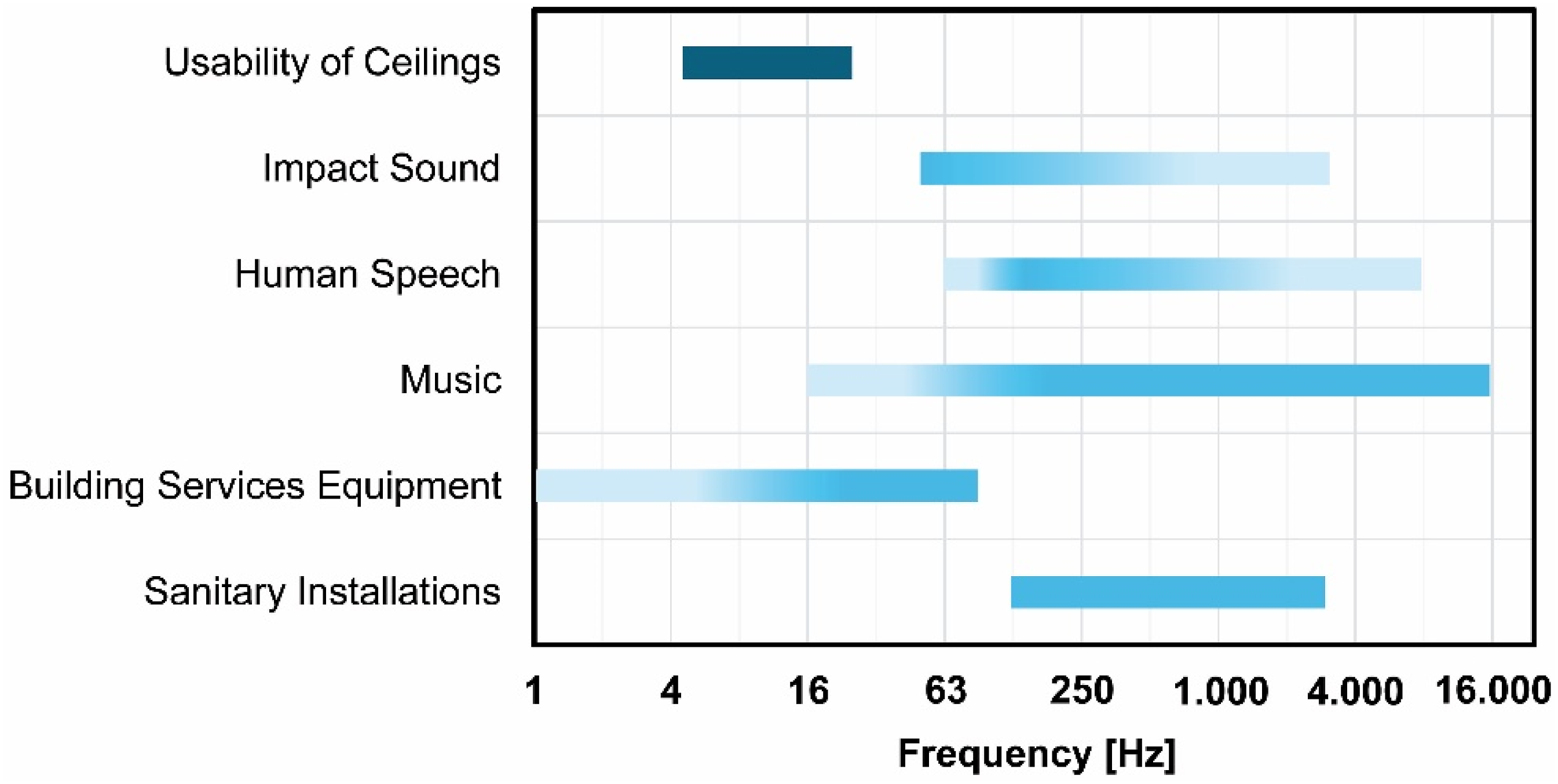
Structurally relevant vibrations are addressed within the serviceability limit state by using Eurocode 5. 16 The serviceability limit state is defined as the limits that affect the function of the structure or the load-bearing components under normal conditions of use. The vibration verification is often the limiting factor for the design. 17 Structural improvements can be achieved by influencing the stiffness through the application of additional mass either as a concrete screed or as a timber-concrete composite system. In addition to altering stiffness by adding mass, various other strategies can be employed to affect the vibration behavior and thus the structural response of the system. Such passive control systems like tuned mass dampers (TMD) offer a simple vibration control device. A TMD typically consists of a mass and a spring element and is attached to an initial main system. 18 It makes targeted use of the damping effect. They are used, for example, to reduce structural vibrations caused by wind and earthquake excitations in high-rise buildings, but also in bridges to reduce human-induced vibrations.19,20 From a vibro-acoustic point of view, the methods established in solid construction for reducing vibrations (floating screed, etc.) reach their application limits in timber construction. In general, there are applications for tuned mass dampers on wooden ceilings.21,22 Previous investigations and extensive measurements on the use of TMD on various wooden ceiling systems were carried out, for example, in a research project 14 at the Technical University of Munich and Rosenheim University of Applied Sciences in Germany. The utilized materials comprised steel or cementitious plates, combined with Sylomer for decoupling. The investigations have shown that the vibrations and the radiated sound power of a ceiling system can be reduced in the frequency range below 100 Hz by installing TMD.14,22 Nevertheless, as of now, there has been no application of wooden tuned mass dampers in the context of the holistic evaluation of both static and acoustic criteria. The investigation presented in this paper, therefore, introduces an innovative approach motivated by a mono-material methodology. The utilization of wooden components impacts both structural vibration and impact sound.
Methods
Overview
In order to minimize vibrations and the resulting undesirable sound radiation, an investigation of the vibrating structure is necessary. 23 The basis for the investigation in this paper is a rectangular cross laminated timber (CLT) slab on four punctual supports. The investigations are focused on the serviceability and the vibro-acoustic analysis of the slab. Therefore, the stability and hence the ultimate limit state is not considered in this investigation as well as connections. This research serves as a proof of concept regarding to the application of wooden tuned mass dampers (TMD) to reduce vibrations in the relevant frequency range for the structure and the acoustic user perception.
To reach the desired acoustic and structural performance for the slab system, wooden TMD are developed to damp relevant frequencies: The range of 0–20 Hz is relevant for structural vibrations, while the range of 50–100 Hz is typically associated with acoustic vibrations. First, the performance of a wooden TMD is simulated and experimentally tested on a small-scale specimen to evaluate the accuracy of the predictive calculation model with a single TMD. In a further step, the system is analyzed computationally at its original scale. Two different scenarios are performed on this system: First, the change of structural vibrations are addressed by applying one TMD. Second, three TMDs are attached to modify vibrations across the different frequency ranges for combined structural and acoustic damping. Figure 2 gives an overview of the investigated scenarios. Overview of the investigated systems and scenarios.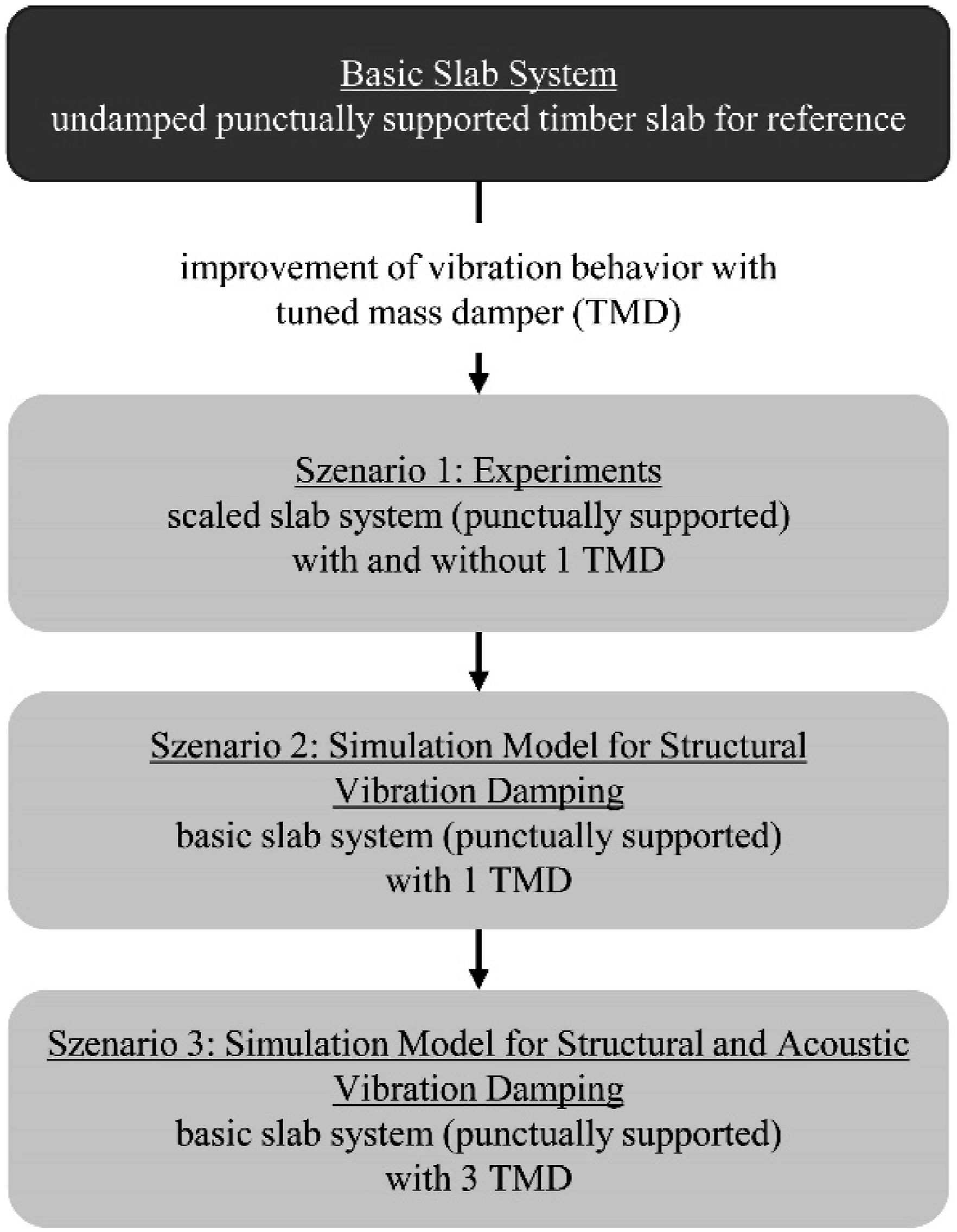
The effect of the differently placed TMDs is analyzed in each of the scenarios. The Scenarios 1 and 2 investigate the change in vibration behavior of the system by placing one TMD in the center (point P1). In scenario 3, two additional TMDs are placed at points P2 and P3 as shown in Figure 3. Positions for the TMDs.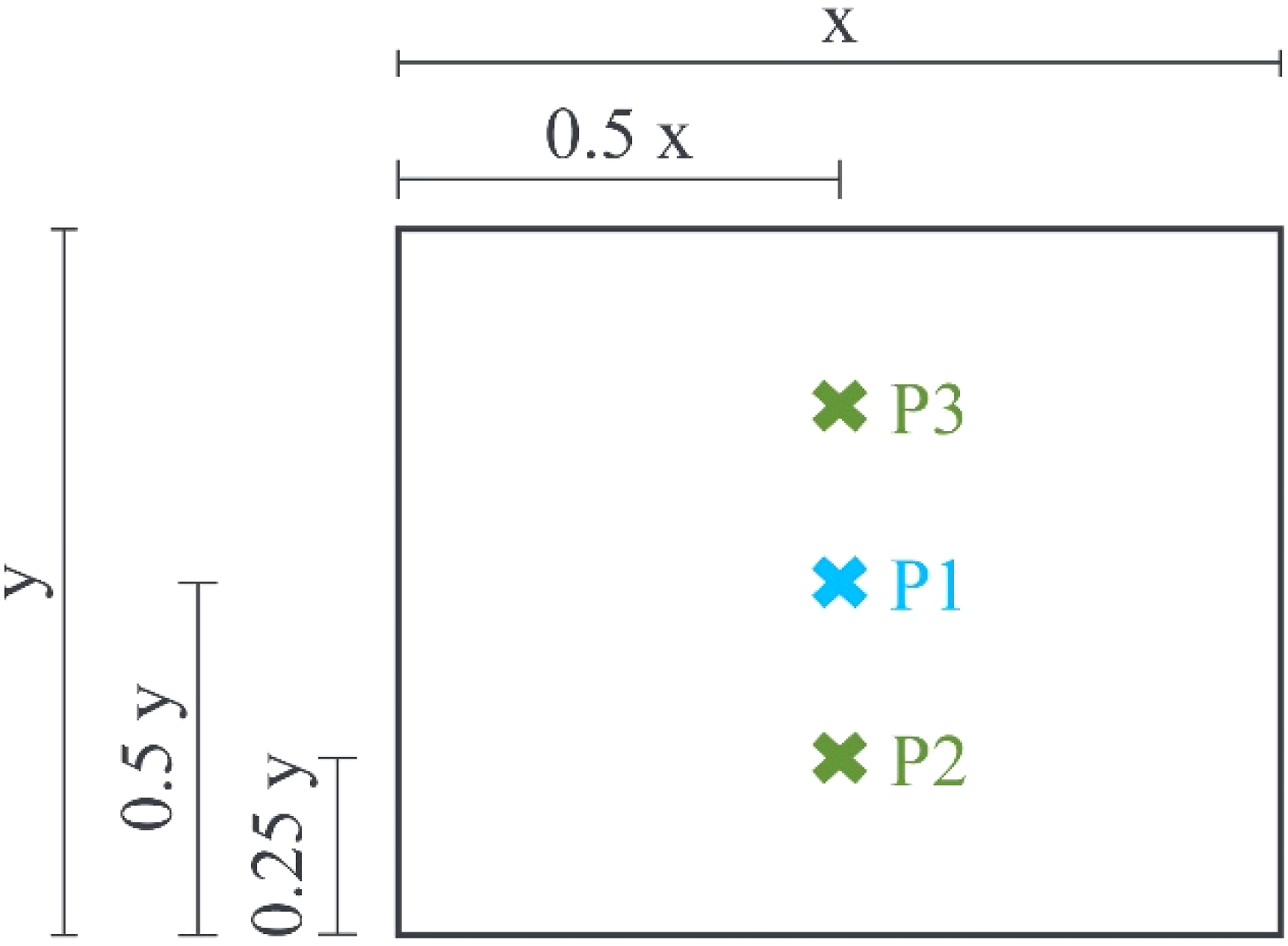
Two softwares are used in the context of this research to represent structural and acoustic simulation tools. For this purpose, the simulation programs Sofistik 24 and Siemens Simcenter 3D 25 are used for structural and natural frequency analysis.
The two simulation programs are designed for use in the respective discipline and both offer the possibility to analyze the vibration behavior of structures. Sofistik from SOFiSTiK AG is a finite element analysis (FEA) software that is mainly used for truss and plate structures in the building industry. It is divided into subprograms that represent the preprocessing, solution and post-processing structure of an FEA. 24
For this study the following subprograms are used: AQUA, SOFIMSHA, SOFILOAD, ASE, DNYA, and DYNR. Simcenter 3D is a software from Siemens Digital Industries Software with 3D simulation technologies and can simulate complex product development processes including the pre- and post-processing of all models and solutions. Among many multiphysical computer-aided engineering (CAE) applications, it offers acoustics calculations by the use of finite and boundary element methods (FEM and BEM) that can support to make informed decisions in early design phases and to optimize the acoustic properties of structures. 25
For the analysis of vibration problems, the methodology of modal analysis is used. With this method, the dynamic behavior of structures can be investigated on the basis of a modal model. Thereby, one obtains the basic properties of the investigated structures with respect to the natural frequencies and the corresponding natural modes of vibration. 23
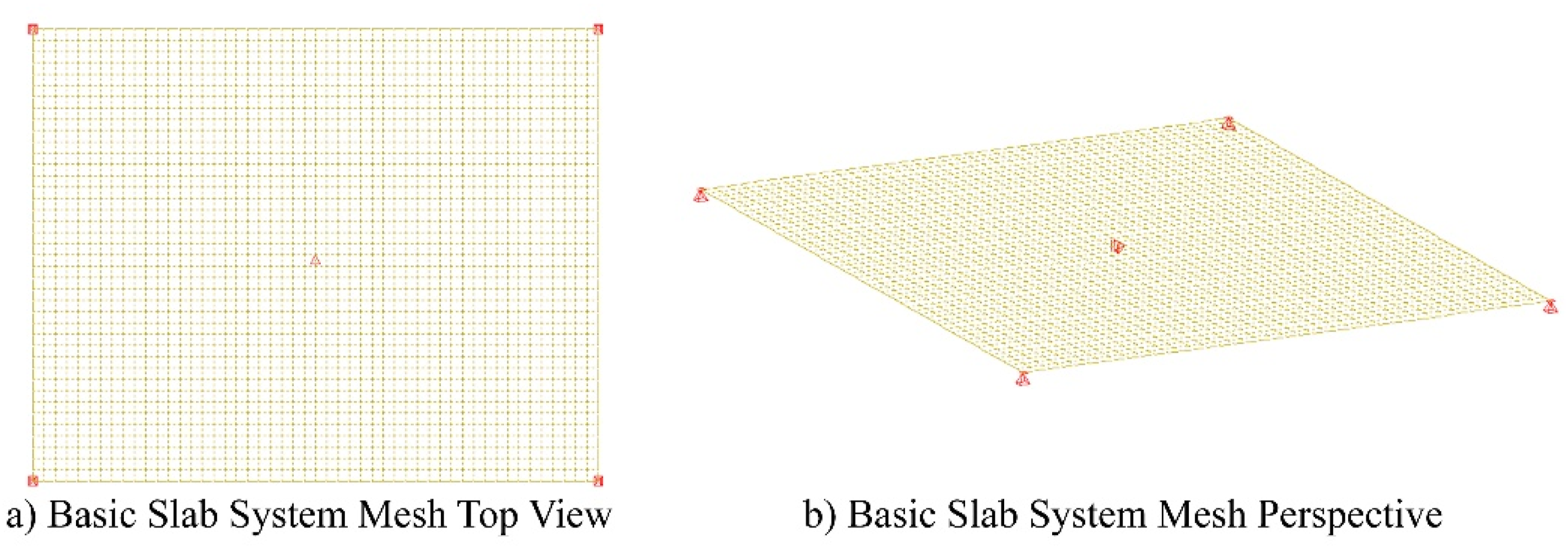
In the simulation models, the mesh edge length is set to 100 mm. The eigenfrequencies are determined under self-weight. Three load cases (LC) are investigated (see Figure 4) on all systems: A static load (LC100) and two dynamic loads. All loads are punctual loads applied to the slab center (point P1). They are suitable for both static analysis according to Eurocode 5
16
and the acoustically measurable parameter of excitability (described in Scenario 1). In accordance to Eurocode 5
16
, it must be ensured that loads on structures do not lead to vibrations that impair the function of the structure or are unpleasant for users. It is recommended that the first natural frequency under static load is greater than 8 Hz. Hamm et al.
10
provides extended guidelines for ensuring the serviceability of timber ceilings in regard to their vibration behavior. Accordingly, the static load (LC100) is applied with 2 kN. The first dynamic load (LC200) should represent a heel drop and is simplified to a 2 Hz sine wave applied for 0.5 s and hence one period. The second dynamic load (LC300) represents walking persons. Walking occurs at approximately 2 steps per second, resulting in a frequency range of 1.6 to 2.4 Hz.
28
In this investigation, it is considered in the sense of a repetitive impulse simplified as a sine wave with 2 Hz and a duration of 30 s, given that rhythmic body movements such as walking of a duration of more than 20 s lead to almost periodic dynamic forces.
28
Therefore, the system is excited over a period of 30 s, corresponding to the excitation duration for impact sound measurements, for example, with a standard tapping machine. The dynamic loads are applied as force-time functions. 1200 time steps are calculated with 0.025 s. The amplitude for both dynamic loads is also set to 2 kN which represents two persons with a body weight of 100 kg each act congruently in the center of the slab. Thus, the load functions are to be multiplied by the load value of 2 kN. Overview of the applied punctual loads to the slab center (point 1).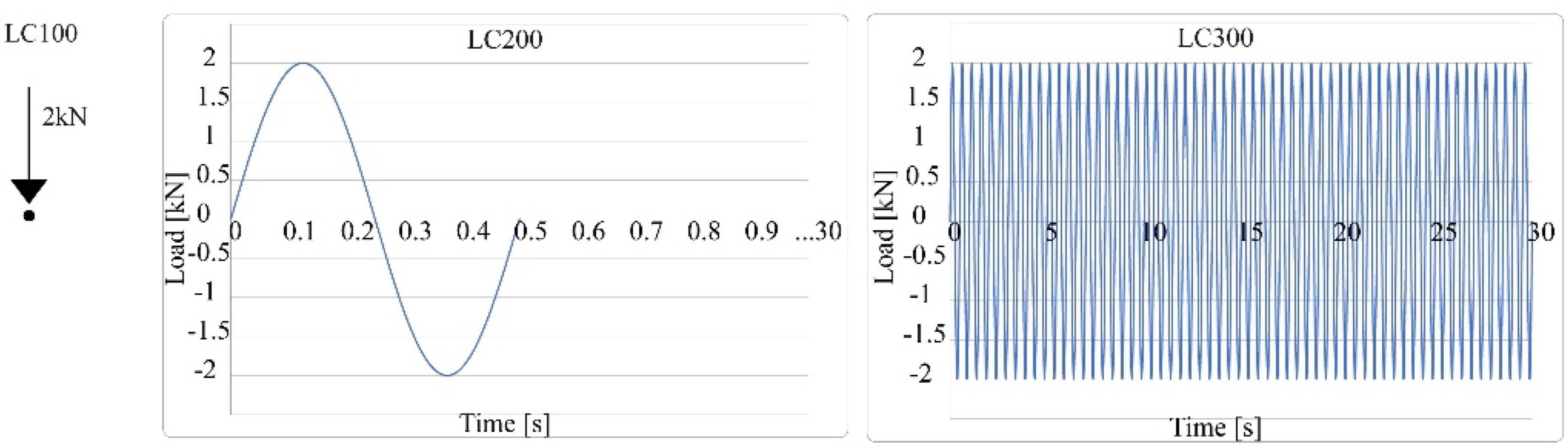
A damping ratio of 2% 29 is applied to each system. The boundary conditions in the simulation represent the four columns, with translation fixed in all directions at each corner. The rotation around the z-axis is also constrained. Further, an additional support is applied at the center of the slab to fix translation in x- and y-directions, preventing movements within the plane.
For the investigations with TMDs, the simulation model includes the basic slab system with spring and mass elements positioned as described above. In the Siemens simulation model, the mass is modeled using a concentrated mass element (CONM1) and the spring is represented by a scalar spring connection (CELAS1). The parameters for weight and spring stiffness are adjusted in the respective scenarios to evaluate their effects on the system.
Basic slab simulation
The basic slab system, visualized in Figure 5, is constructed from cross-laminated timber (CLT). The span measures 5 m in the primary direction and 4 m in the secondary direction, corresponding to typical dimensions for multi-story systems. The CLT slab is supported by four columns, one at each corner. This aspect is part of the ongoing research project in which a new timber construction system has been developed that includes flexible, multi-functional and geometrically adapted column, wall and ceiling elements. It is column-based (Figure 5) and therefore offers a high degree of flexibility and adaptability.
2
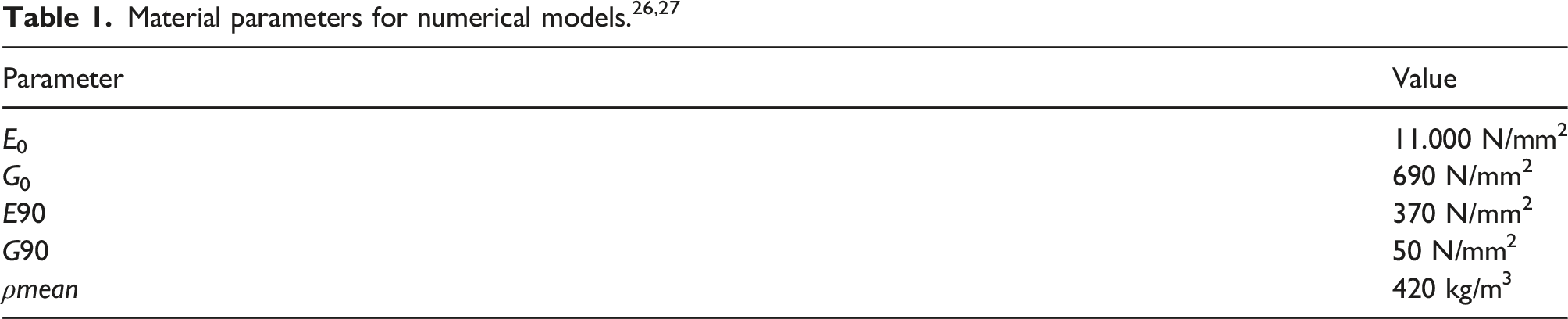
The cross section of the CLT slab consists of a 200 mm thick five-layer CLT, with each layer measuring 40 mm in thickness, and material parameters as specified in Table 1. As stated above, connection details are not considered in the simulation. Figure 6 illustrates the FE-model of the basic system. Model simplification towards a four-point supported CLT slab (Basic slab system). Finite element model of the basic system.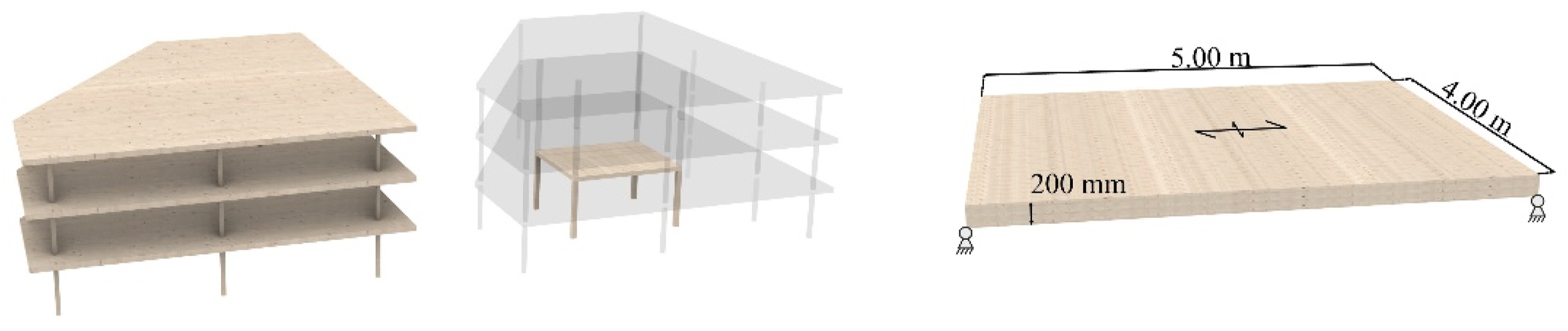
Based on this basic slab system, the following eigenmodes shown in Figure 7 are simulated with Sofistik. These serve as basis for the tuning of the TMDs in scenarios 2 and 3. First 15 Eigenfrequencies and related eigenmodes of the basic slab system, calculated with Sofistik.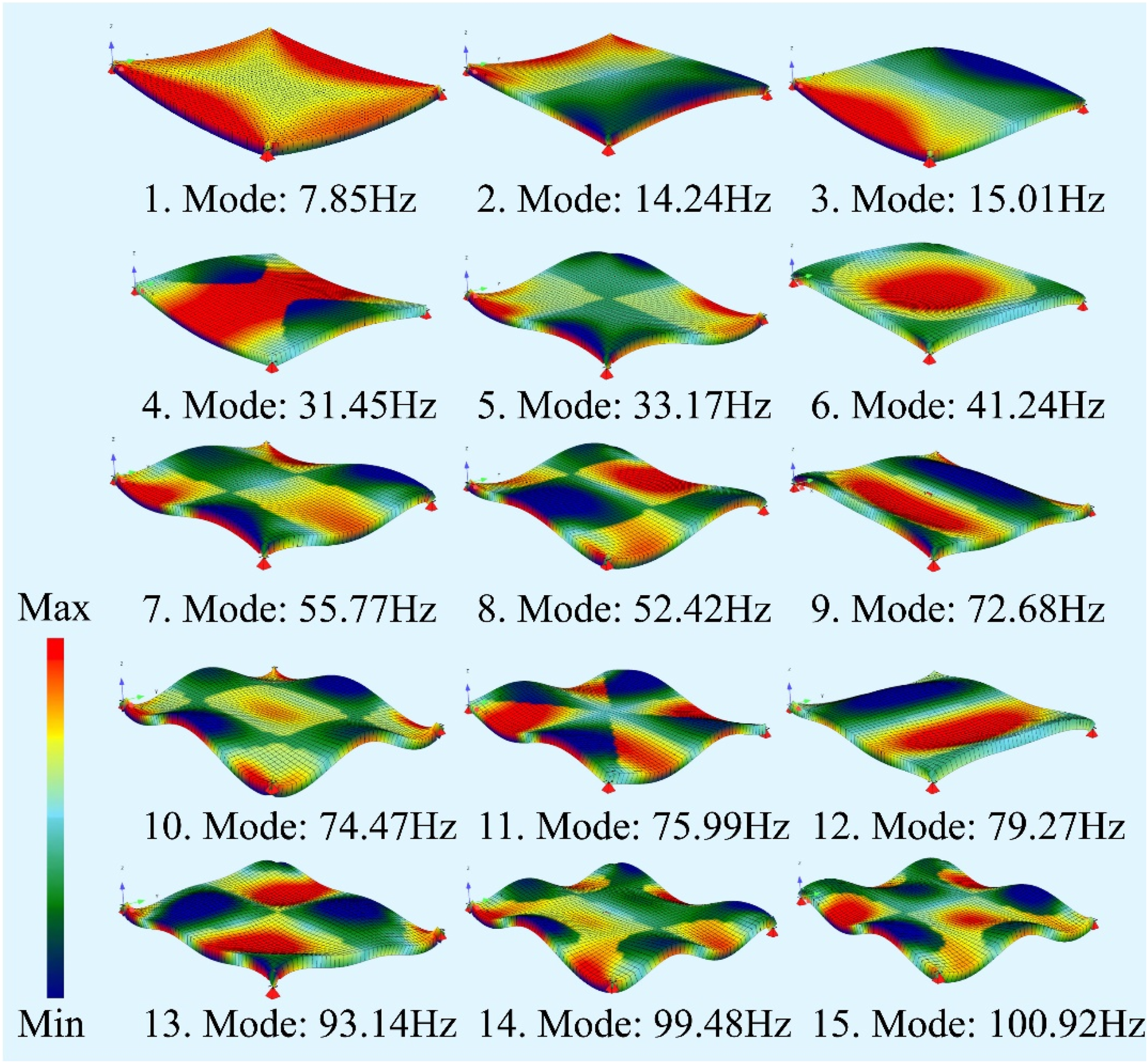
Scenario 1: Experiments
The goal of the experiments is to evaluate the accuracy and effectiveness of the numerical simulation. To achieve this, the numerical simulation results of the scaled slab system are compared with experimental data of the tested plate, both with and without the installation of a wooden tuned mass damper (TMD).
In the first step, the basic slab system is analyzed in a scaled version to evaluate the predictive design model. Following the approach of Adams,30,31 the size of the basic plate system reduces to a test plate size of 1.2 m by 1.0 m with a thickness of 0.048 m.
The scaled model is simulated similar to the initial basic slab system with the adjusted dimensions in order to define the TMD before the measurements. For better comparability, a frequency-independent damping factor of 2 % is used. The simulated first eigenfrequency of the test plate is 31 Hz. The second eigenfrequency is above 100 Hz and is hence not relevant for this investigation. To prove the concept of the wooden TMD, the first eigenfrequency of the scaled plate is selected as target value. The TMD is positioned in the area of maximum vibration deflection, which is why the center of the plate (point P1, see Figure 3) is selected for this scenario.
The required spring stiffness results from the following Equations (1) and (2)28,32
The optimum damping frequency is calculated for undamped or lightly damped systems using equation (2)
28

Bachmann 28 suggests that in practice, the mass ratio µ of a TMD to the undamped ceiling system should be between 0.020 and 0.067. In this study, a mass ratio of 0.029 was chosen, resulting in a mass of the damper of 0.82 kg for the measurements. The TMD is constructed from a cross-laminated timber (CLT) element.
Accordingly, the required spring stiffness equals 439.31 kN/m. A round timber bar with a diameter of 5 mm and a length of 550 mm serves as the spring. The timber bar is glued to the mass element and the test plate by applying wood glue. For this purpose, a 1 cm deep hole is drilled, which also measures 5 mm in diameter. Figure 8 shows the test setup of the scaled plate with the TMD attached in the center at point P1 (see Figure 3). The tested plate is simply supported at the edges. Test setup for the measurements on the scaled model with attached TMD.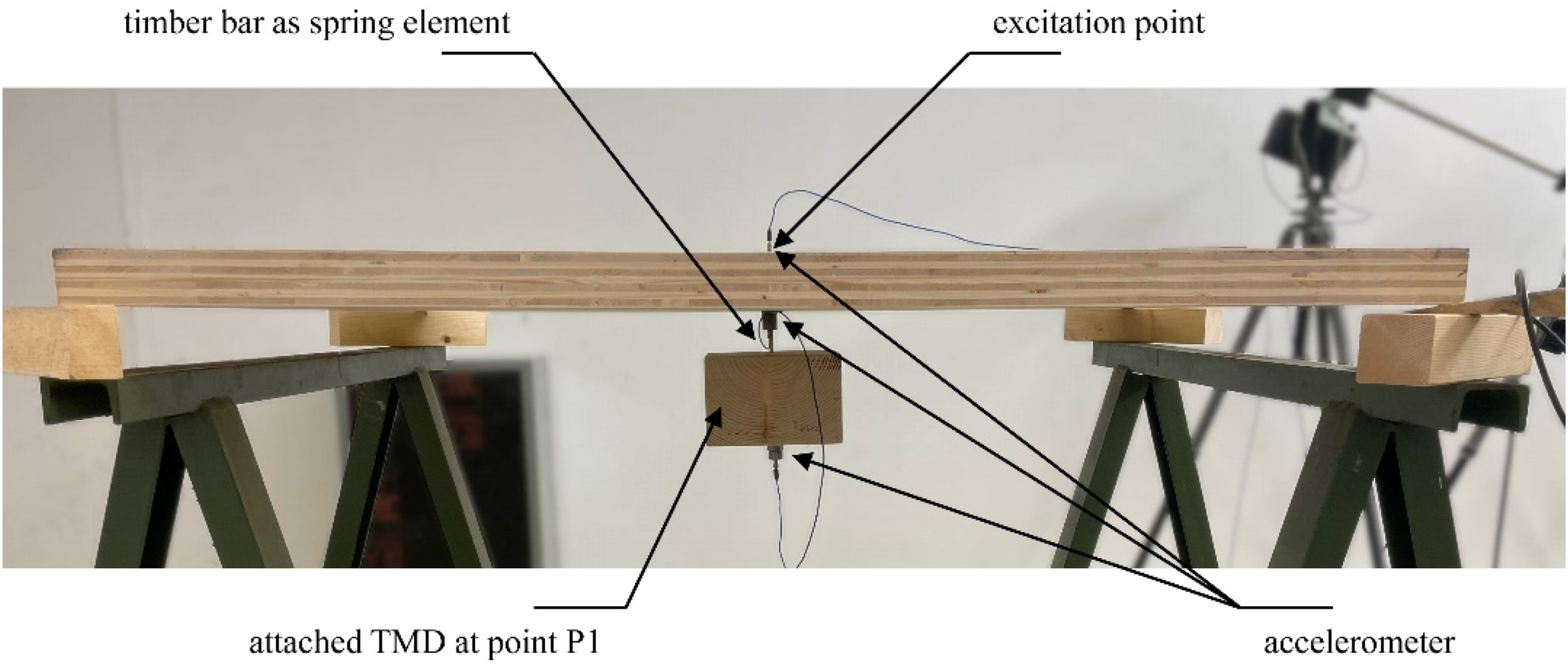
The measurements aim to determine the acoustic transmission behavior of the structure without and with a TMD. When a system is excited, it begins to vibrate and exhibits specific vibration and response behavior to the excitation depending on the material properties as well as the overall system properties. This behavior can be described in the form of transfer functions. For instance, the excitability of a structure as a result of an exciting force is defined as point mobility
The point mobility 
The point mobility evaluated at point P1, resulting from excitation by an impulse hammer, serves as the target variable of the measurement. For this purpose, force and velocity transducers are installed at point P1, located in the middle of the top of the plate, as well as on the underside of the plate and TMD.
Scenario 2: Simulation model for structural vibration damping
In this scenario, the basic slab system changes due to the attachment of a single tuned mass damper (TMD) in the center at point P1 (see Figure 3) comparable to the approach in scenario 1. For the structural vibration damping, the first eigenfrequency at 7.85 Hz (see Figure 7) is selected. In a first step, a mass-spring system is tuned to the chosen eigenfrequency of the basic system. To maintain the mass ratio of 0.029, a mass of 50 kg is chosen for the damper.
The required spring stiffness results from the Equations (1) and (2).28,32 Based on this, the optimum stiffness for the TMD is 114.62 kN/m. The tuned mass damper is applied to the slab center (point 1) where the highest deformations occur for the first eigenmode (see Figure 7).
Scenario 3: Simulation model for structural and acoustic vibration damping
In scenario 3, in addition to the TMD placed at the center of the slab, two supplementary vibration dampers are applied at different locations. The goal is to achieve combined damping of both structurally and acoustically relevant natural vibrations. Igusa and Xu 34 indicates that using multiple TMDs can be more effective than a single TMD of equal total mass. Distributing the damping across multiple TMDs allows for better targeting of various frequencies and enhances the overall vibration control performance.
As the first TMD in the center remains tuned to 7.85 Hz, the other two are tuned to 72.68 Hz. It is the 9th eigenmode, shown in Figure 7, which is within the acoustically relevant frequency range. In a further step, both passive control systems are combined and evaluated.
By using the simulation model in Simcenter 3D for the acoustic investigations, the 9th eigenmode is calculated at 76 Hz and thus deviates from the result of Sofistik by around 4 Hz. The mode shape remains identical and is shown in Figure 9 illustrating the two points with the highest deformation. 9th eigenmode and mode shape of the basic slab system calculated with Siemens Simcenter 3D.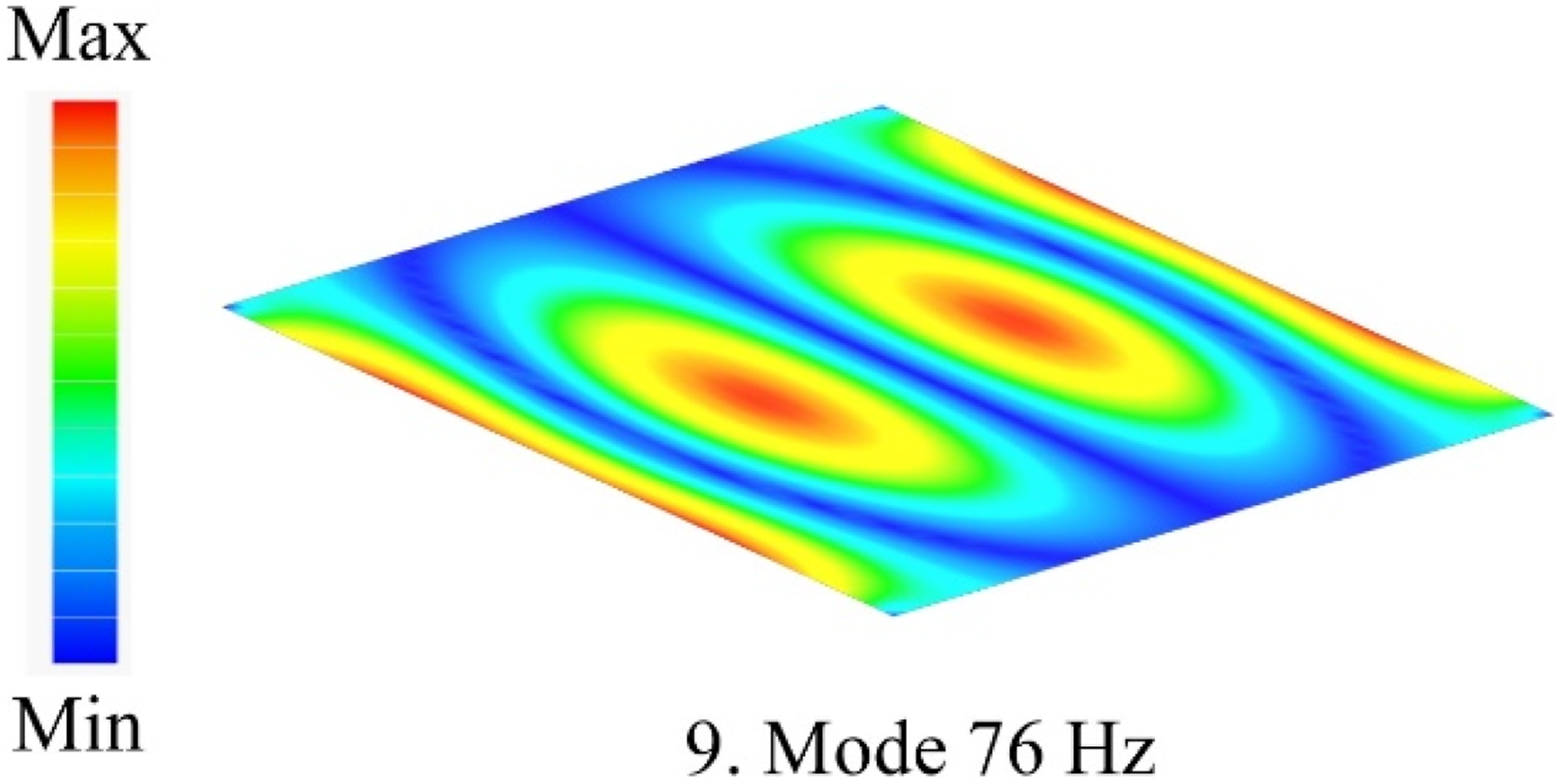
The TMD in the center of the slab remains the same as in scenario 2, weighing 50 kg with a spring stiffness of 114.62 kN/m. The two new TMDs are dimensioned based on equations (1) and (2) using 76 Hz as target value. To maintain the total additional mass, the two new TMDs also have a combined weight of 50 kg, with each weighing 25 kg. Based on this, the stiffness of the corresponding spring is calculated as 5718.69 kN/m. This results in a system consisting of the slab system and one TMD (50 kg) in the center as well as two TMDs (25 kg each) placed at the points of highest deformation for the respective eigenmode at 76 Hz (P2 and P3). The coordinates of these points are given by (2.5 m, 1.2 m) for P2 and (2.5 m, 2.8 m) for P3, as shown in Figure 3. As mentioned above, a damping ratio of 2% 29 is applied.
Results
Scenario 1: Experiments
The excitability of a structure is quantified by the point mobility 
Figure 10 illustrates the real component of the point mobility Re{
Real component of the point mobility Y of the scaled slab without (left) and with TMD (right) in the Simcenter 3D simulation model and the measurements, evaluated at point P1.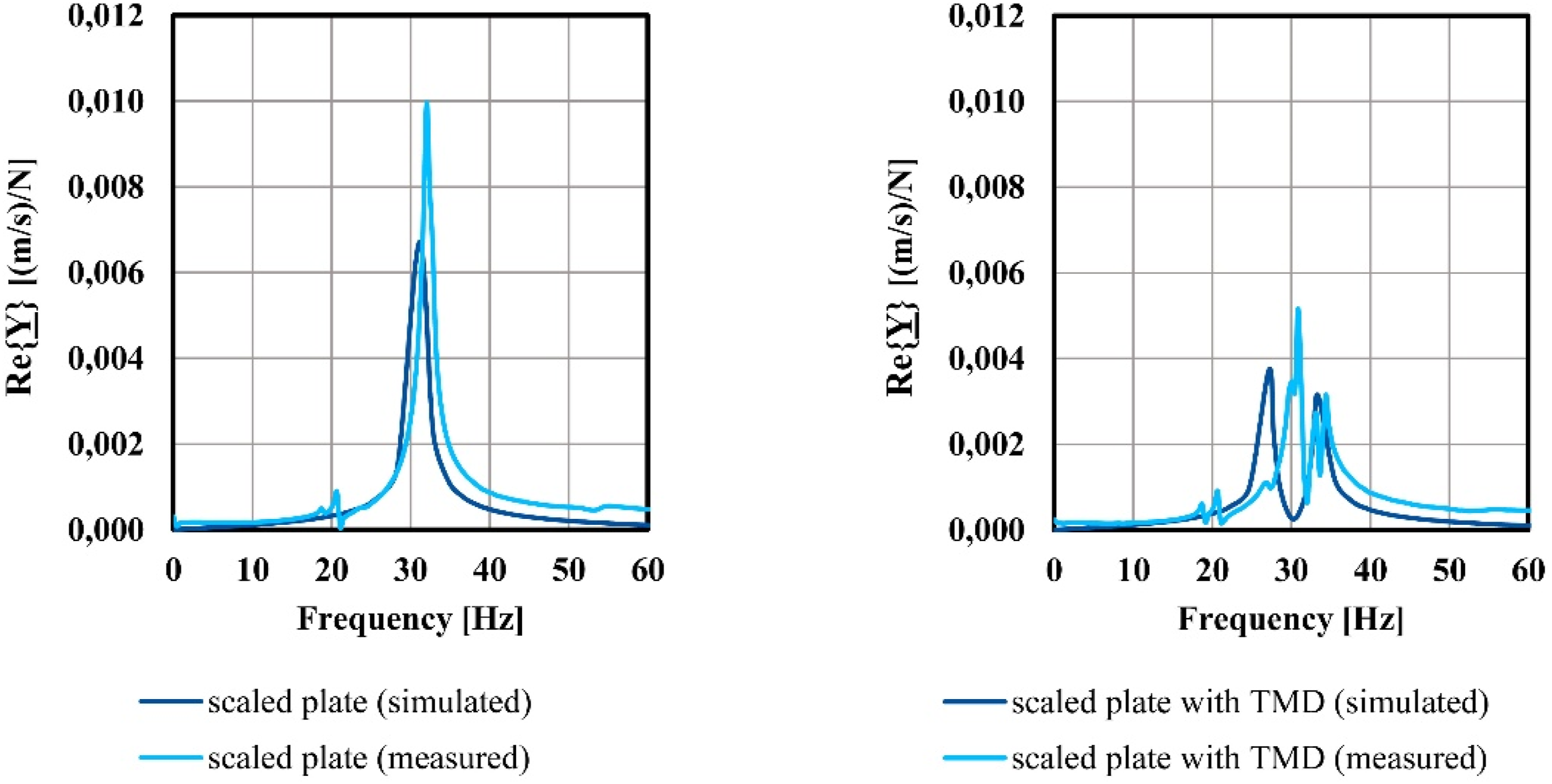
A comparison of the measurement and simulation data of the test object in Figure 10 (left) shows that the results for the first natural frequency at approximately 30 Hz are almost identical. Differences arise in the amplitude. This indicates that the velocity of the slab on the test object is higher than in the calculation. The differences may be attributable to deviations in the material parameters between the actual measurement object and the calculation parameters used. Furthermore, the energy applied within the frequency range varies due to the material properties of the structure. Attaching a TMD to the structure changes the vibration behavior. As expected, this is evident from the results in Figure 10 (right). The point mobility curve shows the typical double deflections directly below and above the eigenfrequency of the initial scaled slab to be damped. Both the simulation and measurement results show that the amplitude of the first eigenmode is significantly reduced. By attaching a TMD, the simulated amplitude is reduced by 44%, while it is reduced by 48% in the measurements.
Scenario 2: Structural vibration damping
The structural vibration between 0 Hz and 20 Hz is considered in the Servicability Limit State (SLS) of the Eurocode 516. Hamm et al.
5
provides an in depth description of the checks according to the vibration behavior (see Figure 11).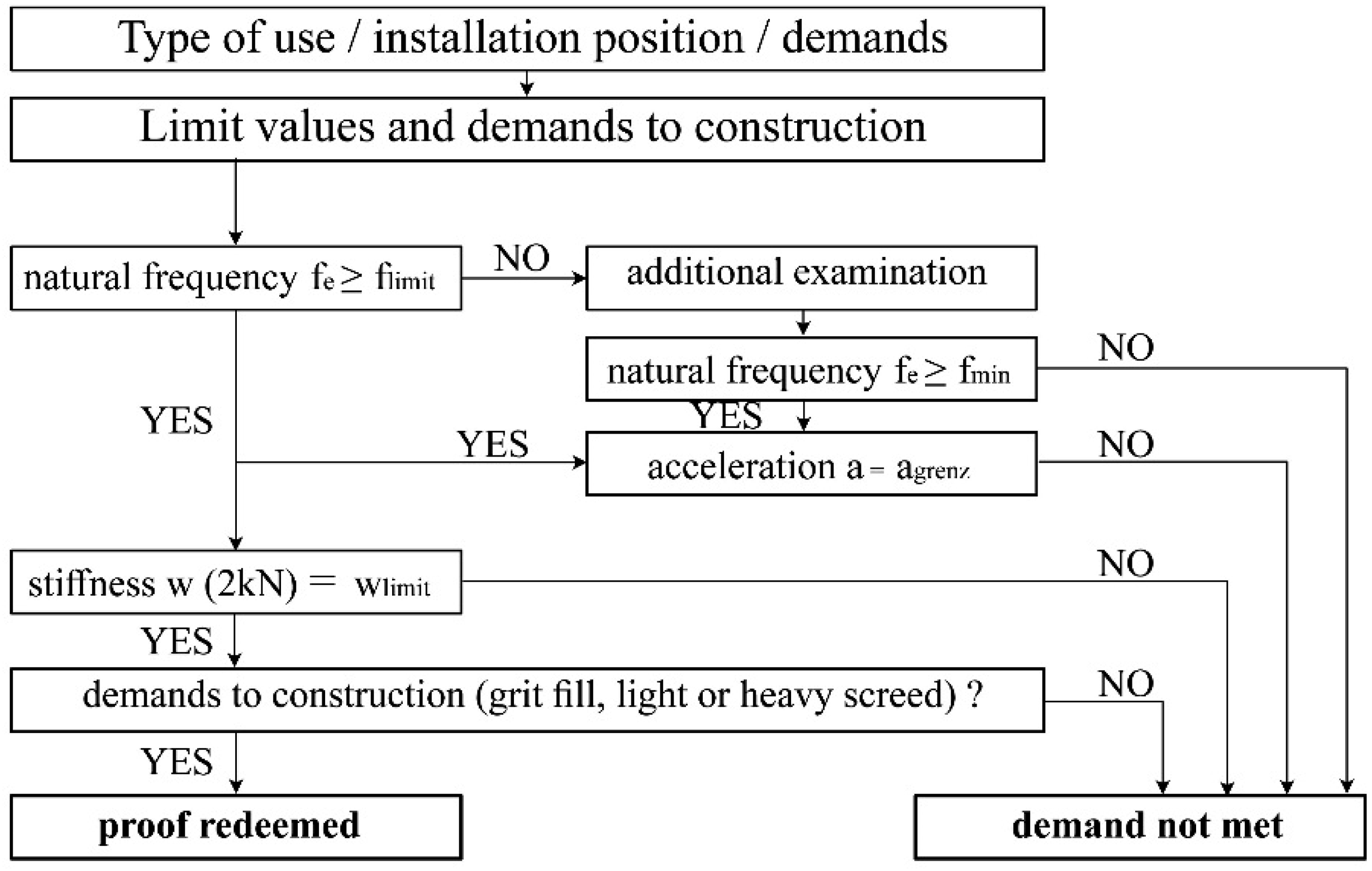
Limit values for natural frequency and deformation according to Hamm et al. 10

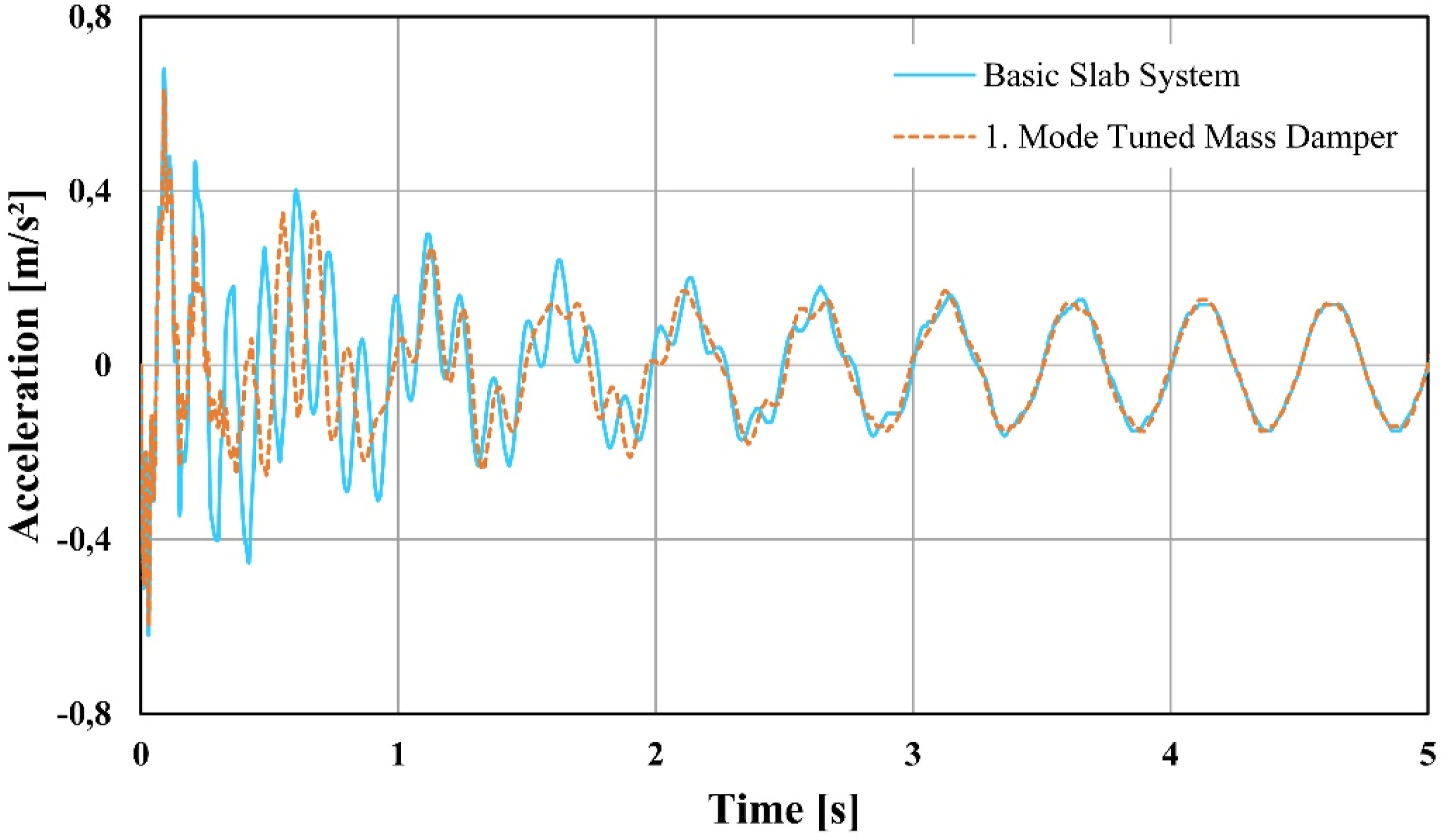
The attached TMD changes the acceleration of the slab for LC200 (see Figure 12) and LC300 (see Figure 13). During the heel drop (LC200), the system with the TMD is accelerated less than the basic slab system and a phase change becomes visible, particularly after 0.5 s. This means that the TMD becomes active, vibrates and dissipates the acceleration energy from the overall system. In LC300, the initial acceleration is damped by the TMD similarly to LC200. However, due to the sustained excitation, the accelerations of both systems are aligned after 5 s. LC200: Acceleration of the slab center point (point P1) in [m/s²], calculated with Sofistik. LC300: Acceleration of the slab center point (point P1), calculated with Sofistik.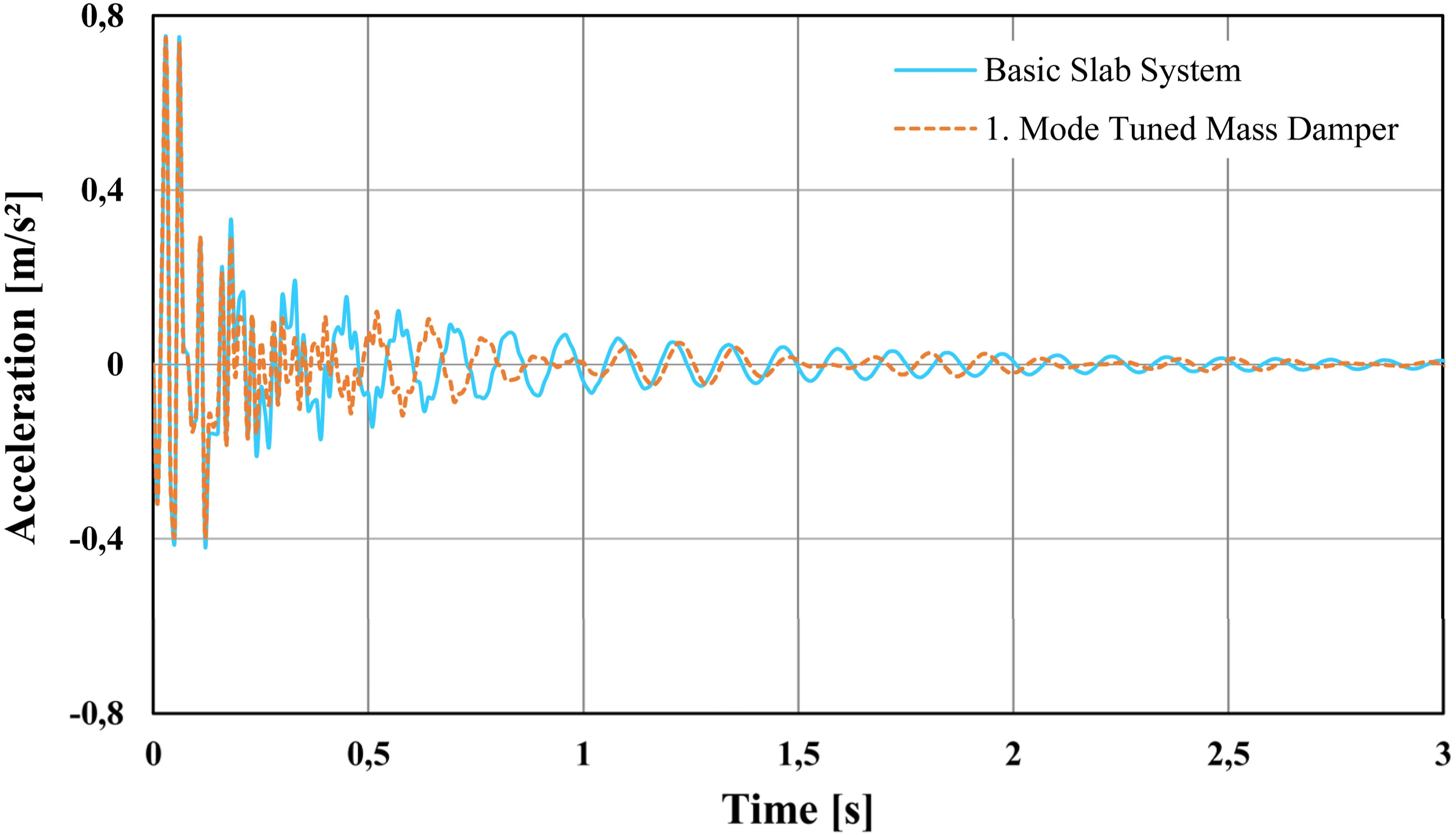
The acceleration as a function of the excited frequency for a 2 kN point load applied at the slab center is shown in Figure 14. The typical effect of the TMD becomes visible. The first eigenfrequency of the basic slab system is damped and therefore two new eigenfrequencies occur with a lower overall acceleration. The TMD has minimal effect on eigenfrequencies higher than 40 Hz. Acceleration based on frequency at the slab center point (point P1), calculated with Sofistik.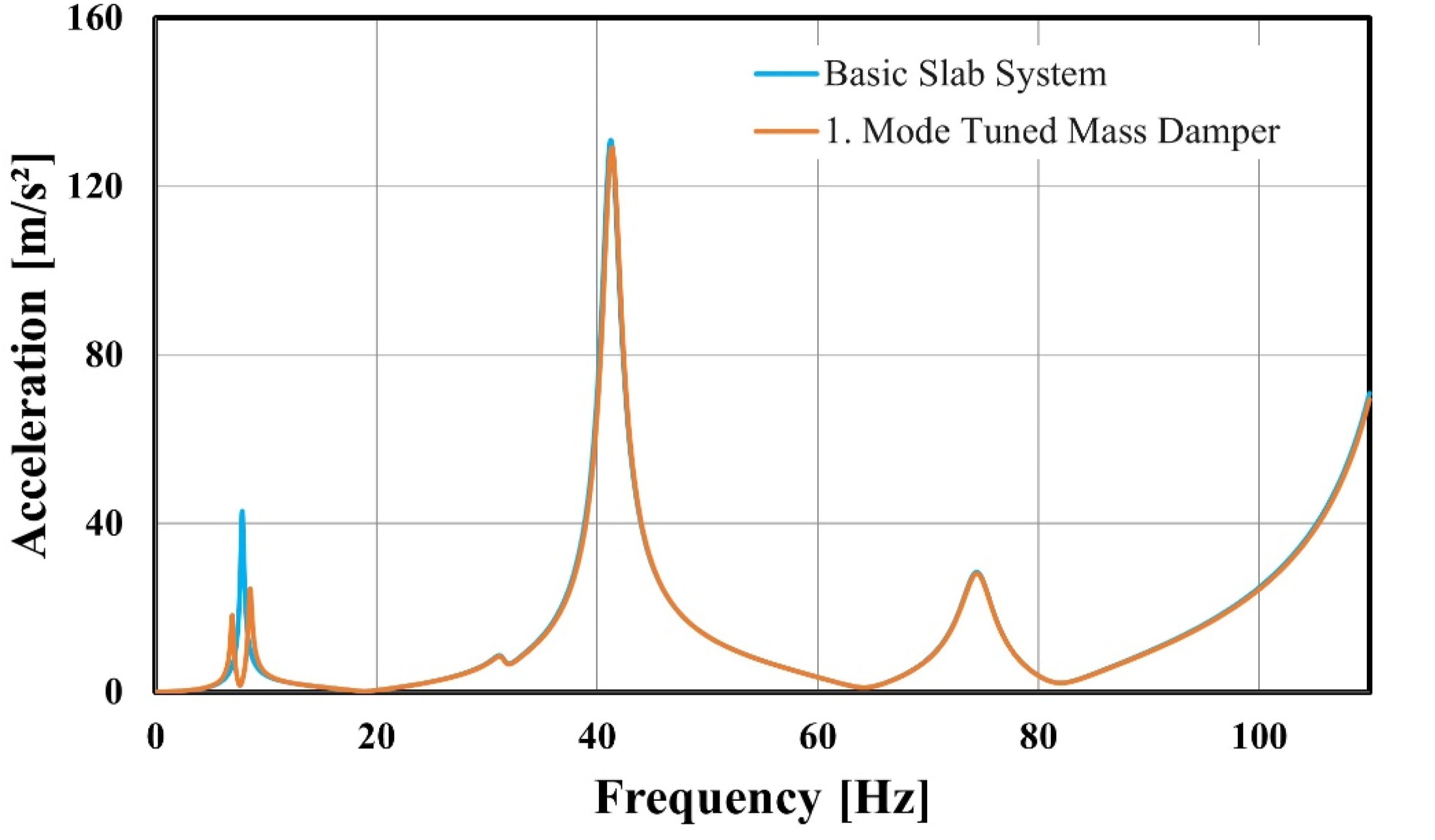
Scenario 3: Structural and acoustic simulation damping
The acoustic analysis encompasses the frequencies in the range between 50 Hz and 100 Hz being relevant for noise disturbance in multi-story timber buildings. This is due to the excitation of structure-borne sound resulting from forces, such as those generated by machines and people walking, which induce vibrations in the structure.
Figure 15 shows the evaluated real component of the point mobility Real component of the point mobility Y of the investigated slab with three TMDs, evaluated at the center point (point P1), calculated with Simcenter 3D.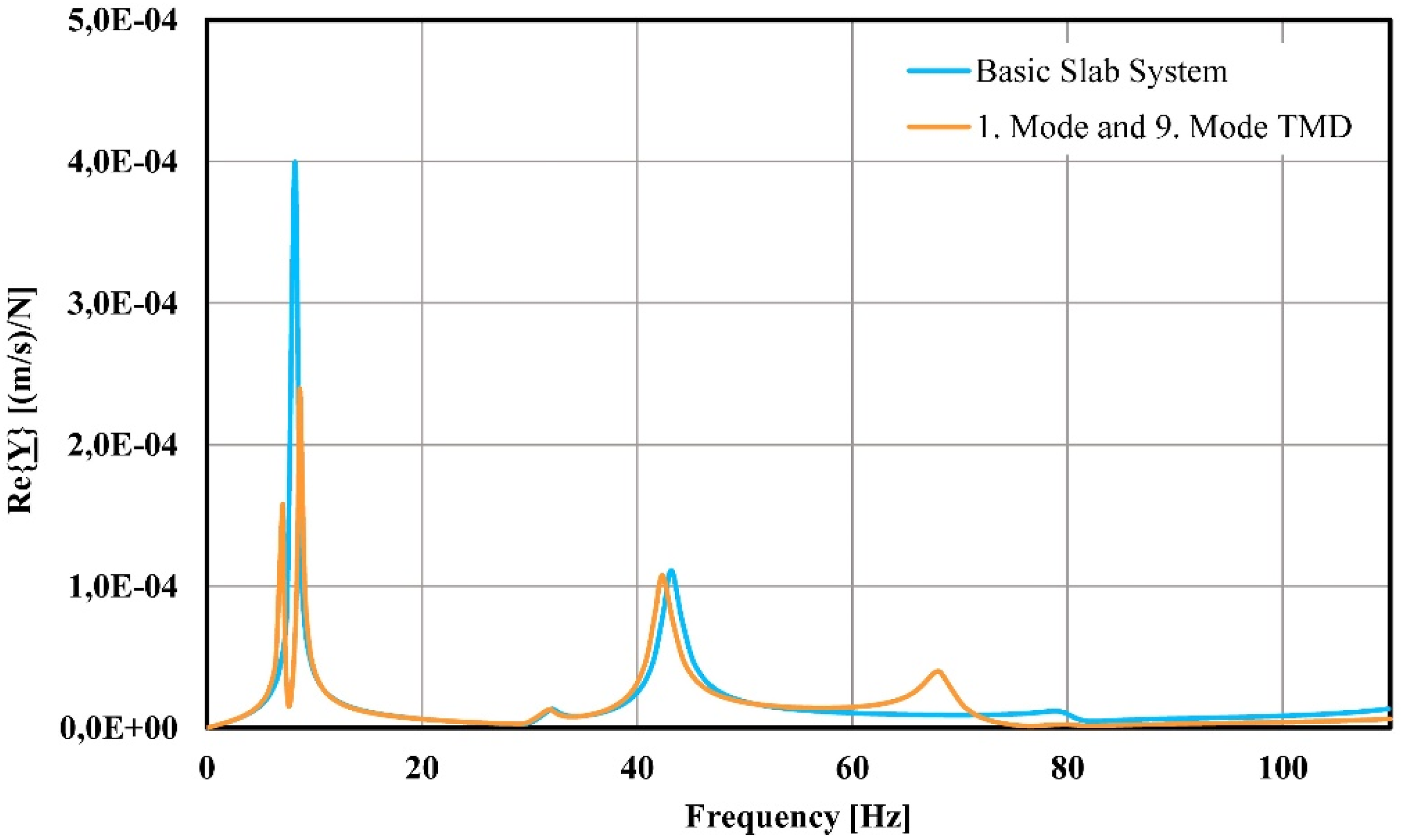
The acoustic aspects are shown in terms of the velocity level L
ν
in Figure 16, with the simulated velocity being converted into a level value using the reference value of ν0 = 5,0 × 10⁻⁸ [m/s] and Equation (5).
23
Velocity level of the slab without and with three TMDs, evaluated at point P1, calculated with Simcenter 3D. The eigenmodes of the system with TMD at 68 Hz and 80 Hz are plotted.
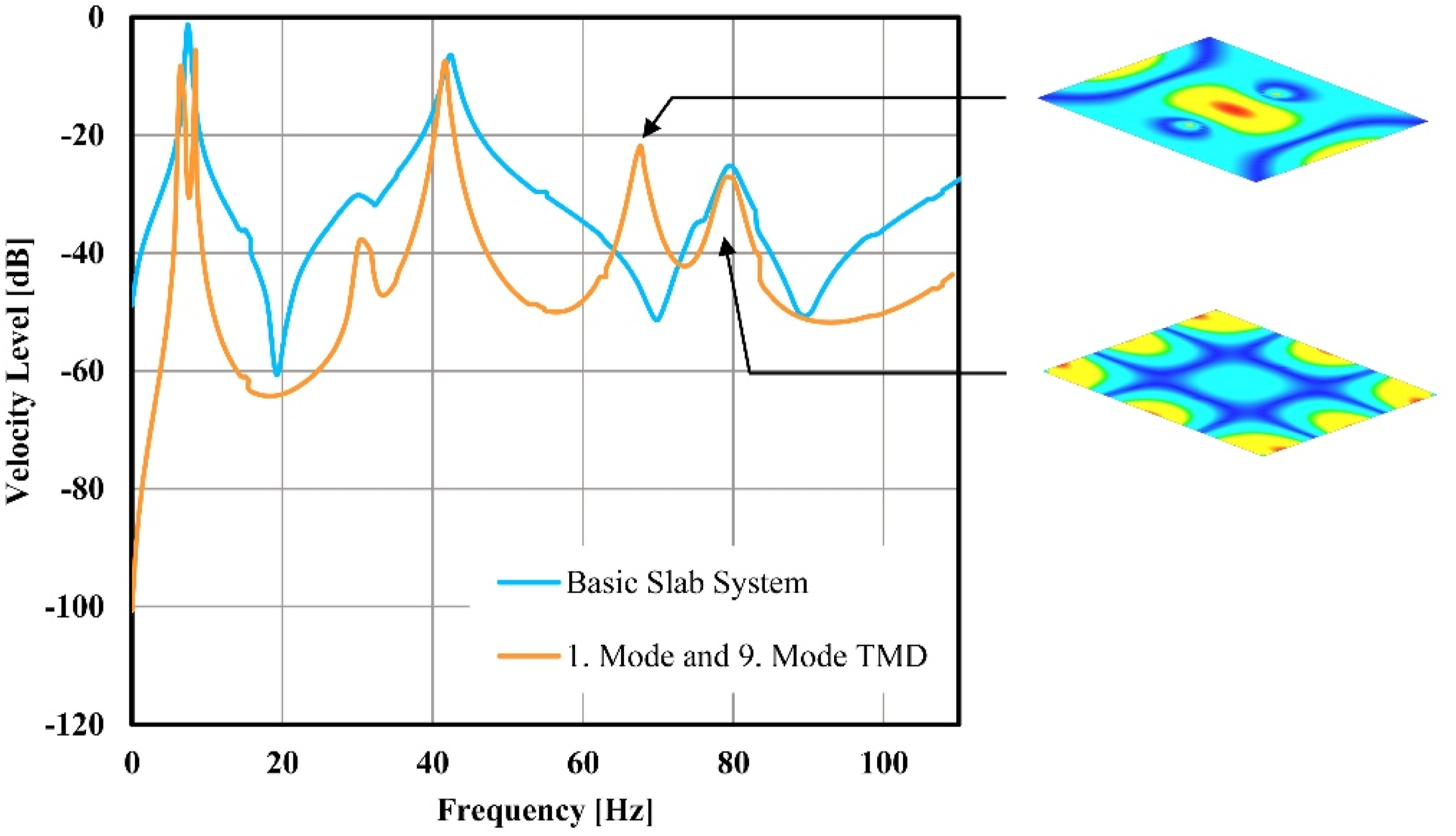
The effect of the TMD appears with the assignment of the eigenmodes at 68 Hz and 80 Hz of the slab system with three attached TMDs. This suggests the presence of an eigenmode at 68 Hz resulting from a shift from 76 Hz to 68 Hz. The mode shape at 68 Hz demonstrates an activity of the TMDs at the attachment points P1, P2, and P3. However, the initial target frequency of 76 Hz remains undetectable in the shown curves. Figure 9 illustrates that the nodal points of the 9th eigenmode are centrally aligned and therefore not perceptible in analysis of the center point P1. The displacement at the nodal points of a structure during oscillation is minimal or equal to zero.
Discussion
Interdisciplinary methods using computer-aided design and calculation tools can lead to more efficient structures in terms of statics and acoustics in buildings. Based on the presented investigations in this paper, passive vibration control systems integrated into the structure, such as a tuned mass damper (TMD), can influence both structural and acoustic performance. From a structural point of view, these systems primarily affect serviceability. In the course of this investigation, however, it was found that the installation of the additional mass-spring element with the selected dimensioning has only a minor effect on the structural performance.
Although the basic slab system fulfills the requirements for frequency and stiffness according to EC 5 16 , the acceleration of the slab is higher than 0.1 m/s2. The attached TMD for the first eigenmode is not sufficiently reducing the acceleration to get below the criterion. One method would be to increase the stiffness of the spring of the TMD system. The higher the stiffness, the greater the reduction of the acceleration. Alternatively, the mass of the TMD can also be increased, allowing more energy to be absorbed by the mass-spring system. However, this contradicts the requirements for lightweight designs. It should be noted that the effect is local and only reduces the acceleration in the center of the slab (point P1) below 0.1 m/s2.
In addition, adjusting the column spacing and thus the span is a possibility of influencing the first eigenfrequency and the acceleration of the system. This also changes the overall vibration behavior of the slab system and would also affect the performance of such tuned and passive damping systems. Interdependencies of this kind can be taken into account as part of the interdisciplinary design.
In the acoustic context, the experimental results have demonstrated that the point mobility of the structure can be effectively altered by the installation of a TMD and thus also the velocity at the surface of the structure. Particularly in the low-frequency range, there are significant differences between the systems with and without TMD. Similar to the structural aspects, it can be expected that increasing the mass or enhancing the spring stiffness provides better results. It should also be noted that the effectiveness of vibration dampers is limited to predetermined frequencies which necessitates the use of multiple TMDs with different tuning parameters.
A thorough parameter analysis is crucial for optimizing the performance and effectiveness of TMDs. This analysis should examine various factors, including the materials, the construction, the placement of TMDs, as well as their connections. By investigating these parameters, it is possible to modify TMDs for improved performance. For instance, using multiple TMDs instead of a single TMD can yield better results if they are optimally designed and positioned.
Key parameters for consideration in this analysis include the mass, spring stiffness and damping characteristics of the TMDs. Adjusting these parameters can have a significant impact on the system’s ability to effectively control vibrations. For practical applications, it is also important to consider the total mass of the overall system, as this can affect the design of the TMDs.
In terms of application, damping plays a critical role not only through the choice of materials but also from a construction perspective. For example, friction dampers have been shown to effectively control vibrations in specific applications, while inerters have been utilized to optimize TMD performance under seismic excitation. These technologies are discussed in detail in literature such as Pisal and Jangid, 35 Prakash and Jangid 36 as well as Elias and Matsagar 20 which outline various advancements and applications of passive TMDs. The interdisciplinary analysis methods presented in this paper are designed to be able to consider a range of damping strategies, including those described in the literature, to improve both structural and acoustic performance. By incorporating findings from these studies, the interdisciplinary approach presented can be refined and extended to effectively address complex vibration engineering challenges.
Constructive constraints, such as the optimal placement of TMDs within the structure, should also be evaluated. Proper placement is crucial for maximizing the damping effect and ensuring that the TMDs address the points of highest deformation effectively.
From an ecological perspective, the choice of materials and the environmental impact of manufacturing and disposing should be assessed. Economically, the cost-effectiveness of different TMD configurations and materials needs to be evaluated to ensure that the enhancements are both affordable and beneficial in the long term.
Nevertheless, this research work underlines the possibility of changing the structural behavior by using wooden tuned mass dampers. If designed correctly, the inherent bending vibrations of systems have the potential to be influenced, resulting in an improvement in acoustic quality through reduced sound radiation.
Conclusion
The investigated timber construction system can achieve improved vibration behavior through the use of acoustically and structurally tuned and wooden mass damper elements employing interdisciplinary design methods and curated feedback loops. The application of tuned mass dampers (TMDs) offers an option to address the challenges of both disciplines, leading to a reduction in deflection at the center of the slab system and an improvement in structure-borne and low-frequency sound transmission. This enhancement can also contribute to increased serviceability. Timber building systems therefore offer the potential to achieve a substantial level of sound insulation by substituting the use of mineral materials with timber.
By performing a parameter analysis, the effect on the overall structural performance can be optimized, allowing precise adjustment of TMD parameters and configurations. This approach is crucial for interdisciplinary design as it integrates acoustic and structural considerations simultaneously. The work presented demonstrates that vibration damping can be effectively addressed in both disciplines to ensure a cohesive and comprehensive design solution. Comprehensive validation of these models, along with simulations and evaluations of material parameters, should be considered for targeted improvements to the overall structure in upcoming research. Ensuring the accuracy of these models will increase the reliability of the TMD system and contribute to its effectiveness in practical applications.
The interdisciplinary workflow (co-design) introduced in this study integrates structural and acoustic design into a unified process, providing significant advantages for multi-story timber buildings with long spans. This approach can be further developed and adapted to meet specific design needs, highlighting the potential for innovative solutions in timber construction. By combining both disciplines, the workflow ensures a comprehensive and efficient design strategy that enhances the overall performance of timber structures.
The co-design workflow for each project needs to be set-up in early-design phases to allow for informed design decisions. As part of this investigation, structural and acoustic requirements have been examined in detail as a part of the broader co-design concept which also includes architectural, fabrication and assembly requirements. The exchange of all disciplines needs to be solved strategically for curated (in person/between experts of different disciplines) and computational feedback (exchange of data between software). This investigation serves as an initial step toward understanding the structural and acoustic requirements, including the necessary input data, limitations, and verification processes. Further research is needed to improve computational methods for better data exchange between structural and acoustic models. This supports to avoid common errors in analogous data transfer as well as to identify discrepancies between the results of different calculation methods. The required input data should be extracted from the architectural model that needs to include all relevant information such as geometrical data but also material properties and boundary conditions. This represents an essential part of the research questions in the further course of the research project Integrative Computational Design and Construction (IntCDC).
Footnotes
Acknowledgments
The student Annika Nolte was involved in the presented investigations as part of her master’s thesis. Furthermore, the authors would like to thank Ms Rebecca Thierer from the Institute for Structural Mechanics (IBB) at the University of Stuttgart as well as Bernd Kaltbeitzel, Moritz Späh and Yohko Aoki from the Fraunhofer IBP for the valuable exchange on this topic.
Declaration of conflicting interests
The author(s) declared no potential conflicts of interest with respect to the research, authorship, and/or publication of this article.
Funding
The author(s) disclosed receipt of the following financial support for the research, authorship, and/or publication of this article: This work was supported by the Deutsche Forschungsgemeinschaft (DFG, German Research Foundation) under Germany´s Excellence Strategy – 390831618.
