




Abstract
In view of the great importance of dynamical behavior prediction of nanostructures in contact with fluid and their vast range of applications in biomedical engineering, aerospace, etc., in this research, the free vibration of a Nanoscale Euler-Bernoulli rotating beam coupled with incompressible viscous fluid is studied. Small-scale effects are applied by using nonlocal elasticity theory. Using the Navier-Stokes relation, the interaction forces between the fluid and nanobeam are obtained. Governing differential equations have been solved by Galerkin method and the system vibrations frequency response has been obtained for clamped-free boundary condition. Based on the results of this research, nonlocal elasticity has a different effect on different vibration modes. The frequency of the nanobeam coupled with the fluid quickly increases when applying this theory, and the presence of fluid reduces the natural frequencies.
Keywords
Introduction
The vibrational study of rotating structures and predicting their motion have been at the center of attention of researches due to their vast range of applications. The vibrational model of rotating nanobeam, for example, is used in case of rotating blades of nano-turbines and compressors.
With the advent of technology, the researchers have tried to analyze nanoscale mechanical structures. The experiments have shown that the theory of continuum mechanics is incapable of analyzing the small-scale mechanical problems.
Eringen 1 concluded that the amount of strain developed at a certain point depends on the stress of every other point in the material. In recent years, the theory of nonlocal elasticity has been used to solve a large number of problems. Concurrent with the introduction of other theories in this area, more comprehensive studies, on cases such as the vibrations of the rotating nanobeams have been conducted. Reddy 2 studied the bending, buckling, and vibrations of four distinct models of beams, using the nonlocal elasticity theory. The used beam models in his study included Euler, Timoshenko, Reddy, and Levinson beams. Pradhan 3 studied the vibrations of a rotating nanocantilever by using the nonlocal elasticity theory and differential quadrature method (DQM). It was found that with increasing angular velocity of nanobeams, their natural frequencies also increase. While considering the effects of transverse shear deformation and rotational inertia, Narendar 4 studied the vibrations of rotating nanobeams using the DQM method and nonlocal elasticity theory. Pourasghar 5 studied the vibrations of a nonlinear beam under axial load, using the DQM method. Ebrahimi 6 studied the thermal effects on the wave propagation of rotating nanobeams using the strain gradient and the nonlocal stresses. Hosseini Hashemi 7 analyzed the vibrations of layered rotating nanobeams using the nonlinear elasticity theory and DTM method. Narandar 8 investigated the vibrations of rotating carbon nanotubes, with the assumption of Euler-Bernoulli beam model and using nonlocal stress and spectral resolution methods. Ebrahimi 9 studied the transverse vibrations of the rotating nanobeams with initial residual stresses. He considered the influence of various factors on natural frequencies, including hub radius, rotational velocity, nonlocal parameters, and initial residual stress. Murmu 10 compared the results of the two aforementioned methods using the DQM procedure, while considering a model similar to that of Ebrahimi. 9
Ebrahimi 11 studied the wave propagation in a rotating nanobeam with a non-uniform cross-section. Shafiei 12 reported the vibrational aspect of rotating nanobeams under thermal stresses, using the nonlocal elasticity theory and DQM method. They also analyzed the vibrations of rotating nanobeams using other size-dependent theories, such as couple stress theory 13 and surface and interface stress effects. 14 Safarabadi 15 investigated the effects of boundary conditions and surface elasticity constants on natural frequencies. He did so by studying the vibrations of rotating nanobeams with regards to the surface effects of angular velocity changes. Ghadiri 16 examined the vibrations of a rotating nanobeam made of graded materials using nonlocal theories and surface effects and compared the results with Benchmark. The use of Timoshenko beam model for analyzing rotating nanobeams while considering thermal and surface effects by Ghadiri 17 revealed that increasing the effect of thermal and surface factors results in an increase in the natural frequencies of vibrations. The study of transverse vibrations of a rotating microbeam with a variable cross-section made from graded materials using couple stress theory was conducted by Shafiei, 18 and the results were compared with those of pure and ceramic metals. Shafiei 19 also studied the nonlinear vibrations of porous microbeams made of functionally graded materials using couple stress theory.
These days, there are a multitude of applications for nanostructures. To cite an example, nanosensors are widely used in electromechanical and aerospace industries. The analysis of structure coupled with fluid has indicated that the dynamical behavior of systems in contact with fluid differs from that of in vacuum.
By virtue of an analytical solution, Chen 20 explored the free vibrations of a cylindrical beam immersed in an ideal fluid and calculated its natural frequencies and mode shapes.
The influence of fluid viscosity on the vibrational behavior of a beam submerged in fluid was analyzed by Sader. 21 Thereafter, Green and Sader 22 developed Sader’s model [], taking into account the proximity of a solid surface from the lower side thereof, and examined the resultant structure. Weiss et al. 23 explored the vibrational behavior of a clamped-clamped beam in compressible fluid to evaluate the effect of fluid compressibility on system’s behavior.
Once carbon nanotubes were discovered in 1991, 24 researchers started to study the dynamical behavior of these structures while conveying fluid. In order to analyze the fluid flow inside carbon nanotubes, Tuzun et al. 25 used the molecular dynamic simulation. They examined the impact of the tube’s dimensions and fluid density of the dynamical behavior of nanotubes. Yoon et al. 26 explored the vibrations and stability of carbon nanotubes carrying fluid. With the assumption of viscous fluid in a nanotube, Wang and Ni, Q 27 proved that the fluid viscosity does not have a significant influence on the vibrations of fluid-carrying nanotubes and may be neglected.
The dynamics of the interaction between a Kirchhoff nanoplate and its surrounding viscous fluid were studied by Hosseini-Hashemi et al. 28 The nonlocal elasticity theory was used to consider the effect of the small-scale parameter in the equation of motion. Furthermore, different viscous fluids with various aspect ratios were modeled to examine the effects of fluid viscosity and density on the behavior of the structure. The reduction of the nanoplate natural frequencies when in contact with fluid was indicated. It was also shown that the rise of the nonlocal parameter increases the effect of fluid on the system vibrations.
Ahmadi Arpanahi et al. 29 analyzed the nonlocal surface energy effect on the free vibrations of a nanoplate in contact with an incompressible fluid from its upper surface. They employed the nonlocal continuum theory and Gurtin-Murdoch elasticity theory to investigate the impact of size-dependency and surface energy effect on the structure’s dynamic behavior. They indicated that it was essential to consider the influence of size-dependency and surface energy in the mathematical formulation to calculate the system’s natural frequencies accurately.
Khorshidi et al. 30 explored the hydroelastic vibrations of sandwich micro-plates interacting with sloshing liquid. They assumed the liquid to be ideal and employed the continuity equation to obtain the liquid velocity potential associated with bulging and sloshing modes. Besides, after obtaining kinetic and potential energies of the micro-plate and liquid, they utilized the Rayleigh-Ritz approach to determine the system’s vibrational behavior.
The dynamic behavior of an axially moving viscoelastic plate immersed in an ideal liquid was investigated by Tang et al. 31 In order to convert the governing equation into matrix form, the Galerkin method was utilized. They examined the effect of the truncation order number and the immersion depth in the fluid on the first four order nature frequencies. Their results indicated the gradual decrease of natural frequencies of the system with the increment of the truncation order number or the immersion depth.
Based on the first-order shear deformation theory, Wu et al. 32 studied the free vibrations of functionally graded graphene nanocomposite beams partially in contact with fluid based on the first-order shear deformation theory. The variable separation method was used to obtain fluid velocity potential and hydrodynamic loading. Solving the governing equations showed the significantly decreasing influence of the beam-fluid interaction on the fundamental frequency.
In this research, due to the importance of analyzing small-scale rotating structures in contact with fluid, the vibrations of a rotating nano beam placed in a viscous and incompressible fluid environment have been studied.
Formulation and mathematical modeling
FSI modeling
A thin rotating beam placed at the bottom of a container while interacting with viscous fluid through its upper surface is demonstrated in Figure 1. The side walls of the fluid container are assumed to be rigid with a solid layer as their cover. The following are the parameters illustrated in Figure 1: Rotating beam placed at the bottom of fluid medium.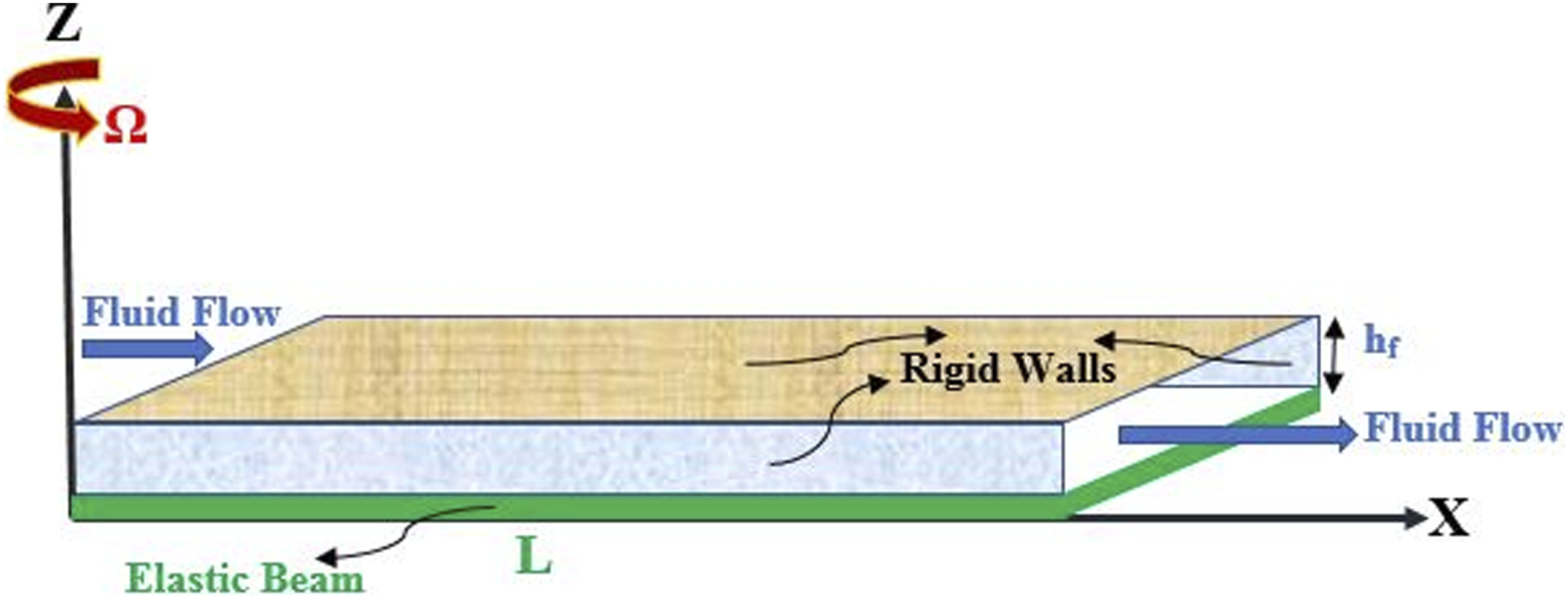
v
x
, v
y
, and v
w
indicate the velocity components along the X, Y, and Z axes of the Cartesian coordinates system, respectively. a, b, and h represent the length, width, and thickness of the beam, respectively. In addition, hf is the depth of the fluid on the rotating beam. Assuming that 𝑤0 (𝑥, 𝑦; 𝑡) signifies the displacement component of any material point located on the middle plane of the nanobeam along the Z-axis, differentiating the displacement along the Z direction yields


The Navier-Stokes relation
14
along the Z direction can be written as

By expanding the delta operator in the above equation, one can rewrite the Navier-Stokes relation in the following form,

By using the Euler-Bernoulli beam assumptions for the beam in question, one can simplify equation (5) as,

As a result, the velocity of the beam in the Z direction can be written as,

A differentiation results in,

By benefiting from the stated simplifications in above equations, it can be written that:


Considering

By introducing equations (8) and (10) in equation (5), the pressure gradient applied to the beam surface form the fluid is obtained as:

The fluid force imposed on the beam can be obtained by multiplying the equation (11) at the fluid height (

The nonlocal elasticity model
Using the theory of nonlocal elasticity, the relation between the material’s stress and strain could be written as follows:

The model studied in this research consists of a cantilever beam of length L, that is connected to a rigid hub of radius r, at the point O. The system, as shown in Figure 2, rotates about the central axis of the hub in a clockwise direction with constant velocity. Schematic of a rotating nano beam.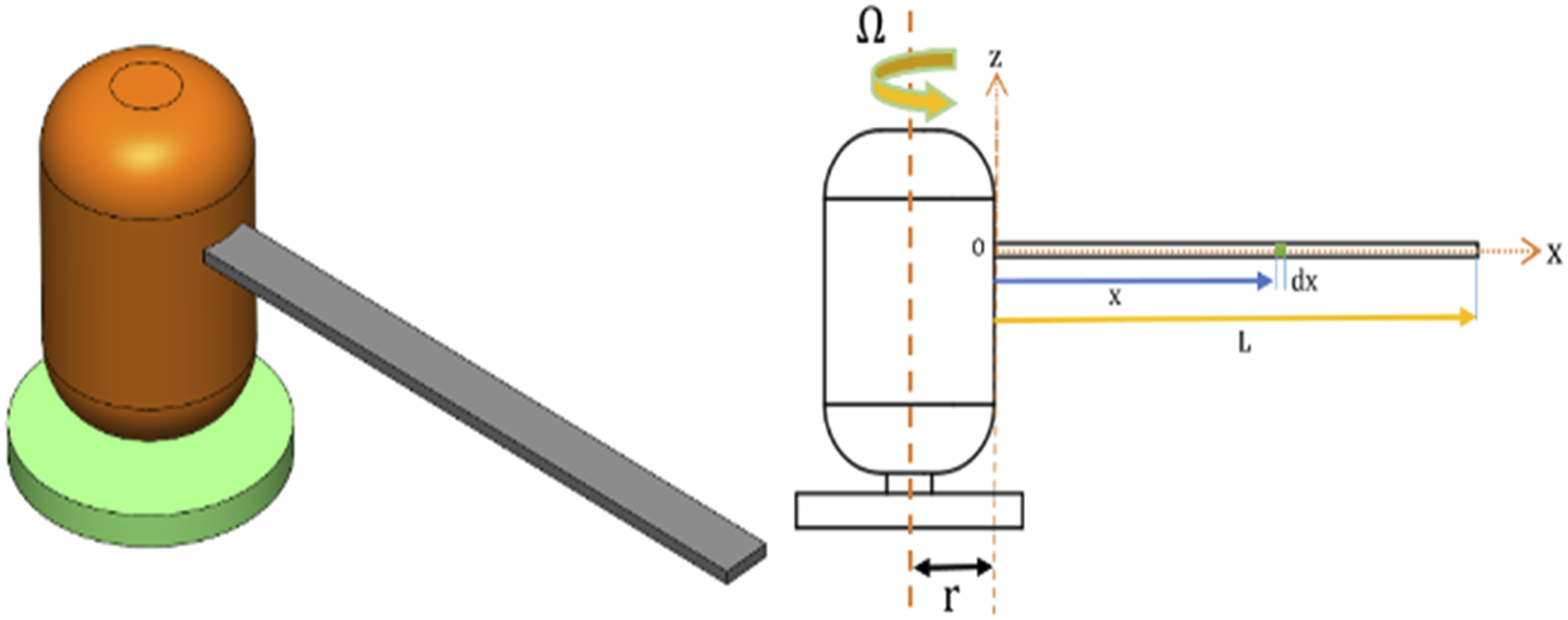
In order to derive the governing equation of the system, and due to the one-dimensional nature of the problem and the beam being thin, the Euler- Bernoulli beam model was used. Furthermore, the effects of shear are not considered and the transverse displacement of the beam is assumed to be negligible.
Consequently, the moment-stress equation for the Euler beam can be expressed as follows:


Then, using the Euler-Lagrange equation that is obtained from the Euler-Bernoulli theory, and considering the tensile centrifugal force as a result of beam rotation, equation (16) is obtained:


By replacing equation (16) in (15), equation (18) is derived, which in turn can be substituted in equation (16), yielding the vibrational equation of rotating cantilever beam, as shown in equation (19)


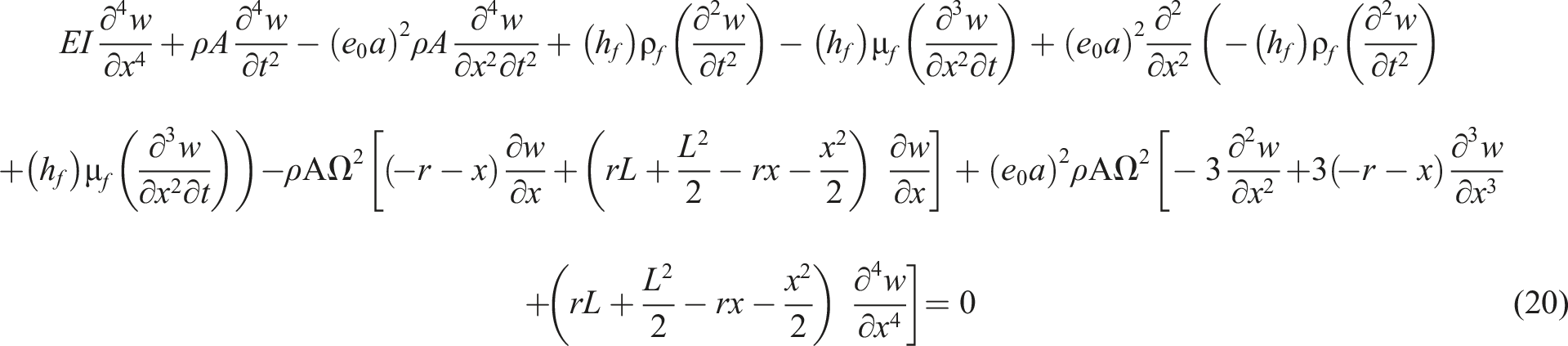
Finally, by replacing equations (12), (17) in (19), the governing differential equation for the flexural-transverse motion is obtained.
Galerkin method
In this study, the vibrational equations of the nanobeam are solved using the Galerkin weighted residual method.
33
The clamped-free boundary condition is considered for this problem. Assuming these boundary conditions for the nanobeam at point x are equal to zero, the displacement and slope are equal to zero, and at the end of the beam, where x is equal to L, the moment and shear force are zero. The boundary conditions and the displacements are written as follows:



and the values of

Hence, the weight function can be described as:
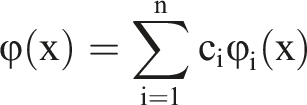
By using the equation (24) and solving the eigenvalue problem, the natural frequency values of system vibrations are extracted.

Validation study
Vibration of nano rotating beam in vacuum
In the first step, main parameters, including shaft radius, nonlocal parameter, and rotational velocity of the beam, are non-dimensionalized; Then by assuming the solution to be in the form of

In order to compare the results of the simulation in the vacuum environment with the past researches, the density and viscosity of the fluid is assumed to be zero. It means in this case, the external force applied to the nano beam is assumed to be zero. (α = τ = 0). By setting the non-dimensional value of the nonlocal parameter to zero in this equation leads to the results of classic case.
Non-dimensional frequencies of the first, second, and third mode in terms of the hub rotational velocity for non-dimensional nonlocal parameter values of 0–0.4 are shown in Figures 3–5, respectively. The obtained results are compared and validated with those of DQM method.
3
Moreover, the natural frequency value for the non-dimensional nonlocal parameter of 0.5 and non-dimensional rotational velocities was extracted. Using these results, it can be claimed that for each vibrational mode, the increase rate of natural frequencies rises with an increase in the rotational velocity. In the first mode, therefore, while the rotational velocity increases, the higher values of nonlocal parameters result in natural frequency values to move away from the local frequency value with a higher slope. Variations of first non-dimensional natural frequency relative to non-dimensional angular velocity for several values of nonlocal parameter. Variations of second non-dimensional natural frequency relative to non-dimensional angular velocity for several values of non-local parameter. Variations of third non-dimensional natural frequency relative to non-dimensional angular velocity for several values of nonlocal parameter.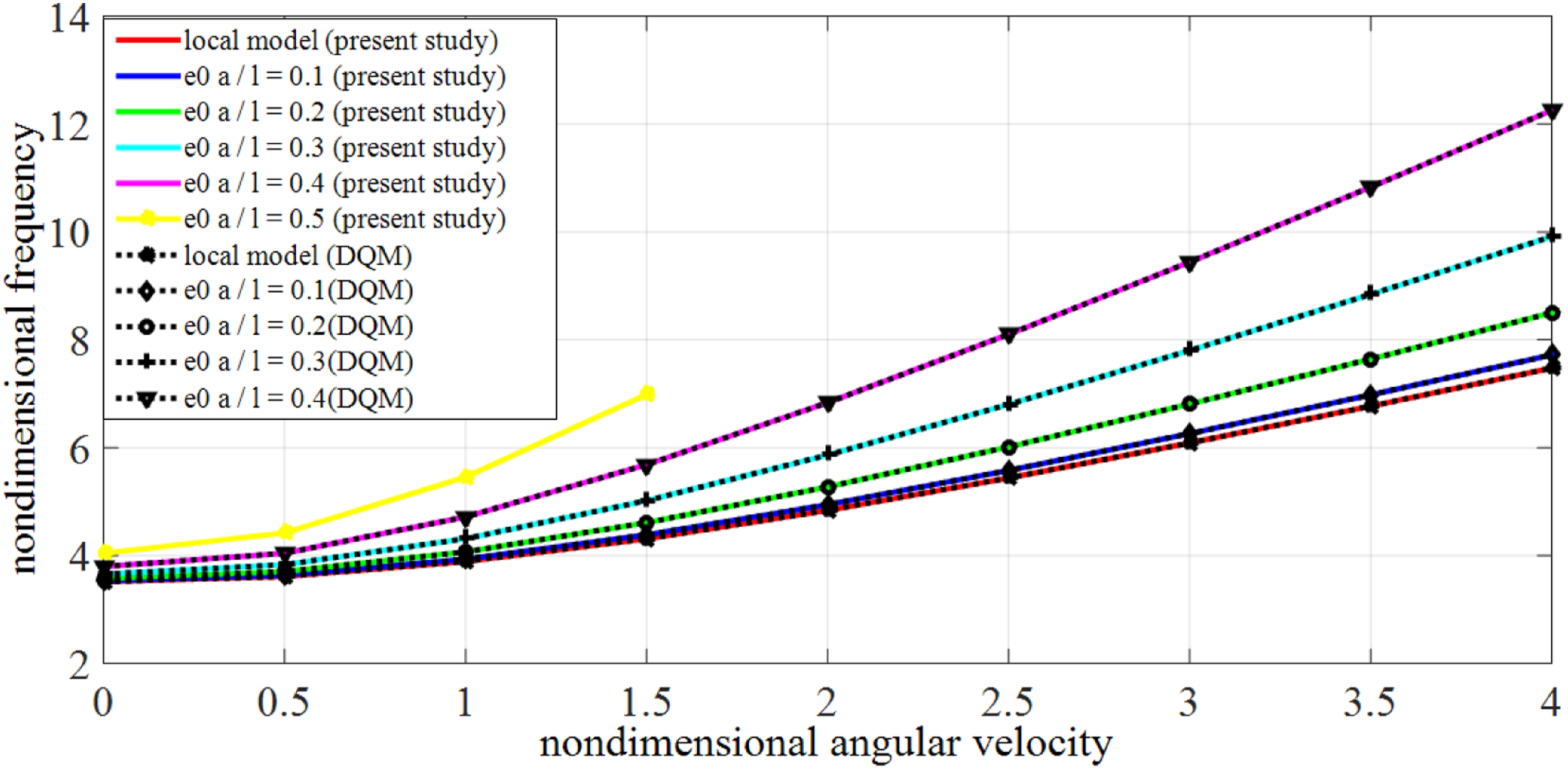
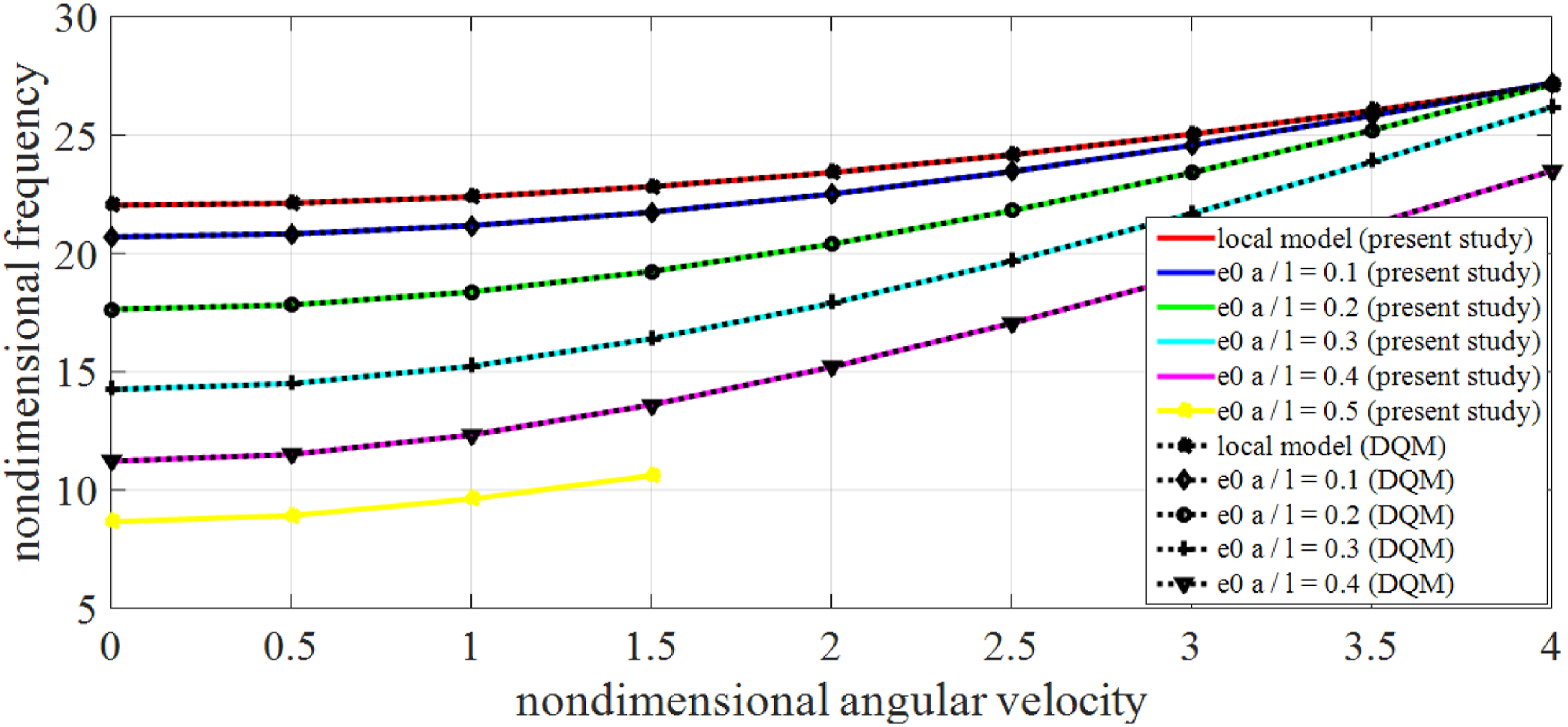
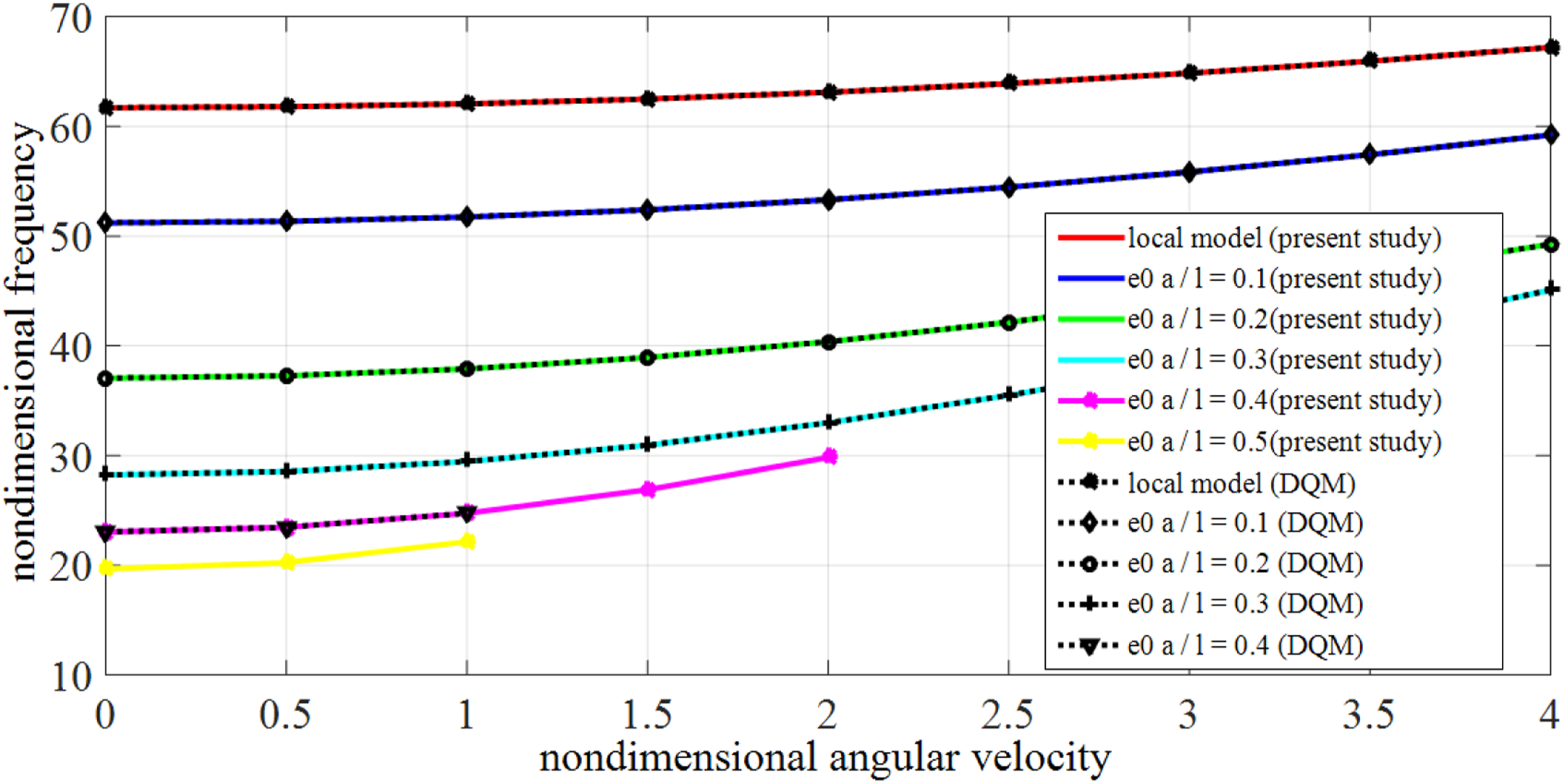
In the second and third vibrational modes, while the rotational velocity increases, the higher values of nonlocal parameters result in natural frequency values to move towards the local frequency value with a higher slope.
Using the Galerkin method, the values of natural frequency for the nonlocal parameter of 0.4 and rotational velocities equal to and lower than 2 were obtained, which were only calculated for rotational velocities lower than 1, using the previous methods.
In order to investigate the effects of hub radius on natural frequencies, as depicted in Figure 6, the values of the first mode’s non-dimensional natural frequency in terms of non-dimensional rotational velocity are obtained for hub radius of 0.5, 1, 1.5, and 2 and compared with those of DQM method. Variations of first non-dimensional natural frequency relative to the non-dimensional angular velocity for several values of hub radius.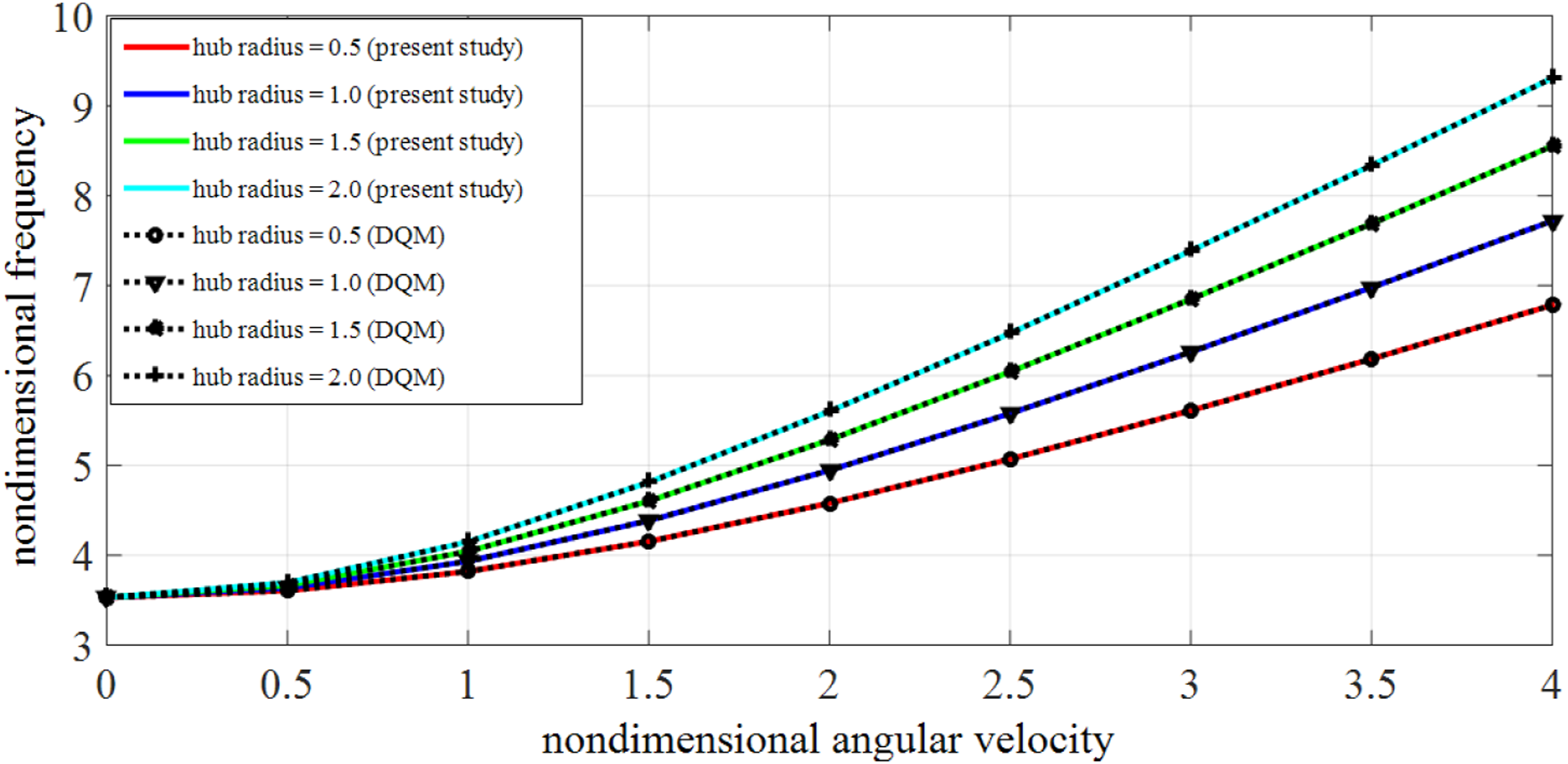
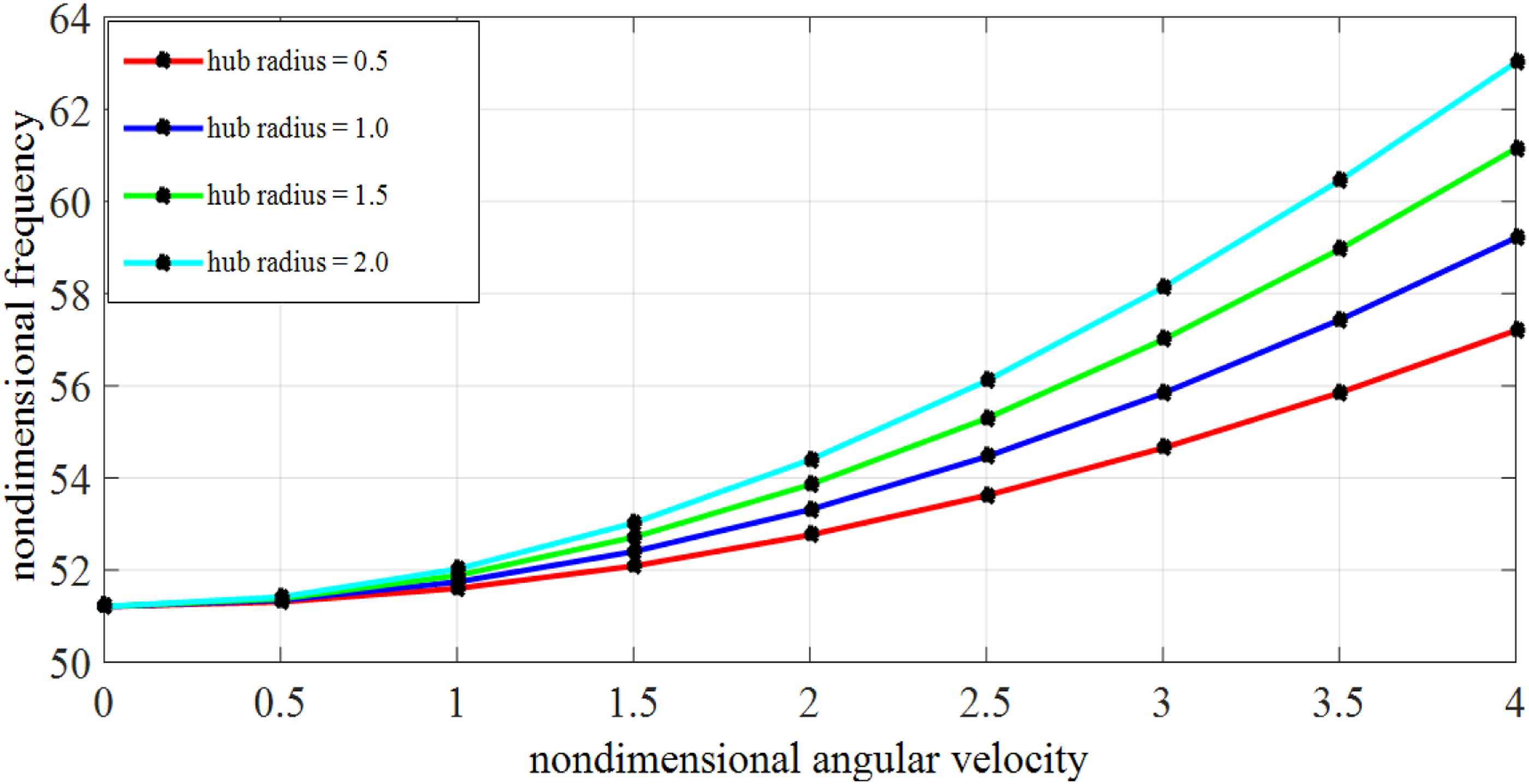
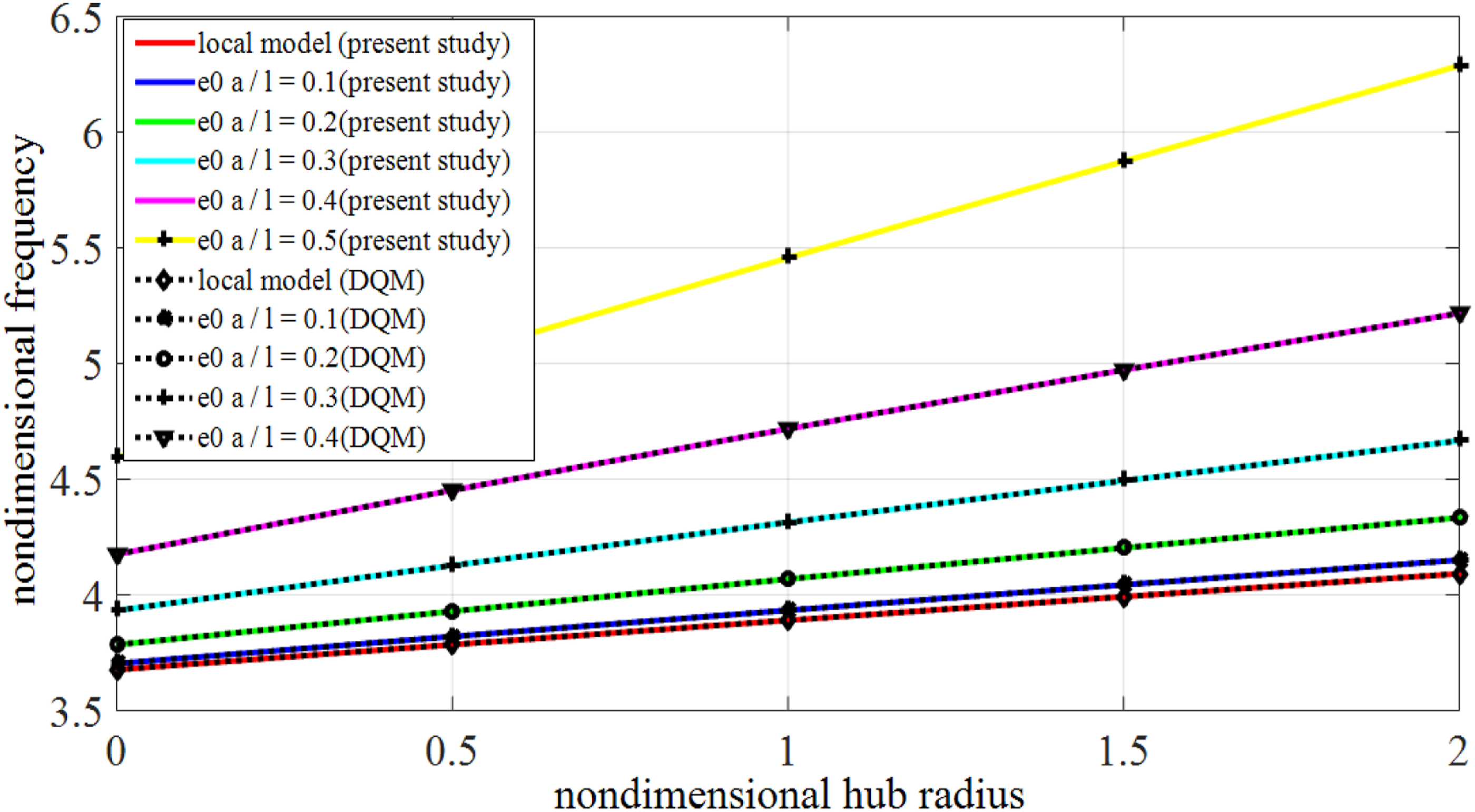
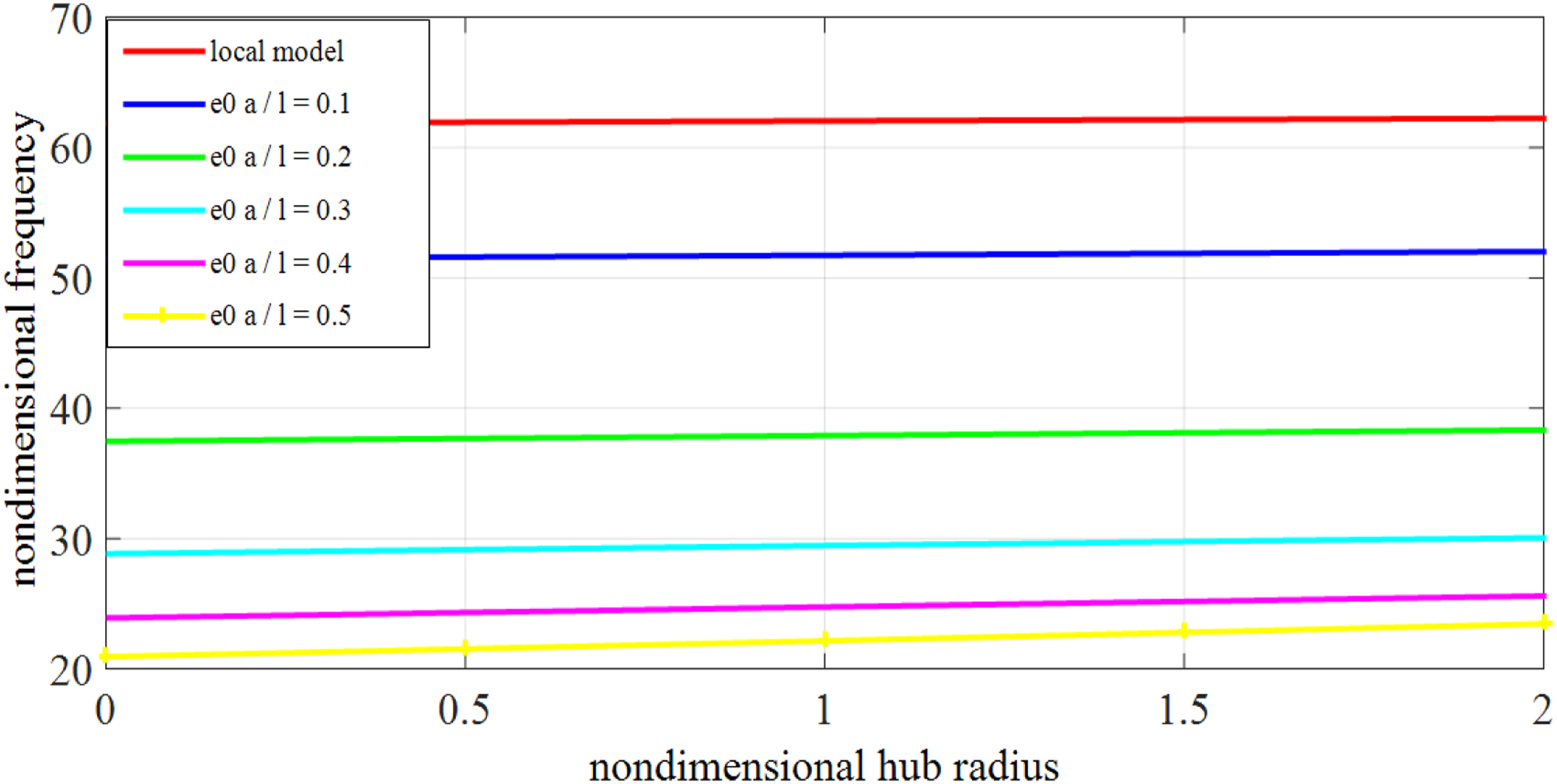
The natural frequencies of the second and third vibrational modes for different values of hub radius and rotational velocity are shown in Figures 7 and 8. For a constant value of nonlocal parameter, the value of natural frequency is proportional to the hub radius. Considering the rotational velocity to be constant ( Variations of second non-dimensional natural frequency relative to non-dimensional angular velocity for several values of hub radius. Variations of third non-dimensional natural frequency relative to non-dimensional angular velocity for several values of hub radius. Variations of first non-dimensional natural frequency relative to non-dimensional hub radius for several values of non-dimensional nonlocal parameter.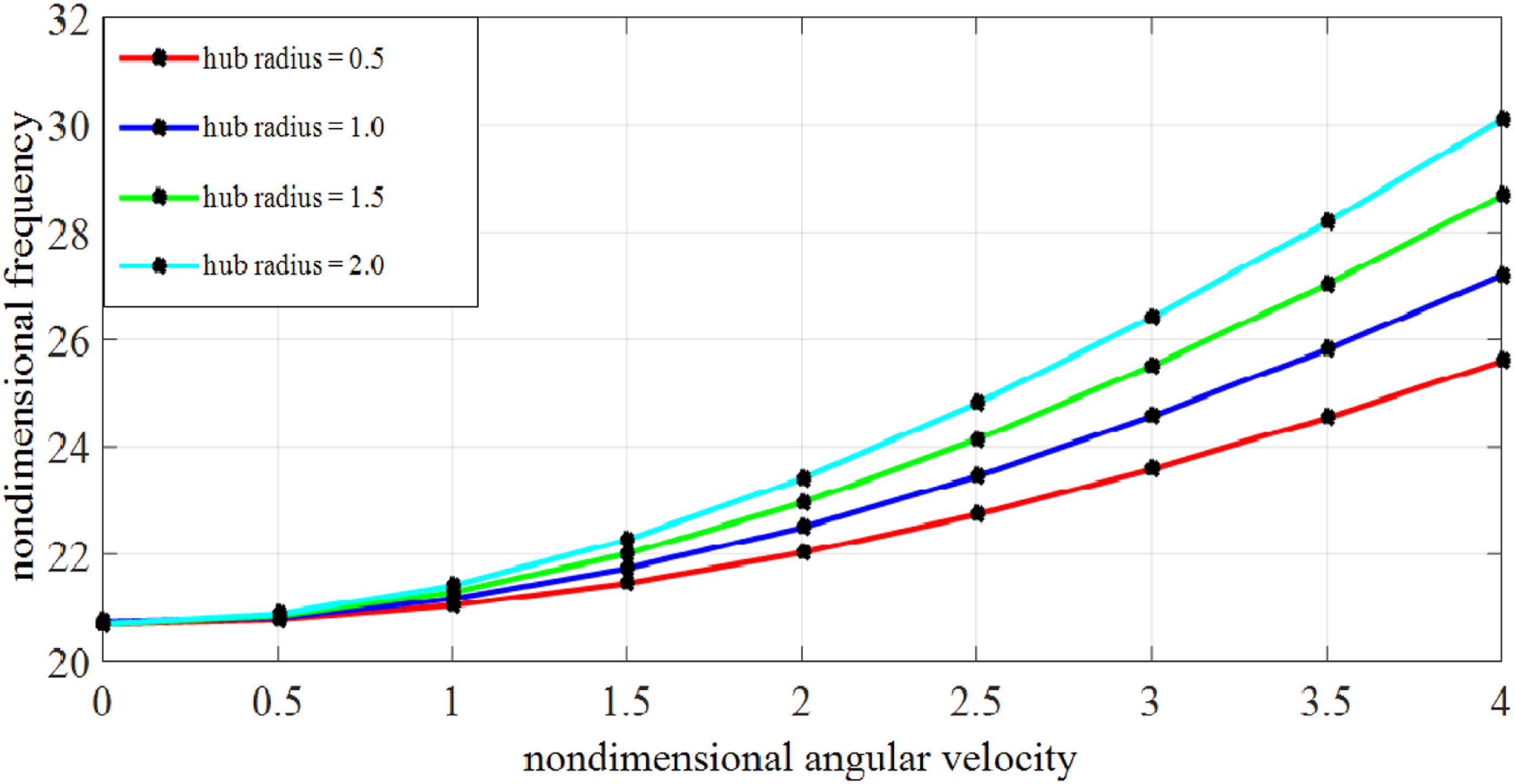
In the second and third vibrational modes, as depicted in Figures 10 and 11, for different nonlocal parameters, the rate of natural frequency increase is almost constant as the hub radius increases. Variations of second non-dimensional natural frequency relative to non-dimensional hub radius for several values of non-dimensional nonlocal parameter. Variations of third non-dimensional natural frequency relative to non-dimensional hub radius for several values of non-dimensional nonlocal parameter.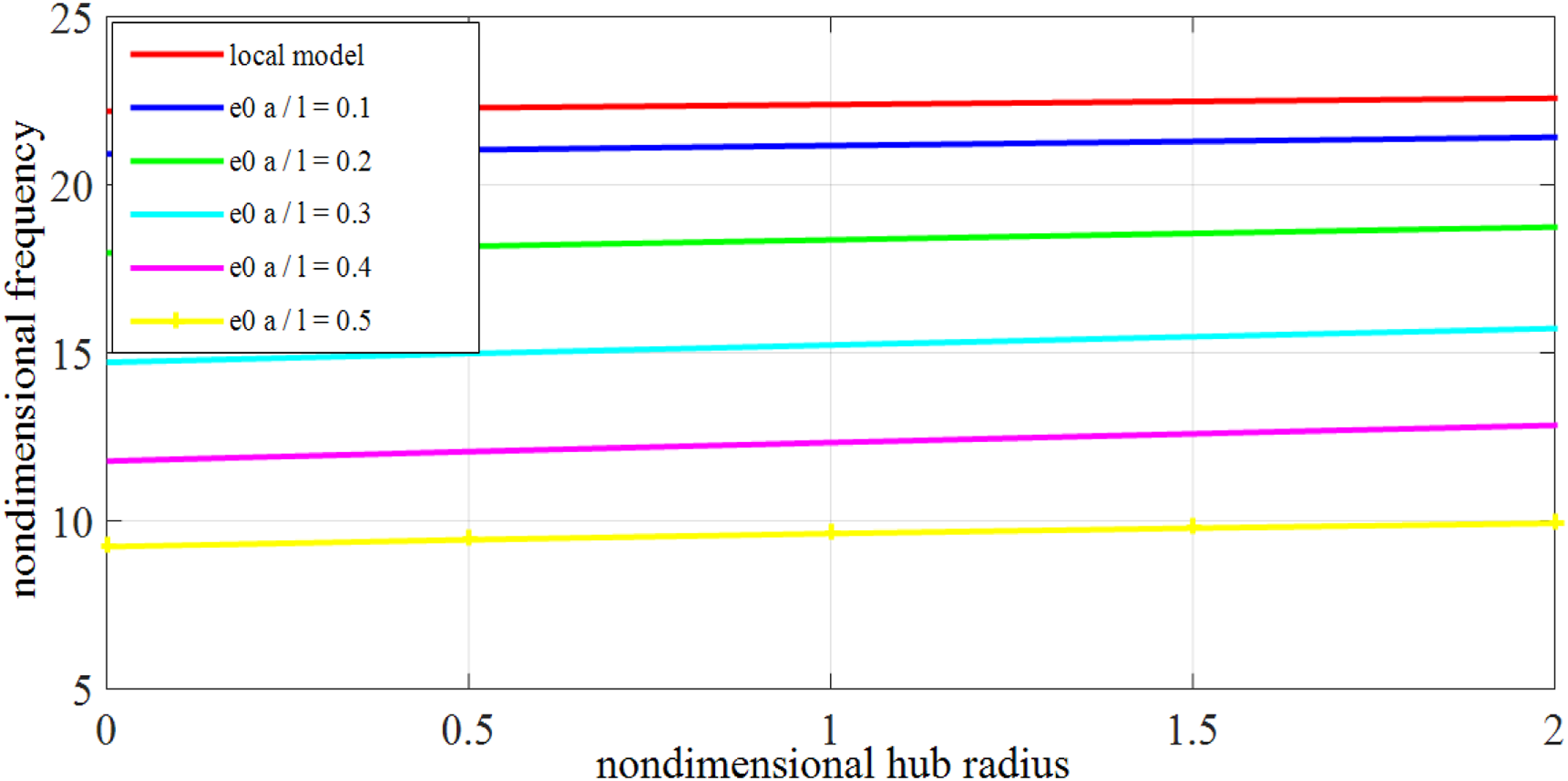
Vibration of macroscopic beam in fluid medium
Natural frequencies of submerged cantilever beam in water.

Material properties.


First mode shape of submerged beam in water.

Second mode shape of submerged beam in water.
The simulation steps of the studied system in the standard Finite Element software are as follows.
The first step is to model the beam in a geometric modeling environment. Next, in the transient response analysis section, we import the model. By applying boundary conditions, we fix one edge of the beam. Then, we rotate the beam around a defined point at a constant velocity. Following that, we define the surface that is in contact with the fluid and define the coupling with the fluid for it. At this point, we apply an external force to the beam. After modeling the fluid environment separately, we define the characteristics of the fluid in the fluid analysis section. The surface of the fluid that should be coupled with the beam is determined, and then it is time to couple the fluid analysis part with the transient response analysis. After running the model and obtaining the response of the coupled system, we apply the discrete Fourier transform to the dynamic response. Finally, we consider the peak of the obtained curve as the natural frequencies of the coupled system.
Results and discussion
In this section, in light of the dimensionless form of equation (20), which is shown in equation (25), the vibrational behavior of a rotating nanobeam coupled with fluid has been studied. By considering water as the fluid in contact with the nanobeam, the values of α and β were assumed to be 0.3704 and 0.0045, respectively.
With the assumption of δ = 1, Figures 14–16 present the dimensionless natural frequencies of the first to third vibrational modes of the rotating nanobeam in the fluid environment, respectively. According to the results demonstrated in Figure 14, in the first vibrational mode of the rotating nanobeam coupled with fluid, the dimensionless natural frequencies rise with the increment of the rotational velocity of the nanobeam. Moreover, the dimensionless nonlocal parameter values are directly proportional to the dimensionless natural frequencies. Dimensionless natural frequencies of the first vibrational mode of the rotating nanobeam in the fluid environment. Dimensionless natural frequencies of the second vibrational mode of the rotating nanobeam in the fluid environment. Dimensionless natural frequencies of the third mode of the rotating nanobeam in the fluid environment.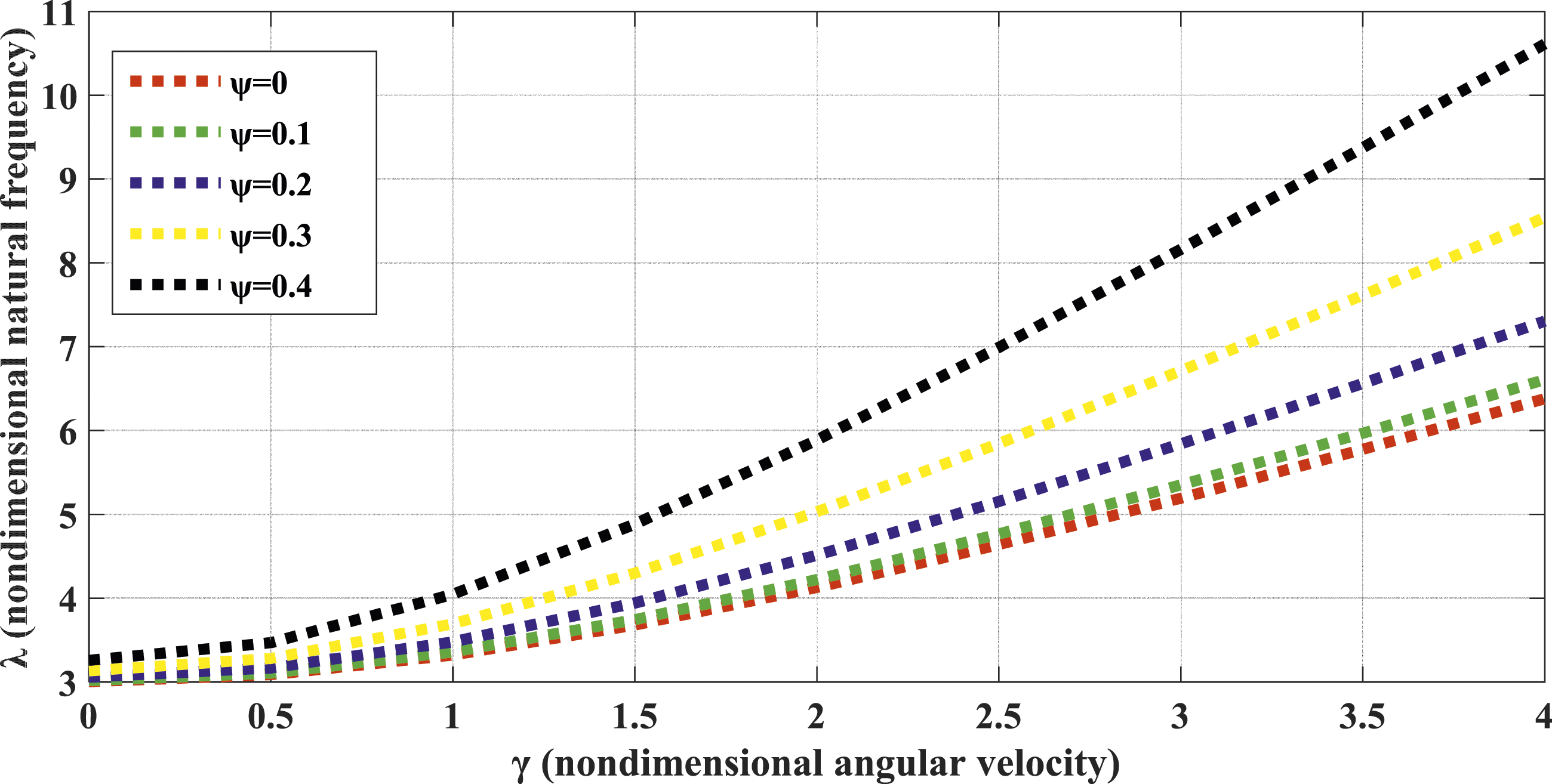
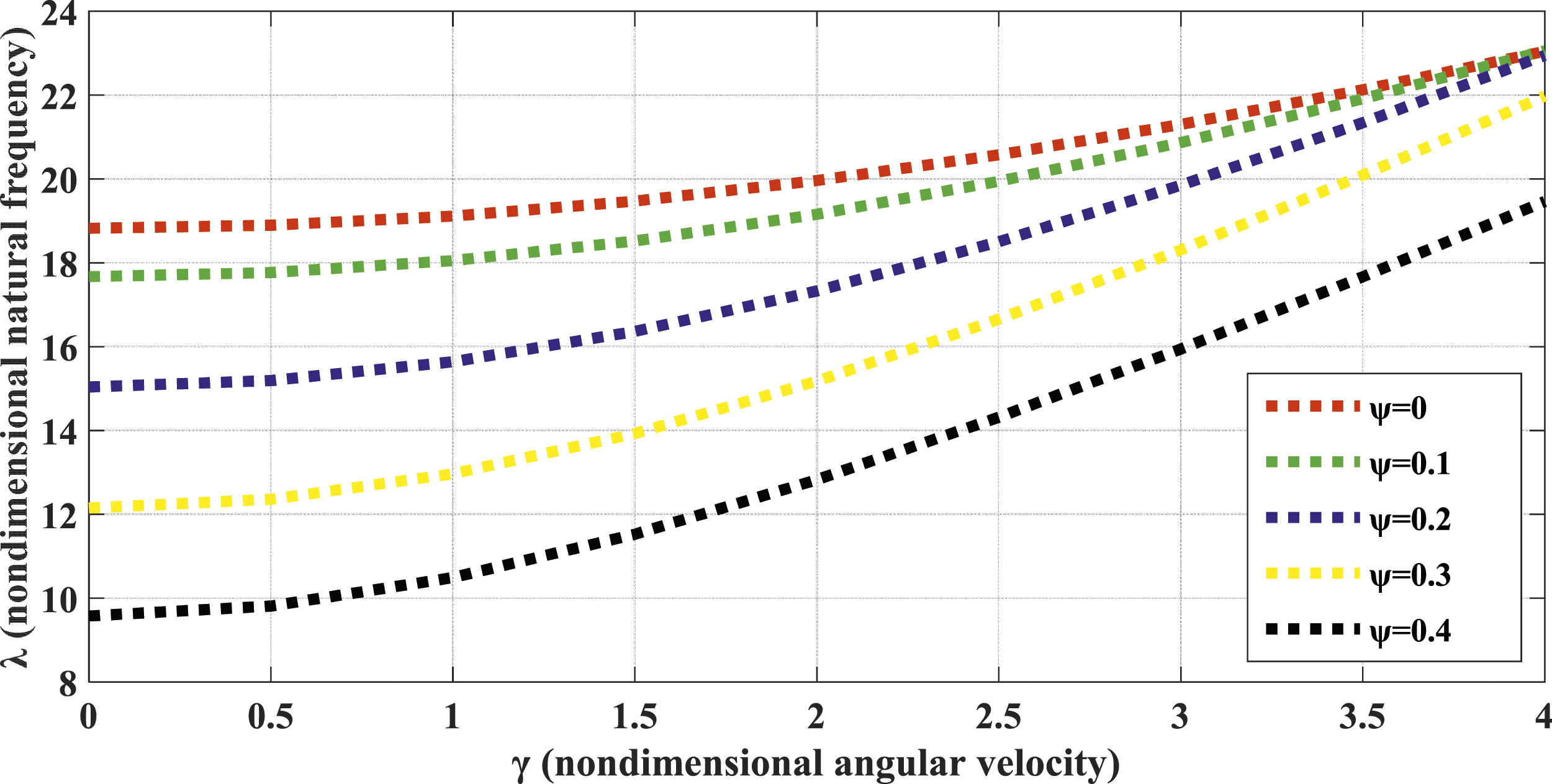
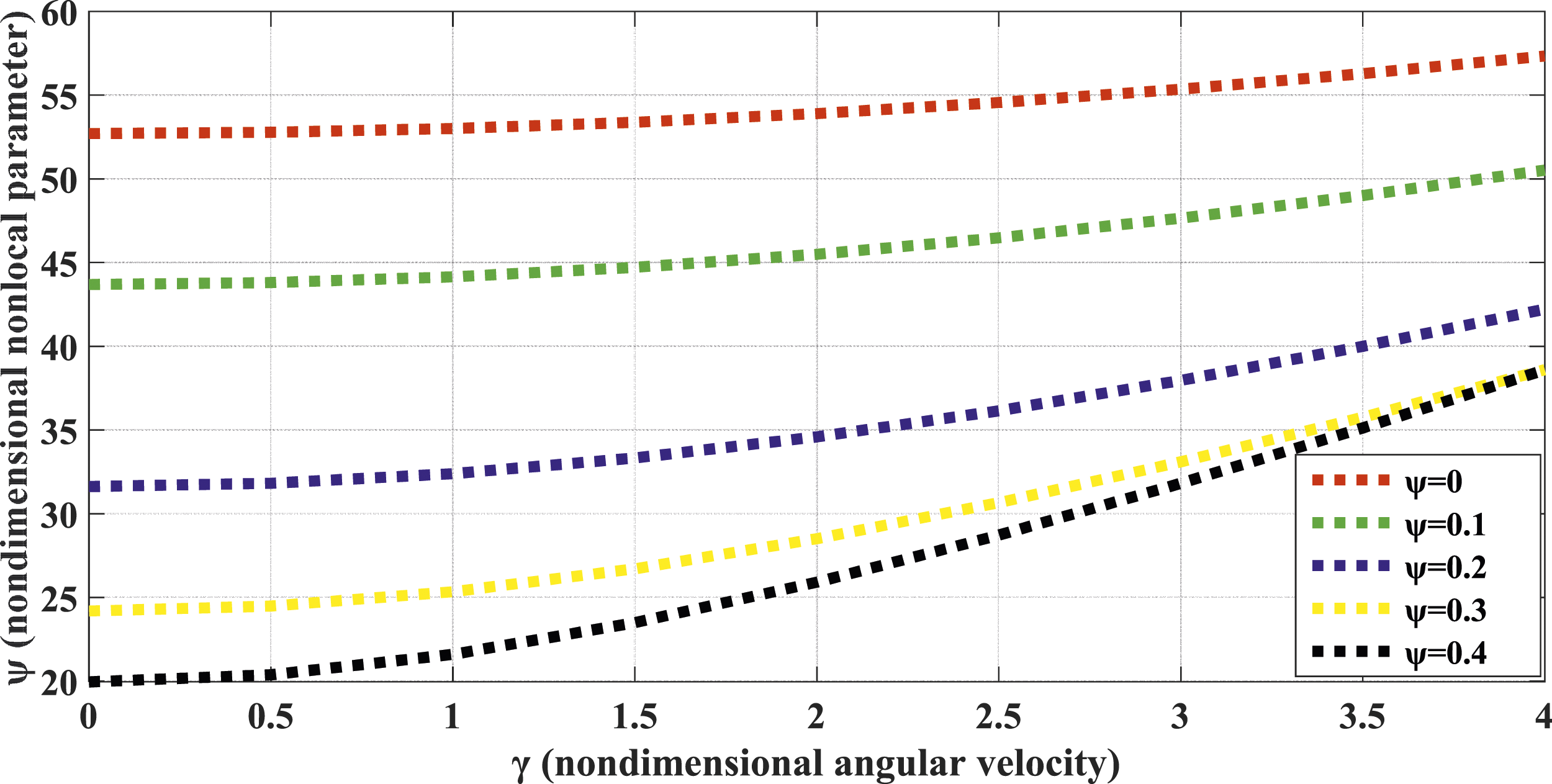
In the second and third modes, which are shown in Figures 15 and 16, respectively, with the increase of the dimensionless nonlocal parameters, the dimensionless natural frequencies have dropped. Nevertheless, in the second and third modes, similar to the first mode, the rotational velocity of the nanobeam is directly proportional to the dimensionless natural frequencies.
In order to explore the effect of fluid around a rotating nanobeam, the Q1 ratio is defined in the form of equation (26). Q1 parameter values for different values of the dimensionless nonlocal parameter.
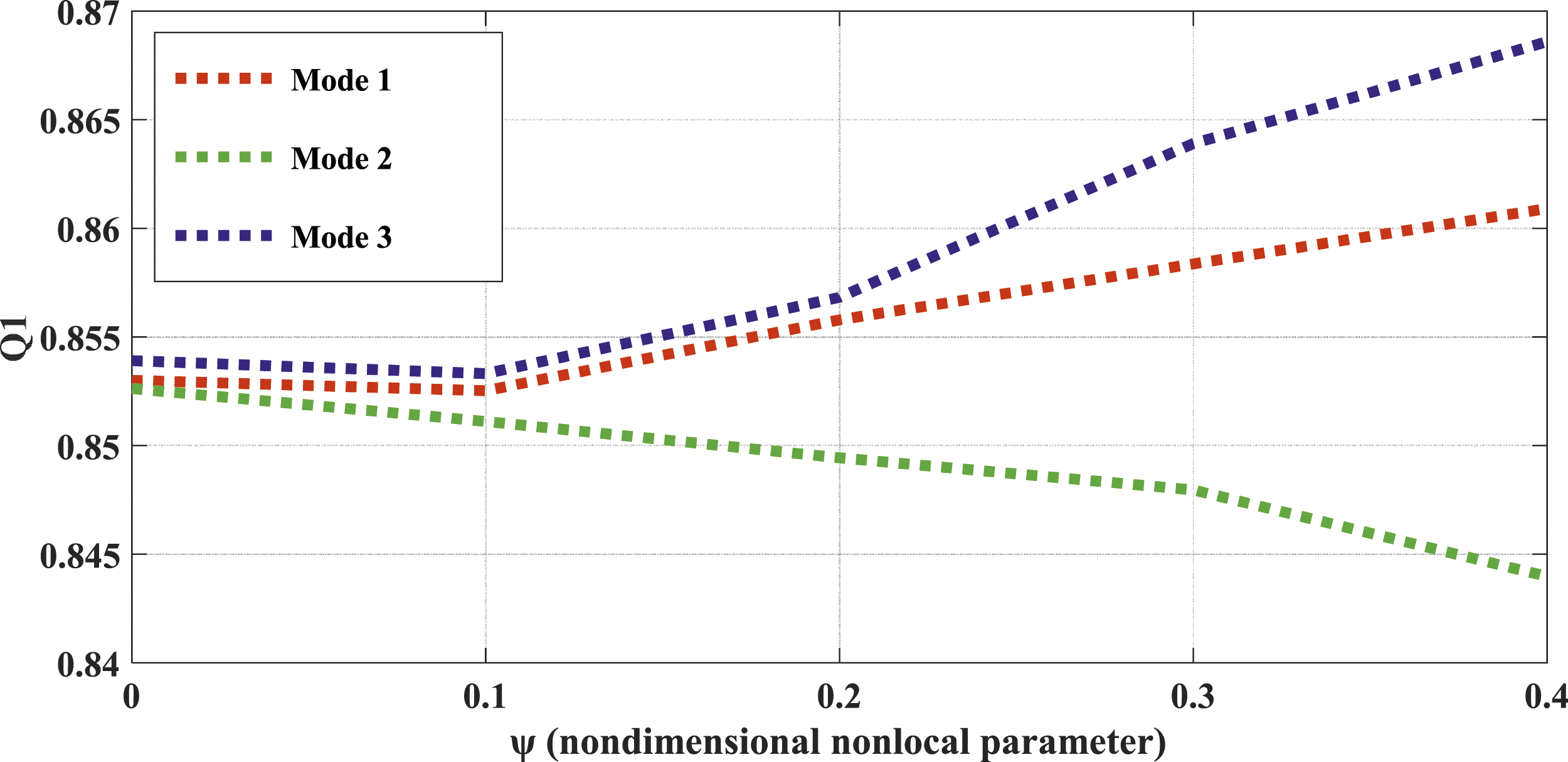
Based on Figure 17 results, dimensionless natural frequencies fall in all vibration modes when the rotating nanobeam is placed in the fluid medium. However, the response of different modes to the increase of the nonlocal parameter is different. In the first and third modes, by applying the nonlocal elasticity theory and increasing the dimensionless nonlocal parameter, the value of the Q1 parameter has increased. In other words, the influence of the fluid on the natural frequencies in the first and third modes is reduced for the rotating nanobeam compared to the classical rotating beam. Nonetheless, in the second vibrational mode of the rotating nanobeam, with the increment of nonlocality, the effect of the fluid on reducing the natural frequencies of vibrations has risen.
In order to investigate the impact of nonlocality on the vibrational behavior of a rotating nanobeam coupled with fluid, the Q2 ratio is defined in the form of (27).
Figure 18 indicates the values of the Q2 parameter for different dimensionless rotational velocities. Q2 ratio parameter values for different dimensionless rotational velocities.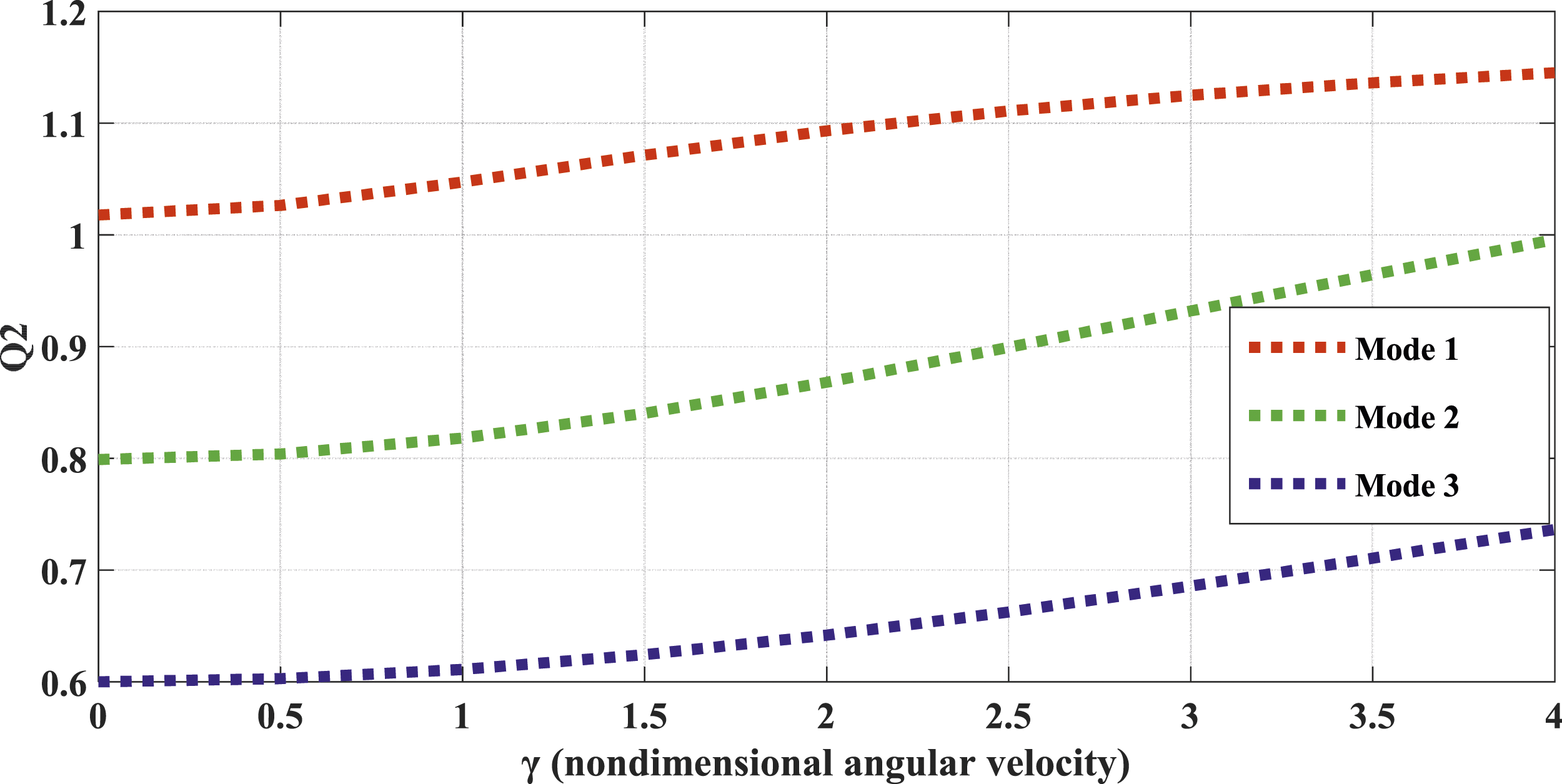
By observing these results, it can be concluded that for the first vibrational mode at higher rotational velocities, the nonlocal parameter has a more significant effect on the change of the system’s natural frequencies compared to the classical condition. However, in the second and third modes, the impact of nonlocality falls with the increase of the rotational velocity of the nanobeam in the fluid medium.
In order to examine the influence of rotation of nanobeam coupled with fluid and compare it with nanobeams without rotation, the Q3 ratio is defined in the form (28). Figure 19 reports the Q3 ratio values for different nonlocal parameter values. Q3 ratio values for different nonlocal parameter values.
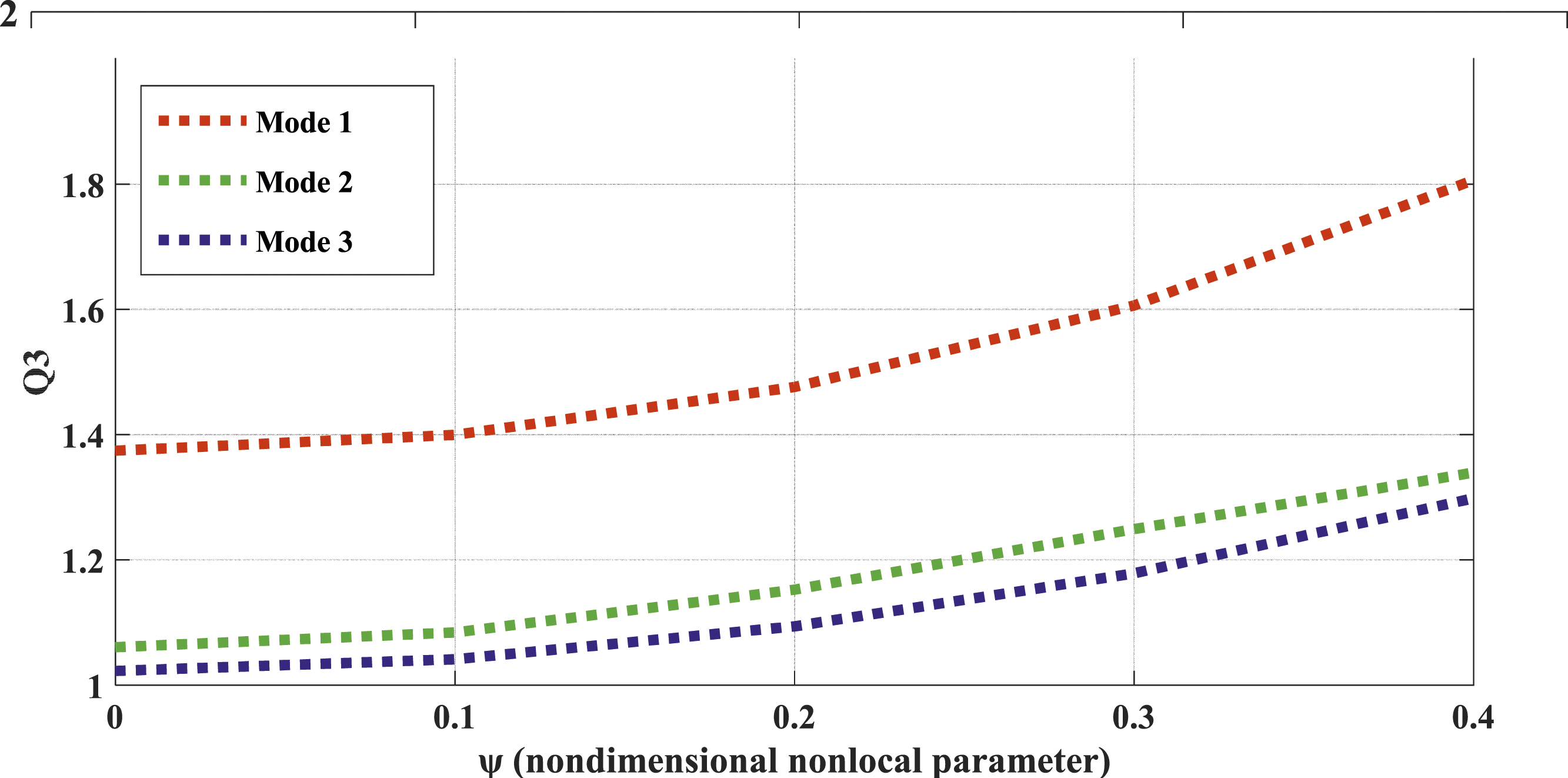
In all three vibrational modes, with the growth of the nonlocal parameter, the effect of the rotation on the vibrational behavior of the nanobeam coupled with fluid has increased. In addition, the higher Q3 ratio in the first mode shows its greater sensitivity for the nanobeam rotation, followed by the second and third modes, respectively.
In Figure 20, dimensionless natural frequencies are reported for different rotational velocities to indicate the influence of the fluid density on the vibrations of the rotating nanobeam. It should be noted that µ and β are assumed to be 0.2 and 0.0045, respectively. Based on the results presented in Figure 20, the lowest dimensionless natural frequencies are observed in the fluid with a dimensionless density (α) of 0.5. Accordingly, for the higher values of fluid density, the natural frequencies of the vibrations of the rotating nanobeam are decreased more significantly compared to vibrations in a vacuum. Dimensionless natural frequencies versus different rotational velocities for different non-dimensional density parameters.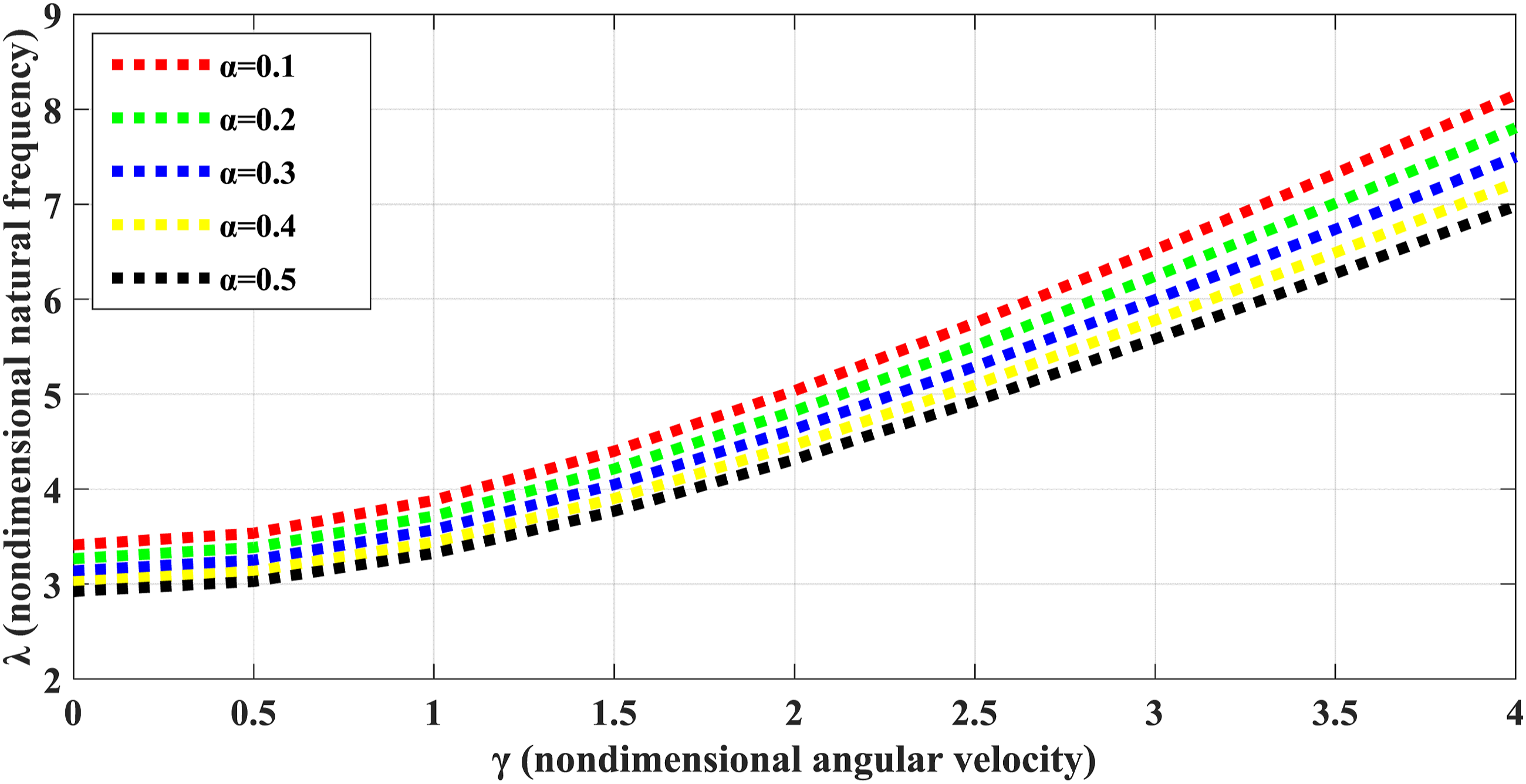
In order to study the fluid viscosity effect on the vibrational behavior of the rotating nanobeam, the dimensionless natural frequencies of vibrations for different values of dimensionless rotational velocity are demonstrated in Figure 21. Dimensionless natural frequencies versus different rotational velocities for different non-dimensional viscosity parameters.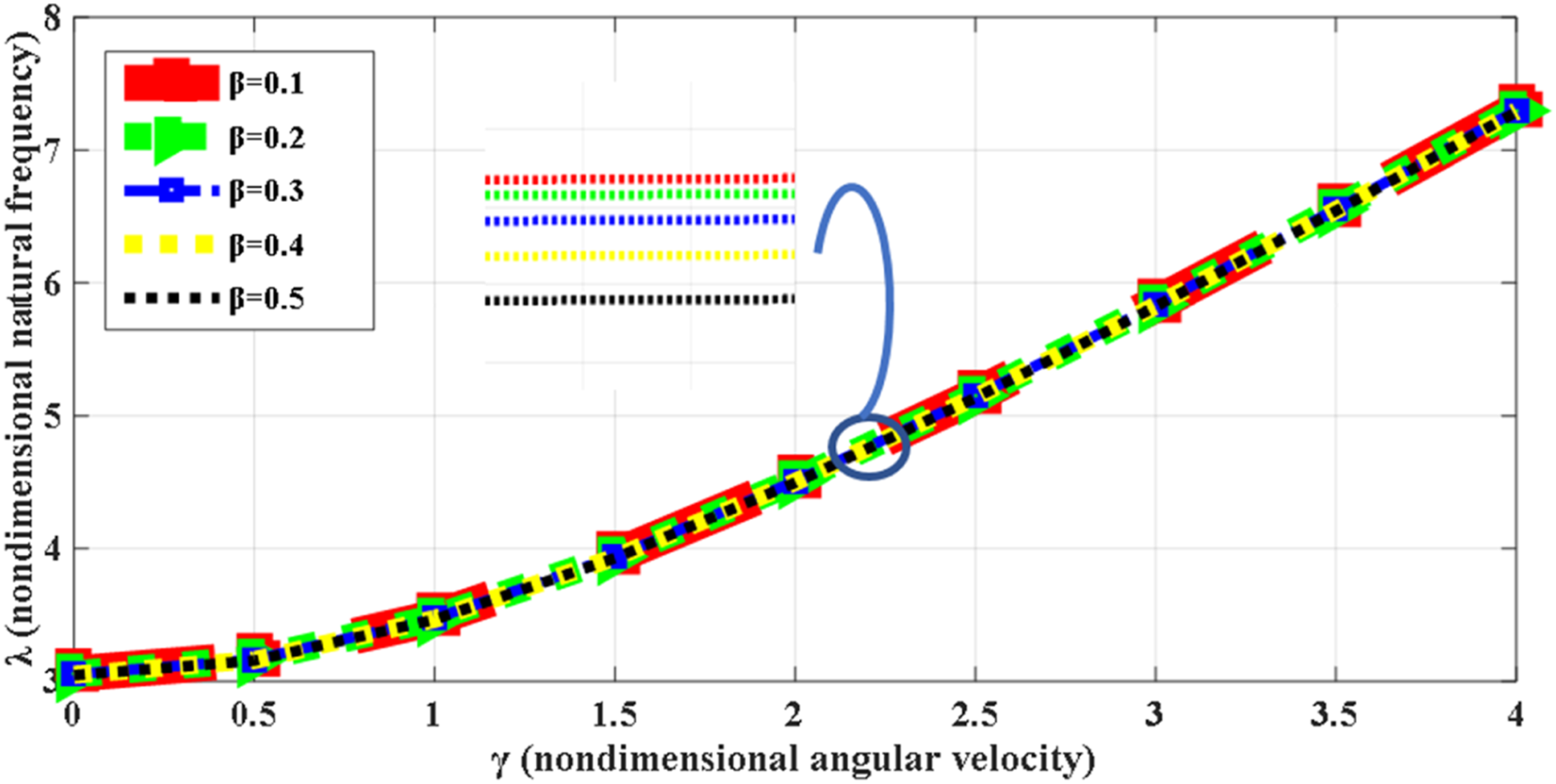
Using these results, it can be proved that the fluid viscosity has no significant effect on the vibrations of a thin rotating nanobeam. However, by observing the magnified portion of the diagram, it can be stated that the fluid viscosity has reduced the natural frequencies. In other words, if the fluid is more viscous, this effect can be considered.
In order to examine the effect of fluid on the vibration of different modes at different rotational velocities, in Figure 22, the values of the Q1 ratio are presented for different dimensionless rotational velocities. According to these results, the influence of fluid on the vibration, which appears as a drop in the natural frequencies, has declined with the increase in rotational velocities. Further, the change of rotational velocities is a more influencing factor on the vibration characteristics of the fluid-coupled system in higher modes compared with the lower modes. Q1 ratio values for different non-dimensional angular velocity values.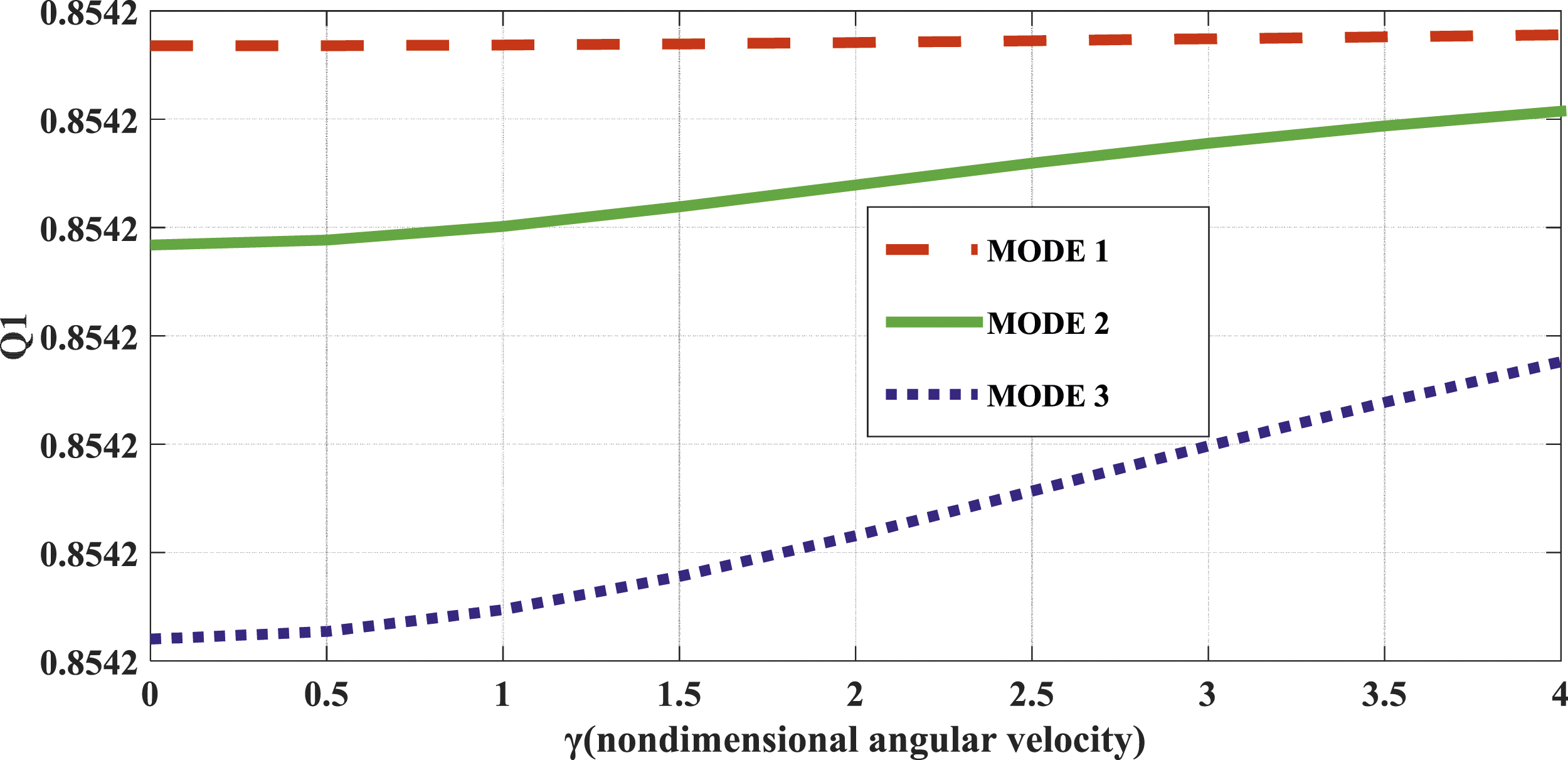
To find the effect of the density of a fluid coupled with a rotating nanobeam on the vibration behavior in different modes, in Figure 23, the dimensionless natural frequencies are presented in terms of different dimensionless fluid densities. As can be seen, when the fluid is denser, the inertial terms of the fluid become more significant, hence a drop in the natural frequencies to a greater extent. This effect of fluid density on the vibrations of the system is more noticeable in the higher modes. Dimensionless natural frequencies for different dimensionless fluid densities.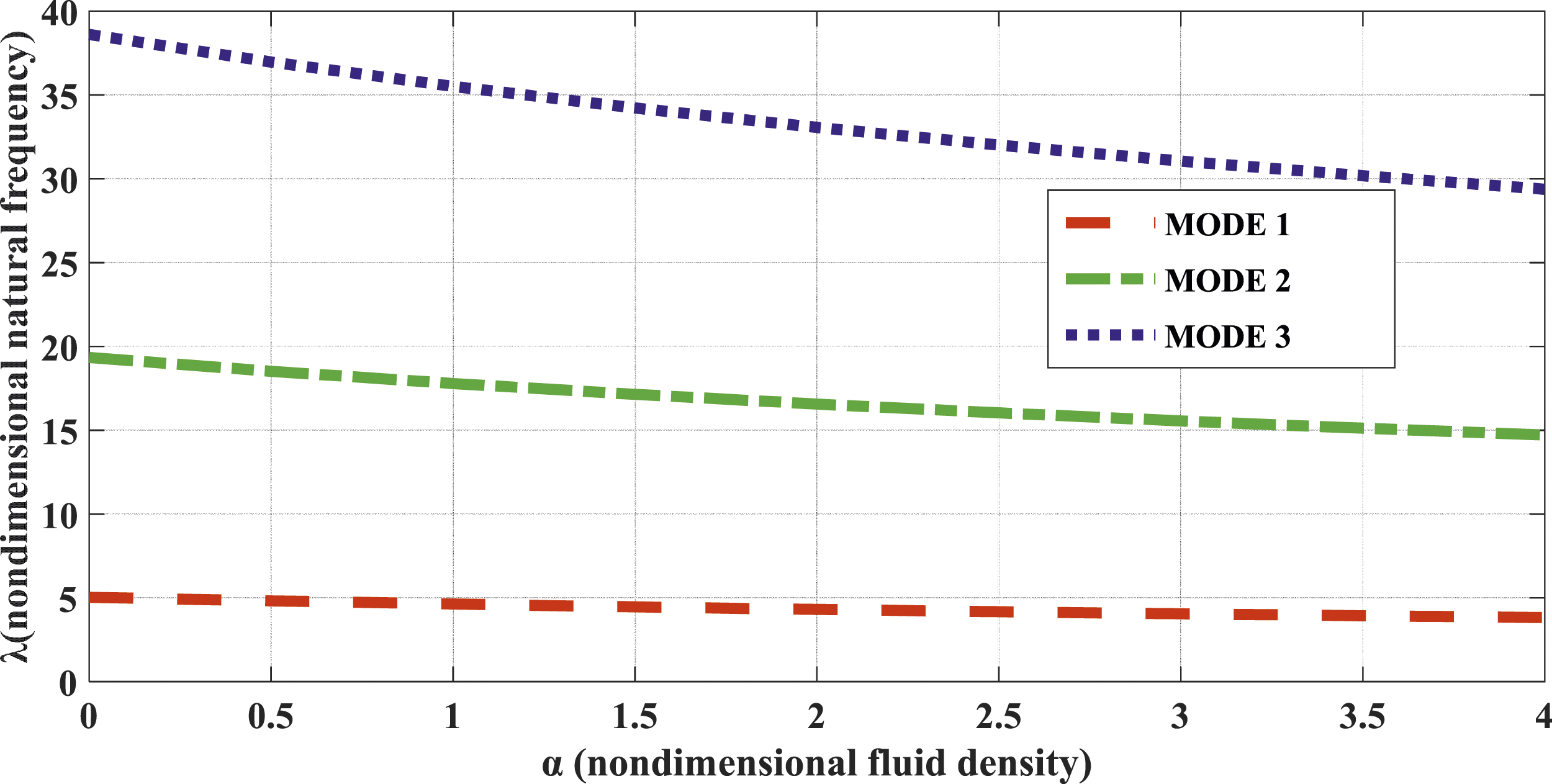
Conclusion
In this research, the interaction between fluid and solid was modeled using the Navier-Stokes equations. With the assumption of incompressibility and viscosity of the fluid, the natural frequencies of system vibrations were presented.
The most important findings of this study are as follows: • In the first vibrational mode of the rotating nanobeam in fluid, the increment of nonlocality increases dimensionless natural frequencies, while in the second and third modes, the increase of nonlocality causes a reduction in natural frequencies. • In all vibrational modes, the dimensionless natural frequency values are directly proportional to the rotational velocity values. • In all the vibrational modes, the natural frequencies drop when the rotating nanobeam is placed in a fluid medium. • The second mode is more affected by the small-scale effects and nonlocality than the first and third modes. • In higher modes, the increase in fluid density causes a more remarkable change in the natural frequency values compared to lower modes.
Footnotes
Declaration of conflicting interests
The author(s) declared no potential conflicts of interest with respect to the research, authorship, and/or publication of this article.
Funding
The author(s) received no financial support for the research, authorship, and/or publication of this article.
