




Abstract
The classical laminate and lattice sandwich plate structure can be simplified into a multilayer plate system, wherein the plate components of the system are continuously joined along the transverse direction by elastic layers and can have different combinations of boundary conditions. A symplectic analytical wave propagation approach is developed for the forced vibration of a system of multiple elastically connected thin plates considering the Kirchhoff thin plate theory. The proposed method overcomes the limitation of the traditional analytical method, wherein the exact vibration field function only exists for a system with all edges of the plate components simply supported. First, the coupled partial differential equations governing the vibration of the multi-plate system are decoupled using a technique based on matrix theory; for decoupled equations, a general “vibration” state is innovatively introduced into the symplectic dual system. Next, the general “vibration” state can be analytically described in symplectic space by solving the symplectic eigenproblem and utilizing wave propagation theory. Finally, by using these analytical wave shapes and satisfying the physical boundary conditions of the system, the forced responses can be analytically calculated. In the numerical examples, the forced transverse vibrations of the double- and three-plate systems are investigated, and the cases with various combinations of boundary conditions are considered. The effectiveness of the present method is validated by comparing the present results with the results from the literature and those calculated using the finite element method. The influence of the elastic layer stiffness and number of plate components on the vibration is also investigated.
Keywords
Introduction
The multiple-layered plate structures have broad applications in reality, such as floating-slab railway tracks, track-bridge system, sandwich plates composed of an interconnected layer, vibration absorbers, and sandwich type composite road and airport pavements. Dynamic analysis of multiple-layered plate structures is of significance to these various fields.1–3 Therefore, it is critical to develop efficient calculation methods for vibration characteristics of a multi-plate system. Oniszczuk4,5 formulated exact theoretical solutions describing free and forced transverse vibrations of a rectangular simply supported double-plate system by applying the classical Navier and modal expansion methods. Hedrih 6 provided analytical solutions for the free and forced vibration of a double-plate system with a discontinuity in the elastic bonding layer of the Winker type using Bernoulli’s particular integral method and Lagrange’s method of variation constants, which were also used in their previous work. 7 De Rosa and Lippiello 8 calculated the free vibrations of a system consisting of a double simply supported rectangular plate using the classical Navier method. Jeong and Kang 9 presented a theoretical dynamic model to calculate the natural frequencies of multiple clamped-clamped-free-free rectangular plates submerged in a liquid using the Rayleigh–Ritz method based on orthogonal polynomial functions generated using the Gram–Schmidt process. 10 Stojanović et al., 11 provided an analytical solution for the vibration analysis of systems of elastically connected thin and thick isotropic plates utilizing the trigonometric method, which was introduced by Stojanović et al., 12 previously. Wang and Lin 13 analyzed the influence of the elastic modulus and geometry of the elastic medium in a plate–plate system on the damping capability. Cao et al., 14 introduced a multilayer moving plate method for the dynamic analysis of viscoelastically connected infinitely long double-plate systems subjected to moving loads. Kim et al., 15 studied the free vibration of a composite laminated double-plate system using the mesh-free method, wherein all of the displacement functions, including the boundary conditions, are approximated by the mesh-free shape function. Zhang et al., 16 investigated the free vibration of a laminated composite double-plate system based on the improved Fourier series methods.
Thus, various analytical and numerical methods have been developed for the analysis of the forced vibration response of multi-plate systems, particularly for the double-plate system. A common procedure adopted in these studies requires the natural frequencies and mode shapes to be obtained initially through various methods. Subsequently, the orthogonality of the obtained mode shapes is derived and used to decouple the motion differential equations. Finally, the forced response is determined using the modal expansion method based on the natural frequencies and mode shapes obtained from the free vibration analysis. However, for the displacement function, the exact expressions only exist for the multi-plate system with all plate edges simply supported. For other combinations of plate boundary conditions, a series with refined scales or short support lengths should be chosen as the global expansion functions in the traditional methods, because the adopted displacement function cannot satisfy the plate boundary conditions accurately. This inevitably leads to an increase in the computational cost and even to a problem that is difficult to converge to the solution. In this study, we attempted to overcome this limitation by developing a new analytical wave propagation method. Additionally, to the best of our knowledge, the wave propagation method has not been reported for the forced vibration analysis of multi-plate systems built using parallel plates connected by elastic layers. In a recent study, Karlicic et al., 17 investigated the band structure in an array of vertically aligned and elastically connected structural elements such as beams, strings, plates, and other slender structures based on the Galerkin approximation and Floquet–Bloch theorem. The wave propagation method has been widely used to predict the free and forced vibrations of traditional periodic structures owing to its high efficiency and accuracy.18–20 The wave and finite element method21,22 has been extensively used as a popular numerical wave propagation methods based on the finite element method (FEM). However, the finite element model of the structure can be large; therefore, model reduction is essential to reduce the computational cost and avoid potential numerical issues. 22 As one of the most popular analytical wave propagation methods, the method proposed by Ma et al., 23 based on the symplectic method23–30 can treat the boundary condition more conveniently and accurately. Compared with the wave and finite element method, the symplectic analytical wave propagation method is based on analytical waves that provide efficient and accurate solutions. In the latest work by the authors, the symplectic method was applied to the vibration analysis of a multi-beam system, 30 and the high accuracy and efficiency of the proposed method were validated. In this study, the symplectic analytical wave propagation method is applied for the first time for a multi-plate system built using parallel plates connected by elastic layers. To utilize the symplectic analytical wave propagation method, the coupled equations governing the vibrations of multiple plates must first be decoupled. Zhou et al., 28 introduced rigorous analytical symplectic method into the free vibration of a rectangular double-layered orthotropic nanoplate system. In their study, the system governing equations were decoupled using a proper change in variables that is used frequently for double-beam system.31–33 However, it is challenging to decouple a multi-plate system with several plate components and consider the case where the plate components have different boundary conditions.
In this study, the differential equations governing the vibration of a multi-plate system are decoupled based on the method proposed by Kelly. 34 A general “vibration” state, established based on decoupled differential equations, is then introduced innovatively into the symplectic dual system. By solving the derived symplectic eigenvalue problem, the wave propagation parameters and wave shapes can be analytically obtained. Subsequently, using these wave modes, the physical vibration problem can be efficiently solved in terms of a general “vibration” state in the wave space. In the numerical examples, the forced vibrations of several multi-plate structures with various combinations of boundary conditions were investigated. To validate the effectiveness of the present method, these results were compared with those from the literature and FEM. The influence of the stiffness of the elastic layer and number of plate components on the vibration response were also investigated.
Governing equations of transverse vibration
The classical laminate and lattice sandwich plate structure can be simplified into a multilayer plate system, wherein the plate components of the system are continuously joined along the transverse direction by elastic layers, as shown in Figure 1. The system of Schematic of 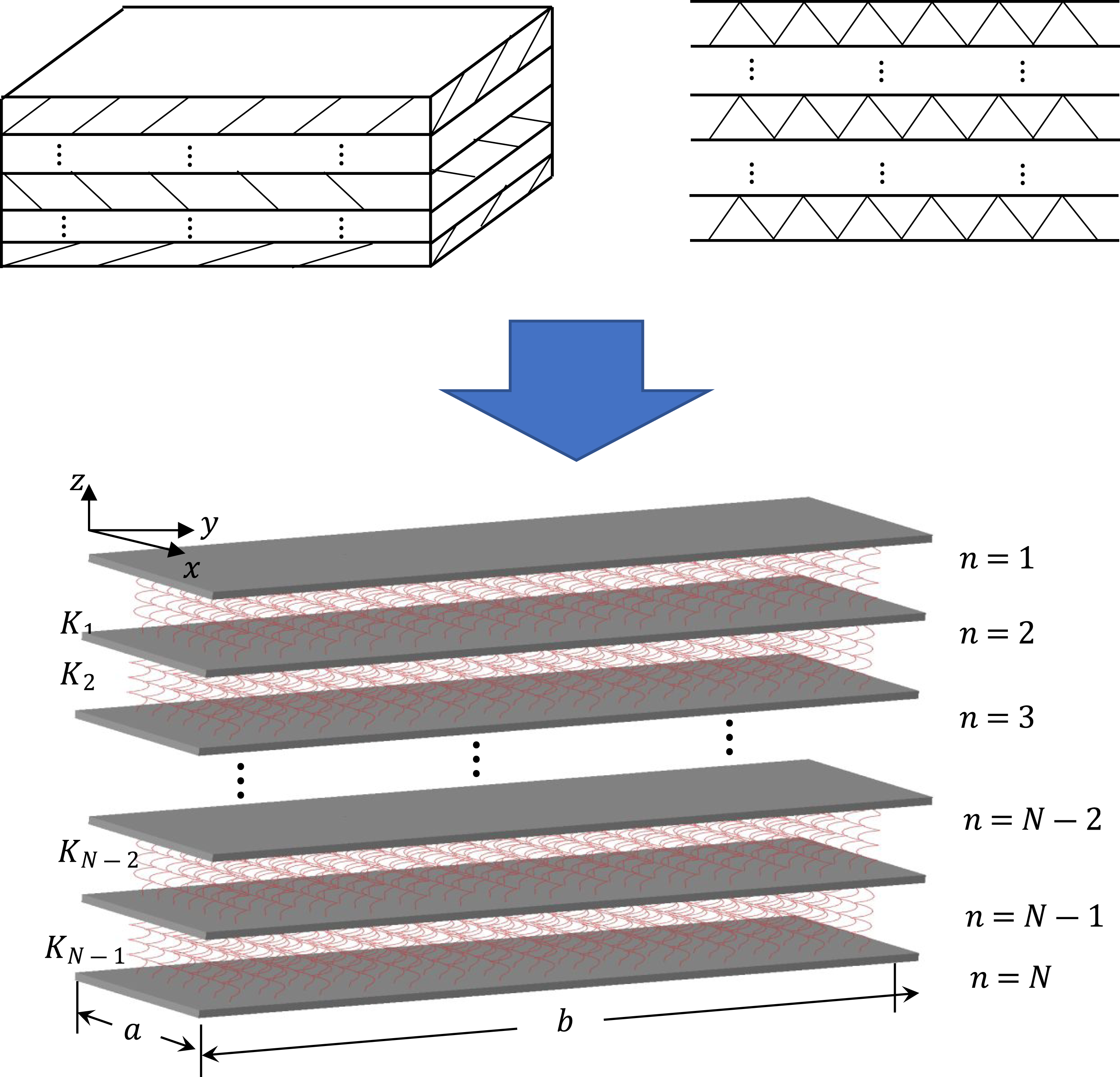

By assuming

The matrix form of equation (2) is


The differential equations governing the vibration of the multi-plate system, that is, equation (3), are coupled and difficult to be solved directly. By utilizing the method proposed by Kelly,
34
equation (3) can be transformed into a set of decoupled equations as

Symplectic analytical waves
Figure 2 shows the displacement and force of a plate component. For the Schematic of the 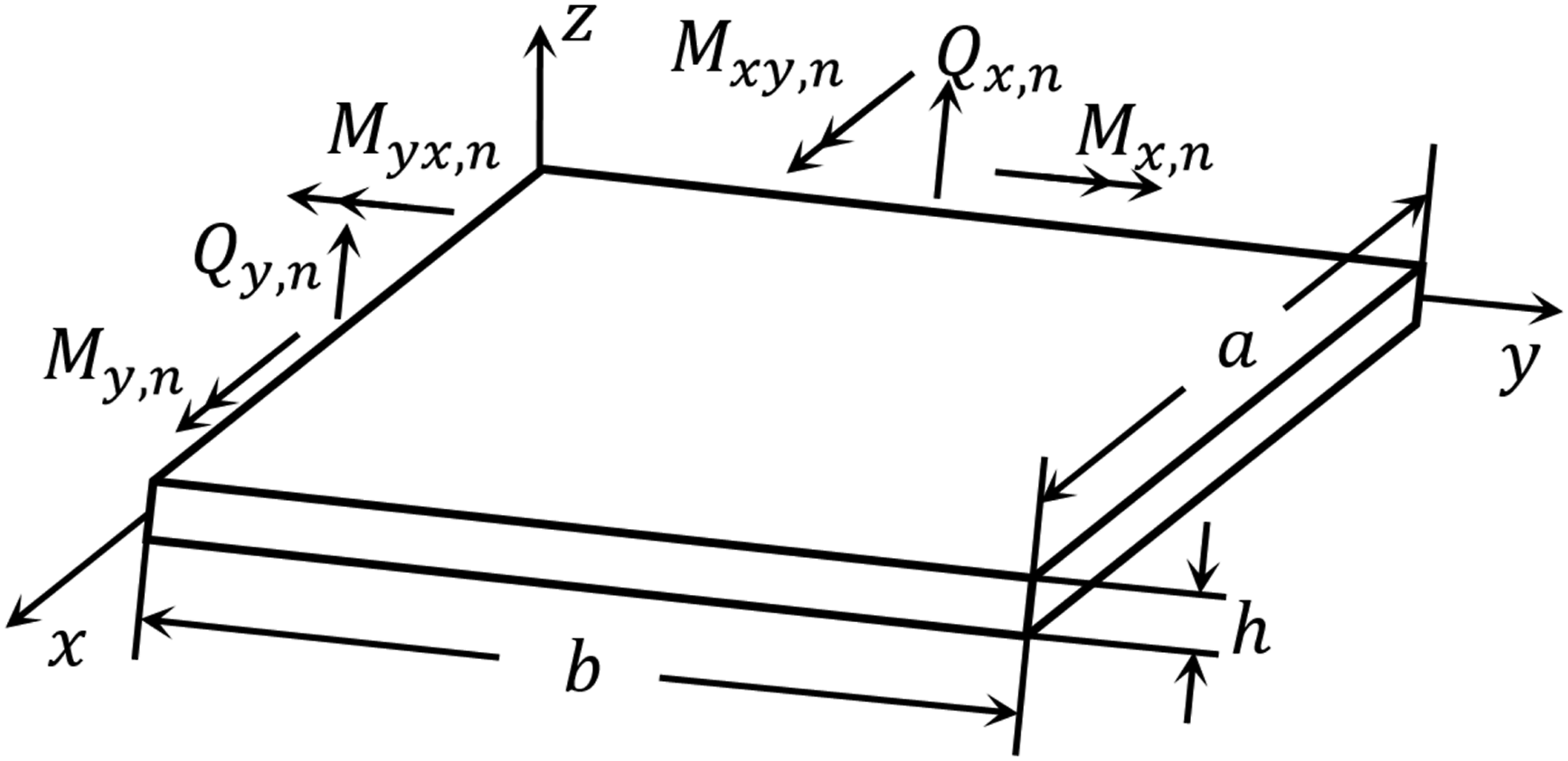
From the relationships between the general displacements and general forces, the general “vibration” state corresponding to the
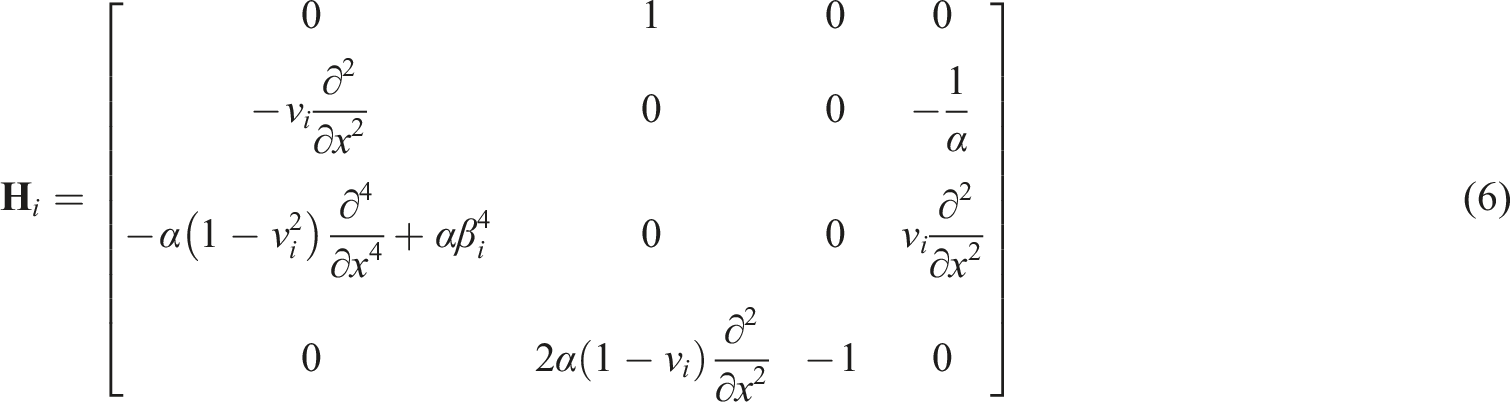
At this point, equation (5) has been translated to the symplectic space. Therefore, the general “forced” response of the general “vibration” state defined here can be obtained by using the wave propagation method, as the solution of single plate system described in physical space.
23
The required wave modes, that is, wave parameters
For a clamped edge (C)

for a simply supported edge (S)

for a free edge (F)

Once the general “boundary conditions” is determined, the wave propagation parameter


Forced response in terms of wave propagation
The forced “vibration” response of the general “vibration” state described by equation (5) can also be expressed in terms of waves, following the procedure used in Ref.
23
as shown in Figure 3. By using the wave propagation theory, equation (10) can be rewritten as Schematic of wave propagation description for the general forced response.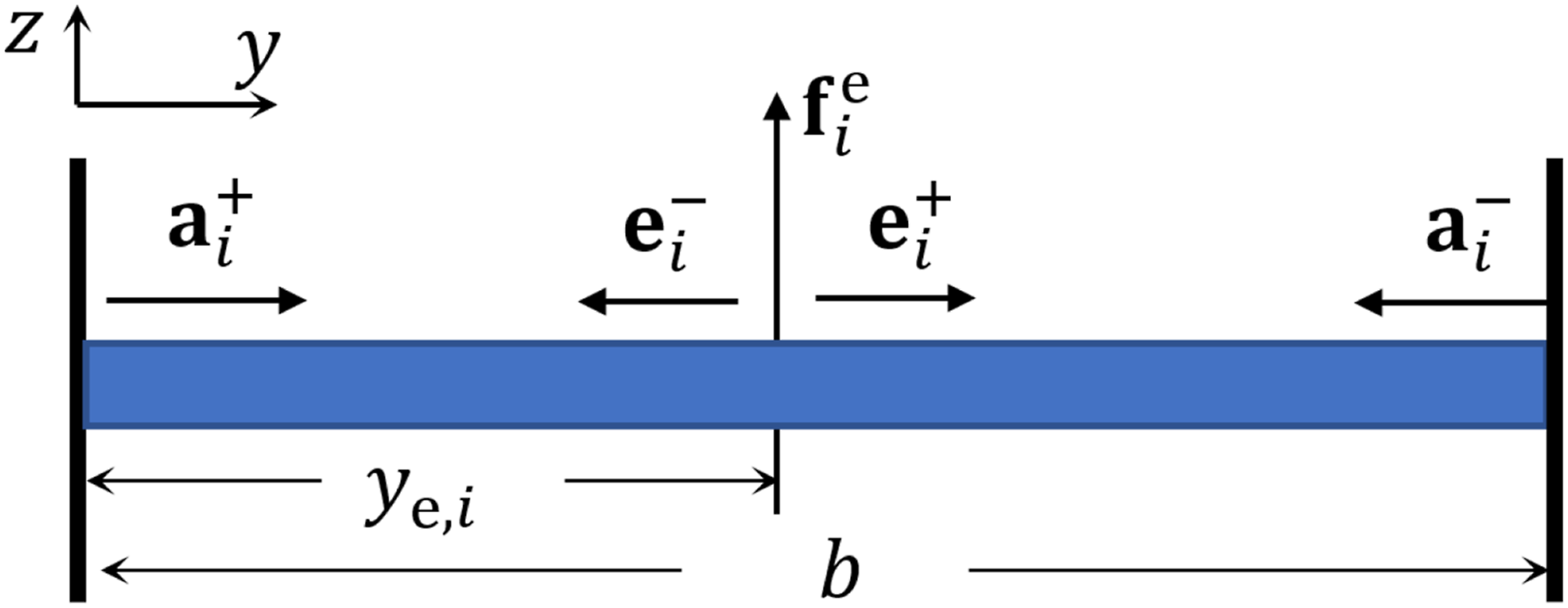


Wave amplitudes




Once the wave amplitude
Numerical examples
The forced vibrations of an elastically connected double-plate system and a three-plate system were investigated to validate the proposed method. An external unit point force is applied at
Double-plate system
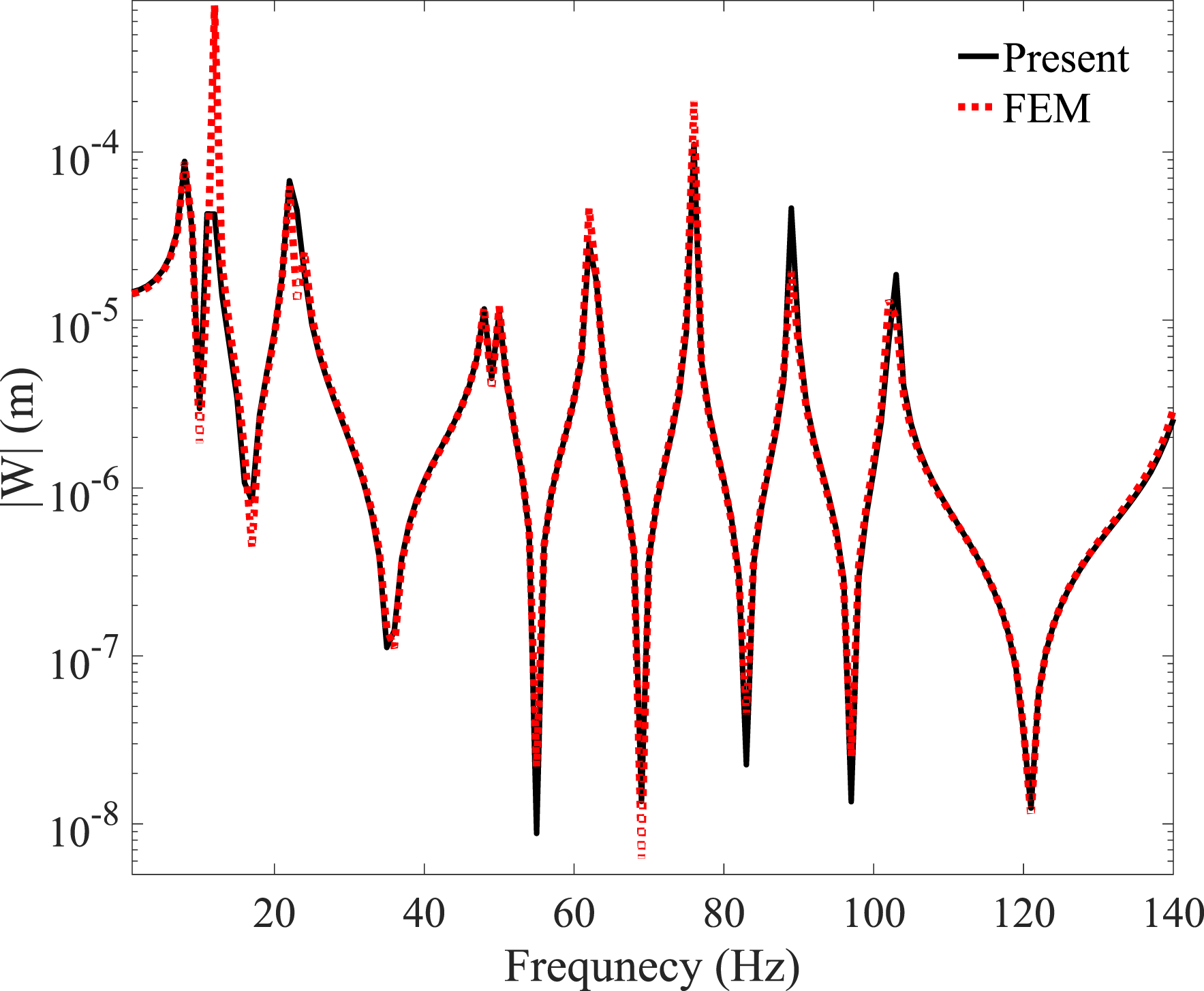
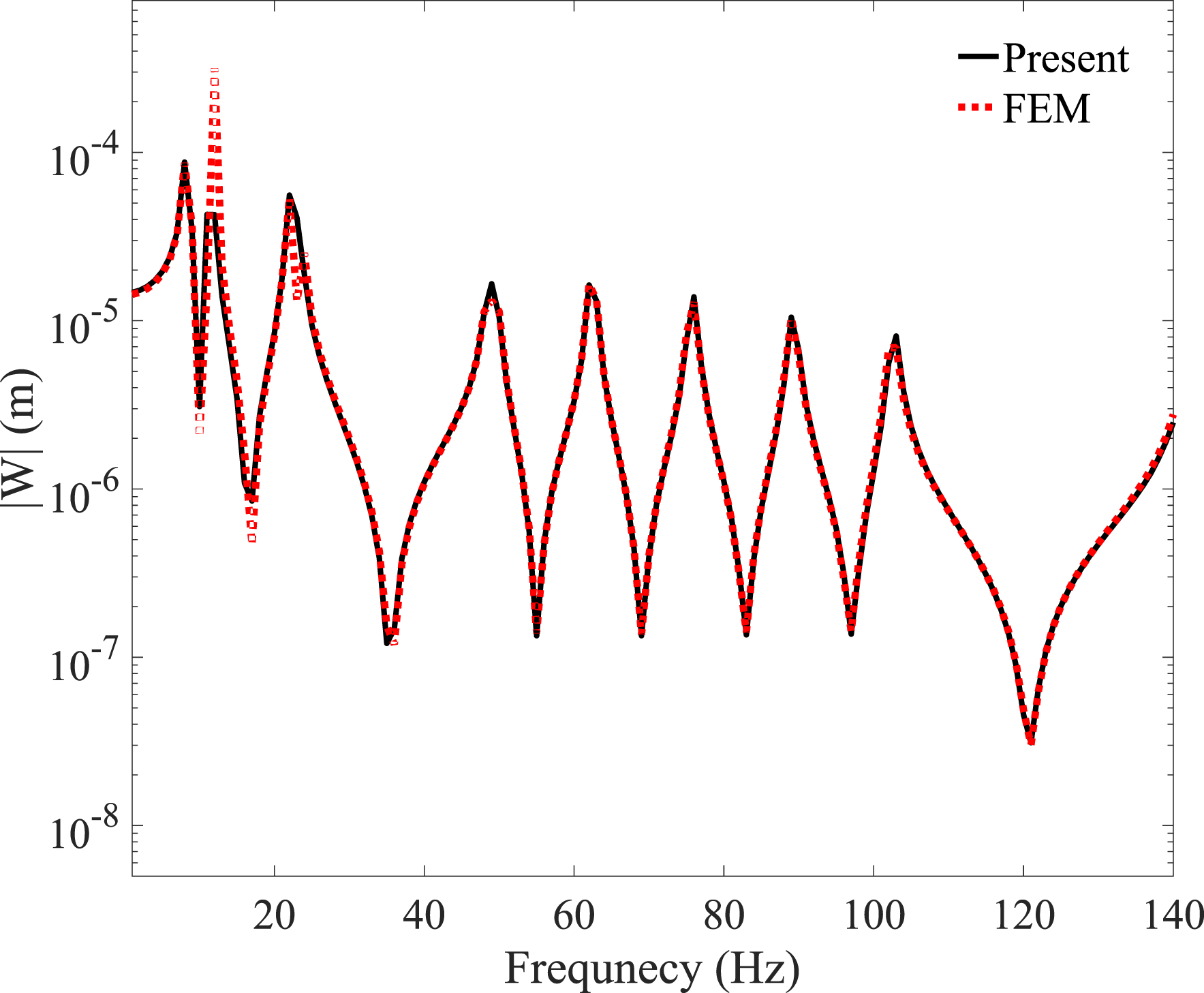
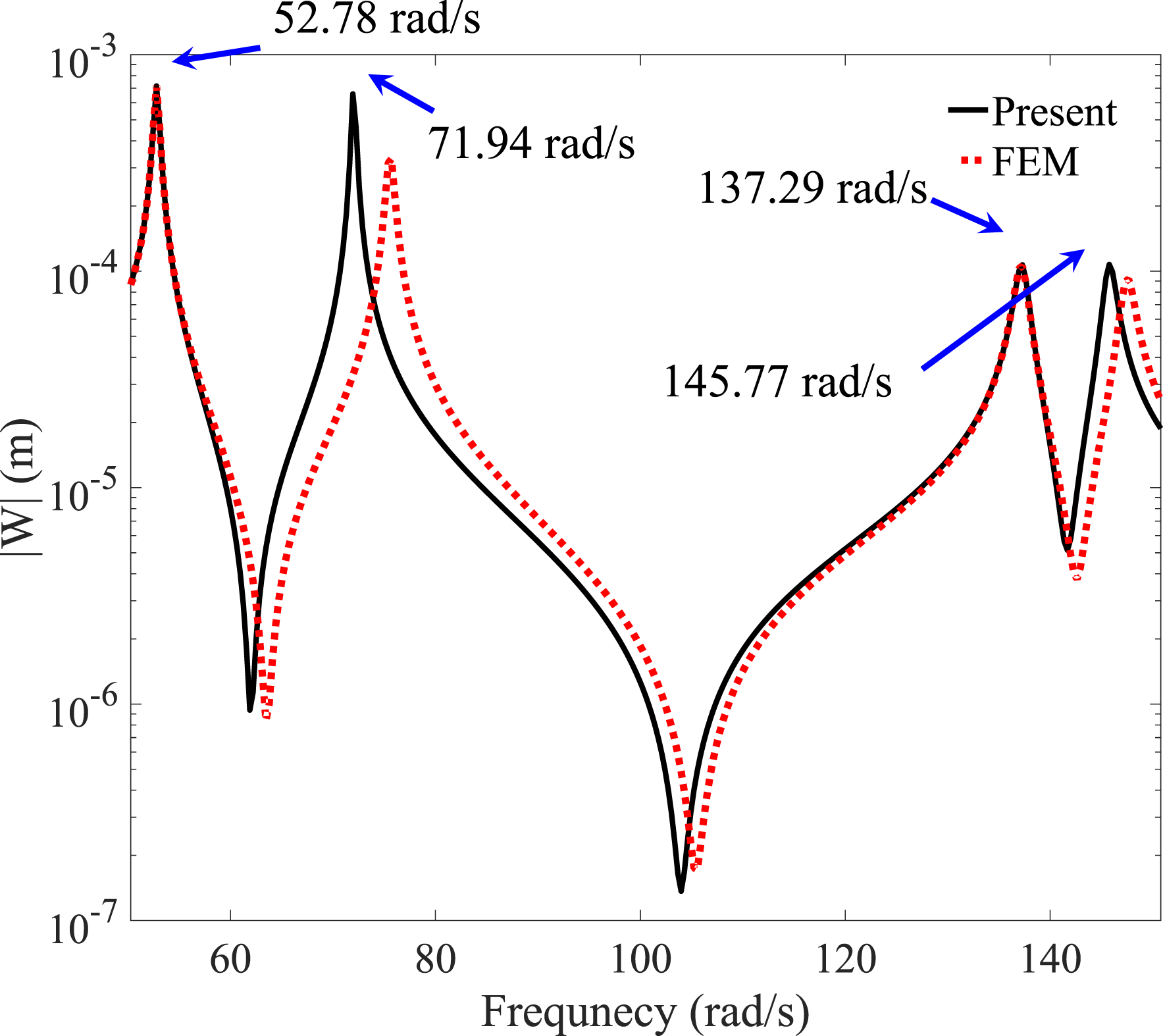
The eigenvalues of Magnitude of the input point displacement calculated by the present method with different wave numbers. Magnitude of the input point displacement without damping from the FEM with mesh size being 0.006 m, 800 modes and 105 springs, and from the present method with 80 waves. Magnitude of the input point displacement with damping loss factor Magnitude of the input point displacement obtained by the present method and ABAQUS with frequency interval of 0.05 Hz.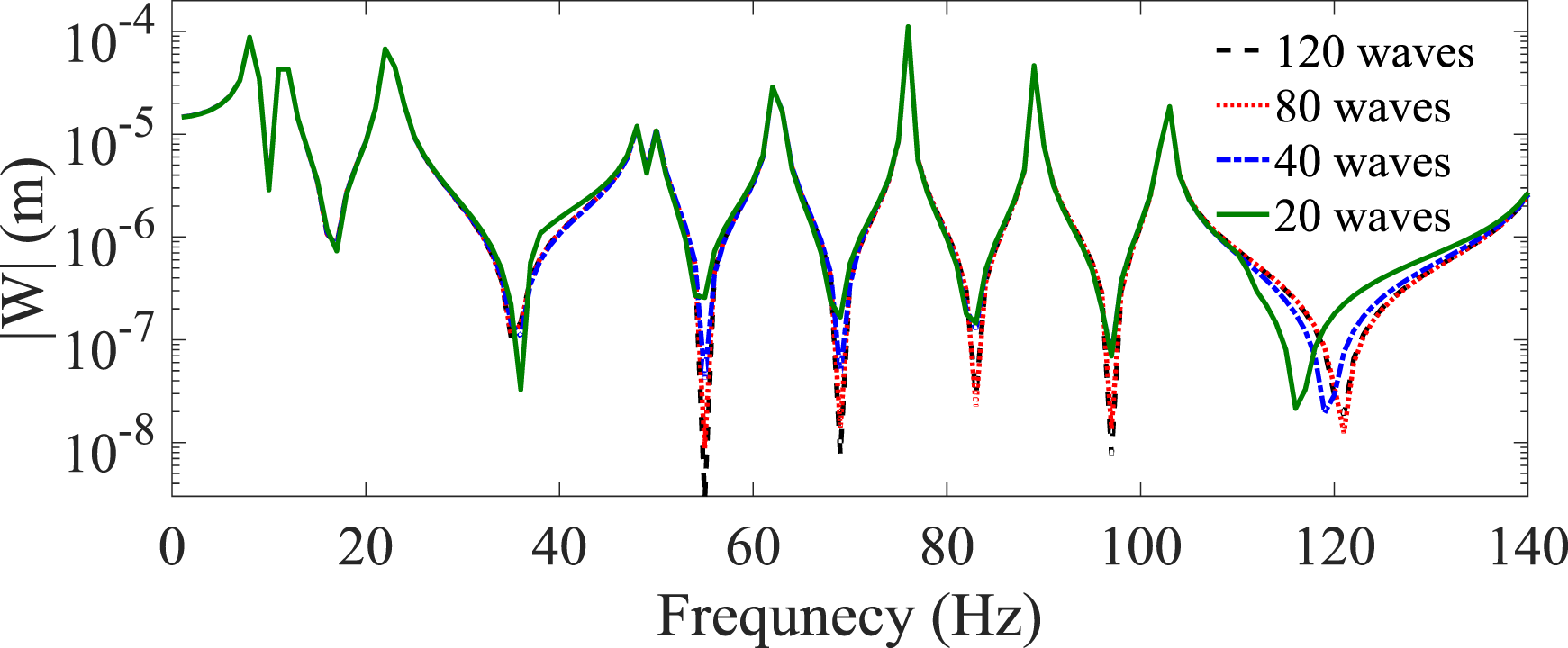

Three-plate system
The eigenvalues of 
SSS-SSS
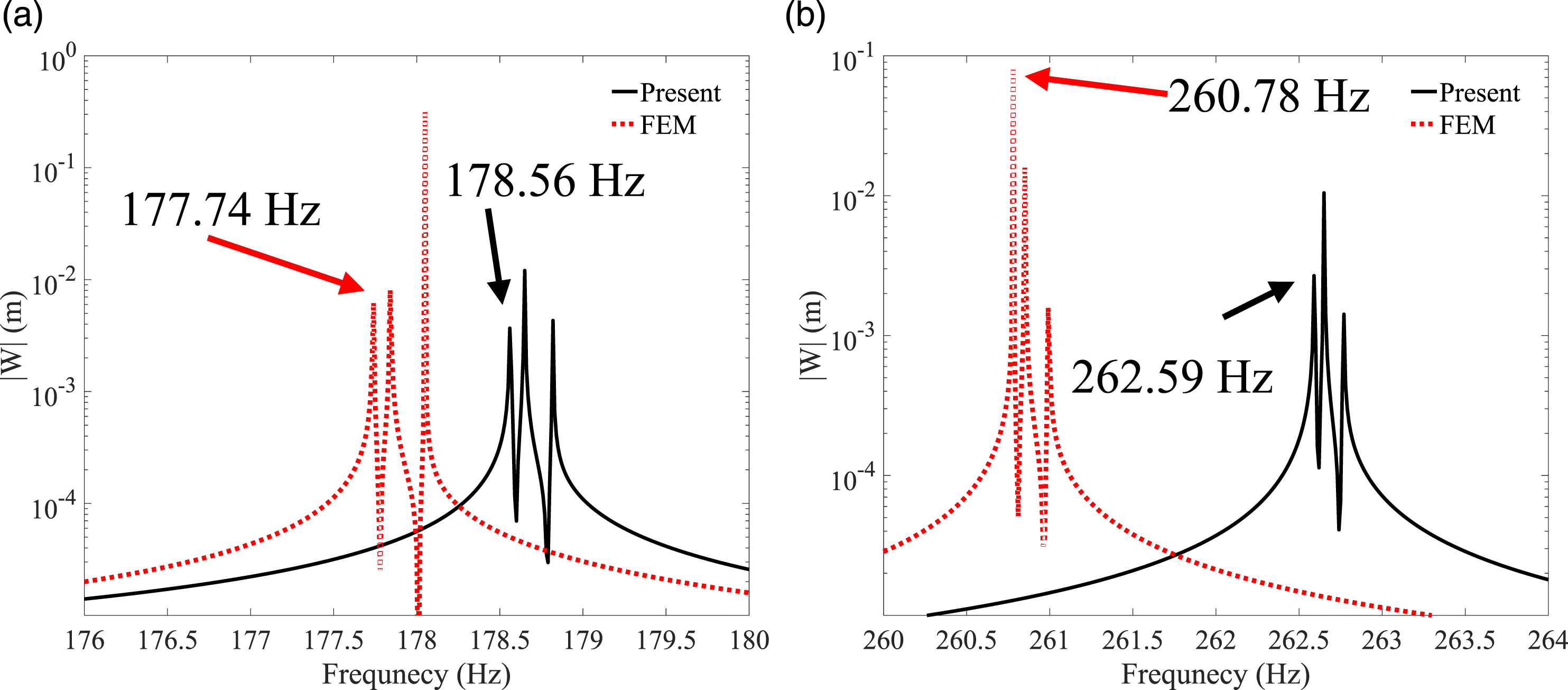
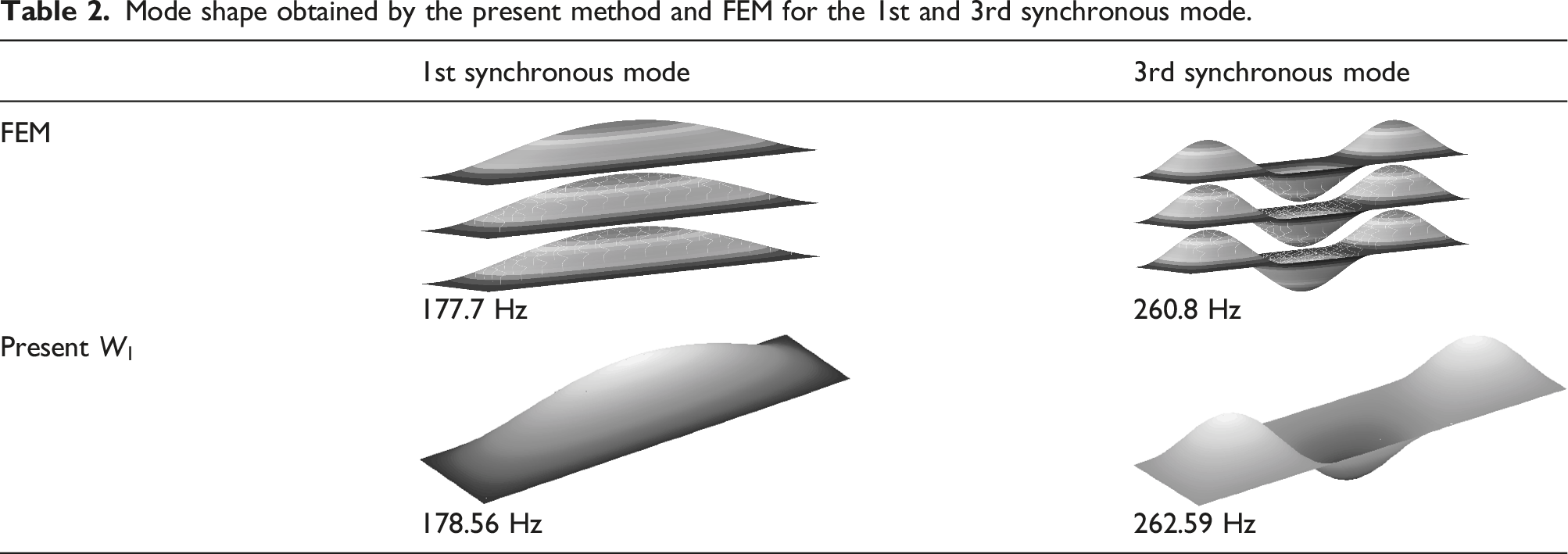
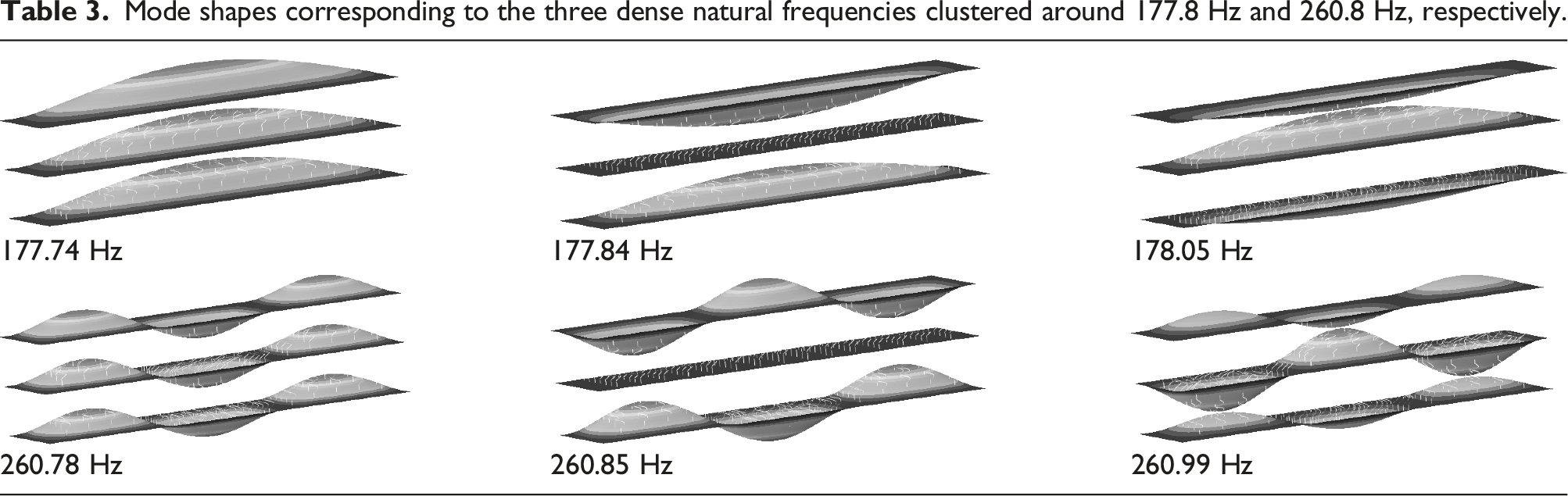
Figure 8 shows the magnitude of the input point displacement obtained by the proposed method and FEM without damping. In the present method, the results calculated using 40 waves were convergent. The number of waves used here was significantly reduced compared with that in the double-plate example structure. Because the length/width ratio of the plate in the three-plate system is larger than that of the double-plate system, a part of the near-field wave components can be ignored. In the FEM results, 105 springs were used to model each elastic layer, 200 modes were used in the mode superposition method, and the mesh size was 0.0025 m. The analysis frequency range was from 1 to 500 Hz with a frequency interval of 1 Hz. As shown in Figure 8, the present results are in good agreement with the FEM results. However, discrepancies were observed at some frequencies; the reason for this had been discussed in Section 6.1. To carry out an in-depth exploration, a more precise discretization of the analysis frequency is considered. Figure 9 shows the magnitude of the input point displacement obtained by the proposed method and FEM with a frequency interval of 0.01 Hz. As shown in Figure 8, more peaks appeared when the frequency interval was reduced. The first peak from the FEM and proposed method in Figure 9(a) and (b) correspond to the synchronous natural modes. In the in-phase motion, as the springs are undeformed, the frequencies and mode shapes are the same as those of a single isolated plate. For these natural modes, exact solutions exist for the natural frequencies, that is, Magnitude of input point displacement obtained by the present method with 40 waves and FEM with 105 springs, 200 modes and mesh size 0.0025 m. Magnitude of the input point displacement obtained by the present method and FEM with frequency interval of 0.01 Hz. Mode shape obtained by the present method and FEM for the 1st and 3rd synchronous mode. Mode shapes corresponding to the three dense natural frequencies clustered around 177.8 Hz and 260.8 Hz, respectively.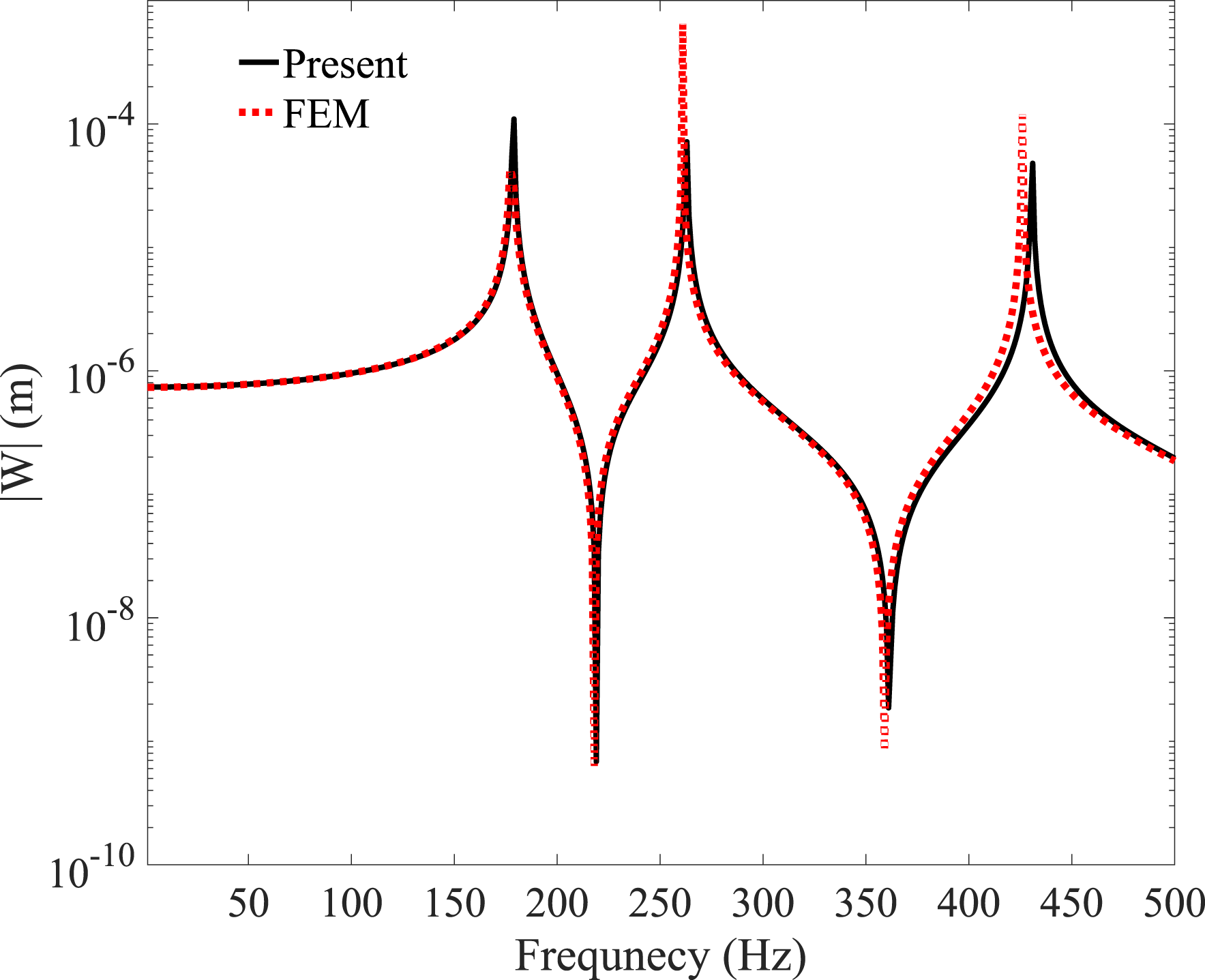
SCS-FSC
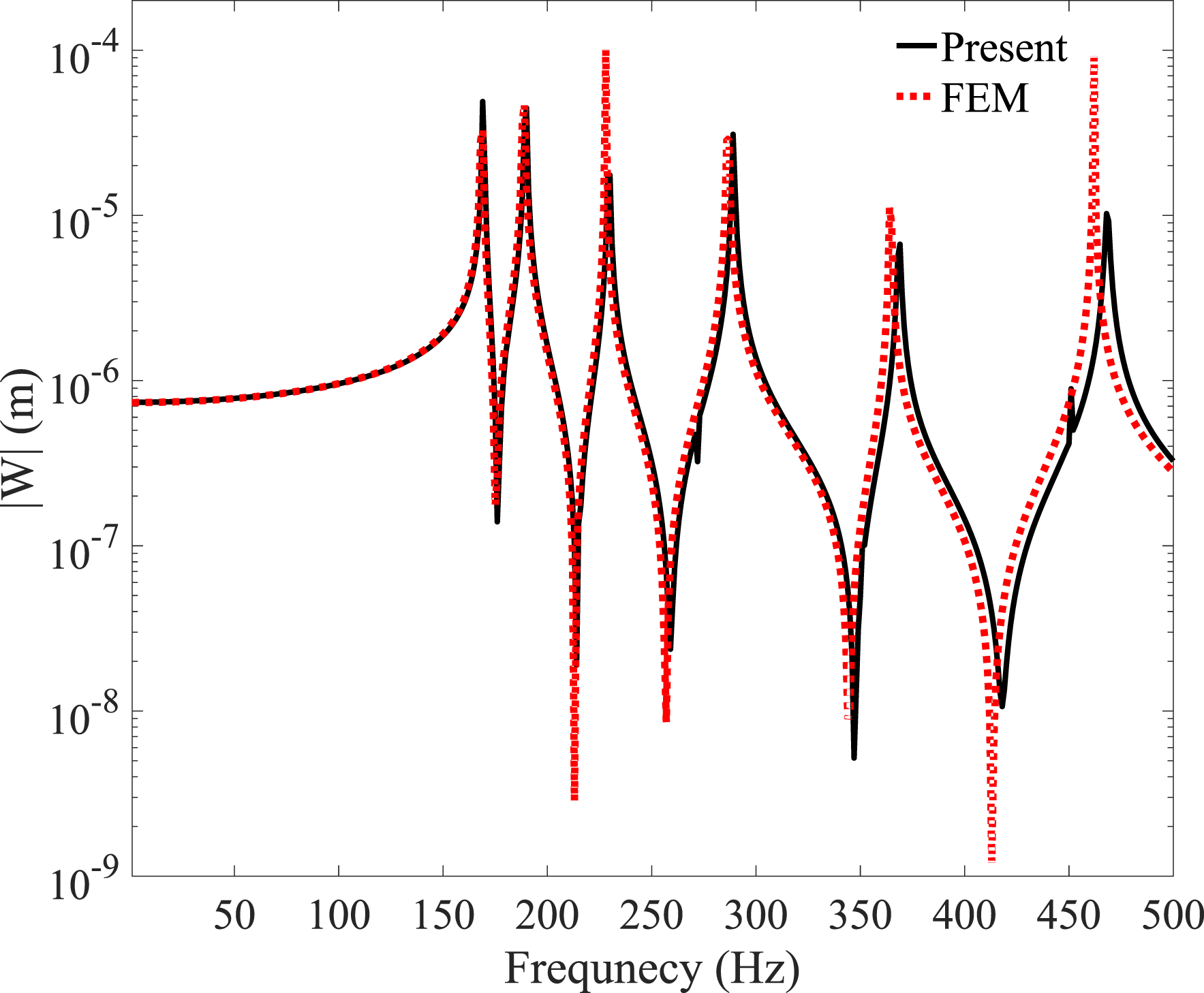
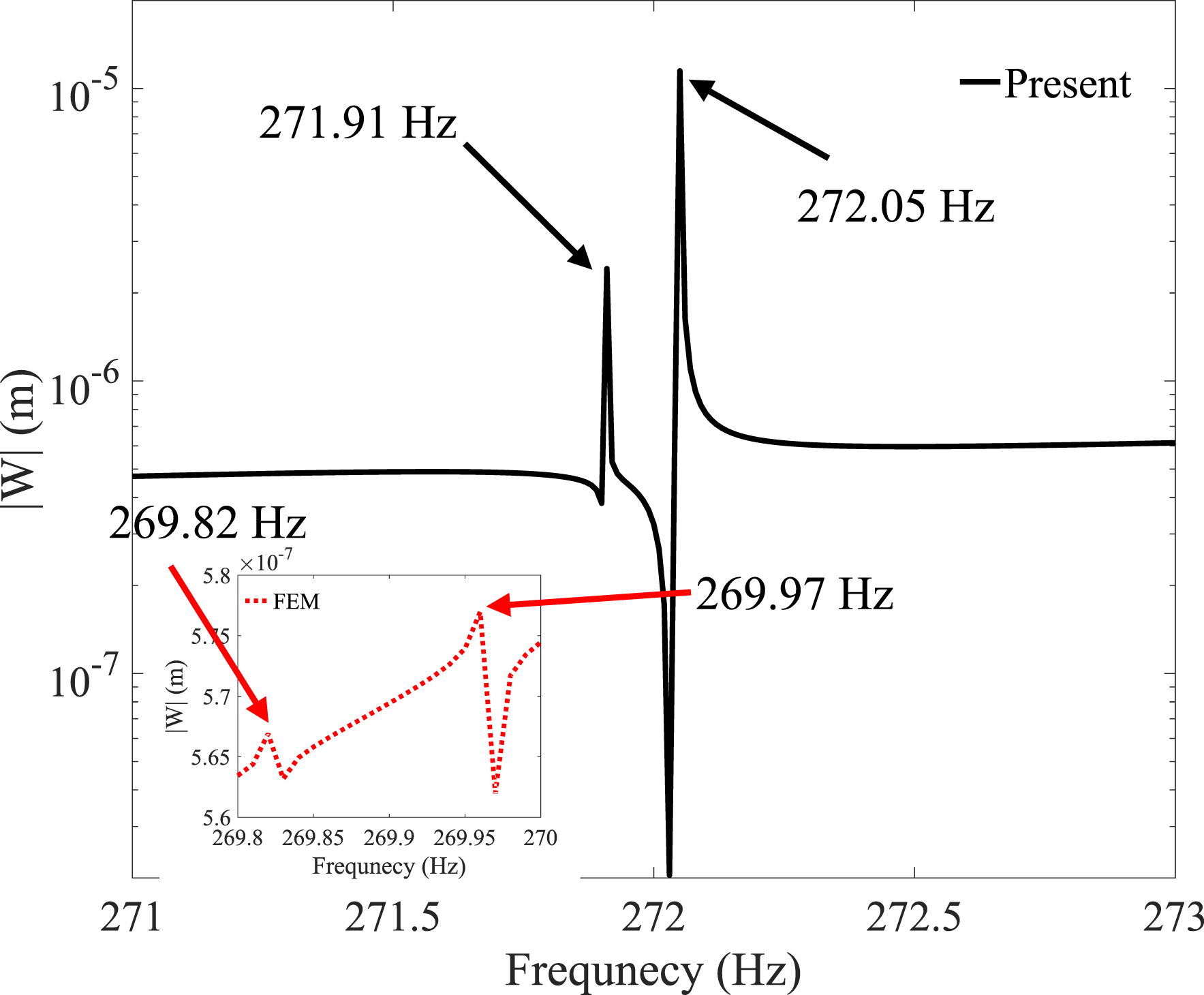
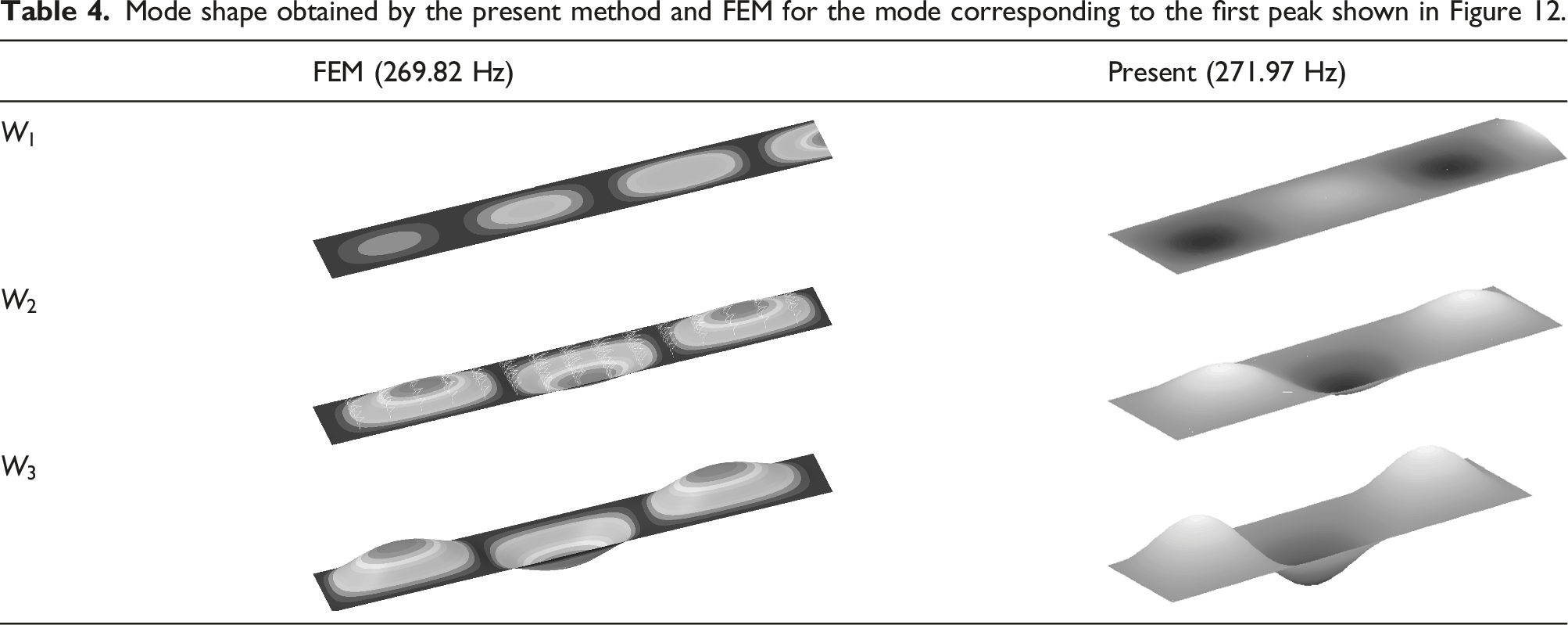
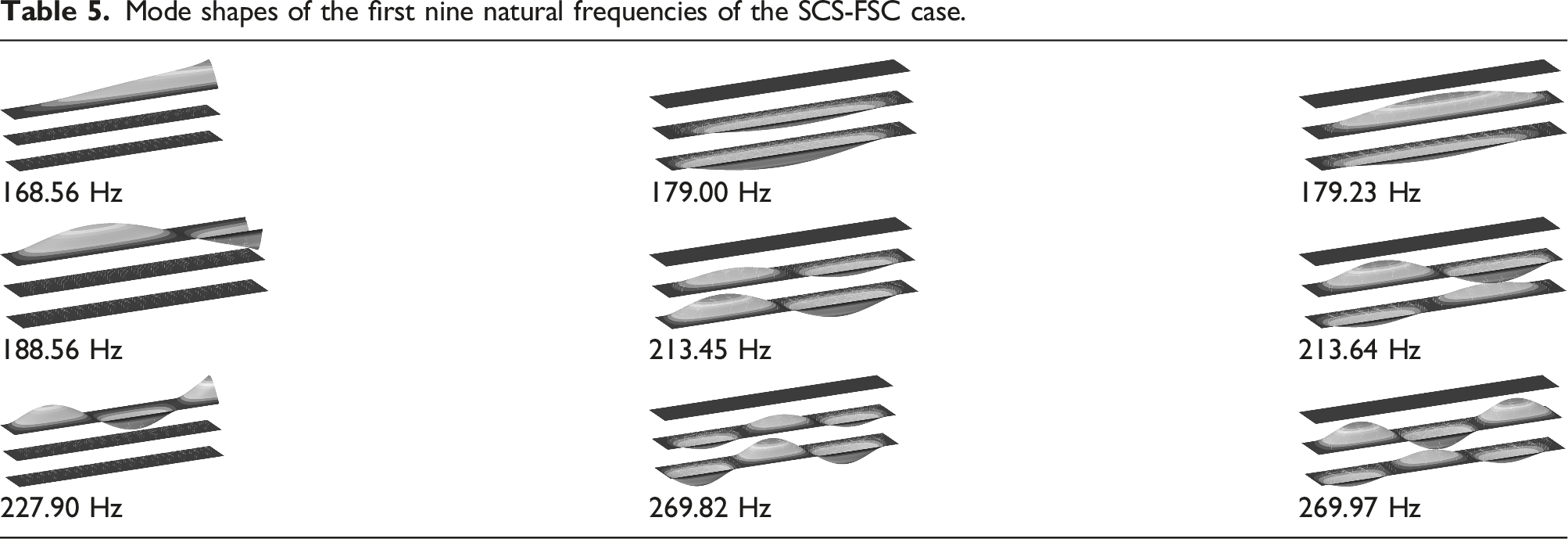
Figure 10 gives the geometry configuration and boundary conditions of the SCS-FSC case, the blue edges indicate simply supported boundaries, the red edges indicate clamped boundaries, the purple lines represent the springs. Figure 11 shows the magnitude of the input point displacement obtained by the proposed method and FEM for the SCS-FSC case. In the proposed method, 40 waves were used. In the FEM results, 105 springs were used to model each elastic layer, 200 modes were used in the mode superposition method, and mesh size was 0.0025 m. The analysis frequency range was from 1 to 500 Hz with a frequency interval of 1 Hz. As shown in Figure 10, the present results agree well with the FEM results. However, there were discrepancies at approximately 270 and 450 Hz. To investigate these differences, the frequency interval 0.01 Hz was adopted. Figure 12 shows the forced response at approximately 270 Hz obtained using the present method and FEM. As can be seen, compared with Figure 11, more peaks appeared when the frequency interval was reduced. In contrast to the previous case of SSS-SSS where boundary conditions of each plate were the same, the boundary conditions of each plate were different for the SCS-FSC case. Therefore, there were no synchronous modes in the SCS-FSC case, and the elastic layer affected the natural frequencies of each mode. Table 4 lists the mode shape corresponding to the first peak, shown in Figure 12, obtained from the present method and FEM. Therefore, the mode shapes from the proposed method and FEM are in good agreement with each other. Table 5 shows the mode shapes of the first nine natural frequencies of the SCS-FSC case. The regularity is significantly different from that for the SSS-SSS case shown in Table 3, mainly because that the right end of the first plate here is free. Geometry configuration and boundary conditions of the SCS-FSC case, the blue edges indicate simply supported boundaries, the red edges indicate clamped boundaries, and the purple lines represent the springs (refer to the electronic version for color images). Magnitude of input point displacement obtained by the present method with 40 waves and FEM with 105 springs, 200 modes and mesh size 0.0025 m. Magnitude of the input point displacement obtained by the present method and FEM with frequency interval of 0.01 Hz. Mode shape obtained by the present method and FEM for the mode corresponding to the first peak shown in Figure 12. Mode shapes of the first nine natural frequencies of the SCS-FSC case.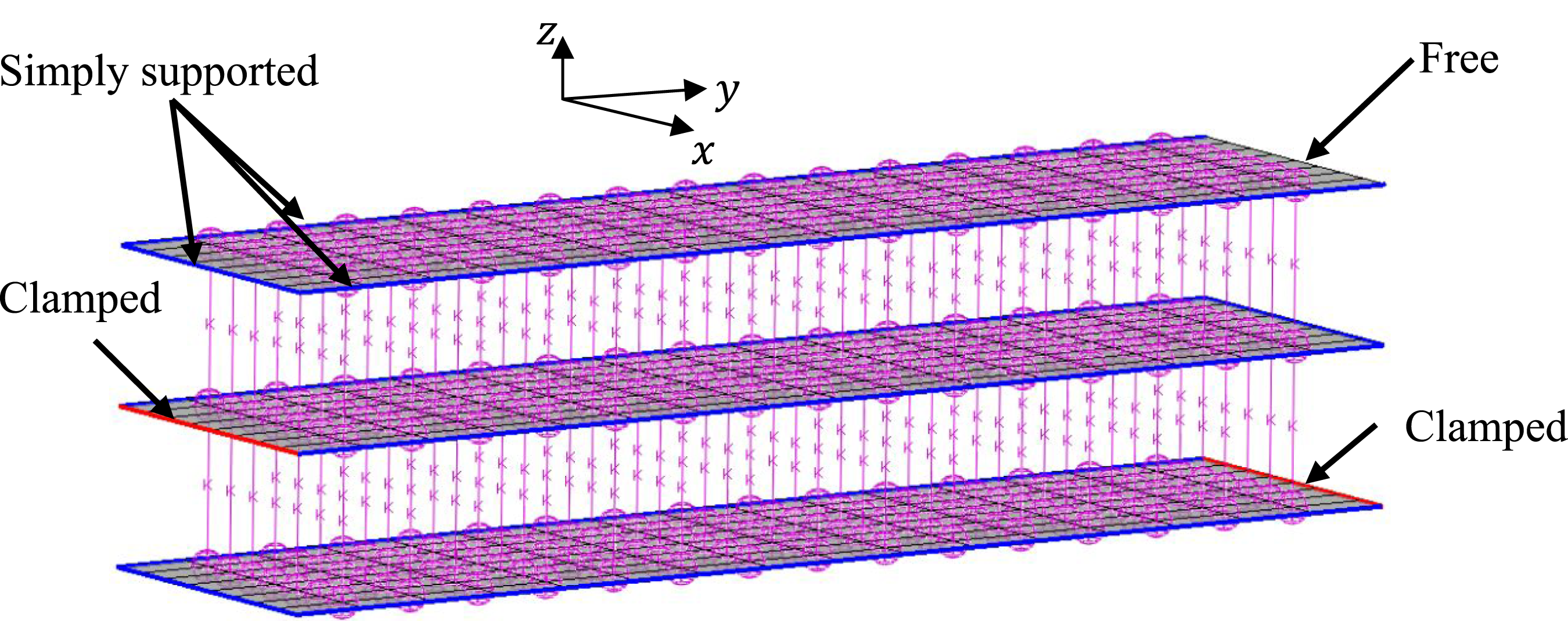
Parameter analysis
The influence of the stiffness of the elastic layer on the vibration response is investigated in this section. The damping loss factor Magnitude of the input point displacement obtained by the present method for the one-, two-, and three-plate system.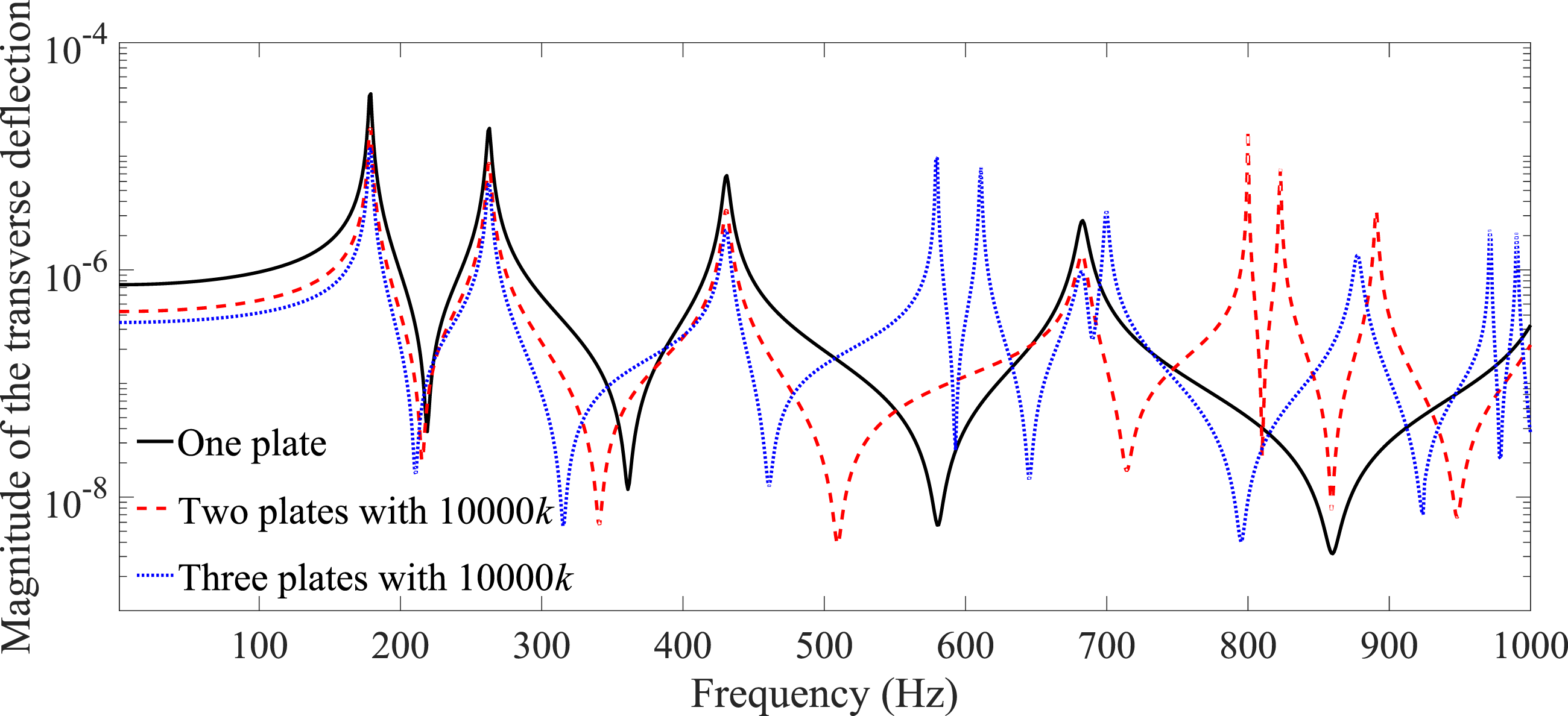
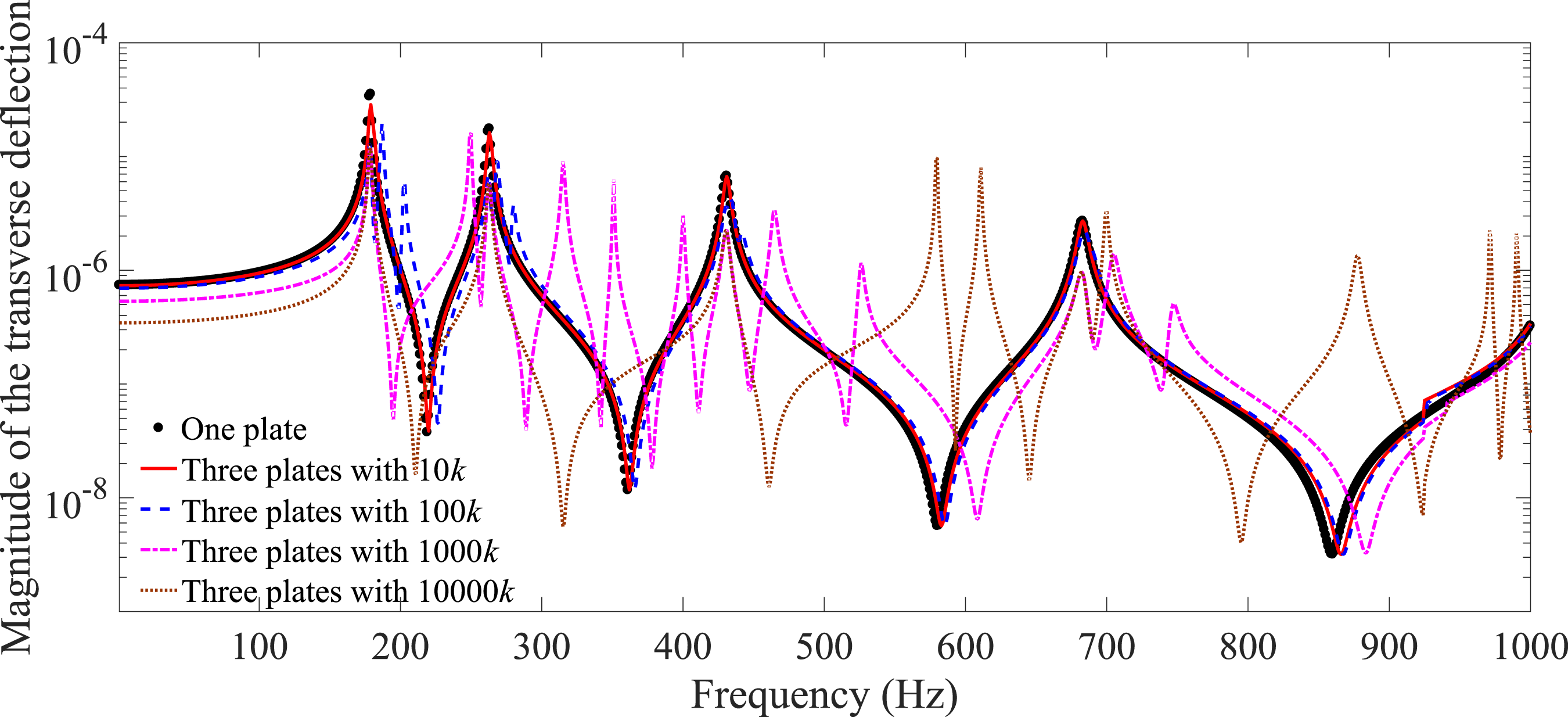
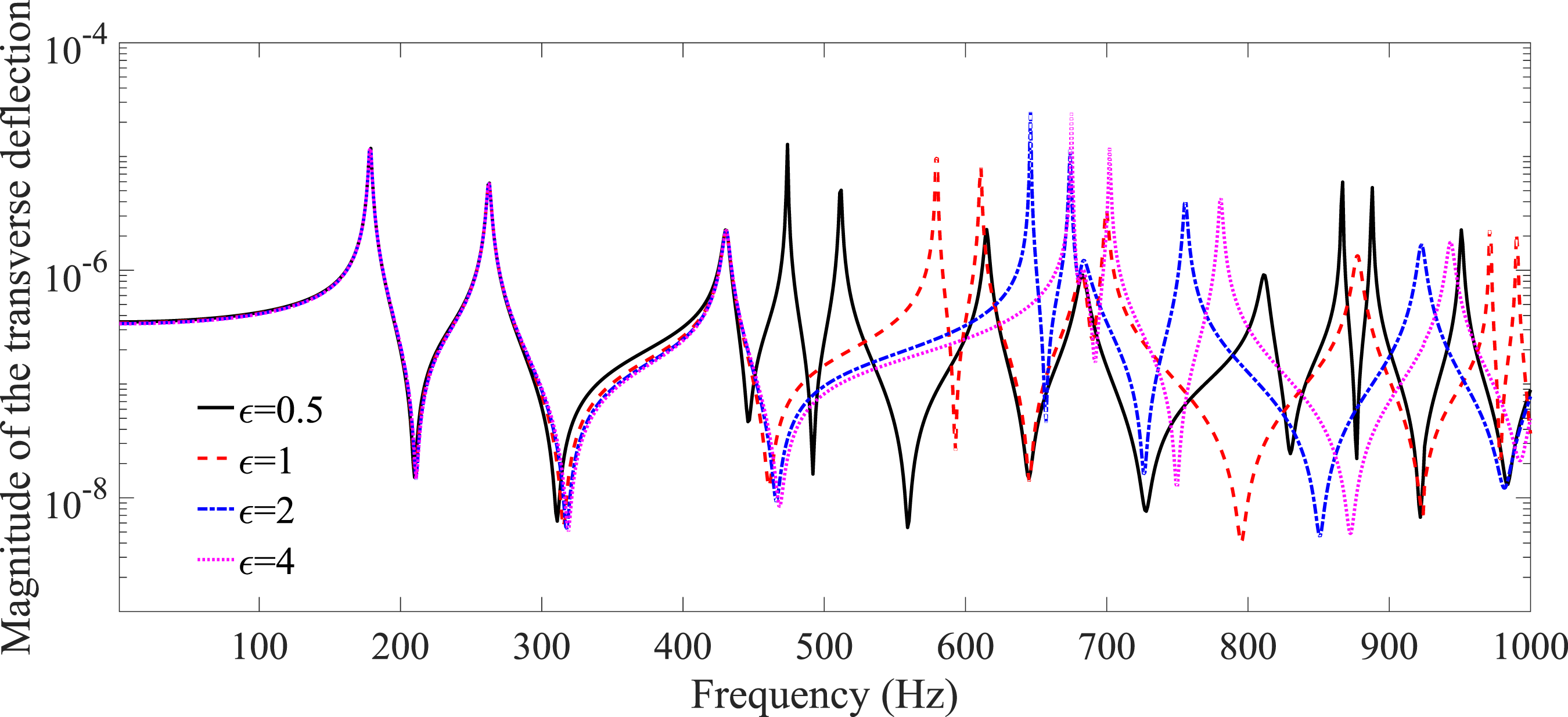
The influence of stiffness Magnitude of the transverse deformation of the first plate calculated with different stiffness Magnitude of the transverse deformation of the first plate calculated with different stiffness Magnitude of the transverse deformation of the first plate calculated with different 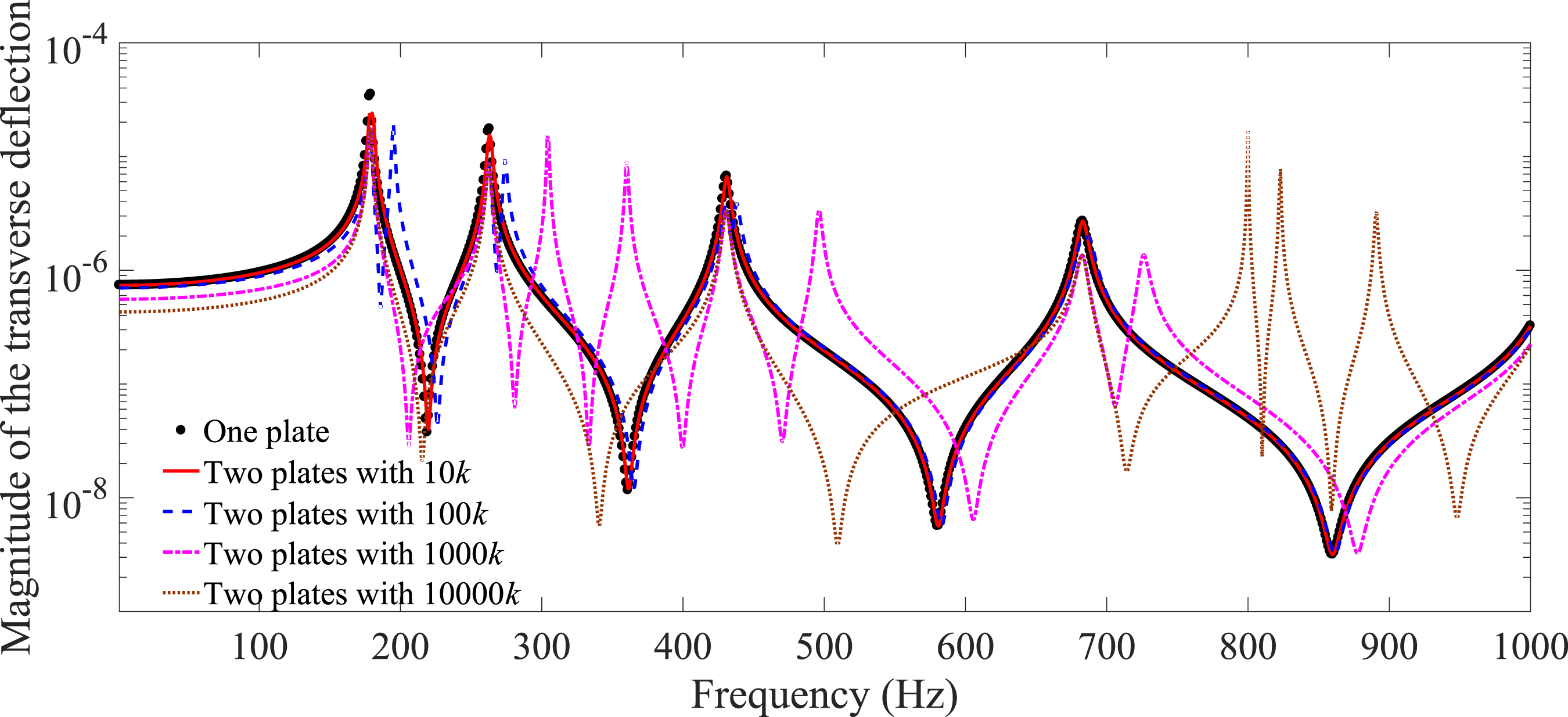
Conclusions
A symplectic analytical wave-based method was developed for the forced vibration of an elastically connected multi-plate system. Using the decoupling technique based on the eigensolution of the elastic coupling matrix, a series of independent equations were obtained and introduced into the symplectic dual system. The solution of the forced responses of the multi-plate system in the physical space was subsequently transformed into wave space. By searching for the peak response, the natural frequencies and mode shapes could also be obtained using the proposed method. In the numerical examples, the forced responses of the double- and three-plate systems with various combinations of boundary conditions were calculated. Comparisons of the present results with the results from the literature and FEM validated the high accuracy of the present method. The influence of the stiffness of the elastic layer and number of plate components on the vibration response was also investigated. With an increase in the number of plate components, the vibration around the primary resonant peaks of the first plate significantly reduced; however, more secondary resonant peaks appeared. With an increase in the stiffness of the elastic layer, the secondary resonant peaks due to the addition of the plate component moved to larger frequencies, which further increased the vibration isolation effect of the multi-plate system.
Footnotes
Declaration of Conflicting Interests
The author(s) declared no potential conflicts of interest with respect to the research, authorship, and/or publication of this article.
Funding
The author(s) disclosed receipt of the following financial support for the research, authorship, and/or publication of this article: This work was supported by the National Natural Science Foundation of China (grant number: 12072280).
