




Abstract
Addressing the problem of vulnerability of the directly measured signal in the field of strain weighing to the high-energy noise of similar frequency bands, an adaptive VMD algorithm is proposed from the perspective of signal separation for the decomposition and denoising of strain signal in the field of strain weighing. In this paper, the adaptive VMD algorithm is used to determine the optimal values of two key parameters, namely, the number of decomposition layers and the penalty factor, to avoid the blindness of parameter selection. The separation results are tested by parameters such as sample entropy, and then the original measurement signal is adaptively decomposed into multiple optimal intrinsic mode function components, and the effective components after extraction are reconstructed into new observation signals. The analysis results of the strain data collected at the weighing site show that the adaptive VMD algorithm can separate and extract the effective strain signal in line with the actual situation from the original strain signal mixed with noise and achieve the purpose of avoiding the interference of high-energy environmental noise with close frequency bands.
Introduction
With the development of materials technology, electronic technology, computer technology, and other disciplines, weighing technology has been developed from simple and rough mechanical weighing equipment to high precision and automatic electronic weighing device. 1 In high-end manufacturing industry, the research demand for weighing has also been upgraded from static and discontinuous weighing at the beginning to a dynamic and continuous weighing demand. 2 As for the strain weighing signal, the numerical accuracy of weighing signal is very important for the manufacturing of some high precision parts. The sensors used for weighing are capacitive, resistive, electromagnetic, 3 etc., among which strain resistive sensors are still widely used in the field of industrial production. For the measured component, its natural vibration characteristics 4 often affect the strain measurement results. In the field of strain weighing, strain resistance sensors often need to work in harsh environments such as vibration conditions; therefore, their direct output measurement results are always affected by environmental noise sources and it is difficult to eliminate. Therefore, it is of great significance to carry out subsequent denoising processing for signal of the strain weighing field.
With the development of modern signal processing technology, many experts and scholars have begun to study more excellent time-frequency and multi-resolution signal extraction and denoising technology. Gokcen 5 proposed an impulse noise removal algorithm based on adaptive interpolation, which can eliminate the impulse noise of fixed values in color or gray images in real time. Kalman filter 6 is suitable for dealing with non-stationary, time-varying systems and multi-dimensional signals, but it will produce large errors when the signals are mutated. Wavelet transform 7 has remarkable performance in the processing of white Gaussian noise, but in the actual processing, improper selection of wavelet basis and decomposition layer will lead to obvious differences in denoising performance. Empirical mode decomposition (EMD) 8 can process complex signals into smooth modal components, and has the ability of adaptive processing according to the characteristics of the signal itself, but this algorithm is prone to mode aliasing and has endpoint effect. Wei 9 uses clustered empirical mode decomposition to separate respiration and heartbeat signals. This algorithm effectively reduces the mode aliasing problem in EMD by adding white Gaussian noise. However, if white Gaussian noise cannot be sufficiently offsetted in the decomposition, the decomposed intrinsic mode functions (IMFs) may still have corresponding noise signal components. VMD (Variation Mode Decomposition), as an adaptive non-recursive modality variational signal processing method, has been widely used in signal processing, fault diagnosis, and prediction in recent years. Demyanov10,11 used the theory of the exact penalty method to solve problems in variational calculus. 1
Dragomiretskiy 12 et al. proposed this algorithm to decompose complex signals into modal components with different center frequencies. VMD algorithm has significant advantages in the analysis and processing of nonlinear and non-stationary signals, and can effectively avoid the residual white noise generated in the process of EEMD decomposition. In addition, it is more critical that the VMD algorithm can avoid mode aliasing to the greatest extent, which means that theoretically, it has a better separation effect on the frequency band mixed signals. VMD algorithm effectively solves the problem of modal aliasing and endpoint effect in EMD, and has stronger robustness, 13 but at the same time, some parameters in VMD methods need to be given, otherwise the ideal separation effect cannot be achieved, especially for the determination of the decomposition layer K and the penalty factor α, which directly affect the validity and correctness of the decomposition result. DMD (Dynamic mode decomposition) is also a new factorization and dimensionality reduction technique for data sequences. Schmid14,15 introduced that DMD is suitable for extracting dynamic information from fluid systems.
In the field of dynamic strain measurement data processing, traditional filtering noise reduction methods often fail to achieve the ideal noise reduction effect for the noise signals with close frequency bands from environmental vibration sources. Aiming at the problem that the strain signal measured at the weighing site is affected by high-energy environmental noise, this paper proposes an adaptive VMD denoising and reconstruction method, which overcomes some defects of the existing variational mode decomposition processing and successfully obtains effective signals conforming to the actual situation after removing the environmental noise. Moreover, compared with other decomposition denoising methods, it performs better in terms of signal-to-noise ratio and other indicators. It is conducive to the high precision utilization of the strain measurement values.
On-site signal acquisition of strain weighing
In order to evaluate the actual performance of the whole strain weighing system, it is necessary to effectively evaluate and analyze the pressure strain signal. The strain pressure sensor is mounted on the weighing structure, as shown in Figure 1. On-site signal acquisition for strain weighing.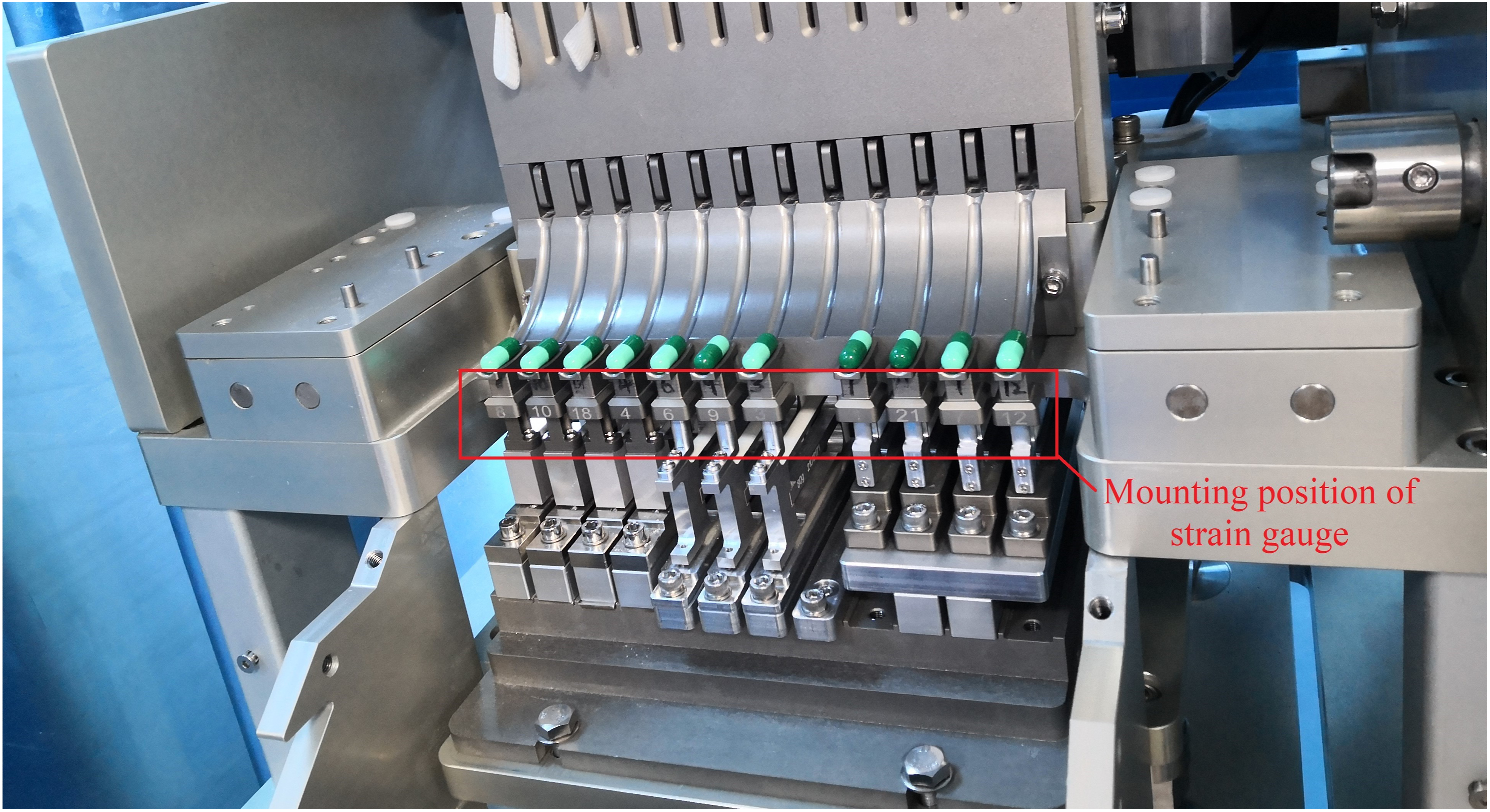
The data shown in Figure 2 is the original dynamic measurement signal of the strain weighing system corresponding to the continuous falling of pills during the operation of the on-site machine. These data are collected by the strain weighing sensors in the field and digitized by a high-speed AD converter. The final acquisition results are transferred to the computer. The data represents the strain data collected by the weighing sensor. It can be seen that in the weighing measurement site, due to the influence of environmental factors such as personnel walking, mechanical vibration, electronic noise, etc., the strain signal obtained by direct measurement is mixed with various different frequency bands noise, even the environmental noise which is close to the actual strain source signal frequency band. So in order to further the strain analysis process, it is necessary to perform noise reduction processing on the strain signal obtained by direct measurement. Strain signal measured on-site.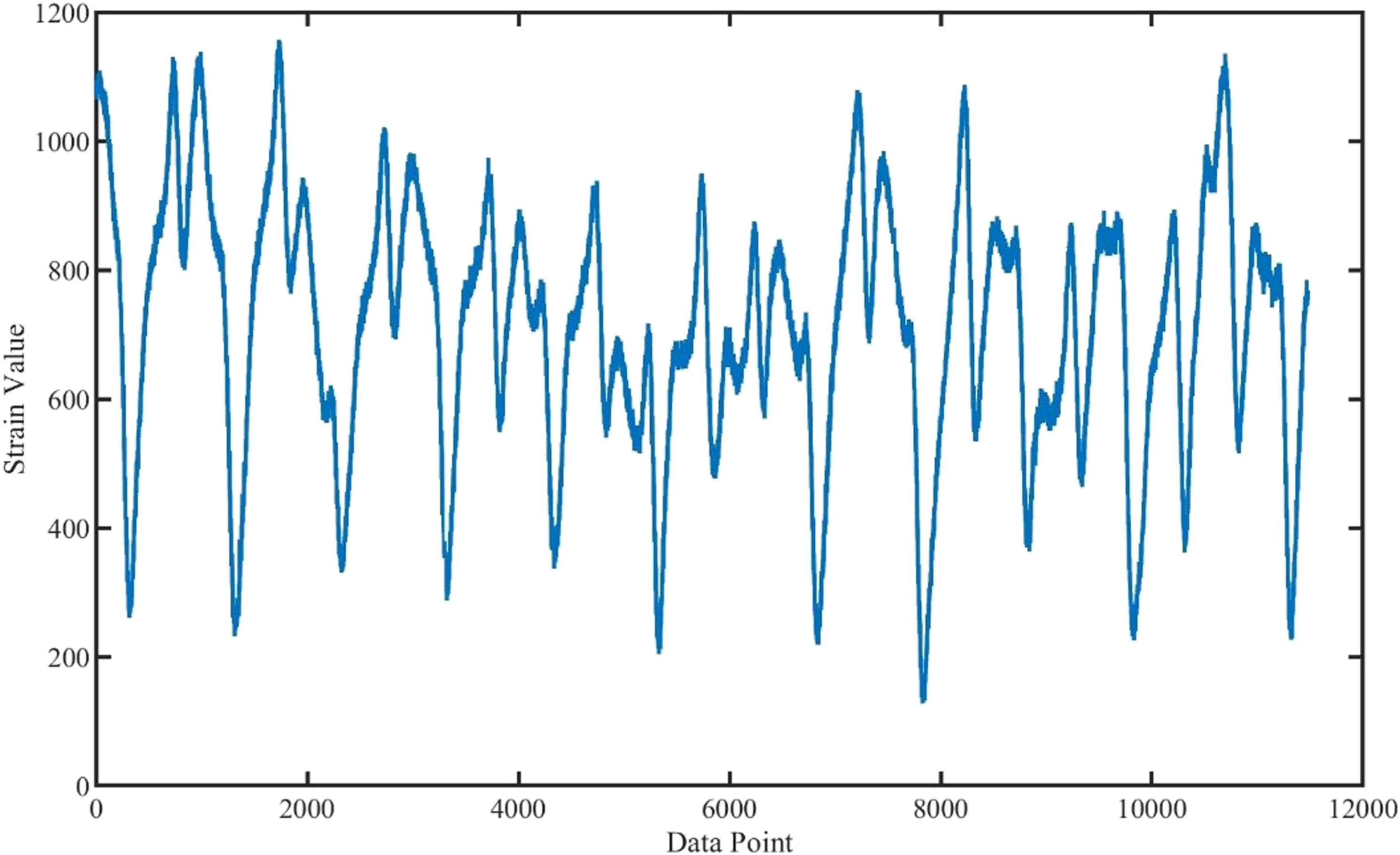
Adaptive VMD algorithm
This paper chooses to introduce VMD algorithm into the processing of dynamic strain measured signals. Using VMD, the original strain signal can be decomposed into modal components at a preset scale. These modal components can be divided into corresponding noise components and effective signal components according to their respective characteristics. Each sub-strain signal is obtained by setting the finite bandwidth parameter and the initial central angular frequency. The expression of the decomposed strain mode function is as follows:



δ(t) is the Dirac distribution. * means the convolution operation.




The above equations are solved in the frequency domain of the strain signal by Parseval/Plancherel Fourier equidistant under the norm
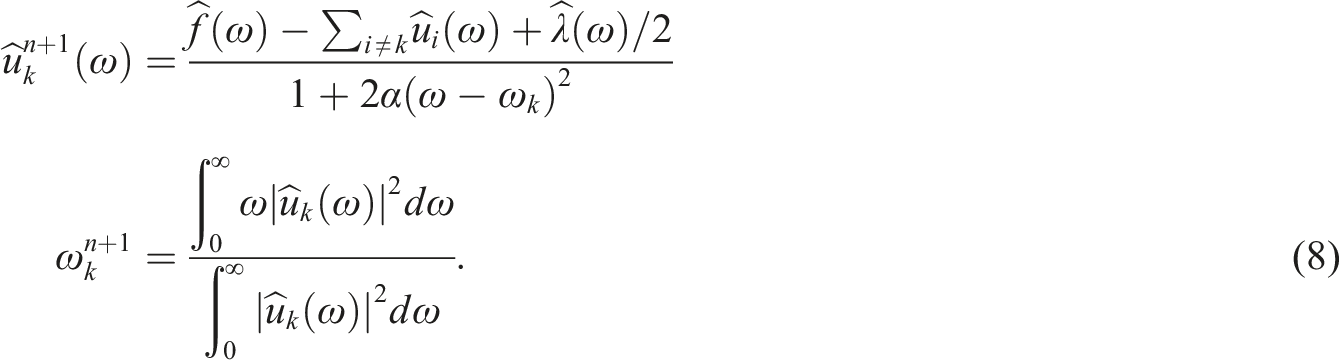
The constraints of iteration are VMD operation for original strain signal.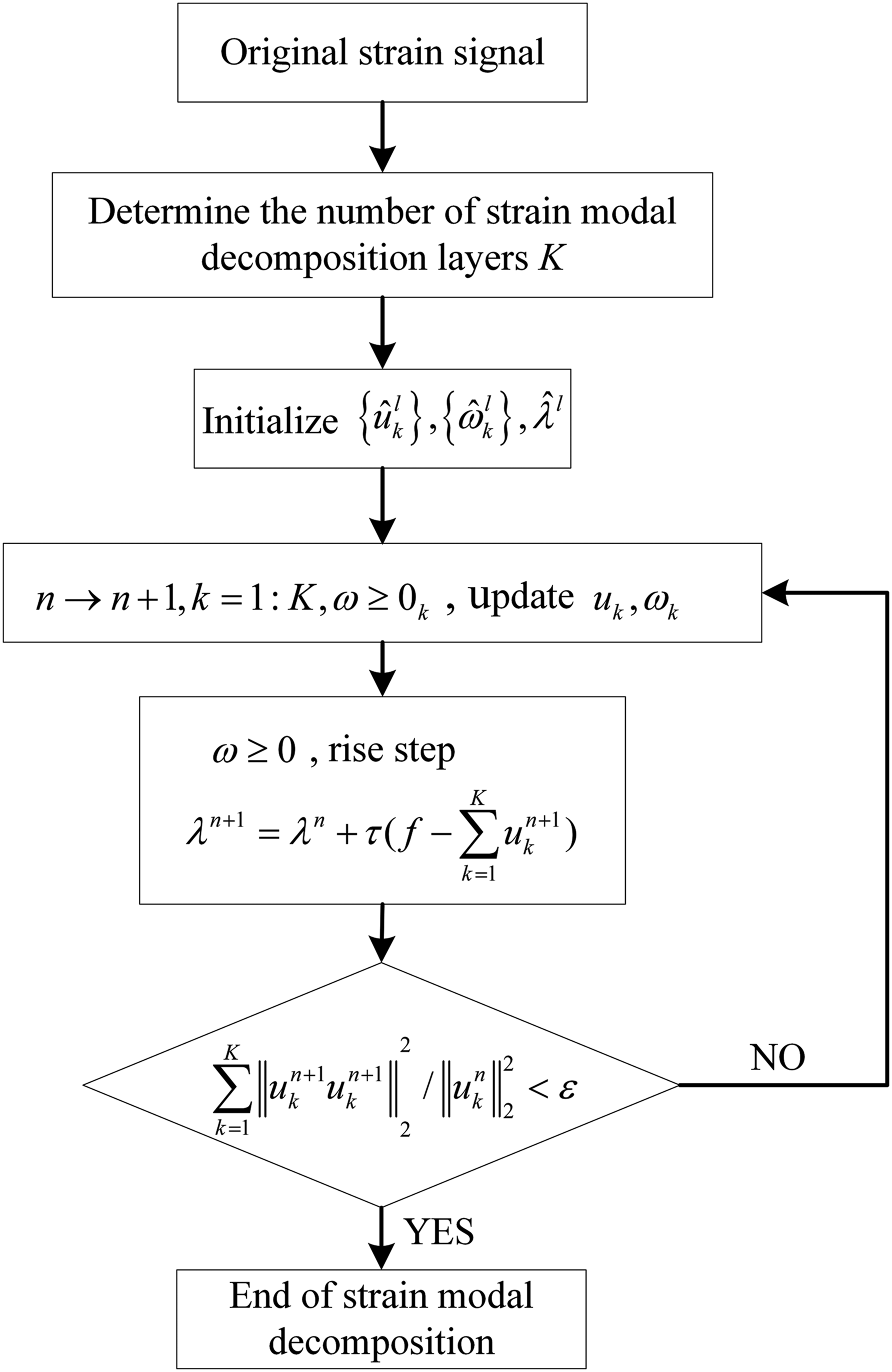

In this paper, the value of decomposition layer K is preliminarily determined by using the adaptive decomposition characteristics of EMD algorithm and the energy entropy parameters in the time domain, and PCC (Pearson Correlation Coefficient) is used as the standard for the decomposition effect. Finally, the optimal quadratic penalty factor α is found by using the sample entropy of modal components as the standard, and the determined parameters are used to evaluate and reconstruct the signal after decomposition, to eliminate the influence of field environmental noise on the strain weighing measurement results as much as possible.
Predetermination of decomposition layers of strain signal
EMD method can decompose the strain signal itself recursively, that is, the strain signal is adaptively decomposed into multiple strain modal components and a residual strain component. EMD decomposition finds out all the extreme points of the strain signal, fits the upper and lower envelopes of the strain signal through the cubic spline curve, and calculates its average value. After calculating the difference between it and the original strain signal x(t), the intermediate signal h(t) is obtained, and the strain modal signal is tested whether it satisfies: (1) The maximum difference between the number of local extremum points and the number of zero crossing points is one; (2) At any time, the mean value of the local upper and lower envelopes is zero; (3) The number of extreme points and zero crossing points of the residual signal is equal.
When the above conditions are satisfied, h(t) is considered as the IMF component, which is the effective strain modal component. Subtract h(t) from the original strain signal x(t) and decompose it as a new signal. When the corresponding conditions are met, the decomposition is stopped. Through EMD method, the original strain signal will be decomposed into multiple strain IMF components. In this paper, it is proposed that the number of IMFs whose time domain energy ratio is greater than a certain threshold can be used as the input of the initial strain signal decomposition layer of VMD. The decomposition level K value obtained by this method can theoretically prevent the phenomenon of incomplete mode decomposition when used in VMD algorithm. In this paper, the energy threshold for the actual strain signal is set to 10%, and the formula for calculating the time domain energy ratio of the signal is

N means the total number of signal data points.
Determination of decomposition level K
For the strain modal components obtained by the initial decomposition of VMD, it is further necessary to consider the correlation between them and the original signal to make a judgment. PCC (Pearson Correlation Coefficient) is a method used to determine the correlation between variables. A calculated value of 0 indicates no correlation at all, and a value between 0 and 0.1 is generally considered to indicate very weak correlation or no correlation. PCC calculated with modal components as samples is

IMF represents each strain modal component, and
Determination of quadratic penalty factor in strain mode decomposition
In VMD algorithm, the quadratic penalty factor is introduced to improve the convergence of the signal. As a large enough positive number, the quadratic penalty factor can ensure the reconstruction accuracy of the strain signal affected by Gaussian noise. Sample entropy, 19 as an entropy algorithm, is independent of data length and has good consistency. At present, sample entropy has been used to evaluate the complexity of physiological time series (EEG, sEMG, etc.) and to diagnose pathological states. For the strain modal components generated by decomposition, the calculation steps of sample entropy are as follows:
For the time series

Sample entropy is an index to describe the complexity of time series. The larger the entropy is, the more frequency components are in the decomposed strain signal. The smaller the entropy value is, the less frequency components are in the decomposed strain signal, that is, the frequency band is relatively single and the aliasing phenomenon is not serious. According to the actual situation of the weighing site, the value range of the quadratic penalty factor is preset to be 100–2500. Taking the step size of 100 as the unit, the corresponding VMD processing is performed on the strain signal by taking different penalty factor values. By calculating the sample entropy of the low-frequency modal component after decomposition, the value of α that makes the sample entropy of the corresponding modal component smaller is selected as the appropriate quadratic penalty factor parameter of VMD algorithm. When quadratic penalty factor fails to make the algorithm achieve good sample entropy convergence effect within its value range, it can choose to further increase the value range, or when the sample entropy does not change significantly, indicating that the value of quadratic penalty factor has little influence on the decomposition convergence result. Similarly, the sample entropy can also be used to discard ambient noise of the strain modal components.
Adaptive VMD algorithm denoising reconstruction process of strain signal
In order to realize the reconstruction of the strain signal mixed with low-frequency environmental noise in the weighing field after denoising, the high-frequency invalid residual components and noise in the low-frequency band are removed by using the strain modal decomposition method. The abandonment of the effective signal and the invalid noise component is realized by the prior knowledge of the strain signal and the sample entropy value.
In summary, the process of adaptive VMD denoising reconstruction method for the dynamic strain signal in strain weighing field is shown in Figure 4. Adaptive VMD algorithm denoising reconstruction process for strain signal.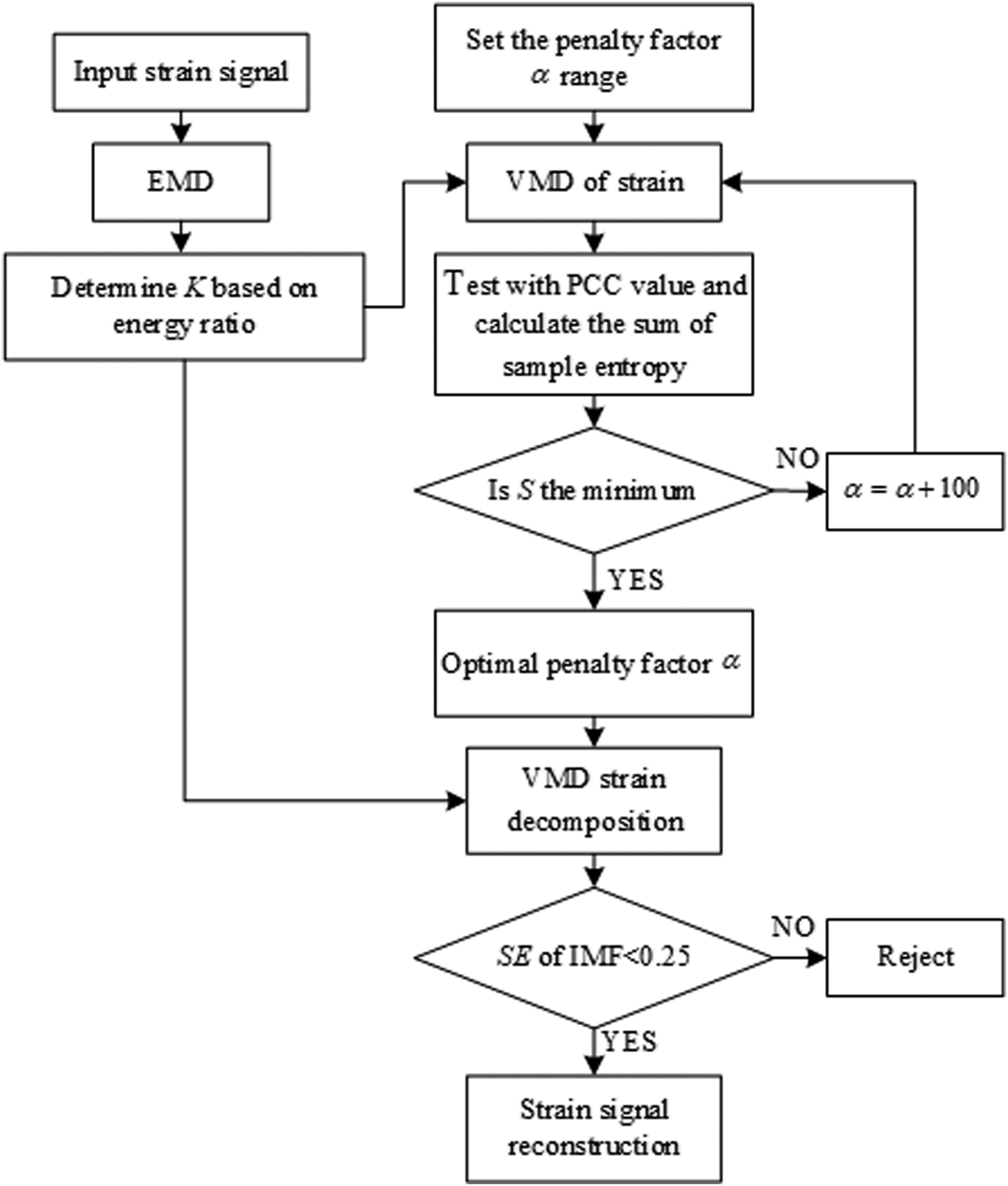
Data analysis and verification of adaptive VMD algorithm
In order to verify the effectiveness of the adaptive VMD algorithm proposed in this paper for denoising low-frequency high-energy environmental noise with close frequency bands, this paper uses strain measurement signal data collected from the weighing site. The sampling frequency of the measuring device is 4 kHz. The method proposed in this paper is used to optimize the decomposition level K and penalty factor α in VMD. For the actual measurement situation, the source signal should be a periodic signal whose spectrum is concentrated in the low-frequency band and the amplitude is close to zero. The original strain signals for a total of 11,479 data sampling points are shown in Figure 2. It can be observed that the strain signal contains obvious high-frequency noise features, which can be eliminated by traditional smoothing, median processing, low-pass filtering and other means. However, the traditional denoising method is difficult to play a role in dealing with the mixed high-energy low-frequency noise in the actual strain signal. The proposed adaptive VMD algorithm can perform better for the effective modal separation of the measured signal.
Firstly, EMD algorithm is used to preliminarily decompose the strain signal measured in the field, and the decomposition results are shown in Figure 5. EMD decomposes the measured signal into 10 IMFs and a residual component. The proportion of each IMF in the time domain is calculated by equation (10). After calculation, the time domain energy ratios of IMF4, IMF5, IMF6, and IMF7 are 19.57%, 21.96%, 33.86%, and 10.30%, respectively. Therefore, the decomposition layer parameter K of VMD is initially set to 4, and the field strain signal is initially decomposed. The results are shown in Figure 6. Strain signal pre-decomposition by EMD. When K = 4, VMD results.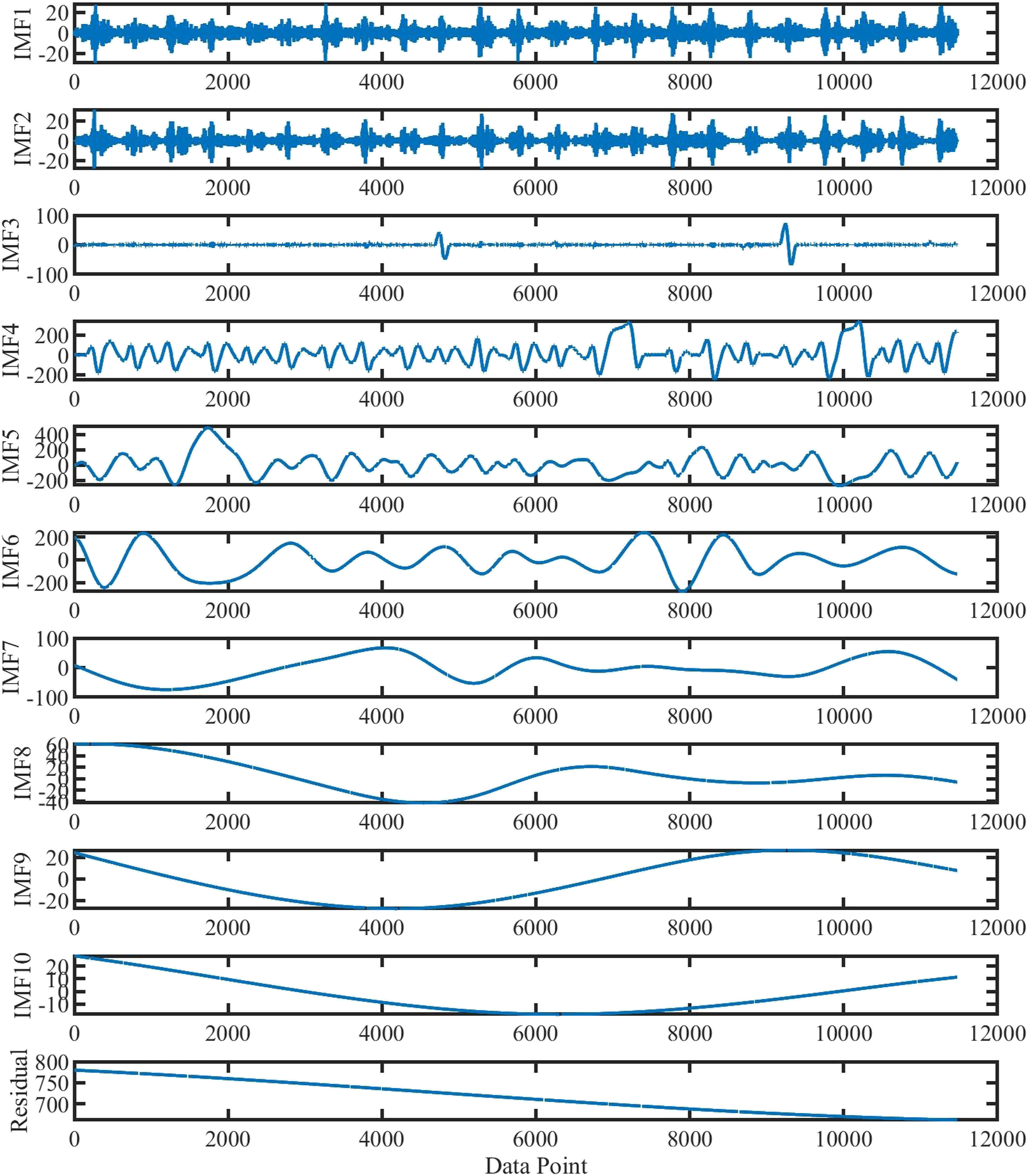
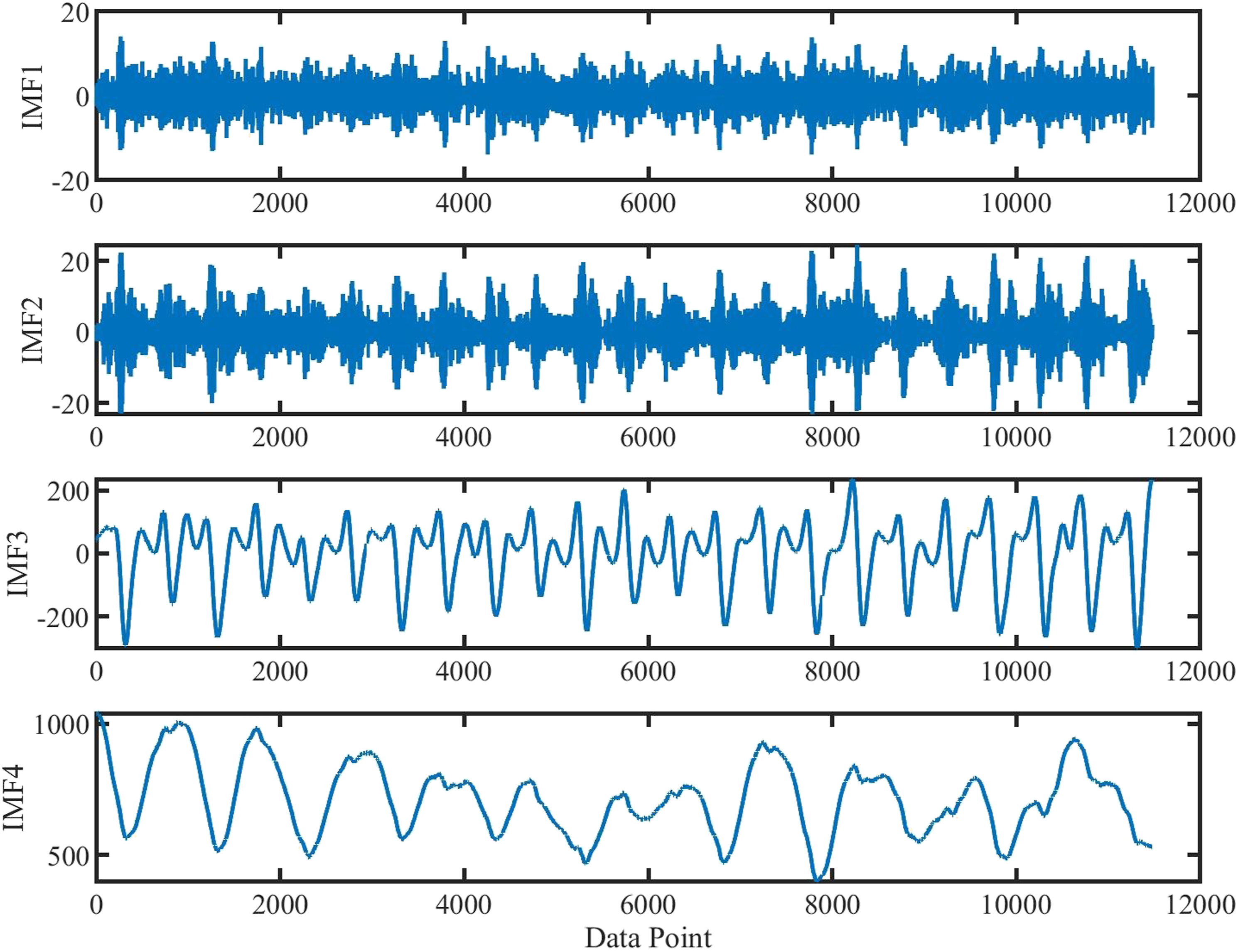
As shown in Figures 6, IMF1 and IMF2 are Gaussian-like high-frequency noise components, IMF3 is the strain signal generated by the strain source in the mid-low frequency band concentrated around the zero, which can be regarded as the effective signal after noise reduction, and IMF4 is the high-energy low-frequency noise generated by the vibration source of the measurement environment. Then, the PCC value in equation (11) is used to test the IMF1 and IMF2 components, and their PCC values are 0.0304 and 0.0418, respectively, which are both less than 0.1. Therefore, it can be considered that there comes the over-decomposition phenomenon when K = 4. The value of decomposition layer K was set as 3 to perform VMD. Make the spectrum diagram of components, as shown in Figure 7. When K = 3, VMD results.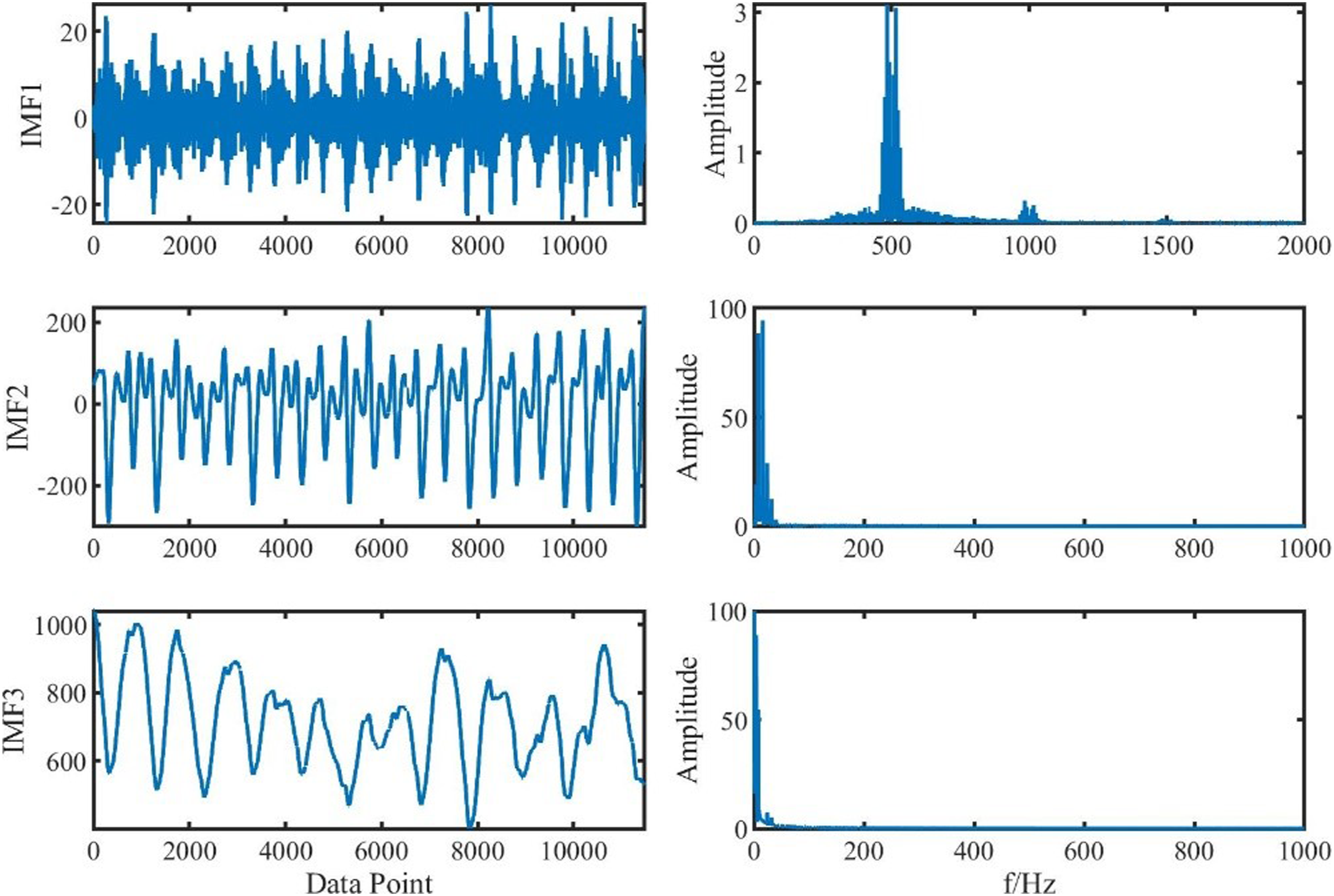
It can be seen from Figure 7 that after the value of K decreases to 3, the high-frequency noises represented by IMF1 and IMF2 when K = 4 are integrated together, and the spectrum shows its high-frequency characteristics. When K = 3, IMF2 and IMF3 have no significant change compared with the result when K = 4. The PCC values of each IMF component are calculated to be 0.0322, 0.7710, and 0.8719, respectively, indicating that when K = 3, the high-frequency noise without correlation occurs. Each component can be used for noise reconstruction, that means K takes 3 as the optimal decomposition layer, and the corresponding IMF2 component is considered as the actual measurement signal after reconstruction. The results of the decomposition also prove that this algorithm is suitable for the case where the target signal has a certain prior knowledge in use, because the IMF3 is also a suspicious signal with certain periodic regularity, but in fact, the measured signal will not take such a large value according to the prior knowledge.
After the value of decomposition layer K is determined, the quadratic penalty factor is used to find the value that minimizes the sample entropy value of the low-frequency component, and the value is changed from 100 to 2000 as shown in Figure 8. It can be seen from the figure that for the decomposition results of the strain signal, as the quadratic penalty factor increases, the sample entropy of IMF2 shows a trend of decreasing first, then increases, and then decreases. When the value is greater than 1200, the sample entropy value basically does not change significantly. Therefore, a penalty factor value around 1200 can be selected. Variation of sample entropy with penalty factor.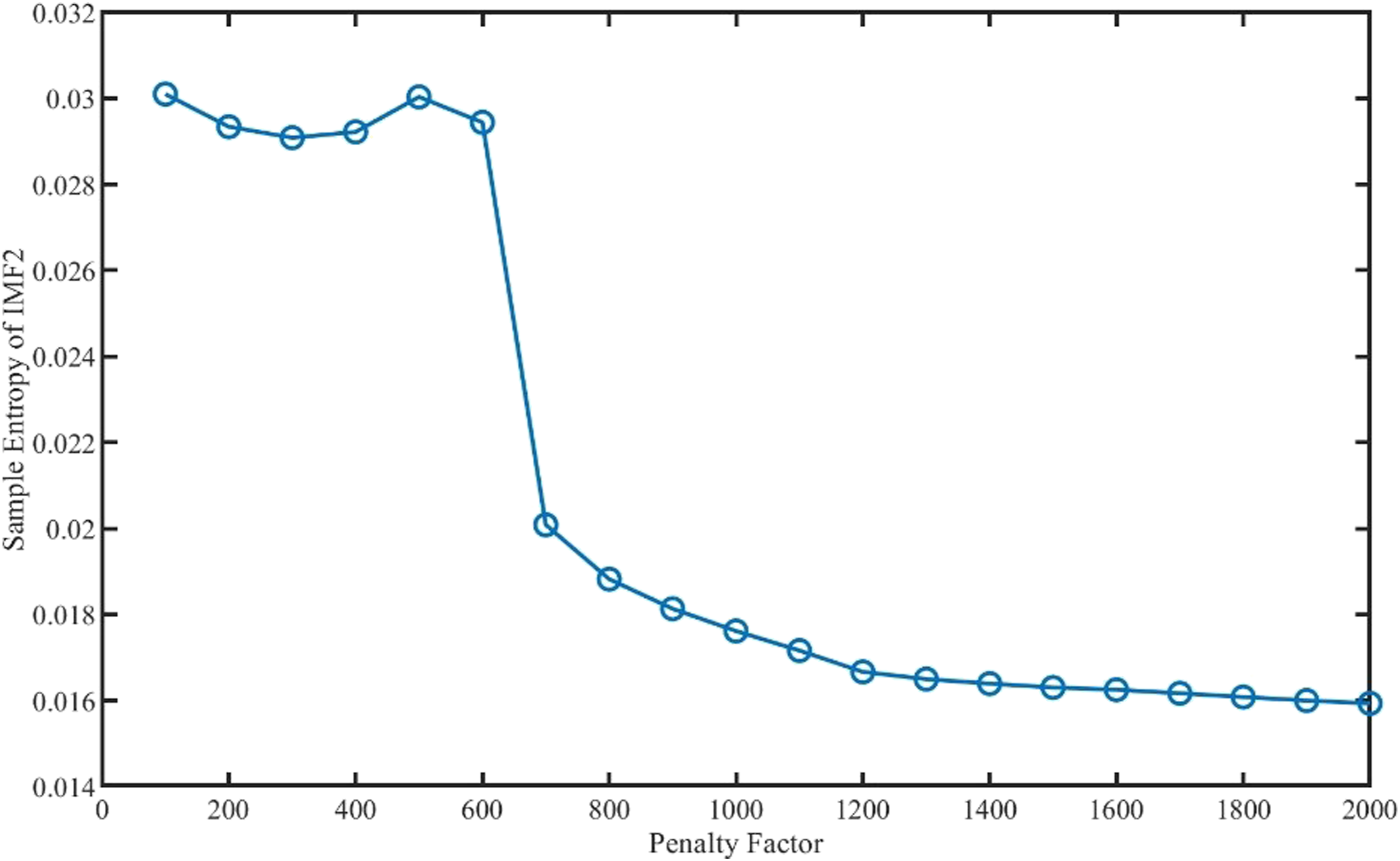
In order to quantitatively analyze the denoising effect of the adaptive VMD parameter determination method, the signal-to-noise ratio (SNR) and root mean square error (RMSE) parameters are used as the corresponding evaluation indexes after eliminating the low-frequency and high-energy noise. The higher the SNR is, the better the denoising effect is. The smaller the RMSE is, the closer the reconstructed signal is to the original strain signal. The definitions of SNR and RMSE are


Decomposition denoising effect comparison results.

The effect of noise reduction before and after using the proposed algorithm is compared, as shown in Figure 9. Denoising effect of on-site strain signal.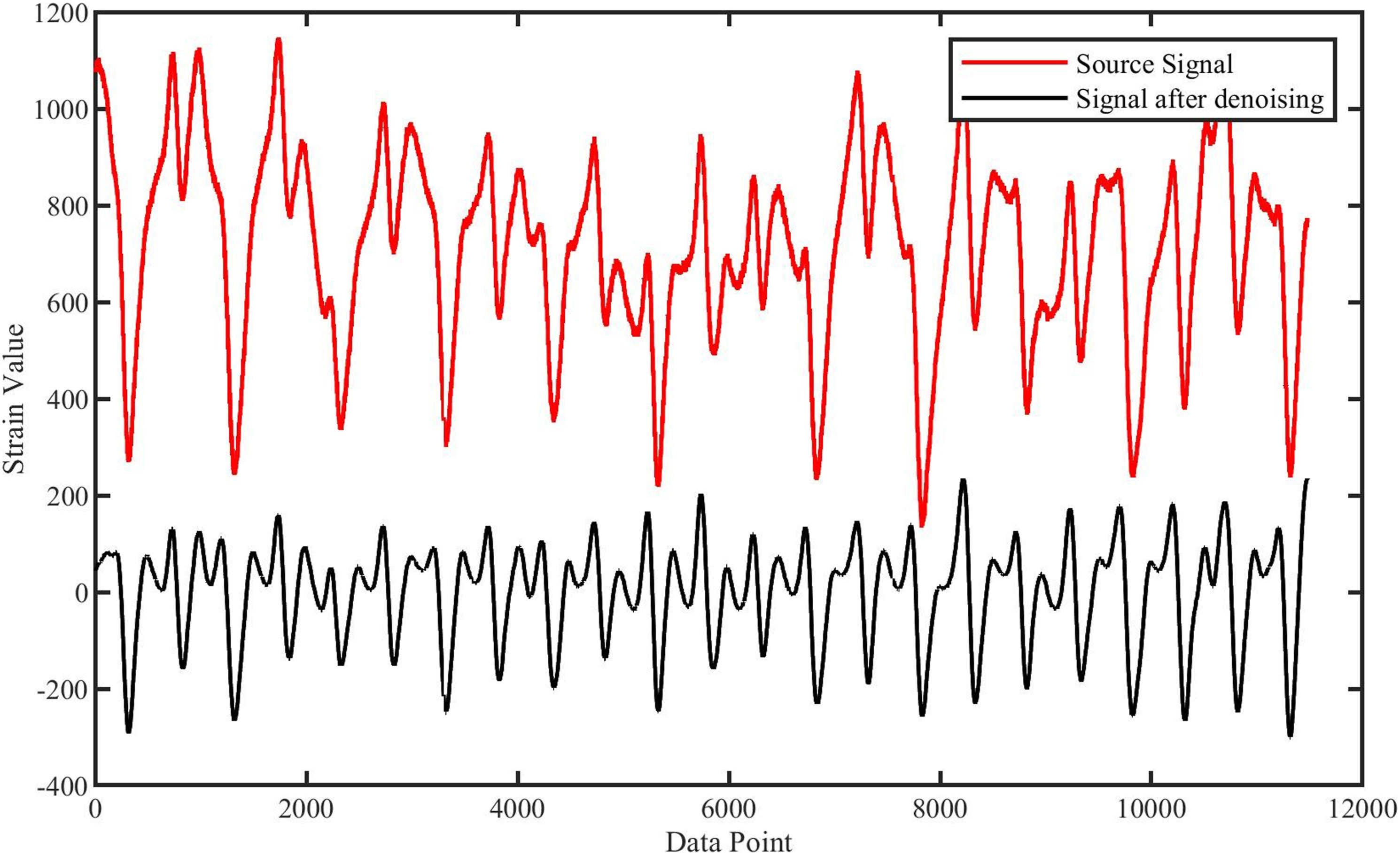
It can be seen from Figure 9 that the signal after separation and reconstruction are concentrated around the zero and change periodically, which is in line with the characteristics of the theoretical strain source signal in the measurement field. From the perspective of quantitative analysis, compared with the default VMD algorithm, the SNR of the adaptive VMD algorithm proposed in this paper is improved by 4.55 dB, and the RMSE is smaller, indicating that the signal denoised by this method is closer to the theoretical signal. The SNR of wavelet packet decomposition, EMD, and other decomposition denoising methods is lower than that of adaptive VMD algorithm, which indicates that the adaptive VMD denoising reconstruction method has better performance in processing strain measurement signals of the weighing field. From Figure 9, after the adaptive VMD algorithm processing, most of the high-frequency noise in the signal is filtered out, and the low-frequency high-energy environmental noise from the on-site vibration source is eliminated. The denoising result is basically consistent with the waveform of the theoretical strain signal. It is conducive to the subsequent analysis and processing, and the effect of denoising is obvious.
Conclusion
The traditional signal processing method is difficult to solve the problem that the strain signal measured at the weighing site is affected by the environmental noise whose frequency band is close to the source strain signal. From the perspective of signal separation, VMD algorithm is applied to the field of dynamic strain signal denoising and reconstruction to realize the effective modal separation of the measured signal.
Aiming at the two parameters that have great influence on the decomposition results of VMD algorithm: K and α, this paper proposed a method using preprocessed EMD, correlation coefficient, and sample entropy to determine the optimal decomposition layer and penalty factor, and formed the adaptive VMD algorithm. The proposed method selects the optimal modal component to denoise and reconstruct the strain signal. Through the data processing, it is proved that this method can successfully separate the low-frequency high-energy noise that cannot be effectively separated by the traditional filtering denoising method. Compared with the typical VMD algorithm, the RMSE is reduced by 20.16% and the SNR is increased by about 18%. This method can retain the characteristics of theoretical strain signal more completely, which is conducive to the improvement of the accuracy of subsequent processing, and proves the feasibility and superiority of the data processing.
Footnotes
Declaration of conflicting interests
The author(s) declared no potential conflicts of interest with respect to the research, authorship, and/or publication of this article.
Funding
The author(s) disclosed receipt of the following financial support for the research, authorship, and/or publication of this article: This work was supported by National Key Research and Development Program of China (2020YFB2009200), Defense Industrial Technology Development Program of China (JSJL2019205A002).
