




Abstract
Conventionally, researchers have favored the model-based control scheme for controlling gantry crane systems. However, this method necessitates a substantial investment of time and resources in order to develop an accurate mathematical model of the complex crane system. Recognizing this challenge, the current paper introduces a novel data-driven control scheme that relies exclusively on input and output data. Undertaking a couple of modifications to the conventional marine predators algorithm (MPA), random average marine predators algorithm (RAMPA) with tunable adaptive coefficient to control the step size (CF) has been proposed in this paper as an enhanced alternative towards fine-tuning data-driven multiple-node hormone regulation neuroendocrine-PID (MnHR-NEPID) controller parameters for the multi-input–multi-output (MIMO) gantry crane system. First modification involved a random average location calculation within the algorithm’s updating mechanism to solve the local optima issue. The second modification then introduced tunable CF that enhanced search capacity by enabling users’ resilience towards attaining an offsetting level of exploration and exploitation phases. Effectiveness of the proposed method is evaluated based on the convergence curve and statistical analysis of the fitness function, the total norms of error and input, Wilcoxon’s rank test, time response analysis, and robustness analysis under the influence of external disturbance. Comparative findings alongside other existing metaheuristic-based algorithms confirmed excellence of the proposed method through its superior performance against the conventional MPA, particle swarm optimization (PSO), grey wolf optimizer (GWO), moth-flame optimization (MFO), multi-verse optimizer (MVO), sine-cosine algorithm (SCA), salp-swarm algorithm (SSA), slime mould algorithm (SMA), flow direction algorithm (FDA), and the formally published adaptive safe experimentation dynamics (ASED)-based methods.
Keywords
Introduction
Effective handling of crane systems has received widespread attention in recent years due to their vast implications within container and logistic industries, centering the loading and unloading process between cargo freighters and destined harbors. Importance ultimately falls on considerably reduced freight costs, loading complexity, energy usage, complicatedness of operational mechanism, and transferrable capacity brought about by advancement of such technology. 1 Controlling a crane presents a much more intricate set of challenges compared to controlling a bridge. Unlike bridges, cranes are under-actuated systems, complex dynamics, and non-holonomic presence. This makes it exceedingly difficult to achieve precise control, even with the aid of control devices like dampers that are attached between the crane and its columns.2,3 Particular challenge has been recognized on the transferring of payloads which exhibit oscillating and hurdling behaviors. Such has simultaneously given rise to an appealing handling issue among practitioners and control community for the development of a precise controlling mechanism which secures swifter payload transference with minimized bounce and oscillation.
Hopping on the academic bandwagon, a generous number of literature investigating the control precision of crane systems were published, which enclosed numerous control algorithms such as finite time sliding mode controller for fuzzy control, 4 H-infinity output feedback based on fuzzy model, 5 precision-positioning adaptive controller, 6 nonlinear sliding mode controls, 7 backstepping controller, 8 time-varying sliding mode control, 9 dual sliding mode control, 10 and LMI fuzzy control. 11 Upon recognizing the sole proficiency of aforementioned control schemes towards the handling of a single-input-multi-output (SIMO) crane systems by regulation of a single input (i.e., force, voltage), they have fundamentally neglected the influence of extreme coupling across disparate input channels within a real-time crane system which substantially hinders the performance robustness of implemented controller. With this in mind, proposition was set by several researchers on multi-input-multi-output (MIMO) control strategies with consideration for peripheral input channels due to their increased real-time practicality. Numerous academic endeavors were then proceeded to examine the effective handling of MIMO crane system, through investigated approaches such as enhanced-coupling nonlinear controller, 12 nonlinear adaptive tracking controller, 13 adaptive fractional-order fast terminal sliding mode with fault-tolerant control, 14 LQR controller, 15 robust tracking control using adaptive fuzzy control, 16 adaptive fuzzy control, 17 nonlinear controller embedded with an integral term, 18 and payload motion control. 19 With model-based approaches being concurrently emphasized within the literature towards designing respective controllers for both SIMO and MIMO crane systems, overwhelming efforts were especially invested to acquire the highly arduous mathematical model for each system. 20 Such attempts, nonetheless, come with the shortfalls of over reliance on a definite mathematical model towards the development of a robust controller, as well as the inability to evade issue of un-modeled dynamics amidst model simplification for controller design. Erroneous modeling ensues, whilst contributing dissatisfactory handling performance of a crane system.
On the other hand, data-driven or model-free control schemes which bypass the requirement of mathematical modeling were essentially proposed in the controlling of crane systems. Viewing the system as an unexplored black box, such approaches engage controller design by sole utilization of the input and output data.20,21 Its simplicity has further gained considerable academic endorsement on crane system–related studies in recent years by implementing the metaheuristic optimization algorithms. This is primarily exemplified through the paper by Jaafar and Mohamed 22 in the year 2017 which proposed the implementation of PID tuning method by employment of particles swarm optimization (PSO) for the control of a nonlinear double-pendulum crane system. Having three independent PID controllers being installed towards overseeing each control variable of trolley position, hook sway, and payload oscillation, nine separate parameters were, therefore, required from the PSO algorithm within this research. An alternative approach known as adaptive differential evolutionary (ADE) algorithm was then introduced by Sun et al. 23 in the following year to optimize the given parameters of a fuzzy sliding mode anti-swing controller. Dynamic differential evolutionary (DDE) algorithm was additionally proposed within this period by the authors as a recommended single objective stochastic optimization technique to attain the optimum parameters for sliding mode controller (SMC) in elevating the performance of an under-actuated crane system. 24 Comparative study in terms of position and swing angle was further undertaken by Solihin et al. 25 in the year 2019 among the current metaheuristic-based algorithms such as PSO, cuckoo search (CS), and differential evolution (DE) towards the optimization of fuzzy controller within a gantry crane system. However, Bayesian optimizer (BO) was especially operationalized by Bao et al. 26 against the PID controller in the year 2020 for the tuning of data-driven model predictive controller (MPC) with absence of analytical model knowledge concerning the implemented crane system. Such was prior to the suggested implementation of fully informed particle swarm optimization (FIPSO) by Valluru et al. 27 within both multi-loop linear-PID and nonlinear-PID controllers of a crane system. However, the tuning of those controllers by metaheuristic optimization algorithms is still in low accuracy and need to be improved. This is because the aforementioned metaheuristic optimization algorithms have a high possibility of the solution getting stuck in local optima. Also, previously discussed literature have merely considered the application of SIMO crane system in view of its relatively lesser tunable parameters.
In retrospect, a contemporary hybrid approach known as MFAC-PDTSFC was introduced by Roman et al. 28 in the year 2019 for the handling of a MIMO nonlinear tower crane system through the incorporation of model-free adaptive control (MFAC) to the proportional-derivative Takagi–Sugeno fuzzy controller (PDTSFC). They then proceeded with the development of first-order active disturbance rejection-virtual reference feedback tuning (ADRV-VRFT) in the ensuing year 29 ; as well as the hybrid active disturbance rejection control-fuzzy controller in the year 2021, 30 targeting effectual operation of three-degree-of-freedom tower crane systems by implementing fine-tuning of the grey wolf optimizer (GWO). Whilst a MIMO crane system was applied towards these studies, the investigated model has been especially designed in parallel as a single-input–single-output (SISO) system comprising three specified domains of cart, arm angular, and payload. Moreover, employment of an enhanced model-free adaptive control (MFAC) method based on recursive least-squares (RLS) algorithm was introduced by Pham and Soffker 31 in the year 2020 to uplift the effectiveness of a MIMO-ship-mounted crane system, through a performance comparison against the projection algorithm (PA), MFAC, and proportional-integral (PI) controller. Other approaches including the data-driven neuroendocrine-PID (NEPID) control,32,33 as well as the improved upon sigmoid-based secretion rate NEPID (SbSR-NEPID) control 34 and multiple-node hormone regulation (MnHR-NEPID) control 35 have also been proposed by Ghazali et al. for the handling of MIMO crane system. With majority of the NEPID approaches as proposed within these studies being personalized based on the adaptive safe experimentation dynamics (ASED) algorithm, the enhanced NEPID controllers as observed via latter papers have demonstrated superiority in controlling capacity over its untouched counterpart. Based on the reported data-driven control schemes above, it is evident that the majority of them utilize a metaheuristic optimization algorithm to fine-tune controller parameters. This approach has been shown to offer superior flexibility and effectiveness when applied to the control of complex crane systems. The key advantage of metaheuristic optimization algorithms is their ability to search for global optima stochastically or randomly, without requiring any gradient information. This makes it highly likely that the solutions found will avoid becoming trapped in local optima and converge to the global optimum instead. As a result, metaheuristic optimization algorithms are an excellent choice as a data-driven tool for identifying optimal controller parameters across a wide range of crane systems, delivering highly accurate trajectory control with minimal swing angle.
Among others, current advocacy is particularly allocated on the marine predators algorithm (MPA) as a contemporary metaheuristic-based algorithm for optimization of data-driven control scheme within a MIMO crane system. 36 Designed and introduced by Faramarzi et al. in the year 2020, the MPA algorithm is known for its nature-inspired metaheuristic setting which replicates the strategic foraging of ocean predators with accounts for the inter-relationship between both preys and predators. MPA stands out from other popular metaheuristic optimization algorithms due to its unique approach to balancing the tradeoff between Levy and Brownian walks. This is achieved by leveraging Levy walks to enhance the exploitation phase and Brownian walks to boost the exploration phase. Another distinguishing feature of MPA is its simple configuration, with only two coefficients requiring adjustment. In addition, the optimization process is divided into three main phases, with considerations for environmental issues and marine memory. These design elements contribute to a lower computational burden, resulting in faster convergence speeds. Due to these advantages, there is a large volume of published studies describing the role of the MPA in solving the optimization problems in various fields. For example, the MPA was used by Elminaam et al. 37 in feature selection problems to improve classification accuracy. Here, they hybrid the MPA with k-Nearest Neighbors (k-NN) called MPA-KNN to evaluate the medical dataset benchmarks. Likewise, the MPA was applied to the renewable energy sector towards fine-tuning its sensory requirement through fuzzy-logic–based maximum power point tracking (MPPT) scheme. 38 Thereafter, the algorithm was studied by Soliman et al. 39 for the appropriate extraction of electrical parameters for the triple-diode photovoltaic (TDPV) model of a photovoltaic (PV) panel. A hybrid approach between MPA and moth-flame optimization (MFO) was adopted for the optimization of multi-level threshold (MLT); in turn, boosted the image segmentation ability of CT-images against the COVID-19 pandemic. 40 Such far-reaching optimization preference is brought forward to the control engineering sector, with reviewed literature proposing the use of MPA in the tuning of cascaded proportional-integral-derivative-acceleration (PIDA) controller within interconnected power systems. 41 This has been similarly reflected in the context of infinite bus power system and IEEE-39 bus system, following the algorithm’s role as an optimizer in the PID cascaded controller. 42 MPA was further regarded by Sobhy et al. as an effective optimizer in attainment of optimum PID gains for the load frequency control of modern interconnected power systems. 43 On another note, effectiveness of the algorithm was exploited as a tuning approach incorporated within the damping controller for enhanced consistency of small-signal within a high wind integrated system. 44 Previous discussion has indisputably highlighted MPA as an effective optimization approach which outshined a number of other modern metaheuristic-based algorithms, for multitude resolutions of control and operational problems in the engineering sector. Such prominence is genuinely constructed above the overshadowing convergence accuracy as yielded by the algorithm of interest over its competing rival for majority of the benchmark functions. 36 Its potential as an excellent optimization algorithm for the control of a MIMO crane system is, therefore, justified. This is, yet, on the account of the approach’s operational limitation with possessing an extreme entrapment possibility within the local optima. This is because during the transition from exploration to exploitation in Phase 2 of algorithm operationalization, each prey updates its location at each iteration only based on either its previous location or the location of the current best predator. If the location of the current best predator suddenly traps in local region, it may pull other preys to be trapped in the same region. Similarly, if the current location of the prey is suddenly trapped in the local optima region, it is difficult for it to jump out from the region since it mostly depends on the information of its previous location. Alternatively, conducted preliminary investigation has especially highlighted overly hindering nature of the existing adaptive coefficient towards step size control (defined as CF), 36 which undermined MPA’s proficiency in the balancing of exploration and exploitation phases. Therefore, the implementation of an unadjusted MPA algorithm in a MIMO crane system would merely generate subpar control performance.
Tackling the emerged shortfalls of MPA, random average marine predators algorithm (RAMPA) with tunable adaptive coefficient for the controlling of step size (CF) is hereby proposed. The introduced algorithm consisted RAMPA as its principal component which capitalizes computation of random average between both the current preys’ and the current best predator’s locations to confront local optima issue during Phase 2 of algorithm operationalization. Specifically, both of prey and predator within the outlier could avert their respective entrapments by assistance from both current best predator and current preys. Peripheral component of the proposed algorithm further comprised tunable CF to improve a balance between exploration and exploitation phases. Set to overcome the restrictive nature of MPA, increased flexibility is enabled via the proposed method towards maintaining a balanced exploration and exploitation phases; in which, cumulatively encourages searching competency.
Based upon the given arguments, random average marine predators algorithm (RAMPA) with tunable adaptive coefficient for controlling the step size (CF) has been strategically unveiled within this paper for the fine-tuning of data-driven multiple-node hormone regulation of neuroendocrine-PID (MnHR-NEPID) within a MIMO gantry crane system. Such step is taken to exploit the algorithm advantage of resolving local optima entrapment, as well as the issue of unbalanced segregation between the exploration and exploitation phases. Replicated upon the reported work in refs. 34,35, the MnHR-NEPID controller is particularly chosen for its overpowering precision and synergy between multiple nodes hormones, over a standard NEPID controller and the SbSR-NEPID in the controlling of the specified MIMO system. With ASED algorithm as proposed in the earlier paper being founded upon both local search principle and an extreme reliance on feasible selection of initial control parameters, an indefinite global optimal solution from said algorithm has fundamentally propelled consecutive investigation of RAMPA-based method with tunable CF towards similar research circumstance. Assessments are further made in regards to the convergence curve and statistical analysis of fitness function, the total norm of error and the total norm of input, findings as obtained from the Wilcoxon’s rank test, time responses, followed by performance appraisal in the presence of external disturbance. Statistical comparison is consequently attempted alongside the conventional MPA, as well as other preceding algorithms including PSO, GWO, MFO, multi-verse optimizer (MVO), sine-cosine algorithm (SCA), salp-swarm algorithm (SSA), slime mould algorithm (SMA), and flow direction algorithm (FDA). Additionally, the ASED-based method as examined in ref. 35 has been especially measured against the proposed algorithm in pursue of the superior approach. Key contributions of the current work, thus, include: (i) A random average location calculation is proposed in RAMPA, which will help the MPA to escape from the local optima. The merit of the random average location between prey and current best predator is that the location of the current best predator or the location of the current prey can help any trapped prey or predator to jump out from the local optima region and continue a new search track. (ii) Search competency of the conventional MPA is improved ensuing incorporation of tunable CF which permits greater users’ freedom or flexibility towards balance in exploration and exploitation stages. (iii) The current study essentially pioneered the implementation of multi-agent–based optimization (i.e., RAMPA based method with tunable CF) for the fine-tuning of MnHR-NEPID controller. Results as registered from the proposed algorithm further dominated its significant excellence over other recent multi-agent–based methods, such as FDA, SMA, SSA, and MVO.
The remaining sections of this paper are coordinated as follows: The second section specifies on discussion of the conventional MPA-based method and the contemporarily proposed RAMPA-based method with tunable CF. The third section is then purposed for problem formulation concerning employment of the MnHR-NEPID controller within a MIMO gantry crane system, followed by the systematic outlining of required procedure towards employment of the proposed method for performance optimization. Effectiveness of the proposed method is further validated in the fourth section. Last but not least, concluding remarks concerning the entire research are given in the fifth section.
Improved marine predators algorithm
The current section sets to explain improvements made towards the conventional marine predators algorithm (MPA) for the tuning of MnHR-NEPID controller within a MIMO gantry crane system. Herewith, the conventional MPA-based algorithm has been initially interpreted and described. Discussion is then given on the RAMPA-based method with tunable CF as per contemporarily introduced within this paper.
Review of the marine predators algorithm
Academically founded by Faramarzi et al., 36 marine predators algorithm (MPA) transpires a predator-inspired algorithm that upholds the survival of the fittest within the ocean environment towards achieving the utmost optimal strategy amid food foraging. Such food foraging phenomena commonly reviews the random walk strategies of ocean predators enclosing both the Levy and Brownian walks. Levy walk which is drawn from a probability function based on power-law tail has a characteristic of many small steps associated with longer relocations. It is usually employed for foraging prey with less concentration. 45 Meanwhile, the Brownian walk consists of step length drawn from a probability function based on Normal (Gaussian) distribution which is utilized to search in prey-abundant areas. 45 MPA, thus, intends to acquire the most optimized strategy through reaching an equalized compromise between both the Levy and Brownian strategies. In MPA, the predator is foraging for the food as well as the prey is foraging for its food.
Operationalization of MPA is primarily established on the random distributed of initial solutions for both preys and predators across the provided search space in seek of resolving the given optimization issue


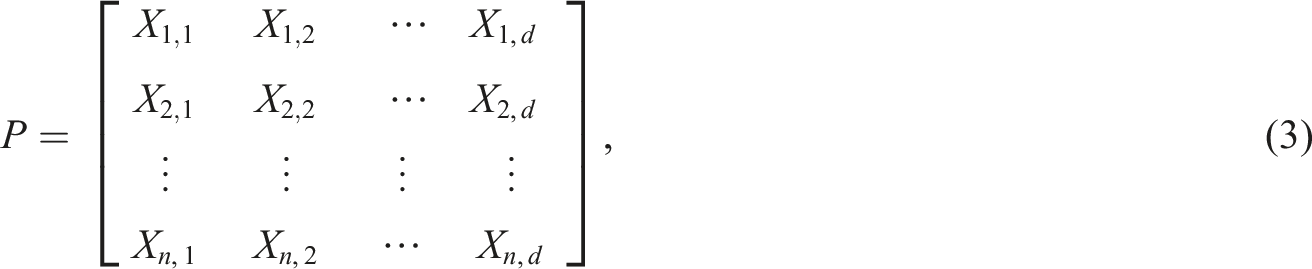
Phase 1: Exploration phase
Acknowledging faster motions among the preys in Phase 1, such occurrence signals active food foraging attempts within the prey against its more linger predator counterpart with little to no motion. Such circumstance is apparent for first tierce of the maximum iterations (

Phase 2: Transition from exploration to exploitation phase
Both the predators and preys are maneuvering at similar rate in Phase 2. Such occurrence symbolizes a deviation within the prey with perturbation of a subgroup approaching the exploitation stage and the locational update of the other subgroup as rooted by motions of the predators approaching the exploration stage. Known for being a transitional process between both exploration and exploitation stages, motions of the involved agents equally differ based on their exploration intention within the Brownian walk and the exploitation intention within the Levy walk. Happened between one third to two third of


Random number based on the Levy distribution in equation (5) is hereby given by

Phase 3: Exploitation phase
Phase 3 of the MPA structure further demonstrates a faster motion by the predators. Such overshadowing pace against motion rate of the prey, thus, signifies increased exploitation. Such execution especially occurs at the final tierce of maximum iteration

Eddy formation or fish aggregating devices’ effect
Beyond the three principle phases of MPA as discussed previously lies fundamental interest for the behavioral endeavors of ocean predators facing various circumstantial conditions known as the eddy formation or fish aggregating devices (FADs) effect. Amidst the predators’ food hunting process within domains of the Levy and Brownian walks, aspiration to reach a location with bountiful preys in the vast ocean would motivate an extensive vertical leap and dive. Such attempt would ultimately prevent stagnating of the predators’ within the local optima. Nevertheless, effect of the FADs is written as per the equation

Marine memory
Additional characteristic of MPA forwarded the structural capacity to retain and remember particular positions with immense foraging activities among the predators towards evading local solutions. Emphasis is brought to the appraisal of fitness for every prey towards updating of the elite matrix E following revision of the prey matrix P and operationalization of the FADs effect. Comparison is hereby executed between fitness of each solution for the current iteration and the equivalence from the previous iteration. Replacement would then occur shall the current solution is deemed more feasible or well-fitted as a superior stand-in to the antecedent. The mechanism entirely simulates return of the predators to their successful high production foraging area. With this in mind, marine memory is, therefore, undertaken for quality improvement of acquired solution from the entire involved iterations.
A detailed explanation of MPA can be further obtained via ref. 36.
Random average marine predators algorithm with tunable CF
While MPA demonstrates robust performances and functionalities in overcoming a vast range of optimization problems, shortfalls of the algorithm are observed from its crippled competency to withdraw from the local optima is weakened under certain circumstances, as well as an inadequate balance between both exploration and exploitation phases upon tackling specified optimization problems. Modifications are, therefore, proposed on the conventional MPA method to resolve the previously mentioned stagnation issue within the local optima, whilst enhancing offsetting potential between both the exploration and exploitation phases.
Random average location of preys in updating mechanism
Particular deficiency of the conventional MPA method has been recognized on inability of the current best predator to withdraw from the local optima region. As the earlier discussed Phase 2 of the algorithm clearly highlights the revising of preys’ updated positions above the ground of its previous location or location of the current best predator, trapping of the current best predator could possibly guide its preys into its current local optima region. Previous position of prey which failed to escape the local optima region would further define its consequential position at the same location. Such issue is deemed solvable by incorporating the random average between current positions for both the preys and the best predators to the structure’s updating mechanism. With the computation of random average being undertaken within individual iteration, any particular criteria for the process are, therefore, dismissed. Adoption of random average is hereby advantageous due to the competencies of current best predators and current preys in aiding the escape of trapped best predators and prey from the local optima region; in turn, enabling their subsequent exploration of contemporary search domains. Operationalization of the structure’s Phase 2, thus, encompasses revising of the preys’ consecutive positions through the computation of individual element’s random average. Such process is further described as per the equation

As outlined in equation (10),


Graphical illustration for a pre-established contour plot comprising a two-dimensional location ( Graphical representation of the random average location mechanism.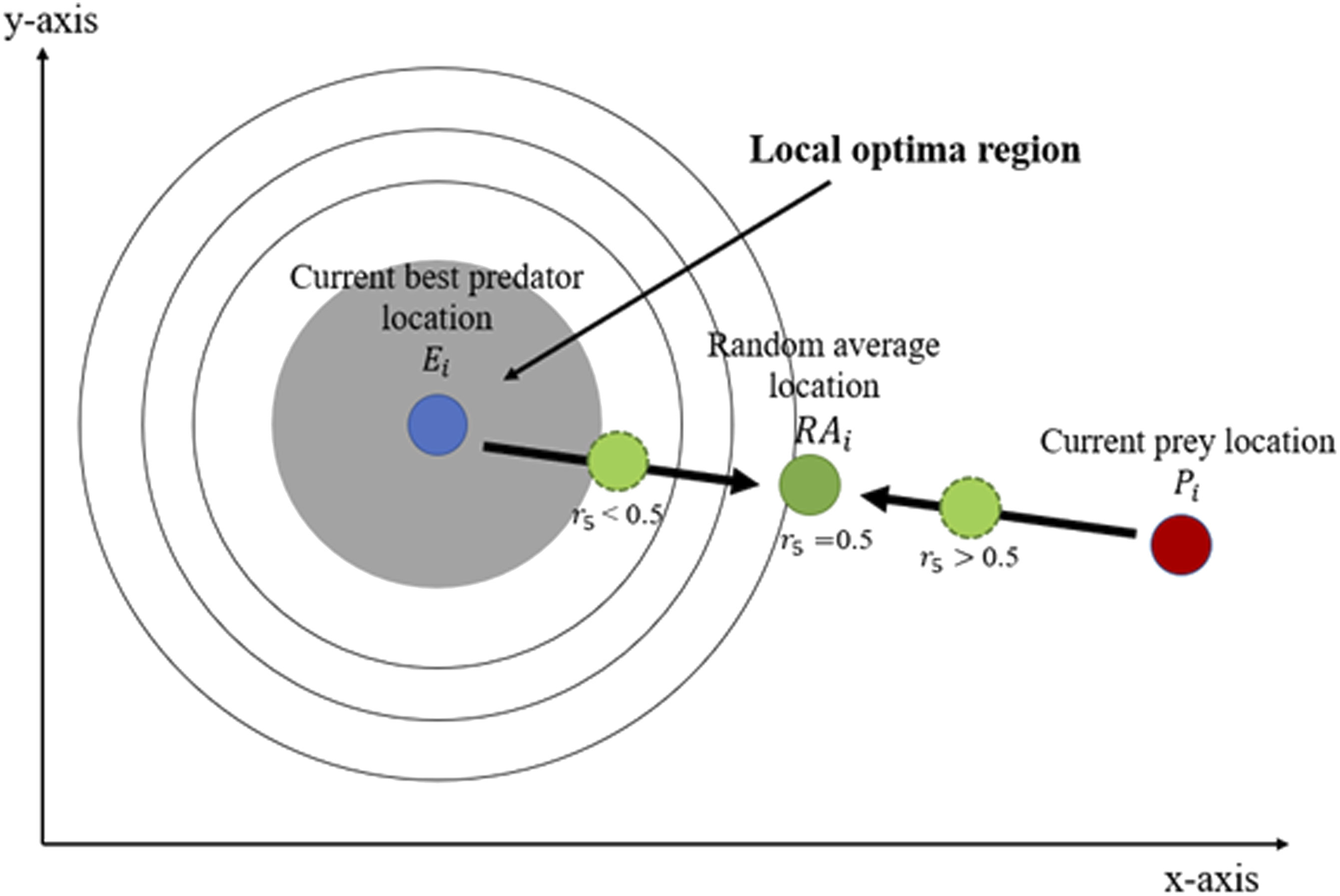
Normal average, as introduced by Jui and Ahmad,
46
capitalizes distance of the average location as a constant center to both the current and the current best locations. However, such execution fails to replicate the stochastic nature of both prey and predator motions. Towards offering an increased motional variations, a different approach has been proposed within the random average method by randomizing distance of the random average location based on the random number
Tunable adaptive coefficient for controlling the step size
The tunable adaptive coefficient as proposed to control the step size (CF) has been further elaborated within the current section. Herewith, improvement can be particularly made to the both the exploration and exploitation phases of the conventional MPA through adjusting the current CF. Contradicted in nature, an overwhelmed exploration would compromise the precision of global optimum value, with an overwhelmed exploitation being the direct antecedent to stagnation issue within the local optima. Nevertheless, executed constraint to CF within Phase 2, Phase 3, and FADs for the structure of a conventional MPA-based method would dominate an unacceptable balance between both exploration and exploitation. Such is observable through equation (7) where having the value of CF being nonlinearly reduced from 1 to 0 has proven overly prohibitive to allow users’ resilience in controlling and manipulation of both the exploration and exploitation phases. Concern as presented on the limitation imposed by the existing CF towards the operationalization of MPA is then justified on the need for a more universalized equation admissible to a vaster range of applications. Therefore, a tunable or adjustable CF can be employed to the currently studied algorithm for increased freedom in maintaining an offsetting balance between both exploration and exploitation. In seek of greater search competency, the equation of CF within equation (7) is, thus, revised and written as Value of 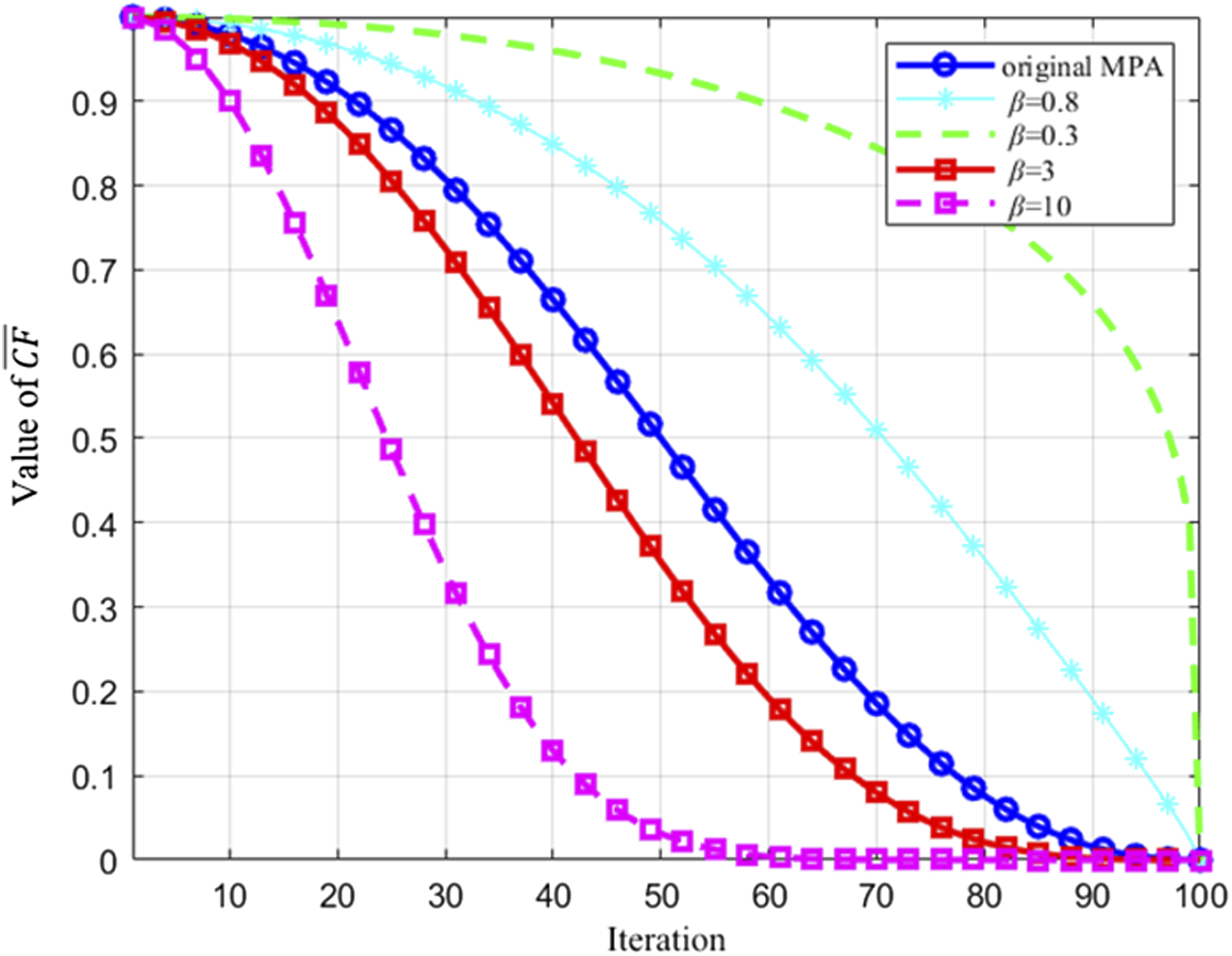

1. Initialize
2. Randomly initialize the search agents
3.
4. 5. Evaluate the fitness of all 6. 7. Update 8. 13. 15.
18.
Having the above explanation as a basis, the proposed revision to the conventional MPA algorithm can be segregated into two separate segments. The first segment hereby focuses equal allocation of the population towards both the exploitation and exploration phases amidst Phase 2 of the MPA structure. Extreme velocity exerted by both the involved preys and predators during this phase would cause an upsurge in the best predators’ and the preys’ possibilities of missing the global optima; whilst, entailing failure in avoiding the local optima region. A random average location is, therefore, employed within a conventional MPA towards offsetting agile nature of the involved agents, whilst enabling reciprocated corporations between the existing preys or predators and their outlier counterparts to escape the local optima region for continuous exploration of new search space. As opposed to the correlation in Phase 1, notable superiority in velocity of the preys as compared to the predators has propelled the prey for the exploration of other search spaces and maneuver within the Brownian walk as the most active agents, with the predators standing by for the preys’ locations. Following the preys’ continuous searching process that diminishes their potential entrapment within the local optima, such reasoning, therefore, justified impertinence of the proposed random average calculation within Phase 1. Similar situation is reflected for Phase 3, in which increased capacity towards preys’ exploitation by predators’ that maneuver within the Levy walk would have diminished the credit of random average calculation. Such endeavor as implemented during the previous phase has fundamentally enhanced the avoidance capacity of preys’ from their entrapment within the local optima. On another note, tunable CF would then be applied solely within Phase 2, Phase 3, and FADs of the structure. With the predators maneuvering in Brownian manner amidst second half of Phase 2’s populations, tunable CF is hereby implemented to secure the opportunity of manipulating the predators’ step size towards equalizing both exploration and exploitation. In the accounts of Phase 3 which capitalizes heightened exploitation, a shift in the predators motions towards the Levy walk does not entirely overshadow the possibility of step size control in seek of enhancing the agents’ search capacity across global optimum. However, employment of a tunable CF within FADs would further allow a divergence of vertical leaps among predators with the aim of discovering other promising domains with bountiful preys. Discussed proposition has, nonetheless, displayed thorough expectation on an improved operationalization of the conventional MPA through both an enhanced local optima avoidance and an eminent balance between the exploration and exploitation phases.
Improved marine predators algorithm tuned data-driven multiple-node hormone regulation neuroendocrine-PID controller of multi-input–multi-output gantry crane system
Modeling of the multi-input–multi-output (MIMO) gantry crane system is initially described in the current section. Explanation ensues on the problem formulation of multiple-node hormone regulation neuroendocrine-PID (MnHR-NEPID) controller for MIMO gantry crane system. Application of random average MPA (RAMPA) based method with tunable CF towards the tuning of MnHR-NEPID controller for MIMO gantry crane system is further described.
Modeling of multi-input–multi-output gantry crane system
Replicated based on a real-time gantry crane system, this study particularly employs the multi-input–multi-output (MIMO) gantry crane model as proposed by Park et al..
47
The structure has been outlined in Figure 3 in which swinging motions of the payload is accomplished through maneuvering of the trolley. Both directions of the trolley’s horizontal maneuver and the rope’s vertical course are individually denoted by the X-axis and Z-axis, respectively. Control input used to mobilize the trolley in its horizontal course is further denoted by The container gantry crane system.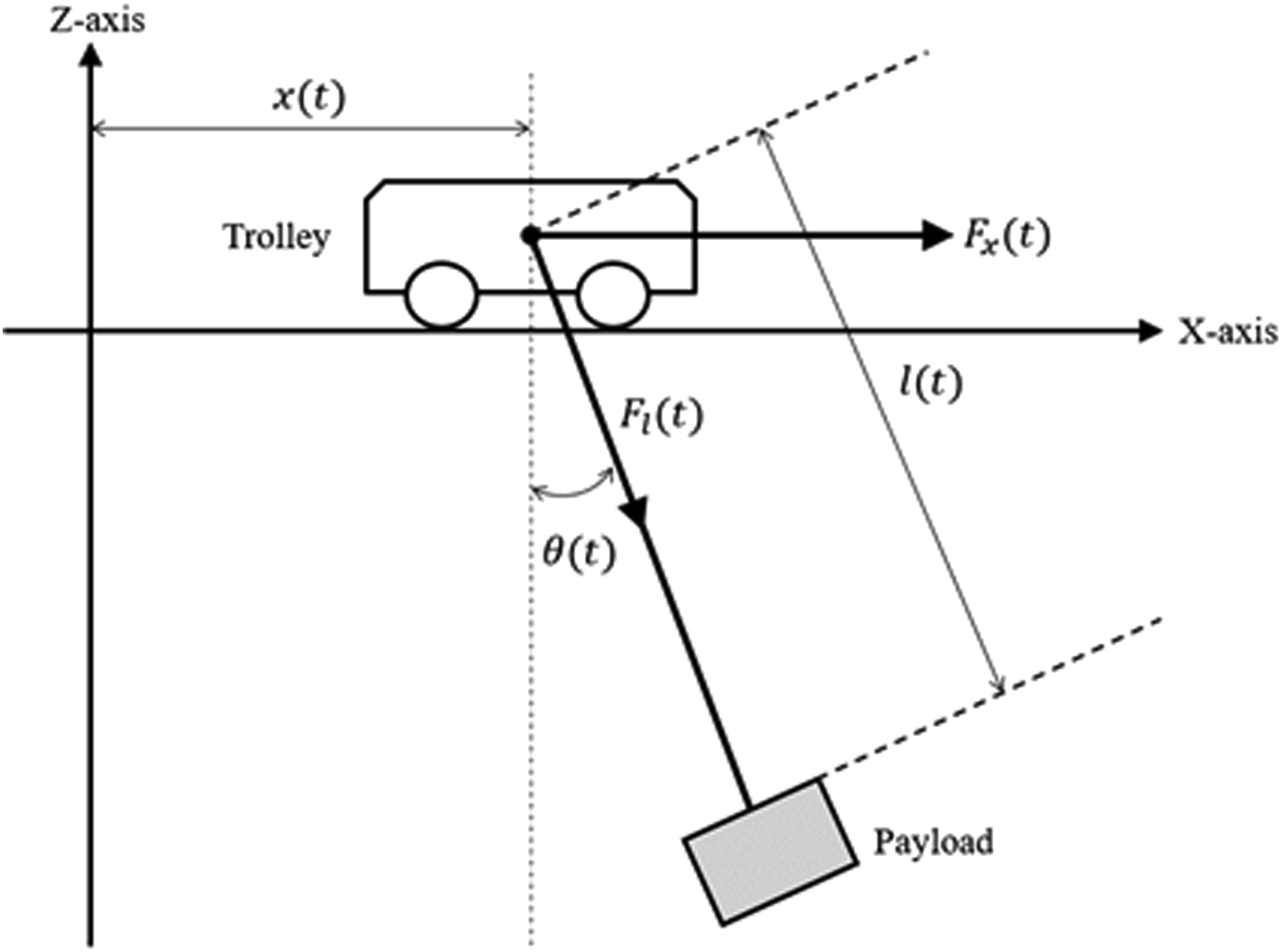




Thereafter, acquired output for the container gantry crane would be given as
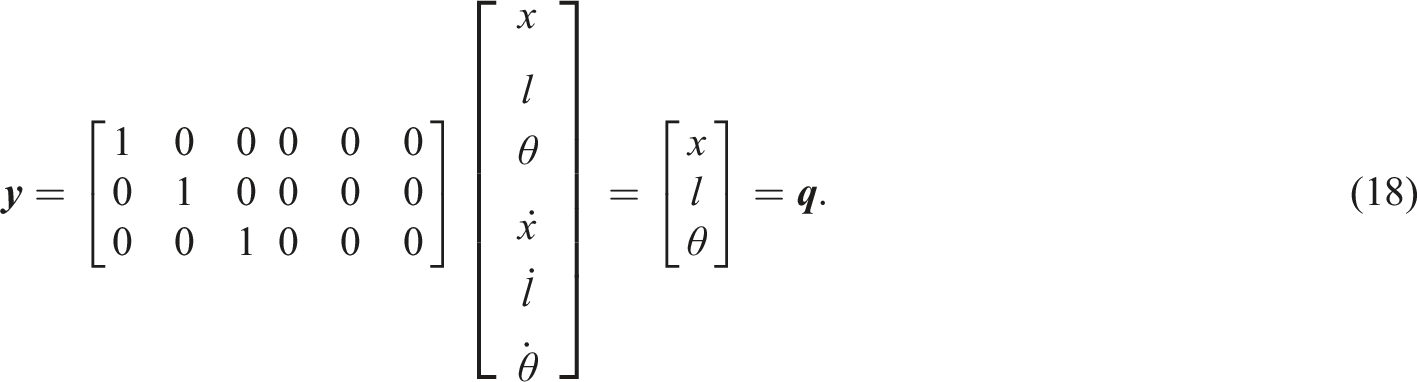
Adopted directly from ref. 47,
Problem formulation
This section is especially allocated to the formulation of problem concerning synthesis of MnHR-NEPID control towards the MIMO gantry crane system as previously described in Section 3.1. In accordance to the report by ref. 35, the block diagram of MIMO gantry crane system as controlled using MnHR-NEPID has been detailed in Figure 4, with the reference, control input and output measurement being individually represented by The MnHR-NEPID control system.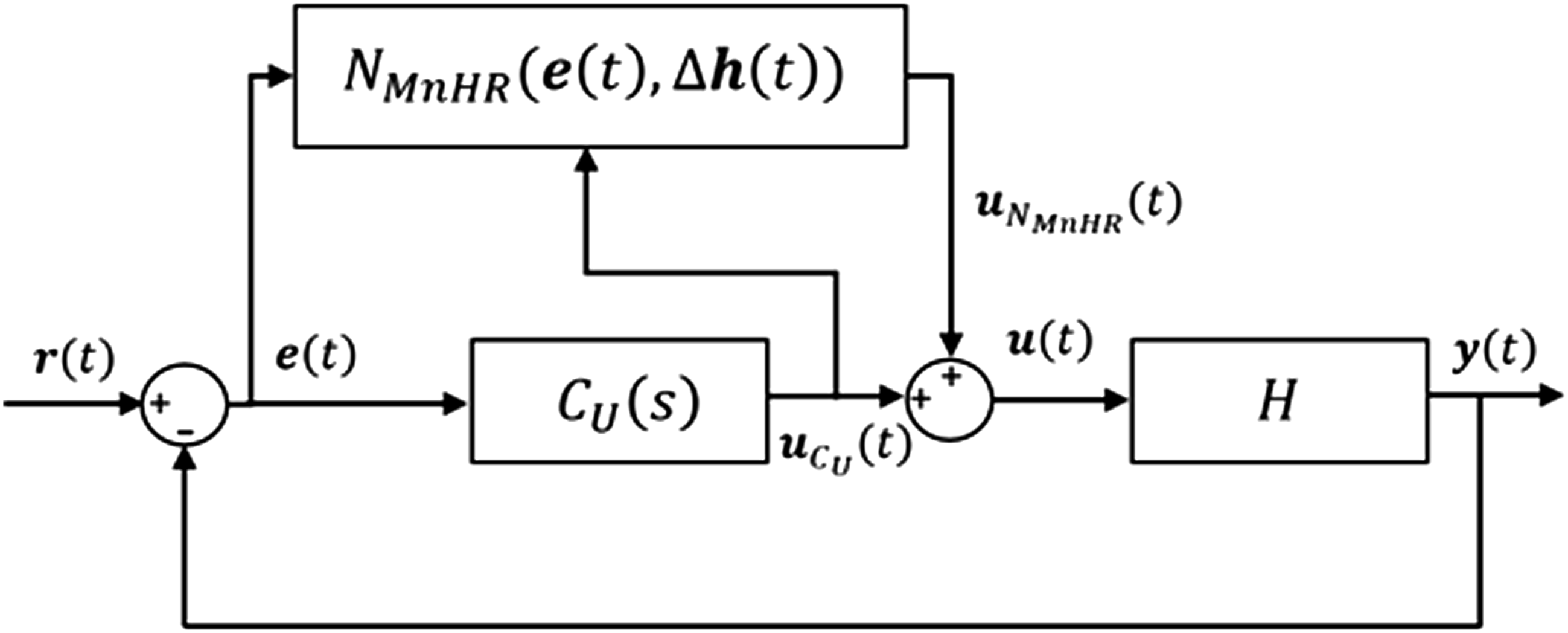
As shown, the MnHR-NEPID controller comprising both a PID controller unit


The PID controller for






Output as obtained from


Performance of the MIMO gantry crane system handled using the MnHR-NEPID controller in Figure 4 is then assessed based on the performance index as outlined in the following equations


Furthermore, fitness function which will be used for the data-driven tuning of MnHR-NEPID controller within the MIMO gantry crane system is given by

Obtain
Application of RAMPA-based method with tunable CF for tuning the MnHR-NEPID controller of MIMO gantry crane system
Towards addressing the minimization of fitness function as per outlined in equation (31), this section is particularly dedicated to explain executed procedure for the optimization of MnHR-NEPID controller through the employment of RAMPA-based method with tunable CF. The process is initiated by mapping position vector of individual prey or agent

With the fitness function
The mapping of
Updating procedure of the RAMPA-based method with tunable CF from
Upon reaching the maximum iteration
The tuning method for MnHR-NEPID controller for the current study especially implements a data-driven or model-free approach. The examined MIMO gantry crane system is, therefore, perceived as a “black box” model, with exclusive parameters of the MnHR-NEPID controller as employed for the system being fine-tuned based entirely on obtained information concerning the given input and output data at the absence of an established plant model. A comprehensive flow diagram encompassing tuning approach as employed for the MnHR-NEPID controller using RAMPA-based method with tunable CF is entirely outlined in Figure 5. As observed, two key blocks have been detailed, enclosing both the implementation of the MnHR-NEPID controller for MIMO gantry crane system and the operationalization of RAMPA-based method with tunable CF. The first block sets towards attaining the minimal fitness function
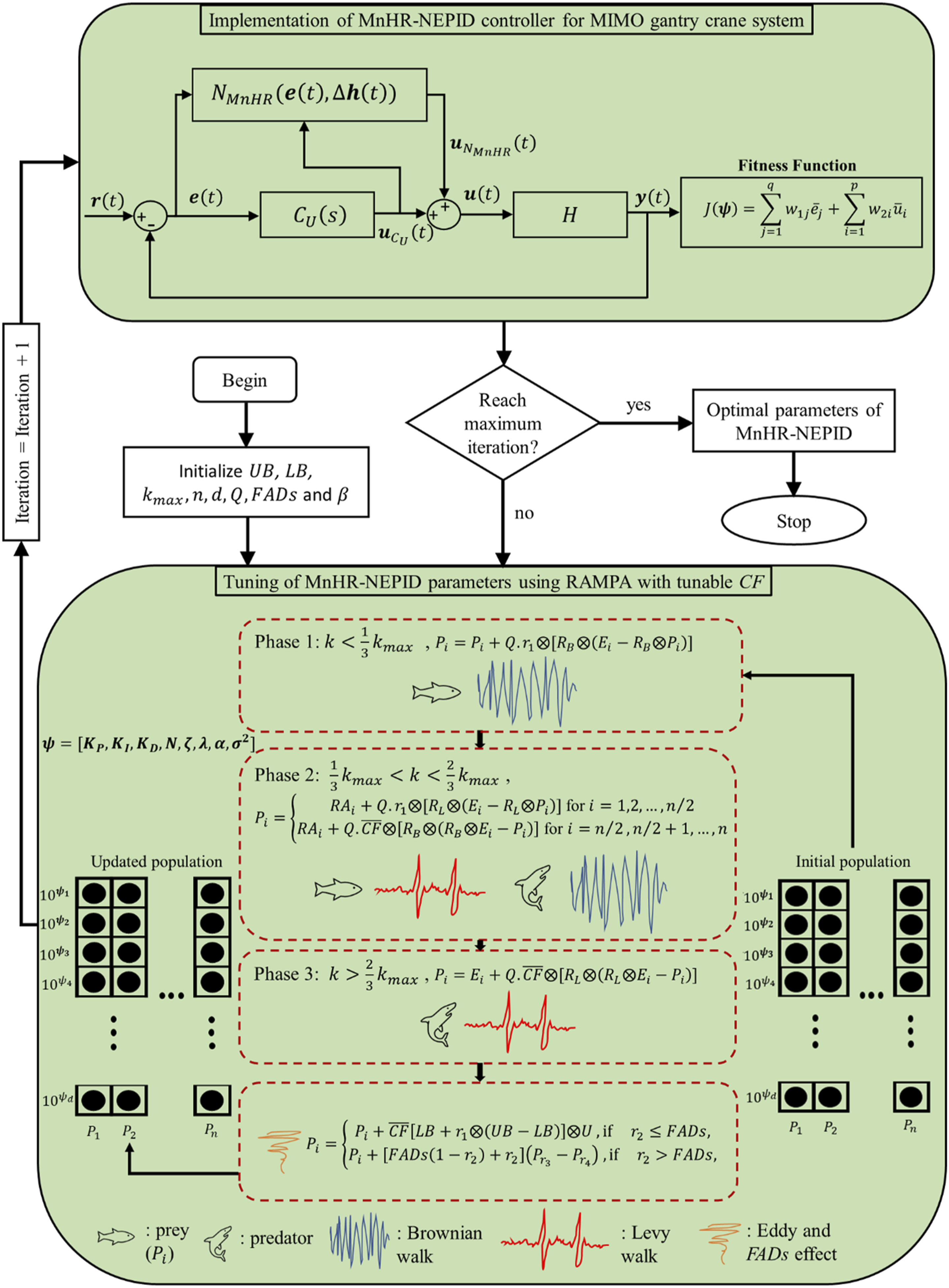
Block diagram of RAMPA-based method with tunable CF implementation for MnHR-NEPID controller of MIMO gantry crane system.
Implementation and results
The current section discusses appraised performance of the MIMO gantry crane control system with employment of MnHR-NEPID controller fine-tuned using the proposed RAMPA-based method with tunable CF. Comparison is fundamentally made between effectiveness of the proposed approach, the conventional MPA-based method, and other existing metaheuristic-based algorithms, viz. PSO,
48
GWO,
49
MFO,
50
MVO,
51
SCA,
52
SSA,
53
SMA,
54
and FDA.
55
Recorded outcomes from the introduced RAMPA-based method with tunable CF are further evaluated against the formerly published ASED-based method.
35
Performances of the examined algorithms are essentially assessed by virtue of the following criteria 1. Convergence curves of average fitness function (out of 25 trials) as generated from RAMPA-based method with tunable CF and the conventional MPA, PSO, GWO, MFO, MVO, SCA, SSA, SMA, and FDA-based methods are contrasted. Inspection is especially made on the algorithms’ capacities to minimize their generated fitness function. 2. Fitness function 3. Non-parametric statistical analysis by employment of the Wilcoxon’s rank test is pursued to engage the statistical dissimilarity between examined algorithms at a significance level of 5%. Statistical test is essentially proceeded between a pair of distinct algorithms by primarily contrasting their respective mean values to observe the significance level based on its 4. Time responses analysis of MIMO gantry crane system as acquired through employment of the proposed RAMPA-based method with tunable CF and the preceding ASED-based approach
35
are appraised with respect to its trolley displacement 5. Robustness of the MnHR-NEPID controller as optimized using the RAMPA-based method with tunable CF and the ASED-based method
35
is assessed with introduction of external disturbance to the MIMO gantry crane system.
Attempted simulations for the current study were performed based on MATLAB/Simulink R2020a using a personal computer equipped with the specification of Microsoft Window 10, 8 GB RAM and Intel Core i7-6700 Processor (3.41 GHz). The MnHR-NEPID control system as outlined in Figure 4 has been explicitly adopted for the control of MIMO gantry crane system in Figure 3 at a total number of outputs The trolley’s movement and the rope’s length adjustment to the desired position.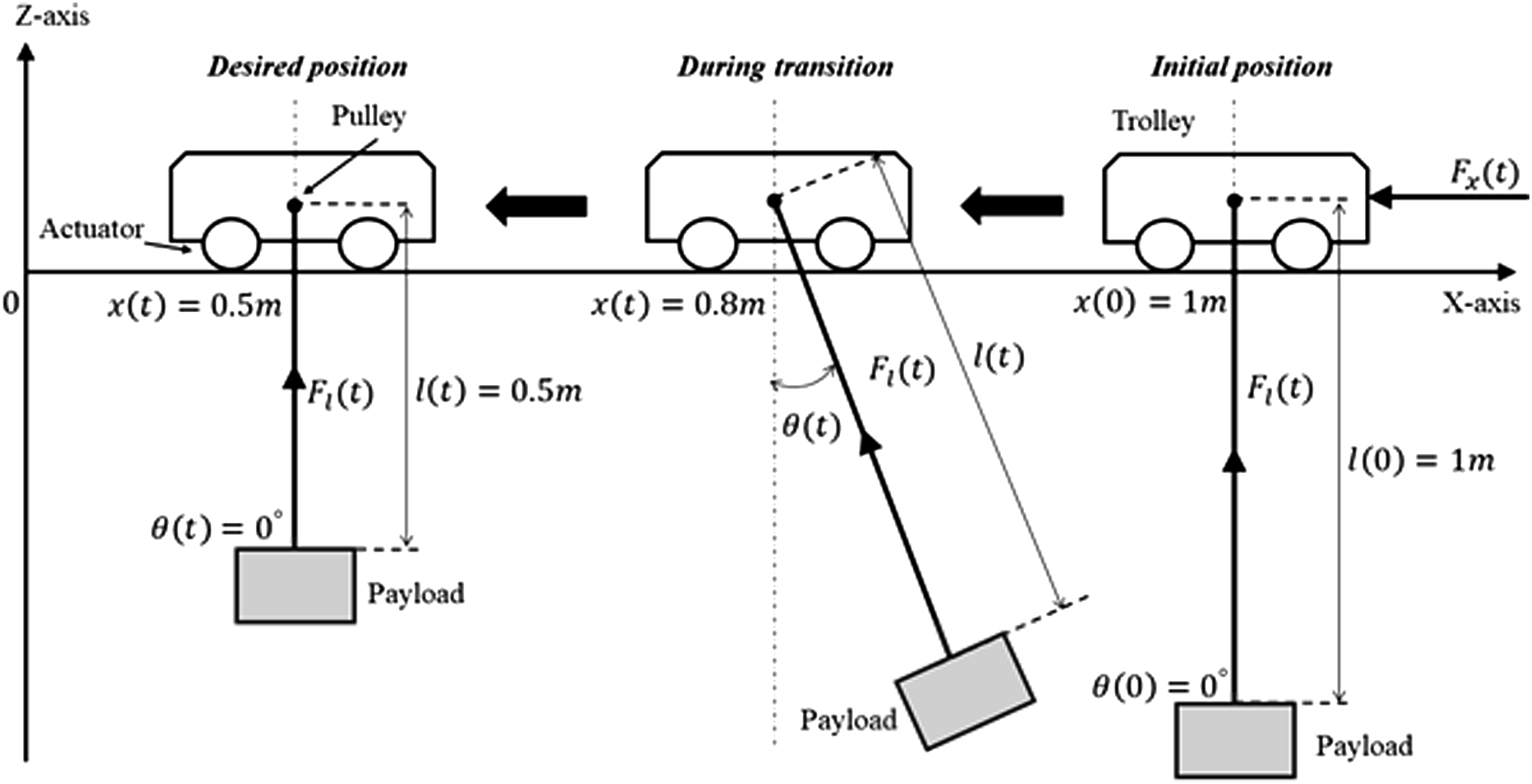



Coefficients of PSO, GWO, MFO, MVO, SCA, SSA, SMA, and FDA.
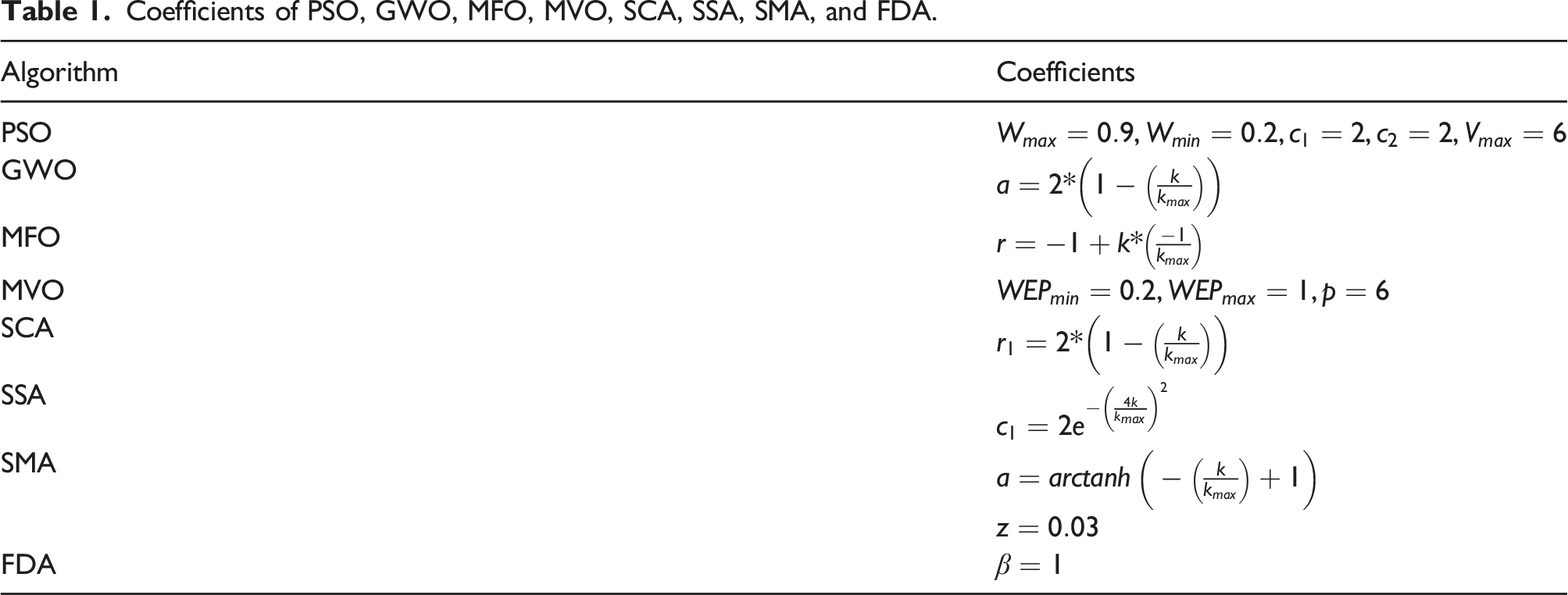
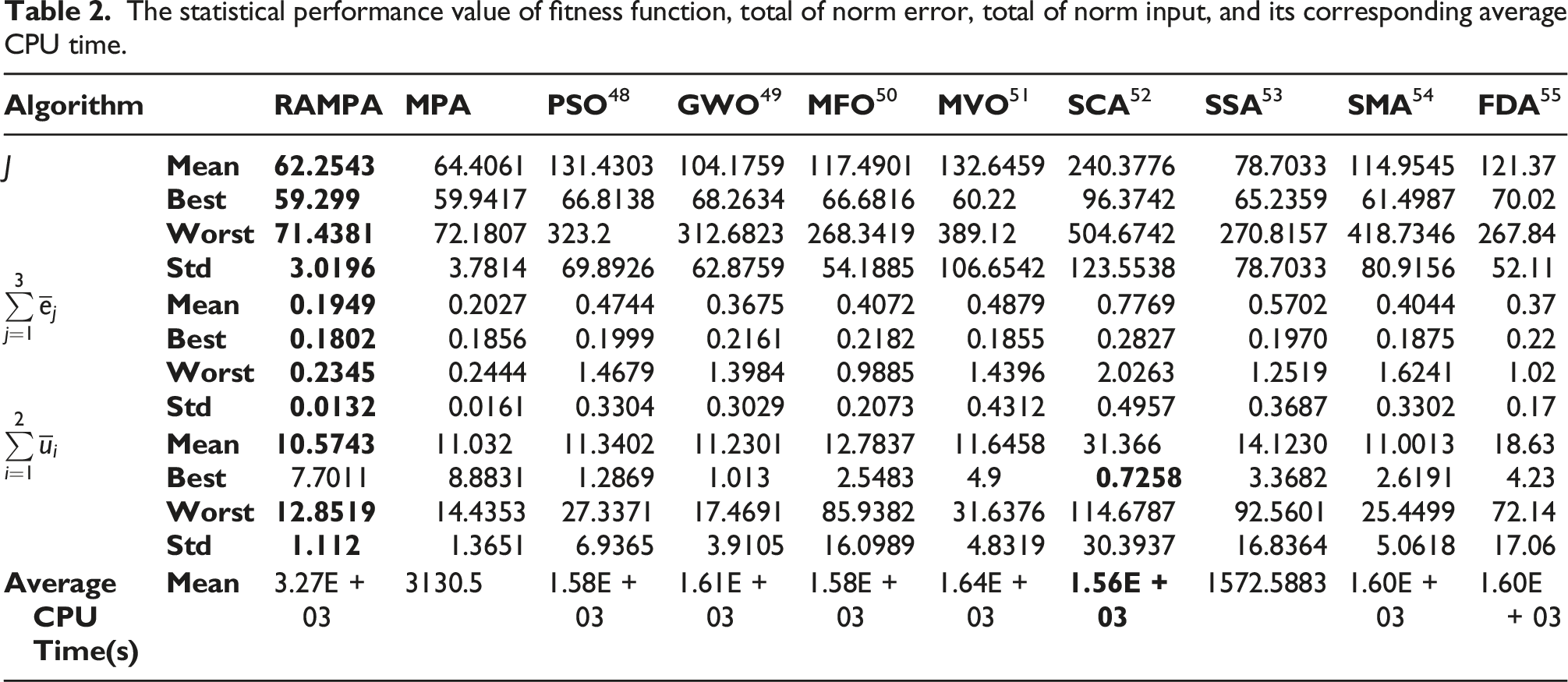
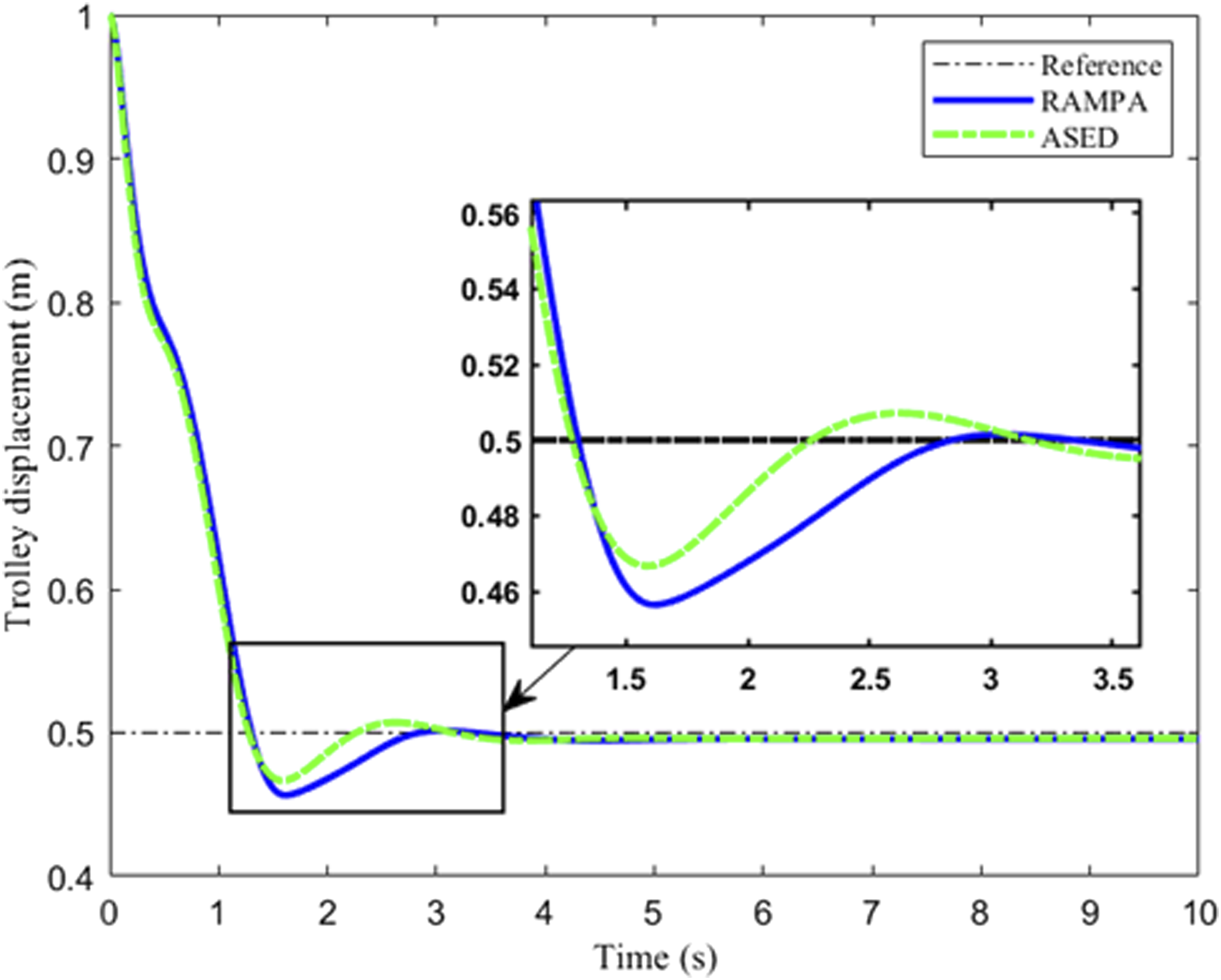
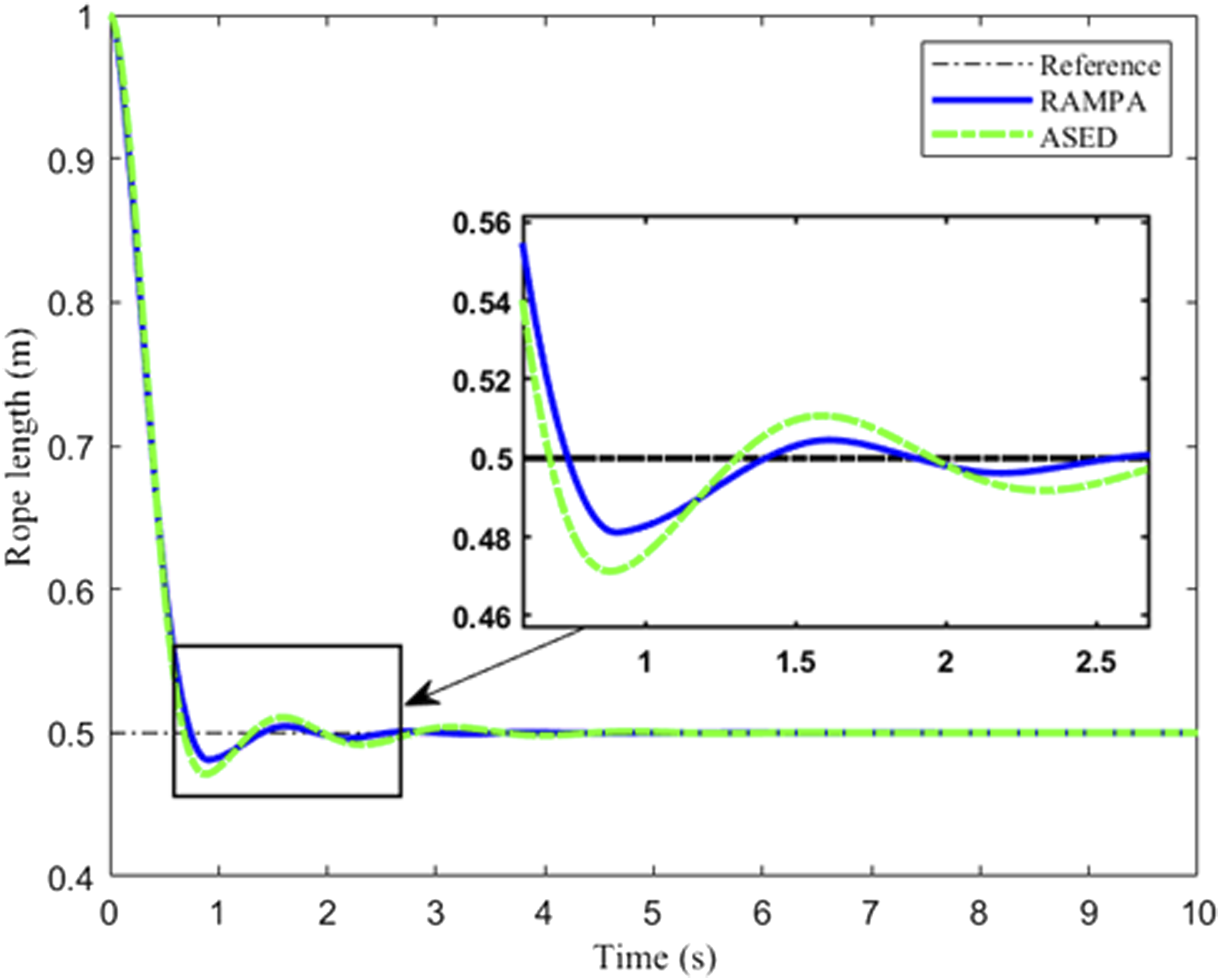
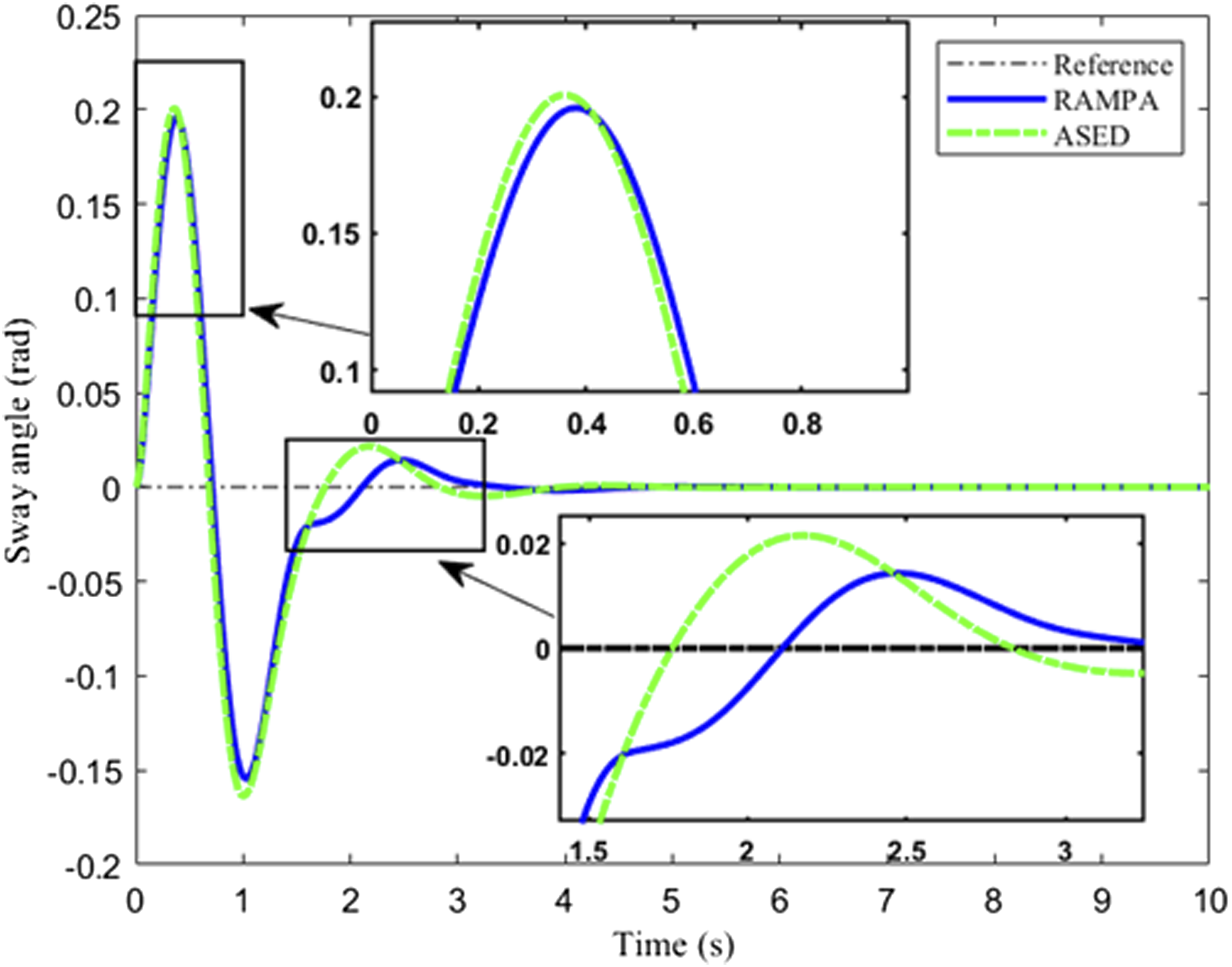
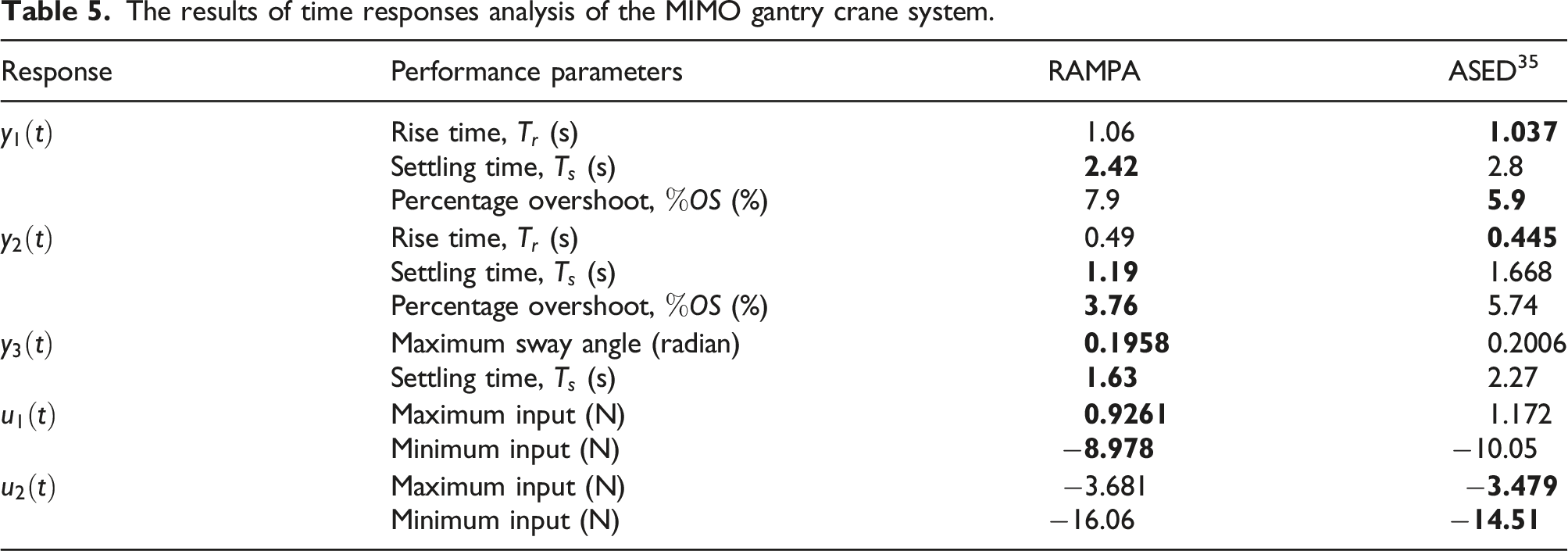
The maximum number of iterations, the upper bounds, the lower bounds, and the number of agents are identically set for RAMPA-based method with tunable CF and each examined-based method to ensure comparable performance assessments. The convergence curves for average fitness function as generated from 25 trials by the RAMPA-based method with tunable CF, as well as the conventional MPA, PSO, GWO, MFO, MVO, SCA, SSA, SMA, and FDA-based methods have been comprehensively plotted in Figure 7. Recorded response through employment of the proposed RAMPA-based method with tunable CF is particularly denoted by a thicker, blue-colored line alongside other thinner, colored lines that represent the obtained responses from other examined algorithms. Further observed through the magnified plot as illustrated within said figure, the proposed algorithm has demonstrated excellence in minimizing the fitness function of equation (31) approaching final iteration of the simulation over the performances of other peripheral-based methods. Its proficiency in minimizing the fitness function has, nonetheless, been firmly justified. However, statistical performances of the examined algorithms in terms of the fitness function On a similar note, a non-parametric statistical test by employment of the Wilcoxon’s rank test at a significance level of 5% was implemented to appraise the statistical difference in fitness function among each examined-based method. Obtained results from the Wilcoxon’s rank test for pair-wise between the RAMPA-based method with tunable CF and the other contrasted-based methods are then entirely tabulated in Table 3. In view of the recorded sum of ranks, superior performance has been comparatively demonstrated by the proposed algorithm against the rivaling algorithms when Criteria are subsequently set on the evaluation of time responses with the purpose of accentuating both the proposed algorithm’s optimization dominance and proficiency. On this account, observation is especially made on the rise time Optimal design parameters of the MnHR-NEPID controller based on both the proposed RAMPA-based method with tunable CF and the ASED-based method, alongside the respective fitness function of each algorithm, have then been tabulated in Table 4. As such, the optimal control parameters are especially decided apropos ideal of the lowest fitness function as generated via 25 independent trials prior simulated implementations for the controlling of MIMO gantry crane system to appraise the time responses as acquired through a number of output responses. As observed within the detailed table, a marginally diminished fitness function is recorded from the parameters of the proposed algorithm at a value of 59.299 against a value of 59.7851 from the ASED-based method. Although the ASED-based method has the advantage of choosing the initial design parameters that are quite closed with the optimal design parameters, the RAMPA-based method with tunable CF can still produce better fitness function. Following this, the output responses alongside their magnified versions of Forwarded with response evaluation of the rope’s length Further outlined in Figure 11, attention is consequently relocated to the controllers’ responses to oscillations in the system’s payload based on the registered sway angles Emphasis is subsequently allocated to the analyzing of interrelationship between both responses of error and switching mechanism. Herewith, control variable error responses for trolley displacement, length of the rope, and sway angle ( In consideration of the algorithms’ applicability facing circumstance of uncertainties, performances of MnHR-NEPID controller following implementations of the proposed RAMPA with tunable CF and the compared ASED-based method have been assessed under the situations of unexpected disturbance. In this case, simulation was performed on the examined MnHR-NEPID–based method through introduction of disturbance Registered responses for trolley displacement 
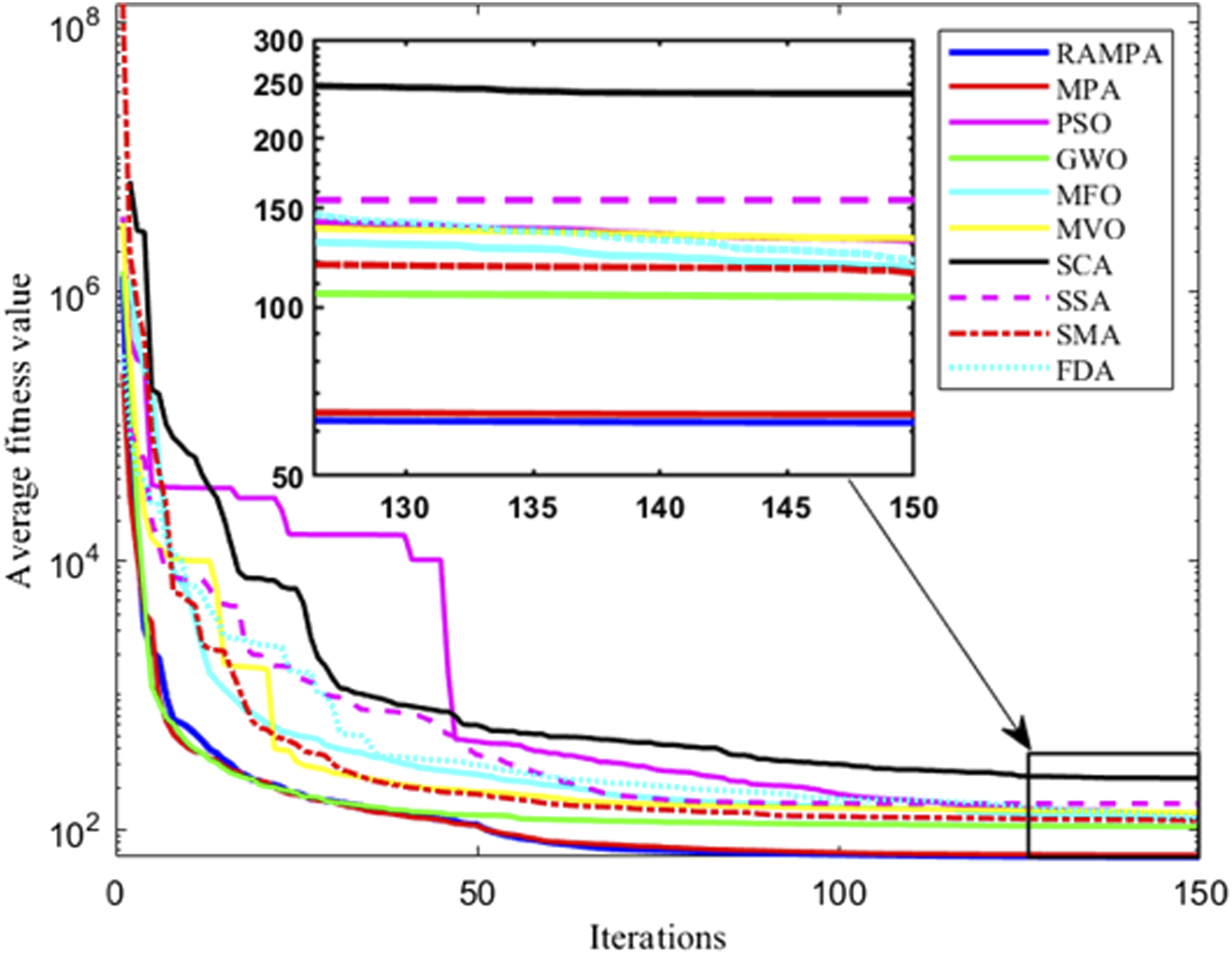
Convergence curves of the average fitness function from 25 trials.
The statistical performance value of fitness function, total of norm error, total of norm input, and its corresponding average CPU time.
Wilcoxon’s rank test of the fitness function between the RAMPA-based method with tunable CF and other based methods.

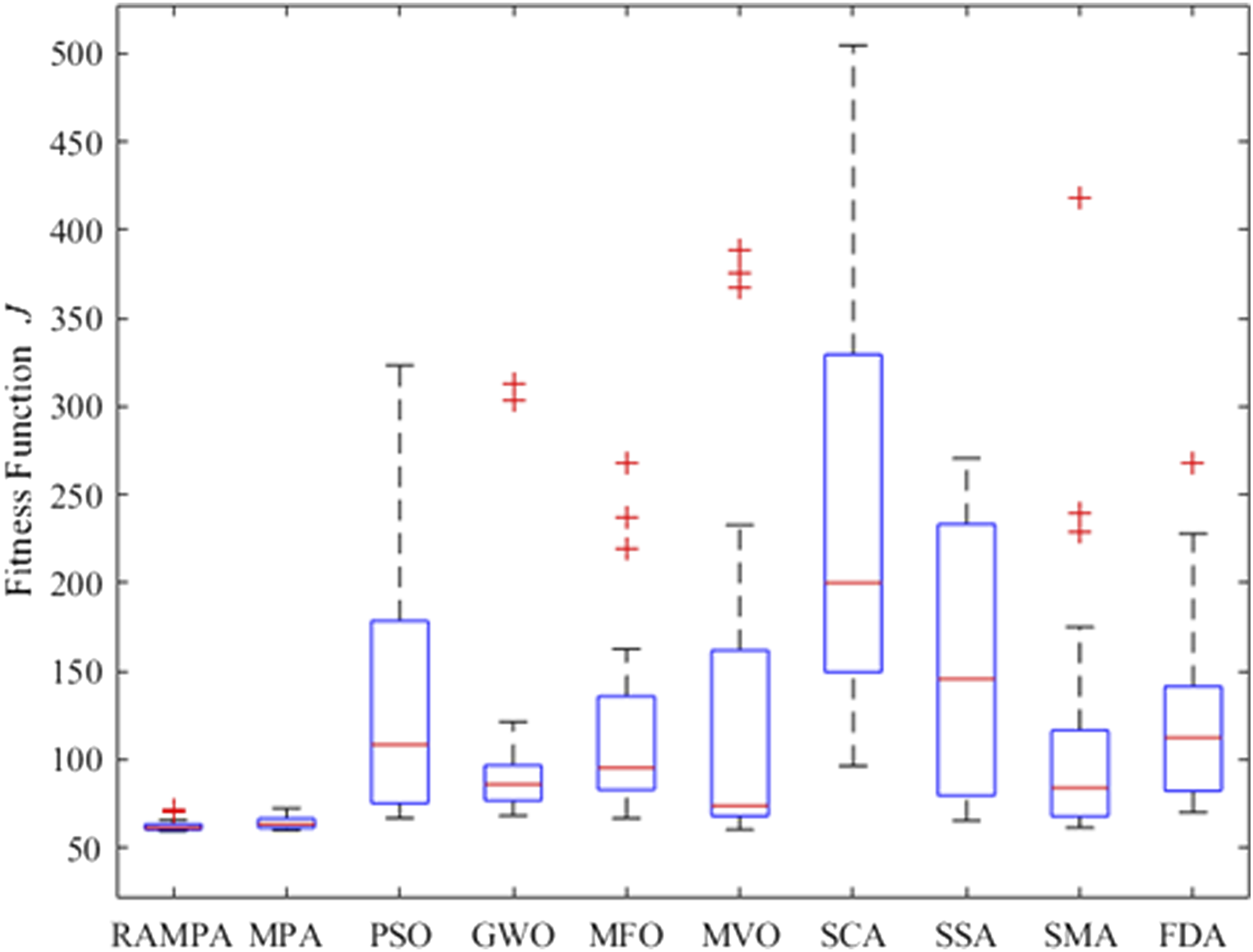
Box plot of the fitness function produced by different algorithms from 25 trials.
Optimal MnHR-NEPID controller parameters with corresponding fitness function obtained by RAMPA and ASED-based methods for MIMO gantry crane system.
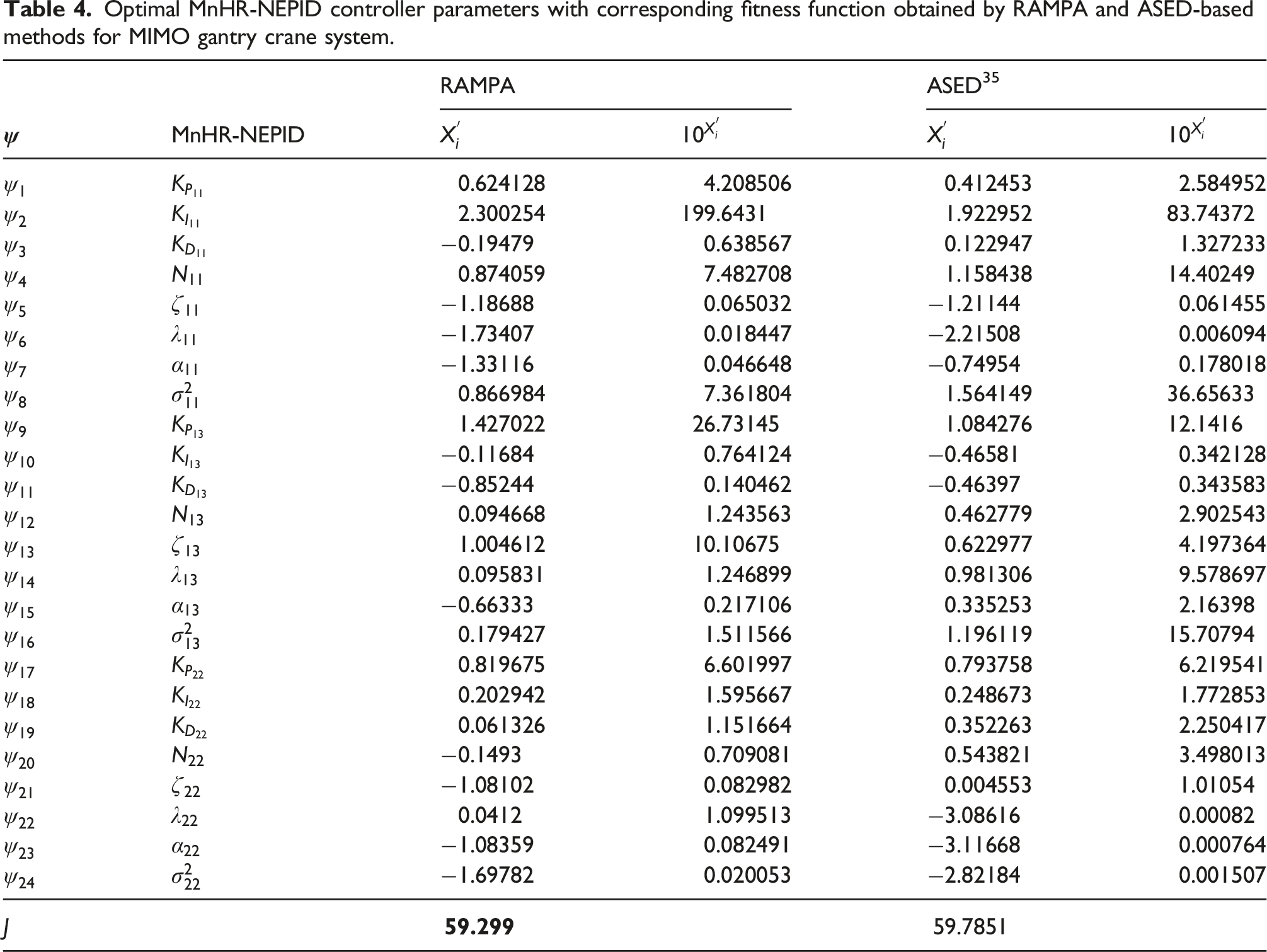
Trolley displacement
Rope length
Sway angle
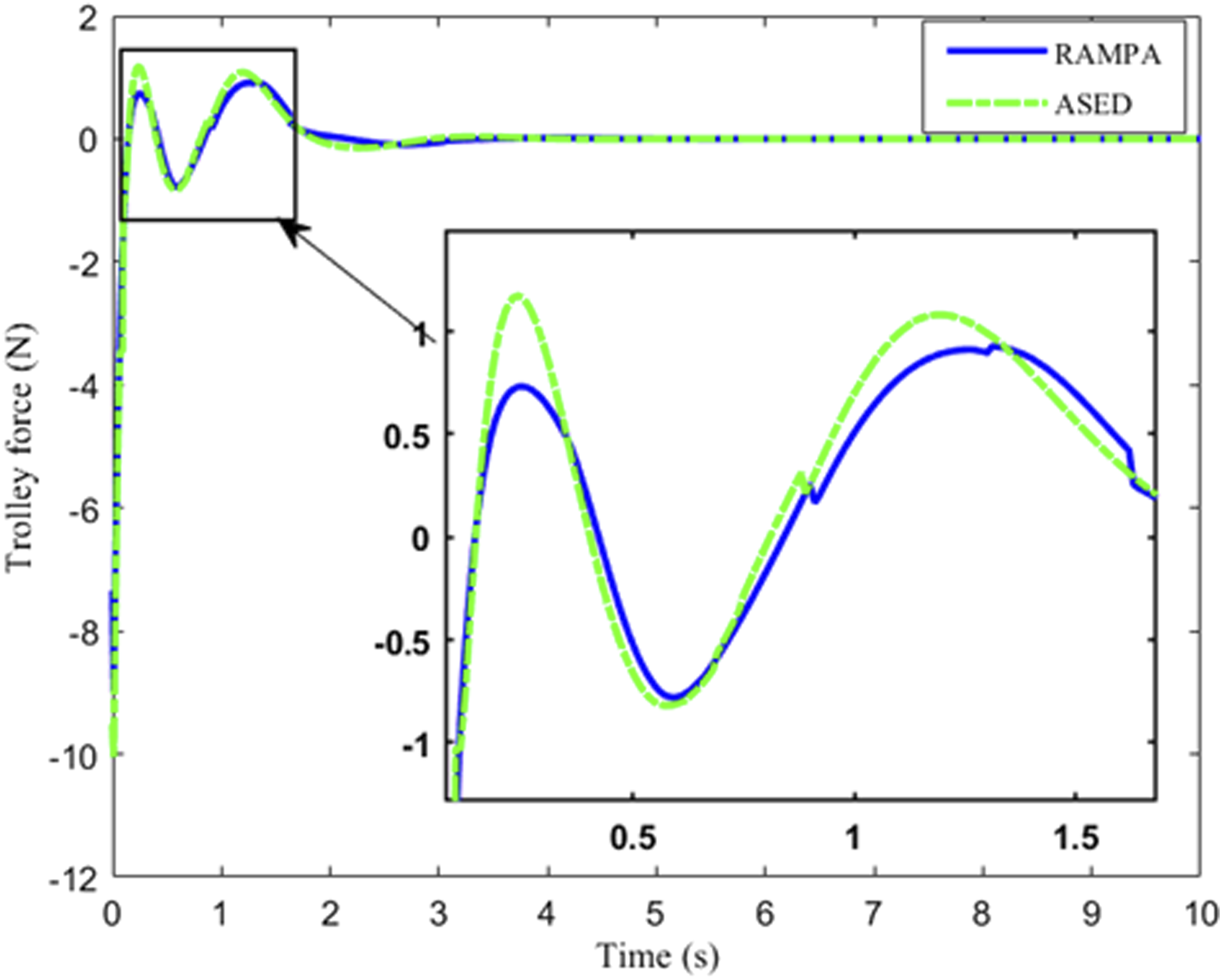
The trolley force
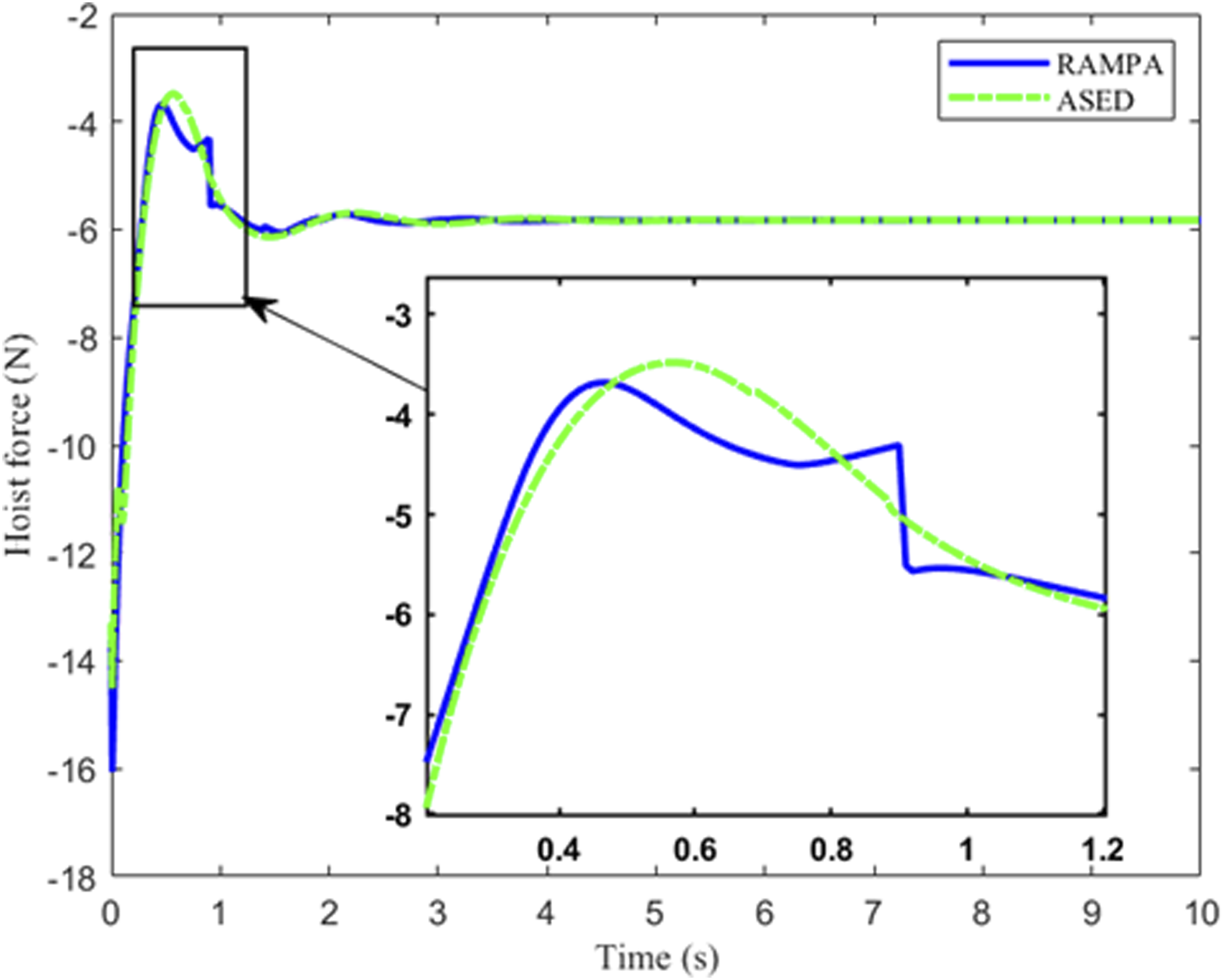
The hoist force
The results of time responses analysis of the MIMO gantry crane system.
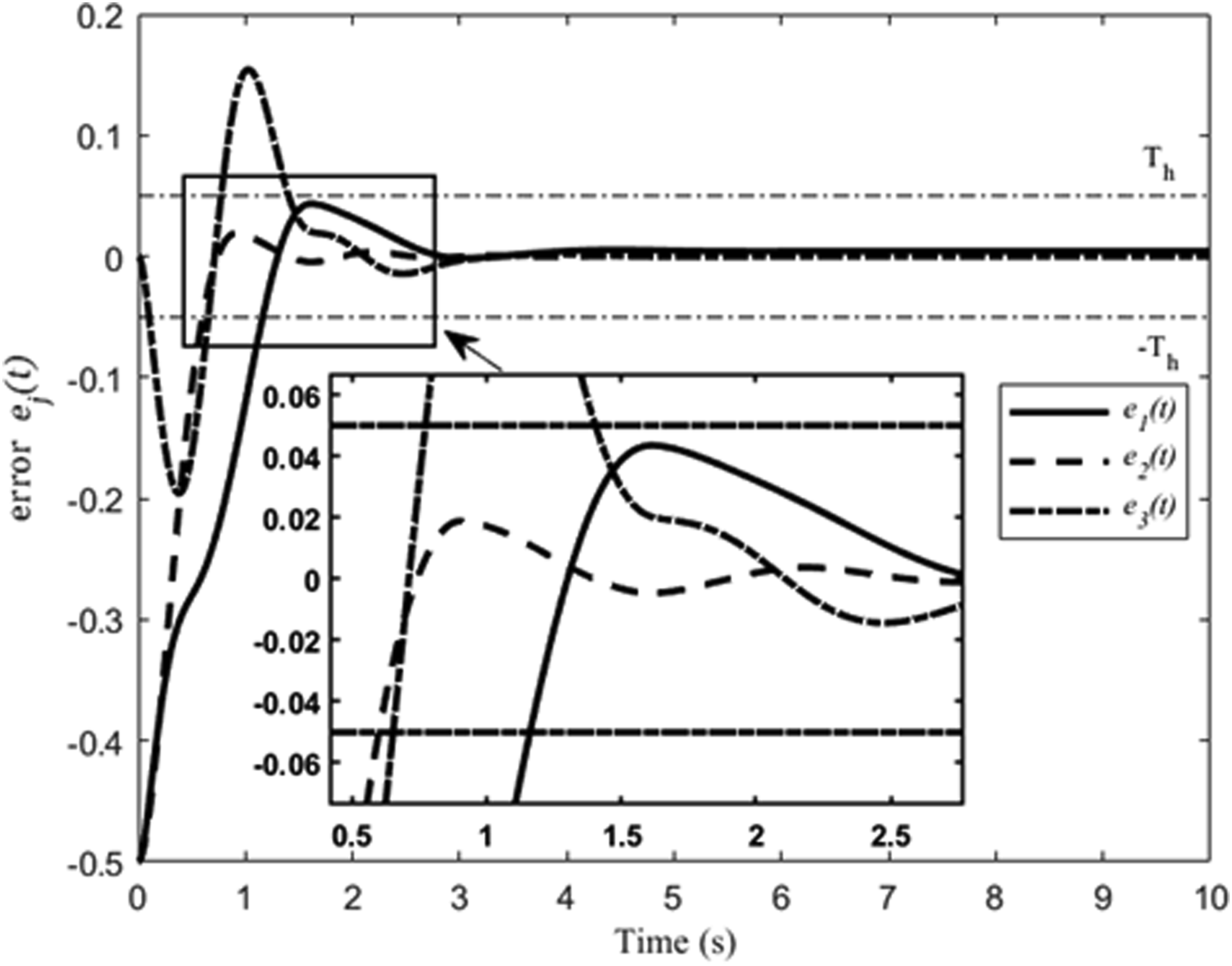
The error responses for the MIMO gantry crane system by using RAMPA-based method with tunable CF.
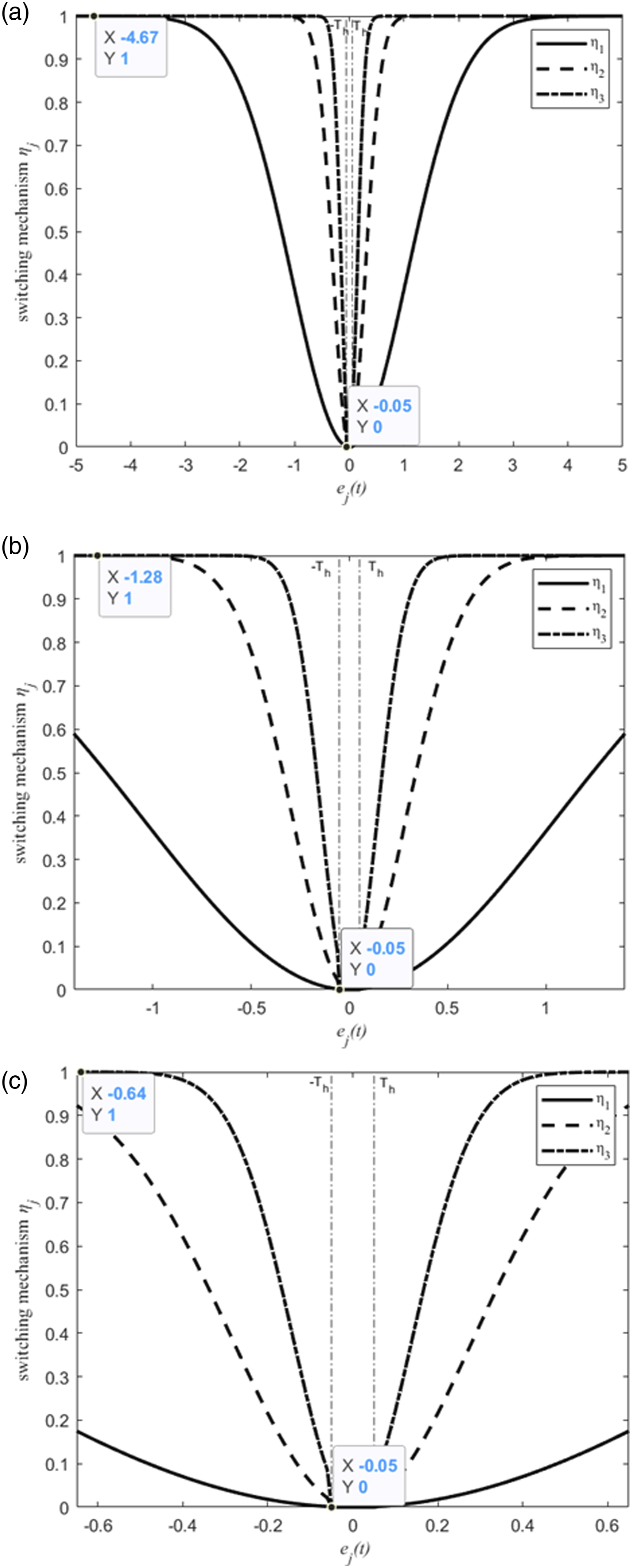
The switching mechanisms for the MIMO gantry crane system by using RAMPA-based method with tunable CF. (a) magnified for
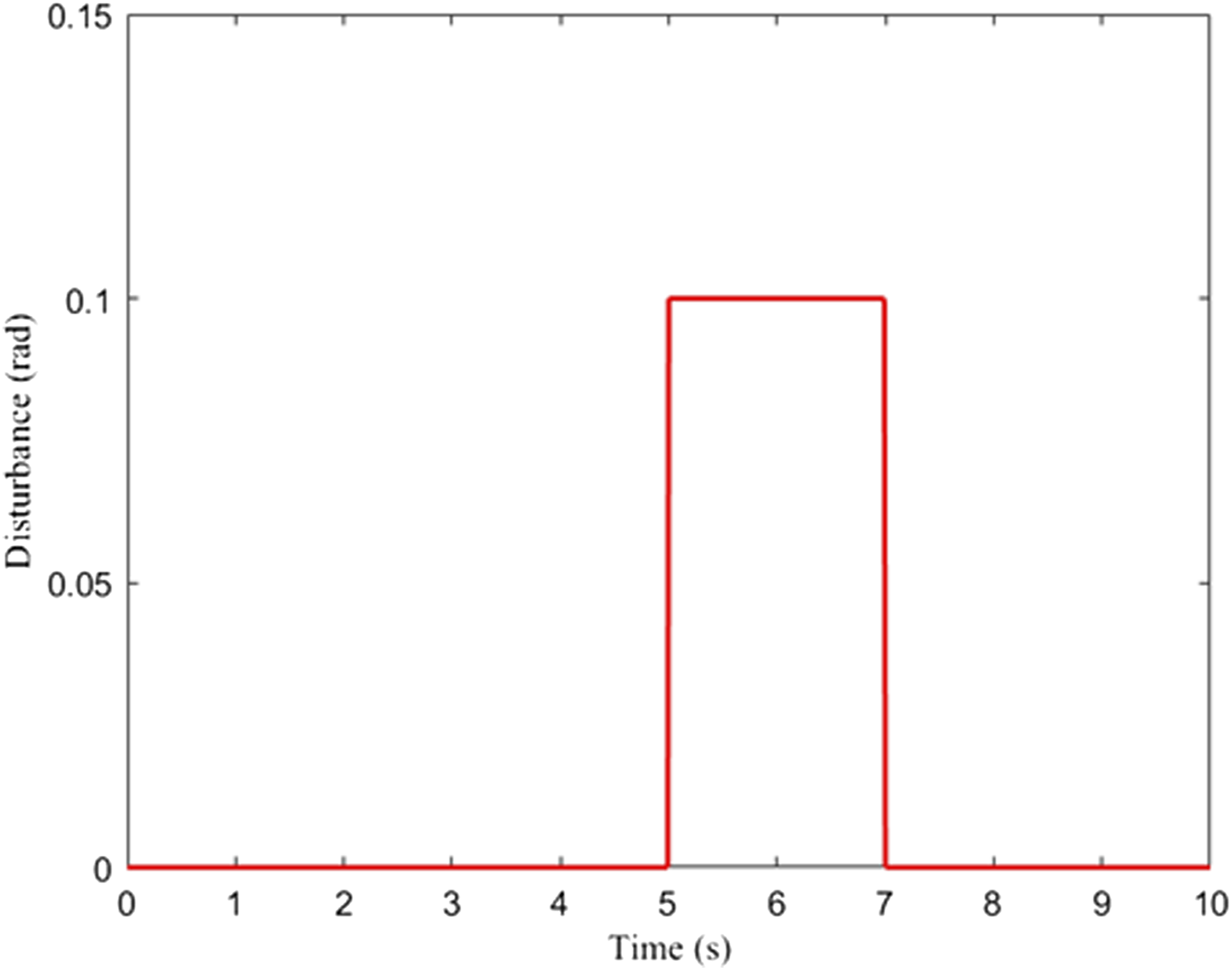
Disturbance signal
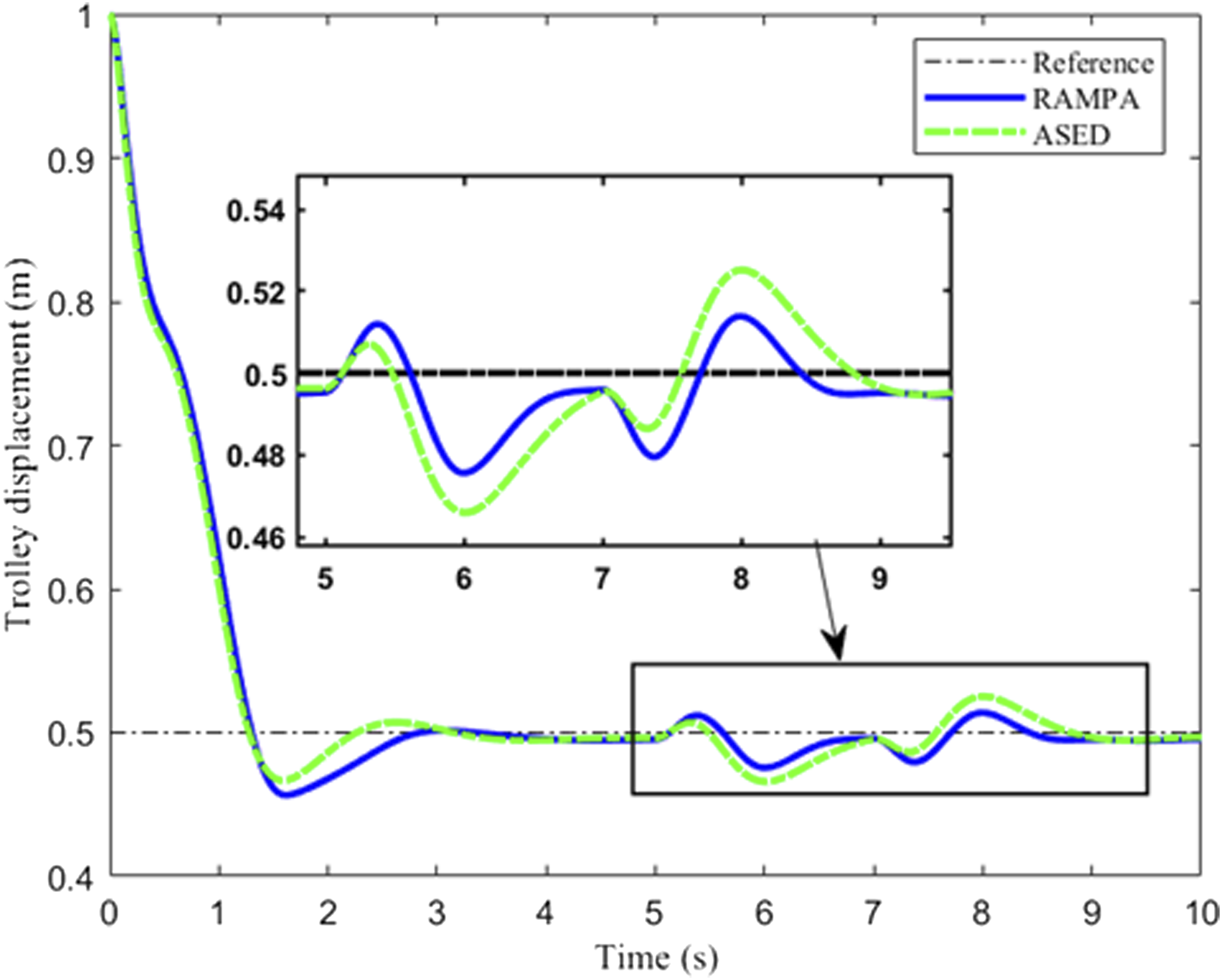
Trolley displacement
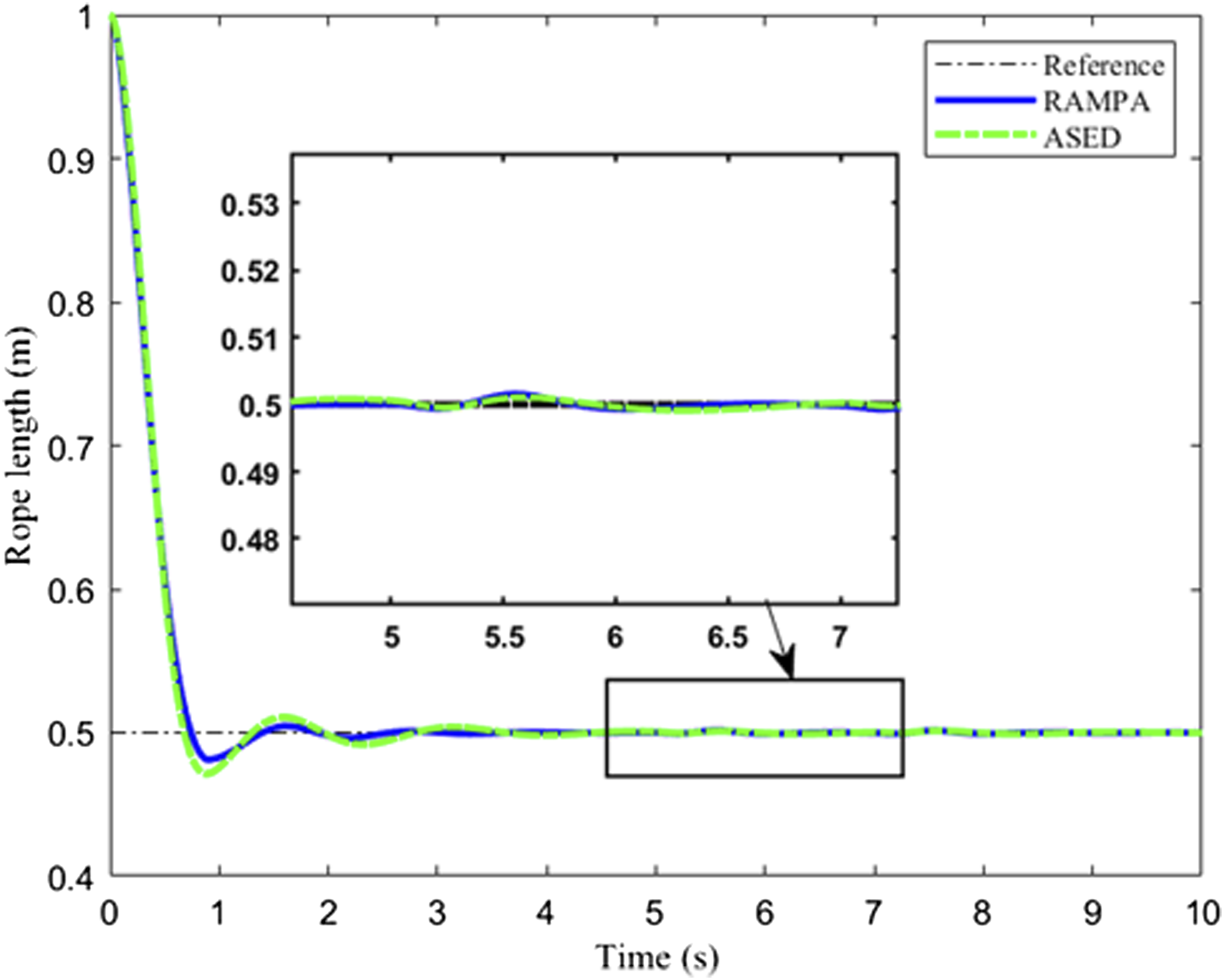
Rope length
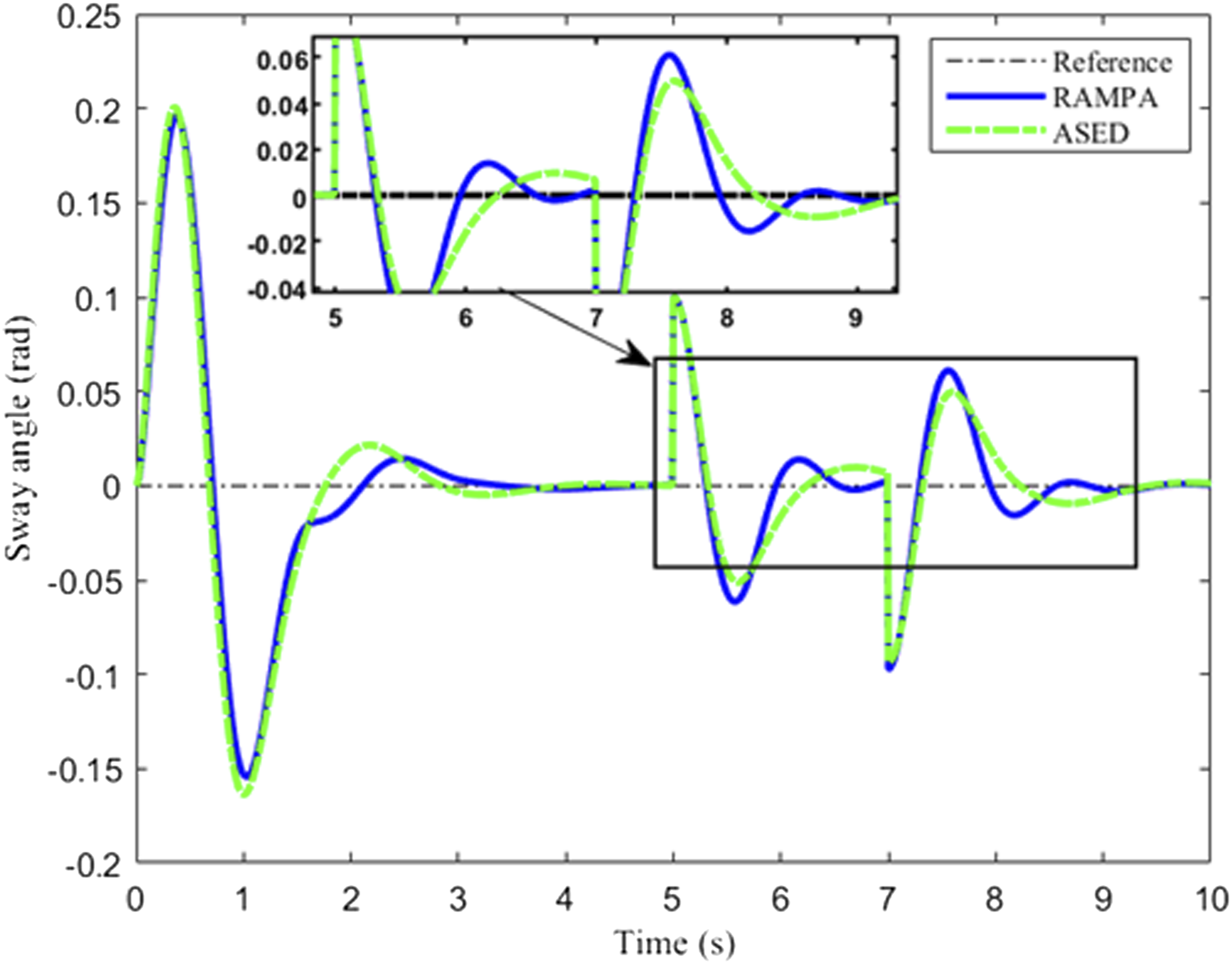
Sway angle
Conclusion
Amidst introducing the RAMPA-based method with tunable CF as a contemporary optimization algorithm on the data-driven MnHR-NEPID controller of a MIMO gantry crane system, the current study has fundamentally unearthed three main substantial contributions. Providing an increased withdrawal ability from the local optima, the first contribution hereby confirmed the proposed method as an improvement to the conventional MPA in view of its random average location calculation. The second contribution then contributes an advanced search capability to the conventional MPA by adoption of the tunable CF that allows wider users’ flexibility in acquiring a balanced degree of exploration and exploitation within the algorithm. Embracing the objective of ameliorating the practicality of a MIMO gantry crane system, this study is ultimately revealed as a founding research which employed multi-agent–based optimization for the fine-tuning of MnHR-NEPID control parameters.
Demonstrated through plotted convergence curves of the average fitness function, RAMPA-based method with tunable CF prevailed as the superior approach over its other metaheuristic-based predecessors upon yielding the smallest fitness function. Such eminence is complemented by the method’s comparatively superior performance in the aspects of fitness function, as well as the total norms of error and input, in addition to an enhanced accuracy as confirmed through the conducted Wilcoxon’s rank test and box plot statistics. A considerably diminished settling time for trolley displacement, percentage overshoot of the rope’s length, maximum magnitude of the sway angle, as well as range of the recorded input force against performance of the formerly published ASED-based algorithm has further established a better time response on the proposed method. Such has also been the case when it comes to counteracting adversities brought about by the experimented disturbance.
In accounts of both feasibility and vast applicability of the RAMPA-based method with tunable CF, the proposed method holds promising potential in actual implementations of numerous control applications. However, the method’s sole excellence in handling single fitness function is contravened by its deficiency in the concurrent management of multiple fitness functions with contradicting objectives. Upcoming research concern within similar academic context is, therefore, allocated to the examining of multi-objective RAMPA-based method with tunable CF for accuracy improvement. This is on the realization that the proposed method can also be investigated towards resolutions of real-time issues as encountered within systems ranging from automatic voltage regulator (AVR) control system, induction motor drive control of an electric vehicle to maneuvering control of a twin-rotor MIMO system, through its alternative implementations within other nonlinear PID controllers.
Footnotes
Acknowledgments
The highest gratitude is especially extended to the Ministry of Higher Education for the financial assistance provided under Fundamental Research Grant Scheme (FRGS) No. FRGS/1/2021/ICT02/UMP/03/3 (University reference RDU 210117).
Declaration of conflicting interests
The author(s) declared no potential conflicts of interest with respect to the research, authorship, and/or publication of this article.
Funding
The author(s) disclosed the receipt of the following financial support for the research, authorship, and/or publication of this article: This work was supported by the Ministry of Higher Education Malaysia (FRGS/1/2021/ICT02/UMP/03/3).
