




Abstract
Eddy current damper (ECD), a contactless energy-dissipating device, is applying to control the vibration induced by earthquake and strong wind in civil structures. Combining with motion magnification mechanisms improves the damping effect of the ECD while significantly strengthens its nonlinearity. The response of single degree of freedom and multi-degree of freedom system with ECDs under a stationary stochastic earthquake characterized by the power spectral density function is evaluated using the stochastic linearization technique and expressions of the equivalent linear damping coefficient based on force criterion and energy criterion have been found, respectively. Comparisons with results obtained by Monte Carlo simulations confirm that for the nonlinearity of eddy current dampers the force-based criterion stochastic linearization technique gives accurate estimation.
Keywords
Introduction
Passive control with supplemental energy dissipation devices has attracted considerable attention over the past few decades. It has been proven that passive control is very effective in improving the seismic performance of civil structures.1,2 These energy dissipation devices absorb a large proportion of energy induced by earthquakes, which contributes to mitigating structural damage and reducing retrofitting costs. A variety of energy dissipation devices have been proposed, such as fluid viscous dampers 3 (FVD), metallic dampers, 4 viscoelastic dampers, 5 and tuned vibration dampers. 6 The eddy current damper7–10 (ECD) is a type of novel energy-dissipating devices whose resistant force is generated by interaction between eddy currents and magnetic field. Due to its mechanical contactless feature which avoids the disadvantages of failure risks in FVDs and thus results in long-term stability, ECD has been widely applied in brake systems and vehicle suspension systems. 11 However, ECD’s low energy-dissipating density leads to the small feasibility of being applied to control vibration in civil engineering, especially in earthquake protection. Combination with tuned mass or inertial mass 12 is the main method leading ECD into application so far. Efforts have been made to enhance the vibration control effect of ECD, such as optimal design, 10 coupling with another solid energy dissipation mechanism, 13 and adopting electro-magnetic technique and hybrid control strategy.14,15
Utilizing the motion magnification mechanisms, like ball screw 16 or rack and gear, 17 to increase input velocity of ECD is another available method to improve eddy current damping effect. But installing these motion magnification mechanisms will change the nonlinearity of the relationship between eddy current damping force and velocity. As the result, the difficulties in the design of the damper devices and the evaluation of the structural response become insurmountable, which also raises in FVD. 18 Therefore, the attempts have been made on linearization for the nonlinear damping force.19–21 Evaluating the equivalent viscous damping ratio contributed by the nonlinear dampers is the most effective way to assess their energy-dissipating capacity, and energy equivalent method, 19 in one cycle of vibration, is widely adopted in the study of vibration control. Nevertheless, this method based on the hypothetical harmonic analysis does not give the exact estimation of linearized coefficient due to the uncertainties and randomness of earthquake, while the stochastic linearization technique 22 (SLT) is an alternative one. The SLT has been employed in a series of researches and exhibited an extraordinary applicability, such as nonlinear viscous dampers 21 characterized by exponential function, nonlinear hysteretic dampers, 23 and optimal design of nonlinear energy sinks,24,25 among others.
The purpose of this work is to evaluate the linearization of the nonlinear eddy current damping force under stochastic earthquake characterized by Kanai-Tajimi power spectral density (PSD) via using the stochastic linearization technique. The force-based criterion and energy-based criterion are chosen for linearization. The analysis results via SLT are validated by the Monte Carlo simulations (MCSs) approach performed on the originally nonlinear system.
SDOF structures with nonlinear eddy current dampers
Different from the well-known fluid viscous dampers, the damping force of eddy current dampers increases with velocity before it reaches the critical velocity, and then decreases at a higher velocity input. Its nonlinear force-velocity relationship is characterized precisely by the Wouterse’s model
26
written as

The seismic performance of a single degree of freedom system attached with eddy current damper is analyzed under stochastic ground motion that is a stationary zero-mean Gaussian random process described by the PSD function. Figure 1 displays a general sketch of a single degree of freedom system with eddy current damper. The dynamic equation of this system subjected to the ground excitation SDOF building model excited by ground acceleration.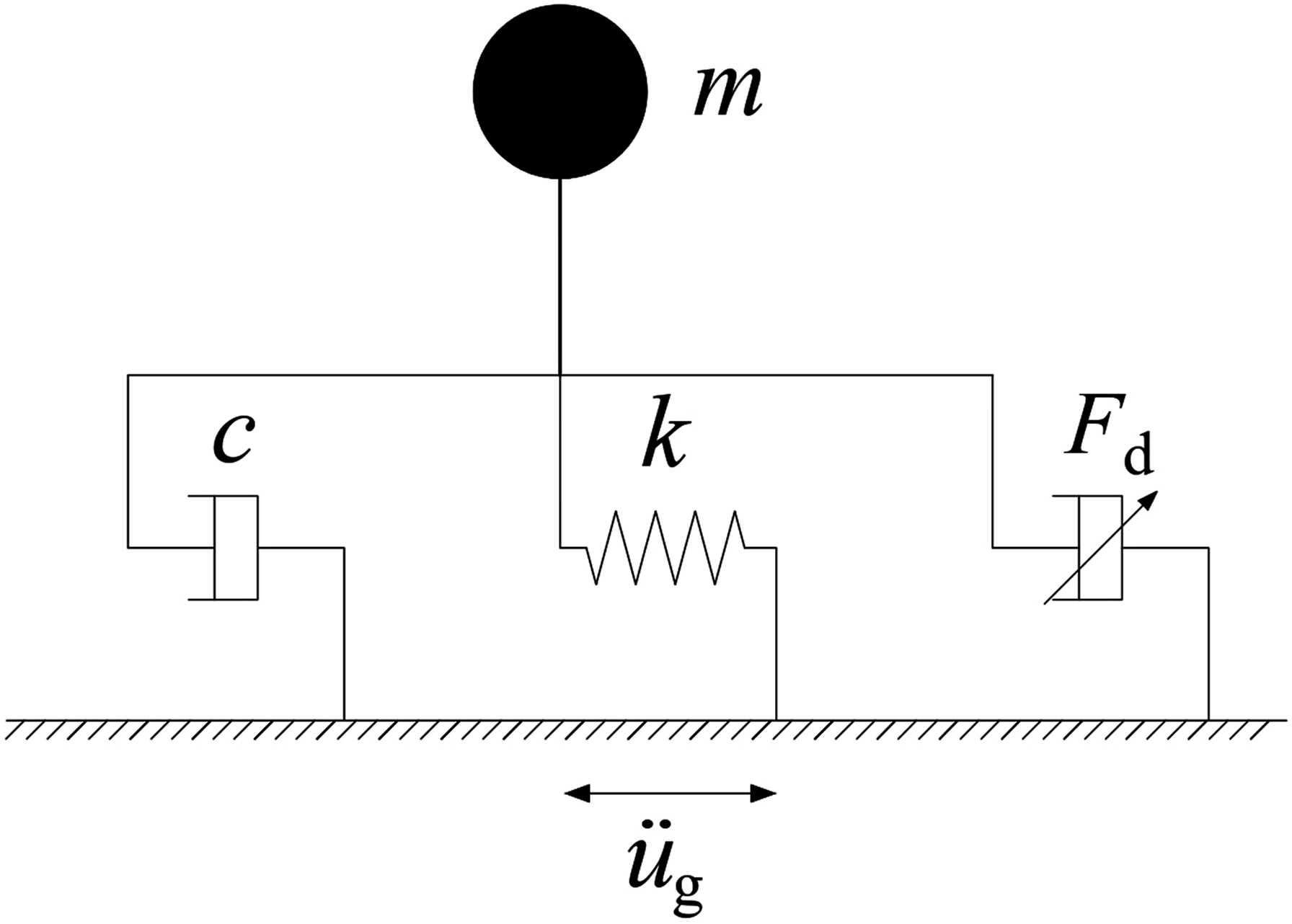

Assume the ground acceleration


For frequency domain calculation, replacing the nonlinear eddy current damping force by an equivalent one


To minimize the error in the least square sense, one has the force-based linearization coefficient

Here


The error or difference between the dissipated energy of the nonlinear and linearized system is

By minimizing the mean square error, one has the energy-based linearization coefficient

Assuming the probability density function of the velocity response is a zero-mean Gaussian, one has the following expressions

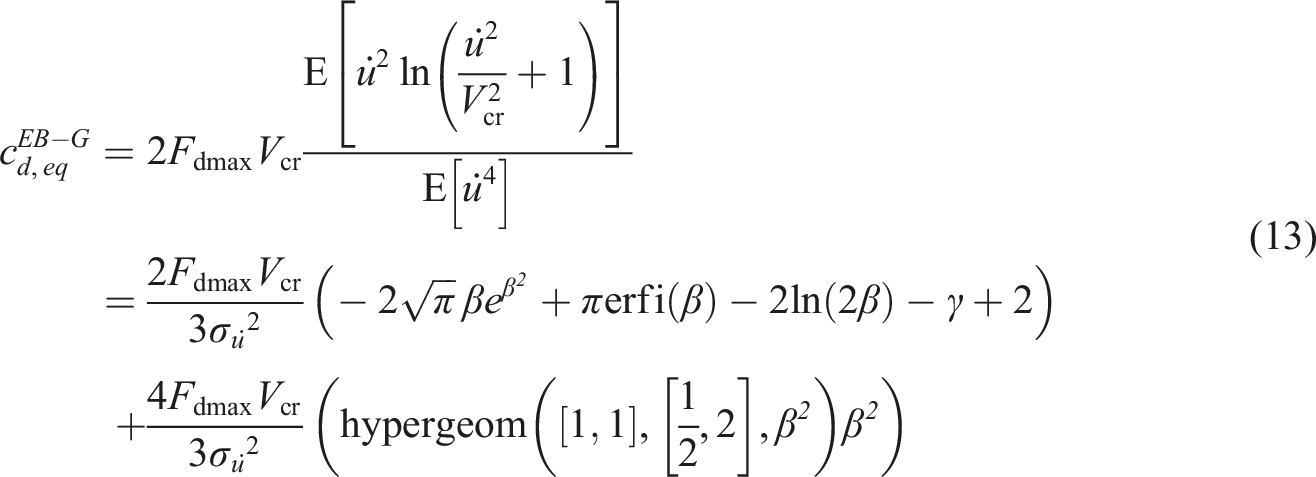

Here


Stochastic seismic analysis for MDOF structure
The extension of the above stochastic linearization technique in the ECD-SDOF system to the case of MDOF systems is considered. The building is modeled as a multi-story shear-type structure. Suppose that the damping ratio of the primary frame structure (without energy dissipation devices) is 5% with Rayleigh damping. The graphical representation of the damped structure is shown in Figure 2. Schematic of MDOF structure equipped with ECDs.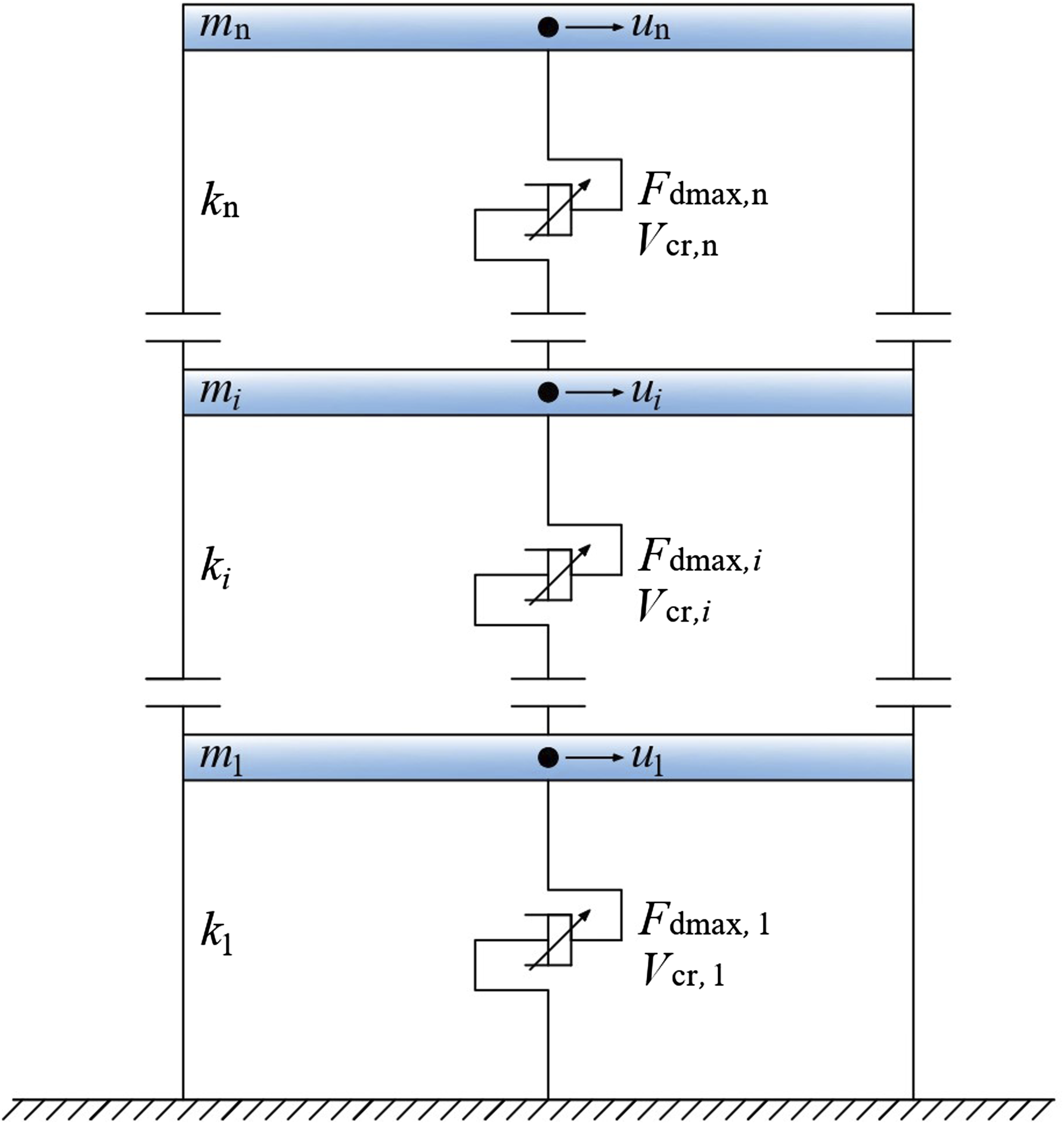
The equation of motion for the multi-degree of freedom structural system is
20

Here

According to SLT, the equivalent linear system is assumed as

Here the elements of equivalent linear damping matrix are


When only the kth mode of the undamped system

By equations (20) and (21), the equivalent damping elements can be written as



Let

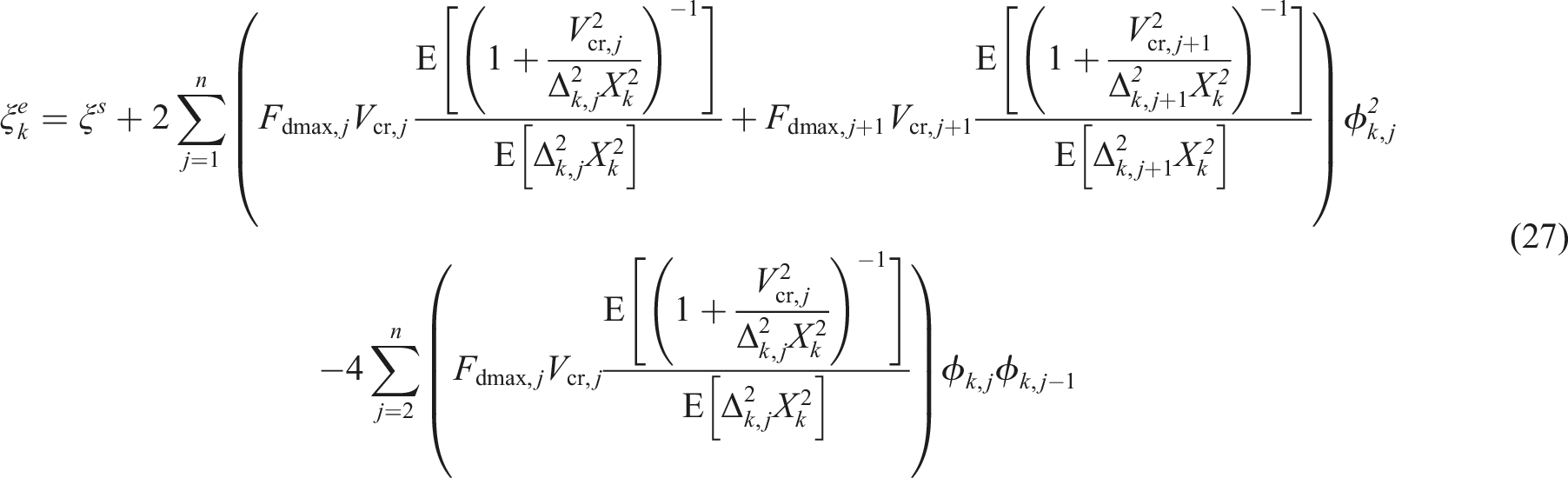
From equation (16), the approximation of the k th modal response is

Numerical analysis
The accuracies of the two different SLT equivalent criteria are evaluated by comparisons with the time domain response of eddy current damping SDOF system. The response of this nonlinear system can be obtained by Monte Carlo simulations (MCSs) on the Kanai-Tajimi function and numerical integration.
Assuming firm soil conditions, the PSD function’s filter parameters can be defined as PSD and simulated ground accelerations. (a) PSD and (b) stochastic ground accelerations by MCS.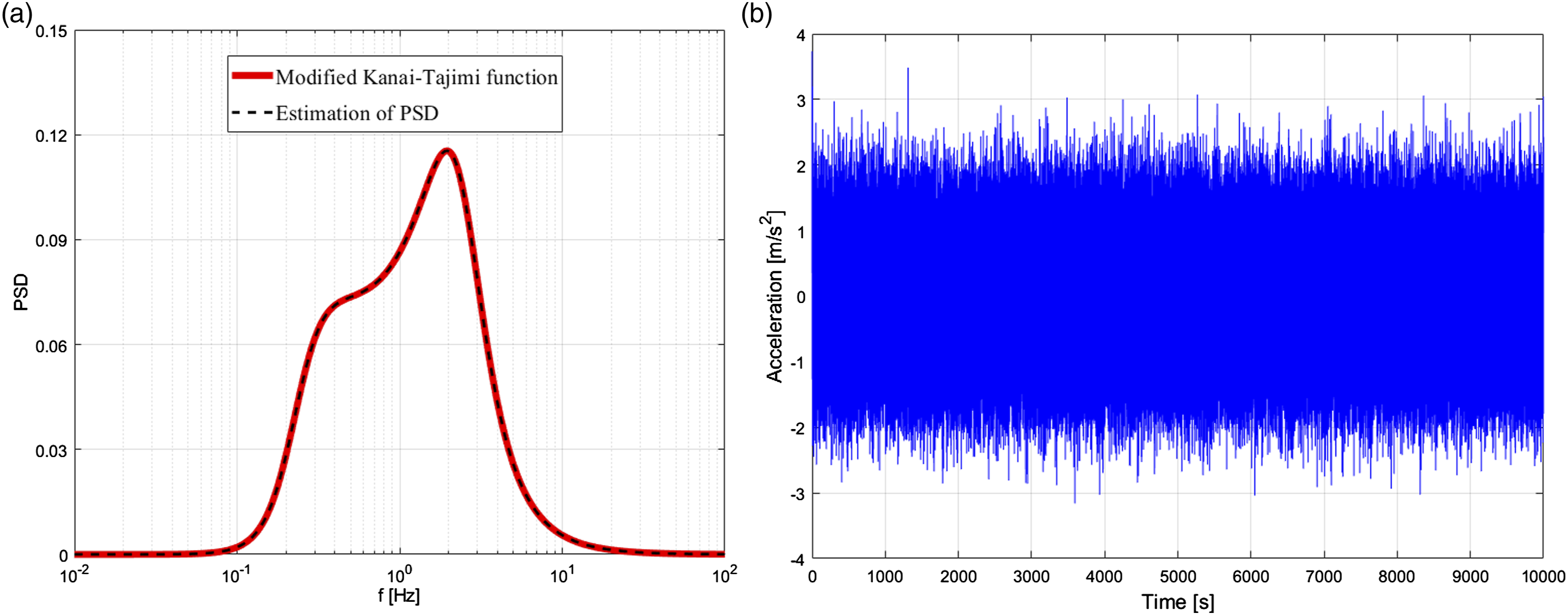
A linear system with inherent damping ratio equal to 0.05 is utilized to test the correctness of calculations between frequency domain and time domain. In frequency domain calculations, equation (14) is the precise integral and equation (16) is the approximation. These two equations are adopted to compare the correctness and accuracy with time domain calculation results, which are shown in Figure 4. We can find that these two equations both have excellent accuracy while frequency domain integral does better. Standard deviation of velocity of linear system under different periods.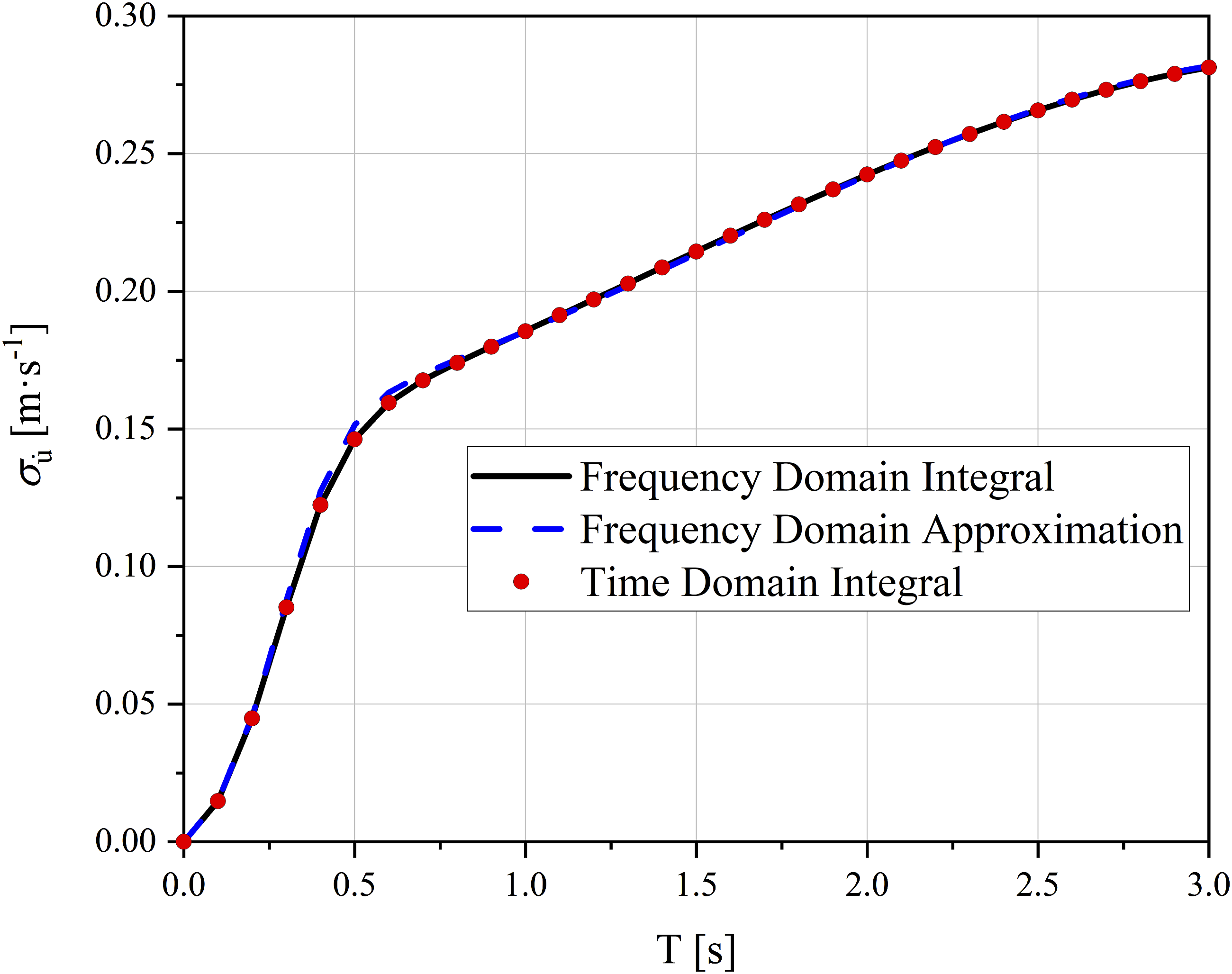
As for the parameter of eddy current dampers, the non-dimensional peak damping force Standard deviation of structural response under different periods. Linearized damping coefficient under different periods.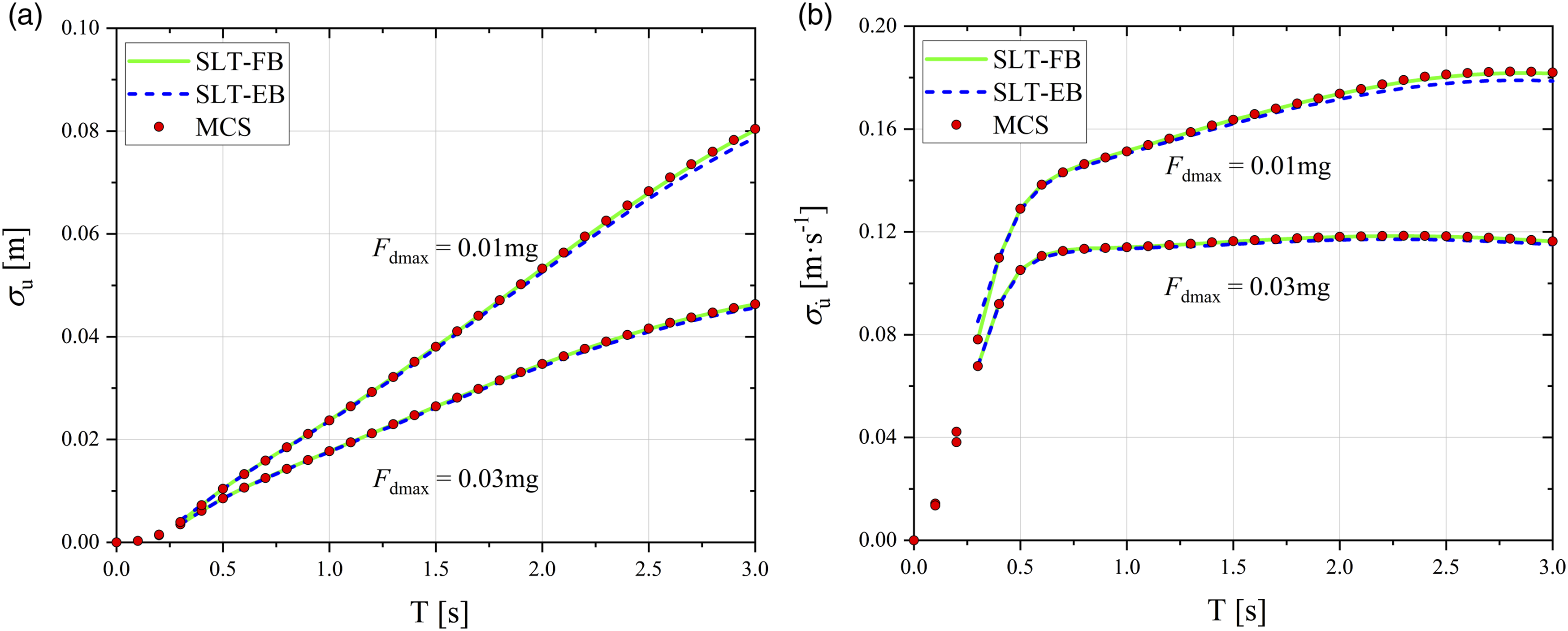
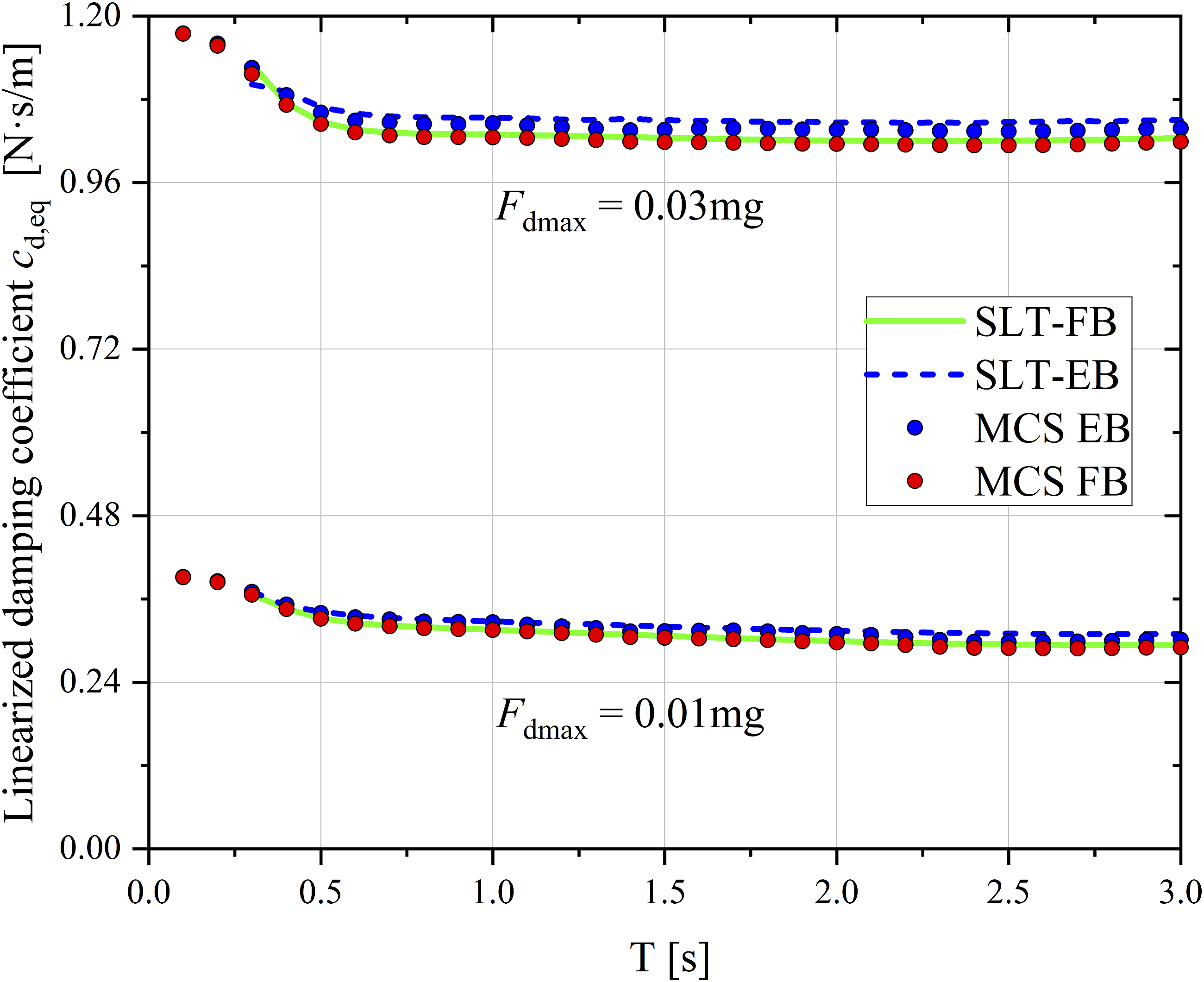
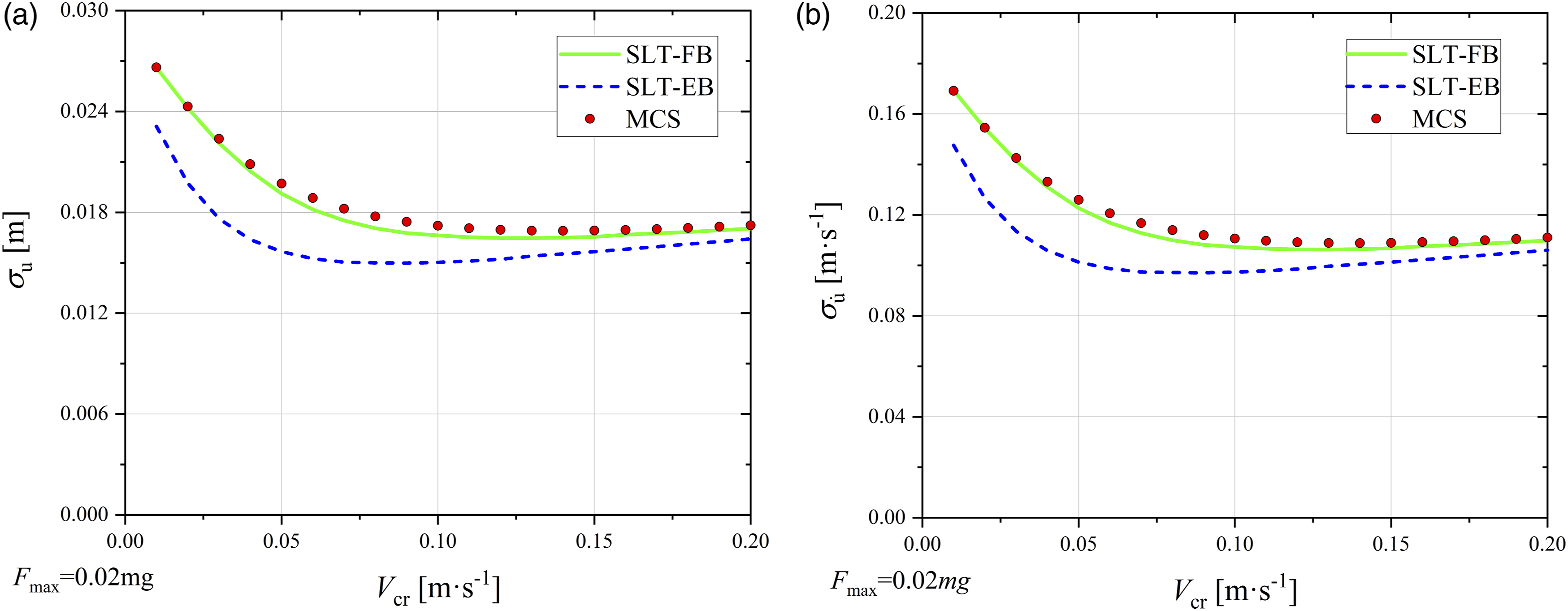
To examine the performance of these two versions of SLT in a broader range of nonlinear parameters of the ECD, the standard deviation of the response for T = 1s is reported in Figure 7 and Figure 8 by varying the non-dimensional peak damping force Standard deviation of structural response for T = 1s under varying non-dimensional peak damping force Standard deviation of structural response for T = 1s under varying critical velocity 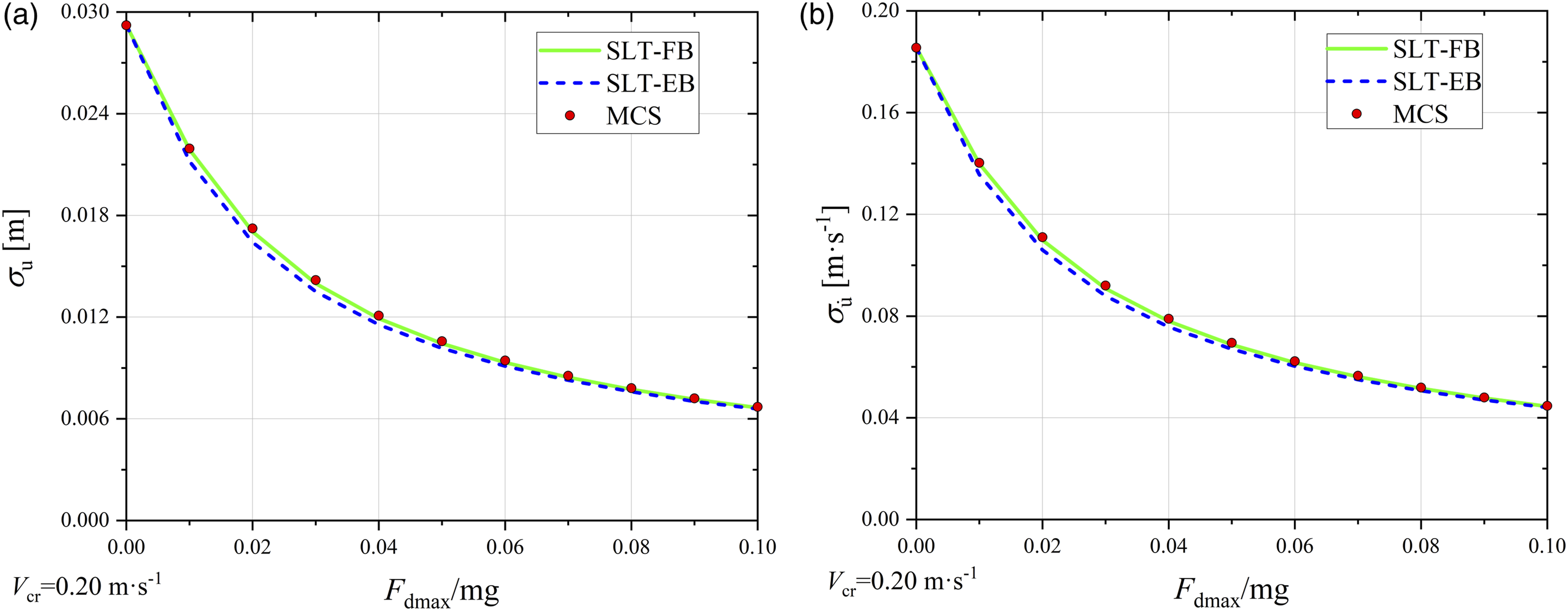
As for the MDOF structure with ECDs, the force-based SLT is applied due to its better accuracy. All three floors of building model have the same mass and stiffness as 80 tons and 40000 kN/m, respectively. Both the peak damping force and the critical velocity are equal for all ECDs, where the critical velocity equals to 0.2m/s. In order to assess the formulas for MDOF system derived in Section 3, the Monte Carlo simulations based on the real nonlinear system are conducted. The standard deviation of the 1st modal response for MDOF system is illustrated in Figure 9 within a range of varying the non-dimensional peak damping force Standard deviation of structural response under varying non-dimensional peak damping force 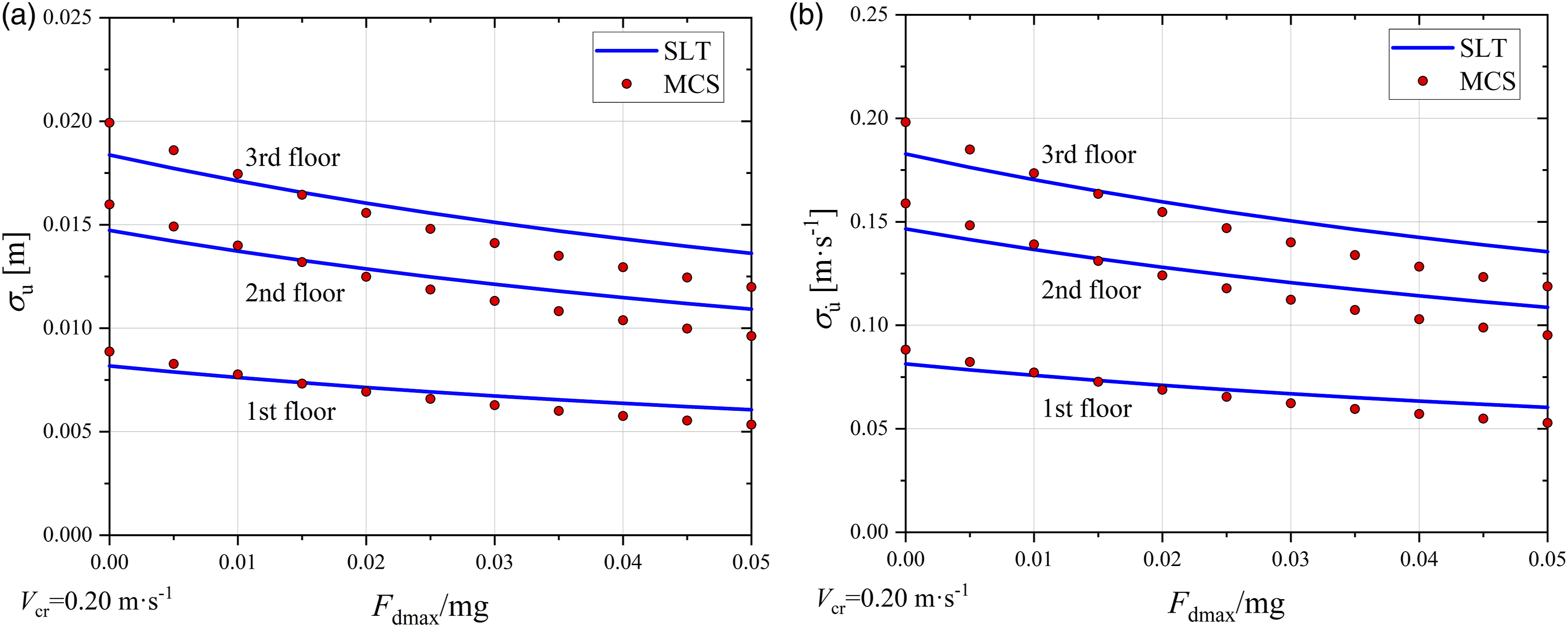
Conclusions
Structural response evaluation of linear system with ECD is intricate due to its nonlinear constitutive behavior. By utilizing the stochastic linearization technique, the relationship between the equivalent linearized damping coefficient and nonlinear eddy current damper’s parameters is derived under the stochastic ground motion characterized by a power spectral density function. The linearized structural response is validated to accurate within a broad range of parameters of eddy current dampers. Comparisons between the force-based criterion and the energy-based criterion are conducted. It reveals that force-based SLT has better accuracy than the energy-based one, especially with the relatively lower critical velocity of ECD causing system behaves more evident nonlinear property. The results show that SLT has a good performance for SDOF as well as MDOF system. In addition, the critical velocity of ECD has its optimal value under stationary stochastic earthquake with the fixed maximum damping force. It should be noted that the results presented in this paper are based on the assumption of the stationarity of both the seismic input and system response. There is a tendency that combining nonlinear eddy current damping technique with tuned mass or inerter type dampers, and the linearization research of nonlinear ECD is the basis.
Footnotes
Declaration of conflicting interests
The author(s) declared no potential conflicts of interest with respect to the research, authorship, and/or publication of this article.
Funding
The author(s) received no financial support for the research, authorship, and/or publication of this article.
