




Abstract
In this paper, we gave the vibration analysis of a finite bar with an external spring on one side and the support motion on the other side. Two analytical methods, the mode superposition method in conjunction with the quasi-static decomposition method and the method of characteristics using the diamond rule, were employed to solve this problem. Both advantages and disadvantages of two methods were discussed. It is interesting to find that the mode superposition method can capture the silent area in terms of sum of an infinite series while the method of characteristics using the diamond rule can exactly derive the dead zone. Besides, it is found that discontinuities always occur at the location on the characteristic lines. Discussions of direct and inverse problems are also addressed.
Introduction
Wave propagation is very important in physics and mechanics because there are various engineering problems which can be modeled by using the wave equation. Many researchers solved this problem by using various methods, for example, the mode superposition technique, 1 the method of separation variables,2,3 the method of quasi-static decomposition,3,4 the method of the diamond rule,3,5 the image method, 5 the finite element method (FEM), 6 the boundary element method (BEM), 7 and the meshless method. 8
The Rayleigh-damped Bernoulli–Euler beam subjected to multi-support excitation and the string subjected to support motions have been studied by using many methods.3,4 Mindlin and Goodman 9 proposed the quasi-static decomposition approach. D’Alembert’s solution provides an exact solution. Method of characteristics can be found in the textbook of Farlow. 10 It is widely employed to solve various kinds of problems, for example, water hammer. 11 The diamond rule which is based on D’Alembert’s solution was proposed by John 12 in 1975 and was mainly used to solve the wave problem. The diamond rule has been employed to solve the one-dimensional wave problem of an infinite or a semi-infinite string attached by a mass, spring, or damper 5 and a finite string. 3 Besides, the animation was also given in. 5
It is necessary to derive the eigenfunctions in advance to obtain the transient response of the bar 13 if the mode superposition approach is considered. Mathematically speaking, the series solution of the dynamic response of the bar can be obtained by using the method of separation variables in conjunction with a truncated series to approximate the real response. 2 The free vibration problem of a finite bar with an external spring has been studied. 14
Besides, the instability is a crucial issue in dynamics. Tian and He15–19 investigated on the instability of the micro-electromechanical system (MEMS). Nonlinear effect is an interesting and practical issue. In this paper, two methods, the mode superposition method in conjunction with the quasi-static decomposition method and the method of characteristics using the diamond rule, are based on the linear theory. More efforts should be done to extend this approach to nonlinear problem. If transforming a nonlinear PDE to a linear PDE is possible, our approach can be directly applied.
In engineering practice, real cases can be always categorized to two kinds, direct and inverse problems. Regarding the inverse problem, an ill-posed model is always required to be regularized.20,21 For example, deconvolution of the site response analysis was done by using the Cesàro sum in conjunction with the L-curve.22,23 Some researchers also solved the inverse problem on vibration problems
24
or the Laplace equation.
25
As shown in Figures 1(a), a finite bar with a spring end (right) subject to the support motion (left) is a direct problem which can be solved by using the well-posed model. On the other hand, in Figure 1(b), the support motion is changed to a free end. If the boundary condition is simultaneously specified for the displacement history and the free traction at the left end, this over-specified boundary condition results in an inverse problem. Therefore, it yields an ill-posed model, although we focus on the support motion of Figure 1(a) only. However, why Figure 1(b) is an ill-posed model can be detected by using the present approach of the diamond rule. For the direct problem of Figure 1(a), the support displacement history, a(t), can be arbitrarily specified by the experiment. The unique solution can be obtained and the reaction of axial force history can be correspondingly obtained. However, the arbitrary a(t) in Figure 1(b) may result in nonzero traction at the free end. This supports that the solution may not exist. Ill-posed model may have three outcomes, nonexistence, non-uniqueness and instability of solution. Sketch of the problem.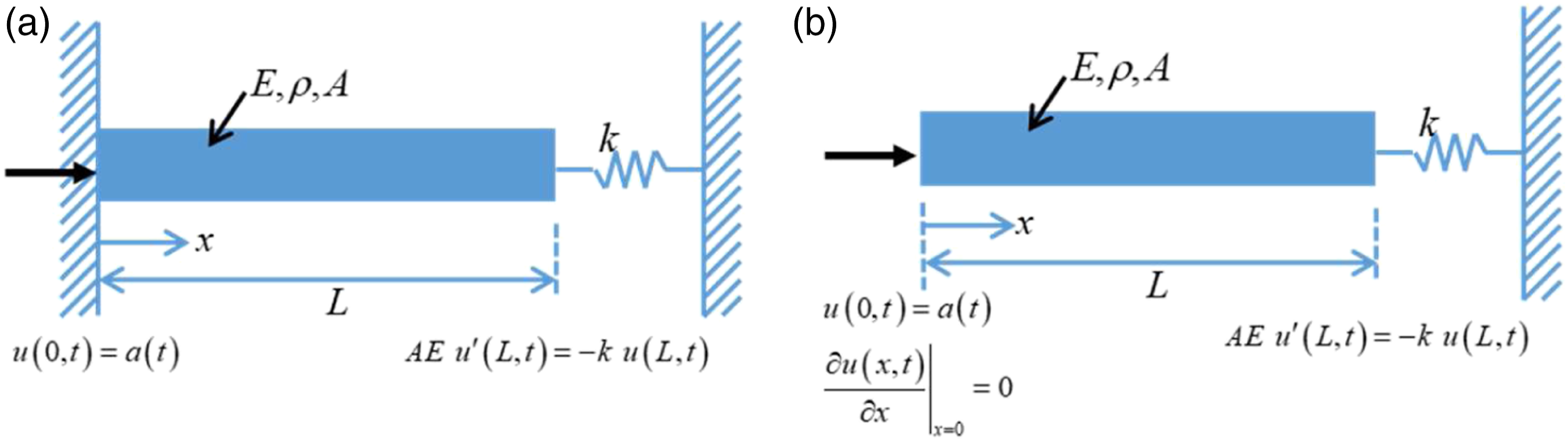
The main concern of this paper is to find an efficient way to solve the vibration problem of the finite bar with an external spring on one side and the support motion on the other side. We employ two methods, including the series solution with the quasi-static decomposition method and the method of the diamond rule. Advantages and disadvantages of both methods will be investigated in this paper.
Problem statements and methods of solutions
We consider a finite bar with an external spring as shown in Figure 1(a). The governing equation for the vibration problem of finite bar is shown below:



The boundary condition at the left hand side

The boundary condition at the right hand side

Equation (1) in conjunction with B.C. of equations (4) and (5) and initial condition of equations (2) and (3) is a well-posed model for the direct problem of support motion at the fixed end instead of the free end.
Method 1: Mode superposition in conjunction with the quasi-static decomposition method
The solution can be decomposed into two parts


and is subject to time-dependent boundary conditions:


By solving the PDE in equation (7) with boundary conditions in equations (8) and (9), we have the quasi-static solution.


subject to boundary conditions:


By solving equation (11) subject to boundary conditions of equations (12) and (13), we have the nth natural mode

where the nonlinear eigenequation is given by

and the corresponding natural frequency is

The orthogonality of the eigenfunction is


Substituting equation (6) into equation (1), we obtain


where

After considering the initial conditions, we have





Method 2: Method of characteristics in conjunction with the diamond rule
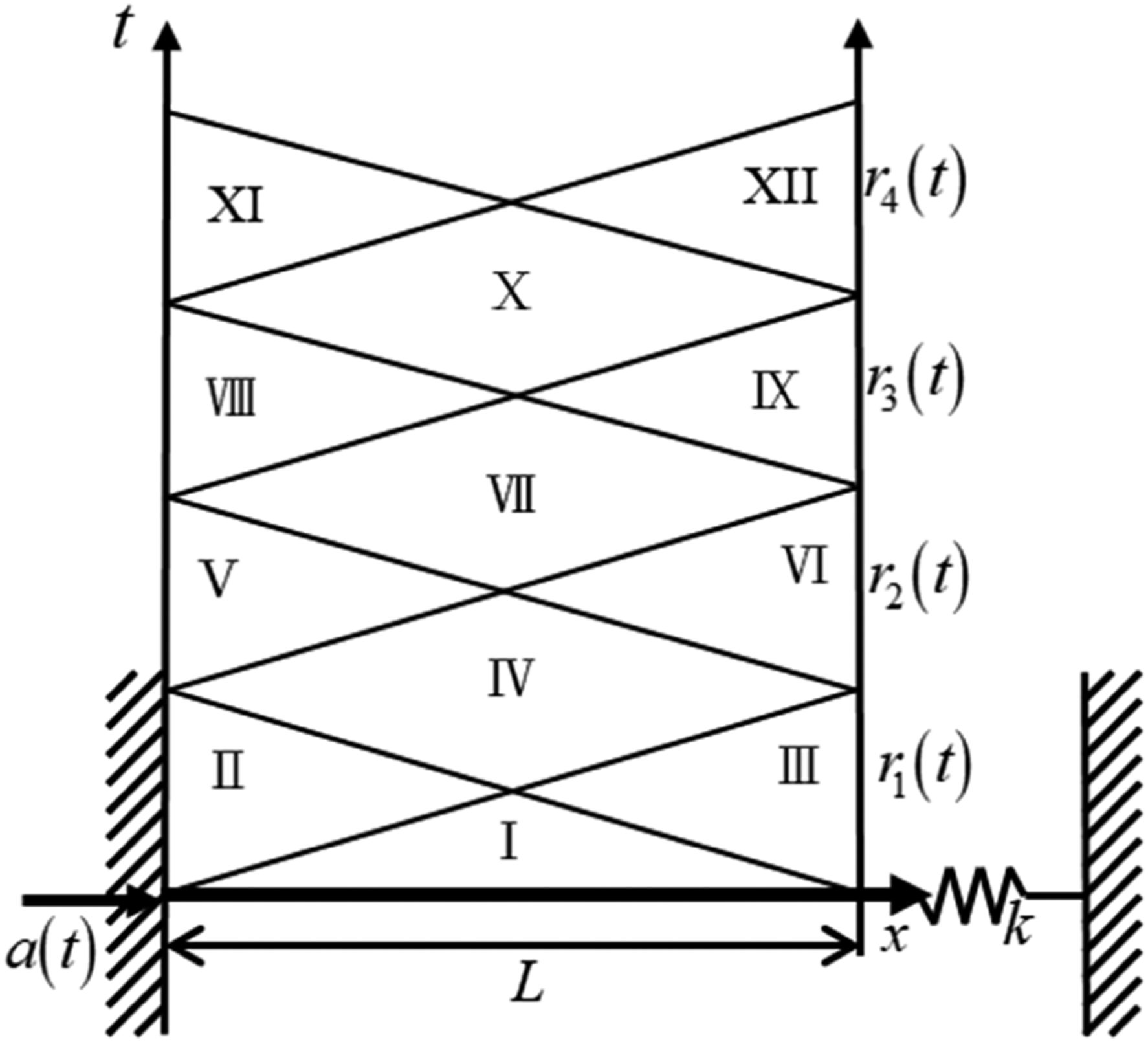
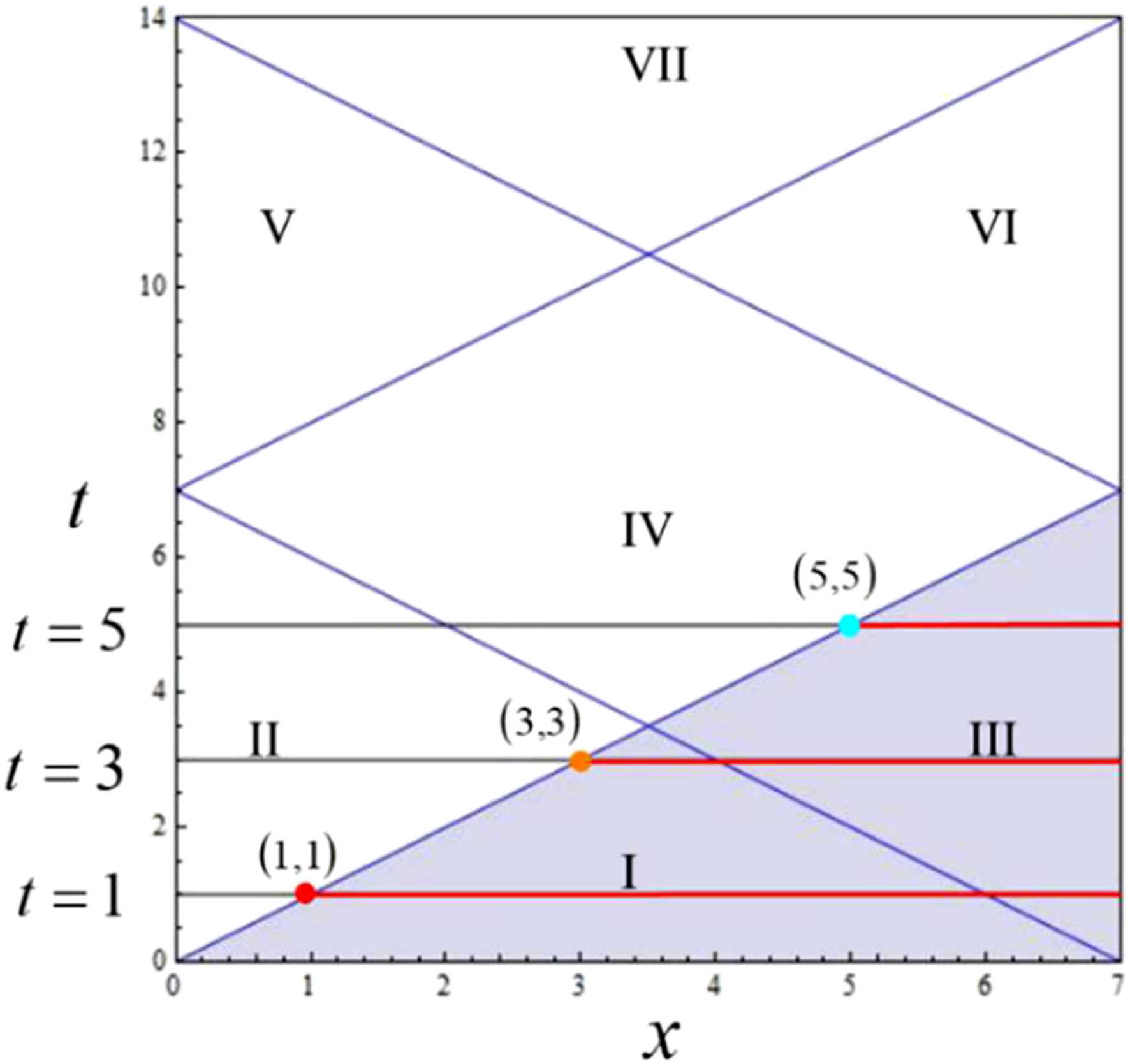
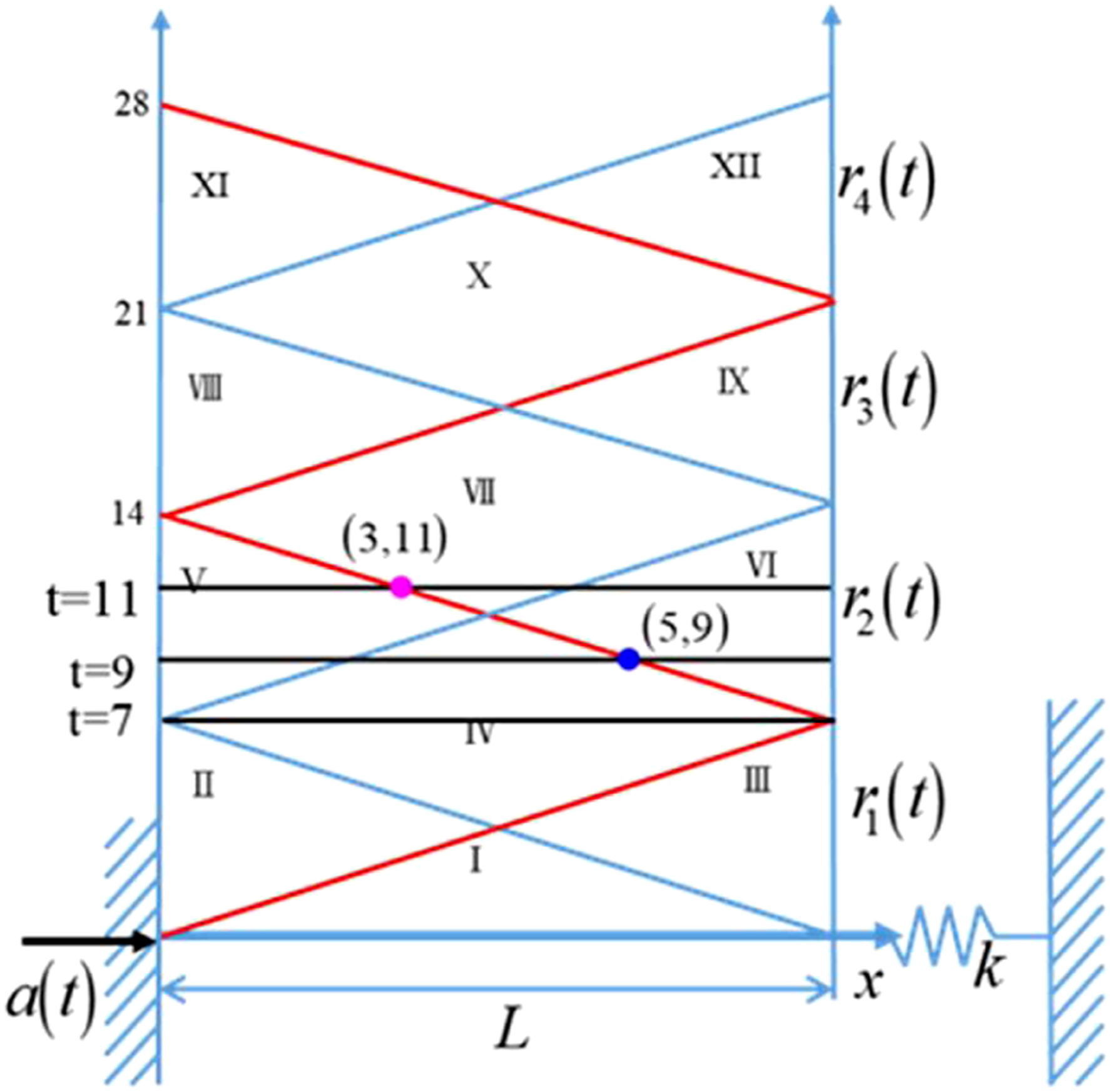
By employing the method of characteristic line, we can assume the general solution of 1D wave equation in equation (1) as The diamond rule of Regions separated by using the characteristic line. Space-time regions, I, II, III, IV, V, and VI.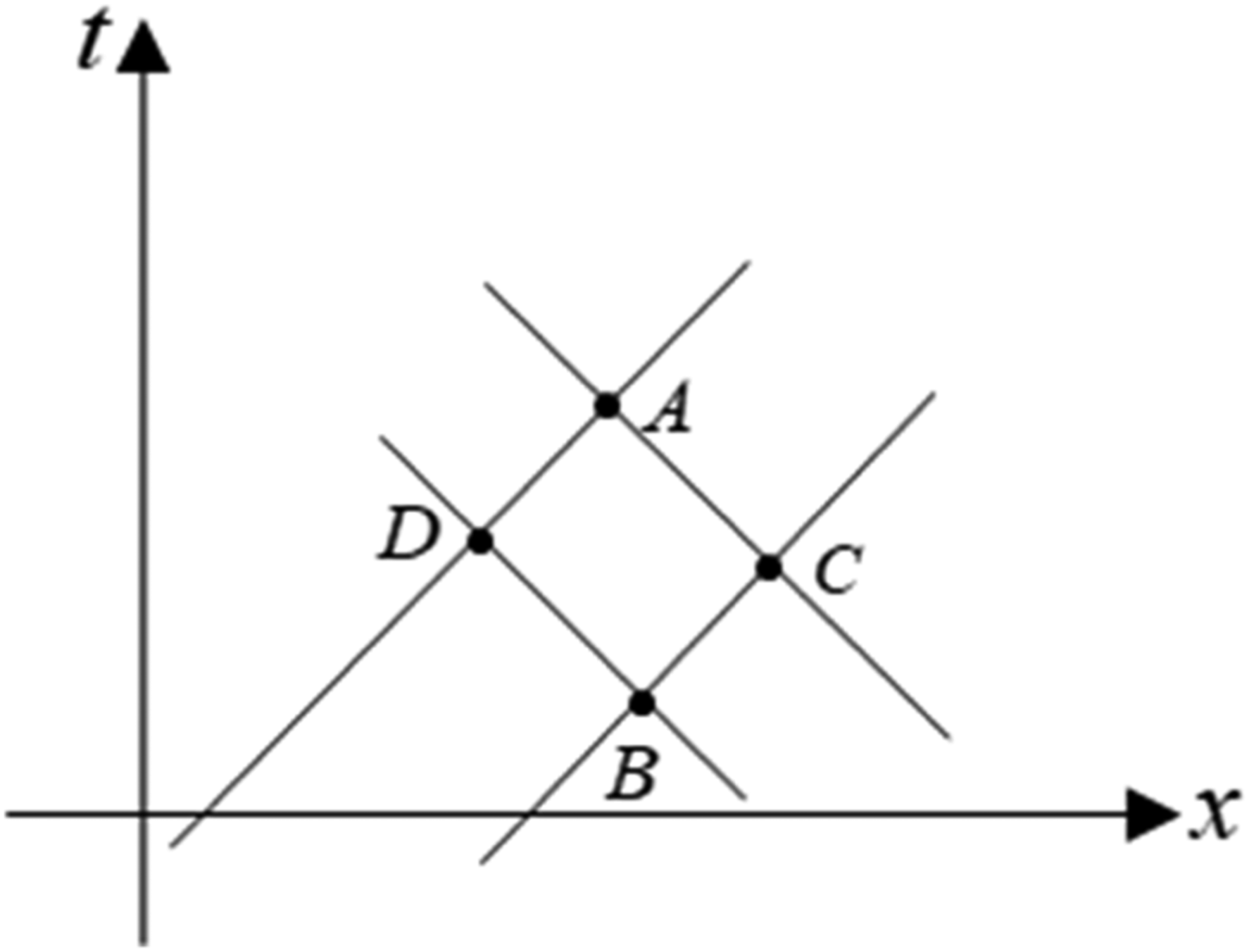
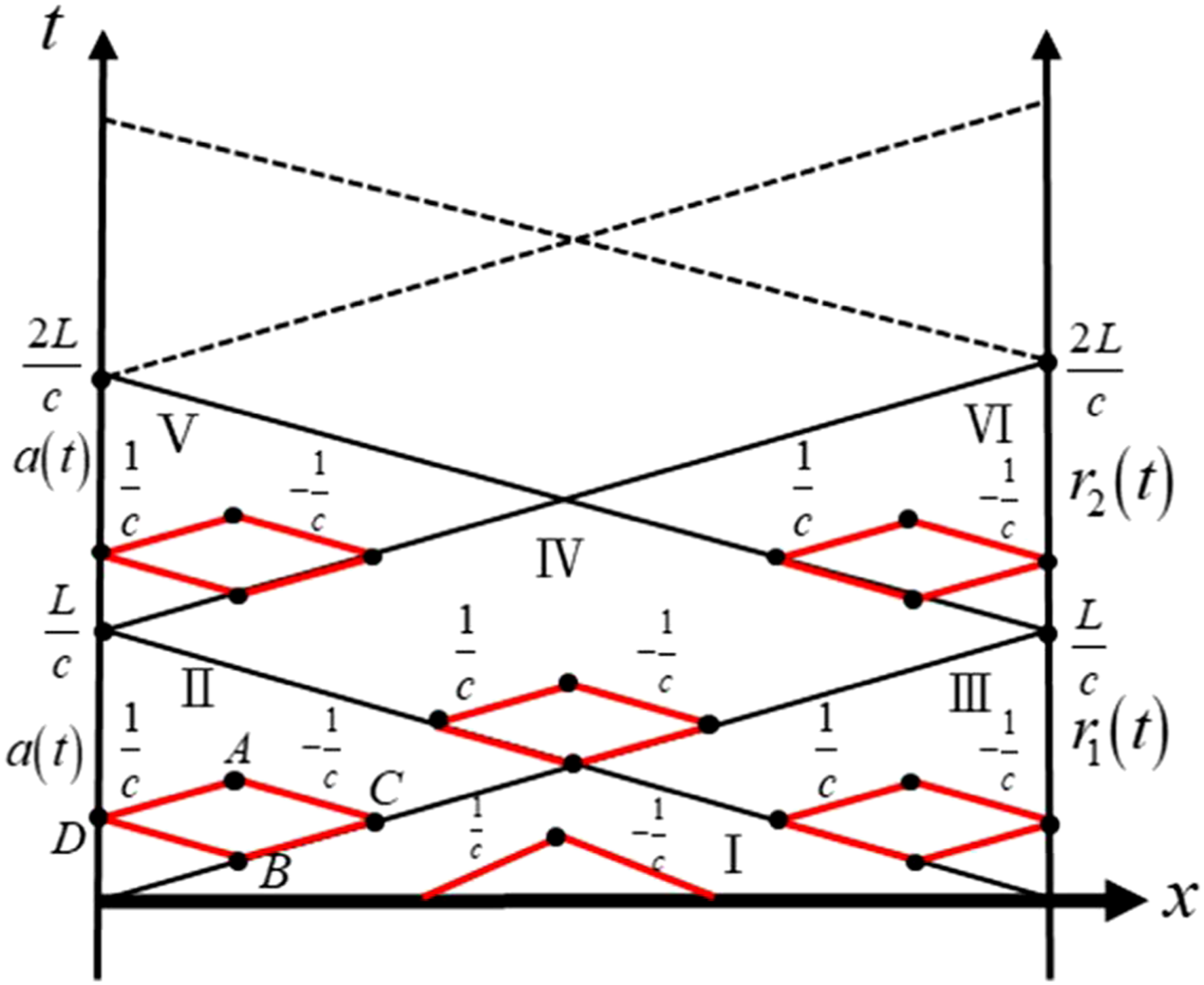











Thus, we can determine

Similarly, the response of

By the same way,


Regions I and III are called the dead zone due to the fact that the carried information of disturbance does not arrive yet.
The space derivative of displacement of each region is shown below






An illustrative example
A finite bar with an external spring subjected to a support motion is considered. The model parameters are given as follows:

Mode superposition method
By substituting model parameters


The former six eigenfrequencies and eigenmodes by using the analytical solution and the finite element method.
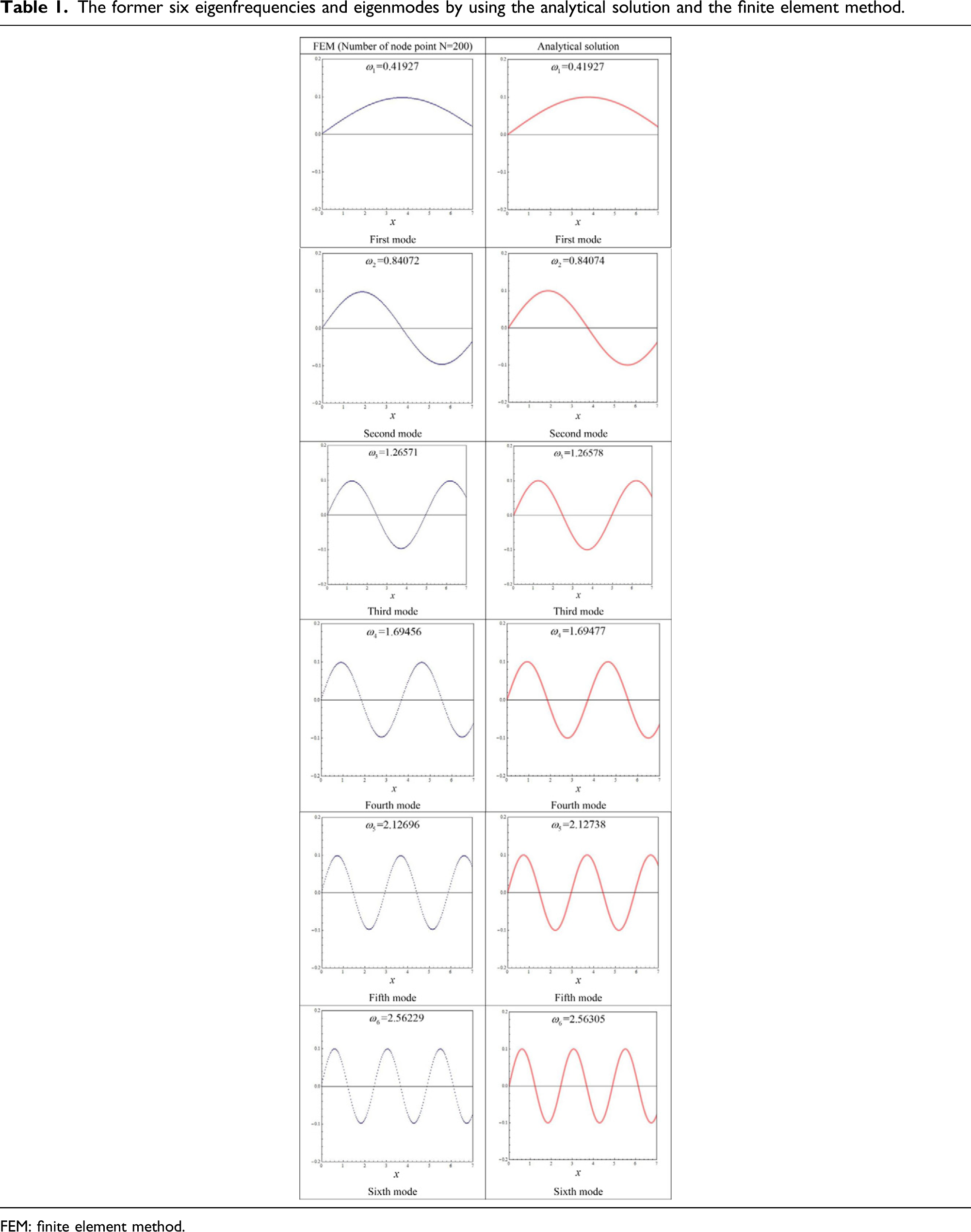
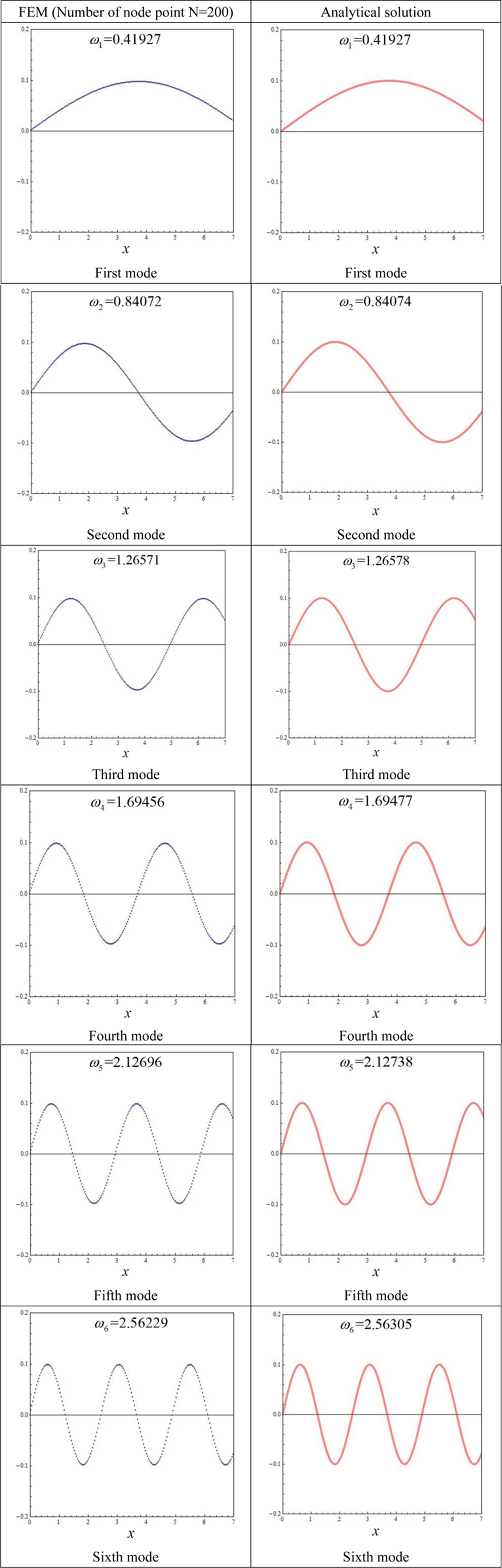
FEM: finite element method.
Method of the diamond rule
By substituting model parameters 





where
By similarly substituting equation (48) into equations (40) and (41), 

The space derivative of displacement of each region is shown below: Displacement profiles with the silent area by using the quasi-static decomposition and the diamond rule. The locations of slope discontinuities at (1,1), (3,3), and (5,5), where the shadow region denotes the dead zone.





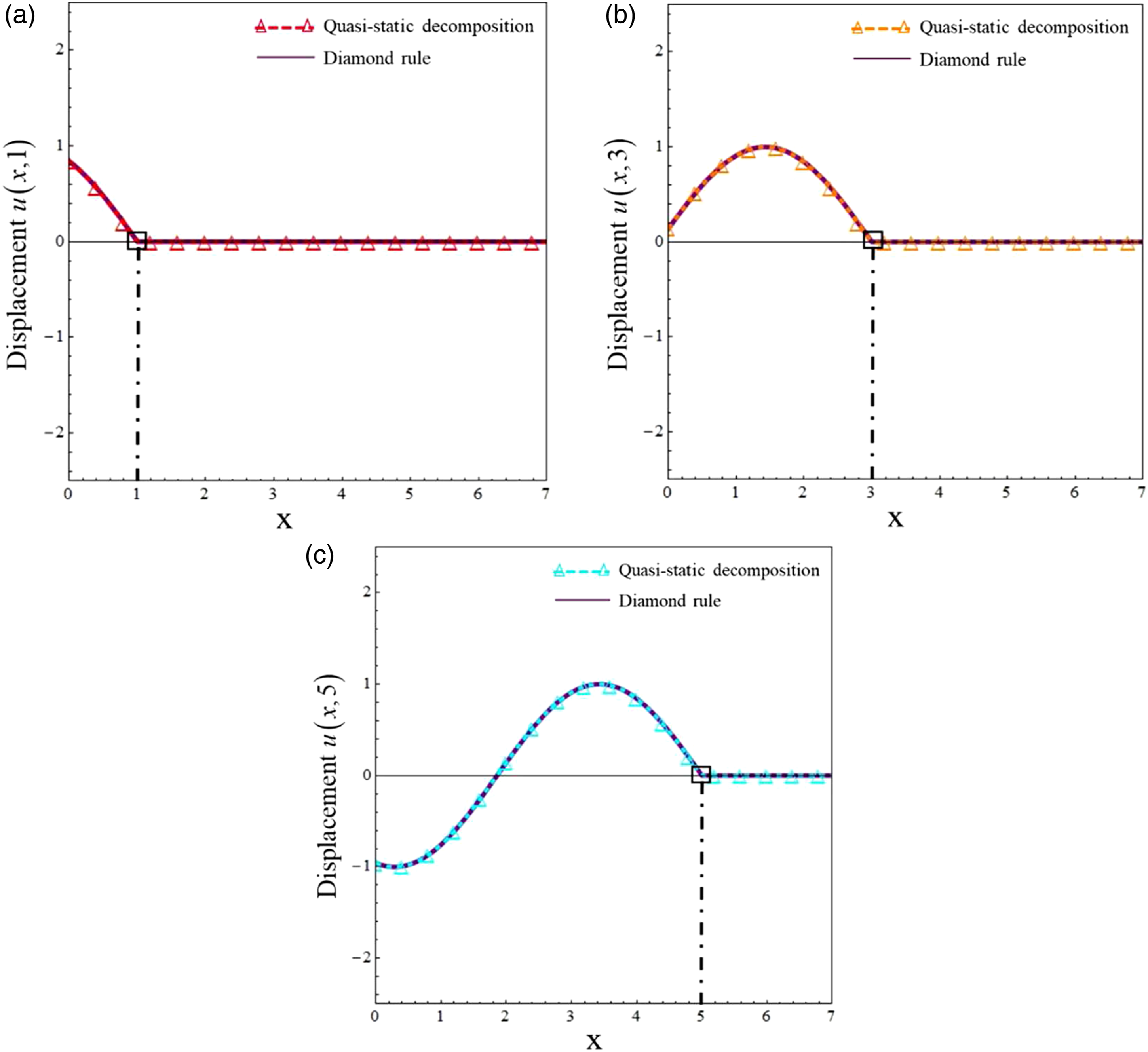
Regarding no silent area, the displacement profiles at t = 7, 9, and 11 s are shown in Figure 7(a)-(c), respectively. It is also found that the slope is discontinuous at x = 5 and 3 m when t = 9 and 11 s, respectively. These slope discontinuities occur at locations of (5,9) and (3,11) in the x–t plane as shown in Figure 8. This finding matches well from the mathematical requirement that the discontinuity must occur at the position on the characteristic line
26
. Displacement profiles without the silent area by using the quasi-static decomposition and the diamond rule The locations of slope discontinuities at (3,11) and (5,9).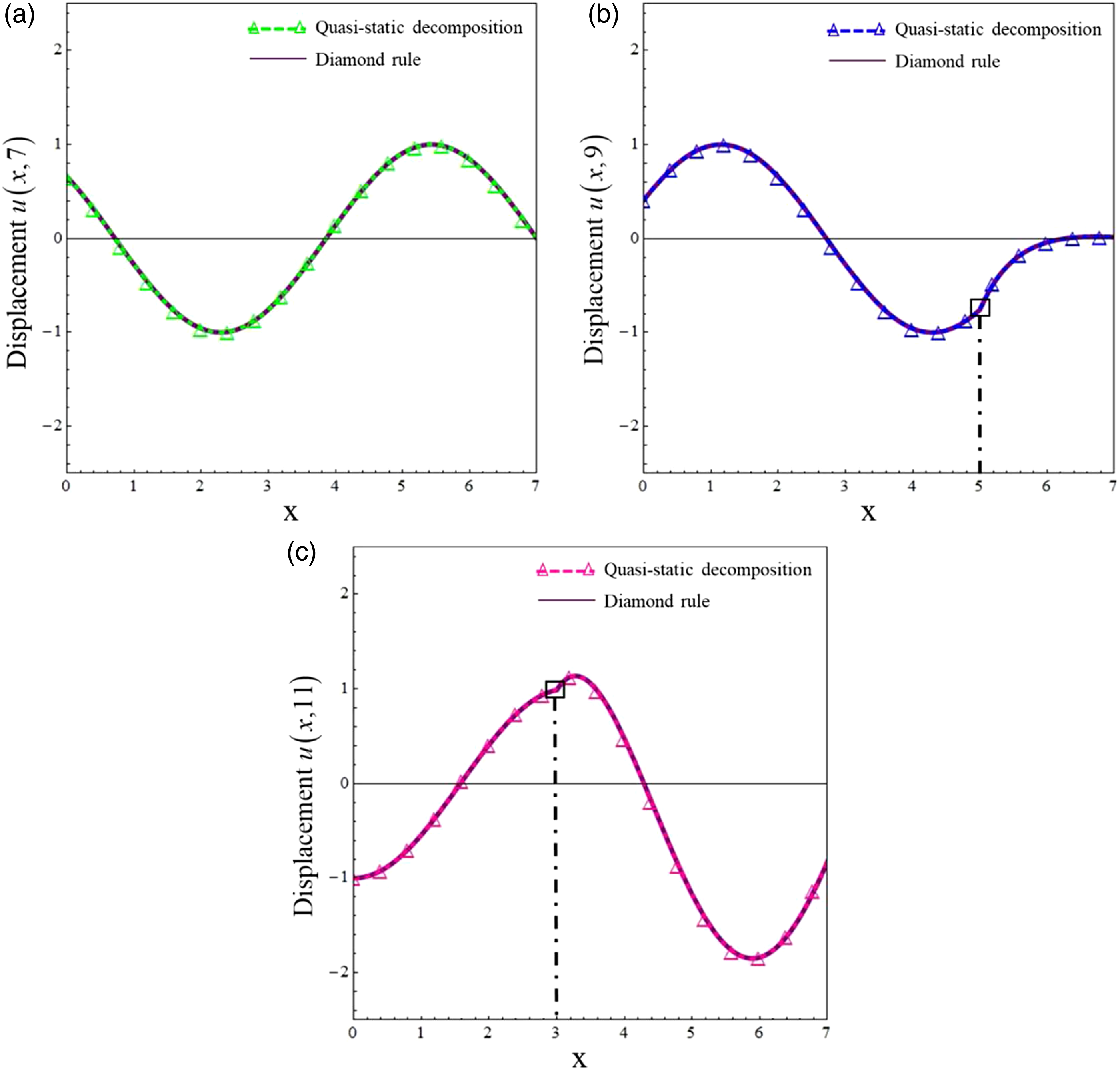
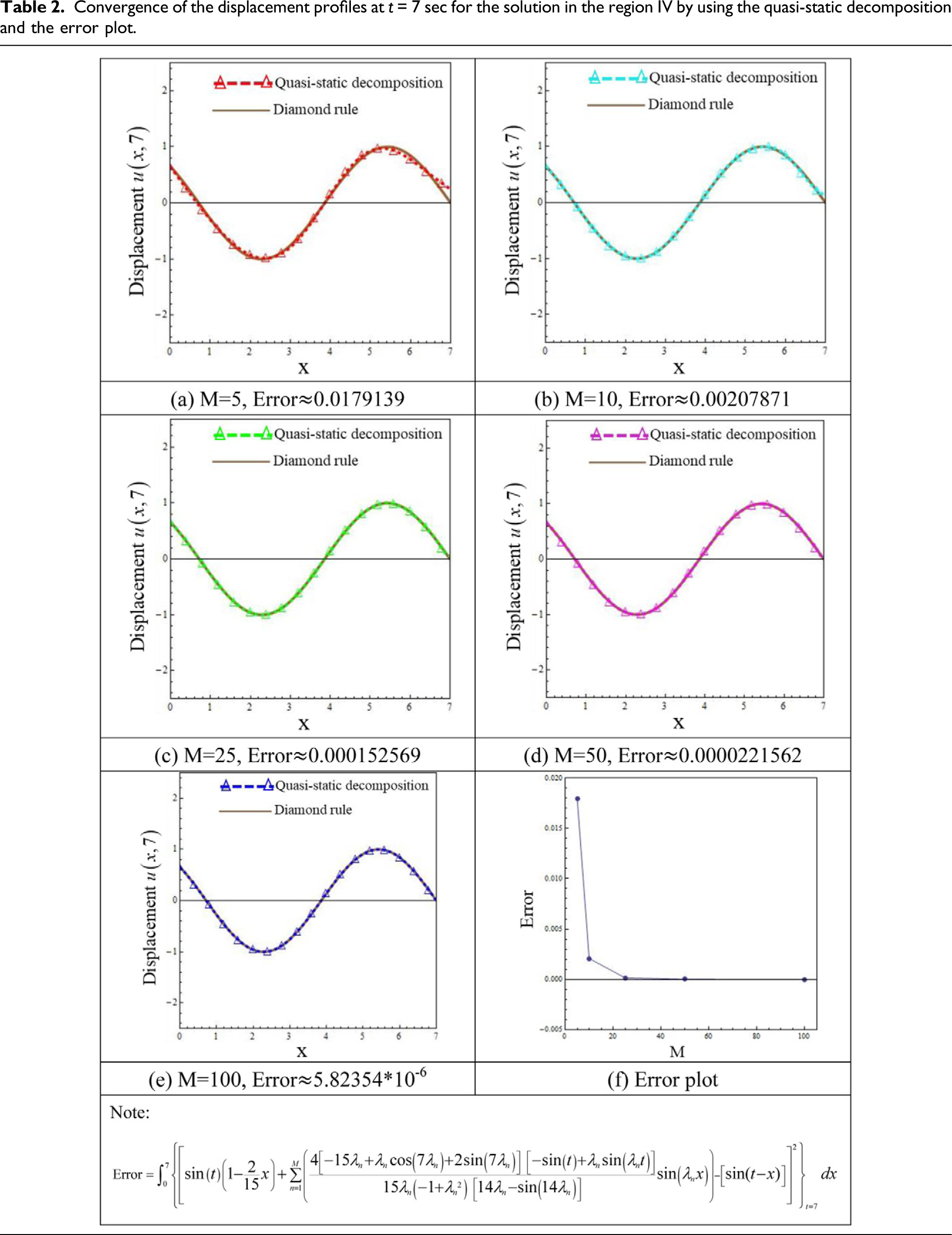
Convergence of the displacement profiles at t = 7 sec for the solution in the region IV by using the quasi-static decomposition and the error plot.
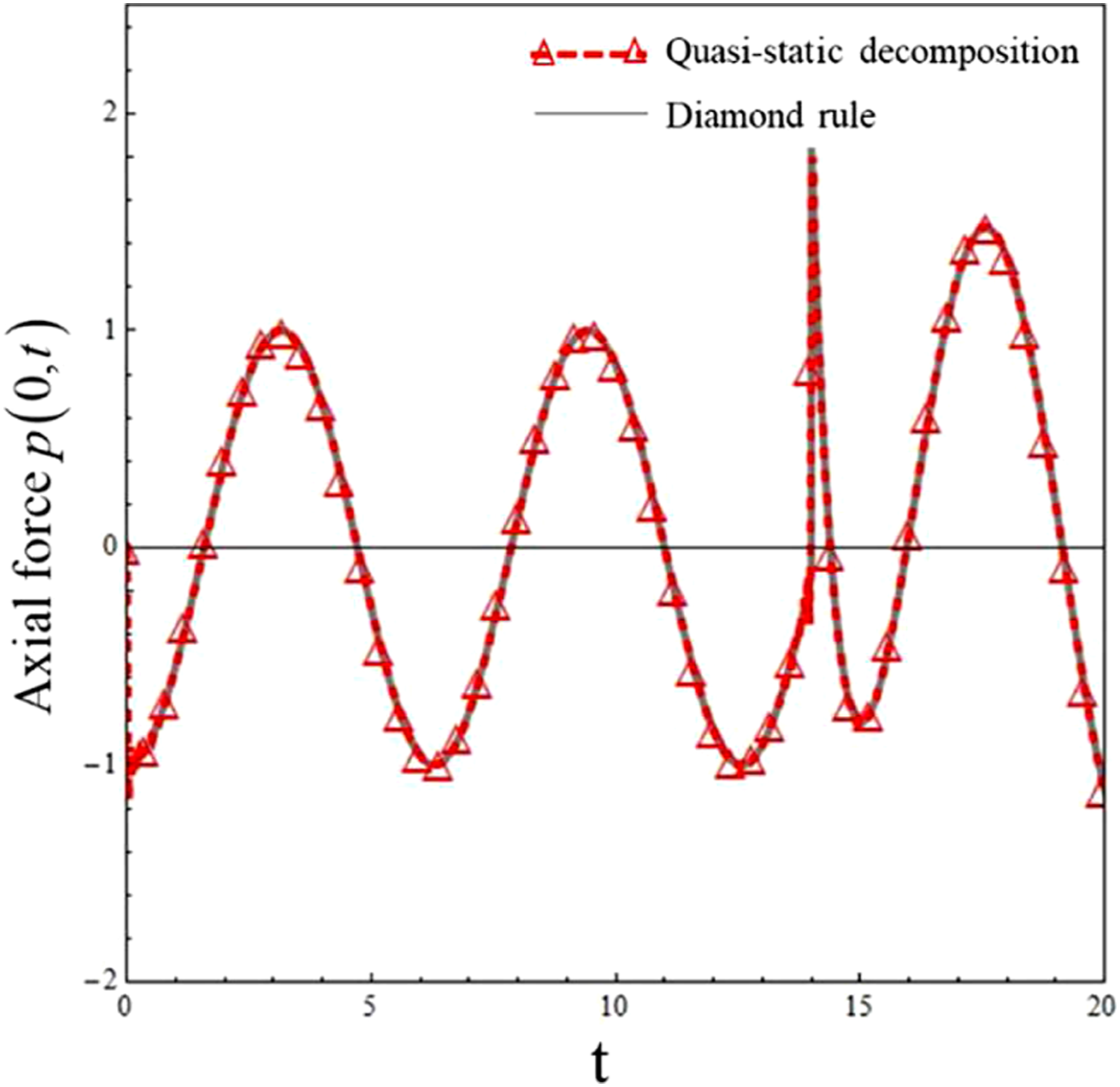
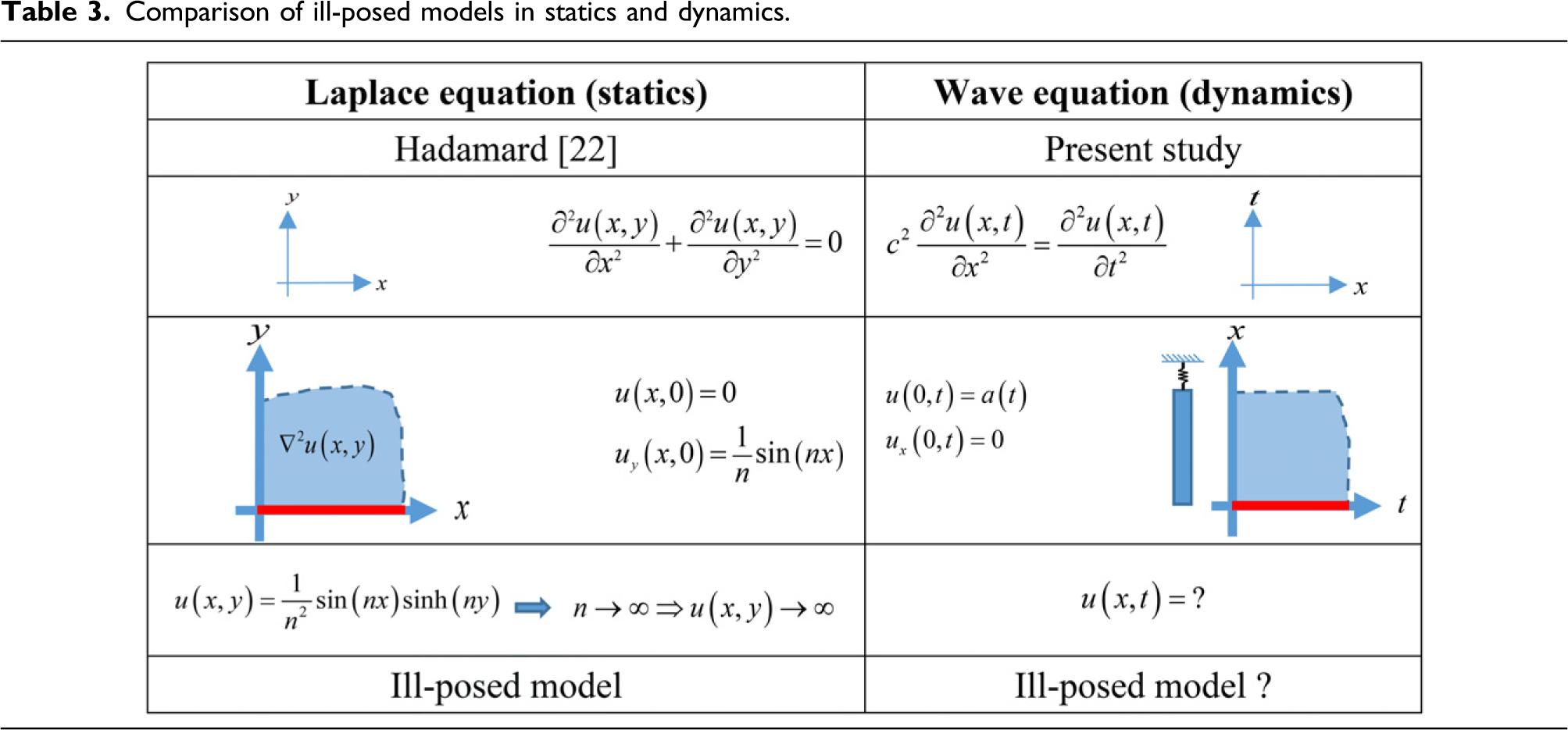
The displacement response at x = 7 m by using the mode superposition method and the diamond rule are shown in Figure 9. The axial force of reaction at x = 0 m by using the mode superposition method and the diamond rule are shown together in Figure 10. It is interesting to find that the axial force has an impulse at t = 14 s. Besides, the axial force is not zero at the beginning (t = 0) subjected to the support motion at the left end of the finite bar. According to Figure 10, it indicates that there is a reaction force history to have a support motion of a(t). Therefore, a specified displacement history, a(t), at the free end, x = 0, is an inverse problem. A comparison for the ill-posed model between the statics (Laplace equation) and dynamics (wave equation) is given in Table 3. Both cases show the similar over-specified conditions. Displacement history at x = 7 m. History of the axial force at x = 0 m (fixed end) by using the mode superposition method and the diamond rule. Comparison of ill-posed models in statics and dynamics.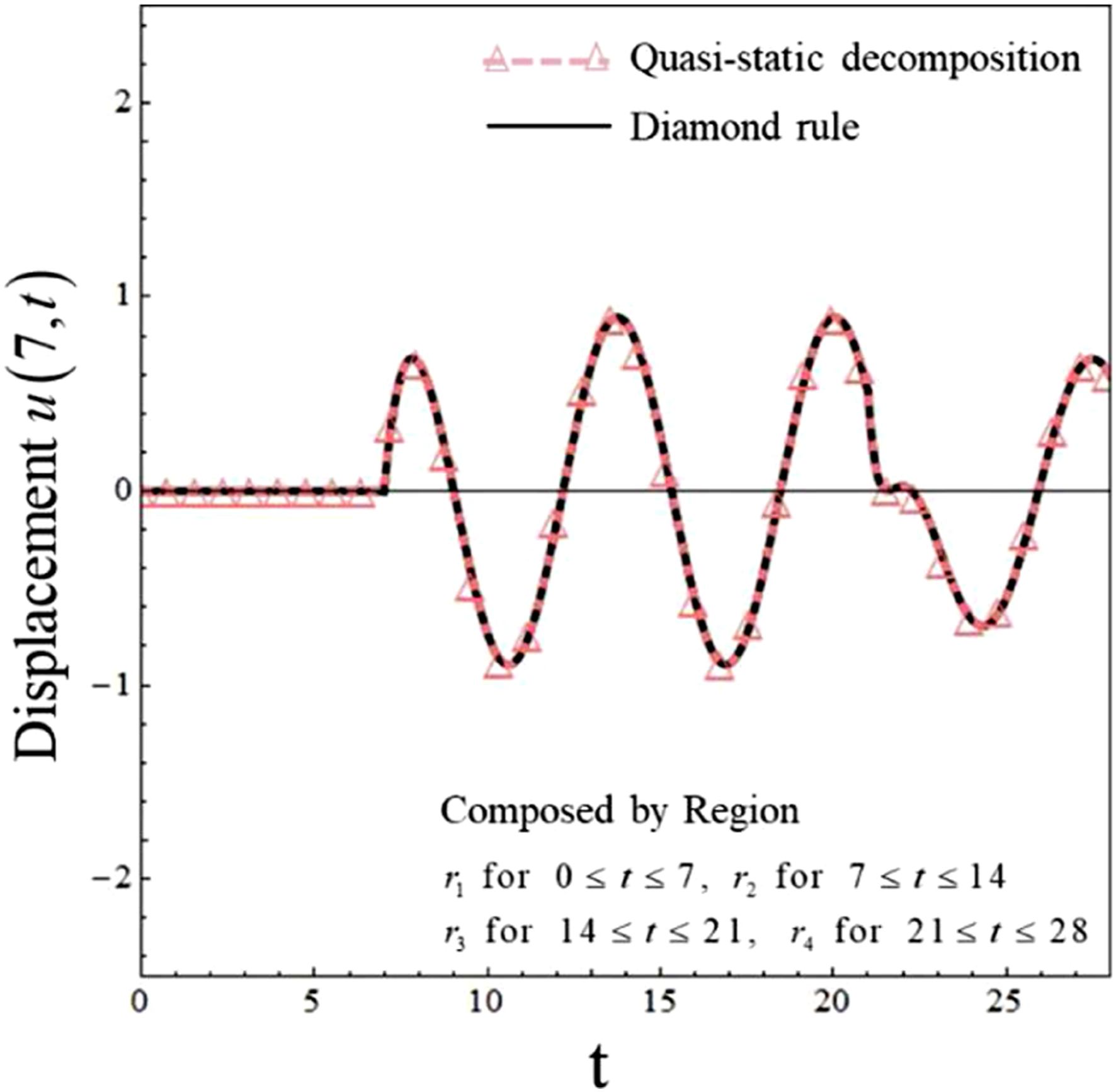
Discussions
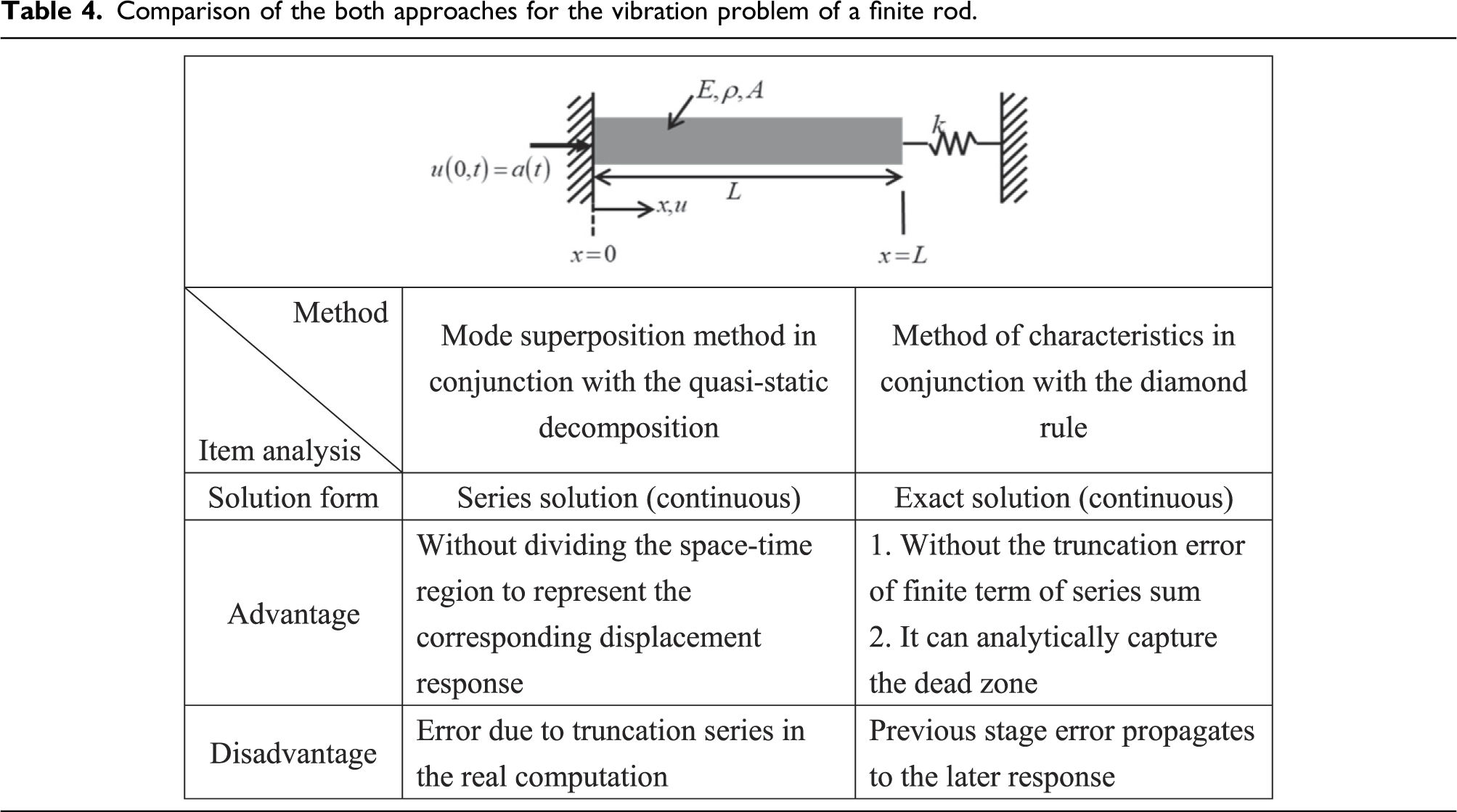
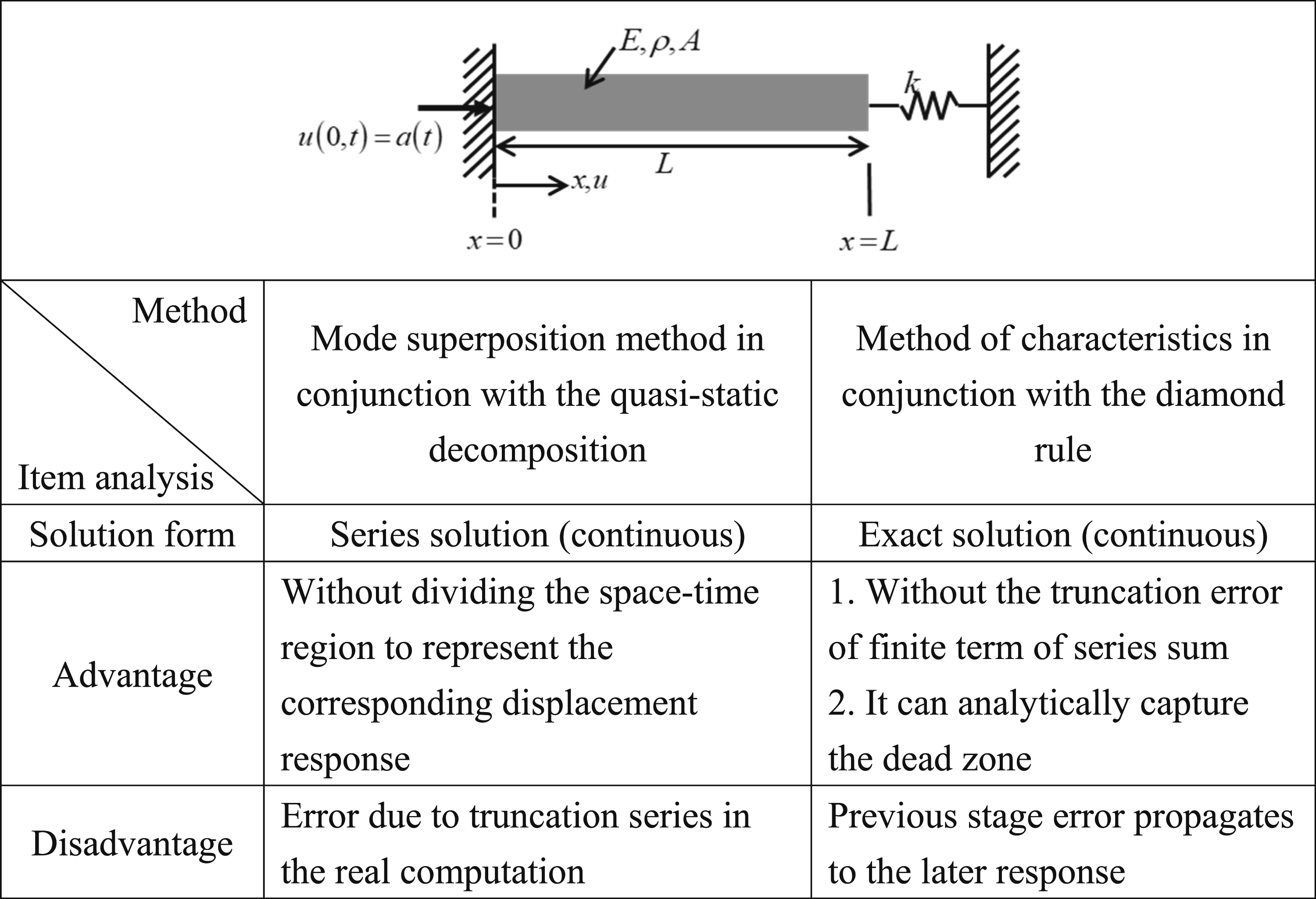
Comparison of the both approaches for the vibration problem of a finite rod.
If the same a(t) is given in Figure 1(b) (inverse problem), the identical solution is obtained by using the diamond rule. However, this result contradicts the zero axial force at the free end. From the experiment point of view, a(t) in Figure 1 can be arbitrarily specified to yield the corresponding reaction force. That is to say, a(t) in Figure 1(b) should satisfy some consistent constraint. Table 3 also shows the ill-posed model for statics and dynamics.
Conclusions
In this paper, we have successfully solved the direct problem of the longitudinal vibration analysis of a finite bar with an external spring on one side and the support motion on the other fixed side by using two methods. The inverse problem was also discussed. Both approaches can analytically and numerically capture the silent response by using the mode superposition method and the method of characteristics, respectively. The slope discontinuity occurs at the position on the characteristic line as mathematically predicted. Two results show that good agreement is made. The solution by using the diamond rule depends on the previous result of the space–time region and the error is accumulated. However, the mode superposition method has the truncation error due to the finite term of series sum. Convergence study was also done. Finally, the advantage and disadvantage for two methods were summarized in Table 4.
Footnotes
Declaration of Conflicting Interests
The author(s) declared no potential conflicts of interest with respect to the research, authorship, and/or publication of this article.
Funding
The author(s) disclosed receipt of the following financial support for the research, authorship, and/or publication of this article: Financial support from the Ministry of Science and Technology under Grant No. 110-2813-C-019-063-E and the Grant No. 110-2813-C-019-063-E for the undergraduate student H. C. Kao, for the National Taiwan Ocean University is gratefully acknowledged.
