




Abstract
To overcome the ill-conditioned matrix problem of the traditional transfer matrix method, the Floquet transform method and supercell technology are used to study the defect states of the periodic track structure. By solving the equations of the supercell directly, the propagation characteristics of elastic waves in the track structure with defects are analyzed. The existence of defects destroys the periodicity of track structure, thus resulting in the formation of defect states within the band gaps. Moreover, the elastic wave is localized near the defect position at the frequency of the defect state. The formation mechanism of the defect state in track structure can be explained by the local resonance at the defect. With the expansion of the defect range, the number of local resonance modes that can be formed near the defect increases, thus generating multiple defect states. Furthermore, the defect state enhances the vibration of the structure adjacent to the defect. Therefore, the vibration transmission coefficient in a finite-length range can be used to detect the defect characteristics in the track structure, and the defect degree can be evaluated by the peak frequency of the vibration transmission coefficient within the band gap.
Introduction
High-speed railway track structure has obvious periodic characteristics, and the propagation of elastic waves in the periodic track structure shows band gap properties. 1 However, after a period of operation, the track structure may have local damage or defects such as fastening failures and unsupported sleepers. These defects destroy the original periodic characteristics of the structure and form a periodic track structure with defects. Note that the defects affect the transmission characteristics of the elastic wave in the track structure, resulting in elastic wave localization and changing the vibration characteristics of the track structure. Besides, defects can remarkably increase the vibration of the track structure under train load, leading to further deterioration of the track. 2 Therefore, it is necessary to study the dynamic properties of periodic track structures with defects.
Phononic crystal theory provides new research ideas for studying periodic structure. The phononic crystal can be regarded as an artificial periodic structure composed of two or more types of materials having different elastic constants. 3 Band gap can be formed in the periodic structure, that is, the elastic wave propagation in the band gap frequency range will be significantly suppressed. In addition to the band gap properties of perfect periodic structure, increasing attention has been concentrated on the wave propagation characteristics in periodic structure with defects. When there is a defect in periodic structure, a flat band appears in the band gap, and the corresponding elastic wave is usually localized around the defect, which is called the defect state.4,5 Yao et al. 6 studied the propagation characteristics of bending waves in phononic crystal thin plates with point defects. The results showed that the number and frequencies of defect states were closely related to the filling rate and the size of defect. The distribution of the displacement field showed that the bending wave was highly localized near the defect. For line defects, the defect state was characterized by the guided wave mode. However, for curved or bifurcated defects, there were both guided wave mode and localized mode. Therefore, line defects can be used in efficient waveguides, while curved or bifurcation defects can be applied in waveguides or filters. 7 Jiang 8 formed point defects and line defects in the 2D local resonant phononic crystal, respectively. For point defects, the displacement field of the defect state was concentrated near the point defect, thus producing a defect cavity with local resonance. For line defects, a continuous passband can be formed near the defect state, and the elastic wave can propagate along the defect.
According to the defect states of periodic structure, the elastic waves can be localized or they propagate along the defect, thus achieving the control of the elastic wave in the structure. 9 Wei et al. 10 applied the point defect array to the phononic crystal waveguide and proposed a composite phononic crystal waveguide with high directional radiation performance. The resonant modes related to the point defects would act as a secondary radiation source and make the sound wave energy converge to the normal direction to improve the directional radiation performance of the phononic crystal waveguide. By setting a free plate in the phononic crystal to form a line defect structure, Feng et al. 11 achieved continuous tuning of the defect states in a two-dimensional phononic crystal. The defect state can always be in the middle of the band gap, and different types of elastic waves could be selected by tuning the width of the line defect. Khelif et al. 12 used a semi-infinite medium and cylinders to form phononic crystal structures, and the surface acoustic wave waveguide was developed by line defects. The defect mode had a single modal characteristic and linear dispersion relation, which was very similar to the classical Rayleigh wave. This structure could be applied to filtered or acoustic-wave devices. Ghosh et al. 13 constructed defects in a one-dimensional binary periodic structure. By adjusting the thickness of the defect layer, multiple passbands could be obtained to achieve narrow-band filtering of single-frequency or multiple frequencies. Oudich et al. 14 used a two-dimensional locally resonant phononic crystal plate to realize a fully confined waveguide of the Lamb wave by straight line defects or curved defects. Unlike the traditional structure, this method could guide the propagation of a confined wave mode.
Since the elastic waves can be localized near the defect position at the defect state, the vibration energy around the defect is also localized and can be used for vibration control or energy harvesting. Wu et al. 15 proposed a two-dimensional locally resonant phononic crystal structure with a point defect to control the interior noise of a car. The negative contribution of the ceiling panel to the interior noise at a particular frequency was preserved by point defects. Lv et al. 16 used the phononic crystal structure with point defects and piezoelectric material to convert the localized vibration energy into electrical energy, which could significantly improve the power harvesting efficiency.
The defects in the periodic structure of high-speed railway tracks have also received attention from researchers. From the perspective of vibration, Lundqvist et al. 17 studied the impact of unsupported sleepers on the wheel/rail and sleeper/ballast contact force. When there was a 1 mm gap between the sleeper and the ballast bed, the sleeper/ballast contact force increased by 70% and the displacement of the sleeper increased by 40%. The uneven load due to local defects may cause uneven settlement. Kaewunruen et al. 18 analyzed the influence of different contact states between the sleeper and track on the vibration mode of the sleeper, including the five situations: central void, single hanging, double hanging, triple hanging, and side-central voids. The results showed that the voided contacts had the most obvious impact on the rigid mode of the sleeper. Zhang et al. 19 established a vehicle/track coupling model to analyze the influence of unsupported sleepers on the wheel/rail contact force. Nonlinear springs and dampers were used to simulate the gap between the sleeper and the ballast. Under the moving train load, the wheel/rail force at the defect area would violently fluctuate. Moreover, because the hanging sleepers reduced the track stiffness, the wheel/rail force was considerably reduced when the wheel entered the defect, which may affect the safety running of the train.
In addition, the defect detection method for track structure has become a research hotspot. Lee et al. 20 used the pulse excitation method to detect unsupported sleepers and evaluated the sleeper state through the peak value of velocity response spectrum and the slope of receptance function, respectively. Lam et al. 21 used hammer excitation to evaluate the state of ballasts by extracting modal parameters. To realize damage detection, Auersch et al. 22 analyzed the vibration response of ballasted/ballastless track structure with and without defects using train excitation and impact hammer excitation methods, respectively. Based on a single mode extraction algorithm of ultrasonic guided wave, Xing et al.23,24 proposed a rail defect location method. According to the group velocity and propagation time of the mode and the distance between the defect and the excitation point, the defect position can be determined. Han et al. 25 also used ultrasonic-guided wave to detect the surface and internal defects of the rail.
In this study, from the perspective of elastic wave propagation, the Floquet transform combined with the supercell technique is used to study the defect state characteristics of the periodic track structure with defects; the influence of defects on elastic wave propagation in the structure is clarified, and the generation mechanism of defect states of track structure is revealed.
This article is organized as follows. First, the theoretical model of periodic track structure with defects is established using the Floquet transformation method. Next, the defect states of the ballastless track and ballast track with typical defects are discussed, respectively. Then, the defect evaluation based on vibration transmission coefficient of finite-length track structure is explored. Finally, some conclusions are drawn.
Theoretical model
Considering the track structure within the range of fastening spacing as the unit cell, the vertical bending wave equation in the unit cell


Based on the theory of phononic crystals, the high-speed railway track structure can be simplified as an infinite periodic structure.
26
For one-dimensional periodic structures, the transfer matrix method is often used to calculate the dispersion curves of the periodic track structure. However, for a periodic structure with defects, to eliminate the influence of boundary conditions on the defects, it is necessary to combine the supercell technique. The supercell structure is composed of multiple complete unit cells and one defective unit cell, as shown in Figure 1. The most commonly used method is the transfer matrix method.
27
The transfer matrix of supercell is obtained by multiplying the transfer matrices of perfect cells and the defective cell Periodic track structure with defect.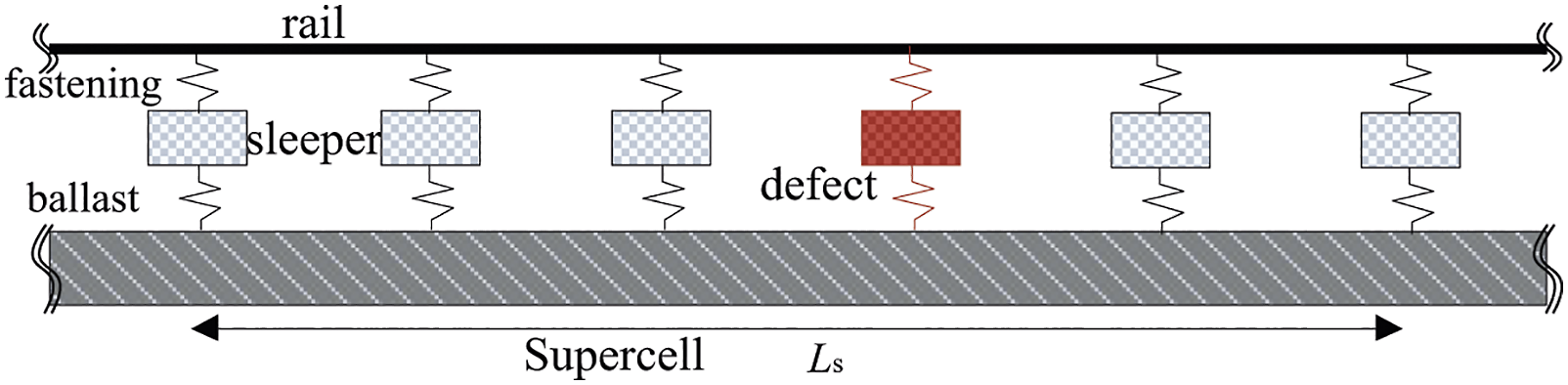

However, the transfer matrix method is prone to ill-conditioned matrix problems. Once the number of supercells is large, the eigenvalues will be extremely different, resulting in an ill-conditioned matrix.
28
To avoid numerical problems, this study directly establishes the dynamics equation of supercells and solves it using the Floquet transform. The supercell of the track structure which contains N−1 perfect cells and one defective cell is formed. The wave equations are as follows


For the supercell structure,

The function


The two periodic properties above are called the first and second periodic conditions, respectively, and the second periodicity is also called the Bloch–Floquet periodic boundary condition. The track structure with defects is considered as a periodic structure composed of supercells, so the structural response satisfies the above two types of periodic conditions. The structure response in unit cell can be written as follows


Therefore, the response in the wavenumber domain can be written as a superposition of a finite number of elastic waves


By setting


According to the orthogonality of the reciprocal lattice space, the equations are multiplied by


The eigen-equation of elastic wave propagation in a supercell can thereby be established as follows

Defect states of track structure
Ballastless track structure
The parameters of track structure are shown in Ref. 26. First, the dispersion curves of the ballastless track calculated by the Floquet transform and the traditional transfer matrix method (TMM) are compared. When there is no defect, for the supercell structure with different cell numbers (N), the calculation results are shown in Figure 2. To simplify the expression of band structure and extract the defect states, only the pure real wavenumbers are shown in the dispersion curves in this study, and the band gap can be identified when no dispersion curve passes. The figure shows that if the supercell is constituted of only one cell (N = 1), the results of the two methods are identical. When there are more cells in the supercell (N = 20), the results have a good agreement in the low-frequency range; however, with the increase of frequency, the ill-conditioned matrix appears for the transfer matrix method, leading to inaccurate results. Comparison of Floquet transform and transfer matrix method: (a) N = 1 and (b) N = 20.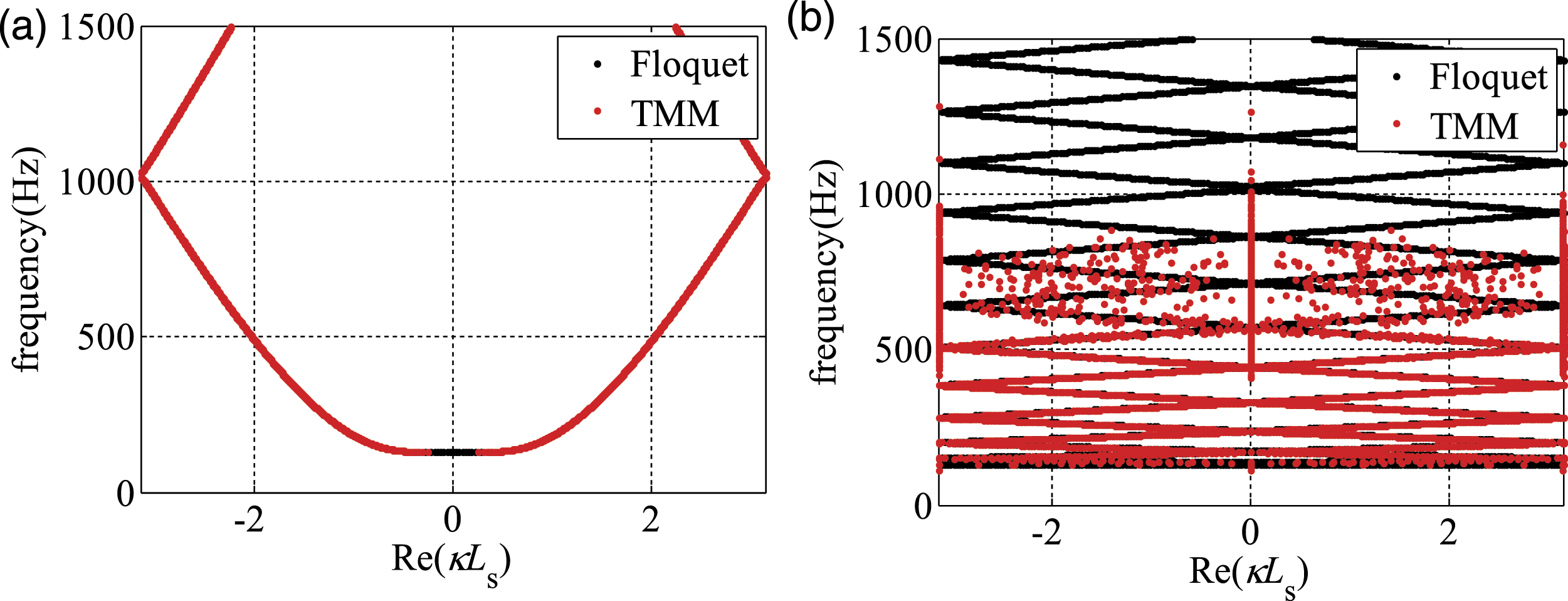
For the perfect periodic track structure, a local resonance band gap and multiple Bragg band gaps are formed due to the periodic fastenings.
1
Below 1500 Hz, there are two band gaps for the vertical bending wave: 0–129 Hz and 1013–1028 Hz. Considering that one fastening is missing in the track, which forms a point defect, the supercell will be composed of N−1 perfect cells and one defective cell, which is located in the center of the supercell. When N = 10, the dispersion curve is as shown in Figure 3. Note that the dispersion curve is folded because the supercell contains multiple sub-cells. Besides, the figure shows that the first band moves toward lower frequency. Besides, band gaps are formed at the boundary of the Brillouin zone because the lattice size of the supercell becomes larger and there is a defect in the supercell, thus forming low-frequency Bragg band gaps at the high symmetry point. With the increase of supercell size, that is, when the number of complete cells (N) in the supercell increases, these band gaps will disappear and only the defect state generated by the defect will exist, as shown by the red line in Figure 4. Moreover, the defect state appears as a flat band with f
d
= 112 Hz in the band gap. When the supercell size reaches a certain value, this flat band will no longer change (see Figure 4). Therefore, the size of the supercell is selected as N = 40 for the following analysis. Dispersion curves of the supercell with one fastening failure (N = 10): (a) 0–1500 Hz and (b) local enlargement. Dispersion curves of supercells with different sizes (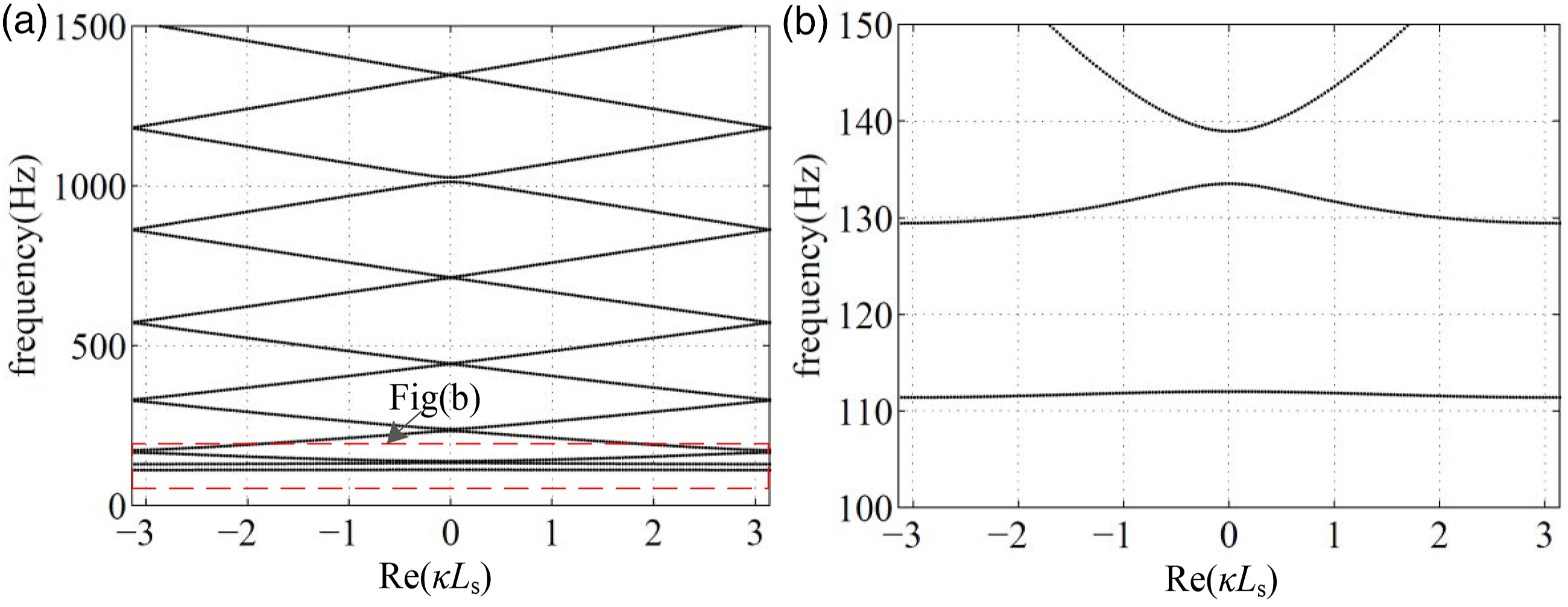
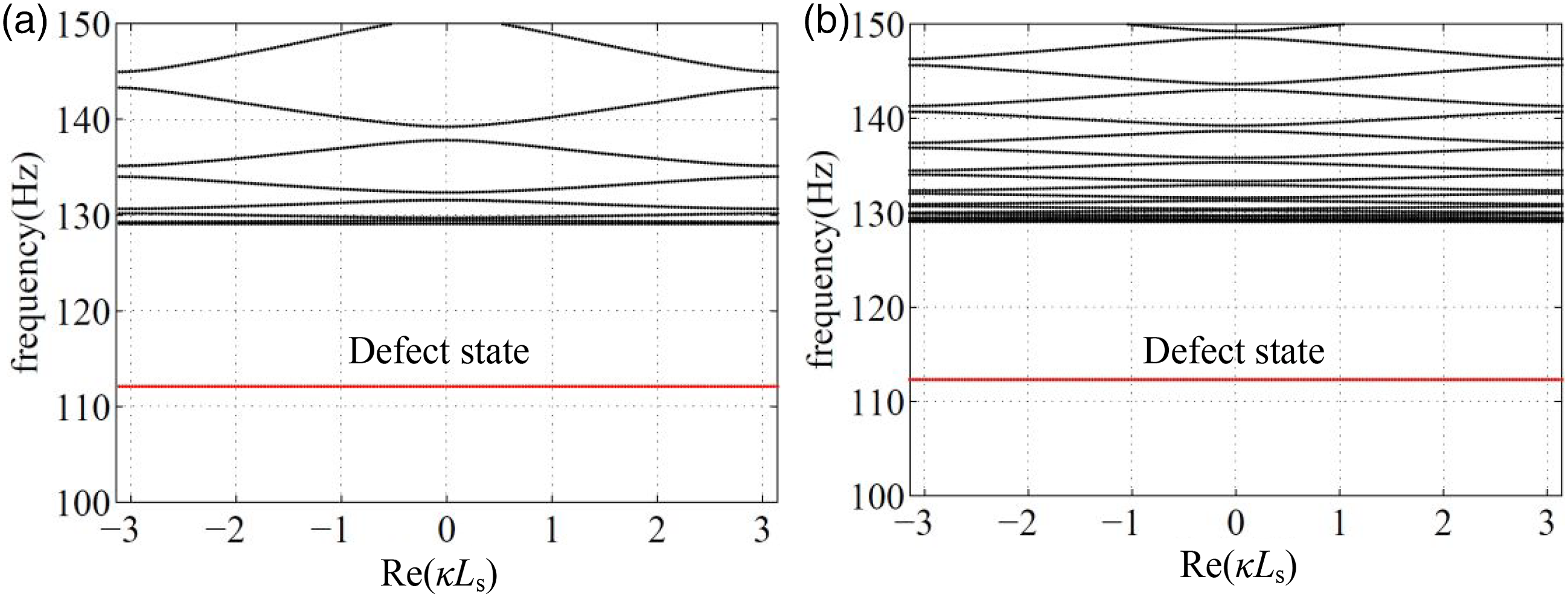
The dispersion curve shows that the defect state caused by fastening defects only exists in the first band gap and has no effect on the band gap in the high-frequency range. Therefore, the detection of fastening damage should focus on the low-frequency vibration. To study the correlation between the flat band and the defect, the wave mode in the dispersion curve is extracted. Wave modes of the defect state f
d
under different defect degrees are shown in Figure 5(a). Defect degree D is defined as k
d
= (1−D)k0, where k
d
is the fastening stiffness at the defective position and k0 is the design stiffness. Therefore, D = 0 indicates no defect and D = 1 indicates complete failure of fastening. Besides, the number of fastening defects is defined as Wave modes and frequencies for different defect degrees: (a) wave modes and (b) frequencies of the defect states.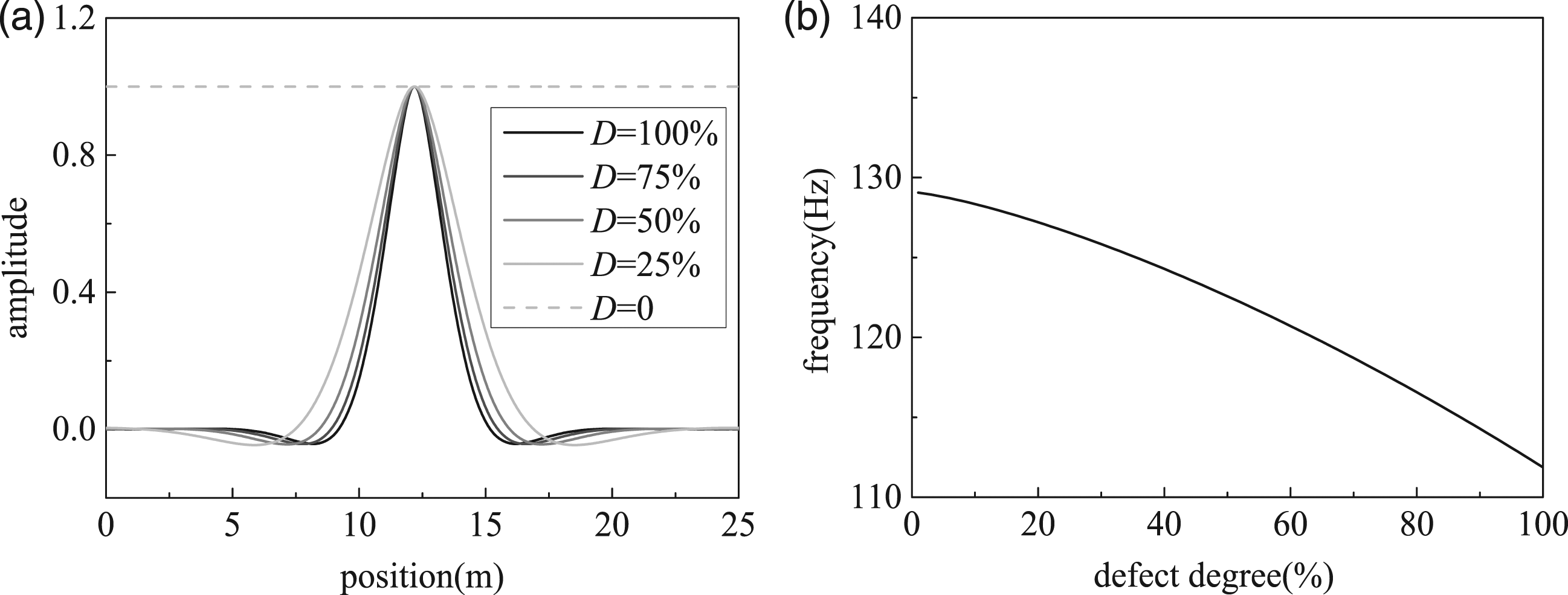
To analyze the formation process of defect state, the dispersion curve with minimal defect degree (D = 0.005) is studied, as shown in Figure 6. When there is a minimal defect in the structure, the dispersion curves of the original structure gradually move toward low frequency. Note that the lowest dispersion curve, entering the band gap range and forming the defect band, is the most obvious. Simultaneously, compared with the corresponding wave mode of the original periodic structure, the wave mode of the defect state changes from vertical rigid-body motion to lage-scale bending vibration. With the increase of the defect degree, the localization of the elastic wave gradually appears. Formation process of defect state for a single fastening defect: (a) dispersion curves and (b) wave modes.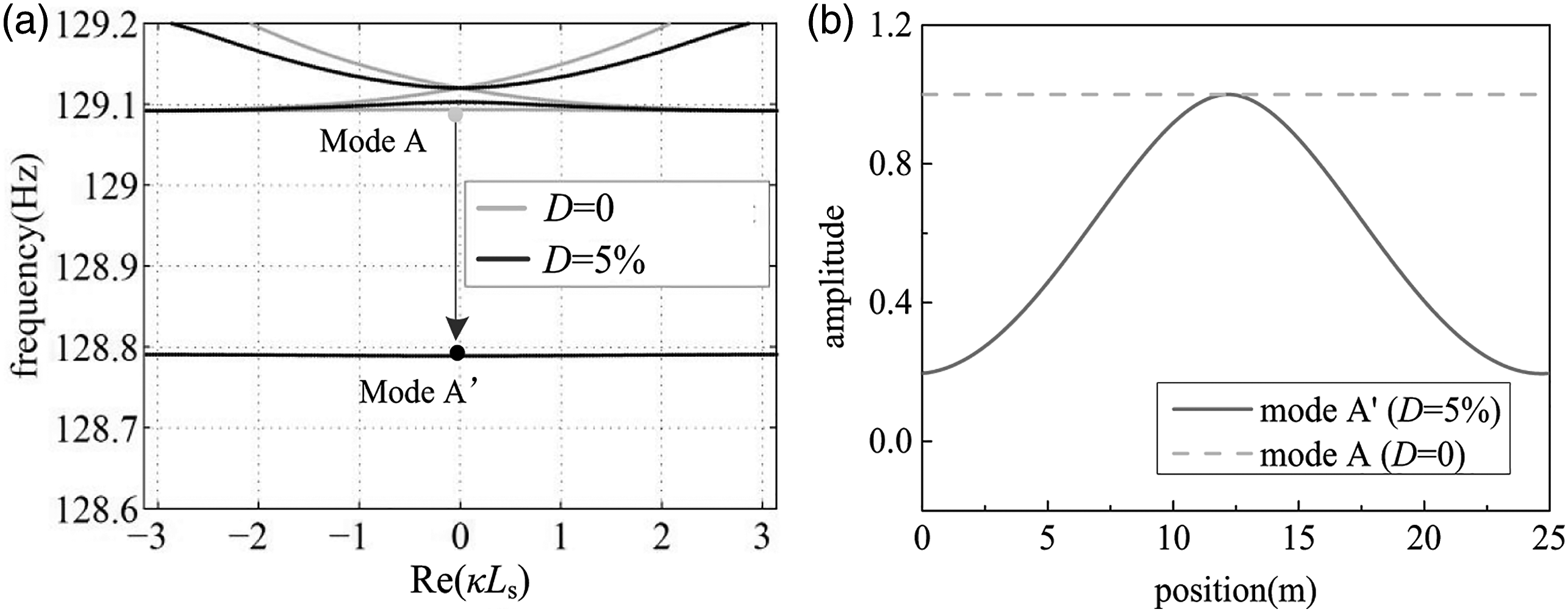
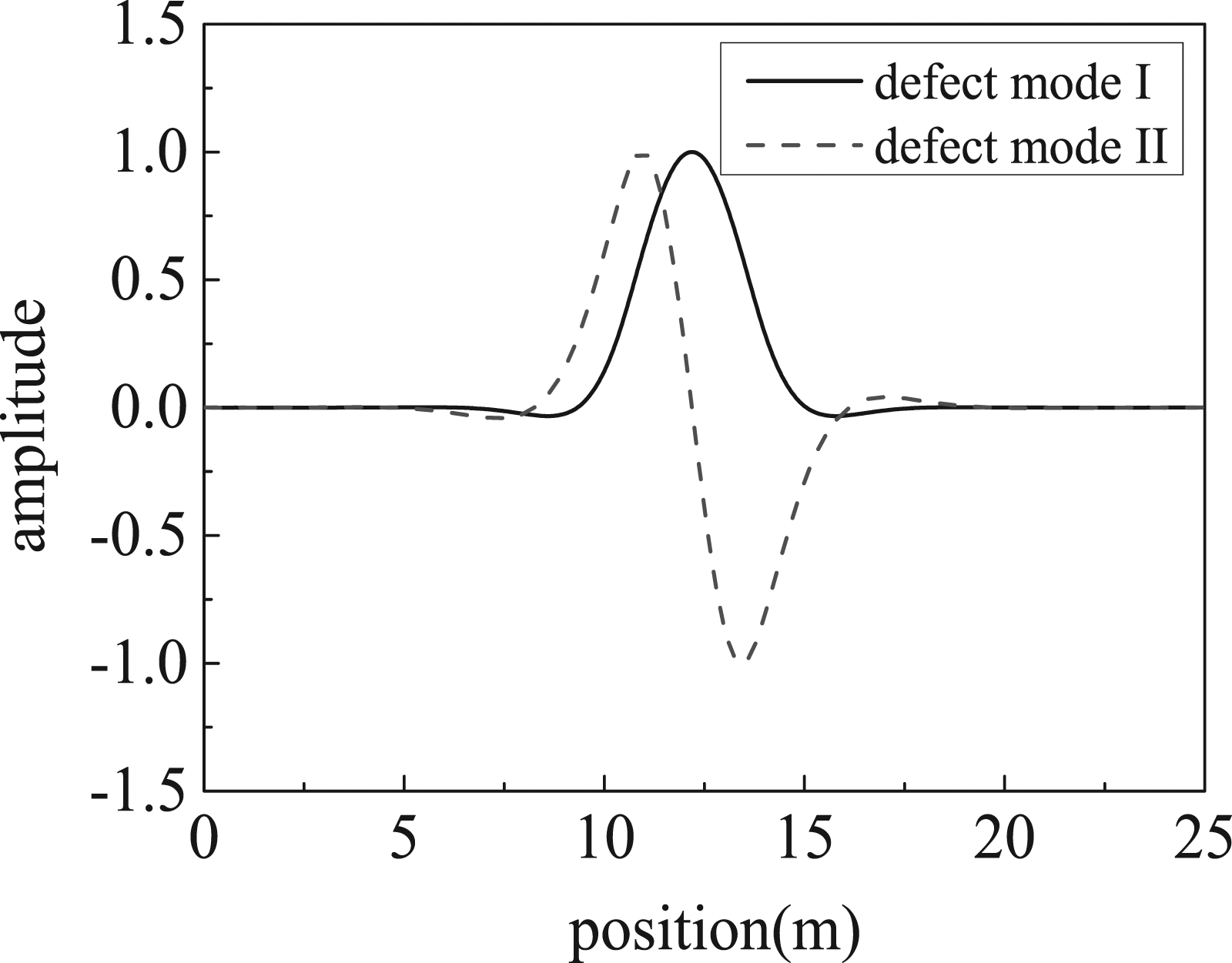
To further clarify the formation mechanism of defect states in track structure, the dispersion curves are discussed when there is no defect, the single fastener is missing ( Dispersion curves with different defects: (a) dispersion curves and (b) formation process of defect states. Wave modes of defect states when five fastenings fail.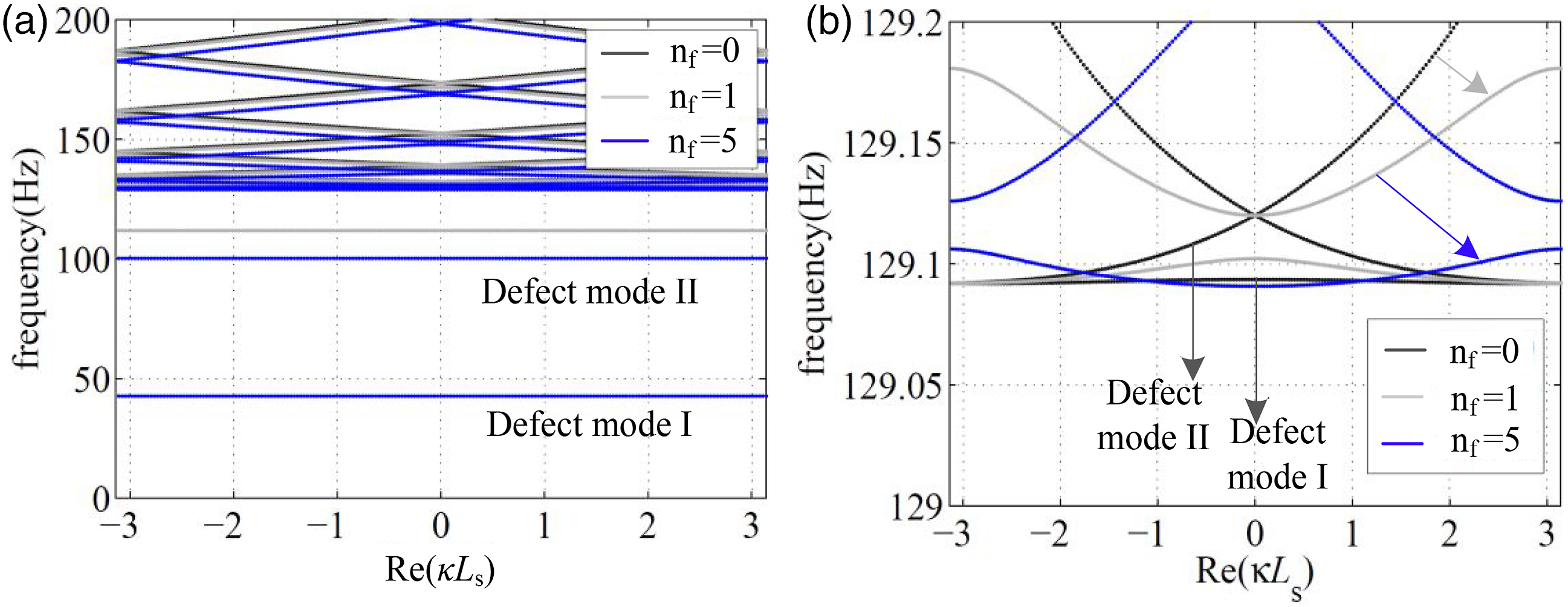
Ballasted track structure
For the ballasted track structure, under the long-term train load, defects may be caused in the periodic track structure, such as unsupported sleepers or slipped-out fastenings. For a perfect periodic ballasted track structure, there are three band gaps below 1500 Hz range: 0–129 Hz, 182–264 Hz, and 1080–1126 Hz. The first two band gaps are related to local resonance, whereas the third band gap is generated by Bragg scattering. 1
In the ballasted track, Ballasted track stiffness failure: (a) fastening failure and (b) sleeper support failure.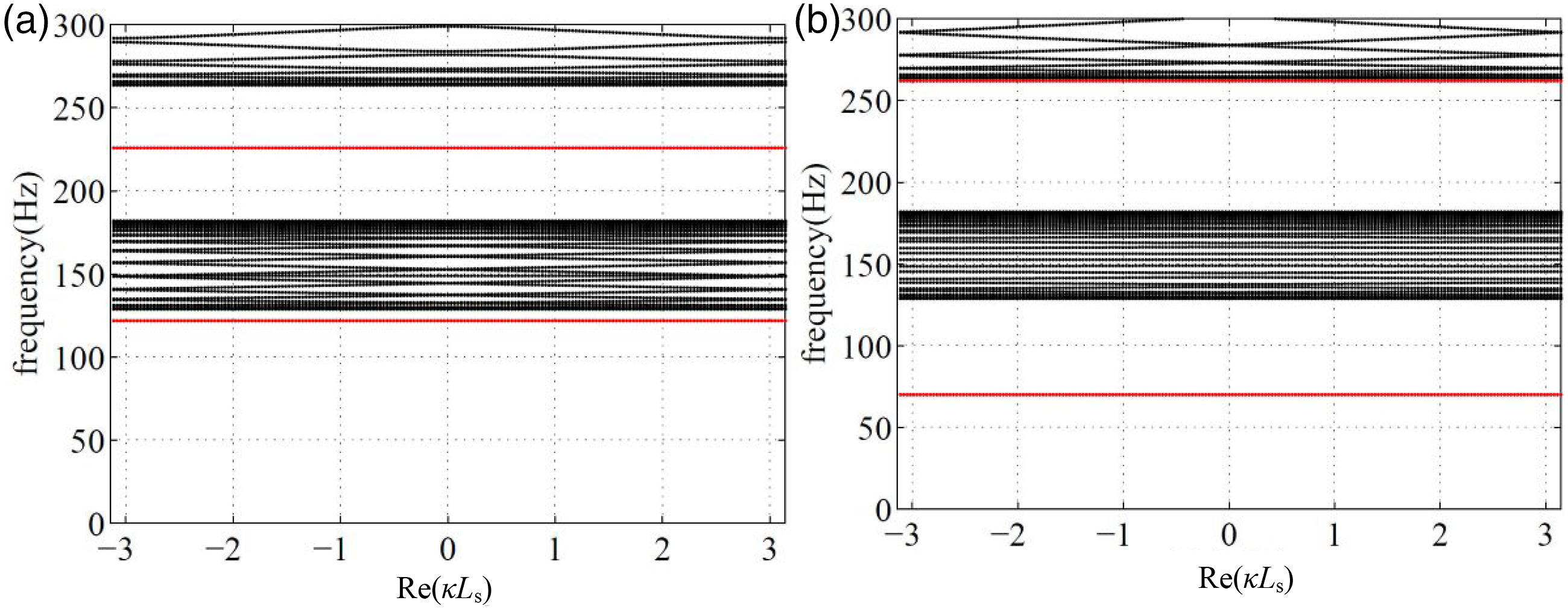
In addition to stiffness loss, other damages also exist in the ballasted track including ballast stiffening and fastening aging, causing local stiffness increase. Therefore, it is necessary to analyze the track structure defect characteristics caused by the local increase of fastening stiffness and ballast stiffness. When the stiffness of a single fastening increases ( Ballasted track stiffness increase: (a) increase of fastening stiffness and (b) increase of sleeper support stiffness.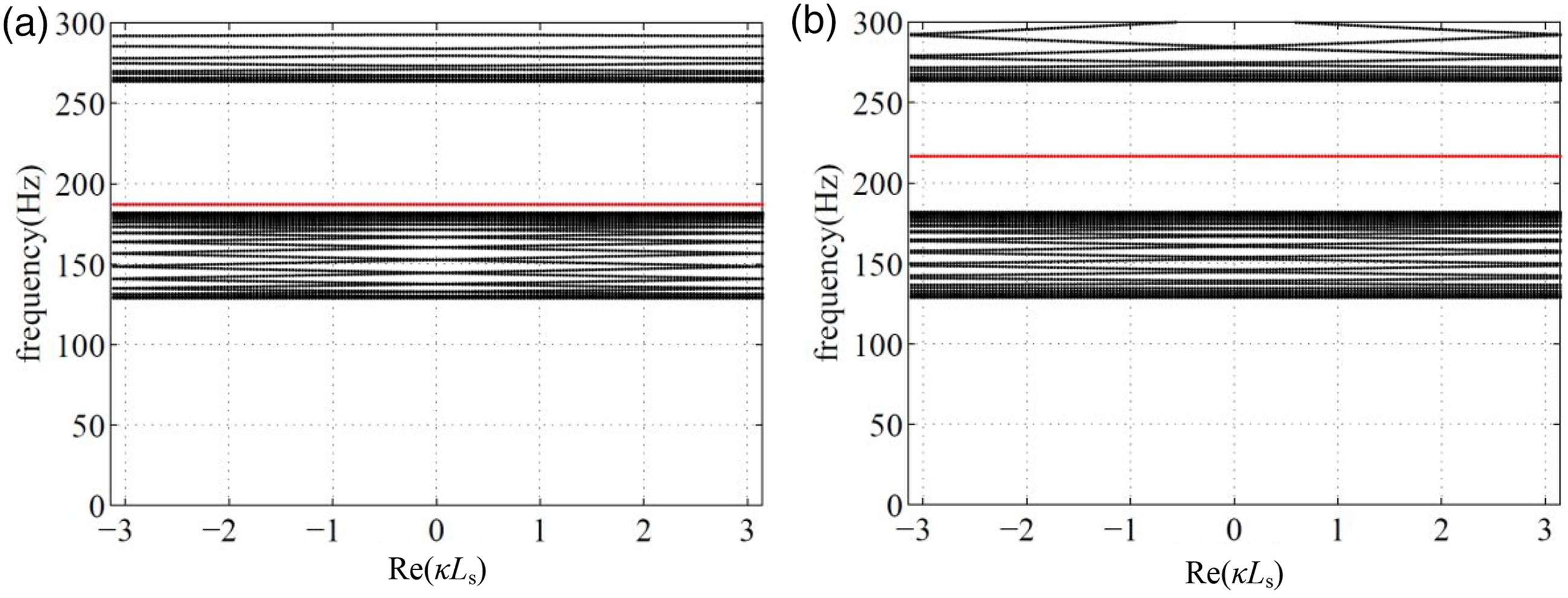
When there are defects within a local range of the ballast, such as local hardening of ballasted or voided sleepers, the defect state characteristics of the periodic track structure will be changed. In the case of three voided sleepers ( Local ballast defects: (a) unsupported sleepers and (b) ballast hardening.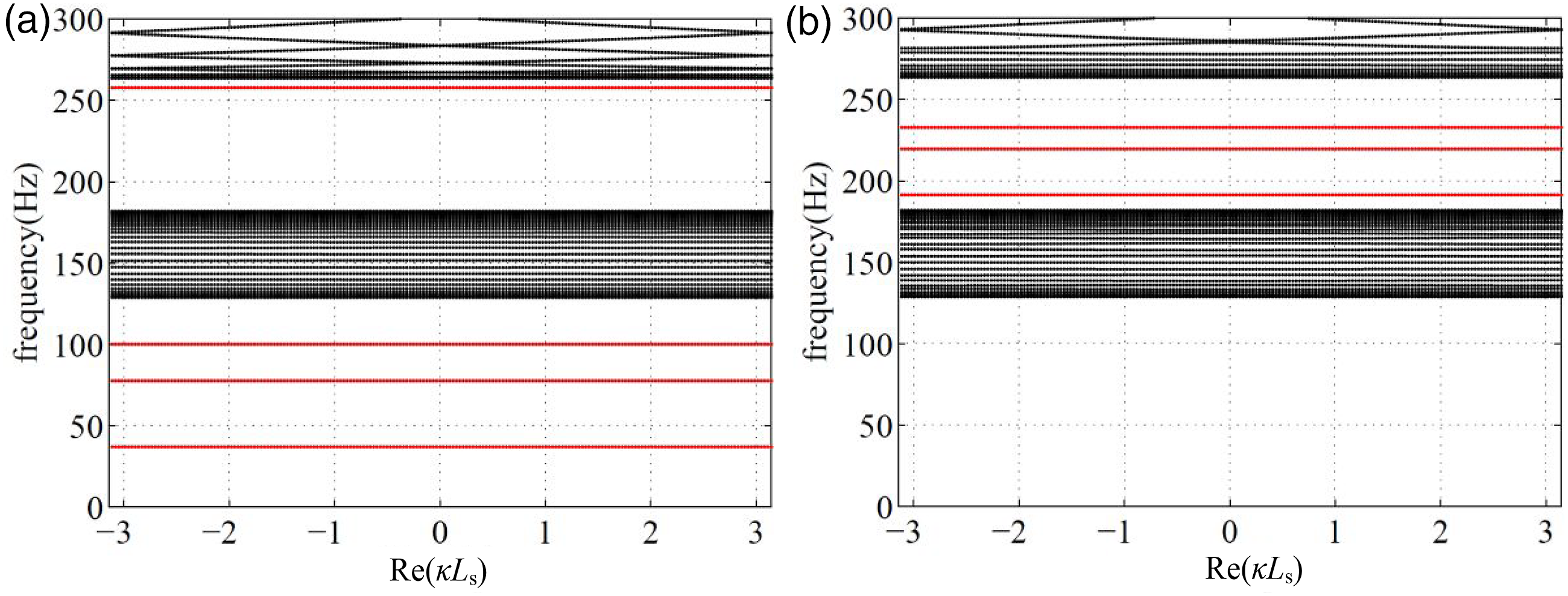
The corresponding wave modes are shown in Figure 12. According to the wave modes, local resonances are formed near the defect. The locally resonant feature is closely related to the sleepers within the defect, the rail and sleepers experience in-phase resonance in the first band gap, whereas the rail and sleeper show out-of-phase motion for the defect state in the second band gap. Wave modes of defect states generated by local unsupported sleepers.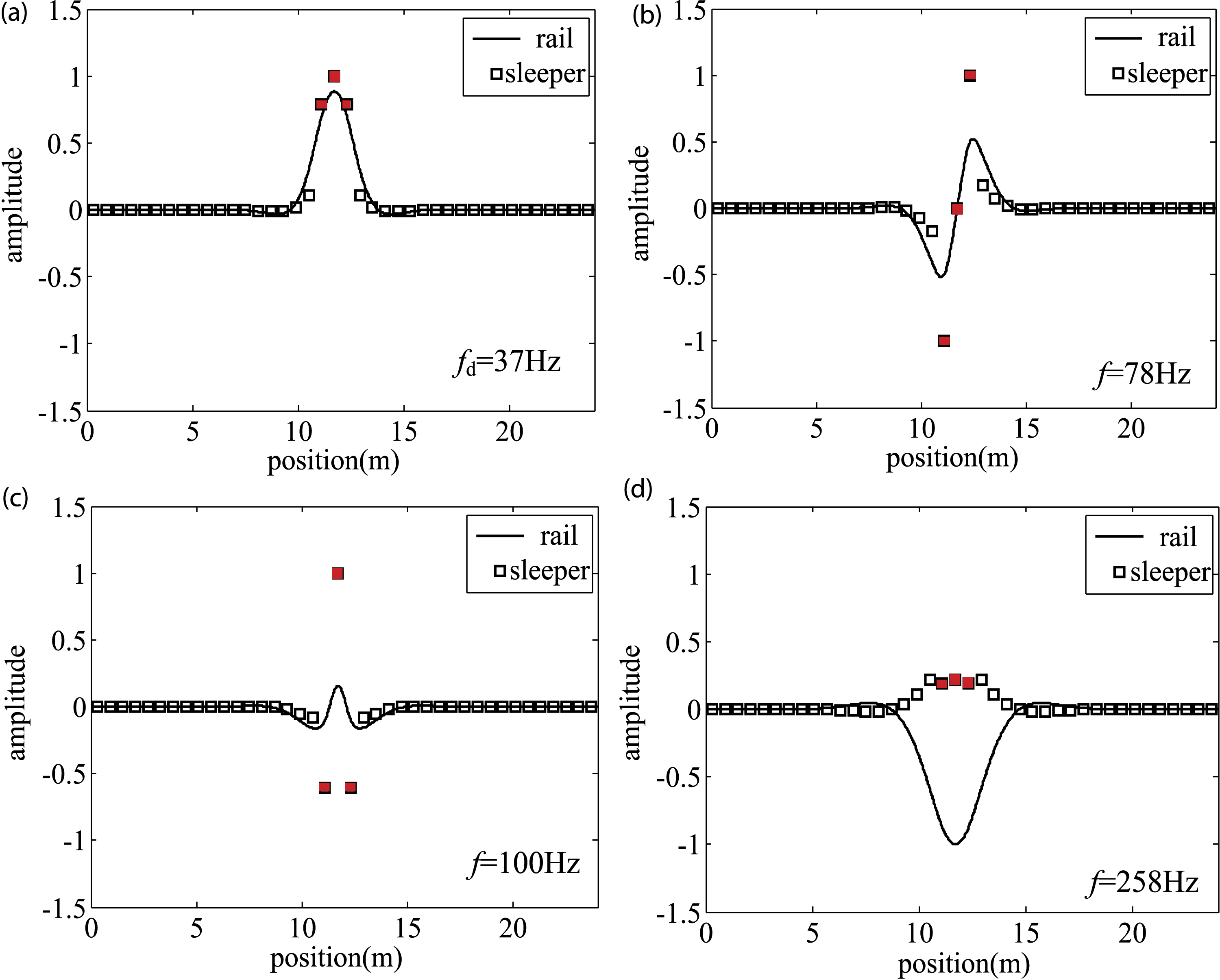
In contrast, when the stiffness of the ballast within three spans increases ( Wave modes of defect states generated by local ballast hardening.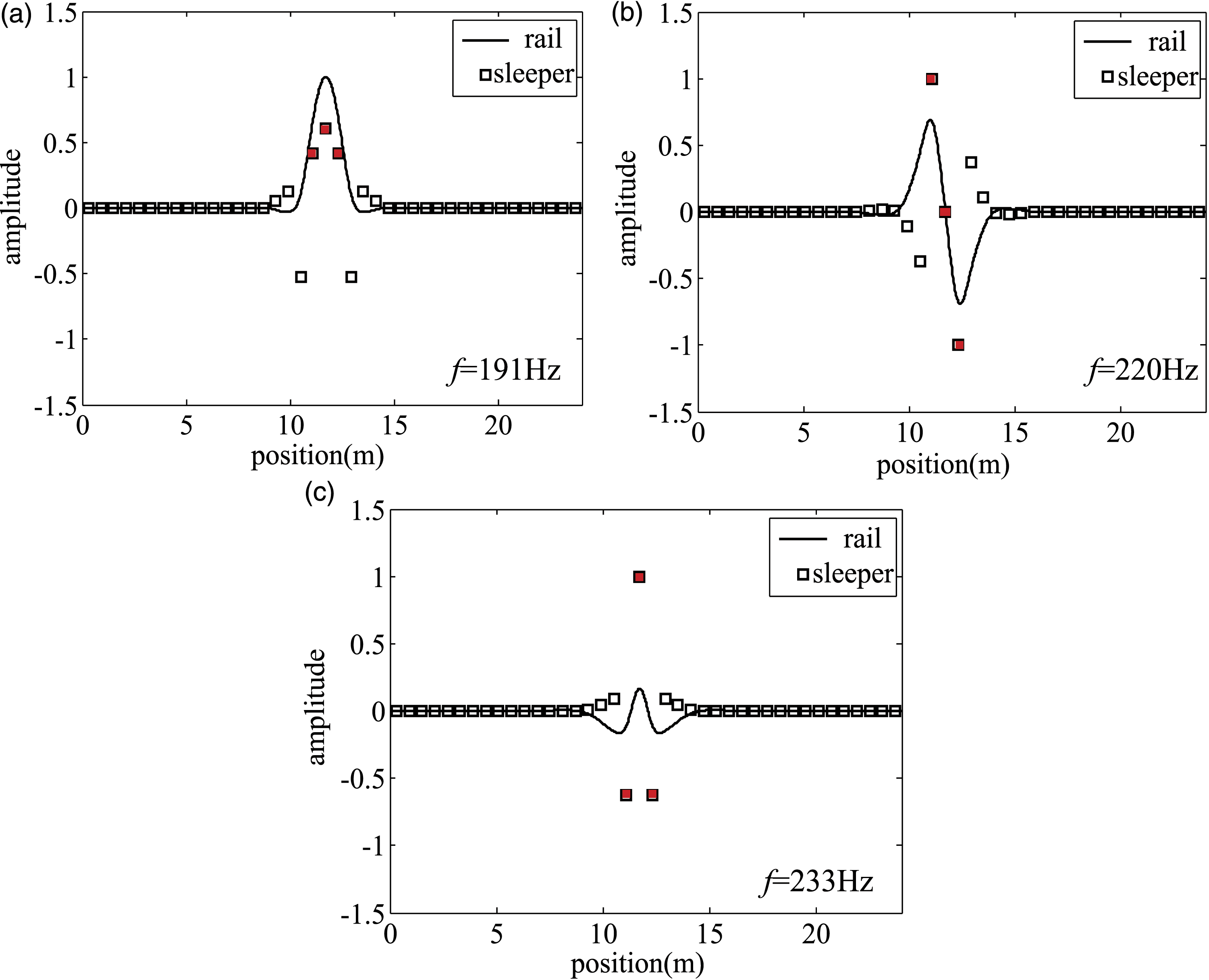
Vibration transmission of periodic track structure with defects
When there are defects in the periodic structure, one or more flat bands can be generated in the band gap range. Except for the frequency corresponding to the defect state, the vibrations will rapidly attenuate within the band gaps; thus, the defect state can provide the basis for defect detection. The finite element method is used to analyze the vibration transmission of the periodic track structure with defects in which the defective cells are located in the center of the structure. Unit force excitation is applied to the left side of the defect, and the response at the right side of the defect is calculated. For a length of 10 spans from the vibration transmission curve, when one fastening is missing, there is a response peak at the defect state, as shown in Figure 14. For the case of voided sleepers within three spans, several vibration transmission peaks are formed, which are consistent with the theoretical results. Therefore, the defect states in the track structure not only localize the vibration but also display the vibration transmission peak characteristic within finite length, which provides the basis for structural defect detection. Vibration transmission characteristics: (a) ballastless track with a single fastening missing and (b) ballasted track with three unsupported sleepers.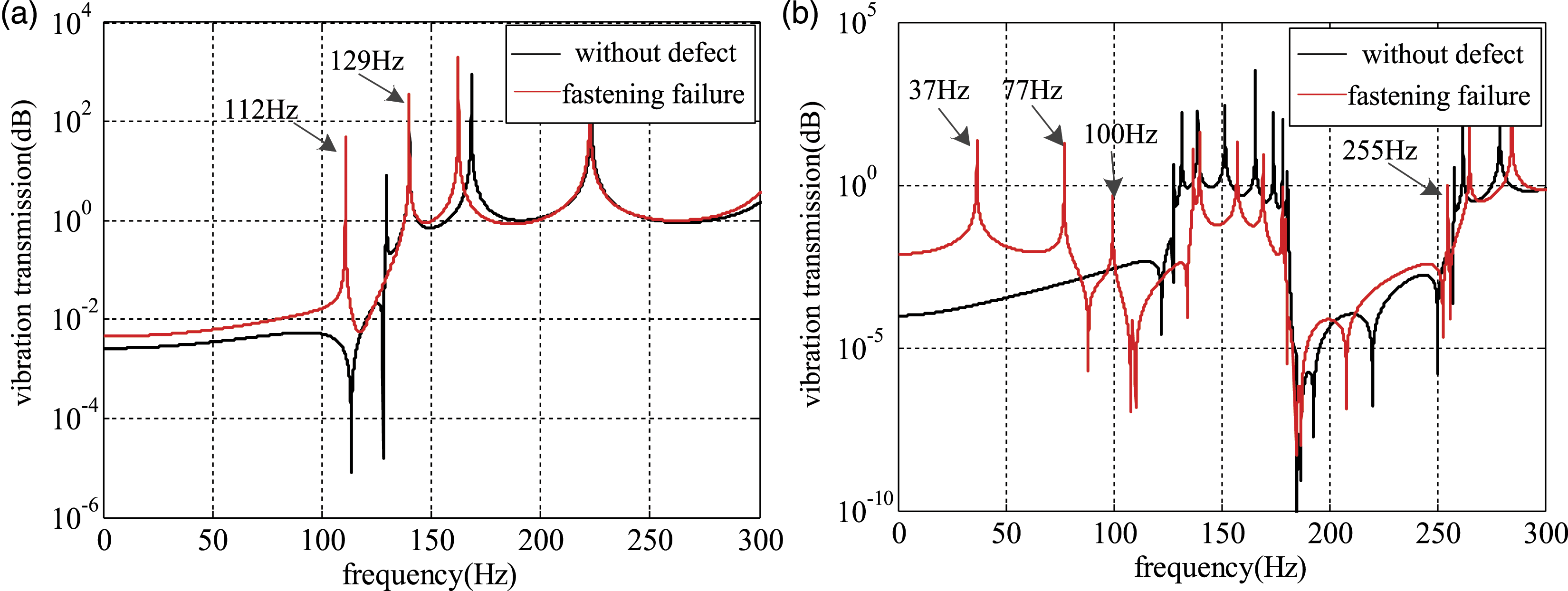
To verify the correctness of the above theoretical analysis, the field test was conducted on a newly constructed ballastless track structure. According to the test, the vertical dynamic stiffness of the fastening at the first-order natural frequency of the track structure was 36 kN/mm. By adjusting the preload of the fastening system, the fastening stiffness was adjusted to achieve the control of defect degree. The frequency response function of the track structure containing a single fastening defect (D = 2/3) was tested, as shown in Figure 15(a). According to the test results, in the case of the fastening stiffness defect, the first-order resonance peak decreased from 155 to 142 Hz, which is basically consistent with the theoretical prediction (see Figure 15(b)). Therefore, the defect degree can be evaluated by the peak frequency of the vibration transmission coefficient within the band gap. Field test verification: (a) experimental results and (b) theoretical results.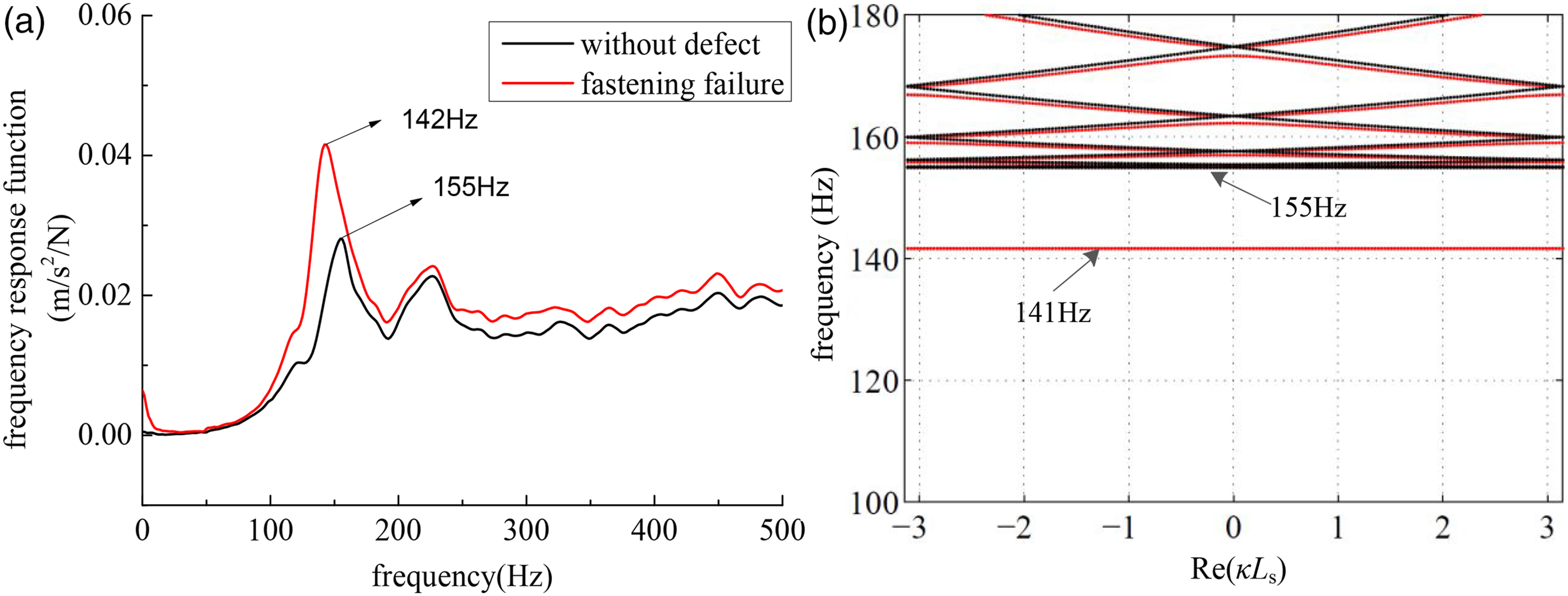
Conclusions
In this study, from the perspective of elastic wave propagation, the defect states of the periodic track structure with defects were discussed, and the formation mechanism of defect states in the track structure was revealed, thereby providing a basis for the defect detection of the track structure. The following conclusions can be drawn from this research: The defect states can be formed in the periodic track structure, which is characterized by the localization of an elastic wave near the defect position. The formation mechanism of the defect state can be explained by the local resonance of the structure near the defect, and the defect state is closely related to the local resonance mode that can be formed at the defect. With the widening of the defect range, the number of defect states gradually increases. From the formation process of the defect state, the dispersion curve of the band gap boundary gradually moves toward the band gap, and the group velocity gradually decreases. The frequency of the defect state corresponds to a confined wave mode, thus forming a flat band within the band gap. According to the analysis of defect states in ballastless and ballasted track structures, the defect states caused by the fastening and ballast defects are all shown in the low-frequency band gaps, and the elastic waves in the high-frequency range are almost unaffected. As the defect range of the fastening increases, multiple dispersion curves move to the first band gap and gradually form multi-defect states. The fastening or ballast stiffness failure of the ballast track structure causes defect states in the first and second band gaps simultaneously. While the stiffness of the fastening or ballast increases, the wave modes at the band gap boundary frequency move to a high frequency, thus only forming the defect states in the second band gap. The vibration transmission coefficient peak appears at the frequency of the defect state. Therefore, the vibration transmission coefficient combined with the test and identification of the defect mode can be applied to the defect evaluation of the railway track structure.
A periodic track structure with defects is considered in this study; however, there are random parameters for track structure in practical, such as random sleeper spacing and fastening stiffness. The dynamic behaviors of defect state for disordered track structure will be studied in the future.
Footnotes
Declaration of conflicting interests
The author(s) declared no potential conflicts of interest with respect to the research, authorship, and/or publication of this article.
Funding
The author(s) disclosed receipt of the following financial support for the research, authorship, and/or publication of this article: This work is supported by the National Key Research and Development Program of China (2018YFE0207100) and the Research Fund of China Academy of Railway Sciences (2020YJ118).
