




Abstract
In this study, an investigation on the free vibration of the beam with material properties and cross section varying arbitrarily along the axis direction is studied based on the so-called Spectro-Geometric Method. The cross-section area and second moment of area of the beam are both expanded into Fourier cosine series, which are mathematically capable of representing any variable cross section. The Young’s modulus, the mass density and the shear modulus varying along the lengthwise direction of the beam, are also expanded into Fourier cosine series. The translational displacement and rotation of cross section are expressed into the Fourier series by adding some polynomial functions which are used to handle the elastic boundary conditions with more accuracy and high convergence rate. According to Hamilton’s principle, the eigenvalues and the coefficients of the Fourier series can be obtained. Some examples are presented to validate the accuracy of this method and study the influence of the parameters on the vibration of the beam. The results show that the first four natural frequencies gradually decrease as the coefficient of the radius
Keywords
Introduction
Functionally graded material (FGM), a new type of composite materials which has continuous gradient changing in compositions and structures, was first proposed by materials scientists1–3 to solve the problem of materials under harsh conditions in technical fields such as aeronautics and astronautics. The mechanical performance of plates, shells and beams made from FGM can be improved obviously. The material properties of FGM have shown different features in any desired spatial orientation by different theories such as exponential law, 4 power law, 5 and sigmoid law. 6 FGM have great potential in many fields due to its superior performance than ordinary materials. The numerical method is used to study the free vibration of FGM beam in previous studies. In this paper, the exact solution is obtained to analyze the free vibration of FGM Timoshenko beam with arbitrary cross sections. Great efforts have been made for the vibration of the FGM beam by many engineers and researchers. Moreover, most of the researchers studied the type of the beam with material properties varying thicknesswise7–16 and only a few researchers studied the FGM beam with material properties varying lengthwise.17–20 Wu et al. 17 studied the vibration of axially functionally graded (AFG) beams through semi-inverse method. Huang 21 studied the free vibration of AFG beams with variable cross sections by the finite element method.
For the beam with non-uniform cross section, it is widely investigated by many researchers due to its better mechanical performance. A closed-form solution about non-uniform deflection beams was obtained by Romano. 22 Fertis and Zobel 23 studied this problem by the equivalent system method. Ece et al. 24 investigated the vibration of the non-uniform cross-section beam with exponentially varying width. Numerical methods such as Frobenius method,25,26 Rayleigh-Ritz method, 27 differential transform method, 28 the differential quadrature method, 29 semi-inverse method 30 and finite element method31–33 have also been used to study the free vibration of the non-uniform cross-section beam.
It is well known that the influence of transverse shear deformations and rotary inertia in Euler-Bernoulli beams34,35 is ignored while it is not neglected by Timoshenko beams. The methods of differential transform and differential quadrature are adopted to analyze the free vibration of the FGM beam.36,37 The power series method and dynamic stiffness method are used in Leung et al. 38 for analyzing the free vibration of non-uniform Timoshenko beams. The method that transforms complex couple functions into a single government function via introducing an additional function is adopted by Huang et al. 39 to discuss the free vibration of AFG Timoshenko beam with variable cross section. Recently, many researchers are focusing on solving the vibration of plates, shells and beams with different end supports. A unified solution for the vibration of plates with holes under elastic boundary conditions is given in Wang et al. 40 Wang et al. 41 made a prediction of break-out sound from a rectangular cavity via an elastically mounted panel. The free vibration of FGM plates and doubly curved shells with elastic ends supports are studied in literature.42–44 The vibration problems of a FGM beam with thermo-elastic environment have been investigated by Chen et al. 45 according to a higher-order shear deformation beam theory. A numerical method of viewing a shifting as a multi-curved beam has been addressed for solving the vibration of the curved shifting in Wang et al. 46
As far as the authors know, there is no unified method which was proposed to study the vibration of the functional graded Timoshenko beam with arbitrary cross sections. In this paper, an unified procedure is proposed to study the elastically restrained FGMT beam with cross sections varying arbitrarily based on the spectro-geometric method (SGM) 47 in which the translational displacement and the rotation of cross section are both expressed into the Fourier series with some polynomial functions. The cross-sectional area, the second moment of area, the Young’s modulus, the mass density and the shear modulus have been expanded into Fourier cosine series. Several examples are introduced to validate the accuracy and reliability of this method. This method is generally applicable to any kind of beams with material properties and cross-sectional area varying arbitrarily along the axis direction under any elastic boundary conditions.
Theoretical formulation
Structural model
Figure 1 shows the FGMT beam with variable cross section. The beam is elastically restrained at the ends by translational and rotational springs, k0, k1, K0 and K1.
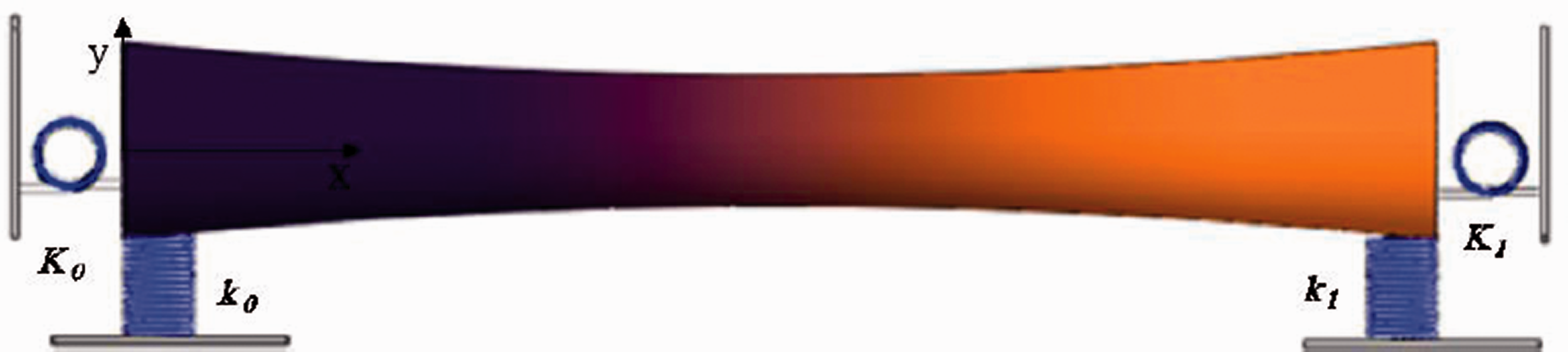
The non-uniform cross section FGMT beam with elastically boundary conditions.
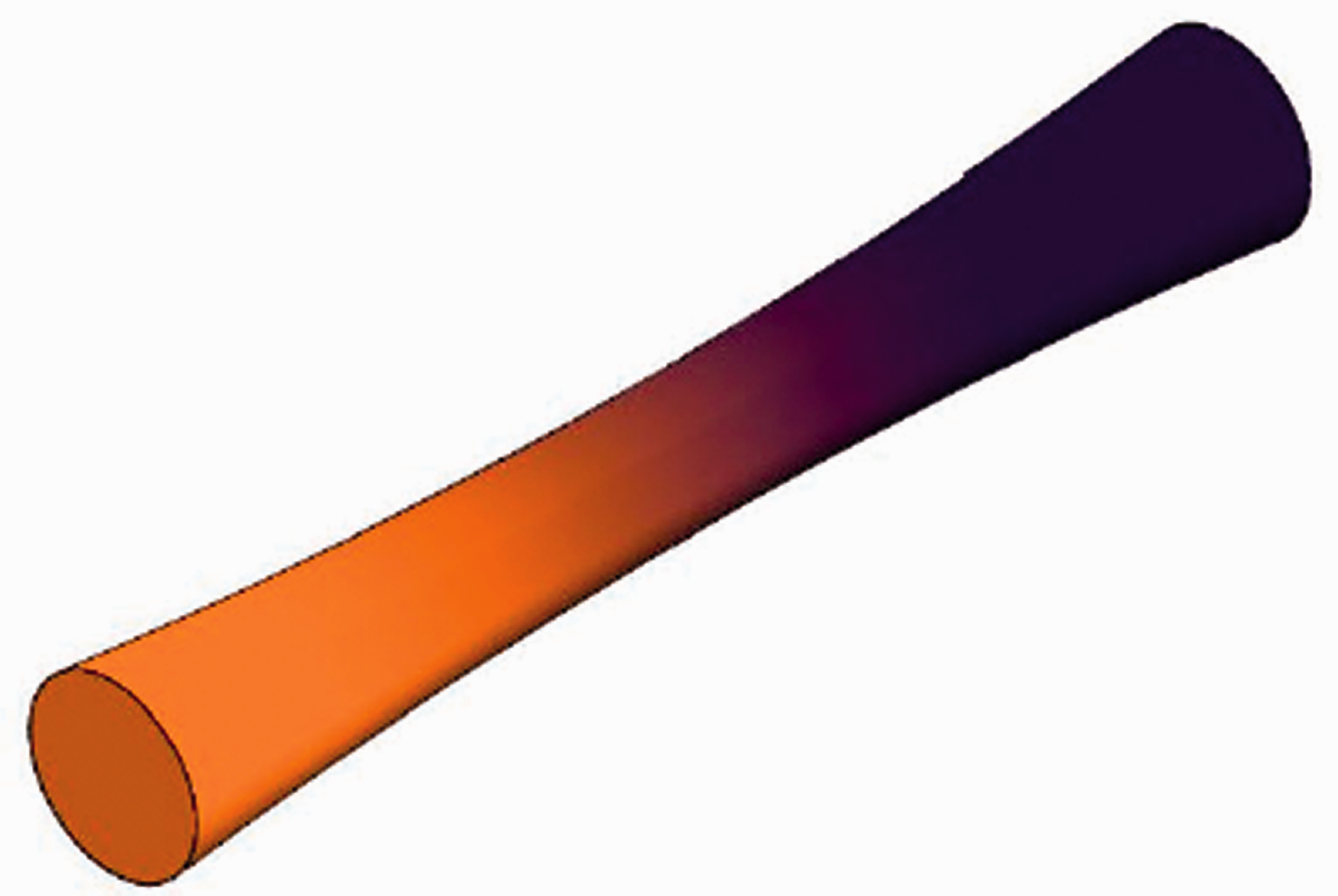
A FGMT beam with variable circular cross section.
The coupled governing equations of the FGMT beam are expressed as
48


The end supports of the FGMT beams with elastic constraints are given as


The translational displacement and rotation of cross section of the beam can be expressed as


The selected additional polynomials should satisfy any subsequent differential operations and should be sufficiently smooth over [0, L]. Mathematically, the term “sufficiently smooth” means that the first and third derivative of supplementary functions exist and keep continuous on the entire beam. In this paper, the selected additional polynomials are as follows




It is obvious from equations (7) to (10) that

Solution for the system
For solving the vibration of the FGMT beam, the Rayleigh-Ritz method will be introduced in the following. The Lagrange function of the free vibration of the beam is



It should be noted that the potential energy of the springs at boundaries are included in the total potential energy, and the stiffness of these elastic springs can be any value satisfying one’s requirements.
It is not easy to solve the integral in equations (13) and (14) with





Substituting equations (5), (6), (13), (14) into equation (12) and minimizing all the unknown coefficients, the governing equations of the FGMT beam can be obtained as

Results and discussion
To validate the accuracy of the proposed method, several numerical examples will be first considered. The influence of the parameters of the beam on the vibration behaviors is also analyzed.
Validation of the present method
First, the free vibration of a uniform beam is considered in this part. In this case, the parameters of the beam are set as the same as those in literature38,39 in which the parameters are
The first four dimensionless natural frequencies with different N.

The first five dimensionless natural frequencies of the uniform beam.
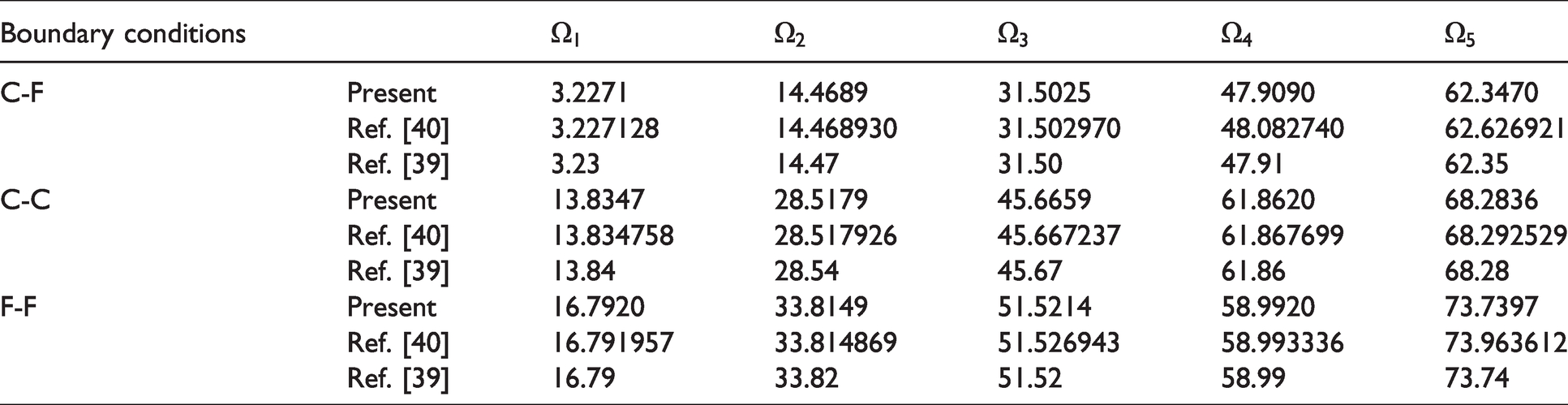
To further validate the accuracy of the proposed method, the free vibration of a beam with variable cross section varies are studied. The parameters of the beam are set as the same with those in Huang et al.,
39
as 

The first five dimensionless natural frequencies of a non-uniform beam.
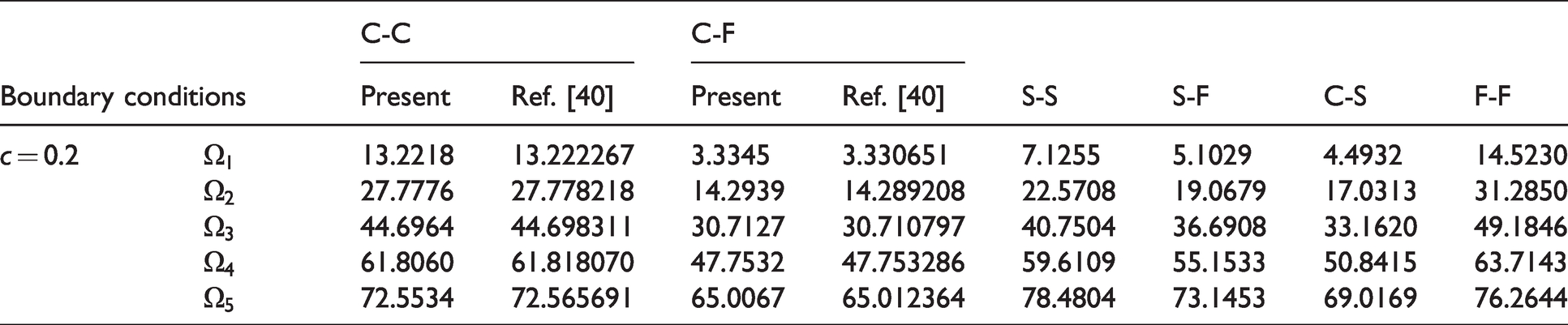
In this part, the vibration of a FGMT beam with non-uniform cross section will be taken into consideration to further validate the accuracy of the present method. The cross-sectional area 

The first four dimensionless natural frequencies of a FGMT beam with non-uniform cross section.
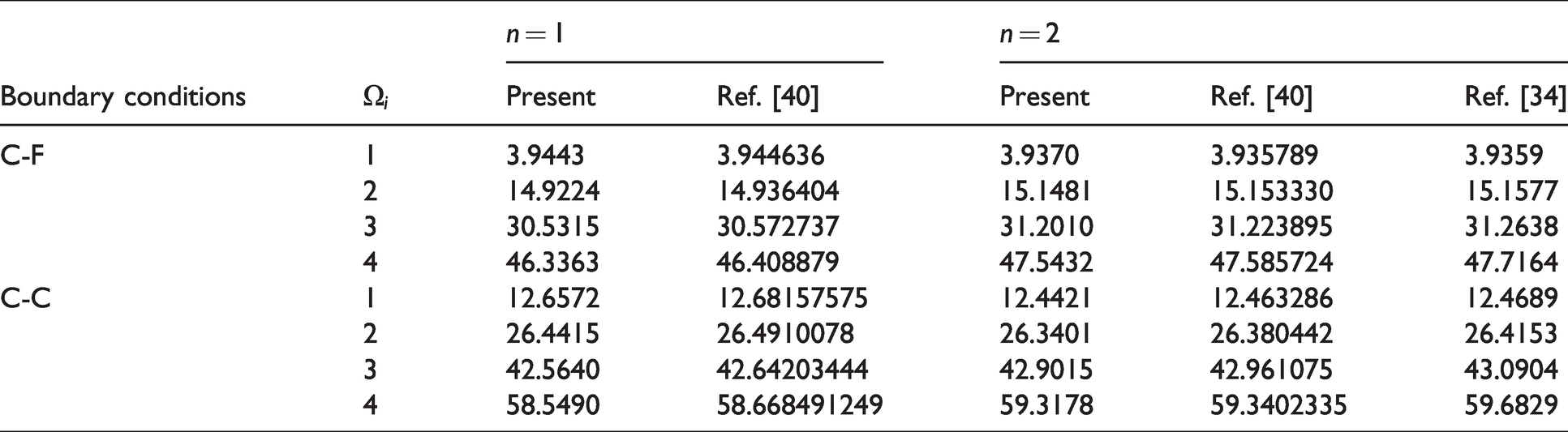
Free vibration of FGMT beams with variable circular cross section
In this part, the free vibration of a FGMT beam with circular cross section, shown in Figure 2, is studied. The parameters of the beam are 





The dimensionless natural frequency parameter 
The radius of the beam at the center is set as 0.05 m and the length is 1 m. The first four dimensionless natural frequencies of the beam with different
The first four dimensionless natural frequencies with different
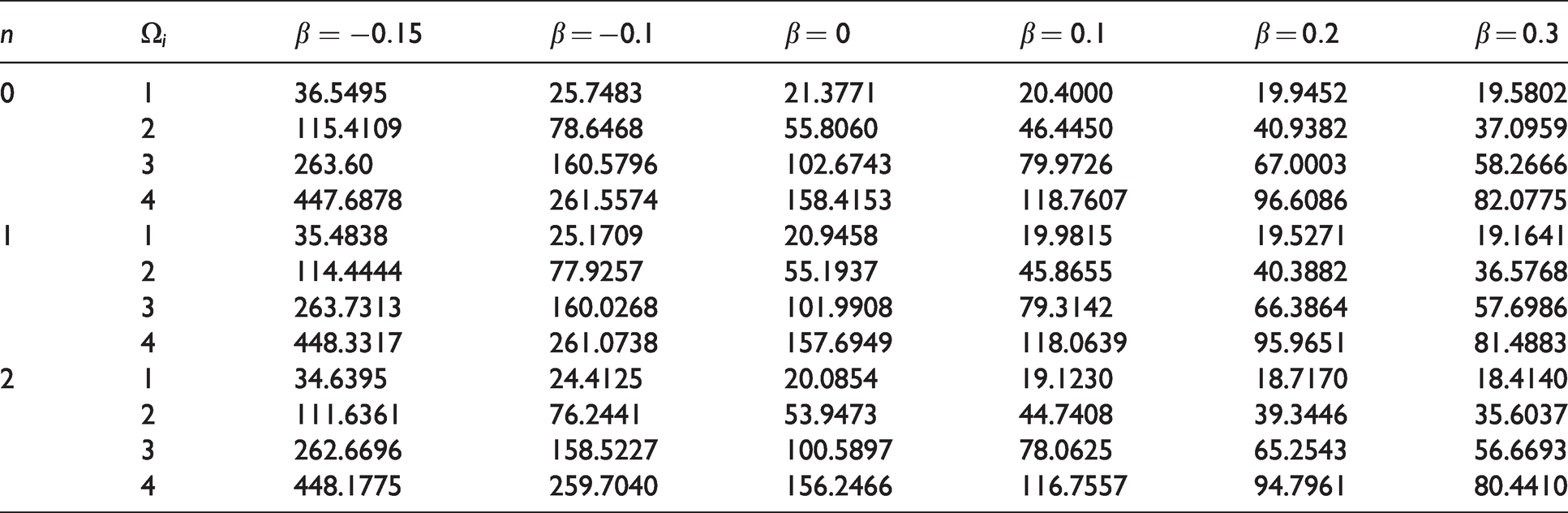
The first four dimensionless natural frequencies with
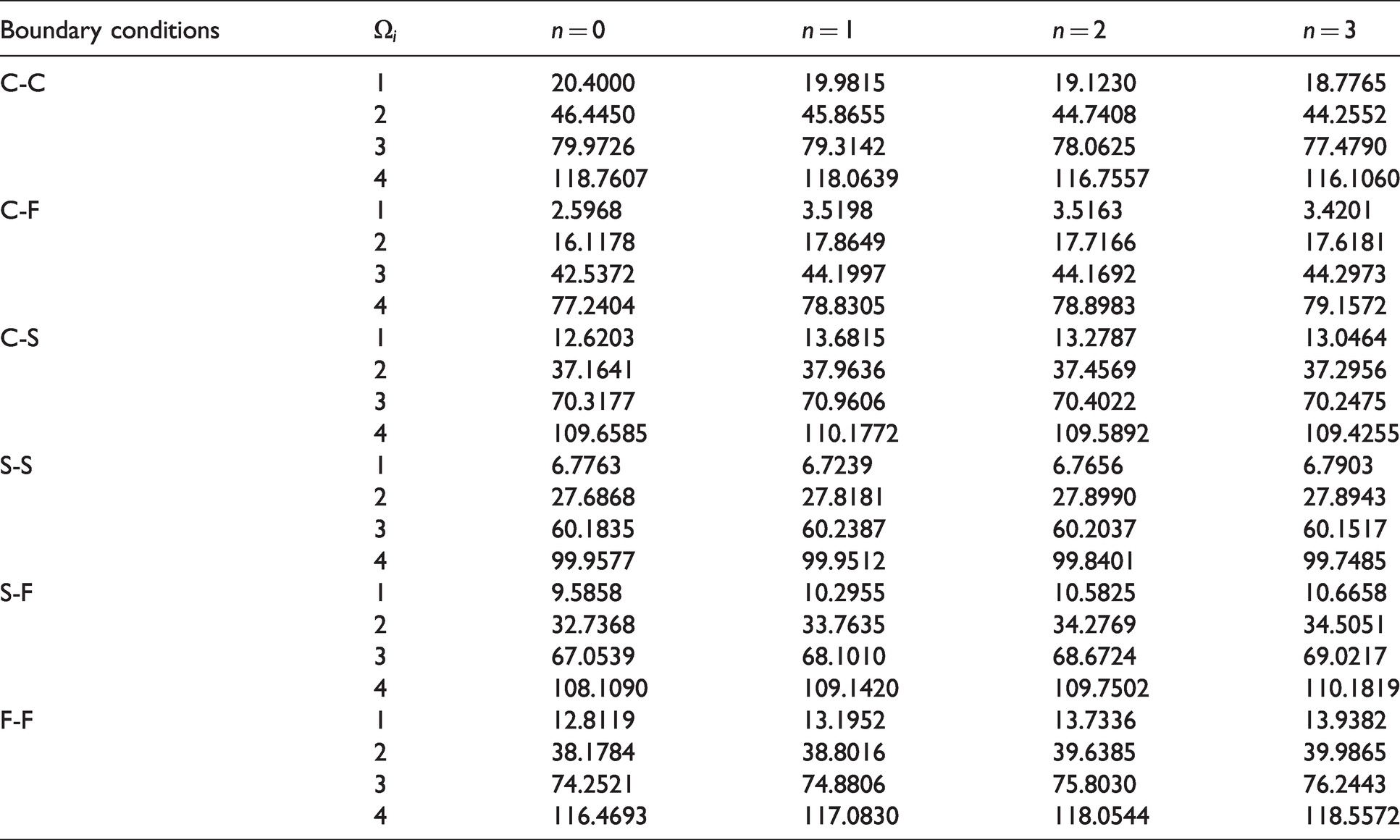
Figures 3 and 4 show the first four transverse displacement and the rotation of cross section mode shapes of the uniform beam with
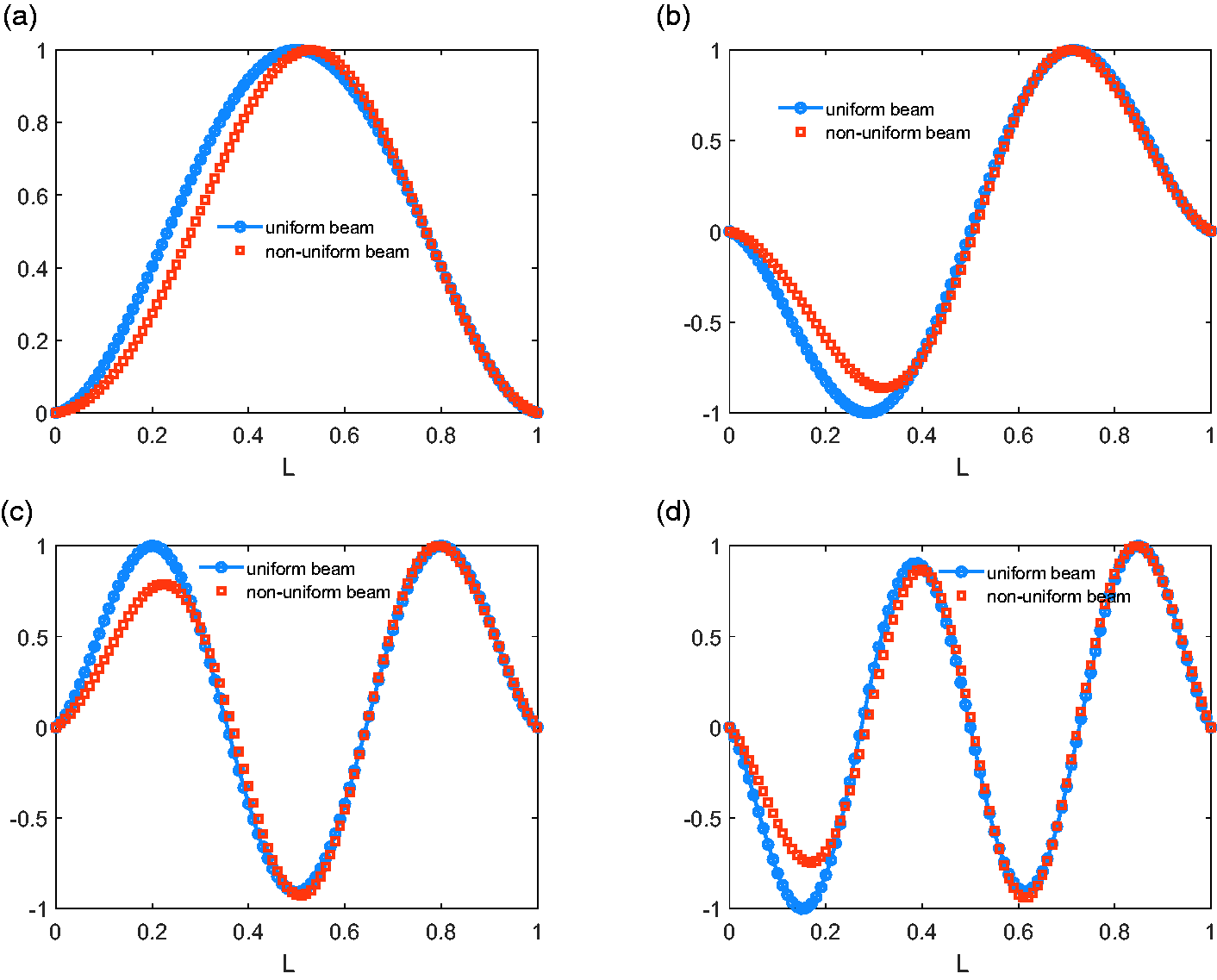
The first four transverse displacement mode shape compared with uniform Timoshenko beam. (a): first order; (b) second order; (c) third order; (d) fourth order.
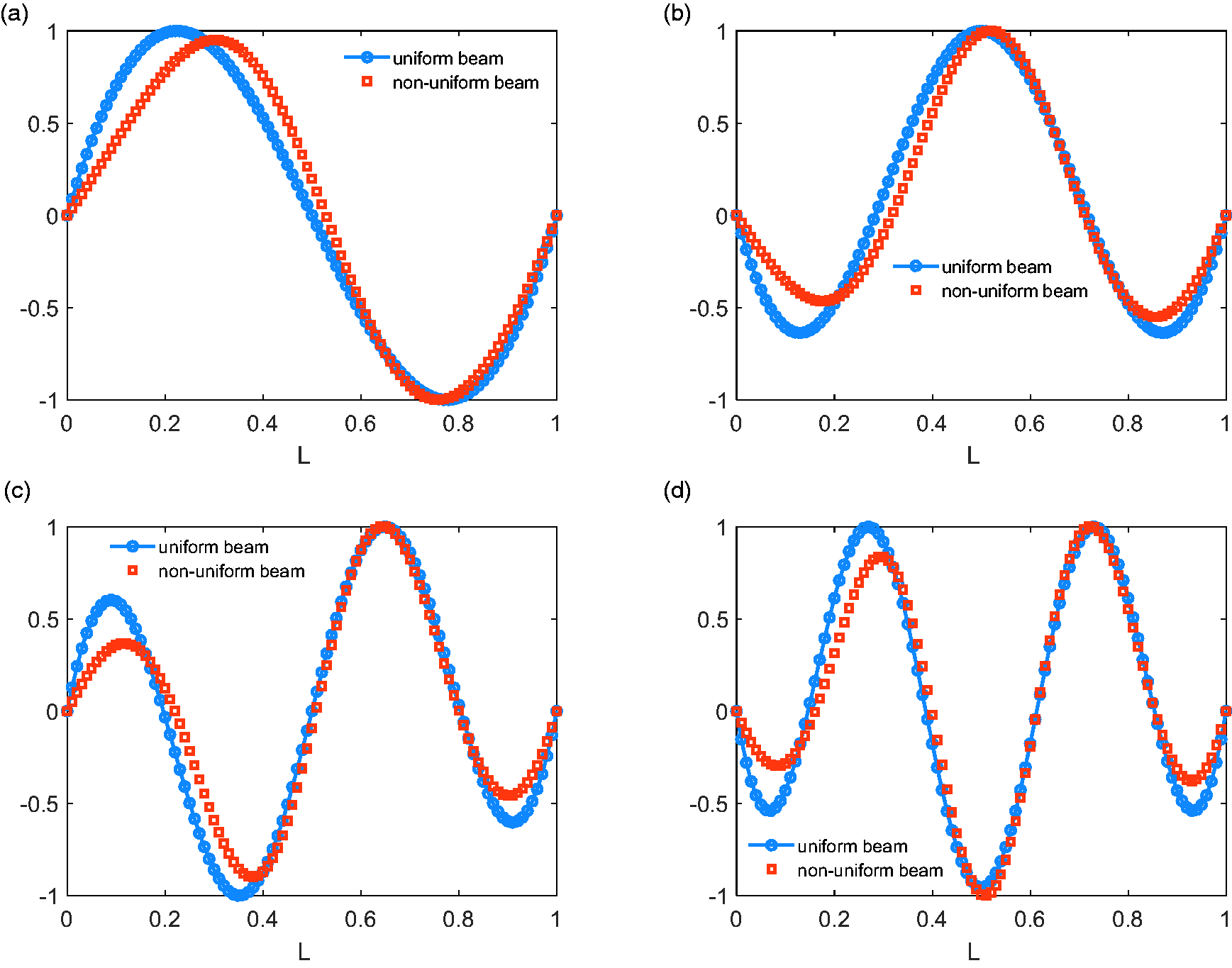
The first four rotations of cross section mode shapes compared with uniform Timoshenko beam. (a): first order; (b) second order; (c) third order; (d) fourth order.
Effects of material parameters and spring stiffness on the vibration of beams
Effects of the coefficient of the radius
In this part, the effects of
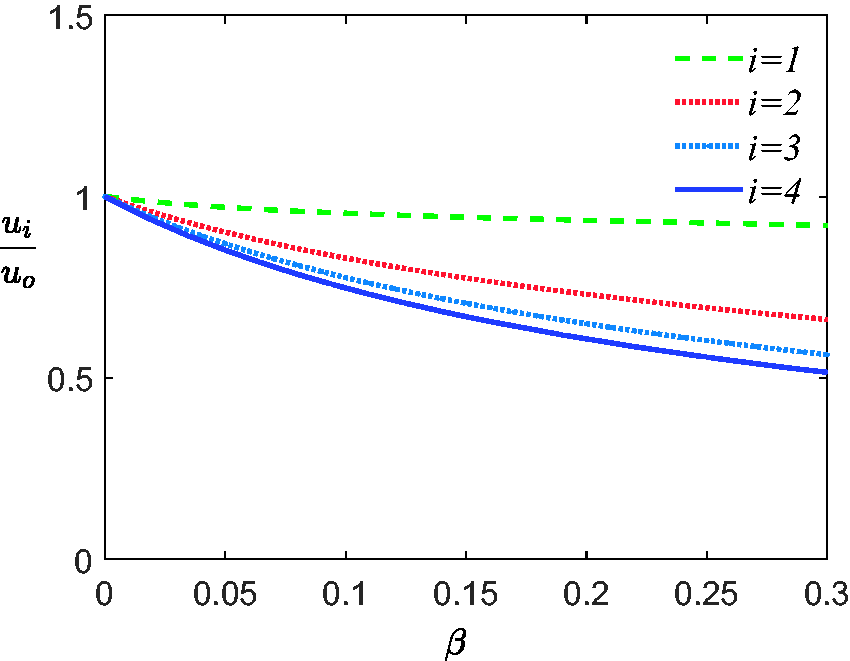
Non-dimensional natural frequencies compared with a FGM beam with uniform cross section (n = 2).
The first four mode shapes of the transverse displacement and the rotation of cross section by different
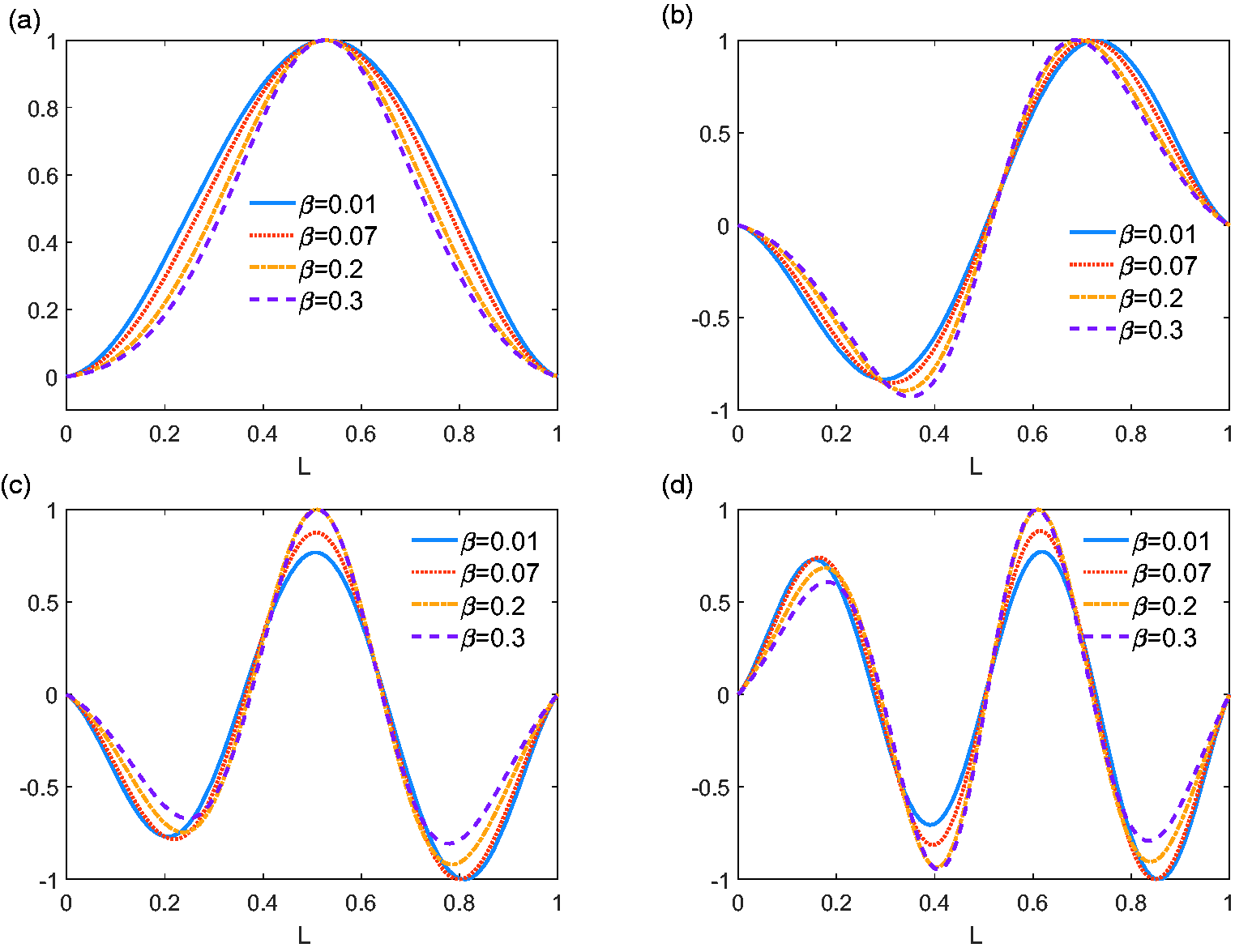
Transverse displacement mode shape with different
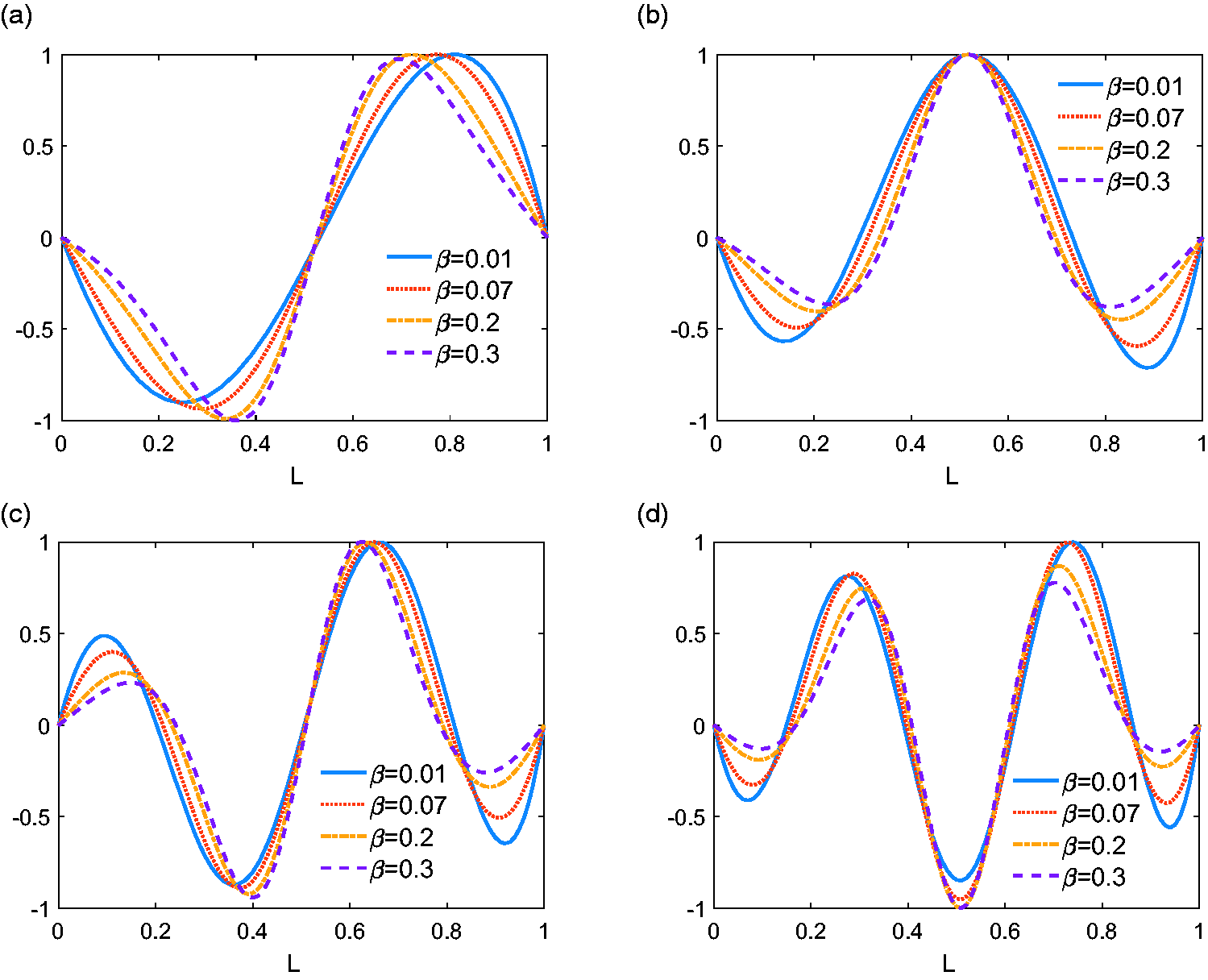
Rotational mode shapes with different
Effects of the gradient parameter n
Furthermore, the influence of the gradient parameter n on the dimensionless natural frequencies and mode shapes is investigated in this part. Here
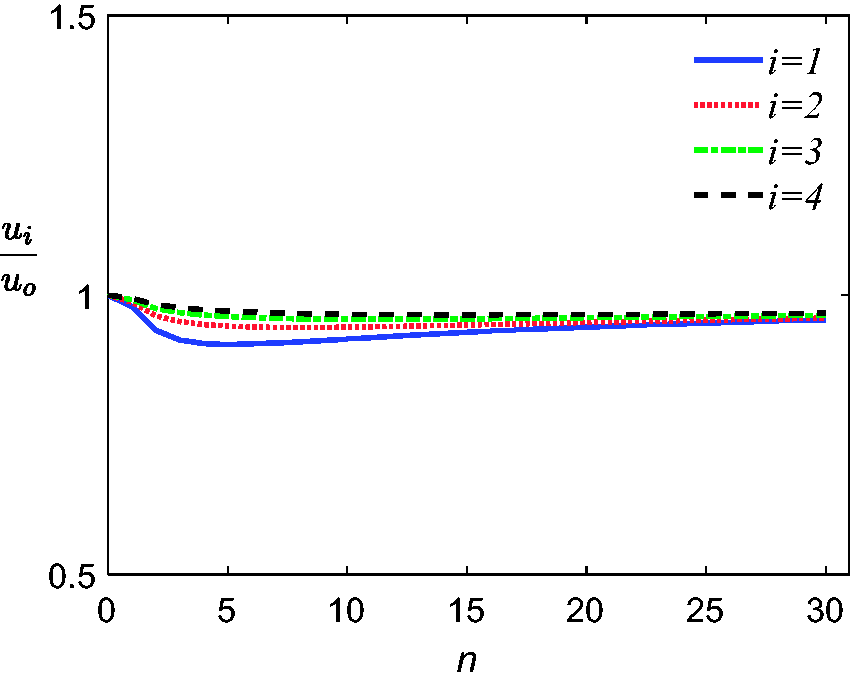
The radio of the non-dimensional natural frequencies with different n.
Figures 9 and 10 plot the first four mode shapes of the transverse displacement and the rotation of cross section with different n, respectively. It could be seen that the rotational mode shapes have one more vibration extremum compared with the transverse displacement ones for the same order mode shape.
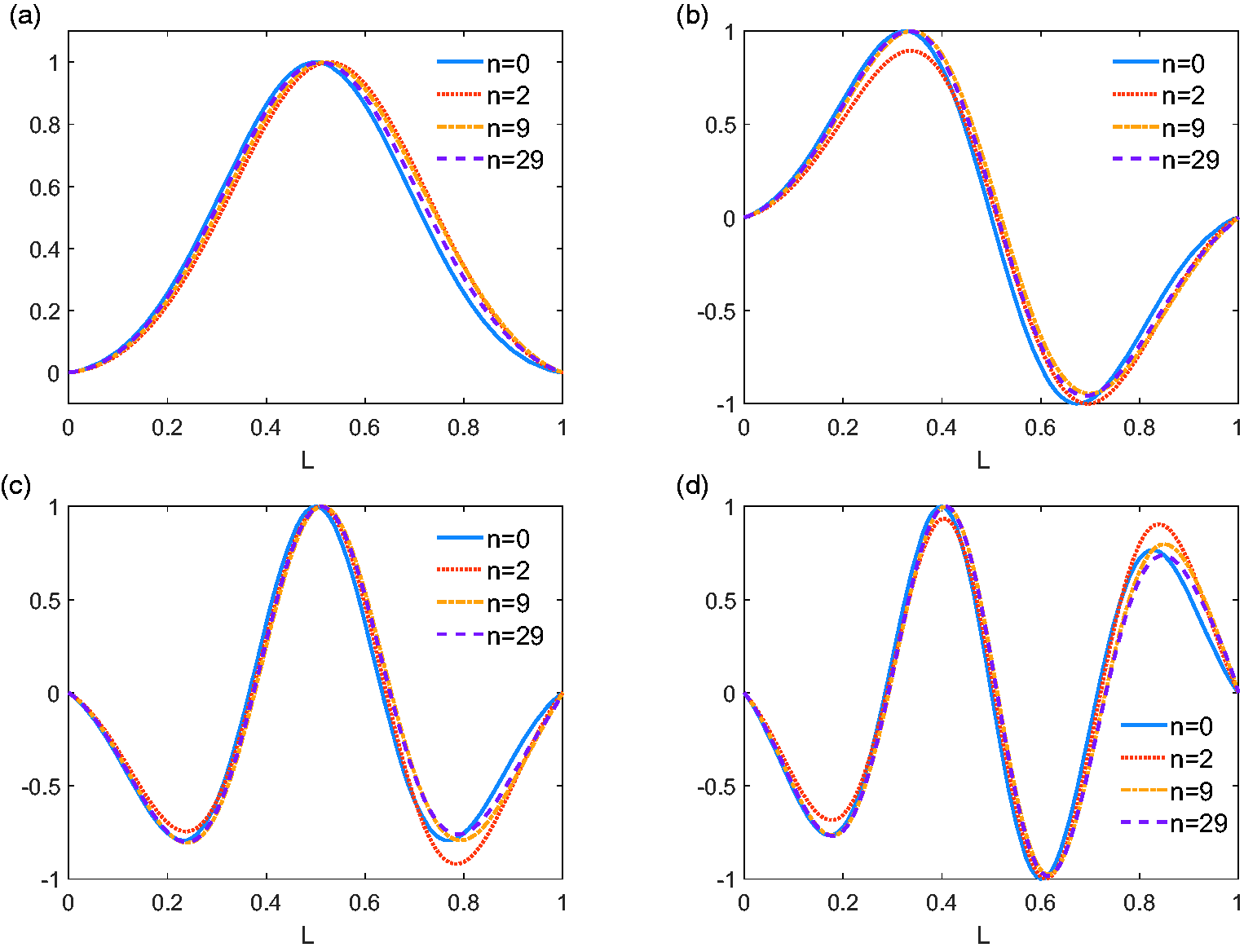
Transverse displacement mode shape with different n. (a): first order; (b) second order; (c) third order; (d) fourth order.
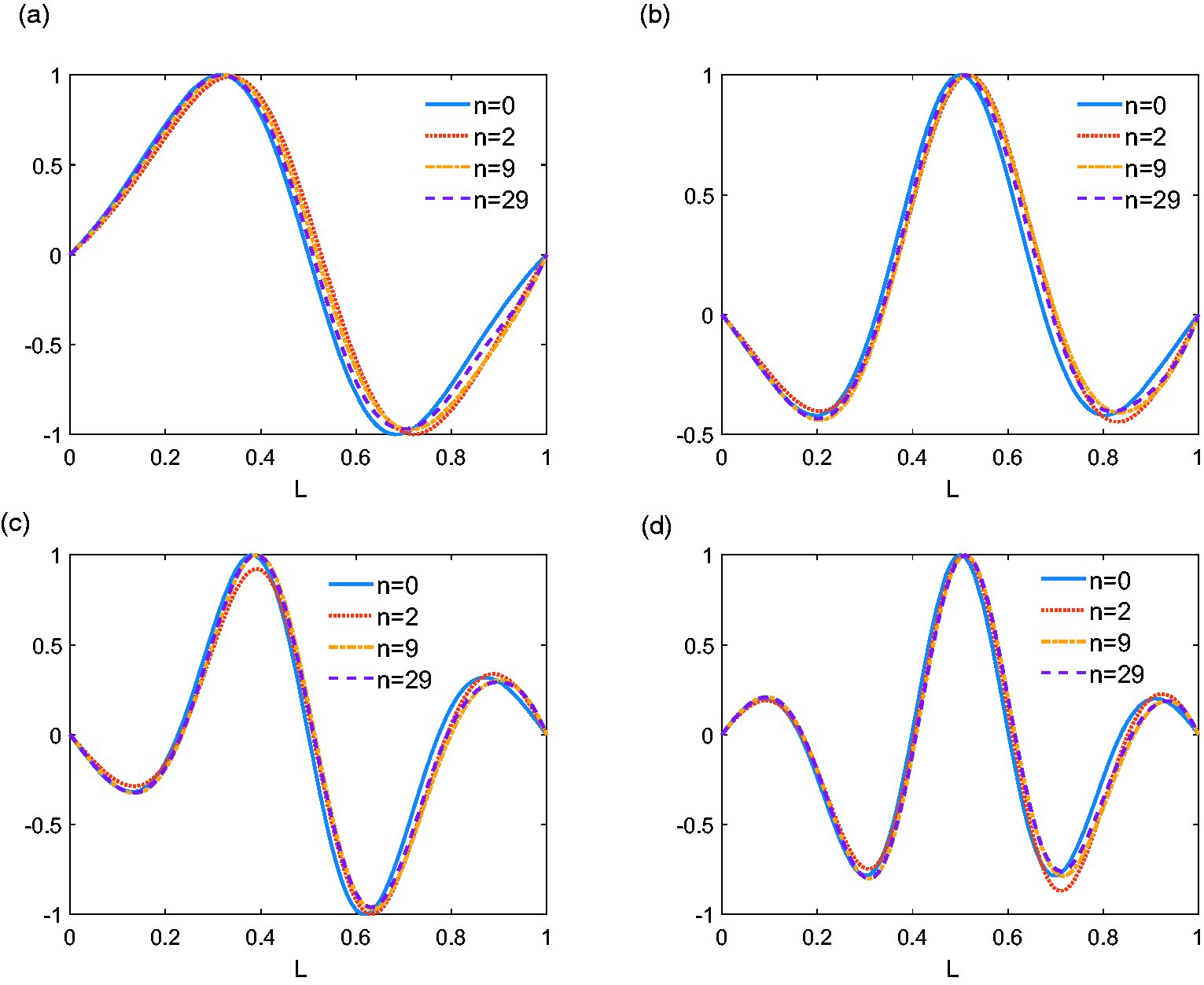
Rotational mode shapes with different n. (a): first order; (b) second order; (c) third order; (d) fourth order.
Effects of elastic supports
The influence of elastic boundary conditions of the vibration of the beam is studied. The coefficient of radius
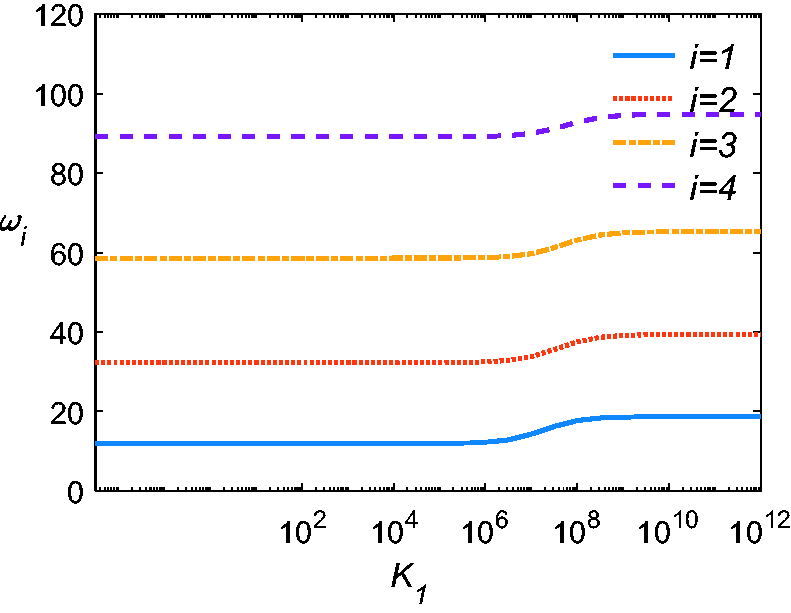
First four non-dimensional natural frequencies with variable K1(
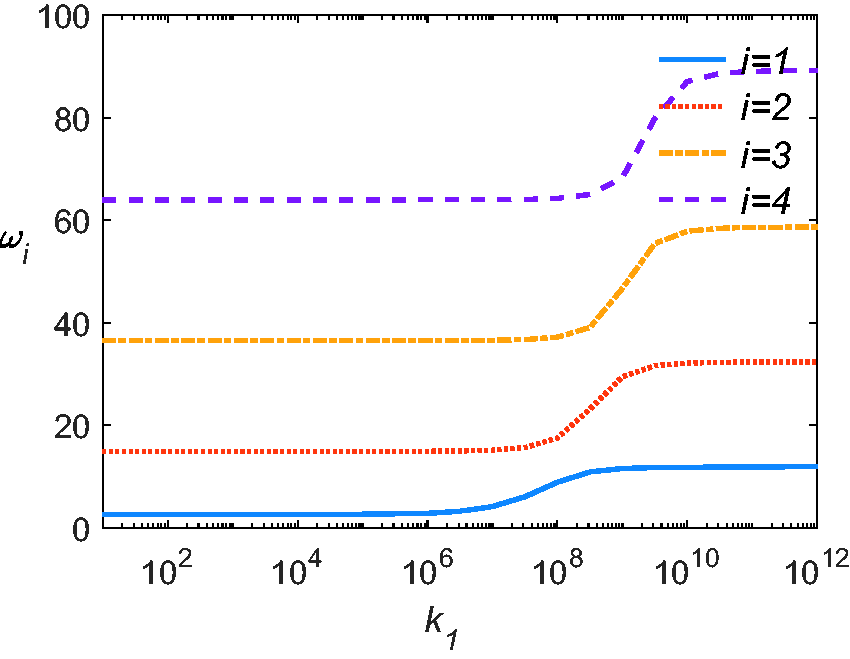
First four non-dimensional natural frequencies with variable k1(
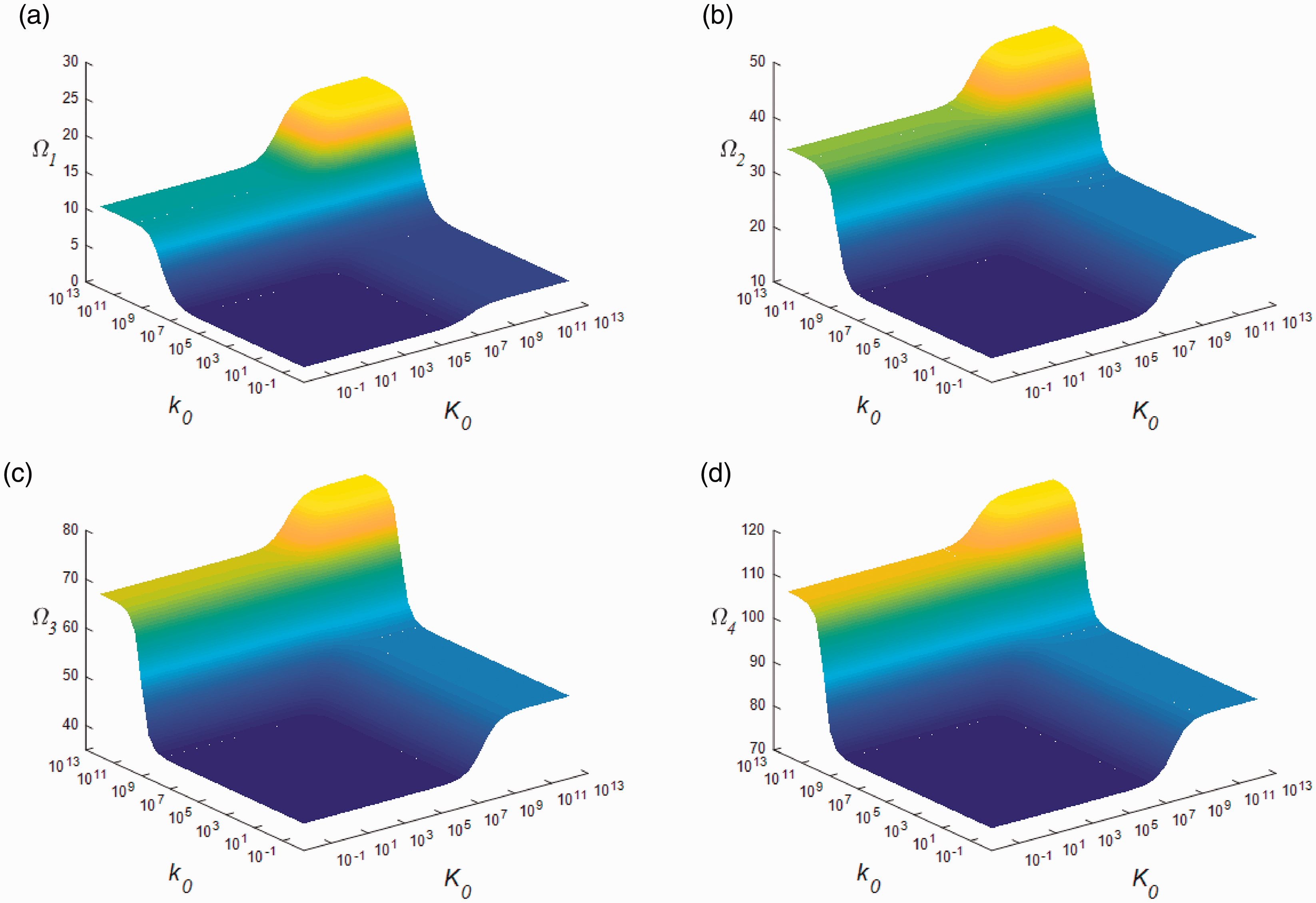
First four non-dimensional natural frequencies with variable k0 and K0(
Effects of a variable translational spring k0 and different
In this part, the effects of a variable translational spring k0 and different
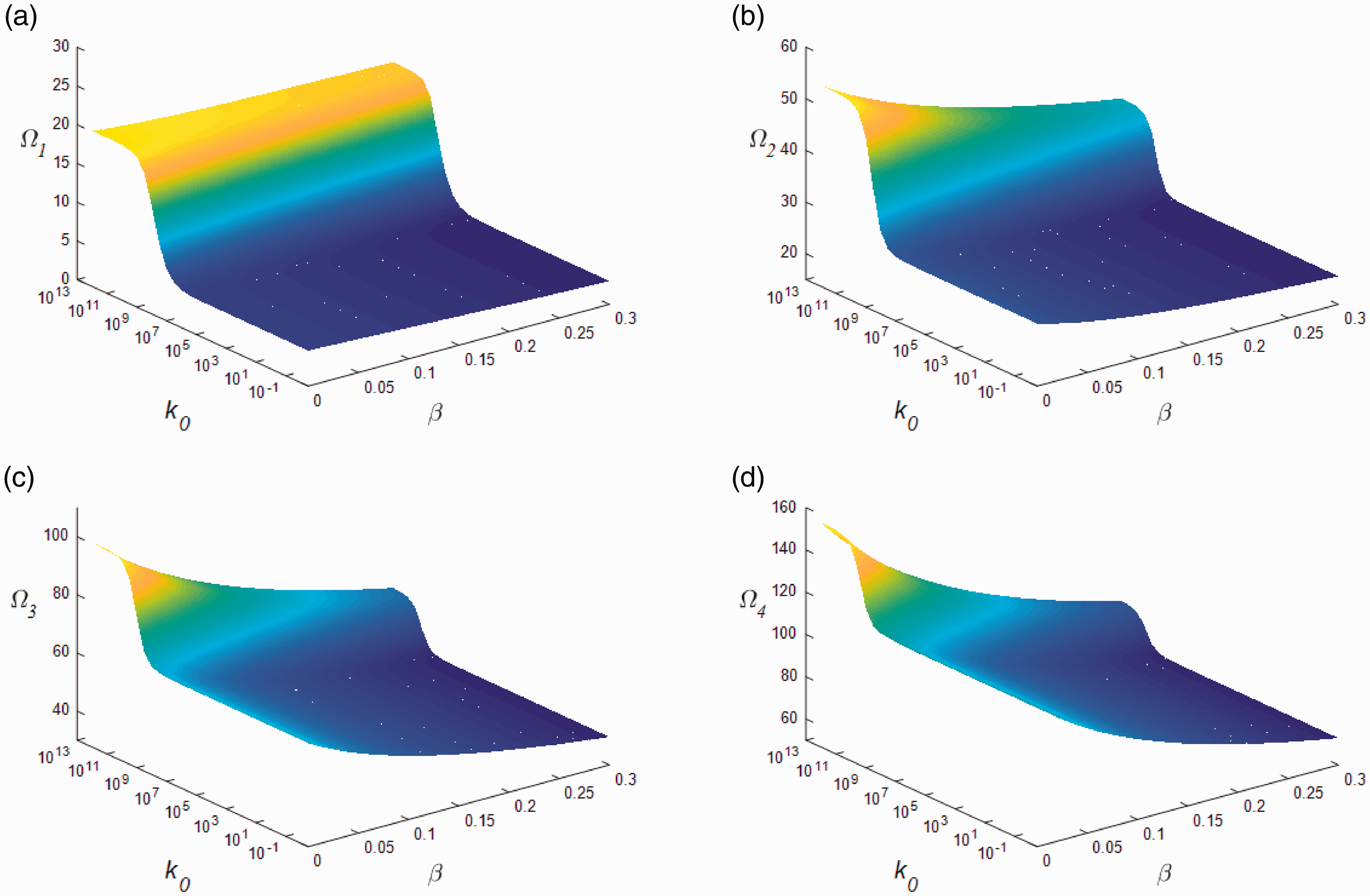
First four non-dimensional natural frequencies with variable k0 and different
Effects of the gradient parameter n and coefficient of the radius
The influence of the gradient parameter n and coefficient of the radius
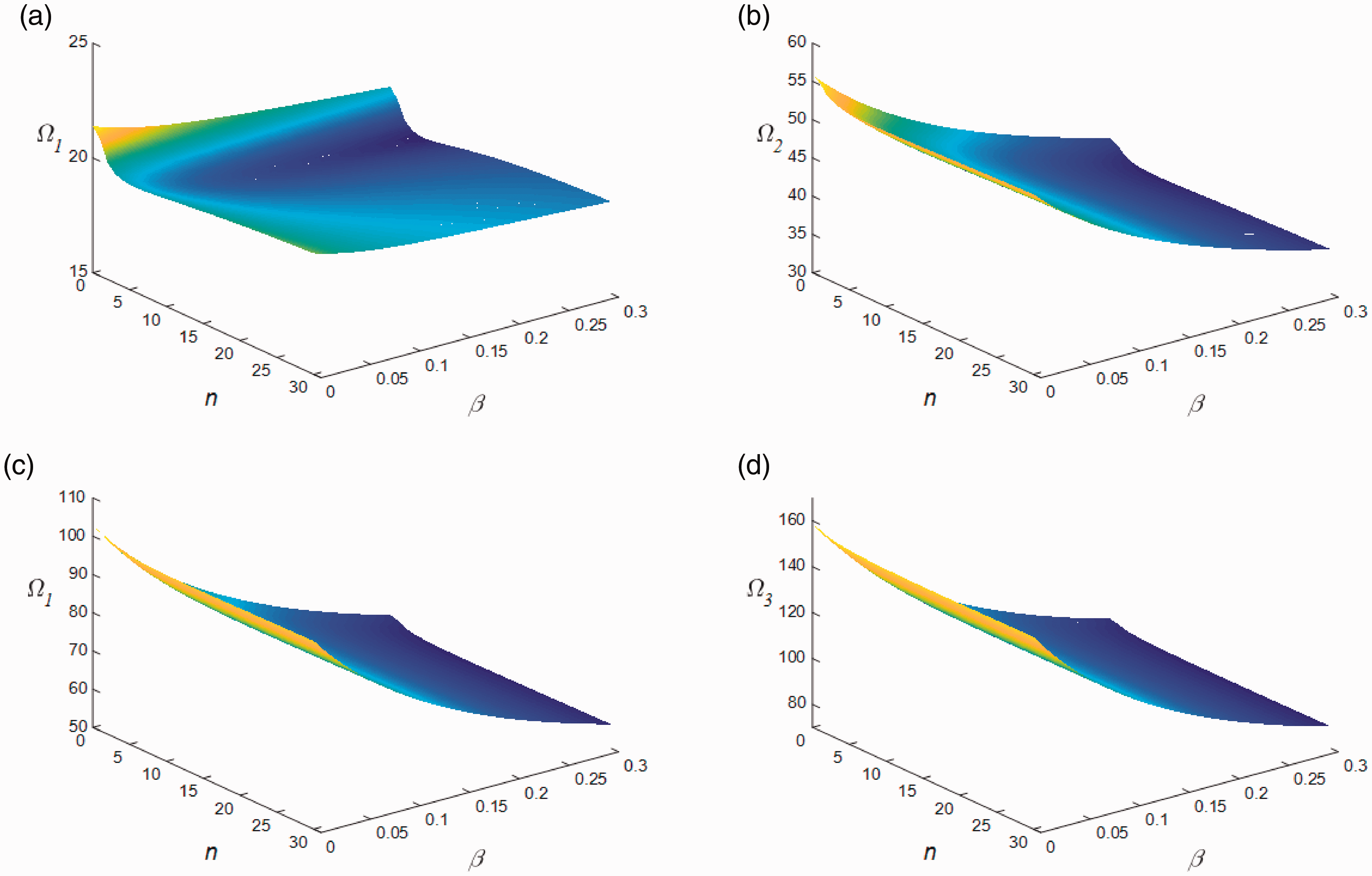
First order non-dimensional natural frequency with different n and
Conclusion
This paper proposed a unified procedure to study the free vibration of an elastically restrained FGMT beam with any variable cross section. The translational displacement and the rotation of cross section are both expressed into the Fourier series with some polynomial functions based on the so-called spectro-geometric method. The cross-sectional area, the second moment of area, the Young’s modulus, the mass density and the shear modulus have also been expanded into Fourier cosine series so that this method could be adopted to analyze any kind of FGMT beams with any variable cross sections. Several examples are introduced to validate the accuracy and reliability of the method. The natural frequencies and the mode shapes of the beams with different ends supports are studied. This method is generally applicable to any kinds of FGM beams with smoothly variable cross section under elastic boundary conditions.
Footnotes
Declaration of conflicting interests
The author(s) declared no potential conflicts of interest with respect to the research, authorship, and/or publication of this article.
Funding
The author(s) disclosed receipt of the following financial support for the research, authorship, and/or publication of this article: This work is supported by the National Natural Science Foundation of China (grant no. 51805341), the Natural Science Foundation of Jiangsu Province (grant no. BK20180843), China Postdoctoral Science Foundation (grant no. 2020M671412) and Jiangsu Planned Projects for Postdoctoral Research Funds (grant no. 2020Z055).
