




Abstract
The influence of the complex pre-stress on the circular plate is investigated herein, with which to solve the non-uniform pre-stress distribution problem. According to the strain–stress equation, the motion differential equations of the circular thin plate with complex pre-stress distribution are derived. Based on the Rayleigh–Ritz theory of energy method, the complex pre-stress distribution function and vibration-displacement function are expanded into the cosine trigonometric series, and the approximate analytical solutions of structural free vibration for circular plate are proposed. A circular plate with simply supported boundary condition, for example, the effectiveness of the proposed method is confirmed through numerical calculations and the finite element method verification. The influence of different type’s distribution of welding residual stress on the natural frequency and mode shape for circular plate structure are compared. The proposed approach in present article can be used in arbitrary pre-stress distribution problem.
Keywords
Introduction
The circular thin plate structure is widely used in marine, aerospace, and automotive engineering. Lots of researches has been devoted to study the free vibration problem of the circular thin plate with theoretical analysis, numerical calculation, and experimental investigation.1,2 Among them, axi-symmetric vibration problems3,4 and nonlinear vibration problems5–8 have become hot research topics. In the numerical analysis, the energy method based on Hamiltonian dual equations or Rayleigh–Ritz method becomes a hot issue in dynamic response analysis of the circular plate structure.9–11 The Rayleigh–Ritz method has extensively gained the attention of researchers because the assumed deflection functions are required to satisfy the geometrical boundary conditions only.12,13
On the other hand, the various form stress usually exists in the continuous structure before it undertakes the work loading, and it is named as pre-stress or initial stress. Pre-stress includes welding residual stress, assembly stresses, and hydrostatic pressure, and so on. These types of pre-stress are defined as complex pre-stress. A large amount of research efforts have been devoted to study the influence of the pre-stress on structural strength and structural fatigue. 14 The existence of pre-stress provides a considerable influence on the local and global stiffness matrices and thus on natural frequencies, mode shapes, dynamic response, and so on.15,16 Nowadays, much of studies focused on models of uniformly distributed pre-stress, such as hydrostatic pressure or water pressure.17,18 However, most of the existing studies are limited to a uniform or specific pre-stress distributions problem; non-uniform pre-stress distributions are often encountered, while the former methods cannot be used to solve this practical complex pre-stress distribution problem.19,20 Welding residual stress is a common non-uniform distribution pre-stress in engineering design and construction. Moreover, few works have stated the solution for the vibration problem of the circular plate with welding residual stress distribution despite its frequent existence in engineering structure. The traditional methods are no longer suitable to solve the free vibration problems with welding residual stress distribution.21–23 To the best of the author’s knowledge, few works have investigated the vibration characteristic problem of circular plate with welding residual stress distribution despite its wide existence in engineering design and manufacturing. Thus, it is necessary to analyze the vibration characteristic of the circular plate with non-uniform pre-stress distributions, and the Rayleigh–Ritz method is an effectiveness method to deal with this problem. 24
The main objectives of the present study are to provide an efficient approximate analytical solution for circular plate structure with non-uniform complex pre-stress distributions. The proposed method can analyze the dynamic response behavior of the arbitrary pre-stress distribution problems for the circular plate structure, such as with/without pre-stress distribution, local area or overall pre-stress distribution, and non-uniform pre-stress distribution. The remainder of the present work was organized as follows: the basic model of the circular plate with pre-stress distribution was demonstrated in the second section; the motion differential equation for the circular plate with pre-stress distribution was discussed in the third section; the Rayleigh–Ritz method was discussed in the fourth section; the approximate analytical solution of the circular plate with pre-stress distribution was established in the fifth section; the illustration of the feasibility for the proposed method and the numerical results and comparison analysis of natural frequency and mode shape were presented in the sixth section; finally, the conclusion was drawn in the final section.
Pre-stress model
An elastic isotropic circular plate is used to establish a pre-stress distribution model, in which the pre-stress value varies with different locations. Some assumptions are made as follows: the fluid-structure coupling problem is omitted; the pre-stress and stresses caused by vibration satisfy the linear superposition principle; vibration satisfies the small elastic deformation condition; pre-stress is uniformly distributed in the thickness direction; and structural stress is perpendicular to the cross section in vibration and remains constant during vibration.
A polar coordinate system
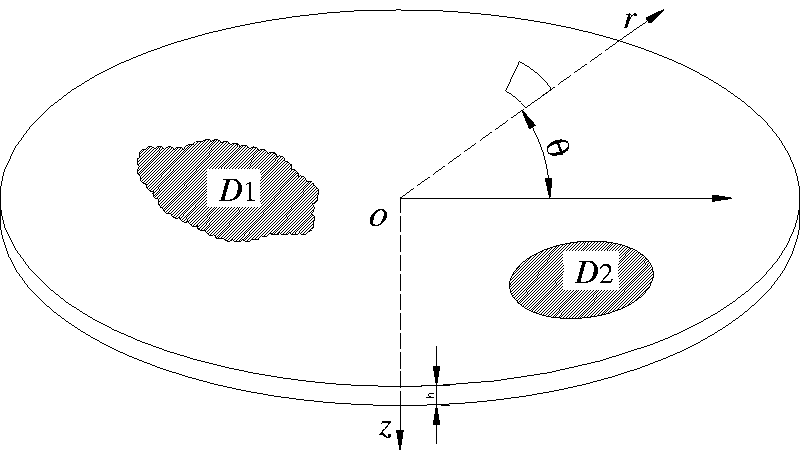
Schematic of circular thin plate.
The circular plate structure is distributed with complex pre-stress, as shown in Figure 1. D1 and D2 are the pre-stressed domain. Stress σ in the circular plate structure can be expressed as

Based on the Kicrhhoff plate theory, for the thin structure plate,

If only the r-direction pre-stress
Differential equations of pre-stressed circular plate
The relationship between structural stress and strain with complex pre-stress distribution for the circular plate structure is examined in this section.
Force analysis of element body
The forces and moments that act on the element body consist of two parts when the circular plate structure is vibrating, that are, the force and moment caused by the vibration displacement and the coupling force caused by the vibration displacement and pre-stress.
An element body with the size of
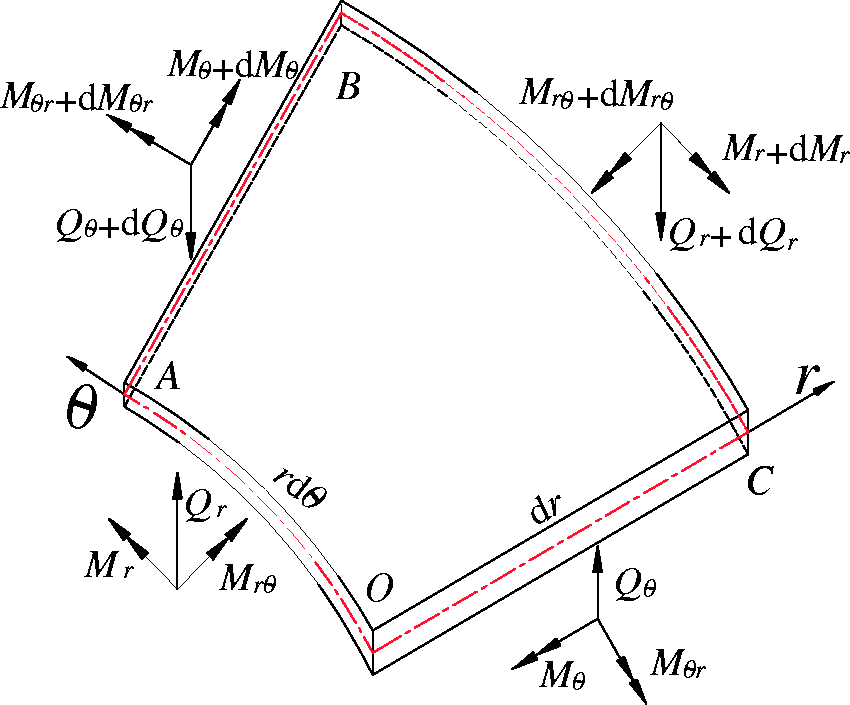
Section force and moment caused by vibration.
Coupling force analysis
It is assumed that the complex pre-stress remains constant during structural vibration. In the cross section of element body, the neutral plane is defining as unit length (shown in Figure 2). In the course of structural vibrating, the distance in z direction between curve OA and curve OC to the neutral plane is

Thus, the section area along the curves OA and OC in unit length can be expressed as
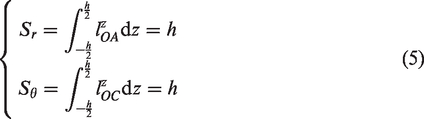
According to equation (5), the section area along the curve OA and OC remains constant in unit length during the structural vibrating based on the principle of equal volume. Since it is assumed that the pre-stress force remains constant during the structural vibrating, then the section tensile forces
The displacement
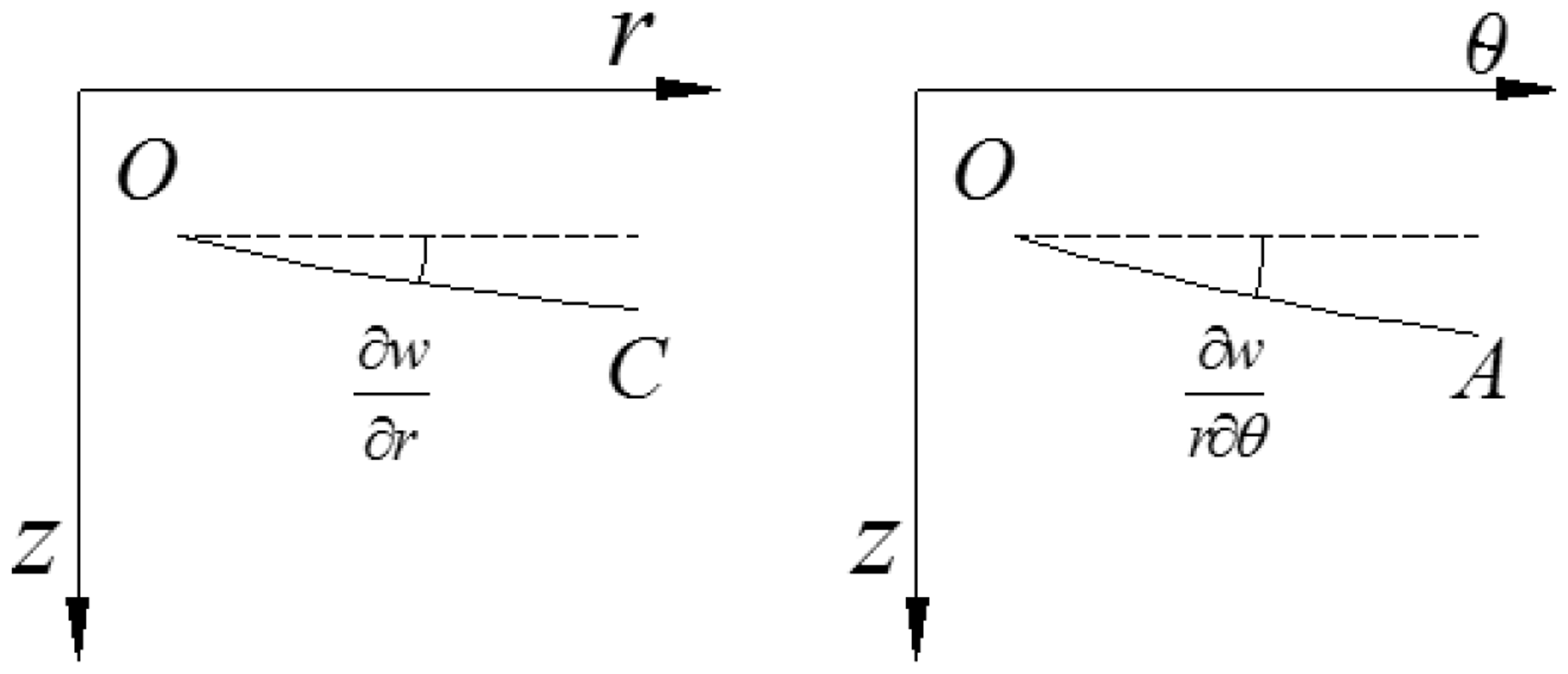
Element body angle.
There exists angles
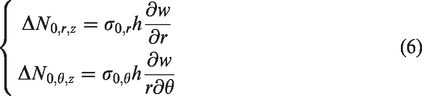
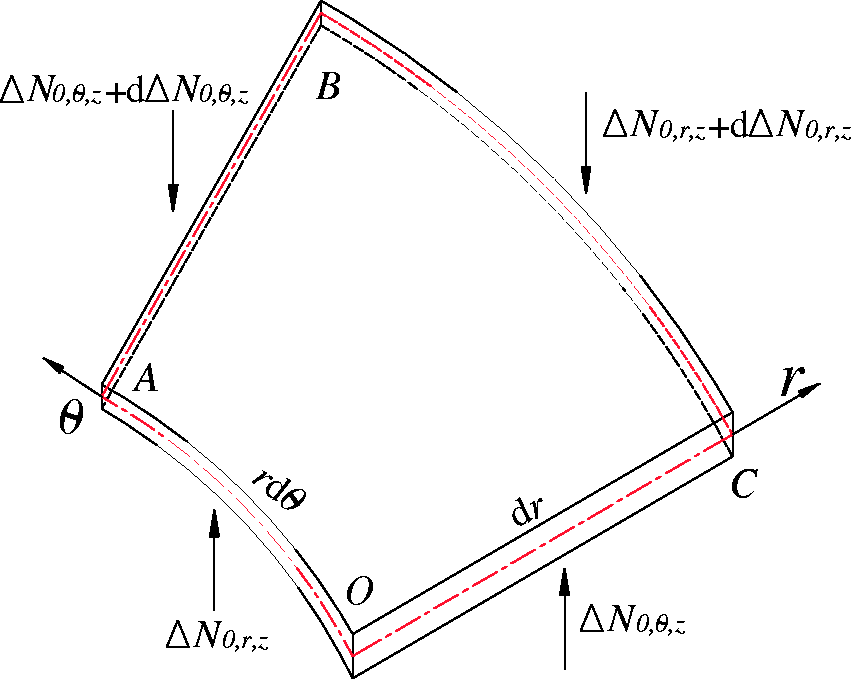
Element body coupling force.
Pre-stress is constantly perpendicular to the cross section of the element body. The coupling force caused by the pre-stress force and vibration displacement exists in the r- and θ-directions. Any type of coupling and torques moments does not exist in any direction by the pre-stress vector. The coupling force caused by the pre-stress and vibration displacement in the z-direction affects the force balance equation of the element body.
Vibration equation of circular plate with complex pre-stress distributions
According to the derivation above, it is clear that there exists coupling forces in the circular plate during structural vibrating which is caused by coupling pre-stress and vibration displacement. The vibration equation should be modified, and the coupling forces must be considered in the equilibrium equations.
Force equilibrium equation in the z-direction
Without coupling, forces are generated in r-direction and θ- direction, and the force equilibrium equations in the r-direction and θ-direction are still satisfied, automatically. The force equilibrium equation in the z-direction and the moment equilibrium equations need to be established.
In the element body of the circular plate structure, two shear forces

Moment equilibrium equations
No coupling or torque moments are considered in the element body, and then the element body forces in the r- and θ-directions are omitted. The moment equilibrium equations in these directions can be expressed as
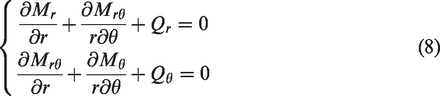
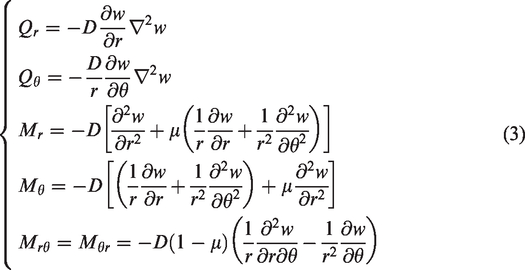
Simultaneously, equations (7) and (8) yield

The vibration differential equation of the circular plate with complex pre-stress distribution can be expressed as a partial differential equation by substituting equation (6) into equation (9), as shown as follows



Comparison with the classic motion equation of the circular plate without a complex pre-stress will be considered, and the coupling item
Rayleigh–Ritz method
The Rayleigh–Ritz energy method is an approximate method based on the principle of minimum potential energy, and it has the advantage of simplicity and accuracy. According to the principle of conservation theory of energy, the total potential energy of circular plate is satisfied by Rayleigh–Ritz method

The displacement function

Based on the minimum potential energy theory, these undetermined coefficients minimize the total potential energy

According to equation (14), the coefficients
Approximate analytical solution of motion equation
The analytical solution of the free vibration problem of circular plate structure is discussed in this section.
Boundary condition
The physical boundary conditions of the circular plate include the free boundary, simply supported boundary, fixed boundary, and so on. The simply supported boundary is discussed in the present work, and it can be expressed as
Displacement function
For the isotropic circular plate structure, the pre-stress and vibration displacement are axi-symmetric in this study, and the amplitude varies along the r-direction and remains unchanged along the θ-direction. The vibration displacement function that satisfies the boundary condition is written into trigonometric series

Pre-stress form
The pre-stress
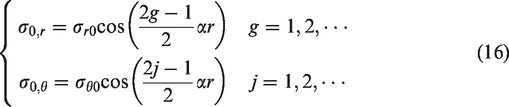
If the pre-stress
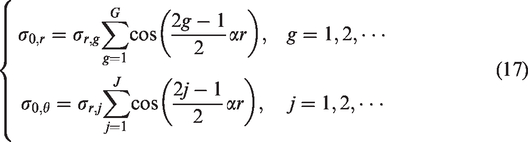
Total potential energy of pre-stressed circular plate
The method of energy method is used to solve the structural free vibration problem of circular plate with pre-stress distribution. Strain energy includes two parts: the strain energy
According to the polar coordinates system, the simply supported boundary condition of the circular plate can be written as
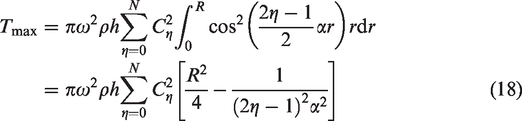
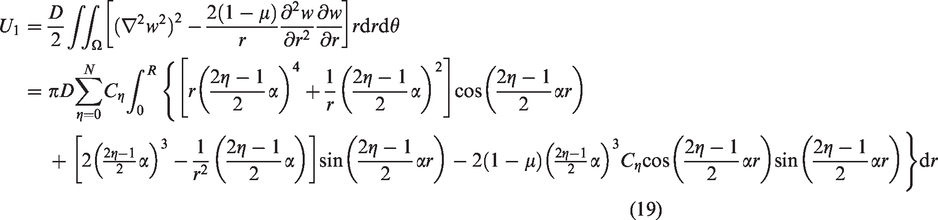
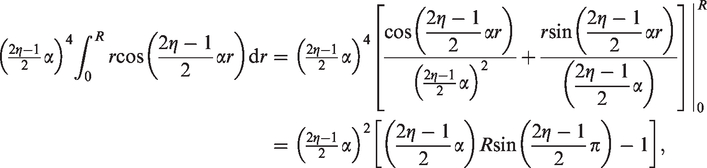
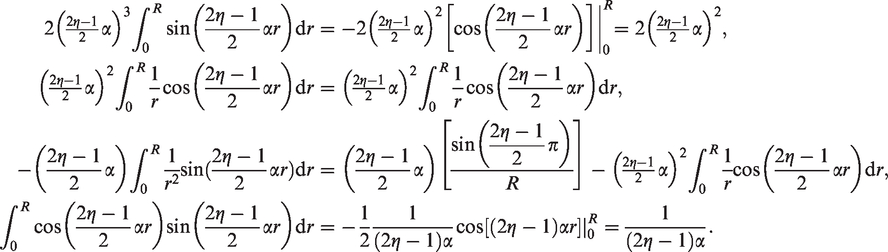
Then equation (19) can be expressed in a short form as follows

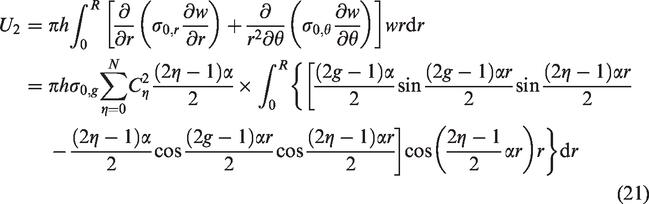
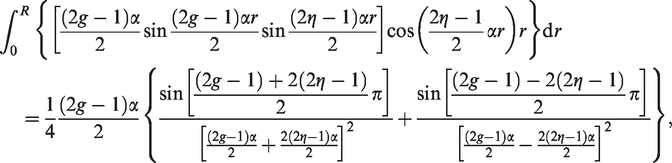
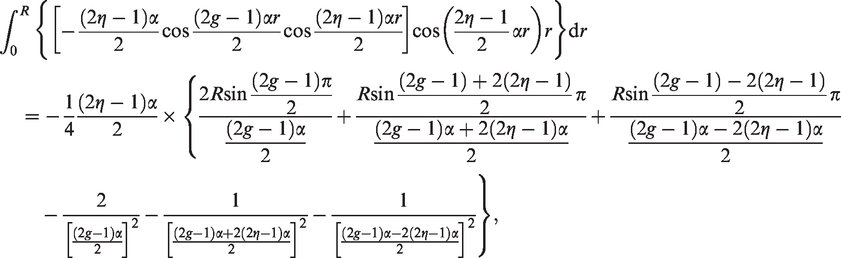
Then equation (21) can be expressed in a short form as follows
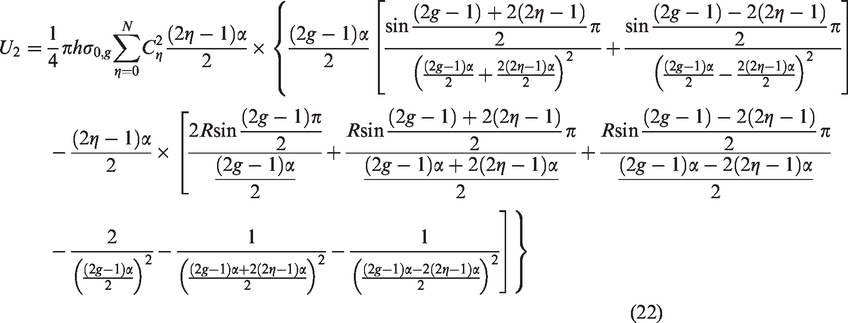
Vibration equation solution
The total potential energy of the circular plate with pre-stress can be obtained by substituting equations (18), (20), and (22) into equation (12)
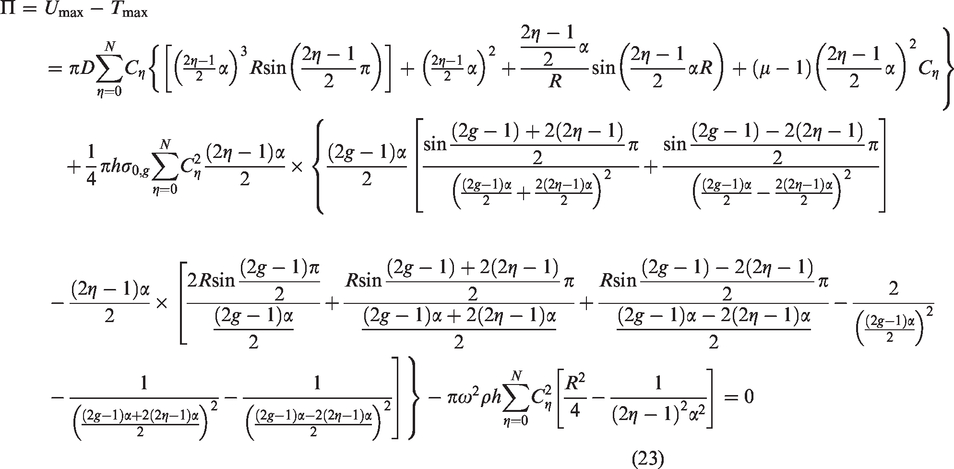
In equation (23), the parameter g can be determined according to formula (23). By analysis the function
Numerical analysis
The structural modes and the natural frequency problem of the circular plate structure with complex pre-stress force distribution were discussed in this section.
Model description
The boundary condition of the circular plate structure is a simply supported boundary, as shown in Figure 5. The parameters of the circular plate structure are defined as follows: the radius of the circular plate R is 300 mm, and the plate thickness is 5 mm. The material of the circular plate is steel with the following mechanical performance parameters: density ρ = 7800 kg/m3; modulus of elasticity
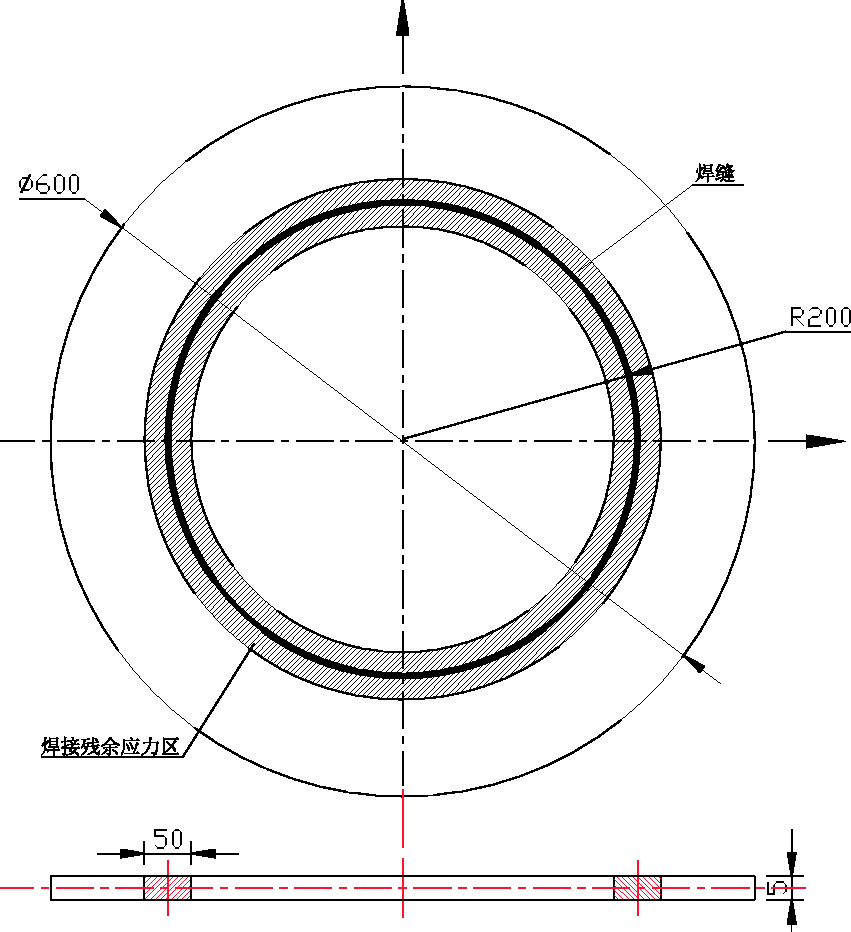
Distribution of welding residual stress.
In the circular thin plate, the circumferential weld seam is located at r = 200 mm. Welding residual stress exists near the seam welding, and the welding residual stress is self-balanced pre-stress. The influence of welding residual stress depends on its magnitude and distribution domain, and the width of the welding stress distribution domain is 50 mm in this study, as shown in Figure 5.
Welding residual stress distribution model
The distribution parameter of welding residual stress can be obtained by numerical calculation or experimental measurement.25,26 In this study, the distribution characteristic of welding residual stress on the circular plate was gained by simulation analysis using finite element method (FEM) and Marc code.
The radial direction and circumferential direction welding residual stress were considered. The variation of the welding residual stress in the thickness direction is neglected for simplicity, and the welding residual stress
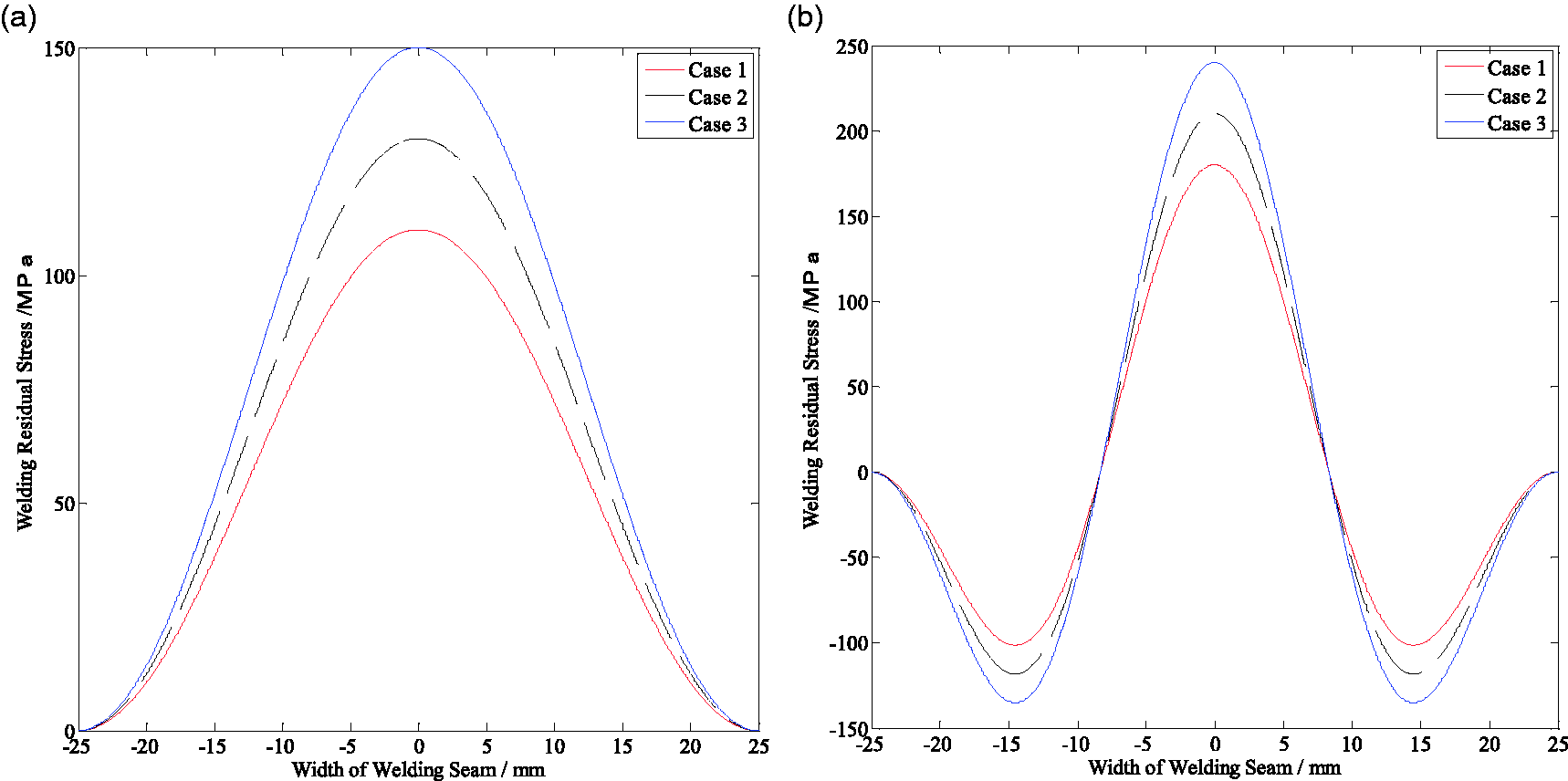
Welding residual stress of circular plate: (a) welding residual stress in radial direction; (b) welding residual stress in circumferential direction.
Natural frequencies
The Matlab R2013 is used to analyze the structural free vibration of the circular plate, the influence of welding residual stress on natural frequency are compared, and the first 10 natural frequencies of the circular plate structure are shown in Table 1.
The first ten natural frequencies under different weld residual stress amplitudes.
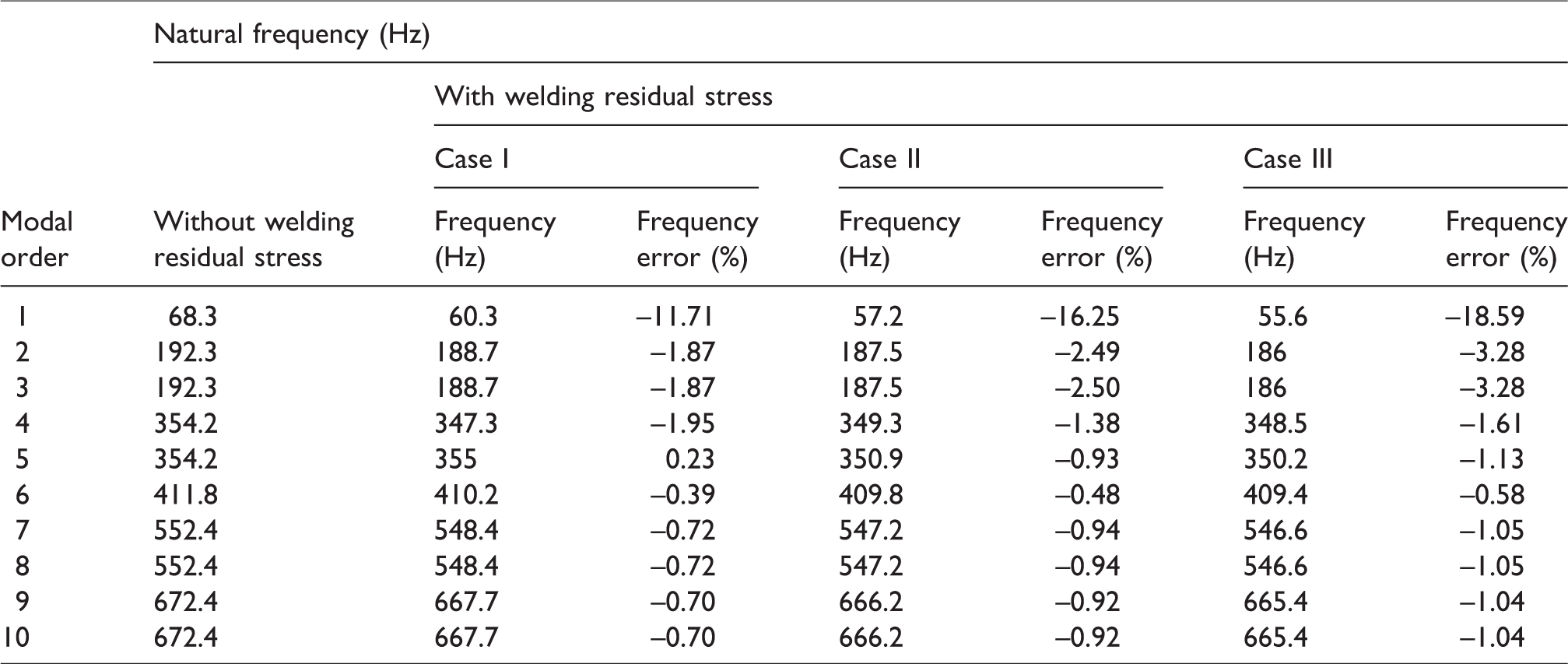
Table 1 has shown that the amplitude of the weld residual stress has a considerable effect on natural frequency, especially in the first order. The variation magnitude of natural frequencies increases with the pre-stress amplitude. The tensile pre-stress will increase the natural frequency of the structure, and the compressive pre-stress will decrease the natural frequency. Meanwhile, the relative influence of the welding residual stress on the natural frequency decreases with the increase in the model order.
On the other hand, due to the self-balance characteristic of welding residual stress, it includes compressive stress part and tensile stress part in different location. Therefore, at different modes, the natural frequencies of the structure will increase or decrease, which reflects the difference of the frequencies of different orders. This result can be attributed to the decrease in the overall structural strength of the circular plate caused by the existing pre-stress, particularly near the seam welding.
Mode shape
The influence of welding residual stress on the mode shape is analyzed, as shown in Figure 7. The structural mode shapes of first to sixth order are compared. The first figure is the mode shape without welding residual stress distribution, and the other models have welding residual stresses distribution. The influence of welding residual stress on vibration mode is mainly reflected in the vicinity of welding stress distribution domain.
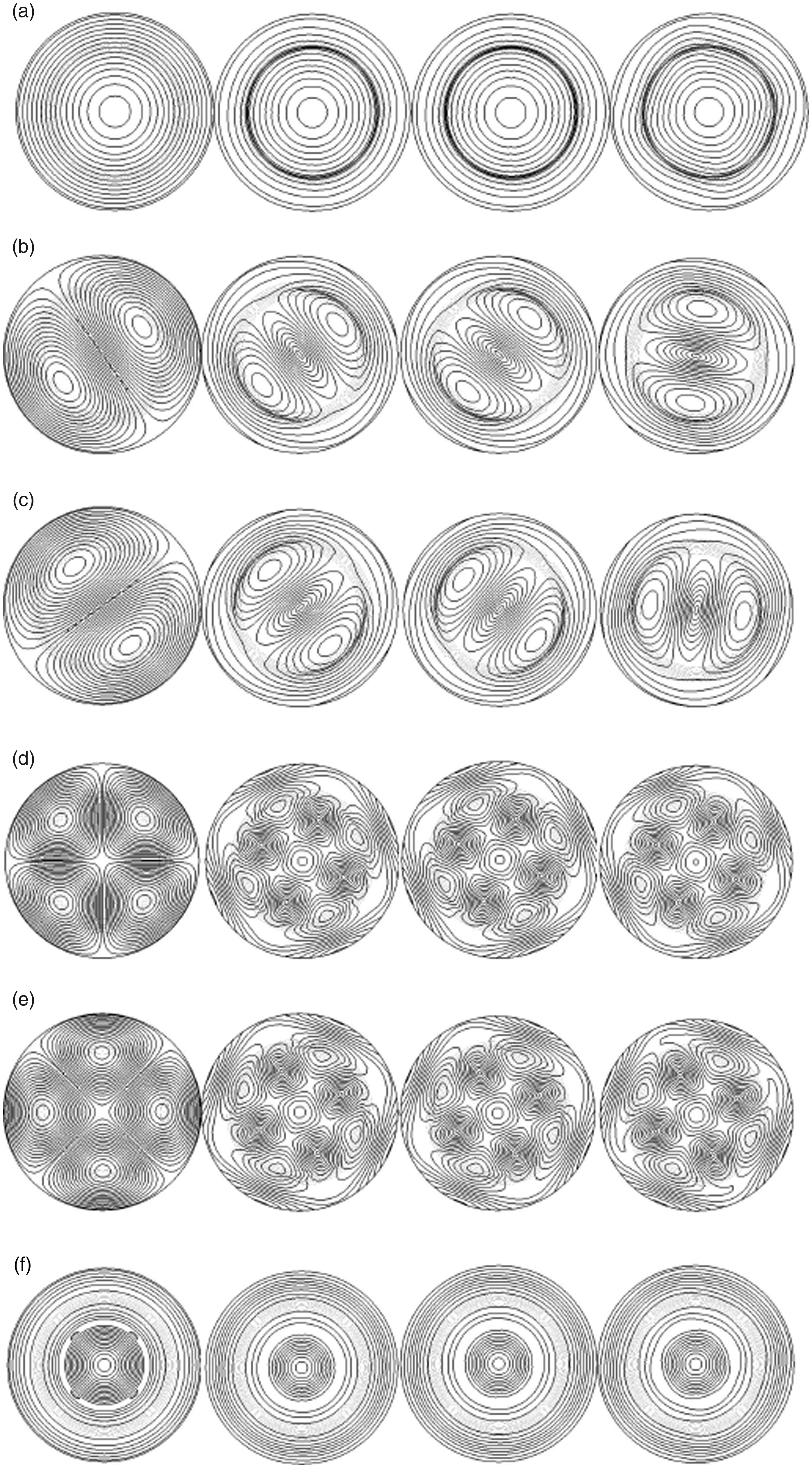
Mode shape in different pre-stress distributions: (a) first mode; (b) second mode; (c) third mode; (d) fourth mode; (e) fifth mode; (f) sixth mode.
As shown in Figure 7, since the weld seam is circumferential, the distribution of welding residual stress is axi-symmetric. Therefore, the mode shapes of the circular plate have the characteristic of axi-symmetric, particularly in the first mode, fourth mode, and fifth mode. The influence of the welding residual stress on the mode shape increases with the amplitude because the overall structural strength of the circular plate decreases due to the existing pre-stress, particularly near the seam welding.
In addition, the mode shapes of the circular plate change, particularly in the welding residual stress area, due to the welding residual stress: in the first- or sixth-order mode shape, some modes of mutation appear in the welding residual stress distribution area; in the second- to fifth-order mode shapes, some modal mutations appear at the center of the circular plate, although the area is far from the seam welding; in the fourth- and fifth-order mode shapes, modal mutations appear periodically in the seam welding.
Method verification
The accuracy and advantage of the proposed method are validated by comparing its results with the FEM results. The FEM commercial code, Abuqus 2012, is applied to analyze the natural frequency of the circular plate structure. The design parameters are the same for the analytical solution method and FEM. Figure 8 shows the finite element model.
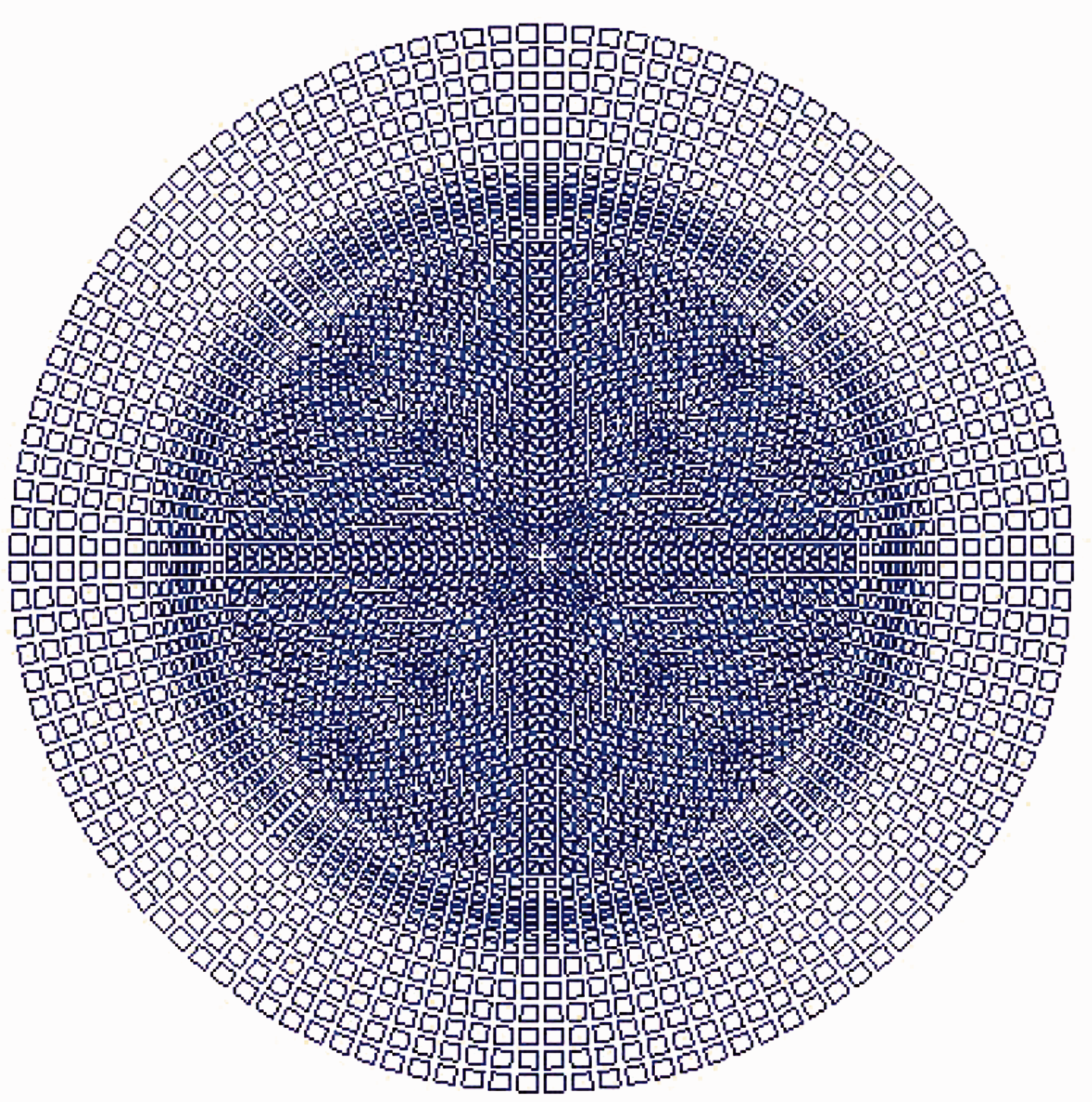
Finite element model of the circular plate structure.
The comparison results of the natural frequencies between the proposed method and FEM are shown in Table 2.
Comparison of the presented method and FEM.
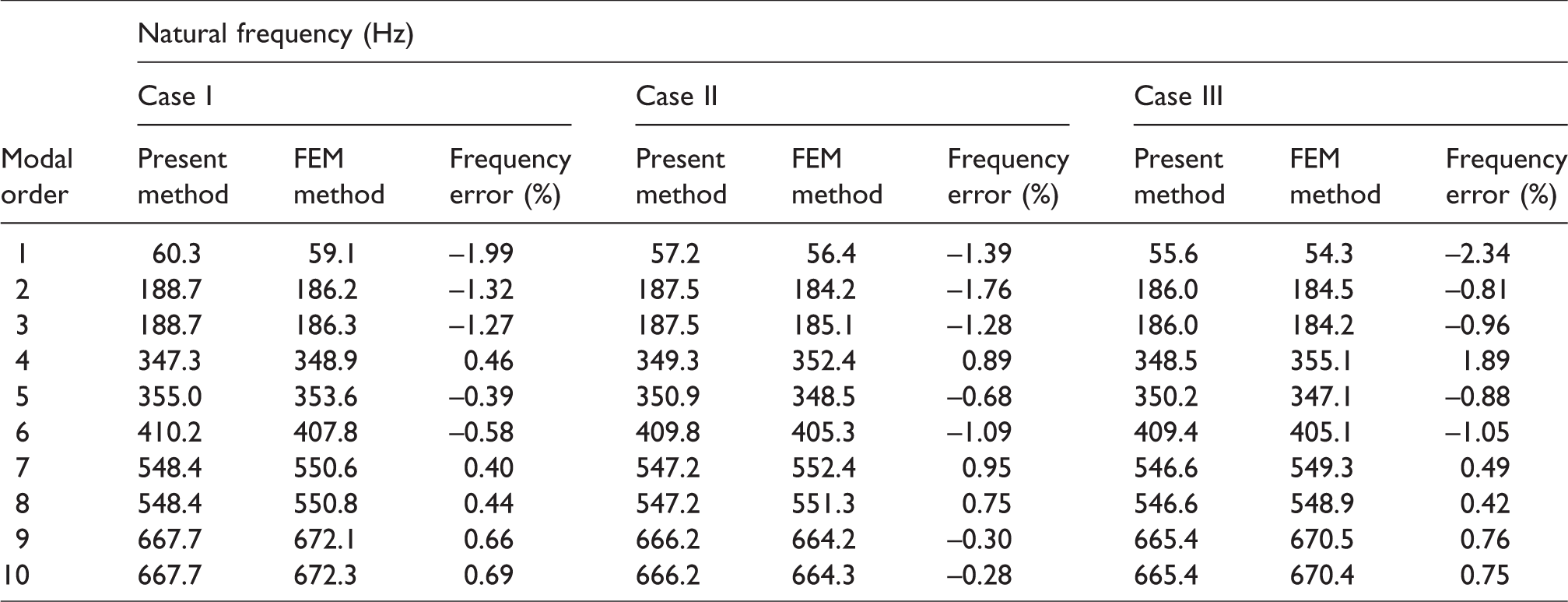
Table 2 has shown that the results obtained by the proposed method and the FEM agree well, particularly in the high-frequency band, which verifies the validity of the proposed method. Generally, these results show that the proposed method is accurate and that its results are reliable. On the other hand, the welding residual stress cannot be fully fitted to the welding residual stress curve in the finite element model due to mesh density, thereby leading to the difference between the theoretical and finite element solutions.
Conclusion
The vibration equation with complex pre-stress (welding residual stress) distribution for a circular plate is derived. By defining the mode shape function, the approximate solution of free vibration is obtained by energy method, and the influence of welding residual stress on the circular plate structure is compared. The results of this study provide a novel approach to analyze the influence of non-uniform distribution pre-stress on the structural vibration problem and expand the research domain of pre-stress problem.
Footnotes
Declaration of conflicting interests
The author(s) declared no potential conflicts of interest with respect to the research, authorship, and/or publication of this article.
Funding
The author(s) received financial support from the State Key Laboratory of Ocean Engineering for the research, authorship, and/or publication of this article.