




Abstract
The sluice pier prototype vibration test conducted in China Shuhe Hydropower Station shows that the vibration response of the measuring points exhibits a special form of vibration, which demonstrates intermittency and impact under high-speed flood discharge excitation. The waveform envelope increases or decreases sharply with time and shows the formation of beat vibration. Research on the mechanism of this type of vibration is rare. To analyze the characteristics and causes of the obvious beat phenomenon in the testing of the sluice pier prototype, we conduct research in the following manner. First, mathematical models of synthetic signals are built to analyze the influences of initial phase difference, frequency ratio, and amplitude ratio and determine the beat vibration formation condition. Second, the stochastic subspace identification method is used to identify the operational modal parameters (including the vibration order, frequency, damping ratio, and mode of vibration) on the basis of the measured prototype dynamic response. Last, the internal causes of the beat vibration phenomenon are analyzed based on the combination of the formation conditions of apparent beat vibration. Results show that the vibration of Shuhe sluice pier is dominated by the first two frequency components. The vibration frequency ratio is between 0.928 and 0.962 and satisfies the necessary conditions of beat vibration. The amplitude ratio is between 0.66 and 1.63 and thus makes the waveforms of beat vibration highly evident.
Introduction
A sluice guarantees the safe operation of hydro-junctions during flood discharge periods. Random vibration often occurs in sluice piers during flood discharge periods because a sluice is usually designed as a light thin-wall structure. However, a strong beat vibration phenomenon that possesses the features of intermittency and impact was observed in the Shuhe sluice pier prototype vibration test during flood discharge periods, and the waveform envelopes of the vibration response increased or decreased dramatically over time. The vibration amplitude of sluice piers caused by beat vibration increases significantly in certain periods and thus affects the normal operation of the sluice. This type of vibration occurred in the spillway guide wall of the Wujiangdu Hydropower Station (located in the main stream of Wujiang River in Guizhou Province, China) in 1984. Especially for the Shuhe Hydropower Station (located in the main stream of Hanjiang River in Shaanxi Province, China), it has affected the normal operation of this project. Beat vibration is a new form of vibration in hydraulic field, so it is necessary to analyze the causes of it. However, the mechanism of this beat vibration has not been explained because of the lack of observation data. Thus, exploring the characteristics and formation mechanism of this type of vibration is important for the safe operation and management of the projects and the design of new hydraulic projects.
Several scholars have investigated the physical definition and formation mechanism of beat vibration. The synthesis conditions of beat vibration can be obtained with the rotating vector method. 1 Simulation analysis and experiments have also been conducted on small frequency differences in beat vibration to extend the traditional theory of two-beat vibration to multi-source beat vibration and thereby obtain the rangeability and fundamental frequencies of such vibration. 2 Studies on beat vibration in the Ertan arch dam (located in the Yalong River in Sichuan Province, China) under flood discharge excitation have proven that the phenomenon appearing in a part of the measuring points on the arch ring is caused by the first two mode shapes of the arch dam. The phenomenon of random vibration is generated because of the low frequency of water flow load and the first two working frequencies of the dam being in the scope of the flow load frequency, but the calculation of the first two vibration amplitudes has not been fully explored.3–5 The problems of beat vibration and resonance in hydraulic machinery have been discussed, and the essential features of beat vibration and resonance and the differences in disturbing and inherent frequencies have been analyzed. As a result, a new perspective toward beat vibration and resonance production has been proposed. 6 A previous study conducted a theoretical analysis and calculation of the stability of a hydro-automatic flap gate to determine the causes of self-excited unstable vibration under the hydraulic conditions of sluice gates. 7 In engineering vibration, vibration forms, such as beat, are not new. Studies have proven that when the high-frequency components of the wave force are close to or integral multiples of the natural frequencies of the structure, the structure exhibits high-frequency resonance under the action of extreme waves. This form of vibration is detected regularly in the time history of the measured wind vibration response. 8 The relationship between the vibration characteristics of cables in cable-stayed spatial structures and tower columns, cables, and space structures has also been investigated. When the natural frequencies between tower columns and spatial structures are approximately the same but slightly different from those of cables, the vibrations of the cables present the characteristics of “beat.” 9 The phenomenon of beat vibration in the coupling system can be explained well by introducing the mass matrix into the structure–fluid damping coupling system. 10 In this study, Shuhe Hydropower Station was used to analyze the phenomenon of beat vibration occurring in the measurements of the sluice pier. The formation conditions of beat vibration were determined by constructing a mathematical model, and the characteristics of such vibration were analyzed based on the results of modal parameters identified and measured on the sluice pier. The reasons for such characteristics were also provided.
Phenomenon of beat vibration on the sluice pier of Shuhe Hydropower Station
Basic situation of prototype tests
Shuhe Hydropower Station is located on Hanjiang River in Shanxi Province, China. It is one of the large-scale step hydropower stations on Hanjiang River. The sluice and its powerhouses are arranged separately, with the powerhouse dam section on the left side and the spillway dam section on the right side. Five sluice gates are arranged from left to right and numbered #1–#5. The prototype hydropower station is shown in Figure 1. The width and height of the sluice orifice are 13 and 23.8 m, respectively, and the length of the lock chamber is 54 m. The bottom is designed with a broad crest weir. The altitude of the weir top is 193.5 m, and the thickness and the height of the pier are 4.5 m and 36.5 m.
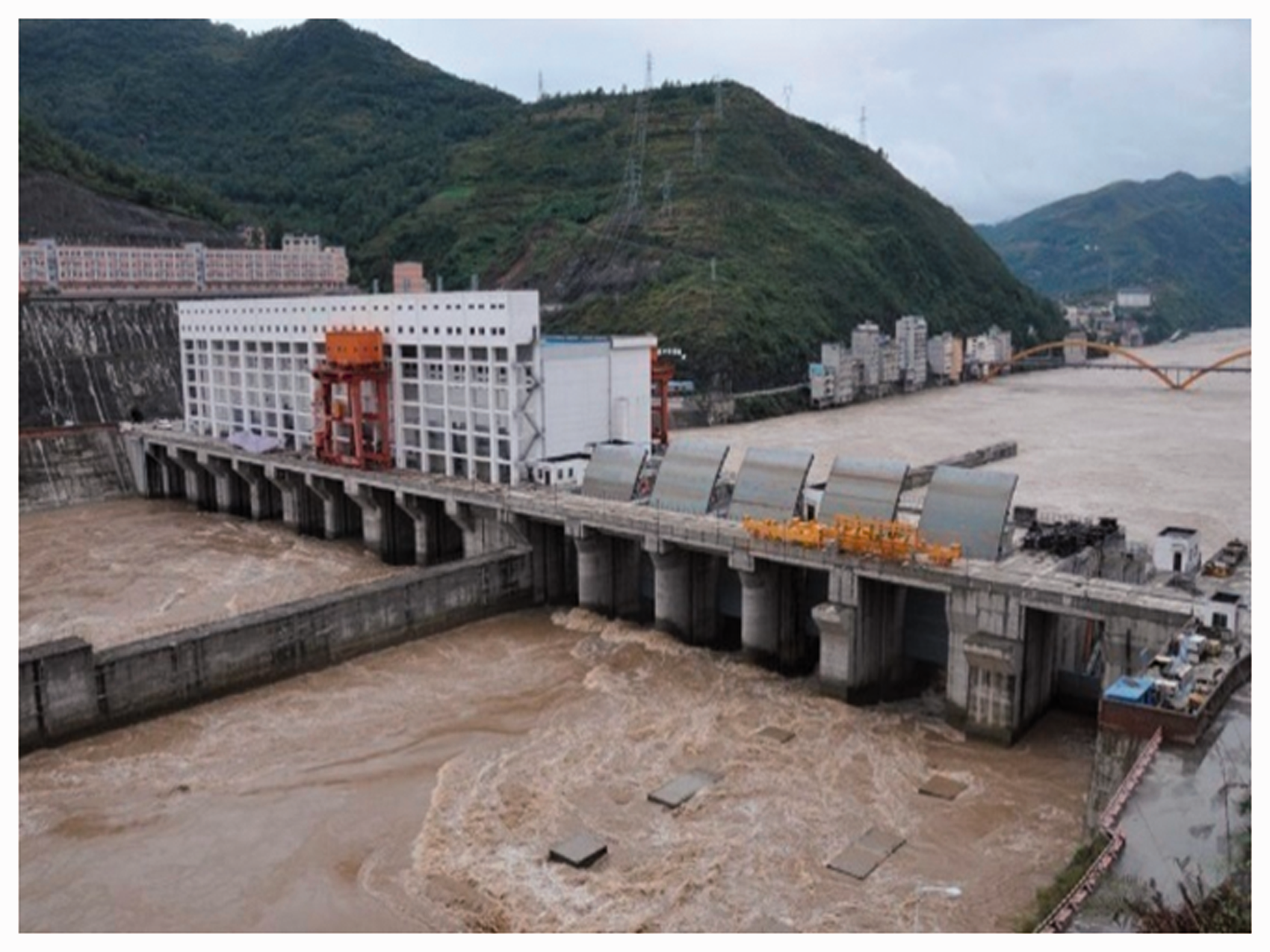
Shuhe Hydropower Station project.
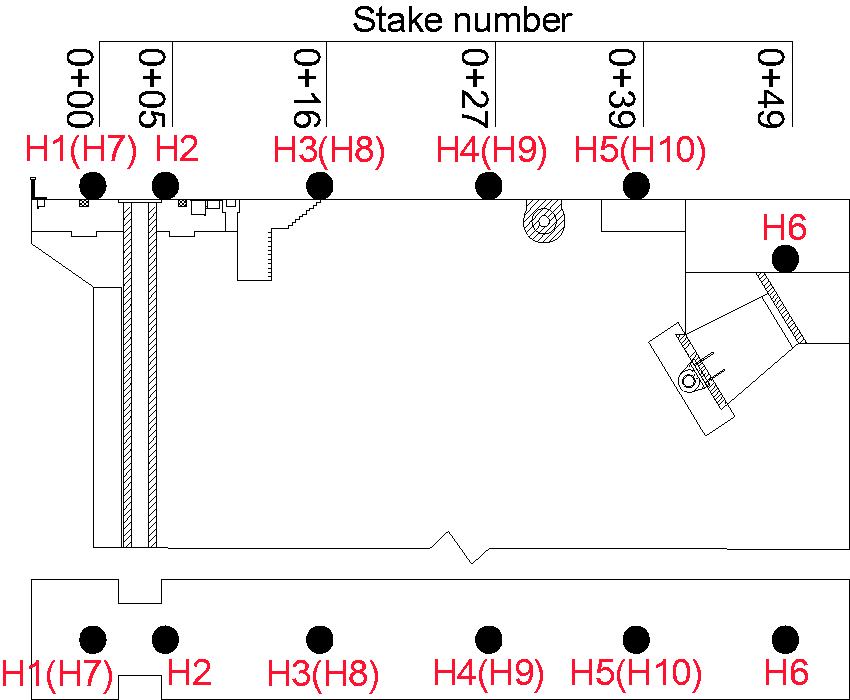
Sensor arrangement on the sluice pier.
The right and left sluice piers of the #2 sluice orifice were selected as the test objects in the prototype vibration tests. Sensors are arranged by using QR decomposition and modal assurance criterion (MAC). 11 As shown in Figure 2, 10 measuring points were arranged on the top of the sluice piers. Six measuring points were on the left side and numbered H1–H6, and the stake numbers were 0 + 00, 0 + 05, 0 + 16, 0 + 27, 0 + 39, and 0 + 49. Four measuring points were on the right side and numbered H7–H10, and the stake numbers were 0 + 00, 0 + 16, 0 + 27, and 0 + 39. The direction of the dynamic displacement of the test was transverse to the flow direction (lateral). The vibration sensor was a DP-type dynamic displacement sensor (Figure 3). The DP-type is a seismic transducer consisting of a seismic pick-up of moving coil type which has a much higher natural frequency and a low frequency extension (correcting) circuit. The output characteristics of DP-type sensor are similar to those transducer, but the natural frequency is 1/20–1/100 of the pick-up used, and the range of low frequency measurement is effectively extended. Sensor sensitivity can be adjusted according to the requirements. The sensor contains an integrating circuit, and its output will be proportional to the vibration amplitude. The physical principle for this sensor is explained in these works.12–14 The frequency response range of the sensor was 0.5–200 Hz, and the sensitivity was 5 mV/µm. The Data Acquisition and Signal Processing (DASP) system (Figure 4) was used at a sampling frequency of 50 Hz. In the three tested working conditions, the duration of the collected time series is 81.9 s, and the time interval of the adjacent sample points is 0.02 s. These conditions are listed in Table 1.
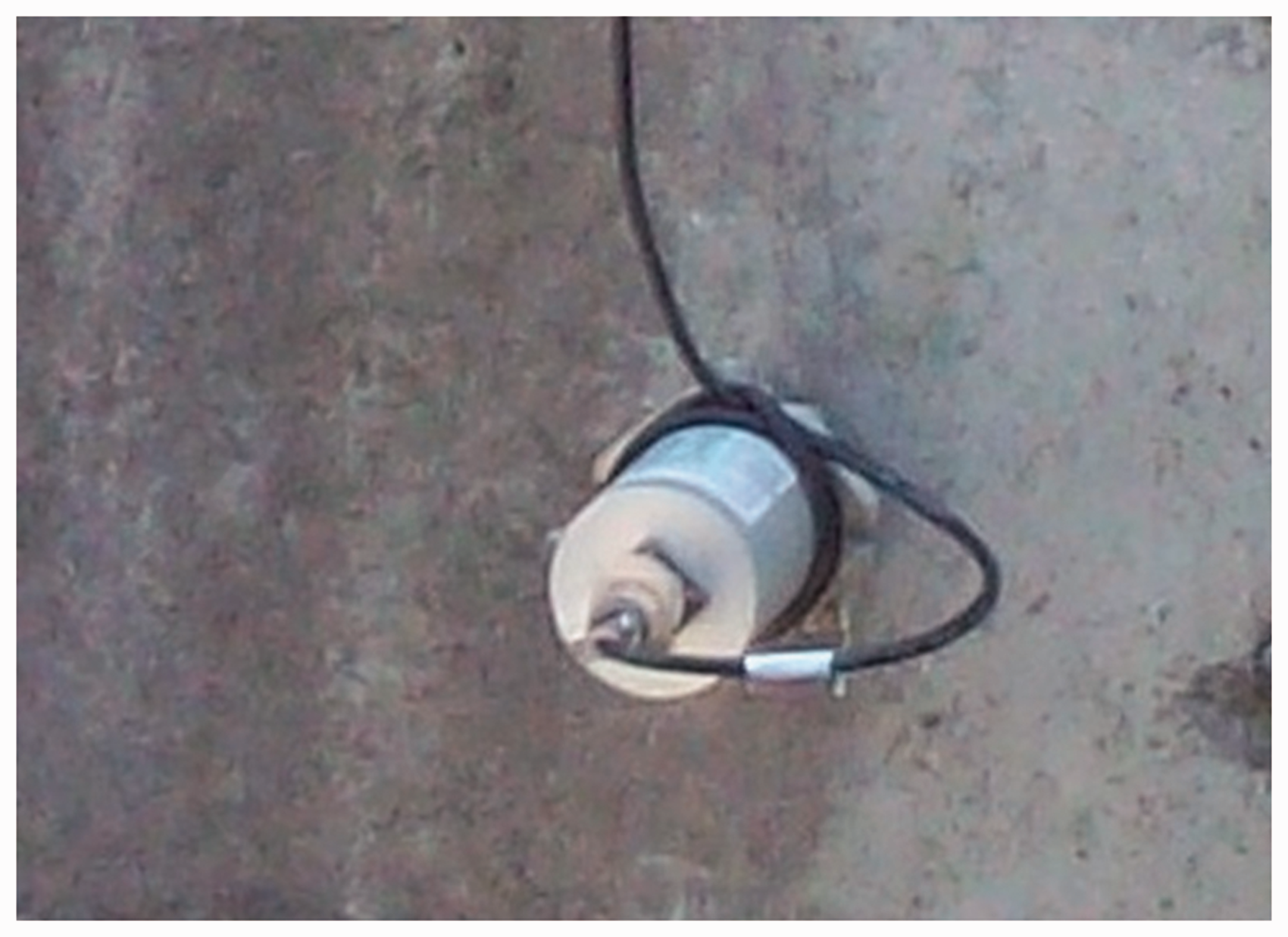
DP-type dynamic displacement sensor.
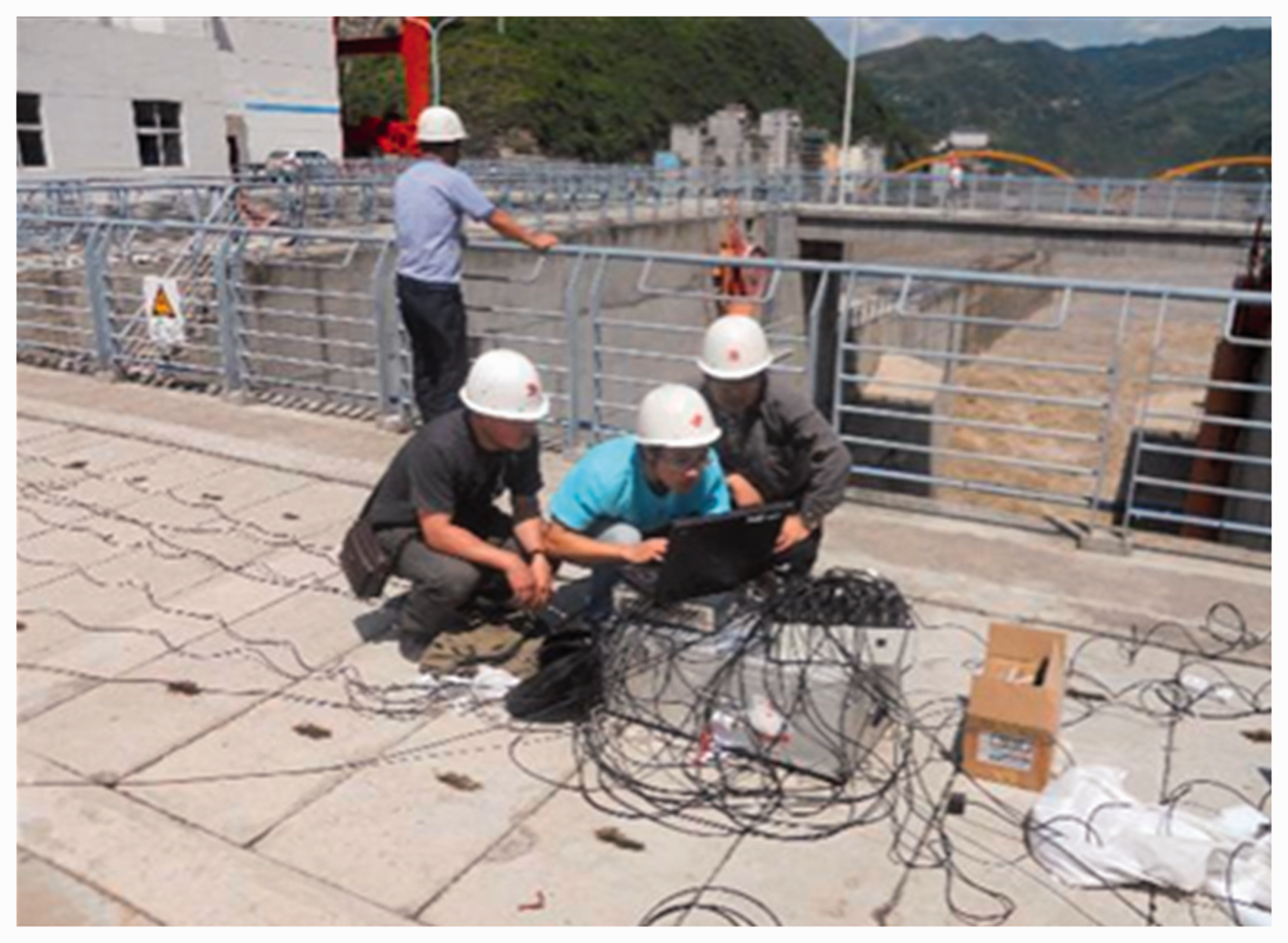
DASP signal acquisition system.
Sluice prototype vibration test conditions.

Beat vibration waveforms of typical measuring points
By analyzing the time history line of the dynamic displacement responses of the measuring points on the sluice pier under conditions 1–3, we detected a phenomenon similar to beat vibration at several measuring points, including point H4 on the left pier and point H9 on the right pier on condition 1, point H3 on the left pier and point H9 on the right pier on condition 2, and point H3 on the left pier and point H8 on the right pier on condition 3, as shown in Figures 5 to 10. The maximum amplitudes under three conditions are listed in Table 2.
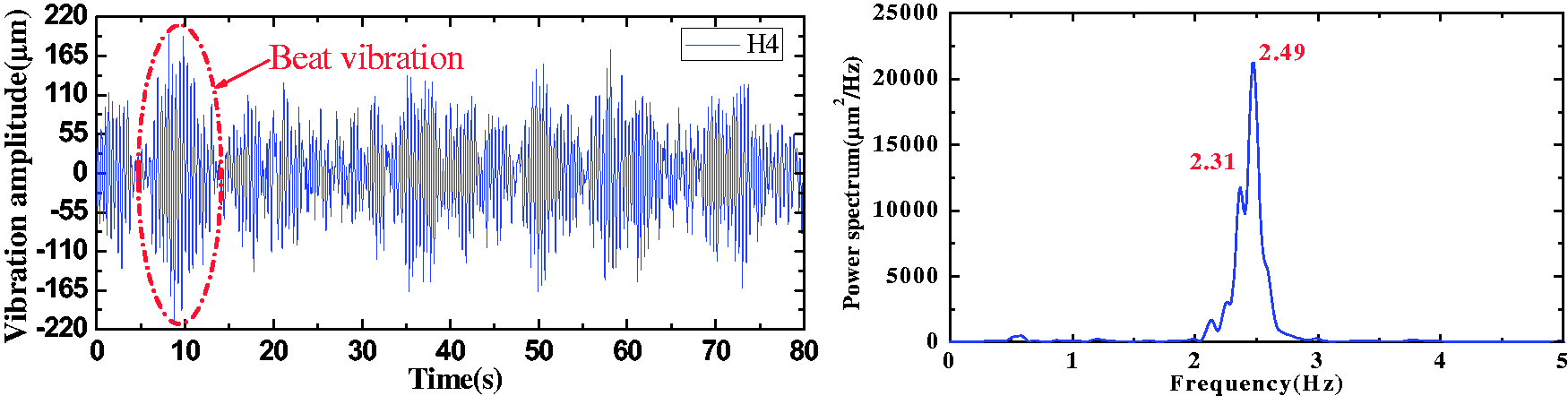
Dynamic displacement time history and power spectral density curve of measuring point H4 on condition 1.
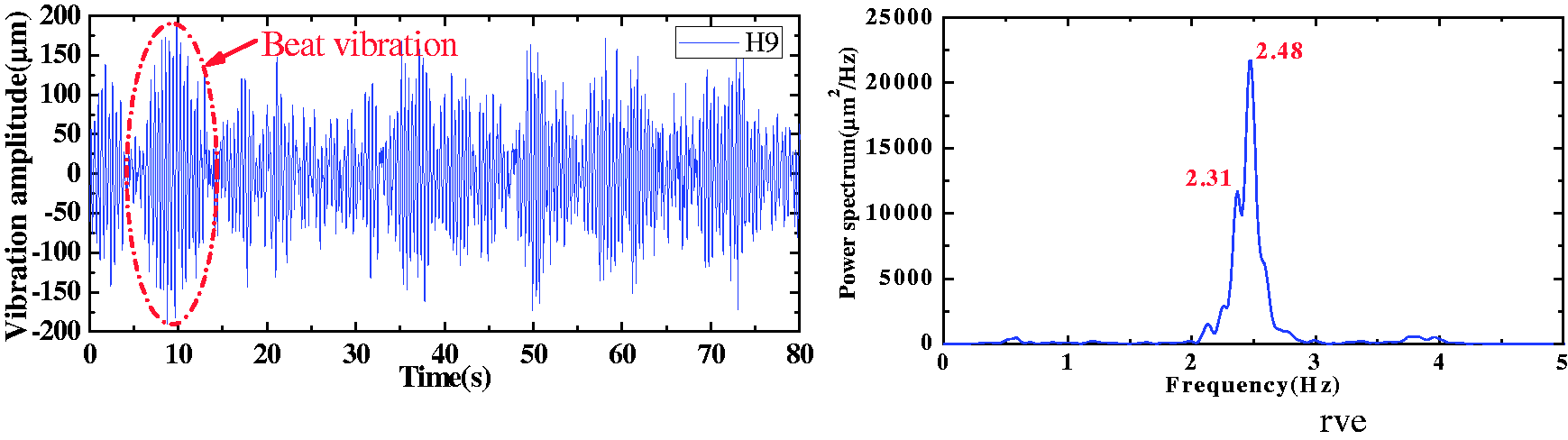
Dynamic displacement time history and power spectral density curve of measuring point H9 on condition 1.
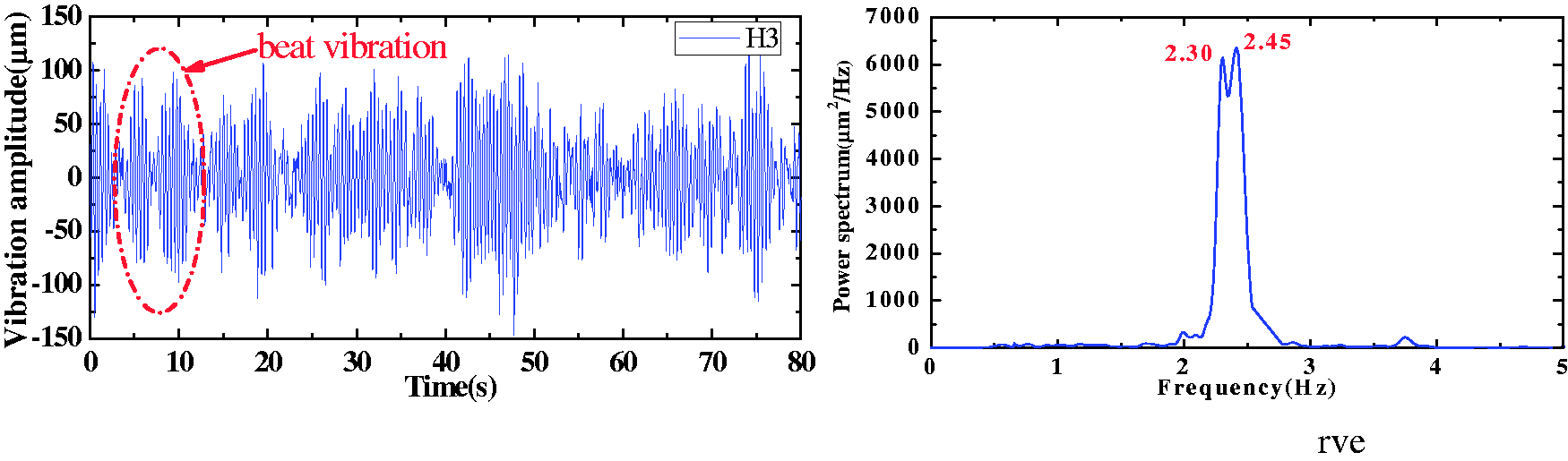
Dynamic displacement time history and power spectral density curve of measuring point H3 on condition 2.
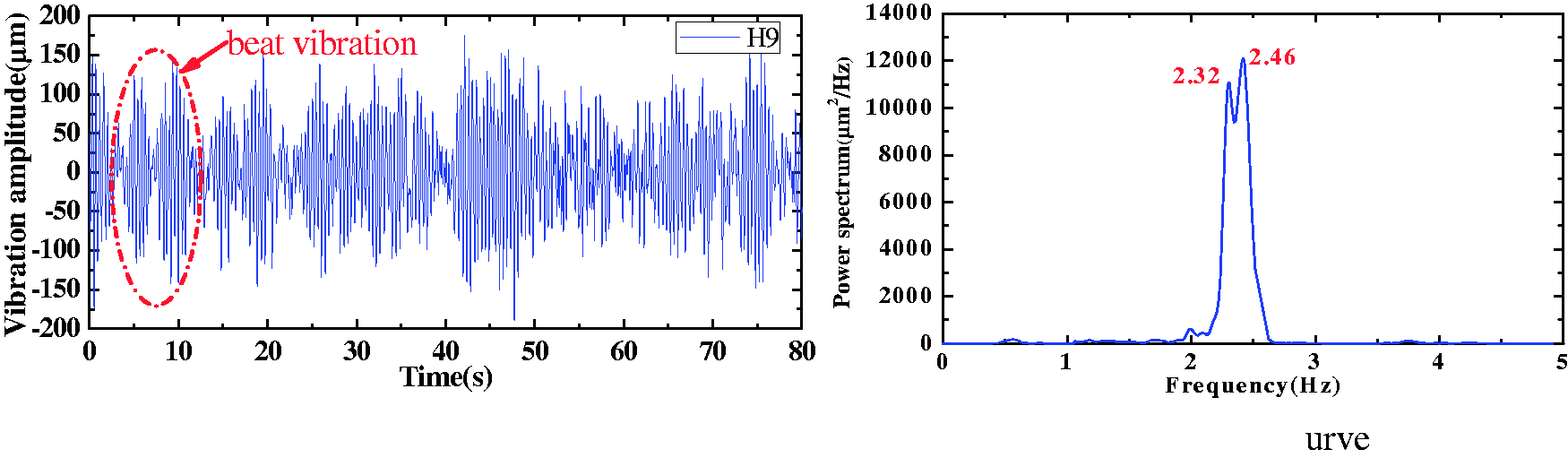
Dynamic displacement time history and power spectral density curve of measuring point H9 on condition 2.
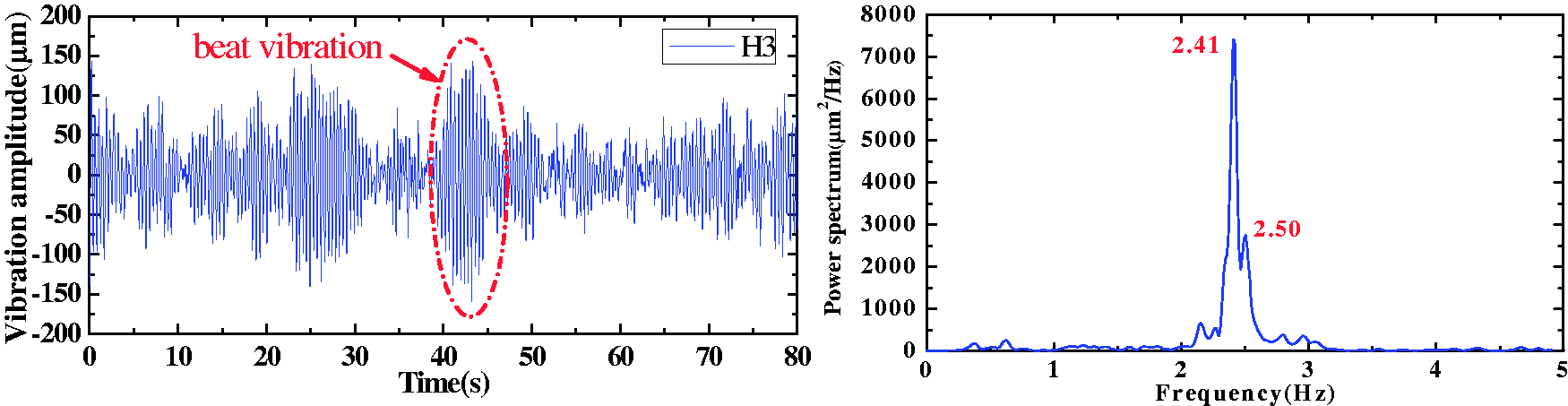
Dynamic displacement time history and power spectral density curve of measuring point H3 on condition 3.
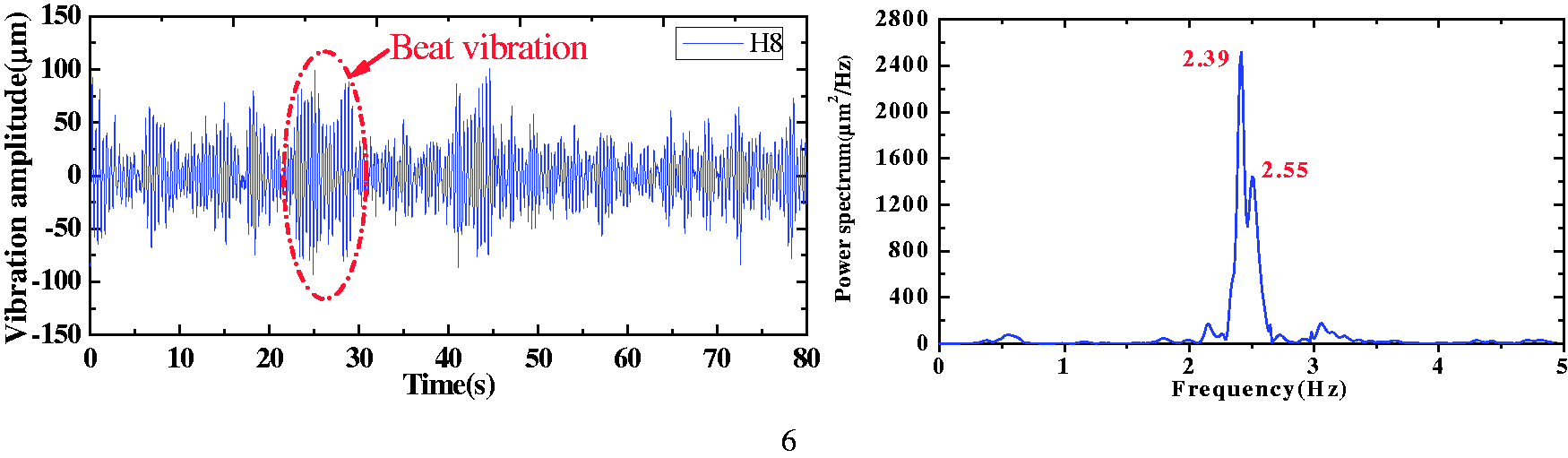
Dynamic displacement time history and power spectral density curve of measuring point H8 on condition 3.
The maximum amplitudes under three conditions.

These figures show that the time history of dynamic displacement responses on the measuring points of the left and right sluice pier exhibited considerable synchronization under the same condition. Obvious beat vibration also occurred in the time history curves of response on the selected measuring points under all conditions. Mathematical models of the vibration signals were constructed, the influencing factors were analyzed, and the formation conditions were determined to examine the characteristics and causes of the phenomenon.
Formation conditions of beat vibration waveforms
When two columns of simple harmonic vibration in the same direction with negligible difference in frequency are superimposed, the amplitude of the superimposed vibration waveform changes slowly and cyclically over time. This phenomenon is called “beat.” The two columns of harmonic vibration signals are defined as x1(t) and x2(t) in this study to analyze the formation conditions of the beat vibration waveforms




According to equations (3) and (4), the amplitude A of the synthetic signal changes periodically with the cycle
Influence of initial phase difference ϕ20 – ϕ10 on the synthetic waveforms of beat vibration
This study analyzed the influence of the initial phase difference ϕ20 – ϕ10 on synthetic vibration, with amplitude ratio
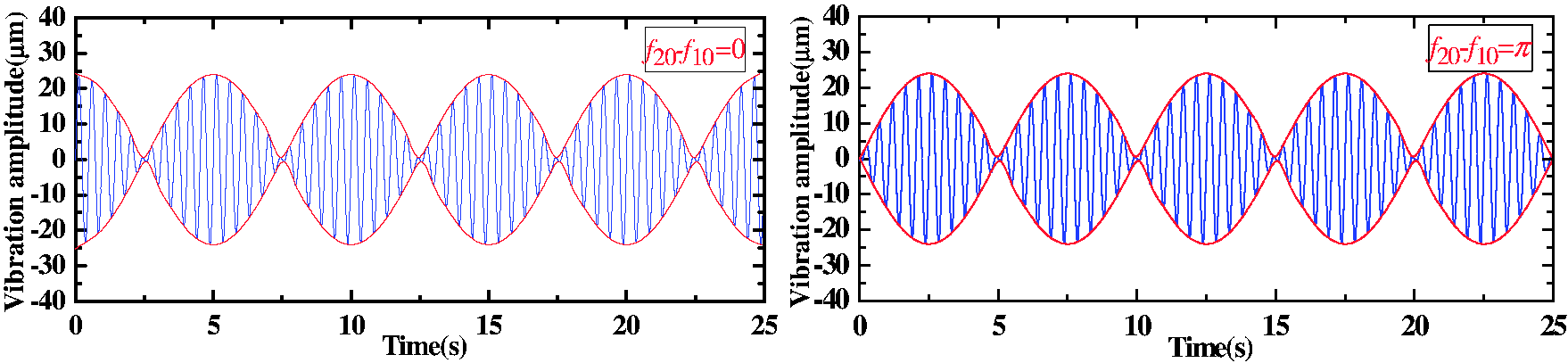
Synthetic signal waveform with different initial phase differences.
Influence of frequency ratio
on the synthetic waveforms of beat vibration
Amplitude ratio 
Using equation (5), the time-varying cycle T1 of the synthesized signal is 
According to 
Then, frequency ratio 
The number n must take different values when observing the waveforms of the synthesized signals to determine the value range of frequency ratio
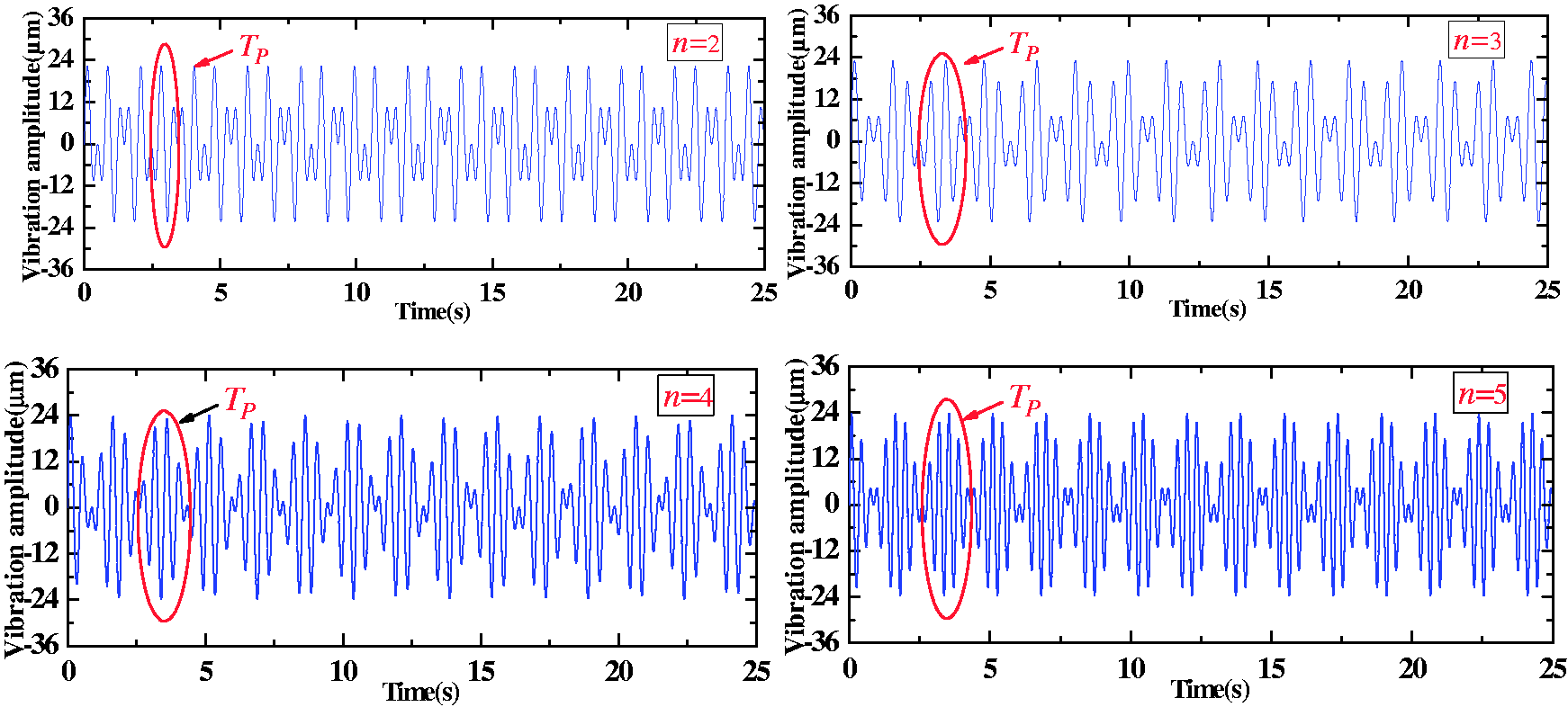
Vibration waveforms with different frequency ratios.
Influence of amplitude ratio β on the synthetic waveforms of beat vibration
Amplitude ratio
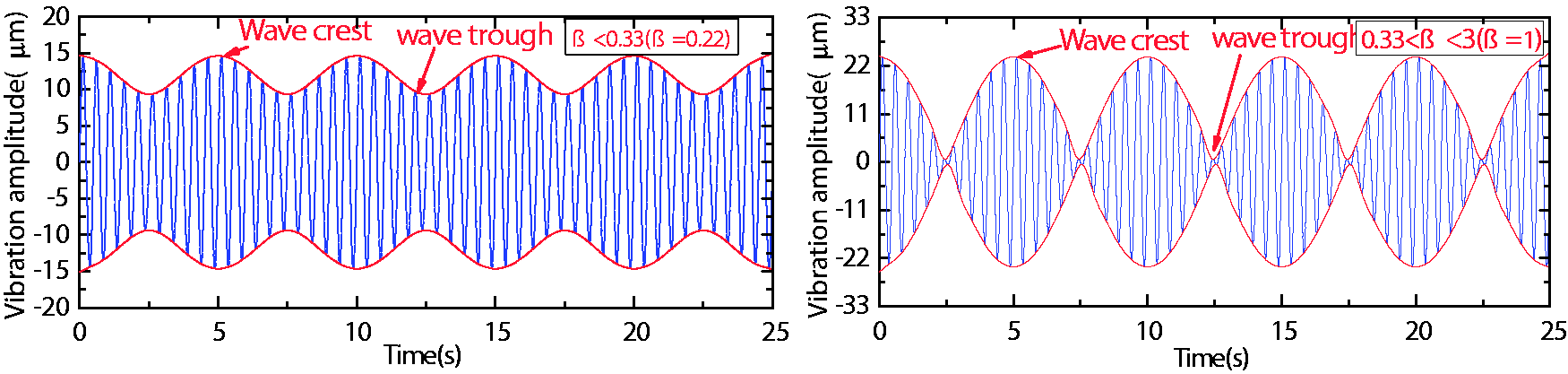
Vibration waveform with the amplitude ratio.
In summary, beat vibration appears in the synthesized signals only when the frequency ratio
Prototype working modal parameter identification of the sluice
Stochastic subspace modal identification method based on the order selection of singular entropy
The stochastic subspace method proposed by Van Overschee 15 is an identification method based on linear discrete space equations and is currently one of the most accurate methods to identify structural modal parameters based on environmental incentives. On this basis, singular entropy was used in this study to determine the vibration order and identify the multi-order modal parameters of the structure accurately. The basic principle16,17 is as follows.
The structure being tested is assumed to have m measurement points, and the data length of each measurement point is j. These response data are combined to form a 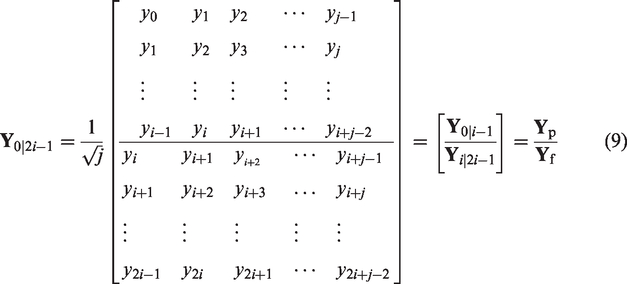
The QR decomposition method is used to reduce the data of the Hankel matrix, according to projection theory. After the row space of 
According to stochastic subspace identification (SSI) theory, projection matrix 

The state space equations are expressed as follows

Given that the Kalman-filtered state vector and output are known and the residual matrix is unrelated to the estimated sequence 
The eigenvalue decomposition of system matrix 
The relation of eigenvalues between discrete and continuous time systems is expressed as follows

The relationship among modal eigenvalues 
The mode shape can be expressed as

The modal parameters of the structure can be extracted from system matrix
The excited structural vibration order, which is one of the most important parameters, was obtained using the previously presented method to identify the structural working modal parameters. When the input excitation is unknown, the structural working modal parameters are also unknown. In the SSI method, the structural vibration order is determined by SVD to projection matrix 
By contrast, when the signal has a low signal-to-noise ratio, matrix 
The amount of information of the structural vibration signal can be objectively reflected by the matrix 

Assuming that
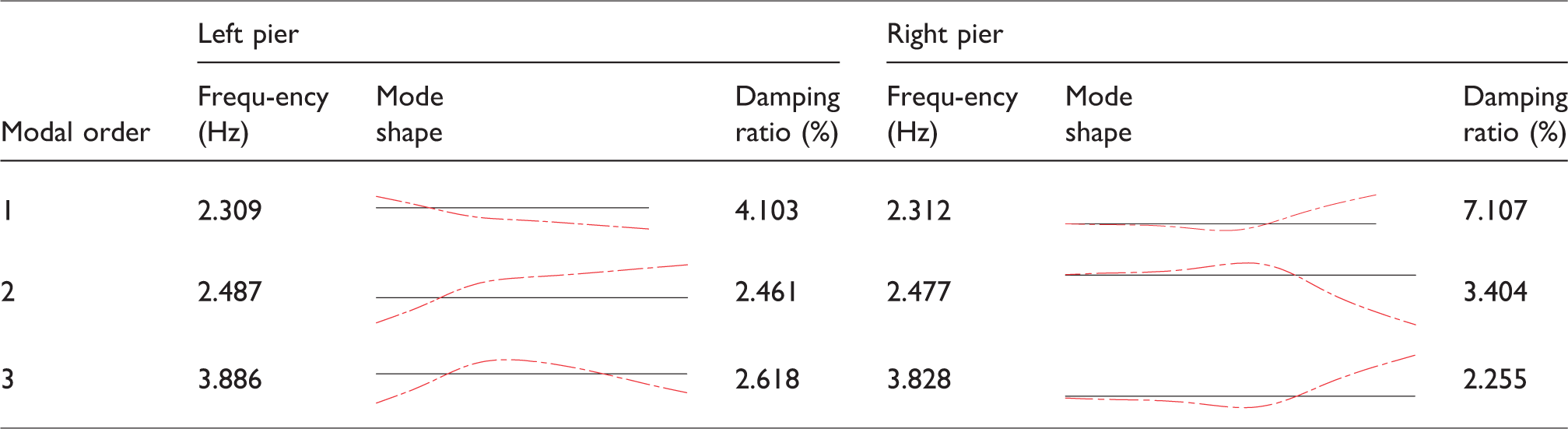
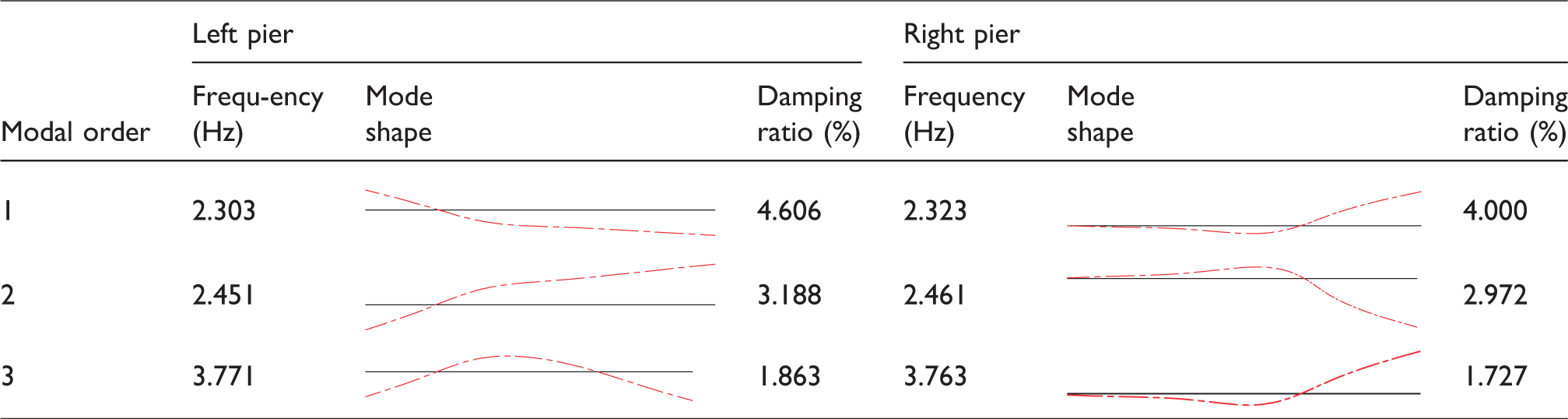
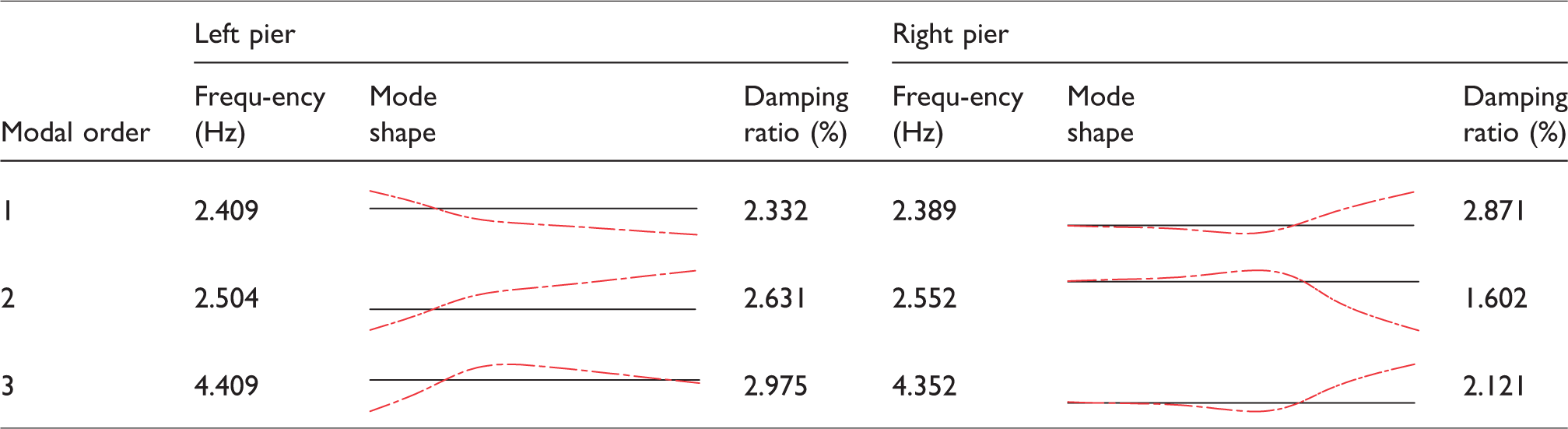
Modal identification results
On the basis of this method, the measured vibration response time history of measuring points H1–H10 on conditions 1–3 of the sluice pier was taken as the input. Then, working modal order determination and modal parameter identification were conducted. The calculated results, including the singular entropy increments changed with orders for the left and right sluice pier of the second hole on the three conditions, are shown in Figures 14(a) to 19(a). From the resultant pictures, the characteristic information of the signals has been saturated when the singular entropy increments are reduced to asymptotic value, and the order of the singular spectrum can be determined to be 7. After eigenvalue decomposition of the system matrix
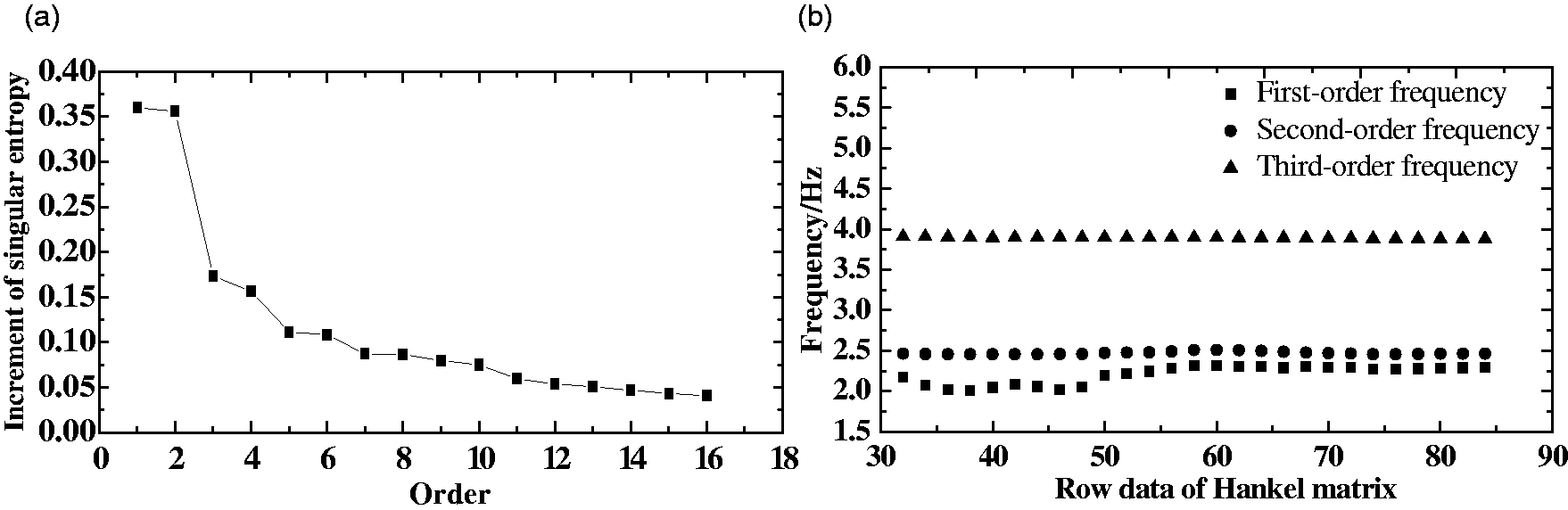
Singular entropy increment changed with orders and frequency stabilization diagram for the left sluice pier on condition 1.
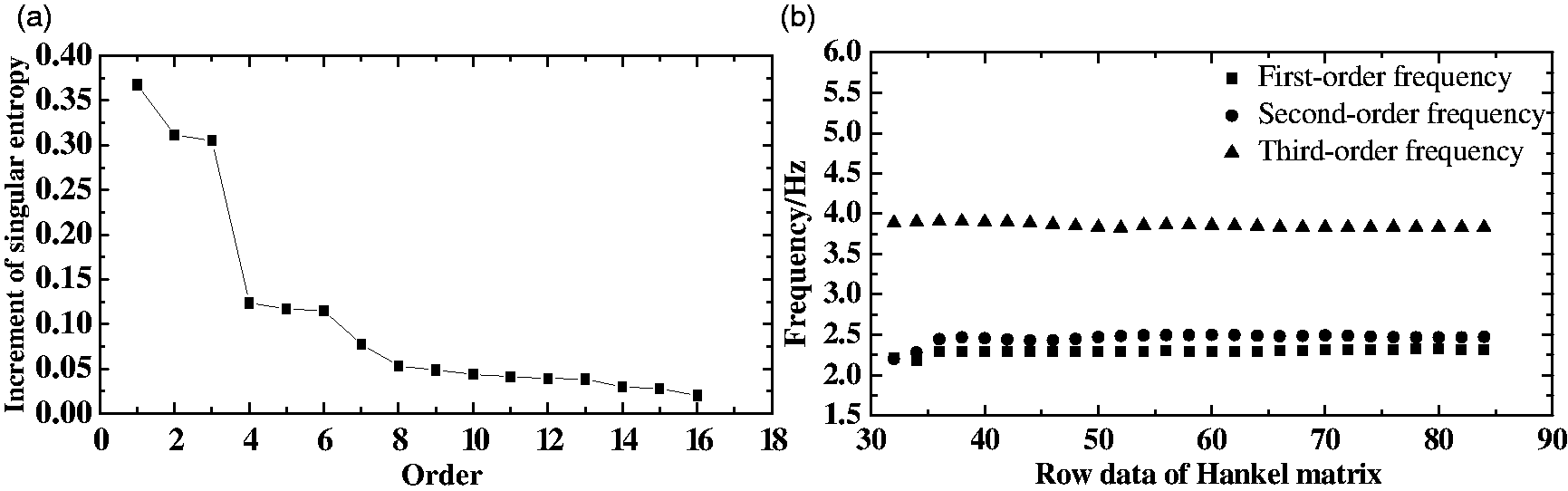
Singular entropy increment changed with orders and frequency stabilization diagram for the right sluice pier on condition 1.
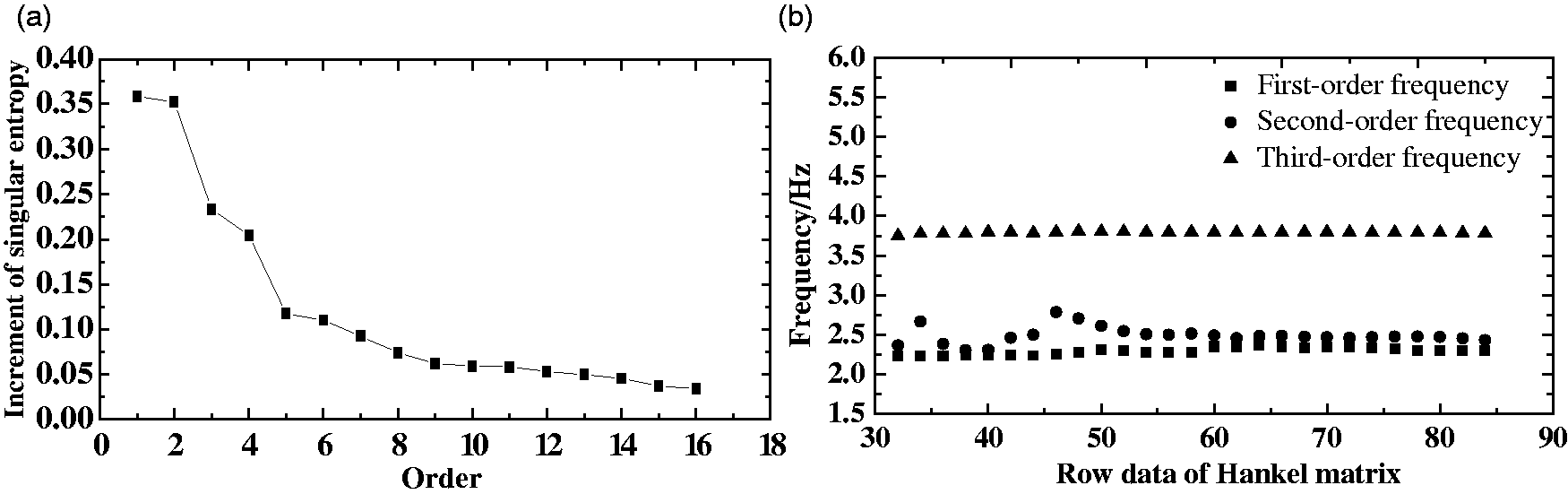
Singular entropy increment changed with orders and frequency stabilization diagram for the left sluice pier on condition 2.
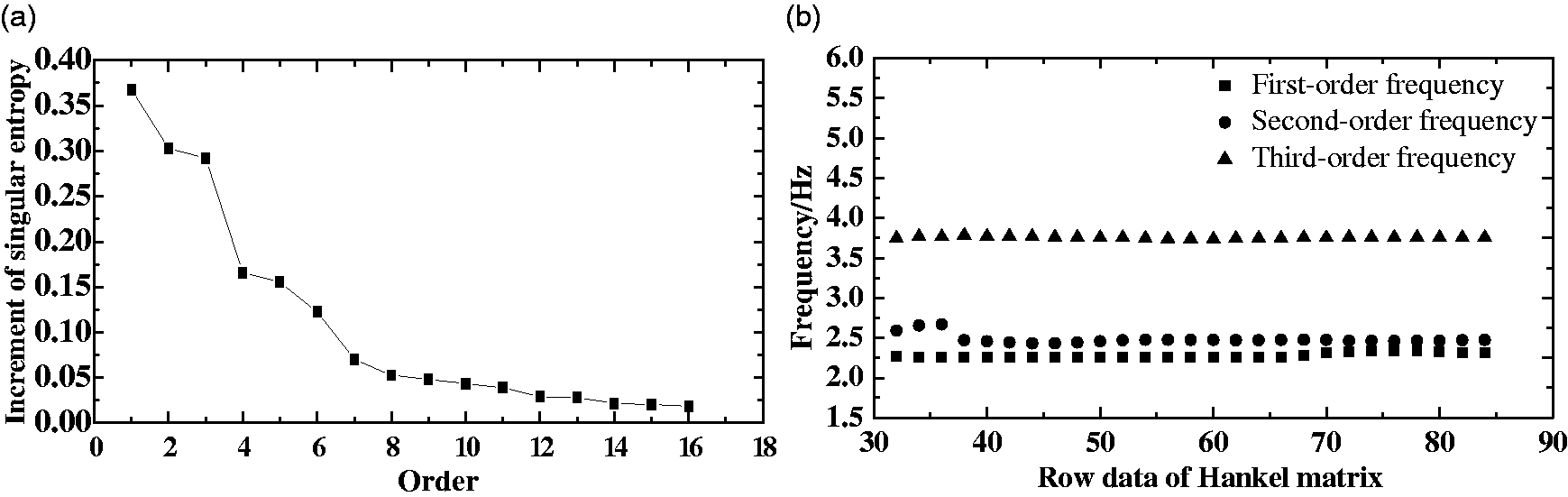
Singular entropy increment changed with orders and frequency stabilization diagram for the right sluice pier on condition 2.
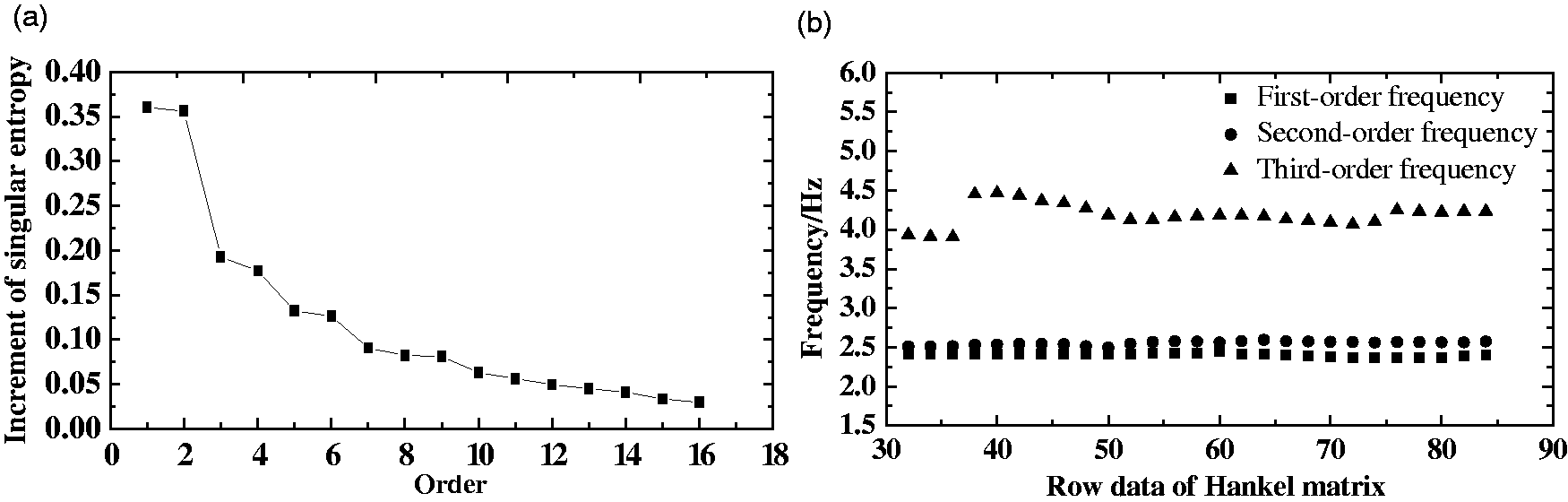
Singular entropy increment changed with orders and frequency stabilization diagram for the left sluice pier on condition 3.
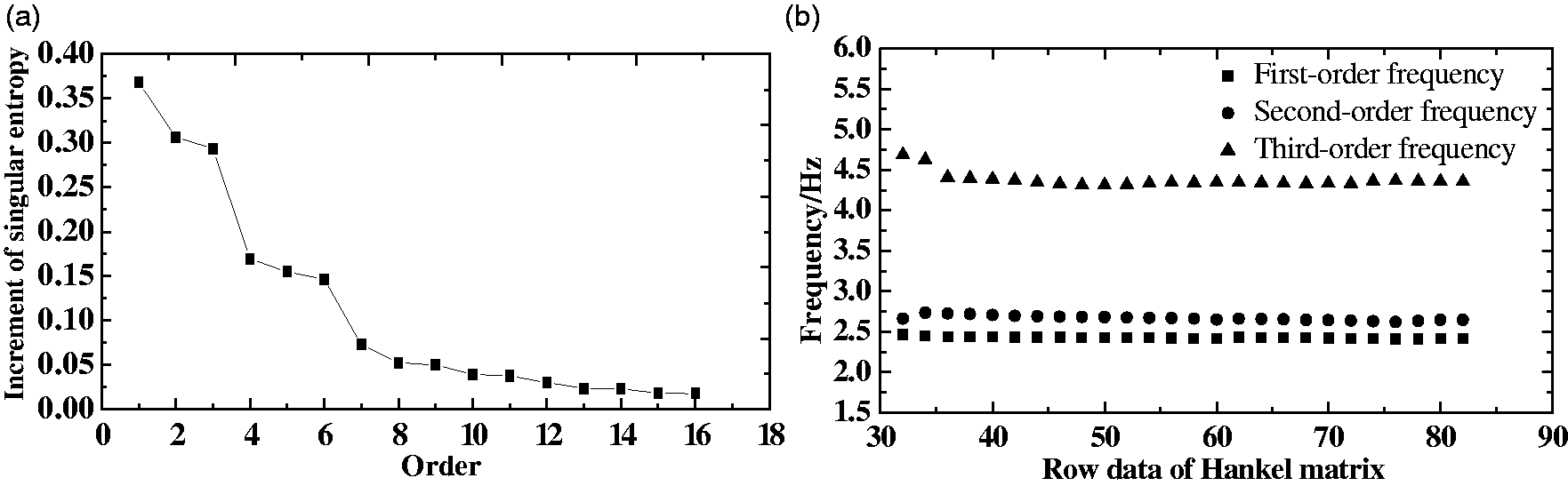
Singular entropy increment changed with orders and frequency stabilization diagram for the right sluice pier on condition 3.
Modal parameter identification results of sluice pier on condition 1.
Modal parameter identification results of sluice pier on condition 2.
Modal parameter identification results of sluice pier on condition 3.
Analysis of the causes of beat vibration on the sluice
Influence of frequency ratio on the beat vibration of the sluice pier
The modal identification results of the sluice pier on all working conditions showed that the sluice has three main vibration modes, in which the first-order frequency is in the range of 2.31–2.41 Hz, the second-order frequency is in the range of 2.45–2.55 Hz, and the third-order frequency is in the range of 3.76–4.41 Hz. The power spectral density curves of the vibration response on the typical measuring points under each working condition showed that most of the vibration energy on the sluice pier is concentrated in the frequency range of 2.3–2.4 Hz, which means that the sluice pier vibration is mainly dominated by the first two vibration modes. The first two vibration frequency ratios of the sluice pier are shown in Table 6, and the value range is between 0.928 and 0.962. The frequency coupling conditions (
Vibration frequency ratio of the sluice pier.

Influence of amplitude ratio on the beat vibration of the sluice pier
A statistical analysis of the amplitude ratio of the first two main vibration modes on the six selected measuring points was conducted to further explore the influence of amplitude ratio on beat vibration. Given that the amplitude components of each vibration frequency are difficult to separate and the flow-induced vibration response of the sluice pier can be regarded as an ergodic stationary random process, the amplitude of the sluice pier can be estimated by the triple dynamic displacement mean square error. Therefore, the ratio of the dynamic displacement mean square deviation of the vibration response components on each measuring point was used as the amplitude ratio in this study.
According to the principle of random vibration, the dynamic displacement mean square deviation of a structural node K can be expressed as

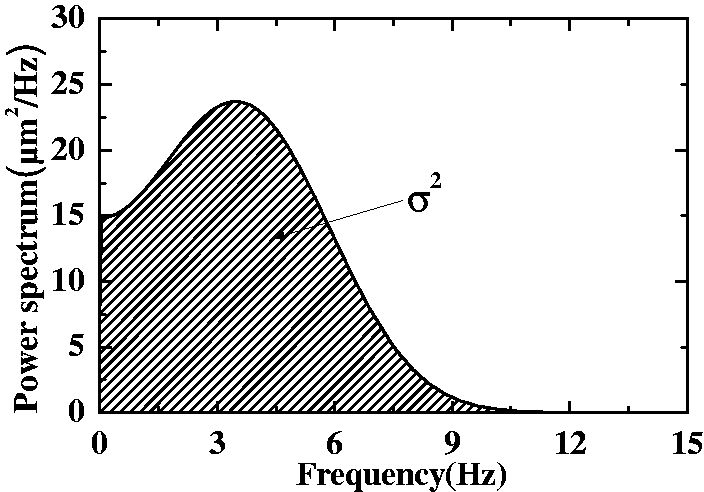
Dynamic displacement mean square deviation computation diagram.
On the basis of the previously presented method, the dynamic displacement mean square deviations of the vibration response components on each measuring point are shown in Table 7. The ratio is in the range of 0.64–1.63, which meets the condition of obvious beat vibration (
Dynamic displacement mean square deviation of different points.

The external cause of beat vibration on the sluice pier
The formation of the obvious beat vibration waveform is affected by internal and external factors. The frequency ratio and amplitude ratio of the first two main mode shapes of the pier are in the coupling condition of the beat vibration is the internal cause. The vibration responses of the sluice pier of Shuhe Hydropower Station are taken as input, and the water load of the structure is obtained by back analysis based on genetic algorithm. We can conclude that the random beat vibration occurs, when the first three natural frequencies of the pier are within the energy range of the water load (0–5). 19 This is the external cause of beat vibration on the sluice pier. The combination of internal and external factors ultimately lead to the formation of beat vibration.
Conclusion
In this study, the sluice pier of Shuhe Hydropower Station was used as an example to analyze the phenomenon of beat vibration in prototype vibration tests. Mathematical simulation experiments were conducted to determine the formation conditions of beat vibration. On the basis of the conditions and results of operational modal parameter identification in the sluice pier prototype tests, the frequency and amplitude ratios of the vibration response components were discussed, and the causes of beat vibration in the prototype tests were analyzed. The following conclusions were obtained.
The mathematical simulation experiments showed that when the beat vibration signal was synthesized by two columns of signals, the initial phase difference of the signals had no effect on the formation of the vibration waveform, and it only changed the position of the synthesized envelopes. The frequency ratio was the decisive factor in the appearance of beat vibration. Beat vibration appeared only when frequency ratio The working modal parameters for the right and left sluice piers of hole #2 were identified using the stochastic subspace method based on the order determination of singular entropy. The results showed that the sluice had three main vibration modes, in which the first vibration frequency was in the range of 2.31–2.41 Hz, the second vibration frequency was in the range of 2.45–2.55 Hz, the third vibration frequency was in the range of 3.76–4.41 Hz. The vibration of the sluice pier was mainly dominated by the first two vibration modes. The causes of beat vibration on the sluice were analyzed based on the modal identification results and power spectral density curve of the measuring points. The results showed that the internal cause of beat vibration is that the vibration frequency ratio was between 0.928 and 0.962, which satisfies the necessary conditions of beat vibration, and the amplitude ratio was between 0.66 and 1.63, which makes beat vibration highly obvious. The external cause of it is that the first three natural frequencies of the pier are within the energy range of the water load which causes random beat vibration.
Footnotes
Data Availability
Data from this manuscript may be made available upon request to the authors.
Declaration of conflicting interests
The author(s) declared no potential conflicts of interest with respect to the research, authorship, and/or publication of this article.
Funding
The author(s) disclosed receipt of the following financial support for the research, authorship, and/or publication of this article: The author(s) received financial support from National Natural Science Foundation of China (grant no. 51879126, 51469015, 51669013, 51779115) and Natural Science Foundation of Jiangxi Province (grant no. 2018ACB21018) for the research, authorship, and/or publication of this article.