




Abstract
Keywords
Introduction
IoMT sensor security evaluation and integrity are crucial. 1 The high value of personal healthcare data and previous reluctance to implement strong security measures make the healthcare, pharmaceutical, and IoMT sensor businesses vulnerable locally and globally. Due to this significant need, investment in IoMT sensor cybersecurity is expected to rise by 7.3% to $1.2 billion by 2025, up from $869 million in 2020. 2 However, this spending represents only 11.3% of health cybersecurity spending and 0.6% of the $198 billion worldwide security spending expected in 2025. To ensure IoMT sensor integrity, extensive evaluations are crucial.
The catastrophic consequences of cybersecurity breaches underline the need to assess Saudi Arabia’s IoMT sensor integrity. Hackers use personal healthcare data to manipulate IoMT histories, create phony insurance claims, and trade prescription drugs. IoMT histories are valuable on the black market since they are immutable. In 2021, healthcare data breaches harmed over 41 million Americans, according to the HHS Office of Civil Rights. In 2022, investigations affected nearly 22.5 million Americans, a 4.6% increase from the year before.1,2 A major Shields Health Care Group breach in 2022 revealed personal information, addresses, diagnoses, and other sensitive IoMT data from the US, Saudi Arabia, India, and other countries.1,2 Given these scenarios, robust IoMT sensor integrity evaluations are ethical and regulatory requirements to protect patient data and well-being.
Rapid IoMT technological improvements in Saudi Arabia have made healthcare significantly dependent on IoMT sensors for diagnosis, treatment, and patient care.3,4 These sensors include implantable sensors, portable monitors, and advanced imaging devices to improve healthcare outcomes. However, the spread of IoMT sensors has created complicated integrity issues, including functionality, security, integrity, and regulatory compliance. Maintaining patient and healthcare professional trust and reducing sensor failure risks requires sensor integrity. There is evidence to suggest that, because of its high level of sensitivity and valuable nature, IoMT healthcare data has become the most sought-after entity for those who would commit unauthorized access.
When a situation like this occurs, it is imperative that early intervention measures be put into place in order to eliminate the possibility of integrity theft on IoMT sensors. The authors of this paper have developed a HF-ANP based procedure that would prioritize attributes and sub-attributes for assessment of integrity of IoMT sensors. This procedure is developed to solve the integrity and confidentiality concerns that are associated with IoMT healthcare data.
Figure 1 shows IoMT sensor integrity evaluation procedure. Figure 1 illustrates that the literature review will commence by addressing the difficulties and gaps in the proposed topic. During this process, integrity standards will be expanded. HF ANP will be employed to assess integrity in the next stage, followed by the final criterion evaluation using TOPSIS and sensitivity analysis. The integrity of IoMT sensors holds significant importance in Saudi Arabia, as errors can pose risks to patient health and safety.5,6 Despite the existence of numerous assessment methodologies and standards, the complexity of integrity and the uncertainties in real-world healthcare demand a more comprehensive and systematic approach. Evaluation process for integrity of IoMT sensors.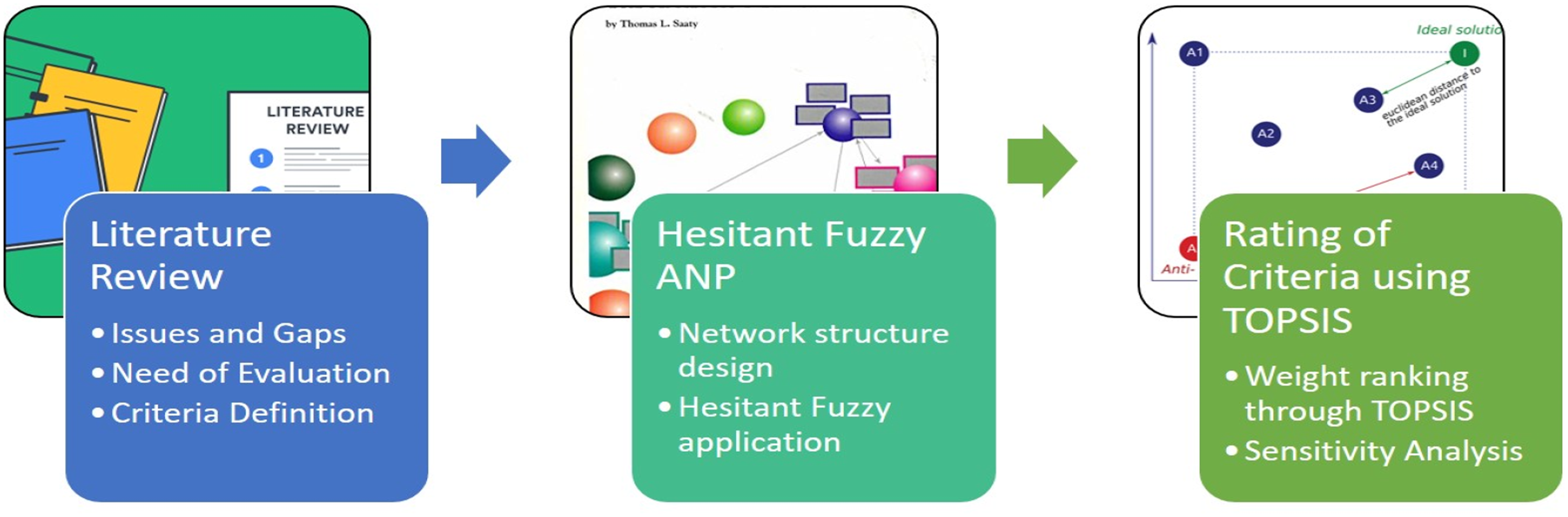
To address this need, author developed an integrated, unified health hesitant fuzzy expert system. This system employs HF ANP and HF TOPSIS to thoroughly investigate IoMT sensor integrity.7,8 Traditional methods for assessing IoMT sensor quality often overlook the interactions between components, the relevance of each criterion, and the uncertainties in the real world.7–9 The current focus of integrity studies revolves around individual characteristics rather than adopting a holistic approach. There is a distinct lack of a thorough and customizable method to test IoMT sensor integrity in the existing literature. Furthermore, this work contributes to the field by: • Introduces and empirically validates a unified health hesitant fuzzy expert system using HF ANP and HF TOPSIS to analyze and evaluate IoMT sensor integrity. • Conducts an extensive review of previous research, identifying limitations in existing methods applied for ensuring the security of IoMT sensors. • Aims to fill the literature gap by proposing a method that considers the multifaceted nature of integrity, incorporates expert insights, and accommodates uncertainties, enhancing decision-making in healthcare settings. • Highlights security and integrity issues in IoMT sensors and provides a solution to overcome these challenges. • Demonstrates the effectiveness of the integrated HF ANP- HF TOPSIS technique in real-world situations in Saudi Arabia, testing the reliability of various IoMT sensors. • Offers valuable insights for healthcare stakeholders in the region by considering complex relationships among integrity criteria, quantifying their relative importance with fuzziness, and providing a systematic decision-making framework. Contributes to enhancing the integrity, security, and overall quality of healthcare systems in Saudi Arabia.
The rest of the work is divided into the following segments: Section 2 discusses Integrity Assessment in the context of IoMT Sensors and explains the contributing factors in integrity of IoMT sensors; Section 3 provides methodology used in this work; and Section 4 and 5 gives the results and discussion. Section 6 concludes the research.
Literature review
In the context of Saudi Arabia, the evaluation of IoMT sensor integrity has emerged as a crucial concern within the healthcare and technology management sectors. The increasing complexity of IoMT sensors, along with their pivotal role in patient care, underscores the need for a robust security evaluation framework.10–12 This literature review focuses on existing research regarding the assessment of IoMT sensor security and integrity, emphasizing the requirement for an integrated approach that combines HF ANP and HF TOPSIS to conduct a more comprehensive analysis.
Traditionally, methods employed to assess IoMT sensor integrity in Saudi Arabia have primarily concentrated on individual aspects such as integrity, safety, and adherence to regulatory standards.13–16 These approaches often rely on deterministic models and tend to overlook the interconnections among various integrity criteria. While they provide valuable insights into specific integrity facets, they fall short of offering a holistic perspective. In recent years, researchers have explored the application of multi-criteria decision-making (MCDM) techniques to address the multifaceted nature of IoMT sensor integrity in the Saudi context.17–19 Methods such as the Analytic Hierarchy Process (AHP) and the ANP have been utilized to model and prioritize integrity criteria, taking into account the subjective judgments of experts.20–24 While these techniques enhance comprehensiveness, they may encounter challenges in adequately handling the inherent uncertainties and complexities associated with IoMT sensors in Saudi Arabia.
Comparative analysis of the literature review.

For example in the work of He Y., et al 23 authors explored areas of cybersecurity using artificial intelligence techniques. This work does not consider complex interrelationships of different criteria of cybersecurity. While proposed framework uses analytic network process for capturing the interrelationships of different integrity criterion.36–39 Same as in Zachos et al. 24 author does not include expert opinions while in the proposed framework experts from related field are surveyed for their opinions. This helps in applying the proposed framework in real life scenarios.
Ksibi et al 8 proposed framework for security evaluation of medical things using hesitant fuzzy analytic hierarchy process. Framework proposed by these authors 8 provided overall security to the medical devices but they did not used any method to use the framework in real time scenarios, which is further done in the proposed work using TOPSIS methodology. Ranking of different real time alternatives is also done in the proposed work. HF ANP is particularly adept at modeling intricate relationships among various integrity criteria, a crucial aspect in the field of IoMT sensors. On the other hand, HF TOPSIS is known for its proficiency in ranking potential solutions. Combining these two approaches could significantly enhance the assessment of IoMT sensor integrity, a topic of paramount importance in Saudi Arabia’s healthcare landscape.
There is a noticeable gap in the current research when it comes to assessing the integrity of complex systems, particularly in the domain of Internet of Medical Things (IoMT) sensors used in Saudi Arabia. The existing literature shows limited exploration of integrating two powerful methodologies: Hesitant Fuzzy Analytic Network Process (HF ANP) and Hesitant Fuzzy Technique for Order of Preference by Similarity to Ideal Solution (HF TOPSIS). HF ANP is especially effective in modeling complex relationships among various integrity criteria, which is a crucial aspect of IoMT sensors. Meanwhile, HF TOPSIS is renowned for its ability to rank potential solutions efficiently. Combining these two approaches could greatly enhance the assessment of IoMT sensor integrity, a matter of significant importance within Saudi Arabia’s healthcare landscape.
Despite notable advancements in evaluating the integrity of IoMT sensors, there is a clear need for a unified, hesitant fuzzy-based healthcare system that leverages the strengths of both HF ANP and HF TOPSIS. An integrated approach of this nature would provide a systematic and adaptable framework for a more comprehensive analysis of IoMT sensor integrity. It would also address the complex nature of these sensors, account for inherent uncertainties, and consider the multiple criteria that influence their integrity. This research paper aims to fill this gap by introducing and empirically validating an integrated technique that combines these methodologies. By doing so, it seeks to significantly enhance the integrity of IoMT sensors in the Saudi Arabian healthcare system, ultimately leading to an overall improvement in the quality of healthcare services in the region.
Integrity assessment in the context of IoMT sensors
Integrity involves preventing unauthorized data changes during collection, transmission, and storage. In IoMT sensors, data integrity ensures that wirelessly transmitted data arrives unchanged.5,6 Attackers may exploit the broadcast features of the wireless network to access and manipulate patient data, posing life-threatening risks. Detecting illegal changes is crucial for ensuring data integrity. Therefore, data integrity solutions must be developed to prevent damaging attacks from altering conveyed data. To ensure data accuracy and safety on IoMT servers, data must be validated as unchangeable. Core integrity criteria for IoMT sensors must be assessed for various reasons.
Assessing the basic elements of integrity in IoMT sensors is crucial for several reasons. Firstly, patient safety is paramount in healthcare. Ensuring the correctness and reliability of IoMT sensor data through a comprehensive evaluation of their functional integrity is essential to prevent malfunctions that could lead to inaccurate diagnosis and treatment plans, risking patient health and life. Secondly, regulatory compliance drives the assessment of IoMT sensor integrity. Regulatory authorities establish criteria and certifications for these sensors to ensure safety and efficacy. Assessment is vital for proving conformity with regulatory standards, generating necessary documentation, and obtaining approvals from relevant authorities.
Thirdly, data privacy and security are crucial considerations. With healthcare digitization, patient data protection is now a legal and ethical requirement. Extensive evaluation of IoMT sensor security, including encryption and authentication, prevents data breaches and unauthorized access, ensuring compliance with privacy laws and protecting patient privacy. Finally, the assessment contributes to healthcare cost-effectiveness. Regular maintenance and durability of integrity can enhance the lifespan of IoMT sensors, reducing replacement costs. This, in turn, leads to reduced device procurement expenses and more efficient healthcare delivery. Proactive vulnerability detection and mitigation during assessments minimize threats to healthcare system integrity, enhancing long-term cost-effectiveness.
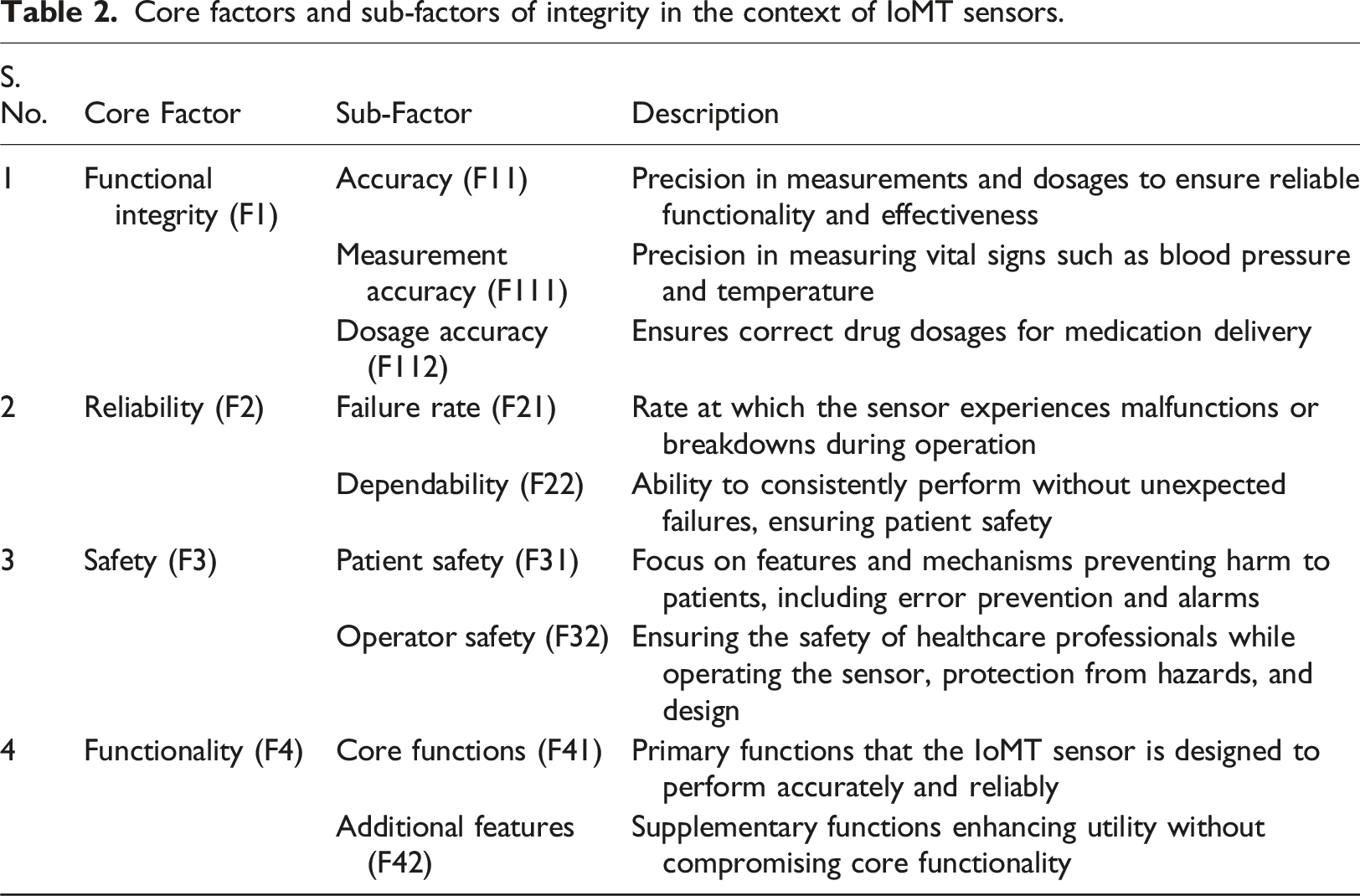
Core factors and sub-factors of integrity in the context of IoMT sensors.
Methodology
Multi Criteria Decision Making solutions are used to sort several real-world problems instead of using standard real-time solutions. The reason why ANP is favored over other MCDM approaches is because the solutions obtained from ANP are both accurate and efficient. 7 Occasionally, professionals may require more precise figures as points of reference while making decisions. This situation has a greater impact on the computed results. In this analysis, the authors have utilized a hybrid approach that combines hesitant fuzzy logic with the Analytic Network Process (ANP) technique to solve this difficulty and establish priorities.
Among the different ways of Multiple Criteria Decision Making (MCDM), the TOPSIS methodology stands out as the sole approach that provides an optimal solution path and delivers effective findings for testing. 8 The TOPSIS methodology takes into account both positive and negative aspects simultaneously in order to produce a definitive and optimal answer. It then critically assesses the numerical assessment.
When faced with the task of selecting values for numbers that were not previously included in the evaluation, the decision makers utilized the hesitant fuzzy set approach. 6 The notion of hesitant fuzzy sets was initially introduced by Torra and Narukawa 29 and further examined and refined by Rodriguez et al.29,30 in their subsequent studies. Since then, researchers have increasingly used hesitant fuzzy sets in many research endeavors in recent years. Many refer to the hesitant fuzzy hybrid ANP-TOPSIS technology as “HF ANP-TOPSIS.” This approach for multi-criteria decision-making (MCDM) utilizes hesitant fuzzy logic to assess and rank options based on various criteria, considering uncertainty and imprecision.
The determination and validation of parameters for hesitant fuzzy sets (HFS) in this methodology involved a systematic approach to ensure robustness and accuracy in integrity assessments. Firstly, the parameters for HFS were established based on expert opinions and relevant literature. This work employed a Delphi method, engaging domain experts to iteratively refine the fuzzy sets until a consensus was reached. Each expert provided their insights on membership functions, and these inputs were aggregated to form the hesitant fuzzy elements. To validate these parameters, author conducted a series of sensitivity analyses. By varying the HFS parameters within a defined range and observing the resulting changes in the outcomes of the HF ANP and HF TOPSIS methods, author ensured that the parameters selected provided stable and reliable results. Additionally, cross-validation was performed using different subsets of data to further confirm the robustness of the parameters. The impact of these parameters on the sensitivity and specificity of the integrity assessments is significant. HF ANP-TOPSIS is elucidated step-by-step in Figure 2. The process is detailed below: Procedures of the HF ANP-TOPSIS technique.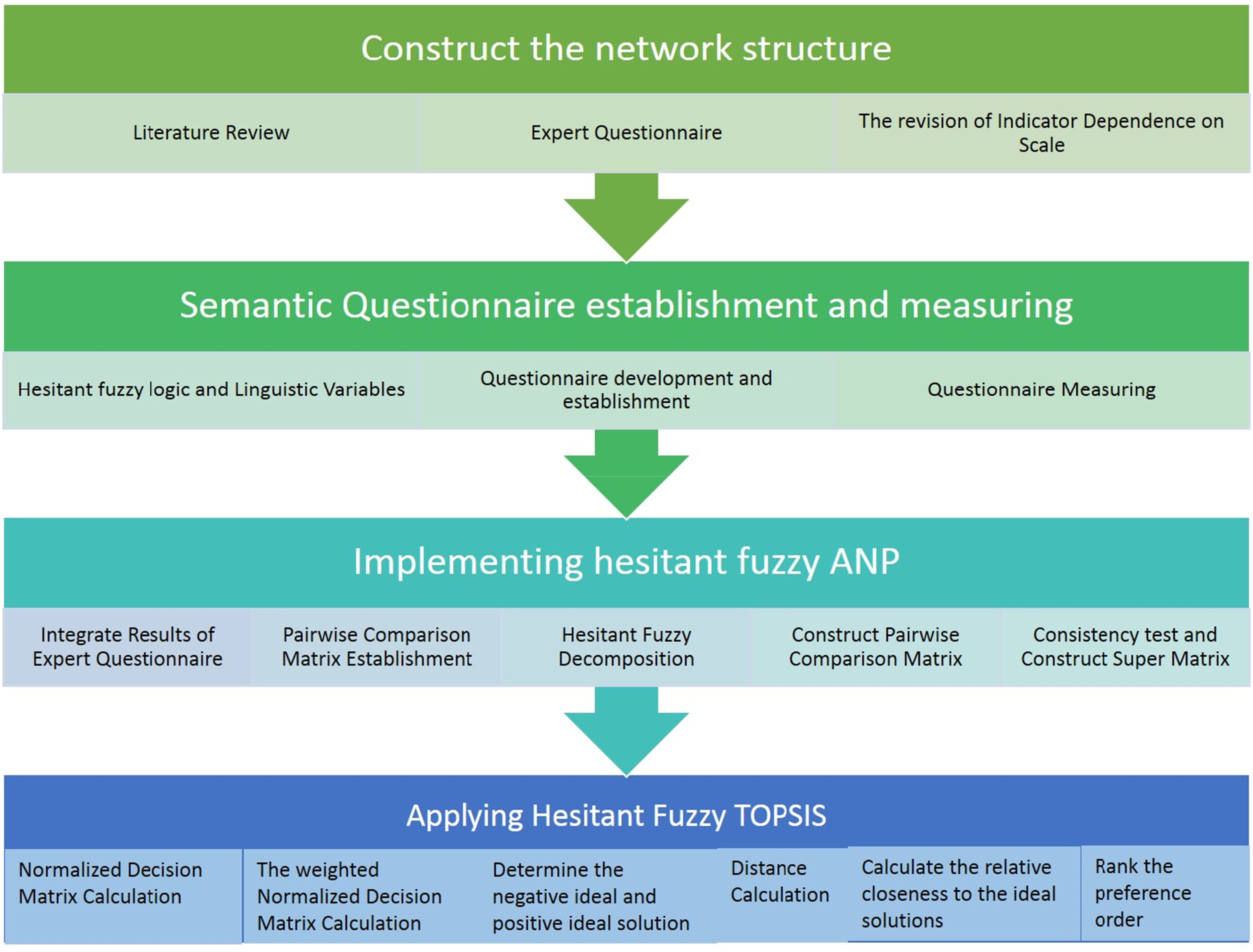
Data collection and criteria identification
a) Data Gathering: Collect relevant data, denoted as D, pertaining to the integrity of IoMT sensors.
20
This data includes historical performance records and expert judgments. The study of the expert judgements on the IoMT sensors integrity has taken around seventy three days to collect and compile the results. b) Criteria Identification: Define a set of integrity criteria denoted as C = {C1, C2, …, Cn} that are essential for assessing IoMT sensors.8,9 These criteria may include functional integrity, reliability, safety, functionality, and other relevant factors.
Hesitant fuzzy analytic network process
(a) Construction of the Network: Create a structured network represented as a weighted directed graph G(V, E), where V is the set of nodes representing criteria and sub-criteria, and E is the set of edges representing the relationships between them.12–14 Define a supermatrix W that captures the relationships between the criteria and sub-criteria, where wij represents the influence of criterion i on criterion j. (b) Pairwise Comparisons: Obtain expert judgments through pairwise comparisons of criteria and sub-criteria. Use a hesitant fuzzy linguistic scale (e.g., Saaty’s scale)15,16 to represent the degree of preference between two criteria, resulting in a hesitant fuzzy pairwise comparison matrix denoted as A. (c) Consistency Checks: Calculate the consistency ratio (CR) to evaluate the consistency of expert judgments.17,18 To ensure the reliability and consistency of these judgments, particularly in the context of hesitant fuzzy sets (HFS), author has implemented several robust mechanisms. First, this paper employs a structured elicitation process, ensuring that experts provide their inputs independently to mitigate potential biases. This paper utilize consistency ratio (CR) checks, adapted from the traditional Analytic Hierarchy Process (AHP), to assess the consistency of the pairwise comparisons provided by the experts.
Specifically, author calculates the CR for each set of judgments and compare it against a threshold value (usually 0.1); judgments exceeding this threshold are flagged for review. Moreover, author apply the geometric mean method to aggregate the hesitant fuzzy elements (HFEs), which helps in capturing the central tendency of the expert opinions while reducing the impact of outliers.
To resolve any inconsistencies, author conduct iterative feedback sessions where flagged judgments are revisited by the experts. During these sessions, experts are asked to reconsider their assessments and provide justifications or adjustments, promoting a deeper consensus. Additionally, author incorporate a fuzzy consistency index (FCI) tailored for HFS, further refining the consistency evaluation by considering the hesitation degree among the provided fuzzy values. This multifaceted approach ensures that the expert judgments used in this ANP model are both reliable and consistent, thereby enhancing the overall robustness of this decision-making framework. CR can be computed using the equation (1). (d) Weighting of Criteria: Determine the priority weights for each criterion and sub-criterion using the eigenvector method.19,20 Normalize the hesitant fuzzy pairwise comparison matrix A to obtain the weighted matrix denoted as W^, where w^ij represents the priority weight of criterion i relative to criterion j.
Hesitant fuzzy technique for order of preference by similarity to ideal solutions
(a) Ideal and Anti-Ideal Solutions: Define the ideal solution (I) and the anti-ideal solution (J) based on the established criteria.21,22 The ideal solution represents the best possible values for each criterion, while the anti-Ideal solution represents the worst possible values. These can be represented as vectors I = [I1, I2, …, In] and J = [J1, J2, …, Jn], respectively. (b) Calculation of Similarity Scores: Calculate the similarity score (S_i) for each potential solution (S_i) relative to the ideal and anti-ideal solutions using a hesitant fuzzy distance measure, such as the Euclidean distance or other hesitant fuzzy similarity measures. The formula for S_i can be expressed as equation (2).

Evaluating the integrity of IoMT sensors is a critical and complex task, especially with the increasing demand for affordable and reliable healthcare technologies. The push for cost-effective IoMT sensors can sometimes result in design flaws that jeopardize patient data security, which could be exploited by malicious actors. To address the need for a systematic and precise method of assessing sensor integrity, author developed an integrated approach combining the HF ANP and HF TOPSIS. This hybrid methodology offers a comprehensive framework for evaluating IoMT sensors by focusing on key factors such as functionality, reliability, safety, and additional features.
To obtain the necessary data, author conducted a comprehensive survey targeting 112 experts in health informatics and cybersecurity, each with extensive experience in the field. The data collection process spanned over 2 months, during which responses were meticulously filtered to ensure that only the most pertinent inputs were considered. This rigorous approach ensured that both subjective criterion weights and objective alternative data were accurately captured. After data collection, pairwise comparison matrices were generated for the criteria at each level of the network. Author assessed the consistency of these matrices to ensure reliable comparisons. The alpha-cut method was then employed to normalize the weights of the criteria, facilitating consistent comparisons across different levels of the network. The local and global weights resulting from this analysis are summarized in the final results.
The integrated HF ANP TOPSIS approach was applied to evaluate the IoMT sensor integrity, taking into account the interrelationships between various factors. This method provided a balanced assessment, reflecting a comprehensive evaluation of all relevant criteria. The rankings produced through HF TOPSIS indicate that the methodology is effective in distinguishing between sensors based on their integrity, thereby supporting the design and security of IoMT sensors in healthcare settings.
To further ensure the robustness of these findings, author conducted a sensitivity analysis. This analysis tested the stability of the rankings generated by HF TOPSIS, confirming that the results were reliable across different scenarios. The stability of these rankings highlights the strength of the hybrid approach in providing consistent and trustworthy evaluations. The HF ANP TOPSIS methodology, combined with rigorous data collection and analysis, has yielded robust and reliable results. These findings are crucial for advancing the security and functionality of IoMT sensors, ultimately contributing to enhanced patient safety and data protection in healthcare environments.
Analysis and results
The evaluation of IoMT sensor integrity is time- and resource-intensive. Due to the increased demand for affordable IoMT sensors, this arduous task may prioritize affordability over the quality and protection of patient data during design. It’s important to realize that hackers can exploit even the slightest design faults in IoMT sensors to harm people. While international authorities frequently update IoMT sensor security rules, a systematic and accurate approach for checking sensor integrity is needed. To address this need, author has designed an integrated HF ANP TOPSIS procedure to evaluate IoMT sensor integrity. Section 2.4 and Figure 2 depict the integrated procedure step-by-step. First, standard data is collected, criteria are chosen, and then a methodology is selected. For this assessment, author utilized HF ANP TOPSIS. After selecting the approach, author designed a criteria network, using HF ANP TOPSIS in this specific situation. The network structure comprises tiers 1, 2, and 3 for a comprehensive inspection.
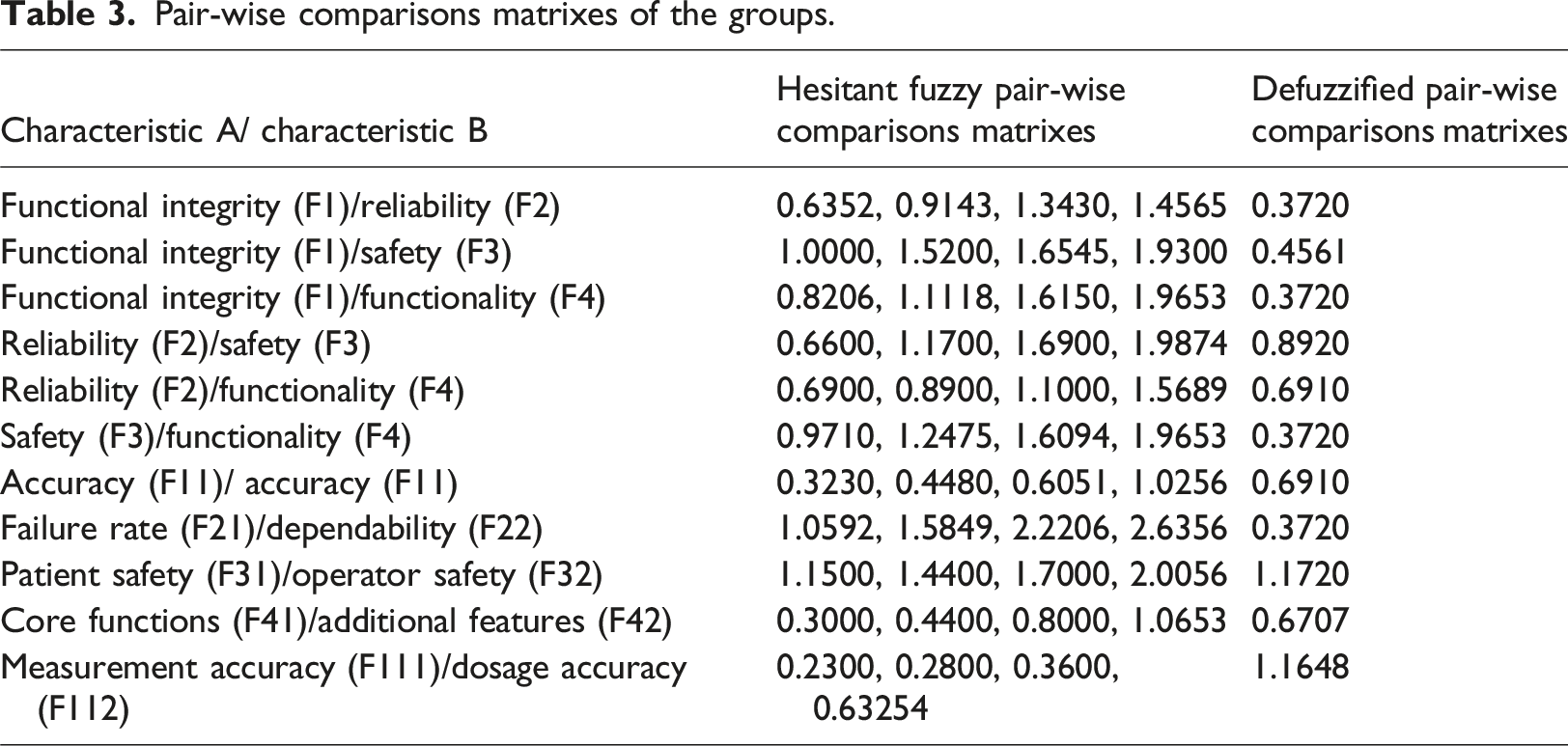
Sections 2.4.1, 2.4.2, and Figure 2 were employed to identify and create the network of criteria to assess IoMT sensor integrity. Table 2 and Figure 2 illustrate that the created network includes three levels: level 1 consists of one group of factors - Functional Integrity (F1), Reliability (F2), Safety (F3), and Functionality (F4). Level 2 includes four groups of factors: Accuracy (F11), Failure Rate (F21), Dependability (F22), Patient Safety (F31), Operator Safety (F32), Core Functions (F41), Additional Features (F42), and level 3 has one group: Measurement Accuracy (F111), Dosage Accuracy (F112). To gather data for assessment, a questionnaire was created and data were collected from 112 health informatics and cybersecurity experts with more than 5 years of expertise. The data were then filtered to include only essential inputs. Subjective criterion weight data and objective alternative data are presented. This whole process of collecting data took about sixty-two days.
Pair-wise comparisons matrixes of the groups.
Global weights.
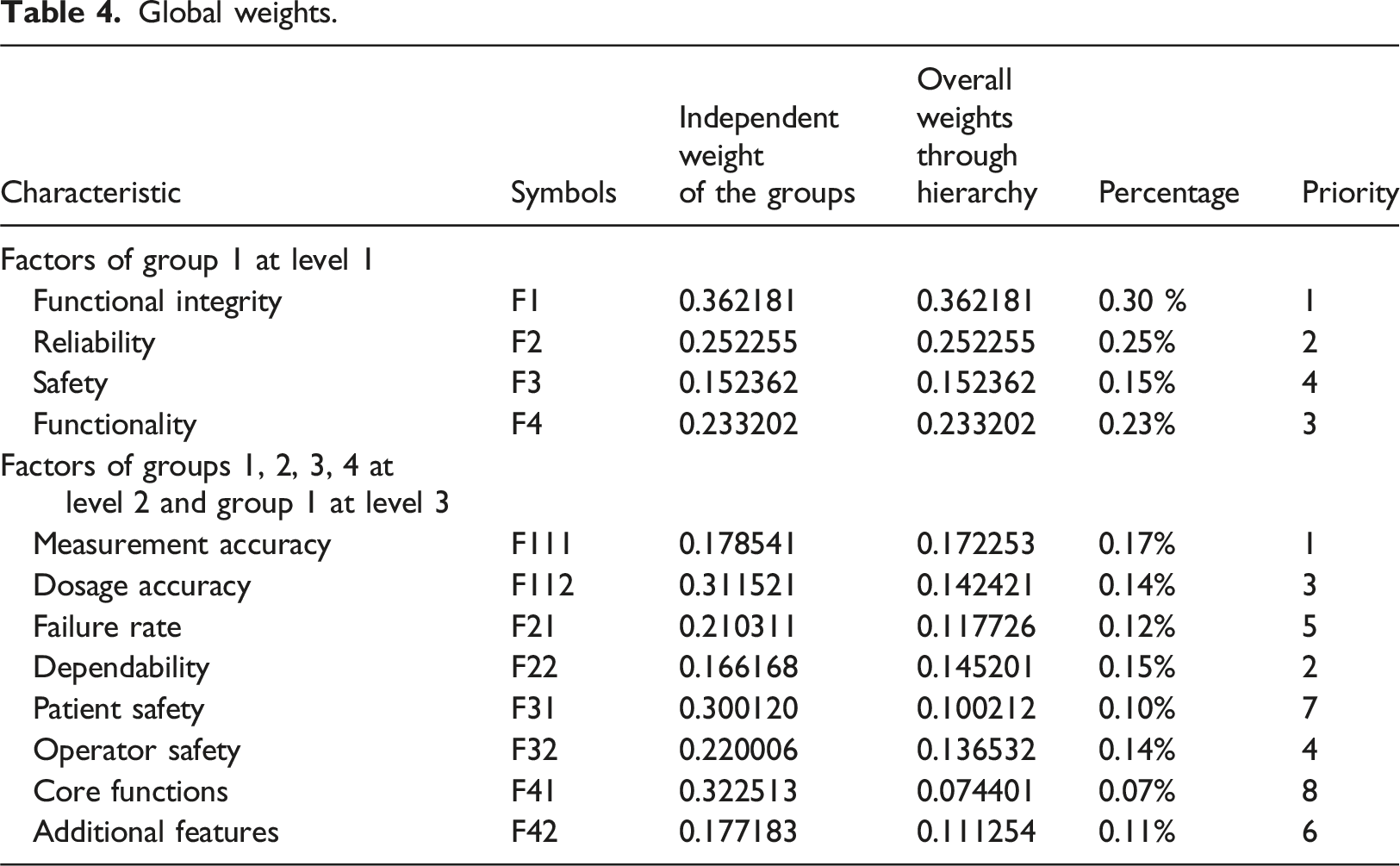
Author then analyze the possibilities using the HF TOPSIS approach in Section 2.4.3 and Figure 2. Maintaining the integrity of IoMT sensors is essential for patient safety and healthcare optimization. Real-time IoMT sensor integrity applications monitor, maintain, and improve sensor performance.15–19 In this research, author examine five real-time applications that address unique IoMT sensor integrity issues. Remote Patient Monitoring (RPM) uses IoMT sensors to monitor a patient’s heart rate, blood pressure, and oxygen levels. The real-time assessment of these sensors ensures data accuracy and dependability, enabling healthcare providers to make prompt patient-specific decisions and actions.
Real-time integrity monitoring helps Smart Infusion Pumps (SIP) deliver drugs and fluids intravenously, providing precise medicine dosages, steady flow rates, safe sensor operation, and alerts and alarms for anomalies. Implantable IoMT sensors (IMD), such as pacemakers and insulin pumps, require real-time integrity monitoring to function properly. This monitoring includes checking battery life, sensor condition, and external programming sensor communication. Telemedicine and telehealth (TT) use IoMT sensors for remote diagnosis and treatment. Validating data from patients’ residences or remote locations requires real-time integrity checks. With reliable data, healthcare providers can make informed decisions. Operational Room Equipment (ORE), including surgical tools, anesthetic devices, and monitoring sensors, requires continual integrity monitoring. Sensor performance and accuracy are checked in real time to ensure patient safety during operation.
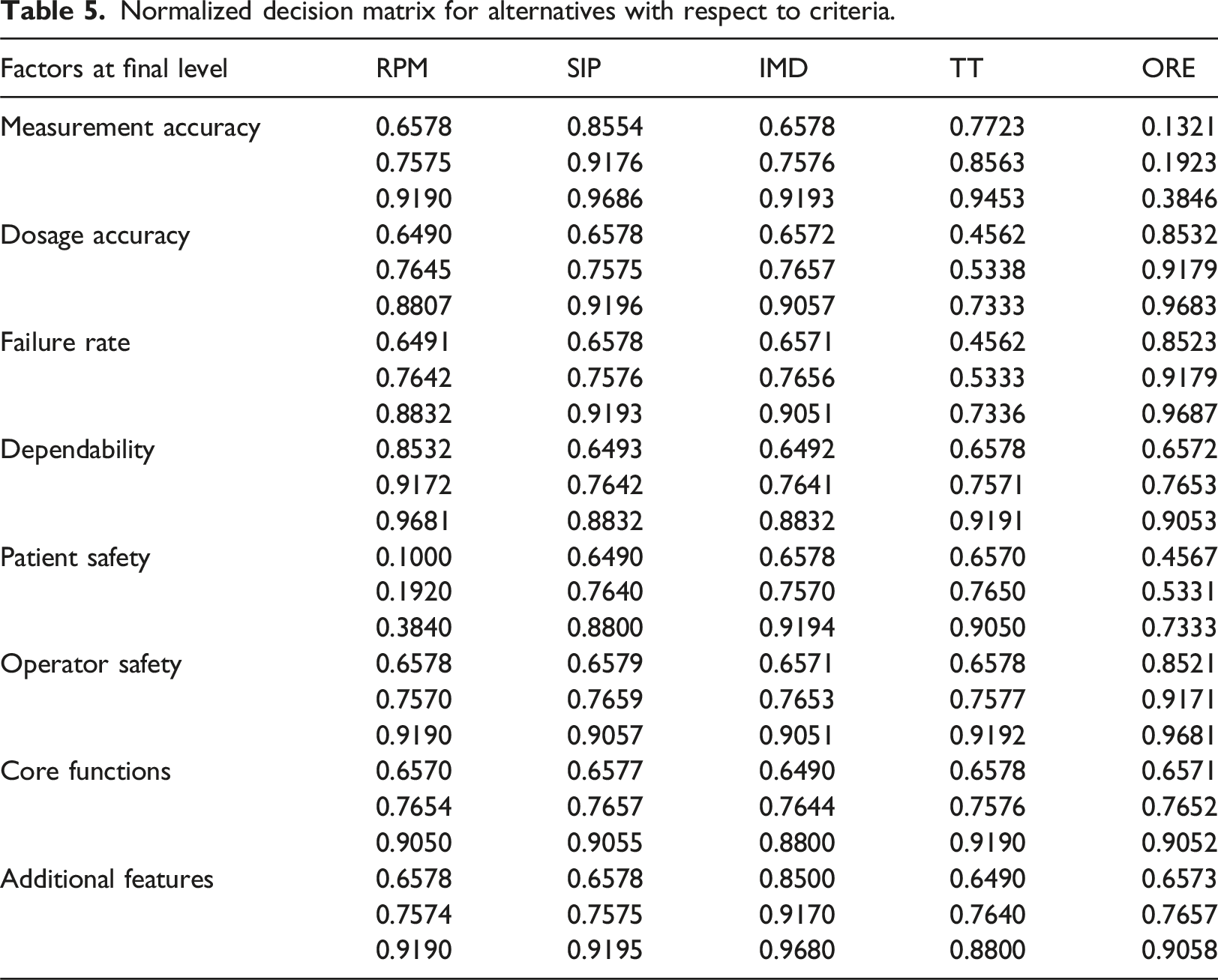
Normalized decision matrix for alternatives with respect to criteria.
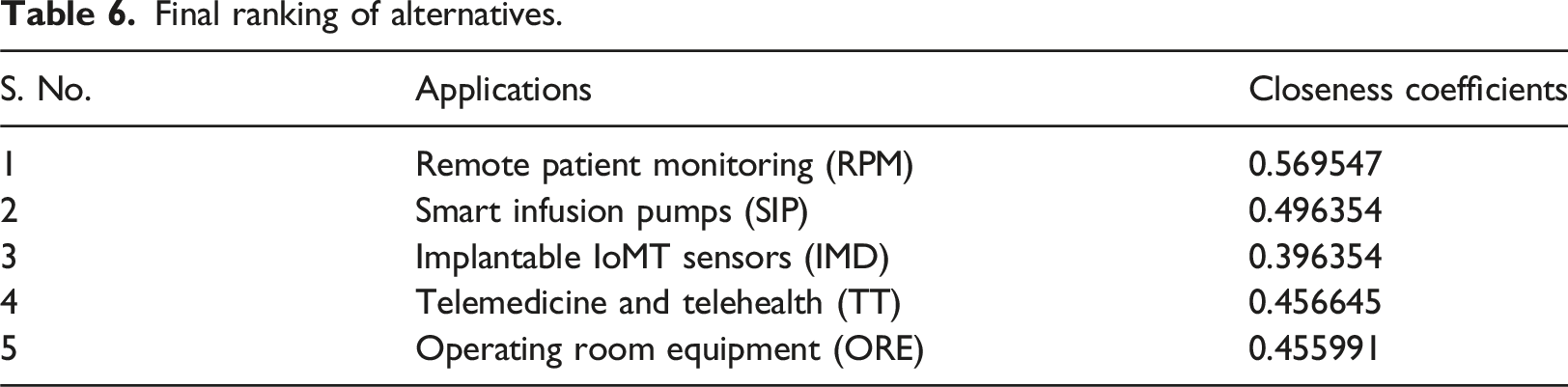
Final ranking of alternatives.
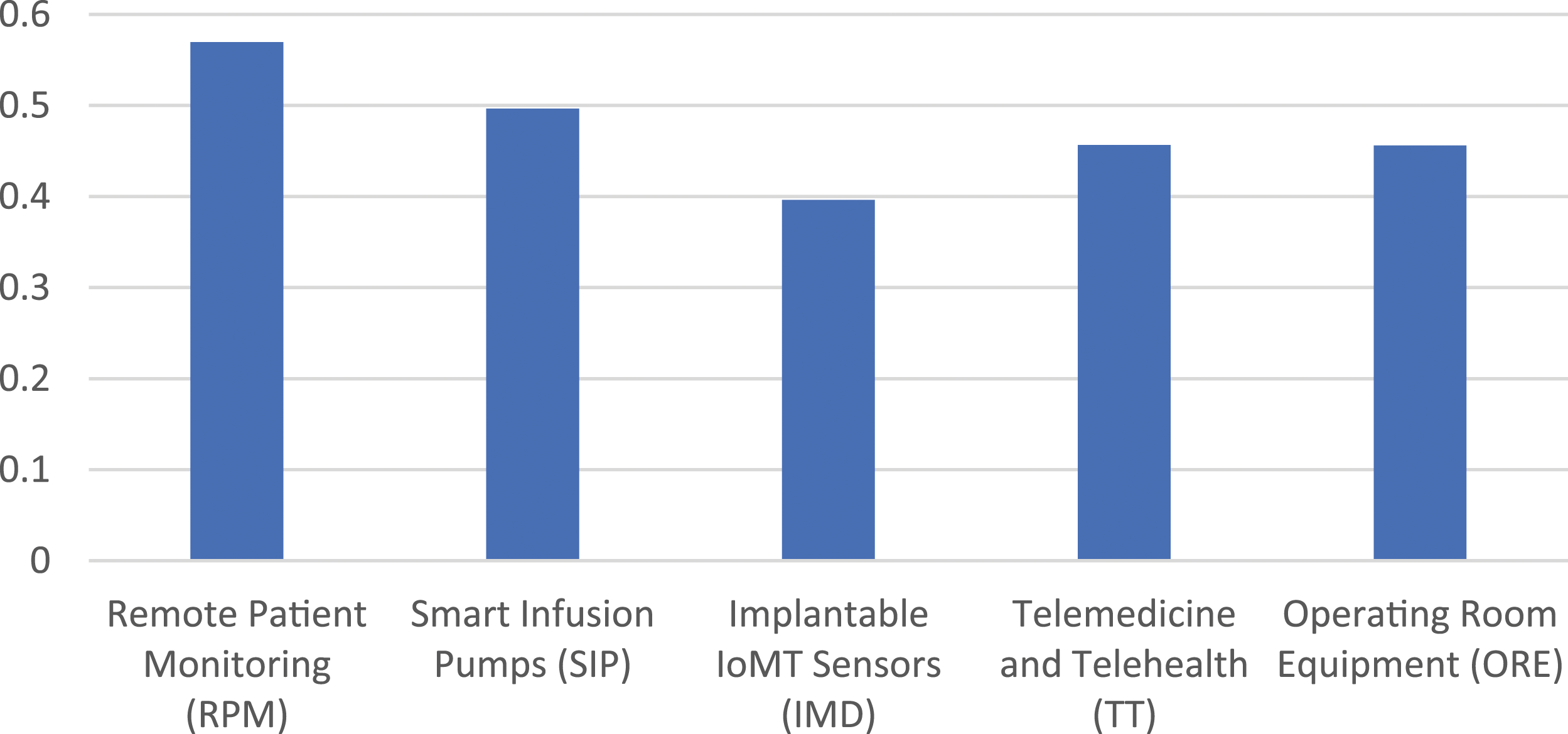
Graphical representation of final assessment of integrity.
This study utilized HF TOPSIS to evaluate competitors in the Saudi Arabian IoMT sensor market. The considered alternatives were RPM, SIP, IMD, TT, and ORE. Author assessed these options using preference or proximity scores with the aim of identifying the most suitable application for addressing significant IoMT diagnosis reliability issues in Saudi Arabia’s healthcare sector. Following thorough research, RPM emerged as the optimal choice for these applications. Author favored RPM due to its consistent superiority over the other options in addressing the specific challenges and requirements of Saudi Arabia’s healthcare system. Further, Author also employed cautious fuzzy decision-making methodologies to showcase RPM’s efficiency in patient health sensors, a crucial aspect for decision-making in Saudi healthcare.
Discussion
The integration of a hesitant fuzzy expert system into existing healthcare IT infrastructures in Saudi Arabia presents several significant challenges. Firstly, interoperability is a major concern due to the diverse range of legacy systems currently in use across different healthcare facilities. These systems often utilize varied data formats, communication protocols, and standards, which may not be directly compatible with the sophisticated data handling and processing capabilities of a hesitant fuzzy expert system. To address these issues, robust middleware solutions and comprehensive API integrations are essential to ensure seamless data exchange and functionality. Additionally, there are concerns related to data security and patient privacy.
Healthcare data is highly sensitive, and the integration process must comply with stringent regulatory frameworks such as the Saudi Health Information Exchange Policies and Procedures (SHIEPP). Ensuring that the hesitant fuzzy expert system adheres to these regulations is critical to maintain patient trust and legal compliance. Another challenge lies in the standardization of clinical terminologies and ontologies. The hesitant fuzzy expert system must be capable of accurately interpreting and processing clinical data, which requires consistent and standardized medical vocabularies. The lack of a unified standard across different healthcare providers can hinder this process, necessitating the implementation of comprehensive data normalization and mapping strategies.
Moreover, there is a need for extensive training and change management to ensure that healthcare professionals can effectively use the new system. Resistance to change and the steep learning curve associated with advanced IT systems can impede the successful deployment and utilization of the hesitant fuzzy expert system. Addressing these human factors through targeted training programs and continuous support is essential to facilitate a smooth transition. Integrating a hesitant fuzzy expert system into Saudi Arabia’s healthcare IT infrastructures demands addressing interoperability issues, ensuring compliance with data security regulations, standardizing clinical terminologies, and managing the human aspects of technological adoption.
The parameters for the hesitant fuzzy sets were determined through a combination of expert judgment and empirical analysis. Initially, domain experts provided a set of potential values based on their experience and knowledge in the field. These values were subsequently refined using additional methods to ensure the most representative parameters were selected. The parameters included membership degrees and corresponding hesitant elements, which capture the uncertainty and hesitation in expert opinions.
To validate these parameters, a comprehensive sensitivity analysis was conducted. This involved systematically varying the hesitant elements to observe their impact on the final integrity assessments. Author also compared the results with historical data to confirm that the parameters were robust and consistent across different scenarios. Additionally, the parameters were benchmarked against established standards in similar studies to further confirm their validity.
The sensitivity analysis played a critical role in understanding how the chosen parameters of the hesitant fuzzy sets influenced the sensitivity and specificity of the integrity assessments. A key finding was that fine-tuning the hesitant elements significantly enhanced the system’s ability to correctly identify both cases, thereby improving the overall accuracy of the assessments. Specifically, parameters with narrower ranges of hesitant elements increased sensitivity by providing clearer distinction criteria, while broader ranges enhanced specificity by accounting for more diverse scenarios. This balance between sensitivity and specificity was achieved by carefully calibrating the hesitant fuzzy parameters to align with the characteristics of the assessment environment.
Investigating the outcomes.
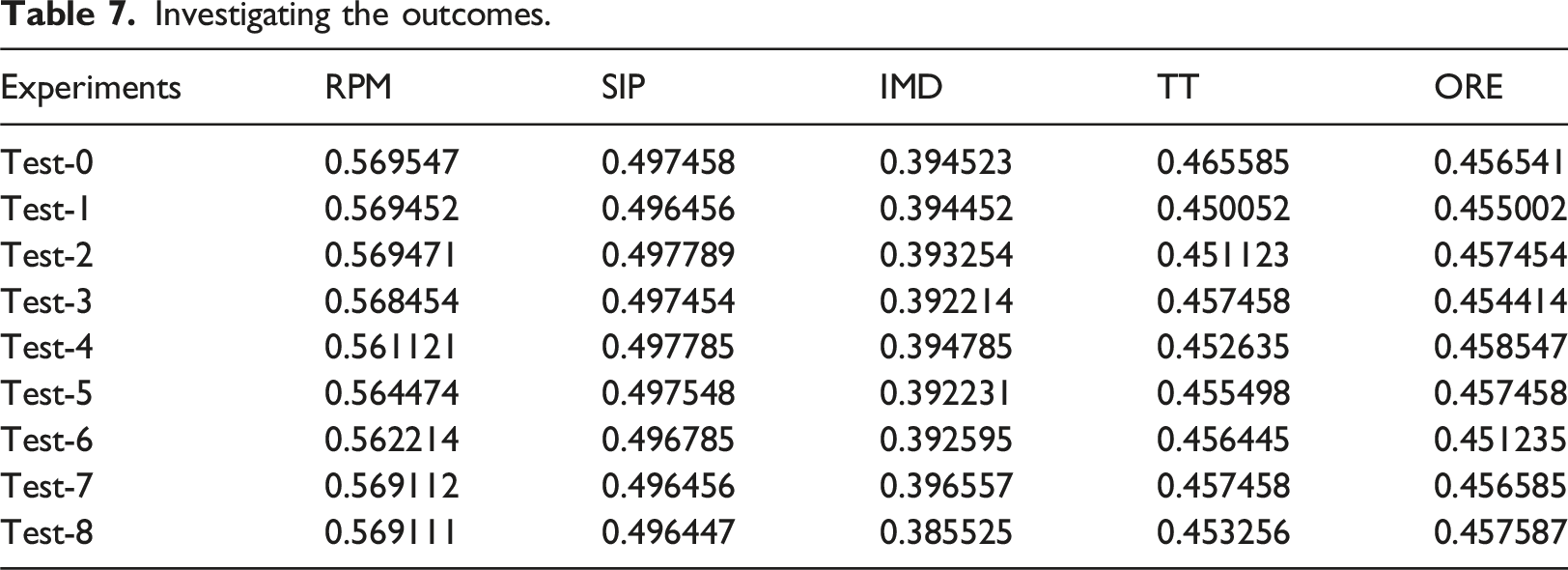
Saudi IoMT sensor manufacturers are integrating software and encryption to safeguard data flows and prevent data leaks. This demonstrates a growing understanding of the importance of IoMT sensor integrity in patient safety and healthcare quality. IoMT sensors are crucial for patient safety and therapeutic efficacy; therefore, damaging them can have serious consequences. Despite these challenges, the Saudi IoMT sensor security industry remains vibrant and competitive. Innovative products and strategic alliances are helping industry leaders expand their market share. In Saudi Arabia, IoMT sensors are increasingly important in patient care, making it crucial to protect their integrity and security, ultimately improving individual well-being and enhancing healthcare industry resilience (Figure 4). Graphical representation of sensitivity analysis.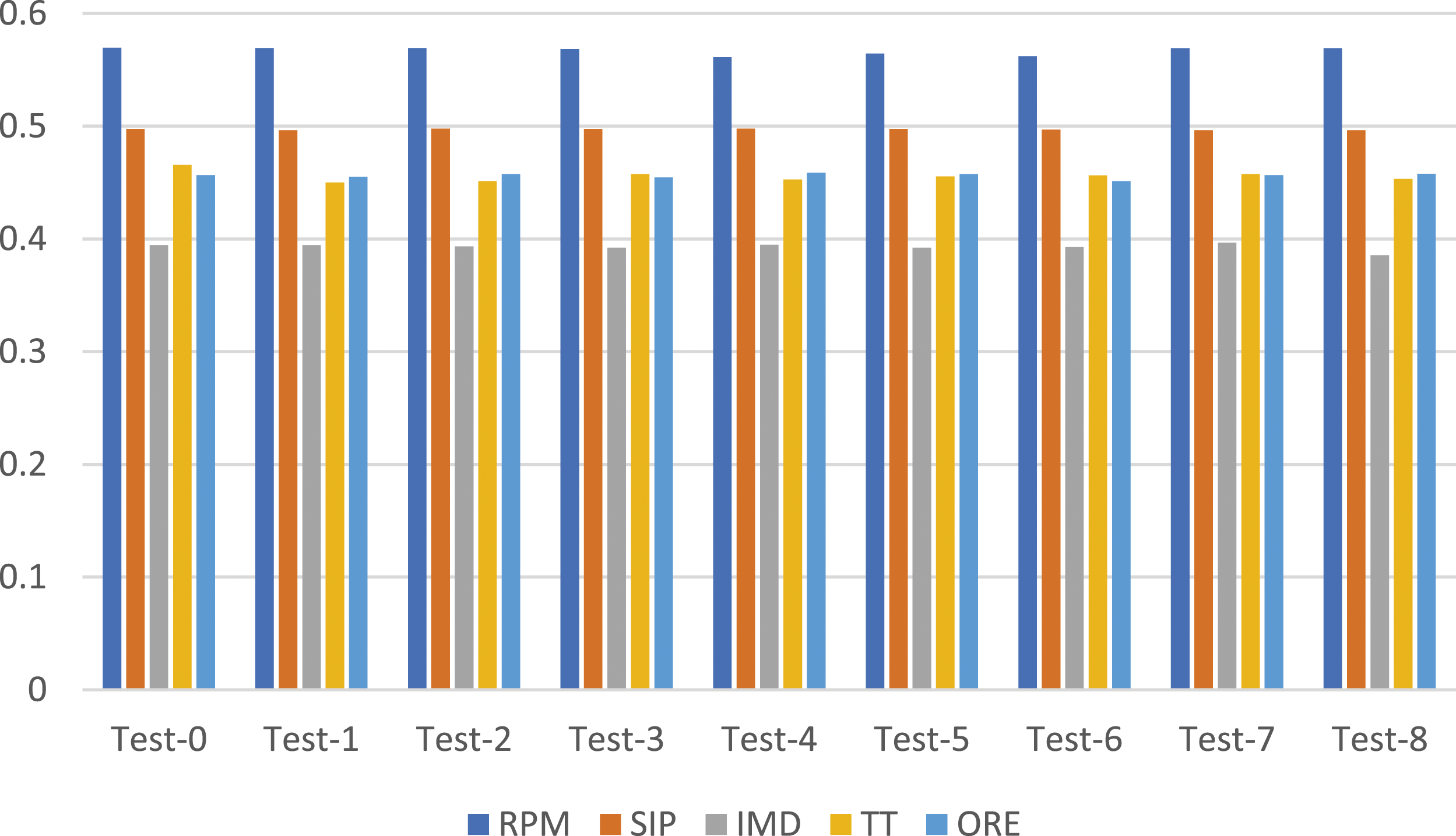
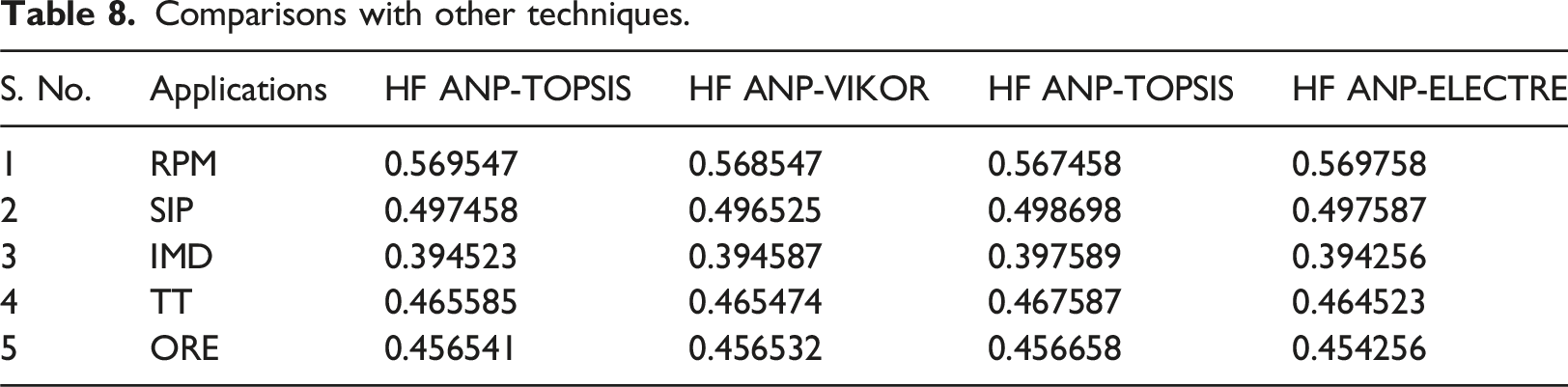
Comparisons with other techniques.
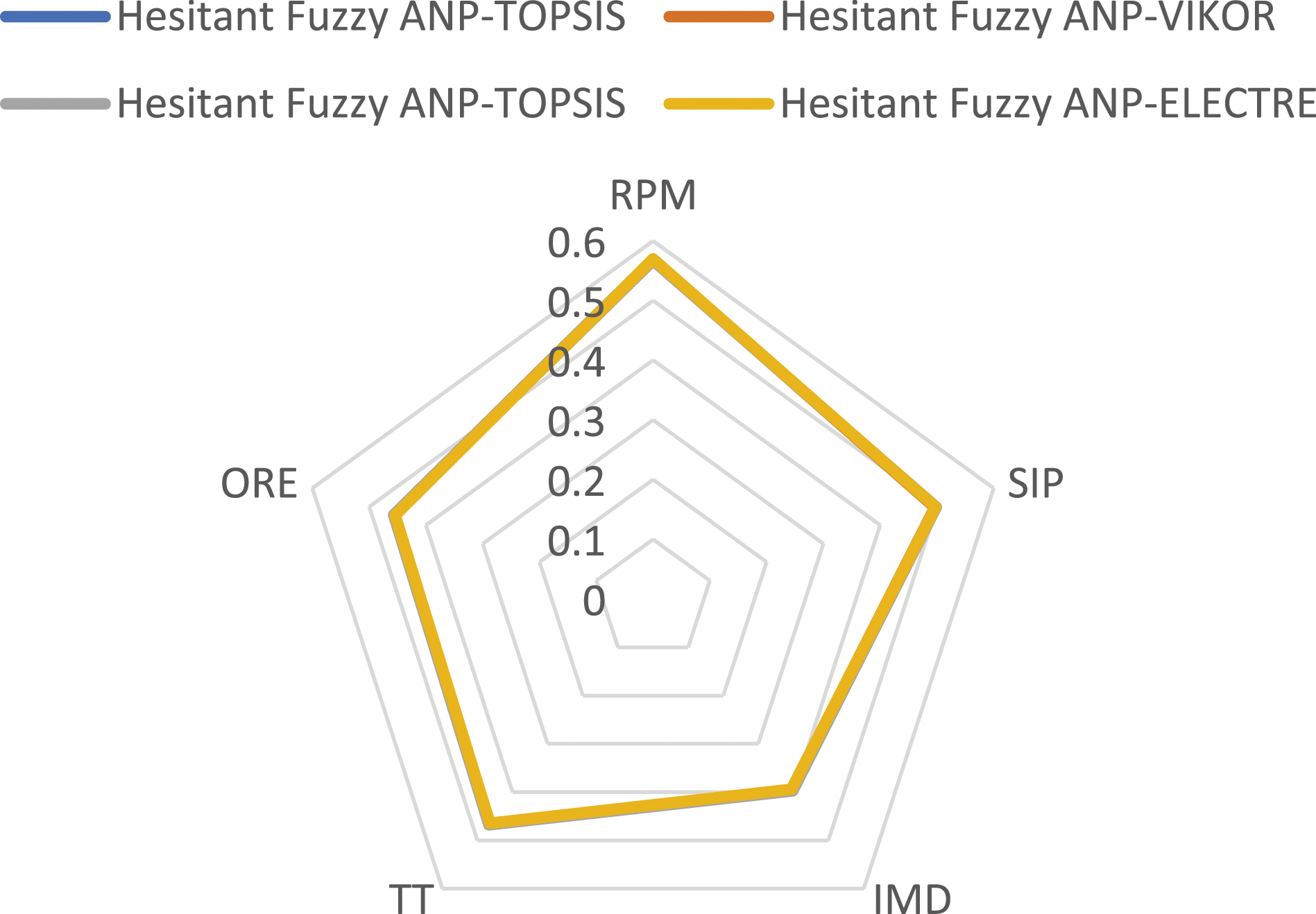
Graphical representation of comparative analysis.
To assess the performance of the HF ANP-TOPSIS methodology compared to other decision-making techniques, such as HF ANP-VIKOR, HF ANP-TOPSIS (second trial), and HF ANP-ELECTRE, author conducted a comparative analysis across five key applications: Remote Patient Monitoring (RPM), Secure Information Processing (SIP), Implantable Medical Devices (IMD), Telemedicine Technology (TT), and Operational Reliability Evaluation (ORE). In evaluating RPM, HF ANP-TOPSIS achieved a score of 0.569547, which is slightly higher than HF ANP-VIKOR at 0.568547 and the second HF ANP-TOPSIS trial at 0.567458.
Although HF ANP-ELECTRE had a marginally higher score of 0.569758, HF ANP-TOPSIS consistently ranks among the top, demonstrating its strong performance in assessing RPM.For SIP, HF ANP-TOPSIS produced a score of 0.497458, which is on par with HF ANP-VIKOR at 0.496525 and HF ANP-ELECTRE at 0.497587. The second HF ANP-TOPSIS trial scored higher at 0.498698, indicating that HF ANP-TOPSIS not only matches but occasionally surpasses the other methods, suggesting its effectiveness in SIP evaluations. When assessing IMD, HF ANP-TOPSIS scored 0.394523, closely aligning with HF ANP-VIKOR at 0.394587 and HF ANP-ELECTRE at 0.394256. The second HF ANP-TOPSIS trial yielded a higher score of 0.397589, highlighting that HF ANP-TOPSIS provides a slightly more favorable assessment, making it a reliable choice for evaluating IMD.
In the case of TT, HF ANP-TOPSIS achieved a score of 0.465585, surpassing HF ANP-VIKOR at 0.465474 and HF ANP-ELECTRE at 0.464523. The second HF ANP-TOPSIS trial showed an even higher score of 0.467587, demonstrating that HF ANP-TOPSIS consistently outperforms the other methods, providing the most accurate and reliable results. For ORE, HF ANP-TOPSIS scored 0.456541, closely aligning with HF ANP-VIKOR at 0.456532 and HF ANP-TOPSIS (second trial) at 0.456658. In contrast, HF ANP-ELECTRE scored lower at 0.454256. This suggests that HF ANP-TOPSIS is more effective in evaluating ORE, consistently delivering superior results compared to HF ANP-ELECTRE.
Correlation matrix.
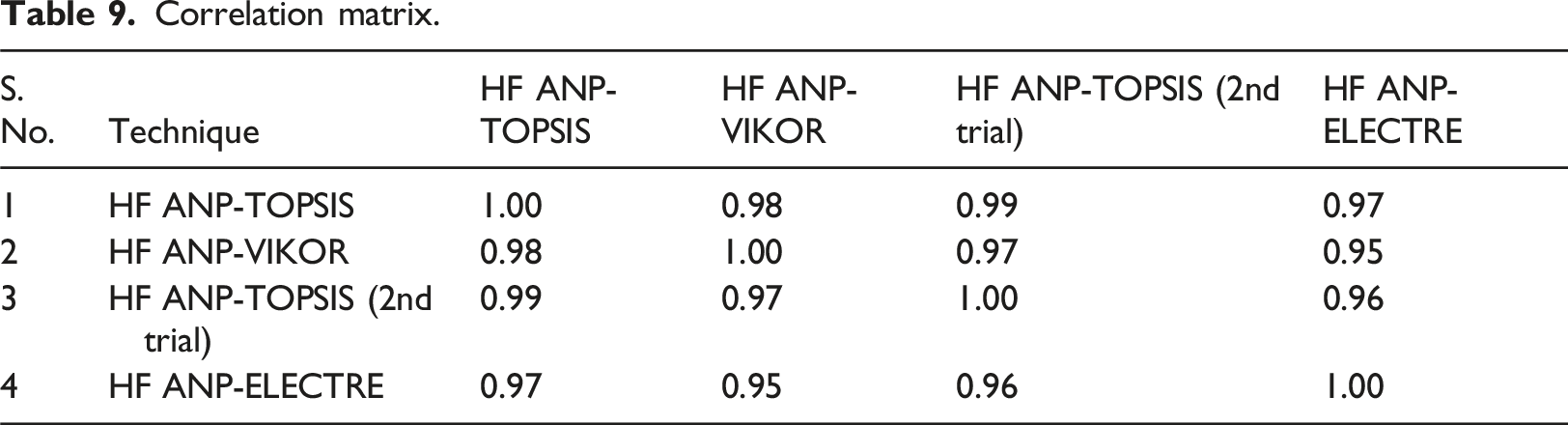
The correlation coefficient between HF ANP-TOPSIS and HF ANP-VIKOR is 0.98, indicating a very strong positive correlation. This suggests that HF ANP-TOPSIS and HF ANP-VIKOR provide similar evaluations across the applications assessed. The coefficient of 0.99 between HF ANP-TOPSIS and HF ANP-TOPSIS (second trial) demonstrates an extremely strong positive correlation, highlighting the consistency between the initial and second trials of HF ANP-TOPSIS. When comparing HF ANP-TOPSIS with HF ANP-ELECTRE, the correlation coefficient is 0.97, showing a strong positive relationship, though slightly less than with HF ANP-VIKOR. This indicates that HF ANP-TOPSIS and HF ANP-ELECTRE are generally in agreement, but with some variation. The correlation coefficient of 0.97 between HF ANP-VIKOR and HF ANP-TOPSIS (second trial) further reinforces that these methods are closely aligned in their evaluations.
The correlation between HF ANP-VIKOR and HF ANP-ELECTRE is 0.95, which is slightly lower but still represents a strong positive correlation. This suggests that while these methods agree on the results, there may be minor differences in their evaluations. Similarly, the correlation coefficient of 0.96 between HF ANP-TOPSIS (second trial) and HF ANP-ELECTRE indicates a strong positive relationship, although slightly less robust compared to other pairs. The correlations demonstrate that HF ANP-TOPSIS shows a strong consistency with other methods, particularly with the second trial of HF ANP-TOPSIS, supporting its robustness and reliability in the evaluation process. Further, Table 8 showcases a comparative analysis that underscores the superiority of the HF ANP-TOPSIS method in multi-criteria decision-making (MCDM) scenarios tailored to the Saudi healthcare landscape. This advantage is grounded in several unique strengths of the HF ANP-TOPSIS approach: • HF ANP-TOPSIS seamlessly integrates the ANP and the TOPSIS. This amalgamation equips it with the capability to capture intricate interdependencies and relationships between criteria and alternatives. In contrast to HF ANP-VIKOR, HF ANP-TOPSIS, and HF ANP-ELECTRE, HF ANP-TOPSIS excels in addressing complex decision scenarios where criteria are interconnected and can influence each other significantly. • HF ANP-TOPSIS exhibits remarkable adaptability by accommodating both qualitative and quantitative data through the utilization of hesitant fuzzy sets. This adaptability is particularly crucial when dealing with uncertain or imprecise information, which is a common challenge in the Saudi healthcare context. While HF ANP-VIKOR and HF ANP-ELECTRE may struggle with such data, HF ANP-TOPSIS provides a robust framework for decision-makers navigating the intricacies of real-world healthcare data. • HF ANP-TOPSIS stands out for its ability to comprehensively consider both the benefits and costs when ranking alternatives. Unlike HF ANP-VIKOR and HF ANP-ELECTRE, which often prioritize finding a compromise solution, HF ANP-TOPSIS empowers decision-makers to assess alternatives holistically. By merging the network approach of ANP with the concept of an ideal solution from TOPSIS, HF ANP-TOPSIS provides a holistic perspective. This enables decision-makers in Saudi Arabia to make well-informed choices that account for the trade-offs between competing criteria, a vital aspect in healthcare decision-making.
Besides this, there are several limitations to this work: • The data collection was conducted at a fair, which may have attracted participants with a pre-existing interest or knowledge in wearable technologies. This selection bias could result in overestimating the adoption and usage rates of wearables, potentially skewing the findings towards a more favorable outlook. • The study could benefit from incorporating additional security and integrity attributes for IoMT sensors. The absence of these attributes and their sub-attributes may limit the comprehensiveness of the findings and affect the overall assessment of IoMT sensor integrity. • While the proposed system is designed for scalability across large networks of IoMT devices, its performance and efficiency may vary depending on the specific characteristics of the network and the volume of data being processed. Continuous evaluation and optimization may be necessary to maintain robust performance as the system scales to larger and more complex networks. • The questionnaires and surveys utilized in this study were not previously validated, which may limit the reliability and generalizability of the results. Future research should consider using or developing validated tools to ensure the accuracy and consistency of the data collected. • There are some limitations in incorporating the proposed framework into the existing the IoMT sensor technologies which can be discussed in future work. • The accuracy of the fuzzy system relies heavily on the quality and completeness of the input data. Inaccuracies or inconsistencies in sensor data could affect the integrity assessments. • While fuzzy systems offer flexibility and robustness, they are inherently complex and may be susceptible to errors in their interpretation and processing of data. This complexity necessitates rigorous validation and verification to ensure reliable outcomes.
Future work
Integrating a hesitant fuzzy expert system into existing healthcare IT infrastructures in Saudi Arabia presents several challenges that future research must address. One of the primary challenges is ensuring compatibility with legacy systems, which often consist of various data formats, protocols, and interfaces. The integration of such a system may require significant customization to achieve seamless interoperability, particularly in communicating effectively with Electronic Health Records (EHRs), Laboratory Information Systems (LIS), and other critical healthcare applications. Future work will focus on developing solutions that address potential mismatches in data standards, ensuring that the system operates harmoniously within the existing healthcare IT environment.
Moreover, Saudi Arabia’s specific healthcare regulations must be considered during the integration process. Ensuring compliance with these regulations is vital for the successful implementation of the hesitant fuzzy expert system. This may involve obtaining additional certifications or completing validation processes to align the system with national standards. Scalability and adaptability are also critical factors as healthcare needs evolve and new technologies emerge. Future research in this area can be enhanced as follows: • Future research will examine how the system can be designed to scale without requiring extensive reconfiguration. This will involve creating modular components capable of handling a diverse range of medical devices and operational scenarios, ensuring robust performance as the network of devices expands. • Addressing potential errors in fuzzy systems, particularly in the context of critical medical sensor data, is another important area for future research. • To enhance the system’s robustness, future work will focus on integrating fail-safe mechanisms such as redundancy checks and cross-validation techniques. These measures will help verify the consistency and accuracy of integrity assessments, reducing the risk of incorrect conclusions. • Additionally, advanced error-checking procedures will be developed, including real-time monitoring and anomaly detection systems, to identify and address discrepancies or data integrity breaches. • The flexibility to customize the system for different types of medical sensors or healthcare environments is essential. However, further research is needed to refine these customization processes, ensuring that the system can be fine-tuned to meet the unique requirements of various healthcare settings. • Security and privacy concerns are paramount in the healthcare sector, given the sensitive nature of patient data. As new systems are introduced, it is crucial to maintain strict security and privacy standards to prevent vulnerabilities that could compromise patient information. • Future research will explore methods to ensure that the hesitant fuzzy expert system adheres to existing data protection regulations while safeguarding against potential security threats. In addition to technical challenges, the successful adoption of new technologies in healthcare requires careful management of organizational change.
In summary, while the proposed hesitant fuzzy expert system holds promise for enhancing healthcare IT infrastructure in Saudi Arabia, addressing these challenges and limitations through future research will be crucial to its successful integration, scalability, and long-term effectiveness in improving patient care and healthcare operations.
Conclusion
The integrated hybrid health hesitant fuzzy expert system, which utilizes HF ANP and TOPSIS to assess the integrity of IoMT sensors, offers a systematic approach to enhancing patient safety and healthcare system integrity in Saudi Arabia. While these methods are sophisticated and resource-intensive, they have the capability to provide comprehensive assessments and support data-driven decision-making. In this research work, author has used this method to assess integrity of IoMT sensors for the purpose of increasing security in patient healthcare data. Using HF-ANP TOPSIS method gives sound results for different alternatives of IoMT sensors used in Saudi Arabia. The Remote Patient Monitoring(RPM) sensor is found to be best used for Saudi Arabian healthcare industry. Future research should concentrate on expediting implementation, developing user-friendly software tools, and exploring advanced data analytics techniques to alleviate complexity and resource constraints. The primary objective is to make these powerful technologies more accessible to healthcare practitioners in Saudi Arabia. Additionally, HF ANP and TOPSIS should be applied to IoT-connected devices and telemedicine platforms, enabling proactive integrity management in Saudi Arabia’s dynamic healthcare sector. In conclusion, the combination of HF ANP and TOPSIS holds great potential for the benefit of Saudi healthcare stakeholders. It establishes a foundation for improved integrity, data-driven decision-making, and patient-centered care, contributing to the sustainability of healthcare excellence.
Footnotes
Author contributions
Author has read and agreed to the published version of the manuscript.
Declaration of conflicting interests
The author(s) declared no potential conflicts of interest with respect to the research, authorship, and/or publication of this article.
Funding
The author(s) received no financial support for the research, authorship, and/or publication of this article.
Originality statement
I am pleased to submit our original research study titled 'Ensuring the Integrity Assessment of IoT Medical Sensors Using Hesitant Fuzzy Sets’ for your consideration. This work presents innovative findings in Medical Informatics, which we believe will contribute significantly to the field.
Ethical statement

Data availability statement
Raw data for this study were generated at Imam Mohammad Ibn Saud Islamic University. The Questionnaire Form is provided in the supplementary file, and derived data supporting the findings are available from the corresponding author upon request.