




Abstract
Introduction
Fitness trackers support users in achieving their fitness goals and promoting overall health and well-being. 1 However, how well users adopt wellness tracking devices and applications depends on the design of features catering to user adoption.2,3 User adoption describes a behavioral model of sustained and continued use without abandoning the technology.4–6 Also called technology acceptance, or engagement, user adoption is critical as a long-term byproduct of usability and user satisfaction. 7 More recently, use of nudge motivational architecture has been studied for efficacy. 8 A nudge is “any aspect of the choice architecture that alters people’s behavior predictably without forbidding any options or significantly changing their economic incentives”. Digital nudging is “the use of user-interface design elements to guide people’s behavior in digital choice environments”. 9 While use of nudging has been linked to improved physical activity, there are large gaps in research on this topic. 10
A key challenge associated with the extended use of fitness trackers is the limits to user engagement over time. User abandonment, the opposite of adoption, impacts both well-being and user control over built-in functionalities like alerts, notifications, and activity sharing with peers. 11 The stay-at-home constraints caused by COVID-19 made the potential for fitness tracking efficacy more relevant, used to improve users’ health behavior and engagement.12,13 Building on prior research studies 14 including studies of nudging behavior, that examined user desires for privacy with regard to fitness data sharing and social behavior, we examine the user adoption of Apple Watch users in this context.15,16
Apple Watch is unique among fitness trackers because it uses context-triggered behavioral nudges8,17 such as the movement prompt 18 : “Time to stand”. How relevant these “lifestyle nudges” 19 are for users, as well as an analysis of when they fail 20 is central to our study. Existing studies on nudging behavior 21 show that users make healthier food choices, while customization and flexibility in using the applications can promote users’ sense of control and increase their engagement with the system.22–24 However, research in this area has been conducted using disparate methodologies, and has yielded mixed results,25,26 thus making it difficult to draw conclusions regarding how novel features of specific devices affect their adoption.
Our exploratory research prioritizes an observational approach focusing on contextual insights over examining a pre-defined hypothesis. We used in this study three focal points for understanding user adoption issues: (a) Digital well-being (self-efficacy), (b) Contextually relevant alerts or nudge acceptability 27 (behavioral prompted notifications), and (c) Sharing users’ progress toward individual or shared goals (sociability features).
Digital well-being and tracking experience
Apple and Android or Google FitBit smartwatches are positioned as a companion to smartphones and include various shared features, such as alerts, notifications and sharing. Studies on wearable activity trackers focus on their user adoption,28,29 acceptance, and usability across various populations30–32 and 33 their effectiveness in tracking a variety of activities, 31 to understand how sustained usage is impacted.34–38 The literature suggests that paying attention to factors impeding adherence to app-delivered interventions is critical. 39 Privacy concerns for example are a regular feature in fitness trackers.16,40
The key research questions examined are as follows: 1. Does individual context (psychosocial factors) influence user interaction with Apple Watch biofeedback? 2. Do users feel motivated by alerts/notifications, goal tracking, and sharing activities provided by Apple Watch? 3. Which Apple Watch design factors influence the improvement of users’ digital well-being and self-efficacy?
These three factors provide a helpful framework for understanding Apple Watch user engagement. In observing Apple Watch as a motivational device, or as a user stated: “I don’t track it, it tracks me!” we explore the evidence supporting users’ adherence to fitness, sleep, movement, or other goals (e.g. breathing) - the drivers of Apple Watch adoption. Furthermore, Apple Watch includes gamification design elements41–45 particularly awards, “Rings closed” (goal achievement) positive reinforcement messages and leaderboard-like comparisons for peer-to-peer competitions.
Materials and methods
Study design
This exploratory research conducting during COVID-19, employed a longitudinal diary study combined with an online survey to investigate user adoption patterns and behaviors regarding Apple Watch. We obtained written consent from participants who are based in the United States (US) for both the diary study and the online survey phases of our research. Moreover, the diary study questions developed based on concerns about technology features inherent to the general function of wearables raised in past studies.46–49
We employed the Experience-Sampling Method (ESM) due to its validity for understanding short- and long-term mental processes in everyday life. 50 ESM can be used to obtain empirical data on the following types of variables: a) frequency and patterning of daily activity, social interaction, and changes in location; b) frequency, intensity, and patterning of psychological states, i.e., emotional, cognitive, and conative dimensions of experience; c) frequency and patterning of thoughts, including quality and intensity of thought disturbance. 51
We combined ESM with a longitudinal digital diary study and online survey; this approach offers a more comprehensive understanding of usage patterns, user experiences, and influencing factors of Apple Watch user adoption. Due to concerns over participants losing motivation or interest over the duration of the sampling period, 46 and because diaries are a self-reporting instrument occurring without direct observation, we adjusted the digital diary study method to start with a 30-min online video interview, two diary touchpoints per week, and judicious email, SMS and phone contact/ monitoring during the duration of the 2-week study. The value of the digital diary is in real-time monitoring, where users’ entries can be more easily queried and contextually understood.
The longitudinal diary study with 10 Apple Watch users covered a 2-week period of usage and data sharing. Participants were asked to use their Apple Watch as usual and report at any time a significant issue or observation. A special link to an “incident log” was provided - allowing participants to share images, video. In addition, a total of four closely monitored open-ended diary entries were collected from each participant. These entries repurposed survey technology as “online diaries” with a deliberate strategy to ask open-ended questions and use logic-branching technology to probe relevant areas.
The qualitative questions, changing per each diary collection point, sought to understand user behavior around the user adoption factors central to the study: the role of individual context and user interaction with Apple Watch goal tracking; the relationship between nudges and tracking one’s well-being; self-efficacy; user attitudes toward goal tracking and alerts-notifications; the experience of competing and sharing data + activity; and finally, the experience of distractions during use. Participants were rewarded with a $50 gift card for their participation at the end of the diary data collection period.
Participants
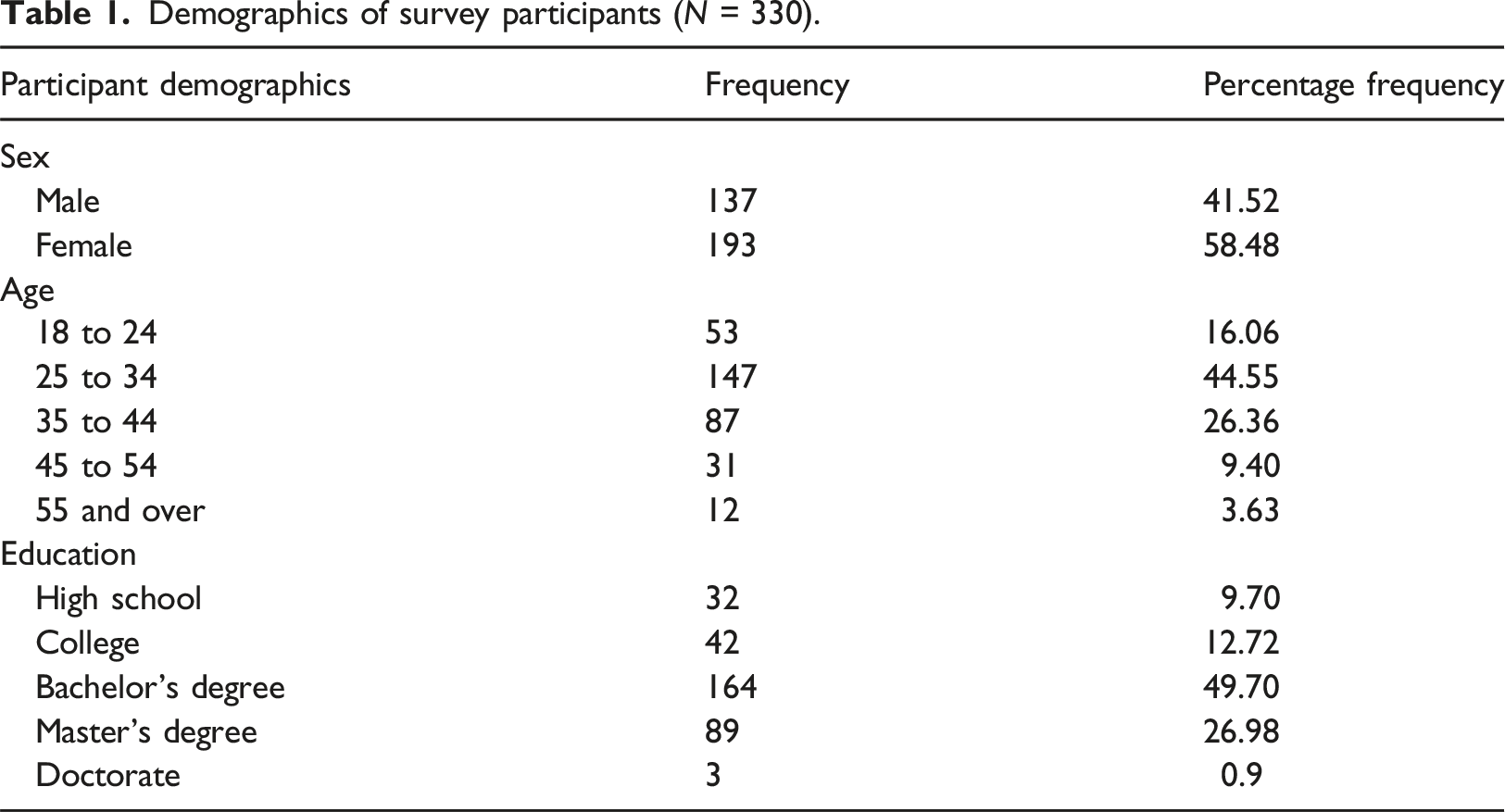
We recruited US-based Apple Watch users via surveying anonymized participant database panel with users aged 18 and older. Inclusion criteria for participation are being aged ≥18 years users of Apple Watch, owing and using the device for more than a month, and written informed consent. To ensure data quality, participants who answered less than 80% of the survey are excluded from further analysis. A total of 330 individuals completed the questionnaire, and 190 of them reported that they had used Apple Watch for more than 6 months, which we define as long-term users based on previous literature.36,37,49 The average age of the study sample is 41 years old (SD = 2.01). Fifty-five percent of the study sample are female participants. Moreover, study participants had used Apple Watch for an average of 20 months at the time of the study throughout the duration of COVID-19 (2020-2022).
Data collection procedure and analysis
We initially contacted the 10 participants via phone to confirm their suitability for participating in the diary study. All participants agreed to a 30-min interview prior to the diary study. At the end of the interview, we asked participants to use their smartphones to take pictures/videos throughout the follow-up diary study, providing insights into the role of Apple Watch in their daily lives. The participants sent the screenshots or videos with annotations to the research team. We describe the process of our diary study as follows: • Participants are provided two diary entries per week (4 total) that contain context-relevant prompts, capturing their interactions with Apple Watch. They were encouraged to upload screenshots and artifacts of use: pleasant or unpleasant aspects of interaction. • Diary entries included details about the duration and purpose of usage, perceived benefits, and any challenges encountered. • Participants are encouraged to provide qualitative insights and reflections on their experiences throughout the two-week sampling period via email, SMS and via the diary entries.
The moderator (remotely) was available throughout the 2 weeks duration of the diary study for questions or clarifications to the users about what information they are sharing. Furthermore, prior to the diary study period, participants were invited to complete an online survey. This was extended to a wider audience and used to recruit qualitative sample participants as well. The survey consisted of structured and open-ended questions designed to assess various aspects of Apple Watch adoption, including self-efficacy, usability, satisfaction, and behavioral intentions. Questions were formulated based on established scales and previous research findings to ensure reliability and 52 validity.47,48,53,54
We proceed with analysis of the survey and diary study data as follows: • Diary entries were transcribed and analyzed thematically to identify recurring patterns and themes related to Apple Watch usage. • Quantitative data from the online survey were analyzed using descriptive statistics to summarize participants’ responses. • Summative comparison of the quantitative results and qualitative findings were conducted to explore relationships between variables and address the study research questions for Apple Watch adoption.
We should also point out that COVID-19 quarantine experience was disproportionate in strictness between countries and states. For example, many areas of the US were under a less restrictive quarantine (people could leave their homes anytime), meaning correlating use of Apple Watch efficacy during COVID-19 may not be entirely reliable. Notably, many participants in our study indicated a continuation of use regardless of quarantine.
Results
Descriptive statistics
Demographics of survey participants (N = 330).
Most of the study participants owned an Apple Watch for more than 2 years (81.63%), reporting that their main reasons for purchasing Apple Watch are: step counting, tracking their sleep, breathing, scheduling their activities, and swimming. The results highlight both the users’ interest and reliance to guide their wellness or fitness routine many times a day (64%). Interestingly, 68% of heavy users who are using Apple Watch more than 4 times a day, rely on wellness apps many times a day, and tracking multiple health trackers fall into the 25-44 years old range. This is in contrast with light users who are using Apple Watch up to 3 times per day or weekly, rely on wellness apps several times a day, and tracking fewer health markers as 48% fall into the 25-34 years, and only 20% in the 35-44 years old range.
Specifically, users in this study reported being very confident with the use of their Apple Watch (93%), and with the use of computers and technology (95.8%) in general. Lastly, 41% of the study participants subscribed to Apple Fitness + service (on-demand classes content) via their Apple Watch. Note we view this as a marker of deeper engagement within Apple’s ecosystem product-service platform, enabled by the device.
Qualitative data findings
We collected and transcribed participants’ usage data through a dedicated email and SMS account established for communication with the researcher. These data were analyzed in conjunction with the participants’ weekly diaries. The participants primarily reported walking as their main activity (80%), with approximately 40% engaging in secondary or tertiary activities such as weightlifting, yoga, or cycling. The emphasis on walking can be attributed to gamification aspects of these trackers, as achieving the daily “step goal” is made easier. It is important to note that Apple Watch provides real-time nudges, such as “Close my rings,” based on biofeedback generated by the device tied to daily goals. Figures 1 and 2 illustrates the thematic coding of the user diaries. Diary study thematic coding.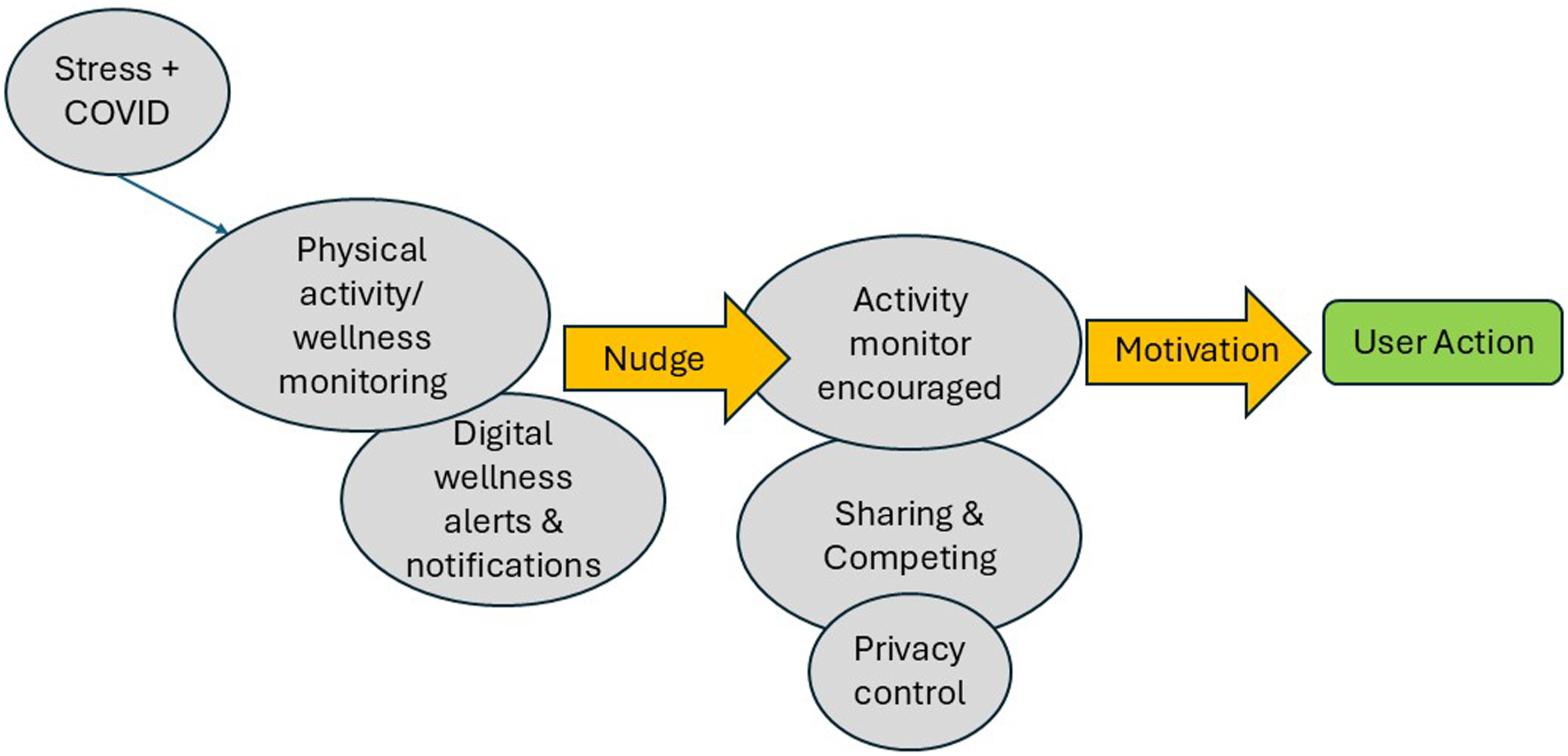
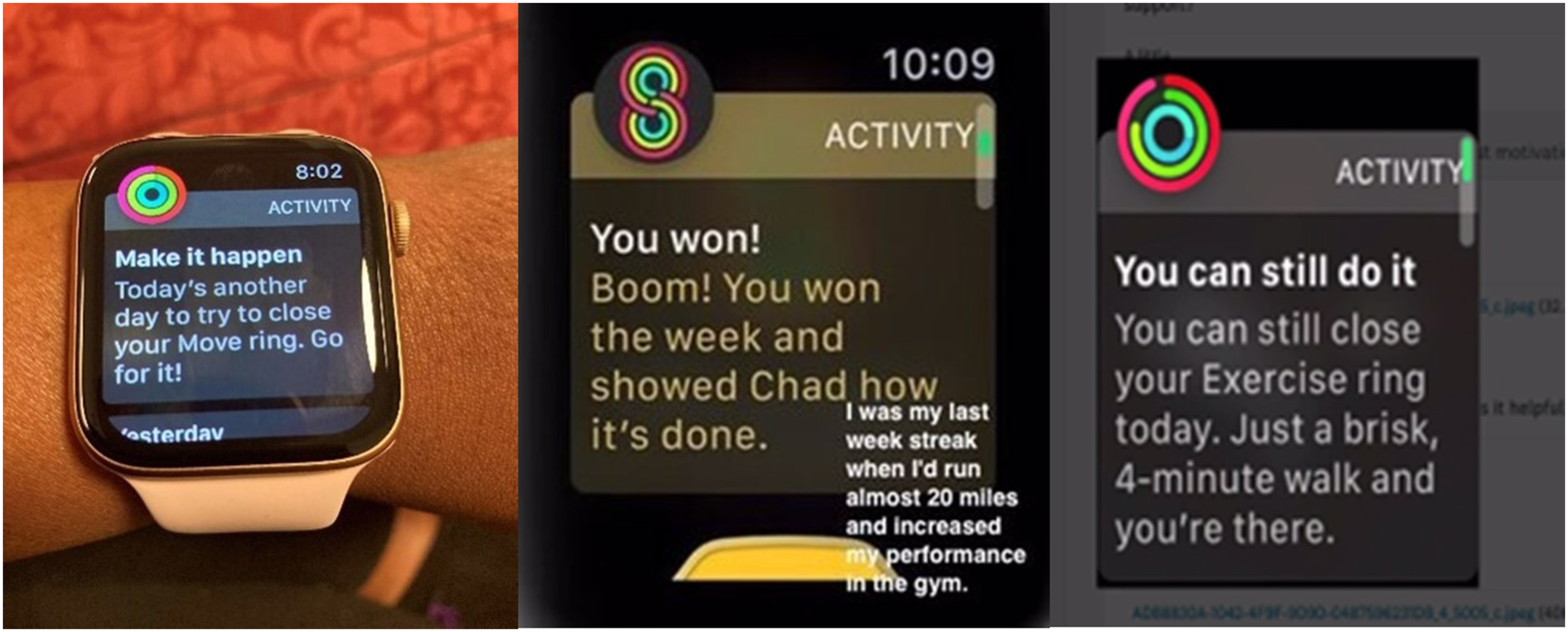
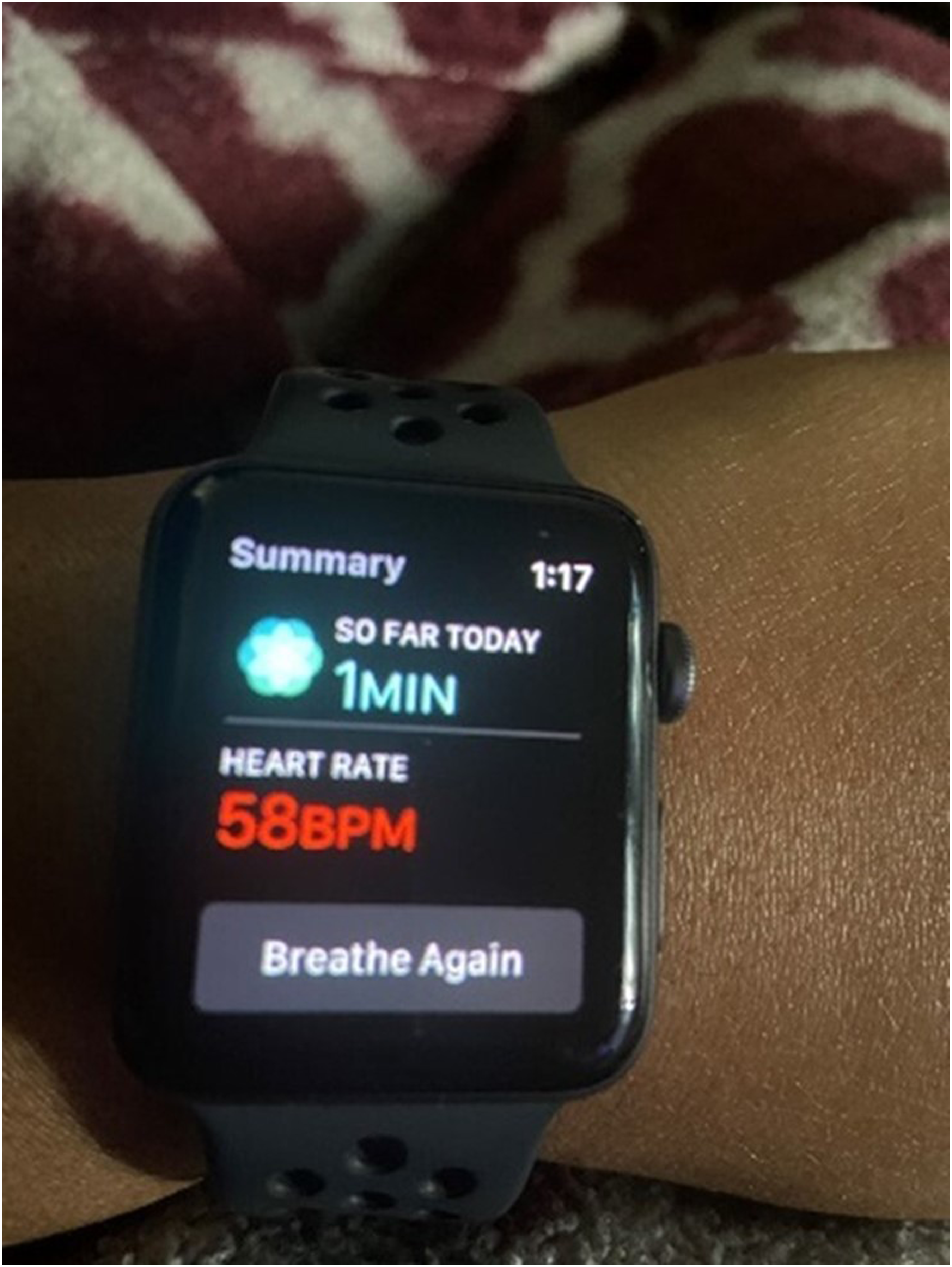
The interview questions also sought to understand if Apple Watch helped users through the pandemic lockdown and lack of access to a gym, for example. Users indicated that Apple Watch helped in tracking their health indicators such as blood pressure, heart rate, and sleep; stretching, weight-lifting activities, and planning their workout or movement routine. Three users indicated they are pushing Apple Watch goals to the limit and feel greatly motivated Figures 3–4. User screenshot of Apple fitness app during a workout (S2 - Short term user /heavy use). Users’ screenshot of activity motivation messages (S7 - long term user/heavy use), S4 - Short term user/heavy use, S8 - Short term user/heavy use respectively). Screenshot of calm app reminding user to breathe (S2 - short term use/heavy use).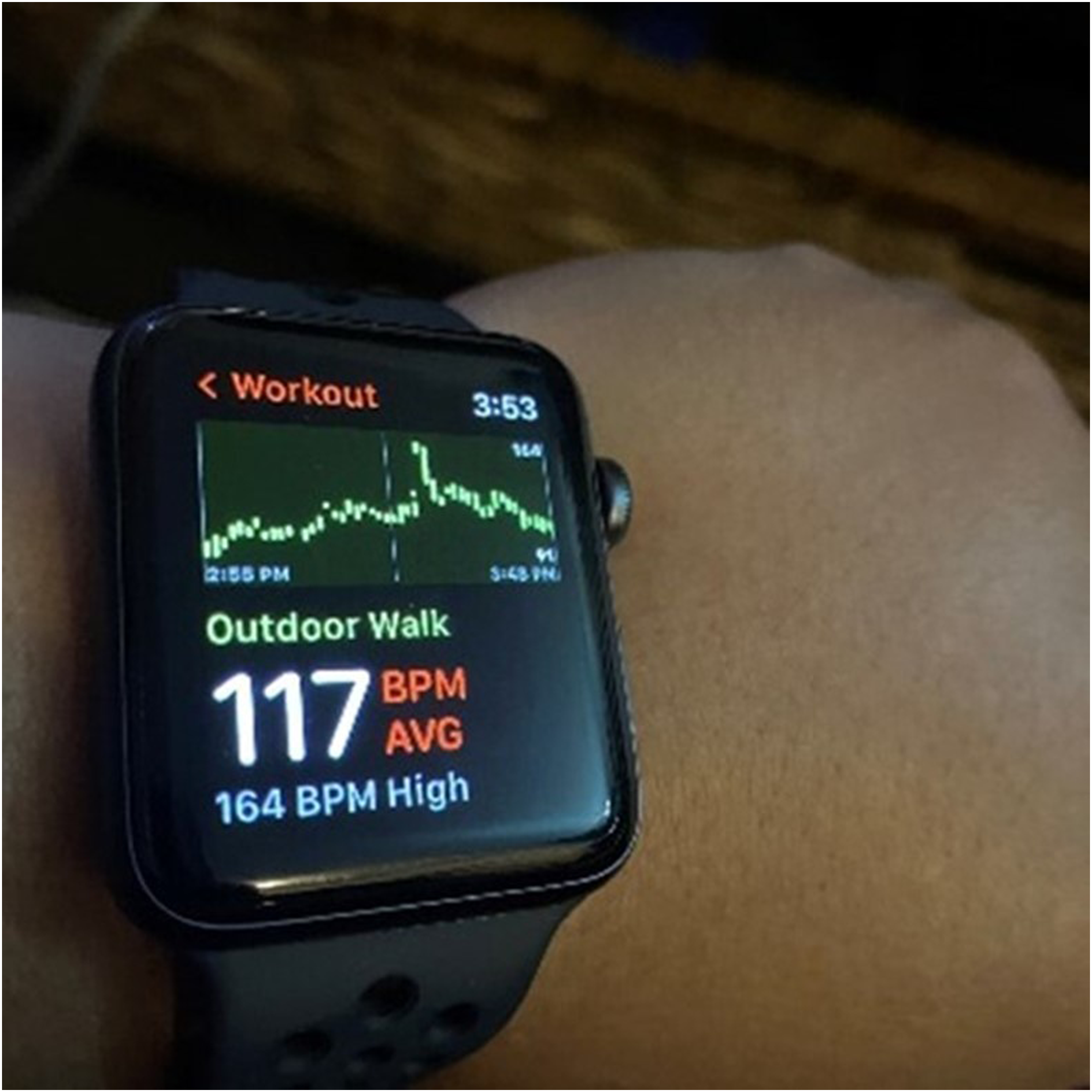
On average, users needed about a month to get used to Apple Watch (learnability), however, users reported that it was easy to navigate and doesn’t have a lot of complicated options. As two of the users note: ‘It improves my health, as it motivates me and makes me do more to meet my goals. It gives me more consistency and motivates me to meet my goals. When I am ill or need a day where I need to relax, I cannot let Apple Watch know, so I still get a notification in the morning to do my workout and meet my goals’. (S10 - long term user/heavy use) ‘This is the general activity log. I know it does not look like much- but I have been under the weather recovering from my covid booster. so the fact that I could reach my daily goal today was a really big deal’. (S8 - short term user/heavy use)
Due to variance in COVID compliance in the US users reported similar fitness habits as pre-lockdown. Lastly, the notifications provided by Apple Watch are reported as valuable overall however, having more control over nudge triggers would be helpful, as sometimes the nudges (alerts) are not interesting or relevant, which for some was more annoying than helpful.
Digital well-being and fitness goals
Digital wellbeing and meeting fitness, activity, and wellness goals is a primary motivator in Apple Watch adoption among the majority of users in our study. Users in our study reported that Apple Watch is highly valuable in getting real-time insights from their behavior, seeing if they are getting better, and getting recommendations or suggestions on how to improve. This is clearly the case, as the following user quote indicates: ‘Trying to be on top of burning my calories. If I at least hit at least 50, or 60%, which is roughly about three or 400 calories, I'm good, but I still try to strive towards my goal. The other ones I pretty much meet every day, but the calorie burning limit is 610 calories a day. I may not always get it every day, but I do come close’. (S8 - short term/heavy use)
Users mainly want to feel better, stay in shape/balance and maintain good habits (e.g. eat, sleep, move). Apple Watch reduces the effort to manage these tasks, for example when users want to adjust their goals or visualize their data.
In addition, users were motivated to continue using their Apple Watch and provided social motivation (sociability) with other users e.g. helping them break through a fitness challenge, helping them to get through the day with breathing nudges, while helping them improve their sleep.
Apple watch alerts and notifications
Managing alerts and notifications is one of the most important issues when using Apple Watch. Users found the alerts generally provided helpful, whereas some notifications including promotions or free-to-install features which turn out not free, are annoying. The following user quotes highlight this study finding: ‘The alerts and notifications keep me current with tasks I need to manage and reduce stress. I don't miss meetings, phone calls, or important information. As for health and exercise, they let me know when exercise is needed to stay current with my daily calorie intake and output’. (S5 - short term user/light use) ‘Yeah, on the fitness app, it'll tell me you need to get up and move like maybe if I'm sitting at home at my desk working he says it's time for you to get up and move I was like, oh, I need to stand up. So, it keeps me notified of what I need to do as far as getting my steps in every hour and throughout the day. (S8 - short term user/heavy use)
On the other hand, users found the notifications about how much time they should devote to tasks to get them done efficiently and in a productive manner very relevant.
The users reported their nudge experience with Apple Watch as very helpful. It offers auto-tracking of biofeedback that allowed them to easily monitor trends: for example, ‘You closed 5 rings, let’s go for 6 next week’, or ‘Calories, you did 400, your goal is 500 let’s lower it next week’. Here we see nudge theory at play, helping users move closer to or away from habits or trends that do not meet suggested, or user directed goals.
Sharing activity with apple watch
User responses are consistent in how they share their data with other users. Note Apple Watch has sociability features built into its nudge architecture, with an emphasis on transparency or showing others what they are doing. Sharing involved exposing finished workouts and achievements or goals to others, letting users follow their activity or triggering a competition. Several users raised privacy concerns over their sharing and use of their data like run/walk route maps, in addition to asking for more control on confidential data about face ID or third-party apps. 66% of users are concerned with privacy, and 33% want more privacy control, particularly those who are making heavy use of wellness apps.
Moreover, users reported features that they felt Apple Watch was missing. For example, the following user pointed to the need for more inclusive content: ‘I'd like it to be age appropriate. I think the metrics should be calibrated against apps like Peloton better and should adjust for age. For example, exercise routines on Peloton are truly geared to the young athlete, and it would be nice to be able to slow down the delivery of the app and take classes at a slower level to make it easier to measure what I actually do”. (S5 -short term user/light use)
In this respect, we should note that Apple Fitness+ (an additional paid for service) introduced inclusive content later in 2021 for pregnant people, older users, new to fitness etc. However, this user was unaware of that as a Peleton user.
The majority of users also mentioned the need for more engagement of awards and challenges: “It doesn’t tell you about them, only tells you when you earned them-- just a spinning widget… e.g. January challenge, you earned this by doing 8 workouts… Doesn’t offer it daily…(S6 - long term user/heavy use)”.
Given concerns over design for safety, 55 this is something all devices should obfuscate or allow users to hide. Overall, these points reported by the study user suggest opportunities to address a more cohesive user experience (UX) with motivational health and wellness tracking.
Discussion
Our study looked at how individuals use their Apple Watches day-to-day and how engaged they felt with the device based on personal goals. We examined how adoption, regular use, and perceived engagement might vary among different users over time. Our qualitative data suggests a preference for less nudge responding and more auto-tracking. A similar study 56 found the need to avoid overburdening users, especially those with mental health challenges. In our study we saw higher motivation with watch-initiated tracking (100%) versus when the user had to manage the “start/stop/pause” of an event (75%). Getting the balance right between nudging and auto-logging requires careful contextual alignment.
What is the significance to our apple watch study?
Firstly, our study explored user adoption 57 during everyday fitness activities, particularly under mentally, physically and socially challenging lockdown conditions imposed by the COVID-19 pandemic in the US.
Secondly, the research aimed to investigate the efficacy of nudges based on biofeedback events provided by Apple Watch, such as the “Sitting Too Long Alerts” prompting users to stand up. Our study findings are consistent with 8 researchers who suggest facilitating user tasks and reinforcing behaviors as two of the main categories of technology-mediated nudging that lead to behavior change.
Our findings point to contextual relevancy of digital nudges tied to goals and daily achievement reinforcement. Apple Watch uses the ‘Close your Rings’ call to action. However, it is important to recognize that Apple Watch notifications can sometimes lead to decreased user satisfaction or well-being.58,59 Lastly, our study highlights the positive social role of peer nudging (competitions) and progress sharing, on user engagement, motivation, and overall user adoption. Recent research by60,61 show the importance of social factors and reward systems in reinforcing user compliance.
The results offer significant theoretical implications: Firstly, they contribute to the existing literature on technology user adoption and distraction by examining the underlying mechanisms and specific features of Apple Watch that influence user well-being in the context of distraction. In the case of Apple Watch, users largely enjoyed the distracting alerts because they are tied to goal completion, unlike in social media where they act merely as a participation prompt.
Secondly, the study improves understanding of how design choices, like nudging, can boost well-being in health apps. This knowledge can inform the underlying design of future wearable device and application user adoption, especially in light of AI-based approaches to wellness that proactively engage users with conversational agents (CA’s). 62
The practical implications of our study show the need for more user control (customization) over nudges. Specifically, we found the user need to align with specific goals mediated by privacy controls.
Study limitations
It is important to acknowledge the limitations of this study. Firstly, the data collected from Apple Watch users are primarily based in the US during COVID-19 which had different levels of compliance in each state. Cross-cultural perspectives might show more efficacy in high-compliant cultures. Future research should consider cultural factors, and demographics to assess the effects of nudges, distractions, and adoption on users’ well-being. Moreover, the two-week duration of the diary study may not capture long-term habitual or situational patterns accurately, e.g. a work trip or attending a social event may change usage. Thus, the study could be expanded to include other technologies and applications, exploring their impact on users’ behavioural intentions in specific health situations and conditions. 63
Conclusion
Apple Watch nudge architecture is largely critical for user adoption. However, our findings stress the need for better nudging alongside customized user control. In addition, activity tracking that is automatic versus nudged requires careful design consideration. We also find that sociability and privacy continue to play a key role, especially with biofeedback-enabled fitness trackers. Finally, Apple Watch relies on and boosts user adoption over time by triggering context-relevant interactions. By combining biofeedback with real-time contextual nudges, users are able to respond to small behaviors that add up to achieving their goals, motivating friends, and thereby achieving efficacy; without solely being left to interpret actions based on data alone, as found with less sophisticated health and wellness tracker designs. The introduction of AI will only make getting this balance right, more prescient.
Supplemental Material
Supplemental Material - “It tracks me!”: An analysis of apple watch nudging and user adoption mechanisms
Supplemental Material for “It tracks me!”: An analysis of apple watch nudging and user adoption mechanisms by Grigorios Asimakopoulos, Stavros Asimakopoulos and Frank Spillers in Health Informatics Journal.
Footnotes
Acknowledgements
We would like to thank all users who participated in this research and Experience Dynamics, Inc. For providing the necessary resources as well as coordinating the user diary study and the online survey.
Author contributions
G.A. prepared the study data and performed the analysis. S.A. conceived and designed the analysis, supported the data analysis and wrote the paper. F.S. conceived the designed the analysis, did the data collection, prepared the data and reviewed the paper.
Declaration of conflicting interests
The author(s) declared no potential conflicts of interest with respect to the research, authorship, and/or publication of this article.
Funding
The authors disclosed receipt of the following financial support for the research, authorship, and/or publication of this article: This work was supported by the Madrid Government (Comunidad de Madrid-Spain) with the project Excellence of University Professors (EPUC3M20) in the context of the V PRICIT; the project TED2021-130042B-I00, funded by MCIN/AEI/10.13039/501100011033 and by the European Union NextGenerationEU/PRTR; and the project PID2019-106874GB-I00/AEI/10.13039/501100011033, funded by the Government Research Agency of Spanish Ministry of Science and Innovation.
Ethical statement

Supplemental Material
Supplemental material for this article is available online.
References
Supplementary Material
Please find the following supplemental material available below.
For Open Access articles published under a Creative Commons License, all supplemental material carries the same license as the article it is associated with.
For non-Open Access articles published, all supplemental material carries a non-exclusive license, and permission requests for re-use of supplemental material or any part of supplemental material shall be sent directly to the copyright owner as specified in the copyright notice associated with the article.
