




Abstract

Keywords
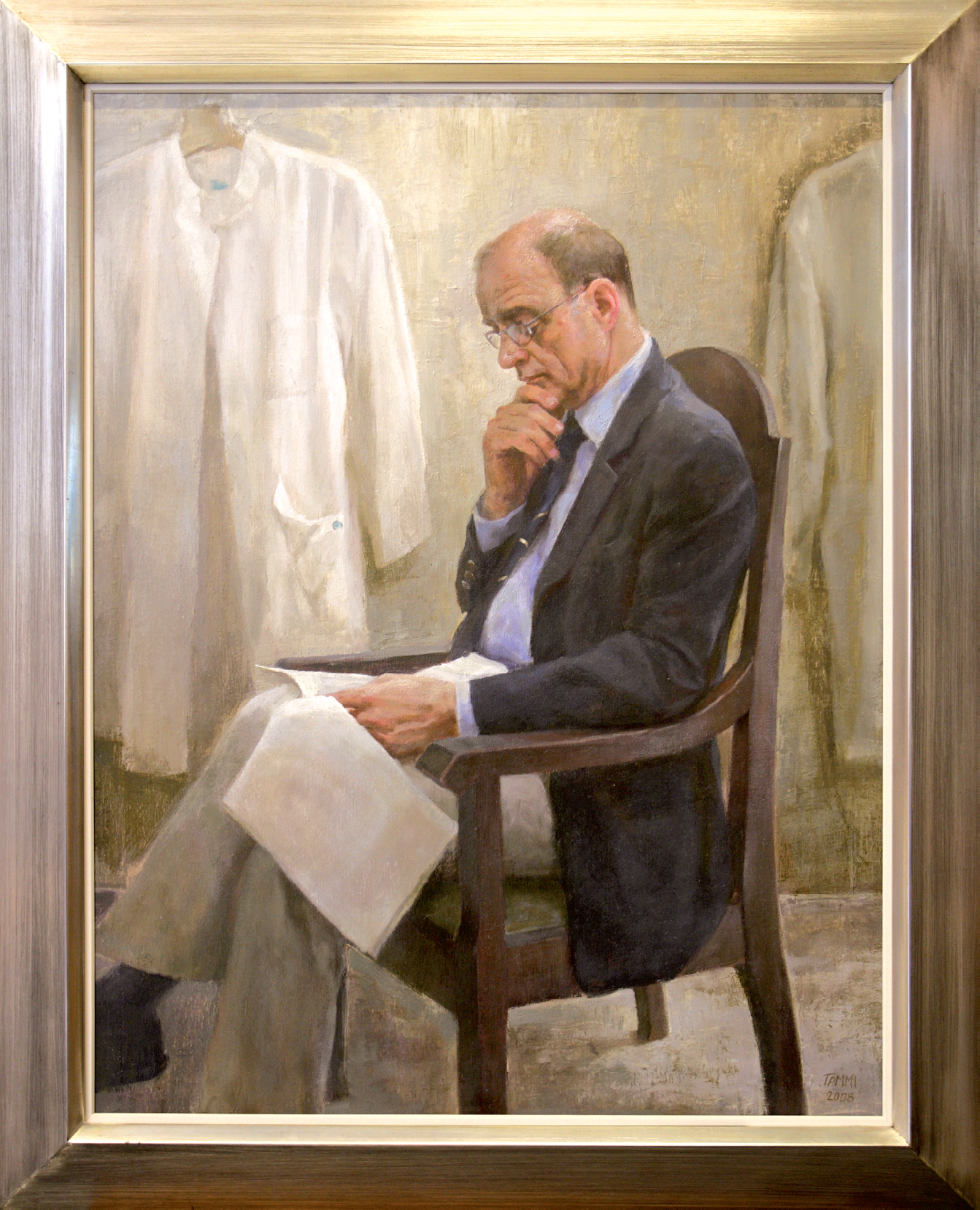
This Special Issue of the Journal is a tribute to Professor Mauri Lepäntalo at the time of his retirement, issued in connection with the symposium with the same title held in Helsinki in May 2012.
The beginning
An evening in May 1972 at 11.35 pm: a third-year medical student in a recovery room with a call to make.
“Sir, I am sorry to bother you, but the patient's leg is cool and there are no distal pulses.”
“Is the artery occluded?”
“I think so, Sir.”
“You should not think, you should know! And if you don't know, you should learn to know!”
He did, but gradually. Mauri Lepäntalo earned his M.D. and first published in 1975, incidentally on vascular diagnostics, but had no plans to specialise in vascular surgery at that point (1). As is often the case, the choice of specialty occurred by chance. Olof Lindfors, his mentor-to-be, had said earlier to his hesitant intern at the Surgical Hospital in Helsinki: “If you ever become interested in surgery, just give me a call.” This invitation led to a series of events and, finally, to a 21-year-long training and development period at the Surgical Hospital. In 1977, when Mauri was still a temporary trainee in anaesthesiology, he was offered the possibility to visit Växjö, Sweden. There, his eyes were opened to the possibilities of non-invasive vascular diagnostics inspired by Jan Erik Gjöres (surgeon) and Olav Thulesius (clinical physiologist). Full of excitement, he returned to Helsinki and rapidly organized a vascular laboratory, which is necessary for mapping the extent of disease as well as for quality control and the objective measurement of treatment effect. Shortly thereafter, he received formal training in general surgery and worked for more than a decade as a staff surgeon at the Surgical Hospital, increasingly involved in vascular as well as in thoracic surgery. He completed his formal training in thoracic and vascular surgery in 1987. During the same period, the vascular laboratory increased its annual throughput, as two nurses were involved in the diagnostics, and research projects emerged.
The rise of vascular surgery
A deeper interest in vascular surgery emerged in the late 1980s all over Scandinavia. Mauri was invited to represent Finland in the first Scandinavian vascular meeting, focused on content and training issues, in 1987. Over the following 15 years, there was a strong tailwind carrying the Scandinavian vascular surgery forward by mutual activities. First, the Vascular Surgical Section within the Scandinavian Surgical Society was established, and later it was transformed into the Scandinavian Association for Vascular Surgery (SAVS). Mauri was an active secretary and president for both the section and, later on, the association. In Finland, Mauri led the tireless work together with Juha-Pekka Salenius and Michael Luther to make vascular surgery a specialty in the busy years of 1994–1998. The dream, the detachment of vascular surgery from cardiothoracic surgery, came true in 1999. This was also a great inspiration to the Swedish vascular surgeons, who did not have their specialty recognized until 2006. During these years of struggle, Mauri served as the president of the Finnish Society of Angiology in 1992–2002, which offered a multidisciplinary platform for promoting new trends in the treatment of vascular diseases. Similarly, his role was important for the development and critical use of the national vascular registry, the FINNVASC (2). In Helsinki, Mauri got a separate vascular unit under his command in 1995, but the Department of Vascular Surgery did not become truly independent until 1998 at the Helsinki University Central Hospital. Mauri received the first professorship in vascular surgery in Finland in 2002, after which the department expanded to its present level, with 20 surgeons or trainees and a throughput of 1,400 open arterial, 1,400 endovascular arterial and 1,400 venous procedures annually, in addition to a good collaboration with interventional radiologists. The successful ESVS annual meeting was the greatest of the many meetings Mauri has arranged.
Addressing clinical issues with novel research
Mauri has always had a burning interest in trying to solve relevant clinical problems. An allegation that the administration of beta blockade worsens the symptoms of patients with intermittent claudication made him study the subject using the methodology of the vascular laboratory. He showed beautifully that there was no evidence to support the allegation (3). He had two other PhD projects of his own running in parallel while he was a surgical resident, with literature reviews still waiting in his desk drawer. Interestingly, one of those two included a number of non-invasive studies on severe leg ischaemia, the first of these published in 1982 (4). This happened before the term “critical limb ischaemia” (CLI) had even emerged. Since then Mauri has published more than 250 original articles and 200 reviews, guidelines or book chapters. He has also edited 10 books or special issues with vascular surgical topics in various journals, four of them in the Scandinavian Journal of Surgery or its predecessor Annales Chirurgiae et Gynecologiae (5).
Mauri's favourite child has been critical limb ischemia, the diabetic foot in particular. He has been a true pioneer and innovator for revascularization of the critically ischaemic foot. One of the extremes was construction of self-made stent grafts for femoral occlusions in the 1990's before commercial stent grafts became available (Railo 2001). A large group of national co-workers has been working together to widen the perspective of vascular surgery towards all three aspects of the triad of Virchow (6 –10), in addition to being an advocate for an active reconstruction policy on national and international forums since the 1980s. The best solution for a long occlusion causing CLI has been a long bypass using whatever vein available. Plastic surgeon Erkki Tukiainen has been his loyal and skilled partner in combining free-flap transfer with long bypass in patients with large ischaemic tissue lesions of the foot (11–12). Consequently, the proper organization of wound management before and beyond vascular surgery has become his latest interest.
Mauri has a wide range of international contacts as part of his vascular network and has headed or participated in a number of randomized controlled clinical trials. In addition to Scandinavian co-operation, there has been special interest among Italian, Japanese and Egyptian vascular surgeons to join his team, and visitors have always been welcomed. He has been active in creating international as well as national guidelines on peripheral arterial disease and the diabetic foot. Of the 21 theses supervised so far by Mauri 12 are related to the treatment of critical limb ischaemia and/or the diabetic foot. His key message on CLI is that ischaemia plays a far greater role in diabetic foot problems than has previously been recognized, and vascular assessment and intervention should therefore be considered early in the disease process (13).
All of us who have worked with Mauri are impressed by his never-ending enthusiasm and the number of new ideas he continues to generate in the search for evidence. When the data collection and analysis become sticky, Mauri always finds an angle on the study results that he is impressed with and fascinated in. One of his recent postgraduate students asked how Mauri could always be so passionate about the results and so eager to pursue the new angles the results had opened, while the student herself had never realised she had discovered anything of importance.
Clinics and training
Today, in everyday clinical practice, Mauri still plays an active role in the morning meetings and the bedside treatment of patients with critical limb ischaemia. Despite an important role in research, international activities and management, he makes weekly rounds on the vascular surgical wards, both at the Meilahti and the Jorvi Hospital, where every patient benefits from Mauri's human touch that we all recognize. He was an official tutor for six thoracic and vascular surgeons during the 1990s and has trained twelve vascular surgeons at his unit after the turn of the millennium.
Mauri always points out that whatever we do in surgery, we must measure and document the outcome, assess our results and reconsider what is worth doing and what is not. Ultimately, this approach should be used not only within any specialty but also between the specialties.
Mauri was the President of the European Society for Vascular Surgery in 2003–2004 and of the Finnish Surgical Society in 2004–2006. He is an honorary member of four distinguished vascular societies, including that of Great Britain and Ireland. When he was elected an honorary member of the Swedish Society for Vascular Surgery in 2011, he was the first non-Swedish person to receive the recognition.
The Finnish, Nordic, European and global vascular communities thank Mauri for his immense contribution to the development of scientific vascular surgery in general, and to the treatment of patients with critical limb ischaemia in particular. His strong support for enhancing the development of vascular surgery in all of the Nordic Countries has been decisive. Most important of all, however, is the great passion he has shown when treating the suffering patients and in being a role model for future health care professionals.