




Abstract
Introduction
The Nordic countries (Denmark, Finland, Iceland, Norway and Sweden) have many commonalities in terms of history, values and societal frameworks. Nordic countries also share many features when it comes to control policies. The so-called “Nordic model” or “Nordic way” has been described as a set of common traits in terms of policy objectives and policy designs within the region (Andersen et al., 2016). The Nordic model is defined by policies that align with principles of the welfare state. In economic policy, the Nordic model involves combining state control with free-market capitalism (Andersen et al., 2007). Policy approaches to the sale of addictive commodities have also been characterised by state control. In most Nordic countries, regulation and control of alcohol and gambling, have traditionally focused on active state intervention in the market and related restrictions on private profit-seeking. The idea of the Nordic model has been used to understand Nordic alcohol policy, in particular (Room & Tigerstedt, 2007). The term has also been used to analyse gambling policies and cultures in the Nordic region (Matilainen, 2016; Thompson, 2025).
In terms of concrete policy tools, the Nordic model of regulating alcohol and gambling has involved stringent restrictions on physical availability and marketing, as well as high price levels via heavy taxation. Restrictions on physical availability have been embodied by state monopolies in most of the Nordic countries. Historically, and still today, monopolies have been used as a vehicle for the double purposes of public health as well as state revenue generation (Room & Cisneros Örnberg, 2019). Monopolies in the alcohol and gambling markets have been justified in terms of the harms and costs to individuals and societies (Babor et al., 2023; Sulkunen et al., 2021). In the Nordics, policies have therefore aimed at protecting public health with effective population-level regulation (Room & Cisneros Örnberg, 2019; Room et al., 2006). In addition to their public health mission, monopolistic operators have been charged with public finance objectives to produce revenue for states (Room & Cisneros Örnberg, 2019; Nikkinen & Marionneau, 2021).
The tradition of strong state control is still visible today in how alcohol and gambling are regulated in the Nordic region. All Nordic countries, apart from Denmark, continue to restrict the sale of alcohol within monopolistic structures (Jónsson & Kristjánsson, 2013; Tigerstedt, 2001; Karlsson et al., 2020; Karlsson, 2014). Even the self-governing Faroe Islands operate their own alcohol monopoly, founded in 1992 (Larsen & Hansen, 2023). Until the 2010s, the regulation and provision of gambling has also been organised via monopolistic structures in most Nordic countries. However, regulatory changes have since been implemented in Denmark, Sweden and, currently, in Finland (Nikkinen & Marionneau, 2021; Spångberg & Svensson, 2022; Cisneros Örnberg & Tammi, 2011; Cisneros Örnberg & Hettne, 2018; Järvinen-Tassopoulos et al., 2024).
In recent years, the Nordic model has been challenged by both internal and external pressures. Globalisation of markets and the free circulation of goods and services within the European Union (EU) and the European Free Trade Association (EFTA) areas have challenged the possibilities of the monopoly model to restrict consumption (Marionneau & Hellman, 2020; Örnberg & Ólafsdóttir, 2008). At the same time, monopolies are challenged by strong commercial interests in the provision of these products (Marionneau & Hellman, 2020). In the gambling field, monopolies have faced competition from so-called offshore providers in online environments. Imports and online trade are also challenging the premise of alcohol monopolies (Trolldal, 2023; Finnish Institute for Health and Welfare, 2024a). Further competition emanates from within-borders in the form of farm sales or expanded alcohol availability in retail networks (Lindeman, 2024; Dahlström, 2024).
The evolving landscape of alcohol and gambling regulation raises the question whether a ‘Nordic model’ still exists in the field. The aim of this study is to provide a comparative review of current policies and policy debates on alcohol and gambling across the Nordic region. We analyse how current policies are formulated, implemented, how they have developed in relation to consumption and harm indicators, and how policies are changing. Our findings shed light on the regulatory systems and practices governing alcohol and gambling in Nordic countries and on the future prospects of the Nordic model.
Methods
Theoretical premise
We produced a review of current gambling and alcohol policies in the Nordics by systematically scoping for relevant documents. The aim was to analyse objectives, implementation and outcomes of Nordic policies on alcohol and gambling to understand current similarities and differences in policy within the region. We also analysed on-going political debates to change policy to gain understanding of policy directions. In line with the scoping review methodology applied to policy studies, we therefore focused on mapping rather than assessing policies (Peters et al., 2021).
Our analysis is informed by theoretical understandings of cyclical policy processes. Policy cycles are a heuristic tool used in public policy literature to understand the different phases of policy processes. Policy cycles consist of distinct policy phases, including agenda-setting (framing), formulation, adoption, implementation and evaluation (Jann & Wegrich, 2017; Lasswell, 1956). Understanding policy processes as cycles emphasises the importance of feedback loops between phases and the perpetuation of the process (Jann & Wegrich, 2017). A focus on the wider policy life cycle provides a more comprehensive view of policy directions. Because policy processes are cyclical, they are also in a constant process of renewal (Lasswell, 1956). Most gambling policy research focuses on individual policy phases (cf. Aimo et al., 2023). Conversely, Nordic alcohol research has traditionally focused on longer-term trends and processes (Tigerstedt, 2001; Ugland, 2002; Cisneros Örnberg, 2009; Karlsson, 2014).
In the current analysis, we focus on three crucial stages of the policy process: agenda setting (how policies are framed and what their stated aims are), implementation (what kind of policy tools are available to reach these aims) and evaluation (potential outcome indicators). In addition, we analyse on-going policy changes.
Data and search strategy
As a result of our focus on three distinct policy phases (framing, implementation and outcomes), as well as policy changes, our data retrieval strategy consisted of several steps. First, agenda setting and implementation were analysed based on current legal provisions. We conducted searches for the main gambling or alcohol legislation from national legal databases (Denmark: Retsinformation; Iceland: Government website; Finland: Finlex; Norway: Lovdata; Sweden: Riksdagen). The searches were conducted during August to September 2024 and reflect the situation at that time. This dataset included up-to-date legislation on alcohol and gambling in each Nordic country. This dataset allowed us to identify legal framings and implementation of policies.
Second, evaluation (potential outcome indicators of policies) was analysed using key consumption indicators related to total consumption and harm. We retrieved these from national public health and gambling authorities or statistical repositories. We included the latest data available. In addition, we contacted national agencies and departments, as well as academics, familiar with gambling or alcohol policy to gain further information. All data in other currencies than Euro were converted into Euro using the conversion rate of 2 December 2024. For per capita figures, we divided available total sales figures by total population over 18 years old.
Third, we scoped additional sources to identify any on-going alcohol or gambling policy changes and policy debates that are not yet visible in up-to-date legislation. For alcohol policy, we scanned relevant information and news on two specialised websites: Nordic alcohol (www.nordicalcohol.org) and PopNAD (www.popnad.com). Nordic alcohol is the website of the Nordic alcohol and drug policy network (Nordan) that regularly posts information and news on these topics based on debate in large Nordic newspapers and newsletters. PopNAD is a Nordic popular scientific website that publishes articles on the alcohol, narcotic, doping, tobacco and gambling fields. We conducted a comprehensive search of the Nordic Alcohol and Drug Policy Network (NordAN) website using the keyword “alcohol policy”. The search yielded 218 entries from January 2021 to November 2024. From this dataset, we selected entries specifically pertaining to the Nordic countries. Additionally, we reviewed all 48 articles published under the “alcohol” category on the PopNAD platform to ensure comprehensive coverage and to avoid any omissions in our analysis.
To analyse gambling policy changes, we charted news on policy developments in the region using the database of Vixio Gambling Compliance (2021). Vixio is a gambling intelligence service providing news on regulatory and market developments, under license. To capture all on-going and recent policy debates in the field, we searched for any news on policy changes in the Nordic countries between January 2021 and September 2024 using the regulatory updates section of the database. We first retrieved all regulatory updates on the Nordic countries (N = 349). However, most of these concerned fines issued to operators for various breaches, regulatory improvements to Anti-Money-Laundering policy, or policy changes in Finland focusing on improving control of the national monopoly (prior to 2023) or shifting the regulatory model to a licensing system (late 2023 and 2024). We only included regulatory changes that focused on availability, taxes, visibility or other gambling-specific consumer protection measures (N = 26). Due to lack of reporting on Iceland in the Vixio database, we also conducted web scraping to find other sources on Icelandic gambling. This resulted in the inclusion of one additional source, as reported in the results.
Analysis
Legal framings were retrieved from legislative framing sections of national alcohol and gambling laws. These legislative intents are usually presented in the first paragraphs of legal documents. Legislative framings are an indication of the overall principles governing policy and the main aims of its implementation. For the analysis, we classified these framings thematically based on recurring categories and themes.
Policy implementation-related information was retrieved using the World Health Organisation's (WHO) “best buys” approach. The WHO best buys relate to successful regulation of alcohol policy and include three key regulatory tools: restricting physical availability, high taxes (restricting affordability) and restricting marketing (WHO, 2011; Babor et al., 2023). While all of these policies can serve multiple functions, they have concrete public health implications. To enable comparison, we also used the same best buy indicators for gambling policy, although these are less established within that field. In addition to best buys, we included information on the regulating authorities because these were expected to influence regulatory prioritisation.
There were some limitations in using the same analytical framework to compare alcohol and gambling. Gambling is increasingly a digital-first commodity (Wardle et al., 2024), whereas alcohol is a tangible substance. For this reason, we did not include information on opening hours in our analysis despite their importance in alcohol regulation. Conversely, we have also not included policy initiatives to block and control offshore markets as these are highly gambling-specific.
Policy outcomes were analysed using key regulatory and consumption indicators. We constructed a framework to analyse these indicators inductively, based on an initial reading of our data and the possibilities of comparison. The outcome indicators focused on total consumption-related indicators, including per capita consumption, financial surplus to state, and population prevalence of use and problematic use.
Finally, we compared ongoing and recent policy changes in the gambling and alcohol sectors using the same best buy categories as in our analysis of implementation. The choice to focus only on these categories was our overarching aim at mapping public health-related policies rather than the full policy development field (including also other regulatory priorities such as crime prevention, anti-money laundering, or data protection issues, see Wardle et al., 2024). Because the best buys are not established in the gambling sector, we also included a category for “other consumer protection measures”. This allowed us to capture potential additional developments in gambling regulation.
Results
Legal framings
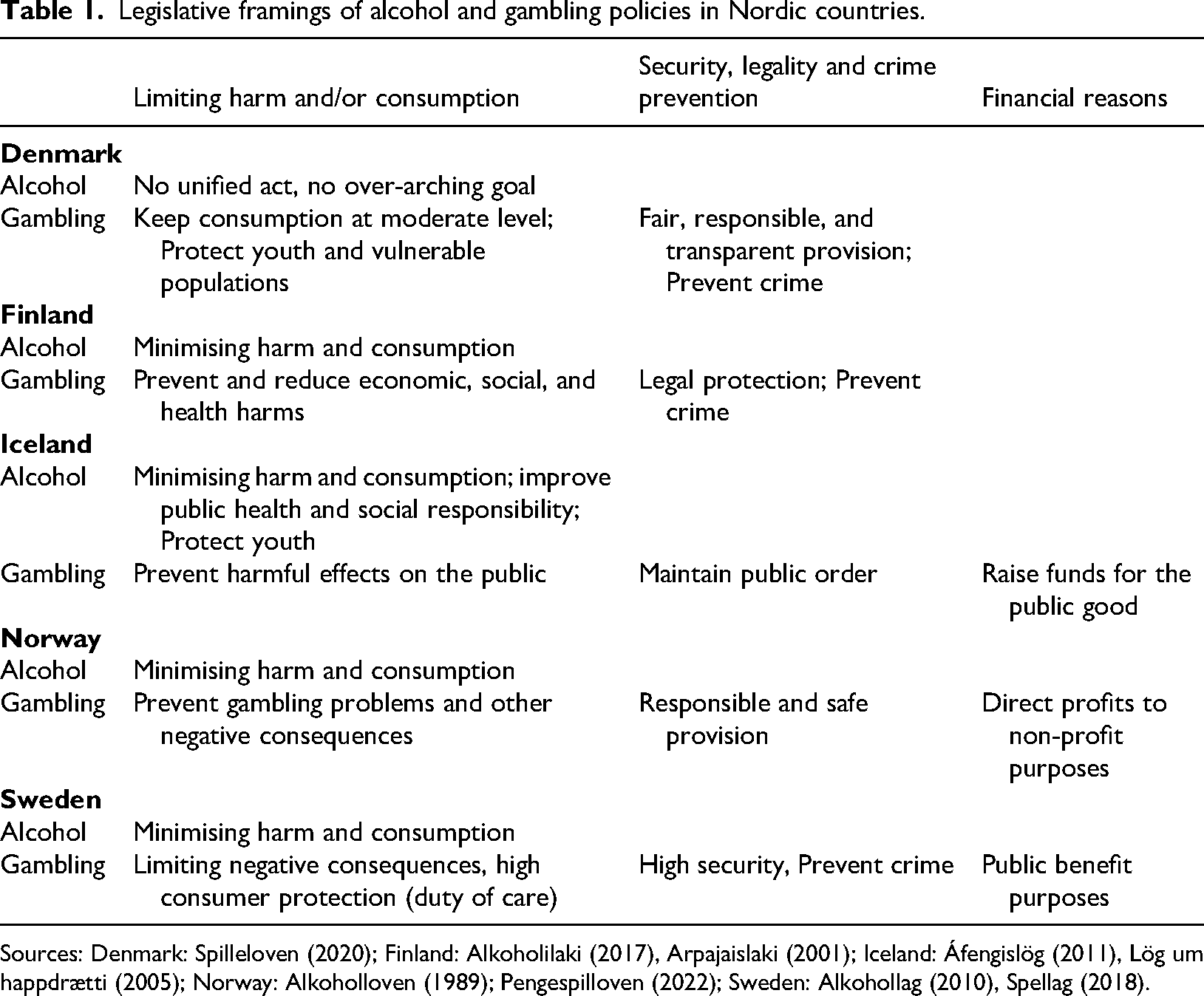
Framings set the aims of policies. A summary of the legislative framings given in alcohol and gambling policies across the Nordic countries is provided in Table 1. Results show divergence across framings for alcohol and gambling: In each Nordic country, alcohol laws aim at reducing population-level harm and damage by limiting total consumption. For gambling, legislative framings are more varied. Population-level harm prevention was also one of the legislative aims for gambling control in all Nordic countries. However, the vocabulary differed from alcohol legislation. In alcohol laws across all countries, harm prevention included limiting total consumption. For gambling, harm prevention did not include references on limiting total consumption, but rather on limiting the negative consequences of consumption.
Legislative framings of alcohol and gambling policies in Nordic countries.
Sources: Denmark: Spilleloven (2020); Finland: Alkoholilaki (2017), Arpajaislaki (2001); Iceland: Áfengislög (2011), Lög um happdrætti (2005); Norway: Alkoholloven (1989); Pengespilloven (2022); Sweden: Alkohollag (2010), Spellag (2018).
Another key difference in legislative framings for alcohol and gambling related to the number of aims. In all Nordic countries, except for Denmark, harm prevention and limiting total consumption was the sole aim of alcohol legislation. While harm prevention was also included in each gambling law, this framing was presented alongside a range of other aims such as crime prevention, security or revenue generation. For example, in Iceland, the gambling law included an aim to raise funds for public good, including “social, cultural, sports, or charitable causes, such as international humanitarian work” (Law on Lotteries, No. 38/2005, 2–3 gr.).
We also found differences between countries, particularly with regard to gambling legislation. The breadth and scope of public health reasoning varied across countries. In Finland, Iceland and Norway, the legislative aim was to prevent harm from gambling, while, in Sweden and Denmark, the aim was only to limit or reduce harm. Similarly, countries differed in how many legislative aims were included. Sweden, Norway and Iceland included aims across all three categories (harm, safety and financial), whereas financial reasons were not part of the legislative aims in Finland or Denmark.
Policy implementation
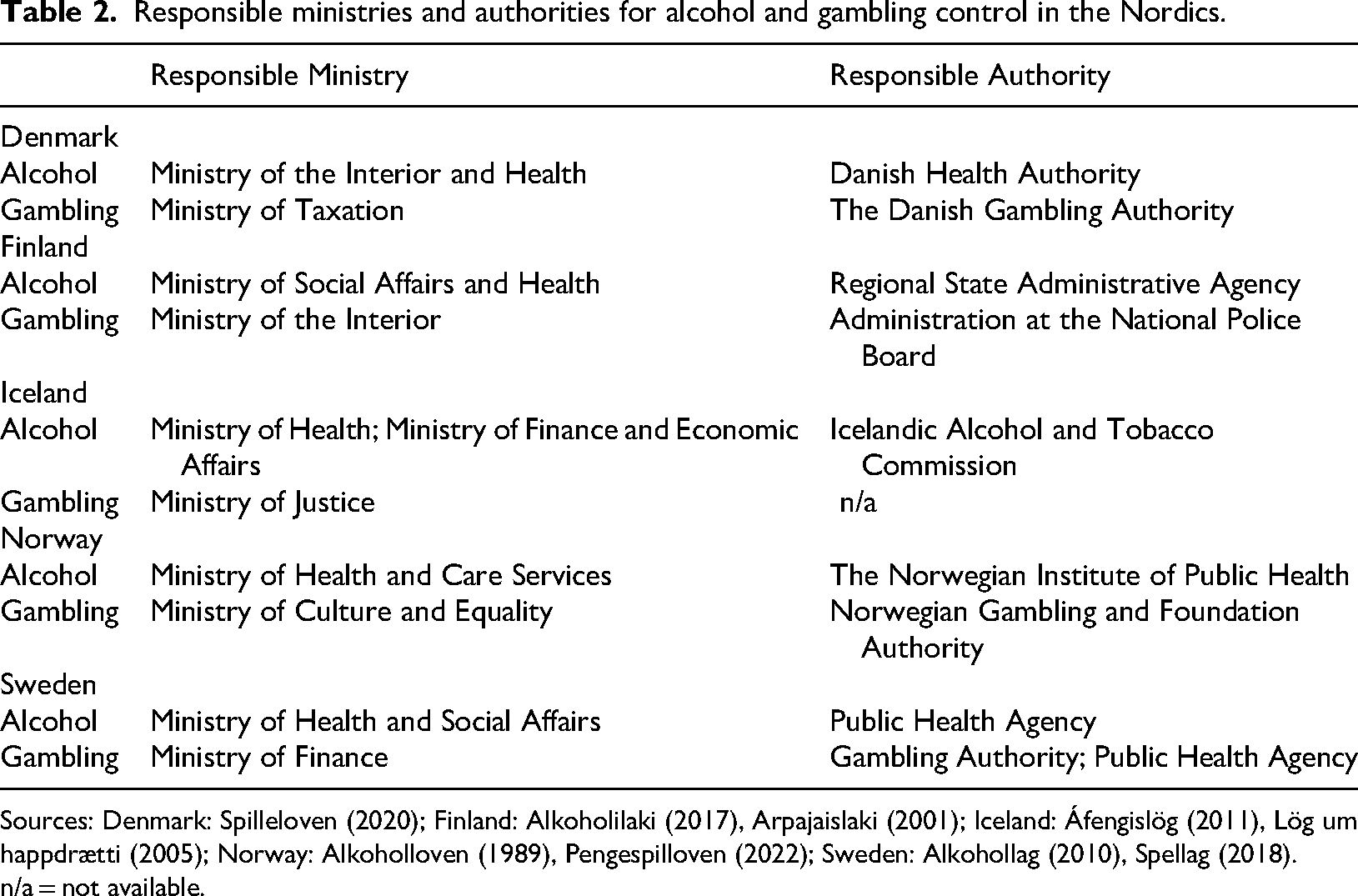
Table 2 presents the main responsible authorities in charge of implementing alcohol and gambling policy. The results show important divergence in terms of regulatory responsibility for alcohol and gambling. All Nordic countries entrust the regulation of alcohol-related matters to ministries responsible for health or social affairs. Iceland has split the responsibility between the Ministry of Health, which is in charge of public health policies, and the Ministry of Finance, which is responsible for setting and collecting taxes on alcohol products. In contrast, health ministries are not in charge of the regulation of gambling in any Nordic country. Instead, regulation of gambling is undertaken by ministries in charge of taxation and finance (Denmark and Sweden), interior (Finland), justice (Iceland) or culture (Norway). This result reflects the overall aims of the legal frameworks.
Responsible ministries and authorities for alcohol and gambling control in the Nordics.
Sources: Denmark: Spilleloven (2020); Finland: Alkoholilaki (2017), Arpajaislaki (2001); Iceland: Áfengislög (2011), Lög um happdrætti (2005); Norway: Alkoholloven (1989), Pengespilloven (2022); Sweden: Alkohollag (2010), Spellag (2018).
n/a = not available.
The responsible authorities for the implementation of policy and regulation also varied across countries. Overall, duties related to gambling regulation were given to specialised regulatory bodies, whereas alcohol regulation was undertaken by public health administration. For example, in Denmark and Sweden, national public health agencies are also tasked with developing guidelines and running public health campaigns to reduce alcohol harm.
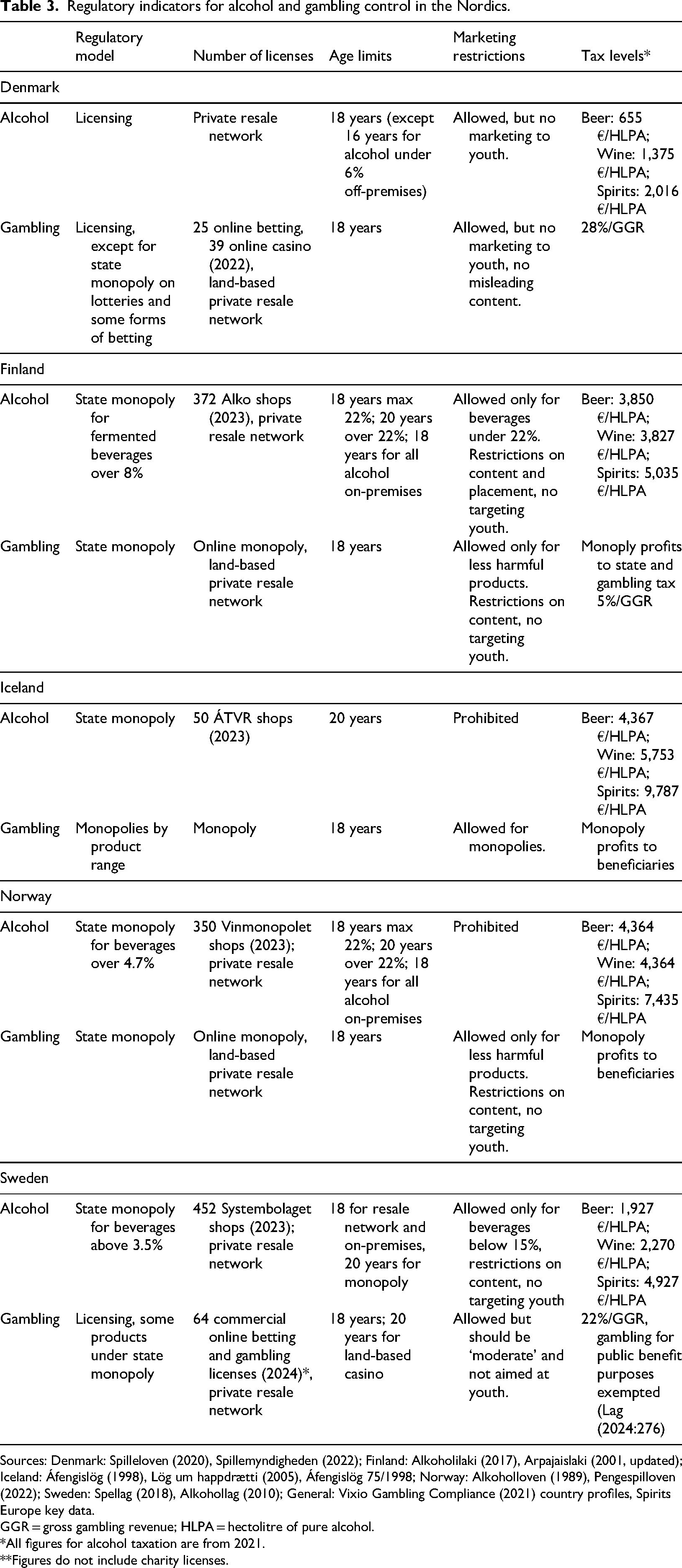
Table 3 presents the results of policy implementation based on WHO best buys. We noted the regulatory model and number of licenses (availability indicators), marketing restrictions and tax levels (pricing indicator). Similarly to policy framings, alcohol policy implementation was stricter than the implementation of gambling policy. This was visible particularly as somewhat higher age limits for some alcohol products (with the exception of Denmark), higher prevalence of monopolistic structures for alcohol (again, with the exception of Denmark) and stricter rules for alcohol marketing in some countries. Tax levels could not be compared between alcohol and gambling products due to highly differing tax mechanisms and differences in reporting tax.
Regulatory indicators for alcohol and gambling control in the Nordics.
Sources: Denmark: Spilleloven (2020), Spillemyndigheden (2022); Finland: Alkoholilaki (2017), Arpajaislaki (2001, updated); Iceland: Áfengislög (1998), Lög um happdrætti (2005), Áfengislög 75/1998; Norway: Alkoholloven (1989), Pengespilloven (2022); Sweden: Spellag (2018), Alkohollag (2010); General: Vixio Gambling Compliance (2021) country profiles, Spirits Europe key data.
GGR = gross gambling revenue; HLPA = hectolitre of pure alcohol.
*All figures for alcohol taxation are from 2021.
**Figures do not include charity licenses.
We also found differences between the Nordic countries. Denmark stands out as a more “liberal” country with regard to both alcohol and gambling policy. There is no state monopoly on alcohol, and the gambling monopoly only covers a minority of products (lotteries and some land-based sports betting). Other Nordic countries operated resale monopolies for the sales of alcoholic beverages, although to differing thresholds. In Iceland, the state monopoly covers all alcoholic drinks. In other monopoly countries, Finland had the highest threshold for alcoholic beverages that could be sold outside of the monopoly structure (8% compared to 4.7% in Norway and 3.5% in Sweden).
For gambling, state monopolies were operated for some products in all countries. In Norway, Finland and Iceland, all regulated gambling offers were provided under monopolistic umbrellas. However, the resale of many gambling products is also allowed for private retailers, such as supermarkets or restaurants. This was the case for products such as scratch cards, lotteries and, to some extent, electronic gambling machines (EGMs).
Marketing regulations varied to some extent across countries and products. Norway and Iceland prohibit marketing of alcohol. In Finland and Sweden, marketing is only permitted for products under 22% or 15%, respectively. All countries also prohibit targeting advertising at young audiences. Content is regulated to not encourage an overly positive image of alcohol use. For example, in Finland, the Alcohol Act included several rules on alcohol marketing, such as controls on content, media, public visibility, sponsorship and digital marketing in social media. In Sweden, all alcohol advertisements must also include a health warning.
Gambling advertising is permitted in all countries, except Iceland. All countries have limitations on the content and target audiences of gambling advertising (youth and vulnerable populations). There are also some restrictions on which products can be advertised in Finland and Norway. Both Finland and Norway also state that marketing of gambling should aim at “channelling” consumption from offshore markets to the monopoly.
In terms of taxation, Iceland and Norway had the highest levels of overall alcohol tax, whereas tax levels in Denmark were comparatively lower than in other Nordic countries. In all countries, tax levels for alcohol beverages varied depending on the type of alcohol. Beer or wine are generally taxed at the lowest levels, while the tax rates for spirits are higher. Alcohol taxation is typically counted as euros per hectolitre (100 litres) of pure alcohol (HLPA). For gambling, taxation of licensed operators is based on so-called gross gambling revenue (GGR) (i.e., company revenue after winnings have been paid out). Tax levels in Denmark are higher than in Sweden (28% compared to 22%). In monopolistic countries, gambling profits are transferred to state coffers (Finland) or to earmarked beneficiaries (Norway and Iceland).
Policy outcomes
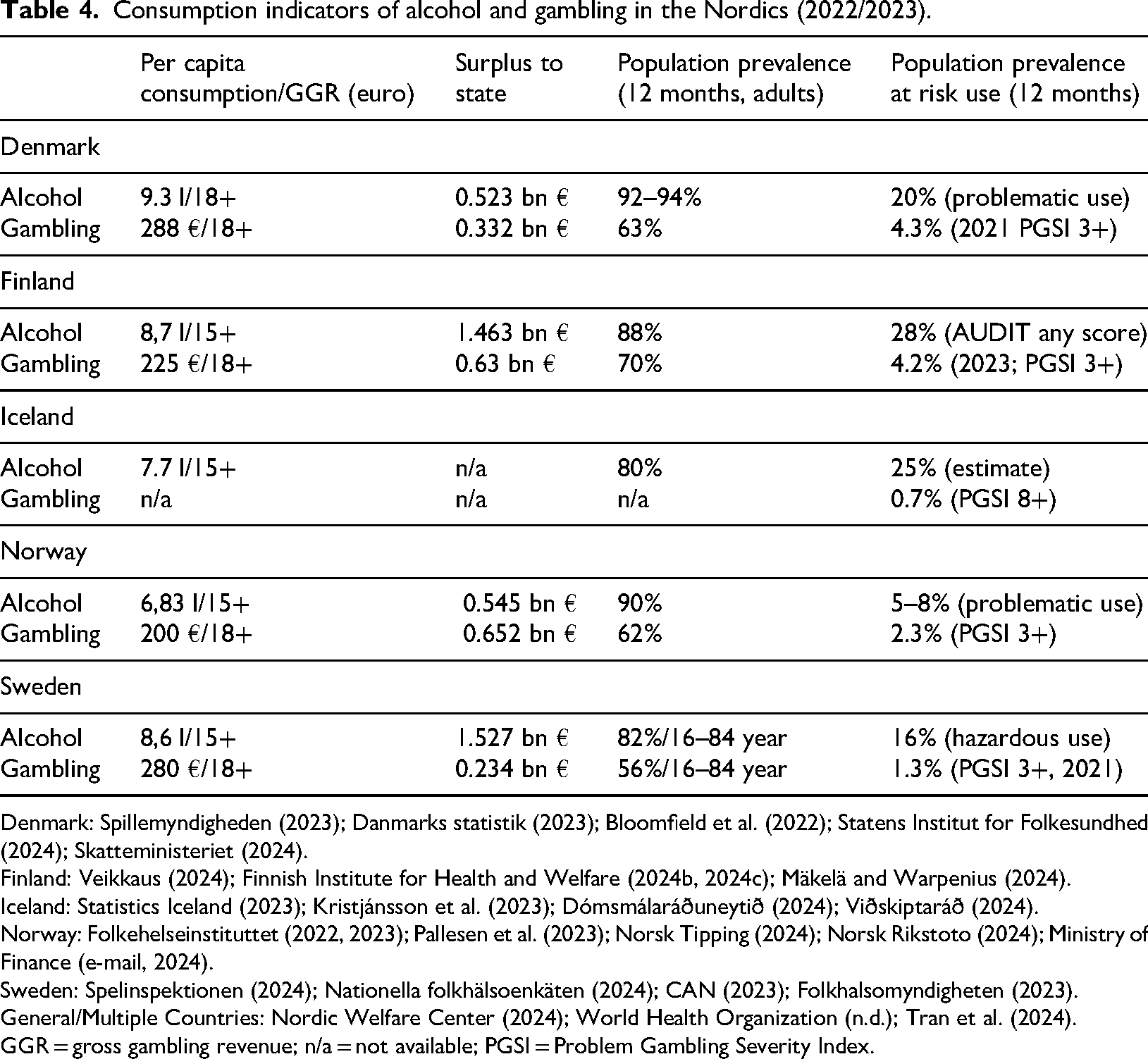
We also analysed potential outcomes of policy choices. The focus of this part of the analysis was on consumption indicators, including sales, per capita consumption and population prevalence. The results are described in Table 4. The results show some divergence across countries and products. Many indicators are difficult to compare between gambling and alcohol as a result of differing levels of monitoring between commodities and across countries. Overall, we found that the population-level prevalence of alcohol consumption tends to be higher than gambling consumption. We also found that, in all countries, gambling and alcohol are significant to national economies in terms of surplus transfers to states. In most contexts, surplus to state from alcohol is higher than from gambling, reflecting higher total consumption.
Consumption indicators of alcohol and gambling in the Nordics (2022/2023).
Denmark: Spillemyndigheden (2023); Danmarks statistik (2023); Bloomfield et al. (2022); Statens Institut for Folkesundhed (2024); Skatteministeriet (2024).
Finland: Veikkaus (2024); Finnish Institute for Health and Welfare (2024b, 2024c); Mäkelä and Warpenius (2024).
Iceland: Statistics Iceland (2023); Kristjánsson et al. (2023); Dómsmálaráðuneytið (2024); Viðskiptaráð (2024).
Norway: Folkehelseinstituttet (2022, 2023); Pallesen et al. (2023); Norsk Tipping (2024); Norsk Rikstoto (2024); Ministry of Finance (e-mail, 2024).
Sweden: Spelinspektionen (2024); Nationella folkhälsoenkäten (2024); CAN (2023); Folkhalsomyndigheten (2023).
General/Multiple Countries: Nordic Welfare Center (2024); World Health Organization (n.d.); Tran et al. (2024).
GGR = gross gambling revenue; n/a = not available; PGSI = Problem Gambling Severity Index.
Where differences between countries could be compared, we found that the more market-oriented policy implementation in Denmark, and to a lesser degree in Finland, is reflected as higher population prevalence of alcohol use and somewhat higher per capita consumption of gambling in monetary terms. Norway has the overall lowest levels of per capita consumption on alcohol and gambling. However, the population prevalence of alcohol use is high. Levels of problematic alcohol use are difficult to compare because of the widely varying measures used in reporting in the region. For gambling, all countries use the Problem Gambling Severity Index (PGSI) in population studies. These show that Finland and Denmark have the highest prevalence rates of potential gambling problems (PGSI 3+). Finland also has the highest population prevalence of past year gambling participation.
Current policy changes and debates
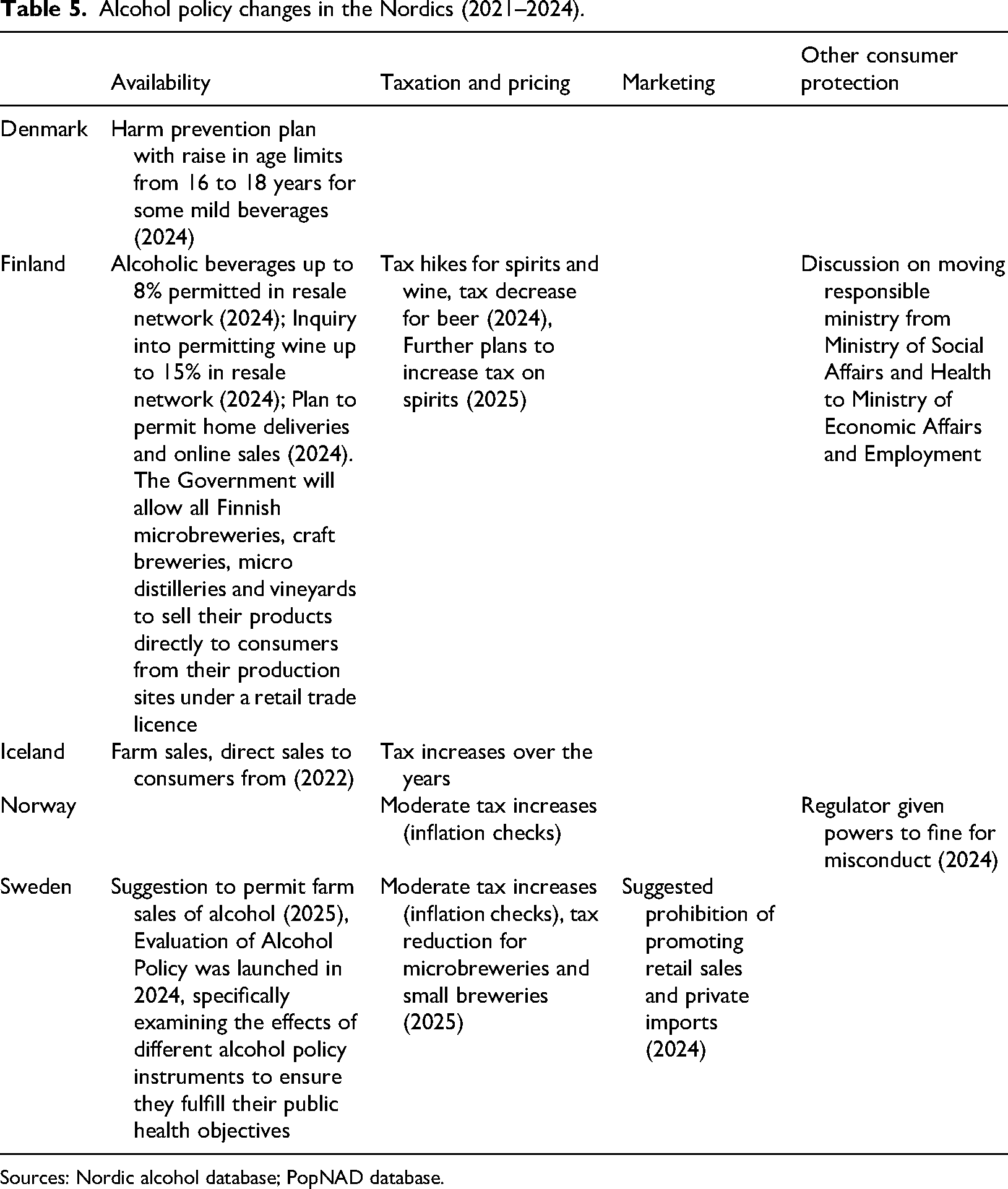
The final part of our analysis focused on recent and on-going policy changes in the alcohol and gambling fields of the Nordic countries (2021–2024). The analysis is based on best buy indicators (availability, taxation and marketing). Furthermore, we included other possible consumer protection measures that had been taken. The results for the policy change analysis in the alcohol field are presented in Table 5.
Alcohol policy changes in the Nordics (2021–2024).
Sources: Nordic alcohol database; PopNAD database.
Most alcohol policy changes have related to availability and taxation. Most tax-related policy changes were tax increases. However, in Finland and Sweden, tax levels for beer have also been, or are planned to be reduced.
Availability policies vary. In Finland, Iceland and Sweden, some availability restrictions have been lifted or are projected to be lifted to varying degrees. Availability-related changes have been the most significant in Finland, with the permission for private retailers to sell fermented alcoholic beverages of up to 8% alcohol by volume (ABV) as of 2024. An on-going inquiry is also looking into permitting private retailers to sell alcoholic beverages of up to 15% ABV. In Denmark, availability was restricted for youth, with age limits raised for off-premises purchases for milder beverages. In practice, this means prohibiting sale of alcohol products with >6% ABV to adolescents aged 16–17 years, instead of the previous 16.5% ABV limit. However, the new age limit still allows 16–17-year-olds to buy milder alcohol products, such as beer and cider.
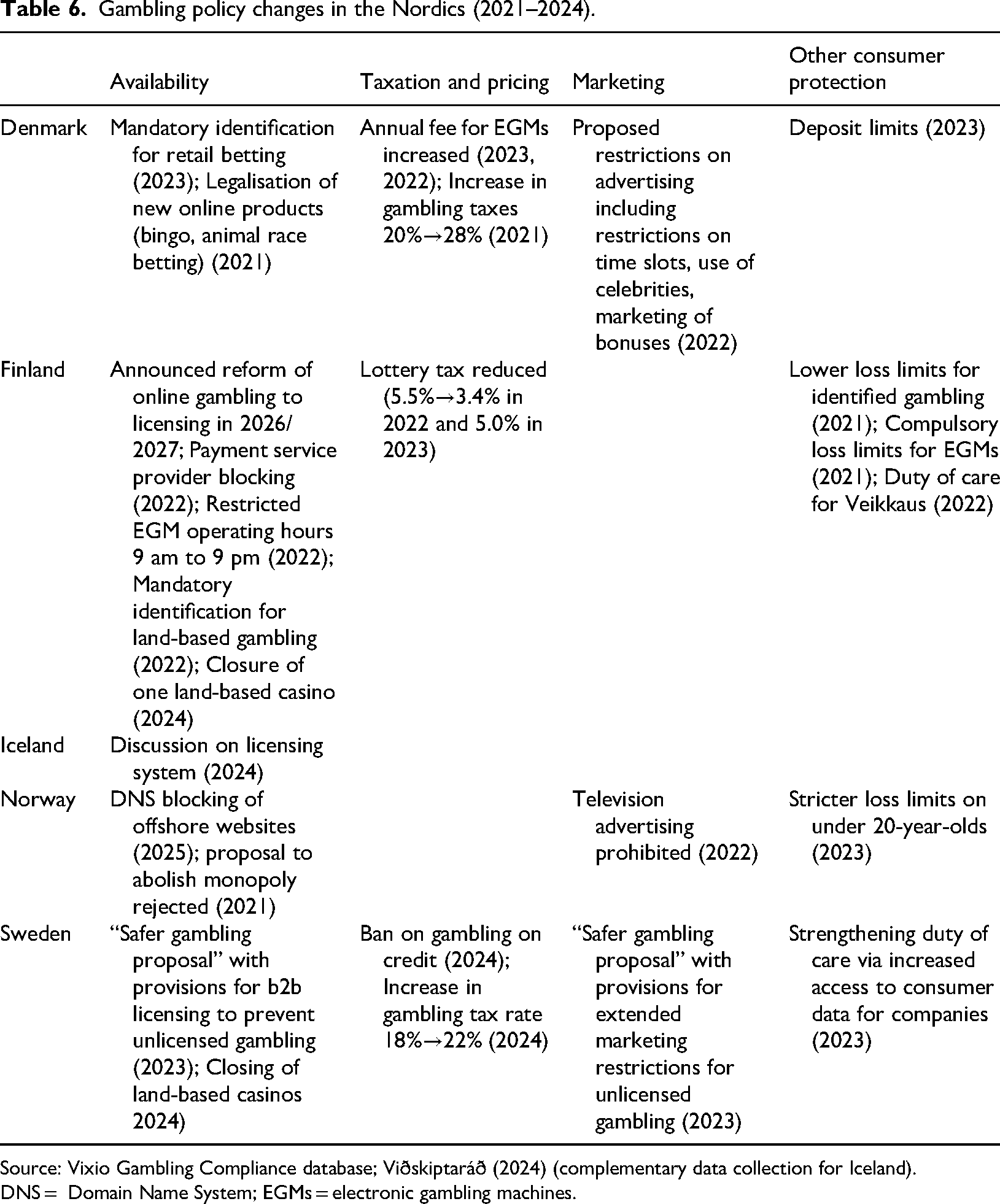
The results for the policy change analysis in the gambling field are available in Table 6. Unlike for alcohol, we identified policy changes across all best buys for gambling. Also unlike for alcohol, most changes relating to availability are aimed at restricting rather than increasing availability. The contrast is starkest in Finland. Although alcohol availability has been increased in Finland, the availability of gambling has been restricted during the period via the introduction of mandatory identification, as well as restrictions to opening hours of land-based EGMs. However, this trend may change with the advent of the licensing system, set to become operational in 2027.
Gambling policy changes in the Nordics (2021–2024).
Source: Vixio Gambling Compliance database; Viðskiptaráð (2024) (complementary data collection for Iceland).
DNS = Domain Name System; EGMs = electronic gambling machines.
Tax-related policy changes were similar in the fields of gambling and alcohol. For both commodities, tax rates were in most cases raised. In Denmark, tax rates for online gambling were raised from 20% to 28%/GGR in 2021. In Sweden, the gambling tax rate was increased from 18% to 22%/GGR in 2024 (charity operators are tax exempt). In Finland, the lottery tax was first decreased in 2022 and then increased in 2023. However, this has had little effect on the surplus to state because Finland still operates a monopoly, and all remaining profits are also transferred back to public purposes.
Only the analysis on gambling captured changes in marketing. In all cases, regulations on marketing were tightened or were proposed to be tightened. Most notably in Norway, television advertising of gambling was prohibited in 2022. Other consumer protection measures for gambling were also introduced to further tighten regulations. These included new provisions on limit-setting in Denmark, Finland and Norway, as well as regulations on duty of care practices of operators in Finland and Sweden.
Discussion
This study has focused on the existence and politics of the so-called Nordic model in the field of control policy for alcohol and gambling. The Nordic model refers to an economic model characterised by state intervention and welfare policy. In previous literature, the Nordic model has been described as an effective way of limiting consumption of harmful commodities, as well as reducing or even preventing harms (Lundberg et al., 2008). Our results have shown many similarities across countries and products, particularly with regard to a strong public health focus and the visibility of the best buys in regulatory approaches. However, we also found differences in terms of policy aims, implementation and outcomes. The main points of divergence related to how countries and policies were placed within a spectrum from more restrictive to more market-oriented. Generally, alcohol policy was more restrictive than gambling policy across the region. This finding was visible in most results of our analysis.
First, our analysis on policy framings showed that, although alcohol policy was governed by the aim of reducing harm by limiting total consumption across all Nordic countries, gambling policy aims were more varied, nuanced and even contradictory. All countries had crime prevention and security-related legislative aims alongside health-related framings for gambling. Iceland, Norway and Sweden also included financial objectives in their legislative aim. Our results align with previous research looking into the legal determinants of health in the gambling field (Wardle et al., 2024; Hörnle et al., 2018). Notably, a recent global analysis of legislative aims (Wardle et al., 2024) found that contradictory aims are common in gambling law, and that this overlap may form an obstacle to effective regulation.
Second, our review of the ministries and authorities responsible for implementing alcohol or gambling policy mostly aligned with the results on policy framings. The health-only framings in alcohol policy across the region were supported by having the locus of responsibility for these policies placed within ministries for health and welfare. The regulatory responsibility shows that, across all Nordic countries, alcohol-related issues appear to be conceptualised primarily as health issues. This unity has only been challenged recently, with Finland investigating whether alcohol should be regulated by the Ministry of Economic Affairs and Employment instead.
Contrary to alcohol, responsibilities for gambling policy reflected the varied legal framings. Responsibility for gambling policy was not placed within ministries of health in any Nordic country. Instead, responsibility was allocated to ministries in charge of finance, taxation, interior, justice or culture. This finding is in line with a prior European review showing that the regulatory responsibility for gambling tends to be allocated to ministries in charge of finance (Marionneau et al., 2018). Research has also shown that the locus of regulatory responsibility tends to depend on the arguments used in the initial legalisation of gambling (Marionneau et al., 2018; Polders, 1997; Sulkunen et al., 2019). For example, if gambling was legalised to prevent criminal involvement, it is natural to place responsibility with a ministry of interior. If gambling was legalised to produce revenue for state, its placement within a ministry in charge of finance becomes logical. However, this initial situating of regulatory responsibility is also likely to have important implications on what kind of policy is prioritised and how the policy area is viewed in public discourse.
Third, our analysis on policy implementation showed that alcohol tends to be more strictly regulated than gambling across the Nordics. The more restrictive implementation of alcohol policy, in comparison to gambling, was particularly visible in a higher prevalence of monopolistic structures, stricter regulations on availability of alcohol products and more encompassing marketing regulations.
Despite experiencing significant turbulence and ongoing political debates across the area (e.g., Iceland, Finland, cf. Lindeman & Karlsson, 2024), alcohol monopolies continue to operate. In contrast, several Nordic gambling monopolies have been dismantled or at least reduced in size in the past 15 years. This was the case for the Danish monopoly Danske Spil in 2012 and the Swedish monopoly Svenska Spel in 2019, and will also be the case for the Finnish monopoly Veikkaus in 2027. In each case, the monopoly has continued existing also in the new license-based system, but the monopoly remit has been reduced to only a small selection of products such as the national lottery or scratch cards (Spångberg & Svensson, 2022; Cisneros Örnberg & Tammi, 2011; Järvinen-Tassopoulos et al., 2024).
A key reason behind the dismantling of monopoly structures has been the competition emanating from cross-border offshore sales of gambling. Although alcohol is also accessible through online sales, this factor alone does not seem to account for a similar pressure to dismantle alcohol monopolies. Rather, domestic policy discourse has intensified, marked by heightened debates and calls for more de-regulation within some of the Nordic countries. As a digital-first commodity (Wardle et al., 2024), cross-border gambling provision is more difficult to regulate, even with existing blocking measures. Dismantling monopolies can therefore also function as a strategy to better control the market. In Sweden and Finland, for example, channelling consumption to the regulated market have been key justifications in the decision to license private overseas providers (Eduskunta, 2021; SOU, 2017).
Fourth, and finally, policy framings, policy responsibilities and policy implementation are visible in policy outcomes. In particular, we found that the more market-oriented policies in Denmark and Finland were also visible as higher prevalence and higher total consumption of alcohol and gambling. Interestingly, despite the stronger public health focus in alcohol policy in comparison to gambling policy, alcohol use was overall more prevalent than gambling across all Nordic countries. This result was visible as higher surplus to state, as well as higher population prevalence. Of course, our results do not allow us to draw causal links between policies and policy outcomes. It is also possible that a baseline high prevalence of alcohol consumption across societies has resulted in strict policy measures and framings for alcohol.
Similarly, some ostensibly more market-oriented policies, such as the introduction of a licensing system or low taxation, may work differently in different contexts. Notably, the effects of taxation on public health are not as clear cut for gambling as for alcohol because higher taxation can also mean higher losses and financial harm to individuals who gamble. Licensing and monopoly systems can in themselves also be inherently different. All monopoly structures are not effective in terms of harm prevention, while some licensing systems may have very high levels of consumer protection (Marionneau et al., 2021).
We also reviewed and compared recent or on-going policy changes in the fields of alcohol and gambling to analyse the directions that policies are taking or are likely to take in the future. This analysis showed that, perhaps surprisingly, the overall direction of alcohol policy appears to be towards gradual step-by-step de-regulation. This is the same direction as in gambling policy some years earlier (Cisneros Örnberg & Tammi, 2011; Aimo et al., 2023). In contrast, in gambling policy, recent and on-going policy changes were towards a more restrictive direction. At face value, this result appears to be somewhat contradictory. However, gambling policy has been, as a rule, more market-oriented in recent years. This may have translated into important and increasingly visible harms (Tran et al., 2024). Increased public health attention to these harmful consequences may therefore have resulted in at least some of the observed restrictions.
In contrast to gambling policy, the Nordic alcohol field has historically been more stable and even static, focusing on set objectives centring around reducing consumption. In recent years, however, the landscape has undergone changes. Denmark has taken a small step towards a more restrictive alcohol policy, focusing on reducing availability for young consumers. A prevention plan, as endorsed by the Danish government and four other political parties, aims to address high alcohol consumption among adolescents and to curb the illegal sale of age-restricted products to underage youth. While these measures have been criticised for being insufficient (Rømer Thomsen et al., 2024), they constitute a step in a new direction.
Current alcohol policy discussions in Iceland and Sweden centre on the politics of external competition to alcohol monopolies. In Iceland, the monopoly is challenged by an unclear legal status of alcohol sales in supermarkets and in online environments. These debates highlight tensions between maintaining public health objectives and addressing emerging market practices that undermine regulatory frameworks (Lindeman & Karlsson, 2024). In Sweden, Systembolaget is similarly pursuing legal action against foreign suppliers targeting Swedish consumers through online sales (Högsta domstolen, 2023). The Swedish alcohol monopoly faces additional competition from farm-based alcohol sales. In February 2024, an official investigation was launched to assess the overall effectiveness of Swedish alcohol policy (Regeringskansliet, 2024). These developments have made alcohol policy a highly political question, with new stakeholders (microbreweries, distilleries, online sales platforms and supermarkets) exerting important influence within the policy landscape.
Significant policy shifts have also recently occurred in Finland where the current right-leaning government has adopted a more market-oriented approach, challenging the public health-oriented foundations of existing policies in favour of economic considerations. These changes are evident in recent alcohol policy reforms, which aim to expand availability and adjust taxation practices. The stated aim of the government programme is to reform Finland's alcohol policy “in a responsible manner to align it more closely with alcohol policies in other European countries” (Valtioneuvosto, 2023). The proposed shift of regulatory responsibility to the Ministry of Economic Affairs and Employment reflects this change in prioritisation and underlying framing of alcohol policy.
This study set out to investigate whether there is a Nordic model for regulating alcohol and gambling. Our results show evidence of a Nordic model in alcohol policy (with the exception of Denmark), but less so for gambling. With respect to alcohol policy, the Nordic model is also showing signs of weakening, particularly in Finland and Sweden. While Nordic countries still share many similarities, they also differ in terms of many policy choices in the fields of both alcohol and gambling. Popular support for monopolies and restrictive policies continues to be strong (Grönroos et al., 2024; WHO Europe, 2025) but on-going changes and global challenges in terms of online provision continue to undermine the effectiveness of national policy. However, as also argued by Andersen et al. (2016), the Nordic model is characterised by constant change in implementation, but stability in overarching principles and aims. This may also apply to control policies in the fields of alcohol and gambling. It is possible that the Nordic model will continue to exist, despite changes in how it is implemented. In our analysis, policy framings suggested a strong commitment to a Nordic model, particularly for alcohol. However, policy implementation varied to a more significant degree. This can result from other, unvoiced, rationales or the politics of competing interests.
Our study was limited by available data sources. Alcohol and gambling are inherently different products, and our focus on best buys was not always applicable to gambling regulation. We were also able to focus only on very top-level outcome indicators because overall monitoring of consumption and harm varies between these fields and even across countries. For example, mortality rates or other harms such as arrests or the range of harm to others could not be included due to the difficulties in obtaining comprehensive statistics on these for gambling. On the other hand, the lack of a gold standard diagnostic measure of alcohol problems, comparable to PGSI in gambling, made it difficult to evaluate effects on public health across countries. We were also not able to provide figures for offshore consumption. Some official figures for cross-border alcohol sales exist but the tracking of offshore sales of gambling is strongly debated and no gold standard measure has been available. Finally, we were not able to retrieve all relevant information, particularly for Iceland. This may be not only a result of linguistic limitations, but also a factor of less comprehensive reporting on alcohol and gambling in Iceland in comparison to other Nordic countries.
Further studies are particularly needed on the kinds of stakeholders that influence policy choices and directions in the Nordic countries. Furthermore, it would be important to extend this type of analysis to other adjoining fields, such as emerging tobacco products (novel nicotine products) or use of nitrous oxide. Similarly, it would be important to compare Nordic control policies to policies within a wider geographical area. It is possible that similarities in the Nordic approach would be more visible compared to other kind of political and policy traditions. Notably, the Baltic countries have recently taken steps in the field of alcohol as well as gambling policy. Estonia and Latvia have intensified their efforts to regulate alcohol consumption through comprehensive strategies and legislative amendments, while Lithuania continues to uphold its earlier reforms (Beekman, 2023). The Baltic countries have also introduced comparatively restrictive gambling advertising policies, compared to the Nordics. Learning from these examples could also be illustrative to the Nordic context.
In conclusion, while we found that the Nordic Model continues to persist, particularly in the field of alcohol control and in terms of policy objectives, this model is challenged by politics and stakeholder pressure. Political will and adaptation are therefore needed if the Nordic model is to endure.
One way forward would be increased inter-sectoral collaboration and learning. Developments in this direction have already occurred in Sweden, with addictive sectors increasingly viewed as a whole under the public health umbrella (Regeringskansliet, 2022). Our results show that many policy questions in alcohol and gambling are similar. For example, current stakeholder pressures and cross-border competition to alcohol monopolies are questions that have, for long, been debated in the gambling field. Similarly, many effective public health policies in the alcohol field are applicable to gambling. To further improve learning and sharing of good practices, inter-sectoral collaboration needs to be global. Many current policy issues are similar across jurisdictions. The Nordic model has the potential to function as an exemplary case to other countries that are debating the need for more public health-oriented regulations on alcohol and gambling. Conversely, the Nordic model may benefit from adaptation to new challenges in a changing global landscape.
Our results also suggest that there is a need to develop gambling-specific recommendations for effective public health regulation. Such “gambling best buys” should particularly focus on effective regulations in the digital environment. As gambling and alcohol markets increasingly expand in the online world, it is crucial that international guidelines adapt to these changes and continue to provide guidelines to other jurisdictions.
Footnotes
Acknowledgements
We thank the organisers of the Nordic Comparative Research on Addictive Substances and Behaviour conference that took place in Stockholm in April 2024 for asking us to co-present a session on regulating harmful industries in the Nordic countries. The current article grew from this presentation. We would also like to thank several wonderful Nordic colleagues who helped us with finding relevant data for this paper, notably Sveinbjörn Kristjánsson, Søren Kristiansen and Charlie Thompson.
Data availability
All data have been collected from publicly available sources. Data underlying our analyses are available upon request from the authors.
Declaration of conflicting interests
The authors declared no potential conflicts of interest with respect to the research, authorship and/or publication of this article.
Funding
VM was funded by the Finnish Ministry of Social Affairs and Health based on the provisions of §52 of the Finnish Lotteries Act. ML is funded within the framework of Joint Action to Prevent Non-Communicable Diseases, Co-Funded by the European Union. Funding for JCÖ was provided within the frame of the Swedish program grant ‘Responding to and Reducing Gambling Problems – Studies in Help-seeking, Measurement, Comorbidity and Policy Impacts’ (REGAPS), financed by the Swedish Research Council for Health, Working Life and Welfare (Forte), grant number 2016-07091. As a civil servant the funding of TK mainly emanates from the state budget.
Terveyden ja hyvinvoinnin laitos, Joint Action to Prevent Non-Communicable Diseases, Forskningsrådet om Hälsa, Arbetsliv och Välfärd, Sosiaali- ja Terveysministeriö (grant number 2016-07091, Funding based on section 52 of the Finnish Lotteri).
