



Abstract
Substance use disorders rank among the top three leading causes of disability among both adolescents and emerging adults (Erskine et al., 2015). At the same time, the use of some substances during adolescence and emerging adulthood may serve some social functions. The use of some substances, such as alcohol, may even be a normative behaviour in many high-income countries (Andrews & Westling, 2016).
In Denmark, where the current study was conducted, experimentation with substances peaks before the age of 24 years (European Monitoring Centre for Drugs and Drug Addiction [EMCDDA], 2013, 2017). Overall, the use of alcohol and illicit drugs is higher among youth compared to the rest of the population. For example, in 2012, the last-month prevalence of cannabis use was higher among youth aged 16–24 (8.5%), than in the rest of the population (6.4%) (EMCDDA, 2017). Like in other European countries, the most widely used substance in Denmark is alcohol. However, alcohol use among Danish youth is particularly high relative to both other European countries (Cooke et al., 2019; EMCDDA, 2013) and to other age groups in Denmark (Sundhedsstyrelsen, 2015).
In Denmark, adolescents aged 16 years and over are allowed to buy drinks containing less than 16.5% alcohol, and at age 18 years individuals can buy drinks with a higher alcohol percentage. Culturally, drinking alcohol is an important component of youth's social lives. The most frequent reason for adolescents to drink is to have fun at parties and social events (European School Survey on Alcohol and Other Drugs, 2019). While the culture and liberal policy in Denmark undoubtedly affect how individuals use substances in general, and alcohol and cigarettes in particular (Demant & Krarup, 2013; Järvinen et al., 2010), more proximal factors, such as social relationships and psychological well-being, may also influence the choice of substances used and to what extent. In this regard, two major psychosocial developmental approaches, the ecological systems theory (Bronfenbrenner, 1963, 2009), and the internalising and externalising model of psychological symptoms (Achenbach et al., 2016), can be employed to unveil the associations between characteristics of personal relationships, psychological symptoms, and the use of different substances during adolescence and emerging adulthood. Emerging adulthood is a transitory, yet distinct period encompassing the 18–29 year age range, characterised by increased independence (i.e., leaving home), while continuing with identity formation (Andrews & Westling, 2016).
The ecological systems theory is a broad psychosocial model used to understand an individual's development or behaviour while considering contextual factors (Bronfenbrenner, 1963, 2009). These factors are arranged into different levels that vary in proximity to the individual, ranging from proximal factors such as families, to more distal factors, such as culture. Both peer and family relationships are part of the so-called microsystem, whereas culture is part of the macrosystem. However, generally, as a child or adolescent gets older, their peer group becomes more influential while familial factors become less so. In the context of substance use and in support of this model, research shows that microsystem characteristics influence how youth uses substances in general (Andrews & Westling, 2016; Keyzers et al., 2020; Stone et al., 2012; Su et al., 2018). However, there is less clarity on the specificity of how certain microsystem elements relate to various substances (e.g., Keyzers et al., 2020; Su et al., 2018), and whether the relation between the microsystem and substance use depends on a development stage. For instance, marital separation appears to have a stronger impact on adolescent and adult substance use than during emerging adulthood (Stone et al., 2012). On the other hand, parental use of alcohol and other substances, including cigarettes, seems to be a strong predictor of substance use from adolescence through the young adulthood years.
For its part, Achenbach's developmental model of psychopathology has identified two major groups of psychological symptoms, namely internalising and externalising symptoms (Achenbach et al., 2016). Internalising symptoms encompass relatively covert expressions of emotional distress, such as anxiety, low mood, suicidal ideation, and eating problems. Externalising symptoms involve overt behavioural problems, such as truancy, aggression, and hyperactivity. These two categories of symptoms can explain a wide variety of psychological difficulties present in children, adolescents and young adults (Achenbach et al., 2017). Therefore, it is a developmentally sensitive and parsimonious model that has wide applications.
Achenbach's model has influenced how psychological well-being is connected to trajectories of substance use among youth (Hussong et al., 2017; Pedersen et al., 2017). The relationship between higher externalising symptoms and higher substance use is strongly supported (Meque et al., 2019; Pedersen et al., 2017; Rothenberg et al., 2020). In contrast, the evidence for the internalising pathway is nuanced. Both the strength (Hussong et al., 2017; Rothenberg et al., 2020) and direction (Colder et al., 2018; Heradstveit et al., 2018) of the relationship between internalising symptoms and substance use depends on how internalising symptoms are assessed and what substances are they linked to. For example, lower internalising symptoms have been associated with absent or infrequent alcohol use among adolescents on the one hand (e.g., Heradstveit et al., 2018), whereas higher depressive symptoms in childhood have been prospectively associated with more substance use in adolescence (Hussong et al., 2017), thus resulting in a mixed picture in terms of evidence. Methodological differences may account for some of the inconsistent findings with internalising symptoms, further stressing the nuanced relation between this group of symptoms and substance use.
Overall, a wealth of research exists examining sub-sets of variables relevant to the ecological systems theory and youth's use of substance. Sometimes these variables have been examined in combination with psychological symptoms (Chassin et al., 2002; Mason et al., 2019; Mayberry et al., 2009; Rothenberg et al., 2020). However, most of the studies have focused on restricted age groups or substances. Here we underscore the need for a more integrated and systematic approach to understand whether or how microsystem variables (peers and family) and psychological symptoms relate to the use of specific substances in different age groups. Therefore, our primary aim was to examine the relative contribution of internalising and externalising symptoms in the prediction of the use of alcohol, cigarettes, cannabis, and other illicit drugs, in parallel with various characteristics of personal relationships. A second aim was to examine whether these relations were moderated by the developmental stage of youth, thus a wider age range including both adolescents and emerging adults was investigated.
Methods
Participants and procedure
Data were collected from a nationally representative sample of Danish youth in 2019. Initially, 6,032 youth aged 15–25 years living in Denmark were randomly selected by Statistics Denmark and invited to participate by research assistants at the Center for Alcohol and Drug Research (CADR), Aarhus University to take part in the study. The initial contact took place via a secure electronic mail system operated by the public postal service in Denmark, which included a link to the survey. If the participants did not complete the survey after a couple of reminders, they were contacted by telephone and encouraged to complete the survey online. Alternatively, if participants accepted, they were interviewed on the phone by trained interviewers from the CADR. The study was approved by the Danish Data Protection Agency and all confidentiality requirements were met.
The final sample (N = 3,046) represented a 50% response rate (adolescents 15–18 years of age, n = 1,168; emerging adults 19–25 years of age, n = 1,878). The final sample was weighted by Statistics Denmark to re-adjust for non-participation based on national distributions of age, sex, family structure, parents’ education, and Danish versus non-Danish origin. Table 1 shows the demographic characteristics of the sample.
Demographic characteristics.
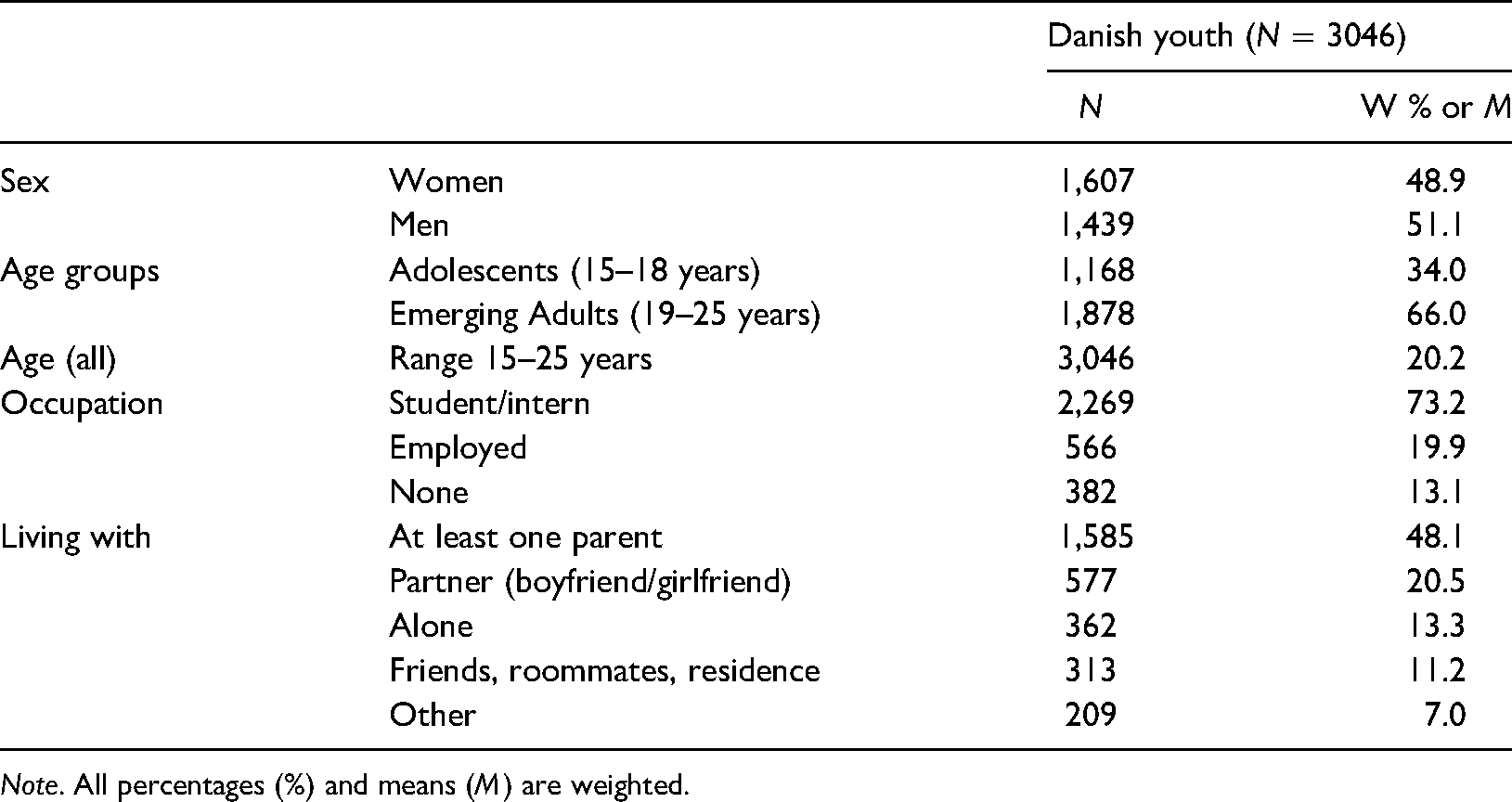
Note. All percentages (%) and means (M) are weighted.
Measures and data preparation
The survey consisted of a battery of questionnaires referred to as YouthMap (Pedersen et al., 2018; Pedersen et al., 2017). YouthMap covers the following areas: (1) frequency of substance use, (2) personal relationships (parents, friends, and boyfriend/girlfriend), (3) internalising and externalising symptoms, (4) recreational activities, (5) stressful life events, and (6) physical conditions and medication. For details about the development of YouthMap see Pedersen et al. (2017). The present study focuses on the first three areas of the survey. In addition to YouthMap, a modified version of the Alcohol Use Disorder Identification Test (AUDIT) (WHO, 2001) was employed to expand the assessment of alcohol use. The AUDIT is a validated 10-item self-report questionnaire assessing harmful patterns of alcohol consumption with good psychometric properties (Barry et al., 2015).
Substance use
Youth were asked on how many days in the last month they had smoked cigarettes, drunk alcohol, used cannabis, and used any other illicit drugs (OIDs) in Denmark, such as cocaine, amphetamines, or ecstasy (e.g., “How many days during the last 30 days have you used X?”). Last-month use of alcohol, tobacco, cannabis, cocaine, and OIDs were the main dependent variables. For tobacco, cannabis, and OIDs, we followed the dichotomisations employed with other Nordic samples (Pedersen et al., 2018), in which using tobacco cigarettes, cannabis, or OIDs one day or more in the last month was coded as 1 = any use in the last month, and 0 = not used, for each substance. For alcohol use, we operationalised regular alcohol use in the last month as drinking alcohol four days or more in the past month (1 = regular use; 0 = non-regular use) following Pedersen et al. (2018). This cut-off also provides comparability with the response scales employed by the EMCDDA (2013).
We employed three additional secondary indices of alcohol use based on answers to the AUDIT: weekly use, AUDIT-Consumption, and AUDIT-Negative Consequences. Participants who indicated drinking alcohol at least one day in the last month answered item 1 of the AUDIT (WHO, 2001) (“How often do you drink alcohol?”). Participants who answered “Once or twice weekly”, or more frequently to this item were classified as weekly drinkers. These participants completed the remaining nine questions of the AUDIT. The first three items of the AUDIT are typically used to assess overall alcohol intake (AUDIT-Consumption), whereas items 4–10 assess problems controlling alcohol intake or difficulties completing regular activities (AUDIT-Negative Consequences). The response options for the first three items were slightly modified from their original versions to accommodate the higher alcohol use in Denmark (see the Appendix in the online supplementary materials for details). The AUDIT-Negative Consequences followed the standard measure. The AUDIT-Consumption and AUDIT-Negative Consequences scores were computed only for participants who drank weekly.
Personal relationships
The survey asked for the number of close friends, whether any of the close friends used illicit drugs, whether the participant lived with anybody with either alcohol or drug use problems, whether the person currently had a boyfriend or girlfriend (i.e., partner), whether the participant's parents lived together, and whether any of the parents had problems with alcohol or drugs. Originally, the survey contained two separate questions on whether the person lived with someone who either used illicit drugs or had alcohol problems. For data analyses, these two questions were merged to signal use of substances (i.e., either alcohol, illicit drugs, or both). Thus, a dummy coded variable indicated whether the participant lived with someone with substance use problems (SUP) (Yes = 1; No = 0).
Separate questions were posed for living with someone with SUP and having parents with SUP. Relative to other European countries, young people in Denmark live in fewer two-parent intact families, and more in either single-parent families, or stepfamilies (Griesbach et al., 2003). It is also common for emerging adults to move out and have different living arrangements. Therefore, the separate question could capture different aspects of living arrangements and parental substance use. The question of number of close friends was chosen primarily to map socialisation and size of social networks (Ciairano et al., 2008), and was considered particularly relevant for examining alcohol use. Overall, the relationship-related questions had small to moderate correlations, thus suggesting that the single items were referring to different aspects of the personal relationships, and thus they were employed as single items (see Table ISM of the supplementary material online).
Internalising and externalising symptoms
The assessment was based on the YouthMap12, which is a 12-item self-report questionnaire validated for the Danish youth population (Pedersen et al., 2018; Pedersen et al., 2017). Six items assess externalising problems (troublemaker, disruptive in classroom, conflict with teacher, truancy, expelled from school, and violent behaviour in general), and another six items assess internalising problems, including symptoms of depression, anxiety, loneliness, suicidal ideation, deliberate self-harm, and eating disorders. In the present sample, the internal consistencies of these scales were Cronbach's α = 0.69 and 0.71, respectively.
Statistical analyses
Sex, age group (adolescents vs. emerging adults), personal relationship characteristics (i.e., number of close friends, having at least one friend who uses illicit drugs, living with someone with SUP, having a parent with SUP, and having a boyfriend or girlfriend) and psychological symptoms (i.e., internalising and externalising) were used as independent variables (IVs) predicting the use of each substance in separate multivariate models. Table IISM of the supplementary online materials presents the descriptive statistics of these IVs. To address our primary research question, we employed multivariable logistic regression (MLR) to predict the dummy coded use of substances, and multiple linear regressions for the AUDIT-Consumption and AUDIT-Negative Consequences continuous scores. To address our question on whether developmental stage (adolescents vs. emerging adults) would moderate the relations between the IVs and substance use, we tested the interaction of age group with each of the other IVs.
For the MLRs, all IVs were entered into the models in two blocks. The IVs were forced to enter the model in order to avoid problems with stepwise selection, in which the results may maximise model fit for the data, but reduce generalisation to the population (Smith, 2018). The first block consisted of the main effects of IVs, whereas the second block consisted of the interactions. The addition of the second block improved all the MLR models as indicated by a significant reduction (p < 0.05) in the log-likelihood ratio, thus, the full models with interactions were retained. Significant interactions were followed up.
For the multiple linear regression, the IV main effects were entered in Step 1 of the regressions predicting AUDIT-Consumption and AUDIT-Negative Consequences, whereas interactions were entered in Step 2. The interactions containing continuous IVs (i.e., number of friends, internalising and externalising symptoms) were first centred and then used to build the interaction terms. In the case of the linear regressions, Step 2 (interactions) was not significant for either of the AUDIT indices. Therefore, single-step models containing all the IV main effects were retained for the results. Assumptions regarding normal residual distribution were met. The residual for the model predicting AUDIT-Consumption had skewness = 0.19, and kurtosis = –0.52, whereas these values were 1.01 and 1.50 for the AUDIT-Negative Consequences residuals, respectively. Potential multicollinearity was examined; however, the models showed good tolerance (> 0.20), and variance inflation factors were below the suggested cut-off (all < 2) (Hair et al., 2010; Tabachnick & Fidell, 2013). Consistent with this tolerance level, the correlations between independent variables were small to moderate (see Table ISM).
Effect sizes (ESs) for the MLRs are indicated as adjusted odds ratios (AORs) (i.e., adjusted considering all IVs entered into the models). The relative magnitude of the AORs was interpreted as small (OR < 2.49), moderate (OR = 2.50 to 4.13), or large (OR > 4.14) (Chen et al., 2010). ESs for the linear regression are provided by squared semi-partial correlations (sr2), for which suggested magnitude parameters are small (0.02), medium (0.15), and large (0.35) (Cohen, 1992).
Results
Prevalence of substance use
The prevalence rates for each substance are presented in the supplementary online material (Tables IIISM and IVSM). Briefly, alcohol was the most used substance in both age groups (41% were regular drinkers; 25% were weekly drinkers), followed by smoking cigarettes (33% reported last-month smoking), cannabis (9.7% reported last-month use), and OIDs (< 5% reported last-month use).
Prediction of substance use
The MLR models predicting last-month substance use are shown in Table 2, whereas Table 3 shows the multiple linear regressions predicting AUDIT-Consumption and AUDIT-Negative Consequences scores for youth who drank on a weekly basis. For the sake of space, Table 2 shows the AORs and confidence intervals (CIs) for main effects only, whereas the parameters for the significant moderations by age group are described in the text.
Multivariable logistic regressions predicting use of substances.
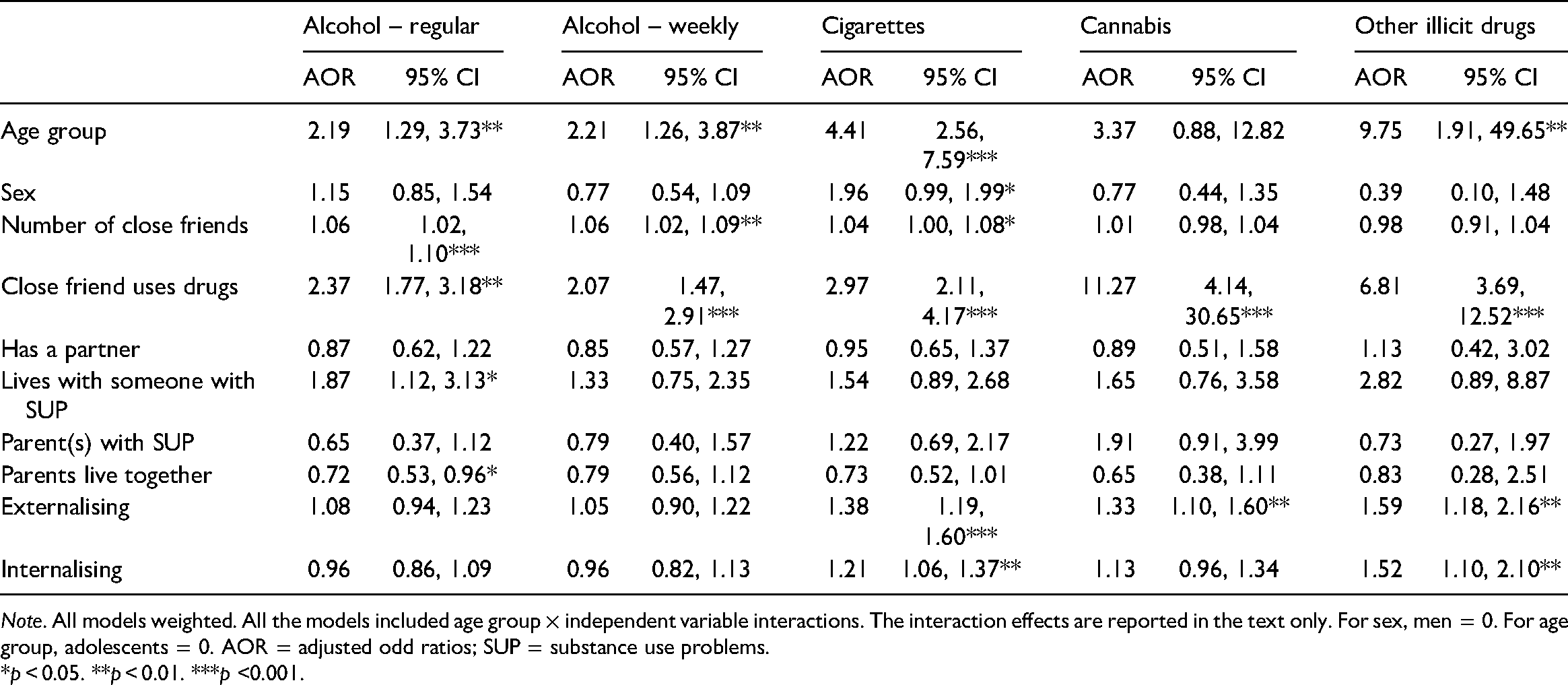
Note. All models weighted. All the models included age group × independent variable interactions. The interaction effects are reported in the text only. For sex, men = 0. For age group, adolescents = 0. AOR = adjusted odd ratios; SUP = substance use problems.
*p < 0.05. **p < 0.01. ***p <0.001.
Multiple linear regressions predicting AUDIT scores of youth who drink on a weekly basis.
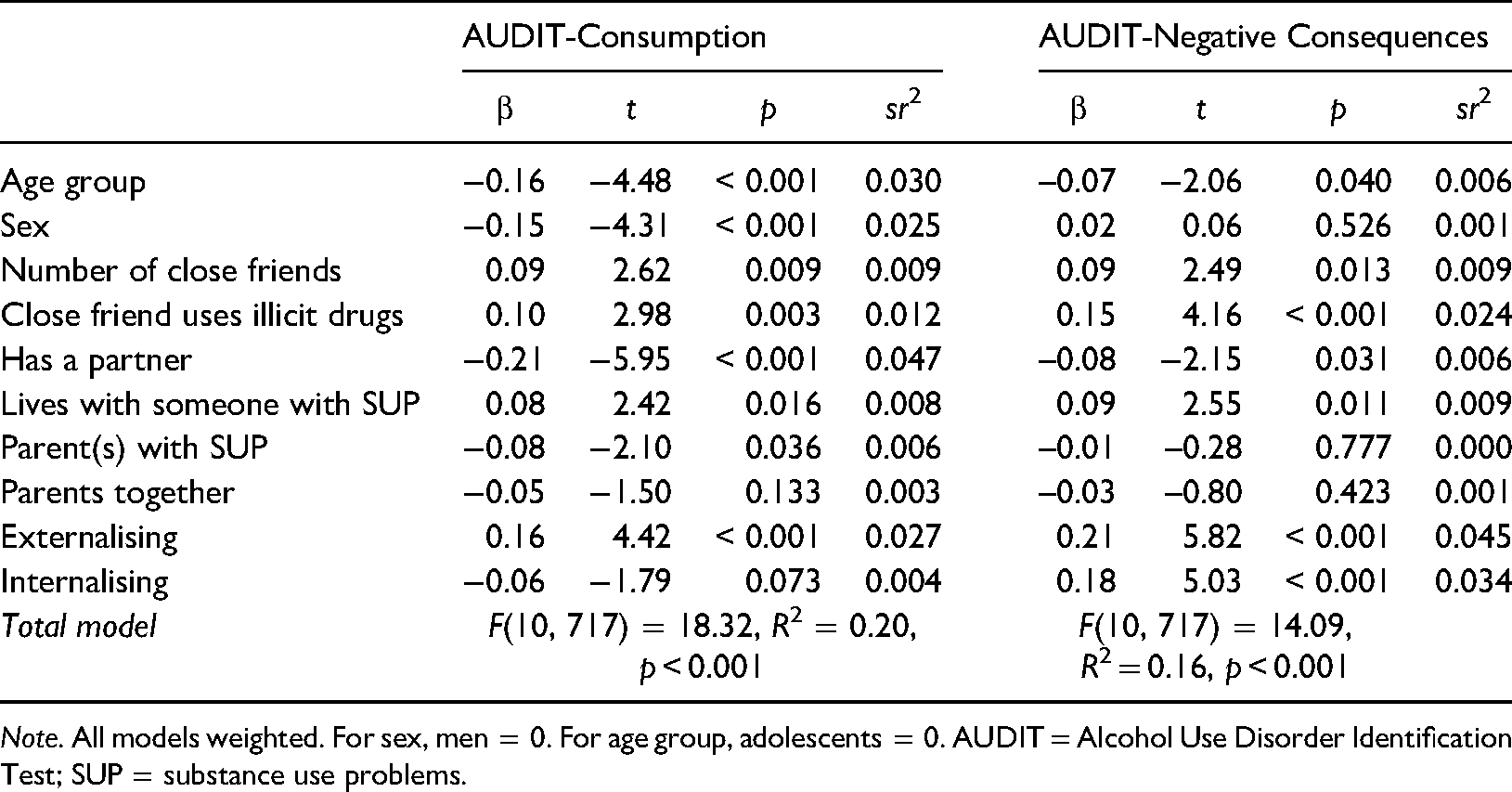
Note. All models weighted. For sex, men = 0. For age group, adolescents = 0. AUDIT = Alcohol Use Disorder Identification Test; SUP = substance use problems.
Alcohol
The different indices of alcohol use were predicted by the following combination of IVs. Weekly drinking was predicted by sex (men), age group (emerging adults), having more close friends, and having at least one close friend who uses drugs. Regular alcohol drinking was also predicted by being an emerging adult, having more close friends, and having at least one close friend who uses drugs. In addition, living with someone who has substance use problems (SUP), and having separated parents were related to regular alcohol use. The ESs of these variables were small. Internalising and externalising psychological symptoms were not related to weekly or regular alcohol use (see Table 2).
Among weekly drinkers, AUDIT-Consumption and AUDIT-Negative Consequences scores were significantly predicted by age group (adolescents), having more close friends, having at least one friend who uses drugs, not having a partner, and higher externalising symptoms. In addition, unique predictors of AUDIT-Consumption were sex (men), and having a parent who uses drugs. An additional unique predictor of AUDIT-Negative Consequences was having higher internalising symptoms. The effects of these variables were small.
Age group moderations
The effect of sex (AOR = 0.59, 95% CI [0.40, 0.85]) and having separated parents (AOR = 1.46, 95% CI [1.01, 2.10]) on regular drinking was moderated by age group. Follow-up of these interactions indicated that there were significantly more male emerging adults (51%) drinking regularly, than male adolescents (36%) (χ2 = 33.90, p < 0.001). In contrast, there was a similar percentage of female adolescents and emerging adults drinking regularly (33% and 38%, respectively). Further, there were significantly more adolescents with separated parents drinking regularly (41%), than adolescents whose parents lived together (33%) (χ2 = 6.28, p < 0.012). In contrast, for emerging adults the percentage drinking regularly was not statistically different with and without separated parents (44% and 47%).
Lastly, although the main effect of sex did not predict weekly drinking for the overall sample, this association was moderated by age group (AOR = 0.61, 95% CI [0.40, 0.94]). Again, significantly more male emerging adults (37%) reported drinking on a weekly basis than male adolescents (24%) (χ2 = 10.06, p = 0.002), whereas the percentage of women drinking weekly was similar for adolescents (16%) and emerging adults (19%).
Cigarettes
More men and emerging adults had smoked cigarettes in the last month compared to women and adolescents, respectively. Further, smoking cigarettes was related to both relationship characteristics and psychological symptoms: having more close friends, having at least one close friend who uses illicit drugs, and both higher internalising and externalising symptoms predicted greater odds of having smoked in the last month.
Age group moderation
Age group moderated the relation between internalising symptoms and last-month smoking. As a means to follow this interaction we formed high and low internalising symptom groups. High scores were defined to be one standard deviation (SD) above the mean for the full sample, which in turn meant scores equal to or higher than 3. Scores 0–2 were classified as low. There were significantly more adolescents (39%) with high internalising symptoms who smoke compared to adolescents with low internalising symptoms (25%) (χ2 = 11.35, p = 0.001), compared to emerging adults with high (42%) and low internalising symptoms (36%). Thus, although both adolescents and emerging adults with higher internalising had higher odds to smoke, the effect relating to internalising symptoms was stronger for adolescents.
Cannabis
Last-month use of cannabis among youth was related to having at least one friend who uses drugs, and higher externalising symptoms, with large and small ESs, respectively. Age group, sex, and parent-related variables were non-significant predictors.
Age group moderation
There were no significant moderations by age group in the prediction of cannabis use.
OIDs
More emerging adults had used OIDs in the last month than adolescents. Having at least one close friend who uses illicit drugs was a strong predictor of OIDs use. Further, both higher internalising and externalising symptoms were related to having used OIDs in the last month with small ESs. Parental characteristics were not related to OID use in the last month.
Age group moderation
Age group moderated the relation between internalising symptoms and last-month OID use. There were significantly more adolescents with high internalising symptoms (7%) who had used OIDs in the last month compared to adolescents with low internalising symptoms (< 1%) (χ2 = 24.72, p < 0.001) relative to emerging adults with high (6%) and low internalising symptoms (4%). Thus, although both adolescents and emerging adults with higher internalising had higher odds of using OIDs than those with low internalising symptoms, the effect was stronger for adolescents.
Supplementary analyses
Living with someone who has SUP
This variable predicted three of the four indices of alcohol use. Note that we did not ask directly who in the household had the SUP, but we could identify what kind of living arrangements the youth had. Adolescents and emerging adults are likely to have different living arrangements. Therefore, we made a breakdown of the youth who reported living with someone with SUP. As could be expected, of the adolescents who lived with someone with SUP, the majority lived with at least one parent (68%). However, another relatively large group reported having “other” living arrangements (22%) (e.g., living alone, with other relatives, or in an institution). Living alone, with a partner, or with friends was infrequent (less than 5% each). Among the emerging adults reporting living with someone with SUP, the majority lived with friends or in a student residence (44%), followed by living with a partner (25%), and living with parents (21%). Living alone or in “other” living arrangements was infrequent (less than 5% each).
Weekly drinking and polysubstance use
Using logistic regression we examined the relationship between smoking cigarettes, using cannabis, or OIDs in the last month and drinking on a weekly basis. Youth who drank on a weekly basis had greater odds of having used cigarettes, OR = 3.25 (2.75, 3.88), cannabis, OR = 3.49 (2.68, 4.53), and OIDs, OR = 5.08 (3.38, 7.65), in the last month compared to youth who did not drink weekly. These effects were moderate to large.
Discussion
We examined different demographic (sex and age group), psychological symptom, and personal relationship characteristics in relation to the use of various substances among Danish youth. Prevalence rates for substance use were generally higher for emerging adults and men than for adolescents and women. Importantly, beyond prevalence patterns, we found robust (consistent) and substance-specific predictors of substance use, as well as associations that were moderated by age group.
The most robust factor related to substance use was having at least one friend who used illicit drugs. Both adolescents and emerging adults who reported having at least one friend who used illicit drugs were more likely to use all the substances here examined: alcohol, cigarettes, cannabis, and OIDs in the last month. This variable was also related to higher overall alcohol consumption and alcohol-related negative consequences among youth who drank weekly. The second most robust predictor of substance use was high externalising symptoms. Higher externalising symptoms were related to last-month use of cigarettes, cannabis, and OIDs. Externalising symptoms did not consistently predict all indices of alcohol use. However, higher externalising symptoms were related to higher alcohol consumption and to more negative consequences among youth who drank weekly. It is important to note, however, that having a friend who uses drugs had a stronger effect for predicting the use of cannabis and OIDs than externalising symptoms. The strong effect of friends who use illicit drugs held after considering a number of other microsystem factors, further underscoring the influence that friends can have in the use of substances among youth. Taken together, the findings for these two robust predictors of substance use were consistent with the existing literature (e.g., Ciairano et al., 2008; Hussong et al., 2017; Stone et al., 2012).
Novel findings indicated that other predictive variables were sensitive to either the developmental stage of the youth or the specific substance used. Regarding substance-specific relations, there were several variables that were unique predictors of alcohol use. Not having a boyfriend/girlfriend was related to higher alcohol consumption and alcohol-related negative consequences. The role of romantic partners and youth's substance use has been discussed from different angles. For instance, alcohol could be used as a part of meeting and dating peers among adolescents (Ciairano et al., 2008), but also as a coping strategy after breakups for emerging adults (Fleming et al., 2010). In the present study having a boyfriend/girlfriend appeared to serve as a protective factor for moderate drinking among both adolescents and emerging adults, which has been suggested to be a common effect of stable relationships among young adults (Fleming et al., 2010).
Living with someone who has SUP, having a parent with SUP, and having separated parents were also related uniquely to specific indices of alcohol use. Living with someone who has SUP was related to regular drinking, higher alcohol consumption, and more negative consequences. The effect of living with someone with SUP on alcohol use was relevant for adolescents and emerging adults alike. However, adolescents and emerging adults who were living with someone with SUP were possibly referring to different people. We did not ask directly who in the household had the SUP, but we did identify what living arrangements these youth had. Adolescents who lived with someone with SUP were more commonly living with parents or “other” individuals, whereas emerging adults were living more frequently with friends or housemates. The case of adolescents is particularly interesting as a relatively large percentage of the “other” individuals meant living with other relatives, institutions, or foster homes. Although we could not identify directly who were the co-habitants with the SUP, the findings suggest that adolescents who live with someone with SUP have living arrangements that are less typical for adolescents in Denmark (Griesbach et al., 2003).
Having separated parents predicted regular drinking, but not other indices of alcohol use. This relation was stronger for adolescents. Parental separation is more typically examined among adolescents (Kivimäki et al., 2014; Stone et al., 2012), and while our findings support this focus, they also suggest that this family variable is a risk factor for emerging adults as well. In contrast to previous studies, here we found that parental SUP was associated with youth's alcohol use, but not use of other substances (see Stone et al., 2012 for a review). This finding warrants further clarification, but a potential explanation is that other factors mediate the influence of parental SUP and youth's substance use, including relationships with other family members or peers.
There were a number of other predictors for alcohol use; however, they were not specific to this substance, including, being a man, having a larger number of closer friends, having at least one friend who uses drugs, and higher externalising symptoms. The effect of sex was moderated by developmental stage so that the difference for regular and weekly drinking between men and women was more pronounced in emerging adulthood than in adolescence. In this context, female sex could be interpreted as a protective factor upon entering emerging adulthood in regard to lower alcohol consumption compared to men. Externalising symptoms predicted the more severe patterns of alcohol use as indicated by high consumption and negative consequences among weekly drinkers, but not regular or weekly drinking. The non-significant association with regular alcohol use was inconsistent with previous studies with Nordic samples (Heradstveit et al., 2018; Pedersen et al., 2018; Pedersen et al., 2017). However, unlike those studies, we examined externalising symptoms while simultaneously controlling for the characteristics of the youth’s personal relationships. Therefore, the omission of peer-related variables in previous studies may partly explain the inconsistent findings.
Despite the wide range of variables predicting alcohol use, characteristics of social relationships (i.e., number of close friends, having a friend who uses illicit drugs, not having a partner, and living with someone who has SUP) were consistently related to alcohol use among young Danes; a pattern that was less prominent for other substances. The relevance of social variables aligns well to the socialisation and night life patterns explanations of the alcohol use patterns among young people in Denmark (Demant & Krarup, 2013; Järvinen et al., 2010), as well as with the broader international literature underscoring the role of peers in alcohol consumption (Stone et al., 2012). In the case of alcohol in particular, asking about number of friends was useful as it may signal a larger exposure to social events, and thus, higher likelihood for drinking. That said, we echo conclusions previously put forward that peers (e.g., girlfriends and boyfriends) can have both positive and negative influence on personal substance use among youth (Keyzers et al., 2020), and that this depends on various characteristics of the peers and relationships with them (Mason et al., 2019).
The use of cigarettes, cannabis, and OIDs was associated with the two robust predictors outlined above – a close friend who uses illicit drugs, and externalising symptoms. Further, both smoking cigarettes and using OIDs were related to higher internalising symptoms. Moreover, the effect of internalising symptoms in these two types of substances was more pronounced for adolescents. Although these findings partly align with those of previous studies (Meque et al., 2019), the findings also reflect the complexity of the evidence concerning the relationship between internalising symptoms and substance use, which appears to be more sensitive to the specific substance assessed than the relations with externalising symptoms (see also Hussong et al., 2017).
In addition to examining specific substances in relation to internalising symptoms, our findings suggest that another important factor influencing this relationships is an individual's developmental stage. Our findings underscore the sensitivity of adolescence as a developmental stage in which the use of substance can be linked to poor psychological well-being as indicated by depressive, anxious and similar symptoms. However, concerning OIDs, it is important to note that the research on risk factors for the use of OIDs among the general population of adolescents may be challenged by the low prevalence of self-reported use. In the present study, although we found a moderation effect of age group in the relationship between internalising symptoms and the use of OIDs, the number of adolescents using OIDs was small, and thus replications with either larger samples or sub-clinical samples may be warranted. All in all, the relationship between internalising symptoms and substance use was more mixed than with externalising symptoms.
The identification of risk factors for substance use while considering developmental and cultural aspects is complex. While a wealth of evidence in this area already exists, more research continues to be needed to clarify developmentally sensitive periods and the dynamic interaction between risk-factor variables. Nested and longitudinal models can better address the mechanisms by which the different variables increase or decrease risk for using specific substances over time. For example, in the case of externalising symptoms, evidence suggests that these symptoms precede the associations with peers who misuse substances (Rothenberg et al., 2020), and that externalising symptoms increase the likelihood for cigarette smoking and illicit drug use in youth independently of parental use of substances and vice versa (Biederman et al., 2000).
Limitations and strengths
We examined systematically individual and microsystem-level variables in relation to the use of different substances while controlling simultaneously for the effect of the other variables. Through this systematic approach, we identified specific and general factors related to substance use that can inform intervention and policy-related efforts from an integrative perspective. Importantly, the results derive from a representative sample of youth, validated assessment measures, and covered a wide age range.
However, the present study had limitations. First, we relied exclusively on self-report measures to assess all variables. Thus, memory or interpretation errors could have affected the participants’ answers. This may be particularly relevant when answering questions on whether parents or a co-habitant have a substance use problem. In this regard, the interpretation of what constitutes a problem is entirely subjective. Second, we employed a modified version of the AUDIT that affects the estimation of the consumption and total scores. This modification may prevent direct comparison to other samples in which the original scoring is employed. Third, while this voluntary online survey enabled us to examine various aspects of youth's social and personal contexts, we also had to be modest with the length of the survey, and thus we did not cover other relevant aspects in depth, such as parental monitoring, or peer attitudes towards using substances (Mason et al., 2019). Lastly, by employing a cross-sectional design, we cannot determine causal relations between variables.
Implications and future research
Having a close friend who uses illicit drugs and higher externalising symptoms were two robust predictors of substance use among youth. Beyond these variables, the use of each substance had unique relationships with sub-groups of predictors. Therefore, in order to advance our understanding of substance use among youth beyond well-established findings, future research should be more systematic for each substance and age group. Likewise, intervention programmes and policies may be more successful if they are oriented to specific age groups and substances. Denmark has a number of interventions for substance use in all municipalities, including working with focus groups (EMCDDA, 2013). Therefore, multidisciplinary efforts that incorporate findings from the current study may be both plausible and effective. For example, developing psychoeducation programmes for adolescents who live with parents with SUP, may help in reducing alcohol use among adolescents, while implementing psychological interventions that address internalising symptoms may help in preventing or treating cigarette smoking and the use of OIDs among adolescents.
Conclusion
Having a close friend who used illicit drugs, and high externalising problems were variables related to the use of tobacco (smoking), alcohol, and OIDs among adolescents and emerging adults. However, beyond these two factors, we also found that there is a complex configuration of variables involving peers, parental, and psychological symptoms that can have an impact on how youth use various substances. There were few but important moderations by age group. Adolescents appeared to be at particular risk for the use of alcohol, cigarettes, or OIDs when combined with other variables, such as having separated parents or presenting high internalising symptoms. The findings underscore the importance for research on risk factors for substance use to be developmentally sensitive, particularly for adolescents. Consequently, interventions and policies addressing substance use should consider social, developmental, and psychological factors.
Supplemental Material
sj-pdf-1-nad-10.1177_14550725211050768 - Supplemental material for Youth's personal relationships, psychological symptoms, and the use of different substances: A population-based study
Supplemental material, sj-pdf-1-nad-10.1177_14550725211050768 for Youth's personal relationships, psychological symptoms, and the use of different substances: A population-based study by Adriana del Palacio-Gonzalez and Mads Uffe Pedersen in Nordic Studies on Alcohol and Drugs
Footnotes
Declaration of conflicting interests
The authors declared no potential conflicts of interest with respect to the research, authorship, and/or publication of this article.
Funding
The authors disclosed receipt of the following financial support for the research, authorship, and/or publication of this article: This work was supported by the Socialstyrelsen (Danmark).

Supplemental material
Supplemental material for this article is available online.
References
Supplementary Material
Please find the following supplemental material available below.
For Open Access articles published under a Creative Commons License, all supplemental material carries the same license as the article it is associated with.
For non-Open Access articles published, all supplemental material carries a non-exclusive license, and permission requests for re-use of supplemental material or any part of supplemental material shall be sent directly to the copyright owner as specified in the copyright notice associated with the article.
