




Abstract
Background:
Adverse childhood experiences have negative outcomes for children, yet previous research suggests the independent effect of parental alcohol problems is inconsistent.
Objectives:
Our aim was (1) to compare educational attainment among Danish and Finnish youth with parental alcohol problems and (2) to study the associations between parental alcohol problems and children’s educational attainment in these two Nordic welfare states.
Data and methods:
Administrative longitudinal data on children born in 1991 in Finland (n = 64,696) and Denmark (n = 64,138) and their biological parents. The children were followed until their 21st birthdays. We applied a mediation analysis to investigate how the association between parental alcohol problems and children’s educational attainment is mediated by four indicators for poor socioeconomic family background (low parental education, long-term economic distress, psychiatric disorders, and living in a non-intact family).
Results:
At age 20 years, Finnish children were more likely to complete their education than their Danish peers. Young adults with parental alcohol problems faced early school leaving more frequently in both countries compared with their peers, but the relative risk was higher in Finland. In both countries, long-term economic distress mediated the highest proportion of the effect of alcohol problems (39% in Denmark and 34% in Finland). Low parental education and psychiatric disorders mediated part of the effect, but not to the same degree as economic distress.
Conclusions:
Ensuring education for children with parental alcohol problems is a key to improving their long-term outcomes in different life domains. Consequently, healthcare, social work and education sectors should prioritise advancing education among these children in order to prevent their exclusion from education and labour markets, and they should cooperate closely in doing so.
Young people leaving school without completing secondary education is a well-identified problem in many Western countries (Lamb & Markussen, 2011). Completing a secondary degree is crucial for young people’s successful participation in further education and work life, and those without secondary education are at higher risk for unemployment, poverty and social exclusion (Lamb & Markussen, 2011; Solga, 2002). Early school leaving affects opportunities to seek higher education and to find employment (Sipilä et al., 2011), which are critical for a successful transition to independent adulthood. A low level of education also affects other life domains and is, for example, strongly associated with poorer health (Grossman, 2006).
This study investigates the association between children’s exposure to parental alcohol problems and early school leaving in two Nordic welfare states, Denmark and Finland. These countries provide an interesting comparative setting as they are similar in many respects: they provide tax-funded universal services for all inhabitants, and share relatively similar institutional, social and cultural traits. They are both knowledge-intense economies where entering adulthood without secondary education (or post-compulsory education after the age of 16 years) bears potentially far-reaching consequences for a young adult (Kestilä et al., 2012; Olsen et al., 2011; Vinnerljung et al., 2005).
When comparing the effect of parental alcohol problems on children’s educational opportunities in the two Nordic countries, it is important to notice that the educational systems in these countries are very similar, too. The educational model aims at providing equal opportunities for all young people regardless of their parents’ socioeconomic background or disabilities. Furthermore, in both countries comprehensive education is compulsory, publicly funded, free of cost and organised with low levels of streaming. After completing comprehensive education, typically at age 16 years, 80% to 90% of Danish and Finnish students continue to secondary education without any gap (Hansen, 2003; Ranto, 2018). Similar to comprehensive education, secondary education is publicly provided and free of cost but voluntary in both countries. It consists of two optional tracks: general academic programmes that prepare students for higher education (colleges or universities) and more practical vocational programmes that aim at graduates taking up full-time work in the labour market. However, there are also differences. Completing secondary education typically takes three years in both Finland and Denmark, whereas the vocational track is between three and four years in Denmark and three years in Finland. Furthermore, in Finland young people are more likely to complete secondary education in their early 20s than in Denmark. For instance, in the 1993 cohort, the completion rate of secondary education at age 21 years was 63% in Denmark and 84% in Finland (Albæk, 2015). Among the 31-year-old population, rates between the countries converge, being 83% in Denmark and 90% in Finland, with 84% being the average across OECD countries in 2016 (OECD, 2017). Thus, in Denmark young people take a longer time to complete their secondary education, but by their 30s, the educational level is similar in the two countries.
When it comes to drinking style, Danes and Finns have historically been known to use alcohol to intoxication (both youth and adults) and thus their drinking style has been in sharp contrast to how alcohol is used in, for example, southern Europe, where drinking alcohol is usually integrated with meals, i.e., drinking frequently but lower volumes (Järvinen & Room, 2017; Moskalewicz et al., 2016). Nordic countries like Finland and Denmark have been described as “dry” drinking cultures, characterised by less frequent but heavier drinking, with more restrictive control structures (at least in Finland) and higher rates of drunkenness than the so called “wet” drinking cultures like the Mediterranean countries (Room & Mäkelä, 2000; Savic et al., 2016). However, in the middle of the 1990s, Denmark became known as being in a “league of its own” (Mäkelä et al., 2001) as Danes’ annual consumption, drinking frequency and binge drinking were higher than in any other Nordic country. Denmark has thus been described as “wetter” (Christie, 1965) than all other Nordic countries despite the recent decline in alcohol consumption. At the end of our follow-up, both Denmark and Finland were still the countries (among all OECD countries) with the highest proportions of regular binge drinkers. In 2010, 29% of the adult Danish population and 37% of the adult Finnish population reported risky single-occasion drinking (at least 60 grams or more of pure alcohol) on at least one occasion in the past 30 days (WHO, 2014). Finally, the development in total consumption of alcohol has been different in the two countries, most likely due to different alcohol policies. In the 1970s, total alcohol consumption per capita in Denmark was twice that of Finland. Since the mid-1990s it has been decreasing in Denmark whereas in Finland it was increasing until 2007 and has been decreasing since then. Thus, the average total consumption of alcohol from 2008 to 2010 was 11.4 litres of 100% alcohol per capita in Denmark and 12.3 litres in Finland. Likewise, in both countries very few adults abstain from drinking – in 2010 the prevalence of lifetime abstinence was 11% in Denmark and 14% in Finland (WHO, 2014).
Parental alcohol problems have many adverse effects on a child’s life. Studies on children with alcohol-abusing parents indicate that they are at risk for poorer academic performance during their school years and they are less likely to attain education after compulsory school than their peers (Berg et al., 2016; McGrath et al., 1999; Sher et al., 1991; Torvik et al., 2011). Some studies have reported both paternal and maternal alcohol abuse to equally increase the risk of adverse outcomes in children (McGrath et al., 1999; Shen et al., 2016; Sipilä et al., 2011; Torvik et al., 2011), while others have indicated that either maternal (Jääskeläinen et al., 2020) or paternal alcohol problems (Solga, 2002) affect the risk more, or differently.
Furthermore, parental alcohol problems are associated with a variety of risk factors that have been shown to affect children’s school performance and early school leaving. Among these are the parents’ as well as their children’s mental and behavioural disorders, the children’s early initiation into substance use and substance abuse in adolescence (Jääskeläinen et al., 2016; McCutcheon et al., 2018; Sørensen et al., 2011; Torvik et al., 2011). These, in turn, are linked to the increased risk of poorer academic achievement and early school leaving (King et al., 2006; Shen et al., 2016). Parents with alcohol problems are more likely to have a low level of education, their financial situation may be weaker and they more often receive social assistance than parents without alcohol problems (Berg et al., 2016; Jääskeläinen et al., 2016). Moreover, the children of parents with a low level of education are more likely to become early school leavers than those of parents with a higher educational level (Rumberger, 2004; Traag & van der Velden, 2011), and the children of families with financial challenges and those receiving social assistance have been found to have poorer educational outcomes (Desimone, 1999; Ringbäck et al., 2008). Parental alcohol abuse is also a risk factor of parental separation (Waldron et al., 2013) which, in turn, has been shown to have an adverse effect on children’s school performance (Song & Glick, 2012; Strohschein et al., 2009). Both low education and non-intact families may mean fewer parental resources for supporting children in the education system. As many adversities in the lives of children with parental alcohol abuse tend to cluster, it is important to take them into account in studying the effect of parental alcohol problems on children’s lives.
We examined the effect of parental alcohol problems on not completing post-compulsory secondary education by the age of 21 years, and adjusted for a set of parental mediators, including socioeconomic background, mental health problems and housing arrangements. Our aim was (1) to compare the educational attainment among Danish and Finnish youth with parental alcohol problems, (2) to study the associations between parental alcohol problems and children’s educational attainment in these two Nordic welfare states, and finally, (3) to assess how the parents’ socioeconomic position mediates this association.
Methods
Data
Denmark and Finland have a long tradition of collecting data on national administrative registers. The registers are based on individually unique identification numbers that enable the linking of different registers concerning individuals and their family members into a single, high-quality research dataset. In this study, we obtained longitudinal datasets drawn from the administrative registers listed in Table 1. All register entries starting from the child’s birth were included. Due to legislative restrictions on data management, it was not possible to merge the datasets of the two countries into a single data file. Therefore, both countries were responsible for the analysis of their own dataset.
Summary of the registers and data collected by country.
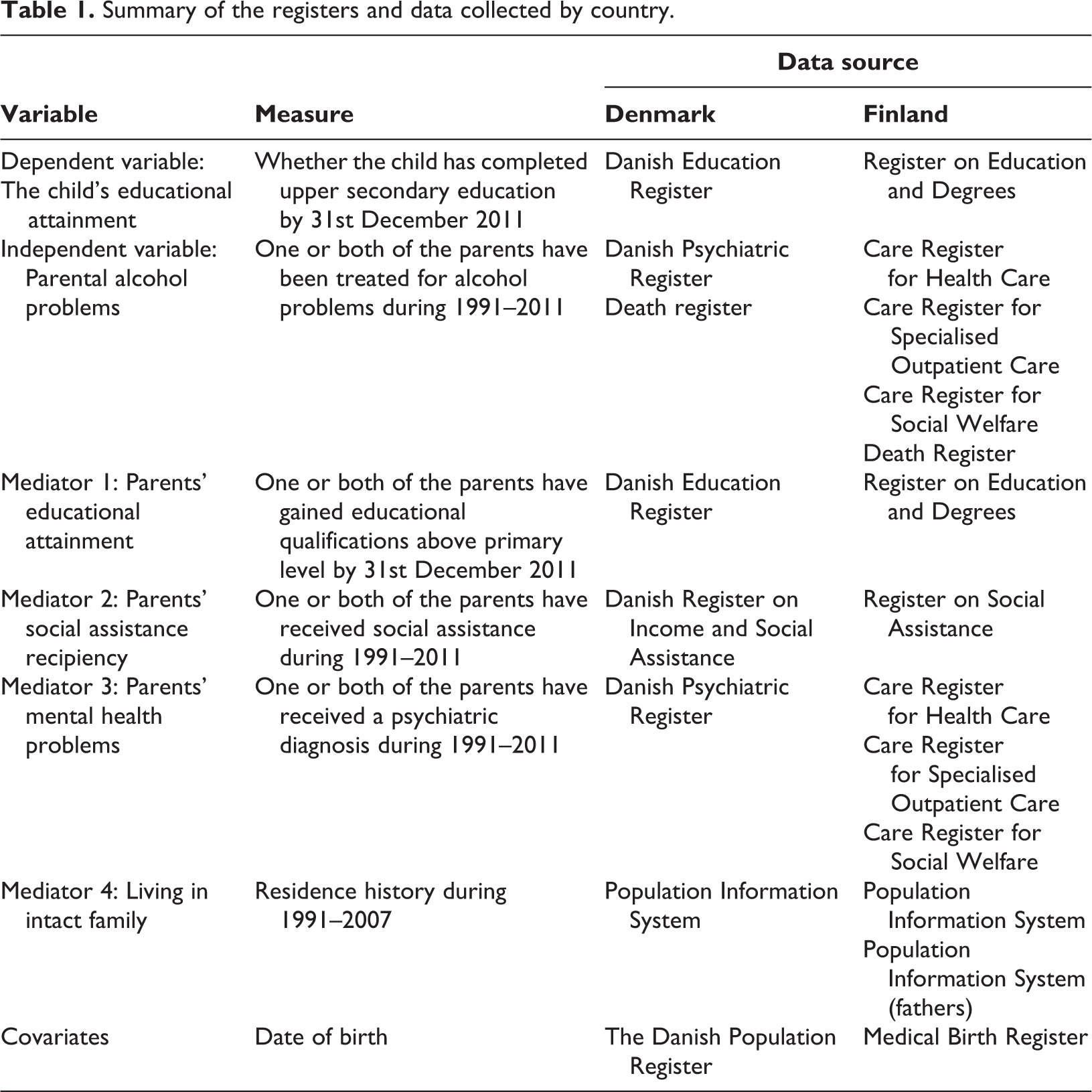
The study population comprised all persons born in Denmark and Finland in 1991 and their biological parents. To include persons who were able to achieve a secondary-level degree record in educational registers, we included the population that was alive in the country at age 18 years. We excluded children with a diagnosis of mental retardation (ICD-9 categories 310–315 and ICD-10 categories F70–F79) (WHO, 2016) as this may affect the likelihood of applying for and completing upper secondary education (n = 185 in Denmark and n = 421 in Finland). The final samples thus comprised 64,138 Danish children (of whom 2,189 had parents with register entries for alcohol problems before age 16 years) and 64,696 Finnish children (of whom 3,024 had parental alcohol problems according to the register data).
Measurements
Educational attainment was measured for children in both Denmark and Finland until the end of 2011. We followed UNESCO’s International Standard Classification of Education (ISCED) (UNESCO, 2012) in identifying young people who, at age 20 years had not completed secondary education (ISCED 3 education). The definition for early school leaving includes young people who have not completed compulsory education by age 21 years, young people who have completed compulsory education but are not in any form of education by age 21 years and young people who are enrolled in secondary education but have not yet completed it by age 21 years.
Children with parental alcohol problems were defined as all children whose parents had any register entries related to alcohol problems before age 16 years, when children usually complete compulsory education and apply for secondary education. We looked separately at children with maternal alcohol problems and paternal alcohol problems. Children with no indication of parental alcohol problems were used as a reference group. A parent was defined as having alcohol problems if at least one of the following criteria was met: he or she had an alcohol abuse-related ICD-10 diagnosis (F10.1–F10.9, E24.4, E52, G31.2, G40.51, G62.1, G72.1, I42.6, K29.2, K70.0–K70.9, K85.2, K86.00–K86.01, K86.08, O35.4, R78.0, T51.0, Z71.4, Z72.1 or the corresponding ICD-9 codes from before 1996) as a primary or secondary diagnosis in the inpatient healthcare register or specialised outpatient healthcare register; he or she was treated for alcohol problems in a social welfare institute; or the underlying or contributory cause of his or her death was related to alcohol problems, thus indicating primarily severe abuse issues.
Both parents’ educational level was measured in the same way as that of children: by a register entry for any completed education after compulsory level. A birth family’s long-term economic distress was measured by the family having received social assistance (a last-resort minimum income scheme) for more than three months per year for a period of at least three years before the child reached the age of 16 years. Parents were classified as having psychiatric disorders if they had an ICD-10 diagnosis in inpatient care registers related to schizophrenia (F20–F29); mood disorders (F30–F39); neurotic, stress-related and somatoform disorders (F40–F48); or disorders of adult personality and behaviour (F60–F69) or a corresponding ICD-9 diagnosis from before 1996. Using population registers, we detected the living arrangements of the family from birth to the child’s 16th birthday. Living in an intact family was defined as living with both biological mother and father until the age of 16 years.
Statistical analysis
We began with descriptive statistics by comparing children who, according to registers, had no indication of parental alcohol problems with children whose mother or father had register entries related to alcohol problems before the child reached 16 years of age. Linear probability models controlling for parental background variables were calculated to estimate the independent effect of parental alcohol problems and other parental variables on the children’s educational attainment. Second, we elaborated the mechanism between parents’ alcohol problems and their children’s educational attainment by analysing the associations by which the mechanism operates. We used an approach of mediation analysis (van der Weele & Shpitser, 2013) to investigate how the association between parental alcohol problems and children’s educational attainment is mediated by socioeconomic background characteristics (low parental education, long-term economic distress, psychiatric disorders, and living in a non-intact family). In more technical terms, evidence supporting the mechanism between parental alcohol problems and the child’s education was defined by the identification of an indirect effect between parental alcohol problems (the independent variable) and the child’s educational attainment (the dependent variable) through the variable measuring the socioeconomic family context (the mediator variable). First, the associations between the dependent variable (children’s educational attainment) and the five parental background variables were analysed using linear probability models adjusting for control variables. Second, mediation techniques were used to decompose the bivariate associations into direct and indirect relations. The principles of this mediation analysis are illustrated in Figure 1.
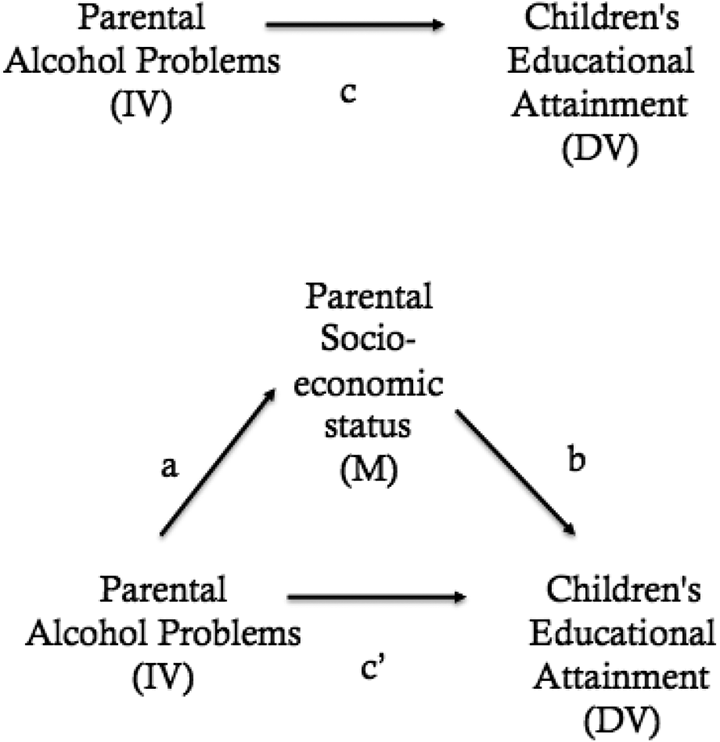
Mediation analysis on how the association between parental alcohol problems and children’s educational attainment is mediated by socioeconomic status.
The paths between the three variables a, b and c’ shown in Figure 1 were estimated using ordinary least squares and the following two equations, where i1 and i2 denote regression intercepts and e1 and e2 are residuals:


All calculations for the mediation analysis were conducted with the Lavaan package for R (Rosseel, 2012). Standard deviation for all paths was obtained using bootstrap procedures. We were hereby able to test the significance of the mediator (parental socioeconomic status) to determine whether the reduction in the effect of the independent variable (parental alcohol problems) was significant. Drawing on the assumption that the regression coefficients follow a normal distribution, we used T-statistics to analyse the difference in the association between the models.
Results
Table 2 describes the characteristics of the study population. Overall, Finnish children more often completed their secondary education than their Danish peers. Compared with peers with no parental alcohol problems, young adults who had experienced these problems faced early school leaving more frequently in both countries. However, the countries showed notable variation in the extent to which children with parental alcohol problems did not complete secondary education: in Finland 33% of the parental alcohol problem population had no secondary education while in Denmark this proportion was 56%. The corresponding figures in the reference population were 17% and 35%.
Descriptive statistics of children born in 1991 in Finland (n = 64,696) and Denmark (n = 64,138) and their biological parents by parental alcohol problems.
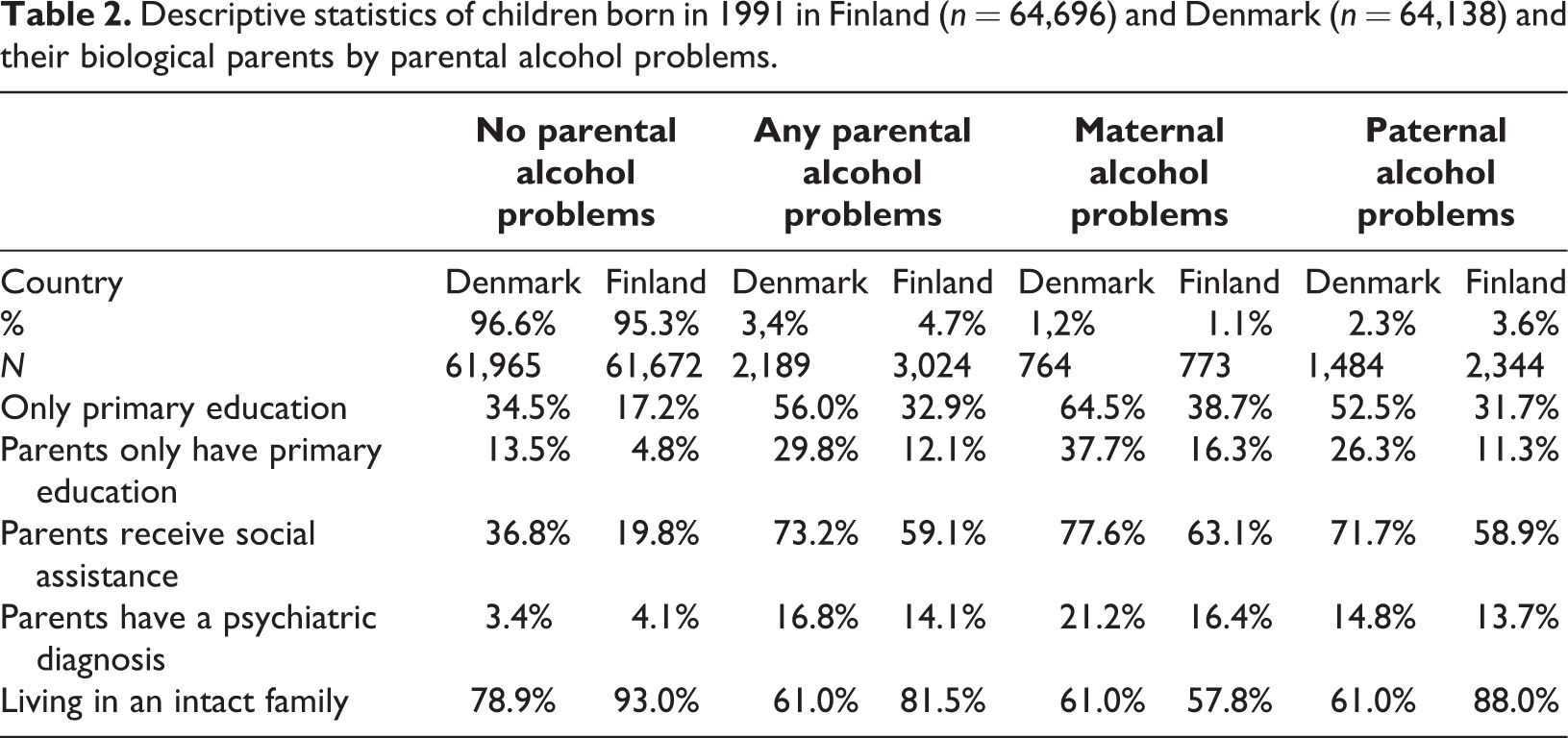
The variation in the level of early school leaving between maternal and paternal alcohol problems showed a similar pattern in both countries. With respect to education, children with paternal alcohol problems were more likely to complete secondary education than those with maternal alcohol problems. In Denmark both subgroups were less likely to complete secondary education than in Finland.
Also, parents’ socioeconomic characteristics were associated with parental alcohol abuse in both countries. Children with parental alcohol abuse more often had parents who had education after compulsory school, who received long-term social assistance and who had mental health problems. In addition, they were less likely to live with both parents during the whole follow-up. In both countries, children with maternal alcohol abuse more often had other adversities in their family (parents’ lack of education, poverty, psychiatric disorders, a non-intact family) than those with paternal alcohol abuse.
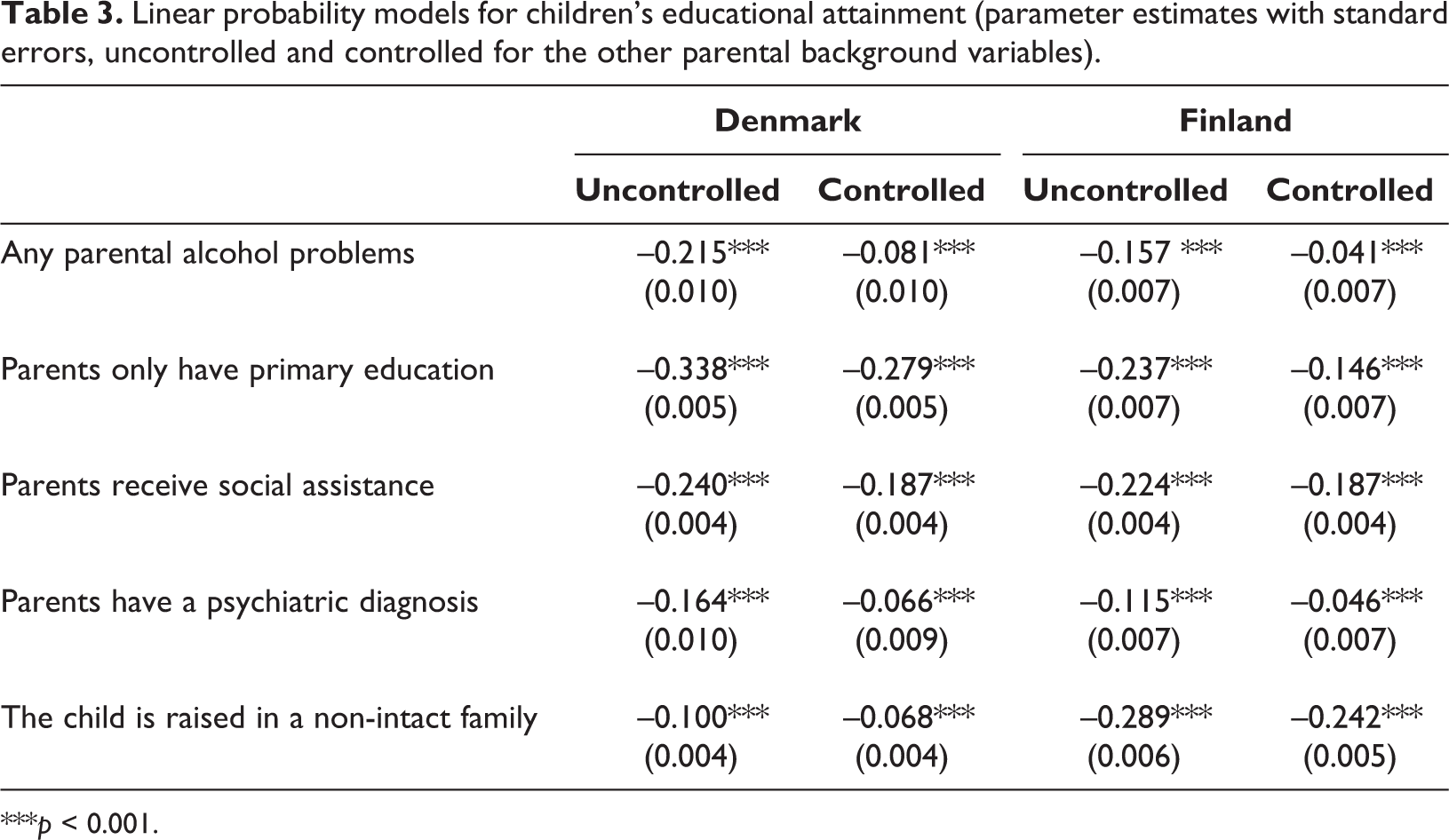
Linear probability models for children’s educational attainment (parameter estimates with standard errors, uncontrolled and controlled for the other parental background variables).
***p < 0.001.
Table 3 shows that in Denmark parental alcohol problems were twice as strongly associated with children’s low educational attainment than in Finland (–0.081 vs. –0.041). Moreover, parental alcohol problems had an independent effect on children’s educational attainment in both countries even though other parental factors mediated part of the variation. Also, only primary education of parents was more strongly associated with children’s educational attainment in Denmark than in Finland (–0.279 vs. –0.144). For social assistance and psychiatric diagnosis, we found relatively similar coefficient sizes. However, Finnish children raised in a non-intact family were less likely to complete a secondary education then their Danish peers (–0.068 vs. –0.242).
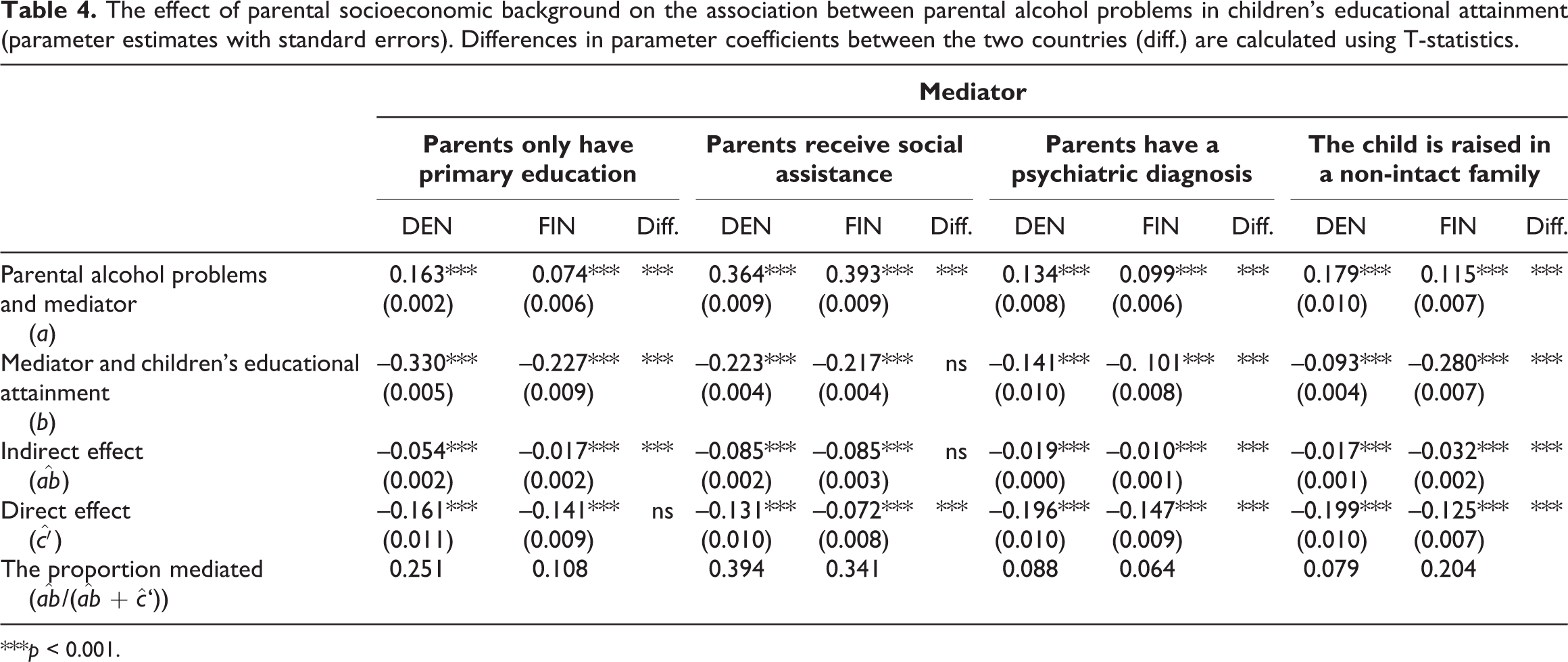
Table 4 presents the results of the mediation analysis where we compared how much each of the four parental background variables (i.e., only primary education, receipt of social assistance, psychiatric diagnosis, and non-intact family) mediated the association between parental alcohol problems and children’s educational attainment. These models also included a link between the parental background variables (i.e., the mediator) and parental alcohol problems.
The effect of parental socioeconomic background on the association between parental alcohol problems in children’s educational attainment (parameter estimates with standard errors). Differences in parameter coefficients between the two countries (diff.) are calculated using T-statistics.
***p < 0.001.
The only association of interest was thus not the relation between parental alcohol abuse and the children’s educational attainment, which in the mediation analysis is labelled the “direct effect”, but also the relations between the parental alcohol abuse and parental background variables (i.e., the mediators). For both countries, the direct effects were relatively stable across the models with different mediators. Compared to the uncontrolled coefficients from the linear probability models in Table 3, we find the coefficients for the parental background variables to be lower in the mediation analysis, which was expected as we now included additional coefficients for indirect and mediating effects.
In both Denmark and Finland, parental alcohol problems and receipt of social assistance were strongly associated with each other (0.364 and 0.393). Furthermore, parents’ receipt of social assistance mediated the highest proportion of all background factors of the effect of parental alcohol problems on children’s educational attainment (39% in Denmark and 34% in Finland).
Only primary education in parents was more strongly associated with parental alcohol problems in Denmark (0.163) than in Finland (0.074). Low parental education mediated 25% of the effect of parental alcohol abuse on young people’s educational attainment in Denmark, but only 11% in Finland. Using T-statistics to investigate the association further, we found that the indirect effect of parental education was significantly higher in Denmark than in Finland (–0.054 vs. –0.017).
The association between parental psychiatric diagnosis and parental alcohol problems was, according to the T-statistics, significantly higher in Denmark than in Finland (–0.134 vs. –0.099). Parental psychiatric diagnosis mediated more of the association between parental alcohol problems and children’s education in Denmark than in Finland (9% vs. 6%), which suggests a greater overlap in Denmark than in Finland between parents with alcohol problems and psychiatric problems. These problems are about as common in both countries.
The mediation effects of living arrangements, i.e., whether the young person grew up in a non-intact family, also varied across the two countries: in Denmark the variable mediated only 8% of the effect of parental alcohol problems on educational attainment, whereas in Finland it mediated 20%. This suggests that growing up in non-intact families mediates a considerable risk of early school leaving among Finnish youth, if their parents have alcohol problems, whereas it hardly influences young people’s schooling in Denmark, if they grow up in families with alcohol problems. As the overall divorce rate is higher in Denmark than in Finland, divorce seems to have a bigger influence on young people’s risk of not completing secondary education in Finland than in Denmark (–0.280 vs. –0.093).
Discussion
The results of our study showed that children with parental alcohol problems had a higher risk of failing to attain a secondary education by age 21 years compared with their peers in Denmark and Finland. In both countries, children with maternal alcohol problems more often had not completed secondary education by the age of 21 years than those with paternal alcohol problems. A comparison of the outcomes of children with parental alcohol problems between the two Nordic countries showed that Denmark performed worse than Finland. This was true regardless of whether it was the mother or the father who abused alcohol. However, the relative risk for early school leaving among children with parental alcohol problems compared to other children was higher in Finland than in Denmark. Our results were in line with previous studies that have found worse educational outcomes in children with parental alcohol problems compared to other children (Berg et al., 2016; McGrath et al., 1999; Sher et al., 1991; Torvik et al., 2011).
The results also showed that in both countries children with parental alcohol problems were more likely to have other problems in their family. Their parents were more often divorced, they had higher rates of psychiatric disorders, lower educational levels and more long-term financial difficulties, indicating that these young people grow up in families with fewer resources. The effect of parental alcohol problems on children’s educational attainment was partly mediated by these factors, although parental alcohol abuse also had an independent effect. Thus, children living in these families are at higher risk for early school leaving, not only because of parental alcohol problems but also because of other, often accumulating, risk factors in their lives.
There are several mechanisms through which parental alcohol problems may be associated with the children’s educational outcomes. First, parental alcohol abuse has been shown to be associated with behavioural and cognitive problems in children (Bountress & Chassin, 2015; Lupien et al., 2009), which are often related to school performance (Reid et al., 2004). These problems may stem from alcohol exposure during pregnancy (Autti-Rämö, 2000; Sood et al., 2001) or from problems in early attachment (Flaherty & Sadler, 2011). Second, parents with problems in their own lives are often unable to help their children in school work (Heymann & Earle, 2000). Also, social strains – such as negative life events, family conflicts or dysfunctions, the disruption of routines or neglect – can also foster maladjustment (Dube et al., 2001; Haugland, 2005).
Our results suggest that parental education mediates a bigger proportion of the effect of parental alcohol abuse on children’s educational attainment in Denmark than in Finland. One interpretation of this result is that, overall, the Finnish education and student welfare system supports children in completing an education irrespective of their parents’ educational level. This is to a lesser extent the case in Denmark (for other studies reaching a similar conclusion, see Pfeffer, 2008; Thomsen et al., 2017).
Of all our mediating variables, parents’ long-term economic distress mediated the biggest proportion of the effect of parental alcohol abuse on children’s education in both countries. This result suggests that it is necessary to focus more on families with parents outside the labour market.
Generally, assessing differences between countries is difficult because studies differ in many aspects, such as study populations, outcomes and measurement ages. Consequently, available research literature does not allow for assessing cross-country differences in the educational outcomes among children with alcohol-abusing parents internationally or within the Nordic region. Because the national context may moderate education among these children in varied ways (for example, through the influence of child welfare and educational policies), this study adds in understanding the impact of national arrangements on the educational outcomes among these children.
Vocational programmes in Denmark differ significantly from those in Finland in that they provide a smoother transition from school to work by including apprenticeship-based workplace training in addition to school-based training (Cederberg & Hartsmar, 2013). Findings from Norway (with a similar apprentice-based training system of vocational education to that of Denmark) suggest that child welfare clients have difficulties in obtaining apprenticeships, which prevents them from completing the programme (Dæhlen, 2017). Moreover, a study comparing the Nordic countries (Kääriälä et al., 2018) showed that children in care fail to complete secondary education more often than their peers. Because the out-of-home care population often includes parents with alcohol problems (Andersson, 1995; Myllärniemi, 2005; Raitasalo et al., 2014; Sarkola et al., 2007) and enters the vocational track more often than the academic track (Jackson & Cameron, 2012), the difficulty in finding apprenticeships may also be an obstacle to the attainment of secondary education for Danish children with parental alcohol problems. Long-term educational outcomes and labour-market effects on this population still remain unclear.
The cross-country differences in educational attainment among children with parental alcohol problems may reflect similar cross-country variation observed at the general population level. In Denmark, students in vocational education are less likely to complete their studies, and young adults attain secondary education at a somewhat later age than in Finland. The lower level of education completed by the general population in Denmark, however, is not necessarily visible in a lower participation rate in education and employment during young adulthood, although the evidence is inconclusive (Albæk et al., 2015; Bäckman et al., 2015).
Strengths and limitations
The strengths of our study include a long follow-up and the use of data from a large nationwide register that offers an exceptional possibility to study whole cohorts without the problems of response rates. The strength of the measures we used is that entries in administrative registers are based on diagnoses and other definitions made by professionals using similar criteria.
Some limitations are still worth noting. First, we measured parental alcohol problems using entries in health and social welfare registers. It is not possible to catch all alcohol-related problems by investigating administrative registers as not all people with these problems end up in them. The measures used exclude those who have not used public services because of their problems. In addition, the timing of parental alcohol problems is not possible. These problems typically take some time to develop and have a history before appearing in registers. Parental alcohol problems experienced in early childhood may have a different effect than those experienced in adolescence. Furthermore, no data on primary healthcare were available. These shortcomings may have led to an underestimation of the associations between parental alcohol problems and early school leaving. Similarly, our parent-related mediators, also drawn from administrative registers, are limited in their scope because they only capture officially recorded incidences of economic difficulties and mental health problems.
Second, the data allowed us to study families with biological parents only. A foster or step-parent can certainly have an equal role in a child’s life as a biological parent, and her or his alcohol abuse may affect a child just as much. Third, our study only included persons born in the study countries and hence it cannot address the question of educational attainment among first-generation immigrant children. Fourth, with the present data we were not able to study prenatal exposure to alcohol or drugs that may lead to cognitive and behavioural difficulties in childhood and adolescence (Autti-Rämö, 2000; Bandstra et al., 2010; Sood et al., 2001), which, in turn, may affect the risk of early school leaving. Fifth, as the number of children with a diagnosis of mental retardation (excluded from the data) was lower in Denmark than in Finland, it is possible that the Danish sample included more children with these kinds of disabilities. The numbers are, however, so low that it hardly leads to bias in the difference of educational attainment between the study countries. Finally, the follow-up time of our study ends when the children are 20 years old. Probably at least some of the children will complete their upper secondary education, especially in Denmark, later in life. If there is an association between the late completion of education and parental alcohol problems, this deficit may have led to an overestimation of the risk for early school leaving in Denmark.
Implications for research and policy
Our results suggest differences in educational attainment across two countries with relatively similar educational models regardless of whether the parents have alcohol problems or not. Moreover, in both countries, children with alcohol-abusing parents attain a secondary degree before the age of 21 years less often than their peers. Ensuring better education for children with parental alcohol problems is key to improving their long-term outcomes in a multitude of life domains. Consequently, healthcare, social work and education sectors should prioritise advancing education among these children in order to prevent their exclusion from education and labour markets, and they should cooperate closely in doing so. Early recognition of the family’s situation in health and social services (day care, school healthcare, primary healthcare) and offering help are crucial in preventing problems later in children’s lives. It is also important to pay attention to how the non-alcohol-abusing parent can be supported in carrying out the parental tasks.
Thus, more research is required on these youth: how do family and individual characteristics – as well as child welfare policy and practices, and school experience – influence their education? In this study, we observed the cohort members’ educational attainment until the age of 21 years. To expand the findings, future research should address these children’s progress in education beyond that age and how their educational attainment affects labour-market outcomes in later life.
Footnotes
Declaration of conflicting interests
The authors declared no potential conflicts of interest with respect to the research, authorship, and/or publication of this article.
Funding
The authors received no financial support for the research, authorship, and/or publication of this article.
