




Abstract
This study examines the dual effects of co-creation in live streaming commerce by investigating how synchronous community interaction (danmaku), in the form of scrolling comments, questions, gift-sharing, testimonials and interactions, shape consumer responses. Integrating theories of co-creation, source effects and information overload, we propose and test a model of how community interaction in streaming can (1) co-create social impact such as trust and (2) build commercial impact such as engagement and purchase intention, but can also lead to co-destruction with excessive danmaku content with (3) social impacts that overwhelm viewers’ information sensitivity to lower their trust and (4) distract from the streamers’ commercial message to reduce conversion. Findings reveal that macro-streamers (>100,000 followers) directly enhance consumer outcomes. Yet when community chat danmaku becomes excessive, positive effects are attenuated due to information overload and disrupted viewer immersion, demonstrating a co-destructive effect. In contrast, micro-streamers build consumer trust gradually, and danmaku does not alter their impact. Their influence operates indirectly via trust-based parasocial bonds, reinforcing co-creative engagement. This research offers actionable implications for brands, platforms and influencers aiming to balance community engagement with message clarity to optimise consumer impact.
Keywords
Introduction
Danmaku has emerged as a form of synchronous community interaction where real-time scrolling messages including comments, questions, virtual gifts and shared testimonials appear across the live streaming screen (Zhou et al., 2019). This real-time interactive mechanism turns individual viewing into a shared social and commercial experience. Live streaming commerce, characterised by Danmaku and curated product presentations from streamers, represents a significant advancement in online marketing (Chong et al., 2023; Grewal et al., 2022). A prominent example is China’s largest platform, Taobao Live, which has amassed more than 50 billion views. The commercial impact of this format is exemplified by streamer ‘Lipstick King’ Austin Li, who generated 33.62 billion CYN in pre-sale revenue during the 2022 ‘11.11’ festival alone (Y. Xu et al., 2023). Enabled by dynamic, two-way interaction, live streaming commerce emerged as a powerful tool for global marketing communication and sales (Zhao et al., 2024). These platforms facilitate consumer co-creation through real-time chat, digital gifting, commenting and fan-group activities.
This paper investigates a central question: when does danmaku co-create value in live streaming commerce, and when does it co-destroy value? Research shows that danmaku interactions can build trust, strengthen community ties and even foster parasocial relationships (C.-P. Chen, 2021; Hu et al., 2017). Users are willing to send paid gifts and purchase, contributing to a reported $5 billion USD live streaming commerce industry, while live chat interactions curate relationship building key to optimal sales performance (Z. Lu et al., 2018). However, some studies caution that an exclusive focus on community engagement can reduce financial returns (Giertz et al., 2022; C. Zhang et al., 2024).
Despite its potential, live streaming commerce is not without challenges. Highly popular streamers can struggle to engage meaningfully with their audience, leading to reduced effectiveness. Consumer decision quality can also be undermined by information churn. Excessive product detail and prolonged viewing durations can result in information overload, ultimately decreasing sales (C. Zhang et al., 2024). By 2022, 751 million people in China – representing 70.3% of online users – had participated in live streaming commerce (CNNIC, 2023). In the U.S., 46% of shoppers attending live selling events made purchases, often influenced by customer testimonials and reviews (McKinsey, 2023; Ratchford et al., 2022). While communal engagement transforms shopping into a vibrant social experience, it also introduces rapid and overwhelming layers of information via danmaku, which may saturate viewers if not effectively managed.
Extant literature has examined how external stimuli (e.g. live streaming features and streamer characteristics) influence consumer responses (Y. Guo et al., 2022), as well as the cognitive and affective processes triggered in viewers (Wongkitrungrueng & Assarut, 2020). Live streaming has developed alongside continuous community interaction (danmaku), where streamers rely on audience responses, comments, questions, gift-sharing and testimonials, as essential elements of content creation (Y. Xu et al., 2023). Community interaction significantly influences engagement and purchase intentions in both gaming and shopping contexts (Fei et al., 2021; Hilvert-Bruce et al., 2018) and perceived crowdedness in a session can raise perceptions of value (Chong et al., 2023). Yet in commerce-focussed live streams, the length and count of interaction texts exhibit an inverted U-shaped relationship with sales outcomes (C. Zhang et al., 2024; Zhao et al., 2024). This indicates that the wider implications of dynamic community interaction, particularly its influence on endorsement acceptance, continuance and purchase intention, remain insufficiently examined, with limited attention given to its relationship with streamer effectiveness and the potential for information overload. This study addresses these gaps by examining whether cumulative danmaku in live streaming commerce contributes to information overload that undermines streamer effectiveness. We explore both social and commercial outcomes, investigating how rapid, large-scale and poorly managed community interactions affect the efficacy of live streaming commerce. While group engagement can enhance brand perceptions and streamer credibility (He et al., 2023), this research evaluates the threshold at which such interactions become counterproductive.
Drawing on four experiments, this paper examines how streamers navigate pathways to influence consumer responses. Specifically, we investigate the roles of streamer authenticity, community interaction and information sensitivity, with trust as a mediating variable influencing key outcomes such as endorsement acceptance, purchase intention and continued usage intention. Our findings show that:
Popular streamers with large follower counts achieve higher levels of trust and consumer outcomes but are adversely affected by excessive community interaction.
Smaller streamers can enhance trust and consumer responses despite lower perceived authenticity, while community interaction does not impact their effectiveness.
Intensive danmaku activity on macro-streamer channels increases information sensitivity, triggering backlash against popular streamers.
Framing these findings through the lens of value co-creation and co-destruction (Echeverri & Skålén, 2011; Vargo & Lusch, 2008), we reveal how community interaction via danmaku operates via a dual effects model in live streaming commerce. When appropriately moderated, such interactions can foster co-created value by enhancing social outcomes (increased trust) and commercial outcomes (higher endorsement acceptance and purchase intention). These effects are particularly salient for macro-streamers, where authenticity and high follower counts facilitate trust, which in turn mediates positive commercial responses. However, when danmaku becomes excessive or poorly managed, it increases information sensitivity (C. Zhang et al., 2024), a form of cognitive overload that undermines trust. This reflects a process of co-destruction, whereby excessive participation and unregulated community input reduce the efficacy of streamers in live streaming commerce. Here, the social outcomes of co-destruction include reduced trust and perceived authenticity, while commercial outcomes of co-destruction include lower endorsement acceptance and weaken purchase intention among viewers.
In contrast, micro-streamers benefit from a different dynamic. Even with relatively lower perceived authenticity, they can co-create trust and commercial outcomes in the absence of disruptive community interaction. For them, community input appears neutral rather than co-destructive, suggesting a threshold effect tied to streamer scale and audience expectation.
Overall, this research identifies boundary conditions for value co-creation and co-destruction in live streaming commerce. By mapping the roles of streamer type, authenticity, trust and information sensitivity, we demonstrate how these mechanisms jointly produce or erode value for viewers and platforms. This study contributes to the literature on online influencers and marketing in live streaming commerce by demonstrating how practitioners can strategically calibrate community engagement to sustain value co-creation and avoid value co-destruction. The following sections review the relevant literature and present our hypotheses, followed by four experimental studies, their results and interpretations. We conclude with a general discussion and outline the theoretical and managerial implications of our findings.
Literature review and hypothesis development
Co-creation and co-destruction
Under service-dominant logic, consumers are no longer passive recipients but active collaborators in shaping products and brand experiences (Tajvidi et al., 2020; Vargo & Lusch, 2004). This collaborative process, known as value co-creation, empowers consumers to influence both product development and brand identity through shared engagement and mutual benefit (Prahalad & Ramaswamy, 2004). Live streaming commerce amplifies this dynamic by enabling real-time content creation and interaction, reinforcing key co-creation elements such as collaborative decision-making and reciprocal value exchange (L. Wang et al., 2024). Co-creation outcomes are driven by active participation and the strategic use of resources to foster beneficial interactions among stakeholders (Cheung et al., 2020; Jain et al., 2024). In contrast, value co-destruction arises when resources are misused either intentionally or unintentionally, or when interactions are poorly coordinated, resulting in diminished value for one or more parties (L. Wang et al., 2024). Value is thus contingent on the alignment of participants, content and context (Plé, 2016).
The dual effects of co-creation in live streaming commerce, where co-creation can both enhance and undermine consumer experiences, are increasingly becoming recognised in emerging empirical work across marketing, services and digital commerce literature. These dual effects yield both social (relational, community and trust) and commercial (purchase, endorsement and continuance on the stream or platform) outcomes. Co-creation fosters trust and enhances purchase intentions, with macro-streamers gaining more from these interactions due to their professional delivery (Li & Peng, 2021b; J. Zhang et al., 2024). However, it can also lead to overconsumption or impulsive buying driven by flow states (D. Lee & Wan, 2023). To retain followers, some micro-streamers may compromise content quality and adopt people-pleasing behaviours (Song et al., 2025; Tan et al., 2020).
On the other hand, co-destruction often results in cognitive overload and decision fatigue, prompting viewers to disengage (C. Zhang et al., 2024; Zhao et al., 2024). Toxic comments can harm streamers' mental health but may also generate viral attention. For example, in 2018, Twitch famous macro-streamer Pokimane faced a surge of harassment after a clip of her without makeup went viral, unintentionally sparking a movement of solidarity among female streamers (Partis, 2025).
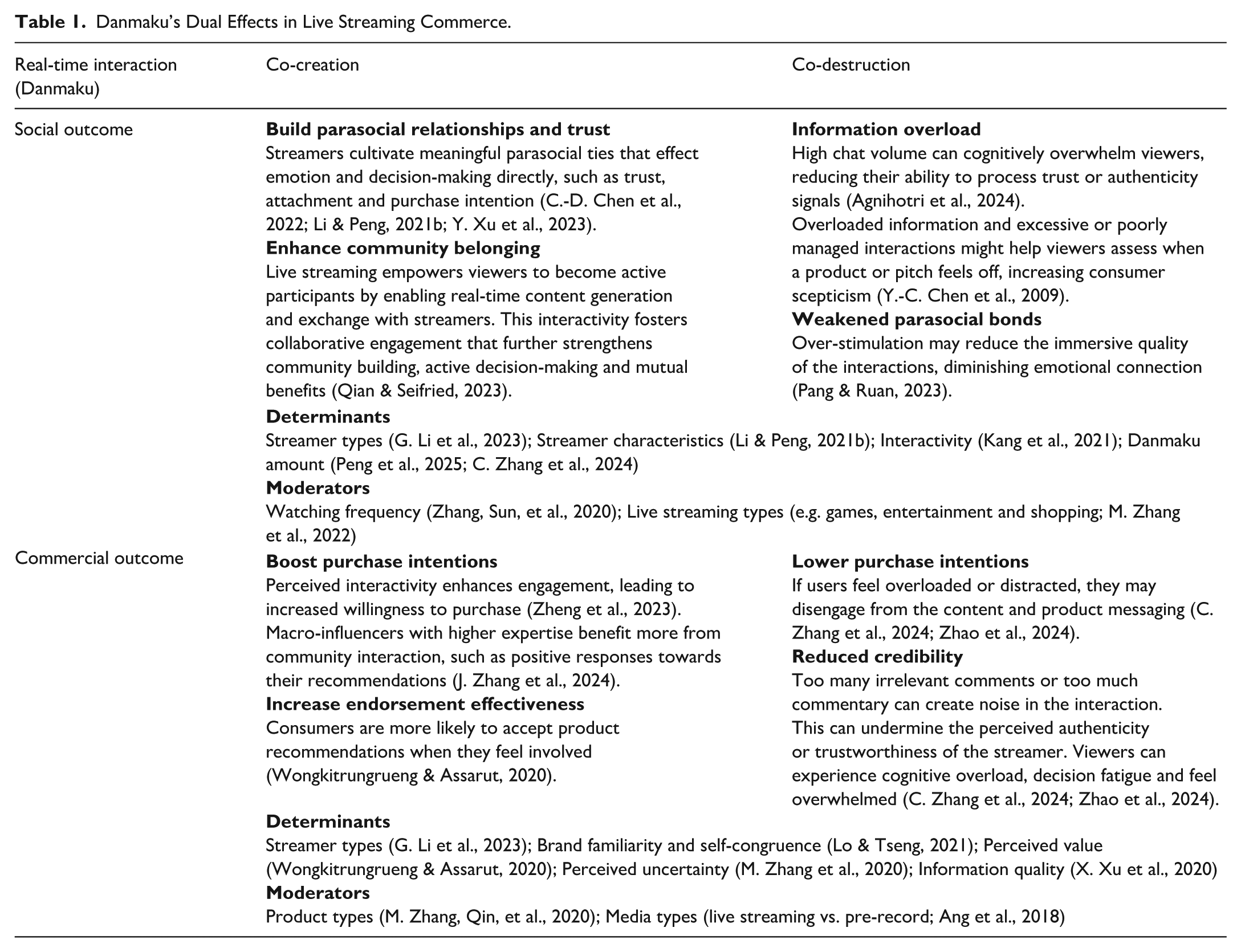
Table 1 charts the damaku’s dual effects of co-creation and co-destruction in live streaming commerce. It outlines how real-time chat, feedback and interactions can yield positive social outcomes, such as trust and a sense of community belonging, or commercial outcomes, such as increased purchase intention and enhanced endorsement effectiveness. Conversely, excessive or irrelevant messages can lead to information overload, weakened parasocial bonds, reduced sales and diminished streamer credibility. Table 1 also presents potential determinants identified in previous research, such as interactivity, streamer types and characteristics, perceived value and information quality (Kang et al., 2021; G. Li et al., 2023; Li & Peng, 2021b; X. Xu et al., 2020). This study focusses on processes that foster co-creation, while probing the boundary conditions under which co-destruction occurs, particularly from information overload (C. Zhang et al., 2024) due to excessive and poorly managed community interaction (danmaku).
Danmaku’s Dual Effects in Live Streaming Commerce.
Streamer use of social signals
Signalling theory provides a valuable lens for understanding how streamers influence consumer behaviour in live streaming commerce, where consumers often face information overload and uncertainty (Biswas & Biswas, 2004). Streamers use signals to enhance consumer decision-making confidence and reduce uncertainty, positioning themselves as personal brands through consistent and distinctive content creation (Kozinets et al., 2023; Li & Peng, 2021a). These signals may be explicit, such as testimonials or follower counts, or implicit, such as interactivity or on-screen confidence. Peer-action signals such as engaging with streamers have shown greater impact on group preferences than written reviews (Rao Hill & Qesja, 2023). In this study, we examine how streamers function as signals that interact with community dynamics such as danmaku to influence value co-creation or co-destruction.
Streamers are not passive intermediaries but complex bundles of signals that shape perception and decision-making. Their affiliation, expertise and communication style contribute to consumer trust and outcomes. For example, third-party influencers tend to outperform store-affiliated streamers when brand awareness is high (D. Liu & Yu, 2024). Studies have also identified differences in authenticity perception and purchase intention between human and AI-generated streamers (J. Li et al., 2023). While these findings highlight the role of streamer type, little is known about how specific streamer attributes interact with communal features such as danmaku. To address this gap, we investigate streamer type as a signalling construct, operationalised through identification, familiarity and follower count.
In this study, we adopt a simplified classification: macro-streamers are influential figures or celebrities with over 100,000 followers, while micro-streamers have fewer and are typically grassroots creators or online store owners (Conde & Casais, 2023; D. Liu & Yu, 2024). Follower count serves as a visible signal of popularity, authority and social proof, shaping audience perceptions of credibility and product quality (Campbell & Farrell, 2020; Conde & Casais, 2023). Macro-streamers’ expertise, familiarity and large followings enhance their authority and persuasive power, leading to stronger endorsement effects, even in short-term collaborations (Conde & Casais, 2023; D. Liu & Yu, 2024).
Micro-streamers, while less familiar to viewers, tend to foster closer emotional connections and build parasocial relationships that support word-of-mouth effects (Conde & Casais, 2023; S. Zhang et al., 2022). They frequently promote their own products through frequent and attention-grabbing broadcasts designed to create a sense of affinity (D. Liu & Yu, 2024; Tan et al., 2020). Despite the relational strength, micro-streamers’ limited reach and perceived credibility may constrain their ability to drive broader engagement and conversions. Thus, macro-streamers, due to their stronger social signals, are more effective in generating positive consumer responses in live streaming commerce contexts. Accordingly, we hypothesise:
Trust in live streaming
Trust serves as a critical mediating mechanism linking influencer characteristics and consumer responses in digital commerce (Lou & Yuan, 2019). Trust refers to the belief that the other party in a social exchange will behave ethically and refrain from engaging in opportunistic behaviour (Gefen & Straub, 2003; L. Guo et al., 2021). In live stream commerce, where consumers cannot physically evaluate products, streamers function as surrogate decision aids. Through real-time demonstrations and interactive dialogue, they help reduce information asymmetry and perceived uncertainty (Park & Lin, 2020), thereby enhancing viewer confidence (L. Guo et al., 2021).
Trust in live streaming commerce includes both cognitive trust (trust in the streamer’s knowledge or platform’s functionality) and affective trust (emotional connections with the streamer or community; Wongkitrungrueng & Assarut, 2020). While cognitive trust is based on rational evaluation, affective trust arises from emotional closeness, perceived relational warmth and a sense of security (Johnson & Grayson, 2005). Cognitive trust often serves as a precursor to affective trust (Lewis & Weigert, 1985), especially in digital contexts where relational cues and signals are mediated by technology (Ozdemir et al., 2020). Trust in products, trust in streamers and trust in platforms together form an interconnected and transferable system that shapes consumer responses. Trust measured via these three key targets of trust form an essential mechanism in the context of live streaming commerce (L. Guo et al., 2021; Wongkitrungrueng & Assarut, 2020; Y. Xu et al., 2023). Thus, this research mainly focusses on integrated trust across product, streamer and platform to probe how streamer type drives overall trust to influence consumer responses in live streaming.
Importantly, trust in live streaming is not formed in isolation but is co-created through interaction between streamers and audiences. Audience members evaluate trustworthiness based on how a streamer responds to live chat, incorporates viewer feedback and tailors content in real time, creating a participatory environment that fosters perceived closeness and authenticity (J. A. Lee & Eastin, 2021). Macro-streamers, with larger followings and greater visibility, often demonstrate higher degrees of content co-creation and viewer familiarity. Their frequent engagement, professional presentation and reputation enhance trust by allowing viewers to feel that their presence shapes the streaming experience (Y. Xu et al., 2023). While micro-influencers on static platforms often create trust through niche intimacy (Conde & Casais, 2023), macro-streamers in live commerce contexts instead build trust through performance scale, responsiveness and information richness (G. Li et al., 2023). Based on this, we propose the following hypothesis:
Authenticity
Authenticity reflects the degree to which an influencer or streamer is perceived as sincere, genuine and true to themselves in their promotional activities (Boerman et al., 2017; Evans, 2017). While often viewed as a personal trait, authenticity is also a socially co-constructed and relational phenomenon, shaped through community interaction and the performative context in which it unfolds (Cheng, 2004; Marwick & Boyd, 2010). In live streaming commerce, authenticity is not static but emerges in real time, through the streamer’s responsiveness, emotional expressions and engagement with audience input (Y. Liu & Sun, 2024).
The co-created nature of authenticity is particularly important in live settings. In static social media, viewers actively interpret the sincerity of an influencer’s self-presentation based on how spontaneous, consistent and responsive they appear (Audrezet et al., 2020) . Live contexts are anticipated to magnify those effects. Trust and authenticity are mutually reinforcing. Co-created trust can lead to heightened perceptions of authenticity, especially when the viewers see their content and participation reflected in live streaming content (J. A. Lee & Eastin, 2021). Macro-streamers, despite their commercial motivations, may appear more authentic due to their professional competence, consistent persona and visible engagement with community interaction danmaku. In contrast, micro-streamers in live streaming settings may undermine authenticity through exaggerated, overperformed enthusiasm intended to please viewers (Tan et al., 2020; Y. Xu et al., 2023).
Although prior research suggests that micro-influencers are generally seen as more authentic in static social media contexts (Rao Hill & Qesja, 2023), live streaming commerce disrupts this pattern. Here, authenticity is not solely a function of streamer type; it is mediated by viewer experience of co-creation, trust and engagement. Accordingly, we hypothesise:
Moreover, the social construction of authenticity in live streaming commerce is shaped by the fast-paced, synchronous exchange of ideas, questions and comments within the viewer community, which further influences streamer effectiveness.
Community interaction
The role of community in live streaming commerce remains contested (Farivar & Wang, 2022). As illustrated in Table 1’s dual effects framework, co-creation through danmaku’s real-time chat, digital gifting, commenting and fan-group activities has the potential to both enhance and undermine consumer experiences. On one hand, interactions among viewers foster trust, engagement and continuance intention, with social presence and identification driving these effects (Chong et al., 2023; De Cicco et al., 2020; Hu et al., 2017). Community interaction and a sense of community have been shown to increase engagement in gaming and mukbang streams (Giertz et al., 2022; Hilvert-Bruce et al., 2018; D. Lee & Wan, 2023), as well as boost sales in commerce streams via online comments and interactions (Kashyap et al., 2023).
On the other hand, excessive interaction, such as rapid-fire danmaku scrolling comments, can overwhelm viewers, introducing information overload that diminishes trust while increasing scepticism and information asymmetry (Biswas & Biswas, 2004). Information overload occurs when viewers are bombarded with a barrage of content that distracts from product presentations and disrupts cognitive processing (Zhao et al., 2024). If streamers fail to maintain active parasocial engagement, the relationship can become negative, fostering divergence (Duffy et al. 2022). This overload not only undermines trust in streamers and platforms but also negatively affects purchase intentions, which are key commercial outcomes (Furner & Zinko, 2017).
The inverted-U relationship between product information and sales in live streaming underscores the need for balance (C. Zhang et al., 2024; Zhao et al., 2024). Excessive product detail or prolonged exposure can reduce sales performance (C. Zhang et al., 2024). In a highly interactive environment, such as those with a large volume of danmaku community chat, viewers with varying levels of information sensitivity may react differently. While moderate community interaction enhances trust and viewer involvement, excessive danmaku can disrupt this equilibrium. Consistent with signalling and uncertainty reduction theory, viewers seek information from streamers to reduce perceived risk, which increases trust (B. Lu & Chen, 2021). When information is overwhelmed by excessive danmaku, viewers are more likely to perceive lower authenticity, as streamers are less capable of responding promptly and professionally. This can lead consumers to question whether the streamer genuinely understands the product. This issue is more common among macro-streamers, who tend to have larger audiences and receive a higher volume of danmaku than micro-streamers. In this research, danmaku is operationalised as the large volume of real-time comments, gifting and emojis sent by viewers during live streaming, rather than its complexity, such as answering detailed questions, troubleshooting or engaging in in-depth discussions (Peng et al., 2025; C. Zhang et al., 2024). Building on this perspective, we hypothesise:
The overlap between community interaction danmaku and live broadcast content can hinder viewers’ ability to fully comprehend the streams’ content and increase cognitive load (N. Zhang & Ruan, 2024). In live streaming commerce, this challenge is intensified by excessive or poorly managed high-volume danmaku messages, which contributes to information overload and makes it harder for viewers to process and evaluate product-related information. As a result, viewers may experience information avoidance or develop information sensitivity, choosing to rely mainly on streamers who are easy to access or emotionally reassuring (Cao et al., 2024). When streamers are overwhelmed by excessive danmaku and unable to respond promptly, the perceived quality of interaction can also decline. This we predict is more likely to lead to value co-destruction, reflected in lower trust, reduced engagement and continuance intention and decreased purchase intention (Lv et al., 2021). Thus, we formally hypothesise:
Empirical overview
This paper tests a dual effects model to examine how co-created community interaction (danmaku) influences the effectiveness of live streaming commerce. Four experiments are conducted to determine how streamers impact both social outcomes (e.g. trust) and commercial outcomes (e.g. endorsement acceptance, continuance intention and purchase intention) under varying levels of community interaction including chats, messages, feedback, gifts and emojis.
Figure 1 presents the empirical framework. A pre-test first identifies streamers and their perceived authenticity. Study 1 next tests whether macro-streamers elicit more positive consumer responses (
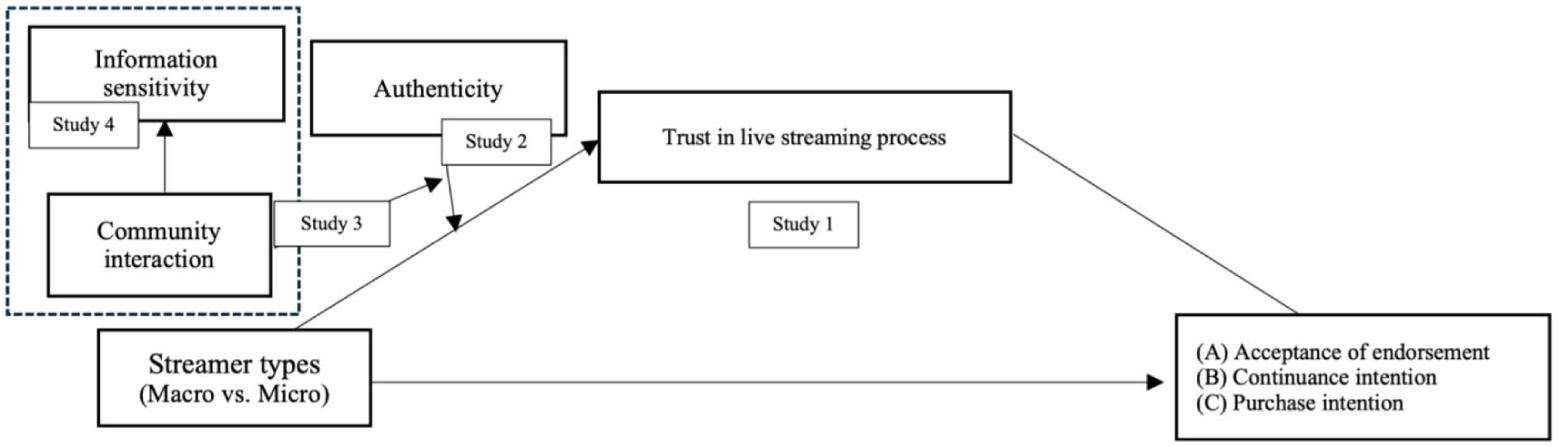
Conceptual framework.
Pre-test
To identify suitable streamers, a pre-test was conducted with 479 live streaming commerce users (60.3% female, Mage = 34.9) recruited from the Chinese online survey platform Wenjuanxing. Participants evaluated the authenticity of 15 streamers using a 7-point Likert scale (1 = ’strongly disagree’ and 7 = ’strongly agree’). To minimise potential bias, participants were randomly exposed to different streamers.
The objective was to ensure parity in perceived authenticity between macro- and micro-streamers, reducing potential confounds in subsequent experiments. Four streamers were selected based on comparable authenticity scores: The macro-streamer category comprised Austin Li and Chen He, each with over 100,000 followers. The micro-streamer category included Taozi sister and a Taobao seller, each with 10,000 to 100,000 followers.
Pairwise comparisons revealed no significant differences in authenticity between Austin Li (MAustin_Li = 5.26) and Taozi sister (MTaozi_sister = 5.51, p > .05; Cohen’s d = 0.66) or between Chen He (MChen_He = 5.00) and the Taobao seller (MTaobao_seller = 5.15, p > .05; Cohen’s d = 0.76). As suggested by previous research (Campbell & Farrell, 2020; Conde & Casais, 2023; D. Liu & Yu, 2024), there are significant differences in familiarity between Austin Li (MAustin_Li = 5.82) and Taozi sister (MTaozi_sister = 3.97, p > .05; Cohen’s d = 1.46) and between Chen He (MChen_He = 5.45) and the Taobao seller (MTaobao_seller = 3.12, p > .05; Cohen’s d = 1.41). These results validate the selection of these streamers as representative macro- and micro-streamer exemplars with differing levels of familiarity for the studies that follow. Accordingly, Chen He was paired with the Taobao seller, and Austin Li was paired with Taozi sister for subsequent experiments.
Study 1 overview
Study 1 investigates the effectiveness of macro- and micro-streamers in driving key consumer outcomes, including acceptance of recommendations, continuance intention towards the streaming platform and purchase intention. Additionally, the study tests whether perceived trust mediates these effects, addressing
Study 1 method
A total of 150 participants (59.3% female, Mage = 33.3) were recruited via Wenjuanxing, one of China’s largest online survey platforms. The platform supports more than 2,000 empirical studies and covers all regions of China, with balanced gender representation and a wide range of occupational backgrounds (Zheng & Zheng, 2014). Eligibility was restricted to users who engage with live streaming commerce at least weekly.
Participants were randomly assigned to one of two streamer conditions (macro-streamer: Chen He or micro-streamer: Taobao seller) in a between-subjects experimental design. Each participant viewed a 1-min video clip of the assigned streamer selling snack food, a product category commonly featured in live streaming commerce (Seçer et al., 2023). Brand names and danmaku were deliberately excluded to control for extraneous influences and isolate the effects of streamer type. After viewing the clip, participants completed scale measures assessing trust in product, streamer and platform (α = 0.93; J. Chen et al., 2009; L. Guo et al., 2021), acceptance of streamer endorsement (α = .88; J. Li et al., 2023), continuance intention (α = .93; M. Zhang et al., 2022) and purchase intention (α = .88; Y. Guo et al., 2022). In all four studies, participants who exited the video early were excluded from the final sample.
Study 1 results
Main effects
An independent t-test revealed that streamer type significantly influences consumer responses across key measures. Participants exposed to the macro-streamer condition reported significantly higher endorsement acceptance (Mmacro = 5.44 vs. Mmicro = 4.43; F(1, 148) = 36.20, p < .05; Cohen’s d = 1.03), continuance intent (Mmacro = 5.39 vs. Mmicro = 4.26; F(1, 148) = 29.61, p < .05; Cohen’s d = 1.25) and purchase intent (Mmacro = 5.03 vs. Mmicro = 4.14; F(1, 148) = 18.67, p < .05; Cohen’s d = 1.25) compared to those in the micro-streamer condition. These results support the hypothesis that macro-streamers elicit stronger consumer responses than micro-streamers.
Mediation effects
To test whether trust in live streaming mediates the relationship between streamer type (macro-streamer vs. micro-streamer) and key consumer responses, three separate mediation models (A, B, C) were run in PROCESS (Model 4; 5,000 bootstrapped samples; Hayes, 2022). Streamer type (macro vs. micro) was the independent variable, trust in live streaming was the mediator and the dependent variables were: (A) acceptance of streamer endorsement, (B) continuance intention and (C) purchase intention.
The direct effect of streamer type was statistically significant across all models via acceptance of streamer endorsement (β = .72, p = .00; R2 = .45), continuance intention (β = .71, p = .00; R2 = .45) and purchase intention (β = .68, p = .00; R2 = .41). These standardised coefficients (β value) indicate large effects, suggesting that switching from a micro- to a macro-streamer result in a .72 standard deviation increase in endorsement acceptance, a .71 increase in continuance intention and a .68 increase in purchase intention. Trust in live streaming mediated these relationships, with higher trust predicted stronger consumer responses such as acceptance (β = .51, p = .00, CI [0.10, 0.49]), continuance (β = .51, p = .00, CI [0.13, 0.62]) and purchase intention (β = .51, p = .00, CI [0.13, 0.61]). These results reflect medium-to-large mediation effects, indicating that trust plays a substantial role in translating streamer type into consumer outcomes. As illustrated in Figure 2, macro-streamers enhanced trust in live streaming, which in turn drove more favourable consumer responses, including acceptance of endorsement, continuance intention and purchase.
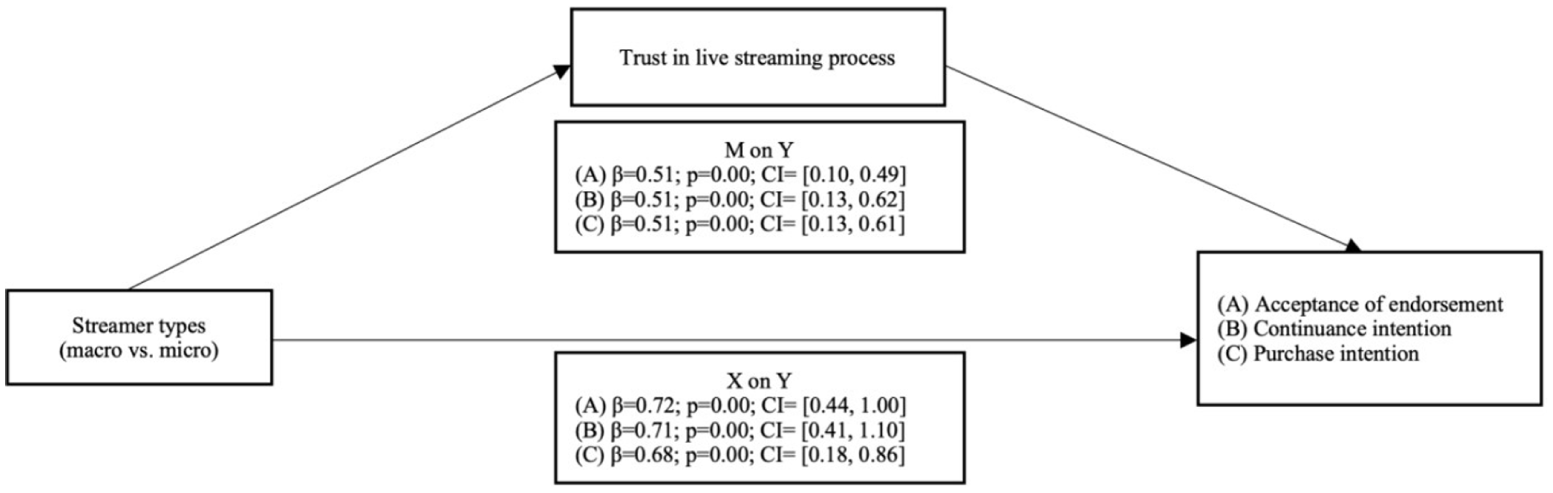
Main effects and mediating role of trust in live streaming (Study 1).
Study 1 discussion
Study 1 highlights the significant impact of streamer type on both social and commercial outcomes in live streaming commerce. Macro-streamers outperform micro-streamers across all measured variables, including acceptance of endorsement, continuance intention and purchase intention. Consistent with
Study 2 overview
Study 2 aims to replicate and extend the findings from Study 1 by: (1) comparing two different types of streamers withmacro-streamer Austin Li and micro-streamer Taozi sister, and (2) examining the moderating role of the streamer’s perceived authenticity. Specifically, this study tests a moderated mediation effect, by incorporating perceived authenticity as a moderating factor in the relationship between streamer types and trust in live streaming. This approach extends the dual effects model of co-created danmaku by establishing a foundational understanding of how streamer types and characteristics form a base model from which to compare the role community interaction plays in determining social and commercial outcomes (tested in studies 3 and 4).
Study 2 method
Study 2 utilises a between-subjects experimental design with 153 respondents (68% female, Mage = 32) all of whom engage with live streaming commerce at least once per week. Participants were recruited via the Chinese survey platform Wenjuanxing and randomly assigned to one of two streamer conditions: macro-streamer (Austin Li) or micro-streamer (Taozi sister). The procedure mirrored that of Study 1. Participants viewed a 1-min video clip of the assigned streamer promoting snack food (with brand names and danmaku excluded to control for extraneous influences). After viewing, participants rated the perceived authenticity of the streamer (α = .86; J. A. Lee & Eastin, 2021) and filled in the same measurements as in Study 1.
Study 2 results
Main effects
An independent t-test revealed significant differences between the two streamer types. Macro-streamers were found to drive greater consumer acceptance of endorsement (Mmacro = 5.61 vs. Mmicro = 4.18; F(1, 151) = 14.38, p < .05; Cohen’s d = 1.12), higher continuance intention (Mmacro = 5.64 vs. Mmicro = 3.92; F(1, 151) = 28.22, p < .05; Cohen’s d = 1.37) and greater purchase intent (Mmacro = 5.23 vs. Mmicro = 3.87; F(1, 151) = 24.28, p < .05; Cohen’s d = 1.36) compared to micro-streamers.
Mediation effect
Trust in live streaming mediated the effect of streamer type on key outcomes. Specifically, trust mediated the relationship between streamer type and endorsement acceptance (β = .75, p = .00, CI [0.22, 0.61]; R2 = .48), continuance intention (β = .75, p = .00, CI [0.21, 0.73]; R2 = .43) and purchase intention (β = .51, p = .00, CI [0.27, 0.81]; R2 = .43). These results confirm the extension of the mediation observed in Study 1. The size of these mediation effects ranges from moderate to large based on standardised coefficients. This suggests that building trust is a key mechanism through which streamer type influences consumer responses.
Moderated-mediation effects
Using Hayes’ PROCESS (Model 7; 5,000 bootstrapped samples; Hayes, 2022), moderated mediation analyses revealed a significant effect of authenticity on trust, which in turn impacted the dependent variables of (A) acceptance of streamer endorsement (β = −.53, p = .00, CI [−0.47, −0.11]), (B) continuance intention (β = −.53, p = .00, CI [−0.54, −0.11]) and (C) purchase intention (β = −.53, p = .00, CI [−0.63, −0.12]). Path weights are shown in Figure 3 below. Specifically, macro-streamers directly and positively influenced consumer responses, driving the main effects of acceptance of endorsement (β = 1.02, p = .00, CI [0.69, 1.34]), continuance intent (β = 1.27, p = .00, CI [0.86, 1.69) and purchase intent (β = .85, p = .00, CI [0.46, 1.24]). Also, macro-streamers indirectly influence acceptance of endorsement (β = .55, p = .00, CI [0.39, 0.69]), continuance (β = .59, p = .00, CI [0.41, 0.78]) and purchase intention (β = .68, p = .00, CI [0.51, 0.86]) by affecting viewer’s trust.
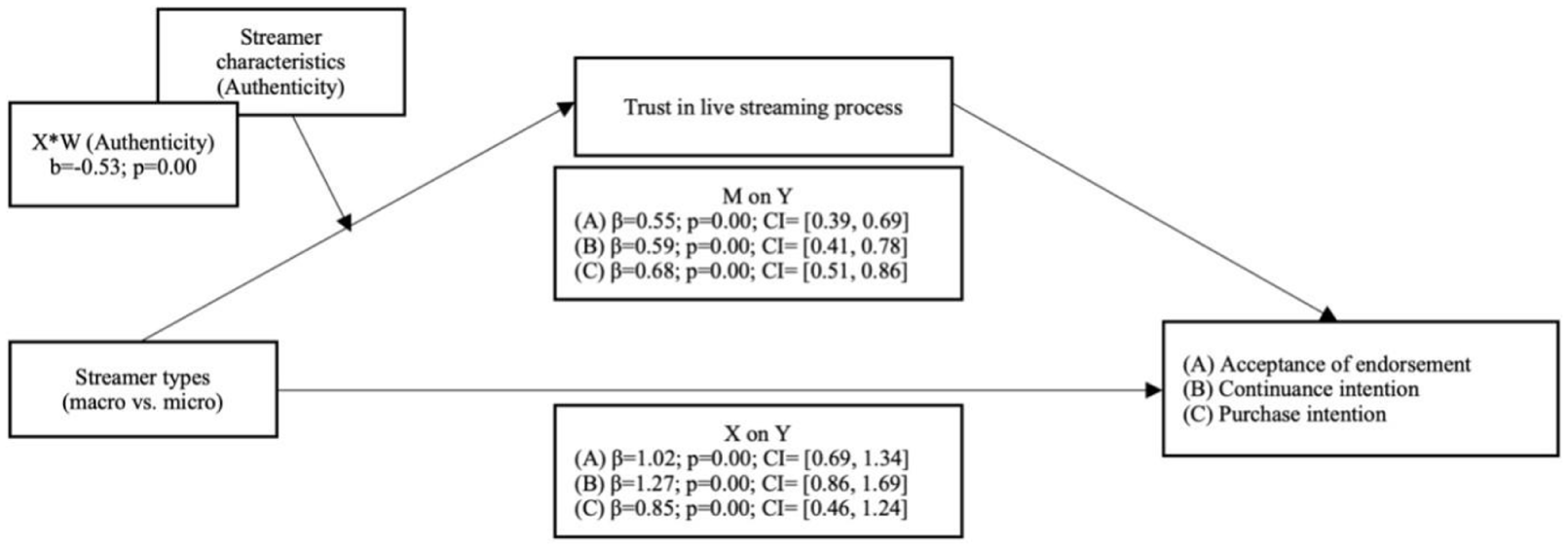
Moderated mediation effects of authenticity (Study 2).
Interestingly, the indirect paths revealed a novel effect for micro-streamers. Figure 4 plots the interaction of authenticity and streamer type on trust. As shown, micro-streamers exhibited a stronger positive slope, such that higher authenticity substantially increased viewer trust. Macro-streamers, while generating overall higher trust at lower levels of authenticity, showed a flatter slope, indicating authenticity mattered less. This pattern supports
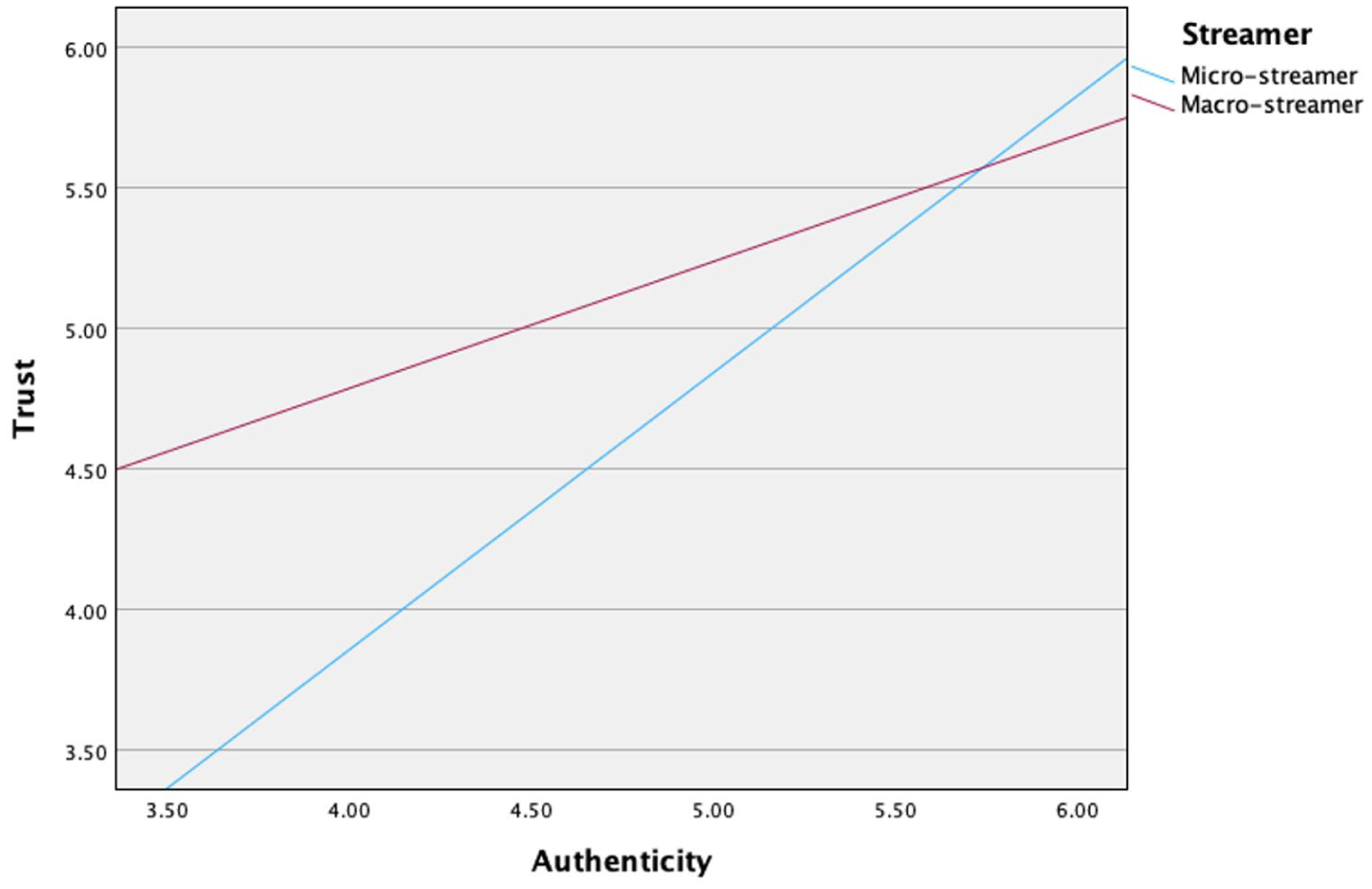
Interaction of authenticity and streamer type on trust (Study 2).
Study 2 discussion
Study 2 replicates and extends the mediation effect identified in Study 1 (
While the use of 1-min video clips without brand names or community interactions allowed for controlled testing of specific variables, the design may not fully capture the complexity of real-world live streaming environments, where community interactions are integral components of the consumer experience. To enhance the ecological validity of the findings and further test the dual effects model of danmaku, the next studies (3 and 4) investigate the role of community interaction in shaping both social and commercial outcomes
Study 3 overview
The objective of Study 3 is to test
Study 3 method
Study 3 employed a between-subjects experimental design with 335 participants (60.3% female, Mage = 34.7) recruited via the Chinese survey platform Wenjuanxing. Participants, all of whom engaged in live streaming commerce at least weekly, were randomly assigned to one of four conditions in a 2 (streamer type: macro-streamer vs. micro-streamer) × 2 (community interaction: absent vs. present) design. Participants watched a 1-min video clip either of macro streamer Austin Li or micro-streamer Taozi sister selling snack foods. Each clip was edited to include either (1) no community interaction (community interaction danmaku absent) or (2) floating danmaku text overlaying the video (community interaction danmaku present). Figure 5 below shows examples of streamer Taozi sister with (present) and without (absent) community interaction.
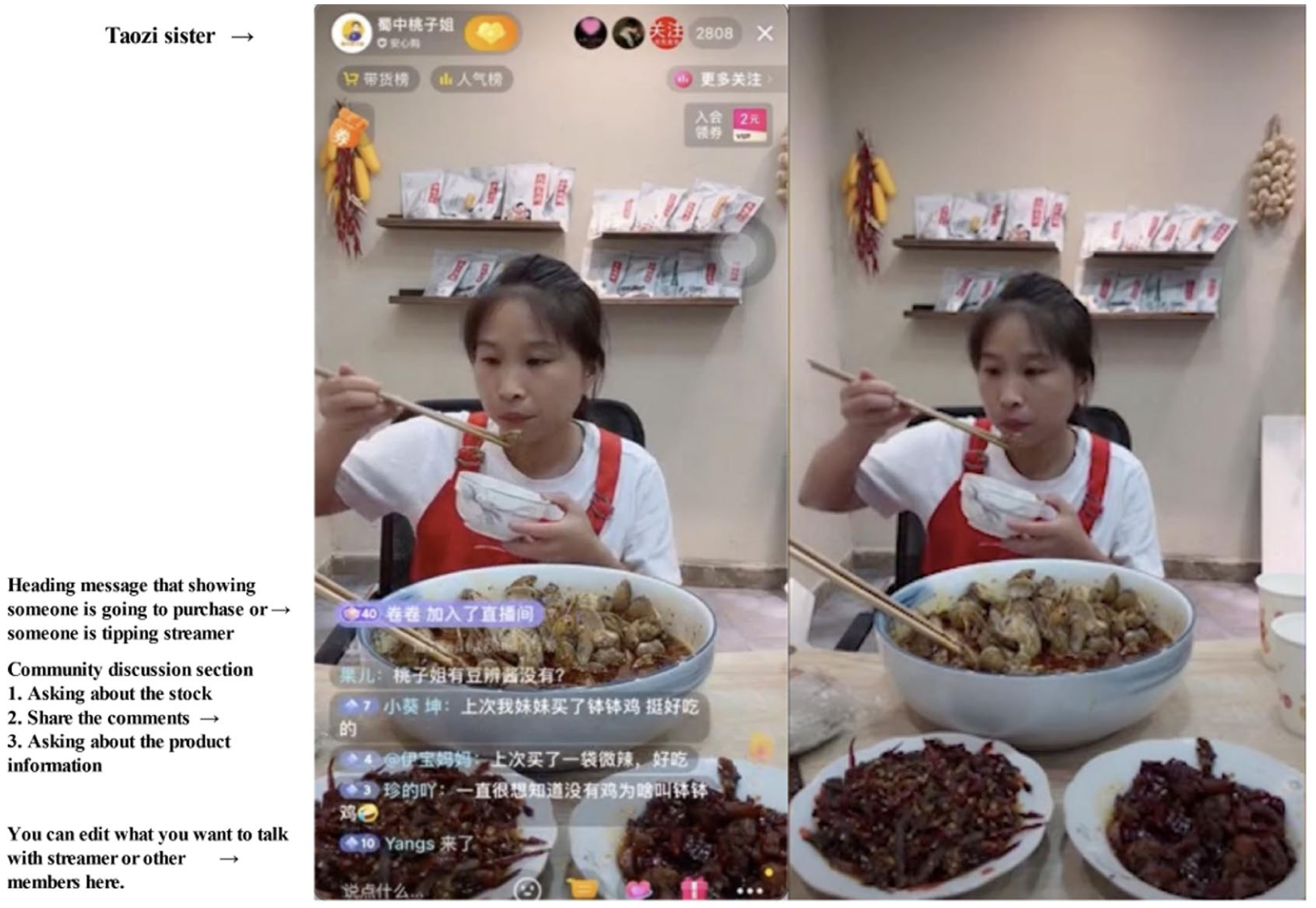
Streamer Taozi sister shown in panel A with community interaction in floating text and danmku, and in panel B without community interaction.
This design mimics the real-world features of platforms such as Taobao Live and TikTok (Douyin), where users can toggle community interaction on or off. Community interaction, such as floating text, stars and comments as danmaku, often overlays up to 50% of the screen and is widely used (see Figure 5 for an example), with 84% of young views expressing preference for the feature (Sina Technology, 2020). However, industry trends suggest that increasing amounts of danmaku may influence user experience (Sina Economy, 2021).
Study 3 results
Main effects
Significant differences emerged across the four experimental conditions, replicating the findings of Studies 1 and 2. Macro-streamers were significantly more effective than micro-streamers across all key outcomes: acceptance of endorsement (Mmacro = 5.92 vs. Mmicro = 5.27; F(1, 333) = 30.62, p < .05; Cohen’s d = 0.93), platform continuance intention (Mmacro = 5.96 vs. Mmicro = 5.23; F(1, 333) = 32.31, p < .05; Cohen’s d = 1.08) and purchase intention (Mmacro = 5.64 vs. Mmicro = 5.02; F(1, 333) = 35.26, p < .05; Cohen’s d = 1.16). For micro-steamers, low-to-moderate levels of authenticity (M = 4.45 and 5.18) again yielded stronger consumer responses, triggered by increased trust (β = −.33, p < .05).
Moderated moderated-mediation effects
Using PROCESS (Model 11; 5,000 bootstrapped samples; Hayes, 2022), we tested the role of community interaction (danmaku) as a boundary condition (coded 1 = present; coded 0 = absent). Results revealed distinct pathways for macro-and micro-streamers (see Figure 6).
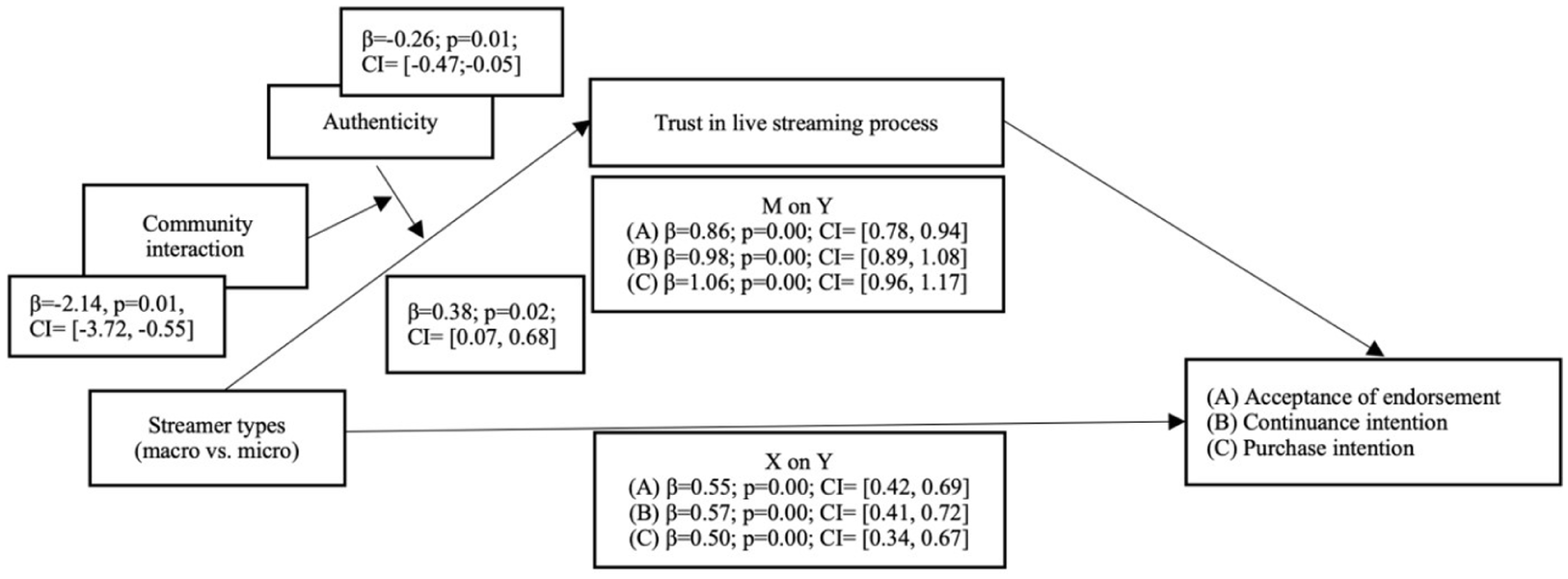
Moderated moderated-mediation effects of community interaction (Study 3).
When danmaku was absent, the effect of streamer types and authenticity (α = .85) positively influenced trust in live streaming (α = .92, β = .38, p < .05). Conditional effects showed that trust increased only in the absence of community interaction danmaku and when authenticity was low (M = 4.36, β = .38, p < .05, CI [0.15, 0.62]) or moderate (M = 5.18, β = .17, p < .05, CI [0.01, 0.34]). Macro-streamers (vs. micro-streamers) yielded higher trust and acceptance of recommendation. Higher trust also led to platform continuance (β = .98, p < .05, CI [0.89, 1.08]) and purchase intention (β = 1.06, p < .05, CI [0.96, 1.17]). Moderated mediation indices were significant on both continuance (β = .37, p < .05, CI [0.09, 0.68]) and purchase intention (β = .40, CI [0.09, 0.73]). These large effect sizes (e.g. β = .98 and 1.06) suggest that macro-streamers are most effective when danmaku is absent and authenticity is low to moderate. Importantly, while macro-streamers benefited most without danmaku, micro-streamers demonstrated a more stable and resilient trust. Even when community interaction (danmaku) was present, micro-streamers maintained consistent levels of trust, particularly at lower to medium authenticity levels.
Study 3 discussion
Study 3 shows the first empirical support for the dual effects model of community interaction (danmaku) in live streaming commerce. Two key insights emerge: (1) Macro-streamers outperform micro-streamers in driving consumer responses, consistent with Studies 1 and 2. However, their effectiveness diminishes when community interaction is present, suggesting that the visual and cognitive load imposed by danmaku text may undermine the persuasive impact (
Overall, Study 3 highlights the dynamic role of community interaction in shaping consumer responses. The presence or absence of danmaku significantly alters outcomes depending on streamer type. Study 4 further investigates this by examining the threshold at which danmaku becomes excessive and begins to undermine streamer effectiveness.
Study 4 overview
To test
While a moderate interaction can foster connection and engagement, Table 1 shows that excessive danmaku may trigger information overload and sensitivity (Hunter et al., 2022), overwhelming viewers and ultimately diminishing the overall shopping experience (C. Zhang et al., 2024). Study 4 therefore investigates how high-volume danmaku affects information sensitivity and trust, shedding light into the mechanisms driving these effects. In Study 4, the 1-min video clip primarily focussed on the impact of high interaction volume on viewers’ ability to read and process messages, rather than on professional questions or complex information that might challenge the streamer’s knowledge to respond.
Study 4 method
A total of 310 participants with prior live streaming commerce experience (54.5% female, Mage = 36.7) were recruited via the Chinese survey platform Wenjuanxing. Using a between-subjects experimental design, participants were randomly assigned to one of two conditions: (1) The high danmaku interaction condition featuring 100 fast-moving messages, simulating the intensity of major sales (2) The low danmaku interaction condition featuring 40 pieces slower-moving messages, reflecting typical daily live streaming sessions (as used in Study 3).
All participants watched a 1-min video clip of macro-streamer Austin Li selling snack products, edited to match their assigned danmaku interaction condition. Afterward, participants completed measures of information sensitivity (α = .91; Hunter et al., 2022) and trust in live streaming (using the same measures as the prior two studies).
Study 4 results
Main effects
There was no significant direct effect of danmaku interaction level on trust or consumer outcomes such as acceptance of endorsement, continuance intention and purchase intention. However, high danmaku interaction significantly increased information sensitivity (Mintensive = 3.55 vs. Mmild = 3.09; F(1, 308) = 21.4, p < .05; Cohen’s d = 0.86).
Mediation effects
A mediation effect showed that danmaku interaction level indirectly influenced trust through information sensitivity (see Figure 7): danmaku interaction level (low vs. high) has a positive relationship with information sensitivity (β = .45, p = .00, CI [0.26, 0.65]). That is, excessive danmaku interactions lead to higher information sensitivity. Higher information sensitivity led to lower trust in the live streaming process (β = −.22, p = .00, CI [−0.31, −0.13]; R2 = .14), which directly and negatively impacts consumer responses, lowering the level of acceptance of endorsement (β = .95, p = .00, CI [0.88, 1.03]; R2 = .68), continuance intention (β = 1.08, p = .00, CI [0.99, 1.18]; R2 = .65) and purchase intention (β = 1.08, p = .00, CI [0.99, 1.17]; R2 = .68). Importantly, trust fully mediated the relationship between information sensitivity and consumer outcomes. The direct path from information sensitivity to consumer responses is non-significant (p > .05), indicating that trust is the key explanatory mechanism in this model.
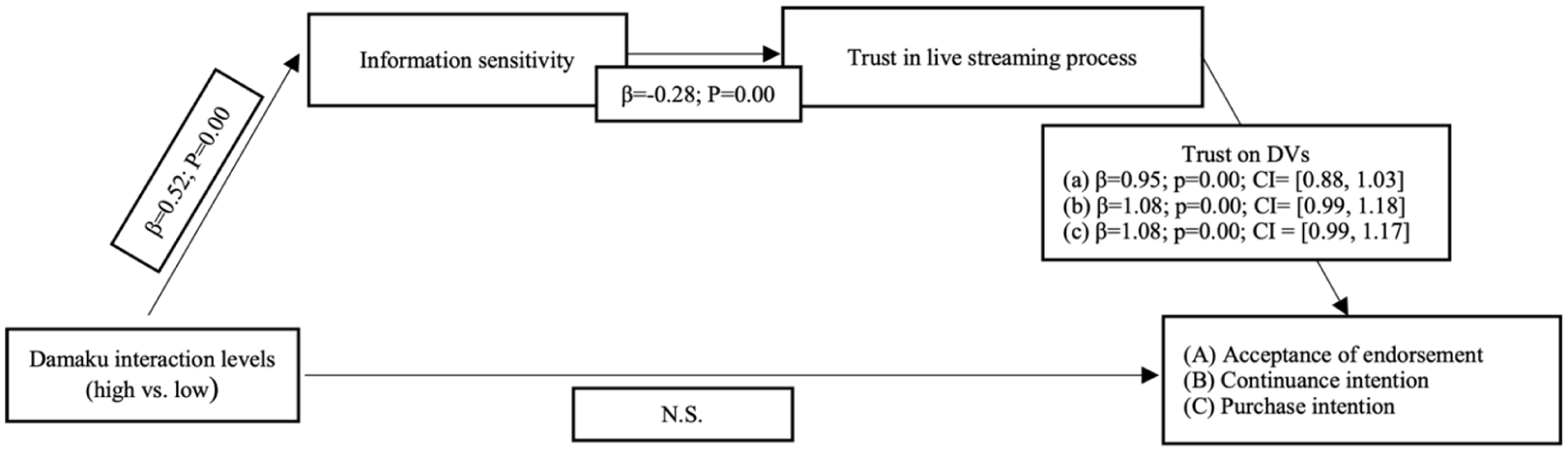
Danmaku interaction level on influencing information sensitivity (Study 4).
Study 4 discussion
Study 4 extends prior findings by demonstrating that excessive and poorly managed community interaction (danmaku) exacerbates information overload, leading to heightened information sensitivity and lower trust in live streaming. Unlike Study 3, which explored a binary on/off toggle for danmaku interaction, this study investigated the nuanced effect of mild versus excessive danmanku levels. The results show that excessive danmaku disproportionately harms macro-streamers, whose larger audience naturally generate higher interaction levels. During high-intensity events, such as sales holidays, the barrage of fast-moving danmaku can overwhelm viewers, increase cognitive load and reduce trust in the live streaming process. This erosion of trust has significant implications, as it diminishes endorsement acceptance, continuance intention and purchase intention, key commercial outcomes for live streaming commerce. These findings reinforce the co-destructive potential of community interaction when not properly managed. For platforms and streamers, the implications are clear that strategic management of danmaku volume is essential. For macro-streamers, moderating danmaku during high-stakes events may help mitigate information overload and preserve both trust and authenticity, ultimately sustaining consumer engagement and commercial success.
General discussion
Across four studies, this research provides evidence for a dual-effects model of community interaction (danmaku) in live streaming commerce. Study 1 finds that macro-streamers generate stronger consumer responses both directly and indirectly by increasing trust in the live streaming commerce experience. Study 2 builds on this by introducing authenticity as a moderating factor, showing that micro-streamers perceived as low to moderately authentic can foster higher trust, which in turn enhances consumer responses. Study 3 shows that macro-streamers gain more trust with less community interaction danmaku, while micro-streamers build trust regardless of danmaku. Finally, Study 4 reveals that a larger volume of danmaku, although a common feature of live streaming, can trigger information sensitivity when left unmanaged. This overwhelms viewers, distracts from the streamers' product messages and lowers trust.
Together, our findings reveal two theoretically grounded yet divergent pathways in live streaming commerce: value co-creation and value co-destruction, shaped by the interaction between streamer type and real-time interaction (danmaku). Under Service-Dominant Logic (SDL), co-creation emerges when consumers become operant resources, actively participating in value generation. Our results support this view and show that macro-streamers build trust and commercial responses (e.g. endorsement acceptance, continued use and purchase intention), particularly when community interaction remains at a moderate level (Li & Peng, 2021b; J. Zhang et al., 2024). Similarly, micro-streamers co-create value through emotionally driven parasocial bonds, deepening social engagement, no matter the interactivity level.
Conversely, our study identifies how the same mechanisms can undermine value when misaligned. While previous research has highlighted how product information load and extended viewing time during live streaming can lead to cognitive overload and heightened information sensitivity, less attention has been paid to the role of dynamic interaction (C. Zhang et al., 2024; Zhao et al., 2024). Specifically, excessive and unpredictable user-generated danmaku, characterised by high volumes of scrolling comments, virtual gifting and emotional expressions, can overwhelm viewers and contribute to information overload (Peng et al., 2025). This impairs consumers’ ability to decode persuasive signals and fosters scepticism or disengagement, particularly when negative or irrelevant content dominates the stream (Duffy et al., 2022). As a result, the trust and relationship quality between streamers and viewers, critical drivers of consumer response, are diminished (Grewal et al., 2022). This outcome reflects the double-edged nature of community interaction: when unmanaged, danmaku disrupts trust-building and detracts from both social and commercial value (Ogunbodede et al., 2022; L. Wang et al., 2024).
Signalling theory also helps explain why these divergent outcomes occur. Streamers serve as bundles of social signals, projecting credibility through follower count, responsiveness and perceived authenticity (Kang et al., 2021; Li & Peng, 2021b). However, our study shows that such signals are not interpreted in isolation. The surrounding interaction context, especially danmaku amounts, alters signal clarity and effectiveness. Under moderate danmaku, macro-streamers’ visible cues, such as high-quality presentation, confident delivery, enhance signal decoding and persuasion. Yet when interaction becomes excessive, even strong streamer signals get drowned out, resulting in signal noise and eroded trust (Peng et al., 2025). This dynamic interplay advances signalling theory by showing how viewer-side clutter (rather than signal weakness) can diminish persuasive effectiveness in digital commerce.
By integrating SDL and signalling theory, our dual-effects model (Table 1) contributes to broader debates in digital marketing and commerce. This highlights that value is not inherent to either the streamer or the platform alone but is jointly constructed through the coordination of interactive processes. Our work suggests that digital platforms and marketers must engineer not only who delivers the message but also how the surrounding context shapes signal interpretation and consumer outcomes. By foregrounding danmaku as both an enabling and constraining force, we move beyond binary views of interactivity as inherently positive (Kang et al., 2021; Li & Peng, 2021b). Our findings underscore the need to consider the tempo, volume and context of streamer-viewer engagement, especially in algorithmic, high-speed commerce environments like Taobao and TikTok.
Conclusion and implications
This study contributes to live streaming commerce research in two key ways. First, it empirically examines how streamer type influences consumer trust and related behaviours. By distinguishing between macro- and micro-streamers, we extend live streaming literature by showing how streamer authenticity and audience size interact with consumer responses. Second, we identify a critical boundary condition for community interaction (danmaku). While prior research documents the benefits of crowd cues in gaming and shopping streams (Chong et al., 2023; He et al., 2023), our findings reveal that synchronous danmaku operates in dual ways: as a co-creative force when moderate, and as a co-destructive force when excessive.
Moderate community interaction (danmaku), which includes a balanced amount of scrolling comments, questions, gift-sharing and testimonials, enhances both social outcomes, such as trust, and commercial outcomes, such as purchase intention and engagement. For macro-streamers, these benefits are amplified by high perceived reach and authenticity. However, when danmaku becomes excessive, with large volumes of scrolling comments, questions, gift-sharing and testimonials, it can increase information overload, disrupt viewer immersion (Mou et al., 2022), erode trust and distract from the streamer’s message (G. Zhang et al., 2023), ultimately lowering conversion (C. Zhang et al., 2024). These negative effects are especially pronounced for macro-streamers. In contrast, micro-streamers build trust more gradually through parasocial bonds (Conde & Casais, 2023; S. Zhang et al., 2022), and their influence remains stable regardless of danmaku volume. These insights extend literature on community interaction (Farivar & Wang, 2022; Hilvert-Bruce et al., 2018) and offer a clearer understanding of how synchronous interaction can both enable and erode value.
For practitioners, especially macro-streamers, high volumes of danmaku can impair message clarity and reduce cognitive trust. Based on Study 4, message overload begins to significantly undermine purchase intention when danmaku exceeds a perceived intensity threshold of approximately 80 to 100 danmaku per minute. We recommend macro-streamers adopt scheduling strategies, such as temporarily disabling danmaku during key product pitches or limiting message visibility using time-stamped overlays and automated filters. Platforms can further assist by offering interaction management tools like sentiment-based filters, customisable comment visibility windows and user-tiered chat access. Micro-streamers, in contrast, may benefit from fostering ongoing community interaction to strengthen affective trust and parasocial bonds. Encouraging user participation through pinned testimonials or interactive emojis can enhance relational engagement without overwhelming viewers. Platform strategies should thus align interaction design with brand objectives, platforms like Taobao may prioritise clarity and conversion, while TikTok may favour heightened social engagement. Introducing adjustable danmaku intensity settings could allow brands and streamers to tailor viewer experiences and optimise both immediate sales and long-term loyalty outcomes.
This study also has several limitations. Our sample comprised Chinese live streaming commerce users recruited through the Wenjuanxing platform, which may limit generalisability to other cultural or geographic settings. Cultural norms around trust, authenticity and communication may moderate the observed effects. Besides, platform-specific features may influence the role of danmaku and streamer dynamics. Future studies should examine how these effects vary across platforms such as TikTok (s-commerce based), Amazon Live (e-commerce based), as well as explore cross-cultural or cross-category replications to improve generalisability of the findings. Also, this study used 1-min live streaming clips to simulate viewer experience, which may not fully capture the dynamic fluctuations in danmaku intensity observed in longer sessions. While this approach was necessary to minimise participant fatigue and maintain experimental control, future research should explore this model in field settings and across a wider range of product categories. Our focus on snack foods may not represent the full range of consumer behaviour in product categories such as fashion or electronics (C.-D. Chen et al., 2022; M. Zhang, Qin, et al., 2020). While this work focussed on the perceived trustworthiness across streamer types, future work could incorporate audience-level variables such as prior familiarity and personal identification with the streamer. Additionally, though this work in centred on shopping streams, the model could be tested in other live content domains such as gaming, entertainment or mukbang (eating) streaming, where viewer engagement and trust dynamics may differ.
Finally, our findings point to new directions for inquiry. The rise of virtual and AI streamers (J. Li et al., 2023) raises important questions about how authenticity and trust are formed. Platform-specific design choices (L. Guo et al., 2021) may also shape the dual effects of danmaku, highlighting the value of comparative studies across platforms such as TikTok (interaction focussed social-commerce) and Amazon Live (information focussed e-commerce) Future research could also explore how real-time community interaction (danmaku) interacts with omni-channel marketing strategies (Pereira et al., 2019; Thaichon et al., 2023). For example, a retailer could integrate live streaming with coordinated offers across its e-commerce site, mobile app, email marketing and in-store displays. Researchers could then examine whether viewers who engage with live streaming are more likely to make purchases through other channels, compared with those who do not engage with danmaku. Beyond commercial outcomes, this dual-effects model could be extended to assess social value creation, such as in corporate social responsibility (CSR) campaigns or advocacy streams. As ethical expectations rise (Dang et al., 2020), understanding how platforms and streamers can balance social and commercial goals in real time remains a compelling challenge for future research.
Footnotes
Appendix A
Measurement Scales.
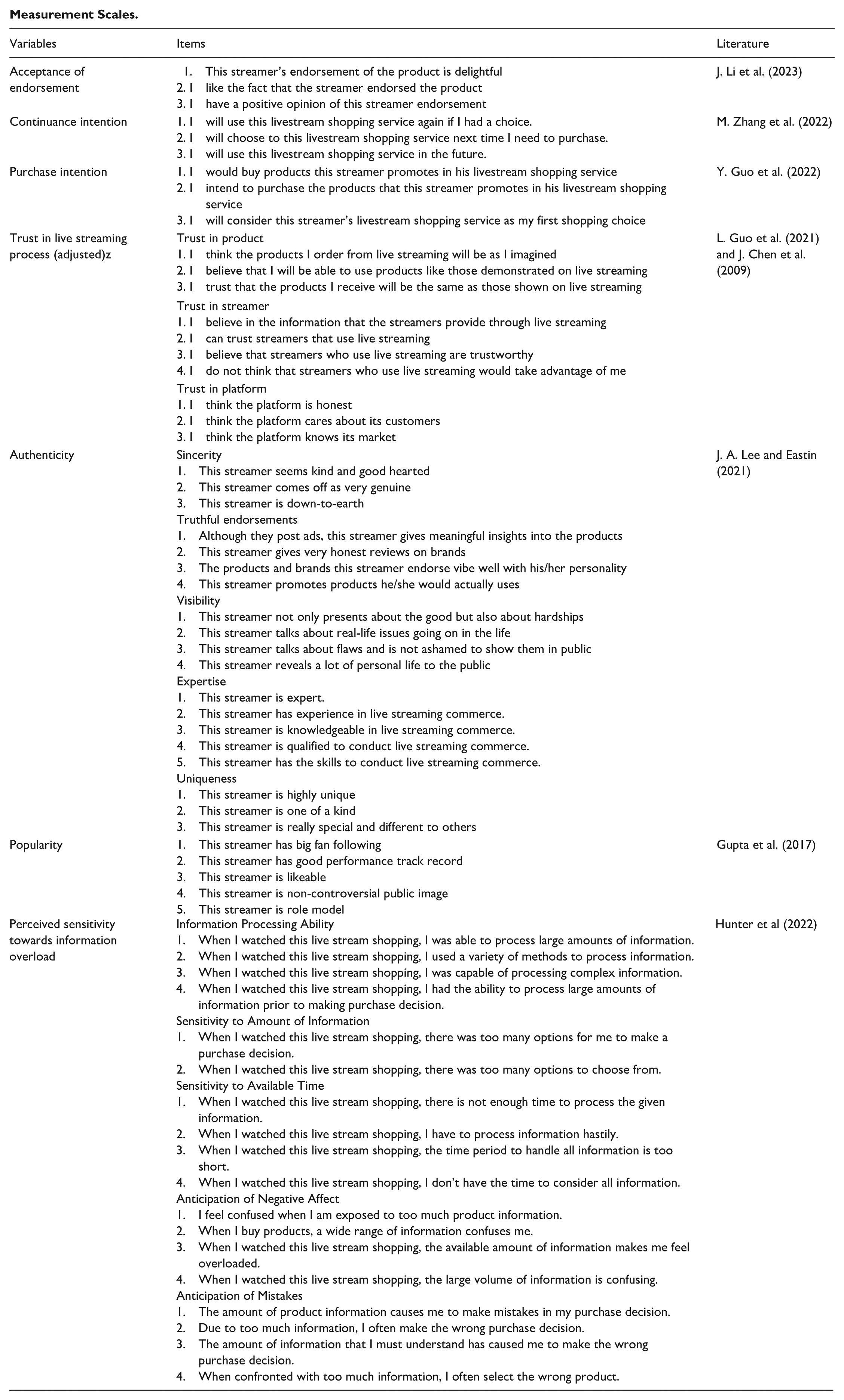
| Variables | Items | Literature |
|---|---|---|
| Acceptance of endorsement | 1. This streamer’s endorsement of the product is delightful 2. I like the fact that the streamer endorsed the product 3. I have a positive opinion of this streamer endorsement |
J. Li et al. (2023) |
| Continuance intention | 1. I will use this livestream shopping service again if I had a choice. 2. I will choose to this livestream shopping service next time I need to purchase. 3. I will use this livestream shopping service in the future. |
M. Zhang et al. (2022) |
| Purchase intention | 1. I would buy products this streamer promotes in his livestream shopping service 2. I intend to purchase the products that this streamer promotes in his livestream shopping service 3. I will consider this streamer’s livestream shopping service as my first shopping choice |
Y. Guo et al. (2022) |
| Trust in live streaming process (adjusted)z | Trust in product 1. I think the products I order from live streaming will be as I imagined 2. I believe that I will be able to use products like those demonstrated on live streaming 3. I trust that the products I receive will be the same as those shown on live streaming |
L. Guo et al. (2021) and J. Chen et al. (2009) |
| Trust in streamer 1. I believe in the information that the streamers provide through live streaming 2. I can trust streamers that use live streaming 3. I believe that streamers who use live streaming are trustworthy 4. I do not think that streamers who use live streaming would take advantage of me |
||
| Trust in platform 1. I think the platform is honest 2. I think the platform cares about its customers 3. I think the platform knows its market |
||
| Authenticity | Sincerity 1. This streamer seems kind and good hearted 2. This streamer comes off as very genuine 3. This streamer is down-to-earth Truthful endorsements 1. Although they post ads, this streamer gives meaningful insights into the products 2. This streamer gives very honest reviews on brands 3. The products and brands this streamer endorse vibe well with his/her personality 4. This streamer promotes products he/she would actually uses Visibility 1. This streamer not only presents about the good but also about hardships 2. This streamer talks about real-life issues going on in the life 3. This streamer talks about flaws and is not ashamed to show them in public 4. This streamer reveals a lot of personal life to the public Expertise 1. This streamer is expert. 2. This streamer has experience in live streaming commerce. 3. This streamer is knowledgeable in live streaming commerce. 4. This streamer is qualified to conduct live streaming commerce. 5. This streamer has the skills to conduct live streaming commerce. Uniqueness 1. This streamer is highly unique 2. This streamer is one of a kind 3. This streamer is really special and different to others |
J. A. Lee and Eastin (2021) |
| Popularity | 1. This streamer has big fan following 2. This streamer has good performance track record 3. This streamer is likeable 4. This streamer is non-controversial public image 5. This streamer is role model |
Gupta et al. (2017) |
| Perceived sensitivity towards information overload | Information Processing Ability 1. When I watched this live stream shopping, I was able to process large amounts of information. 2. When I watched this live stream shopping, I used a variety of methods to process information. 3. When I watched this live stream shopping, I was capable of processing complex information. 4. When I watched this live stream shopping, I had the ability to process large amounts of information prior to making purchase decision. Sensitivity to Amount of Information 1. When I watched this live stream shopping, there was too many options for me to make a purchase decision. 2. When I watched this live stream shopping, there was too many options to choose from. Sensitivity to Available Time 1. When I watched this live stream shopping, there is not enough time to process the given information. 2. When I watched this live stream shopping, I have to process information hastily. 3. When I watched this live stream shopping, the time period to handle all information is too short. 4. When I watched this live stream shopping, I don’t have the time to consider all information. Anticipation of Negative Affect 1. I feel confused when I am exposed to too much product information. 2. When I buy products, a wide range of information confuses me. 3. When I watched this live stream shopping, the available amount of information makes me feel overloaded. 4. When I watched this live stream shopping, the large volume of information is confusing. Anticipation of Mistakes 1. The amount of product information causes me to make mistakes in my purchase decision. 2. Due to too much information, I often make the wrong purchase decision. 3. The amount of information that I must understand has caused me to make the wrong purchase decision. 4. When confronted with too much information, I often select the wrong product. |
Hunter et al (2022) |
Appendix B
Acknowledgements
The authors declare that there are no acknowledgments for this work.
Disclaimers
The views expressed in the submitted article are our own and not an official position of the institution or funder.
Declaration of conflicting interests
The authors declared no potential conflicts of interest with respect to the research, authorship, and/or publication of this article.
Funding
The authors received no financial support for the research, authorship, and/or publication of this article.
Data availability statement
The data that support the findings of this study are available from the corresponding author, Yujun Xu, upon reasonable request.
Ethical considerations and consent to participate statements
This research received Auckland University of Technology ethical approval, and it complies with all relevant guidelines and regulations for studies involving humans, whether that be data, individuals or samples. The Auckland University of Technology Ethics Committee (AUTEC) is located in 55 Wellesley Street East, Auckland CBD, Auckland. The approval number is ‘22/160’ on 19th April 2023. Current research is to be undertaken in accordance with the Auckland University of Technology Code of Conduct for Research.
