




Abstract
This study explores how phygital profiling and dynamic personas enhance personalized customer experiences across the evolving customer journey. Drawing on Foursquare data from 27,148 users and over 2 million check-ins across four global cities, we construct digital twins using location-based social network graphs. We compare the effectiveness of phygital versus digital profiling and dynamic versus static personas in two key tasks: point-of-interest (POI) recommendation and social connection mapping. Results show that phygital profiling significantly outperforms digital profiling, and dynamic personas yield more accurate, real-time personalization than static approaches. These findings underscore the value of integrating physical and digital data in capturing the complexity of modern consumer behavior. The study offers theoretical and practical insights for advancing adaptive personalization and customer engagement strategies in increasingly hybrid consumption environments.
Introduction
Understanding and managing customer experience (CX) throughout the customer journey is a critical priority in modern organizations (Gahler et al., 2023). As customer interactions increasingly span both physical and digital domains, firms are challenged by a growing complexity of fragmented touchpoints, diverse devices, and non-linear paths to purchase (Batat, 2024; Lemon & Verhoef, 2016; Wolny & Charoensuksai, 2014). While many studies have focused on improving individual touchpoints, this fragmented perspective often fails to capture the fluid, socially influenced nature of customer experiences across an integrated journey. As such, there is an urgent need to reconceptualize the customer journey in a way that reflects the convergence of online and offline experiences. Despite this need, empirical research remains limited in offering actionable models that reflect this complexity (Mele et al., 2024a). Therefore, there is a pressing need to move beyond isolated channel management and develop real-time, adaptive models of customer behavior that reflect the complexity of modern phygital environments (Alexander & Varley, 2025).
To address this challenge, the notion of the phygital journey—a hybrid of physical and digital interactions—has gained traction in industry settings. Coined by the Australian agency Momentum in 2013, the concept has become particularly relevant in retail, where digital tools complement in-store engagement (Clauzel et al., 2020; Duhan & Singh, 2019). However, in scholarly discourse, the phygital concept remains underdeveloped and largely exploratory (Neuburger et al., 2018). Although recent studies have proposed conceptual models of seamless phygital experiences (Ballina et al., 2019; Samir & Soumia, 2020; Stankov & Gretzel, 2020), empirical validation of these ideas remains scarce (T. L. Purcărea et al., 2025). This lack of operationalization and testing of phygital profiling frameworks limits both theoretical advancement and the development of robust, real-time personalization systems. This study is motivated by this research gap—specifically, the lack of empirical studies that capture how the integration of physical and digital data can meaningfully improve customer journey management and personalization. Scholars have called for more systematic investigations into phygital customer experience management to better guide practice (Jaakkola et al., 2015; Lemon & Verhoef, 2016; Mele et al., 2024).
Simultaneously, there is growing recognition that customer behavior is shaped not only by interaction channel but also by social context. Hamilton et al. (2021) introduce the idea of the consumer social journey, where customers’ decisions are shaped by their interactions with “traveling companions”—individuals who accompany or influence their journey. These social dynamics, supported by social impact theory (Zhang et al., 2014), highlight the limitations of traditional static customer personas, which tend to ignore the evolving roles, preferences, and behaviors shaped by different social contexts (Hornik & Rachamim, 2025a). While customer personas are widely used to represent behavioral and psychographic segments (Tyrväinen et al., 2020), they often rely on one-off, historical data collection methods and fail to adapt to real-time behavioral changes.
In response to this gap, the concept of dynamic personas has emerged—offering an evolving representation of customers that accounts for both internal traits (Huang et al., 2012), environmental factors (Buhalis & Sinarta, 2019), and the influence of social companions (Lemon & Verhoef, 2016; Matias, Marques, & Ferreira, 2024). For instance, an individual may behave differently when shopping alone compared to shopping with friends or family. Static personas cannot accommodate this behavioral fluidity. By contrast, dynamic personas capture the contextual shifts in real time by leveraging data across multiple physical and digital touchpoints.
A promising framework to operationalize dynamic personas is through the use of digital twins. Borrowed from the field of engineering—where digital twins are used to simulate and predict the behavior of physical systems—this concept has recently been adapted to model customers in marketing contexts (Gartner, 2022). A digital twin of a customer serves as a virtual replica that evolves based on behavioral data, enabling firms to anticipate preferences, simulate interactions, and personalize experiences across scenarios (Vijayakumar, 2020). Digital twins offer further benefits such as supporting what-if analyses, training environments, and predictive insights for customer service applications (Duerst et al., 2022; Hornik & Rachamim, 2025b; Xu et al., 2020). By integrating data such as location check-ins, purchase records, and social network information, dynamic personas developed through digital twins can predict trends and map relationships, leading to more effective personalization (Behera et al., 2020; Huang et al., 2012). Against this backdrop, our research question is: How do persona twins of customers across the phygital customer journey improve the accuracy of personalised recommendations related to customer interests and social connection mapping?
The significance of this study lies in its effort to bridge theoretical gaps in the personalization and customer journey literature by offering the first empirical test of phygital profiling and dynamic personas operationalized through digital twins. Although scholars have conceptually recognized the need to move beyond static personas and channel-specific profiling, there has been little empirical work that integrates physical, digital, and social data to construct adaptive customer models (Mele et al., 2024; Mele et al., 2024b). This paper addresses that gap by introducing a novel framework that uses phygital data and dynamic digital twins to improve two key personalization tasks: recommending points of interest (POIs) and mapping social connections. This approach not only responds to calls for more data-driven personalization models (Olalekan, 2021), but also contributes to theoretical development by demonstrating how dynamic role-based representations can be embedded into real-time customer modeling (Chung et al., 2016).
To address the research question, we analyze a large-scale dataset from Foursquare, comprising 27,148 users and over two million check-ins across four major cities. We construct location-based social network (LBSN) graphs and operationalize dynamic personas through a persona-splitting technique. We compare the performance of dynamic versus static personas, and phygital versus digital-only profiling, in predicting user interests and social ties. This study makes three main contributions. First, it is the first empirical validation of phygital profiling for customer personalization, demonstrating its superiority over traditional digital profiling (Hamilton et al., 2021; Kim et al., 2020). Second, it advances the literature on customer modeling by empirically demonstrating the effectiveness of dynamic personas over static personas in predicting evolving interests and social behavior (Matias, Ribeiro-Navarrete, & Muñoz-Leiva, 2024; Viviani et al., 2021). Third, it offers a novel methodological contribution by applying the concept of digital twins to marketing, enabling adaptive, data-driven personalization using location and social data at scale.
The remainder of this paper is structured as follows. Section “Literature review” presents the literature review, tracing the evolution of customer journey theory toward phygital and socially embedded perspectives, and grounding the study in personalization, persona, and digital twin theories. Section “Research methods” details the research methodology, including data sources, graph-based profiling models, and experimental design. Section “Results and hypothesis testing” reports the empirical findings related to our hypotheses on phygital profiling and dynamic personas. Section “General discussion” provides a general discussion, highlighting the key contributions of our framework. Section “Implications” outlines the theoretical and practical implications of the study. Section “Conclusion, limitations, and future research directions” concludes with a summary of findings, followed by a discussion of limitations and directions for future research.
Literature review
Customer journey theory: From linear paths to integrated journeys
Customer Journey Theory has long provided a foundational lens through which to understand consumer experience, tracing a sequence of interactions across pre-purchase, purchase, and post-purchase stages (Lemon & Verhoef, 2016). These models have helped organizations identify friction points and optimize customer engagement by organizing experiences into touchpoint-based stages (Tueanrat et al., 2021). Physical touchpoints—such as in-store visits or product trials—enhance sensory engagement and trust, while digital touchpoints, such as mobile apps, websites, and online reviews, which offer efficiency, accessibility, and personalization (de Ruyter et al., 2018; Mele et al., 2023).
Despite their utility, traditional journey models are increasingly insufficient for capturing today’s dynamic, omnichannel consumer behavior. These models tend to assume a linear path and treat channels as isolated rather than interconnected, missing the complexity of real-world decision-making in which customers fluidly transition between online and offline experiences (Mele et al., 2021, Mele & Russo-Spena, 2022; Reitsamer & Becker, 2024; Trujillo-Torres et al., 2024). For example, a customer might encounter a brand through an online advertisement, visit a physical store to explore the product, and then complete the purchase through a mobile app. This hybrid movement reveals that the journey is neither fixed nor sequential, but shaped by immediacy, convenience, and context (Jacob et al., 2023; Mele et al., 2024; Mele & Russo-Spena, 2022).
Moreover, existing frameworks often fall short in accounting for how consumer journeys are influenced by contextual, social, and technological factors. Rapid technological shifts, mobile connectivity, and evolving lifestyle patterns have altered how consumers navigate these journeys, demanding adaptive models that reflect non-linear, data-rich, and socially mediated behavior (Del Vecchio et al., 2023; Mele et al., 2021). Yet, few models offer the theoretical and methodological flexibility to capture these dynamics or support real-time personalization at scale (Weippert, 2024).
This theoretical gap calls for the extension of customer journey theory toward a more integrated understanding—one that can accommodate hybrid touchpoints, contextual shifts, and real-time feedback loops (Mele et al., 2021). Such evolution is necessary not only to keep pace with customer expectations but also to improve personalization and prediction across the journey lifecycle. Addressing this need requires a shift from static representations toward a model capable of capturing evolving interactions in both digital and physical spaces.
Building on this limitation, the next section examines how the concept of the phygital journey - the seamless integration of physical, digital, and social interactions—reframes traditional customer journey theory to meet the demands of contemporary consumer behavior.
From traditional customer journey to phygital journey
As the boundaries between physical and digital environments continue to dissolve, the customer journey has evolved into what scholars now refer to as the phygital journey—a hybrid pathway that reflects consumers’ seamless movement across online and offline touchpoints (Jacob et al., 2023; Mele et al., 2023, 2024). Unlike traditional journeys, which often mapped discrete steps within separate channels, the phygital journey embodies a continuous, non-linear experience where the customer’s device, location, and context fluidly shape the path to purchase. For example, a consumer might discover a product via a social media ad, examine it in-store using augmented reality, and complete the purchase through a mobile app. These transitions are no longer exceptions but represent the new norm in customer behavior (Mele et al., 2021; Mele & Russo-Spena, 2022; Trujillo-Torres et al., 2024). Recent studies further underscore that such phygital configurations not only enhance engagement but also influence personalization, innovation, and sustainable consumption outcomes in ways that shape patronage intentions (Anwar et al., 2025).
While the phygital journey primarily focuses on the integration of physical and digital touchpoints, it increasingly serves as a conduit for social influence. Customer decisions are not made in isolation; rather, they are dynamically shaped by peers, family, and broader social networks. The concept of the consumer social journey acknowledges this social layer, emphasizing how others, referred to as “traveling companions,” influence behavior across different stages of engagement (Hamilton et al., 2021). To explain this phenomenon, Social Impact Theory (Latané, 1981) posits that an individual’s actions are driven by the strength, immediacy, and number of social sources. The phygital context does not inherently define this social influence but provides a hybrid environment where it becomes more observable and measurable. In such settings, social signals can emerge not only through face-to-face interactions but also via digital traces, such as location-based check-ins, social networks, and real-time feedback on digital platforms (Grewal & Roggeveen, 2020; Jaakkola & Alexander, 2024; Schindler & Decker, 2013).
Yet, despite growing academic and practitioner interest, the integration of physical, digital, and social dimensions remains underexplored in existing journey frameworks. Most models continue to treat physical and digital channels as distinct and often ignore the dynamic role of social influence in shaping preferences and behavior over time (Hollebeek et al., 2024). This fragmentation limits the development of adaptive systems capable of personalizing experiences at scale (Hardcastle et al., 2025).
Addressing this theoretical and practical shortfall requires the development of models that incorporate hybrid behavioral data, such as digital footprints, physical location histories, and social network structures to better reflect the complexity of contemporary customer journeys. Such models not only enhance personalization efforts by leveraging richer data sources but also support more accurate predictions of social connections and preferences (Weippert, 2024; Yao et al., 2024).
This growing need for holistic and socially attuned customer profiling lays the foundation for our focus on phygital profiling, which is an approach that integrates physical behaviors, digital interactions, and social contexts into a unified framework. Such integration moves beyond the limitations of static, channel-specific models, enabling a more dynamic and context-aware understanding of customer journeys. The next section builds on this foundation by exploring how personalization theory supports this integrative approach and by detailing how phygital profiling can be operationalized to enhance both interest-based recommendations and social connection mapping. In doing so, our study addresses critical theoretical gaps and introduces hypotheses that empirically test the value of this phygital and socially embedded perspective.
Personalization theory and customer profiling
At the core of modern marketing is the notion that customers expect tailored, context-sensitive experiences. Personalization theory underlines the strategic use of individual data to customize offerings in ways that are more relevant, timely, and engaging (Hou et al., 2024; Tyrväinen et al., 2020). Traditionally, such personalization has been built upon static customer profiles—aggregated snapshots of demographic and behavioral attributes drawn from past interactions. While useful for segmenting audiences and streamlining communications, these static models fall short of capturing the evolving and contextual nature of customer preferences, particularly in an era where consumers shift fluidly between physical and digital realms (Weippert, 2024).
This limitation has been increasingly acknowledged in personalization research. Chung et al. (2016) argue that effective personalization must account for contextual and social cues, rather than rely solely on historic transactional data. In other words, personalization must evolve from what customers were interested in, to what they are becoming interested in—based on where they are, who they are with, and what they are doing (Hou et al., 2024). This shift calls for the integration of real-time, contextual data from diverse touchpoints across both digital and physical environments (Cavdar Aksoy et al., 2021; T. V. Purcărea et al., 2025).
Phygital profiling addresses this challenge by merging behavioral signals from online platforms (e.g., app usage, web browsing) with physical data such as store visits, location check-ins, and sensor-based interactions. When enriched with social signals, such as co-located movement patterns and shared points of interest, phygital profiling provides a more holistic and adaptive view of the customer. This dynamic fusion enables marketers not only to tailor product recommendations more effectively but also to uncover latent social connections that shape consumer choices (Holmlund et al., 2020; Wu, 2024).
Such an approach holds promise for addressing two core tasks in personalization: (1) recommending items that align with evolving customer interests and (2) mapping social relationships that influence purchase behavior. Accordingly, this study proposes two theory-informed hypotheses:
The operationalization of these hypotheses relies on datasets from location-based social networks (LBSNs), which offer structured data on physical movement, digital interactions, and social proximity (Greene et al., 2019). These sources enable the construction of profiling models that respond to the multifaceted nature of consumer behavior. Details on the structure and application of LBSN data will be further elaborated in the Research Method section.
By grounding phygital profiling in personalization theory and extending its scope to include physical and social dimensions, this approach not only enhances prediction accuracy but also contributes to the personalization literature’s ongoing shift toward more context-aware and socially attuned frameworks (Merfeld et al., 2025; Quach et al., 2022; Strycharz et al., 2019; Wu, 2024). The next section builds on this by introducing Persona Theory and Digital Twin Theory, which together support the development of dynamic, real-time customer representations that further enhance personalization across the phygital journey.
Dynamic personas and digital twins: Simulating evolving customer behavior
Traditionally, persona theory has provided a framework for understanding customers through archetypal profiles derived from market segmentation, demographic analysis, and behavioral data (Livne et al., 2021; Yoon et al., 2021). These static personas are commonly used to simplify decision-making in marketing strategy and design. However, in today’s fast-paced and context-rich environments, such static representations are increasingly inadequate. They fail to capture the evolving roles and behaviors of customers as they engage across multiple digital and physical contexts, in which contexts that are fluid, relational, and temporally dynamic. As depicted in Figure 1, customer personas evolve over time as individuals form new social connections, with each connection contributing to the development of distinct personas shaped by specific social contexts. The figure illustrates how a single customer progressively develops multiple personas, each linked to different social groups, highlighting the dynamic and socially contingent nature of identity in contemporary consumer journeys.
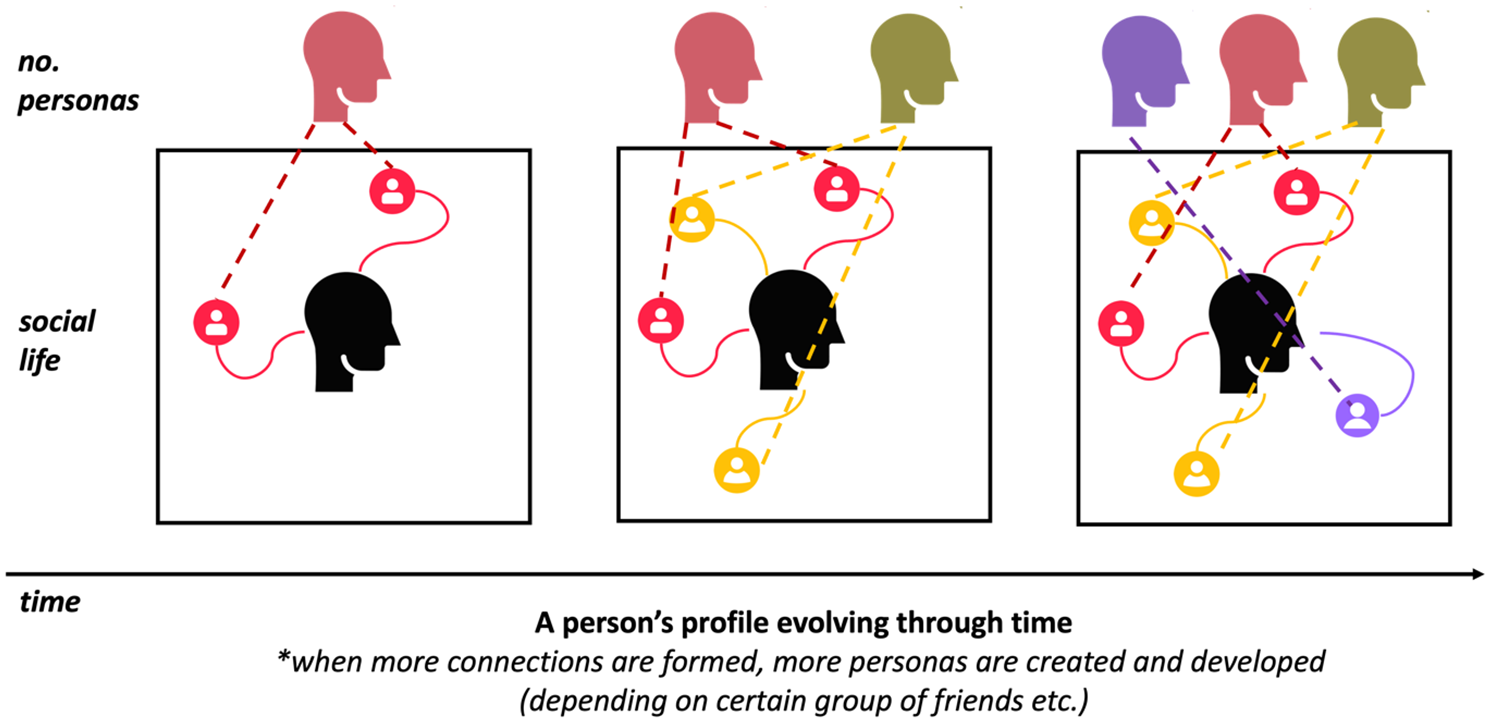
Evolving personas.
To address these limitations, the concept of
Building on this, the digital twin paradigm offers a practical method to model and operationalize dynamic personas. Originating in engineering,
As illustrated in Figure 2, individuals often exhibit distinct and dynamic behaviors depending on the activity, companion, and context. For example, Customer #1 tends to visit Café #1 with Customer #3 but prefers going to Gym #1 with Customer #2. These interactions highlight how personas dynamically shift based on social companions, activities, and settings. The right-hand side of Figure 2 aggregates these individual snapshots, capturing a holistic view of customer interactions by integrating four key dimensions: social connections, activity types, temporal patterns, and geographic locations. By aligning virtual personas with their real-world counterparts, businesses can unlock valuable insights into the multifaceted personas customers exhibit across their journeys. This synchronization enables firms to design more tailored and context-aware strategies, leveraging the richness of customer dynamics across phygital touchpoints (Mele et al., 2024).
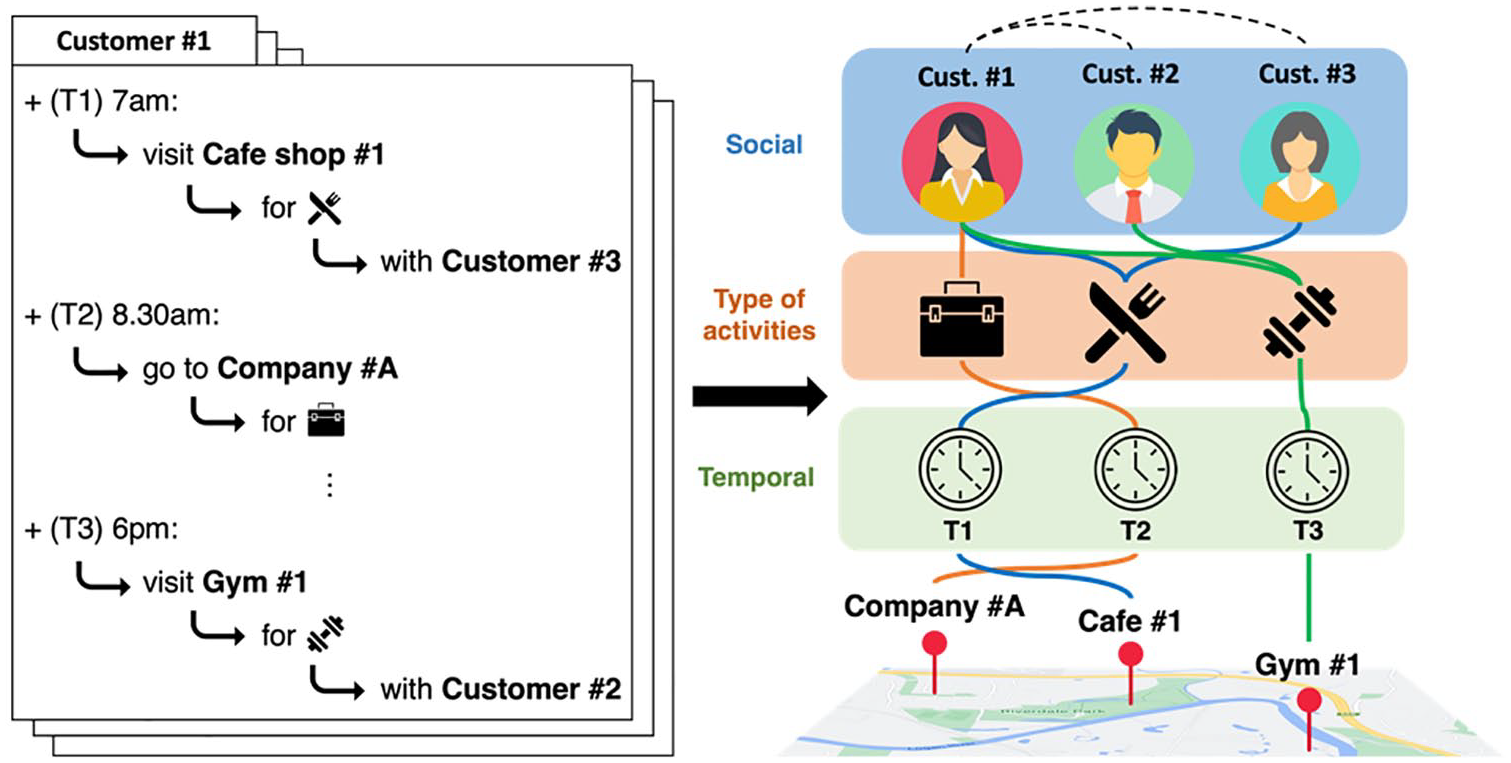
From phygital journeys to LBSN graph.
The integration of persona theory and digital twin theory offers a unified framework for simulating and tracking evolving customer behavior across phygital journeys. Consider, for example, a customer who frequents a local café with one group of friends but visits a fitness center with another. These patterns reveal shifting personas shaped by activity type, location, and social connections. By capturing these contextual dependencies, digital twins allow for more precise, real-time insights into how customer preferences and social networks evolve over time.
This capability is especially relevant for two key personalization outcomes: (1) delivering accurate, context-aware recommendations and (2) mapping dynamic social connections that influence customer decisions. To empirically test this, the following hypotheses are proposed:
To empirically test these hypotheses, the study operationalizes dynamic personas using graph-based digital twins that integrate behavioral, contextual, and social signals in real time. Table 1 presents this alignment by mapping key theories to the corresponding constructs and measurements. Specifically, the operational variables include:
Theoretical Foundations Informing Operational Variables.
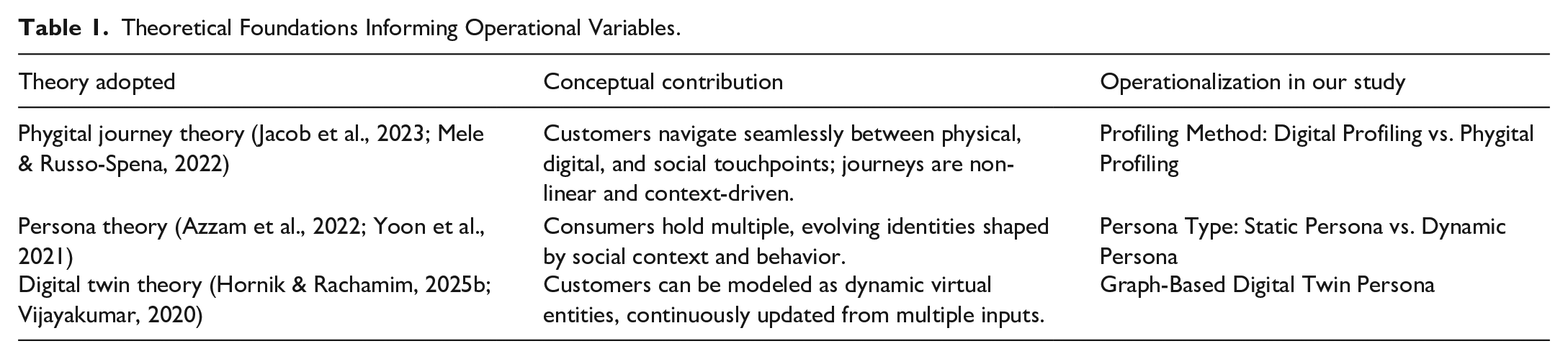
Hit@k scores to assess the relevance of interest-based recommendations. F1-scores to evaluate the accuracy of predicted social connections derived from graph models.
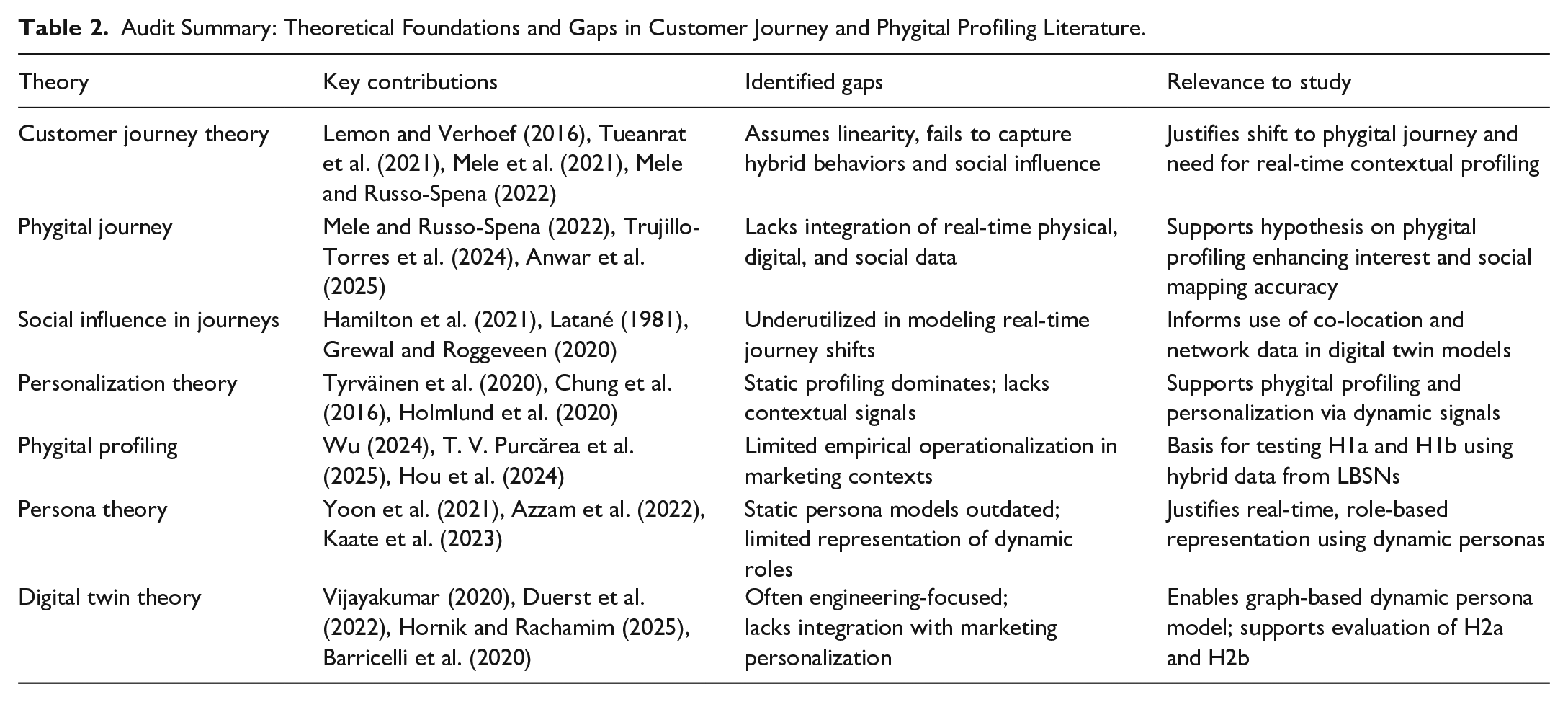
Despite their theoretical promise, few empirical studies have operationalized dynamic personas in phygital contexts. There remains a notable gap in demonstrating how digital twins can systematically integrate both individual-level interests and social-level behaviors to personalize the customer journey at scale (Buhalis & Sinarta, 2019; Hornik & Rachamim, 2025b; Huang et al., 2012). This study addresses this gap by implementing a scalable framework that combines real-world data with digital twin models, offering a dynamic lens through which to understand and predict consumer behavior. Table 2 presents an audit summary of the theoretical foundations, existing gaps, and how each theory contributes to the study’s conceptual and operational design.
Audit Summary: Theoretical Foundations and Gaps in Customer Journey and Phygital Profiling Literature.
By bridging persona theory and digital twin theory, this research contributes to both personalization and customer journey literatures. It advances the modeling of adaptive, real-time consumer behavior and supports the development of context-aware marketing strategies that reflect the evolving nature of customer roles and relationships. The next section builds on this by introducing the empirical approach used to test these hypotheses and evaluate the performance of dynamic versus static profiling across real-world datasets.
Research methods
Research design
Representing phygital journeys with LBSN graphs
In line with Ahmed et al. (2024), who emphasize the importance of aligning analytical techniques with research questions and data structures, we adopt a graph-based profiling approach using the LBSN graph to model customer behaviors and capture their phygital interactions within dynamic, social-physical contexts. The data from the phygital journey consists of customer information, their history of check-ins (POIs name, categories of POIs), and friendship data between customers, which can be obtained from location-based social networks. Location-Based Social Networks (LBSNs) are platforms that combine social networking features with geographic location data, enabling users to share and connect based on their physical locations. By utilizing methods of representing data as a graph from LBSN, the information from the phygital journey is represented by different types of nodes, such as customer nodes and check-in nodes. Figure 3 provides an overview of information in our LBSN dataset, which comprises two primary types of nodes: check-ins and user networks. The check-in nodes includes detailed information such as the user, destination, check-in time, and the type of destination for each recorded activity. The user network data capture the connections between users, where each user is represented as a node in the graph that connects to check-in nodes (if the user has visited specific locations) and to other user nodes (if a social relationship exists between them).
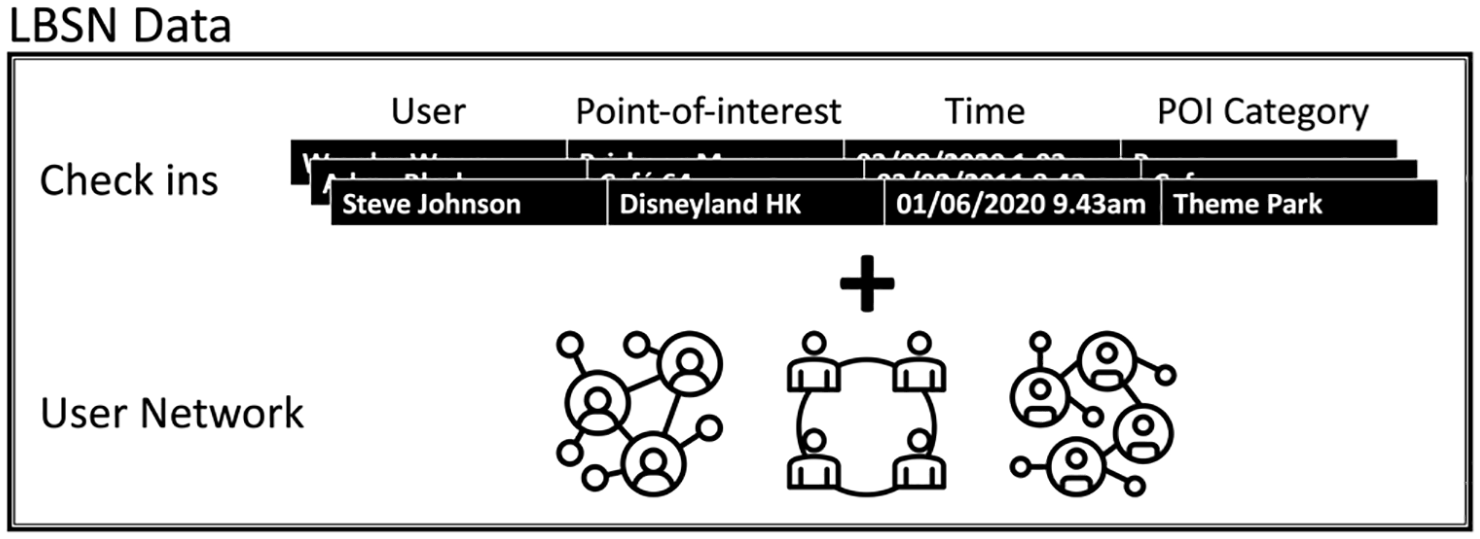
A simplified illustration of LBSN data.
To depict a phygital journey of a customer, an edge will connect all nodes relevant to the information of the phygital journeys. For instance, the typical nodes of a phygital journey are the customer node, type of activities node, and point of interest node. The LBSN graph is provided with the addition of friendship edges between customers. This identifies groups of customers sharing common interests in the LBSN graph. Figure 2 illustrates the linkage between LBSN data and phygital journey data, where every activities of the customers (on the left) can be represented with a simple graph (on the right). Apart from illustrating the phygital journeys, the LBSN graph can embed the nodes into a low-dimensional vector space by learning from the existing information about user patterns and their friendships. This means that these node encodings can be used for different tasks based on the node similarities, such as destination recommendation or friendship prediction. In general, the LBSN graph can illustrate the phygital journeys of multiple customers.
Profiling approaches: Digital vs. phygital
To test our first hypothesis (H1a and H1b), we compare the effectiveness of
Dynamic vs. static persona modeling
To evaluate our second hypothesis (H2a and H2b), we examine the effectiveness of using digital twins that incorporate
Phygital Profiling leverages the graph to develop dynamic personas that reflect customers’ shifting roles within clusters and communities, whereas static personas capture only fixed snapshots of individual preferences. Static personas assume a singular, stable customer identity that remains consistent across time and contexts. In contrast, dynamic personas acknowledge that customers operate differently depending on their social setting, activity, or temporal context, which highlights the fluid and role-based nature of real-world consumer behavior.
For example, consider a customer who regularly visits a local gym with one group of friends and attends art galleries with another. A static persona might generalize this individual as either “fitness-oriented” or “culturally engaged,” depending on the dominant historical data. However, this single-label approach could result in suboptimal recommendations (e.g., gym apparel during an art exhibition season). By contrast, dynamic personas split this individual into two contextual profiles based on their social circles—one emphasizing health-related interests and the other highlighting artistic engagement. These distinct personas can each trigger different recommendations (e.g., recommending a new fitness class to one persona and an upcoming art exhibit to the other), thereby offering more precise and socially attuned personalization. This dynamic approach provides a more nuanced understanding of consumer behavior by recognizing that customer preferences are not only diverse but also situationally dependent.
To develop dynamic persona from the graph, the customer nodes will be split into multiple nodes based on their connections, representing their multiple roles within different communities. The central reasoning underlying persona splitting is the conversion of a social graph into a persona graph (Huynh et al., 2022). The basic steps of splitting persona are illustrated in Figure 4. The persona splitting process is summarized below.
Identifying Connections: For each customer, we look at their immediate social network, which shows their direct relationships with others.
Clustering: We then divide the customer’s connections into groups or “clusters,” representing different social circles or interests.
Splitting Personas: Each customer is split into multiple personas, with one persona for each cluster they belong to. This helps represent the customer’s different roles in each community.
Mapping Relationships: Finally, we map the connections between the customer personas, creating a persona graph that accurately shows their behavior in different contexts.
For example, if a customer belongs to two different groups, they will have two versions of their persona, each representing how they behave in each group. This allows us to better understand a customer’s interests and behaviors, ensuring personalized recommendations and insights.
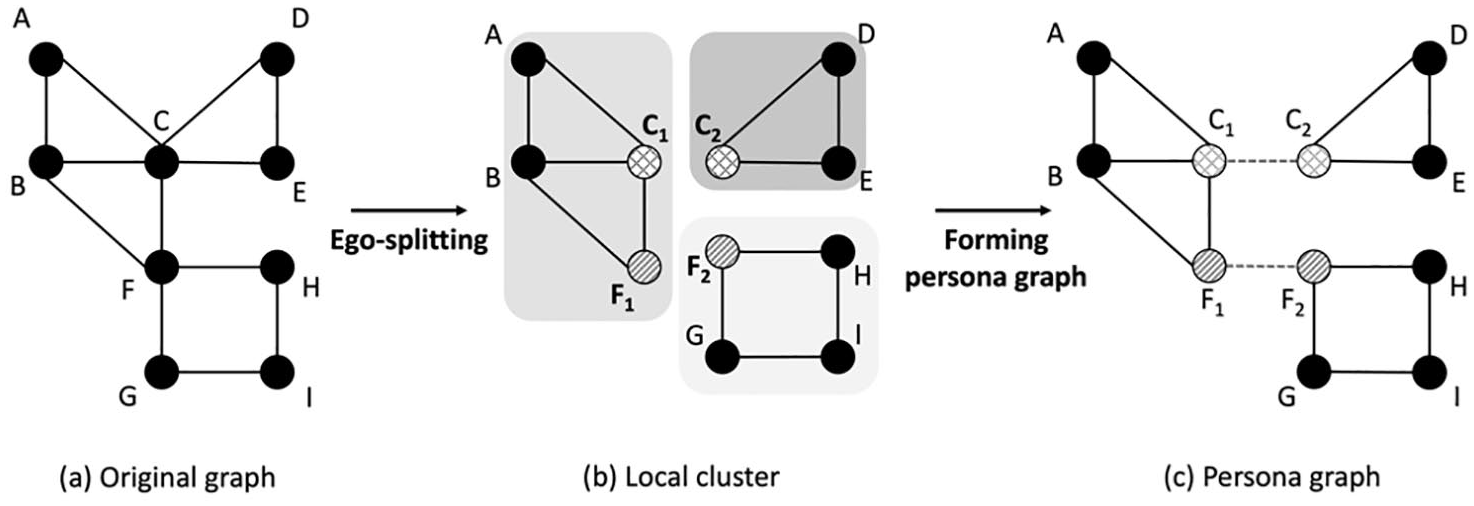
Dynamic persona decomposition and persona graph.
Model Architectures for Persona Representation
For the experiment, we develop three models to represent different approaches: a dynamic persona model, a baseline static persona model, and an advanced static persona model (refer to the models in Figure 5). The dynamic persona model, central to this study, utilizes persona splitting to capture the diversity of user personas, enabling a more dynamic and adaptable analysis of user behaviors. This model embodies the concept of using digital twins with dynamic personas as proposed in this paper. In contrast, the baseline static persona model and the advanced static persona model are included for comparison purposes. The baseline model employs DeepWalk, a standard network embedding technique that provides a traditional and static representation of user behaviors. Building on this, the advanced static persona model extends DeepWalk by incorporating parameterized random walks, offering slightly greater flexibility in capturing user behavior complexities.
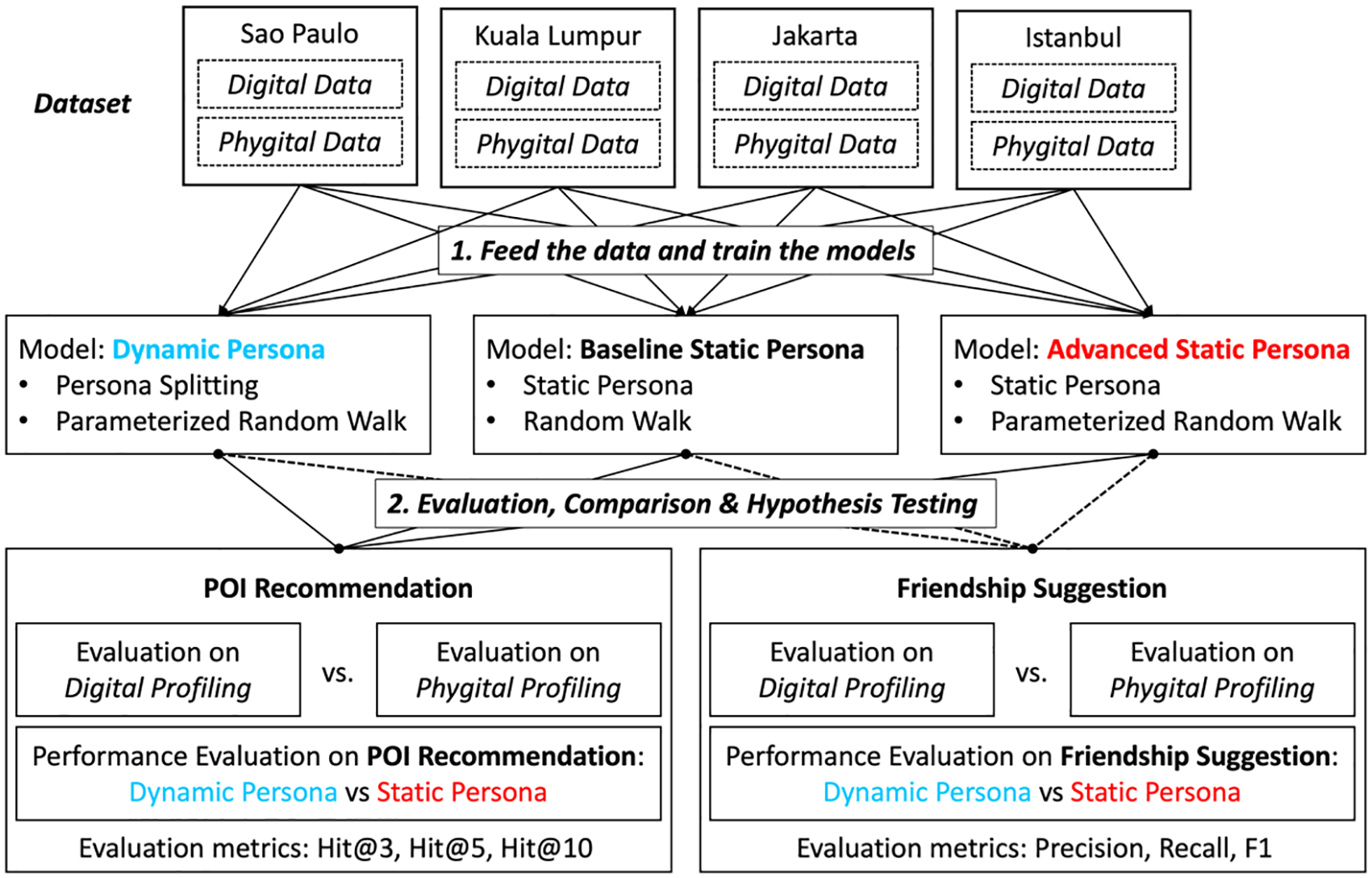
Overview of the data analysis.
Each model offers distinct approaches to persona representation, with the dynamic persona model potentially providing more real-time adaptability, while the static persona models focus on a generalized, consistent user behavior representation. The comparative effectiveness of these models in accurately capturing and responding to user behavior and preferences remains a key focus of our analysis.
Data collection
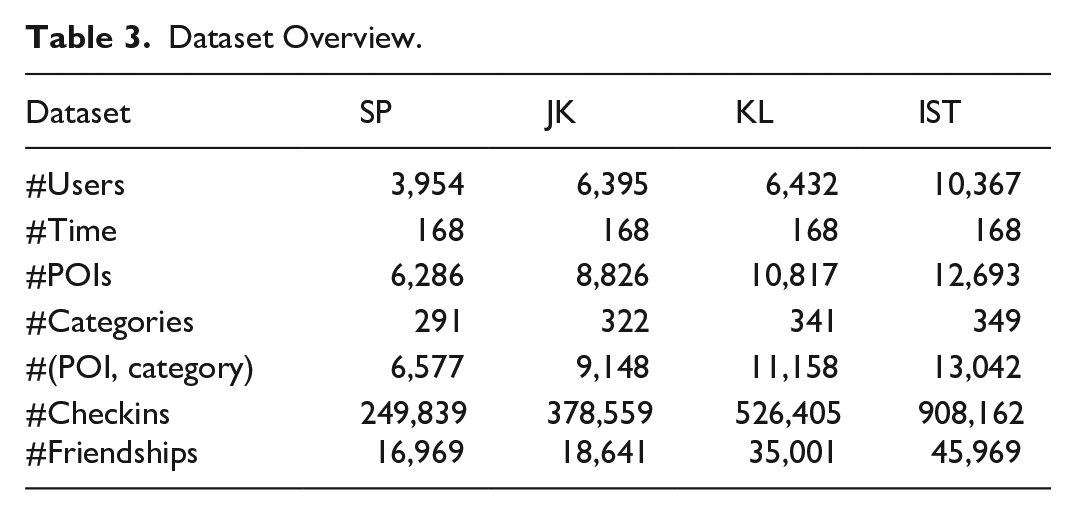
We use four real-world datasets from Foursquare (Yang et al., 2019), encompassing 27,148 users and 2,062,965 check-ins across four major urban centers: Jakarta, Kuala Lumpur, Sao Paulo, and Istanbul. These cities were selected to represent a range of user base scales—from smaller to larger populations (with 3,954 users in Sao Paulo, 6,395 in Jakarta, 6,432 in Kuala Lumpur, and 10,367 in Istanbul) —allowing us to evaluate our model’s effectiveness and generalizability across diverse urban contexts. This range supports both practical and theoretical implications by capturing variations in user behavior influenced by different geographic and social environments. The Foursquare dataset remains a widely-used standard in recent experiments, including studies by Li et al. (2024) and Jiang et al. (2023), especially for evaluating graph neural networks in location-based social networks (LBSNs) and dynamic social behavior studies. Its ongoing use underscores its relevance and suitability for predictive modeling, offering robust data for analyzing patterns in user check-ins and social connections over time, which aligns well with our study’s focus on dynamic personas and social connection mapping.
The data includes information about thousands of users on their check-ins and social networks during 1 week (Table 3). The outcomes are the accuracy of POI recommendations and social connection mapping (likelihood of friendship). To mitigate concerns of cold start or limited user activity, we implemented filtering measures to exclude users with inadequate data, such as those lacking social connections or possessing fewer than 10 check-ins, as well as POIs with less than 10 check-ins. Additionally, to prevent data leakage, our train and test datasets were extracted from network snapshots at distinct timepoints, namely before and after, ensuring avoidance of any inadvertent data leakage issues.
Dataset Overview.
Data analysis techniques and measurements
To measure the performance of dynamic persona and phygital profiling for our hypotheses, the two main outcome variables are POI recommendations for customers and social connection mapping. The inputs in our model consist of two key data types: check-ins and social networks. Check-in data reveals the locations users visit, the timing of their visits, and the nature of these places, while social network data tracks user connections based on mutual interactions and friendships. These inputs are integral to phygital profiling and allow us to generate two main outputs: POI recommendations and friendship suggestions, which contribute to personalization at both individual and social levels, respectively. The POI recommendations suggest places a user may be interested in visiting based on their check-in history and network behavior, while friendship suggestions predict potential connections between users by analyzing shared check-ins or similar social behaviors. By predicting POIs and suggesting friendships, we enhance personalization by capturing both individual preferences and social dynamics. Table 4 illustrates the variables and evaluation contexts of the experiment.
Overview of Variables and Evaluation Contexts.
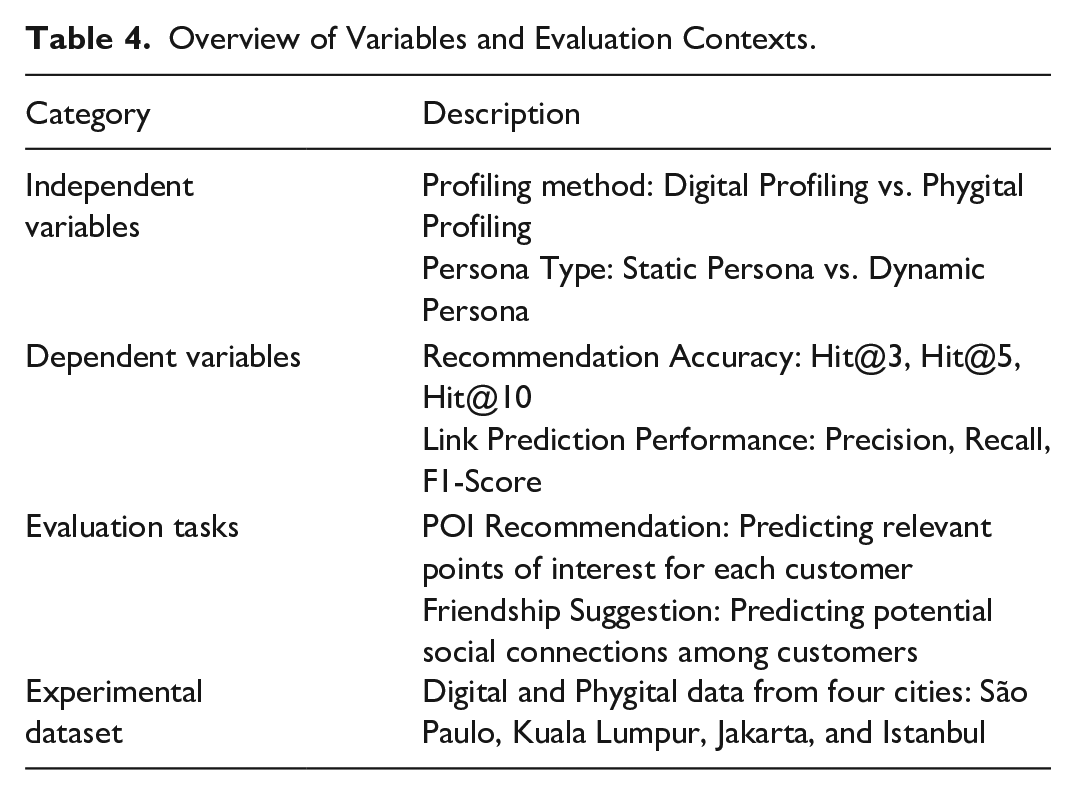
To evaluate the effectiveness of these tasks, the study employs four key metrics: precision, recall, F1-score, and Hit@k (k = number of suggestions).
In summary, the hypothesis-based data analysis focus on two primary aspects. First, we evaluate the effectiveness of dynamic personas by comparing three models to determine whether dynamic personas provide a superior method for capturing customer behaviors. Second, we examine whether phygital data offers more contextual and comprehensive information about customers compared to digital data alone. Figure 5 illustrates the overview of the analysis. The results are presented in the subsequent section.
Results and hypothesis testing
Comparing phygital and digital profiling (H1)
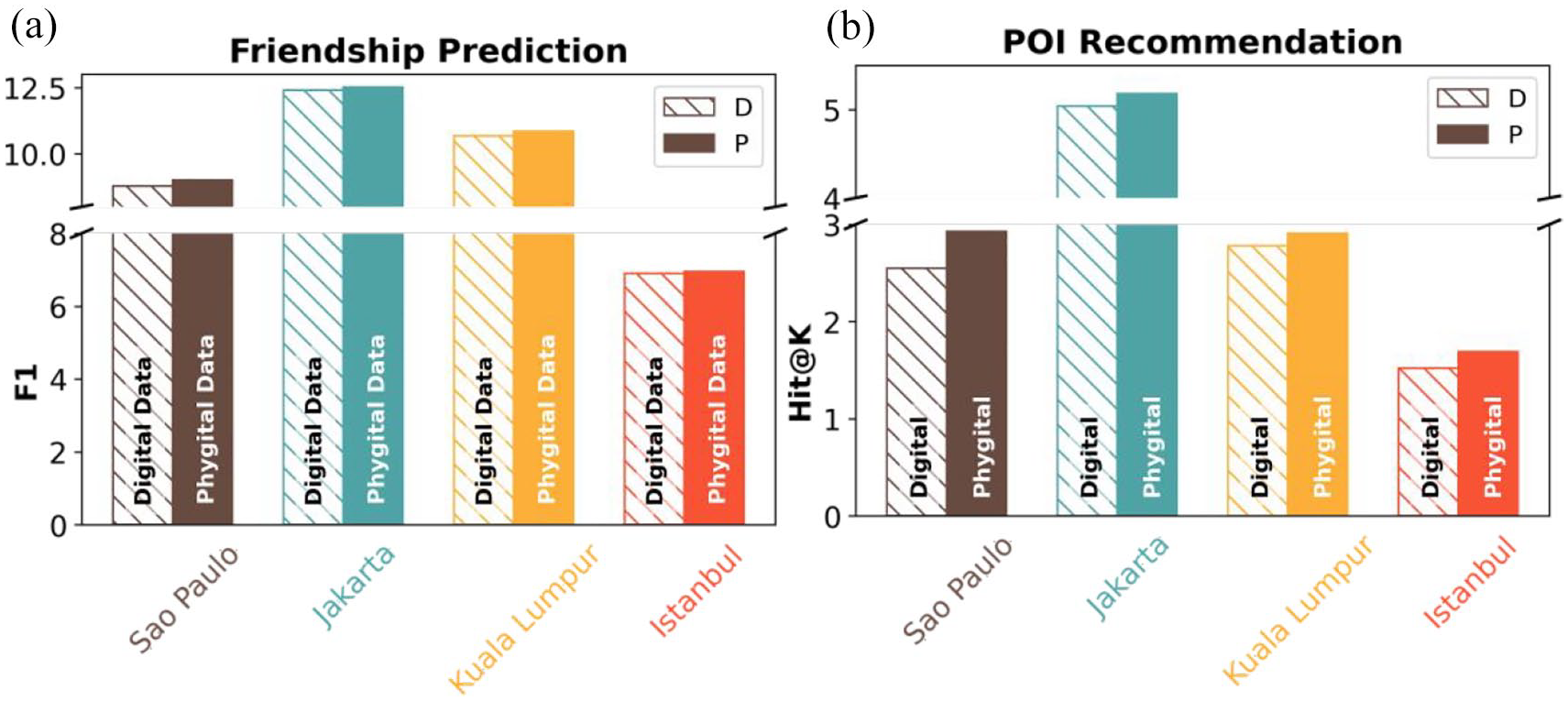
The outcome from the analysis strongly support Hypothesis 1, which posits that phygital profiling outperforms digital profiling in both (a) POI recommendations and (b) social connection mapping (via friendship prediction). As shown in Figure 6, across all four datasets, phygital profiling consistently yields superior performance for all tested models.
Phygital profiling versus digital profiling: (a) friendship and (b) location.
For POI recommendations, the Hit@k metric highlights that phygital profiling generates more accurate and contextually relevant suggestions compared to digital profiling. For instance, in the Sao Paulo dataset, phygital profiling demonstrated a notable increase in recommendation accuracy for all models, emphasizing the value of integrating users’ online behaviors with their offline activities. Similarly, for social connection mapping, the F1-score indicates that phygital profiling enhances the prediction of friendships, though the results are less significant than for destination recommendations. This may be attributed to the use of two continuous snapshots, which might not fully capture the time needed for friendships to develop and be reflected in the data.
The mutual reinforcement observed between the tasks of predicting customer interests and social connections speaks volumes about the potential of phygital profiling for multi-purpose business optimizations. Through capturing a comprehensive view of customer behavior, phygital profiling does not only promise incremental enhancements but a transformative impact on business strategies. These findings collectively affirm that phygital profiling, with its holistic approach to data integration, is essential in advancing our understanding of customers, leading to predictions that are not only more accurate but also more actionable in both social and commercial dimensions.
Dynamic persona versus static persona (H2)
To compare the effectiveness of using dynamic persona to capture customer behavior, we ran the three models on two different tasks, which are POI recommendation and friendship suggestions. Final results support the second hypothesis and the following section will outline the findings and outcomes of the analysis.
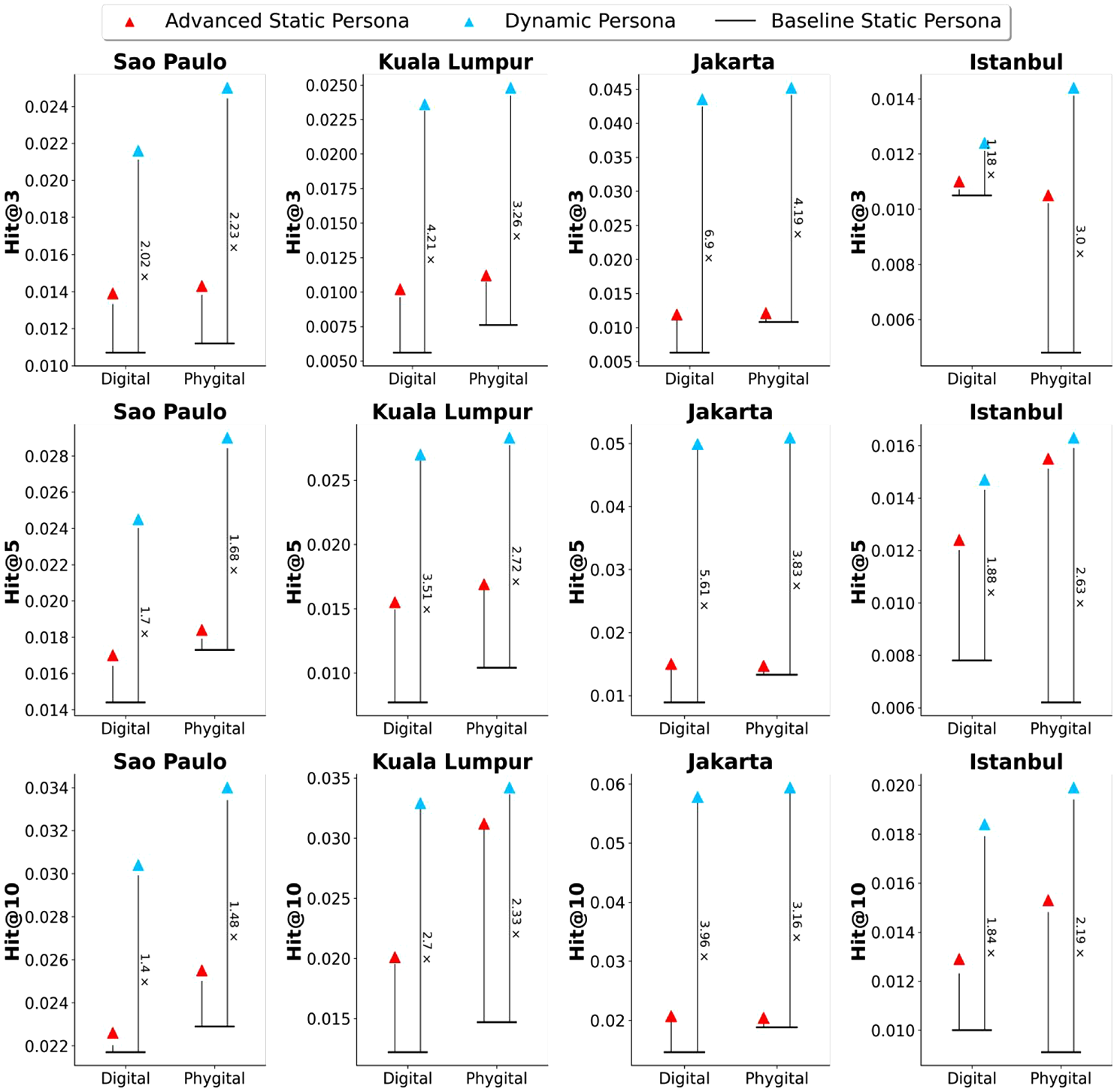
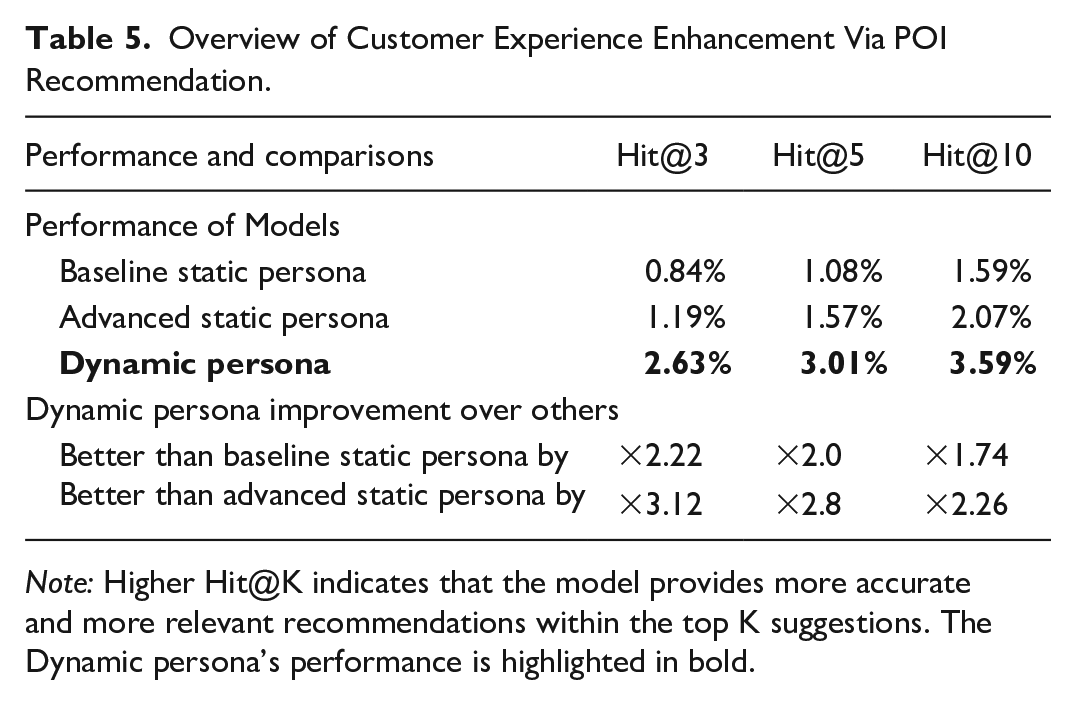
First, we conducted a thorough evaluation of POI recommendations using the same datasets, with results depicted in Figure 7 and Table 5. We employed the Hit@k metric to assess the performance of three different models, where Hit@k measures the number of relevant destinations recommended to users. A higher Hit@k value signals greater success in pinpointing locations that align with customer interests, demonstrating the efficacy of the methodologies under examination.
Enhancing customer experience via POI recommendation.
Overview of Customer Experience Enhancement Via POI Recommendation.
Note: Higher Hit@K indicates that the model provides more accurate and more relevant recommendations within the top K suggestions. The Dynamic persona’s performance is highlighted in bold.
From Figure 7, it is evident that the model employing a dynamic persona consistently recommends more pertinent destinations across all datasets compared to the models using static personas. Further analysis, presented in Table 6, shows that the dynamic persona model performs two to three times better than the static persona models. It not only excels in recommending a greater number of relevant destinations but also demonstrates consistent improvement as the scope of top recommendations expands.
Overview of Customer Experience Enhancement Via Friendship Suggestion.
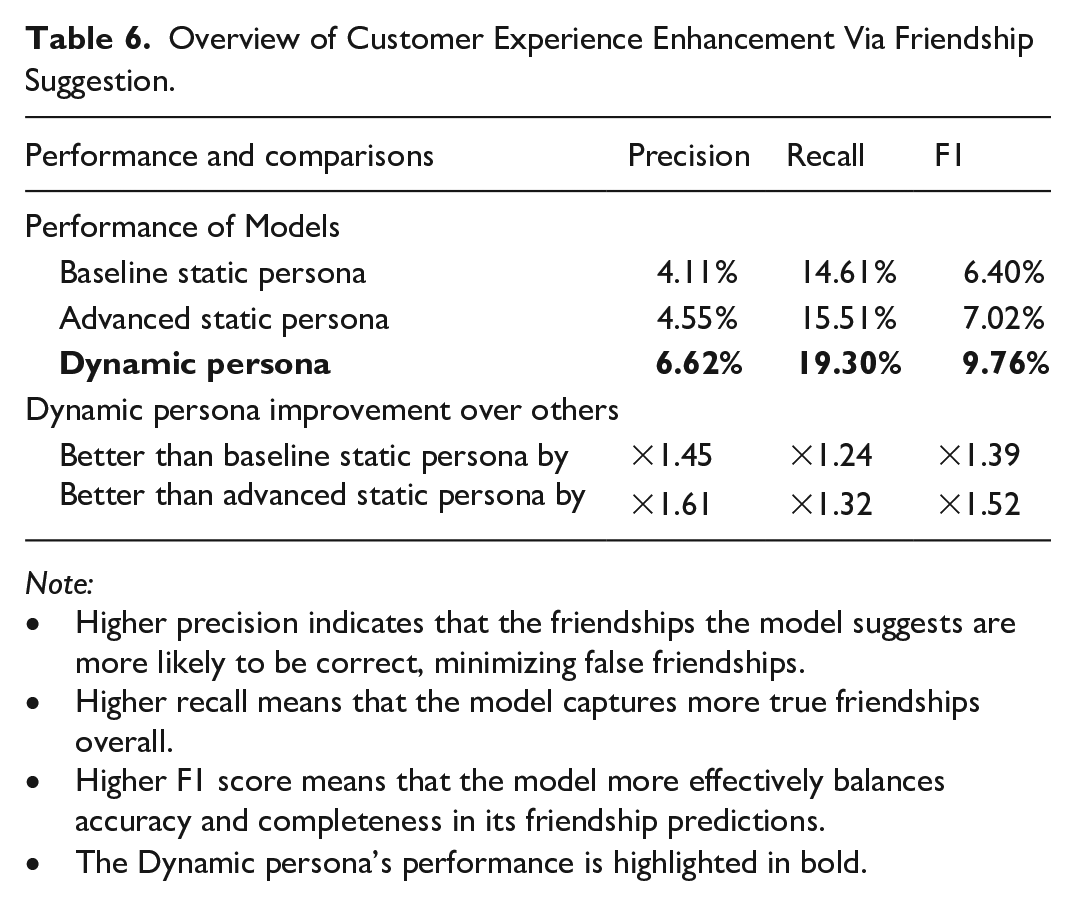
Note:
• Higher precision indicates that the friendships the model suggests are more likely to be correct, minimizing false friendships.
• Higher recall means that the model captures more true friendships overall.
• Higher F1 score means that the model more effectively balances accuracy and completeness in its friendship predictions.
• The Dynamic persona’s performance is highlighted in bold.
These findings reinforce the superiority of the dynamic persona approach in capturing customer behavior more accurately. They suggest that dynamic personas can more effectively infer customer interests compared to traditional methods, such as those employing static personas. This enhancement in predictive accuracy and relevance confirms the substantial benefits of integrating dynamic persona techniques into customer interaction strategies.
Evidence supporting our second hypothesis is further strengthened by the outcomes from the latter part of our data analysis, which focuses on friendship suggestions. Figure 8 showcases the superior performance of the model that employs a dynamic persona, highlighting its substantial superiority over static persona models. We evaluated model performance using three widely recognized metrics: precision, recall, and F1 score. Table 6 illustrates that the dynamic persona model consistently suggests more relevant friendships with a lower likelihood of incorrect recommendations compared to other models. Summarizing the performance across all models, the dynamic persona model not only improves the true positive rate (recall value) by approximately 5% over the baselines but also exhibits nearly 1.5 times the precision. Furthermore, the results demonstrate that the dynamic persona model maintains a better balance between accuracy and completeness in its friendship predictions across all datasets. This evidence bolsters our hypothesis, suggesting that social connections can be more effectively modeled using dynamic personas of customers, enhancing both the relevance and accuracy of the predictions.
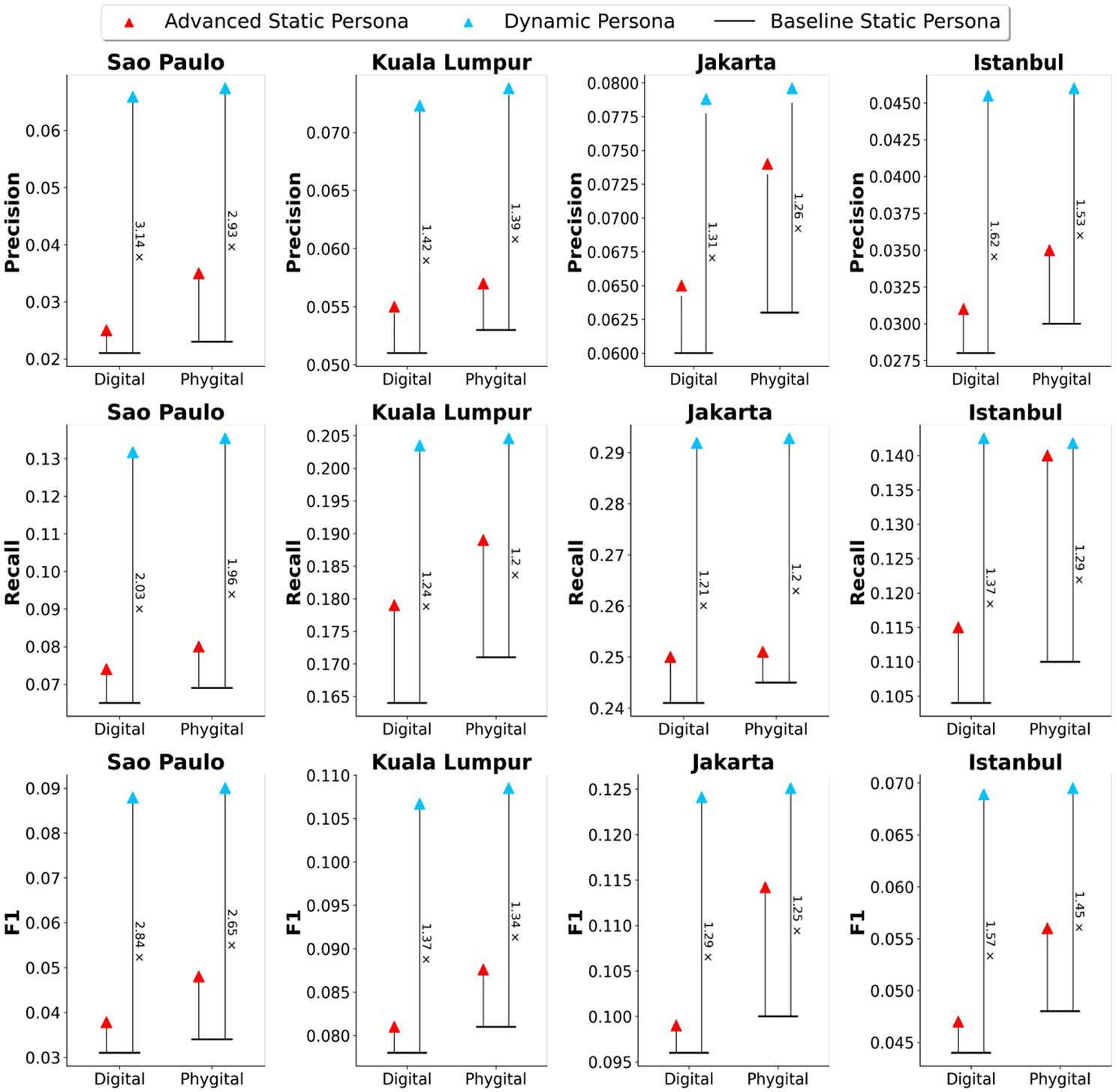
Enhancing customer experience via social connection mapping.
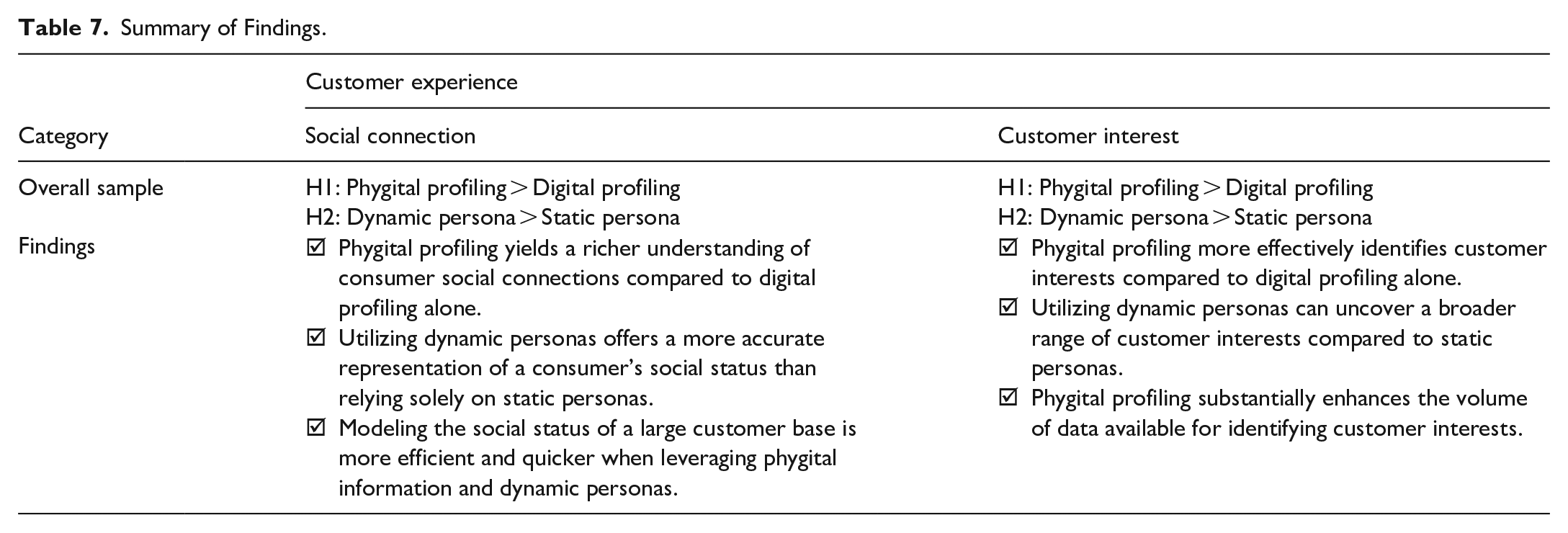
Collectively, these results unequivocally prove that digital twins utilizing dynamic personas offer a significantly improved mechanism for accurately predicting customer interests and social connections. The dynamic persona’s adaptability to real-time changes in customer behavior and preferences not only leads to more accurate predictions but also fosters a deeper understanding of the customer, thereby enhancing the effectiveness of customer service strategies in the phygital journey. Table 7 summarizes the key findings from our experiments.
Summary of Findings.
General discussion
Our study explores the integration of digital and physical realms in the concept of customer phygital journey (Jacob et al., 2023), offering insights into customer behaviors through the lens of phygital profiling (Mele & Russo-Spena, 2022) and dynamic personas (Kaate et al., 2023). By leveraging extensive datasets from Foursquare, we employed a novel approach to demonstrate how dynamic personas, enriched by digital twins and location-based social networking features, can improve the accuracy of personalized recommendations.
The findings demonstrate that phygital profiling and dynamic personas (using digital twins) outperform digital profiling and static personas respectively in recommendation of customer interests and social connections, which are crucial to personalization at both personal (Cavdar Aksoy et al., 2021) and social levels (Chung et al., 2016). These advancements in profiling and persona development underscore the importance of integrating physical and digital data sources (Kaate et al., 2023), and acknowledge the dynamics of customer social journey (Hamilton et al., 2021) in delivering personalization experiences and create greater value for customers. This study addresses the concerns raised by Yoon et al. (2021), who noted the limitations of static approaches in capturing the evolving nature of customer personas. Our findings not only address these challenges but also demonstrate a strategic response through the application of dynamic personas, which permits firms to develop a more nuanced and real-time depiction of customer preferences and behaviors, thereby significantly enhancing customer experience insights. For example, Starbucks uses a combination of digital and physical data to offer personalized discounts based on a customer’s purchases and proximity to a store, enhancing real-time targeting (Marr, 2021). In addition, Airbnb utilizes various data points, including accommodation details, user preferences, historical booking data, locations, and external factors such as local events or seasonality, to enhance their search recommendations (Samsudeen et al., 2023). This approach enables them to deliver results that feel intuitive, personalized, and tailored to the unique needs of each user.
While these advancements are promising, they are not without limitations. The reliance on detailed data collection raises ethical concerns, particularly regarding privacy and the potential misuse of sensitive information (Quach et al., 2022). Although we emphasize the potential of anonymized and aggregated data to mitigate these risks, businesses must remain vigilant in addressing algorithmic biases, data security challenges, and the implications of extensive data profiling. For example, biases in location-based recommendations or social connection predictions could inadvertently reinforce stereotypes or alienate certain user groups (Sánchez et al., 2023).
Finally, this research takes a methodological step forward by capturing dynamic customer persona twins using data from online social media platforms. The methodology employed in this manuscript is innovative in that it leverages phygital data (both online and offline) to develop dynamic personas, generating more accurate, real-time insights into customer behavior. We believe this methodological advancement is a key contribution to the literature and can significantly inform future research and practice in customer profiling and engagement.
Our findings bridge the gap between traditional models and the evolving needs of the phygital marketplace. However, the transformative potential of these techniques must be tempered with a critical understanding of their limitations. By integrating ethical considerations and addressing biases inherent in advanced personalization methods, businesses can harness the benefits of these tools while fostering trust and inclusivity in their customer relationships. In conclusion, this research underscores the need for a balanced approach to personalization in the phygital era—one that is anticipatory and adaptive yet mindful of the ethical and operational challenges that come with harnessing such innovative techniques.
Implications
Theoretical implications
This study contributes to the current body of knowledge in the following ways. First, the study contributes the concept of customer journey (Lemon & Verhoef, 2016; Ng et al., 2020) by highlighting the importance of phygital profiling, a fusion of online and offline worlds. The evolution of the customer journey underscores the complexity and dynamism of modern consumer interactions with brands. The identification of both digital and physical touchpoints as critical components of the customer journey signifies the need for encompassing the full spectrum of consumer experiences. Extending previous research such as Mele et al. (2021) and Jacob et al. (2023), this study provides empirical evidence for the superiority of phygital profiling in predicting consumers’ interests and social connections. For instance, unlike traditional customer profiling models that rely on historical purchase data and static demographic information, phygital profiling integrates real-time data from both digital platforms (e.g., browsing history and social media interactions) and physical environments (e.g., in-store behavior and geolocation data). This integration enables businesses to predict purchasing patterns with greater accuracy, as demonstrated in our analysis of personalized product recommendations and friend suggestions tailored to dynamic consumer interests.
The concept of the phygital experience, as elucidated in this research, marks a significant departure from traditional theories that treat the digital and physical realms as distinct and separate. This insight expands the existing concept of customer journey, advocating for a more integrated and cohesive understanding of consumer interactions. By illustrating the intertwined nature of consumer experiences across these realms, the study posits that a holistic approach, which seamlessly integrates digital and physical experiences, is essential for understanding and enhancing consumer experience in the modern era. However, the complexity of accurately integrating digital and physical data cannot be overlooked. Practical challenges, such as ensuring data consistency and managing system interoperability, represent significant hurdles that warrant further exploration (Batat, 2022).
Furthermore, this study empirically validates the advantage of phygital profiling in predicting consumer interests and social connections, as compared to traditional digital profiling. In addition, unlike static personas traditionally used in marketing (Viviani et al., 2021), dynamic personas provide a more adaptable framework that reflects the fluid nature of consumer identities shaped by both digital and physical interactions. Static personas, often based on fixed data, fail to capture the evolving behaviors and preferences of consumers over time (Huang et al., 2012). In contrast, dynamic personas allow for real-time updates, offering a more accurate and responsive representation of the consumer journey. For example, a retail business using static personas may group customers based solely on gender and income, missing nuanced shifts in interests triggered by seasonal trends or social influences. In contrast, dynamic personas, developed using phygital data, allow retailers to adjust their marketing strategies in real time, such as offering tailored marketing communications based on recent trends and interests. However, these advancements raise important ethical considerations, particularly regarding the use of real-time, contextually rich data (Strycharz et al., 2019; Chau et al., 2024). Privacy concerns and potential misuse of sensitive information necessitate robust regulatory frameworks and transparent data governance practices to safeguard consumer trust (Quach et al., 2022).
The introduction of the “digital twin of a customer” concept aligns with social impact theory (Latané, 1981) by emphasizing the evolving nature of consumer personas through phygital interactions. This research introduces a methodological innovation by using social media data to dynamically develop customer digital twins, offering more accurate insights into evolving customer behavior and enhancing personalization. Our results reveal that dynamic personas, akin to customer digital twins, representing a holistic model of customer interaction within both digital and physical spheres. Moreover, while our application of customer digital twins advances personalization within the phygital customer journey, it is valuable to contextualize this within adjacent domains. For example, Andriopoulos et al. (2023) demonstrate the use of consumer digital twins in energy markets to optimize residential energy flexibility while respecting user preferences and comfort constraints—highlighting how consumer-centric digital twin models can enhance decision-making across diverse sectors beyond marketing. Digital twins enable enhanced personalization by providing a holistic, real-time view of consumer behaviors, including their interests and social connections. However, while digital twins demonstrate strong predictive power, they also increase the risk of reinforcing biases if not carefully designed and monitored (Sánchez et al., 2023).
In summary, this research not only extends the current framework of customer journey but also offers a foundation for developing new understanding about phygital profiling and dynamic personas that better reflect the realities of the contemporary consumer landscape. By integrating insights about consumer personas, the phygital experience, and social journey, this study provides a blueprint for a more dynamic, integrated, and consumer-centric approach for managing customer experiences. Additionally, we acknowledge limitations such as data integration complexities, privacy concerns, and potential biases, which future research can explore to refine these approaches and further enhance consumer experiences in the evolving phygital landscape.
Practical implications
Our research provides significant practical implications for predictive analytics and personalized customer experience. By employing dynamic personas and phygital profiling, businesses can move beyond conventional strategies to anticipate customer needs with greater accuracy. For example, as illustrated in Figure 9, personalized points of interest recommendations during the pre-purchase stage and friend suggestions in the post-purchase stage can play an important role in customer experience. These strategies help reduce decision fatigue, prevent unmet expectations, and foster meaningful experiences, resulting in a more seamless and rewarding customer journey.
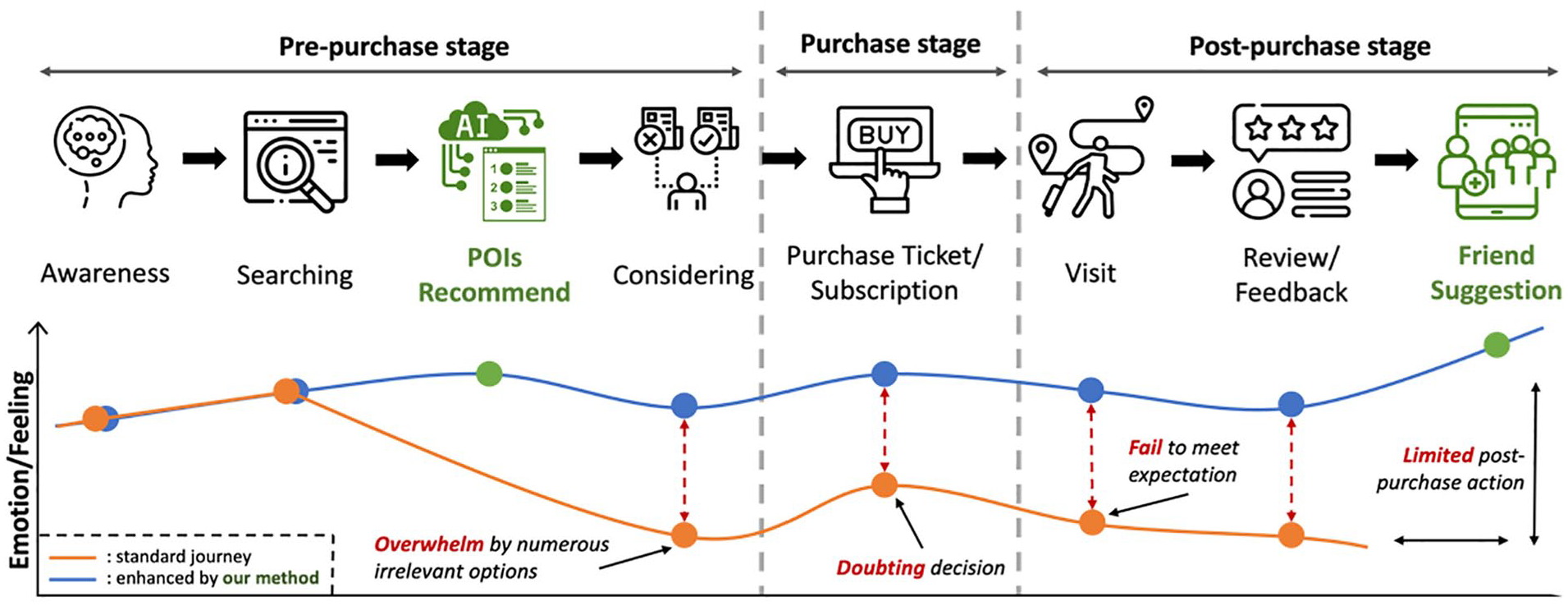
Enhancing customer experience in phygital journey.
The optimization of the customer journey through phygital insights represents a holistic approach to customer experience management. Retail businesses, for instance, can use real-time customer data to predict in-store purchasing patterns while enhancing online product recommendations. Similarly, hospitality firms can refine personalized offers, such as curated travel packages, based on a traveler’s preferences and past behaviors. By bridging the digital and physical realms, businesses can proactively address potential pain points, such as the overwhelming abundance of irrelevant options during the pre-purchase stage or limited post-purchase services, creating a cohesive and enjoyable customer experience (Bolton et al., 2018; Kremez et al., 2019). Therefore, integrating dynamic personas into Customer Relationship Management (CRM) systems offers a significant opportunity for personalization. However, implementing such systems comes with challenges, including ensuring high-quality data, managing the complexity of modeling dynamic personas, and maintaining continuous updates to reflect evolving customer behaviors. Overcoming these challenges requires investment in robust data infrastructure and advanced tools. For example, Salesforce’s Einstein GPT, an instance of generative CRM systems underpinned by AI and machine learning, allows businesses to leverage ChatGPT within their CRM platform to automate customer service tasks such as solutions recommendations. These systems evolve with each client interaction, continuously refining dynamic customer personas that are not static, but adaptive and evolutionary (Venkatraman, 2023).
Furthermore, dynamic personas offer businesses the opportunity to develop personalized campaigns that reflect evolving customer interests, such as seasonal promotions or trend-driven content. An example of this is the collaboration between the digital twin platform FIT:MATCH, Savage X Fenty, and Intel, which created The Fit Xperience (McQuarrie, 2023). This in-store fitting room technology uses Intel’s RealSense technology and the Intel Distribution of OpenVINO toolkit to scan shoppers and match them with the best-fitting Savage X styles based on their exact body shape. This integration of digital twin technology enhances personalization and frictionless shopping, demonstrating the potential of phygital strategies in retail. Successful personalization programs have been shown to increase customer satisfaction by 20% and boost sales conversion rates by 10% to 15% in retail (Lindecrantz et al., 2020).
Finally, the use of digital twins for market simulation highlights the strategic potential of this technology. AI-powered customer digital twins can simulate and predict a range of customer behaviors, including which product a customer is likely to purchase next, their churn propensity, future purchasing patterns, and overall customer experience across the journey (Castro et al., 2024). For example, TIAA, a financial service provider, leveraged a digital twin powered by a graph database to streamline the onboarding process for institutional clients (Rooney & Olavsrud, 2024). By shifting their focus from complex technical configurations to understanding client needs, TIAA significantly reduced the time and expertise required for onboarding. Similarly, a consumer electronics company could use digital twins to virtually test product rollouts, predict purchasing trends, and adjust marketing or inventory strategies in real-time.
In essence, the practical implications of this research underscore the critical role of dynamic personas and phygital insights in crafting marketing strategies and customer experiences that are not only effective but deeply resonant with the target audience. By embracing these advanced methodologies, businesses can navigate the complexities of the modern market landscape with agility and precision, building stronger connections with their customers and driving towards sustained success.
Conclusion, limitations, and future research directions
Conclusion
This study explores the integration of digital and physical realms through phygital profiling and dynamic personas, offering new understanding of customer behavior. The results from the experiment provide important insights into how dynamic personas and phygital profiling can significantly enhance customer experience by enabling deeper, real-time, and effective personalization strategies. The key findings demonstrate that integrating physical and digital touchpoints through phygital profiling offers a richer understanding of consumer behaviors and preferences compared to digital profiling alone. Moreover, dynamic personas combining with digital twins demonstrate superior predictive power over static personas, supporting more responsive and adaptive customer experiences. These findings underscore the potential for businesses to leverage advanced customer journey analytics for strategic advantages in personalization. Theoretically, this research contributes to the evolving concept of the customer journey by emphasizing the importance of integrating digital and physical touchpoints. It extends traditional frameworks by demonstrating the benefits of capturing dynamic, multifaceted consumer personas that reflect real-time behaviors. Practically, organizations can best use these approaches in anticipating customer needs, tailoring strategies in real time, and building stronger, more meaningful relationships.
Limitations and future research directions
While transformative, this study acknowledges limitations stemming from reliance on a single platform and urban-focused data. Future research should expand to various platforms and diverse demographics to create more comprehensive models. Despite these limitations, this work lays a foundation for enhancing customer experience through dynamic personas and phygital insights, guiding future exploration in adaptive and data-driven strategies. Additionally, the innovative digital twin approach may not fully encompass the emotional and psychological factors that significantly influence consumer decisions. The research points to the need for frameworks that embrace the nonlinear, cyclical, and complex nature of modern consumer paths. In addressing these gaps, future research should strive to synthesize data across various platforms and from a broader demographic, including rural areas, while also integrating qualitative analyses to capture the full spectrum of consumer behavior. Other contextual dynamics, such as mood or market factors, could be explored to further enrich our understanding of dynamic personas. Incorporating these elements can lead to a more holistic and emotionally resonant understanding of the customer journey. Furthermore, the exploration of potential challenges and limitations of dynamic personas and phygital profiling such as privacy concerns and ethical issues, for example, algorithmic biases, would be valuable avenues of future research endeavor.
Footnotes
Declaration of conflicting interests
The authors declared no potential conflicts of interest with respect to the research, authorship, and/or publication of this article.
Funding
The authors disclosed receipt of the following financial support for the research, authorship, and/or publication of this article: This research was funded by Vingroup Innovation Foundation (VINIF) under project code VINIF.2022.DA00087
