




Abstract
The study draws on the organizational paradox literature to develop and empirically test a conceptual model that considers marketing paradox enactment a crucial adaptive marketing response for small enterprises facing crises. We hypothesize that marketing paradox enactment positively impacts marketing performance and such effect is moderated by paradoxical leadership and perceived crisis severity. To test our hypotheses, we collected data through online surveys of 443 marketing managers from small businesses across multiple industries during an unprecedented global crisis. The results show that the performance of small enterprises that embrace the value creation–value appropriation paradox is less dampened by crises. Additionally, the paradoxical leadership of marketing executives and the firm’s sensitivity to the crisis are critical organizational levers. This study contributes to the literature on the adaptive role of the marketing function and how small businesses navigate crises.
Introduction
Having limited financial resources, small enterprises usually have much less slack than large corporations. Thus, they are more susceptible to environmental fluctuations, especially unpredictable economic shocks (Chen et al., 2023; Fairlie & Fossen, 2022; Pal et al., 2014). Surprisingly, during an unprecedented global crisis (i.e. the COVID-19 pandemic), while business organizations worldwide scrambled to navigate the crisis and fight for survival, anecdotal evidence showed that some small enterprises managed to mitigate the threats effectively. Research on small businesses showed that small enterprises were more resilient than expected and were able to leverage their flexibility and resource mobility to navigate unprecedented crises (Bjorklund et al., 2020; Breier et al., 2021; Thorgren & Williams, 2020).
A few marketing studies have investigated the role of marketing in facilitating firms to adapt to environmental turbulence. For instance, Cortez et al. (2023) illustrated the importance of relationship marketing processes in improving marketing performance during uncertain times. Srinivasan et al. (2011) and Kashmiri and Mahajan (2014) demonstrated how increasing marketing expenditures can enhance firms’ financial performance during recessions. Wang et al. (2020) theorized that a focus on innovative marketing would help small and medium firms build resilience in the face of extreme economic shocks. In addition, Kottika et al. (2020) found that small and medium firms in Greece survived its financial crisis by implementing either cost-cutting measures or enhancing their offerings.
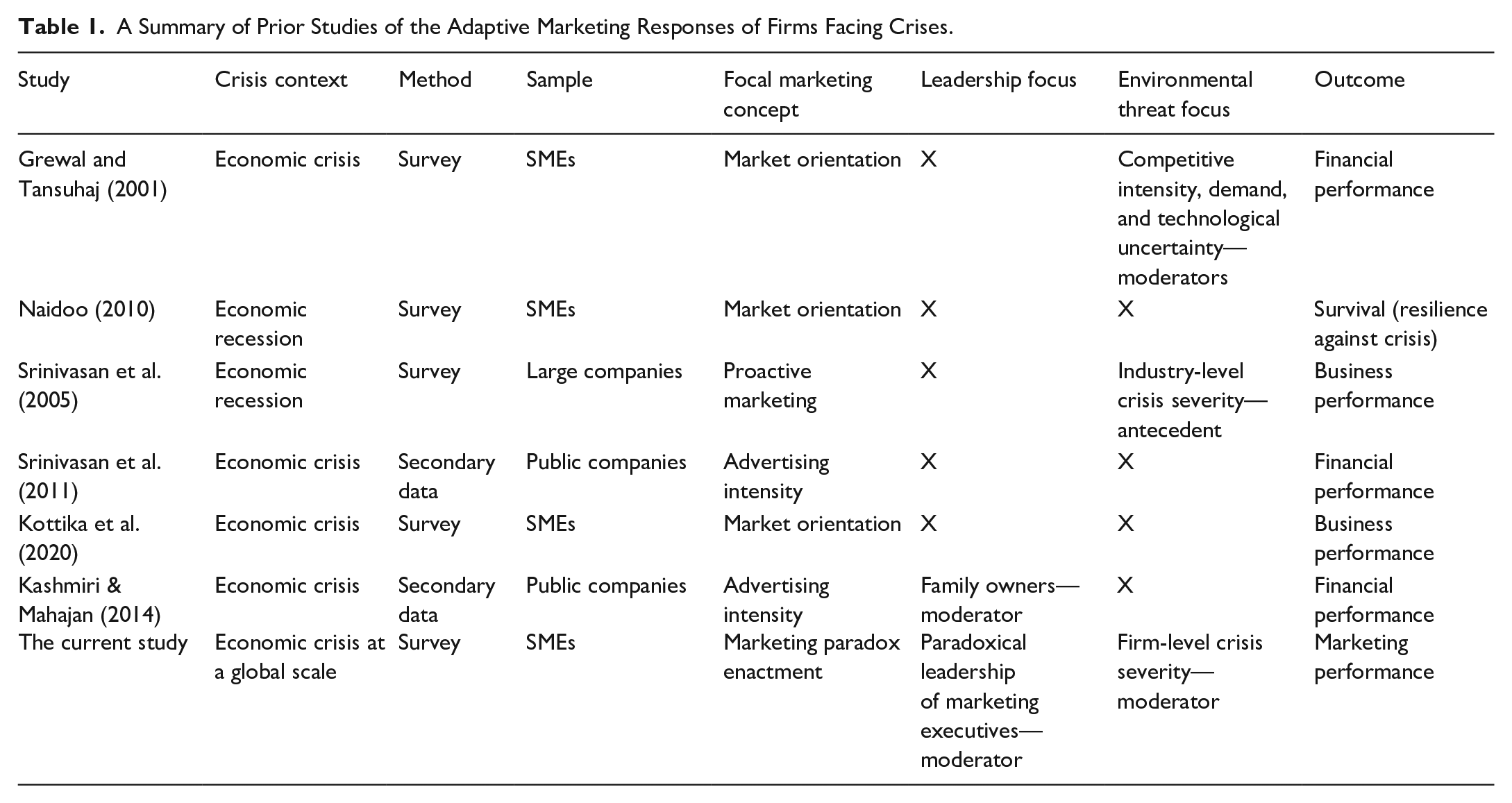
While previous studies have shown how the marketing function enables firms to endure the adverse effects of economic crises, they have not addressed how small businesses may effectively adapt to such shocks by pursuing both customer value creation and value appropriation simultaneously. This research aims to fill a void in the literature by theorizing how small enterprises can combat a crisis by embracing the value creation–value appropriation paradox. As summarized in Table 1, our study differs from the earlier research on the adaptive role of marketing by applying a novel theoretical lens—paradox theory—from the management literature to the marketing strategies of small businesses in crises. Our research questions are: “How do small enterprises confronting a crisis benefit from pursuing the dual goal of customer value creation and value appropriation?” and “What organizational factors moderate the relationship between pursuing this dual goal and marketing performance?”
A Summary of Prior Studies of the Adaptive Marketing Responses of Firms Facing Crises.
A notable dilemma small enterprises face in the wake of extreme environmental turbulence is choosing between alternative adaptive marketing responses. For instance, small enterprises could mobilize organizational resources to develop new products and services, seizing market opportunities emerging from the rapidly changing environment. However, facing financial scarcity, small enterprises must cut expenses and capture more profits from existing customers (Beliaeva et al., 2020). In other words, small enterprises in a crisis need to juggle between the competing marketing goals of creating value for customers and capturing value from customers. These two endeavors appear contradictory, posing a marketing paradox. In comparison with large corporations, this paradox appears to be particularly salient to small enterprises since they have less financial slack and resources to pursue both simultaneously and the blurred boundary between the marketing and sales functions (Casenave & Klarmann, 2020; Malshe et al., 2017; Sadiku-Dushi et al., 2019).
We draw on the organizational paradox theory to suggest that small enterprises are resilient to economic shocks (crises) when they embrace the value creation–value appropriation paradox by simultaneously emphasizing both efforts. By accepting this paradox intentionally, small enterprises conduct marketing activities with a dual and balanced focus. We call this strategy marketing paradox enactment (MPE), which is defined as firms paying equal attention to marketing activities that generate value for customers and extract value from customers. Prior research has examined a related marketing paradox known as marketing ambidexterity, which is distinct from MPE 1 (Ho et al., 2020). Conceptually, marketing ambidexterity emphasizes market knowledge use whereas MPE emphasizes organizational adaptation. Empirically, marketing ambidexterity is operationalized as marketing mixes that reflect the use of new skills (exploration) and strengthening of existing skills (exploitation) whereas MPE is operationalized as marketing actions that intend to create and capture customer value.
Our conceptual framework also includes paradoxical leadership and perceived crisis severity as moderators that strengthen the relationship between MPE and small businesses’ performance resilience amid a crisis. To test our hypotheses, we used online survey data collected from a sample of marketing managers working in small enterprises across multiple industries during the COVID-19 pandemic. The pandemic represents a context of extreme environmental turbulence to examine the role of MPE in small firms facing crises.
This study makes several contributions to both the marketing and small business literature. First, grounded in the organizational paradox literature, our study identifies small enterprises’ embracing the value creation–value appropriation paradox (i.e. MPE) as pivotal to their resilience in the wake of crises. There is limited research examining how firms, in particular small businesses, leverage marketing capabilities to mitigate extreme economic shocks. Small business research has scarcely addressed the role of marketing in fostering organizational adaptation and enabling small enterprises to be resilient to crises. Our study adds to this research stream by focusing on the role of small business marketing and examining the impact of MPE on small enterprises’ marketing performance during a crisis.
Second, we formulate and empirically validate a conceptual model that considers the leadership behavior of marketing executives (i.e. paradoxical leadership) and crisis severity as the enablers (positive moderators) of the MPE–firm performance relationship. The role of marketing leaders in small enterprises is an under-explored area in both the marketing and small business literature. Adding to this literature, our study illustrates how marketing executives’ leadership behavior strengthens the effect of MPE on small firms’ marketing performance in the wake of a crisis. Our study also shows that crisis severity amplifies the effect of MPE on small enterprise performance, highlighting the adaptive role of MPE in small firms combating a crisis. We elaborate on the theoretical and managerial contributions in the Discussion.
Literature review and hypotheses
Small enterprises’ response to crises
Several qualitative studies have documented how small enterprises responded to crises induced by extreme environmental turbulence, such as the COVID-19 pandemic. For instance, using a case study approach, Clauss et al. (2021) demonstrated how European small businesses capitalized on their core competence and networks to embark on business model innovations during the pandemic. Bjorklund et al. (2020) found that startups in the Finland food and beverage industry experimented with new business models, which enhanced capabilities for customer value creation. In contrast, Thorgren and Williams (2020) showed that small Swedish enterprises were inclined to reduce expenditure. Thus, instead of focusing on innovation and expanding revenue sources, these firms emphasized capturing more customer value to mitigate the impact of the crisis. These qualitative studies suggest that the strategies small enterprises deployed to combat crises may be specific to their institutional environments, making broad generalizations from the findings difficult.
Complementary to the qualitative studies, a few survey studies have adopted the theoretical lens of dynamic capability to account for small enterprises’ adaptive response to unprecedented crises (e.g. Belitski et al., 2022; Ozanne et al., 2022). In addition, earlier research on economic crises has identified the pivotal role of strategic orientations in buffering small businesses from economic shocks (Beliaeva et al., 2020). Likewise, Eggers and Kraus (2011) found that small enterprises embraced customer orientation yet deployed low-cost marketing programs during a recession. Although the above studies suggest that small businesses could be resilient to economic shocks by leveraging strategic resources and capabilities, scant research has addressed the role of marketing in combating crises.
As noted earlier, marketing could play an adaptive role for small businesses in volatile environments. The marketing studies documented in Table 1 have investigated the role of marketing in helping firms adapt to economic crises. Notably, these studies focus on various marketing concepts or activities as the drivers of firm performance during a crisis, including market orientation (Grewal & Tansuhaj, 2001; Naidoo, 2010), proactive marketing (Srinivasan et al., 2005), and advertising intensity (Kashmiri & Mahajan, 2014; Srinivasan et al., 2011). Some of these studies also examine the antecedents of firms’ adaptive marketing response, such as industrial crisis severity (Srinivasan et al., 2005) and contingency factors such as family ownership (Kashmiri & Mahajan, 2014) and environmental uncertainty (Grewal & Tansuhaj, 2001).
Being distinct from these studies, we ground our arguments in the organizational paradox lens and suggest that small enterprises might avoid a crisis’s detrimental repercussions when they emphasize value creation and value appropriation in their marketing activities (i.e. MPE). As explained below, we develop a conceptual model (Figure 1) that considers MPE the primary antecedent of the marketing performance of small enterprises facing a crisis. In addition, drawing on the leadership and management literature, we propose paradoxical leadership and firm-level crisis severity as major contingency factors.
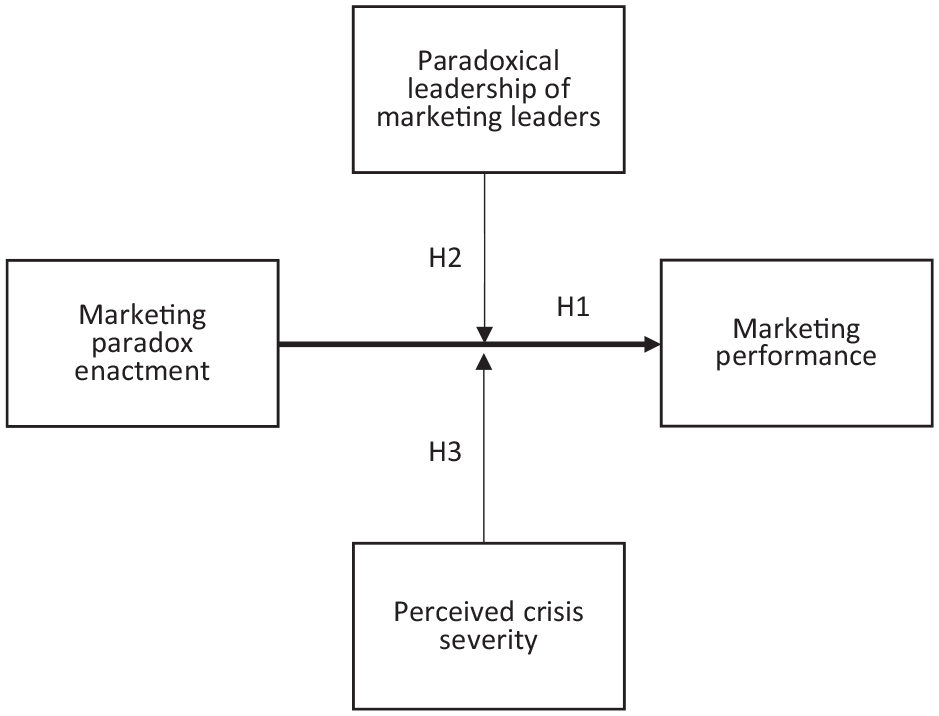
Conceptual model.
The paradox of customer value creation-value appropriation
Small enterprises, relative to large firms, face greater financial constraints as they lack slack resources. This is especially true when an economic crisis tightens the availability of financial capital. Small enterprises must scramble their limited resources to address changing customer needs and, at the same time, maintain a sustainable level of profits. Thus, small enterprises confronting a crisis must strive to create more value for customers (e.g. through better addressing their needs) and simultaneously capture more value from customers in terms of profits.
The notions of customer value creation and customer value appropriation have been extensively examined in the marketing literature; nevertheless, these two streams of literature are somewhat independent (e.g. Blocker et al., 2012; Josephson et al., 2016; Mizik & Jacobson, 2003; Ulaga et al., 2006). Customer value creation is considered the foundation of marketing; thus, prior research has addressed numerous ways marketers can increase customer value. For instance, firms strive to develop new products through innovation and to refine existing offerings to boost customer satisfaction and loyalty. By meeting customers’ existing and latent needs, these value-creation-centric firms can deepen customer relationships over time, bringing greater returns in the long term. These endeavors, however, could erode short-term profits owing to increased servicing costs and relationship-specific investments (Keränen & Jalkala, 2013; Vorhies et al., 2011; Worm et al., 2017).
In contrast, the customer profitability literature aims to understand how firms can enhance profitability by capturing more value from customers (Rust et al., 2004). Firms focusing on value appropriation strive to generate greater returns from their customer assets and extract higher rents from customer relationships. Value appropriation can be increased by up-selling and cross-selling, reducing customer acquisition costs, and optimizing marketing spending (Frennea et al., 2019; Kumar & Reinartz, 2016). Since value appropriation tends to be short-term focused, leaning on this would make a firm myopic, compromising its ability to identify opportunities to create customer value or act on those opportunities. Thus, marketing activities that create customer value appear contradictory to activities that capture customer value, posing a paradox for small enterprises in making marketing decisions. Casenave and Klarmann (2020, p. 96) portray a paradox in marketing as the tension between long-term goals and short-term targets: “Emphasis on return on investment focuses [managerial] attention on short-term profitability at the expense of marketing assets such as brand image or customer equity. . .”
Evidence of firms pursuing strategic contradictions is apparent in the marketing literature (Kim et al., 2022). Customer value creation and value appropriation represent divergent goals supported by different marketing processes, market knowledge, and performance targets. These two realms of action are contradictory yet interrelated, and both may be required for small enterprises to counter a crisis that threatens their survival. Small businesses can benefit from embracing this marketing paradox by choosing a “both/and” (i.e. a dual goal) rather than an “either/or” option.
Performance outcomes of marketing paradox enactment (MPE)
Organizational studies are ripe with recognition of the benefits of pursuing contradictory goals between, for example, exploitation and exploration, control and flexibility, and alignment and adaptation (Lewis, 2000). The paradox literature shows that recognizing and accepting paradoxical situations (e.g. tensions between different courses of action) as a reality enables firms to come up with innovative strategies to deal with the tensions between competing demands, which results in positive organizational outcomes (W. K. Smith & Lewis, 2011; W. K. Smith & Tracey, 2016). Rather than prioritizing meeting one demand over the other, firms that choose to address opposite demands simultaneously can benefit from formulating integrated solutions (Jay, 2013). K. K. Smith and Berg (1987, p. 215) noted: “By immersing oneself in the opposing forces, it becomes possible to discover the link between them.”
Addressing the paradoxical tensions embedded in firms’ simultaneous pursuit of innovation exploitation and exploration, prior research shows how firms achieve more positive innovation outcomes when leaders explicitly acknowledge and deal with the innovation paradox (Andriopoulos & Lewis, 2009; W. K. Smith & Tushman, 2005). In addition, abundant evidence shows that firms achieve higher performance in volatile environments when they emphasize exploitation and exploration at the same time in critical organizational functions (Junni et al., 2013). Since exploitation and exploration entail conflicting yet interrelated activities, attaining both requires firms to accept and address this paradox explicitly throughout the organization.
In the marketing domain, increasing evidence shows that embracing the paradox in the simultaneous pursuit of exploitative and exploratory marketing actions improves firm performance (Ho et al., 2020). Also, a growing number of studies have examined how service firms deal with the paradox between customer service provision and sales generation simultaneously (de Ruyter et al., 2020; Yu et al., 2013).
Based on the empirical evidence of the positive outcomes of enacting organizational paradoxes, we suggest that small enterprises balancing value creation and value appropriation are resilient to extreme economic shocks that characterize a crisis. As noted above, MPE refers to firms placing equal emphasis on marketing activities that generate value for customers and extract value from them. By purposefully accepting and addressing the marketing paradox, small enterprises could seize the opportunities arising from the crisis while mitigating the adverse impact of economic shocks on profitability. These firms can offset the financial and market risks of introducing new offerings by reaping more profits from existing customers. Keeping a dual goal in focus, marketing managers are less likely to make biased strategic decisions that favor either value creation or value appropriation, thereby reducing the risk of a one-sided focus. In addition, marketing managers are motivated to create integrated marketing strategies that could achieve both goals simultaneously. As a result, MPE would enable small enterprises to become resilient to a crisis, resulting in higher marketing performance.
Boundary conditions of the MPE-marketing performance link
Paradoxical leadership
Research on strategic paradoxes presents evidence of the practices that organization leaders use to cope with paradoxes; these practices include accepting the tension in a paradox, accommodating the opposite options together, and explicitly differentiating (structurally or temporally) and integrating the alternatives (Andriopoulos & Lewis, 2009; O’Reilly & Tushman, 2008; Schad et al., 2016; W. K. Smith & Tushman, 2005). For instance, Tushman and O’Reilly (1996) identified a decentralized structure, a common culture and vision, and supportive leaders and flexible managers as key organizational factors supporting firms in pursuing both exploration and exploitation. To manage paradox, firms must establish an organizational context that supports and encourages employees to divide their attention between conflicting demands and address those demands flexibly.
We suggest that the marketing leaders of small enterprises could play a crucial role in leading their firms to embrace the paradox of customer value creation–value appropriation in the face of a crisis. The literature on organizational paradox has highlighted the importance of leadership in addressing and managing paradoxical strategic issues. For instance, W. K. Smith and Tushman (2005) proposed a leader-centric model of managing strategic paradoxes in which leaders engage in the differentiation and integration of contradictory agendas. By emphasizing the importance of embracing paradoxes, leaders can cultivate paradoxical mindsets among their subordinates, motivating them to recognize, accept, and pursue contradictory goals in strategy execution. Studying five global corporations excelling at meeting competing demands, Lewis et al. (2014) identified the exemplary paradoxical leadership practices that foster creative, “both/and” solutions, which enabled these companies to make fast-paced, adaptable decisions to cope with complex, dynamic environments. In an in-depth study of top management teams, Tushman et al. (2011) showed that firms earn sustained competitive advantages when executive teams embrace the tension between old and new businesses and foster constant creative conflict. In essence, being consistently inconsistent is an essential leadership practice needed in dealing with strategic paradoxes.
In line with these findings, leadership research has documented that senior managers’ leadership can foster a workplace climate conducive to organizational ambidexterity (Havermans et al., 2015; Van Assen, 2020). The tensions inherent in conflicting goals, decisions, and actions could permeate across levels of an organization. Certain types of leader behaviors motivate subordinates to address paradoxical tensions, resulting in higher employee creativity and ambidextrous actions (i.e. taking part in exploitative and exploratory tasks simultaneously; Jansen et al., 2016; Shao et al., 2019). Paradoxical leadership generally refers to those contradictory yet interrelated leader behaviors that leaders undertake to direct and motivate employees to meet competing workplace demands (Zhang et al., 2015). Management research suggests that leaders who display paradoxical leadership foster firm-level innovation by directing employees’ attention to exploitation and exploration alternatively (Rosing et al., 2011). Thus, these leadership behaviors can help employees embrace and address the tension in executing opposing strategic options constructively (Martin, 2007).
Zhang and Han (2019) construed the concept of “paradoxical leader behavior in corporate development” as “competing yet interrelated leader behaviors intended to meet competing demands in corporate development simultaneously and over time” (p. 43). In particular, they developed a measure that captures leader behaviors for addressing the present–future paradoxes and the organization–environment paradoxes.
The present–future paradoxes require executives to confront the tension between “maintaining short-term efficiency and preparing for long-term business development and maintaining organizational stability and developing management flexibility” (Zhang & Han, 2019, p. 43). The organization–environment paradoxes require leaders to address the tension between serving the interests of shareholders and those of stakeholders and the tension between conforming to and shaping market forces. Their findings showed that leaders who embrace a paradoxical management approach can connect the opposites (e.g. short-term vs. long-term time orientation) required for corporate development, thus managing multiple strategic paradoxes simultaneously, resulting in stronger organizational performance over time.
Based on the above discussions, we suggest that paradoxical leadership is pivotal to small businesses embracing the marketing paradox. When marketing executives in these small firms exhibit paradoxical leadership, they help build a workplace climate encouraging the simultaneous pursuit of the conflicting goal of value creation and appropriation. As a result, the firm is capable of formulating a suite of marketing programs that could create greater customer value while ensuring profitability at the same time. This results in a stronger relationship between MPE and the marketing performance of small enterprises navigating through a crisis.
Firm-level perceived crisis severity
Although an unprecedented environmental crisis poses similar challenges (e.g. supply chain disruption, fluctuation in customer demand) to small enterprises, we expect that the perceived crisis severity varies across firms due to the differing resources they possess and the heterogeneous market environments where they compete (Osiyevskyy et al., 2020). Studies of small businesses in crisis corroborate this view about the differential effect of macro-level adversity on individual firms (Osiyevskyy & Dewald, 2018).
The organizational paradox literature has documented that the tensions and contradictions inherent in paradoxical situations drive firms to search for innovative integrated solutions (W. K. Smith & Tushman, 2005). When small companies encounter escalating threats in the wake of a crisis, they will be triggered to initiate the process of managerial sensemaking and look for appropriate adaptation approaches (Laskovaia et al., 2019; Osiyevskyy et al., 2020). Prior research underscores the importance of adopting flexible decision logic and paradoxical mindsets when formulating adaptive responses in times of crisis (Maldonado & Vera, 2014; Osiyevskyy & Dewald, 2018; Tabesh & Vera, 2020). As discussed earlier, MPE is a viable adaptive marketing response particularly valuable to small businesses confronting competing demands induced by crises.
In the organization adaptation literature, the contingency perspective focuses on examining the enablers of the adaptation process by theorizing about the (in)congruence between organizational factors and the environment (Chakrabarti, 2015; Sarta et al., 2021; Strandholm et al., 2004). Following this perspective, we suggest that small enterprises sensitive to the potential repercussions of an emerging crisis are more likely to benefit from embracing the value creation-value appropriation paradox. This is because the leaders of these small enterprises may exert greater effort into the sensemaking of the crisis, evaluating its potential impact, exploring strategic options, and supporting MPE as the preferred adaptive response.
In addition, when the small enterprise perceives the economic shocks to be less threatening, it may have limited incentives to commit to engaging in MPE, making such pursuit less effective. In contrast, when a small enterprise recognizes the crisis as life-threatening, it would have a strong commitment to undertaking MPE as an adaptive response, making this effort effective at achieving higher marketing performance. Therefore, we propose:
Methodology
Sample and data collection
We tested the research hypotheses using an online survey of marketing managers working for small enterprises across a wide spectrum of industries in the U.S. The survey was conducted from January 2022 to February 2022—approximately 2 years after the breakout of the COVID-19 pandemic in the first quarter of 2020. According to government statistics, more than twenty percent of small businesses in the United States closed down in the first quarter of 2020 (Fairie, 2020), posing a significant economic crisis. The U.S. Census Bureau released a report in July 2022 indicating that the U.S. economy had begun recovering from the pandemic by the fourth quarter of 2020 (Roman et al., 2022). Thus, the pandemic provided a natural context for us to examine small enterprises’ adaptive response in the face of extreme economic shocks and an unprecedented crisis.
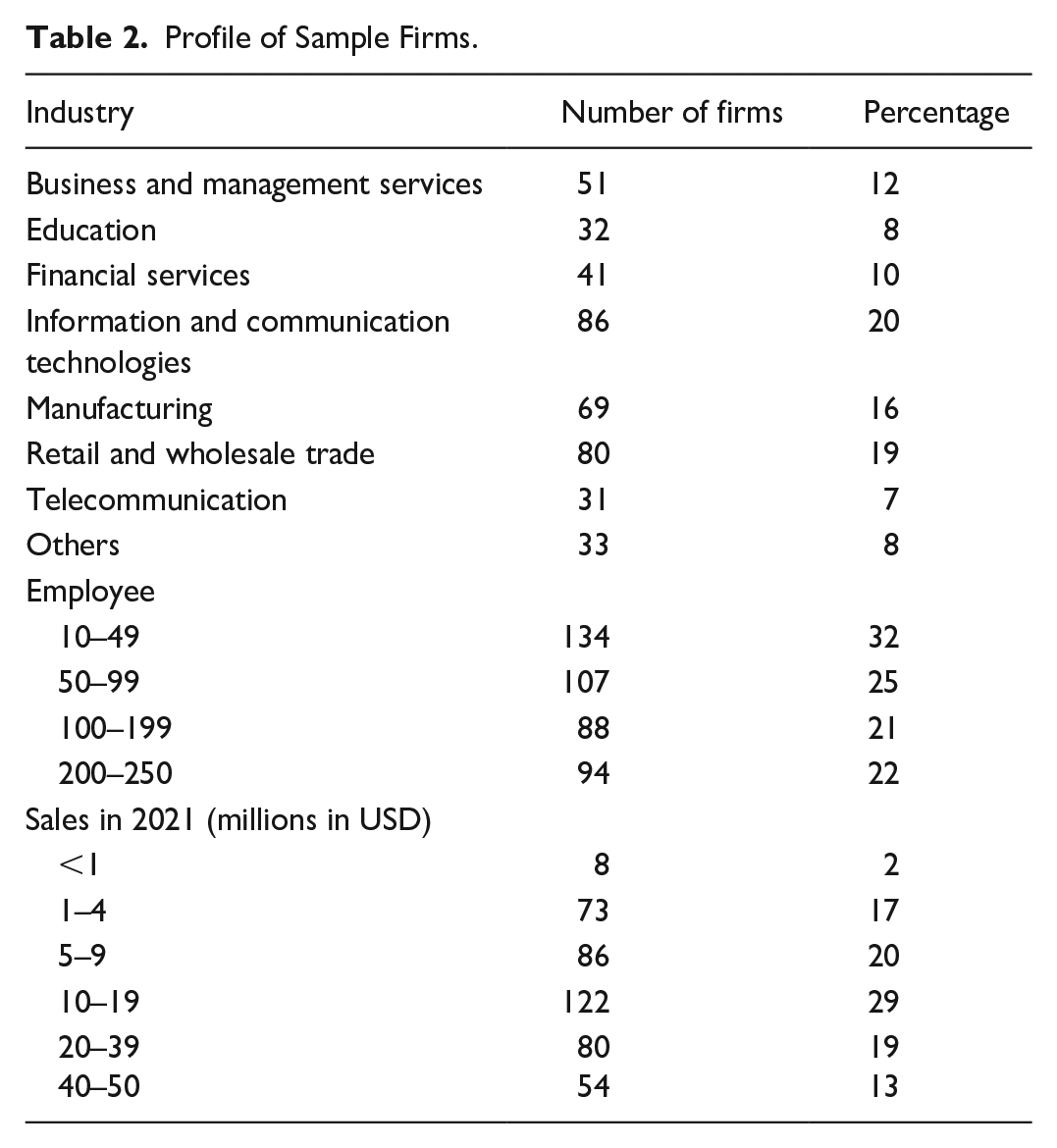
Respondents were recruited from the business panel members of a private research company. Appropriate respondents were selected based on several inclusion criteria: (1) the employee size of their firm ranged from 10 to 250, (2) they were key decision-makers in the firm’s marketing planning and activities, and (3) they reported directly to a top executive who oversaw the firm’s marketing function. We had received 443 completed surveys by the end of the data collection. Thirteen surveys were discarded in which respondents scored lower than 5 on a scale of 1 to 7 (1 = not at all, 7 = very much) on their knowledge about the issues being asked in the survey. Further, seven surveys in which respondents failed one of the two attention questions were excluded. In total, 423 usable surveys were retained. The respondents had worked for their firm for 8 years and 4 months on average. The gender distribution of the respondents was 65% males and 35% females. Summary information regarding the size and industry distribution of the firms appears in Table 2.
Profile of Sample Firms.
Measure development
Customer value creation and value appropriation have been extensively studied in the marketing literature. However, there are no existing scales that explicitly measure firm actions representing these two domains. Therefore, we formulated two concise scales to measure these two constructs. We began by following the standard scale development procedures outlined in DeVellis and Thorpe (2021), generating an initial set of items based on a thorough review of the marketing literature. Key conceptual contributions to this item pool came from Mizik and Jacobson (2003) and Kumar and Reinartz (2016). We ensured that the items integrate and reflect the existing conceptualizations of customer value creation and appropriation in the marketing literature. Subsequently, we refined the items by consulting a panel of marketing managers and academics to assess the two scales’ face validity. After an iterative process, we selected six items to represent value creation and value appropriation, respectively. The value creation measure captures marketing actions commonly used by firms to enhance customer value. The value appropriation measure captures marketing actions focusing on improving firms’ short-term sales and profits. We assessed the psychometric properties of the two scales by conducting a pilot test. The results confirmed that the reliability, dimensionality, and validity of the scales are acceptable. 2
Next, to operationalize MPE, we first followed an approach suggested by Wei et al. (2014) to divide customer value creation by the sum of customer value creation and customer value appropriation. The formula is as follows:

The numeric value of the above ratio is between 0.125 and 0.875, with the balance point at 0.5. Scores higher than 0.5 reflect an imbalance in favor of customer value creation while scores lower than 0.5 reflect an imbalance in favor of customer value appropriation. As the essence of the MPE is a balance between value creation and value appropriation, cases with a score higher than 0.5 were subtracted from the max value of the above ratio to facilitate interpretation, where a higher value indicates a better balance and a lower value indicates a worse balance.
We assessed small enterprises’ marketing performance using a five-item scale to capture firm performance during the post-pandemic period. Since comparing performance objectively across firms facing crises is likely subject to noise in the data, we used each firm’s own performance prior to the crisis as the frame of reference (Singh et al., 2016). The literature on marketing performance assessment (Clark, 1999; Katsikeas et al., 2016) recommends measuring marketing performance with a combination of customer-related metrics and financial metrics, as this approach captures both backward-looking and forward-looking aspects of performance. Therefore, to examine MPE’s contributions to different facets of marketing performance, we used two items to assess the customer aspect: customer satisfaction and loyalty, and two items to assess the financial aspect: sales and profit margin. In addition, we used one item to measure firms’ recovery speed from the pandemic crisis, as this performance indicator is particularly relevant to our research context.
We assessed perceived crisis severity using the five-item scale in Shirokova et al. (2020), which measured the extent to which the firm sensed the impact of the initial stage of the crisis on its business. We measured senior marketing executives’ paradoxical leadership by adapting the scale developed by Zhang and Han (2019). The original scale consists of twenty-five items reflecting the multi-dimensions of paradoxical marketing leadership behaviors. These include maintaining short-term efficiency and long-term development, confirming and shaping collective forces in the environment, maintaining stability and flexibility, and focusing on shareholders and the stakeholder community. Since the length of this scale may induce undesirable low response variance and not all items in the original scale are relevant to the role of marketing executives, we truncated the scale by removing the irrelevant items while ensuring the remaining items (11 in total) adequately represented the four original dimensions. We conducted a confirmatory factor analysis (CFA) to validate the four-factor structure. The second-order CFA model fitted the data well (χ2/df = 2.181, GFI = 0.963, CFI = 0.940, and RMSEA = 0.045), suggesting that the truncated scale maintained the dimensions of the original scale. We aggregated the items into a composite score in subsequent statistical analyses.
Several firm-level variables that may affect both MPE and marketing performance were included as controls in the regression analysis. First, we controlled for market-sensing capability, which refers to a firm’s ability to learn about changes in the market environment and seize emerging opportunities (Morgan et al., 2009). Prior research has shown that market-sensing capability positively impacts firms’ sales performance (Morgan et al., 2009). We also expect this capability to be related to MPE as they share similar organizational routines, such as information processing. In addition, we controlled for financial slack (Guo et al., 2020; Vanacker et al, 2017), which refers to firms’ easy access to and deployment of financial resources to achieve organizational goals. Financial slack could provide firms with a resource buffer against environmental shocks, making them more resilient in the face of a crisis. We measured financial slack using a scale from Shirokova et al. (2020). Several key firmographics were also controlled for, including prior sales growth measured as the average growth rate from 2018–2020, firm age measured as the natural log of the number of years since inception, and firm size measured as the natural log of the number of full-time employees. Last, we controlled for industry type using seven dummy variables.
Measure validation
Several steps were taken to check the reliability and validity of the measures. First, by conducting an exploratory factor analysis, we ensured all the items loaded on the corresponding factors without cross- or low-factor loadings. As shown in Table 3, the standardized factor loadings ranged from 0.70 to 0.92, providing evidence of convergent validity (Flynn et al., 2010; Wang et al., 2016). We then assessed the internal consistency of the multi-item measures using Cronbach’s alpha. Its values varied from .79 to .93, reflecting high levels of scale reliabilities (Lance et al., 2006; Liu et al., 2016).
Measurements.
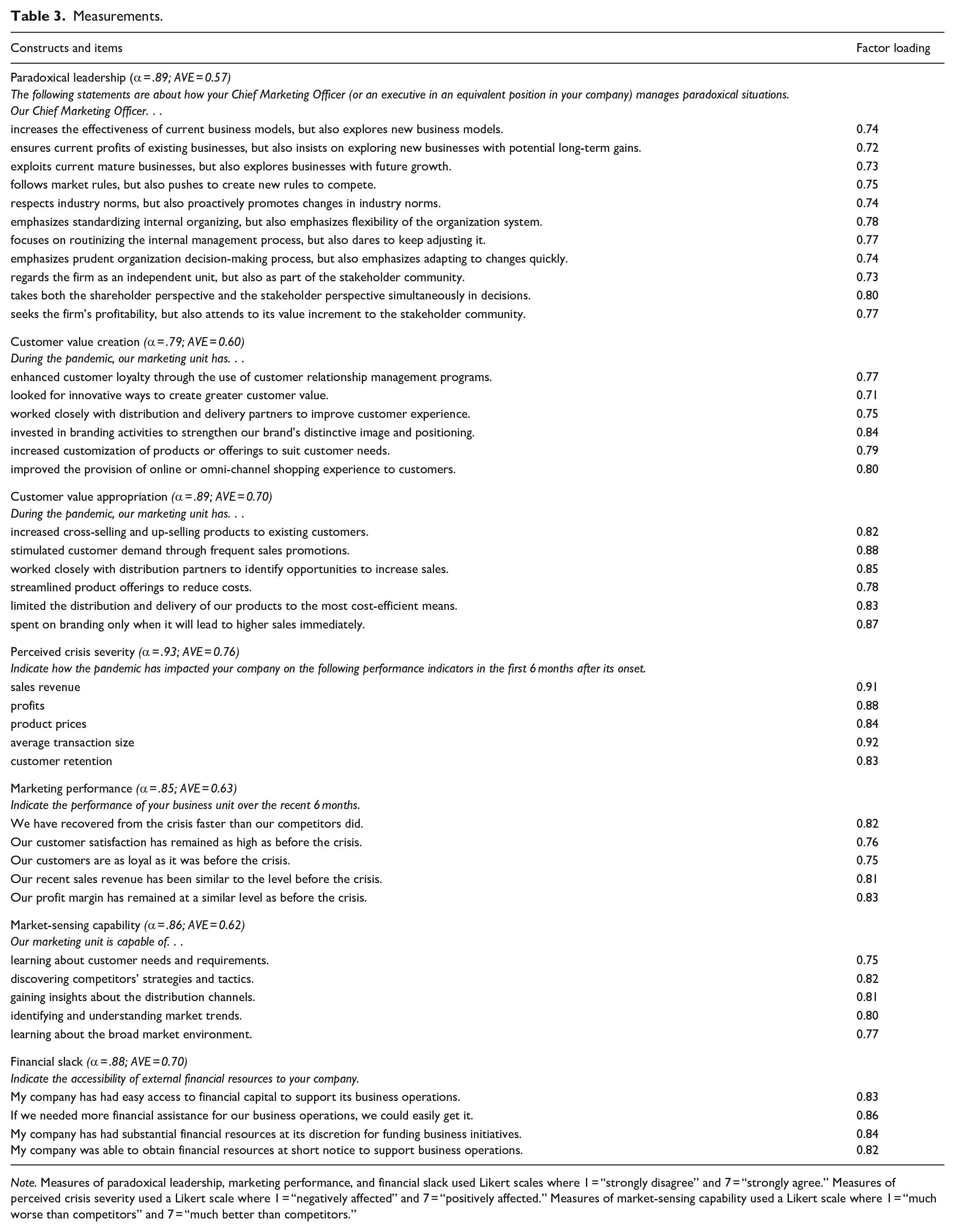
Note. Measures of paradoxical leadership, marketing performance, and financial slack used Likert scales where 1 = “strongly disagree” and 7 = “strongly agree.” Measures of perceived crisis severity used a Likert scale where 1 = “negatively affected” and 7 = “positively affected.” Measures of market-sensing capability used a Likert scale where 1 = “much worse than competitors” and 7 = “much better than competitors.”
Next, we conducted a CFA to evaluate the construct validity of the measures. The measurement model yielded a chi-square statistic of 852.10 (p < .01). The chi-square test is known to be sensitive to sample size and the chi-square statistic is usually significant for models with large sample sizes (Lance et al., 2006; Wang et al., 2016). The χ2/df and the fit indices of the measurement model, which are less dependent on sample size, were within acceptable thresholds: χ2/df = 1.281 (df = 644), RMSEA = 0.036, NNFI = 0.902, CFI = 0.977, and SRMR = 0.044 (Hu & Bentler, 1999). The standardized coefficient of each item was greater than .50 and significant (p < . 01), suggesting adequate convergent validity of the measures. Neither of the confidence intervals of the correlations for the constructs (i.e. phi values) contained the value of 1, evidencing adequate discriminant validity. Meanwhile, all constructs’ average variance extracted had values between .57 and .76, surpassing the recommended threshold of .50 (Cao & Zhang, 2011; Gligor, 2018). In addition, the square root of average variance extracted (shown in the diagonal in Table 4) for each construct was higher than the associated correlations between any two given constructs, providing additional support for discriminant validity (Schoenherr & Swink, 2012). Table 4 reports the descriptive statistics and correlations of the constructs.
Descriptive Statistics and Correlations Among Variables.
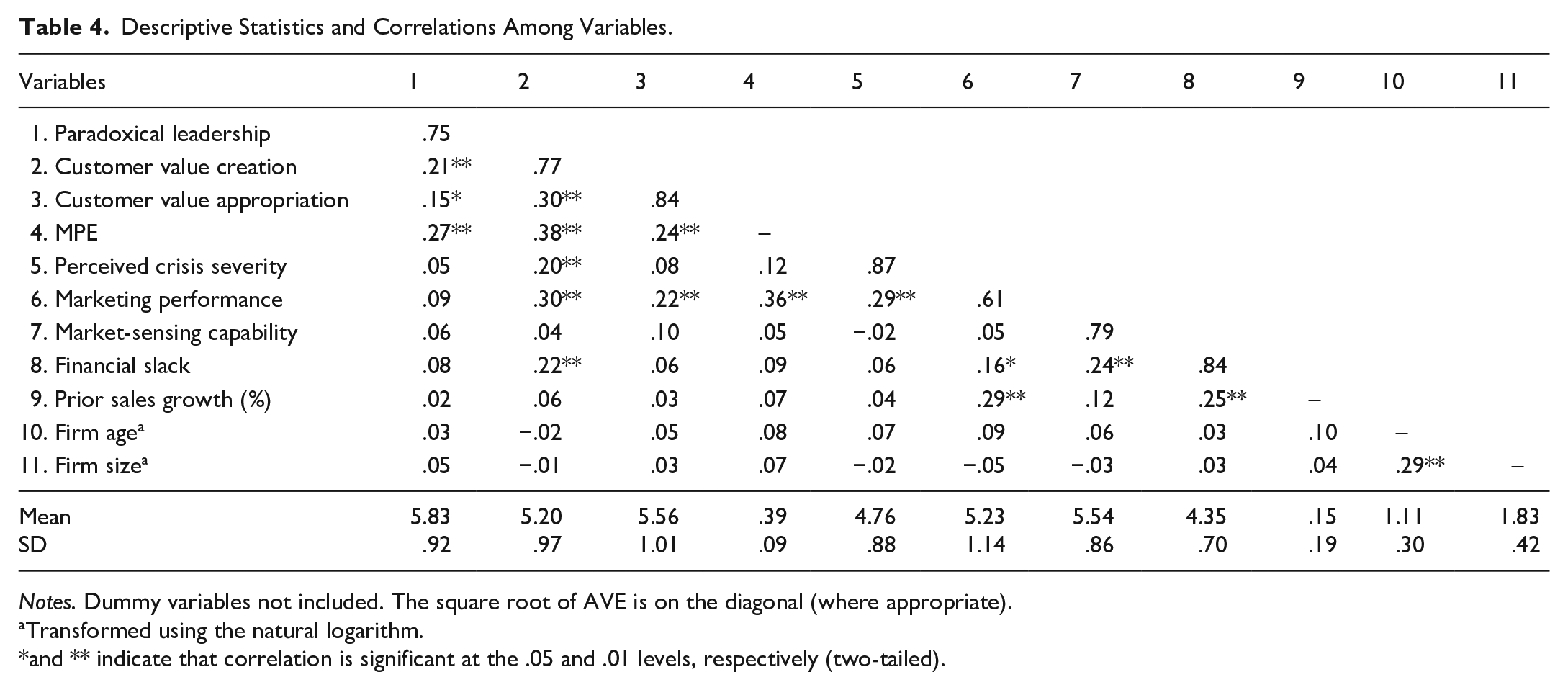
Notes. Dummy variables not included. The square root of AVE is on the diagonal (where appropriate).
Transformed using the natural logarithm.
and ** indicate that correlation is significant at the .05 and .01 levels, respectively (two-tailed).
Evaluation of potential biases
Our analysis could be subject to several forms of bias, which we assessed. First, we examined the possible threat of multicollinearity by checking the variance inflation factors among the variables. All values were below three, suggesting that multicollinearity was not apparent. Next, Table 4 indicates that no inter-factor correlations were above the threshold of 0.60. Thus, our regression results were not biased by multicollinearity (Liu et al., 2016).
Second, measuring variables by relying on managers’ self-reports raises the concern of inflating or deflating the estimated effects (Homburg et al., 2011). Therefore, we took several approaches to address the potential bias caused by common method variance. First, we assured respondents of the confidentiality and anonymity of their survey responses (Slotegraaf & Atuahene-Gima, 2011). Second, our regression models included interaction terms, which tempered the threat of common method bias (Siemsen et al., 2010). Last, following Podsakoff et al. (2003), we employed the CFA-based latent methods factor technique to assess common method bias. Specifically, we allowed all self-reported items to load onto both their theoretical constructs and a latent common method factor. Compared to the original five-factor measurement model, the model incorporating the latent common method factor had a poorer fit (RMSEA = 0.135, NNFI = 0.556, and CFI = 0.584). Taken together, we concluded that common method bias was not a concern.
Analysis and results
Main results
Before testing the hypotheses, we checked homoscedasticity using the recommended Breusch-Pagan test (p > .05) and found no evidence of heteroscedasticity in the data. To test the hypotheses, we employed the Ordinary Least Squares regression, including several models, and used R2 to evaluate each model’s explanatory power. We standardized all the variables to facilitate the interpretation of the results.
The first step of the regression analysis included only control variables. Model 1 indicates that only financial slack and prior sales growth positively affect small enterprises’ performance. This result is not surprising since small enterprises with easy access to financial capital and a stronger sales record had more financial and organizational resources to deploy when combating a crisis.
We entered the main effect of MPE in Model 2, the two moderators (paradoxical leadership and perceived crisis severity) in Model 3, and the interaction terms of MPE and the two moderators in Model 4. As indicated in Table 5, the adjusted R2 values increase with each step, reaching statistical significance at the 5% level. In support of H1, Model 2 shows a positive and significant relationship between MPE and firms’ marketing performance (β = .33, p < .01), suggesting that small enterprises that pursued balanced levels of customer value creation and value appropriation recovered from the crisis faster. Model 4 indicates that the interaction between MPE and paradoxical leadership has a positive and significant effect on marketing performance (β = .18; p < .05), supporting H2. Also, in Model 4, the interaction between MPE and perceived crisis severity has a statistically significant effect (β = .24, p < .01), lending support to H3. 3
OLS Regression Analysis Results.
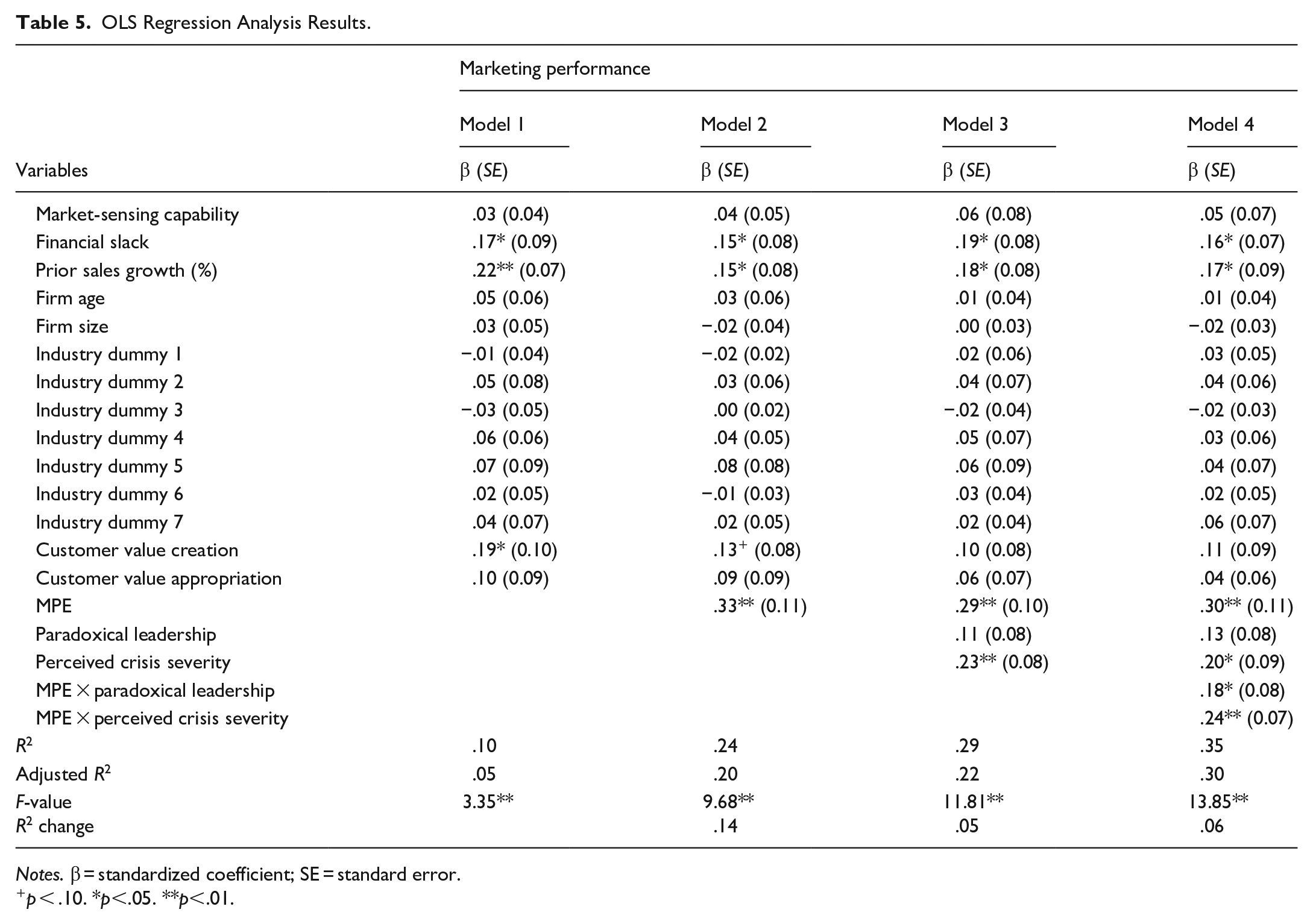
Notes. β = standardized coefficient; SE = standard error.
p < .10. *p<.05. **p<.01.
In addition, the results of Model 4 show that the coefficients on both customer value creation (β = .11, ns.) and value appropriation (β = .04, ns.) are not significant and are much smaller in magnitude than the coefficient on MPE, suggesting that either strategy alone was inadequate to improve the performance of small enterprises facing a crisis. It was essential for the studied firms to achieve a balance between customer value creation and value appropriation during the crisis. We also note that perceived crisis severity (β = .20, p < .01) has a positive and significant effect on marketing performance. This shows that small enterprises being alert to an emergent crisis are more resilient than those paying limited attention to the looming threats. The results of the regression analysis are provided in Table 5.
To illustrate the moderating effects, we plotted the moderation relationship and estimated the effect of MPE on small enterprises’ marketing performance at low (mean – 1SD) and high (mean + 1SD) levels of paradoxical leadership and perceived crisis severity. As indicated by Figures 2a and b, the effect of MPE on marketing performance (represented as standardized values on the y-axis) is stronger (i.e. a steeper slope) when the level of paradoxical leadership and perceived crisis severity is shifted from low to high, respectively. Apparently, MPE does not have a significant effect on marketing performance when paradoxical leadership and perceived crisis severity as at low levels.
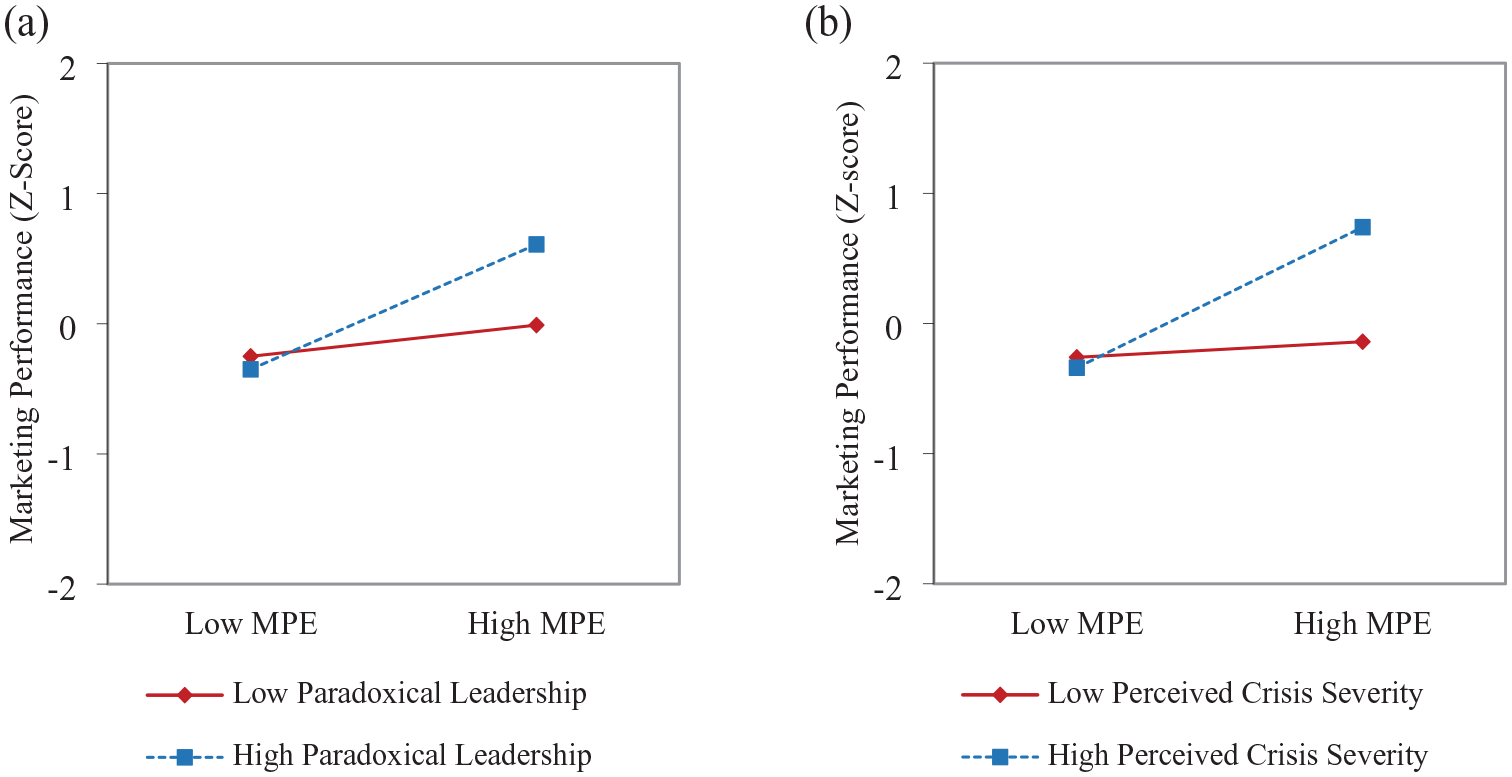
(a) The moderator effect of paradoxical leadership and (b) the moderator effect of perceived crisis severity.
Post hoc analysis
Since our marketing performance measures capture both the customer and financial aspects of performance, we performed a post-hoc analysis to check whether our results hold true for subsets of performance indicators. We found that the results are qualitatively consistent for the aggregated measure of customer satisfaction and loyalty. However, for the aggregate measure of sales and profit margin, we found support for H1 and H2 but not for H3. 4 The lack of a significant moderating effect of perceived crisis severity suggests that the positive impact of MPE on financial performance is robust, as it is not dependent on firms’ perception of crisis severity. This underscores the pivotal role of MPE in helping small enterprises prevent their sales and profit margins from declining during a crisis.
Supplementary analysis: Polynomial regression analysis
Prior research argues that the operationalization of the level of congruency between two components (here CVC = customer value creation and CVA = customer value appropriation) by collapsing the two components into a single score suffers from several methodological concerns (Herhausen, 2016). To address these concerns, we employed polynomial regression analysis (Edwards, 1994) with a three-dimensional response surface plot to examine how the (in)consistency between levels of CVC and CVA affects marketing performance. This technique allows us to examine whether equally high levels of CVC and CVA would result in a similar level of marketing performance as equally low levels of both predictors and as asymmetric levels of the predictors.
The polynomial regression equations contain higher-order terms of the two components (i.e. CVC and CVA), including the squares of the two components and their product. We regressed marketing performance on the control variables and five polynomial terms, including CVC, CVA, CVC × CVA, CVC2, and CVA2 (Table 6). Model 1 is the unconstrained controls-only model. Model 2 reports the main effects of the five polynomial terms. Given that the regression coefficient of at least one higher-order term is significant, the (in)consistency between CVC and CVA on marketing performance can be represented on a three-dimensional graph by drawing response surface plots. To determine whether the polynomial regression results provide additional support for H1, the linear slope along the consistency line (a1 = b1 + b2) should be positive and significant while the curvature pattern along the consistency line should be insignificant (a2 = b3 + b4 + b5). Values of b1 to b5 are extracted from the outcome of Model 2, each representing beta coefficients for one polynomial term.
Polynomial Regression Results.
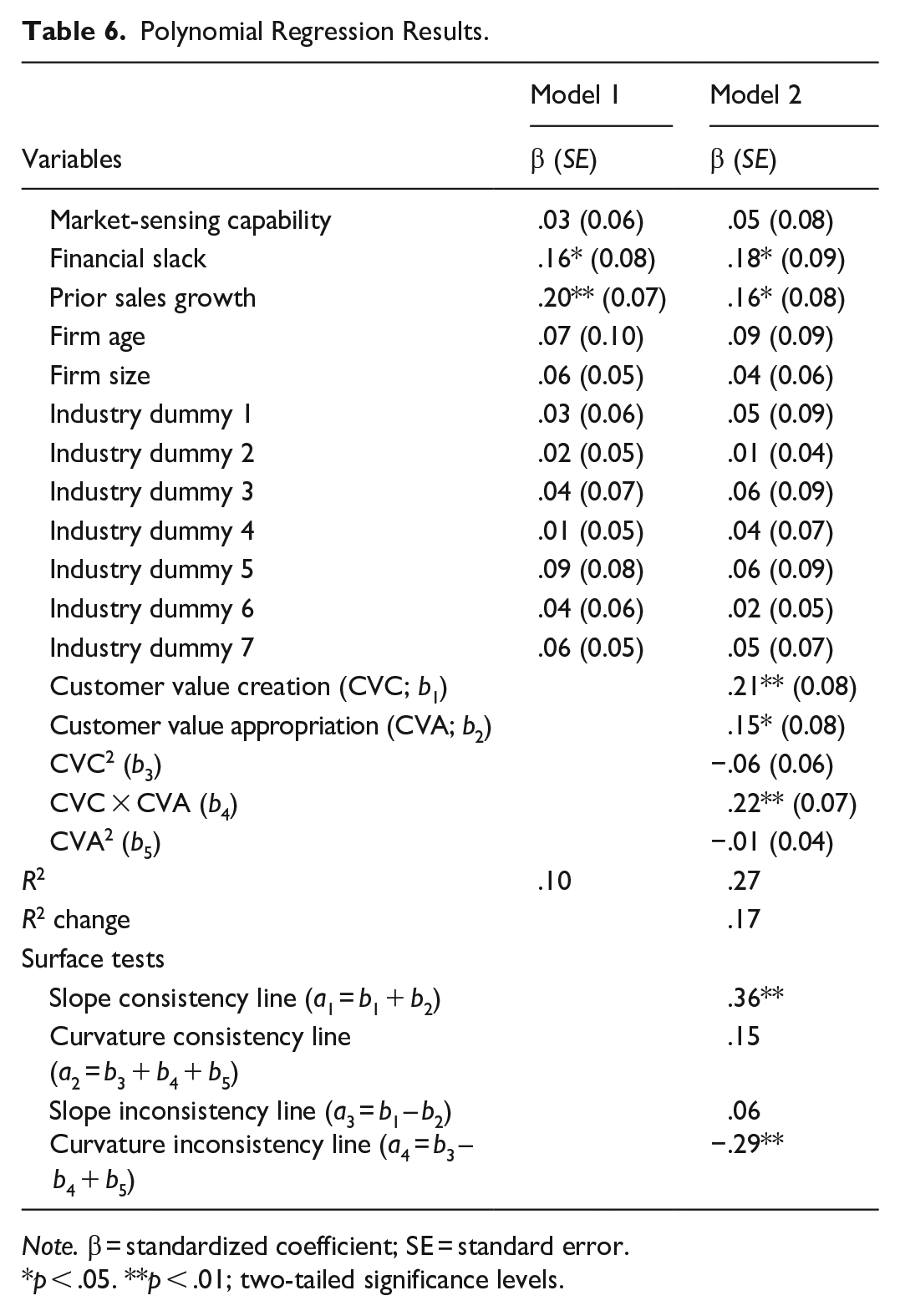
Note. β = standardized coefficient; SE = standard error.
p < .05. **p < .01; two-tailed significance levels.
According to the lower portion of Table 6, the slope of the surface along the line of consistency is significant and positive (a1 = 0.36, p < .01), while a2 is insignificant. This suggests that marketing performance increases as CVC and CVA increase simultaneously, providing further support for H1. A negative and significant a4 (curvature along the inconsistency line) further demonstrates that marketing performance decreases more sharply when inconsistency between customer value creation and customer value appropriation increases. Figure 2 presents the resulting three-dimensional plots of the response surface along the lines of consistency (solid line) and inconsistency (dashed line) for marketing performance. Notably, the right and left sides of the surface graph illustrate that marketing performance is impaired when small enterprises focus on either CVC or CVA at the expense (exclusion) of the other (Figure 3).

Surface plot of polynomial regression.
Discussion
The current study provides empirical evidence that MPE helps small enterprises build resilience against extreme environmental shocks. Specifically, our findings show that small enterprises engaging in balanced levels of customer value creation and value appropriation achieved a higher marketing performance during the unprecedented crisis (in terms of sales, profit margin, customer satisfaction, and customer loyalty) than their counterparts that focused on either value creation or appropriation. In addition, the positive effect of MPE on small enterprises’ marketing performance was contingent on the level of paradoxical leadership and perceived crisis severity. Specifically, firms that had paradoxical leaders and sensed a more severe crisis obtained more positive performance outcomes from the pursuit of MPE. These findings have important implications for theory and practice, which we discuss next.
Theoretical implications
Our study advances marketing theory on firms’ adaptive marketing responses to extreme environmental turbulence, such as global recessions and pandemics, in several ways. First, while prior studies have explored how firms capitalize on marketing capabilities to improve competitiveness, limited practical insights have been offered regarding whether a firm should focus its effort on creating or extracting value in the face of crises. For example, in a study of small and medium enterprises, Srinivasan et al. (2005) found that proactive marketing, a construct in line with the concept of value creation, helps firms identify and seize new opportunities during recessions, resulting in greater marketing performance. Kashmiri and Mahajan (2014) also underscored the positive performance outcomes of proactive marketing during economic downturns. In contrast, some studies (e.g. Sung et al., 2019; Tuli & Bharadwaj, 2009) suggest that value appropriation benefits firms facing greater financial market shocks. Attempting to shed new light on this debate, we propose an adaptive marketing response called MPE and argue that small enterprises following a balanced approach to the value creation–value appropriation paradox are more resilient to crises. The current study validates MPE’s adaptive function by showing that small enterprises placing equal emphasis on value creation and appropriation are less harmed by the economic shock induced by an unprecedented crisis.
Second, prior studies of the adaptive function of marketing have considered advertising as equivalent to customer value creation and new product introductions as equivalent to customer value appropriation (e.g. Kashmiri & Mahajan, 2014). This is a notable limitation in these operationalizations. The role of advertising is diverse and not necessarily about inducing sales. Advertising can be part of marketers’ brand-building and customer relationship development efforts; in this way, advertising can be used to create significant value for customers. Likewise, new product introductions may not necessarily generate greater customer value and enhance customer satisfaction and loyalty. Marketers who launch new products with trivial additional features may intend to stimulate customer demand in the short term and thus capture more value from customers. Rather than using advertising spending and new product introductions as proxies in our empirical analysis, the current study developed new measures to capture small enterprises’ marketing actions aimed at creating customer value and capturing value from customers. This is the first study examining firms’ simultaneous pursuit of the contradictory yet interrelated marketing goals of value creation and appropriation. Future research can benefit from differentiating these distinct marketing activities and investigating how firms can create synergistic combinations of these two opposing marketing activities.
Third, our findings show that the paradoxical leadership of marketing leaders can foster “both/and” solutions to maintain a balance between value creation and value appropriation, enabling firms to make creative and adaptive decisions to cope with extreme economic shocks. Thus, the current study contributes to prior studies of organizational adaptation addressing the enabling conditions of adaptation to extreme environmental turbulence. In addition, although the recent marketing literature has paid attention to the role of chief marketing officers in large corporations’ strategic actions (Nath & Bharadwaj, 2020; Whitler et al., 2020), the understanding of the role of marketing leaders of small businesses in building marketing competence and steering firms through crises is unknown. The present study adds to this literature by showing how the leadership behavior of marketing executives facilitates small enterprises’ pursuing MPE during a crisis.
Fourth, a few prior studies (e.g. Grewal & Tansuhaj, 2001; Srinivasan et al., 2005) have examined how firms leverage their marketing function to navigate economic shocks. While these studies provide valuable insights, they do not account for the severity of threats firms perceive. This is a critical omission, as firms would adapt to environmental shocks based on a sensemaking process—how they perceive and interpret the threat. Addressing this gap in the literature, our study illuminates how small firms’ recognition of crisis severity strengthens the link between MPE and marketing performance during the crisis. This evidence suggests that small enterprises more sensitive to the signals of unfolding economic shocks are more well-prepared to combat the crisis, resulting in stronger resilience.
Finally, our study contributes to the small business literature. The business challenges small enterprises face are unique compared to large organizations because of resource scarcity and the liability of smallness (Cowling et al., 2020). Despite their significant role in the economy and vulnerability to environmental turbulence, our understanding of how small enterprises build resilience remains limited. Although a few studies demonstrated the role of dynamic capabilities in instilling small business performance stability when facing an unprecedented crisis (e.g. Clampit et al., 2022), none of these studies focus on adaptive marketing actions. Our study addresses this gap by construing MPE as adaptive marketing actions, showing how MPE prevents small enterprises’ performance from being drastically affected by the crisis.
Managerial implications
It is well known that the failure rate among small businesses is high, with nearly half failing to survive the first 5 years after being founded, according to the Bureau of Labor Statistics. The recent COVID-19 pandemic has exacerbated the survival threats faced by small businesses, suggesting that small firms must build resilience against unprecedented external shocks. The present study offers several insights into this issue.
First, we highlight the performance implications of enacting the marketing paradox in the wake of extremely uncertain environments. Our findings show that small enterprises pursuing MPE were more resilient to a crisis, as evidenced by their higher marketing performance. The severity and duration of environmental shocks are often unpredictable. Therefore, managers would be tempted to focus on cost-cutting or take band-aid solutions until the threats subside. Owing to the rapid depletion of financial resources during crises, such responses may be preferable for small businesses. However, our study indicates that firms confronting a crisis can be both market-centric and profit-centric by juggling value creation and value appropriation. An either/or approach appears less desirable, as it may impede a firm’s ability to flexibly accommodate the competing demands and changing market conditions unfolding during the crisis.
Second, MPE is more conducive to stronger marketing performance for firms sensing a more severe crisis, suggesting that the severity of the crisis may not necessarily result in the demise of a small business. Rather than fixating on value appropriation and cost cutting, small businesses should look for innovative ways to create customer value at a low cost. In the wake of a crisis, small firms should consider the feasibility of reconfiguring existing resources to create value-added offerings to meet emerging customer needs. By pursuing MPE, small firms will be able to identify synergistic combinations of marketing activities supporting both value creation and value appropriation simultaneously, strengthening their ability to navigate a crisis unharmed.
Third, while MPE is vital to small enterprises confronting a crisis, firms should prepare for any unforeseeable crisis by shoring up their resilience through the development of paradoxical leadership. With the increasing need for marketing accountability, particularly in SMEs with blurred inter-departmental boundaries, marketing leaders should learn how to lead the firm paradoxically and cultivate the development of paradoxical mindsets among the marketing personnel. Having a paradoxical mindset, marketing staff will recognize the feasibility and merits of pursuing MPE. Instead of seeing value creation and value appropriation as opposites, employees are empowered to accept and engage with the tensions underpinning MPE, finding innovative ways to weave the activities of value creation and appropriation together.
Limitations and future research
Our study has several limitations that present opportunities for future research. First, our research context focuses on small businesses facing an unprecedented crisis. While large organizations may not experience the marketing paradoxes as acutely as small businesses do during a crisis due to their easier access to financial resources, MPE could still help large corporations improve performance, especially regarding customer-related performance, in volatile environments. However, large corporations may face considerable challenges in pursuing MPE compared to small enterprises. The performance-enhancing effect of MPE could be contingent on various organizational factors, such as structure and culture. MPE requires an integrated approach to marketing, where activities pertaining to value creation and value appropriation activities are closely intertwined. Achieving this could be challenging in organizations that have highly specialized units and high levels of formalization within the marketing department. Future research can investigate the conditions under which large corporations can benefit from pursuing MPE.
Our study conceptualizes the MPE construct using a deductive approach. There is an opportunity to deepen our understanding of MPE through an inductive approach, such as in-depth interviews with marketing practitioners. This qualitative approach could provide valuable insights into the drivers and barriers of MPE. In addition, while our theoretical model focuses on the relationship between MPE and marketing performance, future research can explore various organizational drivers of MPE. Since MPE is an adaptation strategy, factors reflecting a firm’s sensitivity to environmental changes, such as entrepreneurial orientation and market orientation, are potential antecedents of MPE. Finally, our study emphasizes the complementarity of MPE with paradoxical leadership from marketing leaders. Future studies can examine other leadership styles of chief marketing officers, including transactional and transformative leadership, as potential contingency factors. Overall, we hope this study will stimulate further investigations into the environmental and organizational conditions under which MPE can enhance firm performance.
Footnotes
Declaration of conflicting interests
The author(s) declared no potential conflicts of interest with respect to the research, authorship, and/or publication of this article.
Funding
The author(s) received no financial support for the research, authorship, and/or publication of this article.
