



Abstract
This research examines the vital role of storytelling in modern marketing communications and interactions, focusing on micro influencers on social media platforms like Instagram. This work aims to evaluate the effectiveness of storytelling strategies employed by influencers in engaging and retaining audiences. This qualitative analysis identifies four key narrative strategies: educating, evaluating, advising and entertaining. These strategies are assessed for their impact on audience engagement and ‘stickiness’. The findings reveal that each narrative strategy uniquely affects audience interaction and engagement on social media. The study underscores the significance of micro influencers in shaping brand engagement, emphasising the need for a balance between creative freedom and brand alignment. Importantly, it highlights how influencers leverage personal narratives to build trust and authenticity with their audience, thus enhancing brand image and audience connection. This trend towards authenticity and personal narratives in digital communication reflects a broader societal shift where consumers value transparency and genuine connection. This research also calls for further exploration of diverse narrative strategies across different domains and the role of technology in empowering influencers. This study contributes to understanding digital influencer storytelling and its impact on brand image and audience engagement, offering new perspectives on influencer marketing strategies in the digital era.
Introduction
In today’s hyper-connected digital landscape, micro-influencers have evolved into adept storytellers who do more than merely capture fleeting attention – they cultivate enduring loyalty. This study examines the specific narrative strategies that enable these influencers to create ‘sticky’ content, a crucial factor underpinning purchase intentions, brand advocacy and positive word-of-mouth (Aydoğan et al., 2019; Hsu & Lin, 2016; Jin & Phua, 2014; Lien et al., 2017). While extant research has predominantly evaluated overall influencer effectiveness (Schouten et al., 2020; Uzunoğlu & Kip, 2014), our work delves into how storytelling transforms influencer marketing by fostering deep, authentic connections in an increasingly saturated digital arena (Chen et al., 2021; Fiddian-Green et al., 2019).
Therefore, this study is underpinned by two theoretical frameworks: Two-Step Flow Theory, to understand how influencers act as opinion leaders, and social penetration theory, to understand how they foster relationships with their audiences, with both theories providing important foundations for understanding how to achieve ‘stickiness’. Using these theories as a foundation, we aim to explore how micro-influencers create ‘sticky’ content by addressing the following questions:
RQ1: What narrative strategies do micro influencers utilise?
RQ2: How do different narrative strategies micro influencers employ affect audience stickiness?
By using both Two-step flow theory and social penetration theory to examine the nuanced and previously unexplored relationship between narrative strategies and ‘stickiness’ amongst micro-influencers on Instagram, this study uniquely contributes to our theoretical and practical understanding of influencer marketing.
Digital influencers and their narratives
Influencers have emerged as key players in marketing on platforms such as Instagram. This platform, known for visually appealing content such as photos, videos and stories (Casaló et al., 2020), has become a key space for brands to leverage narratives and connect with audiences. Social networks like Instagram have become essential tools for many brands to tell digital stories or invite influencers to do it for them, with brands and individuals leveraging narratives to connect with audiences. This platform also makes it difficult to upload pictures from laptops and prioritises a hierarchical relationship between ‘the followed’ and ‘the followers’ through visual input and engagement, thus enabling influencers to leverage narrative approaches to achieve success on the platform. As such, Instagram provides a particularly fertile ground for micro influencers to craft engaging and compelling narratives (Holiday et al., 2023) and has become a key source of news, entertainment, research and retail purchases (Aydoğan et al., 2019), giving rise to new forms of social influence (Jin & Phua, 2014).
Understanding the dynamics between micro influencers and their audiences has attracted much academic and practitioner interest (Harrigan et al., 2021). While traditional metrics such as follower count and engagement rates remain important considerations for brands seeking influencer partnerships (Alassani & Göretz, 2019), this research focuses on the important psychological relationship between influencers and their audiences and using narrative strategies to create ‘stickiness’. Our research focuses on micro-influencers, who have become key opinion leaders with the power to shape consumer behaviour (Park et al., 2021), are perceived as more authentic and less commercial than traditional advertising (Alassani & Göretz, 2019; Uzunoğlu & Kip, 2014), and are known for their niche expertise and engagement techniques that foster strong parasocial relationships (Brewster & Lyu, 2020; Lou & Yuan, 2019; Ouvrein et al., 2021). These relationships are not simply transactional but are built upon psychological constructs such as wishful identification and parasocial relationships (Hua et al., 2023) and may be driven by emotional engagement (Pera & Viglia, 2016), often using personal and professional experiences to connect with both current followers and new ones (Lee & Eastin, 2021; Lee et al., 2022), creating a sense of intimacy, attachment and emotional bonds (Bi & Zhang, 2022; Breves et al., 2021; Koay et al., 2023).
Although previous research has examined how influencers engage consumers through relatable content (Chen et al., 2021), little is known about the specific narrative techniques that create ‘stickiness’ – that is, sustained connection and interaction. In particular, the direct impact of visual narratives, parasocial relationships and emotional engagement on long-term audience loyalty, brand advocacy and positive word of mouth remains under-explored. Therefore, further investigation into how storytelling practices influence audience ‘stickiness’ is needed.
To provide a structured overview of the relevant literature and highlight the gaps that this research addresses, Table A1 provides a summary and critique of key studies that have examined the use of storytelling in influencer marketing and how those studies have chosen to investigate the phenomenon. By presenting this information in a table format, we aim to offer a concise overview of existing research while highlighting the gaps and limitations this study seeks to address. This shows the need to explore the specific types of narrative strategies employed by micro-influencers and their impact on audience engagement and stickiness, an area that remains under-explored.
While influencer marketing provides brands with significant opportunities to engage consumers, it also faces notable limitations. First, ethical concerns persist regarding transparency and authenticity; influencers are often criticised for not disclosing sponsored content, which misleads consumers and undermines trust (Evans et al., 2017). Second, many influencers present idealised online personas that promote unrealistic standards, potentially harming body image, self-esteem and mental health (Nasr et al., 2024). Third, there is a risk that influencers may appear to promote products solely for financial gain, thus undermining the genuine engagement they seek to build (Lou & Yuan, 2019). Finally, some studies suggest that the impact of influencer recommendations may be short-lived (Leung et al., 2022). Therefore, while influencer marketing is a powerful tool, it must be deployed ethically and strategically to address these concerns.
Theoretical foundations: Two-step flow theory and social penetration theory
Several theories have been applied to research on micro influencers, such as the uses and gratification theory (Evans et al., 2017), the theory of reasoned action (Copeland & Zhao, 2020), the extended unified theory of acceptance and use of technology model (Järvinen et al., 2016), and social influence theory (Tafesse & Wood, 2022). We have identified two additional theories that could aid in exploring the influence of narratives on Instagram: the two-step flow theory (Katz & Lazarsfeld, 1955) and social penetration theory (Altman & Taylor, 1987). While some emerging research focuses on ‘micro-storytelling’ and its specific techniques for short-form narratives (Du Plessis, 2022; Schwabe et al., 2019), we argue that the foundational theories of two-step flow theory and social penetration theory provide a more robust and nuanced framework for this study.
Although two-step flow theory and social penetration theory have traditionally been applied separately, their integration offers a powerful lens for understanding influencer marketing on Instagram – especially in achieving content ‘stickiness’. Two-step flow theory suggests that opinion leaders, such as micro-influencers, mediate information by interpreting and framing messages before relaying them to their followers. However, it does not capture the depth of the influencer–follower relationship. Social penetration theory addresses this gap by demonstrating that self-disclosure fosters intimacy, trust and parasocial bonds that make messages ‘sticky’. In essence, two-step flow theory explains how influencers function as opinion leaders, while Social penetration theory clarifies how authentic self-disclosure builds lasting relationships. Combined, these theories reveal that an influencer’s effectiveness arises not only from transmitting the right message but also from cultivating genuine connections. This integrated perspective offers practical insights for targeting influencers who master both the communicative and relational aspects of digital marketing.
The two-step flow theory suggests that opinion leaders mediate media information they receive and then pass it to others, thus increasing its influence. Katz and Lazarsfeld (1955) suggest three common characteristics and behaviours of opinion leaders: ‘personification of certain values (who one is); competence (what one knows) and strategic social location (whom one knows)’. This theory has been used to understand how brands can best use bloggers’ engagement (Uzunoğlu & Kip, 2014) and to examine micro influencers’ content strategies in general across many social media platforms (Cheung & Thadani, 2012). Influencers on Instagram share many characteristics of opinion leaders: they mediate messages and affect communities where messages are disseminated rapidly and potentially virally. Readers and followers are also critical as they can relay these messages to their networks (Uzunoğlu & Kip, 2014). While some researchers focus on opinion leaders as celebrity influencers with millions of followers (Hu et al., 2020), recent research suggests that micro-influencers can also be opinion leaders (Brewster & Lyu, 2020; Ouvrein et al., 2021).
According to social penetration theory (SPT), self-disclosure, such as voluntarily sharing personal feelings and thoughts with others, fosters the development of human relationships (Altman & Taylor, 1987; J. Kim & Song, 2016). Recent research has revealed that personal content shared by influencers on social media seems necessary to their followers (Lee et al., 2022), who look forward to connecting with micro influencers on an emotional level (Abidin, 2016; Lee & Eastin, 2021). In this context, micro-influencers may outperform traditional celebrities endorsing products (Zeren & Gökdağlı, 2020).
Understanding the narrative strategies employed by micro influencers from a storytelling perspective can shed light on how influencers foster parasocial relationships with their followers. While previous studies have recognised the importance of parasocial relationships (Yuan & Lou, 2020), there are still unanswered questions concerning the drivers that reinforce the relationships and how these determine consumption-related behaviours (Conde & Casais, 2023; J. Kim & Song, 2016). Often, influencers’ posts contain photos or videos of their images to present authentic depictions of their view of the brand or product (Feng et al., 2021). However, companies’ approaches have been driven mainly by opportunities rather than strategic planning.
Methodology
This study investigates narrative styles in micro-influencers’ Instagram captions and explores content strategies perceived to enhance follower ‘stickiness’. We analyse Instagram captions to identify common themes and then complement these findings with in-depth influencer interviews to understand their content strategies. Including interviews with micro-influencers provides an often missing viewpoint in academic studies, offering an understanding of their intentions and perspectives. This qualitative data complements the content analysis, yielding insights into content creation processes, motivations for narrative choices and beliefs about ‘stickiness’, all inaccessible via quantitative methods alone. Furthermore, this research addresses the gap in the literature to give voice to the often-overlooked micro-influencers and provides a valuable and unique insight into influencer storytelling and audience engagement.
Combining caption analysis and interviews yielded a comprehensive understanding of influencer storytelling and audience engagement. Caption analysis identified narrative strategies (educating, evaluating, advising, entertaining) and their digital enactment, providing a broad view of influencer communication. Interviews revealed the why behind these strategies, offering insights into influencers’ rationale and perceived impact on their audience. Thus, caption analysis illuminated what narrative strategies are used, while interviews explained why, enabling a more comprehensive answer to our research questions.
Narrative theory explains how influencers leverage storytelling to enhance credibility, attractiveness, engagement and follower loyalty (Ashbourne & Baobaid, 2014). However, the concept of ‘stickiness’ – the ability to create compelling, engaging content that fosters interaction and loyalty (Hu et al., 2020) – lacks a unified definition. While some define it as user retention (Lien et al., 2017), others emphasise emotional engagement (Schouten et al., 2020). This research acknowledges this nuanced construct. Factors like content quality/uniqueness, personal connection and consistent engagement contribute to stickiness. In this study, we conceptualise ‘stickiness’ as sustained audience engagement and content memorability. While acknowledging the challenges of measurement, we leverage combined content analysis (measuring stickiness of narrative strategies based on engagement) and interviews (exploring how influencers conceptualise sticky content creation) to unpack the nuances of ‘stickiness’.
Before analysis, the collected data was cleaned to ensure its quality and relevance. This process involved several steps. First, we manually reviewed the collected posts to identify and remove any irrelevant content, such as posts that were not related to the beauty/skincare niche or were not written in English, as these fell outside this study’s scope. Second, we used a software program to filter out duplicate posts, and any duplicates were removed to avoid skewing the analysis. Furthermore, we filtered through the comments to identify and remove any spam or bot-generated comments; we used a combination of keyword searches and manual review to ensure that only genuine audience comments were included in the sentiment analysis. Finally, we confirmed that the data was complete, ensuring that each post included all relevant components for analysis. In cases where data was missing (e.g., a story that was no longer available), this was omitted.
Data collection and analysis
The first stage of this study was designed to provide a comprehensive understanding of the narratives constructed by micro influencers on Instagram and their impact on audience engagement. The selection of 50 micro-influencers for the content analysis was determined by practical constraints and the need to obtain a sufficiently rich and varied dataset for qualitative analysis. Focusing on the beauty/skincare sector was a deliberate choice due to the strong online presence of this industry, its reliance on influencer marketing, and the rich visual and narrative techniques that are often employed, allowing for a focused analysis of narrative strategies. Data was extracted from the selected influencers’ Instagram profiles to analyse the digital narratives and their subsequent impact on audience engagement (Atiq et al., 2022). This involved leveraging Instagram’s API and specific third-party tools to gather comprehensive information, including post captions, images, videos, stories, comments, likes and shares (a snapshot of data collated is provided in Table A2). Given the transient nature of Instagram stories, tools that archive these stories were utilised, supplemented by manual recording when necessary (Vázquez-Herrero et al., 2019). The content of the posts and stories was then systematically categorised based on the narrative strategies identified: educating, evaluating, advising and entertaining. The qualitative coding and analysis of the textual data were primarily conducted manually, with the assistance of NVivo, version 14, which facilitated the data’s organisation, coding and analysis.
Sentiment analysis was conducted on the comments and feedback to gauge audience reception, offering insights into the emotional and perceptual dimensions of the engagement (Rosado-Pinto et al., 2020). This process combined both automated and manual techniques to ensure accuracy and reliability. First, we utilised the sentiment analysis tool integrated within NVivo 14. This tool was used to generate initial sentiment scores (positive, negative and neutral) for each comment. However, we employed a manual review process to validate the automated scores because automated sentiment analysis tools can be limited in their ability to understand nuances of language, particularly sarcasm, irony and context-specific expressions. For this, one researcher carefully reviewed all the comments and assigned a sentiment score based on their interpretation of the text, paying close attention to contextual cues. Where there were discrepancies in the sentiment assigned, a second researcher was used to discuss and resolve the conflict. This approach allows for any ambiguity or subjectivity to be accounted for and to ensure the reliability of the sentiment ratings. The final sentiment scores were then used to analyse the relationship between the influencer’s narrative strategy and audience reaction.
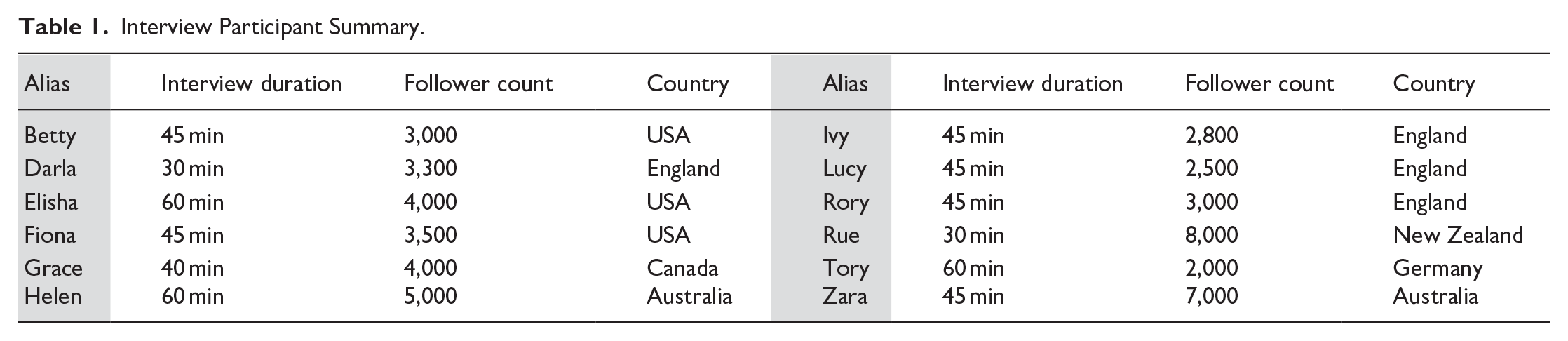
The second stage of this study comprised interviews with influencers, supplementing covert participant observation (Roulet et al., 2017). Qualitative interviews were used to select specific participants to ensure data most relevant to the research questions (Palinkas et al., 2015). The initial set of influencers was identified by searching relevant hashtags on Instagram. These initial micro-influencers were selected based on criteria including follower counts between 1k and 10k, active audience engagement and consistent beauty/skincare content. Interviews were conducted online via Zoom. Snowball sampling was then used, with each interviewee recommending other suitable micro-influencers. This process continued until theoretical saturation was reached, requiring 12 interviews. All participants were active in the Instagram beauty community, making snowball sampling suitable (Lune & Berg, 2017). Participants were assigned aliases for confidentiality (cf. Table 1), were informed about the research procedure and consented to participate. Before each interview, participants were given the option to be recorded. All participants who agreed to be recorded provided their informed consent, which was documented before the interview commenced. Interviews were recorded, transcribed verbatim and analysed using NVivo version 14. This study received ethics approval from the University of Auckland Human Participants Ethics Committee.
Interview Participant Summary.

We follow the approach of Langley (1999) as the standard in contemporary qualitative analysis, conducting our analysis in multiple stages and moving iteratively between the data, emergent ideas and the literature to aid theory development (Arnould & Wallendorf, 1994). This process, called ‘inspiration’ (Langley, 1999), involves drawing inferences from our observational data to hold up to credible theoretical claims. This requires the researchers to tread thoughtfully: observing, deliberating and returning to the fieldwork to verify their conclusions (Vila et al., 2020). We proceeded until a more profound and empirically grounded explanation of how people refer to and practice their involvement with the skincare and beauty culture on Instagram emerged (Arnould & Wallendorf, 1994). The thematic analysis of the data involved closely reading the coded data and becoming familiar with the range of content and ideas discussed. Data was split into several themes that emerged (Creswell & Creswell, 2017). As this study is inductive, a qualitative research data analysis process has been implemented (Creswell & Creswell, 2017). The researchers then created categories and common themes identified within the data during analysis. These initial codes were then collated into broader patterns of meaning, with themes refined and re-evaluated as new insights emerged from the data. This iterative process allowed us to create a clear set of themes underpinning our analysis. To ensure the validity and reliability of the coding process, a detailed coding manual was developed, outlining the criteria for each narrative strategy. To ensure inter-coder reliability, a second coder reviewed 50 coded posts of the dataset, with any discrepancies discussed and resolved by the authors.
Results
Engaging with followers: The concept of stickiness
The concept of ‘stickiness’ is critical to effective digital influencing. It refers to the ability of content to leave a lasting impression, to resonate deeply and to be remembered by the audience. Stickiness encompasses content, customisation, real-time interaction and site promotion, emphasising an individual or artefact’s ability to retain and drive users further into the content (Hu et al., 2020). It is not about catching the viewer’s attention momentarily but about creating content that endures in their memory, influencing their thoughts, feelings and actions long after the initial engagement. In mobile short-form video shopping, content and relationship quality have been identified as significant influencers of customer stickiness, further emphasising the importance of quality content in retaining audience attention (Liu & Zheng, 2024). Analysing captions provides a tangible means to discern these ‘sticky’ qualities within influencer narratives. Through our analysis, we identified four key narrative strategies used by Instagram influencers: educating, evaluating, advising and entertaining.
Educating strategy
The educating strategy involves providing followers with valuable information, often related to products, services, or general knowledge in a specific niche. This strategy helps build trust and positions the influencer as an expert. Our analysis revealed that an educating strategy was the most prevalent narrative technique, where influencers guide their audience with insights into the intricacies of products. Captions that aim primarily to inform the audience fall into this category.
 I’ve really put more effort into running this year with two 10k races so far, I know 10k isn’t far for some people, but they’ve been huge achievements for this couch potato and I’m pleased to keep the running up! Sometimes we need to shout about our successes you know
  AD – PR, opinions are always my own’.
An educating strategy is evident in these captions, as influencers emphasise skincare routines, daily sunscreen use and personal achievements while adding a relatable, personal touch. This blend of information and authenticity ensures the educational message is understood, retained, and ‘sticky’. Liu and Zheng (2024) argue that educational content creates stickiness by establishing multiple cognitive touchpoints through sequential, step-by-step learning that prompts content saves and revisits. Lou and Yuan (2019) further note that such demonstrations of expertise build long-term follower loyalty and stronger community engagement, enhancing messaging efficacy. This intimate knowledge transfer boosts perceived accessibility and authenticity (D. Y. Kim & Kim, 2021), increases trust between influencers and followers (Lee & Eastin, 2021) and fosters enduring relationships with the featured brand (Jun & Yi, 2021).
Evaluating strategy
An evaluating strategy offers assessments of products, services or experiences from an influencer’s experience. This narrative is not just about endorsing a product; it is about critically assessing it, juxtaposing personal experiences against brand claims and delivering an impartial evaluation. Captions that provide a balanced review or critique of a product or experience fall into this category.
An evaluating strategy is evident in these captions, which provide balanced reviews by highlighting both pros and cons. This honest feedback is seen as genuine, boosting content stickiness and fostering trust (Koay et al., 2023). Authenticity markers – such as vulnerability, behind-the-scenes insights and personal growth narratives – enhance engagement and message retention (Holiday et al., 2023; Park et al., 2021). These personal stories evoke emotional responses that promote sharing and long-term recall (Berger & Milkman, 2012). As Jun and Yi (2021) note, influencers driven by an internal desire to share experiences, rather than solely by commercial incentives, further strengthen these emotional bonds. Consequently, influencers employing an evaluating strategy post genuine opinions (D. Y. Kim & Kim, 2021), thereby increasing messaging stickiness through enhanced emotional connections (Liu & Zheng, 2024).
Advising strategy
Influencers are often considered knowledgeable in specific fields or topics and their suggestions or advice are highly valued by their audience. In the digital realm, influencers have emerged as trusted advisors, guiding their followers through the maze of products and brands. This category includes captions that offer specific recommendations or guidance based on personal experience or expertise.
 I cut
I cut  head and put in the water for a while so Ara can see how it grows. He was quite fascinated with the process and then we decided to plant it and see what would happen. Skincare jars are great for planting seeds or small plants before transferring to the garden. Just one great way how they can be reused. Do you reuse your skincare jars? Any creative tip you want to share?’
The advising strategy is evident in these captions. The influencers provide specific product recommendations or eco-friendly tips. When followers receive actionable advice they can easily follow, the content becomes more memorable, enhancing its stickiness (Vanninen et al., 2023). Additionally, Van-Tien Dao et al. (2014) note that this type of informative, advisory-type content positively influences perceptions of influencer information value, brand attitude and brand awareness, ultimately leading to intention to purchase the featured product or brand. This informative content has also been shown to lead followers to perceive influencers as ‘human brands’, thus further establishing a more ‘sticky’ social bond (Ki et al., 2020).
Entertaining strategy
Many interviewees pointed out that they tried to keep their content fun and light-hearted to amuse their followers. In the vast landscape of digital content, influencers have recognised the importance of informing and entertaining their audience. The entertaining narrative is crafted to captivate, amuse and provide a brief respite from the mundane. Captions that captivate the audience through humour, playfulness, or storytelling fall into this category.
 The duo of your dreams, especially for my oily gals, is right here! The oh so iconic @glowrecipe Strawberry Blur Drops and Watermelon Glow Mist – guaranteed to leave your skin feeling refreshed and glowing, while keeping it shine-free and blurring those pores I love using the Blur Drops as a primer to help reduce the appearance of my larger pores and then going in with the Watermelon Mist just after I apply powder to bring life and hydration back to the skin
  My skin looks healthy and radiant without any extra oiliness and my makeup always looks flawless!! You’ll fall in love with this combo, trust me!
  Have you tried either of these products?
  *press samples – brand ambassador’
The entertaining strategy is at play in these captions. Influencers use playful tones, humour and relatable anecdotes to captivate their audience. This engaging content elicits positive emotional responses that boost recall and enhance stickiness (Gross et al., 2023). High-arousal language further increases engagement, making micro-influencers appear more trustworthy (Rizzo et al., 2024). Pogacar et al. (2018) note that genuine enthusiasm enhances a message’s attractiveness and credibility. These personal touches capture attention, evoke strong emotional responses and help followers temporarily escape their daily lives (Gan & Wang, 2015; Lou & Yuan, 2019). Moreover, Lou and Yuan (2019) find that, especially among teenage followers, the entertainment value of influencer content strengthens parasocial relationships and overall message stickiness (Yang & Ha, 2021).
To distinguish engaging and non-engaging posts, we used a set of predefined metrics, including the number of likes, comments, shares and follower growth associated with each post. These metrics provided a quantifiable measure of audience interaction and engagement. To ensure a comprehensive analysis, we also assessed the captions qualitatively, evaluating the content’s tone, relatability and emotional appeal. We encountered instances of conceptual overlap where posts could fit into multiple categories. For example, a post might be both humorous and educational or advisory. In such cases, we categorised the post based on the predominant theme while noting the secondary characteristics. This nuanced categorisation helped to represent the multifaceted nature of influencer content accurately.
Delving deeper: Influencers’ reflections on narrative strategies
The insights from the initial data analysis phase served as a foundation for the subsequent stage of our study. We delved deeper into understanding the influencers’ perspective, aiming to corroborate the strategies and themes identified earlier. We conducted a series of interviews with active members of the Instagram beauty community, seeking an understanding of the content strategies they believe to increase their follower engagement. Through this approach, we sought to bridge the gap between the narratives portrayed in captions and the influencers’ intentional strategies.
‘Educating’ strategy
Several interviewees corroborated this strategy by mentioning its significance in building trust and credibility with their audience. Influencers emphasised that they could position themselves as experts in the field by sharing knowledgeable content related to beauty and skincare. This approach fostered a sense of reliability and encouraged followers to engage more actively, seeking advice and recommendations. The influencers noted that this strategy was particularly effective in creating a community of loyal followers who valued the educational aspect of the content. For instance, Darla emphasises the importance of understanding the essence of the products she promotes. She notes, ‘I follow other accounts for things like ingredient spotlights which I always find really fascinating. [. . .] Like, yes, we use all this stuff, but what do the ingredients actually do? . . .got snapshots of, you know, this is the ingredient, this is what it does. And then these are products that you could use like that’. Echoing this sentiment, Elisha finds herself in the role of an impromptu educator, often fielding questions from curious friends. She shares, ‘friends that are [. . .], oh how do you do this? Or what is that? [. . .] And so I started, you know, thinking of it as more like an educational thing’.
Influencers like Ivy become real-life beauty consultants for their circle. She recounts, ‘But they always are asking me like “Oh my God, what’s good? Like your makeup looks fantastic, like how do you blend your eye shadow? How do you, like your skin is glowing! Like what did you do?”’ Highlighting the dual role of influencers, Jade underscores the blend of authenticity and information in their content. She observes, ‘I know that I’ve peppered you with a lot of questions about, you know which blush and how do I use that? And how do I use that? And You have a lot of educational information to share. So, your (get ready with me) isn’t just authentically sharing yourself, but you’ve also got a lot of real informational value there!’ Rue captures the essence of the educational strategy, pointing out the balance influencers strike. She believes, ‘I think people watch them and they feel educated but in a way that doesn’t feel pretentious or stiff’.
These narratives paint a vivid picture of the digital influencer landscape. While they entertain and engage, influencers also take on the mantle of educators, ensuring that their followers are not just passive consumers but well-informed and empowered individuals.
‘Evaluating’ strategy
The evaluating strategy is essential for sharing insights from both influencers’ personal experiences and those of their followers with various products. Interviewees noted that this approach allows for honest reviews and reflections on product quality, fostering transparency and authenticity. By sharing their evaluations, influencers build trust, enable informed decision-making and stimulate dialogue with their audience. This narrative style not only boosts engagement through open discussions but also reinforces the influencer’s credibility and reliability.
Darla captures the essence of this evaluative approach, noting, ‘I could say I love something, and then someone gets it and tries it, and they may absolutely hate it. And so, it’s yeah, just it’s sharing experiences there, and an important, I think whether it’s good or bad for people to see it just as that experience, it doesn’t mean the product is good or bad, it just means it was good or bad for me’. This sentiment of the influencer as a discerning consumer is echoed by Betty, who says, ‘[I] think a lot of people love to just see the tea that I do spill because I’m a consumer at the end of the day’.
The evaluative strategy is deeply intertwined with authenticity. Lucy emphasises her intention to remain genuine in her reviews, stating, ‘testing this & that product and those are the ingredients, and that’s what I like about it or whatever without saying, OK, this is going to save my life, and I love this so much’. Rory underscores the importance of trust, noting, ‘It’s most important that people trust me and that they believe if I share a product that I actually like and that I’m not just doing that because I want to earn money’. Zara emphasises transparency, saying she ‘will honestly share that with my followers and so I think they appreciate that as well with seeing the good and the bad, because you come across as more transparent and honest, which is the kind of main value of my page’.
Lastly, Grace delves into the nuances of PR [company] products and their impact on evaluations. She observes, ‘And if I’m going to rave about this $90.00 neck serum that I got from PR and tell you about it, you’re gonna trust me. But then you’re going to feel cheated because I got it [free] from PR. And so my bias is there, it really is. So, a lot of people on this platform don’t speak about the price point when they rave about something, especially when they’re saying oh, this is my new favourite. My Holy Grail! And it’s like over $100 for sure and they got in PR. Would you buy it again? It’s a lot of the times I ask myself that and I’m like no even if I were making six figures’. Together, these narratives paint a vivid picture of the evaluative strategy, emphasising the importance of authenticity, trust and transparency in the world of micro influencers.
‘Advising’ strategy
Influencers, perceived as knowledgeable in specific fields or topics, hold a significant position of trust and influence among consumers. This trust is pivotal, as it encourages followers to engage with the content and seek personalised advice, ultimately leading to a more dynamic relationship between the influencer and the audience.
Elisha captures the nuanced role of an influencer, reflecting on her influence within her community. She says, ‘Some people said, [. . .], I was considering getting this, I won’t get it then, but I’m also I often reply saying [. . .], this is just my experience that there are other people who absolutely love this. I always think it’s worth someone trying things out for themselves really, and that goes the same way I could say I love something and then someone gets it and tries it, and they may absolutely hate it’.
This sentiment of guiding followers, not just through endorsements but also through genuine advice, resonates with many influencers. Darla takes pride in her role, noting, ‘you know, [they] then went ahead and bought it or you know, and then people Oh my God like I love it, and that makes me feel great’. Similarly, Tory acknowledges her influence, stating, ‘I probably am an influencer because I am influencing people in their decision of buying products or not’. Betty highlights her advisory role among friends, sharing, ‘I’ve done that with some friends like hey I have some skincare and you know, I tell them what to do. This is a cleanser this has this in it. Use it a couple times a week’. Helen emphasises the importance of understanding product ingredients, saying, ‘things like ingredient spotlights which I always find really fascinating, right? Like yes we use all this stuff, but what do the ingredients actually do? Where they’ve got snapshots of, you know this is the ingredient, this is what it does. And then these are products that you could use like that’. Ivy underscores the importance of authenticity in advice: ‘. . . what I think is important to remember that you can also just share “Hey, I’m testing this & that product and those are the ingredients and that’s what I like about it or whatever without saying, OK, this is going to save my life and I love this so much”’. Together, these narratives underscore the pivotal role of influencers as advisors, emphasising the importance of authenticity, knowledge and genuine care in guiding their followers.
‘Entertaining’ strategy
Several interviewees underscored the significance of incorporating entertainment into their content strategy, acknowledging that it is a crucial driver for audience engagement and retention. By blending informative content with humour, creativity and relatability, influencers can capture their followers’ attention and foster a more enjoyable and immersive user experience (Ren et al., 2023).
Rory succinctly captures this sentiment, noting, ‘I’m hoping that I’m entertaining people because people don’t have that much time to be sitting on Instagram anymore like they were when we were locked down. So, when they see my quick skincare video or a quick makeup transition, it’s just a bit of fun, light-hearted fun that they can see, they can just watch, and that’s snappy’. Rue emphasises the importance of pacing, observing, ‘it helped me realise that people’s attention span is very, very short. So, . . . I’ve noticed how making my videos snappy and quick entertains people like my recent reels views have been over three thousand, four thousand a month’.
Betty brings a unique blend of nature and skincare to her content, sharing, ‘So, what stands out about my feed is that I really like to go outside and take nature photos and it blends my love of. . . geography and the environment with skincare and it’s an automatic amazing background’. Grace highlights the humorous side of her content, noting, ‘. . . all the kind of funny sides of that . . . and being honest with the products as well’. Similarly, Elisha speaks to the aesthetic and entertaining aspects of her content, saying, ‘like the skincare photography. . . Sometimes it’s hard to find something that’s different or something that looks really good with the skincare photography. I enjoy making the makeup reels. I feel like that comes really natural for me and I like all the transitions I do. So. . ., I’d never want . . .. to be a makeup artist. So, my videos aren’t where I show how to apply things. It’s more of a fun transition into, you know, I look terrible . . . and things like that’.
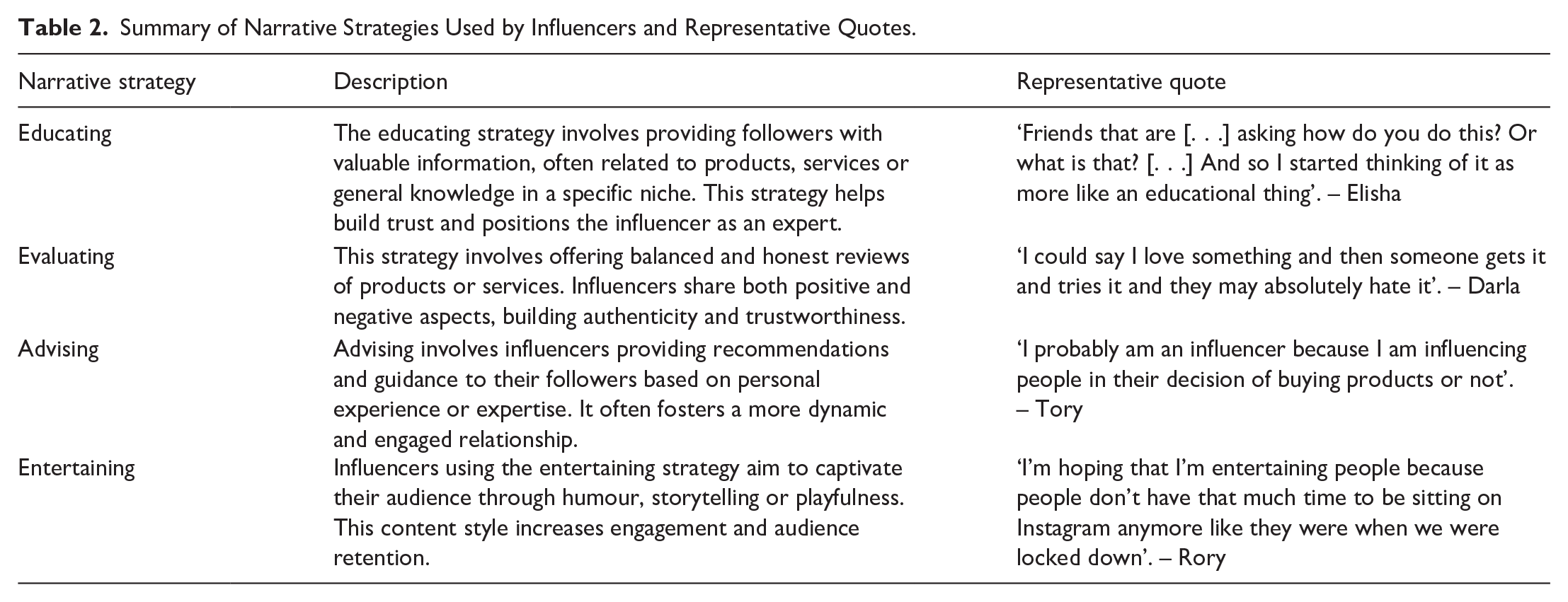
The art of digital influencing is not just about sharing information; it is about crafting narratives that resonate, engage and remain memorable. This attentional focus is critical to the viewer’s ability to focus on the narrative (Busselle & Bilandzic, 2009). As the narratives from various influencers underscore, there is a commitment to inform and entertain. This balance recognises the value of engagement, amusement and creativity in building and sustaining a digital audience, as illustrated in Figure 1. However, what makes these narratives genuinely impactful? The answer lies in the concept of stickiness (Table 2).

Comparing traditional theories and micro-influencer dynamics.
Summary of Narrative Strategies Used by Influencers and Representative Quotes.
Discussion
In the digital realm, influencers shape communities by leveraging narrative strategies that resonate with their audiences. Our study shows that micro-influencers engage followers on Instagram through a blend of educating, evaluating, advising and entertaining approaches. They draw on personal and professional experiences to build relatability and rapidly forge one-sided parasocial bonds – unlike traditional relationships that develop through gradual, mutual self-disclosure.
Effective beauty micro-influencers, as opinion leaders, adopt these narrative strategies to help followers interpret product messages. While social penetration theory traditionally emphasises gradual self-disclosure, our findings reveal that influencers employ an accelerated, curated approach that quickly builds trust and emotional connection (Lee & Eastin, 2021; Lee et al., 2022; Zhou et al., 2021). The perceived usefulness of their content enhances credibility and ‘stickiness’, facilitating product comparison, decision-making and efficient interactions (Wu et al., 2020). Moreover, two-step flow theory clarifies that these influencers not only transmit but also interpret and adapt messages (Katz & Lazarsfeld, 1955; Loeper et al., 2014), a process strengthened by their authentic, engaged follower groups (Brewster & Lyu, 2020).
In line with social penetration theory, our study also shows how younger influencers, particularly Gen Z, were more comfortable sharing personal stories as part of their narrative strategy, whereas older influencers were more cautious about the level of personal information they disclosed. This suggests a generational divide in applying narrative strategies
Our study also demonstrates the importance of the ‘stickiness’ of content, where emotional and informative content can better capture audiences’ attention (Kim & Song, 2016), and the concept of ‘infotainment’ is important to create more memorable content. We have also shown that influencers adapt their content to meet algorithmic demands, which can create a ‘content bubble’ where content is optimised for reach rather than genuine self-expression. This adaptation can introduce a tension between maximising engagement and preserving narrative authenticity, as influencers may be compelled to conform to platform trends at the expense of their unique, personal storytelling (Cotter, 2019; Richter & Ye, 2023).
Theoretical contributions
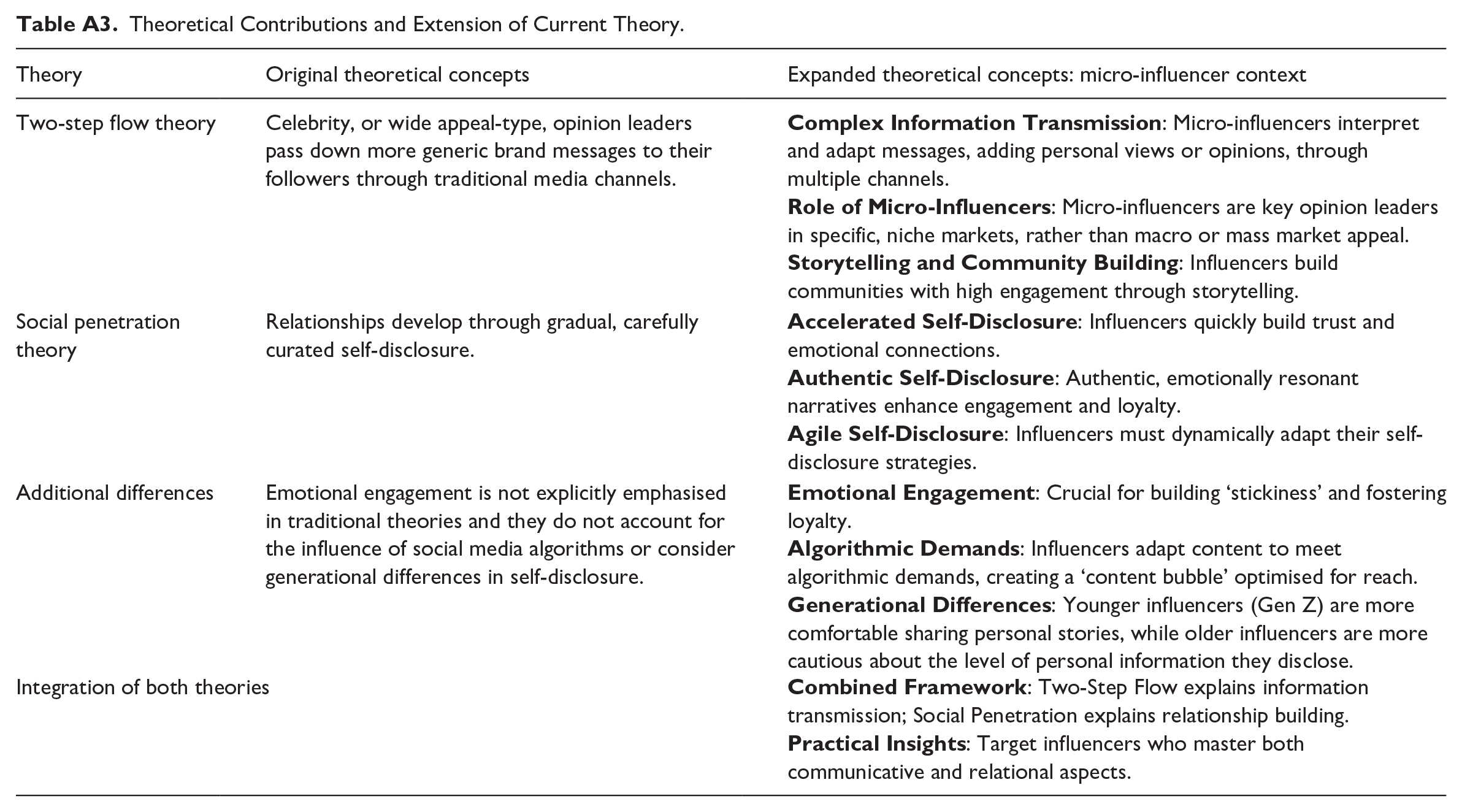
While two-step flow theory and social penetration theory have been used to understand the dynamics of online influence, our study adds several key nuances to these frameworks (Table A3). For example, while these theories were initially used to analyse traditional media and interpersonal processes, recent scholarship shows they still have relevance today. In particular, our research suggests that the traditional notion of gradual, mutual self-disclosure must be reconceptualised in the digital age, where influencers’ disclosures are rapid, one-sided and strategically crafted to quickly engender a sense of intimacy. First, our research extends two-step flow theory by demonstrating how micro-influencers act as opinion leaders within a specific niche market on Instagram, going beyond previous studies that focused more on celebrities or macro-influencers (Brewster & Lyu, 2020; Hu et al., 2020; Ouvrein et al., 2021). However, it is important to acknowledge that the two-step flow is more complex than it originally was (Carr & Hayes, 2014; Thorson & Wells, 2016). Micro-influencers do not simply ‘pass down’ brand messages – rather, they also interpret and adapt them – and they are doing so within a complex modern media environment. They may add their own personal views and spins, which means the information then has multiple different sources. This study supports previous research about the role of influencers as opinion leaders but highlights the importance of micro-influencers as equally important opinion leaders, rather than only focusing on macro-influencers or celebrities, thus showing a new type of influencer. Second, while previous research has used chiefly two-step flow theory to understand the role of information transmission (Uzunoğlu & Kip, 2014), our research shows that they not only pass down brand messages but also act as storytellers who are building communities with strong levels of audience engagement. Digital affordances, such as frequent content updates and algorithmic curation, further accelerate the flow of information, making self-disclosure a rapid, calculated process rather than a gradual evolution.
Furthermore, our study goes beyond simply looking at the influencers’ role as communicators and shows how they foster relationships with their audience. This adds to the conceptual understanding of how the relationship between influencer and follower is more than a simple relay of information. Third, our study enhances social penetration theory by highlighting the importance of authentic self-disclosure in building ‘stickiness’. While SPT argues that relationships develop through self-disclosure (Altman & Taylor, 1987; J. Kim & Song, 2016), our study demonstrates that the specific type and quality of the disclosure, as well as the narrative approach used, influences the engagement, loyalty and ‘stickiness’ of the audience (Lee & Eastin, 2021; Lee et al., 2022). Furthermore, micro-influencers must adopt an agile approach to self-disclosure, as trust is easily broken, and the parasocial relationship is easy to end with a simple ‘unfollow’ (Balaban et al., 2022). Finally, we have provided an understanding of how both theories can work together, where two-step flow shows the pathway for information transmission, and social penetration explains how self-disclosure builds the personal relationships that can lead to ‘stickiness’. Therefore, our work extends both theories by showing the important and nuanced ways in which they operate and how they work in unison in the context of influencer marketing on Instagram.
Practical implications
Our findings offer several practical implications for influencers, brands, consumers and agencies involved in influencer marketing.
For Influencers: To foster genuine engagement and ‘stickiness’, micro-influencers should prioritise creating authentic and emotionally resonant narratives, which incorporate elements of education, evaluation and advising. This means that they should focus on building relationships through self-disclosure and by creating high-quality content with value for the audience rather than purely focusing on product promotion. Furthermore, influencers should select brand partnerships that align with their values and tastes to preserve authenticity. Given the rapid and strategic nature of digital self-disclosure, influencers must also be mindful that maintaining authenticity is crucial, as trust can be quickly eroded in the online space.
For Brands: Brand social media managers should recognise the value of providing influencers with creative freedom and trust them to choose the most appropriate methods for creating engaging content. Allowing influencers to choose products that align with their preferences and to express their unique voices is key to creating personalised, relatable and authentic content. Over-managing the creative process can erode the influencer’s intrinsic motivation and dampen the narrative’s authenticity (Audrezet et al., 2020). Furthermore, brands should seek out and work with micro-influencers who have cultivated an engaged and loyal audience, who are clearly using strategic storytelling and who have the ability to offer high-quality and engaging content rather than simply focusing on follower numbers.
For Consumers: Consumers should approach influencer content critically, being mindful of potential biases and undisclosed promotions. Consumers should seek out influencers who are transparent about their sponsorships and decide how to engage based on their own critical interpretation of the content, as it is not always impartial. This reflects that our findings suggest that parasocial relationships, while important, should be formed based on transparency rather than on a one-sided view of what the influencer wants to present.
For Agencies: Agencies working with influencers should focus on building long-term relationships based on trust and authenticity between influencers and the brands they work with while remaining aware of the importance of ethical content creation. Agencies should select influencers based not only on follower numbers but also on engagement levels and how well their values align with the brand they represent. Agencies should also advise both brands and influencers on how to achieve transparency and build audience trust. This links to our findings about ethical transparency and the need for relationships to be based on authenticity rather than pure financial gain.
Conclusions and future research directions
This research provides valuable insights into how micro-influencers use narrative strategies on Instagram to create audience ‘stickiness’ through rapid, strategically curated self-disclosure. Our findings extend traditional theories – such as social penetration theory and Two-Step Flow Theory – by illustrating that in digital contexts, relationship-building is accelerated and largely one-sided. Influencers quickly forge parasocial bonds that foster deeper engagement and trust, challenging the gradual, reciprocal self-disclosure assumed in traditional interpersonal models.
The theoretical contributions of our study are twofold. First, by adapting social penetration theory to the digital arena, we demonstrate that influencers’ rapid, curated narratives diverge from the slow evolution of traditional relationships. Second, our application of Two-Step Flow Theory reveals that micro-influencers not only transmit brand messages but also reinterpret and personalise them within a complex, multi-directional communication environment. Together, these insights enrich our understanding of digital influence by highlighting the dynamic interplay between content creation, technology and audience engagement.
Practically, our findings offer clear recommendations. Influencers should balance algorithm-driven content optimisation with authentic self-expression to maintain narrative authenticity. Brands can leverage these insights by partnering with micro-influencers who demonstrate genuine storytelling and strong audience engagement rather than relying solely on follower numbers. Additionally, agencies and marketers should recognise the importance of nuanced digital storytelling in building trust and loyalty.
Future research should broaden the scope of these findings by exploring additional social media platforms, diverse narrative formats (such as video) and different influencer categories (including macro and nano-influencers). Incorporating more comprehensive quantitative measures and diverse analytical techniques – as well as examining the technological enablers and constraints of digital storytelling – will further clarify the evolving dynamics of influencer marketing.
Footnotes
Appendix
Theoretical Contributions and Extension of Current Theory.
| Theory | Original theoretical concepts | Expanded theoretical concepts: micro-influencer context |
|---|---|---|
| Two-step flow theory | Celebrity, or wide appeal-type, opinion leaders pass down more generic brand messages to their followers through traditional media channels. | |
| Social penetration theory | Relationships develop through gradual, carefully curated self-disclosure. | |
| Additional differences | Emotional engagement is not explicitly emphasised in traditional theories and they do not account for the influence of social media algorithms or consider generational differences in self-disclosure. | |
| Integration of both theories | ||
Declaration of conflicting interests
The author(s) declared no potential conflicts of interest with respect to the research authorship, and/or publication of this article.
Ethics approval
This study has been granted permission of the ethics committee of the University of Auckland with the approval number: UAHPEC26898
Funding
The author(s) received no financial support for the research, authorship and/or publication of this article.
