



Abstract
Social media influencers (SMIs) present an effective marketing channel for brands because they possess “sticky” followers. However, little is known about how the characteristics of an SMI contribute to their stickiness, as reflected in the length of association and frequency of interaction with followers. This two-study research (NStudy 1 = 417 and NStudy 2 = 249) is the first to investigate the drivers of online stickiness of SMIs through the lens of parasocial interaction (PSI) and source credibility alongside being the first to offer empirical data regarding financial influencers. The results reveal that PSI mediates the influence of source credibility dimensions (i.e. physical attractiveness, social attractiveness, attitude homophily, expertise, and trustworthiness) on stickiness. The perceived trustworthiness of the SMI also partially mediated the influence of the other four dimensions on PSI. These findings extend the literature on stickiness by showing how different personal characteristics help to build trust, create a psychological bond, and contribute to an enduring relationship between SMIs and their followers.
Keywords
Introduction
Globally, the number of social media users is projected to reach approximately 6 billion by 2027, accounting over 50% of the global population (Statista, 2022; Worldometer, 2020). The growth of social media consumption has given rise to a new breed of celebrity; commonly known as social media influencers (SMIs), these celebrities earn their fame by disseminating self-curated content on social media platforms (e.g. YouTube, Instagram, and/or TikTok) and build up a sizeable followership, exerting significant influence over their followers (Khamis et al., 2017; Weismueller et al., 2020). The influence extends beyond mere intent to purchase products endorsed by SMIs and engage in sponsored content, but also to “stick” to SMIs for credible information or well-being (Lu & Chen, 2023; Madina & Kim, 2021). Compared to traditional celebrities (e.g. singers, actors, or TV hosts) with large online following, SMIs are perceived as more relatable, authentic, and trustworthy (Kapitan et al., 2022; Sundermann & Raabe, 2019). According to Influencer Marketing Hub (2024), the investment in influencer marketing is expected to reach approximately $22.2 billion by 2025 and remain as a mainstream marketing practice. More specifically, 85% of their survey respondents (i.e. marketing agencies, brands, and relevant professionals) regard influencer marketing as an effective form of marketing and approximately 25% intend to spend more than 40% of their entire marketing budget on influencer campaigns.
Unlike traditional marketing channels that vie for a share of attention in an increasingly cluttered marketplace, SMIs offer access to a devoted community of followers. Ge and Gretzel (2018) and Lou et al. (2019) highlight that these followers engage more frequently with SMIs and also demonstrate longer interaction durations compared to average online users . Accordingly, the value of SMIs as a marketing channel rests in the reach of their influence alongside their bonds with followers, which can reinforce followers’ stickiness (L. Hu et al., 2020; Lu & Chen, 2023).
Stickiness is a strong indicator of successfulness of social media marketing, such as attracting new users and retaining existing ones (Zott et al., 2000), completing transactions (J. C.-C. Lin, 2007), (re-)purchase intentions (Hsu & Lin, 2016), stimulating word-of-mouth activities (Zhang et al., 2017), and preventing users from switching to alternative entities (W.-T. Wang et al., 2016). Essentially, stickiness “reveals and is part of loyalty” (Khalifa et al., 2002, p. 3). However, most studies dissect stickiness through retailing websites (Kumar Roy et al., 2014), microblog platforms (Zhang et al., 2017), and mobile apps (Lien et al., 2017), which lack theoretical grounds on human–human interactions.
Similar to human-platform relationships, follower–influencer relationships should result in followers’ stickiness to SMIs for several reasons. First, the proliferation of new influencers requires SMIs to be competent in expanding their followership and in retaining and bonding with followers (Abidin, 2015). Second, many SMIs have diversified their revenue channels and created accounts on social platforms to enhance stickiness (Gao et al., 2022). Besides, SMIs also utilize premium subscriptions, a profitable form of stickiness that increases following length and viewing frequency . For example, YouTubers can encourage viewers to donate to their channels (McIntyre, 2014) or Instagram (2022) users can earn monthly incomes via Instagram Subscriptions.
Differently, these human-human relationships encounter more complex psychological mechanisms than human-platform relationships. L. Hu et al. (2020) argue that the key difference between stickiness to SMIs versus websites lies in “the inherent nature of various interpersonal interactions” (p. 1). Via these interpersonal interactions, follower-influencer relationships mix friendship and fanship, in which SMIs need to make their followers feel relatable as friends but also aspirational as opinion leaders (Martensen et al., 2018). However, the mechanism underlying followers’ stickiness to SMIs is still underexplored. Only when followers become loyal and sticky to an SMI that their value as a marketing channel can be realized. The lack of clarity about what contributes to successful influencer-follower relationships has also led to intense competition for the relatively small group of SMIs with demonstrated stickiness, allowing them to extract significant rent from their celebrity status (Chan, 2022; Kelly, 2020). Our study seeks to investigate the following research question:
What characteristics drive followers’ stickiness to their favorite influencers?
Our study also intends to make three specific contributions. First, we will unpack the influencer–follower relationship using parasocial interaction (PSI) theory (Horton & Wohl, 1956), considering related influencer characteristics. PSI has been widely used within traditional media such as TV and radio to explain how a media celebrity’s popularity can influence the intentions and behavior of audiences (Hartmann & Goldhoorn, 2011; Rubin & Step, 2000). Empirical research has demonstrated a strong and persistent link between PSI and positive beliefs about the celebrity (Gong & Li, 2017), positive intentions regarding their recommendations and endorsements (Hwang & Zhang, 2018), and impulsive buying behavior (Q. Hu et al., 2023). We are among the first to apply this theory to examine how PSI and characteristics of an online influencer can drive stickiness and loyalty. The salient factor that distinguishes SMIs from other marketing channels (e.g. traditional celebrities) lies in the virtual bond with followers; therefore, a more comprehensive understanding of elements driving influencer-follower relationships will help brand and marketing managers evaluate the marketing potentials of SMIs more rigorously. Being aware of these determinants, influencers can strategically foster the connection with their audiences and enhance their stickiness, which then increases their marketing values for collaborations.
Second, though prior research has established the importance of expertise and trustworthiness as drivers of PSI, the impact of other known dimensions of credibility such as physical attractiveness, social likeability, and homophily, are unclear (Lou & Kim, 2019; S. Yuan & Lou, 2020). This research will expand the conceptualization of source credibility in regards to PSI and explore how additional dimensions of source credibility indirectly impact stickiness. This is especially important for influencers and brands. For example, Fu et al. (2020) found that social interactional factors (i.e. perceived similarity, familiarity, and expertise) are positively associated with social influence and information quality, resulting in Facebook users’ online social shopping intention.
Our final contribution clarifies the operationalization of stickiness within social media marketing and interactive communications. Current studies on influencer stickiness have conceptualized it through either (i) the length of the influencer-follower relationship, (ii) the frequency of visiting the influencer profiles, or (iii) as an amalgamation of the two. As there appear to be inconsistent findings, our study will advance a two-dimensional conceptualization of stickiness. This will aid in understanding how the two aspects contribute to driving stickiness. The results aid marketing managers in quantifying their brand stickiness with target customers and then devise corresponding features to enhance it. The extant studies have consistently proven the association between users’ stickiness to a website or an application and increased profitability (Ingsriswang & Forgionne, 2002; Lien et al., 2017; L. Lin et al., 2010).
Conceptual development
Parasocial interaction theory
“Parasocial interaction” was first introduced by Horton and Wohl (1956) to explain the perceived connection between TV audiences and celebrities. Rubin et al. (1985) conceptualized PSI as an interpersonal engagement between media users and their media consumption, which can be manifested in various forms, including “seeking guidance from a media persona, seeing media personalities as friends, imagining being part of a favorite program’s social world, and desiring to meet media performers” (p. 156). Although this interpersonal interaction is one-sided, it may be perceived as interactive even if the reciprocity is only imagined (Perse & Rubin, 1989; Stever & Lawson, 2013). Over time, increased exposure to celebrities leads some media consumers to believe that they know the figures personally, seeing them as close friends based on illusionary intimacy (Tukachinsky et al., 2020).
In numerous aspects, PSI resembles real interpersonal interactions. These imagined relationships are voluntary, provide a sense of companionship, and reinforce social appeal (Ballantine & Martin, 2005). Furthermore, both relationship types grow when the sense of uncertainty is reduced; and the more time that an audience spends with a media personality the stronger the sense of closeness grows, contributing to audience commitment and the perception of intimacy (E. L. Cohen & Hoffner, 2016; Giles, 2002).
Individuals often engage in parasocial experiences to satisfy their psychological needs. First, PSI can help combat loneliness and foster a sense of social connection. People turn to media figures as sources of companionship, particularly when they lack close relationships in their personal lives (Rubin et al., 1985; Q. Wang et al., 2008). Second, audience members may subconsciously engage in parasocial experiences due to their attachment styles, driven by a need for intimacy and connection. When these intimacy needs are unmet in life, people tend to seek surrogate intimacy, which media personalities deliberately create via conversational gestures or blending with the audience (Atad & Cohen, 2024; Tukachinsky et al., 2020). Third, the need to belong also drives parasocial engagement, especially on social media platforms (Aw & Labrecque, 2020). While attachment styles focus on the need to bond with another individual, the need to belong focuses more on belonging to a group (Escalas & Bettman, 2017). Seeking out parasocial experiences via social media platforms appears to be more common among those with higher belonging needs.
The application of PSI has expanded beyond traditional mass media to the online environment. Research has examined this application to the online relationship between athletes and their fans (Frederick et al., 2012), interactions between online visitors and websites (Men & Tsai, 2013), the effectiveness of online political persuasion (Thorson & Rodgers, 2006), and the readership of popular blogs and online magazine (Colliander & Dahlén, 2011). The study of PSI with regards to social media platforms has also seen increased interest; however, the research stream has mostly been associated with the impact of PSI on brand level outcomes. For instance, PSI was found to influence the cultivation of consumer-brand relationships (Labrecque, 2014), loyalty to networking sites and brands (Tsiotsou, 2015), and positive consumer behaviors (Liu et al., 2019).
We build on and extend earlier studies by examining PSI at the influencer-follower relationship level within social media platforms. Social media platforms differ from traditional media as they enable two-way communication (Kaplan & Haenlein, 2010). Russo et al. (2008) highlighted this difference when defining social media as facilitating “online communication, networking, and/or collaboration” (p. 22). The potential for social connectedness is reinforced on these platforms through symmetrical and bilateral communication and features such as commenting and live streaming. Social media platforms also enable individuals to communicate and disseminate messages to a large number of people simultaneously, making them particularly useful as a vehicle for generating engagement (Appel et al., 2020; Walther et al., 2010). Social media features are thus particularly conducive to the development of PSI between SMIs and their followers.
Prior research has already shown how SMIs on platforms such as YouTube and TikTok can stimulate PSI, even unintentionally, by addressing their followers directly and disseminating their messages in a colloquial and conversational style (Berryman & Kavka, 2017). The forged closeness prompts followers to have more online engagement with SMIs by “liking” videos, commenting and providing feedback, and even sharing content as part of their self-representation (Luoma-aho et al., 2019). These types of interactions significantly nurture the development of PSI between SMIs and their audience (Aleti et al., 2019; Reinikainen et al., 2020).
Social media platforms also contribute to PSI by displaying aspects of an SMI’s “real” life. Features such as live streaming allow celebrities to provide a glimpse into their personal lives and for them to express personal opinions (McLaughlin & Wohn, 2021; Nah, 2022). This helps to remove the restrictions of time and geography in the influencer-follower relationship, strengthening feelings of being connected to celebrities. Before the advent of social media, audiences could have very little, if any, direct contact with their favorite celebrities. Now, this has changed as platforms provide followers with unprecedented access and the possibility to genuinely connect with and become known to an SMI (Marôpo et al., 2020).
Even though some researchers have argued that communication via these platforms is mostly one-sided, lacking the intimacy of genuine bilateral communication, social media platforms still provide affordances for greater PSI in the influencer-follower relationship than traditional media (Chung & Cho, 2017; Stever & Lawson, 2013). Now, we will consider how two important antecedents of PSI (source credibility and trustworthiness) impact the influencer-follower relationship and the stickiness of this relationship. These associations and the related hypotheses are in Figure 1.
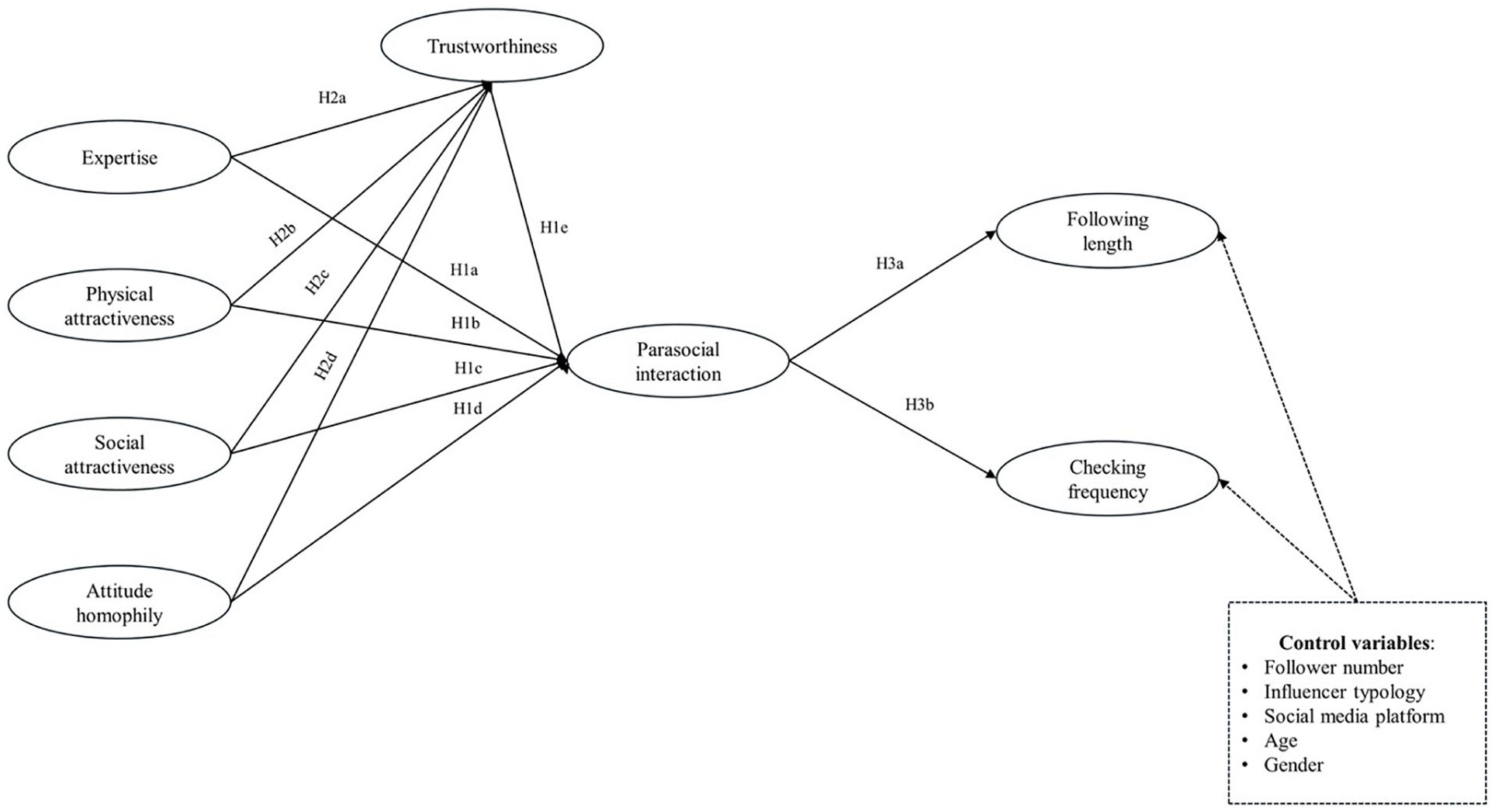
The conceptual framework.
Source credibility and parasocial interaction
Prior research into the antecedents of PSI can be grouped into two broad categories: (i) those that focus on the characteristics of the audience (Bond, 2018; Sun, 2010) and (ii) those that focus on the characteristics of the media personalities (Frederick et al., 2012; Sokolova & Perez, 2021). We are interested in the second category, particularly in the online context, is still understudied. Of the few studies that have focused on online media personalities, the main focus has been on understanding the influence of source credibility (P. L. Breves et al., 2019; Lou & Kim, 2019). Followers more likely interact with online influencers who are considered a source of credible information, particularly where communications are perceived as being fair and just (S. Yuan & Lou, 2020). This paper will extend this work by looking at an expanded set of source credibility dimensions.
According to Hovland and Weiss (1951), source credibility is crucial in the persuasiveness of both the source and message. Numerous researchers have defined source credibility in their own ways; some regard it as an attribute that influences how individuals perceive the quality of an argument (Metzger et al., 2003), while others conceptualize it as the communicator’s believability as perceived by receivers (Wilson & Sherrell, 1993). Source credibility is strongly associated with information credibility, which means that individuals are more likely to trust messages from a more credible source than a less reliable one (Grewal et al., 1994; Wathen & Burkell, 2002). On social media platforms, under the effect of selective exposure, Johnson and Kaye (2013) asserted that people will view or ignore content based on relative credibility.
Source credibility was originally conceptualized as comprising only two dimensions: expertise and trustworthiness (Hovland & Weiss, 1951). Expertise is a source’s proficiency or qualification to make certain assertions about a particular topic (McCroskey, 1966). Seiter and Gass (2004) posit that acquiring extensive knowledge in an area, being experienced in doing something, or holding a reliable title may all enhance the level of perceived expertise. The communicator’s actual expertise is not as important as the audience’s perception of their expertness (Pornpitakpan, 2004). As online SMIs typically devote themselves to building a perception of expertise in one main area, we would anticipate that they would be perceived as well-informed figures and credible sources of information in the eyes of followers, thus reinforcing PSI .
Trustworthiness is associated with the degree of perceived honesty, sincerity, and truthfulness (Giffin, 1967). Essentially, trustworthiness concerns the integrity of a source and whether followers believe that valid and honest information is being disseminated (McGinnies & Ward, 1980; Ohanian, 1990). Trustworthiness exerts a profound influence on both the persuasiveness of an influencer and the evaluation of credibility, particularly when an influencer presents their recommendations in authentic and real-life settings (Wiedmann & von Mettenheim, 2021). When SMIs are considered trustworthy, followers feel more motivated to communicate their own experiences and thoughts and to reach out and comment directly.
Expertise and trustworthiness alone, however, do not offer a nuanced conceptualization of source credibility. Notably, Ohanian (1990) argue that credibility is also influenced by the source’s relative attractiveness. Regarding interpersonal communication, Kiesler and Goldberg (1968) highlighted the multi-dimensional nature of attraction, from which McCroskey and McCain (1974) specifically categorized as “physical attraction,” “social attraction,” and “task attraction.” Task attraction pertains to an individual’s competence in completing tasks, often observed in task-oriented contexts such as workplaces or services (Neuliep et al., 2005; Zheng et al., 2020). Physical attraction concerns attraction in terms of dress and physical appearance, while social attraction signifies one’s tendency to be positively judged in social interaction (Zheng et al., 2020). As discussed, follower-influencer communication holds a lot of resemblance to social relationships rather task-oriented scenarios; therefore, we do not consider task attraction.
Physical attractiveness refers to an influencer’s charm and pleasing physical features as perceived by followers (Weismueller et al., 2020). Studies show that individuals more willingly accept information endorsed by attractive communicators, motivated by a desire to identify with such endorsers (Chaiken, 1979; Le & Hancer, 2021). Empirical studies show that good-looking celebrities receive more favorable judgments to their credibility compared to less physically attractive counterparts (Amos et al., 2008; Kahle & Homer, 1985). In a cross-cultural comparison of users’ perspectives on SMIs in Romania and Germany, Balaban and Mustățea (2019) discovered that both nationalities identified physical appeal as a key quality. Consequently, physical attractiveness has consistently emerged as a strong predictor of audiences’ behavioral intentions (e.g. purchase intent or recommendations), particularly in the fashion and beauty domains (Martensen et al., 2018; Sokolova & Kefi, 2020). Consistent with previous research, we argue that physical attractiveness drives followers to interact and forge a positive relationship with an influencer, which can be manifested by PSI.
Social attractiveness refers to an influencer’s likeability and the belief that a follower would choose the influencer as a friend in real life (Liu et al., 2019; McCroskey & McCain, 1974). Socially attractive persons are viewed as more persuasive, which adds to their credibility. This is because they have the ability to orient and alter audiences’ perceptions (McLaughlin & Wohn, 2021).
Along with physical attractiveness, social attractiveness has also been studied as another fundamental predictor of PSI in both traditional media and social media platforms . Within traditional media, Chaiken (1979) states that the audience tends to interact with more sociable personalities than less approachable ones when the same message is delivered. Within social media platforms, J. E. Lee and Watkins (2016) found physical and social attractiveness of YouTubers contributed to the strength of PSI, with social attractiveness holding a significant influence. Therefore, we argue that including social attractiveness will offer a more comprehensive understanding of PSI development in the influencer–follower relationship.
Marketing scholars have proposed to expand source credibility models with attitude homophily (Morimoto & La Ferle, 2008; Munnukka et al., 2016). According to social identity theory, people often distinguish between others based on whether they are in-group members (Billig & Tajfel, 1973; Stets & Burke, 2000). In-groups normally share certain similarities, particularly attitudes and values that motivate them to interact and communicate with each other. These similarities, also known as attitude homophily, originate from commonalities between in-group members in beliefs and interests (Eyal & Rubin, 2003). Ladhari et al. (2020) pointed out that among the four aspects of the homophily construct (i.e. attitude, value, background, and appearance), attitude and value could pose a significantly stronger influence on followers’ evaluations of their favorite vloggers, which could be explained by the high level of emotional attachment. Within peer endorsement, like influencer marketing, attitude homophily has also been consistently conducive to the perceived credibility of the endorsers, resulting in advertising effectiveness such as trust in branded posts and positive attitudes toward the advertisements (Munnukka et al., 2016; S. Yuan & Lou, 2020).
The similarities among individuals increase the likelihood and frequency of interaction. Eyal and Rubin (2003) argue that individuals tend to demonstrate and reinforce their beliefs through interactions with others who share their value systems. Concurrently, this shared value system also induces followers to feel more connected to an influencer, which then fosters a desire to interact more regularly. Therefore, evidence suggests that attitude homophily is positively associated with the strength of the influencer-follower relationship on social media platforms (Hsu, 2020; Masuda et al., 2022).
With the aforementioned reasons, we propose:
H1: Perceptions of an influencer’s (a) expertise, (b) trustworthiness, (c) physical attractiveness, (d) social attractiveness, and (e) attitude homophily are positively associated with parasocial interaction.
Trustworthiness and source credibility
Among the dimensions of source credibility, trustworthiness distinguishes itself as a higher-order predictor. According to Smith (1973), when a speaker is considered untrustworthy, their credibility will be considerably undermined regardless of other outstanding qualities. Similarly, Seiler and Kucza (2017) identified trustworthiness as the most influential factor in enhancing perceived credibility and was ultimately responsible for building positive attitudes and intentions toward a firm. Accordingly, we anticipate that trustworthiness will also partially mediate the influence of the other dimensions of source credibility on PSI regarding social media platforms. Preliminary support for this association is in the literature, with past studies finding a positive association between expertness and trustworthiness in a wide range of settings (Erdem & Swait, 2004; McGinnies & Ward, 1980).
Influencers with higher levels of physical attractiveness are also often regarded as being more trustworthy, irrespective of gender. Support for this association is argued to come from the halo effect, where an influencer’s personal characteristics substantially influence a follower’s trait-related inferences such as trustworthiness (Dion et al., 1972; Miller, 1970). Such findings accord well with experimental work across a range of settings, including advertising (Patzer, 1983), counseling (Cash et al., 1975), and political voting (Little et al., 2012). For social media platforms, physical attractiveness significantly impacts both the volume of interactions and subsequent evaluations of trust (Holland & Menzel Baker, 2001).
A strong correlation between a source’s trustworthiness and likeability has also been observed (Friedman et al., 1978). Likeability relates to the ability to attract new friends and create a sense of positivity among others. The association between trustworthiness and likability, framed as a type of social attractiveness, is based on stereotype content theory, which posits that likeability (warmth) is closely linked to trust (threat) perceptions (Fiske et al., 2002). According to Fiske (2015), when both likeability and trust are high, the source is viewed as more credible (admirable). Likewise, the more likable and credible the communicator, the more inclined the audience is to trust them and disclose their feelings and engage in an online relationship (Khodabandeh & Lindh, 2021).
Trust is also influenced by attitude homophily. Drawing on social cognitive theory, people are more easily influenced by social figures who bear similarities to themselves (Bandura, 1994). This similarity (homophily) is argued to induce a perception of trustworthiness as the source is viewed as understanding them, their circumstances, and their problems (Levine & Valle, 1975). Within advertising, similarity emerges from among the different attributes of celebrity endorsers as having the closest relationship with trustworthiness and is a key driver of positive brand attitudes and purchase intentions (Friedman et al., 1978; Um, 2008). A source’s trustworthiness is strongest when the audience perceives that the similarity extends to shared values. Shared values lead to personal identification with a source, where interpersonal barriers are lifted, comfort levels are boosted, and trustworthiness is enhanced .
Drawing on these, we propose:
H2: Perceptions of an influencer’s (a) expertise, (b) physical attractiveness, (c) social attractiveness, and (d) attitude homophily are positively associated with perceived trustworthiness.
Parasocial interaction and online stickiness
Online stickiness has received much attention in marketing (S. Kim et al., 2016; Kumar Roy et al., 2014) and information systems (Li et al., 2006; Werner et al., 2022). Typically, stickiness explains the relationship between a business and its online audiences/consumers. Within the business-to-consumer context, however, subtleties have emerged regarding the term “stickiness,” depending on the perspective taken. From a firm’s perspective, stickiness is “the ability to draw and retain customers” (Zott et al., 2000, p. 471), generating revenue or profit (Ingsriswang & Forgionne, 2002), or generating repeated visits (W.-T. Wang et al., 2016). From online consumers’ perspective, stickiness is their propensity to “stick around” and lengthen their visit to a particular website (Li et al., 2006). Instead of switching to alternative websites, users subconsciously rely on their particularly chosen websites as a favorite and reliable source of product information (Kumar Roy et al., 2014), communication (Hsu & Liao, 2014; Lien et al., 2017), and entertainment (Chiang & Hsiao, 2015).
We argue that PSI reinforces online stickiness. As PSI resembles real-life interpersonal interactions for social media followers, and the perceptions of the relationship between an influencer and follower (at least from the follower’s perspective) will deepen and progressively become more intimate, we would also anticipate a corresponding increase in online stickiness. Online stickiness can thus be defined as a follower’s willingness to stay connected to an SMI by regularly visiting and checking the influencer’s online accounts. This conceptualization of online stickiness complements L. Hu et al. (2020), who argued that sticky followers prolong their following length and loyalty to an influencer’s account. As PSI increases, followers are more likely to disclose their personal information to an influencer and engage in parasocial experiences, leading to greater loyalty (Forster, 2024).
This is not surprising, as social media platforms have attracted criticism for the way that they use psychology to design online experiences that increase online stickiness and loyalty (Schwär, 2021). The popular Netflix docudrama “Social Dilemma” portrayed how operant conditioning (design of rewards) and algorithmic profiling (targeting of rewards) are being used by social media platforms to deliver tailored and addictive content to users (Büchi et al., 2023). SMIs widely use these tools to deepen PSI and extract financial gain. This loop is mutually reinforcing; as PSI grows, so does online stickiness. Along with future benefits and the fear of unrecoverable social resources, this intangible tie entices individuals to sustain and maintain the relationship until their psychological needs are no longer fulfilled. Such interactions generate a sense of gratification, leading to a follower’s continued and habitual engagement with an influencer (Chiu & Huang, 2015). Accordingly, we posit:
H3a: Parasocial interaction is positively associated with how long a follower has been following an influencer.
Like other interpersonal relationships, the bond in the influencer-follower relationship is established through repeated social interactions. Even though followers will progressively associate an influencer with their circle of friends, they still psychologically idolize and even worship the influencer due to the perceived fame and charisma (De Veirman et al., 2017; Khamis et al., 2017). Therefore, when PSI between follower and influencer is nurtured over time, followers desire to become better informed about the influencer and their lives . Hence, we argue:
H3b: Parasocial interaction is positively associated with how frequently a follower checks an influencer’s social media account.
Methodology
Two complementary studies were conducted to investigate our conceptual framework. Study 1 tested the hypotheses in a general context without delineating specific types of SMIs while Study 2 aimed at examining the generalizability of the results with a focus on financial influencers. While the influencers in the domains of beauty, fashion, and travel have been extensively studied (e.g. Le & Hancer, 2021; J. E.Lee & Watkins, 2016; Sokolova & Kefi, 2020), research on financial influencers specializing in sharing financial tips is scarce. Instagram (2023) reported that one out of four Gen-Z participants (aged 16-24 years) prioritized enhancing financial knowledge and skills for their self-development planning. Approximately 80% of Gen Z in the US turned to social media platforms rather than finance textbooks and credited sources for financial advice, especially from financial influencers (WallStreetZen, 2023). Consequently, financial influencers are expected to accelerate their presence and influence into becoming mainstream SMIs in years to come (Boyde, 2023).
Data collection
Study 1: General influencers
Virtual snowball sampling was used to recruit survey respondents via Facebook. This approach is ideal for obtaining data from hard-to-reach populations. Virtual snowball sampling was chosen due to the challenges of identifying a sample frame of social media users who hold an enduring relationship with an SMI. Notably, virtual snowball sampling retains many of the advantages of traditional snowball sampling of convenience, speed, and data quality, while being less susceptible to the representativeness concerns common with traditional snowball sampling (Baltar & Brunet, 2012; Kumar & Ghodeswar, 2015; van Noort & van Reijmersdal, 2019). While the adapted question items are originally English, Study 1’s target respondents were Vietnamese. To guarantee the readability and understandability of the survey, back-translation steps were implemented with the assistance of one marketing professor and one industry expert. The translated questionnaires were then pre-tested with a sample of 30 Vietnamese social media users to check the accuracy and clarity of wordings. The pre-testing participants confirmed to experience no difficulty with comprehending the instructions and question items, making it eligible for a large-scale distribution.
An initial sample of 516 responses was obtained. Focusing on Vietnamese SMI-follower relationships, respondents were presented with a definition of SMIs as in Lou and Yuan (2019) and then asked to name a favorite influencer. Ninety-nine respondents were removed as they reported not following any SMIs or mentioned traditional celebrities (e.g. Taylor Swift, LeBron James, and BTS). This resulted in a final sample of 417 valid observations: 70.3% aged 18 to 22 years, and 80.1% female. According to Statista (2019a), the 18 to 22 years age group account for 30% of Vietnamese internet users and, out of 63.6 million active internet users in Vietnam, 49.6 million are reported to be social media users (Statista, 2020). Considering these details, our sample is relatively representative of the country’s young social media population.
Study 2: Financial influencers
Purposive sampling was employed to gather the target participants via Prolific platform. The target population were US-based adults familiar with financial influencers, hereinafter referred to as finfluencers. The US boasts a diverse and multicultural population, which could enhance the sample representativeness. Additionally, finfluencers are exceptionally prevalent in the US and garner global recognition (Emplifi, 2022). To minimize invalid responses, the study distribution was limited to individuals fluent in English with a track record of at least 10 successful submissions on Prolific.
We implemented two-stage data collection to identify eligible participants. The first stage involved a short screening questionnaire to filter out participants who could nominate a finfluencer and provide a valid URL link to the finfluencer’s social media account for verification. To ensure the questionnaire design’s quality, a pre-test involving 30 informants (i.e. research students and marketing scholars) was conducted to identify and address any confusing or ambiguous questions.
A total of 1,800 individuals participated in the screening stage, and 439 eligible participants were identified. In the second stage, the eligible participants were manually invited to complete the main survey, which 279 respondents successfully filled out. The collected data (N = 279) was scrutinized to identify problematic responses. Specifically, 21 responses were excluded for failing at least one attention check. After checking each nominated finfluencer’s profile, we removed nine more responses which were not finfluencers. The removal resulted in 249 valid observations: 43.4% aged 25 to 34 years and 57.8% male.
Measures
Study 1: General influencers
All measurement scales used were adapted from the marketing literature, with adjustments to contextualize for online influencers. Specifically, the items used to evaluate attitude homophily, physical attractiveness, expertise, and trustworthiness were adapted from Munnukka et al. (2016). Social attractiveness was assessed using Sokolova and Kefi (2020), and the value of parasocial interaction was operationalized using J. E. Lee and Watkins (2016). All of the measures were assessed using 5-point Likert scales ranging from “strongly disagree” to “strongly agree.”
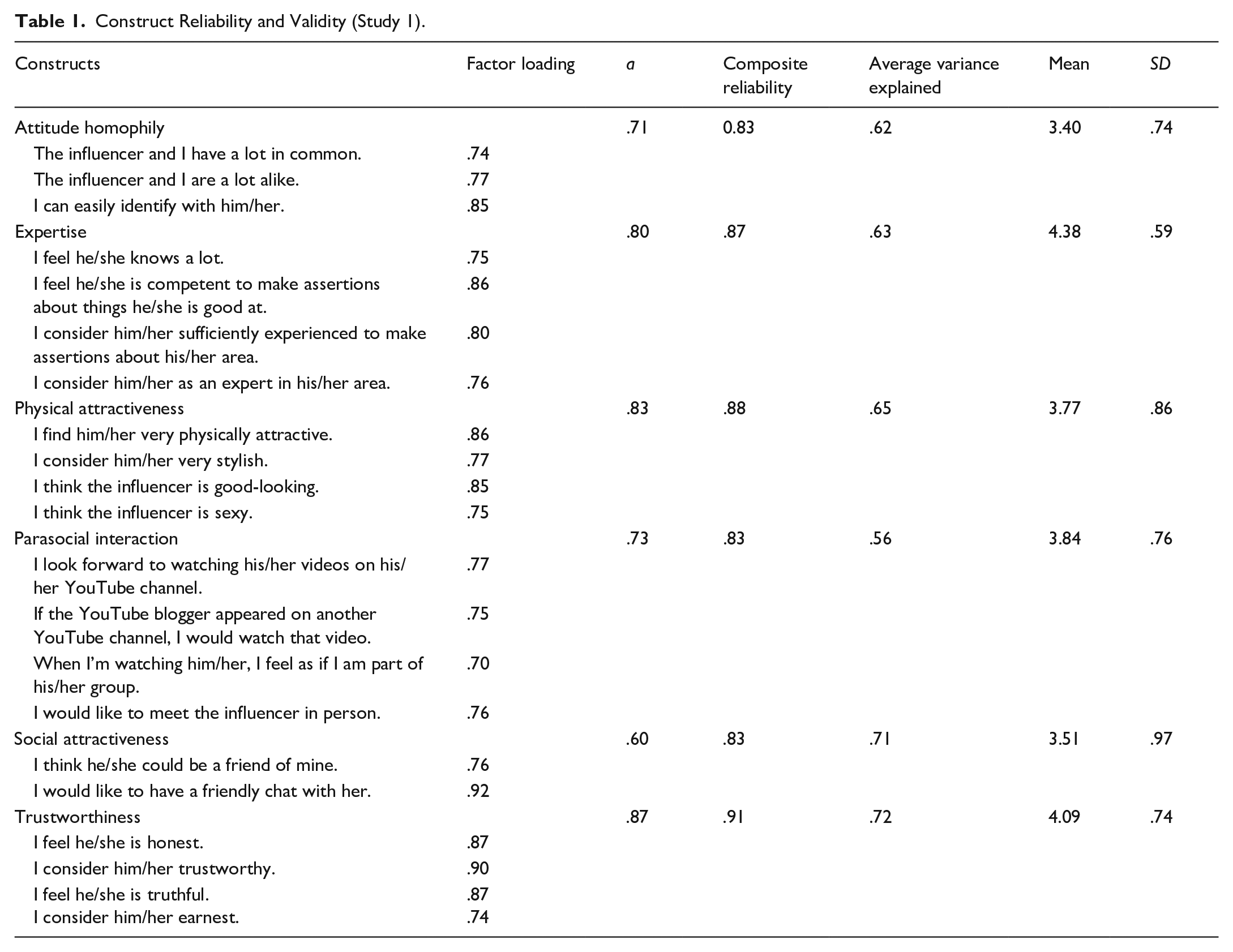
According to Bergkvist and Rossiter (2007, 2009), a single item can measure the predictive validity of doubly concrete constructs with concrete attributes. Since following length and checking frequency are singular concepts by definition, we conceptualized these two dimensions by two single questions. Following length was assessed by asking respondents, “Regarding the social media influencer you mentioned, how long have you been following him/her?” with three duration levels used: “less than six months,” “6 to 12 months,” and “more than 12 months.” For checking frequency, respondents were asked, “How often do you check on that influencer’s accounts per week?” with three levels used: “less than three times a week,” “three to seven times a week,” and “more than seven times a week.” Table 1 presents information on all measures used.
Construct Reliability and Validity (Study 1).
Study 2: Financial influencers
While Study 1 used multi-item measures for the dimensions of source credibility, Study 2 used single-item measures to enhance the robustness of the results. As Bergkvist and Rossiter (2009) and Drolet and Morrison (2001) evidenced that one good single-item measure extracted from a multiple-item battery is validly predictive, we measured expertise as “The influencer maintains a specialized domain of knowledge in his/her posts,” physical attractiveness as “The influencer is physically attractive,” social attractiveness as “The influencer is likeable to you,” attitude homophily as “The influencer is similar to you,” and trustworthy as “The influencer is trustworthy.” PSI (α = .85; M = 4.81; SD = 1.23) was measured using the five items by L. Hu et al. (2020). The credibility dimensions and PSI were measured using 7-point Likert scales ranging from “strongly disagree” to “strongly agree.”
The two aspects of online stickiness were measured by two single-item questions. Checking frequency was assessed by the question “How frequently do you check the influencer’s social media homepages?” with seven levels ranging from “I never check his/her social media homepages” to “daily.” Following length had the question “How long have you followed the influencer online so far?” with seven levels ranging from “less than one month” to “more than two years.”
Control variables
Apart from source credibility and PSI, three particular characteristics of SMIs have also been shown to influence stickiness: (1) the influencer’s choice of social media platforms (Pelletier Mark et al., 2020); (2) the influencer’ number of followers (Weismueller et al., 2020); and (3) characteristics of the influencer such as sharing motivation, content goal, and audience mode of contact (Gross & Wangenheim, 2018).
Data were collected on the above characteristics of SMIs for use as controls. In Study 1, the main social media platforms identified were YouTube (72.7%), Instagram (18.0%), Facebook (8.6%), and TikTok (.7%), which reflected the general popularity of social media platforms used in Vietnam (Statista, 2019b). In Study 2, the finfluencers garnered their largest following on YouTube (36.5%), Instagram (17.3%), Facebook (10.8%), TikTok (26.5%), and Twitter (8.8%). Second, the SMIs were categorized under follower numbers, with the majority belonging to the group of mega-influencers (more than 1 million followers) for both studies. In Study 1, the distribution of SMIs by follower numbers was mega (67.1%), macro (26.1%), and micro (6.8%) while the distribution was mega (57%), macro (14.1%), and micro (3.6%) in Study 2. Third, based on Gross and Wangenheim (2018) influencer categorization, the SMIs were also categorized into four different groups: snoopers (50.7%), informers (22.6%), entertainers (11.1%), and infotainers (15.6%). Study 2 did not include the influencer typology as the sole focus was finfluencers. Furthermore, the participants’ age and gender were also used as controls to further confirm the stability of the conceptual framework in both studies.
Results
Study 1: General influencers
Measurement reliability and validity
Partial Least Square-Structural Equation Modeling (PLS-SEM) was undertaken with SmartPLS 3.3.2 to analyze the data. A key advantage of PLS-SEM is that it enables the simultaneous evaluation of the measurement model (outer model) and path relationships (inner model). It also handles the evaluation of new theoretical models (Hair et al., 2012, 2017). To assess the measurement model, we followed Hair et al. (2012) and first examined the reliability and validity of the measures used. According to accepted conventions for reliability, Cronbach’s alpha (α) values should be higher than .60 for preliminary research (Mortimer & Wang, 2022; Nunnally, 1967; Taber, 2018), and composite reliability (CR) scores should exceed .70 (Fornell & Larcker, 1981). Table 1 shows all α values were greater than .60, and all CR values were greater than .83.
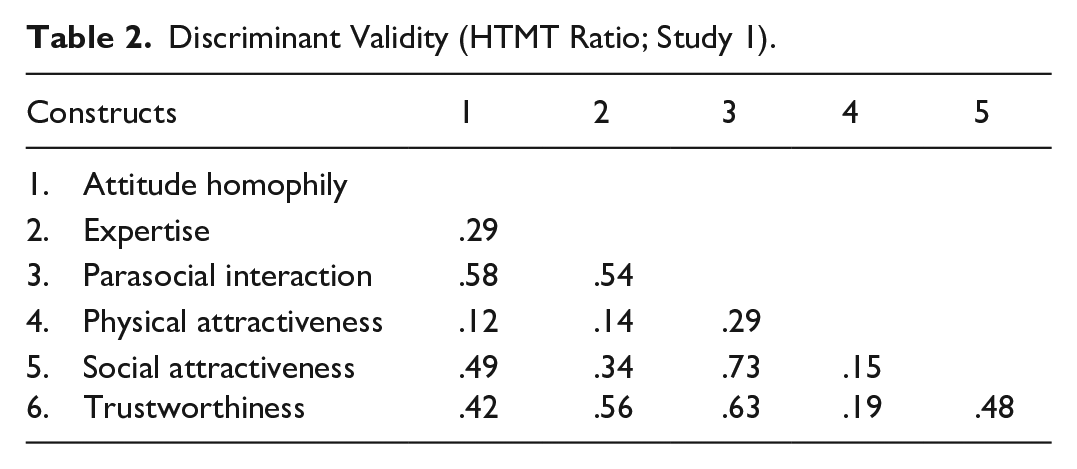
To examine convergent validity, factor loadings for the measurement items and the average variance extracted (AVE) value should be higher than .30 and .50, respectively. Table 1 shows that all items exceeded this benchmark with factor loadings greater than .70, and all AVE values were greater than .56; thus, convergent validity was confirmed. To test for discriminant validity, we followed Hair et al. (2017) and Henseler et al. (2015). Hair et al. (2017) recommend that the square root of the AVEs for a construct should exceed the bivariate correlations between that construct and the other constructs in the model. This requirement was met. Henseler et al. (2015) recommend a further test for discriminant validity: Heterotrat-Monotrait (HTMT ratios). These ratios should be lower than 0.90 to achieve discriminant validity. This requirement was also met, with all HTMT ratios being lower than .73 (Table 2).
Discriminant Validity (HTMT Ratio; Study 1).
To test for common method bias, we used the variance inflation factor (VIF) and a marker variable technique (Kock, 2015; Weismueller et al., 2020; Z. Zhao & Renard, 2018). Common method bias is established if the VIFs are lower than the recommended cut-off of 3.3, and no significant change in explained variance (R2) is observed. Our VIF scores (1.00-2.66) were lower than the suggested cut-off when using the marker variable age, and no significant change in R2 was found.
Test of hypotheses
An evaluation of the inner model was subsequently undertaken to test the hypotheses. Based on Hair et al. (2014) and Sanchez-Franco (2009), 5,000 bootstrapped samples were used to estimate and establish the significance of the path parameters. Consistent with the PLS modeling approach, R2 values were used to estimate model fit, and Q2 values were used to test predictive relevance. According to the R2 values in Table 3, the model explained 33%, 47%, 6%, and 14% of the variance in the endogenous variables of trustworthiness, PSI, following length, and checking frequency, respectively. Based on J. Cohen (1988), these values are in the small (following length), medium (checking frequency), and large range (trustworthiness and PSI). The corresponding Q2 values also showed good predictive relevance (.01–.42) as all variables exceeded the minimum threshold value of 0 (Hair et al., 2014).
Test of Hypotheses (Study 1).
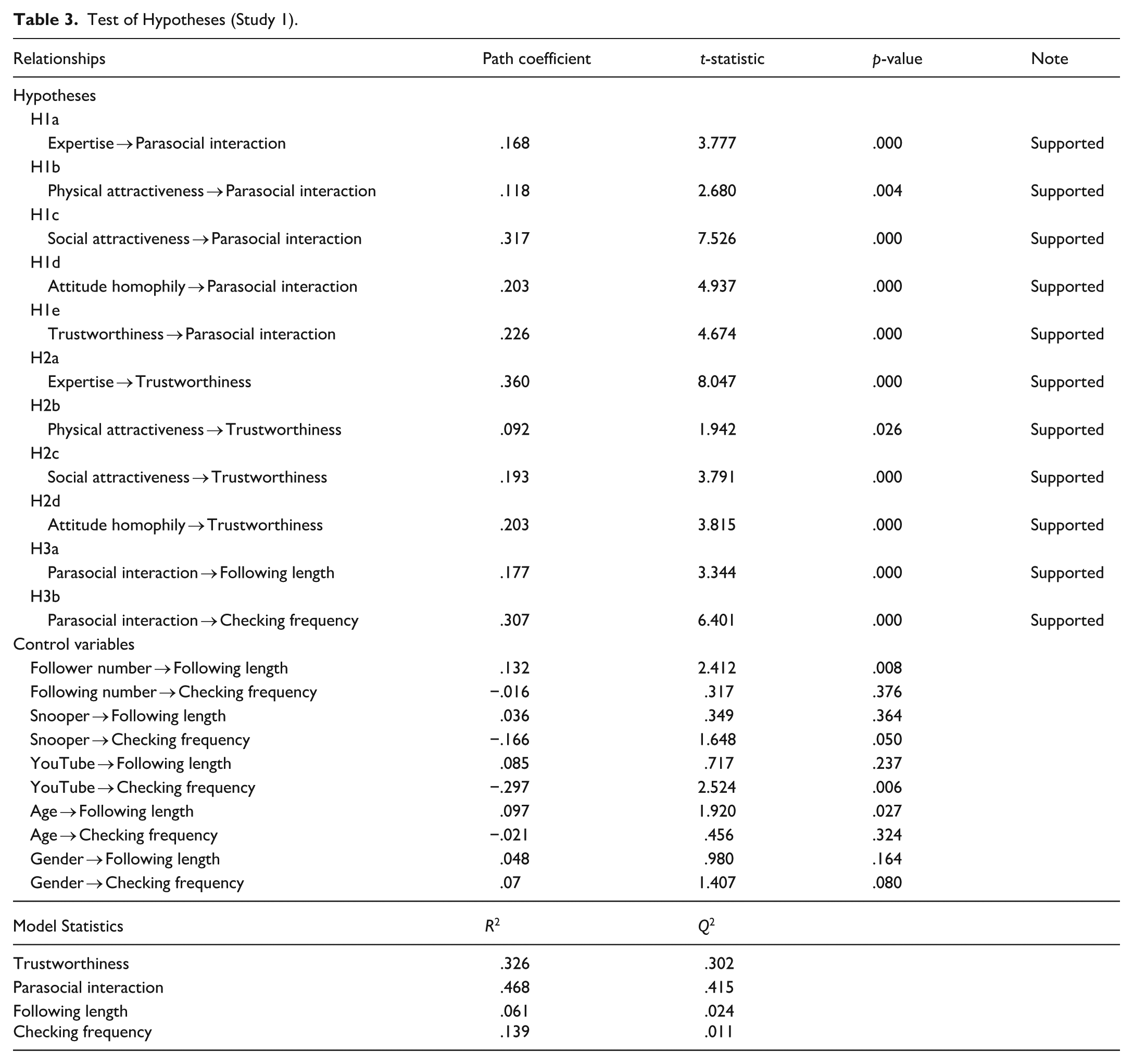
Table 3 also reveals that each dimension of source credibility was positively and significantly associated with PSI. More specifically, the standardized beta coefficients (β) for expertise (H1a: β = .17, t = 3.78, p < .001), physical attractiveness (H1b: β = .12, t = 2.68, p < .01), social attractiveness (H1c: β = .32, t = 7.53, p < .001), and attitude homophily (H1d: β = .20, t = 5.0, p < .001) were all positively associated with PSI. Table 3 also provides evidence that trustworthiness was positively associated with PSI (H1e: β = .23, t = 4.67, p < .001).
The four dimensions were also observed to be positively associated with trustworthiness. Specifically, expertise (H2a: β = .36, t = 8.05, p < .001), physical attractiveness (H2b: β = .09, t = 1.94, p < .05), social attractiveness (H2c: β = .19, t = .79, p < .001), and attitude homophily (H2d: β = .20, t = 3.82, p < .001) were all positively and significantly related to trustworthiness. Likewise, PSI was also positively and significantly associated with both dimensions of online stickiness, with PSI influencing following length (H3a: β = .18, t = 3.34, p < .001) and checking frequency (H3b: β = .31, t = 6.40, p < .001). Collectively, these findings support all of the key relationships in Figure 1.
The control variables were observed to have a mixed influence in relation to the stickiness dimensions. Follower number increases with following length (β = .13, t = 2.41, p < .05), but had no influence on their checking frequency (p > .05). Snoopers were observed to have a lower level of checking frequency than non-snoopers with a marginal significance level (p = .05) but did not influence following length (p > .05). Compared to the other social media platforms, YouTube influencers had a lower level of checking frequency (β = −.30, t = 2.52, p < .01). No difference between social media platforms was found on following length (p > .05). While the followers’ gender did not influence online stickiness dimensions, the followers’ age had a significant influence on following length (β = .1, t = 1.92, p < .05).
Mediation analysis
The path relationships in Figure 1 also suggest a number of mediation relationships. To understand the mediating influence of trustworthiness between the other four source credibility elements and PSI, we followed X. Zhao et al. (2010). Table 4 suggests that the mediation of the relationships was complimentary.
Mediation Analysis—Trustworthiness (Study 1).
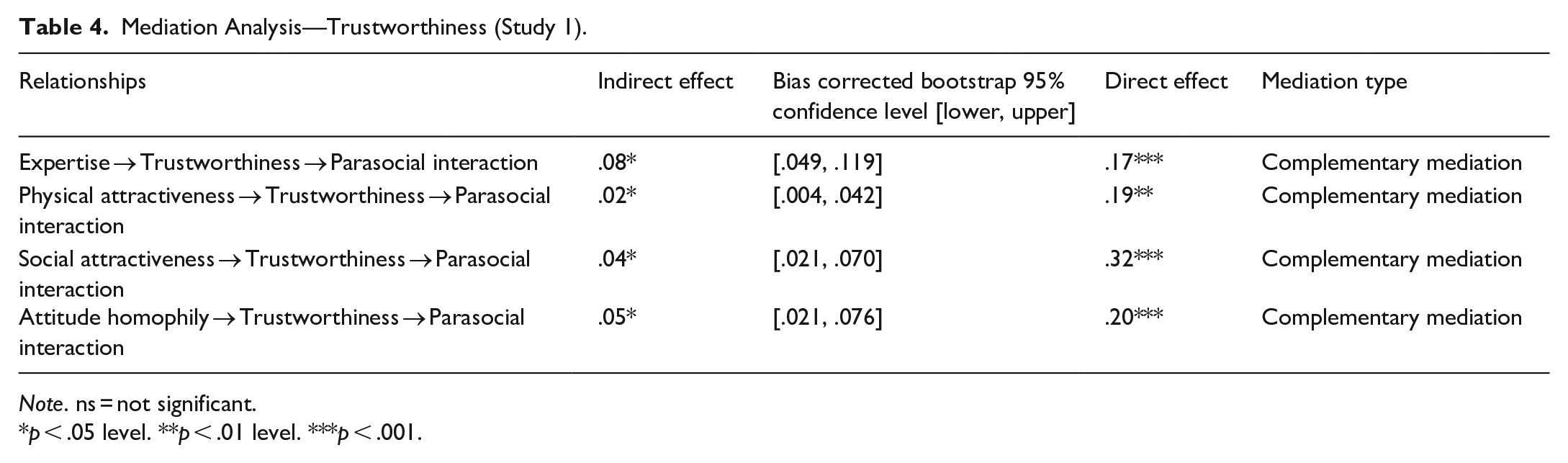
Note. ns = not significant.
p < .05 level. **p < .01 level. ***p < .001.
To explore the mediation of the relationship between the five source credibility elements and two stickiness measures by PSI, we undertook another round of mediation analysis. Table 5 shows that while no evidence was found for PSI mediating the relationships between the credibility dimensions and following length, it did help to explain the relationships between the credibility dimensions and checking frequency. Specifically, the influence of expertise, social attractiveness, and attitude homophily was totally subsumed and acted only through the activation of PSI (i.e. indirect-only mediation). The two remaining dimensions (physical attractiveness and trustworthiness) had a direct and indirect effect on checking frequency (i.e. complementary mediation).
Mediation Analysis—PSI (Study 1).
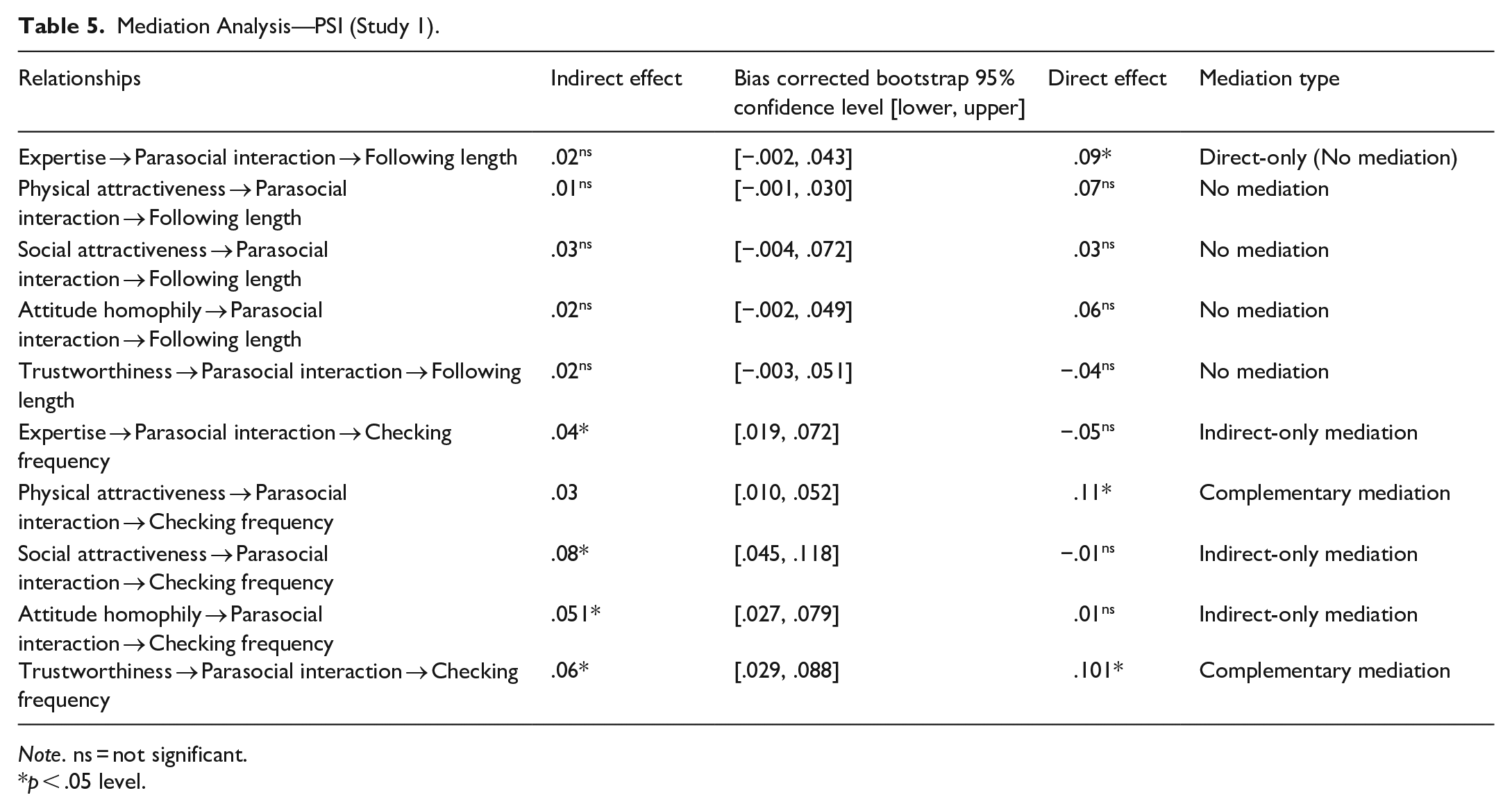
Note. ns = not significant.
p < .05 level.
Study 2: Financial influencers
Test of hypotheses
According to the R2 values in Table 6, the model explained 51%, 45%, 8%, and 20% of the variance in the endogenous variables of trustworthiness, PSI, following length, and checking frequency, respectively. Based on J. Cohen (1988), these values are in the small (following length), medium (checking frequency), and large range (trustworthiness and PSI). The corresponding Q2 values also showed good predictive relevance (.005-.50) as all variables exceeded the minimum threshold value of 0 (Hair et al., 2014).
Test of Hypotheses (Study 2).
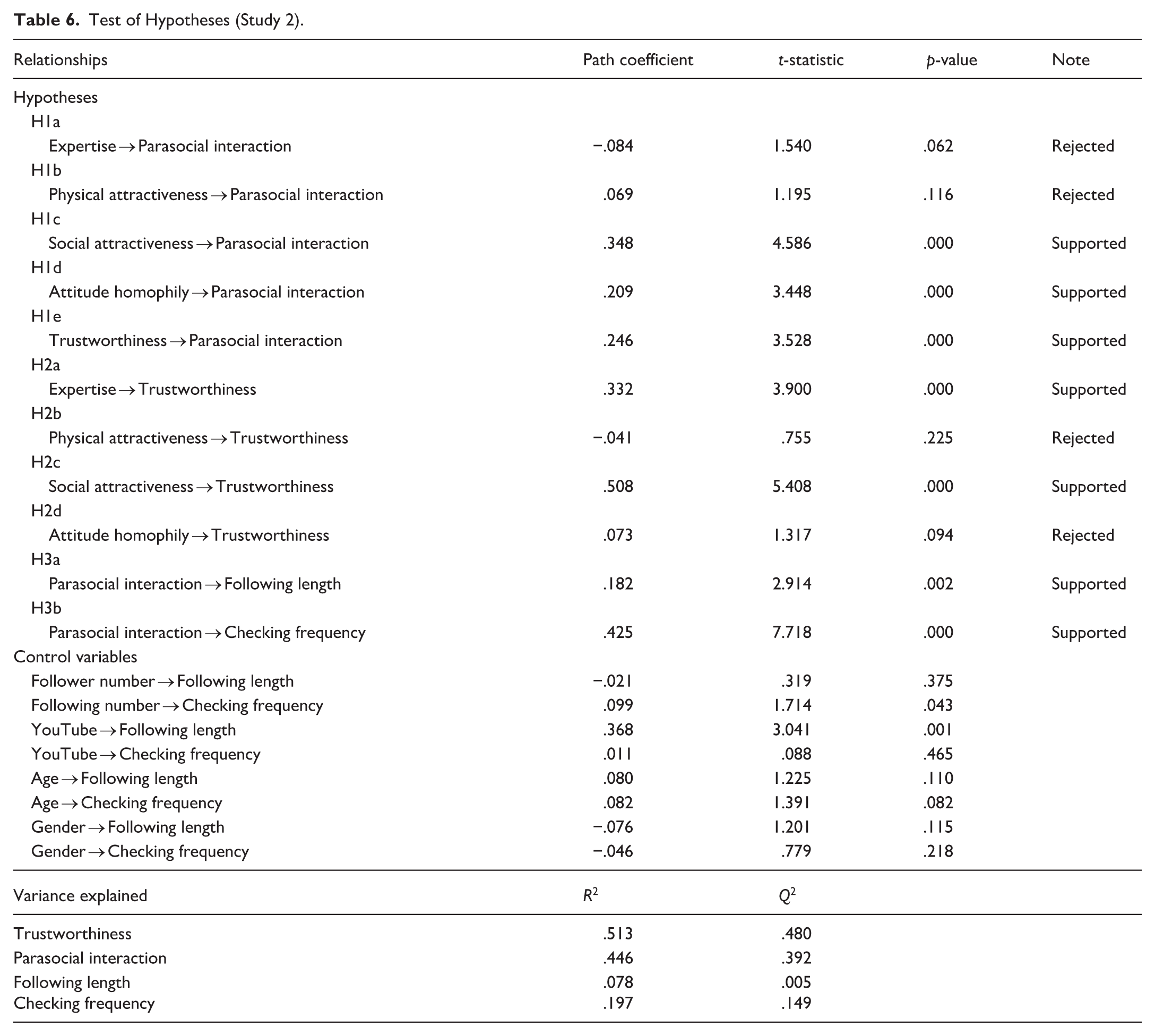
Table 6 reveals that expertise (H1a: β = .17, t = 3.78, p > .05) and physical attractiveness (H1b: β = .12, t = 2.63, p > .05) were not significantly associated with PSI, Conversely, social attractiveness (H1c: β = .32, t = 7.26, p < .001) and attitude homophily (H1d: β = .20, t = 5.01, p < .001) were positively associated with PSI. Table 6 also reveals mixed findings about the association between trustworthiness and the other credibility dimensions. While expertise (H2a: β = .33, t = 3.9, p < .001) and social attractiveness (H2c: β = .51, t = 5.41, p < .001) were observed to be significantly and positively associated with trustworthiness, these associations were insignificant for physical attractiveness (H2b: β = −.04, t = .76, p > .05) and attitude homophily (H2d: β = −.07, t = 1.32, p > .05). PSI was positively and significantly associated with both dimensions of online stickiness, with PSI influencing following length (H3a: β = .18, t = 2.91, p < .01) and checking frequency (H3b: β = .43, t = 7.72, p < .001).
The control variables were observed to have a mixed influence in relation to the two online stickiness dimensions. Follower number had no influence on following length (p > .05) but increased with checking frequency (β = .10, t = 1.71, p < .05). In contrast, YouTube had a significant influence on following length (β = .37, t = 3.04, p < .01) but an insignificant influence on checking frequency (p > .05). Participants’ age and gender did not have any significant influence on the stickiness dimensions.
Mediation analysis
Table 7 shows that trustworthiness mediated the relationship between three credibility dimensions and PSI. Specifically, while social attractiveness and attitude homophily held complementary mediation, expertise held indirect-only mediation. Trustworthiness did not mediate the relationship between physical attractiveness and PSI in Study 2.
Mediation Analysis—Trustworthiness (Study 2).
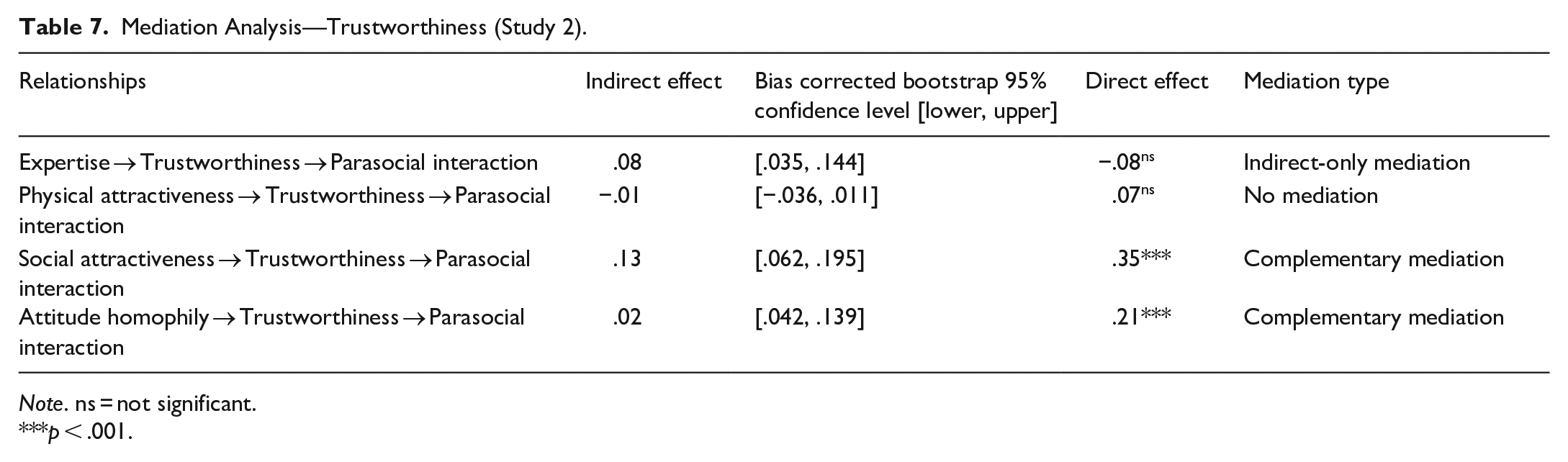
Note. ns = not significant.
***p < .001.
We further investigated the mediating effect of PSI between all source credibility elements and stickiness measures (Table 8). For following length, the mediating effect of PSI was only observed in social attractiveness and trustworthiness, which were both indirect-only mediation. For checking frequency, the mediating effect of PSI was only observed in social attractiveness, attitude homophily, and trustworthiness. Attitude homophily held complementary mediation while social attractiveness and trustworthiness both held indirect-only mediation.
Mediation Analysis—PSI (Study 2).
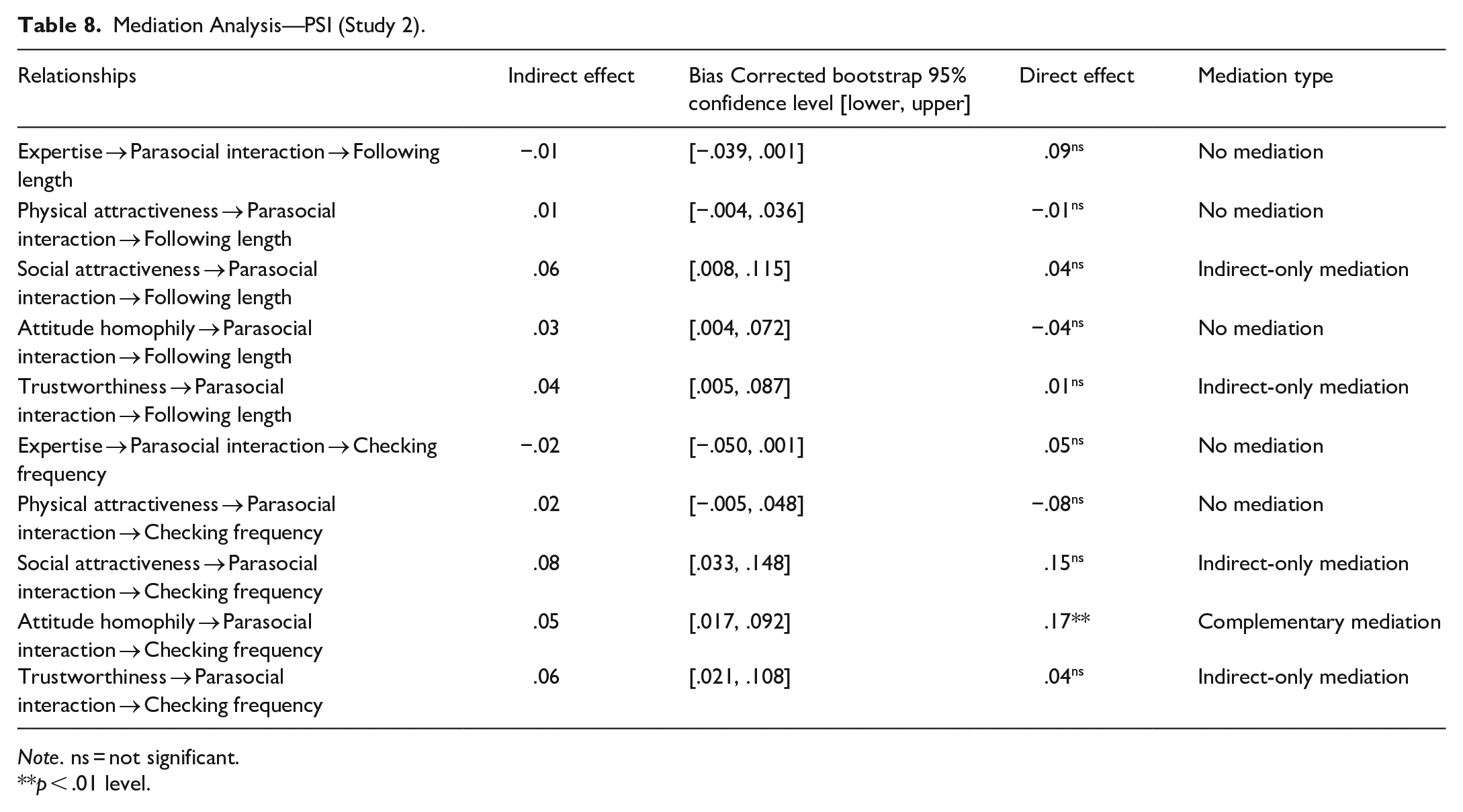
Note. ns = not significant.
**p < .01 level.
Discussion
Social media has become an effective channel for brands seeking new communities of consumers. Reflecting this, many brands compete for the endorsement of high-profile SMIs to build their profile and extend their reach. Despite the rapid increase of SMIs and their usage as marketing channels by brands, there remains little research exploring the drivers of an effective influencer-follower relationship. This paper responds to this by examining how source credibility positively impacts the influencer-follower relationship, by enhancing PSI, which then drives follower stickiness.
Analyzing data from regular social media users in Vietnam and a survey of finfluencers’ followers in the US uncovered hitherto unidentified antecedents of PSI. Our study highlights the importance of physical attractiveness, social attractiveness, and attitude homophily alongside the dimensions of expertise and trustworthiness. Our findings also distinguish trustworthiness from the other dimensions as a higher-order construct that partially mediates the relationship between the other dimensions and PSI. Although our study provides initial support for a two-dimensional conceptualization of online stickiness (length of following an SMI and frequency of checking an SMI’s social media account), PSI was observed to mediate the relationships between source credibility and the stickiness dimensions differently.
Theoretical contributions
Source credibility and PSI
Our study extends the literature by finding support for an expanded five-dimensional conceptualization of SMI source credibility and evidence of a strong positive relationship between source credibility and PSI. While source credibility has been observed to impact PSI in prior studies, this association was based on a three-dimensional conceptualization comprising expertise, trustworthiness, and physical attraction (Yılmazdoğan et al., 2021; C. L. Yuan et al., 2016). Others have also extended source credibility to include attitude homophily (Lou & Yuan, 2019; Munnukka et al., 2016) but our study is among the first to include social attractiveness.
While physical attractiveness is commonly acknowledged as a major component of source credibility in traditional celebrity endorsements, our result reveals that this dimension has a negligible impact on PSI on social media platforms, mirroring Sokolova and Kefi (2020) and Masuda et al. (2022). Conversely, social attractiveness was observed to exert the greatest influence on the SMI-follower relationship. Complementing Le and Hancer (2021) and J. E. Lee and Watkins (2016), we suggest it is because social attractiveness can trigger a sense of likeness that induces followers to easily identify with and engage in parasocial experiences with their favorite SMIs. D. Lee and Wan (2023) further affirmed how social attractiveness derives perceived hedonic value in Mukbang live streams while the influencer’s physical attractiveness had no significant influence on the audience’s perceived values.
Trustworthiness was also identified as a higher-order dimension, mediating the relationship between the other dimensions and PSI. Although prior scholars have attempted to investigate the dyadic associations between trustworthiness and expertise (Erdem & Swait, 2004), physical attractiveness (McGloin & Denes, 2018), and social attractiveness and attitude homophily (Masuda et al., 2022); our study is among the first to test these associations simultaneously and shed light on the major drivers of SMIs’ perceived trustworthiness.
Among the dimensions, expertise was the strongest statistical predictor of trustworthiness, suggesting it is more likely to enhance PSI. This is consistent with Gabarro (1978) who contended that expertise is critical to the formation of trust. This positive trait is commonly coupled with favorable expectations, including anticipated relational benefits (D. Y. Kim & Kim, 2021). Furthermore, as SMIs are commonly associated with being key opinion leaders among their audience community, being knowledgeable about their niche is essentially conducive to followers’ trust (Farivar et al., 2021; H.-C. Lin et al., 2018).
PSI and the stickiness of SMIs
This paper also shows how different drivers of the two dimensions of online stickiness are impacted by PSI. While research has reported a positive association between PSI and online stickiness regarding SMIs, social media usage and live video watching, most of these studies relied upon a simple, single-item measure related to either following length (Farivar et al., 2022) or checking frequency (Kumar Roy et al., 2014). Our study adds to the sparse literature that use a multidimensional measure of stickiness. Consistent with prior studies, we find that PSI increases follower stickiness regarding both following length and checking frequency. Furthermore, while the majority of previous studies operationalized online stickiness by the respondents’ intention (e.g. Barta et al., 2023; Lu & Chen, 2023; Madina & Kim, 2021), following length and checking frequency reflect actual stickiness behaviors.
The findings concerning PSI as a mediator were less definitive. In general, support was observed for PSI mediating the five-dimensional measure of source credibility on the checking frequency dimension of follower stickiness, but no indirect relationship was observed for any of the source credibility dimensions and following length. Conversely, PSI mediated the effect of social attractiveness and trustworthiness on the two stickiness dimensions when considering finfluencers. The inconsistent findings can be attributed to the influencer context; SMIs normally curate content in sub-culture languages and cater to their community of interest (Cunningham & Craig, 2019). By prioritizing a deep connection with a specific audience through personal and relatable content, SMIs can establish a more credible image and entice their followers to interact more, which can explain the stronger impact of PSI on followers’ stickiness behaviors.
The reason may also lie in the differences in intentionality associated with the two stickiness dimensions. Intention is strongest at the beginning and end of the influencer-follower relationship. In the beginning, the SMI has successfully created a desire in the follower to stay connected (Hall & Davis, 2016). In the end, this desire has diminished where the follower no longer wants to maintain this connection as their interests are no longer aligned with those of the SMI (Andersen, 2020). In between these two points in time, it is hard to know the nature of the influencer-follower relationship. Accordingly, checking frequency is likely to be a better point-in-time measure of stickiness as it reflects a higher degree of intentionality and the follower’s ongoing level of connection.
Regarding checking frequency, two types of mediation were observed: indirect-only and complementary. For expertise, social attractiveness, and attitude homophily, PSI completely subsumed their impact on checking frequency. Complementing the prior discussion, social attractiveness had the strongest indirect effect, thus reinforcing its importance. Conversely, the paths between physical attractiveness and trustworthiness exhibited a statistically significant positive association with checking frequency after the path between PSI and stickiness was opened, thus providing evidence for complementary mediation.
The persistence of the direct relationships between physical attractiveness and trustworthiness in the face of mediation by PSI requires some explanation. X. Zhao et al. (2010) assert complementary mediation reflects an incomplete theoretical framework, suggesting that researchers consider the possibility of an omitted mediator. As such, it is helpful to think about the underlying mechanisms that may be operating in relation to the direct paths. The significant direct path between physical attractiveness and checking frequency could suggest that the resulting stickiness stems from a physical attachment rather than a cognitive or emotional connection. This observation follows a study of BookTubers that identified romantic/sexual attachment as one of the main drivers of PSI (Roig-Vila et al., 2021). Interestingly, the findings to trustworthiness suggest a more emotional pathway with prior studies highlighting the overriding importance of trustworthiness in social communications, with trustworthiness also driving repeated blog visits (H. Wang et al., 2013; Xu & Liu, 2010). Together, these findings highlight how followers’ stickiness to SMIs is impacted by their preference for different types of relational connections.
The three control variables influenced SMIs’ online stickiness differentially. Follower number is only associated with following length, but not checking frequency. As a signal about SMIs’ popularity (Campbell & Farrell, 2020), the follower count can induce followers to connect with an SMI account in the first place; however, it cannot guarantee intentional account checking. Snoopers, influencers whose contents revolve around “personal insights” (Gross & Wangenheim, 2018, p. 35), tend to have a lower checking frequency than other types of followers. Due to their wide range of sharing topics based on their real-life experiences’ evaluations, the followers may not associate them with expertness but merely experienced users; consequently, it diminishes the followers’ intention to check their accounts for specialized knowledge. Among the platforms, YouTube influencers tend to earn lower checking frequencies. This can be attributed to YouTubers having much lower posting rates compared to other sites. Alexander (2019) also found that the notification feature within YouTube reduces the need for regularly checking accounts.
Practical implications
For marketing practitioners, the findings offer actionable guidance when choosing a digital influencer for marketing campaigns. While follower number is a general indicator of popularity and a primary metric for influencer selection, our findings show that examining SMI data regarding online stickiness via their followers’ following length and checking frequency is more important. As influencer marketing has evolved, there is also an increasing awareness of influencers being paid for product promotions (Boerman, 2020; P. Breves et al., 2021). This has induced a high level of skepticism among audiences, who question the authenticity of recommendations and the true motives behind certain endorsements (Shan et al., 2020). To mitigate this reactance, instead of conducting one-off influencer collaborations, brands should focus on fostering lasting partnerships (Kenan, 2024); this can nurture trust with audiences by creating a sense that SMIs genuinely use the endorsed products in their daily lives. Therefore, followers need to “stick” with their favorite influencer along this journey so that brands can eventually realize their objectives.
As social attractiveness and attitude homophily emerge as the major antecedents for PSI and online stickiness, we recommend that brands collaborate with the SMIs who exhibit these characteristics. When partnering with SMIs, brands can encourage them to create posts that are less polished and embedded with real-life touches, effectively inducing a greater sense of relatability and likeability (Xie et al., 2023). The beauty and fashion industry has undergone a fundamental shift and embraced a “realness” movement with raw and unfiltered posters (Anderson, 2023). Also, brands need to go beyond demographic data to identify the SMIs whose values are truly congruent with their target customers. After constructing their customer persona, brands can utilize psychographic matching tools to single out corresponding influencers. Besides collecting responses from the target customers, who are the SMIs’ followers, brands can also qualitatively analyze the content of the potential influencers as recommended by Dewantara et al. (2023) for destination vacation marketing. Conversely, SMIs for whom stickiness is the result of romantic/sexual attraction may represent a potential challenge for firms as the behaviors that elicit this sort of attachment may not be congruent with all brands.
Platform choice when choosing an SMI is less clear. While our findings indicate that some platforms may have lower levels of stickiness (as reflected in the level of checking frequency) compared to other platforms, having a platform control in our model did not change the nature of the hypothesized relationships between source credibility, PSI, and stickiness. Brands need to recognize that different platforms have varied levels of engagement (Arora et al., 2019). For instance, YouTube may have lower checking frequency but longer viewing times, which can be suitable for product-oriented content and usage illustrations. However, the short-form content and visually stimulating representation on Instagram can trigger the target customers’ curiosity to search for further information on YouTube. Brands should strategically establish lasting partnerships with SMIs and tailor campaigns according to platforms.
For SMIs, several valuable insights can be drawn from the study. To stimulate PSI, online influencers are encouraged to focus on activities that enhance their social attractiveness. Even though physical attractiveness may give SMIs favorable associations in the first place, preoccupation with visual perfection can lead to counter-productive feelings, specifically inferiority (Huang et al., 2021). Through the lens of social comparison theory, studies (e.g. Chae, 2018; Jin & Ryu, 2020) have shown that followers tend to compare themselves with SMIs and may develop envy toward the influencers over prolonged exposure. This envy-induced comparison, coupled with unrealistic idealism, gradually fosters a sense of dissimilarity and dissociation between followers and their favorite SMIs, eventually resulting in a psychological breakup. Thus, SMIs should occasionally post unfiltered images or share personal stories that highlight their genuine selves. Authentic content enhances trustworthiness and fosters deeper PSI, creating a stronger and more sustainable connection with the audience (Kapitan et al., 2022).
To leverage expertise for trustworthiness, SMIs should focus on authentic content that plays to their natural strengths and invest in enhancing their perceived expertise. For example, influencers who augment their content with well-researched information and fact-based support are viewed as more credible and trustworthy (Hovland et al., 1953; S. Yuan & Lou, 2020). For the influencers in specialized fields, highlighting their expertise through educational content (e.g. tutorials, how-to guides, and expert tips) positions them as trusted authorities. This strategy boosts credibility and also significantly contributes to fostering a loyal and engaged following.
SMIs should deploy platform-specific strategies to cement their presence and leadership in their communities. There is evidence that platform choice may impact influencers’ abilities to create meaningful social connections with followers; the high volume of comments on platforms such as YouTube and Instagram, for instance, can make it difficult for SMIs to be fully engaged with their audience (Sokolova & Kefi, 2020; Yuksel & Labrecque, 2016). Preliminary evidence suggests that this might not be so important, Rihl and Wegener (2019) showed that usage of YouTube’s comment section does not significantly impact the strength of PSI between SMIs and their followers. However, to mitigate this, SMIs can develop content strategies that include live sessions, Q&A, and behind-the-scenes footage to continuously enhance a sense of personal connection and engagement.
Compared to other influencers, specialist influencers, such as finfluencers, stand out in certain aspects. Finfluencers who brand themselves as money and wealth “gurus” induce a considerably stronger sense of aspiration and higher level of engagement. Outside of personal finance discussions, many finfluencers attempt to promote entrepreneurial messaging and position their contents as solutions to financial worries and gateways to certain lifestyles and status mobility (Espeute & Preece, 2024). This content category is widely known for sparking interests among young audiences who are less financially informed and socially underrepresented (FINRA, 2023; Zukin, 2024). Regarding their digital footprint, Emplifi (2024) reports that finfluencers publish more frequently and accumulate more than double the follower count compared to their peers on YouTube and Instagram.
Our findings suggest the importance of finfluencers enhancing their trustworthiness and social attractiveness. Although trustworthiness is conventionally associated with expertise, commonly bolstered by well-researched facts, we suggest finfluencers add entertaining elements to their content as an effective way to drive engagement and content digestibility. Like general social media users, finfluencers’ followers consume their content in the leisure time, not a designated focus time (Espeute & Preece, 2024). Along with presenting their credited qualifications, finfluencers can enhance their trust by being transparent about their trading activity successes and failures over a long-time horizon. For social attractiveness, finfluencers can appeal to the identities of a specific follower group (e.g. women of color). For example, female Gen-Z investors were more likely to note that they followed finfluencer accounts run by other women or social media accounts that framed themselves as female centered, such as “females in finance.” While short-form video platforms like TikTok has seen a surge in popularity, it is our recommendation that finfluencers still cement their presence on YouTube as this long-form platform can retain following length and is also the favored platform for a more in-depth understanding of investment concepts.
Limitations and future research
Although this research has provided new insights into the dynamics of follower-influencer relationships, it is not without limitations. Despite the fact that our studies used two different nationalities (Vietnamese and American), the generalizability of the results may still be limited. Future research should test the hypothesized model in other populations to detect possible differences due to culture and geography. Furthermore, like most studies on online stickiness (Kumar Roy et al., 2014; Li et al., 2006), this research was also conducted using a survey-based method with cross-sectional data. Since the level of online stickiness may evolve over time, follow-up studies can consider other research designs such as experiments and longitudinal data collection to further examine the robustness of the findings. Along with the widespread application of AI technology, a new type of SMI (virtual influencers) has emerged and competes in marketing partnerships with human counterparts (Appel et al., 2020; Mouritzen et al., 2024; van Esch & Stewart Black, 2021). It is unsure whether human influencers’ salient attributes still apply to virtual influencers. Future researchers can utilize our conceptual framework to derive new insights into this emerging area.
Another limitation lies in our measurement of online stickiness. Although the two questions used to operationalize the following length and checking frequency proved to be statistically sufficient and reasonable, future researchers may wish to propose a more comprehensive measure of online stickiness that captures other aspects of the construct. Additionally, our study takes an agnostic approach to the treatment of platforms rather than focusing on a particular platform. While this approach has merit, future research could examine the hypothesized model using stratified sampling to systematically compare platforms or to examine follower behavior in emerging platforms. Future researchers should also take into account followers’ characteristics, such as their checking frequencies for different social media platforms or topic involvement, to derive better insights into online stickiness.
Footnotes
Declaration of conflicting interests
The author(s) declared no potential conflicts of interest with respect to the research, authorship, and/or publication of this article.
Funding
The author(s) received no financial support for the research, authorship, and/or publication of this article.
