



Abstract
Digital marketing has become a necessity for small to medium enterprises (SME), exacerbated by the pandemic. Given the sometimes-limited knowledge and resources for digital marketing, SMEs often outsource digital marketing to service providers. A review of B2B literature demonstrates a predominant focus on how businesses internally adopt and use digital marketing with limited insight as to how digital marketing has been outsourced nor the subsequent relationship between client and service provider. This is a gap in scholarly and practitioner knowledge with increasing disputes in the SME and digital marketing service provider (DMSP) relationship. To address this gap the current research, informed by agency theory, adopts an exploratory research design utilising interviews with both SME owners (n = 13) and DMSPs (n = 7). Results uncover the importance of considering relationship expectations, transparency and organisational compatibility and how they relate to goal conflict or convergence in the SME and DMSP relationship.
Introduction
From a B2B marketing perspective, digital marketing involves utilising online tools like websites, SEO (search engine optimisation), social media and paid ads to enhance competitiveness (Herhausen et al., 2020, p. 277). These capabilities are crucial for SMEs, evident in their rising digital spending and reliance on online sales channels for growth. In the USA, SMEs spent an average of US$543 monthly on digital advertising in 2021, with 93% planning to increase their expenditure within a year (Statista, 2023). Similarly, in Australia, 63% of SMEs sold goods and services online in 2021 (Pasquali, 2022). Despite the critical role of digital marketing for SMEs, many lack the necessary skills, expertise and/or human resources to manage their own digital marketing needs (Saura et al., 2023). To address these limitations, SMEs often opt to outsource their digital marketing to specialised service providers (DMSPs), a strategic decision aimed at leveraging external expertise and resources (Lee & Kim, 2010). However, outsourcing presents both challenges and opportunities, particularly in managing the relationships with these service providers. While existing B2B literature focusses on SMEs’ adoption of digital marketing, this study’s overarching purpose is to explore the dynamics of SME-DMSP relationships within the B2B marketing context, utilising an agency theory lens.
The first aim of this research is to apply agency theory principles to investigate potential challenges related to information asymmetry and monitoring within outsourcing relationships involving digital marketing. Information asymmetry, identified as a key factor that may precipitate principal-agent (SME-DMSP) conflict (Panda & Leepsa, 2017), is particularly relevant in the context of digital marketing due to its complexity and rapid evolution, which pose challenges for businesses, especially SMEs lacking expertise in current trends and tools (Munna & Shaikh, 2023). Consequently, assessing service quality and negotiating fair terms becomes challenging, potentially leading to information asymmetry between SMEs and DMSPs. Furthermore, the intangible nature of digital marketing outcomes, such as website traffic or social media engagement, making it difficult to evaluate tangible results like sales (Wu et al., 2024), may impede SMEs’ ability to comprehend and pinpoint the results of digital marketing efforts. This potential information asymmetry may create difficulties for SMEs in evaluating and monitoring the performance of outsourcing agencies and the outsourced business function (Leeflang et al., 2014; Silva et al., 2020). Practical evidence, such as the 96 disputes reported by the Australian Small Business Family Enterprise Ombudsman in 2020 relating to digital marketing outsourcing for SMEs, further underscores the existence of such challenges (ASBFEO, 2023). Therefore, the first research question guiding this study is: What aspects of information asymmetry and monitoring regarding digital marketing lead to principal-agent conflict between SMEs and DMSPs?
The second aim of the current research is to uncover the aspects related to delegation and control that may give rise to potential principal-agent conflicts. Delegation and control principles in agency theory hold significant potential in the context of outsourcing digital marketing and warrant exploration as evidence suggests that poor digital marketing performance can stem from a perceived lack of control (Murphy & Kielgast, 2008). This lack of control may worsen due to information asymmetry and SMEs’ limited expertise in digital marketing, leading to concerns over the control exerted by DMSPs. Keegan et al. (2022) highlight initial considerations of control in B2B outsourcing digital marketing, noting that outsourcing often arises from the client’s lack of expertise, while also expressing concerns about the power held by DMSPs. Moreover, SMEs often strongly identify with their businesses, considering them part of their identity. Delegating control over digital marketing and potentially relinquishing control over a part of their identity (the business), may exacerbate information asymmetry and conflict between the SME and DMSP, particularly when the SME has a limited understanding of digital marketing practices. However, thorough examination of how issues in delegation and control may lead to principal-agent conflicts in digital marketing outsourcing remains lacking in the current literature. This leads to the second research question: How do issues in delegation and control give rise to principal-agent conflicts between SMEs and DMSPs?
The third aim of this study is to investigate how alignment can be achieved in digital marketing outsourcing relationships involving SMEs through customer-conceived or supplier-conceived solutions (Corsaro & Snehota, 2011), building upon agency theory and B2B literature. While agency theory sheds light on monitoring difficulties, information asymmetry, delegation and control in such relationships, it falls short of providing comprehensive strategies to address these challenges from the perspectives of both principals and agents. Despite some agency theory studies exploring principal-agent alignment, where rules and goals are co-created, shared or understood (Foreman et al., 2021; Thirion et al., 2022), there remains a gap in understanding how to achieve alignment in such relationships. Drawing on Corsaro and Snehota’s (2011) framework on alignment and misalignment in business relationships, this study aims to fill this gap by examining solutions perceived by customers and/or suppliers that foster principal-agent alignment in these settings. The third and final research question of this study is: What solutions are perceived by SMEs and DMSPs as conducive to principal-agent alignment between SMEs and DMSPs?
To address these research questions and the overarching aim of the study, a qualitative approach was used, involving interviews with both SMEs and DMSPs. In doing so, this research, unlike many agency theory studies, considers both the agent and principal viewpoints (for an exception, see Bhattacharya & Singh, 2019). The paper presents theoretical and practical insights derived from qualitative findings, demonstrating the importance of digital marketing capabilities for firms to either practice digital marketing in-house or effectively outsource it. Additionally, the study emphasises the need for a baseline level of digital marketing capability to mitigate conflict when outsourcing this function. Furthermore, the research identifies sources of conflict and proposes potential solutions for alignment from varying perspectives within the relationship, and thus provides a more holistic view of not only principal-agent conflict problems but also principal-agent alignment solutions.
Literature review and theoretical foundation
Outsourcing digital marketing
Outsourcing is vital for organisations, especially SMEs, seeking to bolster their capabilities amid resource constraints. B2B literature has often considered the outsourcing of functions like accounting, manufacturing and customer service (Le Bon & Hughes, 2009; Tuzovic et al., 2022). SMEs frequently lack the human resources and expertise needed for digital marketing, making outsourcing an appealing solution to address these skill gaps (Taiminen & Karjaluoto, 2015). Furthermore, outsourcing digital marketing can provide cost-effective and time-saving advantages over maintaining an in-house team, allowing SMEs to focus on core business functions. Digital marketing, unlike other outsourced services such as accounting, is consumer-facing and requires staying abreast of constantly evolving technology (Homburg & Wielgos, 2022).
As summarised in Table 1, one of the key findings from the review of the literature is that of the 11 studies included, only 2 studies, Edelman and Brandi (2015) and Keegan et al. (2022) solely focussed upon the outsourcing of digital marketing. Instead, all other studies considered both in-house and outsourcing of digital marketing through their designs and sampling, which is consistent with the observations of Prior and Keränen (2020) that often the focus is on the technology or artificial intelligence themselves or their usage. The studies exploring outsourcing have primarily focussed on identifying factors contributing to skill gaps and motivations for outsourcing, such as resource constraints (Kian Chong et al., 2010; Keegan et al., 2022). For instance, Leeflang et al. (2014) highlights that 53% of their sample preferred outsourcing as an approach for digital marketing, revealing a gap in the supply of adequately trained staff in this field. More recently, an industry survey of 195 small businesses which outsourced some business functions identified that digital marketing was the third most outsourced business function (34%) behind accounting (37%) and IT services (37%; Panko, 2019). While the current literature offers valuable insights into the potential motivations for organisations to consider or adopt the outsourcing of digital marketing, there is a limited understanding of this relationship between service provider and SMEs. Another major theme identified in the literature is the absence of theoretical frameworks guiding current explorations of digital marketing outsourcing and understanding this relationship. To address gaps in the current literature, this study uses agency theory to explore the dynamics of SMEs’ and DMSPs’ B2B relationships. This approach is discussed in the following section.
Overview of Outsourcing of Digital Marketing Related Literature.
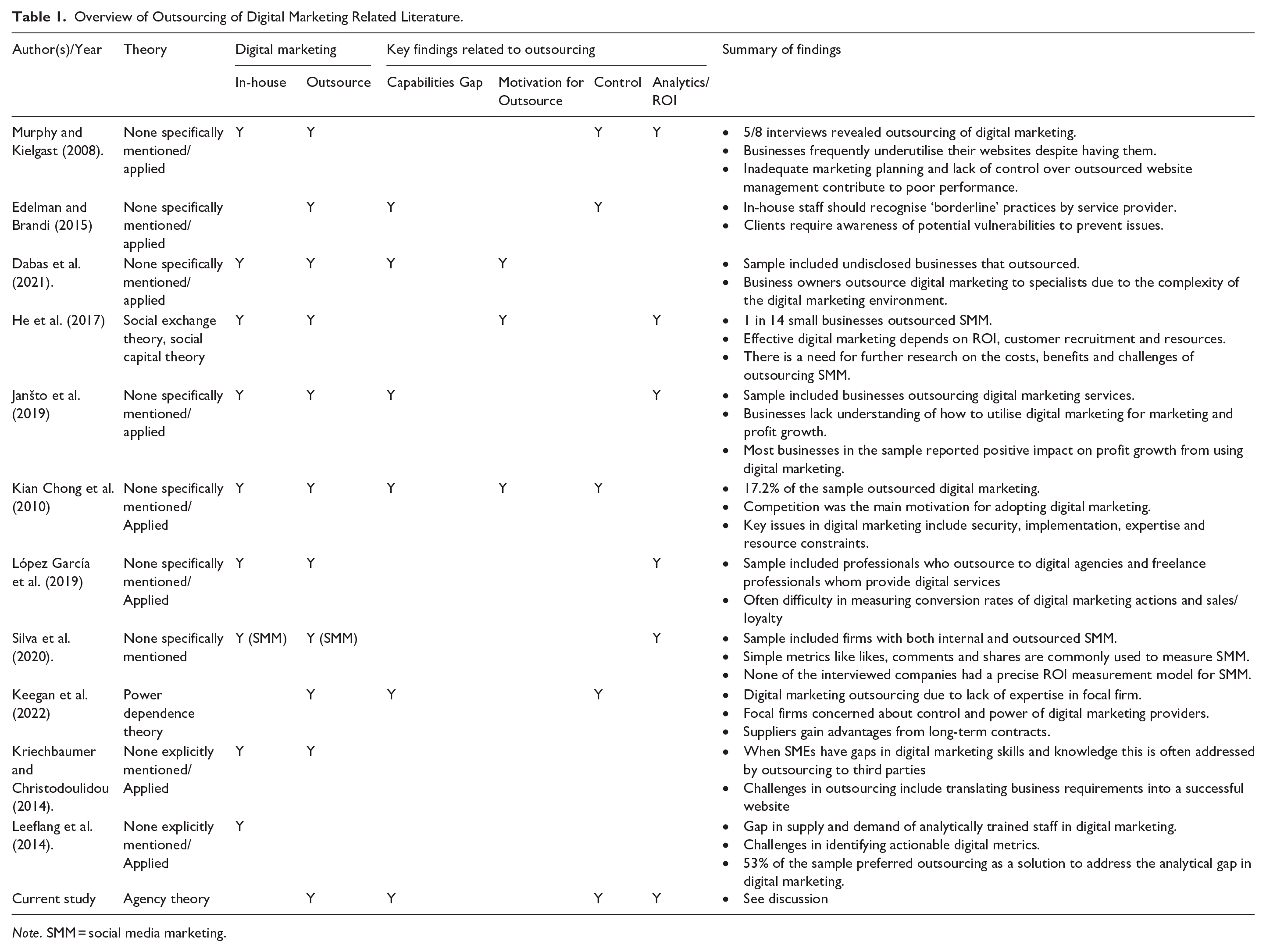
Note. SMM = social media marketing.
Understanding B2B outsourcing relationships via agency theory
The B2B literature suggests that one useful theory for understanding B2B relationships, such as that of the SME-DMSP relationship, is agency theory as it provides a framework for analysing the principal-agent problem (Chohan, 2023), which may occur when the principal (SME) hires another entity (the agent-digital marketing service provider). Agency theory is particularly useful for the current research as it identifies clear roles between the principal (the client/SME) and the agent (the service provider), which aligns to the current focus of the research. Secondly, agency theory provides insights into the intricacies of principal-agent relationships, including how monitoring mechanisms, delegation and control can, under varying conditions, either foster conflict or alignment between the principal and agent (Matinheikki et al., 2022; Ndubisi, 2013; Tate et al., 2010). Furthermore, agency theory considers the concepts of information asymmetry within these relationships. It examines how the allocation of risks and the flow of information between the principal and agent can influence their behaviours and decision-making processes, ultimately shaping the dynamics of their relationship.
A review of the B2B literature demonstrates agency theory has been used to understand a variety of relationships including buyer-supplier, manufacturer-distributor and franchisor-franchisee (Chohan, 2023), however fewer studies have considered client-service provider relationships, which is a core focus of the current study in relation to the SME-DMSP relationship. In the literature, two key aspects of B2B or relationships involving two actors are considered via agency theory, principal-agent conflict and principal-agent alignment, which guide the current studys exploration of B2B relationships involving the outsourcing of digital marketing.
Principal agent-conflict
Panda and Leepsa (2017, p. 80) define the principal-agent problem as, ‘the misalignment of interest between principal and agent and the lack of proper monitoring due to diffused ownership structure leads to the conflict, which is known as principal–agent conflict’. Prior literature shows that agency theory helps explain how participants in a B2B relationship identify potential sources of agency or principal costs, which can lead to conflicts and disputes between principals and agents. By understanding these potential issues, businesses can mitigate conflicts, foster greater trust and build more productive relationships (Mahaney & Leder, 2011; Saleh et al., 2013).
Information asymmetry
Information asymmetry, a concept in agency theory, occurs when one party possesses more or better information than the other (Jayasimha, 2022; Mishra et al., 1998; Tate et al., 2010). The concept of information asymmetry guides the investigation into how this disparity affects decision-making and the structure of monitoring and incentives in principal-agent relationships. In the outsourcing relationship between DMSPs and SMEs, DMSPs, as the agents, typically possess greater expertise and digital marketing literacy. However, the specific aspects of digital marketing literacy that contribute to this information asymmetry remain underexplored in the current literature.
Monitoring
In the literature, there is acknowledgement of the significant monitoring costs inherent in B2B outsourcing relationships (Ndubisi, 2013). These monitoring expenses, incurred to ensure that both parties maintain beneficial activities, can lead to conflicts. Evidence from the B2B digital marketing outsourcing literature also indicates potential principal-agent conflicts from monitoring, particularly in determining actionable analytics or ROI measurement (Edelman & Brandi, 2015; Leeflang et al., 2014; López Garcia et al., 2019; Silva et al., 2020). Despite identifying challenges in measuring digital marketing performance, such as the lack of precise ROI models, the literature primarily focusses on why principals outsource rather than on the consequences of monitoring difficulties. Consequently, the specific nature of monitoring activities and responsibility allocation within digital marketing outsourcing remains unexplored.
Delegation and control
Other agency theory research also suggests delegation and control can be a considerable cost of outsourcing relationships. This is because in B2B outsourcing relationships there is inherently some delegation of work between the parties, which according to the literature are subject to potential agency conflict, particularly if clear goals and rules (governance mechanisms) have not been set (Matinheikki et al., 2022). Some initial considerations of control have been considered in the B2B outsourcing digital marketing literature. Keegan et al. (2022) for instance notes how outsourcing often occurs due to a lack of the client’s expertise, however, clients also have concern over the control and power DMSPs have. Murphy and Kielgast’s (2008) results share a similar sentiment suggesting that poor digital marketing performance can be attributed to clients lack control over their websites. While informative, these studies have yet to explain how or when delegation and control may lead to circumstances of principal-agent conflict in the outsourcing relationship.
Thus, based on the existing evidence from agency theory and B2B literature, factors such as monitoring, delegation and control and information asymmetry appear to be significant indicators of potential principal-agent conflicts in B2B relationships involving the outsourcing of digital marketing. However, further research is required to explain the specific underlying factors influencing principal-agent conflicts via monitoring, control and delegation, and to determine which party, principal or agent, within the relationship assumes or is suggested to hold responsibility for these activities.
Principal agent-alignment
While not highlighted as principal-agent conflict, agency theory also addresses when agents’ actions align with the principal’s interests (Magnan & St. Onge, 2005). This research considers prior studies defining this alignment as principal-agent alignment, indicating shared goals and performance metrics (Tate et al., 2010). While some agency theory studies have explored alignment (Matinheikki et al., 2022; Nwajei et al., 2022), there is limited research on this within outsourcing relationships, except for Tate et al. (2010) and Bhattacharya and Singh (2019). Tate et al. (2010) demonstrate how a triadic relationship can achieve alignment through contractual agreements, while Bhattacharya and Singh (2019) suggest that goal compatibility in service outsourcing reduces performance ambiguity. They also provide evidence that a good fit between the supplier-buyer perception of value and their business philosophy in service outsourcing relationships can reduce performance ambiguity regarding the quality and value of the services provided by the supplier. Similarly, Matinheikki et al. (2022) suggest the need for four strategies to achieve alignment and overcome principal-agent conflict: (1) information transfer strategies, (2) goal alignment strategies to curb self-interest behaviour, (3) integration strategies aimed at decreasing information asymmetry and (4) psychological influence strategies to align goals related to mitigating information asymmetry and self-interest behaviour. However, these studies do not clearly explain which party in the relationship identifies the potential conflict (principal or agent) and who takes action to achieve or attempt greater alignment in the relationship.
A notable contribution to the field of alignment, Corsaro and Snehota’s (2011) work offers a valuable perspective that diverges from agency theory, enriching our understanding of the subject. Their empirically supported theoretical framework explores alignment and misalignment within business relationships, elucidating how perceived issues and solutions among both customers and suppliers can either promote alignment or trigger misalignment in B2B contexts. For instance, they shed light on strategies such as knowledge transfer, which echoes agency theory’s concept of information asymmetry (Corsaro & Snehota, 2011). Consequently, Corsaro and Snehota’s framework will guide the present research in uncovering potential solutions or mechanisms for enhancing alignment, while also considering whether such perceptions emanate from the customer (principal) or the supplier (agent). In the context of this study, the SME represents the customer, and the DMSP represents the supplier.
Yet, what remains unexplored by agency theory and B2B literature is the specific factors and/or strategies that contribute to principal-agent alignment in an outsourcing relationship involving digital marketing. Thus, building on prior literature that underscores the importance of alignment, the current research aims to provide new insights by investigating the determinants of principal-agent alignment in B2B relationships, particularly in the context of outsourcing digital marketing. The current research will therefore delve into the intricacies of these relationships, identifying key elements that foster alignment between principals and agents, particularly considering customer or supplier led solutions (Corsaro & Snehota, 2011) thereby enriching our understanding of outsourcing of digital marketing.
Methods
Research context
The current research was conducted in collaboration with the Australian Small Business and Family Enterprise Ombudsman (ASBFEO). The ASBFEO advocates for and assists small businesses and family enterprises in Australia by helping resolve disputes, promote and facilitate training, commissioning research and contributing to policy development. The increased demand for digital marketing services by Australian small business owners has resulted in an increase in enquiries and complaints received by the ASBFEO by small business owners against suppliers of digital marketing services. Since 2020 (and mentioned previously), and at the time of the commencement of the project the ASBFEO had reviewed 96 cases, approximately 4 cases per month, relating to digital marketing services. This highlights an emerging issue in the B2B relationship between small business owners and the providers of digital marketing services, which is the focus of the current research. The ASBFEO is particularly interested in this issue from both the perspective of the SME, due to increasing lodgements of complaints, but also from the digital marketing service provider as the ASBFEO receives requests from DMSPs seeking advice on recovering overdue payments. The ASBFEO funded this research and assisted with participant recruitment but did not have any other impact or influence on other aspects of the research or results and findings.
Data collection
This research adopted a qualitative approach, consistent with other agency theory studies (e.g. Tate et al., 2010), to gain a deep understanding from both SMEs (principals) and DMSPs (agents). The qualitative method, using semi-structured interviews, was appropriate given the complexity of the relationships and the conflict and alignment considerations from agency theory and Corsaro and Snehota’s (2011) framework. Semi-structured interviews allowed for an in-depth understanding of interviewees’ thoughts, feelings and attitudes regarding B2B digital marketing services and principal-agent conflict and alignment. This method enabled follow-up questions and probing for rich insights, essential for addressing the research gaps and informing future research. Additionally, semi-structured interviews effectively gathered information from small businesses, the focus of this study.
The interview consisted of 19 questions exploring the experiences of both parties throughout the relationship. First, however, the interviews gathered background information on the SMEs and DMSPs by asking them about their business, services and customers thus utilising grand tour questions. Grand tour questions help interviewees feel comfortable by asking them about situations they are very familiar with, which prime them for more cognitively challenging or reflective questions (Leech, 2002). Examples of grand tour questions used in this study were:
1. Can you tell me briefly your background and how you came to this position?
2. Can you tell me a bit more about your business, what you do and who your customers are?
The use of grand tour questions helped ensure that the interview participants were sufficiently relaxed, and elicited high quality data (Leech, 2002). The interviews with the SMEs then covered topics including the participants understanding of digital marketing, confidence in digital marketing, why and when they decided to commission a DMSP, how they found the DMSP, the important considerations when selecting a DMSP, their experiences with a DMSP including cost, responsibility and communication and how the relationship ended. The interviews with the DMSPs covered topics including how the DMSP decided to work with an SME, important considerations when working with an SME, their experiences with prior SME clients, the research they undertake before providing recommendations to SME clients, the transparency, communication and costs of their services and why and how SMEs terminated relationships with them. The interviews were transcribed using an artificial intelligence powered software, and then checked and edited to ensure accuracy.
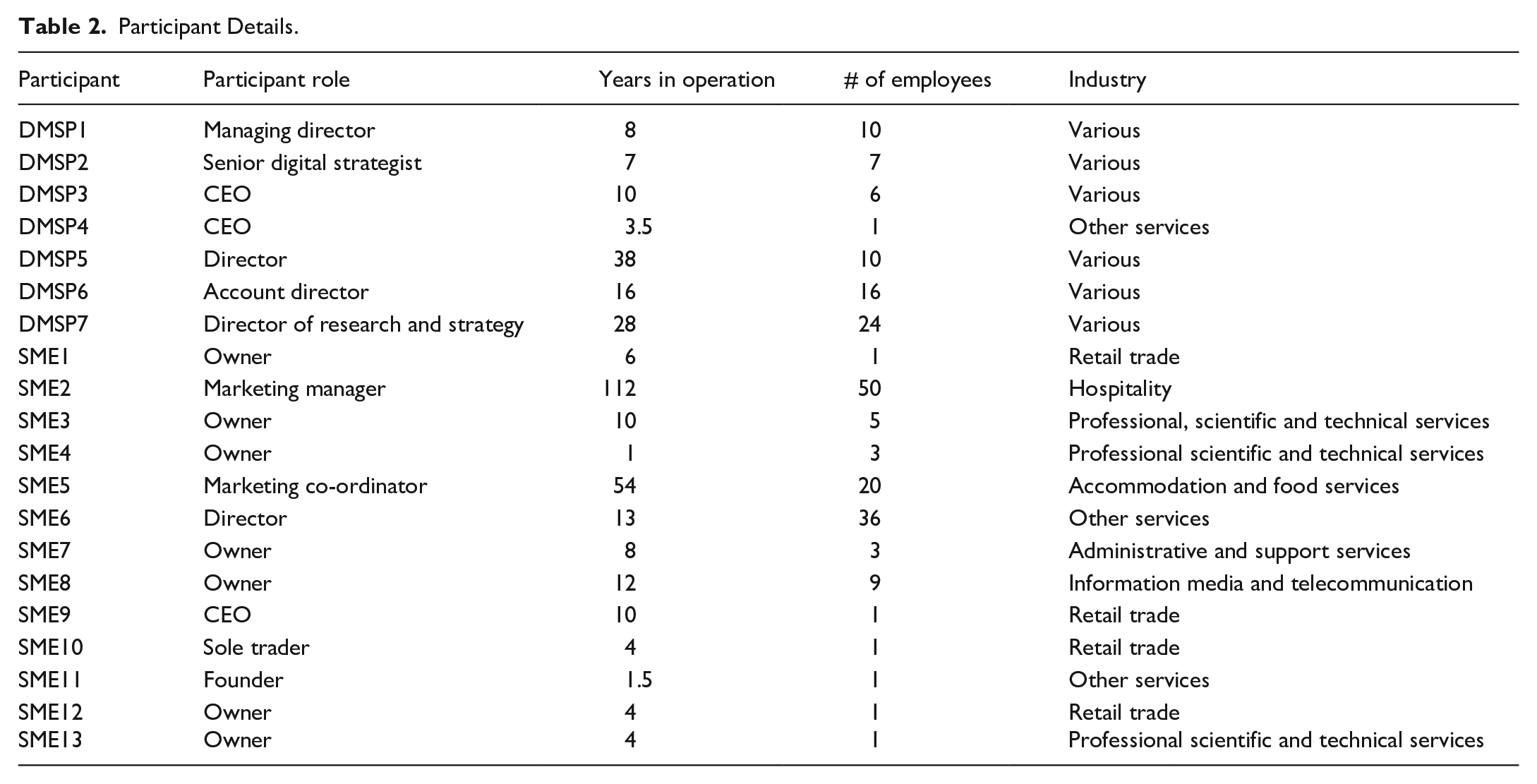
Twenty semi-structured interviews were conducted with owners of SMEs and DMSPs around Australia. The sample comprised of 13 SMEs (11 female and 2 male) and 7 DMSPs (3 female and 4 male) ranging from sole traders to agency owners (an overview is provided in Table 2). Participants were recruited via promotional communication from the ASBFEO, the industry networks of the first author, promotional posts in small business online and social media discussion groups and from the contacts of participants. Participants were thus selected for the sample using a combination of purposive (15 participants) and snowball sampling (5 participants). Purposive sampling was deemed appropriate for this study as it enabled researchers to identify participants that represented a range of sectors and geographical regions to allow for greater representation but also to ensure that data collection was aligned with the theoretical goals of the study. Snowball sampling was then applied during the interviews to source additional research participants which aligned with the theoretical goals of the research (Kirchherr & Charles, 2018). The use of purposive and snowball sampling was therefore advantagous as it allowed for a comprehensive theoretical selection of participants which could provide an understanding of the principal-agent relationship, considering both the perspectives of the principal and the agent. As identified by Pieringer and Totzek (2022) many studies guided by agency theory have often focussed on either the principal (client) or agent (provider) perspective, which could limit the insights drawn in relation to B2B relationships. Thus, by incorporating both perspectives, this study offers a more theoretically nuanced analysis of the principal-agent problem and can provide useful insights for managing B2B relationships including when goal alignment occurs.
Participant Details.
Researcher positionality and ethical considerations
Ethics approval was granted by the researchers’ institution (ethics approval A211645), and participants provided informed consent prior to the interviews being undertake in full. Interviews were conducted during 2022 via the Zoom video conferencing software, recorded with the participant’s consent and then transcribed. The interviews and data analysis were led by member of the research team who has owned and operated a digital marketing service provider business since 2020 in the role of Director and was supported by other research members who have knowledge and expertise in B2B and digital marketing research. Consistent with other qualitative research, the research team recognised the impact of their own lived experiences and the potential impact this had upon the research process (Lewis et al., 2023; Lewis & Mehmet, 2021). As such, during both the interview and data analysis phase the research team met on a weekly basis via Zoom undertaking critical reflexivity approaches (Lewis & Mehmet, 2021), including informal questioning, note-taking and seeking feedback and input from the industry partner, the ABSEFO.
Data analysis
This research utilised thematic analysis to analyse the data (Braun & Clarke, 2013) using a traditional human interpretative approach in combination with the software programme, NVivo 12 plus, to allow for greater accuracy of meaning expressed by the participants. Nvivo 12 plus was used purely as an interface; all coding was done manually by the researchers using the software to ensure maximum knowledge was extracted. The data analysis process was iterative and continuous, and transcripts were returned to and re-examined to refine codes and groupings as the analysis progressed (McCosker et al., 2004). All transcripts were read prior to the analysis commencing to ensure familiarity. Thus, the analysis also applied the phenomenographic approach involving iterative familiarisation, analysis and interpretations to consider collective meaning (McCosker et al., 2004). Given the importance of familiarisation with the research context, and the iterative coding approach a single coder was utilised to ensure accuracy, that industry vernacular was accounted for and understood and to maximise the knowledge that could be gleaned and extracted from the data (Scholz & Smith, 2019). Braun and Clarke (2013) note that a single coder is not necessarily less reliable because coding agreement can simply indicate all of the coders have been trained to code the same way. Instead, regular peer debriefing with the research team throughout the coding process was used to validate the thematic analysis and the codebook. This peer debriefing drew on the industry insights and perspectives of the first author. Further, it is important to note, that at the first order of coding, emic coding was employed, which directly utilises participants’ language and words to label codes within the data, thereby ensuring greater authenticity and validity. Embracing participants’ own words enhances cultural sensitivity and deepens the analysis by capturing nuanced meanings and perspectives, while also mitigating overinterpretation or bias by the researcher (Kerrane et al., 2021). For example, if participants used the term ‘expectations’ and discussed it in various ways, but in relation to how these were perceived as excessively high by one party, this would lead to the formulation of the code ‘unrealistic expectations,’ allowing for both ‘explanation and naïve understanding’ (Tonner, 2015, p. 107) to be achieved. During the first-order coding, key theoretical principles of agency theory (e.g. delegation and control) were also identified (see Figures 1–3), along with potential solution principles for alignment. Following the initial coding phase and consistent with coding approaches used in other B2B studies (Letcher et al., 2022), as well as best practices for qualitative rigour (Gioia et al., 2013), we employed the following structured approach: First-level codes were used to reflect the data, and second-order codes consolidated categories through abductive coding. Finally, at the third level (Gioia et al., 2013), theorising was undertaken in accordance with recommendations from the literature and other studies (Letcher et al., 2022) to understand how these coding levels contributed to insights into principal-agent conflict and principal-agent alignment.
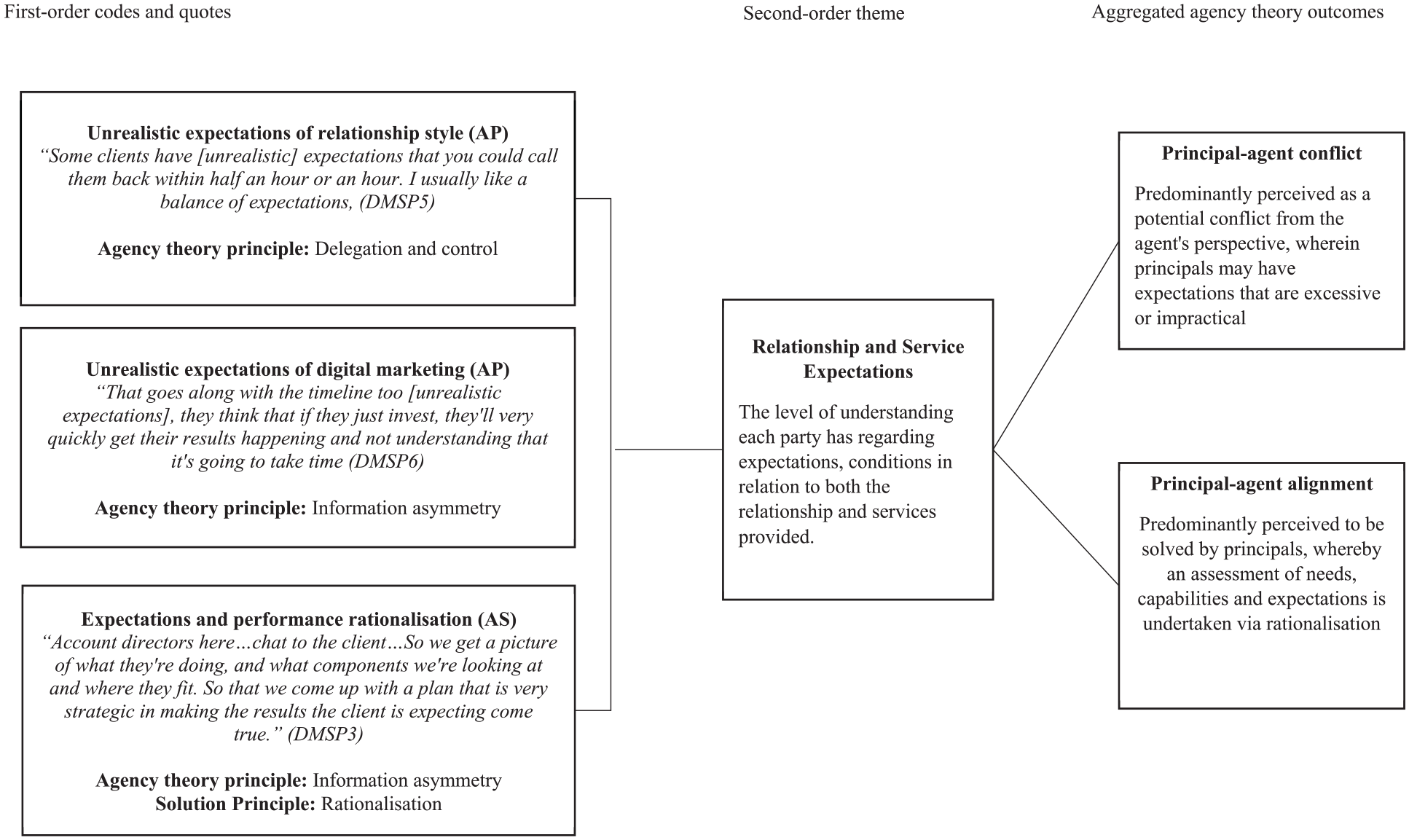
Perceptions of principal-agent conflict and alignment from relationship and service expectations.
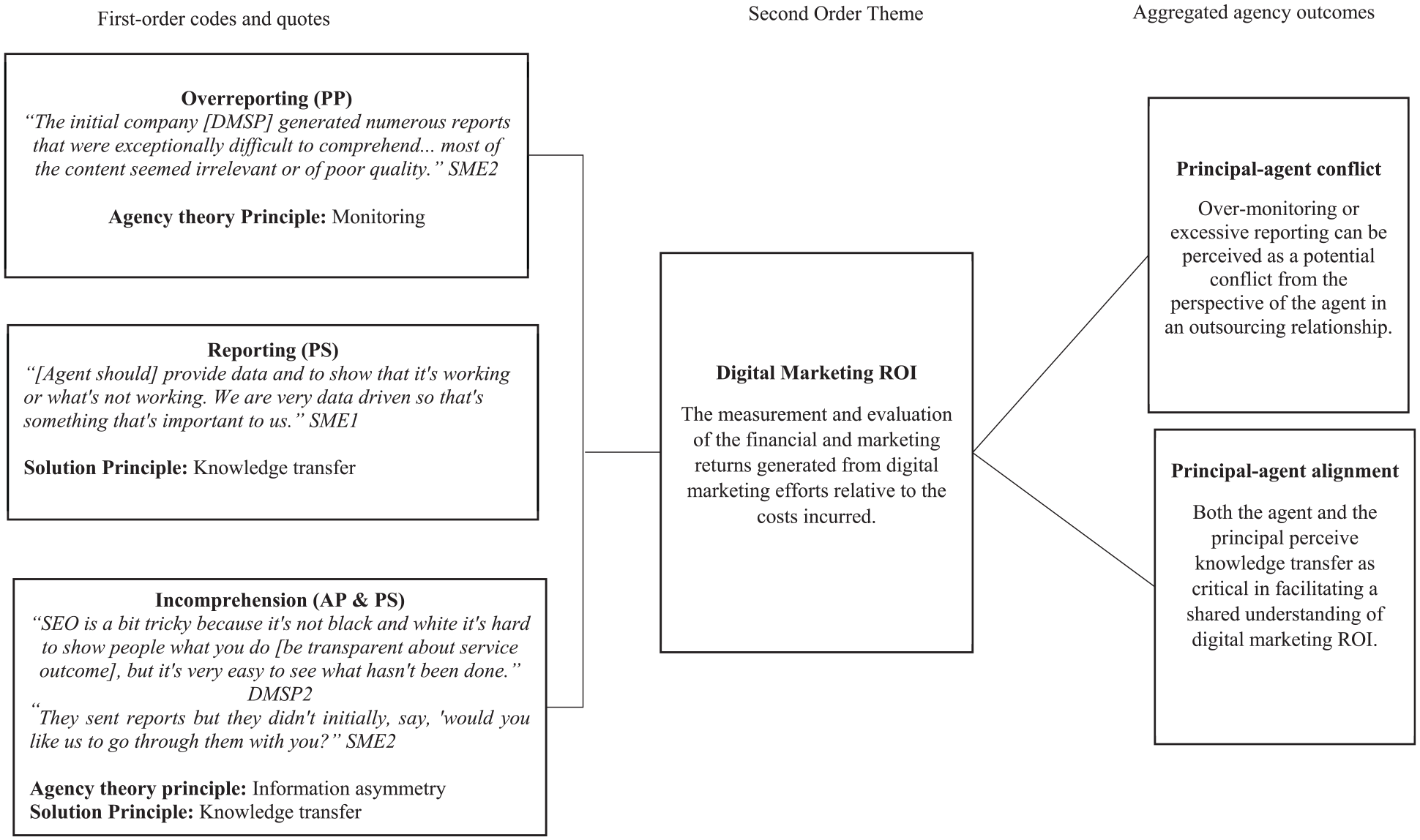
Perceptions of principal-agent conflict and alignment from digital marketing ROI.
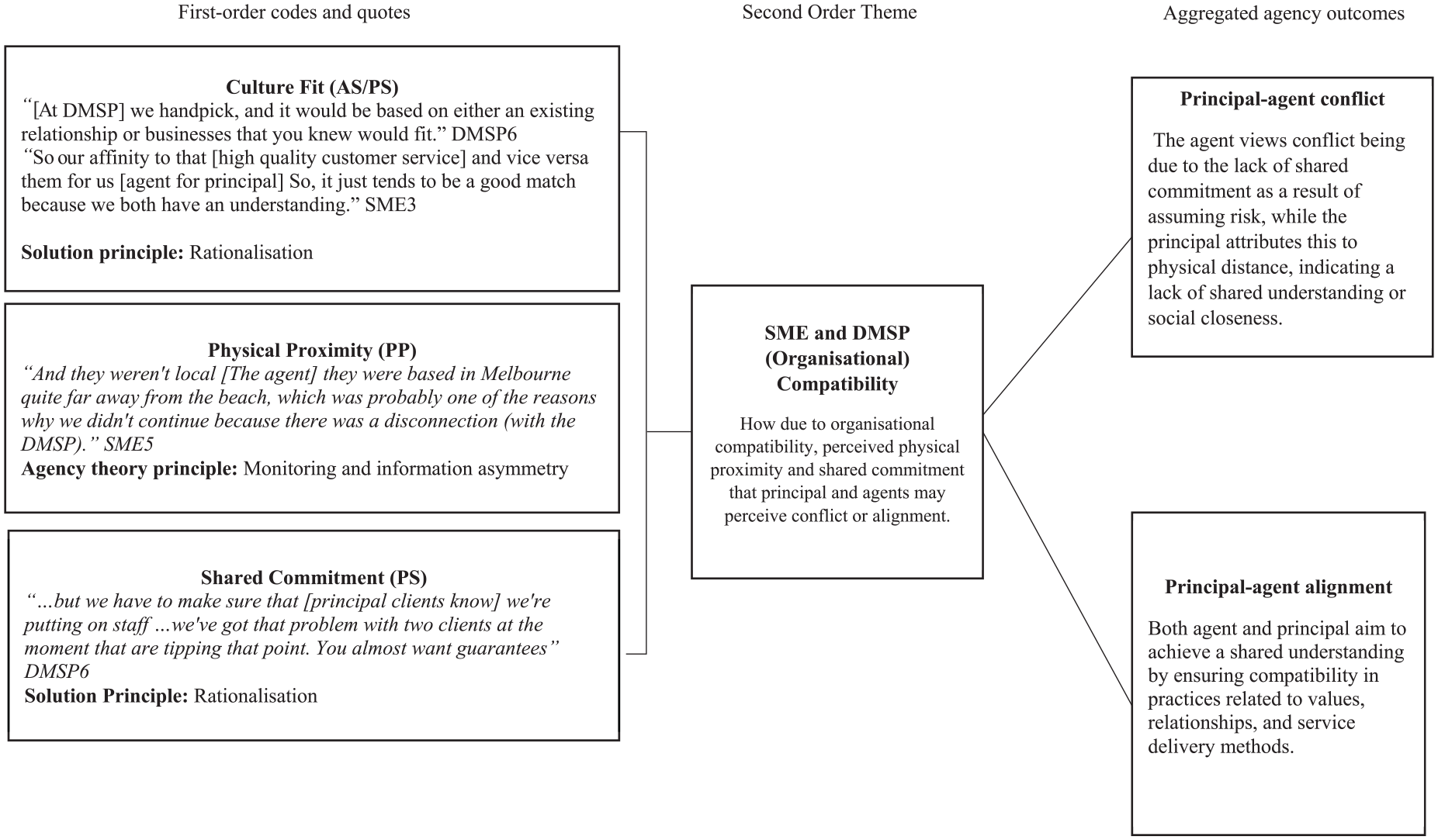
Perceptions of principal-agent conflict and alignment from SME and DMSP Compatibility.
Results
Three key second-order themes (underpinned by first order codes), (a) relationship and service expectations, (b) digital marketing ROI and (c) organisation compatibility, were identified in the data, which were identified as being related to principal-agent conflict and principal-agent alignment as third-order themes and whether there were perceptions of aspects being problems or solutions in these domains from the perspective of the principal (SME) or agent (DMSP).
Relationship and digital marketing expectations
The thematic analysis of the interviews identified the theme of relationship and digital marketing expectations. This theme was predominantly discussed from the perspective of agents, specifically DMSPs, and highlighted the presence of information asymmetry, consistent with agency theory. Furthermore, discussions of bounded rationality revealed that SMEs often relied on heuristics from other relationships or business functions, leading to misaligned expectations between the SME and the DMSP regarding achievable digital marketing outcomes. As shown in Figure 1, the thematic analysis suggests that DMSPs could mitigate these issues, particularly in the early stages of the relationship, by synchronising expectations and addressing information asymmetry concerning digital marketing and the partnership.
Unrealistic expectations of relationship style
The initial aspect highlighted within the relationship and digital marketing expectation theme is the (un)realistic expectations regarding relationship dynamics. Our analysis reveals a recurring issue where digital marketing service providers (DMSPs) perceive SMEs to harbour unrealistic anticipations regarding the nature, frequency and mode of interaction within their professional rapport (DMSP6). Thus, from this perspective the data revealed that unrealistic expectations were often perceived as an agent (supplier) problem (Corsaro & Snehota, 2011). Moreover, our data underscores that information asymmetry regarding relationship expectations often surfaces post-establishment of the relationship, stemming from a lack of articulated or mutually agreed-upon guidelines or norms. Although not extensively explored in the context of service delivery in outsourcing relationships, relationship information asymmetry has been suggested but lacks thorough empirical validation.
Furthermore, DMSPs indicated that SMEs often anticipate regular contact and communication within their relationship, a tendency likely rooted in apprehensions regarding delegation and control of this business function. This aligns with agency theory and pertinent literature, underscoring the significance of control in digital marketing for entities such as SMEs (Keegan et al., 2022; Matinheikki et al., 2022; Murphy & Kielgast, 2008) but also extending this to show how it can also cause potential principal-agent conflict when outsourced. Specifically, DMSPs observed that certain SMEs seek continuous communication due to concerns or a perceived lack of trust in relinquishing control over their digital marketing endeavours, as articulated by DMSP5: [we try to also get] a general sense of whether that client is going to be calling us every minute of the day or if they’re willing to trust us. . .our advice and leave it to us [delegation and control of digital marketing]
Unrealistic expectations of digital marketing
Our findings highlighted another issue identified by Corsaro and Snehota (2011), where DMSPs encountered unrealistic expectations from SMEs regarding digital marketing outcomes and timelines. Consistent with existing literature, DMSPs discussed SMEs’ struggle to grasp the metrics and strategies of digital marketing, often linked to their own limited digital marketing capabilities and knowledge (Keegan et al., 2022; Leeflang et al., 2014). These findings align with agency theory, suggesting that the (information) asymmetry in digital capabilities and literacy between parties leads to relationship challenges and potential principal-agent conflicts. DMSPs noted how SMEs would express interest in digital marketing services without fully understanding them.
This sentiment of issues relating to SMEs not fully comprehending digital marketing leading to potential principal-agent conflict is supported by DMSP4: The thing that I always see where things come unstuck is where people [the customer/SME] don’t understand what exactly they’re purchasing. (DMSP4). DMSPs also shared how beyond tangible evidence of digital marketing working, expectations of the time notable results could be achieved were impractical: . . .And that goes along with the timeline too [unrealistic expectations], they think that if they just invest, they’ll very quickly get their results happening and not understanding that it’s going to take time (DMSP6). Consequently, DMSPs discussed how this could lead to a level of principal-agent conflict, prompting them to terminate relationships: I’ve let two clients go in the last four weeks because their expectations were unrealistic (DMSP2).
Interestingly, whilst predominately an agent (supplier) identified problem, unrealistic expectations of digital marketing was still discussed by SME’s. SMEs that noted their own unrealistic expectations of digital marketing I had lots of hope, I saw it as an investment that would make me a return and unfortunately. . .I might have had too high expectations. SME3.
Expectations and performance rationalisation
DMSPs identified SME digital marketing expectations as a potential source of principal-agent conflict. This aligns with Corsaro and Snehota (2011), who suggest that alignment can be achieved through supplier solutions. Evidence from our data (see Figure 2) shows that steps and processes for managing expectations of digital marketing performance can help. Ensuring goal compatibility between the services provided and the digital marketing capabilities could further support alignment between the two parties. Thus, evidence within the current data supports Corsaro and Snehota (2011) findings that rationalisation, the process of attempting to explain or justify behaviour, decisions, beliefs or actions in a logical or reasonable manner, was seen by DMSPs as a mechanism to ensure alignment in their relationships with SMEs.
In sum of the theme of relationship and digital marketing expectations, it was evident that from an agency theory perspective information asymmetry resulting from SMEs lack of capabilities and literacy in digital marketing, and comfort in providing delegation and control of digital marketing could contribute to principal-agent conflict. Further, these were predominately notable problems identified from the perspective of the agent, the DMSP, but equally could also be addressed by them. Thus, in summary of relationship and digital marketing expectations findings the following are proposed:
P1. Unrealistic relationship expectations, and/or with a reluctance to delegate control of digital marketing to DMSPs can lead to principal-agent conflict.
P2. Information asymmetry between DMSPs and SMEs regarding digital marketing capabilities and literacy can lead to principal-agent conflict due to differences in expectations regarding digital marketing.
P3. Rationalisation strategies by DMSPs can enhance principal-agent alignment relating to relationship and digital marketing expectations.
Digital marketing ROI
Prior literature highlights the importance and challenges of measuring digital marketing performance (Edelman & Brandi, 2015; Leeflang et al., 2014; López Garcia et al., 2019; Silva et al., 2020). Agency theory also emphasises the need for monitoring and controlling costs in B2B outsourcing relationships (Ndubisi, 2013). In line with this, digital marketing ROI emerged as the second theme in the data. It was identified as a key factor that can lead to both principal-agent conflict and alignment. In the second order theme of Digital Marketing ROI, it became clear that efforts were made to provide knowledge that reassured clients of the value delivered by the DMSP’s services. This is especially important in the context of digital marketing (López García et al., 2019) and professional business services (Arslanagic-Kalakdzic & Zabkar, 2017), where the intangible nature of these offerings often poses challenges for clients in assessing the economic value and performance of these activities (Hansen et al., 2008). As illustrated via Figure 2, during thematic analysis it was identified that reporting, overreporting and incomprehension of reporting were first order codes we aggregated into considerations of the theme digital marketing ROI and understanding of how these could function as precursors to potential principal-agent conflict or principal-agent alignment.
Reporting
When considering digital marketing ROI as a potential precursor for principal-agent alignment, SMEs discussed how the provision of data from digital marketing activities was sought (SME1), thus demonstrating it as a potential principal solution (Corsaro & Snehota 2011). However, this was evident often in SMEs where data-driven strategy and evaluation was already a part of their culture and process of decision-making (see Figure 2).
Overreporting
However, SMEs also highlighted how they perceived excessive monitoring and reporting by DMSPs as a mask. This is consistent with the agency theory findings of Foreman et al. (2021) who conceptualise such practices as alignment masks, which within our data is evident by SMEs describing the action of DMSPs overreporting and or excessive reporting (see Figure 2 SME2). Further, aligning with other agency studies which discuss information overload, SMEs discussions of reporting of digital marketing performance aligned with what prior agency literature suggests can be perceived as intentional or deliberate attempts to induce information overload whereby there is too much information for processing capabilities of an entity to be undertaken (Greiling & Spraul, 2010).
Incomprehension
A third aspect of digital marketing ROI, discussed by both DMSPs and SMEs, centred on incomprehension. From the perspective of DMSPs, this was framed as a customer issue, wherein deficiencies in digital marketing capabilities and literacy hindered understanding and comprehension, particularly concerning the monitoring of outsourced digital marketing performance. This again corroborated agency theories suggestion of information asymmetry being a precursor to principal-agent conflict (Jayasimha, 2022; Mishra et al., 1998; Tate et al., 2010), which was evident in this situation in relation to monitoring of digital marketing ROI.
From the SMEs’ perspective, they proposed solutions for comprehension consistent with Corsaro and Snehota’s (2011) suggestion that customer perceived solutions for greater alignment in B2B relationships can include knowledge transfer. Participants noted they were frequently given reports without consultation or explanation of their contents, and that knowledge transfer by the DMSP about how to translate and understand the report would mitigate information asymmetry. SMEs also expressed a need for support or training to understand digital marketing analytics reports, indicating their reliance on DMSPs to address information asymmetry in reporting.
P4. Knowledge transfer through the reporting of digital marketing ROI from DMSPs to SMEs can facilitate principal-agent alignment; however,
P5. Excessive reporting by DMSPs may be detrimental for SMEs’ monitoring of digital marketing ROI, potentially masking alignment issues in the relationship and resulting in principal-agent conflict.
P6. A solution to foster principal-agent alignment could involve digital marketing service providers transferring knowledge to aid SME comprehension of digital marketing processes.
SME-DMSP (organisational) compatibility
The data underscored the shared belief of both SMEs and DMSPs that achieving alignment between principals and agents is more attainable when, during the initial stages of relationship formation, there is an assessment of shared values, business practices and compatible goals (DMSP6, SME3), which manifested into an assessment of organisational compatibility between the parties. However, while there were shared perspectives on the methods to achieve SME and DMSP fit, there were also notable variations in viewpoints.
Organisational compatibility
The data underscored the shared belief of both SMEs and DMSPs that achieving alignment between principals and agents is more attainable when, during the initial stages of relationship formation, there is an assessment of shared values, business practices and compatible goals (DMSP6, SME3), which manifested into an assessment of organisational compatibility between the parties. This theme was emergent, whereby it emerged organically from the data rather than being predetermined or guided by the literature (Williams, 2008) but also aligns with agency theory research which discusses notions of goal congruence and compatibility between principals and agents (Cuevas-Rodríguez et al., 2012; Maestrini et al., 2018).
As shared by one DMSP a lack of organisational compatibility could be due to differences in the way business is conducted by both parties indicated by the industries they operate within: It’s a feel along with if it’s the business and [socially] connects with us. If it was. . .a law firm I would say no straightaway (DMSP6). From this perspective, organisational compatibility emerged as a potential collaborative solution between the supplier and the customer, enabling both parties to assess compatibility before formalising the outsourcing arrangement. This aligns with emerging evidence of culture’s importance in agency theory and outsourcing literature. While previous research has focussed on cultural compatibility between businesses in different countries (Handley & Angst, 2015), our study emphasises organisational compatibility between organisations themselves. This finding is consistent with Feng et al. (2011), who identified compatible cultures as a key criterion in outsourcing service relationships.
Physical proximity
Both SMEs and DMSPs recognised physical proximity as influencing conflict and alignment, akin to psychological distance in construal level theory (Trope & Liberman, 2010), shaping perceived social closeness (L. E. Williams et al., 2014). SMEs perceived DMSPs as distant, potentially causing misfit and incompatibility, supported by agency theory findings (Steven & Britto, 2016). Increased physical distance may lead to perceptions of DMSPs evading control and prioritising self-interest, aligning with Sternberg et al.’s (2023) proposition of service performance decline.
SMEs echoed sentiments akin to Sternberg et al. (2023), noting that considerable distance hindered performance evaluation and communication, corresponding to agency principles on monitoring and information asymmetry. One SME, based in Queensland, perceived significant physical distance from the Melbourne-based DMSP, ultimately discontinuing the relationship (see Figure 3 for a quote).
Shared commitment
Shared commitment was a theme discussed by DMSPs regarding organisational compatibility, particularly in relation to SMEs’ elevated risk when initiating or scaling the relationship, necessitating commitment and resource sharing. DMSPs emphasised the importance of commitment at the relationship’s outset, echoing Plewa and Quester’s (2007) findings on organisational compatibility and commitment in B2B relationships. Additionally, discussions with DMSPs support Jayasimha’s (2022) study on calculative commitment, addressing uncertainties regarding SMEs’ willingness to commit and collaborate, and align with Corsaro and Snehota’s (2011) suggestion of rationalisation as a solution for greater alignment. However, in the current research, the process of rationalisation differed, as described by participants, particularly DMSPs. Rather than being solely process-focussed, as in Corsaro and Snehota’s (2011) original work, rationalisation in this case involved creating a shared understanding, logic and language around what was required from SMEs in terms of commitment, ensuring that the relationship would be mutually beneficial for both parties.
In summarising the SME-DMSP (Organisational) Compatibility theme, it became apparent that the agency principles of monitoring and information asymmetry played a significant role in explaining what SMEs and DMSPs perceived as contributing to potential principal-agent conflict. Furthermore, solutions that involve sense-making and rationalisation between the SME and DMSP were identified as ways to achieve greater compatibility through shared values, interests and relationship principles. These findings are summarised in the following propositions:
P7. Achieving organisational compatibility between the SME and DMSP in terms of their business practices, values and relationship styles can contribute to principal-agent alignment.
P8. When SMEs perceive a lack of physical proximity to the DMSP, it may lead to principal-agent conflict due to perceived challenges in monitoring and information asymmetry.
P9. A potential solution for enhancing principal-agent alignment is for DMSPs to ensure a shared commitment to the relationship between the parties through rationalisation mechanisms.
Discussion
This paper aimed to explore SME and DMSP relationships in B2B marketing literature by applying an agency theory framework and addressing three interconnected research questions. Investigating the outsourcing of digital marketing, contributed to both B2B and digital marketing literature. While prior studies touched on business function outsourcing and customer-provider dynamics, they often overlooked this aspect in digital marketing literature, as evident in Table 1. To bridge this gap, this study employed agency theory to guide its empirical investigation, addressing the dearth of theoretical frameworks in digital marketing literature, as outlined in Table 1. Moreover, unlike previous studies primarily focussed on principal-agent conflict, this research also considered principal-agent alignment. The ensuing contributions stemming from this approach are discussed next.
Theoretical implications
One theoretical contribution of this research lies in its extension of B2B digital marketing literature and outsourcing literature regarding the role of information asymmetry. Like prior B2B marketing studies (Jayasimha, 2022; Mishra et al., 1998; Tate et al., 2010), information asymmetry, especially regarding digital marketing services, persists between principals (SMEs) and agents (digital marketers). By highlighting how such information asymmetry can lead to conflicts in outsourcing digital marketing, this study underscores the importance of digital marketing literacy and capabilities (Herhausen et al., 2020; Homburg & Wielgos, 2022; Kim et al., 2021), both for in-house implementation and outsourcing—the latter a notion yet to be thoroughly explored or considered to date. Through the lens of agency theory, related literature and empirical evidence, this research thus provides a fresh perspective on the role of digital marketing capabilities and literacy, not just in execution but also in conflict mitigation when outsourcing to providers.
Another contribution of the current study is illustrating how the agency theory principle of monitoring, particularly its execution, can potentially lead to either principal-agent conflict or alignment. While agency theory literature emphasises the importance of monitoring (Ndubisi, 2013) and digital marketing literature highlights the difficulty in determining measurement and actionable analytics (Edelman & Brandi, 2015; Leeflang et al., 2014; López Garcia et al., 2019; Silva et al., 2020), the concept of ‘too much’ monitoring or measurement of digital marketing performance has seldom been explored. Building on previous research (Foreman et al., 2021), this study reveals that excessive monitoring of an outsourced business function, such as digital marketing, along with its performance or pre-emptive reporting, can be perceived as masking alignment issues. Agents (DMSPs) may attempt to compensate for or disguise problems to present a functional relationship, at least from the perspective of principals (SMEs). This highlights the nuanced impact of monitoring practices in outsourcing relationships and the business function outsourced such as digital marketing, which can vary in effectiveness depending on their style and perception and that the mere existence or increase of monitoring mechanisms may not necessarily always constitute greater principal-agent alignment but the opposite, greater principal-agent conflict.
This research enhances the understanding of agency theory and principal-agent alignment by incorporating key insights from Corsaro and Snehota’s (2011) framework. Although principal-agent alignment has been acknowledged in the literature (Matinheikki et al., 2022; Nwajei et al., 2022), its exploration within B2B outsourcing relationships remains limited. This study addresses this gap by applying aspects of Corsaro and Snehota’s (2011) framework to data from SMEs and DMSPs, identifying strategies that principals and agents use to achieve alignment, particularly through knowledge transfer and rationalisation. These factors, which have not been fully explored in agency theory, especially in the context of alignment, provide a more comprehensive understanding of how alignment can be achieved beyond contractual agreements. By building on the work of Corsaro and Snehota (2011) and Tate et al. (2010), this research contributes to agency theory and B2B digital marketing literature by offering practical solutions for enhancing principal-agent alignment.
Practical implications
The current research presents several practical implications. Firstly, addressing information asymmetry regarding SMEs’ digital marketing capabilities and knowledge could involve implementing comprehensive onboarding and training programmes for engaging with Digital Marketing Service Providers (DMSPs). These programmes might encompass workshops, webinars or personalised training sessions aimed at educating SMEs on various aspects of digital marketing, including SEO, social media advertising, content marketing and analytics. Additionally, the training could focus on clarifying technical jargon and explaining key metrics and performance indicators used in digital marketing campaigns. While DMSPs might initially view this approach as counter-intuitive, a foundational understanding of these domains could help overcome relational issues and foster a shared understanding, leading to alignment rather than conflict in the relationship. Alternatively, where gaps in such training are identified, there could be a role for government and policymakers to provide upskilling and training for SMEs. Such initiatives may prove beneficial in reducing disputes within these relationships and subsequent caseloads for government departments.
Another implication of the findings for practitioners underscores the significance of conducting a comprehensive pre-relationship meeting aimed at enhancing and establishing a a shared understanding and rationalisation process and laying the foundation for a successful collaboration. This meeting presents an opportunity to implement various practical steps to address potential issues and ensure alignment between both parties. These steps involve allocating time to clarify objectives, goals and expectations to align visions and priorities, sharing background information to foster mutual understanding of strengths and capabilities and discussing roles and responsibilities to clarify expectations regarding tasks, deliverables and decision-making processes.
A third practical implication, particularly relevant for DMSPs, pertains to their reporting of digital marketing performance to clients, such as SMEs. It is essential for DMSPs to avoid information overload and ensure that their reporting is presented in layman’s terms, allowing clients to understand the outcomes clearly. Implementing meetings or allocating time for knowledge transfer regarding the significance of the results and providing opportunities for clients to ask questions can ensure comprehension and prevent the perception of masking poor performance. This proactive approach could further foster perception of transparency and strengthens the relationship.
Limitations and further research directions
The current research has limitations but offers opportunities for future investigations. While it addresses prior literature limitations by interviewing both principals (SMEs) and agents (DMSPs) in B2B relationships, future studies could benefit from incorporating quantitative research designs to enhance the proposed framework. Surveys administered to clients and digital marketing service providers could reveal significant differences in expectations, affecting relationship perceptions. Quantitative research could also explore aspects of organisational culture alignment and how clients’ prior outsourcing experience influences provider evaluation.
Furthermore, this research underscored the significance of digital marketing capabilities for SMEs to effectively comprehend and collaborate with their outsourcing service providers. However, how these capabilities can be cultivated before or during an outsourcing relationship, and their broader influence on the relationship, were not thoroughly examined in this study. Subsequent research endeavours could explore avenues for developing digital marketing capabilities within such relationships. For instance, investigating whether outsourcing service providers offer training or skill enhancement opportunities to SME clients could facilitate principal-agent alignment within the relationship.
Footnotes
Correction (January 2025):
Article updated to correct Figures 1, 2 and 3.
Declaration of conflicting interests
The author(s) declared no potential conflicts of interest with respect to the research, authorship, and/or publication of this article.
Funding
The author(s) disclosed receipt of the following financial support for the research, authorship, and/or publication of this article: This research received funding from: The Australian Small Business and Family Enterprise Ombudsman (ASBFEO).
