



Abstract
Although market-shaping is typically initiated by firms, its success relies on the collective efforts of multiple market actors. Consumers play a crucial role in shaping markets, by actively engaging in activities beyond merely purchasing products. For example, in the case of ride-sharing services, early adopters actively advocated for their use, educated others on how to access them, and lobbied for regulatory changes that enabled the services to operate and scale in various markets. Through these actions, consumers helped to establish the new service offering and shape the market. Despite this significant role, there is a limited understanding of how firms can motivate consumers in practical terms. This study employs a discrete choice experiment to investigate how a firm can elicit market-shaping behaviours of consumers within the context of autonomous ride-sharing services. Identifying three distinct consumer segments with unique resource expenditure preferences in the value creation process, the study sheds light on the specific activities that drive market-shaping. While some consumers prefer reducing specific key resources, others navigate trade-offs across a broader range of resources. The findings emphasise the importance of tailored value propositions in motivating consumers to engage in behaviours that support successful market-shaping.
Keywords
Introduction
Product or service innovations bring widespread changes to market dynamics (Tushman & Anderson, 2018), establishing new markets or disrupting existing ones (Christensen, 2013). The success or failure of innovative new products or services often hinges on their ability to gain widespread consumer adoption and support (Rogers et al., 2014). Consumer support within this context thus extends beyond purchasing the immediate innovation and includes other activities (e.g. advocating and lobbying for their use, educating other consumers about market changes) which help establish or alter market institutions, practices and modes of exchange (Flaig et al., 2021). Without the broader consumer support through these activities, success is unlikely for both the innovation and the market change that it brings. For example, Zune Music Pass was the first subscription-based music streaming service to enter the market (Winkie, 2021). Zune Music Pass, however, failed to garner widespread customer adoption and support necessary to establish the service and shape the market in the process (Winkie, 2021). Spotify on the other hand entered the market later, expanded service coverage slowly, but saw consumers actively seek out and demand the service. Even before launching in the U.S. market, consumer interest was high, with a thousand emails per week inquiring about the availability of the service, as well as dedicated blogs and fan sites, not only praising the service, but making cases for its release (Pollack, 2010; Van Buskirk, 2009). Spotify gained consumer support and adoption followed, shaping the market in the process.
Changes to markets can however be purposefully induced through what is often referred to as market-shaping. Market-shaping is the process of altering market configurations (Kjellberg et al., 2012), through purposeful actions by market actors (Nenonen et al., 2019). While market-shaping is often initiated by firms (Flaig et al., 2021), it is increasingly being viewed as a collaborative process (Nenonen & Storbacka, 2020). During this process, actors such as consumers perform a range of activities that help shape markets (Harrison & Kjellberg, 2016), for example, by modifying products, finding new uses for them and influencing other consumers (Martin & Schouten, 2014). Hence, no single actor is capable of shaping the market (Fehrer et al., 2020), and the success of market-shaping relies on gaining the support of other market actors, such as consumers, to overcome resource limitations (Maciel & Fischer, 2020; Nenonen & Storbacka, 2020) and help establish new market institutions and practices (Flaig et al., 2021). Getting consumers on board can mean the difference between success and failure. For example, research has shown that artificial intelligence powered technology, such as autonomous vehicles, face consumer resistance, which needs to be overcome if the technology is to be successful and established within the market (Casidy et al., 2021). Nevertheless, insufficient knowledge exists on how a firm can elicit consumers to support market-shaping and perform activities that will enable the firm to realise its market-shaping vision.
Research suggests that support for market-shaping initiatives emerges when enhanced value creation opportunities are created for market actors (Storbacka, 2019). When firms attempt to shape markets, they improve market resource density by creating new resource linkages (Storbacka, 2019) or improving access to existing resources (Nenonen et al., 2020). As a result, value creation is enhanced as market actors can utilise more resources to create the desired value (Lusch & Nambisan, 2015; Normann, 2001). Within this context, consumers use available resources provided by firms (Plé, 2016) and attempt to compensate for existing personal resource deficits (Arnould et al., 2006), for example, by travelling further to purchase cheaper products. This creates a dynamic where consumers reduce the expenditure of some resources (e.g. financial) and expend more of other resources (e.g. temporal) to maximise their individual value in an exchange (Nenonen et al., 2020). However, the resource expenditure dynamics that emerge in a market-shaping context are unclear. While market-shaping improves access to resources that should translate to enhanced value creation, consumers do not all interpret what constitutes value the same way (Vargo & Lusch, 2008). Consumers may thus perceive the value propositions of market-shaping firms as inadequate and elect not to support their market-shaping efforts, hindering their success. Therefore, this research addresses the following question: Can a firm elicit consumers to perform activities that help the firm shape a market?
To address this question, we employ a discrete choice experiment (DCE) in the context of an autonomous ride-share market in the United States. Discrete choice experiments are theory-driven (Louviere et al., 2010) and depict consumer choices within the market as combinations or ‘bundles’ of attributes (Lancaster, 1991). Seeking to examine consumer value creation within a market-shaping context, DCE allows us to estimate the importance the consumer would place on the various resources when creating value (Louviere et al., 2000) and engaging in behaviours that aid market-shaping efforts within the autonomous ride-share market. This methodology is also well suited for this type of examination as it has a high external validity (Farsky et al., 2017; Louviere & Islam, 2008) and has been shown to be highly predictive for real-world scenarios (Lancsar & Louviere, 2008; Lancsar & Swait, 2014).
This study contributes to market-shaping literature by moving beyond firm-centred market-shaping research (Storbacka et al., 2022) towards a better understanding of the consumer roles within it (Ulkuniemi et al., 2015). Specifically, this study shows how consumers can be enticed to perform behaviours that shape the market or assist firms in doing so through a reduction in resource expenditure, which has so far been only conceptually discussed (e.g. Lipnickas et al., 2020). By focusing on the selective management of consumer resource expenditure (Arnould et al., 2006; Plé, 2016), we gain a better understanding of how value is created within markets and how market-shaping behaviours of consumers can be encouraged by firms. Results of the DCE reveal three distinct consumer segments, each with their own resource expenditure preferences. While some consumers place significant importance on only a few resources, others balance trade-offs among several resource categories when creating value, suggesting a contextual lack or abundance of certain resources. In general, consumers show varied preferences across resources, as well as different propensities to perform market-shaping activities, indicating a need for a better understanding of consumers to successfully encourage their market-shaping behaviours. Firms seeking to shape markets should thus understand the selective resource management of consumers so that they can be enticed to support market-shaping (Nenonen & Storbacka, 2020) through appropriate, context related reduction of resource expenditure. Finally, this research contributes towards addressing the paucity of quantitative studies in the market-shaping domain (see Burr, 2014; Dolbec & Fischer, 2015; Harrison & Kjellberg, 2016; Maciel & Fischer, 2020; Martin & Schouten, 2014).
For firms seeking to shape the market, this study shows that understanding consumer resource trade-offs is imperative when designing products or services. Since consumers exhibit differentiating resource expenditure preferences, understanding them enables firms to design value propositions that can elicit consumer support (Nenonen et al., 2020). Firms can communicate these distinct value propositions to consumers, but since firm resources are not infinite, they can also encourage and facilitate consumers supporting market-shaping initiatives to create value propositions to appeal to other consumers. For example, firms will communicate the safety benefits of a service to early adopters, who then interact with the service and evaluate its safety. Firms can then encourage these consumers to engage in providing recommendations and word-of-mouth to other consumers through the development of online platforms for this purpose. Firms can thus foster market-shaping, sequentially attracting more customers to support their initiative.
In the following sections, literature pertaining to market-shaping and the consumers’ role within it is discussed, with particular consideration placed on value creation and resource expenditure. Afterwards, the methodology, the specifications of the research design and our results are discussed. The article then progresses with a general discussion of the findings, followed by theoretical and practical implications. Finally, the limitations of our research are outlined together with avenues for future research.
Related literature
Market-shaping
Markets are viewed as ‘complex adaptive sociotechnical-material systems, consisting of institutions, actors, practices and discourses that organise particular economised exchanges’ (Nenonen et al., 2019, p. 252). Within markets, actors integrate resources to co-create context-specific value for themselves and other actors (Kleinaltenkamp et al., 2012). Because markets are adaptive, they effectively become ever-changing social constructs (Rosa et al., 1999) that are malleable (Kjellberg et al., 2012) and can be deliberately changed by actors seeking enhanced value creation (Nenonen et al., 2020). This process is referred to as market-shaping and entails a ‘change [in] the configurations of actors and/or their behavior in the market’ (Nenonen et al., 2014, p. 276) as market actors attempt to secure a more beneficial position (Nenonen & Storbacka, 2020). Actors seek to shape markets through increased resource density (Storbacka, 2019) by creating new or offering more resources (Nenonen et al., 2020), facilitating enhanced value co-creation for all market actors. Defined as the ‘accessibility of resources and resource bundles, relevant to the attainment of an actor’s goals, in a particular time/space’ (Lipnickas et al., 2020, p. 1443), resource density reflects access to, or availability of, resources that market actors can utilise to create value (Lusch & Nambisan, 2015; Normann, 2001).
Traditionally viewed as a firm-centric activity (Jaworski et al., 2000; Kumar et al., 2000), recent research points to not only multiple actors shaping markets (see Baker et al., 2019; Kjellberg et al., 2015), but to market-shaping being a collective process, where firms seeking to shape markets must entice other market actors to support their cause (Maciel & Fischer, 2020; Nenonen & Storbacka, 2020). Hence, the success of market-shaping relies on gaining the support of other market actors, often overcoming the resource limitations of any single actor (Maciel & Fischer, 2020; Nenonen & Storbacka, 2020), such as the firm or the consumer. Gaining the support of consumers is thus crucial for market-shaping success, as consumers not only support the firm but perform market-shaping activities themselves (Maciel & Fischer, 2020). For example, consumers were the primary disseminators of bicycling in the United States, which helped establish it as a form of transportation (Burr, 2014). Consumers can perform a range of behaviours that shape markets, or support market-shaping efforts of other actors (Kjellberg et al., 2012; Nenonen et al., 2020). These behaviours range from simple consumption (Martin & Schouten, 2014), community building (Heinonen et al., 2018), political advocacy (Rao, 2009), word-of-mouth recommendations (Burr, 2014; Hill et al., 2006), helping other consumers (Dolbec & Fischer, 2015; Martin & Schouten, 2014) and providing feedback to companies (Dolbec & Fischer, 2015; Rao, 2009). By engaging in these activities, consumers exert influence on firms and other consumers (Dolbec & Fischer, 2015; Scaraboto & Fischer, 2013), thus creating, reinforcing or altering institutions, norms, modes of exchange and/or market practices (Harrison & Kjellberg, 2016; Kjellberg & Olson, 2017), shaping the market or assisting firms in doing so. For example, plus-sized consumers who were dissatisfied with existing fashion offerings gathered in online communities and pressured companies to manufacture larger items, shaping the market as a result (Scaraboto & Fischer, 2013). Using social media, these consumers publicly praised and supported market actors who provided them with desired options, and shamed actors who did not, pressuring market actors to start releasing more plus-size clothing (Scaraboto & Fischer, 2013). Alternatively, consumers can also resist market-shaping attempts. For example, consumers may avoid companies or products (Dolbec & Fischer, 2015; Rao, 2009), demand changes to business practices (Diaz Ruiz & Makkar, 2021) or demand companies halt practices aimed at shaping the market (Rao, 2009). This would contribute towards maintaining existing market practices and institutions, acting to prevent the market from being shaped.
Despite research acknowledging the significant role consumers play in shaping markets (Dolbec & Fischer, 2015; Giesler, 2008; Martin & Schouten, 2014; Scaraboto & Fischer, 2013), further insights are needed in not only better understanding the role of consumers in market-shaping (Ulkuniemi et al., 2015), but also on how to encourage them to perform market-shaping behaviours of their own, such as recommending a product or a service (Storbacka et al., 2022). While research suggests that support for market-shaping initiatives emerges if enhanced value creation opportunities are created for market actors (Nenonen & Storbacka, 2020; Storbacka, 2019), the exact dynamics that lead to consumers supporting market-shaping are unclear.
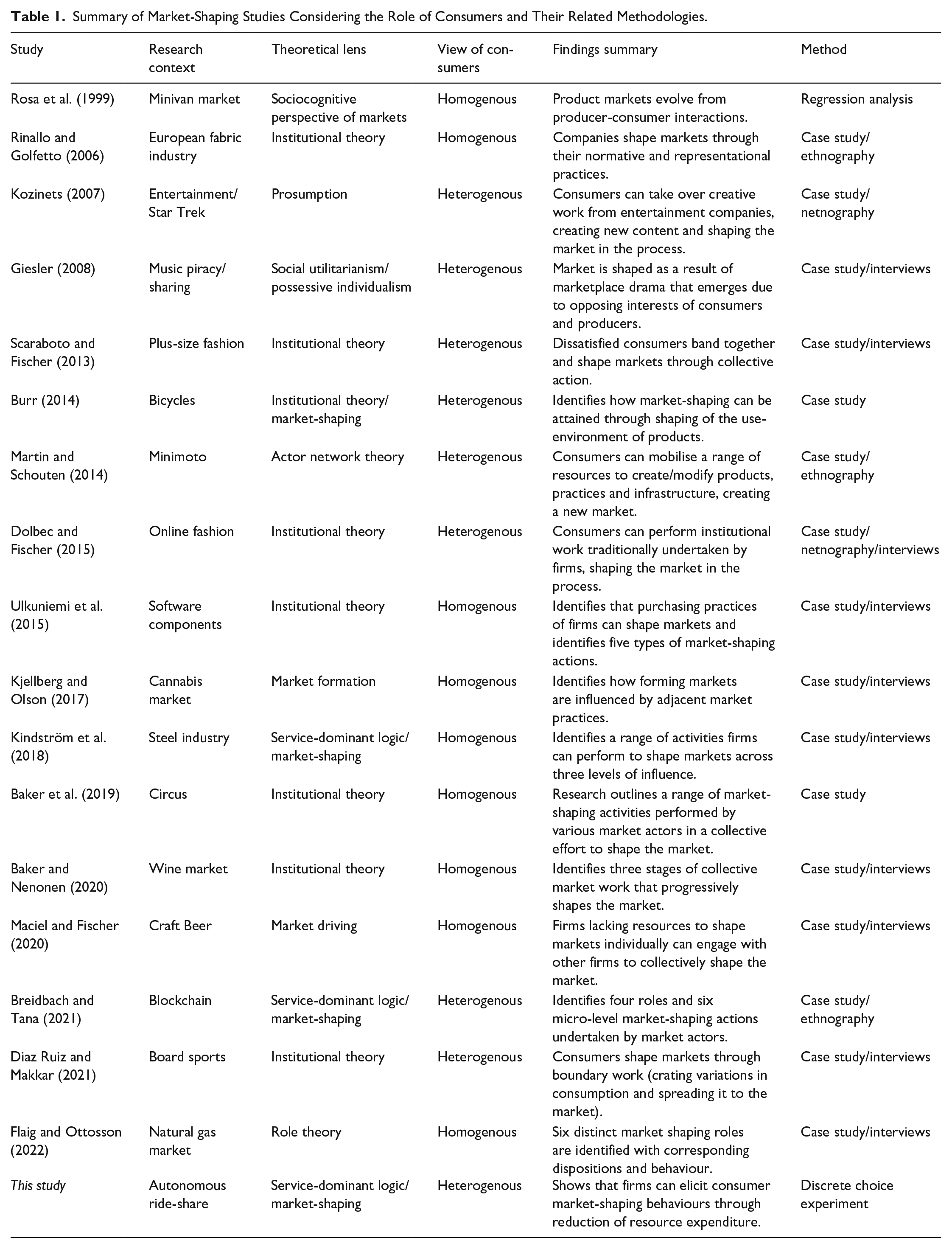
In addition, market-shaping studies tend to be reflective and case study based (see Burr, 2014; Dolbec & Fischer, 2015; Harrison & Kjellberg, 2016; Maciel & Fischer, 2020; Martin & Schouten, 2014). As shown in Table 1, relatively few studies employ a quantitative methodology to examine market-shaping. Specifically, among the studies outlined, only Rosa et al. (1999) contain a quantitative approach, while other studies (e.g. Baker & Nenonen, 2020; Flaig & Ottosson, 2022; Ulkuniemi et al., 2015) contain empirical contexts for the case studies while employing qualitative approaches in examining market-shaping. Therefore, there is a lack of quantitative research in the field of market-shaping, limiting insights and the ability to forecast market-shaping success. Furthermore, studies acknowledging consumer importance in market-shaping tend to view consumers as a homogenous group. Such disconnect to the diverse nature of consumers means that extant research is not sufficient to provide the necessary foundation for further advancement of consumer-focused market-shaping theory and practice. This study aims to address this gap through a quantitative approach outlined in the later sections.
Summary of Market-Shaping Studies Considering the Role of Consumers and Their Related Methodologies.
Consumers in market-shaping
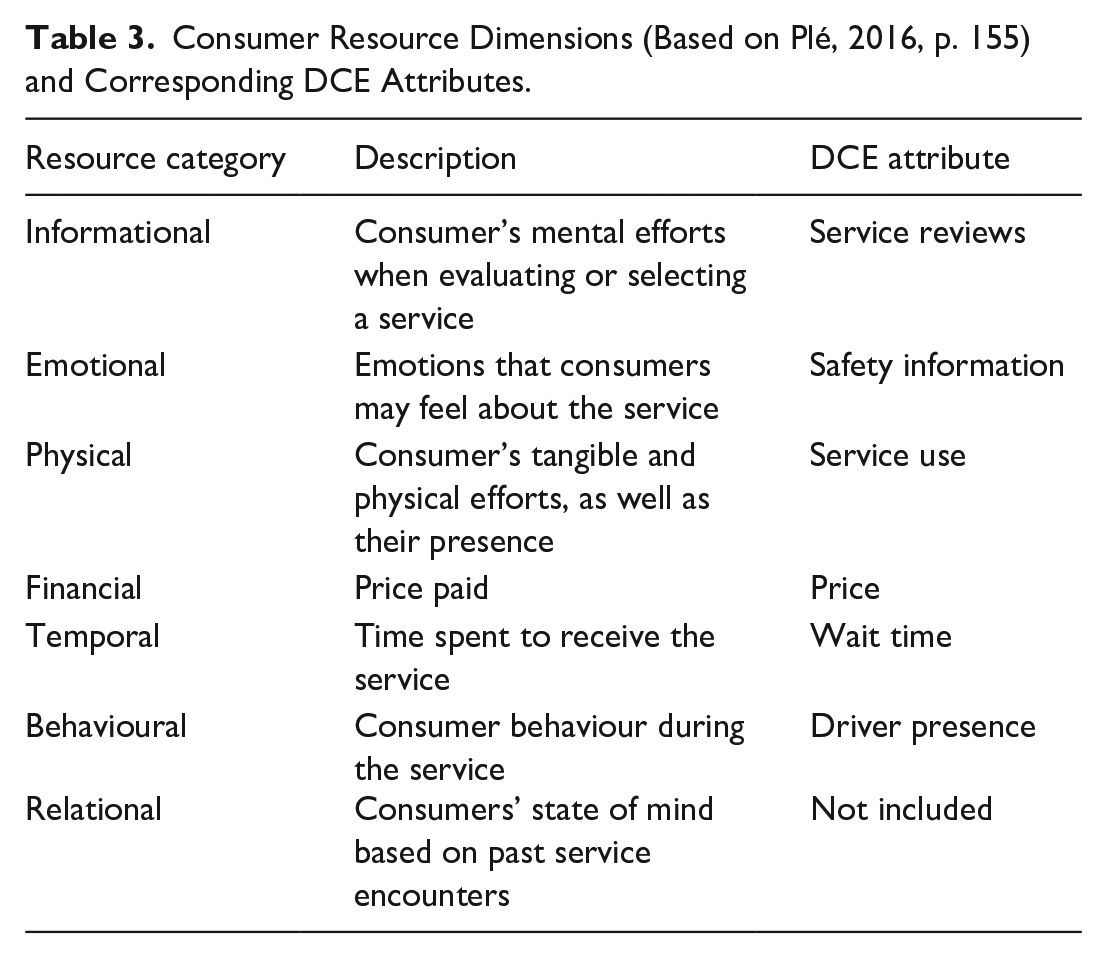
All market actors operate on the basis of mutual value co-creation, integrating resources to create the best value for themselves (Kleinaltenkamp et al., 2012), and consumers are no different. They actively seek additional resources within markets (Arnould et al., 2006) and perform market-shaping activities in order to secure enhanced value creation opportunities (Kjellberg et al., 2012; Nenonen et al., 2020). Two primary perspectives of resources are reflected in the literature. Service dominant logic classifies resources used in value creation as economic, social, cultural and physical (Arnould et al., 2006; Plé, 2016). These four categories, however, make it difficult to isolate specific inputs of consumers. For example, the ‘physical’ category includes sensorimotor endowment, energy, emotions and strength (Plé, 2016). Customer participation literature, on the other hand, offers a more specific classification of the types of resources consumers bring to the process of value creation: informational, emotional, physical, financial, temporal, relational and behavioural (detailed descriptions can be found in Table 3; Plé, 2016). In accordance with Plé’s (2016), resource types based on customer participation literature allow for the isolation of specific resources consumers bring to the process of value creation and are therefore used henceforth in this study.
While consumers bring a range of resources to the process of value creation, not all resources are necessarily used (Plé, 2016). Consumers manage their resource expenditure when engaging in value creation (Arnould et al., 2006; Hibbert et al., 2012). They do so by evaluating their own resources and those available from the firm to compensate for specific resource deficits they may possess (Arnould et al., 2006). Consumers then expend their resources in bundles (Lusch & Nambisan, 2015) on desired value creation, depleting their resources and limiting future value creation potential (Muraven & Baumeister, 2000; Sweeney et al., 2015). Researchers, however, noted that reducing consumer resource expenditure allows them to engage in more value creating activities (Akaka et al., 2012), or seek enhanced value creation through activities already engaged in (Sweeney et al., 2015). By enticing consumers to engage in additional value creating activities, better value is created by both parties (e.g. the consumer and the firm; McColl-Kennedy et al., 2012). To gain consumer support or entice them to perform market-shaping activities, resource reduction must occur in relation to consumers’ desired goals (Lipnickas et al., 2020).
However, even with the knowledge that consumer resource input must be reduced to entice them, Arnould et al. (2006) remarked that not much is known about the selective management of resource expenditure of consumers. This is still very much the case with market-shaping. At times, value can be created without the involvement of the firm (i.e. DIY or product modifications; Schau et al., 2009). In such instances, consumers often turn to other consumers for resources they lack (e.g. informational). In fact, consumer created resources can be more impactful than those of the firm (Arnould et al., 2006). For example, in the case outlined by Martin and Schouten (2014), consumers adapted and modified minimotos for racing, primarily relying on other consumers for guidance.
Given that consumers’ resource expenditure must be reduced to entice them into market-shaping, what contextual resources must be reduced or which resources are a priority, is not understood and is the focus of this research.
Research methodology
To examine whether firms can elicit market-shaping behaviours of consumers, we employ a discrete choice experiment method (DCE). In accordance with the theory that reduction in resource expenditure could induce market-shaping behaviours of consumers, DCE allows us to isolate different resource categories and their relative importance within context. A discrete choice experiment also overcomes the limitations of methods using stated interest where results are significantly overestimated (Auger et al., 2003; Comşa & Postelnicu, 2013). DCEs represent scenarios much in the same way as choices would be made in the actual marketplace, resulting in higher external validity (Chang et al., 2009; Farsky et al., 2017; Hensher et al., 2005; Louviere & Islam, 2008; Louviere et al., 2000). Therefore, this experimental format is appropriate for understanding consumer resource usage and acceptable ‘trade-offs’ that would lead to market-shaping activities. This allows us to explore in detail the resource trade-offs consumers are willing to make to satisfy their needs and how, or under what specific conditions, these resource trade-offs will result in various market-shaping activities.
Design and procedures
To capture a market-shaping context, we selected an autonomous ride-share service for this experiment. While some autonomous vehicles are already present on the roads (e.g. driverless tour buses), driverless ride-share services are yet to be widely available. Still, consumers can easily understand them (Gurumurthy & Kockelman, 2020). It is also a market that will require consumer action to shape the market. Therefore, by examining a fictional scenario where this new type of service enters the market and creates a new value creation avenue, we can observe how manipulating resource expenditure can lead to consumer support for market-shaping. Examples include using or purchasing the service (Diaz Ruiz & Makkar, 2021; Martin & Schouten, 2014; Ulkuniemi et al., 2015) or providing word-of-mouth recommendations (Burr, 2014; Hill et al., 2006). Through these actions, consumers would shape markets by influencing institutions, market norms and affecting modes of exchange and/or market practices (Harrison & Kjellberg, 2016; Kjellberg & Olson, 2017).
To examine which resources consumers expend, and which they save for subsequent value creation, it is important to recognise that these activities are contextually determined in relation to a goal (Storbacka et al., 2012). To control for this, the selected service (e.g. an autonomous ride-share service) effectively serves the same goal as established ride-share options such as Uber or Lyft (travel from point A to point B), while introducing a change that would require a range of market-shaping activities from consumers for market-shaping to be successful. Our choice of service is ideally suited to examine the resource expenditure of consumers within a market-shaping scenario.
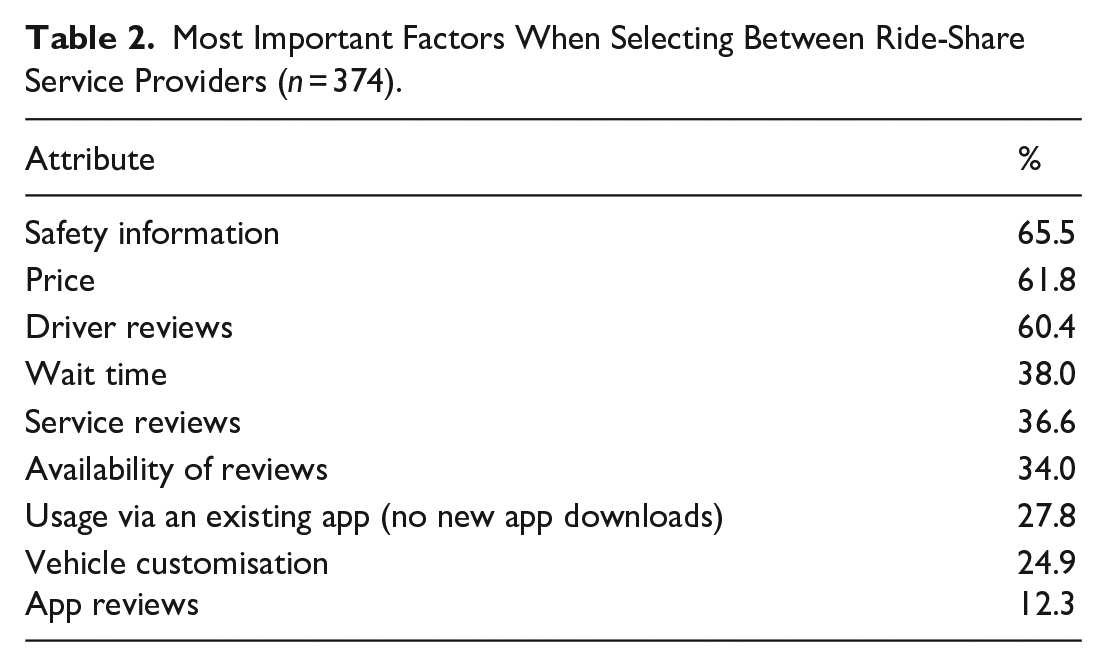
To design the DCE and the choice sets, market facing service information (i.e. what information is available to consumers to assist their decisions when selecting a ride-share service provider) was considered first (see Table 2). To ensure no relevant choice factors were missed, a short online survey was conducted with U.S. participants (n = 374), asking which factors are important when selecting a ride-share service provider. The survey contained several options to choose from and allowed open-ended responses to capture factors not previously considered. The survey results indicated that the most important factors were safety rating, price and driver reviews, respectively, with over 60% of participants selecting said options (see Table 2).
Most Important Factors When Selecting Between Ride-Share Service Providers (n = 374).
The relevant choice factors were then aligned with resource categories to examine consumer resource expenditure. While discussions around resources and their expenditure can be quite nebulous, Plé (2016) clarified seven specific resource inputs consumers bring to value creation based on customer participation literature (outlined in Table 3). In this case, the relational resource category is excluded as DCE aims to emulate a choice between products/services based on their characteristics, not the consumer’s state of mind (relational resources relate to consumers’ state of mind from previous service encounters). Since autonomous ride-share services are not yet available on the market, the relational resource category was deemed not applicable in this scenario.
Consumer Resource Dimensions (Based on Plé, 2016, p. 155) and Corresponding DCE Attributes.
DCE studies in consumer-focused research typically use five to seven attributes to better reflect variance among preferences on the market and avoid underestimating their effect size due to an inappropriate choice design (Kim & Park, 2017; Marshall et al., 2010; Ryan & Wordsworth, 2000; Scozzafava et al., 2016). However, as the consistency of choices decreases as the number of attributes and levels increases (Louviere et al., 2008), there is a need to ensure an efficient design.
As per the resource categories identified, six attribute levels were chosen to be present within the DCE. To adequately capture the range of resources utilised by consumers in value creation and to reflect the potential trade-offs that may occur, each of the six resource categories was assigned attribute levels. The attributes contained two to three levels to adequately capture the variance in resource expenditure of consumers. Since resources are contextual (Normann, 2001), and self-managed by consumers (Arnould et al., 2006), DCE enables us to observe the trade-offs that will occur.
With the primary aim of reducing the number of attributes included in the DCE (to achieve efficient design), elements such as the four types of reviews desired by customers (see Table 2) were first combined into a single attribute aligned with the resource perspective (Informational resource). Vehicle customisation was removed as an attribute as it ranked among the lowest in terms of importance and is not related to a specific consumer resource input (it is a firm-side resource). Driver presence was an attribute created to adequately capture the type of service consumers were choosing between (e.g. with a driver present or driverless) and aligned with behavioural resources. Driver presence in this context thus encapsulates the behavioural effort of consumers where an autonomous ride-share service represents lower resource expenditure (e.g. social interaction).
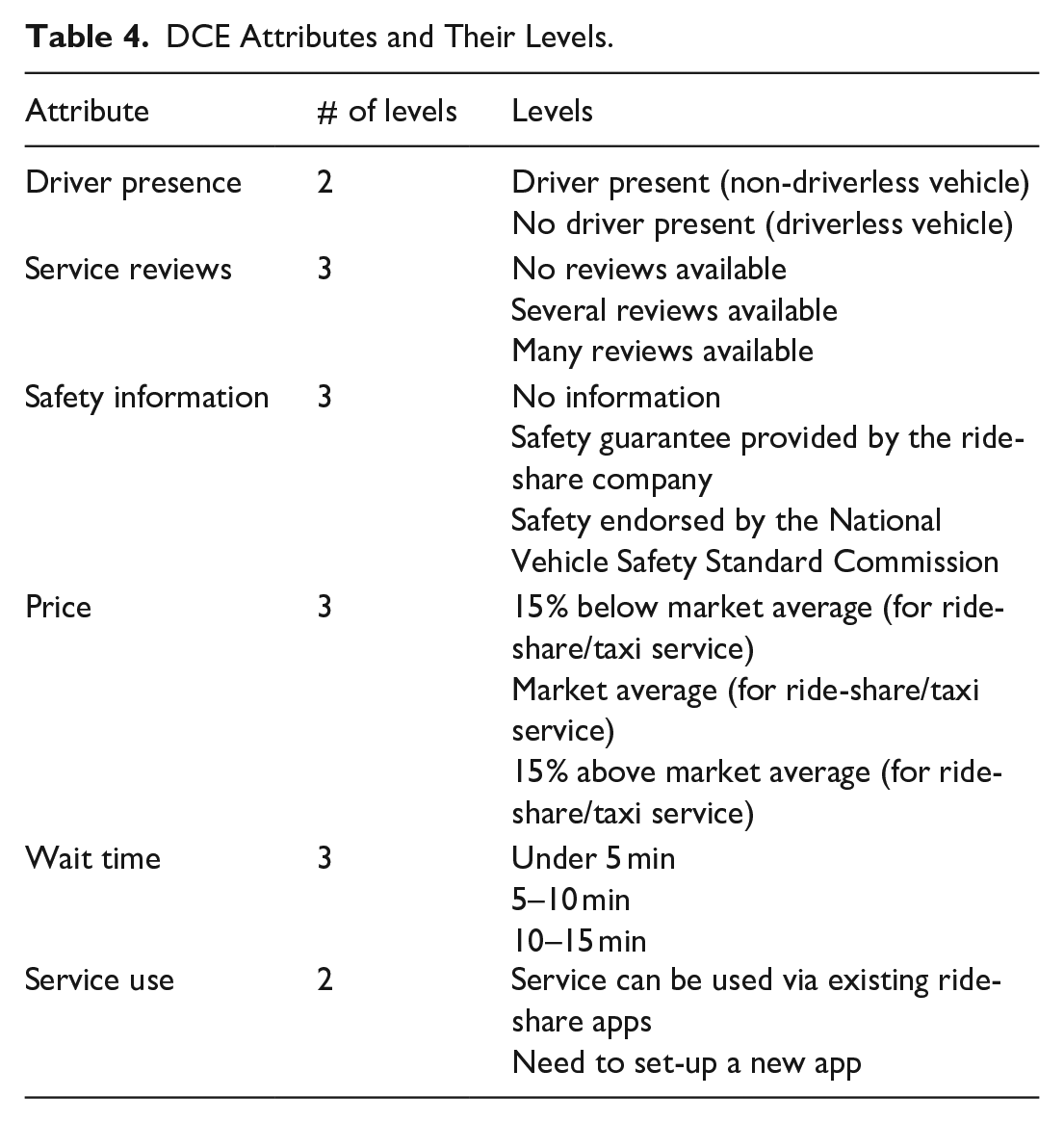
Informational resources contain three attribute levels to represent the mental effort of consumers when selecting/evaluating a service, where ‘no reviews available’ represents more resources required on the part of the consumer. Emotional resources also contained three levels, with ‘no information’ requiring the most emotional resources as consumers may feel the service is unsafe. Consumer physical resources were captured by the ‘service use’ category, representing the consumer’s need to potentially download, set-up and learn a new app instead of using an existing app. While financial and temporal resources were captured via the inclusion of numerical figures. The DCE attributes, and their levels, are shown in Table 4.
DCE Attributes and Their Levels.
To combine the attribute levels into an effective design for DCE, we used an asymmetric, fractional factorial design (Street & Burgess, 2007) with 12 choice sets, each containing three levels – that is two alternatives and a neither option. D-optimality being the main design criterion (Atkinson & Donev, 1992), the idefix package for R was used (Traets et al., 2020) to achieve a D-optimal design, minimising correlations in the data as well as the possible standard errors (Pérez-Troncoso, 2020; Traets et al., 2020).
Accompanying the DCE choice sets, participants were presented with five choices based on consumer market-shaping activities found in the literature; using or purchasing the service (Diaz Ruiz & Makkar, 2021; Martin & Schouten, 2014; Ulkuniemi et al., 2015), providing word-of-mouth recommendation (Burr, 2014; Hill et al., 2006), being an advocate (engaging with politicians, policy or altering their votes; Burr, 2014; Rao, 2009), helping other customers (Dolbec & Fischer, 2015; Martin & Schouten, 2014) and providing feedback to the company (Dolbec & Fischer, 2015; Rao, 2009). Participants were asked to select from these market-shaping activities for each choice set, indicating which of the activities they would perform for each of the presented choices.
Recruitment and sample description
Participants were recruited using the MTurk online panel provider and were paid 5 USD for their time. Ethics approval for this research was obtained from The University of Adelaide (H-2020-272). To qualify for this study, participants were required to be regular users of ride-share services (self-reported) and have used a ride-share service within the last 3 months. Given the context of the study, it was important to survey participants who are active users of ride-share services, as the research context pertains to the consumers using a new type of service, and potentially engaging in market-shaping activities to support it. Research indicates that the target population is skewed towards a younger demographic (GlobalWebIndex, 2017). Reflective of this, 58.2% of the sample is in the 18 to 34 age bracket. The final sample was representative of the U.S. population that uses ride-share services in terms of age and gender (GlobalWebIndex, 2017). There was a balance between male and female participants (50.2% and 49.0%, respectively), with U.S. ride-share users skewed towards younger segments (see Table 5).
Demographic Information of Respondents.
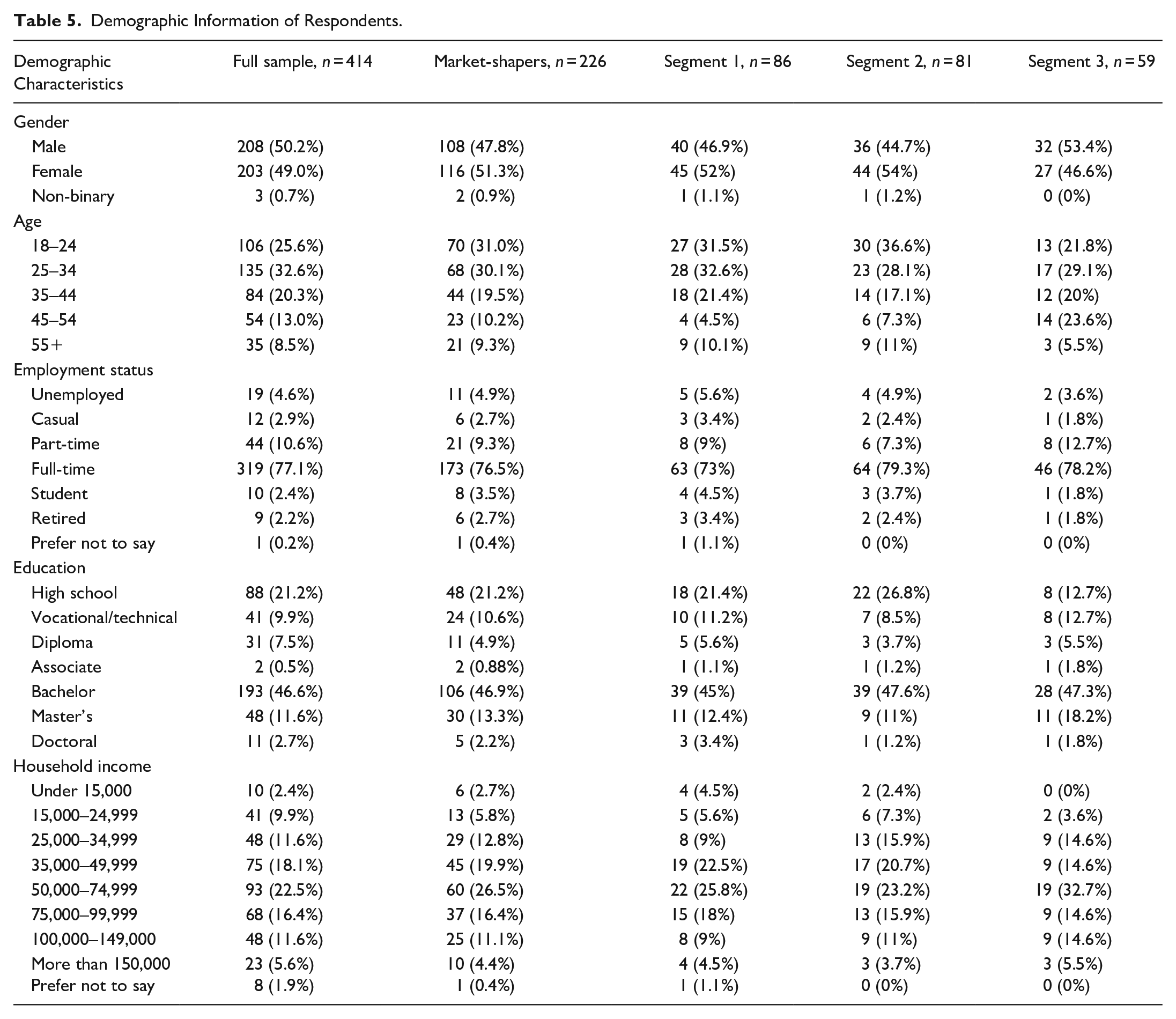
The DCE data was part of a bigger survey in which several steps were taken to ensure the quality of responses. A pre-test was first conducted (n = 50) to ensure appropriate question/task interpretation and that filtering conditions for obtaining U.S. participants worked as intended. The survey contained an external IP address check implemented in accordance with Kennedy et al. (2020) to ensure that participants were located within the U.S. at the time of taking the survey. This is necessary to screen out individuals using server farms to bypass MTurk location restrictions, which results in poor quality data (Chmielewski & Kucker, 2020). The IP check also included a check for VPN (Virtual Private Network), at which point participants were asked to turn them off, and only allowing them to proceed if they did so (Kennedy et al., 2020). Any participants who did not pass the screening questions, or whose location could not be determined were not permitted to complete the survey (n = 1,178). The pre-test revealed some phrasing issues with text entry questions in the broader survey that led to poor answers (not related to DCE). These were amended before commencing with data collection. The final survey contained straightforward language of the survey items and excluded any double-barrelled or leading questions intended to minimise response errors or non-responses (Malhotra et al., 2006). Other survey design aspects, such as voluntary participation, anonymity and self-administration of the survey, all minimised the potential acquiescence biases (Jaffe & Pasternak, 1997).
Several steps were taken to ensure the data collected was of high quality. Researchers have noted that using MTurk data can result in replicability issues compared to well-established results (Chmielewski & Kucker, 2020). Chmielewski and Kucker (2020) found that up to 62% of participants on the MTurk platform failed at least one validity indicator. This directly results from the MTurk platform being exploited by individuals using bots or software to complete surveys (Chmielewski & Kucker, 2020). Several techniques were used to ensure high data quality, including examining text-based answers, speeding, straight-lining and examining reverse-coded questions (DeSimone et al., 2015). These additional checks resulted in the rejection of responses by some participants due to the following reasons: poor quality of responses to text-based answers (n = 181), missed attention checks (n = 77), speeding (n = 71) and straight-lining (n = 53). The final sample consisted of 414 responses.
Analysis
Due to the aims of our study, we wanted to identify and analyse consumers who would perform activities that shape markets or support firms in their attempts. While we recognise that some consumers might only occasionally perform activities that help shape markets, these might be infrequent. As a result, these consumers would be more likely to perform activities supporting the legacy market (i.e. purchase or recommend legacy products/services). Insight into their behaviours would not necessarily inform our understanding of market-shapers. Therefore, they are not useful for organisations looking to attract ‘market-shaping’ consumers with new market offerings. Insights are best derived on market-shaping consumers by isolating them from what we have deemed ‘non-shaping’ consumers. While we recognise that not all consumers consciously or actively perform market-shaping behaviours with a cognitive awareness that they are contributing to a market being shaped, the non-shaping consumers are much less likely to perform any market-shaping behaviours. To identify the distinction between these consumer groups, an index variable was created using the following procedure. Out of 12 scenarios presented to participants, each containing 5 market-shaping activities for participants to choose from, 8 had driverless cars as an option. A score of 1 was attributed to the participants every time they indicated they would perform a market-shaping activity (i.e. using or purchasing a service, providing word-of-mouth recommendation, being an advocate, helping other customers and providing feedback to the company) corresponding to a driverless option, with a total of 40 points available. The index variable was created based on the eight scenarios, where participants chose at least three out of five market-shaping activities relating to the driverless ride-share options presented, indicating a clear propensity to perform market-shaping behaviours, rather than simply using the service. Only participants with a score of 24 or higher on this index were included in the study, resulting in a final sample size of 226 (out of 414 participants). This sample had similar characteristics to the broader sample (see Table 5).
Respondents’ choices of different ride-share services were analysed using a multinomial logit model to calculate the probabilities of consumer choices (Train, 2009). To estimate the relative importance of each attribute for this model, the partial R-square was calculated for each attribute (the partial log-likelihood associated with each attribute across all of its levels; Louviere & Islam, 2008). Part-worth utility estimates of each attribute and their levels add up to zero. These utilities were evaluated by means of z-score and Wald statistics. The Wald statistic indicates a measure of importance the respondents place on each attribute, while part-worth utilities indicate the preference respondents place on each level of an attribute (Mueller et al., 2010). Log-Likelihood-Ratio test was applied to identify the most parsimonious model (Louviere & Islam, 2008).
Results
Our analysis of the ‘market-shaper’ sample suggested a three-segment model to be the best fit, given that the Bayesian Information Criterion (BIC) LL was lowest (BIC(LL): 3,112.73) as compared to other models. In accordance with the method of analysis, the minimum BIC(LL) should be used to find the optimum fit of segments to data (Vermunt & Magidson, 2008). To ensure the model functions as it should, the Wald statistic was consulted for the ‘None’ option in the model. As a market-shaper sample was selected, a strong aversion to the ‘None’ option should be reflected in the data. The Wald statistic for the ‘None’ option was the highest among the attributes (Wald: 286.96, p = .00), and had a high negative utility for all three segments (−1.92; −4.89; −2.90). This indicates that the model is working as intended, and respondents across the three segments valued at least one resource dimension when choosing. That is, the utility for the ‘None’ option was negative for all three segments (−1.92; −4.89; −2.90), indicating a strong aversion to choosing ‘None’.
The relative segment sizes within our sample were as follows: Segment 1 – 38% (n = 86), 2 – 36% (n = 81), 3 – 26% (n = 59). Demographically, Segment 1 corresponded approximately to the ‘market-shaper’ sample. Segment 2 was, on average, slightly skewed towards females (54% vs. 51.3% for the market-shaper sample) with lower income, with 25.6% earning under 35,000 USD (21.3% for the market-shaper sample). Segment 3 was, on average, skewed towards males (53.4% vs. 48.7% market-shaper sample) who are older, with 29.1% being above the age of 45 (vs. 19.5%). The segment also showed higher levels of education, with 67.3% having attained at least a bachelor’s degree (vs. 62.4%). They also have higher income, with 67.4% earning above 50,000 USD (vs. 53.8%) and a higher proportion being employed in some capacity (92.7% vs. 88.5%).
From the six resource dimensions included in the experiment, emotional resource reduction (safety information) emerged as the most important attribute (Wald: 172.56, p = .00), followed by informational resource reduction (service reviews; Wald: 99.41, p = .00), financial resource reduction (price; Wald: 88.08, p = .00), physical resource reduction (service use; Wald: 54.60, p = .00), temporal resource reduction (wait time; Wald: 49.23, p = .00) and behavioural resource reduction (driver presence; Wald: 39.52, p = .00). Table 6 summarises the results, indicating the relative value placed by each segment on the types of resource reductions. This is indicated by the utilities derived from each resource reduction relative to their attribute levels.
Resource Dimensions and Segment Utilities.
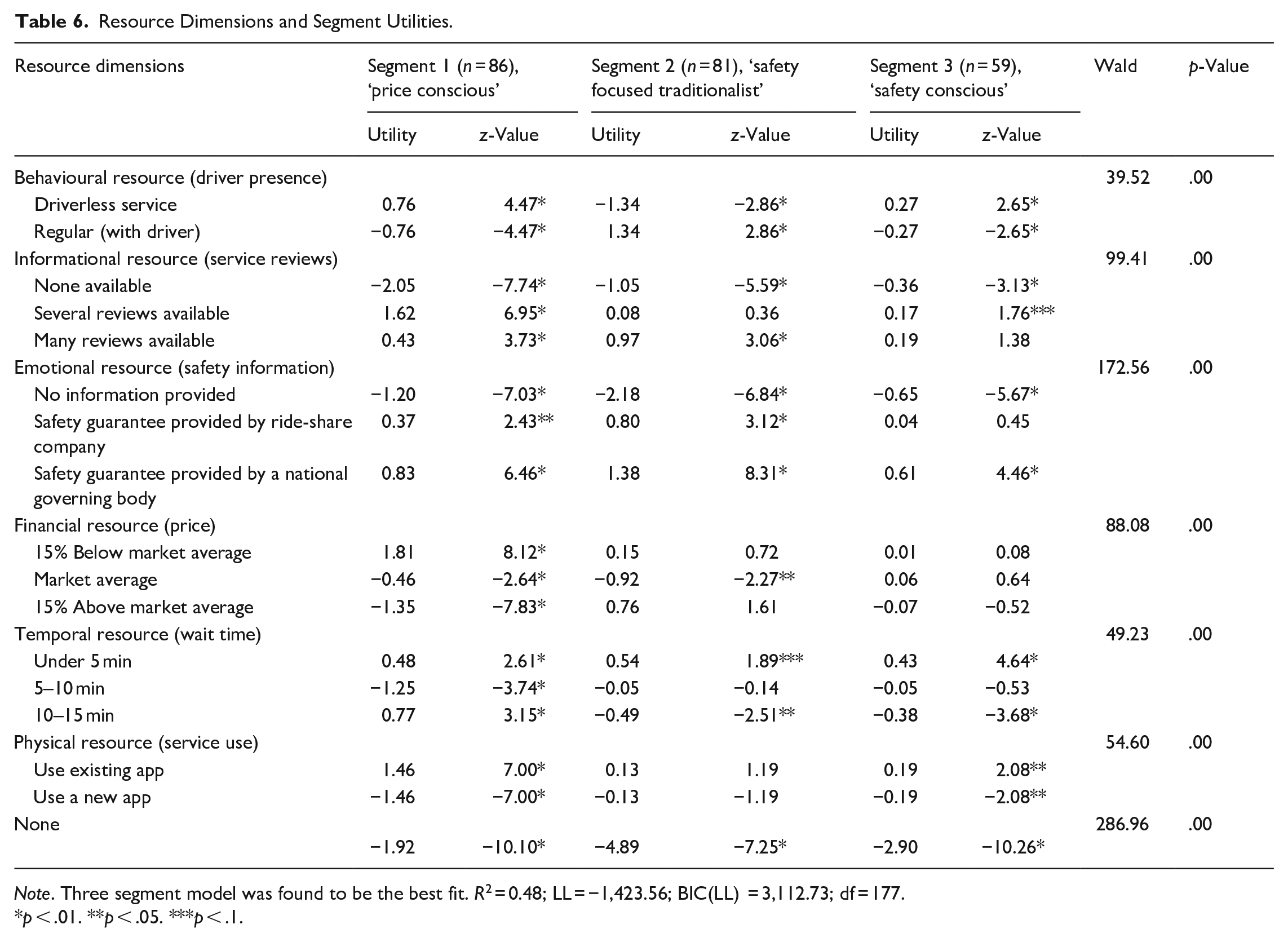
Note. Three segment model was found to be the best fit. R2 = 0.48; LL = −1,423.56; BIC(LL) = 3,112.73; df = 177.
p < .01. **p < .05. ***p < .1.
Profile of Segment 1 – Price conscious segment
Segment 1 was categorised as the ‘price conscious’ segment, showing a strong preference for financial resource reduction (15% below the market average price; 1.81 utility). As a second preference, informational resource reduction was desired (several reviews available – 1.6 utility), with many reviews available having a relatively lower utility (0.43). As the third most important attribute, the segment prefers a reduction of physical resource expenditure (using existing app – 1.46 utility). While a driverless ride-share service yielded a positive utility (0.76), it was lower than utilities derived from other resources/attributes. All attributes and levels showed statistical significance for this segment (p < .01, with 1 level having a p-value < .05), indicating flexibility within Segment 1 as all resource categories are considered when making choices. While reducing financial resource expenditure is preferred (i.e. derives the highest utility), a reduction in expenditure of other resources can be used to compensate if this option is not available. In addition, this segment indicated a willingness to expend more temporal resources (0.77 utility).
Profile of Segment 2 – Safety focused traditionalist segment
Segment 2 was categorised as the ‘safety focused traditionalist’ and showed a strong preference for reduction of emotional resource expenditure (safety guarantee by a national governing body – 1.38 utility). The segment showed non-autonomous ride-share services as the second preference (1.34 utility). As the third most important attribute, the segment desires informational resource reduction (many reviews available – 0.97 utility). Temporal resource reduction was the fourth most important attribute (wait time under 5 min – 0.54 utility). Financial and physical resource reduction was found to not be statistically significant (p > .1). This segment places significant importance on emotional resource reduction via a safety guarantee by a national governing body. A combination of preferences for a safety guarantee and social proof in terms of many reviews indicates this segment needs to be convinced to overcome the potential loss of utility from autonomous ride-share services. This segment may also enjoy social interactions from having a driver in the vehicle. However, unlike Segment 1, not all resources are valued, and the negative utility must be countered by reducing informational, emotional or temporal resource expenditure to attract the segment. Furthermore, despite exhibiting, on average, lower income, the segment does not prioritise the reduction of financial resource expenditure.
Profile of Segment 3 – Safety conscious segment
Segment 3 was categorised as the ‘safety conscious’ segment, showing a strong preference for emotional resource reduction (safety guarantee from a national body; 0.61 utility). As a second preference, the segment desires a reduction in temporal resource expenditure (0.43 utility – under 5 min wait time). As the third and fourth most important attributes, this segment prefers autonomous ride-shares (0.27 utility), followed by a reduction in physical resource expenditure by using an existing app (0.19 utility). However, the third and fourth preferences show relatively small utilities, placing the emphasis primarily on emotional and temporal resource reduction. Little importance is placed on informational resource reduction (0.17 utility at p < .1), while financial resource reduction was not found to be statically significant (p > .1). Like Segment 2, Segment 3 choices are based on only some resource dimensions. This segment prefers the autonomous ride-share service over the regular ride-shares but would need emotional and temporal resource reduction to choose it and consider engaging in market-shaping behaviours. Considering that this segment shows a higher rate of employment and income, the segment may have an abundance of financial resources while being short on time, thus leading to a desire to reduce temporal resource expenditure. For a summary of consumer segments and their main preferences, see Figure 1.
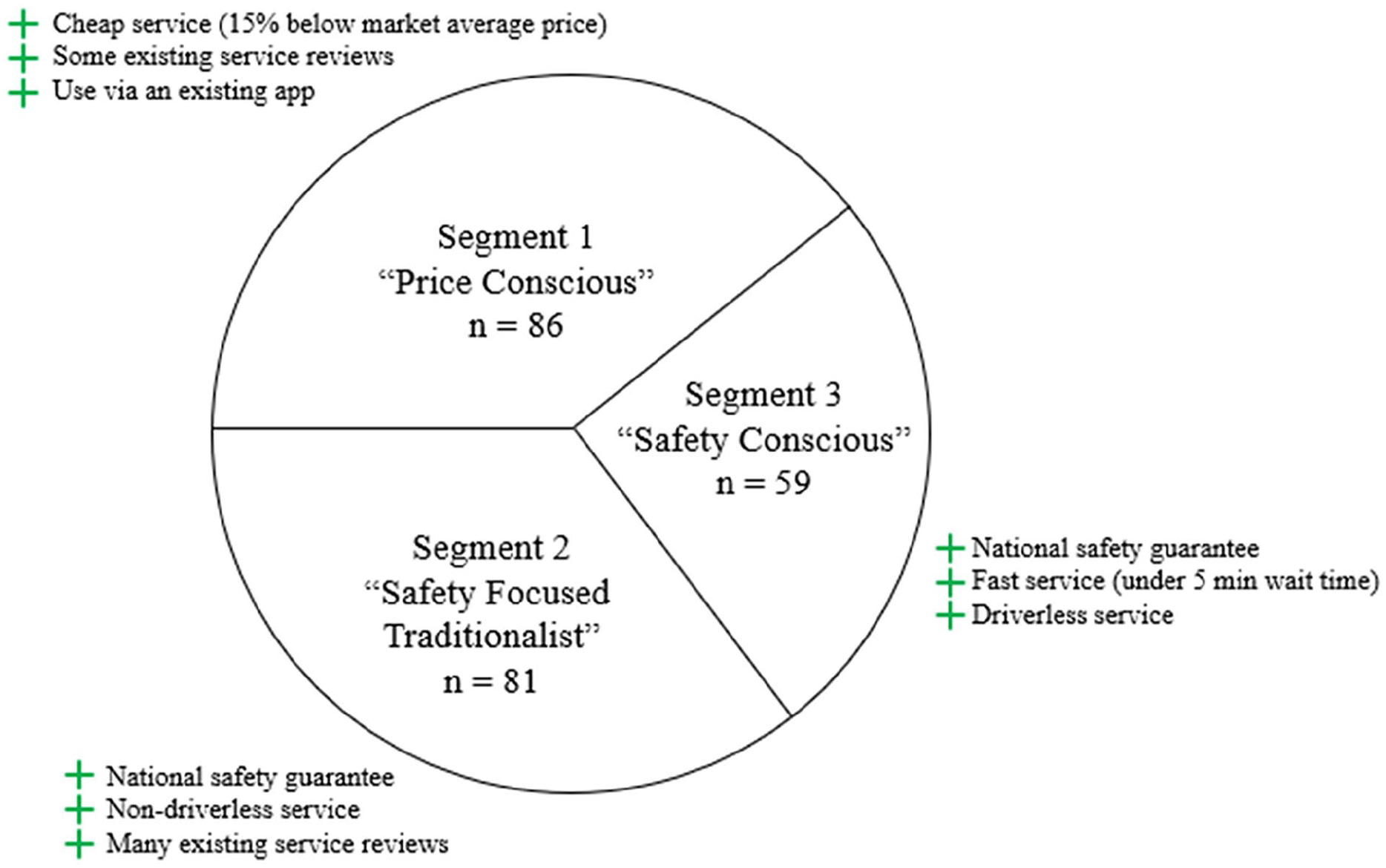
Market segment sizes and their corresponding preferences.
Market-shaping behaviour
For market-shaping behaviours measured in this study, based on the index value, Segments 1 and 2 were not found to be statistically different (p > .05), while Segment 3 exhibited a higher propensity to perform market-shaping behaviours overall (32.94 mean; p < .05). Among the three segments, using the service was the primary market-shaping activity they would perform, with some notable differences in the rankings that would follow (see Table 7). Providing feedback to the company came in second for Segments 1 and 3, and third for Segment 2. Among the segments, no statistically significant difference emerged between Segments 1 and 2 concerning recommending the service (p > .05), while social advocacy was not found to be statistically significant between Segments 2 and 3 (p > .05). All other differences were found to be statistically significant at p < .05.
Propensity of Market-Shaping Behaviours (Mean).
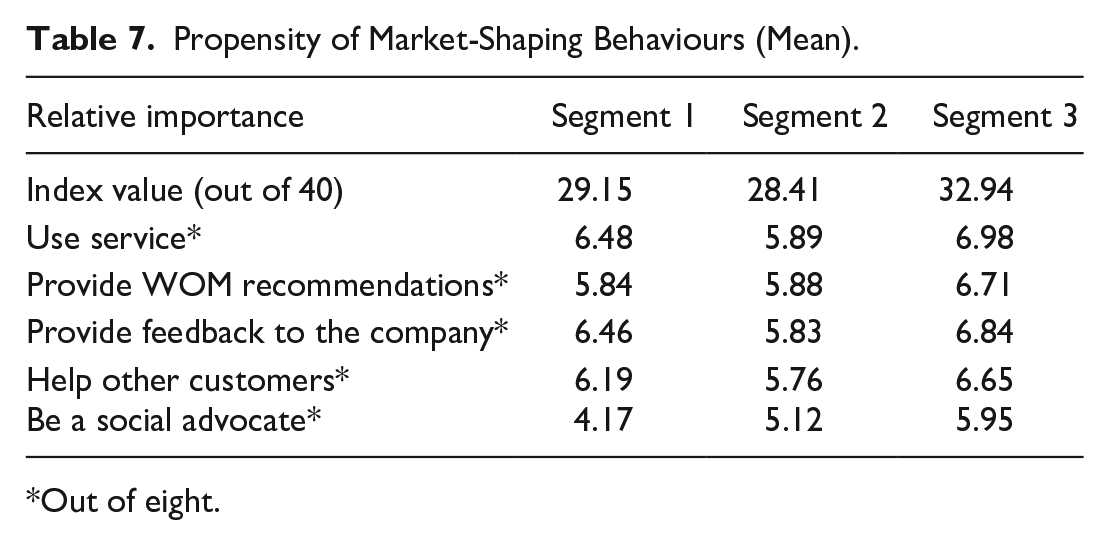
Out of eight.
The mean for the different market-shaping activities was calculated out of eight, with Segment 1 being the least likely to become a social advocate for autonomous ride-share services (4.17). Segments 2 and 3, while not statistically different from each other (p > .05), were more likely to engage in social advocacy (5.12 and 5.95). While Segment 3 was more likely to perform market-shaping behaviours, the segment indicated a higher propensity to provide word-of-mouth recommendations (6.71) than other segments (5.84 and 5.88), which may indicate Segment 3 is more social. This becomes apparent especially when accounting for other activities, such as helping other customers (6.65) and providing feedback to the company (6.84), which were higher than those of other segments.
Discussion
To examine whether firms can elicit consumers to perform activities that help the firm shape a market, we explored the selective management of consumer resource expenditure (Arnould et al., 2006; Plé, 2016) in an autonomous ride-share context. Results indicate that reducing resource expenditure for consumers can elicit market-shaping behaviours. However, not all consumers actively engage in these behaviours. Only consumers for whom the value creation was enhanced via the autonomous ride-share service would participate (Nenonen & Storbacka, 2020; Normann, 2001). For consumers who would not perform market-shaping behaviours, the resource reduction options were likely not contextually relevant, or the autonomous service offset any potential gain and effectively did not enhance their value creation.
Results reflect that there is no one-size-fits-all approach to resource expenditure reduction when shaping markets as varying resource bundle characteristic preferences are displayed by consumer segments. The price-conscious segment places value on the full range of resources. That is, all resource categories are statistically significant, and offer substantial utility to the consumer. This may indicate a lack of resource abundance as the segment juggles a range of resources (Arnould et al., 2006). While financial resource reduction is preferred (highest utility), other resource categories could be used to compensate if the service cannot be accessed relatively cheaply. On the other hand, the other two segments exhibit a rather inflexible set of preferences in terms of resource expenditure. Both segments show a preference for reducing a few resources while placing little or no importance on other resource categories. These findings may indicate a relative abundance of those resources as a reduction is not deemed desirable. For example, Segment 3 showed, on average, higher income and rate of employment, which contextualises the findings (e.g. desire to reduce wait times but not caring about the cost). Finding several segments in our analysis was expected as consumers integrate context-specific resources relating to attaining their goals in a particular time/space (Lipnickas et al., 2020), and different consumers will have access to different resources. Context influences consumer desire to reduce the expenditure of certain resources, while potentially increasing the expenditure of others (more abundant resources).
In response to varying preferences for resource expenditure among consumer segments, firms attempting to shape markets can develop distinct value propositions tailored to each segment (Storbacka & Nenonen, 2011). Despite the minor demographic differences, developing value propositions that resonate with these segments would attract them to the service. It is imperative for market-shaping firms to attract customers as firms have resource constraints just like all market actors (Maciel & Fischer, 2020). For instance, rather than aiming for a broad rollout of an autonomous ride-share service with full geographic coverage from the outset, firms can follow the example of Uber’s initial launch in San Francisco, specifically developing value propositions aimed at tech-savvy consumers in Silicon Valley (O’Connell, 2020). Attracting early consumers is however crucial, as they create resources desired by other consumers (e.g. writing reviews – informational resource), which aids the process of market-shaping. Social proof created by consumers could help overcome safety concerns that others may have. That is, first consumers trialling the service could share their experiences and review it, helping others understand how it works and whether it is safe, attracting other consumers. This could result in ramping up the service over time, potentially reducing resource expenditure in other areas, making it more universally appealing, with an already established customer base.
For market-shaping behaviours of consumers, the results point towards a generalised hierarchy of market-shaping behaviours. Using or purchasing was found to be the most likely market-shaping behaviour, which was to be expected as it is the primary form of value creation for consumers and is how they achieve goal attainment within context (Lipnickas et al., 2020). However, the three segments differed across their propensity to provide word-of-mouth recommendations, providing feedback to the company and helping other consumers. It is likely that the propensity to perform these activities is related to consumer resource constraints (Arnould et al., 2006). Maciel and Fischer (2020) showed that consumers willingly expend resources, which they have in abundance, to help a firm overcome its resource limitations and shape the market. Therefore, the likelihood of consumers performing the aforementioned activities is related to their resource abundance, with the least likely activities to be performed drawing on precious resources (Maciel & Fischer, 2020), which consumers would rather save or utilise in other contexts. Social advocacy behaviours were least likely to occur across all segments. Engaging in social advocacy behaviours would require a range of resources to be expended outside the immediate value creation context with the ride-share service provider. For example, physical and temporal resources may need to be expended to engage with political candidates. This would likely require consumers to strongly identify with the value creation opportunity (Rao, 2009) in order to pursue such an option. As resource expenditure limits future value creation potential (Muraven & Baumeister, 2000), consumers engaging in social advocacy would likely place significant value on resources that can be secured through such activities. For example, when the mayor of New York threatened to impose a cap on the number of ride-share vehicles on the road, consumers rallied and fought against it (Moon, 2015). This move would have severely impacted the service by making it more expensive, increasing wait times and reducing availability. Consumers engaged in social advocacy to prevent an increase in resource expenditure.
Finally, the results indicate a hierarchy of resources that consumers prioritise within the autonomous ride-share context. Specifically, emotional resource reduction is prioritised, followed by financial, physical and temporal reduction of informational resources. Consumer safety concerns have been a common finding in research related to autonomous vehicles (Haboucha et al., 2017). Studies by Sommer (2013) and later by Schoettle and Sivak (2014) found that approximately half of Americans were concerned about riding in an autonomous vehicle. Therefore, it is understandable that consumers would prioritise emotional resource reduction, desiring to feel safe using the service. Informational resource reduction may also contribute to this as reviews of consumers may act as both a reduction of informational resource expenditure and emotional, as consumers can rely on one another for advice or information (Arnould et al., 2006).
Theoretical implications
By utilising a DCE approach to examine the market-shaping activities of consumers, we first contribute to market-shaping literature by showing that firms can elicit consumers to perform behaviours that help shape the market. This is an important finding as market-shaping is increasingly considered a collective process where market-shaping success depends on a multitude of market actors, including consumers (Maciel & Fischer, 2020; Nenonen & Storbacka, 2020). The ability of firms to influence the propensity to which consumers would perform activities that help shape markets would result in more successful market-shaping initiatives. Furthermore, by performing activities that shape markets, consumers can create resources (e.g. reviews) that attract other consumers (Maciel & Fischer, 2020), creating a cumulative effect.
We further contribute towards market-shaping literature by expanding on the consumer perspective (Ulkuniemi et al., 2015) and developing a better understanding of the selective and contextual management of resources when consumers perform behaviours that shape markets. Studies highlighting consumer involvement in market-shaping tend to be case study-based (see Dolbec & Fischer, 2015; Maciel & Fischer, 2020; Martin & Schouten, 2014). In comparison, this study quantifies and offers contextual insights into what resource reduction avenues consumers seek when engaging in value creation within a context. This research shows that reducing resource expenditure can entice consumers into performing market-shaping behaviours. Specifically, consumers prioritise the reduction of emotional resource expenditure, followed by informational. Therefore, building on Nenonen and Storbacka’s (2020) proposition that enhanced value creation must be created to entice other actors in market-shaping behaviours that support the shaping attempts, we offer specific approaches to how enhanced value creation can be created for consumers. As a result, we advance the knowledge in the market-shaping domain by empirically examining the reduction of resource expenditure as a means to shape markets, which has been previously theorised (Lipnickas et al., 2020).
By utilising a DCE approach to examine market-shaping activities of consumers, we also provide insights into the value creation dynamics of consumers that emerge when firms attempt to shape markets. As a result, we contribute to value creation literature by taking the consumer perspective (Heinonen et al., 2018). The selective management of resource expenditure by consumers is not well understood (Arnould et al., 2006; Plé, 2016), and this study is the first to quantitatively examine the process to the best of the researcher’s knowledge. In doing so, we show within context what resources and resource bundles are prioritised by consumers to elicit them into performing market-shaping behaviours. As a result, knowledge is advanced concerning how consumers manage their resource expenditure. While some consumers emphasise several key resources (Segments 2 and 3), others juggle trade-offs across a range of resources when engaging in value creation (Segment 1). This is an important finding that advances our understanding of value creation beyond simply reducing resource inputs to enhance value creation, but highlighting that not all resource categories are equal, are prioritised differently by consumers and are context dependent.
In addition, we recognise that obtaining consumer support in market-shaping is not a straightforward endeavour. While research posits that enhanced value creation is needed to attract support (Nenonen & Storbacka, 2020), the nuanced, phenomenological nature of value (Vargo & Lusch, 2008) is often not considered in market-shaping research. In accordance with preconceived notions, reducing monetary resource expenditure should be a desirable avenue for lower income segments, which, however, is not the case. In addition, we also gain an insight into what market-shaping activities consumers are likely to perform when purchasing or using the service, being the most likely, which is to be expected given the contextual and goal-related context of value creation and market-shaping (Lipnickas et al., 2020). And while social advocacy is the least likely activity, we observe some differences among segments for the other three activities, which may relate to consumer resource constraints. These findings overall portray that consumers are heterogenous, with their unique resource expenditure preferences, and performed market-shaping activities in varied ways. This paves the way for further insights into how firms can entice customers to perform market-shaping activities supporting the market-shaping firm. In particular, research can begin to draw important insights into the collective nature of market-shaping where there is a need to understand how multiple market actors can be engaged in efforts to shape the market (e.g. Baker & Nenonen, 2020; Maciel & Fischer, 2020; Storbacka et al., 2022).
Finally, as market-shaping research tends to be case study based (see Burr, 2014; Dolbec & Fischer, 2015; Harrison & Kjellberg, 2016; Maciel & Fischer, 2020; Martin & Schouten, 2014), we also contribute to the field by addressing the paucity of quantitative studies. This allows for unique insights, as detailed above, and the development of more generalisable approaches to be employed in the future, whether through discrete choice experiments or other methodological approaches.
Practical implications
Firms seeking to shape markets should first understand their consumers’ desired value creation dynamics (Arnould et al., 2006). This is rarely understood, as evident by up to 85% fail rate of innovations, and by extension, market-shaping attempts (Malgarejo & Malek, 2018). As illustrated by our findings, consumers have different acceptable trade-offs and seek different reductions in resource expenditures in order to engage with the value proposition of the firm. Identifying consumers who will support market-shaping initiatives and tailoring products/services in such a way to fit those consumers is crucial. By doing so, consumers will support market-shaping attempts of the firm (Nenonen & Storbacka, 2020), in which case the probability of market-shaping success increases.
Previous research has shown that innovations within markets can often face consumer resistance (Casidy et al., 2021), as for example, wine screw caps have been trialled since the mid-20th century in several markets and consistently faced consumer resistance due to associations with low-quality wine, resulting in failure as consumers avoided purchasing wine with screw caps (Baker & Nenonen, 2020). Screw caps only became established in the 21st century after market-shaping actors were able to eliminate the association between screw caps and low-quality wine, which led to consumers purchasing wine with screw caps, establishing it as a viable alternative to corks (Baker & Nenonen, 2020). This resistance is especially prevalent with artificial intelligence powered technology, such as autonomous vehicles (Casidy et al., 2021). This resistance can, however, be overcome.
Discrete choice experiments or other similar methodologies can be utilised by firms to gain insights into desirable consumer trade-offs, enabling firms to design products/services that will elicit the desired response. As results indicate, Segment 2 exhibits an aversion to autonomous ride-share services; however, they would be willing to use it given that other characteristics are to their liking. It is thus imperative that firms seek feedback from customers within the market. The success of Apple is in large part attributed to testing, trialling and receiving feedback in the Homebrew Computer Club, allowing Apple to design products that customers want (Keim, 2023). Apple engaged with hobbyists and aficionados, receiving feedback and refining products, designing what customers actually wanted. Designs in isolation, without understanding customers’ preferences or desires, are likely to face higher resistance, and, ultimately, failure. For example, while innovative, Google Glass offered few, if any, consumer benefits and failed within a year (Williams, 2023).
The results highlight that consumer distinctions are primarily related to sought-after benefits rather than demographic factors. In shaping a market, firms may need to design distinct variations of products/services to attract a range of consumers. For instance, ride-share services often provide options like different vehicle sizes, environmentally friendly choices and service variations such as shared rides for cost-effective trips. While targeting based on demographics may be challenging, firms can enhance market-shaping efforts by developing tailored value propositions that align with identified consumer segments. In the example of Uber, it was initially launched in San Francisco for tech-savvy consumers who were more likely to trial the service. Attracting early consumers is crucial as it helps firms overcome resource constraints (Maciel & Fischer, 2020). Having consumers create resources for the firm, in the form of reviews, blog posts and social media mentions, creates valuable resources for other consumers within the market. Having consumers engage in said behaviours also adds legitimacy to the resources present (Martínez-López et al., 2020), as consumers tend to trust other consumers more than sponsored information.
Importantly, our results indicate the potential for a sequential approach to market-shaping. While Nenonen and Storbacka (2020) discuss how market-shaping should offer enhanced value creation for numerous market actors in order to bring them on board, our results indicate a more complex dynamic that would play out over time. Introducing new products or services into the market with the purpose of shaping may come with financial or knowledge constraints (Maciel & Fischer, 2020) that need to be overcome. Therefore, firms should seek to tailor their offerings to attract the most active or likely segment to support their cause (in our case, Segment 3). As Segment 3 already prefers autonomous ride-shares, the segment primarily seeks to reduce emotional and temporal resources before choosing an autonomous service and performing behaviours that shape markets. This ideally should be done by tailoring the products/services in such a way as to reduce the resource expenditure of the intended segment. By doing so, these segments can create resources within the market that are valued by others (e.g. reviews – information resource). Only as consumers create additional resources can the firm utilise them (Maciel & Fischer, 2020) and seek to attract other consumers to their market-shaping cause. Until said resources exist, some consumers may be excluded from this emerging market paradigm as the value creation opportunities are not what they desire (Cova et al., 2021). Understanding this sequential approach to market-shaping can facilitate progressive growth for the firm intending to shape a market and could mean the difference between success and failure.
Limitations and future research directions
This research was limited by a geographic constraint. The U.S. has autonomous vehicles being actively tested on public roads, which may have inadvertently influenced our results. Therefore, it would be interesting to replicate this study in other countries to examine whether the preference for resource input bundles changes.
Resource integration, and by extension value co-creation, are context and goal specific (Lipnickas et al., 2020). Consideration of various products/services, for example, luxury products may reveal different resource expenditure dynamics. Furthermore, resources can overlap. For example, participants of this study prioritised reduction in emotional resources through a desire for a safety guarantee from a national body. To a degree, emotional resource reduction could also potentially be achieved using consumer reviews. Numerous reviews praising the service for its safety could act as a surrogate for emotional resource reduction. Therefore, other scenarios could be explored where resource boundaries are clearer. There is also the potential to explore scenarios to account for other types of resources that were not part of this study.
In addition to examining resources within the value creation process, some market-shaping activities would require additional consumer resource expenditure. For example, in order to engage in social advocacy (Rao, 2009), physical and temporal resources may need to be expended outside the value creation context with the ride-share service. This adds a layer of complexity to examining market-shaping as market-shaping behaviours may effectively represent a different context beyond the firm’s value creation, which requires further examination.
Finally, the attributes and levels used in this study were selected based on a careful review of literature, market information and a survey of U.S. consumers. However, if different attributes had been selected, the results of the study would have been different. This is a limitation stemming from discrete choice models. In making the experiment more compact and efficient, attributes or levels have to be reduced as the consistency of choices decreases with more variables (Louviere et al., 2008). Furthermore, while DCEs have been shown to have high validity (Farsky et al., 2017), the experiment examines consumer willingness or intention to perform an action which may overestimate the likelihood of actual market-shaping behaviours (Chandon et al., 2005). This leaves room for extending this study using different attributes and levels to examine resource inputs in various scenarios or goals/context constraints, as well as opportunities to conduct experiments in real-life scenarios. In particular, further research is required to examine product categories that may elicit a lesser degree of interest or effort to engage in market-shaping activities in order to provide more wide-reaching implications for research and practice.
Footnotes
Declaration of conflicting interests
The author(s) declared no potential conflicts of interest with respect to the research, authorship, and/or publication of this article.
Funding
The author(s) received no financial support for the research, authorship, and/or publication of this article.
